Top-Down vs. Bottom-Up Control: From Ecological Theory to Drug Discovery Applications
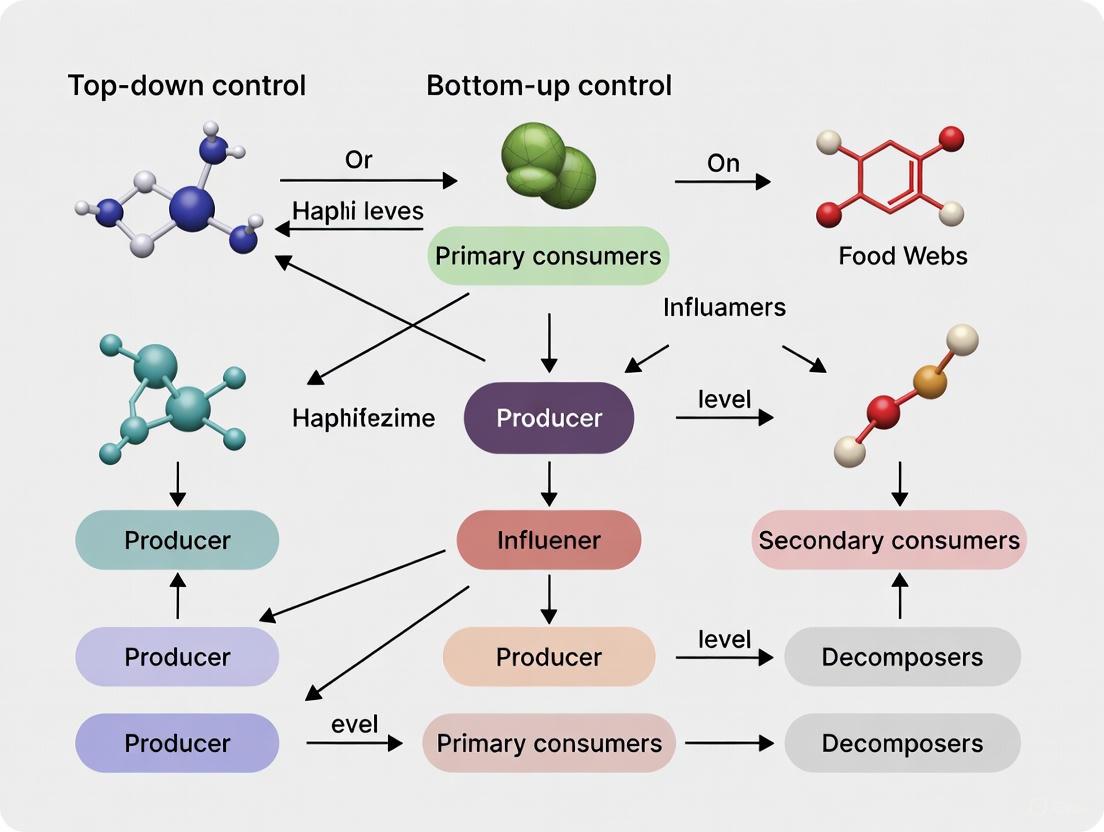
This article synthesizes the foundational principles of top-down (predator-driven) and bottom-up (resource-driven) control in ecological food webs and explores their critical parallels in pharmaceutical research and development.
Top-Down vs. Bottom-Up Control: From Ecological Theory to Drug Discovery Applications
Abstract
This article synthesizes the foundational principles of top-down (predator-driven) and bottom-up (resource-driven) control in ecological food webs and explores their critical parallels in pharmaceutical research and development. We examine how these dual control mechanisms govern ecosystem stability and, analogously, influence modern drug discovery strategies—from target-based, bottom-up molecular design to phenotype-based, top-down screening. For an audience of researchers and drug development professionals, the article provides a comparative analysis of methodological applications, addresses key challenges in both fields, and discusses the emerging 'middle-out' paradigm that integrates both approaches for optimized outcomes in ecological management and therapeutic innovation.
Foundations of Trophic Control: Defining Top-Down and Bottom-Up Forces in Nature and Science
Core Definitions and Conceptual Framework
In ecological research, the regulation of population sizes and ecosystem structure is primarily governed by two contrasting mechanisms: predator-limitation (top-down control) and resource-limitation (bottom-up control). These fundamental concepts form the foundational framework for understanding trophic dynamics and energy flux in biological systems.
Predator-limitation, or top-down control, describes a regulatory mechanism where populations at lower trophic levels are primarily controlled by the consumption pressure from organisms at higher trophic levels [1]. In this model, the presence or absence of top predators cascades downward through the food web, ultimately influencing the density and distribution of primary producers. This approach is also termed the "predator-controlled food web" of an ecosystem [1].
Resource-limitation, or bottom-up control, represents the alternative mechanism where ecosystem dynamics are driven primarily by the availability of resources at the base of the food web [1]. In this model, changes in the population density or biomass of primary producers—through either absence of food or inaccessibility due to competition—propagate upward through successive trophic levels, affecting herbivores and then carnivores [1]. This approach is consequently described as the "resource-controlled" or "food-limited" food web of an ecosystem [1].
Modern ecological research recognizes that these control mechanisms are not mutually exclusive; rather, they represent endpoints on a continuum of regulatory forces [1]. The dominant controlling factor in any given ecosystem often depends on which component—predators or resources—presents the greater limiting constraint on population growth, with the limiting factor determined by their relative presence in lesser numbers or biomass [1]. Emerging theoretical frameworks suggest that intra-trophic diversity creates effective "emergent competition" between species within a trophic level due to feedbacks mediated by other trophic levels, forcing a crossover from top-down to bottom-up control regimes [2].
Table 1: Fundamental Characteristics of Predator-Limitation and Resource-Limitation
| Characteristic | Predator-Limitation (Top-Down) | Resource-Limitation (Bottom-Up) |
|---|---|---|
| Primary Driver | Consumption by higher trophic levels | Availability of primary resources |
| Direction of Control | Downward through trophic cascade | Upward through resource availability |
| Limiting Factor | Predation pressure | Nutrient/energy availability |
| Population Response | Prey populations suppressed by predators | Consumer populations track resource abundance |
| Theoretical Basis | Predator-controlled food web | Resource-controlled food web |
| Ecosystem Stability | Dependent on predator-prey dynamics | Dependent on resource consistency |
Experimental Evidence and Case Studies
Terrestrial Ecosystem Evidence
The classic tri-trophic system of plants, deer, and tigers exemplifies predator-limitation dynamics [1]. In this model, tigers as top predators regulate deer populations through consumption pressure. The absence of tigers leads to deer population explosion, subsequent overgrazing of plants, and eventual ecosystem collapse due to resource depletion [1]. Conversely, resource-limitation is observed when plant populations dwindle, causing deer starvation and population decline, which then leads to reduced tiger numbers due to prey scarcity [1]. Competition intensifies resource-limitation even when total food appears plentiful; the introduction of competing herbivore species (e.g., blackbucks) creates a food-limited system where competition for plants can lead to competitive exclusion [1].
Aquatic and Marine Ecosystem Evidence
Marine systems provide compelling experimental evidence for both control mechanisms. The sea otter-urchin-kelp system demonstrates clear predator-limitation dynamics [3]. Sea otters as top predators control sea urchin populations, which in turn regulates kelp consumption. Otter removal triggers urchin population explosions that devastate kelp forests, while otter recovery restores the kelp beds through reduced grazing pressure [3].
Conversely, the Northern Gulf of Mexico presents a resource-limitation case study, where agricultural runoff increases nutrient levels, stimulating epiphyte growth on seagrass blades [3]. This artificially enriched resource base supports larger herbivore populations and longer trophic chains, demonstrating bottom-up control. The negative resource-limitation scenario appears in eutrophication events, where excessive nutrient input causes algal blooms that block sunlight and oxygen, creating dead zones that collapse higher trophic levels [3].
Table 2: Comparative Experimental Evidence Across Ecosystem Types
| Ecosystem | Predator-Limitation Evidence | Resource-Limitation Evidence |
|---|---|---|
| Terrestrial Forest | Tiger predation regulates deer populations, preventing overgrazing | Drought reduces plant growth, limiting entire food web |
| Marine Coastal | Sea otter predation controls urchins, protecting kelp forests | Nutrient runoff stimulates algal growth, altering food web structure |
| Freshwater | Pike predation regulates minnow populations, indirectly affecting zooplankton | Nutrient limitation controls phytoplankton biomass and productivity |
| Grassland | Wolf predation on elk prevents overgrazing of willow and aspen | Soil nitrogen availability limits plant production and herbivore carrying capacity |
Methodological Approaches and Analytical Frameworks
Mathematical Modeling Foundations
The theoretical underpinnings of predator-prey dynamics are often derived from Lotka-Volterra equations, which form the basis for analyzing multi-species interactions in food webs [4]. The generalized multi-species Lotka-Volterra model can be represented as:
[ \frac{d X{i}}{d t}=X{i}\left(b{i}+\sum{j=1}^{S}a{ij}X{j}\right) ]
Where (S) represents the number of species in the web, (bi) is the intrinsic rate of increase of species (i), and (a{ij}) is the per capita effect of species (j) on species (i) [4]. This framework allows researchers to quantify the strength and direction of species interactions, parameterizing the relative importance of top-down versus bottom-up forces.
Modern approaches have expanded these foundations through generalized Consumer Resource Models (CRMs) with multiple trophic levels [2]. The dynamics for a three-tier ecosystem can be described by:
[ \begin{align} \frac{dX_\alpha}{dt} &= X_\alpha\left(\eta_X \sum_j d_{\alpha j}N_j - u_\alpha\right) \ \frac{dN_i}{dt} &= N_i\left(\eta_N \sum_Q c_{iQ}R_Q - m_i - \sum_\beta d_{\beta i}X_\beta\right) \ \frac{dR_P}{dt} &= R_P\left(K_P - R_P - \sum_j c_{jP}N_j\right) \end{align} ]
Where (X\alpha), (Ni), and (RP) represent top predators, intermediate consumers, and basal resources respectively, with parameters for consumption rates ((d{\alpha j}), (c{iQ})), conversion efficiencies ((\etaX), (\etaN)), and mortality rates ((u\alpha), (m_i)) [2]. This framework enables researchers to simulate the crossover between top-down and bottom-up control regimes based on the ratio of surviving species at different trophic levels [2].
Empirical Measurement and Food Web Reconstruction
Ecologists employ various quantitative descriptors to characterize food web structure and infer control mechanisms [4]:
- Connectance: The proportion of possible feeding links that are realized, indicating web complexity
- Trophic Level Calculation: Quantitative measures accounting for omnivory: (T{i}=1+\sum{j=1}^{S}T{j}p{ij}), where (T{i}) is the trophic level of species (i), and (p{ij}) is the proportion of predator (i)'s diet consisting of prey (j) [4]
- Characteristic Path Length: The average shortest path between any two nodes, reflecting ecosystem connectivity
- Modularity: The degree to which subsets of species are highly connected independently of other species
For soil food webs specifically, the soilfoodwebs R package provides tools for analyzing nutrient fluxes through food webs, calculating effects of organisms on ecosystem processes, and addressing parameter uncertainty [5]. This approach uses ecostoichiometric principles to balance carbon and nitrogen fluxes simultaneously, incorporating uncertainty in biomass estimates and food web structure [5].
Figure 1: Conceptual diagram illustrating the directional control mechanisms in top-down versus bottom-up regulation of ecosystems.
Modern ecological research employs specialized software packages and analytical tools to investigate predator-limitation and resource-limitation dynamics:
Table 3: Essential Computational Tools for Trophic Control Research
| Tool/Package | Primary Function | Application Context |
|---|---|---|
| soilfoodwebs R package | Analyzes nutrient fluxes through food webs with carbon and nitrogen stoichiometry | Soil food web modeling, parameter uncertainty analysis [5] |
| Fluxweb | Calculates energy flux through food webs | Ecosystem energetics, stability analysis [5] |
| Cheddar | Food web analysis, visualization, and comparison | Trophic structure analysis, comparison across ecosystems [4] [5] |
| NetIndices Package | Calculates trophic levels using TrophInd() function | Food web topology, omnivory quantification [6] |
| igraph Package | Network visualization and analysis | Food web plotting, network property calculation [6] |
Figure 2: Generalized workflow for investigating predator-limitation and resource-limitation in ecological research.
Emerging Research Directions and Applications
Contemporary research has revealed that most natural ecosystems exhibit elements of both top-down and bottom-up control simultaneously, with the dominant mechanism often shifting across spatial and temporal scales [1]. In marine ecosystems initially thought to be purely bottom-up controlled, periods of top-down control emerge through extraction of large predators via fishing activities [1]. This dynamic interplay creates ecological crossovers where systems transition between control regimes based on the relative strength of different limiting factors.
Theoretical advances now enable quantification of the transition between control regimes using the zero-temperature cavity method, which identifies a simple order parameter for the crossover: the ratio of surviving species in different trophic levels [2]. This approach demonstrates that intra-trophic diversity generates effective "emergent competition" between species within a trophic level through feedbacks mediated by other trophic levels [2].
Human impacts add complex layers to these ecological dynamics. Overfishing has dramatically reduced predator populations in global oceans, with an estimated 300,000 small whales, dolphins, and porpoises killed annually in fishing gear, and approximately 12 million sharks and rays caught as bycatch annually during the 1990s [3]. These predator removals trigger trophic cascades through disrupted top-down control, emphasizing the conservation importance of understanding these regulatory mechanisms.
Conversely, restoration ecology demonstrates that reintroducing keystone species can reestablish healthy trophic function in degraded ecosystems [3]. Netherlands projects reintroducing eelgrass, salmon, and beavers have initiated habitat revitalization, showing how understanding both predator-limitation and resource-limitation dynamics informs effective ecosystem management.
A foundational question in ecology is what regulates the flow of energy and the structure of food webs: Is it control from the top, by predators, or from the bottom, by resource availability? Top-down control describes a "predator-limited" food web where populations of lower trophic levels are controlled by the consumption pressure from their predators [1] [3]. The removal of a top predator can trigger a trophic cascade, a series of indirect effects that ripple down through the food web, often altering the basal level and the entire ecosystem's state [7] [3]. In contrast, bottom-up control describes a "resource-limited" food web where the abundance of primary producers, and thus the entire community structure, is determined by the availability of nutrients and other resources [1] [8]. This guide objectively compares two classic case studies that exemplify these opposing forces, synthesizing experimental data and methodologies to illuminate their distinct mechanisms and outcomes.
Case Study 1: Top-Down Control via a Sea Otter-Urchin-Kelp Trophic Cascade
Experimental Findings and Quantitative Data
The sea otter (Enhydra lutris) is a classic keystone predator, whose presence or absence directly governs the state of North Pacific nearshore ecosystems [9] [10] [7]. The following table synthesizes key experimental data from multiple studies on this trophic cascade.
Table 1: Quantitative Data from Sea Otter Trophic Cascade Studies
| Metric | System State with Sea Otters | System State without Sea Otters | Location and Study Context |
|---|---|---|---|
| Sea Urchin Biomass Density | ~99% reduction [10] | High (Baseline) | Southeast Alaska, post-repatriation [10] |
| Kelp Density | >99% increase [10] | Low (Baseline) | Southeast Alaska, post-repatriation [10] |
| Local Otter Abundance | High (Baseline) | ~70% decline [10] | Sitka Sound, SE Alaska, post-harvest [10] |
| Sea Otter Urchin Consumption | Increased ~3x during urchin outbreak [9] | Pre-outbreak levels | Monterey Bay, CA, post-"Blob" heatwave [9] |
| Urchin Gonad Nutritional Value | High in kelp forest urchins [9] | Low ("starved," "empty") in urchin barrens [9] | Monterey Bay, CA [9] |
| Kelp Forest Cover | Remnant patches maintained [9] [11] | >80% loss, replaced by urchin barrens [9] | Northern California [9] |
Detailed Experimental Protocol
The understanding of this cascade is built upon decades of interdisciplinary research. A representative protocol, synthesizing methods from multiple studies, is outlined below.
Objective: To determine the effects of sea otter presence, absence, and foraging behavior on sea urchin populations and kelp forest ecosystem structure.
Methodology:
- Time-Series & Spatial Comparison: Researchers survey sites with contrasting otter occupancy histories. This includes:
- Reintroduction Studies: Surveying sites before and after sea otters naturally recolonize or are deliberately reintroduced (e.g., Southeast Alaska) [10].
- Harvest-Induced Absence: Surveying sites where a previously established otter population has been locally reduced by human harvest (e.g., Sitka Sound) [10].
- "Unplanned Experiment" Monitoring: Monitoring ecosystem responses to large-scale perturbations, such as the sea star wasting disease and marine heatwave in Monterey Bay [9] [11].
- Sea Otter Population Monitoring:
- Aerial & Boat-Based Surveys: Regular surveys are conducted to count otters and map their distribution [10].
- Dietary Analysis: Foraging observations are conducted from shore or boats, recording prey items (e.g., urchins, crabs) brought to the surface [9] [11]. Scat or gut content analysis is also used.
- Subtidal Community Surveys:
- Site Selection: Subtidal reef sites are selected randomly or systematically along a depth gradient (e.g., the 6-7 m isobath) [10].
- Kelp and Urchin Quantification: Divers place quadrats (e.g., 0.25 m²) randomly on the seafloor along transect lines.
- Urchin Nutritional Analysis:
- Sample Collection: Sea urchins are collected by divers from different habitats: kelp forests versus urchin barrens.
- Laboratory Analysis: Urchins are dissected, and the gonad (the primary energy storage organ) is weighed and its condition (full, partially full, empty) is assessed to determine nutritional value [9] [11].
Diagram: Sea Otter Trophic Cascade Logic Model
Case Study 2: Bottom-Up Control via Nutrient-Driven Production
Experimental Findings and Quantitative Data
In bottom-up control, the structure of the entire food web is governed by the availability of nutrients and resources for primary producers. The following table summarizes the effects of nutrient loading in marine ecosystems.
Table 2: Quantitative Data on Nutrient-Driven Bottom-Up Effects
| Metric | Oligotrophic (Low-Nutrient) Conditions | Eutrophic (High-Nutrient) Conditions | Study Context / Location |
|---|---|---|---|
| Primary Producer Biomass | Low (Baseline) | High / Dense algal blooms [3] | General eutrophication dynamics [3] |
| Epiphyte Load on Seagrass | Low (Baseline) | Increased growth [3] [8] | Northern Gulf of Mexico [3] |
| Water Column Oxygen | Normal (Baseline) | Hypoxic or Anoxic (Dead Zones) [3] | General eutrophication dynamics [3] |
| Trophic Chain Length | Shorter, energy-limited | Potentially longer, resource-driven [3] | Theoretical & observational [3] |
| Seagrass Health | Healthy | Degraded due to light-blocking epiphytes [8] | Elkhorn Slough, CA [8] |
Detailed Experimental Protocol
Studying bottom-up control involves manipulating or observing resource levels and tracking the subsequent effects through the food web.
Objective: To assess the impact of increased nutrient loading on primary producer biomass, community structure, and higher trophic levels.
Methodology:
- Nutrient Source & Measurement:
- Anthropogenic Inputs: Studies are often conducted in ecosystems affected by agricultural runoff, which carries fertilizers (nitrogen, phosphorus) [3].
- Water Sampling: Regular water samples are taken from the study site (e.g., an estuary) and analyzed in the lab for concentrations of dissolved inorganic nitrogen (DIN), phosphate, and other relevant nutrients.
- Primary Producer Response:
- Algal Bloom Assessment: Satellite imagery or boat-based surveys can map the spatial extent and chlorophyll-a concentration of phytoplankton blooms.
- Epiphyte Load Quantification: For seagrass ecosystems, shoots are collected, and the biomass of epiphytic algae growing on the seagrass blades is carefully scraped off, dried, and weighed [8].
- Higher Trophic Level & Ecosystem Response:
- Seagrass Monitoring: The density, percent cover, and biomass of seagrass are measured in permanent plots or random quadrats. Declines are linked to light deprivation from epiphytes [8].
- Water Quality Profiling: Dissolved oxygen (DO), temperature, and salinity are measured at various depths using a multi-parameter sonde. Hypoxic (low-oxygen) conditions are identified.
- Faunal Surveys: Surveys of invertebrate (e.g., crab, isopod) and fish populations are conducted to correlate their abundance and diversity with changing habitat and oxygen conditions [8].
Diagram: Bottom-Up Control Logic Model
The Scientist's Toolkit: Key Research Reagents and Materials
Table 3: Essential Materials for Trophic Cascade and Bottom-Up Control Research
| Research Solution / Material | Primary Function | Application in Case Studies |
|---|---|---|
| GPS Units & Navigational Charts | Precise site location and relocation for long-term monitoring. | Mapping and returning to specific subtidal reef sites over decades in SE Alaska and Monterey Bay [10]. |
| SCUBA / Diving Transect Gear | Underwater access for direct observation and measurement. | Deploying quadrats and conducting visual surveys of kelp, urchins, and other biota [9] [10]. |
| Plankton Nets & Water Samplers | Collection of micronekton and water samples for analysis. | Studying prey availability for top predators (e.g., tuna food webs) and collecting water for nutrient analysis [12]. |
| Nitrogen & Carbon Stable Isotope Analysis | Determining trophic level and long-term dietary habits of consumers. | Analyzing muscle tissue from fish and invertebrates to confirm food web linkages and trophic positions [12]. |
| Stomach Content & Scat Analysis | Direct identification of recently consumed prey items. | Understanding the diet of sea otters, tuna, and other predators; assessing natural mortality [9] [12]. |
| Aerial & Vessel Survey Platforms | Large-scale population counts and distribution mapping. | Monitoring population trends and spatial distribution of sea otters and other marine mammals [10] [7]. |
| DNA Barcoding & Reference Libraries | Molecular identification of prey species from gut contents or feces. | Precisely identifying partially digested prey items to reconstruct food webs [12]. |
These case studies demonstrate that top-down and bottom-up forces are not mutually exclusive; they can operate simultaneously, and their relative strength determines ecosystem structure [1] [3] [2]. The sea otter cascade shows that even in a system strongly controlled from the top, bottom-up stressors like marine heatwaves can trigger widespread change by altering prey behavior and food quality [9]. Conversely, the nutrient-loading case study reveals that top-down forces can sometimes mitigate bottom-up effects; the introduction of a top predator (sea otters consuming crabs) mediated the negative impacts of eutrophication on seagrass beds [8]. Modern theoretical work confirms that ecosystems can exhibit a crossover from top-down to bottom-up control, often dictated by the ratio of surviving species at different trophic levels and the emergent competition within levels [2]. The choice of experimental protocols and reagents, as detailed in this guide, is therefore critical for elucidating the complex and context-dependent interplay of these fundamental ecological forces.
The classical understanding of control mechanisms in biological systems has undergone a fundamental transformation. Historically, scientific paradigms often framed regulatory controls as mutually exclusive alternatives—systems were thought to be governed either by top-down or bottom-up processes. This perspective mirrored Thomas Kuhn's description of normal science, where a dominant paradigm defines problems and methodologies until accumulating anomalies can no longer be reconciled with the existing framework [13]. In food web ecology, this manifested as a long-standing debate between proponents of top-down control (where predators regulate ecosystem structure) and bottom-up control (where resources and primary producers drive ecosystem dynamics) [14].
Contemporary research across multiple disciplines has revealed this binary classification to be insufficient. A paradigm shift is underway, recognizing that top-down and bottom-up controls frequently co-occur and interact within complex systems. This shift moves beyond simple dichotomies to embrace multidimensional understanding, where the interplay between different control mechanisms creates emergent properties not predictable from studying either mechanism in isolation [15] [2]. The transformation represents what Kuhn would identify as a scientific revolution, where the underlying assumptions of a field are fundamentally reorganized to accommodate new evidence [13].
This synthesis explores how evidence from diverse fields—including cancer genomics, ecosystem ecology, and molecular biology—has converged to challenge the traditional mutually exclusive paradigm in favor of an integrated framework that acknowledges the prevalence and functional significance of co-occurring controls.
Theoretical Framework: From Mutually Exclusive to Co-occurring Controls
The Classic Paradigm of Mutually Exclusive Control
The mutually exclusive paradigm dominated scientific thinking for decades across multiple disciplines. In food web ecology, the "green world" hypothesis proposed that terrestrial vegetation prevalence resulted primarily from top-down control of herbivores by predators [14]. This perspective was countered by bottom-up proponents who emphasized the fundamental role of nutrient availability and primary production in regulating ecosystem structure [14]. Similarly, in cancer genomics, research initially focused on identifying whether tumors were driven primarily by mutations in specific oncogenes (top-down) or tumor suppressor genes (bottom-up), with the assumption that these represented distinct and mutually exclusive pathways to tumorigenesis [16].
This either-or framework provided a simplified approach to studying complex systems but increasingly failed to account for observed complexities. In ecological modeling, theoretical approaches often ignored intra-trophic level diversity to focus on coarse-grained energy flows between trophic levels [2]. While this simplification yielded valuable insights, it obscured the nuanced interactions between competition, diversity, and trophic structure that shape ecosystem dynamics.
The Emerging Paradigm of Co-occurring Control
The emerging paradigm recognizes that control mechanisms operate simultaneously and interactively across biological scales. In diverse ecosystems with multiple trophic levels, species within a trophic level exhibit what has been termed "emergent competition"—competition that arises due to feedbacks mediated by other trophic levels [2]. This competition creates a continuum between top-down and bottom-up control rather than a strict dichotomy.
The shift has been driven by accumulating anomalies that the old paradigm could not adequately explain. For instance, in marine ecosystems, fear of predators (non-consumptive effects) rather than predation mortality itself drives many trophic cascades and massive vertical migrations [14]. Similarly, paradoxical and synergistic trophic interactions, along with positive feedback loops derived from biological nutrient cycling, complicate the conventional dichotomy between top-down and bottom-up control [14].
Table 1: Characteristics of Mutually Exclusive versus Co-occurring Control Paradigms
| Aspect | Mutually Exclusive Paradigm | Co-occurring Control Paradigm |
|---|---|---|
| Fundamental Premise | Systems are governed by either top-down OR bottom-up controls | Systems are regulated by BOTH top-down AND bottom-up controls |
| Interaction Model | Competitive exclusion between control types | Interactive, synergistic, and antagonistic relationships |
| System Behavior | Linear, predictable | Non-linear, emergent properties |
| Analytical Approach | Isolated factor analysis | Multidimensional, integrated assessment |
| Representation | Binary classification | Continuum or network representation |
| Ecological Focus | Trophic levels as uniform entities | Intra-trophic diversity and niche differentiation |
Evidence Across Biological Systems
Cancer Genomics and Molecular Pathways
In cancer research, analysis of mutation patterns across tumors has revealed fundamental insights about co-occurrence and mutual exclusivity. Co-occurring mutations in driver genes typically activate two collaborating oncogenic pathways that convey different hallmark features of cancer (e.g., apoptosis evasion, cell proliferation, cell invasion, and host immune evasion) [16]. For example, in melanoma, recurrent point mutations in the BRAF oncogene activate the pro-proliferative MAPK signaling pathway and frequently co-occur with gene deletions involving the tumor suppressor PTEN, which activates the PI3K/AKT pathway [16].
Conversely, mutually exclusive mutation patterns can reveal functionally redundant oncogenic processes. In the same melanoma example, genetic alterations in NRAS, BRAF/PTEN, or c-KIT/NF1 are mutually exclusive of one another as they engage the MAPK and PI3K/AKT pathways through different molecular mechanisms but toward similar oncogenic outcomes [16]. This mutual exclusivity suggests these alterations represent different routes to the same functional consequence, making it disadvantageous for a tumor to develop multiple alterations within the same pathway.
Table 2: Co-occurrence and Mutual Exclusivity Patterns in Cancer Genomics
| Pattern Type | Molecular Relationship | Functional Interpretation | Therapeutic Implications |
|---|---|---|---|
| Co-occurrence | Positive epistatic relationship | Alterations trigger complementary oncogenic pathways conveying different cancer hallmarks | Combined targeted therapy may be effective |
| Mutual Exclusivity | Redundant oncogenic function | Alterations represent different routes to disrupting the same biological process | Single agent therapy may suffice for pathway inhibition |
| Mutual Exclusivity | Divergent, antagonistic functions | Alterations represent incompatible routes toward tumorigenesis from different cells of origin | Context-specific therapeutic strategies needed |
Beyond genetic mutations, co-occurrence and mutual exclusivity analysis has been extended to epigenetic modifications like DNA methylation. Studies have identified millions of co-occurrence and mutual exclusivity (COME) events of DNA methylation across different cancer types [17]. These COME events can classify patients into subtypes with significantly different clinical outcomes and show significant associations with clinical features such as age, gender, and pathological stage [17].
Ecosystem Dynamics and Food Webs
Ecological systems provide compelling evidence for the co-occurrence of top-down and bottom-up controls. Research in a highly diverse subtropical forest with 5,716 taxa across 25 trophic groups revealed strong interrelationships among plants, arthropods, and microorganisms, indicating complex multitrophic interactions [18]. The study found substantial support for top-down effects of microorganisms belowground, indicating important feedbacks of microbial symbionts, pathogens, and decomposers on plant communities [18]. In contrast, aboveground pathways were characterized by bottom-up control of plants on arthropods, including many non-trophic links [18].
This demonstrates that within a single ecosystem, different compartments can experience predominant but not exclusive control from different directions. The belowground compartment showed stronger statistical support for top-down control, while the aboveground compartment was clearly determined by bottom-up effects [18]. This challenges simplified models and highlights the context-dependency of control mechanisms.
In marine ecosystems, the debate between top-down and bottom-up control has been particularly contentious [14]. Current evidence suggests that top-down control is more widespread in neritic and pelagic ecosystems than species-level trophic cascades, which in turn are more frequent than community-level cascades [14]. The incidence of community-level trophic cascades among neritic and pelagic ecosystems appears to be inversely related to biodiversity and omnivory, which are in turn associated with temperature [14].
Diagram 1: Co-occurring controls in aboveground and belowground ecosystem compartments
Cross-Ecosystem Subsidies and Interaction Pathways
The integration of top-down and bottom-up controls is particularly evident in ecosystems connected by subsidies—flows of energy, materials, or organisms between ecosystems. A single subsidy can have direct effects on consumers and detritus in the recipient ecosystem through processes like direct consumption (a top-down effect) and recycling to the nutrient pool (contributing to bottom-up effects) [19].
For example, migratory salmon provide marine-derived subsidies to streams, where they are directly consumed by various organisms (direct consumption pathway) while their carcasses also enter the stream's nutrient pool (recycling pathway) to benefit primary producers [19]. Modeling approaches reveal that these direct consumption and recycling pathways of subsidies interact antagonistically, as the feedbacks between both pathways lead to lower stocks and functions of the recipient ecosystem than models that omit these feedbacks [19].
This complexity is further amplified by the fact that subsidy effects are consistent for each trophic level of the recipient ecosystem, but the recycling coupling pathway always leads to equal or higher stocks and functions across recipient ecosystem trophic levels, whereas consumption couplings have alternating positive and negative effects depending on trophic level and the characteristics of the trophic cascade [19].
Methodological Approaches and Analytical Tools
Experimental Designs for Multidimensional Ecology
Modern experimental ecology faces the challenge of capturing the multidimensional nature of control mechanisms in biological systems. Ecological dynamics in natural systems are inherently multidimensional, with multi-species assemblages simultaneously experiencing spatial and temporal variation over different scales and in multiple environmental factors [15]. Historically, experimental studies have focused on testing single-stressor effects on individuals, single populations, or over limited spatial and temporal scales. There is, however, a growing appreciation of the need for multi-factorial ecological experiments [15].
Experimental approaches range from fully-controlled laboratory experiments to semi-controlled field manipulations, examining both intra- and inter-specific diversity [15]. These include studies manipulating a range of biotic and abiotic factors across different scales, from small-scale microcosms and field manipulations to larger-scale mesocosms and whole-system manipulations [15]. Each approach has its own challenges—such as lack of realism in microcosms and the logistical difficulty associated with replication in large-scale field experiments—but cumulatively they contribute to a fundamental understanding of ecological and evolutionary processes [15].
Diagram 2: Multidimensional experimental framework for studying co-occurring controls
Statistical and Modeling Frameworks
Advanced statistical approaches are essential for detecting and quantifying the interplay between different control mechanisms. The analysis of complex community webs with thousands of species requires methods that can identify patterns beyond simple diversity metrics. Research on highly diverse systems has demonstrated that species composition data reveal much stronger interrelationships across trophic levels than analyses based solely on diversity patterns [18].
Powerful approaches include Procrustes correlation analysis of principal components and structural equation modeling (SEM) to analyze below- and aboveground multitrophic community patterns [18]. These methods allow researchers to explore potential causal links between trophic levels by testing for direct and indirect relationships and the support for bottom-up and top-down control, while accounting for potential environmental covariation [18].
For theoretical exploration, generalized Consumer Resource Models with multiple trophic levels provide insights into how the interplay between trophic structure, diversity, and competition shapes ecosystem properties [2]. Using methods such as the zero-temperature cavity method and numerical simulations, these models can show how intra-trophic diversity gives rise to effective "emergent competition" between species within a trophic level due to feedbacks mediated by other trophic levels [2].
The Scientist's Toolkit: Essential Research Solutions
Table 3: Key Research Reagents and Solutions for Studying Co-occurring Controls
| Tool/Category | Specific Examples | Function/Application |
|---|---|---|
| Genomic Analysis Tools | DISCOVER algorithm | Statistical independence test for identifying significant co-occurrence and mutual exclusivity gene pairs [17] |
| Epigenetic Profiling | DNA methylation arrays | Genome-wide assessment of epigenetic modifications and co-methylation patterns [17] |
| Community Composition Analysis | Procrustes correlation with PCA | Analyzing multivariate community patterns and correlations across trophic groups [18] |
| Causal Modeling | Structural Equation Modeling (SEM) | Testing direct and indirect relationships in complex multitrophic systems [18] |
| Theoretical Ecology Models | Multi-trophic Consumer Resource Models | Exploring interplay between trophic structure, diversity, and competition [2] |
| Stable Isotope Analysis | δ¹³C, δ¹⁵N labeling | Tracing subsidy pathways and energy flows between ecosystems [19] |
| Experimental Ecosystems | Mesocosms and microcosms | Controlled manipulation of multiple factors across trophic levels [15] |
Implications and Future Directions
Theoretical and Conceptual Implications
The recognition of co-occurring controls represents what Kuhn would describe as a true paradigm shift—not merely an extension of existing knowledge but a fundamental transformation in how we conceptualize biological systems [13]. This shift requires moving beyond the traditional mutually exclusive framework to develop new models that explicitly account for the interactions between different control mechanisms.
In theoretical ecology, this has led to the development of models that incorporate emergent competition—competition that arises from feedbacks mediated by other trophic levels [2]. This emergent competition creates a continuum from top-down to bottom-up control, captured by a simple order parameter related to the ratio of surviving species in different trophic levels [2]. The theoretical approach predicts that whether a system exhibits top-down or bottom-up control depends solely on this ratio, providing a quantitative framework for understanding the relative strength of different control mechanisms.
Practical Applications and Future Research
The paradigm shift from mutually exclusive to co-occurring controls has profound implications for applied fields. In conservation biology and ecosystem management, recognizing the simultaneous operation of top-down and bottom-up controls suggests the need for integrated approaches that address multiple regulatory pathways simultaneously [14] [18]. For instance, marine protected areas and recovery plans for endangered species must consider both predator-prey relationships (top-down) and resource availability (bottom-up) to be effective [14].
In cancer research and drug development, understanding co-occurring mutation patterns may inform combination therapies that target multiple pathways simultaneously [16]. The recognition that certain mutations co-occur because they activate complementary oncogenic pathways suggests that joint targeting of these pathways could be more effective than single-agent approaches [16].
Future research directions should focus on:
- Multidimensional experiments that simultaneously manipulate multiple factors across different trophic levels or biological scales [15]
- Integrated modeling approaches that combine insights from different methodological traditions [19] [2]
- Cross-system comparisons to identify general principles governing the relative strength of different control mechanisms [14]
- Novel technologies that enable more comprehensive measurement of biological responses across multiple levels of organization [15]
The paradigm shift from mutually exclusive to co-occurring controls represents a maturation in our understanding of biological systems—from simplified, reductionist models toward integrated, holistic frameworks that embrace the complexity and multidimensionality of natural systems.
The dynamics of energy flow and population regulation within ecosystems are primarily governed by two contrasting mechanisms: top-down and bottom-up control. Top-down control describes a predator-driven system where populations of lower trophic levels (e.g., herbivores) are regulated by consumers at the top (e.g., carnivores) [1] [3]. Conversely, bottom-up control is a resource-driven system where the abundance and quality of primary producers (e.g., plants, algae) dictate the structure of higher trophic levels [1] [20]. The relative importance of these controls is not static; it is mediated by a suite of drivers including nutrient availability, predation pressure, and environmental stressors. Understanding the interplay of these drivers is critical for predicting ecosystem responses to anthropogenic changes, from agricultural runoff to climate warming, and for informing effective conservation and management strategies [21] [22]. This guide provides a comparative analysis of these key drivers, synthesizing experimental data and methodologies to inform researchers and applied scientists.
Comparative Analysis of Key Drivers
The following table synthesizes core experimental findings on how nutrient availability, predation pressure, and environmental stressors function as ecosystem drivers, and how they influence the balance between top-down and bottom-up control.
Table 1: Comparative Analysis of Key Drivers in Ecosystem Control
| Key Driver | Mechanism of Action | Impact on Trophic Dynamics | Supporting Experimental Evidence |
|---|---|---|---|
| Nutrient Availability | Acts as a bottom-up control by altering the quantity and quality of primary producers [1]. | Increased nutrients can lengthen trophic chains by supporting greater biomass at the base [3]. Overload can cause eutrophication, leading to hypoxia and ecosystem collapse [3] [21]. | Mar Menor Lagoon Study: Chronic nutrient input (N & P) from agriculture over 30 years led to eutrophication, phytoplankton blooms, and dystrophic crises, overcoming the system's resilience [21]. |
| Predation Pressure | Acts as a top-down control by directly consuming prey and inducing non-lethal effects (e.g., behavioral changes) in prey species [1] [22]. | Regulates herbivore populations, preventing overgrazing and enabling producer communities to thrive (e.g., the sea otter-urchin-kelp cascade) [3]. | Snowshoe Hare Experiment: A field experiment with controlled plots showed predator exclusion doubled hare density, while combined food addition and predator exclusion caused an 11-fold increase, demonstrating interactive top-down and bottom-up effects [20]. |
| Environmental Stressors (e.g., Temperature, Turbidity) | Abiotic factors that modulate the efficiency of biological interactions, particularly predation [22]. | Warmer, clearer waters can intensify top-down pressure by increasing predator activity and efficiency. High turbidity or extreme flow rates can weaken predation by providing prey refuge [22]. | Trinidadian Guppy Study: In situ filming revealed predators were more prevalent and attacked more frequently in warmer, less turbid, slower-flowing habitats, showing how environmental context shapes predation pressure [22]. |
Detailed Experimental Protocols
To equip researchers with methodologies for investigating these drivers, this section details key experimental approaches cited in the comparative analysis.
Protocol 1: Field Manipulation of Top-Down and Bottom-Up Factors
This protocol is derived from the seminal snowshoe hare (Lepus americanus) population study, which successfully disentangled the effects of resource limitation and predation [20].
- Objective: To quantify the separate and interactive effects of food resources and predation pressure on prey population dynamics.
- Methodology:
- Site Selection: Establish multiple large (e.g., 1 km²) study plots in an undisturbed natural habitat.
- Experimental Treatments:
- Control: Plots with no manipulation.
- Food Addition: Plots supplied with high-quality supplemental food to test bottom-up control.
- Predator Exclusion: Plots enclosed with electric fencing to exclude mammalian predators (while allowing access to avian predators).
- Combined Treatment: Plots that receive both food addition and predator exclusion.
- Data Collection: Conduct population censuses (e.g., mark-recapture studies) at regular intervals (e.g., pre-breeding and post-winter) over multiple years to track population density, survival, and reproductive rates.
- Key Outcome Measures: Average population density over the study period, survival rates, and reproductive output across the different treatment groups.
Protocol 2:In SituQuantification of Predation Under Multiple Stressors
This protocol outlines the approach used in a recent study of Trinidadian guppies (Poecilia reticulata) to assess how co-occurring environmental stressors affect predator-prey interactions in the wild [22].
- Objective: To correlate predator distribution and behavior with a suite of simultaneously measured environmental variables.
- Methodology:
- Site Characterization: Select multiple sampling sites across an environmental gradient (e.g., different rivers). At each site, quantitatively measure abiotic factors including water temperature, turbidity, flow velocity, dissolved oxygen, and canopy cover.
- Predation Assay: Use standardized in situ video recording. A prey stimulus (e.g., live guppies in a transparent, perforated container) and an empty control apparatus are deployed.
- Behavioral Quantification: From video footage, record for each predator species:
- Presence/Absence.
- Latency to first visit the prey stimulus.
- Time spent near the stimulus.
- Number of attacks on the stimulus.
- Data Analysis: Use multivariate statistics (e.g., Principal Component Analysis) to reduce environmental variable dimensionality. Then, employ regression models to link environmental principal components to the quantified measures of predation pressure.
- Key Outcome Measures: Predator species composition, attack frequency, and visitation rates as a function of key environmental drivers like temperature and turbidity.
Visualizing Ecosystem Dynamics and Transitions
The following diagrams, generated using Graphviz, illustrate the core concepts and experimental workflows related to top-down and bottom-up controls.
Pathways of Ecosystem Control
Experimental Workflow for Multi-Stressor Field Studies
The Scientist's Toolkit: Essential Research Reagents and Solutions
This table catalogues key materials and tools required for conducting field and laboratory research on the drivers of ecosystem control.
Table 2: Essential Reagents and Materials for Ecosystem Driver Research
| Research Reagent / Tool | Function / Application | Example Use Case |
|---|---|---|
| Electric Exclusion Fencing | Creates controlled field plots to exclude mammalian predators and isolate top-down effects. | Studying the impact of predator removal on snowshoe hare population dynamics [20]. |
| Environmental Sensors (Multi-parameter Sondes) | Provides continuous, high-resolution in situ measurements of abiotic factors (temperature, dissolved O₂, turbidity, pH). | Characterizing the environmental context at each study site to correlate with biological observations [22]. |
| Underwater Video Cameras (Baited/Stimulus) | Enables non-invasive observation and quantification of predator presence, behavior, and attack rates in natural settings. | Assessing how water clarity and temperature influence predator visits and attacks on guppy prey [22]. |
| Stable Isotope Tracers (e.g., ¹⁵N, ¹³C) | Used to track nutrient pathways and energy flow through food webs, quantifying the strength of bottom-up linkages. | Determining the assimilation of agricultural nutrients into aquatic food webs following runoff events [21]. |
| DNA Extraction & Metagenomic Kits (e.g., Qiagen DNeasy PowerSoil) | Standardizes the extraction of high-quality genetic material from complex environmental samples like soil, sediment, or biofilms. | Enabling sequencing-based analysis of microbial community assembly in response to top-down and bottom-up controls [23]. |
The paradigm of top-down versus bottom-up control is not a binary choice but a dynamic continuum. The preponderance of evidence demonstrates that these forces act simultaneously, with their relative dominance shifting across ecosystems, time, and environmental conditions [1] [3]. A key finding from recent research is that environmental stressors like temperature and turbidity do not operate in isolation but interact to modulate the strength of top-down predation [22]. Furthermore, chronic anthropogenic pressures, such as nutrient pollution, can trigger critical transitions, pushing an ecosystem from a balanced or top-down regulated state to one dominated by bottom-up forces, with severe consequences for stability and biodiversity [21]. Therefore, effective ecosystem management and predictive ecological modeling require an integrated framework that accounts for the complex, non-additive interactions between nutrient availability, predation pressure, and the evolving portfolio of environmental stressors.
This comparison guide explores the innovative application of ecological trophic control principles to pharmaceutical research and development. Drawing direct parallels from food web dynamics, we examine how top-down control strategies, characterized by high-level biological system interventions, compare with bottom-up control approaches that target fundamental molecular pathways. The analysis synthesizes current research across therapeutic domains, providing a structured framework for understanding drug discovery paradigms through an ecological lens. We present quantitative efficacy data, detailed experimental protocols, and essential research tools to equip scientists with methodologies for evaluating these complementary approaches in their own drug development workflows.
In ecological science, trophic structure represents the partitioning of biomass between different feeding levels in a food chain, typically categorized as primary producers, herbivores, and carnivores [24]. The regulation of these structures occurs through two primary mechanisms: bottom-up control, where each trophic level is limited by resource availability from lower levels, and top-down control, where upper trophic levels exert predatory pressure on lower levels [25]. These concepts have provided fundamental insights into ecosystem dynamics, particularly how energy flows from basal resources (plants) through intermediate consumers (herbivores) to top predators (carnivores) [26].
The translation of these ecological principles to drug discovery offers a powerful conceptual framework for understanding therapeutic intervention strategies. In this analogous model, disease pathways function as trophic networks, with molecular initiating events representing basal resources, cellular signaling pathways as intermediate consumers, and system-level physiological effects as top predators [2]. This review systematically compares how these control paradigms manifest in pharmaceutical research, examining their relative efficacies across therapeutic domains, with particular emphasis on metabolic disorders, oncology, and neurological conditions where both approaches have been clinically validated.
Bottom-Up Control Strategies in Drug Discovery
Bottom-up control strategies in drug discovery operate on the fundamental principle that interventions at foundational molecular levels can produce cascading therapeutic effects throughout biological systems. This approach directly mirrors ecological bottom-up control, where primary producer abundance determines the carrying capacity of entire ecosystems [24].
Molecular-Targeted Therapies
Enzyme inhibitors represent a classic bottom-up approach, targeting rate-limiting steps in pathological biochemical pathways. For instance, HMG-CoA reductase inhibitors (statins) intervene at a critical juncture in cholesterol biosynthesis, creating upstream-downstream effects that ultimately reduce atherosclerotic cardiovascular risk. Similarly, kinase inhibitors in oncology target driver mutations in specific signaling pathways, interrupting the proliferative signals that fuel cancer growth at their source.
Receptor modulators constitute another bottom-up strategy, acting at the interface between extracellular stimuli and intracellular responses. GLP-2 analogs like teduglutide exemplify this approach by directly targeting intestinal mucosal growth and function [27]. By activating GLP-2 receptors on intestinal epithelial cells, these compounds stimulate crypt cell proliferation and inhibit enterocyte apoptosis, ultimately improving nutrient absorption in Short Bowel Syndrome (SBS) through a cascade of trophic effects [27].
Gene-Targeted Approaches
Antisense oligonucleotides and RNA interference technologies represent the most fundamental bottom-up strategies, intervening at the genetic level to modulate disease processes. By targeting mRNA molecules, these approaches reduce the production of pathogenic proteins before they can exert downstream effects. Gene replacement therapies operate similarly by introducing functional copies of genes to compensate for defective ones, addressing genetic disorders at their molecular origin.
Table 1: Efficacy Metrics for Bottom-Up Therapeutic Approaches
| Therapeutic Class | Molecular Target | Primary Indication | Clinical Efficacy Measure | Reported Outcome |
|---|---|---|---|---|
| GLP-2 Analogs [27] | GLP-2 Receptor | Short Bowel Syndrome | PN Volume Reduction | 63% patients achieved >20% reduction vs. 30% with placebo |
| GLP-2 Analogs [27] | GLP-2 Receptor | Short Bowel Syndrome | PN Independence Rate | 13/88 patients completely weaned off parenteral nutrition |
| DPP-4 Inhibitors | Dipeptidyl Peptidase-4 | Type 2 Diabetes | HbA1c Reduction | 0.5-0.8% decrease from baseline |
| STAT3 Inhibitors | STAT3 Transcription Factor | Oncology | Tumor Response Rate | 15-30% across various cancers |
Experimental Protocols for Bottom-Up Therapeutic Evaluation
GLP-2 Analog Efficacy Assessment Protocol (Adapted from STEPS Trial Methodology [27]):
- Patient Selection: Enroll PN-dependent SBS patients with residual bowel length 10-200cm
- Intervention: Subcutaneous teduglutide (0.05mg/kg/day) or placebo for 24 weeks
- Primary Endpoint: Percentage of patients achieving ≥20% reduction in PN volume at week 20 and maintained at week 24
- Secondary Endpoints:
- Absolute change in PN volume (L/week)
- Number of days off PN per week
- Plasma citrulline concentration (marker of intestinal absorption)
- Statistical Analysis: Mixed-effects models with repeated measures accounting for baseline PN requirements
In Vitro Trophic Effect Assessment:
- Cell Culture: Human intestinal epithelial cell lines (IEC-6, Caco-2) in DMEM with 10% FBS
- Treatment Groups: Vehicle control, native GLP-2 (1-100nM), GLP-2 analogs (teduglutide, glepaglutide, apraglutide)
- Proliferation Assay: MTT assay at 24, 48, and 72 hours
- Apoptosis Measurement: Annexin V/propidium iodide flow cytometry after 48-hour treatment
- Gene Expression: qRT-PCR for proliferation markers (Ki-67, PCNA) and anti-apoptotic factors (Bcl-2)
Top-Down Control Strategies in Drug Discovery
Top-down control strategies in pharmacology operate through high-level interventions that modulate system-wide regulatory mechanisms, analogous to how apex predators structure ecological communities through consumption pressure on herbivore populations [25]. These approaches typically target master regulators, endocrine systems, or neural circuits that exert broad influence over pathological processes.
System-Level Interventions
Immunomodulatory therapies represent a prime example of pharmacological top-down control. Checkpoint inhibitors in oncology (e.g., anti-PD-1, anti-CTLA-4 antibodies) do not directly target cancer cells but instead remove inhibitory signals on immune effector cells, enabling the immune system to mount anti-tumor responses through natural cytotoxic mechanisms. This approach mirrors the ecological concept where top predators regulate herbivore populations, indirectly benefiting primary producers through reduced consumption pressure [25].
Endocrine system modulators constitute another top-down strategy. Corticosteroids exert widespread anti-inflammatory and immunosuppressive effects by modulating gene expression in multiple cell types, effectively "rewiring" the immune response at a system level. Similarly, thyroid hormone replacements influence metabolic rate throughout the body by acting on nuclear receptors that regulate transcriptional programs in diverse tissues.
Neural Circuit-Targeted Approaches
Central nervous system (CNS) drugs frequently operate through top-down mechanisms. Antidepressants like SSRIs modulate serotonin signaling in key brain regions, producing downstream effects on mood, cognition, and neuroplasticity. Neurostimulation therapies (e.g., deep brain stimulation, vagus nerve stimulation) represent even higher-level interventions, modulating neural circuit activity to treat conditions ranging from Parkinson's disease to depression.
Table 2: Efficacy Metrics for Top-Down Therapeutic Approaches
| Therapeutic Class | Systemic Target | Primary Indication | Clinical Efficacy Measure | Reported Outcome |
|---|---|---|---|---|
| Immune Checkpoint Inhibitors | PD-1/PD-L1 Axis | Metastatic Melanoma | Objective Response Rate | 40-45% as monotherapy |
| Corticosteroids | Glucocorticoid Receptor | Inflammatory Disorders | Clinical Remission Rate | 60-80% in autoimmune conditions |
| SSRI Antidepressants | Serotonin Transporter | Major Depression | Response Rate (≥50% improvement) | 50-60% vs. 30-40% placebo |
| Deep Brain Stimulation | Basal Ganglia Circuits | Parkinson's Disease | Motor Function Improvement | 40-60% UPDRS reduction |
Experimental Protocols for Top-Down Therapeutic Evaluation
Immunomodulatory Therapy Assessment Protocol:
- Animal Model: Syngeneic tumor models (e.g., MC38, CT26) in immunocompetent mice
- Intervention Groups: Isotype control antibody, anti-PD-1 monotherapy, combination therapies
- Tumor Measurement: Caliper measurements 3x weekly, tumor volume calculation (0.5 × length × width²)
- Immune Monitoring:
- Flow cytometry of tumor-infiltrating lymphocytes (CD8⁺, CD4⁺, Tregs)
- Cytokine profiling (IFN-γ, TNF-α, IL-2) by Luminex
- Immunohistochemistry for CD8⁺ T-cell density
- Endpoint Analysis: Tumor growth curves, survival analysis, correlation of immune parameters with response
Neuroimmunological Top-Down Assessment:
- Stress Paradigm: Chronic unpredictable stress model in rodents (4 weeks)
- Intervention: SSRI administration (fluoxetine, 10mg/kg/day) vs. vehicle control
- Behavioral Testing:
- Sucrose preference test (anhedonia measure)
- Forced swim test (behavioral despair)
- Open field test (anxiety-like behavior)
- Neuroimmune Parameters:
- Microglial activation status (Iba1 immunohistochemistry)
- Pro-inflammatory cytokine levels in hippocampus and prefrontal cortex
- Neurogenesis assessment (BrdU/DCX double labeling)
Comparative Analysis of Control Strategies
The relative efficacy of top-down versus bottom-up therapeutic strategies varies significantly across disease contexts, mirroring ecological findings where the dominance of these control mechanisms depends on environmental conditions and system characteristics [25]. Understanding the determinants of success for each approach enables more rational therapeutic development.
Context-Dependent Effectiveness
Disease stage considerations significantly influence control strategy effectiveness. Early-stage pathologies with well-defined molecular drivers often respond optimally to bottom-up approaches that directly target the causative mechanisms. In contrast, advanced diseases with established feedback loops and system-wide dysregulation may require top-down interventions that reset overall system homeostasis.
Therapeutic window differences emerge between these approaches. Bottom-up therapies typically offer superior safety profiles due to their precise targeting but may succumb to compensatory resistance mechanisms. Top-down strategies often produce more profound efficacy but with increased risk of off-target effects and immune-related adverse events, particularly with immunomodulatory approaches.
Temporal response patterns distinguish these control strategies. Bottom-up interventions frequently produce rapid biomarker improvements but may not translate to long-term clinical benefits without addressing system-level adaptations. Top-down approaches may exhibit delayed onset of action as they require time to engage endogenous regulatory circuits but can produce more durable responses.
Table 3: Strategic Comparison of Control Approaches in Drug Discovery
| Parameter | Bottom-Up Control | Top-Down Control |
|---|---|---|
| Molecular Precision | High (single target focus) | Moderate (system-level modulation) |
| Therapeutic Window | Generally wider | Often narrower |
| Onset of Action | Typically rapid | Often delayed |
| Durability of Response | Limited by resistance | Potentially more durable |
| Applicable Disease Stage | Early, molecularly-defined | Advanced, systemically-disrupted |
| Resistance Mechanisms | Target mutations, bypass signaling | Compensatory pathway activation |
| Combination Potential | High with other targeted agents | High with complementary mechanisms |
| Biomarker Requirements | Essential for patient selection | Helpful but not always essential |
Hybrid Control Strategies
Vertical inhibition approaches combine bottom-up and top-down elements by targeting multiple nodes within the same signaling pathway. For example, in HER2-positive breast cancer, combining trastuzumab (extracellular domain antibody) with tucatinib (intracellular kinase inhibitor) provides complementary inhibition at different pathway levels.
Network pharmacology strategies represent another hybrid approach, using multi-targeted agents or rationally designed combinations to simultaneously engage both upstream drivers and downstream effectors. Kinase inhibitor polypharmacology exemplifies this paradigm, where single compounds with appropriate promiscuity can modulate entire signaling networks more effectively than highly selective agents.
The Scientist's Toolkit: Essential Research Reagents and Materials
Implementing trophic control principles in drug discovery requires specialized research tools for evaluating interventions at different biological levels. The following table catalogs essential reagents and their applications in studying therapeutic control mechanisms.
Table 4: Essential Research Reagents for Studying Trophic Control in Drug Discovery
| Research Tool Category | Specific Examples | Research Application | Control Paradigm |
|---|---|---|---|
| Recombinant Proteins | GLP-2 analogs (teduglutide, glepaglutide, apraglutide) [27] | Intestinal trophism studies | Bottom-Up |
| Monoclonal Antibodies | Anti-PD-1, anti-CTLA-4 checkpoint inhibitors | Immune activation assays | Top-Down |
| Cell Line Models | Caco-2 intestinal cells, primary T-cell cultures | Pathway mechanism studies | Both |
| Animal Disease Models | SBS rodent models, syngeneic tumor models | Efficacy and mechanism studies | Both |
| Signal Transduction Assays | Phospho-specific flow cytometry, Western blot | Pathway activation measurement | Bottom-Up |
| Immune Monitoring Tools | Multiplex cytokine arrays, IHC markers | System-level response assessment | Top-Down |
| Gene Expression Tools | qRT-PCR panels, RNA sequencing | Transcriptional regulation studies | Both |
| Metabolic Assays | Seahorse analyzers, stable isotope tracing | Metabolic pathway analysis | Bottom-Up |
The conceptual framework of trophic control provides valuable insights for strategic decision-making in drug discovery. Bottom-up approaches offer precision and favorable safety profiles in diseases with well-defined molecular drivers, exemplified by GLP-2 analogs in Short Bowel Syndrome [27]. Top-down strategies excel in complex, systemically dysregulated conditions where resetting homeostatic balance is paramount, as demonstrated by immunotherapies in oncology.
The future of therapeutic development lies in context-appropriate application of these paradigms and their rational combination. As with ecological systems where top-down and bottom-up forces interact along a continuum [25], successful drug discovery will increasingly require understanding how targeted interventions engage broader biological networks to achieve therapeutic efficacy while minimizing resistance. This integrative perspective enables more sophisticated therapeutic strategies that respect the complexity of biological systems while effectively treating human disease.
Methodological Applications: From Ecosystem Modeling to Drug Development Pipelines
Understanding the forces that shape ecosystems, specifically the debate between top-down (predator-driven) and bottom-up (resource-driven) control, is a central goal in ecology. Predictive ecological models are essential tools in this endeavor, allowing researchers to test hypotheses and simulate ecosystem dynamics under various conditions. Among these, Consumer-Resource Models (CRMs) provide a mechanistic framework for understanding how species interactions influence community structure and stability. This guide offers a comparative analysis of prominent ecological modeling approaches used to predict trophic interactions, evaluating their performance, data requirements, and applicability to the top-down versus bottom-up control paradigm.
Model Comparison: Approaches for Predicting Trophic Interactions
Different modeling approaches offer varying balances of mechanistic detail, parameter demand, and ease of application. The table below summarizes the core characteristics of several key model types used in food web research.
Table 1: Comparative Overview of Ecological Modeling Approaches for Trophic Interactions
| Model Type | Core Principle | Typical Data Requirements | Strengths | Key Limitations |
|---|---|---|---|---|
| Consumer-Resource Models (CRMs) | Mechanistically links species growth to resource consumption and conversion [2] [28]. | Resource requirements and consumption rates for each species; often from monoculture experiments [28]. | High predictive accuracy across environments [28]; Explicitly represents energy flow and niche competition [2]. | Parameter-intensive; Can be complex to scale to highly diverse food webs. |
| Generalized Lotka-Volterra (gLVM) | Describes population growth rates as a function of linear pair-wise species interactions [29]. | Intrinsic growth rates and a matrix of pair-wise interaction coefficients [29]. | Conceptual simplicity; Few parameters; Analytic tractability for stability analysis [29]. | Interactions are static and phenomenological; Sensitive to environmental context [28]. |
| Size-Spectrum Models (e.g., mizer) | Structures the community based on body size, governing metabolism, predation, and growth [30]. | Size spectra of communities; trait-based parameters (e.g., growth, reproduction) [30]. | Reduces parameter burden; Effective for exploring fisheries policies and climate impacts [30]. | Relies on equilibrium assumptions; Limited automated parameter optimization [30]. |
| Ecosystem-Scale Models (e.g., Ecopath with Ecosim) | Mass-balanced snapshot of energy flows through an entire ecosystem [31]. | Biomass and diet data for all functional groups; production and consumption rates [31]. | Holistic, whole-ecosystem approach; Extensive curated repository (EcoBase) exists [31]. | Complex model construction; High data demand for initial parameterization. |
Experimental Validation of Consumer-Resource Models
A pivotal 2025 study provided a robust experimental test of a mechanistic CRM, demonstrating its power to predict community composition across different resource conditions and levels of species richness [28].
Experimental Protocol and Workflow
The following diagram illustrates the integrated experimental and modeling workflow used to parameterize and validate the consumer-resource model.
Detailed Experimental Methodology
The experimental validation was conducted as follows [28]:
- Monoculture Parameterization: Twelve phytoplankton species were grown in monoculture under a gradient of concentrations of nitrate (NO₃⁻), ammonium (NH₄⁺), or phosphorus (P). All other nutrients were provided in non-limiting quantities.
- Data Collection: Daily growth rates were tracked over four days. These data were used with Bayesian modeling to quantify each species's specific resource requirement (the minimum resource level needed to support growth) and resource consumption rate.
- Community Competition Experiments: Polycultures of two, three, four, or six species were assembled and grown in semi-continuous cultures. These communities competed for either:
- Essential Resources: Different ratios of nitrate and phosphorus.
- Substitutable Resources: Different ratios of nitrate and ammonium.
- Composition Tracking: Community composition was tracked over 12 days using an automated pipeline integrating high-content microscopy, image analysis, and machine learning.
- Model Prediction & Validation: The CRM, parameterized solely with monoculture data, was used to predict the relative species abundances in the 960 polyculture communities. Predictions were compared against observed outcomes using Bray-Curtis similarity.
Key Quantitative Findings
The study yielded critical quantitative results, summarized in the table below, which highlight the CRM's predictive power and the conditions for species coexistence.
Table 2: Key Experimental Results from CRM Validation Study [28]
| Metric | Competition for Essential Resources (NO₃ & P) | Competition for Substitutable Resources (NO₃ & NH₄) |
|---|---|---|
| Overall Predictive Accuracy (vs. observed data) | 83.4% (Mean Bray-Curtis similarity) | 83.4% (Mean Bray-Curtis similarity) |
| Accuracy in Novel Conditions (vs. null model) | No significant drop in predictive power | No significant drop in predictive power |
| Pairs Meeting Tilman's 1st Rule* (Different Limiting Resources) | 30.3% (20 of 66 pairs) | 37.9% (25 of 66 pairs) |
| Pairs Meeting Tilman's 2nd Rule* (Consume more of most limiting resource) | 40.0% (of the 20 pairs) | 60.0% (of the 25 pairs) |
| Final Pairs with Stable Coexistence | 12.1% (8 of 66 pairs) | 22.7% (15 of 66 pairs) |
Tilman's rules provide a mechanistic basis for stable coexistence in CRMs [28].
Theoretical Advances: Emergent Competition and Control Regimes
Theoretical work using CRMs has provided profound insights into the emergence of top-down and bottom-up control in complex ecosystems. Research analyzing a three-tiered CRM (plants, herbivores, carnivores) with random parameter distributions revealed that intra-trophic diversity generates "emergent competition" between species within the same level [2]. This competition arises from feedback loops mediated by species at other trophic levels.
The balance of this emergent competition dictates the ecosystem's control regime. The model demonstrates a crossover between two states [2]:
- Bottom-Up Control: Populations are limited by the availability of primary producers (resources). This occurs when emergent competition within the herbivore level is strong.
- Top-Down Control: Populations are limited by predators (secondary consumers). This occurs when top-down pressure from carnivores is the dominant limiting factor.
Strikingly, this complex crossover is captured by a simple order parameter: the ratio of surviving species in different trophic levels [2]. This provides a quantifiable metric from CRM outputs to classify an ecosystem's operational control regime.
Implementing and testing CRMs requires a combination of software tools, data repositories, and conceptual frameworks.
Table 3: Key Resources for Research on Consumer-Resource and Trophic Models
| Tool / Resource | Type | Primary Function & Application |
|---|---|---|
| tmm4py [32] | Software Package | Enables efficient, global-scale biogeochemical modeling in Python using the Transport Matrix Method. |
| mizer [30] | R Package | A specialized tool for multi-species size-spectrum modeling of marine ecosystems, useful for fisheries and climate projections. |
| EcoBase [31] | Model Repository | An open-access repository of published Ecopath with Ecosim (EwE) models, facilitating meta-analyses and model reuse. |
| Global Biotic Interactions (GloBI) [33] | Data Repository | An open infrastructure that provides access to a vast array of species interaction datasets (e.g., predator-prey, parasite-host). |
| "Eat-to-Live" (E2L) vs "Live-to-Eat" (L2E) [34] | Conceptual Framework | A critical consideration in CRM implementation: E2L models set max growth rate as input, modulating feeding; L2E models set max grazing rate as input. |
| Satiation Controlled Encounter Based (SCEB) [34] | Modeling Function | An alternative to the standard rectangular hyperbola (RHt2) for grazing; it explicitly separates prey encounter from satiation feedback. |
Consumer-Resource Models stand out for their high mechanistic accuracy and transferability across environmental contexts, making them powerful tools for investigating top-down and bottom-up control. While other models like gLVM offer simplicity and EwE provides a holistic view, the CRM's ability to accurately predict community composition from monoculture data, as demonstrated in recent empirical work, is a significant advantage [28]. The theoretical discovery that the ratio of surviving species across trophic levels can serve as an indicator for the dominant control regime further enhances the utility of CRMs in fundamental food web research [2]. Future work should focus on integrating these different modeling approaches and incorporating more dynamic physiological responses, such as the "eat-to-live" paradigm, to better capture the complex reality of ecosystem responses to environmental change [34].
In ecological research, bottom-up control describes how the foundational layers of a food web, such as nutrient availability and primary producers, dictate the structure and function of the entire ecosystem. A parallel paradigm exists in drug discovery. The bottom-up approach initiates the drug discovery process from the most fundamental, molecular level: the three-dimensional structure of a biological target, typically a protein involved in disease pathology [35]. This strategy assumes that a deep, mechanistic understanding of the target's structure and function enables the rational design of therapeutic molecules that can precisely interact with it to modulate its activity. This stands in stark contrast to the top-down approach, which begins at the level of complex biological systems—cells, tissues, or whole organisms—by observing the phenotypic effects of compounds without necessarily understanding their precise mechanism of action at the molecular level [35].
The transition towards bottom-up, structure-based methods began in earnest with Paul Ehrlich's systematic screening of chemical compounds in the early 20th century, but it truly accelerated decades later with concurrent advances in structural biology, synthetic chemistry, and computational power [35]. This review provides a comparative guide to modern bottom-up strategies, focusing on Structure-Based Drug Design (SBDD) and target-first approaches. We will objectively compare the performance of various computational frameworks and experimental protocols, supported by quantitative data, to offer researchers a clear perspective on the tools and techniques shaping rational drug design.
Core Principles and Methodologies of Bottom-Up Drug Design
The Workflow of Structure-Based Drug Design
At its core, SBDD is an iterative process that relies on the knowledge of the target protein's structure. The fundamental premise is that a drug candidate's binding affinity and selectivity are determined by complementary structural and chemical interactions with its target's binding site. The canonical SBDD workflow, as exemplified in a recent study targeting the human αβIII tubulin isotype, involves several key stages [36]:
- Target Selection and Structural Determination: The process begins with identifying a protein target that plays a critical role in a disease pathway. Its three-dimensional structure is elucidated experimentally through X-ray crystallography, NMR spectroscopy, or Cryo-Electron Microscopy, or predicted computationally using tools like AlphaFold [37].
- Binding Site Identification and Analysis: The structure is analyzed to locate key binding pockets or active sites. Tools like MDMix can identify interaction hotspots, such as regions favorable for hydrogen bonding or hydrophobic interactions [38].
- Virtual Screening and Molecular Docking: Large libraries of compounds are computationally screened against the target structure. Docking programs like AutoDock Vina simulate how each compound (ligand) fits into the binding pocket, predicting binding poses and scoring their affinity [36] [38].
- Lead Optimization: Initial "hit" compounds are chemically modified to improve their properties. This involves optimizing binding affinity, selectivity, and "drug-likeness"—a balance of absorption, distribution, metabolism, excretion, and toxicity (ADME-T) profiles [36] [39].
- Experimental Validation: The most promising candidates are synthesized and validated through in vitro and in vivo assays to confirm their biological activity and therapeutic potential.
A Bottom-Up Workflow for Expansive Chemical Spaces
A significant innovation in the field is the application of bottom-up logic to navigate ultra-large chemical spaces. A 2025 study detailed a hierarchical "bottom-up" strategy that systematically explores the vast "fragment space" before expanding into drug-like compounds [38]. This approach, summarized in the diagram below, maximizes efficiency by focusing computational resources on the most promising regions of the chemical universe.
This workflow diagram illustrates the bottom-up approach for exploring large chemical spaces, moving from fragment screening to lead compound identification [38].
Comparative Performance of Bottom-Up Methodologies
The following tables summarize the performance of various bottom-up approaches and computational frameworks, based on recent experimental data.
Table 1: Performance Comparison of Bottom-Up Screening Strategies
| Screening Strategy | Chemical Space Size | Hit Rate | Key Performance Metrics | Experimental Validation Method |
|---|---|---|---|---|
| Hierarchical Bottom-Up (BRD4 BD1) [38] | ~20 million compounds per scaffold | ~20% | Identified novel binders with potency comparable to established candidates. | DSF, SPR, X-ray Crystallography, TR-FRET |
| Classical HTS [37] | Several million compounds | Typically <0.1% | High cost and long timelines; success rate ~10% from early trials to market. | Target-specific in vitro and cell-based assays |
| Structure-Based Virtual Screening (αβIII tubulin) [36] | 89,399 natural compounds | 4 initial hits (0.0045%) | Machine learning refinement identified compounds with exceptional ADME-T properties and anti-tubulin activity. | Molecular dynamics simulations, ADME-T prediction |
Table 2: Performance of Advanced SBDD Generative Models on CrossDocked2020 Dataset
| Generative Model / Framework | Success Ratio | Docking Score Improvement | Synthetic Accessibility (SA) Score | Key Innovation | Reported Limitation |
|---|---|---|---|---|---|
| CIDD Framework [39] | 37.94% | Up to 16.3% | 20.0% improvement | Collaboration between 3D-SBDD models and LLMs for drug-likeness. | Requires integration of multiple complex models. |
| CMD-GEN Framework [40] | Outperformed benchmarks | Controlled drug-likeness effectively | Information not specified | Coarse-grained pharmacophore points and hierarchical generation. | Specialized design (e.g., selective inhibitors). |
| Previous SOTA Models (e.g., Pocket2Mol, TargetDiff) [39] | 15.72% | Benchmark | Benchmark | Non-autoregressive or diffusion-based 3D molecule generation. | Often produces molecules with distorted substructures and poor drug-likeness. |
Detailed Experimental Protocols in Bottom-Up Drug Discovery
Protocol 1: Structure-Based Virtual Screening with Machine Learning
A comprehensive study on identifying natural inhibitors of αβIII tubulin provides a robust protocol for SBDD enhanced by machine learning [36]:
- Target Preparation:
- Obtain the 3D structure of the target protein (e.g., from PDB or via homology modeling using tools like Modeller).
- Prepare the protein structure by adding hydrogen atoms, assigning bond orders, and optimizing the side-chain conformations of residues in the binding site (e.g., using PyMol, Schrödinger's Protein Preparation Wizard).
- Ligand Library Preparation:
- Retrieve a library of compounds (e.g., 89,399 compounds from the ZINC database in SDF format).
- Convert the compounds into a suitable format (e.g., PDBQT) using tools like Open-Babel. Generate 3D conformations for each compound.
- High-Throughput Virtual Screening:
- Perform molecular docking against the defined binding site (e.g., the 'Taxol site') using software like AutoDock Vina or InstaDock.
- Select top hits based on binding energy (e.g., the top 1,000 compounds).
- Machine Learning Classification:
- Generate molecular descriptors for the top hits and a training dataset of known active/inactive compounds using software like PaDEL-Descriptor.
- Train a supervised ML classifier (e.g., with 5-fold cross-validation) to differentiate active from inactive molecules.
- Apply the trained model to the top hits from virtual screening to identify the most promising active compounds.
- ADME-T and Biological Property Evaluation:
- Predict absorption, distribution, metabolism, excretion, and toxicity (ADME-T) properties for the ML-refined hits.
- Perform Prediction of Activity Spectra for Substances (PASS) to estimate potential biological activities.
- Validation with Molecular Dynamics (MD):
- Subject the final shortlisted compounds to MD simulations (e.g., using GROMACS) to evaluate the stability of the protein-ligand complex using metrics like RMSD, RMSF, Rg, and SASA.
Protocol 2: A Bottom-Up Approach for Novel Binders
The prospective search for BRD4(BD1) binders demonstrates a protocol for lead discovery from massive chemical libraries [38]:
- Druggability Assessment:
- Run molecular dynamics (MD) simulations of the target protein (e.g., BRD4 BD1) in a solvated box.
- Use a tool like MDMix to identify interaction hotspots and define a pharmacophore for the binding site.
- Exhaustive Fragment Screening (Exploration Phase):
- Dock a large fragment library (e.g., ~4 million unique fragments) against the target, using the pharmacophore as a restraint.
- Cluster the top-scoring fragments (e.g., using Chemical Checker signaturizers) and select cluster representatives.
- Energetic and Kinetic Filtering:
- Calculate the binding free energy of the cluster representatives using Molecular Mechanics-Generalized Born Surface Area (MM/GBSA).
- Filter out fragments with a ΔGbind > -30.0 kcal/mol.
- Assess the remaining fragments using dynamic undocking (DUck) to estimate the work required to break a key protein-ligand interaction (WQB). Set a threshold (e.g., WQB > 7.0 kcal/mol).
- Scaffold Expansion (Exploitation Phase):
- Use the confirmed fragment hits as core scaffolds to query an ultra-large "on-demand" compound library (e.g., Enamine REAL Space).
- Generate a focused library of drug-sized compounds containing these scaffolds.
- Hierarchical Candidate Prioritization:
- Filter the focused library for drug-like properties (solubility, rotatable bonds, Lipinski's Rule of Five).
- Apply a hierarchy of computational methods: molecular docking → MM/GBSA rescoring → DUck analysis.
- Select a final consensus list of compounds for synthesis based on these analyses.
The Scientist's Toolkit: Essential Research Reagents and Solutions
Table 3: Key Research Reagent Solutions for Bottom-Up Drug Discovery
| Reagent / Resource | Function in Bottom-Up Discovery | Example Use Case |
|---|---|---|
| ZINC Database [36] | A freely available database of commercially available compounds for virtual screening. | Sourcing 89,399 natural compounds for virtual screening against αβIII tubulin [36]. |
| Enamine REAL Database [38] | An ultra-large "on-demand" chemical library of trillion-scale synthesizable compounds. | Scaffold expansion in the bottom-up search for novel BRD4(BD1) binders [38]. |
| AutoDock Vina [36] | An open-source program for molecular docking and virtual screening. | Predicting binding poses and affinities of compounds to a target protein [36] [38]. |
| CHEMBL Database [40] | A manually curated database of bioactive molecules with drug-like properties. | Training machine learning models for molecular property prediction and generation. |
| PDB (Protein Data Bank) | A repository for the 3D structural data of large biological molecules. | Source of protein structures for homology modeling and molecular docking [36]. |
| CrossDocked2020 Dataset [39] | A curated benchmark set of protein-ligand complexes for training and evaluating SBDD models. | Benchmarking the performance of generative models like the CIDD framework [39]. |
Visualizing the Collaborative Intelligence Drug Design (CIDD) Framework
A key advancement in SBDD is the integration of structural models with the chemical reasoning capabilities of Large Language Models (LLMs). The CIDD framework, which significantly outperforms previous state-of-the-art models, operates through a collaborative cycle [39]. The workflow diagram below illustrates this process.
This workflow diagram illustrates the collaborative intelligence drug design framework, combining 3D-SBDD models with large language models [39].
The bottom-up paradigm in drug discovery, exemplified by sophisticated SBDD and target-first approaches, has firmly established itself as a powerful strategy for rational therapeutic development. By building drugs from a foundation of atomic-level structural knowledge, this approach offers a path to highly specific and potent candidates. As the data demonstrates, innovations such as hierarchical fragment screening, machine learning-augmented virtual screening, and collaborative frameworks that merge the strengths of generative models and large language models are pushing the boundaries of what is possible [36] [38] [39]. These methods are achieving higher success ratios and better drug-like properties than ever before. However, the ultimate success of this paradigm relies on the seamless integration of these computational triumphs with robust experimental validation, ensuring that rationally designed molecules translate into safe and effective medicines for patients.
In ecology, the concepts of top-down and bottom-up control describe fundamental forces that structure ecosystems. Top-down control (or predator-controlled dynamics) occurs when upper trophic levels, such as carnivores, regulate the abundance and composition of lower levels (e.g., herbivores), which in turn influences primary producers [1] [41]. Conversely, bottom-up control (resource-limited dynamics) posits that the availability of resources at the base of the food web (e.g., plants) dictates the structure and function of higher trophic levels [1] [41]. In a groundbreaking 2024 theoretical analysis, researchers demonstrated that the transition between these control types is governed by the ratio of surviving species at different trophic levels, introducing the concept of "emergent competition" within levels due to cross-level feedbacks [2].
This ecological framework provides a powerful analogy for two dominant paradigms in modern drug discovery. Phenotypic Drug Discovery (PDD) operates as a top-down strategy, analogous to ecological top-down control. It begins with the observation of a complex, integrated system—a disease phenotype in a realistic biological model—and works backwards to identify the underlying molecular mechanisms and therapeutic targets [42] [43]. In contrast, Target-Based Drug Discovery (TDD) is a bottom-up approach. It starts with a specific, hypothesized molecular target (e.g., a protein or gene) and builds upward to develop compounds that modulate it, hoping to yield a therapeutic effect in the whole organism [42] [44]. This guide will objectively compare the performance of the resurgent top-down approach, supercharged by data-driven AI methods, against other established alternatives.
The Resurgence of a Top-Down Approach: Phenotypic Screening
Core Principles and Historical Context
Phenotypic screening is a type of screening used in biological research and drug discovery to identify substances that alter the phenotype of a cell or an organism in a desired manner, without necessarily presupposing a specific molecular target [44]. This "top-down" strategy is also referred to as "classical pharmacology" or "forward pharmacology," where compounds are first discovered for their therapeutic effects, and efforts to determine their biological targets (a process known as target deconvolution) follow afterward [44] [45].
The dominance of the reductionist, bottom-up target-based approach was challenged by a seminal 2011 review, which found that between 1999 and 2008, a disproportionate number of first-in-class medicines originated from phenotypic screens [45] [43]. This analysis revealed that 28 of 50 first-in-class small molecule drugs were discovered through phenotypic strategies, compared to 17 from target-based approaches, sparking a major resurgence of interest in PDD [43].
Quantitative Comparison of Discovery Approaches
The table below summarizes a performance comparison between phenotypic and target-based drug discovery approaches, based on recent successes and analyses.
Table 1: Performance Comparison of Phenotypic vs. Target-Based Drug Discovery
| Metric | Phenotypic Drug Discovery (Top-Down) | Target-Based Drug Discovery (Bottom-Up) |
|---|---|---|
| First-in-Class Success | High; source of 28 of 50 first-in-class drugs (1999-2008) [43] | Lower; source of 17 of 50 first-in-class drugs (1999-2008) [43] |
| Target/Mechanism Space | Expands "druggable" space to include novel, unexpected targets and MoAs [45] | Focuses on known, hypothesized targets with established biology [42] |
| Biological Relevance | High; uses realistic disease models (e.g., patient-derived cells), improving translational predictability [42] [43] | Can be lower; relies on reductionist systems, risking poor translation to complex physiology [43] |
| Challenge: Throughput & Resources | Historically lower throughput; modern tools (AI, automation) are mitigating this [42] | Traditionally high throughput and amenable to automation [44] |
| Challenge: Target Deconvolution | Required but can be difficult and time-consuming; modern functional genomics help [44] [45] | Not required, as the target is known from the outset [44] |
Experimental Workflow for a Modern Phenotypic Screen
Modern phenotypic screening is not the drug discovery of the 1960s. It leverages sophisticated tools like high-content imaging, single-cell technologies, functional genomics (e.g., CRISPR, Perturb-seq), and RNA profiling to systematically query disease biology [42] [43]. The following diagram illustrates a generalized workflow for an AI-enabled phenotypic screening campaign.
Diagram Title: Workflow for AI-Enabled Phenotypic Drug Discovery
Detailed Experimental Protocols:
- Model Development (Step 2): Use patient-derived induced pluripotent stem cells (iPSCs) differentiated into relevant cell types (e.g., neurons, hepatocytes) or primary tissue samples to create disease-in-a-dish models. The key is to ensure the model recapitulates key aspects of the human disease pathophysiology [43] [46]. For instance, in cystic fibrosis, screens use epithelial cells from patients to directly measure compound effects on chloride channel function [43].
- High-Content Screening (Step 3): Implement assays like the Cell Painting assay. This protocol uses up to six fluorescent dyes to stain major cellular components (nucleus, endoplasmic reticulum, mitochondria, etc.). Automated high-throughput microscopy captures thousands of images, generating a rich morphological profile for each treated sample [42].
- AI/ML Profiling (Step 5): Extract hundreds of morphological features from the imaging data. Train machine learning models to detect subtle, disease-relevant phenotypic patterns that are imperceptible to the human eye. These models can classify compounds based on their phenotypic impact and predict mechanisms of action by comparing profiles to those of compounds with known targets [42] [46]. AI platforms like Ardigen's PhenAID are designed for this task [42].
The AI Catalyst in Top-Down Discovery
Integrating Multimodal Data for Systems-Level Insight
Artificial Intelligence, particularly machine learning (ML) and deep learning, acts as the central nervous system for the modern top-down discovery engine. Its primary power lies in integrating multimodal datasets that were previously too complex to analyze together [42]. AI models can fuse high-content phenotypic data (e.g., from imaging) with various omics layers (transcriptomics, proteomics, epigenomics) and contextual metadata to build a unified, systems-level model of disease biology and drug action [42]. This allows researchers to move from observing a phenotype to understanding the interconnected biological networks that drive it.
Performance Data: AI-Accelerated Discovery Timelines
The application of AI in drug discovery claims to drastically shorten early-stage research and development timelines. The table below provides a snapshot of the reported performance of leading AI-driven platforms, many of which heavily utilize phenotypic data.
Table 2: Reported Performance Metrics of Selected AI-Driven Discovery Platforms
| Company / Platform | AI Approach & Focus | Reported Performance & Clinical Progress |
|---|---|---|
| Recursion | AI-driven phenotypic screening ("phenomics") at scale in human cell models [47] | Built a >100 PB dataset of biological images; multiple candidates in clinical trials; merged with Exscientia to combine phenomics with generative AI [47] |
| Exscientia | Generative AI for small-molecule design; integrated with phenotypic validation (e.g., via Allcyte) [47] | Designed 8 clinical compounds; reported design cycles ~70% faster requiring 10x fewer synthesized compounds [47] |
| Insilico Medicine | Generative AI for target discovery and molecular design [47] | Progressed an idiopathic pulmonary fibrosis drug from target to Phase I in 18 months (vs. industry average of ~5 years) [47] |
| BenevolentAI | Knowledge-graph-driven target discovery [47] | Identified baricitinib as a COVID-19 treatment candidate; multiple programs in clinical stages [47] |
| Ardigen PhenAID | AI-powered analysis of phenotypic screening data (e.g., Cell Painting) [42] | Platform used in collaborations to identify drug targets and refine lead compounds across oncology, immunology, and infectious diseases [42] |
The Scientist's Toolkit: Essential Reagents and Technologies
The execution of a modern, AI-enhanced phenotypic screen relies on a suite of specialized research reagents and technologies.
Table 3: Key Research Reagent Solutions for AI-Enabled Phenotypic Screening
| Research Tool | Function in Top-Down Discovery |
|---|---|
| Cell Painting Assay Kits | A standardized, high-content imaging assay that uses a panel of fluorescent dyes to label multiple organelles, enabling the quantification of thousands of morphological features to create a "phenotypic fingerprint" for each treatment [42]. |
| CRISPR/Cas9 Libraries | Enable genome-wide functional genomics screens. Used for target deconvolution and validation by linking gene function to the disease phenotype of interest [45] [46]. |
| iPSC-Derived Disease Models | Patient-derived cells that can be differentiated into relevant cell types (e.g., neurons, cardiomyocytes). They provide a physiologically relevant and genetically defined system for screening, improving clinical translation [43] [46]. |
| Multiplexed Assays (Perturb-seq) | Allows for pooled phenotypic screening by combining genetic or chemical perturbations with single-cell RNA sequencing. This compresses sample handling while maintaining information-rich, deconvolvable outputs [42]. |
| AI/ML Software Platforms (e.g., PhenAID) | Software solutions that provide bioimage analysis, feature extraction, and machine learning model training to interpret massive, complex phenotypic datasets and identify hit compounds and their potential MoAs [42]. |
Integrated Workflow: From Phenotype to Patient
The most powerful applications of the top-down approach occur when phenotypic screening and AI are seamlessly integrated across the discovery workflow, as visualized below.
Diagram Title: The Integrated AI-Powered Top-Down Discovery Cycle
This virtuous cycle begins with patient-derived models, ensuring biological relevance from the outset. Data from phenotypic screens is fed into AI/ML models for integration with other data types, leading to refined hypotheses about targets and mechanisms of action. This informs generative AI to design novel, optimized compounds, which are then tested again in the phenotypic models, creating a "closed-loop" learning system. Finally, the rich datasets can be used to identify biomarkers for patient stratification, increasing the probability of clinical success [46].
The analogy of top-down and bottom-up control from ecology provides a valuable lens through which to view the evolving paradigms of drug discovery. Just as in ecosystems, where the most stable and diverse states often result from a blend of both control types [1], the future of drug discovery is not about the absolute supremacy of one approach over the other. The resurgence of the top-down, phenotypic paradigm, fueled by AI and modern biological tools, has proven exceptionally powerful for discovering first-in-class medicines with novel mechanisms of action, effectively expanding the "druggable" genome [45].
However, the challenges of phenotypic screening, particularly target deconvolution and historical throughput limitations, remain real. The integration of AI is systematically addressing these hurdles, compressing timelines and enhancing the predictability of discovery campaigns [42] [47]. The ultimate power lies in a synergistic strategy: using unbiased top-down phenotypic screens to identify novel biology and therapeutic hypotheses, and then applying focused bottom-up, target-based methods to rationally optimize compounds, all within a continuous, AI-powered learning loop. This balanced, integrated approach promises to deliver the next generation of transformative medicines to patients with greater speed and precision.
Understanding the relative importance of top-down (predator-driven) versus bottom-up (resource-driven) control has long been a fundamental debate in ecology [25] [14]. The dominant conceptual framework for understanding trophic structure is largely based on these principles, where bottom-up hypothesis suggests each trophic level is resource-limited, while the top-down hypothesis proposes that top predators are food-limited and lower trophic levels may be resource- or predation-controlled [25]. Although initially, marine ecosystems were thought to be dominated primarily by bottom-up control, research over recent decades has revealed that top-down control through trophic cascades is more widespread than previously recognized [14]. This guide provides a comparative analysis of the primary modeling and statistical frameworks used to quantify these trophic influences, offering researchers practical insights for selecting appropriate methodologies for their specific research contexts.
Comparative Analysis of Modeling Frameworks
Framework Comparison Table
Table 1: Comparative overview of major modeling frameworks for trophic analysis
| Framework | Primary Approach | Data Requirements | Key Applications | Trophic Control Insights |
|---|---|---|---|---|
| Ecopath with Ecosim (EwE) | Mass-balanced, static & dynamic modeling | Quantitative biomass, production/consumption rates, diet matrix | Fisheries management, ecosystem impact assessment, policy evaluation [48] | Quantifies mixed trophic impacts, identifies keystone species, models fishing effects [49] |
| Loop Analysis | Qualitative, signed digraph modeling | Presence/absence of species, direction of interactions | Theoretical ecology, limited-data scenarios, perturbation prediction [48] | Provides qualitative predictions of biomass changes following perturbations [48] |
| STELLA | Visual programming, dynamic systems modeling | Stocks, flows, converters, differential equations | Educational applications, socio-ecological systems, interdisciplinary studies [48] | Simulates system dynamics over time under different scenarios |
| Constraint-Based Metabolic Modeling (CBM) | Genome-scale metabolic models, flux balance analysis | Metagenome-assembled genomes, metabolite exchange profiles [50] [51] | Microbial interactions, rhizosphere dynamics, trophic dependencies | Maps trophic successions and metabolic exchanges in microbial networks [50] |
| Network Topology Analysis | Food web structure, connectivity metrics | Species presence, consumer-resource relationships [52] | Ecosystem resilience, disturbance recovery, community stability [52] | Analyzes connectance, omnivory, linkage density to assess stability [52] |
Practical Implementation and Data Requirements
Each framework operates under different theoretical foundations and practical constraints. Ecopath requires the most comprehensive quantitative data, including biomass estimates, production/consumption rates, and detailed diet matrices, but provides the most detailed numerical outputs [48]. In contrast, Loop Analysis can generate predictions with only qualitative data on species presence/absence and interaction directions, making it valuable for data-poor systems [48]. STELLA employs a visual interface that facilitates interdisciplinary collaboration but may lack precision in numerical simulation compared to specialized ecological models [48].
Recent applications demonstrate how these frameworks address trophic control questions. For instance, Ecopath models have revealed how pelagic sharks exert direct top-down controls on prey at the fourth trophic level, while demersal elasmobranchs function as meso-predators with both negative and positive effects throughout food webs [49]. Loop Analysis has proven effective for predicting community responses to perturbations such as species additions or removals, providing quick qualitative assessments of trophic cascade potentials [48].
Experimental Protocols for Trophic Control Quantification
Long-Term Field Observation and Monitoring
Protocol Objective: To track temporal dynamics of top-down versus bottom-up control in planktonic ecosystems under eutrophication and climate change [25].
Methodology:
- Site Selection: Choose contrasting ecosystems (e.g., bay vs. estuary) with different nutrient richness and hydrographic characteristics [25]
- Time Frame: Implement long-term monitoring (e.g., 17-year field survey) to capture interannual variability [25]
- Parameters Measured:
- Bottom-up drivers: Dissolved inorganic nitrogen (DIN), soluble reactive phosphorus (SRP), N/P ratios, temperature [25]
- Biological components: Phytoplankton and zooplankton biomass, composition [25]
- Trophic control indices: Top-down versus bottom-up control indices derived from plankton biomass ratios [25]
- Statistical Analysis: Structural equation modeling to test direct and indirect effects of environmental stressors on trophic control [25]
Application Example: Research in Laizhou Bay and Yangtze River estuary employed this protocol to demonstrate that top-down control dominated in low-nutrient conditions, while bottom-up control prevailed in high-nutrient environments [25].
Food Web Network Construction and Analysis
Protocol Objective: To assess structural changes in food webs following disturbances using network topology [52].
Methodology:
- Data Collection: Document all consumer-resource relationships in the ecosystem
- Food Web Construction: Create adjacency matrices representing trophic links
- Network Metric Calculation:
- Comparative Analysis: Track metric changes pre- and post-disturbance, comparing treated sites with reference sites [52]
Application Example: This protocol applied to stream ecosystems following forest harvest revealed that watersheds with greater harvest disturbance showed more significant shifts in food web trajectories, with increased omnivory fractions indicating adaptive responses to disturbance [52].
Metabolic Modeling for Microbial Trophic Interactions
Protocol Objective: To predict trophic dependencies in native microbial communities using genome-scale metabolic models [50] [51].
Methodology:
- Genome Recovery: Recover metagenome-assembled genomes (MAGs) from metagenomic sequencing data [50]
- Model Construction: Draft genome-scale metabolic models (GSMMs) for bacterial community members [50]
- Constraint-Based Modeling: Simulate microbial growth in environment-specific conditions
- Trophic Network Formation: Connect uptake-secretion fluxes to form directional trophic networks [50]
- Network Analysis: Characterize metabolic roles in different community states (e.g., disease-suppressive vs. disease-conducive) [50]
Application Example: This framework applied to apple rhizosphere communities identified specific compounds and microbial species as potential disease-supporting and suppressing agents through their metabolic interactions [50].
Visualization of Analytical Workflows
Food Web Modeling Decision Framework
Table 2: Framework selection guide based on research objectives and data availability
| Research Context | Recommended Framework | Rationale | Key Outputs |
|---|---|---|---|
| Data-rich fisheries assessment | Ecopath with Ecosim | Handles quantitative data, provides policy-relevant metrics | Mixed Trophic Impacts, Keystone species indices [49] |
| Theoretical exploration with limited data | Loop Analysis | Works with qualitative interaction data | Qualitative perturbation predictions [48] |
| Microbial interaction mapping | Constraint-Based Metabolic Modeling | Incorporates genomic and metabolic data | Trophic dependency networks, metabolic exchange profiles [50] |
| Educational or interdisciplinary projects | STELLA | Visual programming facilitates collaboration | System dynamics simulations [48] |
| Ecosystem resilience assessment | Network Topology Analysis | Focuses on structural properties | Connectance, omnivory, linkage density metrics [52] ``` |
Table 3: Essential tools for trophic interaction research
| Tool/Resource | Function | Application Context | Accessibility |
|---|---|---|---|
| Ecopath with Ecosim | Mass-balanced trophic modeling | Fisheries management, ecosystem impact assessment [48] | Free software, extensive documentation |
| MetaWRAP | Metagenome assembly and binning | Genome-resolved metagenomics for metabolic modeling [50] | Open-source pipeline |
| GVEdit Graphviz | Network visualization | Creating signed digraphs for Loop Analysis [48] | Open-source graph visualization |
| R packages (MASS, nlme) | Statistical analysis | Loop Analysis implementation, general statistical modeling [48] | Open-source programming environment |
| STELLA | Systems dynamics modeling | Interdisciplinary projects, educational applications [48] | Commercial software with educational licensing |
Field and Laboratory Materials
- Plankton Sampling Equipment: Nets, water samplers, and filtration systems for quantifying phytoplankton and zooplankton biomass [25]
- Environmental Sensors: Instruments for measuring DIN, SRP, temperature, and other bottom-up drivers [25]
- DNA/RNA Extraction Kits: For metagenomic sequencing in microbial trophic studies [50]
- Stable Isotope Analysis: Equipment for δ¹⁵N and δ¹³C measurement to establish trophic positions [49]
- Stomach Content Analysis Tools: For direct validation of predator-prey relationships [49]
The choice of an appropriate framework for quantifying trophic influence depends critically on research objectives, data availability, and system characteristics. Ecopath with Ecosim provides the most comprehensive quantitative assessment for data-rich systems, particularly in fisheries contexts. Loop Analysis offers valuable insights when data are limited, while constraint-based metabolic modeling opens new frontiers for understanding microbial interactions. Network topology approaches provide robust methods for assessing ecosystem resilience and structural responses to disturbance. As ecological research increasingly addresses the interacting effects of multiple stressors such as eutrophication and climate change, the integration of multiple modeling approaches will provide the most powerful toolset for unraveling the complex dynamics of top-down and bottom-up control in natural ecosystems.
This case study explores the application of ecological control concepts—specifically top-down and bottom-up control mechanisms from food web theory—to the domain of cardiac safety assessment in drug development. In ecology, bottom-up control refers to resource availability (such as nutrients) regulating ecosystem structure, while top-down control describes how predators influence prey populations, creating cascading effects through trophic levels [53]. Translating these concepts to cardiac safety reveals powerful parallels: "bottom-up" approaches build from fundamental physiological mechanisms toward integrated clinical responses, while "top-down" methods work backward from observed clinical data to infer underlying mechanisms [54]. A third hybrid approach, "middle-out," strategically integrates both perspectives [54]. Understanding these methodological frameworks is crucial for researchers and drug development professionals seeking to optimize cardiac safety assessment strategies amid increasing regulatory scrutiny and technological complexity.
Conceptual Mapping: From Ecological to Cardiac Safety Models
Core Conceptual Alignment
The table below systematizes the translation of ecological concepts to cardiac safety assessment paradigms:
| Ecological Concept | Cardiac Safety Analogy | Primary Application in Drug Development |
|---|---|---|
| Bottom-Up Control (Resource-driven regulation) | Mechanistic, physiology-based models building from molecular/cellular levels to integrated organ response [54]. | - ION Channel Screening (hERG, Nav1.5, Cav1.2) [54].- Biophysically Detailed Cardiac Myocyte Models [54].- Stem Cell Utilization in CIPA [54]. |
| Top-Down Control (Predator-driven regulation) | Empirical models built predominantly on observed clinical data (e.g., ECG effects) [54]. | - Thorough QT (TQT) Studies (ICH E14 Guideline) [54] [55].- Exposure-Response Analysis [54].- Statistical Models (ANOVA, ANCOVA, Mixed-Effects) [54]. |
| Trophic Cascade | Effects cascading across biological scales (ion channel → cell → tissue → organ → clinical phenotype) [54]. | - Proarrhythmic Risk Assessment: From hERG inhibition to Torsade de Pointes risk [55]. |
| Middle-Out Approach | Combines bottom-up models with top-down data to refine uncertain parameters [54]. | - Integrating in vitro mechanistic data with in vivo clinical observations to validate and refine models [54]. |
Visualizing the Conceptual Workflow
The following diagram illustrates the logical flow and integration of these approaches within the cardiac safety assessment paradigm.
Comparative Analysis of Safety Assessment Strategies
Methodological Comparison and Experimental Data
The table below provides a detailed comparison of the three strategic approaches, including their applications and supporting experimental data.
| Aspect | Bottom-Up Strategy | Top-Down Strategy | Middle-Out Strategy |
|---|---|---|---|
| Definition | Models based on knowledge of human physiology; as mechanistic as possible [54]. | Models built predominantly on observed clinical data; mainly empirical [54]. | Combines bottom-up model and top-down data; uses available in vivo information to determine unknown model parameters [54]. |
| Primary Data Source | In vitro ion channel assays, stem cell-derived cardiomyocytes, ex vivo tissues [54]. | Clinical trials (e.g., TQT studies), observational data, spontaneous adverse event reports [54] [55]. | Integrated data from both preclinical assays and clinical studies [54]. |
| Key Experimental Protocols/Methods | - hERG Channel Inhibition: Patch-clamp electrophysiology on transfected cell lines [54].- CIPA (Comprehensive In vitro Proarrhythmia Assay): Uses stem cells to assess multiple cardiac ion channels (INa, IKs, IK1, ICa) [54].- PBPK Modeling: For in vitro-in vivo extrapolation [54]. | - Thorough QT (TQT) Study: Crossover or parallel design in healthy volunteers with therapeutic/supratherapeutic doses, placebo, and active control (e.g., moxifloxacin) [54] [55].- Statistical Analysis: Linear Mixed-Effects Models (LMEM) of ∆QTc with fixed (treatment, time) and random (subject) effects [54].- Exposure-Response (E-R) Modeling: Often using simple linear or Emax models [54]. | - Model Validation/Refinement: Using clinical data to calibrate and optimize mechanistic model parameters [54].- Virtual Population Simulation: Incorporating inter-individual variability into mechanistic models [54]. |
| Typical Output Metrics | - Ion current inhibition (%).- Action potential duration (APD).- In silico proarrhythmia risk score [54]. | - Mean ∆∆QTc (ms) with confidence intervals.- Proportion of patients with categorical QTc increases.- Slope of E-R relationship [54] [55]. | - Qualified mechanistic models with validated predictive power.- Population-based risk quantification [54]. |
| Regulatory Impact | - Informs S7B nonclinical testing strategy.- Supports CIPA initiative for modernized nonclinical paradigm [54] [55]. | - Central to ICH E14 clinical guidance.- Primary basis for QTc-related drug labels and warnings [55]. | - Emerging impact through model-informed drug development.- Potential for more integrated regulatory decision-making [54]. |
| Reported Quantitative Outcomes | Varies by specific assay and model. CIPA aims to reduce false positives compared to "hERG-centric" approach [54]. | - Negative TQT Study: ∆∆QTc < 5 ms (mean) / < 10 ms (upper CI) [55].- Assay Sensitivity: Detection of ~5 ms QTc increase with positive control (e.g., moxifloxacin) [54]. | Aims to improve prediction accuracy and reduce attrition by integrating mechanisms and clinical data [54]. |
| Strengths | - Mechanistically insightful.- Can predict effects pre-clinically.- Reduces reliance on clinical testing alone [54]. | - Directly measures clinical endpoint.- Well-established and standardized.- Statistically rigorous framework [54] [55]. | - Leverages strengths of both approaches.- More robust and predictive.- Can extrapolate to untested conditions [54]. |
| Limitations | - May not fully capture integrated organ-level physiology.- Requires validation against clinical outcomes [54]. | - Primarily empirical with limited mechanistic insight.- Can be resource-intensive.- May stifle innovation due to fear of small QTc signals [55]. | - Complex to implement.- Requires expertise in both modeling and clinical cardiology [54]. |
Case Study: Cardiac Myosin Inhibitors (CMIs) in oHCM
Recent meta-analyses of Phase 3 randomized controlled trials for cardiac myosin inhibitors (mavacamten, aficamten) in obstructive hypertrophic cardiomyopathy (oHCM) demonstrate the integration of these assessment strategies. Bottom-up understanding of their mechanism (reducing hypercontractility) informed development, while top-down analysis of trial data confirmed efficacy and safety [56].
Reported Efficacy Outcomes (CMIs vs. Placebo) [56]:
- Symptoms: ≥1 NYHA class improvement: Difference 36% (95% CI 29, 43); KCCQ-CSS score: +8.4 (6.6, 10.2) points.
- Exercise Capacity: Peak VO₂: +1.6 (1.0, 2.1) mL/kg/min.
- Biomarkers: NT-proBNP: -79% (-81%, -77%); hs-cTnI: -50% (-54%, -46%).
- Hemodynamics: Resting LVOT-G: -40 (-45, -35) mmHg.
This successful integration highlights the middle-out approach, where mechanistic understanding guided targeted clinical evaluation, and clinical results validated the therapeutic hypothesis.
The Scientist's Toolkit: Essential Research Reagents and Platforms
The following table catalogs key reagents, technologies, and platforms essential for implementing the described cardiac safety assessment strategies.
| Tool/Reagent | Primary Function | Application Context |
|---|---|---|
| hERG-Transfected Cell Lines | Express the human Ether-à-go-go-Related Gene potassium channel for in vitro inhibition screening [54]. | Bottom-Up (S7B) |
| Stem Cell-Derived Cardiomyocytes | Provide a human-based, multicellular system for assessing integrated electrophysiological response (CIPA) [54]. | Bottom-Up / CIPA |
| High-Sensitivity Troponin (hs-TnT/TnI) Assays | Detect subclinical myocardial injury with high sensitivity; useful for monitoring drug-induced cardiotoxicity [57] [55]. | Top-Down / Clinical Safety |
| Digital ECG Repository & Analysis Tools | Store and analyze digital ECG data from TQT studies; enable centralized, consistent evaluation [55]. | Top-Down (E14) |
| Moxifloxacin | A fluoroquinolone antibiotic with known mild QTc prolongation effect, used as a positive control in TQT studies to establish assay sensitivity [54] [55]. | Top-Down (E14) |
| In Silico Human Cardiomyocyte Models | Mathematical models (Hodgkin-Huxley, Markovian) simulating cardiac electrophysiology from ion channels to action potential [54]. | Bottom-Up / Middle-Out |
| Remote Cardiac Monitoring Devices | Ambulatory, non-invasive sensors for dense vital sign (e.g., heart rate) data collection outside clinical settings, enabling deeper safety characterization [58]. | Top-Down / Clinical Trials |
Detailed Experimental Protocols
Protocol 1: Thorough QT (TQT) Study (Top-Down)
Objective: To reliably characterize the effect of a drug on cardiac repolarization as measured by the QTc interval [54] [55].
Design:
- Population: Healthy volunteers.
- Design: Randomized, crossover or parallel group, double-blind.
- Interventions:
- Therapeutic dose of investigational drug.
- Supratherapeutic dose of investigational drug.
- Placebo.
- Active control (e.g., single oral dose of moxifloxacin 400 mg).
- ECG Collection: Triplicate 10-second ECGs are extracted at predefined time points pre- and post-dose. Time points should cover the peak plasma concentration (Cmax) of the drug and its metabolites.
- ECG Analysis: Centralized, blinded reading using automated algorithms with manual adjudication.
- Statistical Analysis:
- Primary Analysis: Time-matched analysis of change from baseline in QTc (∆QTc). A linear mixed-effects model (LMEM) is typically used, with ∆QTc as the dependent variable, and subject as a random effect. Fixed effects include treatment, time, and treatment-by-time interaction. Baseline QTc may be included as a covariate.
- Categorical Analysis: The number of subjects with QTc exceeding pre-specified thresholds (e.g., >450 ms, >480 ms, ∆QTc > 60 ms) is analyzed.
- Exposure-Response Analysis: The relationship between drug plasma concentration and ∆QTc is explored, often using a linear model [54] [55].
Interpretation: A drug is considered "negative" if the upper bound of the 95% two-sided confidence interval around the mean ∆∆QTc (drug - placebo) is <10 ms at all time points. The study must demonstrate "assay sensitivity" by confirming a statistically significant ∆∆QTc for the positive control (moxifloxacin) around its Tmax [55].
Protocol 2: ComprehensiveIn VitroProarrhythmia Assay (CIPA) (Bottom-Up)
Objective: To modernize the nonclinical cardiac safety testing paradigm by evaluating drug effects on multiple human ion channels in a integrated system to better predict clinical proarrhythmic risk [54].
Workflow:
- Ion Channel Screening: The drug is tested on a panel of human ion channels (hERG/Kv11.1, Nav1.5, Cav1.2, Kir2.1, Kv7.1) expressed in heterologous systems using voltage-clamp electrophysiology.
- Stem Cell-Derived Cardiomyocyte Assay: The drug is applied to human induced pluripotent stem cell-derived cardiomyocytes (iPSC-CMs). The effects on the field potential or action potential are measured using microelectrode array or patch-clamp techniques.
- In Silico Integration: The concentration-response data from the ion channel screens are incorporated into a computer model (in silico) of the human ventricular cardiomyocyte.
- Risk Prediction: The model simulates the integrated response, predicting changes in the action potential duration and other biomarkers. The output is a proarrhythmia risk classification, aiming to be more accurate and reduce false positives compared to the historical hERG-only approach [54].
The following diagram visualizes this integrated experimental workflow.
The strategic application of trophic control concepts provides a valuable framework for understanding the evolution and future direction of cardiac safety assessment. The initial, often siloed, application of top-down (clinical) and bottom-up (preclinical) strategies is progressively giving way to a more powerful and predictive middle-out paradigm. This integrated approach, which uses clinical data to refine mechanistic models and uses those validated models to extrapolate risk and inform decision-making, represents the future of model-informed drug development [54]. As the field advances with innovations like human stem cell models, microphysiological systems, and remote digital monitoring, the continuous dialogue and integration between these strategic levels will be paramount for enhancing the accuracy of cardiac safety predictions, ultimately fostering the development of safer, more effective therapeutics [54] [59] [58].
Challenges and Synergies: Overcoming Limitations in Ecology and Pharmaceutical Development
Understanding whether ecosystems are governed primarily by resources (bottom-up control) or by predators (top-down control) represents a fundamental challenge in ecology. The traditional dichotomy between these forces has evolved into a more nuanced understanding that both can operate simultaneously, with their relative prevalence shifting across ecosystems, temporal scales, and environmental conditions [25]. Diagnosing the dominant control mechanism in complex, noisy natural systems requires sophisticated methodological approaches that can disentangle these interdependent forces.
This review compares the predominant experimental and analytical frameworks used to identify top-down and bottom-up control in food web research. By objectively evaluating these methodologies alongside supporting data from contemporary studies, we provide researchers with a diagnostic toolkit for determining the architecture of control in the systems they study—a concern particularly relevant for professionals managing fisheries, conservation programs, and ecosystem restoration projects where accurate diagnosis informs effective intervention.
Theoretical Framework: Control Dynamics Across Ecosystems
The conceptual foundation for understanding trophic control dates back to Lindeman's trophic-dynamic concept and Hairston, Slobodkin, and Smith's "green world" hypothesis, which first formalized the idea that predators prevent herbivores from consuming most vegetation [14]. Contemporary ecology recognizes a spectrum of control mechanisms:
- Pure bottom-up control: Each trophic level is limited by the productivity or biomass of the level below it [25]. Nutrient availability ultimately constrains total ecosystem productivity.
- Pure top-down control (trophic cascades): Predators regulate herbivore populations, which in turn releases primary producers from consumption pressure [14].
- Attenuating control: The strength of top-down control weakens with each successive trophic level, resulting in a mixture of both control types [14].
- Context-dependent control: Environmental factors such as temperature, nutrient concentration, and habitat complexity mediate the balance between top-down and bottom-up forces [25].
The manifestation of these control mechanisms varies significantly across ecosystem types. Meta-analyses reveal that marine benthic habitats often host the strongest trophic cascades, while pelagic ecosystems exhibit community-level cascades less frequently, likely due to differences in biodiversity, omnivory, and the spatial dimensionality of physical processes [14].
Comparative Methodologies for Diagnosing Trophic Control
Experimental Approaches and Their Applications
Researchers employ distinct experimental designs to isolate top-down and bottom-up effects, each with characteristic strengths, limitations, and implementation contexts.
Table 1: Comparative Analysis of Experimental Approaches for Diagnosing Trophic Control
| Methodology | Key Implementation | Data Outputs | System Suitability | Key Limitations |
|---|---|---|---|---|
| Long-term Ecological Monitoring | Time-series data on environmental variables, plankton/phytoplankton biomass, and abundance across multiple trophic levels [25] | Correlation analyses; Structural Equation Models (SEM); Regression trees; Threshold indicator taxon analysis [25] | Large-scale ecosystems (bays, estuaries, lakes); Climate change studies [25] | Correlation does not guarantee causation; Requires extensive temporal data collection |
| Whole-Ecosystem Manipulations | Controlled nutrient additions; Predator removals or exclusions; Waterscale harvesting disturbances [52] | Pre- and post-treatment comparisons of biomass, productivity, and food web structure; Network topology metrics [52] | Forest-stream ecosystems; Lakes; Experimental ponds; Managed landscapes [52] | High cost; Limited replication; Ethical considerations for large-scale interventions |
| Metacommunity Modeling & Microcosms | Experimental landscapes with controlled patch configurations and food-web complexities [60] | Species recovery trajectories; Colonization rates; Population dynamics across patches [60] | Theoretical ecology; Testing foundational principles; Restoration planning [60] | Simplified representation of natural systems; Scaling challenges |
Analytical Framework for Network-Level Diagnosis
Food web network analysis provides a quantitative framework for diagnosing control mechanisms through topological metrics that characterize the structure and stability of trophic interactions.
Table 2: Key Network Topology Metrics for Diagnosing Control Mechanisms
| Metric | Calculation/Definition | Diagnostic Interpretation | Relation to Ecosystem Stability |
|---|---|---|---|
| Connectance (Co) | Proportion of possible trophic links that are realized [52] | Higher connectance may buffer against strong top-down control by providing alternative pathways [52] | Generally increases stability and resilience to perturbations [52] |
| Linkage Density (LD) | Average number of links per species/taxon [52] | Systems with higher LD may resist cascading effects from predator manipulation [52] | Increases complexity; mixed effects on stability depending on interaction strength [52] |
| Fraction of Omnivory (Om) | Proportion of taxa feeding from multiple trophic levels [52] | High omnivory may dampen trophic cascades by creating stabilizing feedback loops [52] | Can either enhance or reduce stability depending on context and interaction strength [52] |
| Average Path Length (APL) | Mean number of links connecting any two species [52] | Shorter path lengths may facilitate stronger top-down control and cascade propagation [52] | Inversely related to stability; shorter paths increase propagation of disturbances [52] |
| Quasi-Sign-Stability (QSS) | Measure of network stability based on eigenvalue analysis [52] | Higher QSS indicates greater resistance to perturbations from either resource or consumer changes [52] | Direct indicator of matrix stability; higher values indicate more stable configurations [52] |
Case Study Comparison: Diagnosing Control in Aquatic Ecosystems
Planktonic Ecosystems in Bays and Estuaries
A 17-year study of Laizhou Bay (LZB) and the Yangtze River Estuary (YRE) exemplifies the application of long-term monitoring to diagnose control mechanisms. Researchers collected comprehensive data on nutrients (DIN, SRP, N/P ratio), temperature, phytoplankton biomass (chlorophyll-a), and zooplankton biomass across multiple sites and seasons [25].
The experimental protocol involved:
- Field sampling: Seasonal collection of water samples and plankton tows across standardized stations
- Laboratory analysis: Nutrient concentration measurement, chlorophyll-a extraction, and zooplankton identification and biomass quantification
- Statistical modeling: Threshold indicator taxon analysis (TITAN) and structural equation modeling (SEM) to identify breakpoints and causal pathways [25]
Key findings demonstrated that:
- Top-down control dominated in LZB (62.5% of sites), correlated with lower N/P ratios
- Bottom-up control prevailed in YRE (58.3% of sites), associated with higher nutrient concentrations
- The balance between control mechanisms shifted interannually, influenced by changing temperature and nutrient regimes [25]
This study exemplifies how context-dependent control manifests in nature, with diagnostic outcomes influenced by local environmental conditions.
Stream Food Webs Following Forest Harvest
The Trask River Watershed Study employed a whole-ecosystem experimental approach to diagnose how disturbances alter control mechanisms in stream food webs. This decade-long research program implemented controlled forest harvest treatments with riparian buffers and monitored subsequent ecological responses [52].
The experimental protocol included:
- Before-after-control-impact design: Sampling 12 watersheds (7 treated, 5 reference) for multiple years pre- and post-harvest
- Biological sampling: Collection of aquatic macroinvertebrates via Surber samplers
- Food web construction: Development of interaction networks based on gut content analysis and literature-derived diet data
- Network analysis: Calculation of connectance, linkage density, omnivory, and path length metrics [52]
Diagnostic results revealed:
- Divergent response trajectories between treatment watersheds, suggesting context-dependent control mechanisms
- Significant shifts in food web topology (connectance, linkage density) in two of seven treated watersheds
- No detectable changes in five treated watersheds, highlighting the variable expression of control mechanisms even under similar disturbances [52]
The Researcher's Diagnostic Toolkit
Essential Research Reagent Solutions
Table 3: Essential Methodological Components for Diagnosing Trophic Control
| Methodological Component | Function in Diagnosis | Implementation Considerations |
|---|---|---|
| Long-term Time Series Data | Enables detection of temporal shifts in control mechanisms and response to environmental gradients [25] | Requires standardized sampling protocols across multiple trophic levels and environmental variables |
| Network Topology Metrics | Quantifies structural properties of food webs that mediate control mechanisms (connectance, omnivory, path length) [52] | Dependent on accurate diet and interaction data; sensitivity to taxonomic resolution |
| Structured Experimental Designs | Isolates causal mechanisms through controlled manipulations (BACI, metacommunity microcosms) [60] [52] | Balances realism with control; considers spatial and temporal scaling effects |
| Multivariate Statistical Models | Disentangles correlated drivers; identifies thresholds and context dependencies (SEM, TITAN) [25] | Requires substantial sample sizes; assumptions about linearity and interaction effects |
| Stable Isotope Analysis | Tracks energy pathways and trophic positions within food webs | Cost-intensive; requires specialized laboratory equipment and expertise |
Integrated Diagnostic Workflow
The diagnosis of control mechanisms in complex ecosystems requires researchers to move beyond simple dichotomies and embrace multidimensional approaches. The comparative analysis presented here reveals that:
No single methodology provides a complete diagnostic picture—integrating long-term monitoring, experimental manipulations, and network analysis offers the most robust assessment of control mechanisms.
Context dependence is the rule rather than the exception—environmental conditions, historical factors, and spatial configuration jointly mediate the expression of top-down and bottom-up control.
Temporal dynamics are fundamental—the relative prevalence of control mechanisms can shift interannually in response to climate oscillations and anthropogenic pressures [25].
Cross-system comparisons reveal general principles—despite contextual differences, diagnostic frameworks developed in aquatic systems have broad applicability across ecosystem types.
For researchers and conservation professionals, this synthesis underscores the importance of matched comparative approaches, sustained long-term monitoring, and the application of network-based diagnostics when attempting to identify the dominant controlling forces in the complex, noisy systems they study. The future of trophic diagnosis lies in integrated approaches that simultaneously measure abiotic drivers, population dynamics, and interaction networks across appropriate spatial and temporal scales.
The long-standing debate in ecology between top-down control, where predators regulate ecosystem structure, and bottom-up control, where resource availability is the primary limiting factor, is complicated by the inherent complexity of natural food webs [14]. Two fundamental sources of this complexity are biodiversity—the number and type of species present—and omnivory—the feeding on multiple trophic levels. Together, these factors generate emergent competition, an indirect competitive effect between species within the same trophic level that is mediated through feedbacks from other trophic levels [2]. This review synthesizes recent experimental and theoretical advances to compare how these interacting factors shape ecosystem dynamics, presenting a framework for predicting when each form of trophic control dominates.
Theoretical Foundations: From Simple Chains to Complex Networks
Classical Trophic Control Paradigms
Traditional models of ecosystem control often begin with simplified linear food chains. In top-down control (or "limitation by enemies"), populations at lower trophic levels are controlled by predators at the top [3]. A classic example is the marine trophic cascade where sea otters control sea urchin populations, thereby preventing overgrazing of kelp forests [3]. Conversely, in bottom-up control (or "limitation by resources"), the availability of primary producers or nutrients determines the productivity and biomass of higher trophic levels [1] [3]. For instance, in the northern Gulf of Mexico, agricultural runoff increases nutrient levels, which stimulates growth of epiphytes on seagrass blades, potentially supporting larger populations of herbivores and their predators [3].
In reality, these control mechanisms are not mutually exclusive. Current understanding suggests that the biomasses of all trophic levels are regulated by a pattern of alternating bottom-up and top-down control, modulated by nutrient cycling and spatiotemporal variability [14].
The Complexity Hurdle: Incorporating Biodiversity and Omnivory
The simple paradigms of trophic control break down when considering diverse, multi-trophic ecosystems. Two specific complexities alter how control operates:
Biodiversity: As the number of species in a community increases, so does the potential for divergence in ecological niches and functional strategies [61]. This functional diversity can lead to complementary resource use, where different species utilize the same resource in distinct ways, potentially enhancing overall ecosystem productivity [61].
Omnivory: The consumption of resources from multiple trophic levels creates complex feeding networks that blur traditional trophic level boundaries and introduce stabilizing and destabilizing effects on food web dynamics.
These complexities generate emergent competition—indirect competitive effects between species within a trophic level that arise through feedbacks mediated by other trophic levels [2]. This phenomenon cannot be captured by models that treat trophic levels as homogeneous units.
Experimental Approaches: Dissecting Complexity
Large-Scale Biodiversity Experiments
Experimental Protocol: The TreeDivNet initiative employs a standardized design across 21 young tree diversity experiments spanning five continents and three biomes [61]. Each experiment manipulates tree species richness in experimental plots, monitoring over 83,600 trees from 89 species. Key measurements include:
- Annual diameter and height growth at the individual tree level
- Aboveground biomass calculations
- Functional trait measurements (wood density, specific leaf area, leaf nitrogen content)
- Structural diversity assessments (variation in tree forms and canopy structures)
Analytical Framework: Researchers employ structural equation modeling to disentangle direct and indirect diversity effects. The net biodiversity effect is partitioned into:
- Selection Effects: Disproportionate contributions of highly productive species
- Complementarity Effects: Niche partitioning and facilitative interactions that enhance average species performance [61]
Table 1: Key Findings from Large-Scale Biodiversity Experiments
| Experimental Factor | Measurement Approach | Key Finding | Implication for Trophic Control |
|---|---|---|---|
| Species Richness | Manipulated diversity levels (1 to 4+ species) in experimental plots | Positive saturating relationship with stand productivity; reduced growth variability [61] | Bottom-up effects modulated by producer diversity |
| Functional Diversity | Trait-based profiles along acquisitive-conservative continua | Mediates positive richness-productivity relationships [61] | Determines efficiency of resource use |
| Structural Diversity | Variation in tree size and canopy structure | Negative relationship with productivity, decreasing with richness [61] | Alters habitat complexity and predator efficacy |
| Selection Effects | Partitioning of biodiversity effects | Dominant driver (77%) in young stands [61] | Acquisitive species drive productivity |
Multi-Trophic Consumer Resource Modeling
Theoretical Framework: Generalized Consumer Resource Models (CRMs) incorporate multiple trophic levels with random parameter distributions to model typical ecosystem behaviors [2]. The basic dynamics for a three-level system (plants, herbivores, carnivores) are described by:
Where consumer preferences (ciQ, dβi) are drawn randomly, representing niche variation [2].
Computational Protocol:
- Parameterize model with random consumer preferences
- Simulate dynamics to steady state
- Apply zero-temperature cavity method to derive mean-field equations
- Calculate order parameter (ratio of surviving species across levels) to determine control regime [2]
Table 2: Emergent Competition and Control Regimes in Theoretical Models
| Model Parameter | Theoretical Role | Impact on Ecosystem Dynamics | Experimental Correlate |
|---|---|---|---|
| Consumer Preference Similarity | Determines niche overlap | Drives competitive exclusion within levels [2] | Functional trait diversity |
| Energy Transfer Efficiency | Biomass conversion between levels (ηX, ηN) | Modulates strength of top-down control [2] | Trophic transfer efficiency |
| Species Richness Ratio | Order parameter (surviving species ratio) | Predicts top-down vs. bottom-up dominance [2] | Food web census data |
| Emergent Competition | Effective competition from cross-level feedbacks | Drives crossover between control regimes [2] | Interaction strength measurements |
Empirical Food Web Reconstruction
Methodological Protocol: Quantitative food web analysis applied to freshwater mesocosms exposed to pesticide disturbances [62]:
- Sampling: Collect species abundance data across multiple trophic levels pre-disturbance, at maximum effect, and during recovery
- Network Construction: Document trophic links through gut content analysis and literature data
- Interaction Strength Quantification: Calculate energy fluxes between species pairs
- Rewiring Detection: Track changes in link structure and interaction strength post-disturbance
Key Metrics::
- Topological Rewiring: Changes in food web structure (who eats whom)
- Interaction-Strength Rewiring: Changes in magnitude of energy flows [62]
Comparative Analysis: Biodiversity and Omnivory as Ecological Drivers
Biodiversity Effects on Ecosystem Function
Contrary to early assumptions that complexity obscures clear relationships, recent evidence reveals predictable biodiversity-ecosystem function patterns. Analysis of 43 grasslands across 11 countries demonstrated that the relationship between plant diversity and productivity depends critically on which species are gained or lost [63]. Specifically, increases in native, dominant species increased productivity, while increases in rare and non-native species decreased productivity [63].
In forest systems, biodiversity effects manifest differently across successional stages. In young tree stands, selection effects dominate (77% of net diversity effect), where fast-growing, acquisitive species with lower wood density and higher leaf nitrogen content drive productivity increases in diverse mixtures [61]. Conservative species with opposite traits coexist without major losses, suggesting contrasting resource-use strategies optimize resource utilization in mixed-species communities [61].
Omnivory and Interaction Strength Rewiring
Omnivory introduces stability and complexity into trophic control regimes. In freshwater mesocosms, disturbance-induced changes in species composition were perpetuated long-term primarily through interaction-strength rewiring rather than topological rewiring [62]. This suggests that changes in the magnitude of energy flows between species, rather than the complete loss or gain of feeding links, drives long-term compositional changes in diverse food webs.
Furthermore, significant interactions between multiple disturbances appear in the long term only when both interaction strength and food-web architecture are reshaped by the disturbances [62]. This highlights how omnivory and complex interaction networks can create legacy effects that perpetuate disturbance impacts.
Emergent Competition as a Regulatory Mechanism
Emergent competition represents a fundamental shift from direct resource competition to indirect, ecosystem-mediated competition. Theoretical work shows that intra-trophic diversity gives rise to effective "emergent competition" between species within a trophic level due to feedbacks mediated by other trophic levels [2]. This emergent competition creates a crossover from top-down to bottom-up control regimes, captured by a simple order parameter related to the ratio of surviving species in different trophic levels [2].
Diagram 1: Emergent competition mechanism in multi-trophic systems. Feedback from higher and lower trophic levels mediates competitive interactions within trophic levels, with biodiversity and omnivory enhancing this effect.
Synthesis: Toward Predictive Understanding of Trophic Control
The evidence synthesized here suggests that the complexity hurdle presented by biodiversity, omnivory, and emergent competition can be overcome through integrated theoretical-empirical approaches. Key insights include:
Context-Dependent Dominance: Top-down control appears more widespread in neritic and pelagic ecosystems than species-level trophic cascades, which in turn are more frequent than community-level cascades [14]. The latter occur more often in marine benthic ecosystems than in their lacustrine and neritic counterparts [14].
Trait-Mediated Effects: Functional traits (e.g., wood density, leaf nitrogen content in plants; foraging behavior in consumers) predict species contributions to ecosystem functions and their responses to trophic control [61].
Cross-System Patterns: The incidence of community-level trophic cascades among neritic and pelagic ecosystems is inversely related to biodiversity and omnivory, which are in turn associated with temperature [14].
Diagram 2: The trophic control continuum. Multiple factors determine an ecosystem's position along the spectrum from predator-driven to resource-driven control.
Table 3: Predictive Framework for Trophic Control Regimes
| Ecosystem Characteristic | Favors Top-Down Control When: | Favors Bottom-Up Control When: | Key Supporting Evidence |
|---|---|---|---|
| Biodiversity | Low functional diversity; simple food webs | High functional diversity; complex interaction networks | [61] [14] |
| Omnivory | Limited omnivory; distinct trophic levels | Prevalent omnivory; blurred trophic boundaries | [62] [14] |
| Emergent Competition | Weak cross-level feedbacks | Strong emergent competition within levels | [2] |
| Species Composition | Dominance by acquisitive species | Mix of acquisitive and conservative species | [61] |
| Interaction Strength | Strong predator-prey links | Strong resource-consumer links | [62] |
The Scientist's Toolkit: Essential Research Solutions
Table 4: Key Methodologies and Reagents for Trophic Complexity Research
| Research Solution | Primary Function | Application Context | Key References |
|---|---|---|---|
| TreeDivNet Protocol | Standardized biodiversity manipulation | Forest diversity-productivity relationships | [61] |
| Generalized Consumer Resource Model | Theoretical analysis of multi-trophic dynamics | Predicting control regime transitions | [2] |
| Interaction Strength Quantification | Measure energy flows in food webs | Detecting rewiring effects | [62] |
| Functional Trait Database | Quantify ecological strategies | Linking biodiversity to ecosystem function | [61] |
| Structural Equation Modeling | Partition direct and indirect effects | Disentangling diversity mechanisms | [61] |
| Longitudinal Plot Networks | Track natural community changes | Observational studies with temporal replication | [63] |
The dichotomy between top-down and bottom-up control represents endpoints on a continuum along which ecosystems distribute according to their complexity attributes. Biodiversity, omnivory, and the resulting emergent competition are not merely complications to be ignored in simplistic models, but fundamental determinants of an ecosystem's control regime. By integrating the methodological approaches outlined here—large-scale experiments, theoretical models, and empirical network analyses—researchers can now predictably navigate this complexity. The emerging framework enables more accurate forecasting of how anthropogenic disturbances, from species invasions to climate change, will alter energy flow pathways and ecosystem functions through their impacts on food web architecture and interaction strengths.
The concepts of top-down and bottom-up control, foundational to understanding energy flow and population regulation in food web research, provide a powerful framework for analyzing strategies in drug development. In ecology, bottom-up control posits that lower trophic levels (e.g., resources) regulate ecosystem structure, while top-down control emphasizes the governing role of higher-level predators [25] [14]. Translating this to biomedical research, bottom-up drug discovery relies on fundamental molecular knowledge to build upwards toward clinical therapies, focusing on mechanistic understanding of drug-target interactions. In contrast, top-down discovery begins with clinical or phenotypic observations—the effects on the whole biological system—and works downward to infer mechanisms [35] [64]. A third, hybrid approach known as middle-out or middle-out modeling integrates both paradigms, using available data to refine mechanistic models and balance predictability with physiological relevance [65]. This guide compares the performance of these strategies in navigating the dual challenges of extreme biological complexity and frequently sparse data in translational research.
Table 1: Core Strategic Paradigms in Biomedical Translation
| Strategy | Fundamental Principle | Primary Data Source | Analogical Trophic Control |
|---|---|---|---|
| Bottom-Up | Leverages deep molecular understanding to design therapies; "Rational Design" [35]. | Pre-clinical experiments (e.g., in vitro assays, target binding) [65] [64]. | Bottom-Up Control (Resource-driven) [25] |
| Top-Down | Infers mechanism from observed system-wide effects; "Phenotypic Screening" [35]. | Clinical data and phenotypic outcomes in cells, organs, or animals [65] [64]. | Top-Down Control (Predator-driven) [14] |
| Middle-Out | Integrates pre-clinical knowledge and clinical data to calibrate a mechanistic model [65]. | Hybrid: Both pre-clinical and clinical data sets [65]. | Combined Trophic Control [25] |
Experimental Comparison of Top-Down and Bottom-Up Methodologies
To objectively evaluate these strategies, we examine their application in a concrete research area: assessing the cardiac safety and efficacy of HIV-1 therapies.
Experimental Protocols and Workflows
A comparative modeling exercise for Nucleoside Reverse Transcriptase Inhibitors (NRTIs) like lamivudine (3TC) and tenofovir (TDF) offers a clear protocol for a head-to-head comparison of bottom-up and top-down approaches [64].
1. Bottom-Up (Mechanism) Workflow:
- Step 1: Develop a Molecular Mechanism of Action (MMOA) model based on in vitro knowledge of the HIV-1 reverse transcriptase (RT) enzyme and NRTI pharmacology [64].
- Step 2: Use in vitro parameters (e.g., NRTI-triphosphate inhibition constants, intracellular dNTP concentrations) to compute the inhibition of viral DNA polymerization in specific target cells (e.g., resting CD4+ T-cells) [64].
- Step 3: Predict the in vivo potency (IC50) of the NRTI based solely on these pre-clinical, mechanistic inputs.
2. Top-Down (Clinical) Workflow:
- Step 1: Collect rich clinical data from monotherapy trials, including patient plasma pharmacokinetics (PK) and viral load dynamics over time [64].
- Step 2: Build a composite mathematical model linking plasma PK to an established viral dynamics model.
- Step 3: Use an Emax model to fit the clinical viral load data, working backward to estimate the in vivo IC50 value that best explains the observed clinical response [64].
Performance Data and Comparative Analysis
The implementation of the above protocols for NRTIs yielded quantifiable differences in performance and output, summarized in the table below [64].
Table 2: Quantitative Comparison of Bottom-Up and Top-Down NRTI Modeling
| Performance Metric | Bottom-Up (Mechanistic) Approach | Top-Down (Empirical) Approach |
|---|---|---|
| Predicted IC50 for 3TC/FTC | 0.022 µM | 0.92 µM (Plasma PK-linked) / 0.037 µM (Intracellular PK-linked) |
| Data Requirements | Controlled in vitro experiments; intracellular pharmacokinetics [64]. | Extensive clinical trial data (plasma PK, viral load) [64]. |
| Interpretability | High; based on validated molecular mechanisms [64]. | Lower; may represent a "black box" that fits the data without mechanistic insight [64]. |
| Predictive Scope | High; can forecast efficacy in new scenarios (e.g., different dosing, drug combinations) [64]. | Limited; predictive power is confined to conditions covered by the existing clinical data [64]. |
| Key Limitation | May not fully capture in vivo complexity and clinical context [64]. | Requires costly and dense clinical data; lacks generalizability [64]. |
The significant discrepancy in the top-down IC50 estimate when using only plasma PK (0.92 µM) underscores a critical challenge: the "black box" nature of purely top-down models can lead to misleading conclusions if key physiological processes (like intracellular drug activation) are not properly accounted for [64]. The bottom-up approach provided a more accurate prediction of the clinically derived IC50 when the correct intracellular pharmacology was considered.
The Scientist's Toolkit: Essential Reagents and Models
Success in biomedical translation depends on a suite of specialized research tools. The following table details key solutions for the featured experiments and the broader field.
Table 3: Key Research Reagent Solutions for Biomedical Translation
| Item / Solution | Function in Research | Specific Application Example |
|---|---|---|
| hERG Channel Assays | In vitro assessment of a compound's potential to inhibit cardiac ion channels and cause arrhythmia [65]. | Pre-clinical cardiac safety screening; part of the Comprehensive In vitro Proarrhythmia Assay (CIPA) initiative [65]. |
| Stem Cell-Derived Cardiomyocytes | Provide a more complete in vitro system for assessing effects on multiple human cardiac ion channels simultaneously [65]. | Advanced cardiac safety screening beyond single-channel (e.g., hERG) testing [65]. |
| PBPK/PD Models (Physiologically Based Pharmacokinetic/Pharmacodynamic) | Mechanistic models that simulate the absorption, distribution, metabolism, and excretion of drugs in the body, linked to their pharmacological effects [65]. | Bottom-up prediction of drug exposure at the target site and its relationship to efficacy/toxicity [65]. |
| In Silico Cardiac Myocyte Models | Biophysically detailed mathematical models of human cardiac cells, from ion channels to entire cells [65]. | Integrating multiple ion channel data to simulate the overall net effect of a drug on cardiac electrophysiology (e.g., QT prolongation) [65]. |
| AI/ML for Sparse Data | Machine learning and artificial intelligence techniques designed to learn effectively from limited or "sparse" datasets [66]. | Identifying patterns in early-stage medicinal chemistry data or patient responses where data is inherently messy and limited [35]. |
| Phenotypic Screening Platforms | High-content imaging and analysis systems to quantify drug effects on cells, organs, or whole organisms without prior knowledge of the target [35]. | Top-down discovery of drugs based on their visible, system-level impacts (e.g., changes in cell morphology, wound healing) [35]. |
Navigating Sparse Data with Modern Computational Approaches
A paramount challenge in both top-down and bottom-up paradigms is the prevalence of sparse, high-dimensional data. Modern computational strategies directly address this issue.
Sparse Data-Driven Learning leverages the principle that, although biological data is high-dimensional, it often lies on or near a lower-dimensional subspace. By imposing sparsity constraints, researchers can develop more efficient representations and uncover the underlying structure of the data. The core mathematical problem is often formulated as minimizing the reconstruction error ||y - Dx||, with a constraint on the number of non-zero entries in the coding vector x (the L0 norm) or its relaxed convex counterpart (the L1 norm, or LASSO) [66]. This approach is vital for tasks like medical image segmentation and can be extended to analyze complex, multi-parameter biological and chemical data, helping to overcome the "curse of dimensionality" [66].
The evidence demonstrates that neither a purely top-down nor a strictly bottom-up strategy is sufficient for optimal drug development. The bottom-up approach, while highly interpretable and predictive for specific molecular interactions, often struggles to capture the emergent complexity of entire biological systems [35] [64]. The top-down approach, while directly anchored to clinical outcomes, can be a "black box," requiring massive amounts of data and offering limited generalizability [35] [64].
The most promising path forward is a middle-out strategy that deliberately integrates both. This involves using mechanistic (bottom-up) models as the foundational framework and then refining their uncertain parameters using available clinical (top-down) data [65] [64]. This hybrid approach, bolstered by modern tools like AI and sparse data learning, creates a virtuous cycle where pre-clinical knowledge is clinically validated, and clinical observations inform mechanistic understanding. Just as in ecology, where top-down and bottom-up forces interact to shape ecosystems [25] [18], embracing the synergy between these two paradigms is key to successfully navigating the complex landscape of drug development.
The conceptual framework for understanding and manipulating complex biological systems has long been dominated by two opposing paradigms: top-down control, where system-level manipulations force ecological selection for desired functions, and bottom-up design, which focuses on constructing systems from well-characterized components using rational design principles [67]. In food web research, this dichotomy is exemplified by the debate between top-down control (predation and grazing regulating lower trophic levels) and bottom-up control (resource availability and primary productivity driving ecosystem structure) [25] [14]. While both approaches have demonstrated significant successes, they each present limitations when applied to complex, real-world systems such as microbial communities and larger ecosystems.
A new synthesis is now emerging that reconciles these opposing approaches through hybrid "middle-out" strategies, which integrate the pragmatic strengths of top-down control with the predictive precision of bottom-up design [68] [69]. This middle-out paradigm represents a fundamental shift in engineering philosophy, acknowledging that complex biological systems cannot be fully understood or controlled through either reductionist or holistic approaches alone. Instead, it leverages the complementary strengths of both methodologies, creating an iterative feedback loop that accelerates both fundamental understanding and practical application. The approach is gaining traction across multiple disciplines, from microbiome engineering for human health to the development of sustainable biotechnologies and ecosystem management strategies [70] [67].
This comparative guide examines the theoretical foundations, methodological frameworks, and practical applications of top-down, bottom-up, and emerging middle-out approaches in microbiome and ecosystem engineering. By objectively analyzing the performance characteristics, experimental requirements, and optimal use cases for each strategy, we provide researchers with a systematic framework for selecting and implementing engineering approaches tailored to their specific scientific and translational goals.
Theoretical Foundations: From Ecological Principles to Engineering Frameworks
Top-Down Control: Ecosystem-Level Engineering
The top-down approach to ecosystem engineering applies principles of ecological selection to shape community structure and function through manipulation of system-level parameters [67]. This paradigm is rooted in traditional ecological concepts of top-down control, where upper trophic levels exert controlling influences on lower levels through predation pressure, ultimately affecting primary producers and overall ecosystem dynamics [25] [14]. In engineering contexts, this translates to designing environmental conditions—such as substrate loading rates, redox conditions, or temperature regimes—that selectively favor desired biological processes or functional guilds without specifying the exact taxonomic composition that will emerge [67].
The theoretical foundation of top-down engineering rests on environmental filtering, where abiotic and biotic conditions select for species possessing traits compatible with those conditions [70]. This approach has proven particularly valuable when working with complex, naturally occurring communities where comprehensive mechanistic understanding is lacking. By controlling ecosystem-level parameters, engineers can harness the self-organizing principles and adaptive capabilities of biological systems without requiring detailed knowledge of component interactions [67]. This makes top-down approaches especially suitable for applications such as wastewater treatment, bioremediation, and agricultural management, where establishing stable, functional ecosystems is prioritized over precise compositional control [67].
Bottom-Up Design: Rational Construction from Components
In contrast to top-down methods, bottom-up engineering employs a reductionist approach that constructs systems from well-characterized components based on first principles of microbial metabolism, physiology, and ecology [67]. This paradigm is analogous to bottom-up control in food web ecology, where resource availability and primary productivity regulate higher trophic levels [25]. The bottom-up engineering process typically begins with the selection of individual microbial strains or genetic elements whose functional capabilities and interaction profiles are known or predictable, followed by their rational assembly into communities with defined metabolic networks and ecological interactions [67].
The predictive power of bottom-up design stems from mechanistic modeling of biological processes, particularly through constraint-based methods like flux balance analysis (FBA) that simulate metabolic flux through interacting networks [67]. These approaches enable engineers to systematically evaluate distributed pathways, modular species interactions, and community stability properties before experimental implementation [67]. Bottom-up construction has demonstrated remarkable success in creating synthetic communities for bioproduction, diagnostics, and defined research models, particularly when using well-characterized model organisms with extensive genetic tools and metabolic data [70] [67]. However, this approach faces significant challenges when applied to non-model organisms or communities of high complexity, where incomplete metabolic reconstructions and unknown regulatory schemes limit predictive accuracy [67].
The Middle-Out Synthesis: Integrating Opposing Paradigms
The middle-out approach represents a conceptual and methodological synthesis that bridges the gap between top-down and bottom-up strategies [68] [69]. This hybrid framework operates at intermediate levels of biological organization, leveraging the pragmatic effectiveness of top-down selection while incorporating the mechanistic insights and predictive capabilities of bottom-up design [68]. The core innovation of middle-out engineering lies in its creation of iterative feedback loops between observational studies of system-level behavior and reductionist investigations of component-level mechanisms [68] [69].
Theoretical support for middle-out approaches comes from ecological concepts such as community coalescence—the blending of different microbial communities and their environments—which can be harnessed to expand functional trait spaces or promote taxonomic turnover while maintaining desired functions [70]. Similarly, the strategic establishment of priority effects, where early colonizing species influence subsequent community assembly, can be engineered to enhance community resistance or resilience against invaders [70]. Middle-out methodologies explicitly acknowledge that ecological and engineering principles are complementary rather than contradictory, and that their integration accelerates both discovery and application [70] [68]. This paradigm is particularly suited for addressing the profound complexity of natural microbiomes and ecosystems, where purely top-down or bottom-up approaches have proven insufficient for achieving predictable, robust outcomes [68] [69].
Table 1: Comparative Analysis of Engineering Approaches in Microbiome and Ecosystem Research
| Characteristic | Top-Down Approach | Bottom-Up Approach | Middle-Out Approach |
|---|---|---|---|
| Theoretical Foundation | Ecological selection; Environmental filtering | Reductionism; Rational design | Hybrid integration; Iterative refinement |
| Primary Control Mechanism | Ecosystem-level parameters | Component-level specifications | Interactive feedback between levels |
| Complexity Management | Harnesses self-organization | Constraints system complexity | Balances emergence with design |
| Predictive Capability | Moderate (correlative) | High (mechanistic) for simple systems | Context-dependent; improves with iteration |
| Implementation Barrier | Low | High | Intermediate |
| Optimal Community Size | High complexity (>50 species) | Low complexity (<10 species) | Intermediate to high complexity |
| Key Applications | Wastewater treatment, bioremediation, agriculture | Synthetic consortia, bioproduction, model systems | Therapeutic microbiomes, sustainable biotechnologies |
Methodological Frameworks: Implementing Middle-Out Strategies
The Design-Build-Test-Learn Cycle for Middle-Out Engineering
The implementation of middle-out strategies follows an iterative Design-Build-Test-Learn (DBTL) cycle that structures the research and development process [67]. This framework begins with the design phase, where ecological principles and engineering objectives inform the initial system configuration. Middle-out design uniquely incorporates both top-down elements (environmental parameters, selection pressures) and bottom-up elements (strain selection, metabolic network modeling) to create hybrid设计方案 [67] [69]. The build phase involves physical construction of the designed system, which may combine synthetic assembly of defined components with environmental conditioning of complex communities [67]. This phase increasingly leverages high-throughput cultivation platforms and automated assembly protocols to rapidly generate numerous community variants for testing.
In the test phase, multi-omics technologies (metagenomics, metatranscriptomics, metabolomics) quantitatively assess community structure and function against predefined metrics [67] [71]. Finally, the learn phase employs computational modeling and data integration to extract mechanistic insights from the experimental outcomes, identifying successful design principles and unexpected emergent properties [67]. These insights then feed back into subsequent design iterations, creating a progressive refinement cycle that simultaneously advances fundamental understanding and practical capability. The DBTL framework formalizes the middle-out approach by systematically linking observation (top-down) with mechanism (bottom-up), enabling researchers to navigate complex design spaces more efficiently than through either approach alone [67].
Diagram 1: Middle-Out Engineering Workflow. This diagram illustrates the integration of top-down and bottom-up elements within the iterative Design-Build-Test-Learn (DBTL) cycle that characterizes middle-out approaches.
Computational Modeling and Bioinformatics Infrastructure
Middle-out engineering relies heavily on computational frameworks that bridge different scales of biological organization [68] [69]. These include process-based ecosystem models that simulate mass balances and transformation rates at the system level, constraint-based metabolic models that predict flux distributions through metabolic networks, and hybrid models that integrate these approaches to capture emergent community properties [67]. The middle-out paradigm particularly benefits from multi-scale modeling techniques that connect molecular mechanisms to ecosystem functions, enabling researchers to test hypotheses in silico before conducting costly experimental implementations [68] [69].
Advanced bioinformatics tools form another critical component of the middle-out infrastructure, enabling the analysis of high-throughput sequencing data, the reconstruction of metabolic networks from genomic information, and the integration of heterogeneous datasets [67] [69]. These tools help identify keystone species, map metabolic interactions, and quantify functional traits that mediate community assembly and stability [70] [67]. Notably, middle-out approaches are increasingly leveraging machine learning algorithms trained on multi-omics data to predict community behaviors and identify optimal engineering strategies, even when complete mechanistic understanding is lacking [67]. This computational infrastructure enables researchers to navigate the immense complexity of natural microbiomes and ecosystems, extracting actionable design principles from observational data while guiding reductionist experimentation toward the most informative targets.
Table 2: Key Experimental Protocols in Middle-Out Engineering
| Method Category | Specific Protocols | Application in Middle-Out Approach | Key Output Metrics |
|---|---|---|---|
| Community Assembly | Directed community coalescence [70] | Blending complex communities to expand functional trait space | Functional diversity, taxonomic turnover |
| Environmental Conditioning | Priority effect establishment [70] | Pre-conditioning communities to enhance invasion resistance | Community stability, resilience metrics |
| Model Integration | Hybrid model-guided design [68] [69] | Combining process-based and constraint-based modeling | Predicted vs. observed function, design success rate |
| Functional Screening | High-throughput phenotypic assays [67] | Rapid assessment of community functional performance | Growth rates, metabolite production, substrate utilization |
| Multi-omics Analysis | Integrated metagenomics, metabolomics, transcriptomics [71] | Connecting community structure to function across multiple levels | Pathway activity, interaction networks, functional traits |
Experimental Applications and Performance Metrics
Comparative Performance Across Engineering Domains
The implementation of middle-out strategies has demonstrated significant advantages across multiple application domains, from human health to environmental biotechnology. In human microbiome engineering, for instance, top-down approaches such as fecal microbiota transplantation have shown clinical success for conditions like recurrent Clostridioides difficile infection but exhibit variable outcomes for other indications due to incomplete understanding of mechanisms [71]. Bottom-up approaches using defined consortia of characterized strains offer greater precision and safety but have struggled to achieve the functional robustness of complex native communities [72]. Middle-out strategies bridge this gap by applying ecological principles like priority effects and environmental filtering to refine complex community inocula, creating designed ecosystems that balance effectiveness with controllability [70].
In environmental biotechnology, middle-out approaches have enhanced the performance and stability of microbial communities used in wastewater treatment and bioremediation [67]. Traditional top-down methods based on environmental selection have proven effective for establishing basic functions but often lack the efficiency and resilience needed for demanding applications [67]. Conversely, bottom-up construction of minimal communities with well-defined metabolic capabilities offers high efficiency but frequently suffers from instability in fluctuating real-world conditions [67]. Middle-out engineering addresses these limitations by combining ecological theory with mechanistic modeling to design management strategies that maintain desired functions while accommodating necessary community adaptations [68] [67]. This hybrid approach has demonstrated particular value for managing nitrification processes, methanogenesis, and contaminant degradation where both specific metabolic pathways and overall community resilience are critical [67].
Quantitative Assessment of Engineering Outcomes
Rigorous evaluation of engineering outcomes reveals distinct performance patterns across the three approaches. The table below summarizes quantitative results from representative studies across different application domains, highlighting the relative strengths and limitations of each strategy.
Table 3: Performance Comparison of Engineering Approaches Across Application Domains
| Application Domain | Engineering Approach | Functional Success Rate | Temporal Stability | Design Complexity | Key Limitations |
|---|---|---|---|---|---|
| Therapeutic Microbiomes | Top-Down | 60-90% (for C. diff) [71] | High (when successful) | Low | Mechanism unknown, variable outcomes |
| Bottom-Up | 30-50% (defined consortia) [72] | Low to moderate | High | Limited functional capacity | |
| Middle-Out | 70-80% (emerging results) [70] | Moderate to high | Moderate | Requires iterative optimization | |
| Wastewater Treatment | Top-Down | 80-95% [67] | High | Low | Suboptimal efficiency |
| Bottom-Up | 60-80% [67] | Low to moderate | High | Vulnerable to perturbations | |
| Middle-Out | 85-98% (model systems) [67] | Moderate to high | Moderate | Scaling challenges | |
| Bioproduction | Top-Down | 40-60% [67] | Variable | Low | Unpredictable yields |
| Bottom-Up | 70-90% (simple systems) [67] | High (controlled conditions) | High | Limited product complexity | |
| Middle-Out | 75-85% (emerging results) [68] | Moderate to high | Moderate to high | Model dependency |
The performance data indicate that middle-out approaches consistently achieve intermediate to high success rates across application domains, combining the reliability of top-down methods with the precision of bottom-up strategies. While pure bottom-up approaches can outperform middle-out strategies in well-controlled, simple systems, their performance typically declines as system complexity increases. Conversely, top-down methods excel in establishing basic functions in highly complex systems but struggle to achieve optimal efficiency or specificity. The middle-out advantage becomes most pronounced in systems of intermediate complexity or when multiple competing objectives must be balanced, such as when optimizing for both productivity and stability [68] [67].
Implementing effective middle-out engineering strategies requires specialized research reagents and computational resources. The following toolkit summarizes essential materials and their functions in supporting hybrid approaches to microbiome and ecosystem engineering.
Table 4: Essential Research Reagents and Resources for Middle-Out Engineering
| Resource Category | Specific Tools/Reagents | Function in Middle-Out Approach | Key Characteristics |
|---|---|---|---|
| Model Systems | Benchtop microbiomes [70] | Reduced-complexity experimental systems | Manageable diversity, maintained in culture collections |
| Computational Platforms | DBTL framework software [67] | Structured iterative engineering | Integrates modeling, experimental design, data analysis |
| Metabolic Modeling | Constraint-based reconstruction and analysis [67] | Predicts metabolic interactions and community dynamics | Genome-scale metabolic models, flux balance analysis |
| Standardized Parts | BioBrick parts, Addgene repositories [70] | Modular genetic elements for bottom-up construction | Standardized, characterized, interoperable |
| Multi-omics Technologies | Metagenomics, metabolomics, metatranscriptomics [71] | Comprehensive community characterization | Simultaneous analysis of multiple organizational levels |
| Cultivation Platforms | High-throughput culturing systems [67] | Rapid building and testing of community variants | Automated, miniaturized, controlled environmental conditions |
| Analysis Tools | Gut-brain module analysis [72] | Functional potential assessment | Links microbial functions to host phenotypes |
This toolkit reflects the hybrid nature of middle-out engineering, combining resources traditionally associated with both top-down ecology (model systems, multi-omics characterization) and bottom-up synthetic biology (standardized parts, metabolic modeling). The integration of these diverse tools enables researchers to navigate between organizational levels, connecting molecular mechanisms to ecosystem functions in a systematic, iterative manner. As middle-out approaches mature, this toolkit continues to expand with new specialized resources, including standardized protocols for community coalescence experiments, computational frameworks for designing priority effects, and shared repositories of characterized community modules with known functional properties [70] [68].
The emergence of middle-out approaches represents a significant evolution in microbiome and ecosystem engineering, transcending traditional dichotomies between top-down and bottom-up control. Rather than simply combining elements of both strategies, middle-out engineering creates a genuinely integrated framework that exploits the unique strengths of each approach while mitigating their respective limitations. This synthesis has proven particularly valuable for addressing the profound complexity of natural biological systems, where purely reductionist or holistic methods have struggled to achieve predictable, robust outcomes.
For researchers and product developers, the strategic implementation of middle-out approaches offers a systematic pathway for navigating complex biological design spaces. The iterative DBTL cycle creates a knowledge-generating engine that simultaneously advances fundamental understanding and practical capability, making it particularly suitable for applications where mechanistic insights are incomplete but empirical optimization is feasible. As computational power increases and multi-omics technologies become more accessible, middle-out engineering is poised to transform diverse fields including therapeutic microbiome development, sustainable agriculture, environmental remediation, and industrial biotechnology.
The future development of middle-out approaches will likely focus on enhancing predictive capability across biological scales, improving automation of the DBTL cycle, and establishing standardized frameworks for sharing and reproducing engineered communities. By continuing to bridge the conceptual and methodological divide between ecology and engineering, middle-out strategies offer a powerful paradigm for addressing some of the most complex challenges in biological design and ecosystem management.
A foundational question in ecology is what governs the structure and function of ecosystems: is it control from the top, by predators, or from the bottom, by resources? Top-down control describes a predator-driven system where populations at lower trophic levels are regulated by their consumers [1]. Conversely, bottom-up control is a resource-driven system where the availability of primary producers and nutrients determines the energy available to higher trophic levels [1]. In reality, these forces are not mutually exclusive; they operate simultaneously, with their relative influence shifting across ecosystems and over time [3]. Understanding this interplay is critical for developing precise "optimization levers" to manage ecosystems. This guide provides a comparative analysis of two powerful, evidence-based levers: manipulating fear ecology (a top-down mechanism) and managing nutrient cycles (a bottom-up mechanism). We objectively compare their experimental support, operational protocols, and efficacy for researchers and scientists aiming to steer ecosystem dynamics.
Comparative Analysis: Fear Ecology vs. Nutrient Cycling
The following table summarizes the core characteristics, mechanisms, and experimental evidence for fear-driven and nutrient-driven ecosystem controls.
Table 1: Comparative Analysis of Top-Down (Fear) and Bottom-Up (Nutrient) Optimization Levers
| Feature | Fear Ecology (Top-Down Lever) | Nutrient Cycling (Bottom-Up Lever) |
|---|---|---|
| Core Mechanism | Predators induce risk perception & stress, altering prey behavior & physiology [73]. | Availability of mineral nutrients (e.g., N, P) limits primary production, controlling energy flow [1] [74]. |
| Primary Regulatory Force | Predator presence & "landscape of fear" [73]. | Resource availability & nutrient cycling efficiency [74]. |
| Key Ecosystem Outcomes | Altered prey foraging patterns, habitat use, & trophic cascades [3]. | Changes in primary productivity, plant biomass, & food chain length [3] [74]. |
| Temporal Dynamics | Can be rapid (behavioral) or slow (physiological/demographic) [75]. | Often slower, dependent on rates of decomposition & nutrient uptake [74]. |
| Experimental Support | Strong in diverse systems (e.g., sea otter-urchin-kelp cascade) [3]. | Ubiquitous (e.g., eutrophication, nutrient enrichment experiments) [3] [76]. |
| Strength of Effect | Can be strong, but may be context-dependent & prey-specific [18]. | Often a fundamental and universally limiting factor [1]. |
| Anthropogenic Influence | Human activity can amplify fear (as a stressor) or disrupt it via predator removal [73]. | Fertilizer runoff, pollution, & atmospheric deposition drastically alter nutrient regimes [3]. |
Table 2: Quantitative Data Summary from Key Experimental Studies
| Study System / Model | Key Manipulation | Measured Outcome | Data Supporting Top-Down Control | Data Supporting Bottom-Up Control |
|---|---|---|---|---|
| Sea Otter Trophic Cascade [3] | Removal of sea otters (top predator) | Kelp forest density & sea urchin population | Sea urchin pop. ↑, Kelp forest density ↓ | Not a primary driver in this study |
| Biodiverse Forest Analysis [18] | Statistical modeling of species composition data | Community structure of plants, arthropods, & microbes | Strong top-down effects of belowground biota on plants (AIC: -1470.4) | Strong aboveground bottom-up effects of plants on arthropods (AIC: -353.1) |
| Multi-Trophic Consumer Resource Model [2] | Varying resource availability & predator efficiency in simulations | Crossover from top-down to bottom-up control | Emergent competition shapes control; regime depends on surviving species ratio | Emergent competition shapes control; regime depends on surviving species ratio |
| Bacterial Regulation [76] | Nutrient enrichment & predator exclusion | Bacterial biomass & productivity | Limited top-down control from protozoans; strong regulation by Daphnia | Strong correlations between bacterial productivity & biomass; resource limitation primary |
Experimental Protocols for Key Studies
Protocol 1: Quantifying Fear Ecology in Terrestrial Mammals
This non-invasive protocol assesses physiological stress in wildlife under varying predation risks and human disturbance, as utilized in studies of fear and stress ecology [73].
- Objective: To measure the chronic stress levels in prey species resulting from perceived predation risk and anthropogenic disturbance.
- Key Reagents & Materials:
- Sterile Collection Equipment: For gathering fresh fecal samples.
- Cold Chain Storage: -20°C freezer for sample preservation.
- Enzyme Immunoassay (EIA) Kits: Validated for measuring glucocorticoid metabolites (GCMs).
- Statistical Software (R, Python): For data analysis including General Linear Mixed Models (GLMMs).
- Methodology:
- Site Selection & Transect Setup: Establish study plots across a gradient of predator density and human disturbance (e.g., proximity to urban areas).
- Non-Invasive Sampling: Systematically collect fresh fecal samples from the target prey species (e.g., ungulates) along transects.
- Sample Processing: Lyophilize (freeze-dry) fecal samples, homogenize, and extract steroid hormones using established methanol-based techniques.
- Hormone Assay: Analyze extracts using EIA kits specific to GCMs. All samples should be run in duplicate with standards and controls.
- Behavioral Observation: Concurrently record prey behavior (vigilance, foraging time) using camera traps or direct observation.
- Data Integration: Correlate GCM concentrations with spatial data on predator presence and human activity, using statistical models to partition variance.
- Interpretation: Elevated and less variable GCM levels are interpreted as indicators of chronic stress, signifying a strong top-down "landscape of fear" [73].
Protocol 2: Modeling Nutrient Cycling and Food Web Stability
This computational and mathematical protocol investigates how nutrient cycling and species interactions determine ecosystem stability, based on theoretical ecology work [74].
- Objective: To model the effects of nutrient recycling efficiency and self-regulation (intraspecific competition) on the temporal stability of food chains after perturbations.
- Key Reagents & Materials:
- Mathematical Modeling Software: Mathematica, MATLAB, or Python with SciPy/NumPy libraries.
- Ordinary Differential Equation (ODE) Solver: For numerical integration of model equations.
- High-Performance Computing (HPC) Cluster: For large-scale parameter sweeps and stability analyses.
- Methodology:
- Model Formulation: Construct a Y-shaped nutrient flow model using a system of ODEs. The model tracks mineral nutrient pools and biomass of species at multiple trophic levels (e.g., plants, herbivores, carnivores).
- Parameterization: Define key parameters:
- Recycling Efficiency (η): The fraction of nutrients released by organisms that re-enters the mineral pool.
- Self-Regulation Intensity (s): Density-dependent mortality rate representing intraspecific competition.
- Equilibrium Finding: Run simulations until the system reaches a steady-state equilibrium.
- Perturbation Application: Introduce small, random perturbations to species' biomasses at equilibrium.
- Stability Analysis: Measure "temporal variability" (coefficient of variation) of each species' biomass post-perturbation. Lower variability indicates higher stability.
- Sensitivity Analysis: Perform extensive simulations across a range of η and s values to map their interactive effects on stability.
- Interpretation: The model tests the hypothesis that higher recycling efficiency can destabilize perturbed species by amplifying biomass fluctuations, while self-regulation generally stabilizes ecosystems by damping these fluctuations [74].
Signaling Pathways and System Workflows
The Survival Optimization System (SOS) Cascade
The SOS is a neuroecological model describing the brain's hierarchical response to threat, integrating top-down cognitive appraisal with bottom-up reflexive circuits [75]. This cascade represents the "fear" lever at the organismal level.
Bottom-Up versus Top-Down Control in a Three-Trophic-Level System
This diagram visualizes the core comparative structure of this guide, based on generalized consumer-resource models and empirical observations [2] [18].
The Scientist's Toolkit: Research Reagent Solutions
Table 3: Essential Reagents and Materials for Ecosystem Manipulation Research
| Research Tool | Function / Utility | Example Application |
|---|---|---|
| Enzyme Immunoassay (EIA) Kits | Quantifies stress hormones (glucocorticoids) from non-invasive samples like feces [73]. | Measuring physiological stress in prey within a "landscape of fear". |
| Camera Traps & Bio-loggers | Remote monitoring of animal behavior, movement, and habitat use. | Correlating predator presence with prey foraging activity and space use. |
| Stable Isotope Tracers (e.g., ¹⁵N, ¹³C) | Tracks nutrient flow and energy pathways through food webs. | Quantifying nutrient uptake by plants and transfer to higher trophic levels. |
| Mathematical Modeling Software | Simulates complex ecosystem dynamics and tests theoretical predictions. | Implementing Consumer Resource Models to predict top-down/bottom-up crossovers [2]. |
| Controlled Enclosure/Mesocosm | Enables replicated experimental manipulation of environmental factors. | Testing separate and combined effects of nutrient addition and predator exclusion. |
| Drones & Remote Sensing | Maps large-scale spatial patterns in vegetation health and structure. | Assessing the ecosystem-wide impact of a trophic cascade (e.g., kelp forest cover). |
The experimental data and comparative analysis presented herein demonstrate that both top-down (fear) and bottom-up (nutrient) levers are potent tools for steering ecosystems. The choice of lever is not a matter of which is universally superior, but which is most appropriate for the specific ecological context and management goal. Evidence from diverse systems suggests that belowground processes and aboveground dynamics may even be governed by different controls, with top-down effects potentially dominating belowground and bottom-up effects controlling aboveground communities [18]. The most effective and resilient ecosystem management strategies will likely involve a sophisticated understanding and calibrated application of both. Future research should focus on the non-linear, interactive effects of applying these levers simultaneously, moving beyond the classic dichotomy towards an integrated, predictive framework for ecosystem optimization.
Comparative Analysis and Validation: Measuring Success Across Ecosystems and Pipelines
Understanding the forces that govern the structure and function of ecosystems remains a fundamental pursuit in ecology. The conceptual framework of top-down versus bottom-up control provides a critical lens through which to examine the regulatory mechanisms across lacustrine (lake), marine, and terrestrial ecosystems. Top-down control (predator-controlled) occurs when higher trophic levels regulate the abundance and composition of lower levels, whereas bottom-up control (resource-limited) posits that ecosystem dynamics are driven primarily by the availability of resources such as nutrients and light [1]. The relative prevalence of these controls varies significantly across ecosystem types, with profound implications for their stability, biodiversity, and response to anthropogenic pressures.
Contemporary ecological research has moved beyond simplistic either-or dichotomies, recognizing that both controls operate simultaneously across ecosystems, with their relative importance shifting across spatial and temporal scales [25]. This comparative analysis synthesizes current scientific knowledge to objectively contrast the dynamics of lacustrine, marine, and terrestrial ecosystems, with particular emphasis on experimental evidence quantifying top-down and bottom-up forces. By integrating findings across systems, this guide aims to provide researchers and conservation practitioners with a robust framework for predicting ecosystem responses to global change.
Theoretical Foundations: Top-Down and Bottom-Up Controls
The top-down and bottom-up concepts represent foundational ecological models that describe energy flow and population regulation through food webs. In top-down control, predators limit the populations of their prey, thereby indirectly increasing the abundance of the prey's resources through a process known as a trophic cascade [1]. For example, in a simple three-level chain, tigers control deer populations, which in turn prevents overgrazing of plants. Conversely, in bottom-up control, the productivity and biomass of each trophic level are limited by resource availability from the level below [1]. A reduction in plant productivity would thus lead to declines in deer and subsequently tiger populations.
In reality, most ecosystems exhibit elements of both control mechanisms, with their relative influence determined by contextual factors including:
- Productivity: High-productivity systems often support stronger top-down control.
- Food chain length: Longer chains increase the potential for trophic cascades.
- Environmental stress: Gradients in nutrient availability or physical conditions alter control mechanisms.
- Species diversity: Higher diversity can stabilize food web interactions.
- Anthropogenic influence: Fishing, hunting, and nutrient pollution systematically shift control dynamics.
The bi-parallel food web motif—where a generalist consumer feeds on multiple resources with differing interaction strengths—has been identified as a critical stabilizing structure across ecosystems [77]. This motif distributes coupled strong and weak interactions throughout food webs, dampening oscillatory population dynamics and generating negative covariance between resource species that enhances overall community stability [77].
Comparative Analysis of Ecosystem Dynamics
Lacustrine Ecosystems
Lacustrine ecosystems (inland water bodies) serve as ideal natural laboratories for studying ecosystem dynamics due to their bounded nature and sensitivity to watershed influences. Research on planktonic ecosystems in lacustrine bays has revealed that control mechanisms exhibit significant temporal variability in response to nutrient enrichment and climate fluctuations [25]. Analysis of a 17-year dataset from Kisumu Bay, Lake Victoria, demonstrated that the relative importance of top-down versus bottom-up control shifts interannually, with bottom-up forces typically dominating under high nutrient conditions but top-down control emerging during periods of climatic extremes [25] [78].
Lacustrine sediments provide valuable paleoecological archives for reconstructing historical ecosystem dynamics. Chronological frameworks established through AMS 14C dating of bulk sediment samples reveal how organic matter sources influence ecosystem functioning [79]. The complexity of carbon sources in Antarctic lacustrine systems—including penguin guano, terrestrial biomass, and aquatic microbes—necessitates careful calibration of radiocarbon ages using both marine and terrestrial correction curves [79]. These geochemical approaches enable high-resolution reconstruction of past climatic events such as the Medieval Climate Anomaly and their effects on ecosystem structure [79].
Table 1: Key Characteristics of Lacustrine Ecosystem Dynamics
| Characteristic | Pattern/Response | Research Evidence |
|---|---|---|
| Primary Control Mechanism | Shifts between top-down and bottom-up depending on nutrient status and climate | 17-year study showing temporal switching [25] |
| Climate Change Response | Warming exacerbates eutrophication effects, altering control mechanisms | Combined stressor effects on plankton [25] |
| Anthropogenic Impact | Nutrient loading favors bottom-up; fishing pressure alters top-down control | Blue economy investments in Lake Victoria [78] |
| Paleoecological Record | Sediment cores provide high-resolution historical data | Antarctic lacustrine sediment chronologies [79] |
| Stabilizing Structures | Generalist consumers coupling resources with different interaction strengths | Bi-parallel motif experimental validation [77] |
Marine Ecosystems
Marine ecosystems were historically considered predominantly bottom-up controlled, but contemporary research reveals complex spatial and temporal variation in control mechanisms. In marine planktonic ecosystems, the relative prevalence of top-down versus bottom-up control varies between ecosystem types, with differences observed between bays and estuaries due to variations in nutrient richness and hydrodynamic characteristics [25]. Research in the Yellow and Bohai Seas shows that differences in nutrients, environmental drivers, and hydrologic cycles result in distinct ecosystem response mechanisms, with nutrient factors such as dissolved inorganic nitrogen and N/P ratios serving as primary drivers of bottom-up control in nearshore ecosystems [25].
The foundation of marine food webs depends critically on processes governing the survival and growth of fish larvae and other small organisms, which are influenced by ocean currents, food resources, and chemical-physical factors [80]. Climate change affects these fundamental processes through multiple pathways, including warming effects on zooplankton somatic growth rates, reproduction rates, and hatching success, which subsequently alter grazing pressure on phytoplankton [25]. The combination of climate change and eutrophication may alter the trophic quality of phytoplankton, creating complex feedback loops in control mechanisms [25].
Table 2: Key Characteristics of Marine Ecosystem Dynamics
| Characteristic | Pattern/Response | Research Evidence |
|---|---|---|
| Primary Control Mechanism | Varies spatially and temporally; historically considered bottom-up dominated | Comparative studies of bays and estuaries [25] |
| Climate Change Response | Warming affects zooplankton growth and phenology, altering trophic matches | Advances in timing of peak zooplankton abundance [25] |
| Anthropogenic Impact | Fishing removes top predators, strengthening bottom-up control | Ecosystem models advising fisheries management [80] |
| Food Web Structure | Size-based interactions; general principles of energy flow | DTU Aqua research on predator-prey relationships [80] |
| Modeling Approaches | Individual-based to ecosystem models; statistical and simulation approaches | Models predicting climate effects on species diversity [80] |
Terrestrial Ecosystems
Terrestrial ecosystem dynamics operate across pronounced spatial heterogeneity and complex vertical structures, with distinctive mechanisms of population control and energy flow. Research by groups such as the TreeD Lab at the University of Helsinki focuses on how forest structure and composition respond to environmental changes, with particular emphasis on microclimatic heterogeneity and its implications for ecosystem resilience [81]. This research demonstrates that deforestation reduces microclimate buffering in African montane forests, potentially altering the balance of top-down and bottom-up forces [81].
The Terrestrial Ecosystem Model (TEM) represents a process-based approach to understanding carbon and nitrogen dynamics in terrestrial systems, incorporating spatially referenced information on climate, elevation, soils, vegetation, and water availability [82]. These models simulate critical ecosystem processes through interconnected modules, including:
- Soil Thermal Models (STM): Simulate soil temperature profiles and freeze-thaw dynamics
- Hydrological Modules (HM): Calculate water storage and fluxes through the soil profile
- Biogeochemical Components: Estimate carbon and nitrogen fluxes and pool sizes [82]
The integration of fire disturbance, land-use change, and methane dynamics into these models enables more realistic simulation of how anthropogenic pressures alter the fundamental controls on terrestrial ecosystem structure [82].
Table 3: Key Characteristics of Terrestrial Ecosystem Dynamics
| Characteristic | Pattern/Response | Research Evidence |
|---|---|---|
| Primary Control Mechanism | Typically stronger bottom-up influences, with top-down in specific contexts | Theoretical models of population control [1] |
| Climate Change Response | Microclimate heterogeneity buffers responses; deforestation reduces buffering | African montane forest studies [81] |
| Anthropogenic Impact | Land-use change, fragmentation, and deforestation alter both control types | Forest management effects on microclimates [81] |
| Modeling Approaches | Process-based models with soil thermal, hydrological, and biogeochemical components | Terrestrial Ecosystem Model framework [82] |
| Disturbance Response | Fire, land-use change incorporated into dynamic models | Fire version of TEM with post-disturbance recovery [82] |
Experimental Approaches and Methodologies
Field Surveys and Long-Term Monitoring
Long-term field surveys provide critical data for quantifying ecosystem dynamics across temporal scales. The 17-year plankton survey in Laizhou Bay and Yangtze River Estuary exemplifies this approach, employing quarterly sampling at multiple stations to collect physical, chemical, and biological parameters [25]. Water quality parameters including temperature, salinity, dissolved inorganic nitrogen, and soluble reactive phosphorus were analyzed using standard methods, while plankton communities were assessed through microscopy and biomass calculations [25]. Such long-term datasets enable statistical analysis of the relationships between environmental drivers and plankton dynamics, revealing how control mechanisms shift under different conditions.
Paleoecological Approaches
Lacustrine sediment cores provide historical records of ecosystem change through geochemical analysis and radiometric dating. The chronology of sediments from Inexpressible Island, Antarctica, was established using AMS 14C dating of bulk organic matter, with calibration approaches accounting for complex carbon sources including penguin guano, terrestrial biomass, and aquatic microbes [79]. Measurements of δ13C and C/N ratios helped determine the proportion of marine-derived carbon, improving age model reliability [79]. These paleoecological approaches enable reconstruction of ecosystem responses to past climate events such as the Medieval Climate Anomaly, providing valuable baselines for understanding contemporary changes.
Experimental Microcosms
Controlled microcosm experiments allow researchers to isolate and manipulate specific food web motifs. An experimental test of the bi-parallel food web motif used aquatic microcosms containing the rotifer Brachionus calyciflorus and two algal resources with different interaction strengths: Scenedesmus obliquus (strong interaction) and Chlorella vulgaris (weak interaction) [77]. The experimental design included three treatments: (1) consumer with strong-interaction resource, (2) consumer with weak-interaction resource, and (3) consumer with both resources [77]. Population dynamics were monitored every second day for 56 days, with rotifers counted microscopically and algal populations estimated through fluorometry or microscopy [77]. This approach demonstrated that coupling weak and strong interactions dampens oscillation strengths and increases community stability.
Ecosystem Modeling
Mathematical modeling represents a powerful approach for integrating experimental results and generating testable predictions. Statistical models incorporate data from fisheries, scientific expeditions, and climate measurements to describe current ecosystem states [80]. Simulation models based on mechanistic causality—such as the Terrestrial Ecosystem Model—incorporate soil thermal dynamics, hydrology, and biogeochemistry to predict ecosystem responses to environmental change [82]. These models are validated through laboratory experiments, aquaculture studies, and field measurements, creating robust frameworks for forecasting ecosystem dynamics under different management scenarios [80].
Essential Research Tools and Reagents
Table 4: Essential Research Reagents and Methodologies for Ecosystem Dynamics Research
| Category | Specific Tools/Reagents | Application in Ecosystem Research |
|---|---|---|
| Field Sampling | Plankton nets, Niskin bottles, sediment corers, CTD profilers | Collection of physical samples for water, sediment, and biological communities [25] |
| Chemical Analysis | Nutrient autoanalyzers, CHN elemental analyzers, isotope ratio mass spectrometers | Quantification of nutrient concentrations, elemental ratios, and stable isotopes [79] [25] |
| Dating Methods | Accelerator Mass Spectrometry (AMS) for 14C dating | Establishing chronologies in sediment cores for paleoecological reconstruction [79] |
| Organism Culturing | Algal cultures (Chlorella vulgaris, Scenedesmus obliquus), rotifer cultures (Brachionus calyciflorus) | Experimental microcosms for testing food web motifs [77] |
| Molecular Tools | DNA extraction kits, PCR reagents, sequencing platforms | Molecular identification of species and assessment of biodiversity [81] |
| Modeling Platforms | R statistical software, Python, specialized ecosystem modeling frameworks | Statistical analysis and simulation of ecosystem dynamics [82] [80] |
| Remote Sensing | LiDAR systems, multispectral sensors, thermal cameras | Assessment of vegetation structure, microclimatic heterogeneity, and habitat characteristics [81] |
Conceptual Diagrams of Key Experimental Setups
Bi-Parallel Food Web Motif Experimental Design
Diagram 1: Food Web Motif Experimental Design
Terrestrial Ecosystem Modeling Framework
Diagram 2: Terrestrial Ecosystem Modeling Framework
Comparative Ecosystem Control Dynamics
Diagram 3: Comparative Ecosystem Control Dynamics
This comparative analysis reveals that while the fundamental principles of top-down and bottom-up control operate across all ecosystem types, their relative importance and interaction vary substantially between lacustrine, marine, and terrestrial environments. Lacustrine systems exhibit the most temporal variability in control mechanisms, frequently shifting between top-down and bottom-up dominance in response to nutrient loading and climatic fluctuations [25]. Marine ecosystems show stronger spatial patterning in control mechanisms, with distinct dynamics between bays and estuaries related to hydrodynamic and nutrient gradients [25]. Terrestrial systems generally demonstrate stronger bottom-up influences, though with important modifications by microclimatic heterogeneity and vegetation structure [81].
Critical research gaps remain in understanding how multiple simultaneous stressors—including climate change, eutrophication, and direct resource exploitation—interact to alter ecosystem control mechanisms. The bi-parallel food web motif represents a crucial stabilizing structure across ecosystems [77], yet its vulnerability to global change requires further investigation. Future research should prioritize: (1) coordinated long-term monitoring across ecosystem types, (2) experimental manipulation of both top-down and bottom-up forces, (3) development of integrated models that incorporate human dimensions as intrinsic ecosystem components, and (4) translation of ecological theory into management strategies that enhance ecosystem resilience. By addressing these priorities, researchers can advance predictive understanding of ecosystem dynamics in an increasingly human-dominated planet.
A foundational debate in ecology centers on the forces that control ecosystem structure: is regulation primarily "top-down" by predators, or "bottom-up" by primary producers and resources? This guide synthesizes empirical evidence from long-term field studies and advanced meta-analyses to objectively compare the prevalence and conditions of these control types. Moving beyond simplistic dichotomies, contemporary research reveals that the relative strength of top-down and bottom-up forces is not fixed but shifts along environmental gradients, influenced by factors such as nutrient loading and climate change [25]. Furthermore, the emergence of sophisticated theoretical frameworks and high-resolution data is challenging traditional rules of trophic interaction, highlighting the critical role of specialized predator guilds that operate independently of classical body-size constraints [83]. This synthesis provides researchers with a comparative analysis of the evidence, methodologies, and conceptual tools needed to navigate this complex ecological paradigm.
Empirical Evidence from Long-Term Field Studies
Long-term field studies provide invaluable insights by capturing ecosystem dynamics over time, revealing how control mechanisms shift in response to environmental change.
Comparative Study of Bay and Estuary Ecosystems
A 17-year field survey in the Laizhou Bay (LZB) and Yangtze River Estuary (YRE) investigated how eutrophication and climate fluctuations influence the dominance of top-down versus bottom-up control in planktonic ecosystems [25].
- Key Findings: The study found that both ecosystems fluctuated between top-down and bottom-up dominance, but their interannual distributions and response mechanisms differed significantly [25].
- Comparative Data: The table below summarizes the distinct environmental characteristics and dominant control types observed in these two ecosystems.
Table 1: Comparative Environmental Characteristics and Dominant Control Types in Two Coastal Ecosystems [25]
| Feature | Laizhou Bay (LZB) | Yangtze River Estuary (YRE) |
|---|---|---|
| Nutrient Context | Lower, fluctuating DIN | Consistently higher DIN |
| Primary Control Type | Predominantly Bottom-Up | Shift from Bottom-Up to Top-Down over time |
| Key Drivers | DIN concentration, N/P ratio | Temperature, zooplankton grazing pressure |
| Community Relationship | Low synchrony favored bottom-up control | High synchrony associated with top-down control |
- Experimental Protocol: The methodology for this long-term field study can be summarized as follows [25]:
- Field Sampling: Conducted seasonal cruises over 17 years. Collected water samples at multiple stations to measure physicochemical parameters (e.g., Dissolved Inorganic Nitrogen (DIN), Soluble Reactive Phosphorus (SRP), temperature) and plankton (phytoplankton and zooplankton) biomass.
- Laboratory Analysis: Measured nutrient concentrations using standard colorimetric methods. Identified and counted plankton species under microscopes to calculate biomass.
- Data Calculation: Determined the dominance of top-down or bottom-up control using statistical models, primarily by analyzing the correlation between phytoplankton biomass and environmental factors (bottom-up) versus zooplankton biomass (top-down).
- Statistical Analysis: Employed Generalized Additive Models (GAMs) to analyze non-linear relationships between plankton biomass and environmental stressors. Used path analysis to quantify direct and indirect effects of temperature and nutrients on trophic control.
Evidence from Theoretical Models and Meta-Analyses
Beyond field observation, theoretical models and meta-analyses provide a framework for generalizing findings and identifying overarching patterns across diverse ecosystems.
The Emergent Competition in Consumer Resource Models
A generalized Consumer Resource Model with three trophic levels reveals that intra-trophic diversity generates emergent competition [2]. This competition arises from feedbacks mediated by other trophic levels and dictates a ecosystem's trajectory.
- Key Finding: The model identifies a simple order parameter—the ratio of surviving species at different trophic levels—that predicts whether an ecosystem will be under top-down or bottom-up control [2]. This theoretical finding aligns with empirical observations.
Specialization and the Architecture of Aquatic Food Webs
A 2025 meta-analysis of 517 pelagic species and 218 food webs demonstrated that the classic allometric rule (larger predators eat larger prey) fails to explain roughly half of all trophic linkages [83].
- Key Findings: Predators were classified into three guilds based on prey selection:
- Generalists (s ≈ 0): Follow the allometric rule.
- Small-Prey Specialists (s < 0): Prefer prey smaller than predicted by their body size.
- Large-Prey Specialists (s > 0): Prefer prey larger than predicted by their body size.
- Implication: The coexistence of these specialist and non-specialist guilds, which is independent of taxonomy or body size, points towards fundamental structural principles behind ecological complexity and necessitates an update to simple size-based models [83].
Table 2: Predator Functional Groups and Specialization Guilds in Aquatic Food Webs [83]
| Predator Functional Group (PFG) | Prey Selection Strategy (Guild) | Deviation from Allometric Rule | Prevalence in Food Webs |
|---|---|---|---|
| Unicellular Organisms, Invertebrates, Fish | Generalists (s ≈ 0) | Follows rule: larger predators eat larger prey | ~50% of species |
| All PFGs | Small-Prey Specialists (s < 0) | Prefers smaller prey than predicted | Widespread (87 species in study) |
| All PFGs (except Invertebrates) | Large-Prey Specialists (s > 0) | Prefers larger prey than predicted | Widespread (153 species in study) |
The Evolution of Meta-Analytic Frameworks
The tool of meta-analysis itself is evolving. The common "Meta-analysis 2.0" approach, which focuses on averaging effect sizes (e.g., Cohen's d) across studies, is often unsuitable for theory building because it searches for instability of measurements and often yields small, homogeneous effects or large, heterogeneous ones [84]. This limits its capability for robust theoretical generalization. A proposed "Meta-analysis 3.0" would instead prioritize abduction (inference to the best explanation) over induction. It requires data with high theory-construction capability, characterized by valid independent variables, small error variance, stable effects across studies, and a quantitative comparison between observed and predicted effects [84]. This next-generation approach is considered indispensable for rigorous theorizing in ecology and other sciences.
The Scientist's Toolkit: Key Reagents and Methodologies
This table details essential materials and methodological approaches central to conducting research in food web control dynamics.
Table 3: Essential Research Reagent Solutions and Methodologies for Trophic Control Studies
| Item / Solution | Function / Application |
|---|---|
| Generalized Consumer Resource Model (CRMs) | A mathematical framework for simulating energy flow and species interactions in multi-trophic systems, used to test hypotheses about emergent competition and control [2]. |
| Zero-Temperature Cavity Method | An analytical technique borrowed from statistical physics to solve for the steady-state properties of large, complex ecological models with random parameters [2]. |
| Nutrient Analysis Kits (e.g., for DIN, SRP) | Essential reagents for colorimetric quantification of nutrient concentrations in water samples, providing data for bottom-up driver analysis [25]. |
| Plankton Sampling Gear (e.g., Nets, Water Samplers) | Equipment for the quantitative collection of phytoplankton and zooplankton from aquatic environments for biomass and community structure analysis [25]. |
| Specialization Metric (s) | A quantitative trait calculated from predator-prey size data that classifies species into feeding guilds, crucial for moving beyond allometric rules in food-web modeling [83]. |
The conceptual frameworks of top-down and bottom-up control, foundational to ecological science, provide a powerful lens for analyzing strategies in drug development. In ecology, top-down control describes a system where upper trophic levels, such as predators, regulate the structure and population of lower levels [1]. Conversely, bottom-up control is driven by the availability of basal resources like primary producers, which limit the growth of organisms at higher levels [1] [41]. Translating this to clinical science, "top-down" therapeutic strategies initiate treatment with the most potent interventions available (e.g., advanced biologics), while "bottom-up" (or step-up) approaches begin with milder, foundational therapies, escalating treatment only if necessary [85]. This guide objectively compares the performance of these divergent strategies, focusing on their success metrics in clinical trials and drug approval pathways, to inform researchers, scientists, and drug development professionals.
Ecological Foundations: Control in Food Webs
In natural ecosystems, the balance between top-down and bottom-up forces determines population dynamics and community structure.
- Top-Down Control: This is a predator-controlled system. The presence and activity of top predators suppress the populations of herbivores, which in turn allows plant populations to thrive. A classic example is a system where tigers regulate deer populations, preventing overgrazing and ensuring the stability of the plant community [1]. This control can create trophic cascades, where the effects of predators cascade down through multiple levels of the food web [41].
- Bottom-Up Control: This is a resource-limited system. The abundance and productivity of primary producers (plants) set the carrying capacity for all higher trophic levels. If plant productivity is low, the populations of herbivores and the carnivores that prey on them will be limited by the available energy and nutrients [1]. In terrestrial ecosystems, the detrital food chain often exemplifies this control, with decomposition rates driving energy flow [41].
Modern ecological research suggests that most ecosystems are governed by a complex interplay of both forces, with the dominant control mechanism depending on the specific environmental context and limiting factors [1] [2]. The following diagram illustrates the fundamental flow of energy and control in these two models.
Drug Development Strategies: A Conceptual Translation
The principles of ecological control find a direct analogy in clinical development strategies.
- Top-Down Drug Development: This strategy involves initiating treatment with the most advanced, potent, and typically highest-cost therapies first. In the context of Crohn's disease, this means starting patients immediately on biologics (e.g., infliximab, an anti-TNFα antibody) or combination therapy with immunomodulators, rather than reserving them for later lines of treatment [85] [86] [87]. The rationale is to aggressively suppress the underlying disease mechanism early on, thereby preventing long-term damage and complications.
- Bottom-Up Drug Development: This is the traditional step-up approach. Treatment begins with less potent, broader-acting, and generally safer and cheaper drugs, such as corticosteroids or aminosalicylates. Therapy is then escalated—"stepped up"—to more advanced options only if the patient does not achieve or maintain remission [85]. This approach aims to minimize exposure to the potential side-effects and high costs of advanced therapies for patients with milder disease.
The following diagram maps these clinical strategies onto their ecological counterparts, highlighting the analogous flow of therapeutic intervention and control.
Comparative Analysis: Clinical Outcomes and Success Metrics
The most compelling evidence for the top-down strategy comes from the management of Crohn's disease, particularly the landmark PROFILE trial. This randomized controlled trial demonstrated a dramatic superiority of the top-down approach over conventional step-up therapy [86] [87].
Key Clinical Outcomes from the PROFILE Trial
Table 1: Key Efficacy and Safety Outcomes from the PROFILE Trial at 48 Weeks [86] [87].
| Outcome Measure | Top-Down Therapy | Accelerated Step-Up Therapy | Absolute Difference |
|---|---|---|---|
| Sustained steroid-free & surgery-free remission | 79% | 15% | +64 percentage points |
| Endoscopic remission | 67% | ~30% (est. from context) | Approximately +37 percentage points |
| Serious Adverse Events | 15 | 42 | -27 events |
| Adverse Events (total) | 168 | 315 | -147 events |
| Abdominal surgeries required | 1 | 10 | -9 surgeries |
The data shows that the top-down approach was not only more effective but also resulted in fewer complications. The near-elimination of the need for urgent abdominal surgery is a particularly significant outcome, drastically altering the disease course for patients [87].
Drug Development and Regulatory Success Metrics
Beyond specific clinical outcomes, different strategies can be evaluated based on broader drug development success metrics, including the utilization of regulatory pathways designed to accelerate promising therapies.
Table 2: Drug Development Strategy Attributes and Regulatory Pathways.
| Metric / Attribute | Top-Down Strategy | Bottom-Up (Step-Up) Strategy | Supporting Evidence |
|---|---|---|---|
| Typical Development Path | Often leverages expedited FDA pathways (e.g., Breakthrough Therapy) [88] | Traditional development and review process [89] | Industry analysis of FDA approvals [88] |
| Time to Commercialization | Accelerated via frequent FDA communication and rolling reviews [88] | Standard timeline (10-15 years average) [89] | CDMO industry reporting [89] |
| Risk & Cost Profile | High initial drug cost, but potential for overall cost savings by preventing complications [85] [87] | Lower initial drug cost, but potential for higher long-term costs due to surgeries & hospitalizations [85] | Health economic analyses [85] |
| Therapeutic Positioning | First-line treatment for serious conditions [86] | Second-line or later treatment after simpler options fail [85] | Clinical practice guidelines & trials [85] |
Experimental Protocols and Methodologies
To ensure reproducibility and critical appraisal, this section details the core methodologies used in the key studies cited.
The PROFILE Trial Protocol
The PROFILE trial was a multicentre, open-label, randomised controlled trial that provides the strongest evidence for top-down therapy in Crohn's disease [86] [87].
- Objective: To compare the efficacy of a top-down treatment strategy versus an accelerated step-up strategy in adults with newly diagnosed, active Crohn's disease.
- Patient Population: 386 adults with active Crohn's disease, confirmed by clinical symptoms, inflammatory markers, and endoscopic evidence. Patients were newly diagnosed, ensuring a uniform baseline.
- Randomization & Blinding: Patients were randomly assigned equally to one of the two treatment groups. While the treatment strategy was not blinded (open-label), the allocation was blinded, and patients were treated without knowledge of a separate biomarker status also being tested in the trial.
- Interventions:
- Top-Down Group: Patients received infliximab (an anti-TNFα biologic) immediately after diagnosis, combined with an immunomodulator (azathioprine).
- Accelerated Step-Up Group: Treatment started with a corticosteroid (or an immunomodulator for those intolerant). Infliximab was only introduced if the disease progressed or was not controlled by the initial treatment.
- Primary Endpoint: Sustained steroid-free and surgery-free remission at 48 weeks.
- Statistical Analysis: The intention-to-treat population was used for the primary analysis. The difference in remission rates between groups was assessed for statistical significance with a p-value threshold of <0.05.
Preclinical to Clinical Development Workflow
The development of any new drug, regardless of final strategy, follows a structured sequence of stages to establish safety and efficacy. This linear model, while a simplification of a highly iterative process, outlines the core workflow [90] [89].
The Scientist's Toolkit: Key Reagents and Materials
The execution of clinical trials and the implementation of treatment strategies rely on a suite of specialized reagents, biologicals, and analytical tools.
Table 3: Essential Research Reagent Solutions for Clinical Trials in Inflammatory Disease.
| Reagent / Material | Function / Description | Example Use Case |
|---|---|---|
| Monoclonal Antibodies (Biologics) | Highly specific proteins that bind to and neutralize key immune targets (e.g., TNF-α). | Infliximab, adalimumab; used for potent immunosuppression in top-down therapy for Crohn's [85] [87]. |
| Immunomodulators | Small molecule drugs that broadly suppress the immune system. | Azathioprine, 6-mercaptopurine, methotrexate; used in combination with biologics or in step-up therapy [85]. |
| Clinical Endpoint Assays | Validated tests and scores to quantitatively measure disease activity. | Crohn's Disease Activity Index (CDAI), Harvey Bradshaw Index (HBI); primary endpoints for defining remission [85]. |
| Endoscopic Imaging Systems | Tools for direct visualization and assessment of mucosal inflammation and ulceration. | Key for evaluating endoscopic remission, a critical treatment goal in Crohn's disease [87]. |
| Biomarker Assays | Tests for genetic, protein, or cellular markers that may predict disease course or treatment response. | Investigated in the PROFILE trial (T-cell transcriptional signatures) to stratify patients [86]. |
The evidence, particularly from rigorous trials like PROFILE, strongly suggests that a paradigm shift towards top-down therapeutic strategies can yield superior patient outcomes in specific serious diseases like Crohn's. The dramatic improvement in remission rates and the significant reduction in surgical interventions present a compelling case [86] [87]. This mirrors the powerful regulatory effect a top predator has in stabilizing an ecosystem.
However, this approach is not a universal solution. Its viability depends on several factors, including the cost and accessibility of advanced therapies—though this is improving with the availability of biosimilars [87]—and a careful risk-benefit analysis for individual patients. Future work must focus on refining patient selection criteria, potentially through more robust biomarkers than those tested in PROFILE, to ensure that the potency of top-down therapy is directed toward those who will benefit most. Furthermore, the application of this strategy in other disease areas, as well as its long-term health economic impact, warrants continued investigation. The translation of ecological control principles to clinical strategy offers a valuable framework for innovating drug development and improving patient care.
The Role of Climate Change and Eutrophication in Shifting Trophic Prevalence
The dynamics of energy flow within ecosystems are fundamentally governed by the interplay between top-down control (predator-driven regulation of lower trophic levels) and bottom-up control (resource-driven limitation of primary producers) [2] [25]. Understanding which force predominates is crucial for predicting ecosystem responses to anthropogenic stressors. Climate change and eutrophication represent two potent global change drivers that disrupt this balance through distinct yet interconnected mechanisms. Eutrophication, characterized by excessive nutrient enrichment, primarily strengthens bottom-up forces by enhancing primary production, whereas climate warming, through its effects on organism physiology and behavior, can alter top-down control by impacting higher trophic levels [91]. This review synthesizes contemporary experimental and observational evidence to compare how these drivers shift the prevalence of trophic control mechanisms across diverse aquatic ecosystems, providing a crucial framework for environmental management and conservation strategies.
Comparative Analysis of Experimental Findings
Recent research utilizing mesocosm experiments and long-term field surveys has quantified the distinct and interactive effects of warming and nutrient enrichment on trophic structures. The table below synthesizes key findings from pivotal studies, highlighting their methodologies and primary conclusions regarding trophic control.
Table 1: Experimental Studies on Trophic Control Under Global Change Drivers
| Study Focus | Experimental Design | Key Findings on Trophic Control | Ecosystem Type |
|---|---|---|---|
| Warming & Sediment Nutrients [92] | 24 mesocosms; +4.5°C warming; two nutrient levels (high/low); sediments from hypertrophic vs. mesotrophic lakes. | In low nutrients, warming increased chlorophyll-a and accelerated nutrient release from sediments. In high nutrients, warming had smaller effects on benthic nutrient fluxes. | Shallow lake ecosystems |
| Relative Effect Isolation [91] | Full factorial mesocosm experiment: nutrient addition vs. +4°C warming. | Warming primarily affected community composition. Nutrient addition played a more important role in ecosystem functioning (e.g., primary production). | Freshwater ecosystems (invertebrates) |
| Bay vs. Estuary Comparison [25] | 17-year field survey of plankton; analysis of top-down vs. bottom-up control prevalence. | Planktonic ecosystems fluctuated between top-down and bottom-up dominance. The controlling factors differed between the bay and estuary due to nutrients, hydrology, and environmental drivers. | Coastal marine (Laizhou Bay, Yangtze River Estuary) |
| Theoretical Modeling [2] | Generalized Consumer Resource Model (CRM) with three trophic levels, using cavity method and simulations. | Intra-trophic diversity creates "emergent competition." Systems cross over from top-down to bottom-up control based on the ratio of surviving species at different trophic levels. | Theoretical ecosystems |
The synthesized data reveals a consistent pattern: eutrophication predominantly strengthens bottom-up control by increasing nutrient availability and primary producer biomass [91] [25]. Conversely, warming exerts more complex effects, often modulating top-down control by altering predator-prey interactions and metabolic rates [92] [91]. In combined stressor scenarios, their interaction can lead to unexpected shifts in trophic prevalence, underscoring the necessity of multi-factorial experimental designs.
Detailed Experimental Protocols
To enable replication and critical evaluation, this section outlines the methodologies of key cited experiments that form the evidence base for understanding trophic shifts.
Mesocosm Protocol: Warming and Nutrient Release from Sediment
A critical experiment investigating climate warming and eutrophication established 24 mesocosms (1.5 m deep, 1.5 m diameter) in Wuhan, China [92]. The protocol involved:
- Sediment and Water Collection: Intact sediments (0–5 cm depth) and water were collected from two contrasting lakes: a nutrient-rich, plankton-dominated lake and a less nutrient-rich, macrophyte-dominated lake.
- Experimental Treatments: The study implemented a full factorial design with two factors:
- Temperature: Ambient temperature vs. warmed (+4.5°C above ambient, controlled via aquarium heaters and computer systems).
- Nutrient Level: High nutrient (HN) vs. low nutrient (LN) conditions, established using the collected sediments and water.
- Sampling and Measurements: Over a seven-month period (April–October), monthly measurements were taken for:
- Water Column: Nutrient fluxes, chlorophyll-a (chl a), conductivity, pH, dissolved oxygen (DO).
- Sediment: Total nitrogen (TN), total organic carbon (TOC), total phosphorus (TP), loss on ignition (LOI).
- Microbial Communities: DNA extraction and sequencing from both water and sediment to analyze bacterial community composition shifts.
This protocol directly tested hypotheses that warming accelerates sediment carbon and nitrogen transformations and that eutrophication processes are accelerated under global warming projections [92].
Field Survey Protocol: Relative Prevalence in Coastal Ecosystems
A 17-year field study in the Yellow and Bohai Seas compared trophic control in two coastal ecosystems [25]:
- Study Sites: Laizhou Bay (LZB) and the Yangtze River Estuary (YRE), chosen for their different nutrient richness and hydrodynamic characteristics.
- Data Collection:
- Plankton Biomass: Phytoplankton and zooplankton biomass data were collected via long-term monitoring.
- Environmental Stressors: Concurrent measurements of dissolved inorganic nitrogen (DIN), soluble reactive phosphorus (SRP), and sea surface temperature (SST).
- Data Analysis:
- Trophic Control Identification: The relative prevalence of top-down versus bottom-up control was determined using statistical models, including Vector Autoregressive (VAR) models and Granger causality analysis, to discern the directional influence between phytoplankton and zooplankton biomass.
- Ancillary Metrics: Community synchrony and grazing pressure (zooplankton to phytoplankton biomass ratio) were calculated to explore underlying mechanisms.
This long-term observational approach allowed researchers to test hypotheses that temperature and nutrients alter the prevalence of trophic control directly and indirectly, and that these mechanisms differ by ecosystem type [25].
Visualizing Theoretical and Experimental Relationships
The complex interactions between global change drivers and trophic control can be conceptualized through the following diagrams, which integrate theoretical and empirical findings.
Conceptual Framework of Trophic Control Shifts
The diagram below illustrates the primary pathways through which warming and eutrophication influence top-down and bottom-up forces in an aquatic ecosystem featuring three trophic levels.
Diagram 1: Pathways of Trophic Control Shifts. This conceptual model shows how warming (red) primarily weakens top-down control by affecting higher trophic levels, while eutrophication (blue) strengthens bottom-up control by stimulating primary production and nutrient cycling. Dashed lines represent indirect or resource-based effects.
Experimental Workflow for Mesocosm Studies
The following flowchart outlines the standard methodology for conducting a mesocosm experiment to isolate the effects of warming and eutrophication, as referenced in the cited studies [92] [91].
Diagram 2: Mesocosm Experimental Workflow. This flowchart details the sequential steps and key measurement categories (color-coded) in a full-factorial mesocosm experiment designed to disentangle the effects of control (C), nutrient addition (N), warming (W), and their combination (NW) on ecosystem structure and function.
The Scientist's Toolkit: Essential Research Reagents and Materials
The following table catalogs critical reagents, materials, and instrumentation required for conducting experimental research on trophic interactions under global change scenarios, as derived from the methodologies described.
Table 2: Essential Reagents and Materials for Trophic Ecology Experiments
| Item Category | Specific Examples | Primary Function in Research |
|---|---|---|
| Mesocosm Infrastructure | Polyethylene tanks, aquarium heaters, temperature sensors, small water pumps [92]. | Creates controlled, replicable experimental ecosystems that simulate natural environments while allowing manipulation of specific variables like temperature. |
| Field Sampling Gear | Peterson grab sampler, water column samplers (e.g., Plexiglas tubes), plankton nets (20μm, 80μm), Surber nets (500μm) [92] [91]. | Collects standardized samples of water, sediment, and organisms from different trophic levels for subsequent analysis. |
| Water Chemistry Assays | Test kits/meters for Dissolved Oxygen (DO), pH, conductivity; reagents for Total Nitrogen (TN), Total Phosphorus (TP) analysis [92] [25]. | Quantifies abiotic environmental conditions and nutrient concentrations, which are fundamental to assessing bottom-up drivers. |
| Biological Biomass Indicators | Filters (Whatman GF/C), acetone for chlorophyll-a extraction, elemental analyzer (e.g., Thermo Flash 2000) [92]. | Measures biomass of primary producers (via chlorophyll-a) and analyzes elemental composition (C, N, P) of organisms and sediments. |
| Molecular Biology Tools | DNA extraction kits, 0.22μm membrane filters, sequencing services [92]. | Analyzes shifts in microbial community composition and function, which drive key biogeochemical processes like nutrient cycling. |
| Stable Isotopes | δ¹⁵N, δ¹³C standards and reagents [91]. | Traces energy flow and trophic positioning within food webs, helping to elucidate food web architecture and interactions. |
The accumulated evidence demonstrates that eutrophication and climate warming exert distinct pressures on trophic networks, with nutrient enrichment predominantly amplifying bottom-up forces and warming often disrupting top-down control. However, their interaction is not merely additive; it can create synergistic feedbacks, such as warming-enhanced nutrient release from sediments, which can further accelerate eutrophication processes [92]. The shift in trophic prevalence has profound implications for ecosystem functioning, including carbon cycling, water clarity, and biogeochemical dynamics [91] [25]. Future research should prioritize long-term, multi-trophic level studies that integrate theoretical models with empirical data to improve predictive capabilities. For environmental managers, these findings underscore the necessity of dual strategies: reducing nutrient loads to mitigate bottom-up effects while implementing conservation measures that protect the structural integrity of food webs and their potential for top-down regulation.
In ecology, the concepts of top-down and bottom-up control describe fundamental forces that shape ecosystems. Top-down control (trophic cascades) occurs when predators regulate the structure of lower trophic levels, while bottom-up control is driven by the availability of resources like nutrients that flow upward through the food web [93]. These ecological principles provide a powerful framework for understanding two divergent philosophies in drug discovery. Bottom-up drug discovery operates from a foundation of molecular knowledge, building understanding from precise drug-target interactions upward to predict system-level effects, much like nutrient availability supports entire food webs. Conversely, top-down discovery begins with system-level phenotypic observations—the therapeutic effects—and works downward to elucidate mechanisms, analogous to how apex predators influence entire ecosystems without requiring complete knowledge of all intermediate interactions [93]. This review provides a comprehensive, data-driven comparison of these approaches, analyzing their relative efficacy, development speed, and cost within the modern pharmaceutical landscape.
Defining the Paradigms: Core Principles and Methodologies
Bottom-Up (Mechanistic) Drug Discovery
The bottom-up approach is predicated on the principle that drugs can be discovered through deep molecular understanding and rational design. This methodology assumes sufficient knowledge of the biological target and its role in disease pathology, enabling researchers to design compounds that specifically modulate the target's activity [93]. This approach moved to prominence with advances in structural biology, synthetic chemistry, and computational power, culminating in structure-based drug design where drugs are designed atom-by-atom to fit specific protein targets [93].
Key methodological implementations of bottom-up discovery include:
- Structure-Based Drug Design: Using high-resolution protein structures to design small molecules for precise binding pockets.
- Physiologically-Based Pharmacokinetic (PBPK) Modeling: Mechanistic modeling that simulates how a drug moves through and is processed by different organs based on physiological and drug-specific properties [94].
- Quantitative Systems Pharmacology (QSP): Modeling that combines mechanistic understanding of molecular pathways with pharmacokinetic and pharmacodynamic data to examine relationships between a drug, the biological system, and disease processes [94].
Top-Down (Phenotypic) Drug Discovery
The top-down approach operates from a different philosophical foundation: drugs can be discovered by observing their system-level effects on biological systems without requiring initial mechanistic understanding. This methodology gathers extensive data on drug effects through empirical observation and uses pattern recognition to identify promising candidates [93]. Historically, this was the dominant approach in drug discovery, exemplified by traditional medicines and early pharmaceutical discoveries like penicillin [93].
Modern implementations of top-down discovery leverage contemporary technologies:
- Phenotypic Screening: Exposing cells, organs, or whole organisms to compounds and observing effects on phenotypes using high-resolution imaging and other measurements [93].
- Model-Based Meta-Analysis (MBMA): Using highly curated clinical trial databases to enable indirect head-to-head comparisons of treatments, considering impacts of treatment, dosing, patient population, and trial characteristics [94].
- Machine Learning and AI-Driven Analysis: Applying advanced computational techniques to identify patterns in large-scale phenotypic data, image analyses, and clinical outcomes [95] [96].
Table 1: Fundamental Characteristics of Discovery Approaches
| Characteristic | Bottom-Up Approach | Top-Down Approach |
|---|---|---|
| Philosophical Basis | Reductionism: Understand components to predict system behavior | Holism: Observe system behavior to infer component function |
| Starting Point | Defined molecular target | Observable phenotypic effect |
| Knowledge Requirement | High mechanistic understanding | Agnostic to initial mechanism |
| Historical Context | Emerged with molecular biology and computational advances | Traditional approach, modernized with big data analytics |
| Ecological Analogy | Bottom-up control: Resource availability affects entire food web | Top-down control: Predators regulate lower trophic levels |
Quantitative Comparison: Efficacy, Speed, and Cost
Development Speed and Timeline Efficiency
Drug development timelines represent one of the most significant differentiators between approaches. Traditional development requires 10-15 years from discovery to market approval, with approximately 4.5 years dedicated to the initial discovery and development phase [97]. Both approaches are being accelerated through computational technologies, but the nature and magnitude of acceleration differ substantially.
Bottom-up approaches have demonstrated remarkable acceleration in early-stage discovery. AI-driven bottom-up platforms like Insilico Medicine have reported identifying novel targets and advancing drug candidates to preclinical stages in approximately 18 months—a process that traditionally required 4-6 years [98]. Similarly, Exscientia developed a novel small-molecule drug candidate for obsessive-compulsive disorder in under 12 months using AI-driven design [98]. These examples highlight how bottom-up approaches can dramatically compress the early discovery timeline through precise target engagement and optimization.
Top-down approaches potentially offer efficiency in later development stages through improved clinical trial success rates and optimization. AI-powered clinical trial tools like digital twin technology can reduce required patient numbers by 30-50% in phase 3 trials, significantly accelerating recruitment and completion timelines [96]. Model-based meta-analysis can support optimized trial designs and even serve as external control arms, potentially eliminating the need for placebo groups in certain studies [94].
Table 2: Timeline Comparison of Discovery Approaches
| Development Stage | Bottom-Up Approach | Top-Down Approach |
|---|---|---|
| Target Identification | Weeks to months (AI-accelerated) [98] | Months to years (empirical validation) |
| Lead Optimization | 3-12 months (AI-driven design) [98] | 1-3 years (iterative screening) |
| Preclinical Testing | 1-2 years (including mechanistic modeling) [94] | 1-2 years (in vivo focus) |
| Clinical Trials | 6.5 years (standard timeline) [97] | 5-6 years (optimized designs) [96] |
| Total Timeline | 8-10 years (AI-accelerated) | 7-9 years (optimized) |
Development Costs and Economic Considerations
The staggering costs of drug development—exceeding $2 billion per approved drug when accounting for failures—create tremendous pressure for efficiency improvements [97]. Approximately one-third of these costs occur before clinical trials, highlighting the financial significance of discovery approach selection [97].
Bottom-up approaches can dramatically reduce early-stage costs through in silico prioritization. Companies like Insilico Medicine have reported advancing candidates to preclinical stages with investments of approximately $150,000 (excluding wet lab validation), representing a fraction of traditional costs [98]. The business impact of Model-Informed Drug Development (MIDD)—which incorporates both approaches but leans heavily on bottom-up modeling—includes savings averaging 10 months per program according to Pfizer, with AstraZeneca reporting 2.5x increased chances of achieving positive proof of mechanism [94].
Top-down approaches potentially reduce costs by minimizing late-stage failures. With approximately 92% of drugs failing during clinical trials despite promising preclinical results, and about half of these failures attributable to lack of efficacy, approaches that better predict human response offer significant economic value [97]. AI-powered clinical trial optimization can reduce phase 3 trial costs by 30-45% through smaller sample sizes and improved efficiency [96] [95].
Table 3: Cost Structure Comparison (Values in USD Millions)
| Cost Category | Bottom-Up Approach | Top-Down Approach |
|---|---|---|
| Early Discovery | $1-5 (AI-accelerated) [98] | $5-15 (high-throughput screening) |
| Preclinical Development | $10-20 (with modeling) | $15-25 (extensive in vivo studies) |
| Clinical Trials | $100-300 (standard costs) | $70-200 (optimized designs) [96] |
| Attrition Costs | Higher early failure rate | Higher late-stage failure costs |
| Total Per Approved Drug | $1.5-2.0 billion [97] | $1.5-2.0 billion [97] |
Efficacy and Success Rates
The ultimate measure of any drug discovery approach is its ability to deliver effective therapies to patients. Both approaches face the fundamental challenge of biological complexity, where emergence and non-linearity in biological systems complicate prediction of therapeutic outcomes from initial interactions [93].
Bottom-up approaches demonstrate strengths in designing drugs for well-characterized targets with known binding sites. This approach yielded notable successes including HIV protease inhibitors and treatments for hypertension and heartburn [93]. However, the reductionist assumption that optimizing target binding alone would yield effective drugs has proven insufficient, as molecules must still overcome challenges of oral bioavailability, distribution, metabolism, and safety [93]. The presence of multiple pathways in complex diseases like cancer means that even perfect engagement with a single target may produce inadequate efficacy [93].
Top-down approaches benefit from measuring therapeutically relevant endpoints from the beginning, potentially bypassing the need for complete mechanistic understanding. This approach discovered many first-in-class medicines, including antimicrobials and neuropsychiatric drugs [93]. However, the lack of mechanistic understanding can create challenges in optimizing compounds and predicting off-target effects. Modern implementations use machine learning to extract patterns from complex phenotypic data, potentially identifying non-obvious relationships between chemical structures and therapeutic effects [93].
The transition between preclinical success and clinical failure highlights the limitations of both approaches. Only 37% of highly cited animal research translates to human benefit, with approximately 18% subsequently contradicted by human data [97]. This translation challenge affects both approaches, though for different reasons: bottom-up may fail due to oversimplification of biology, while top-down may fail due to species-specific phenotypes.
Experimental Protocols and Methodologies
Bottom-Up Experimental Workflow
The bottom-up approach follows a structured, sequential workflow from target identification to candidate optimization:
Target Identification and Validation (2-6 months)
- Genomic and Proteomic Analysis: AI algorithms analyze large-scale omics datasets to identify novel disease targets through association with disease pathways and essentiality scores [95] [98].
- Structural Biology Approaches: X-ray crystallography, cryo-EM, and AlphaFold-predicted structures provide atomic-resolution target information [99].
- Target Druggability Assessment: Computational tools evaluate binding pockets, surface features, and chemical tractability.
Hit Identification (1-4 months)
- Virtual Screening: AI platforms like Atomwise's AtomNet screen billions of compounds in silico to identify potential binders [99].
- Molecular Docking: Tools like Schrödinger's Glide perform high-accuracy docking simulations to predict binding poses and affinities [99].
- De Novo Molecular Design: Generative AI models (e.g., Insilico Medicine's Chemistry42) create novel molecular structures optimized for target binding [99].
Lead Optimization (3-12 months)
- Structure-Activity Relationship (SAR) Analysis: Machine learning models identify chemical features correlating with desired properties.
- ADMET Prediction: In silico models predict absorption, distribution, metabolism, excretion, and toxicity profiles [94].
- Synthetic Accessibility Assessment: Algorithms evaluate feasibility of chemical synthesis for proposed compounds.
Figure 1: Bottom-Up Drug Discovery Workflow
Top-Down Experimental Workflow
The top-down approach employs an iterative, data-driven workflow centered on phenotypic outcomes:
Phenotypic Screening Design (1-3 months)
- Disease Model Selection: Identify physiologically relevant cell cultures, organoids, or animal models that recapitulate disease phenotypes.
- Endpoint Definition: Establish quantifiable phenotypic endpoints relevant to human disease (e.g., cell viability, morphology, functional outputs).
- Assay Development: Implement high-content screening platforms with automated imaging and analysis.
Compound Screening (3-6 months)
- High-Throughput/High-Content Screening: Test compound libraries (10,000-100,000 compounds) in phenotypic assays.
- Multi-Parameter Analysis: Capture multiple phenotypic endpoints simultaneously using automated microscopy and image analysis.
- Primary Hit Selection: Identify compounds inducing desired phenotypic changes using statistical significance and effect size thresholds.
Hit Characterization and Mechanism Deconvolution (6-12 months)
- Dose-Response Studies: Confirm activity and determine potency (EC50/IC50) in phenotypic assays.
- Target Identification: Employ chemoproteomics, genetic approaches (CRISPR screens), or biochemical methods to identify molecular targets.
- Counterscreening: Test compounds against related phenotypes and off-target assays to determine selectivity.
Lead Optimization (12-18 months)
- Phenotypic SAR: Correlate chemical features with phenotypic effects without requiring target knowledge.
- ADMET Optimization: Use in vitro and in vivo models to optimize drug-like properties while maintaining efficacy.
- Mechanistic Studies: Elucidate mechanism of action for promising leads to guide further optimization.
Figure 2: Top-Down Drug Discovery Workflow
The Scientist's Toolkit: Essential Research Reagents and Platforms
Modern implementation of both discovery approaches relies on specialized research reagents and computational platforms. The selection of appropriate tools significantly impacts the efficiency and success of drug discovery campaigns.
Table 4: Essential Research Reagents and Platforms
| Tool Category | Specific Examples | Function in Discovery | Approach Alignment |
|---|---|---|---|
| AI Drug Discovery Platforms | Atomwise, Insilico Medicine, Schrödinger, Exscientia [99] | Target identification, virtual screening, molecule optimization | Primarily bottom-up |
| Protein Structure Prediction | DeepMind AlphaFold, Schrödinger BioLuminate [99] | High-accuracy protein structure prediction for structure-based design | Bottom-up |
| Phenotypic Screening Platforms | Recursion Pharmaceuticals, Valo Health [99] | High-content imaging and analysis for phenotypic profiling | Top-down |
| Knowledge Graph Platforms | BenevolentAI, BioSymetrics [99] [100] | Biomedical data integration and target hypothesis generation | Both approaches |
| Model-Informed Development | Certara MIDD Platforms, PBPK/QSP Tools [94] | Pharmacometric modeling and simulation for candidate optimization | Both approaches |
Integration and Future Directions
The historical dichotomy between top-down and bottom-up approaches is increasingly giving way to integrated strategies that leverage the strengths of both paradigms. The most effective modern drug discovery pipelines incorporate elements of both approaches, using bottom-up methods for target validation and optimization while employing top-down strategies for phenotypic validation and safety assessment [94] [93].
Hybrid approaches represent the future of efficient drug discovery:
- AI-Driven Context-Aware Models: Systems like the Context-Aware Hybrid Ant Colony Optimized Logistic Forest (CA-HACO-LF) model combine feature selection optimization with classification to improve drug-target interaction predictions while incorporating contextual biological information [101].
- Mechanistic Phenotypic Screening: Combining phenotypic readouts with targeted pathway monitoring to maintain therapeutic relevance while gaining mechanistic insights.
- Integrated Model-Informed Drug Development: Leveraging both PBPK (bottom-up) and MBMA (top-down) approaches across the development lifecycle to inform decisions from candidate selection to clinical trial design [94].
The ecological analogy remains instructive: just as mature ecosystems are regulated by both resource availability (bottom-up) and predation (top-down), successful drug discovery pipelines harness both mechanistic understanding and phenotypic observation. The future of pharmaceutical research lies not in choosing between these paradigms, but in developing dynamic, context-appropriate integration strategies that maximize the probability of delivering effective therapies to patients.
Conclusion
The interplay between top-down and bottom-up control is a universal principle governing the stability and output of systems, from planktonic ecosystems to pharmaceutical R&D. The key takeaway is that neither approach is universally superior; their effectiveness is context-dependent, influenced by system complexity, environmental pressures, and specific desired outcomes. In ecology, factors like biodiversity and climate change dictate the prevalent control mechanism, while in drug discovery, the nature of the biological target and available data determine the optimal strategy. The most promising future direction lies in the deliberate integration of these paradigms. The emerging 'middle-out' approach, which leverages the mechanistic understanding of bottom-up methods with the systems-level observables of top-down strategies, offers a powerful path forward. For researchers, this means developing more sophisticated, hybrid models that can predict ecosystem responses to anthropogenic change or efficiently deliver safe, effective therapeutics, ultimately leading to more resilient environments and a more productive drug development pipeline.
References
- 1. The top-down vs bottom-up control in an ecosystem [https://eco-intelligent.com/2018/04/26/the-top-down-vs-bottom-up-approach-in-an-ecosystem/]
- 2. Emergent competition shapes top-down versus bottom-up ... [https://pmc.ncbi.nlm.nih.gov/articles/PMC10852287/]
- 3. Trophic Levels Part 2: Cascades and Controls [https://ocean.org/blog/trophic-levels-part-2/]
- 4. 13 Food webs and other networks | Primer of Ecology using R [https://hankstevens.github.io/Primer-of-Ecology/food-webs-and-other-networks.html]
- 5. soilfoodwebs: An R package for analyzing and simulating ... [https://www.sciencedirect.com/science/article/abs/pii/S1164556323000924]
- 6. More food web plotting with R - Assembling my Network [https://assemblingnetwork.wordpress.com/2013/04/03/more-food-web-plotting-with-r/]
- 7. Causes and consequences of marine mammal population ... [https://pmc.ncbi.nlm.nih.gov/articles/PMC2685424/]
- 8. Top-down effects of sea otters mitigate negative ... - Jessie Hale [https://halejessie.wordpress.com/2013/08/27/top-down-effects-of-sea-otters-mitigate-negative-effects-of-nutrient-loading/]
- 9. Sea otters maintain remnants of healthy kelp forest amid ... [https://news.ucsc.edu/2021/03/kelp-forests-monterey/]
- 10. Southeast Alaskan kelp forests: inferences of process from ... [https://pmc.ncbi.nlm.nih.gov/articles/PMC8767212/]
- 11. Monterey Bay sea otters maintain kelp supply [https://wildlife.org/monterey-bay-sea-otters-maintain-kelp-supply/]
- 12. Food web dynamics | FAME [https://fame.spc.int/biological-research/food-web-dynamics]
- 13. Digitalisation of Agri-Food Systems: A Paradigm Shift? [https://link.springer.com/article/10.1007/s10806-025-09954-4]
- 14. Trophic cascades and top-down control: found at sea [https://www.frontiersin.org/journals/ecology-and-evolution/articles/10.3389/fevo.2025.1587171/full]
- 15. Experimental ecology and the balance between realism ... [https://www.nature.com/articles/s41467-025-60470-5]
- 16. Co-occurrence and mutual exclusivity: what cross-cancer ... [https://www.sciencedirect.com/science/article/abs/pii/S2405803321001011]
- 17. Co-occurrence and Mutual Exclusivity Analysis of DNA ... [https://pmc.ncbi.nlm.nih.gov/articles/PMC7000380/]
- 18. Belowground top-down and aboveground bottom-up ... [https://www.nature.com/articles/s41598-017-04619-3]
- 19. Top-down and bottom-up coupling effects of subsidies on ... [https://link.springer.com/article/10.1007/s12080-024-00582-8]
- 20. Dynamics of Predation | Learn Science at Scitable [https://www.nature.com/scitable/knowledge/library/dynamics-of-predation-13229468/]
- 21. Nutrient overload promotes the transition from top-down to ... [https://www.sciencedirect.com/science/article/pii/S0048969722044862]
- 22. Multiple environmental stressors affect predation pressure ... [https://pmc.ncbi.nlm.nih.gov/articles/PMC11137014/]
- 23. Ecological drivers switch from bottom–up to top–down ... [https://pmc.ncbi.nlm.nih.gov/articles/PMC8115227/]
- 24. Trophic Structure - an overview [https://www.sciencedirect.com/topics/earth-and-planetary-sciences/trophic-structure]
- 25. Relative prevalence of top-down versus bottom-up control ... [https://www.sciencedirect.com/science/article/pii/S0043135424003890]
- 26. Trophic Levels Part 1: Why they Matter [https://ocean.org/blog/trophic-levels-part-1/]
- 27. An updated overview of glucagon-like peptide-2 analog ... [https://pmc.ncbi.nlm.nih.gov/articles/PMC8966062/]
- 28. Mechanistic prediction of community composition across ... [https://www.nature.com/articles/s41467-025-64935-5]
- 29. Ecological modelling approaches for predicting emergent ... [https://pmc.ncbi.nlm.nih.gov/articles/PMC7613029/]
- 30. A decade of mizer: a systematic review of advancements ... [https://www.sciencedirect.com/science/article/pii/S0304380025003783]
- 31. EcoPath with EcoSim repository [https://ecobase.ecopath.org/]
- 32. New software enables global ocean biogeochemical ... [https://www.us-ocb.org/new-software-global-bgc-modeling-python/]
- 33. GloBI [https://globalbioticinteractions.org/about]
- 34. Subtle Differences in the Representation of Consumer ... [https://www.frontiersin.org/journals/marine-science/articles/10.3389/fmars.2021.638892/full]
- 35. Bottom-up and top-down in drug discovery [https://www.linkedin.com/pulse/bottom-up-top-down-drug-discovery-ash-jogalekar-kctjc]
- 36. Structure based drug design and machine learning ... [https://www.nature.com/articles/s41598-025-17708-5]
- 37. Integrating artificial intelligence in drug discovery and early ... [https://pmc.ncbi.nlm.nih.gov/articles/PMC11909971/]
- 38. A bottom-up approach to find lead compounds in ... [https://www.nature.com/articles/s42004-025-01610-2]
- 39. Pushing the boundaries of Structure-Based Drug Design ... [https://arxiv.org/html/2503.01376v1]
- 40. A structure-based framework for selective inhibitor design ... [https://pmc.ncbi.nlm.nih.gov/articles/PMC11903766/]
- 41. Food Web: Concept and Applications [https://www.nature.com/scitable/knowledge/library/food-web-concept-and-applications-84077181/]
- 42. The Future of Drug Discovery: Integrating Phenotypic Data ... [https://ardigen.com/the-future-of-drug-discovery-integrating-phenotypic-data-with-omics-and-ai/]
- 43. Phenotypic Drug Discovery Modern Successes [https://www.pfizer.com/news/articles/that_which_is_old_is_new_again_phenotypic_drug_discovery_makes_a_comeback]
- 44. Phenotypic screening [https://en.wikipedia.org/wiki/Phenotypic_screening]
- 45. Phenotypic Drug Discovery: Recent successes, lessons ... [https://pmc.ncbi.nlm.nih.gov/articles/PMC9708951/]
- 46. AI Unleashed: Transforming Drug Discovery from Theory to ... [https://plengegen.com/blog/ai-sequel/]
- 47. Leading AI-Driven Drug Discovery Platforms [https://www.sciencedirect.com/science/article/abs/pii/S0031699725075118]
- 48. Comparison of three modelling frameworks for aquatic ... [https://link.springer.com/article/10.1007/s42974-022-00117-3]
- 49. Beyond the Meal: Trophic Controls by Pelagic and Demersal ... [https://pmc.ncbi.nlm.nih.gov/articles/PMC12628014/]
- 50. A metabolic modeling-based framework for predicting ... [https://elifesciences.org/articles/94558]
- 51. A metabolic modeling-based framework for predicting trophic ... [https://pmc.ncbi.nlm.nih.gov/articles/PMC11486489/]
- 52. Divergent response trajectories of stream food webs ... [https://www.sciencedirect.com/science/article/abs/pii/S235224962500031X]
- 53. Problem 5 Contrast bottom - up and top - down ... | Vaia [https://www.vaia.com/en-us/textbooks/environmental-science/elements-of-ecology-8-edition/chapter-18/problem-5-contrast-bottom-up-and-top-down-control-in-the-str/]
- 54. - Top , down - Bottom and Middle-out Strategies for Drug up ... Cardiac [https://link.springer.com/article/10.1007/s40495-016-0060-3]
- 55. Cardiac Safety Biomarkers - NCBI [https://www.ncbi.nlm.nih.gov/books/NBK32713/]
- 56. Efficacy and safety of cardiac myosin inhibitors in ... [https://pubmed.ncbi.nlm.nih.gov/41093262/]
- 57. Cardiac Biomarkers - StatPearls - NCBI Bookshelf - NIH [https://www.ncbi.nlm.nih.gov/books/NBK545216/]
- 58. Remote Cardiac Safety Monitoring through the Lens of ... [https://pmc.ncbi.nlm.nih.gov/articles/PMC8138142/]
- 59. Current status and new horizons in stem cell therapy in ... [https://pmc.ncbi.nlm.nih.gov/articles/PMC12406451/]
- 60. The Roles of Space and Food‐Web Complexity in Mediating ... [https://pmc.ncbi.nlm.nih.gov/articles/PMC12622866/]
- 61. Diversity in Resource Use Strategies Promotes Productivity in ... [https://pmc.ncbi.nlm.nih.gov/articles/PMC12475536/]
- 62. Food web rewiring drives long-term compositional ... [https://pmc.ncbi.nlm.nih.gov/articles/PMC9173581/]
- 63. Clarifying the effect of biodiversity on productivity in natural ... [https://www.nature.com/articles/s41467-023-37194-5]
- 64. Top-down and bottom-up modeling in system ... [https://www.sciencedirect.com/science/article/abs/pii/S0928098716300173]
- 65. Top-down, Bottom-up and Middle-out Strategies for Drug ... [https://pmc.ncbi.nlm.nih.gov/articles/PMC4929154/]
- 66. Sparse Data–Driven Learning for Effective and Efficient ... [https://pmc.ncbi.nlm.nih.gov/articles/PMC9351438/]
- 67. Common principles and best practices for engineering ... [https://pmc.ncbi.nlm.nih.gov/articles/PMC8323346/]
- 68. Toward merging bottom–up and top–down model-based ... [https://www.sciencedirect.com/science/article/pii/S1369527422000534]
- 69. News [https://www.promicon.eu/news/new-promicon-paper-understanding-computational-and-model-guided-advances-system-level-engineering-microbiome]
- 70. Reconciling Ecological and Engineering Design Principles ... [https://pmc.ncbi.nlm.nih.gov/articles/PMC6584870/]
- 71. From big data and experimental models to clinical trials [https://www.sciencedirect.com/science/article/pii/S0092867425001072]
- 72. Nutrition & microbiome research highlights NeuroGASTRO ... [https://www.gutmicrobiotaforhealth.com/nutrition-and-microbiome-research-highlights-from-neurogastro-2025/]
- 73. Fear and stressing in predator–prey ecology - PubMed Central [https://pmc.ncbi.nlm.nih.gov/articles/PMC7196326/]
- 74. Nutrient cycling and mortality due to intraspecific interactions ... [https://fesummaries.wordpress.com/2021/12/12/nutrient-cycling-and-mortality-due-to-intraspecific-interactions-determine-food-web-stability-in-response-to-perturbations/]
- 75. The ecology of human fear: survival optimization and the ... [https://pmc.ncbi.nlm.nih.gov/articles/PMC4364301/]
- 76. Comparative and experimental approaches to top-down ... [https://pubmed.ncbi.nlm.nih.gov/24186444/]
- 77. An experimental test of a fundamental food web motif - PMC [https://pmc.ncbi.nlm.nih.gov/articles/PMC2871856/]
- 78. An approach towards the quantification of the dynamics ... [https://www.sciencedirect.com/science/article/abs/pii/S0075951125000131]
- 79. Chronology and paleoclimatic implications of lacustrine ... [https://www.sciencedirect.com/science/article/abs/pii/S0031018221002820]
- 80. Marine Populations and Ecosystem Dynamics [https://www.aqua.dtu.dk/english/research/research-areas/marine-pop-eco-dyn]
- 81. TreeD lab - Terrestrial - University of Helsinki Ecosystem Dynamics [https://researchportal.helsinki.fi/en/organisations/treed-lab-terrestrial-ecosystem-dynamics]
- 82. & Biogeochemical Ecosystems Laboratory - Dynamics ... Ecosystems [https://www.eaps.purdue.edu/ebdl/resources/ecosystems-biochemical.html]
- 83. The complex structure of aquatic food webs emerges from ... [https://pmc.ncbi.nlm.nih.gov/articles/PMC11976281/]
- 84. Meta-analysis: a tool for constructing theories or evaluating ... [https://pmc.ncbi.nlm.nih.gov/articles/PMC11540666/]
- 85. Is top-down therapy a more effective alternative to ... [https://pmc.ncbi.nlm.nih.gov/articles/PMC6033752/]
- 86. PROFILE Trial: Top-Down Outperforms Step-Up Treatment ... [https://www.emjreviews.com/gastroenterology/news/profile-trial-top-down-outperforms-step-up-treatment-for-crohns-disease/]
- 87. Improving outcomes for Crohn's patients [https://www.cam.ac.uk/stories/crohns-disease-therapy]
- 88. 4 Drug Development Strategies To Accelerate ... [https://www.clinicalleader.com/doc/drug-development-strategies-to-accelerate-commercialization-0001]
- 89. The 5 Drug Development Phases [https://www.patheon.com/us/en/insights-resources/blog/drug-development-phases.html]
- 90. Comparing the Development of Drugs, Devices, and Clinical ... [https://www.ncbi.nlm.nih.gov/books/NBK235489/]
- 91. Relative Effects of Eutrophication and Warming on Freshwater Ecosystems Across Ecological Levels - PMC [https://pmc.ncbi.nlm.nih.gov/articles/PMC12332823/]
- 92. Climate Warming Does Not Override Eutrophication, but Facilitates Nutrient Release from Sediment and Motivates Eutrophic Process - PMC [https://pmc.ncbi.nlm.nih.gov/articles/PMC10143447/]
- 93. The Curious Wavefunction: Bottom-up and top-down in drug discovery [http://wavefunction.fieldofscience.com/2017/06/bottom-up-and-top-down-in-drug-discovery.html]
- 94. Essentials of Model-informed Drug Development in Oncology [https://www.certara.com/blog/essentials-of-model-informed-drug-development-midd-top-down-vs-bottom-up-approaches/]
- 95. AI-powered drug development: 2025 Revolution [https://lifebit.ai/blog/ai-powered-drug-development-2025-revolution/]
- 96. How AI will reshape pharma in 2025 [https://www.drugtargetreview.com/article/154981/how-ai-will-reshape-pharma-by-2025/]
- 97. The Reality of Drug Discovery and Development [https://humanspecificresearch.org/the-harsh-reality-of-drug-discovery-and-development/]
- 98. From Lab to Clinic: How Artificial Intelligence (AI) Is ... [https://pmc.ncbi.nlm.nih.gov/articles/PMC12298131/]
- 99. Top 10 AI Drug Discovery Platforms Tools in 2025: Features, Pros, Cons & Comparison - scmGalaxy [https://www.scmgalaxy.com/tutorials/top-10-ai-drug-discovery-platforms-tools-in-2025-features-pros-cons-comparison/]
- 100. How Is the Demand for Faster, Cost-Effective Drug Development Driving AI in Drug Discovery? [https://www.openpr.com/news/4259116/how-is-the-demand-for-faster-cost-effective-drug-development]
- 101. AI-driven drug discovery using a context-aware hybrid ... [https://www.nature.com/articles/s41598-025-19593-4]