The Cell's New Editorial Office: Rewriting the Code of Life with CRISPR
How a bacterial defense system became a revolutionary tool for precisely editing DNA, offering cures for genetic diseases and reshaping our biological future.
Rewriting the Book of Life
Imagine if you could open a book, find a single typo in a billion letters, and correct it with microscopic precision. Now, imagine that book is the human genome—the instruction manual for life itself.
For decades, the idea of fixing genetic errors, known as mutations, was the stuff of science fiction. But today, that fiction is our reality, thanks to a revolutionary technology that acts as a master editor for DNA: CRISPR-Cas9. This isn't just a new tool; it's a fundamental shift. It's as if biologists have been given a word processor for genetics, moving from simply reading the code of life to being able to rewrite it.
"CRISPR-Cas9 has transformed biological research, providing a simple and powerful means to alter genomes." - Dr. Jennifer Doudna, Nobel Laureate in Chemistry
This article explores this new "editorial office" inside the cell, its groundbreaking mechanisms, and the incredible experiment that proved its potential to the world.
Key Concepts: Scissors, Seekers, and a Genetic Find-and-Replace
To understand CRISPR, you need to grasp three key components that work together like a sophisticated editing system.
The Target: DNA
Think of DNA as the immense, multi-volume encyclopedia of your body. It's written in a four-letter chemical code (A, T, C, G). A single misplaced letter—a mutation—can lead to devastating genetic diseases like sickle cell anemia or cystic fibrosis.
The Seeker: Guide RNA
This is the "search" function of our editorial software. Scientists can design a short piece of "guide RNA" that is a perfect mirror image of the specific DNA sequence they want to find. It's like programming a GPS to take you to one exact address in a continent-sized city.
The Scissors: Cas9 Protein
This is the "cut" function. Cas9 is an enzyme—a molecular machine—that acts as a pair of programmable scissors. It follows the guide RNA to the exact location in the genome and makes a precise cut in the DNA double helix.
Once the DNA is cut, the cell's own repair mechanisms kick in. Scientists can harness these mechanisms to either disable a gene (by letting the repair be imperfect) or insert a new, healthy sequence (by providing a DNA "patch" template). This is the essence of gene editing: find, cut, and repair.
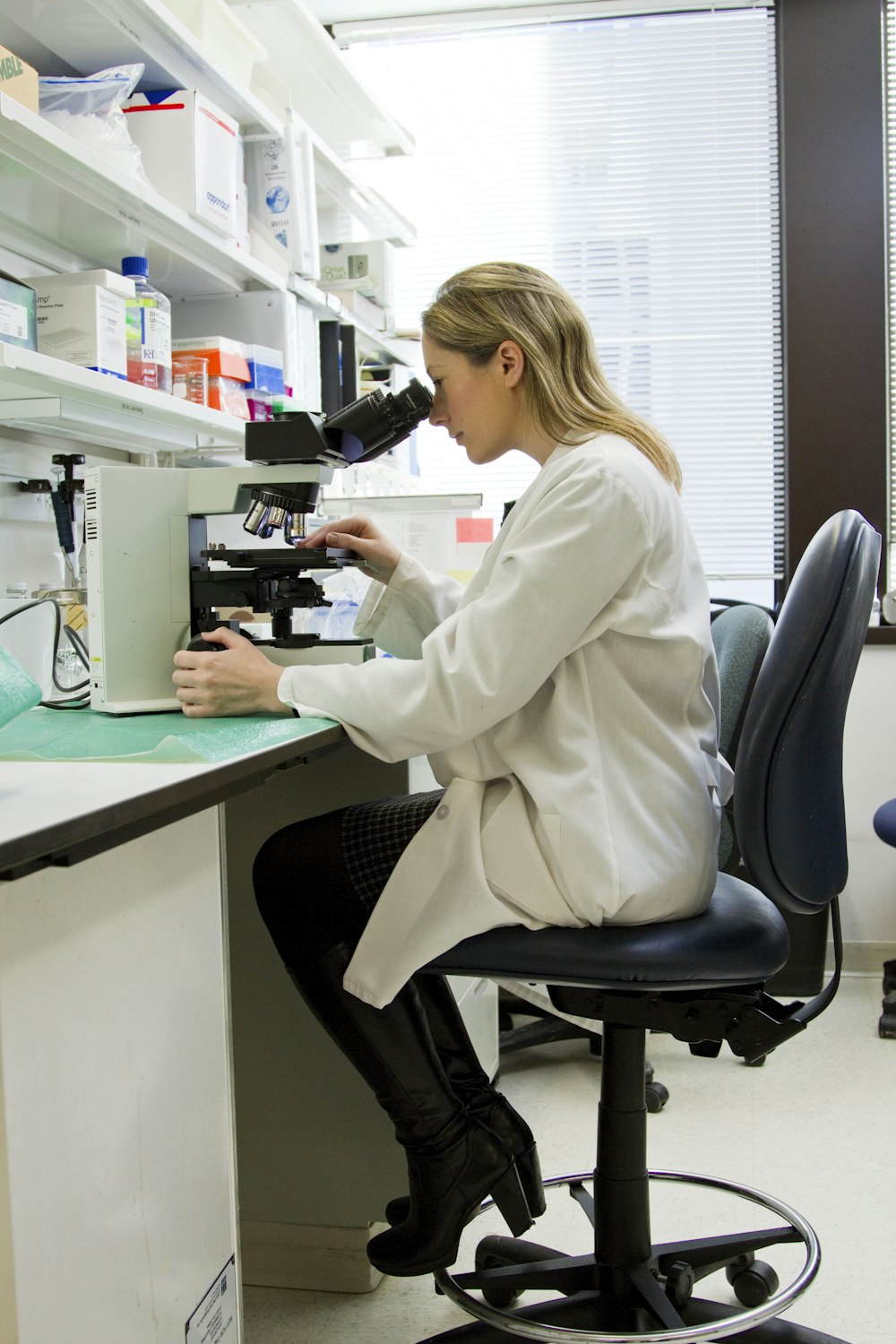
In-Depth Look at a Key Experiment: The Landmark 2012 Study
While CRISPR was originally discovered as a bacterial immune system, the pivotal moment that launched the gene-editing revolution was a 2012 paper by a team led by Dr. Emmanuelle Charpentier and Dr. Jennifer Doudna (who later won the Nobel Prize in Chemistry for this work) . They demonstrated that the CRISPR-Cas9 system could be programmed to cut any DNA sequence in a test tube.
Methodology: A Step-by-Step Breakdown
The experiment was elegantly simple in design:
Isolation
The researchers purified the key components: the Cas9 protein and the molecules necessary to create the guide RNA.
Programming
They designed specific guide RNA sequences to match target sequences within a plasmid (a small, circular piece of DNA often used in labs).
The Reaction
In a test tube, they mixed the programmed CRISPR-Cas9 complex (the "scissors" and the "seeker") with the target plasmid DNA.
Analysis
They used a standard laboratory technique called gel electrophoresis to visualize the results. If the DNA was cut, it would appear as distinct bands on the gel; if uncut, it would appear as a single band.
Results and Analysis: Precision Proven
The results were clear and powerful. The CRISPR-Cas9 system consistently and accurately cut the plasmid DNA only at the locations specified by the guide RNAs.
Scientific Importance
This was the definitive proof that CRISPR-Cas9 was a programmable gene-editing tool. It wasn't limited to bacterial defense; it could be directed by researchers to target and snip any gene in any organism. This opened the floodgates for thousands of subsequent experiments in human cells, plants, and animals, transforming genetic research across the globe .
Data Visualization: The CRISPR Revolution in Numbers
The groundbreaking 2012 experiment provided quantitative evidence of CRISPR's precision and efficiency. Below we visualize the key findings that demonstrated this revolutionary technology's potential.
Target DNA Cleavage Efficiency
This chart shows how effectively the programmed CRISPR-Cas9 system cut its target DNA compared to a non-programmed control.
Specificity of Different Guide RNAs
This demonstrates that the system is specific—different guide RNAs only cut their matching target sites.
| Experiment | Guide RNA | DNA Target | Cleavage |
|---|---|---|---|
| 1 | Target Site A (gRNA-A) | Site A | Yes |
| 2 | Target Site A (gRNA-A) | Site B | No |
| 3 | Target Site B (gRNA-B) | Site B | Yes |
The Scientist's Toolkit: Essential Reagents for CRISPR
A breakdown of the key "research reagent solutions" needed to perform a basic CRISPR experiment.
Plasmid DNA
A circular piece of DNA that serves as a customizable "package" to deliver the CRISPR machinery into a cell.
Guide RNA (gRNA)
The programmable "GPS" that directs the Cas9 protein to the specific target sequence in the genome.
Cas9 Nuclease
The "molecular scissors" enzyme that makes the double-stranded cut in the DNA.
Donor DNA Template
A piece of healthy DNA that the cell can use as a patch to correct the gene after the cut is made (for precise edits).
Cell Culture Reagents
Nutrients and growth factors needed to keep the cells alive and healthy outside the body during the experiment.
Transfection Reagent
A chemical "delivery vehicle" that helps the CRISPR components cross the cell membrane to enter the target cells.
Current Applications and Breakthroughs
Since the landmark 2012 experiment, CRISPR technology has rapidly advanced from laboratory curiosity to clinical applications with profound implications for medicine, agriculture, and biotechnology.
Medical Applications
- Genetic Disease Treatment: Clinical trials for sickle cell anemia, beta-thalassemia, and muscular dystrophy
- Cancer Immunotherapy: Engineering immune cells to better target and destroy cancer cells
- Viral Infections: Developing approaches to target and eliminate viral DNA, including HIV
- Diagnostic Tools: Creating highly sensitive tests for pathogens and genetic markers
Agricultural Applications
- Crop Improvement: Developing disease-resistant and drought-tolerant plants
- Nutritional Enhancement: Increasing vitamin and nutrient content in staple crops
- Reduced Allergens: Modifying crops to reduce or eliminate allergenic proteins
- Sustainable Farming: Reducing pesticide use through inherent pest resistance
Recent Success Story
In 2023, the first CRISPR-based therapy for sickle cell disease received regulatory approval, marking a historic milestone for gene editing in medicine. Patients who received this one-time treatment have shown remarkable improvement, with many becoming essentially free of disease symptoms .
The Editor is In, and the Future is Being Written
The discovery of programmable CRISPR-Cas9 marked the grand opening of biology's most powerful editorial office. What began as a curiosity of bacterial immunity is now a technology poised to redefine medicine, agriculture, and our basic understanding of life.
We are already seeing its first clinical applications, with therapies for sickle cell disease receiving approval, showing that curing genetic diseases is no longer a dream.
"We are at the beginning of a revolution in how we manipulate life. CRISPR gives us a power we've never had before—the ability to rewrite the code of life itself." - Dr. Feng Zhang, CRISPR pioneer
Of course, with great power comes great responsibility. The ability to rewrite the human genome raises profound ethical questions that society must grapple with. But one thing is undeniable: the editorial office is open for business, and we are all learning to become careful, thoughtful, and hopeful editors of the book of life.
Ethical Considerations
- Germline editing implications
- Equitable access to therapies
- Environmental impact of gene drives
- Regulatory frameworks
- Public understanding and engagement
