Synergistic Threats: How Habitat Fragmentation and Climate Change Jeopardize Biodiversity and Drug Discovery
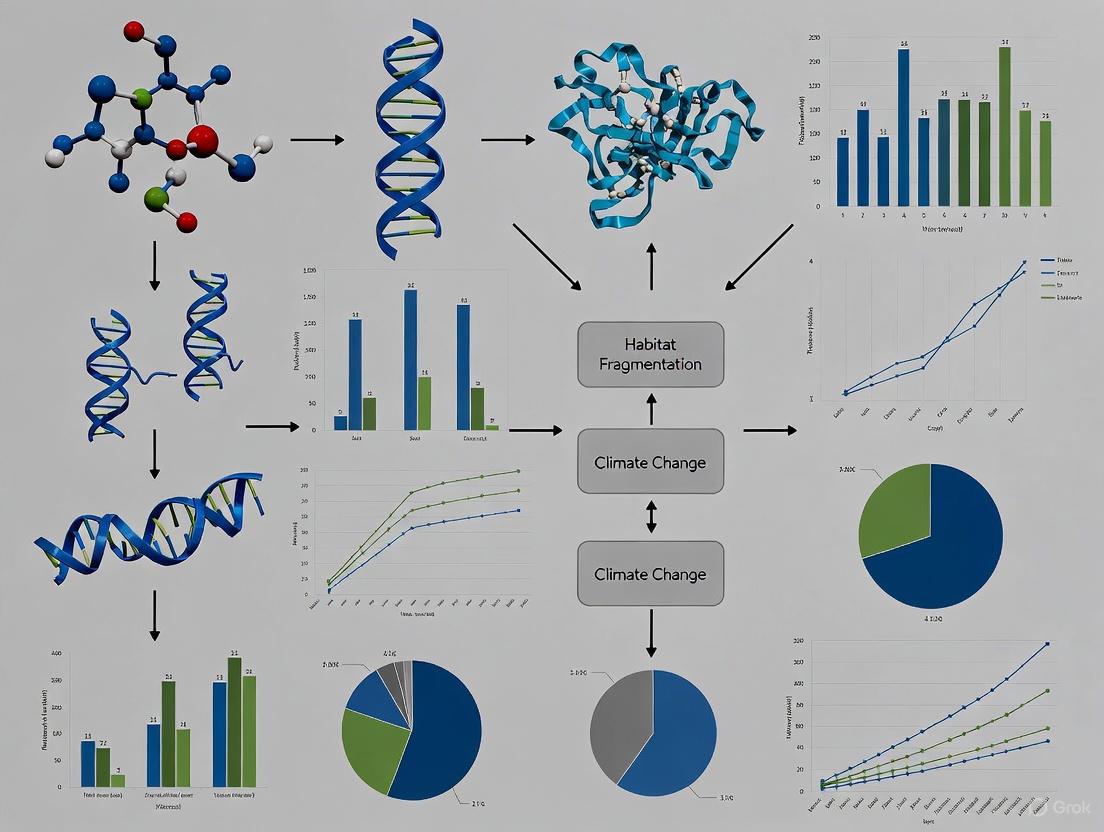
This article synthesizes the escalating impacts of the synergy between habitat fragmentation and climate change on global biodiversity, with a specific focus on the implications for biomedical research and drug...
Synergistic Threats: How Habitat Fragmentation and Climate Change Jeopardize Biodiversity and Drug Discovery
Abstract
This article synthesizes the escalating impacts of the synergy between habitat fragmentation and climate change on global biodiversity, with a specific focus on the implications for biomedical research and drug discovery. It explores the foundational ecological mechanisms by which fragmented landscapes inhibit species' climate responses, leading to accelerated population declines and extinctions. We review methodological approaches for modeling these synergistic effects and evaluate conservation strategies aimed at enhancing landscape connectivity. Critically, the article assesses the empirical evidence for these interactions and details the direct consequences of biodiversity loss on the erosion of nature's molecular library, threatening future pharmaceutical innovation and the discovery of novel treatments for diseases ranging from cancer to antimicrobial-resistant infections. This synthesis is intended to inform researchers, scientists, and drug development professionals about this critical, cross-disciplinary challenge.
The Dual Threat: Understanding the Ecological Synergy Between Habitat Fragmentation and Climate Change
Habitat fragmentation, the process where once-contiguous natural habitats are broken into smaller, isolated patches, is a critical environmental crisis driven by human activities like agriculture and urban development [1]. This multi-scale process profoundly impacts biodiversity and ecosystem functioning. For researchers investigating the synergy between habitat fragmentation and climate change, understanding these complex interactions is paramount, as climate change can exacerbate fragmentation's effects and vice versa [2] [3]. This guide provides essential technical support for designing and troubleshooting experiments in this complex field.
# Quantifying the Fragmentation Crisis: Key Data
A recent synthesis of 37 global studies provides clear quantitative evidence of fragmentation's detrimental effects, refuting earlier debates that suggested potential benefits at larger landscape scales [4] [5]. The table below summarizes the core findings.
Table 1: Biodiversity Loss in Fragmented Landscapes (Global Synthesis Data)
| Metric | Description of Metric | Average Reduction in Fragmented Landscapes |
|---|---|---|
| Alpha (α) Diversity | Number of species within a single habitat patch [4] | 13.6% fewer species [4] |
| Gamma (γ) Diversity | Total number of species across all patches in a landscape [4] | 12.1% fewer species [4] |
| Overall Species Count | Fragmented landscapes have fewer species compared to continuous habitats [1] | 12.1% fewer species [1] |
The data confirms that the increase in species turnover (beta diversity) between isolated patches does not compensate for the species lost from individual patches [5]. This results in a net negative effect on biodiversity at all scales, with fragmented landscapes becoming dominated by generalist species while specialists decline [4].
Table 2: Multi-Scale Effects of Habitat Fragmentation on Species
| Spatial Scale | Observed Impact on Species | Study Context |
|---|---|---|
| Patch Scale | White-footed mouse abundance greatest at pasture edges; Northern short-tailed shrew abundance positively related to fragmentation indices [6] | Essex County, MA, USA [6] |
| Landscape Scale (200-m radius) | Northern short-tailed shrew abundance increased with fragmentation [6] | Essex County, MA, USA [6] |
| Landscape Scale (500-m radius) | White-footed mouse abundance negatively associated with forested area [6] | Essex County, MA, USA [6] |
| Global Scale | Fragmented landscapes have 13.6% fewer species per patch and 12.1% fewer species overall [4] | Global synthesis of 37 forest landscapes [4] |
# Essential Experimental Protocols for Fragmentation Research
Small-Mammal Community and Pathogen Surveillance
This protocol, adapted from a multi-scale study in Essex County, MA, is designed to assess mammal abundance and tick-borne pathogen infection prevalence within a fragmented landscape [6].
Research Objective: To determine the structure of a small-mammal community in terms of mammal abundance and infection prevalence for pathogens like Borrelia burgdorferi within a fragmented landscape at multiple spatial scales (vegetation, edge type, landscape) [6].
Key Materials:
- Traps: Non-folding aluminum Sherman traps [6].
- Bait: Rolled oats and peanut butter [6].
- Field Equipment: GPS unit, flagging, scales, calipers, aluminum tags for marking [6].
- Sample Collection: Supplies for collecting tissue samples (e.g., ear punch) for subsequent pathogen DNA analysis [6].
Methodology:
- Site Selection: Select study sites representing different edge types (e.g., interior forest, pasture edge, residential edge). Sites should be placed in mature forest within patches of at least 10 hectares and established at least 300 meters apart to maintain independence [6].
- Field Sampling:
- Data Collection:
- GIS and Vegetation Analysis:
Troubleshooting Common Issues:
- Low Capture Rates: Ensure traps are properly sealed and baited. Consider habitat-specific placement (e.g., near logs, runways). Conduct trapping during favorable weather conditions.
- Sample Degradation: Store tissue samples in appropriate preservative (e.g., ethanol) or on dry ice immediately after collection to prevent DNA degradation for pathogen analysis.
Designing Fragmentation Experiments on Arthropods
This protocol provides a framework for manipulative experiments to isolate the effects of specific fragmentation components on arthropods, a critically understudied group in this context [7].
Research Objective: To disentangle the effects of different fragmentation components (patch size, isolation, habitat amount) and their interactions with other drivers like climate change on arthropod communities [7].
Key Materials:
- Experimental Landscapes: These can be natural landscapes where features are manipulated, purpose-built landscapes in field settings, or controlled microcosms/mesocosms in lab or greenhouse settings [7].
- Sampling Equipment: Equipment will vary by arthropod group but can include pitfall traps, sweep nets, malaise traps, vacuum samplers, and visual search protocols.
Methodology:
- Experimental Design:
- Define Fragmentation Components: Clearly define and isolate the variable(s) of interest (e.g., create patches of different sizes while controlling for total habitat amount, or vary the distance between patches to test isolation) [7].
- Incorporate Climate Factors: In controlled settings, manipulate temperature or humidity to simulate climate interactions [7].
- Replication: Ensure adequate replication of each treatment level to ensure robust statistical power [7].
- Sampling:
Troubleshooting Common Issues:
- Confounding Variables: The correlation between habitat loss and fragmentation is a major challenge. The experimental design must explicitly control for total habitat amount when testing the effect of fragmentation per se (the breaking apart of habitat) [7].
- Scale Mismatch: Ensure the spatial scale and duration of your experiment are relevant to the life history and dispersal capabilities of the focal arthropod species.
# Essential Research Reagent Solutions
Table 3: Key Materials and Reagents for Fragmentation Research
| Item | Function/Application in Research |
|---|---|
| Sherman Traps | Live-trapping small mammals for mark-recapture studies, behavioral observation, and tissue sampling [6]. |
| Aluminum Ear Tags | Permanently marking individual animals for tracking survival, movement, and population estimates over time [6]. |
| GIS Software & Data | Quantifying landscape-scale metrics of fragmentation (e.g., patch size, isolation, habitat amount) and land cover change [6]. |
| PCR Assays & Sequencing Kits | Detecting and identifying specific tick-borne pathogens (e.g., Borrelia burgdorferi) in collected tissue or tick samples [6]. |
| Standardized Vegetation Survey Protocols | Characterizing habitat structure (understory density, canopy cover, plant diversity) at trap sites to link species data to local habitat variables [6]. |
# Visualizing Research Workflows and Fragmentation Concepts
Experimental Workflow for a Multi-Scale Fragmentation Study
This diagram outlines the key phases of a comprehensive research project, from design to data synthesis.
Conceptual Model of Multi-Scale Fragmentation Drivers and Impacts
This diagram illustrates the cause-effect relationships and the synergistic link with climate change, which is central to a thesis on this topic.
# FAQs: Troubleshooting Your Fragmentation Research
Q1: My results show an increase in beta diversity in a fragmented landscape. Does this contradict the global consensus that fragmentation is harmful? A1: Not necessarily. An increase in beta diversity (species turnover between patches) is a common finding in fragmented systems. However, the latest global research confirms that this localized increase does not compensate for the concurrent loss of species within individual patches (alpha diversity). The net result is still a significant reduction in the total number of species across the entire landscape (gamma diversity) [4] [5]. When reporting your findings, it is critical to analyze and discuss all three diversity metrics to present a complete picture.
Q2: How can I experimentally distinguish the effect of habitat loss from the effect of fragmentation per se? A2: This is a central challenge. The key is in the experimental design [7].
- For Observational Studies: Use statistical models (e.g., multivariate regression) that include both "total habitat amount" and "number of patches/patch isolation" as independent variables to isolate their unique effects.
- For Manipulative Experiments: Design treatments that control for total habitat area while varying the spatial configuration. For example, compare one large habitat plot to several small plots that together sum to the same total area [7]. This allows you to test the effect of breaking the habitat apart, independent of simply having less of it.
Q3: Why is it important to consider the "edge effect" in fragmentation studies, and how do I account for it? A3: Habitat fragmentation dramatically increases the ratio of edge to interior habitat. Edge habitats have different microclimates (e.g., more light, wind, lower humidity), different plant communities, and higher exposure to predators and invasive species compared to the interior [1]. This "edge effect" can significantly skew your data on species abundance and distribution.
- How to Account for It: Stratify your sampling design. Place traps or survey plots at standardized distances from the edge (e.g., at 0m, 25m, 50m, and 100m into the patch) to explicitly measure how the edge influences your variables of interest. Classifying your study sites by edge type (e.g., forest interior vs. pasture edge) is also a effective strategy [6].
Q4: How does habitat fragmentation interact with climate change in my research? A4: This synergy is a critical research frontier. There are two primary interactions to consider:
- Climate Change Exacerbates Fragmentation: As temperatures rise, species need to shift their ranges to track suitable climates. Habitat fragmentation creates physical barriers that prevent this movement, trapping populations in increasingly unsuitable areas and heightening extinction risk [2] [3].
- Fragmentation Undermines Climate Resilience: Intact ecosystems like forests and peatlands are vital carbon sinks. Fragmentation degrades these ecosystems, reducing their ability to sequester carbon and thus amplifying climate change. Furthermore, fragmentation can increase the vulnerability of habitats to climate-driven disturbances like droughts and fires [2] [3]. Your research should measure climate-relevant variables (e.g., temperature loggers at edges vs. interiors) and consider future climate scenarios when modeling population viability.
Technical Support Center: Troubleshooting Range Shift Research
Frequently Asked Questions (FAQs)
FAQ 1: Why is my study system not showing the expected climate-driven range shifts, even with clear warming trends? Troubleshooting Guide:
- Potential Cause: Dispersal limitation due to habitat fragmentation is blocking species movement.
- Investigation Protocol:
- Map Habitat Availability: Quantify the proportion of suitable habitat in the landscape surrounding the range margin, for example using satellite-derived land cover classes [8].
- Measure Isolation: Calculate the distance from your study patches to the nearest potential source populations or to the mainland [9] [10].
- Analyze by Trait: Segment your analysis by species' thermal affinity (e.g., cold-adapted vs. warm-adapted) and dispersal ability. The problem may be most acute for habitat specialists and cold-adapted species [9] [8].
- Solution: If isolation is high, consider expanding your study to include potential "stepping stone" habitats that may facilitate slower, multi-generational range shifts [11].
FAQ 2: How can I disentangle the effects of habitat fragmentation from climate change on my community composition data? Troubleshooting Guide:
- Potential Cause: The mechanisms of fragmentation (e.g., microclimate change, dispersal limitation) are interacting with climatic warming.
- Investigation Protocol:
- Decompose the Process: Do not just model overall species richness or CTI. Explicitly model the colonization rates of warm-adapted species and the extinction rates of cold-adapted species separately [9] [10].
- Test Interaction Effects: Use statistical models that include an interaction term between your climate variable (e.g., temperature) and your fragmentation metric (e.g., patch area or isolation). A significant interaction indicates the effect of climate depends on the level of fragmentation [8].
- Check Microclimate: On a subset of patches, deploy data loggers to measure ambient temperature. Test if small patches have less buffered microclimates, which can accelerate the local extinction of cold-adapted species [9] [10].
FAQ 3: I work with a mobile species (e.g., birds), yet I am still observing lags in range shifts. Why? Troubleshooting Guide:
- Potential Cause: High mobility does not guarantee successful colonization if the landscape matrix is impermeable or if habitat patches at the range margin are too small to support new populations.
- Investigation Protocol:
- Assess Matrix Permeability: Evaluate the land use types between suitable habitat patches. Even for birds, intensive agriculture or urban areas can act as barriers [12] [13].
- Check for Habitat Heterogeneity: Larger patches often have more diverse resources and microrefugia. Analyze if population establishment is more successful on larger patches, even for highly mobile species [9] [10].
- Monitor Full Population Dynamics: Track not just presence/absence, but also reproductive success and population growth rates in newly colonized areas at the range margin. Failure to establish a breeding population is a key sign of habitat inadequacy [14].
Experimental Protocols & Data Analysis
Protocol 1: Quantifying Thermophilization in a Community
- Objective: To measure the directional change in community composition in response to climate warming.
- Methodology:
- Calculate Species Thermal Index (STI): For each species in your pool, obtain the mean temperature across its global geographic distribution [9] [10].
- Calculate Community Temperature Index (CTI):
- Statistical Analysis: Perform a linear regression of CTI (response variable) against year (predictor variable). A significant positive slope indicates thermophilization [9] [10].
Protocol 2: Testing the Mechanism - Colonization and Extinction Dynamics
- Objective: To determine how habitat fragmentation mediates the colonization-extinction dynamics underlying range shifts.
- Methodology:
- Longitudinal Data: Collect multi-season (ideally >5 years) species occurrence data across a set of patches that vary in area and isolation [9].
- Define Dynamics: For each patch and year, classify a species as:
- Colonized: If absent in year t and present in year t+1.
- Went Extinct: If present in year t and absent in year t+1.
- Model Framework: Use generalized linear mixed models (GLMMs). For example:
- Model:
Colonization ~ Species_STI * Patch_Area + (1|Species) + (1|Year) - Model:
Extinction ~ Species_STI * Patch_Isolation + (1|Species) + (1|Year)
- Model:
- Interpretation: A significant negative interaction between
Species_STIandPatch_Areaon extinction would support the microclimate buffering hypothesis [9] [10].
Structured Data Summaries
Table 1: Key Findings from Empirical Studies on Fragmentation-Mediated Range Shifts
| Study System / Taxa | Fragmentation Metric | Key Finding on Range Shift Process | Quantitative Effect |
|---|---|---|---|
| Birds, Subtropical Islands [9] [10] | Island Area & Isolation | Colonization of warm-adapted species increased faster on smaller/less isolated islands. Extinction of cold-adapted species was higher on less isolated islands. | Supported microclimate and dispersal limitation mechanisms. |
| 13 Invertebrate Taxa, Britain [8] | Habitat Availability at Range Margin | Habitat availability and its interaction with climate change explained up to half of the variation in range shift rates. | Species with >20% habitat availability shifted 2-10x faster than those with <5%. |
| Social-Ecological System, Qinling Mountains [15] | Landscape Fragmentation Composite Index | Increased fragmentation led to a decline in key ecosystem services: Soil Conservation (-165.07 t·ha⁻¹) and Habitat Quality (-0.30). | Network connectivity decreased by 0.13, path length increased by 0.25. |
Table 2: Research Reagent Solutions for Range Shift Studies
| Reagent / Essential Material | Function in Research | Key Consideration |
|---|---|---|
| Long-Term Monitoring Plots | Provides longitudinal data on species occupancy, abundance, and demography. | Critical for detecting colonization and extinction events; placement should span fragmentation gradients [9] [14]. |
| Climate Data Loggers | Measures in-situ microclimate conditions (e.g., temperature, humidity) within habitat patches. | Essential for testing the microclimate buffering hypothesis; deploy across a range of patch sizes [9]. |
| Satellite-Derived Land Cover Maps | Enables landscape-scale quantification of habitat amount, configuration, and fragmentation. | Allows calculation of metrics like habitat availability and isolation for each study site [15] [8]. |
| Species Distribution Data (e.g., GBIF) | Used to calculate Species Thermal Index (STI) and model climatic niches. | Provides a standardized, global baseline for understanding species' thermal affinities [9] [10]. |
| Genetic Analysis Tools | Assesses population genetic diversity and gene flow between fragmented populations. | Can reveal loss of connectivity and increased inbreeding, which precedes range shift failure [13]. |
Conceptual Diagrams
Mechanisms of Range Shift Failure
Range Shift Research Workflow
FAQs on Habitat Fragmentation and Climate Change Synergy
FAQ 1: How should I best measure forest fragmentation over time to ensure my results are ecologically meaningful? Conflicting findings in global fragmentation studies often stem from the choice of measurement metrics. Relying solely on structural metrics, which track changes in the number or size of forest patches, can be misleading. A 2025 global assessment recommends using composite indices that capture three key dimensions for a more complete picture [16]:
- Structure: How forests are subdivided.
- Aggregation: How clustered or dispersed forest patches are.
- Connectivity: How well the landscape facilitates species movement. This study found that connectivity-based metrics, which align most closely with ecological function, showed 51-67% of global forests became more fragmented from 2000 to 2020, a much higher estimate than structure-based metrics indicated [16].
FAQ 2: My research shows community composition is shifting due to climate change. How does habitat fragmentation mediate this process? Habitat fragmentation can significantly alter how species respond to a warming climate through multiple, simultaneous mechanisms. A 10-year study on bird communities in a subtropical island system identified three primary pathways [9]:
- Microclimate Buffering: Smaller, fragmented habitats often have less capacity to buffer macroclimate, leading to higher local temperatures that can boost warm-adapted species but increase extinction risk for cold-adapted ones.
- Habitat Heterogeneity: Larger patches generally contain more diverse habitats and resources, which can buffer species against climate change and facilitate niche tracking.
- Dispersal Limitation: Isolation can prevent species from moving to track their suitable climate niche, hindering colonization of warm-adapted species and emigration of cold-adapted species. The study concluded that fragmentation mediates climate-driven "thermophilization" (the shift toward warm-adapted species), with colonization rates of warm-adapted birds increasing faster on smaller or less isolated islands [9].
FAQ 3: Do the effects of habitat fragmentation and climate change simply add together, or do they interact? Research indicates these drivers often act non-additively, meaning their combined effect is different from the simple sum of their individual parts. The nature of this interaction can vary [17]:
- Synergistic Interactions: The combined effect amplifies the individual impacts. For example, one study found that location (a surrogate for climate) synergistically interacted with fragmentation to exacerbate detrimental effects on consumer density in a tri-trophic food chain [17].
- Antagonistic Interactions: The combined effect ameliorates the individual impacts. The same study found that location and fragmentation interacted antagonistically to reduce the negative impact on plant density and ecological processes like herbivory and parasitism [17]. These interactions can differ based on the trophic level studied and whether you measure species density or ecological processes.
FAQ 4: Can habitat fragmentation impact evolutionary processes like coevolution? Yes. Beyond immediate ecological consequences, severe habitat loss and fragmentation (HLF) can disrupt coevolutionary dynamics between species. A 2025 simulation study on cuckoo–host brood parasitism systems revealed that severe HLF [18]:
- Significantly increases the extinction risk for the parasitic cuckoo compared to moderate HLF.
- Narrows the range of host rejection behaviors that allow for the stable, long-term persistence of both species. This suggests that human-mediated HLF can disrupt fragile coevolutionary equilibria, posing more severe threats to biodiversity than previously recognized by focusing solely on population declines [18].
Key Data on Global Forest Fragmentation (2000-2020)
Table 1: Proportion of Forests that Became More Fragmented, by Metric and Region. Data sourced from a 2025 global assessment using high-resolution satellite data [16].
| Metric Category | Global Average | Tropical Regions | Temperate Regions | Boreal Regions |
|---|---|---|---|---|
| Connectivity-Based Metrics | 51% - 67% | 58% - 80% | Information Missing | Information Missing |
| Aggregation-Based Metrics | 57% - 83% | Information Missing | Information Missing | Information Missing |
| Structure-Based Metrics | 30% - 35% | Information Missing | Information Missing | Information Missing |
Table 2: Primary Drivers of Increased Forest Fragmentation. Data shows the percentage of global fragmentation increases attributed to each driver [16].
| Driver of Fragmentation | Contribution to Global Increase |
|---|---|
| Shifting Agriculture | 37% |
| Forestry | 34% |
| Wildfires | 14% |
| Commodity-Driven Deforestation | 14% |
Experimental Protocols
Protocol 1: Assessing Fragmentation and Community Thermophilization in a Land-Bridge Island System
This methodology is based on a longitudinal study that investigated how habitat fragmentation mediates climate-driven changes in bird communities [9].
- 1. Study System Selection: Identify a suitable fragmented landscape, such as a reservoir island system created by dam construction. This provides a natural experiment with islands of varying areas and isolation distances.
- 2. Field Data Collection:
- Conduct standardized bird surveys on multiple islands/habitat patches over a long-term period (e.g., 10 years).
- Record species identity and abundance.
- Simultaneously, collect local macroclimate temperature data to confirm a warming trend over the study period.
- 3. Quantifying Fragmentation:
- For each study patch, calculate two key metrics:
- Patch Area.
- Isolation Distance (e.g., distance to the mainland or other source populations).
- For each study patch, calculate two key metrics:
- 4. Calculating Thermal Indices:
- Assign a Species Temperature Index (STI) to each bird species, representing the mean temperature across its geographic range.
- For each community surveyed, calculate the Community Temperature Index (CTI) as the average STI of all species present, weighted by their abundance. A temporal increase in CTI indicates thermophilization.
- 5. Data Analysis:
- Use statistical models to test for a temporal trend in CTI.
- Analyze how the rates of colonization for warm-adapted species and extinction for cold-adapted species are influenced by patch area and isolation.
Protocol 2: Investigating Multi-Trophic Interactions Across Fragmentation and Climate Gradients
This protocol is adapted from a study examining the interactive effects of fragmentation and temperature on a tri-trophic food chain [17].
- 1. Site Selection:
- Select multiple field locations across a latitudinal gradient, using latitude as a surrogate for temperature.
- Ensure sites have similar habitat types and elevations to control for confounding variables.
- At each location, select several forest fragments that vary in size and isolation.
- 2. Measuring Trophic Levels:
- Identify a focal plant, herbivore, and natural enemy (e.g., parasitoid) species.
- In each fragment, collect data on:
- Density: Population density for each of the three trophic levels.
- Ecological Processes: Frequency of biotic interactions (e.g., herbivory on plants, parasitism rates on herbivores).
- 3. Quantifying Drivers:
- Fragmentation: Measure fragment area and distance to habitat edge for each study plot.
- Climate: Use data from nearby weather stations and/or deploy microclimate dataloggers at each site to record local temperature.
- 4. Statistical Analysis:
- Use linear mixed-effects models to determine whether the impacts of fragmentation and temperature are additive or interactive (synergistic or antagonistic).
- Test whether the effects differ across trophic levels and between density measures and process measures.
Conceptual Workflow and Signaling Pathways
Diagram 1: Pathways of synergistic impacts from habitat fragmentation and climate change.
The Scientist's Toolkit: Research Reagent Solutions
Table 3: Essential Materials and Data Sources for Fragmentation and Climate Synergy Research.
| Item / Solution | Function in Research | Example Application / Note |
|---|---|---|
| High-Resolution Satellite Imagery | Provides the foundational data for mapping habitat cover, calculating patch metrics, and tracking changes over time. | Used in global assessments to analyze forest cover change from 2000-2020 and compute fragmentation indices [16]. |
| Landscape Metrics Software | Calculates quantitative indices of fragmentation from spatial data, such as connectivity, aggregation, and patch structure. | Critical for moving beyond simple habitat loss to measure functional connectivity and aggregation [16]. |
| Species Temperature Index (STI) | A functional trait assigned to each species, representing its temperature preference based on its geographic distribution. | Enables calculation of the Community Temperature Index (CTI) to track thermophilization in community studies [9]. |
| Microclimate Dataloggers | Records localized temperature and humidity conditions within habitat patches, which can differ significantly from macroclimate data. | Used to verify temperature gradients and the microclimate buffering capacity of different fragments [9] [17]. |
| Individual-Based Simulation Models | Allows for the testing of hypotheses about long-term processes like coevolution under different fragmentation scenarios. | Used to model cuckoo-host dynamics and predict how fragmentation alters coevolutionary equilibria [18]. |
| Standardized Field Survey Protocols | Ensures consistent, comparable data collection on species presence, abundance, and biotic interactions across different sites and fragments. | Essential for multi-trophic level studies and long-term monitoring of community changes [9] [17]. |
Frequently Asked Questions (FAQs)
1. What is the "Edge Effect" in the context of habitat fragmentation? The edge effect describes the changes in ecological conditions that occur at the boundaries of forest fragments compared to their interiors. Forest edges are typically sunnier, windier, and hotter, with lower humidity than the forest interior [19]. These altered microclimates can lead to significant changes in species composition and key ecosystem functions [20].
2. How does climate change interact with and intensify these edge effects? Climate change exacerbates edge effects by increasing the frequency and intensity of climatic extremes like drought. Research shows that the microclimatic stress at forest edges, particularly drying and heating, is almost double during drought years compared to non-drought years [19]. For many species, this interaction significantly elevates the risk of local extinction [21].
3. What are the primary microclimatic variables I should monitor? Your experimental design should prioritize monitoring air temperature and relative humidity at a minimum [20]. Additional key variables include:
- Soil Moisture: Crucial for plant and soil organism survival.
- Solar Radiation: A primary driver of temperature increases at edges.
- Wind Speed: Often higher at forest edges, contributing to drying.
4. How far from the edge do these microclimatic changes penetrate into a forest? Penetration distance is site-specific and depends on factors like adjacent land cover and canopy structure. Studies have shown significant microclimatic changes can be detected up to 60 meters into a forest fragment, and sometimes much farther [20]. The influence generally decreases with distance from the edge.
5. Can landscape management mitigate these synergistic effects? Yes. Evidence suggests that reducing habitat fragmentation is a more effective strategy for population persistence than simply increasing habitat area alone [21]. Maintaining a dense canopy cover and taller trees provides shade, which has been shown to weaken edge effects, particularly during drought [19].
Troubleshooting Guides
Issue 1: Inconsistent Microclimate Data Along Edge-to-Interior Gradients
Problem: Measurements for temperature or humidity are highly variable and do not show a clear gradient from the forest edge to the interior.
| Potential Cause | Solution |
|---|---|
| Insufficient data logging frequency | Increase the measurement frequency to capture diurnal cycles. Microclimatic differences are often most pronounced at specific times of day [20]. |
| Inadequate replication across sites | Ensure you are sampling multiple edges with the same characteristics (e.g., same adjacent land cover) to distinguish true edge effects from random variation. |
| Interference from canopy gaps | Select transect lines that avoid large, natural canopy gaps to ensure you are measuring the edge effect, not a gap effect. |
| Sensor placement error | Place all sensors at a standardized height (e.g., 1-1.5m above ground) and ensure they are shielded from direct precipitation and sunlight. |
Issue 2: Measuring Ecological Responses in Drought-Sensitive Species
Problem: A target species (e.g., moss, certain butterflies) is not showing an expected response to the edge, or populations are collapsing.
| Potential Cause | Solution |
|---|---|
| Cumulative effects of multiple stressors | The species may be responding to the interaction of drought and edge effects. Analyze your data to see if the edge effect is stronger in drought years [19]. |
| Historical fragmentation context | Account for the age of the edge and the land-use history in your models. Older edges may have different communities adapted to microclimatic stress. |
| Insufficient data on population dynamics | For mobile species, implement mark-recapture studies or transect counts to track population size and movement, not just presence/absence [21]. |
| Confounding factors from adjacent land use | Characterize the adjacent matrix more thoroughly. The type of land cover (e.g., pasture vs. rubber plantation) can alter the magnitude and even the direction of the edge effect [20]. |
The following tables consolidate key quantitative findings from recent research on edge effects.
Table 1: Microclimatic Gradients at Forest Edges [20]
| Distance from Edge | Temperature Change | Humidity Change (Adjacent to Pasture) | Humidity Change (Adjacent to Plantation) |
|---|---|---|---|
| 0 m (Edge) | Increase (Highest) | Decrease (Lowest) | Increase (Highest) |
| 20 m | --- | Significant decrease | Slight decrease |
| 40 m | Decreasing | Approaching interior levels | Approaching interior levels |
| 60 m | Approaching interior levels | Similar to interior | Similar to interior |
Table 2: Interaction of Edge Effects and Drought on an Indicator Species [19]
| Condition | Moss Growth Rate at Edge | Moss Growth Rate in Interior | Magnitude of Edge Effect |
|---|---|---|---|
| Non-Drought Year | Reduced | Higher | ~1x (Baseline) |
| Drought Year | Severely Reduced | Moderately Reduced | ~2x (Double) |
Table 3: Projected Population Persistence under Climate Scenarios [21]
| Climate Scenario | Management Scenario | Probability of Persistence until 2050 | Probability of Persistence until 2100 |
|---|---|---|---|
| RCP8.5 (High Emissions) | Business-as-usual | ~0% | ~0% |
| RCP8.5 (High Emissions) | Reduced Fragmentation | 6% - 42% | --- |
| RCP2.6 (Low Emissions) | Habitat Restoration | >50% | >50% |
Experimental Protocols
Protocol 1: Quantifying Edge-Induced Microclimatic Gradients
Objective: To measure the penetration distance and magnitude of microclimatic changes from a forest edge into the interior.
Methodology: [20]
- Site Selection: Identify forest fragments with clearly defined edges and a uniform interior. The adjacent land cover (e.g., pasture, crop field) should be well-documented.
- Transect Establishment: Establish multiple linear transects perpendicular to the forest edge, extending at least 100 meters into the forest interior.
- Sensor Deployment: Install automated data loggers (e.g., for temperature and humidity) at set intervals along each transect (e.g., 0m, 20m, 40m, 60m, 100m). Sensors should be placed at a standard height (e.g., 1.5m).
- Data Collection: Log data at frequent intervals (e.g., every 30 minutes) over a period of at least one full year to capture seasonal variation.
- Data Analysis: Use statistical models (e.g., linear mixed-effects models) to test for significant differences in microclimatic variables based on distance from the edge, time of day, and type of adjacent land cover.
Protocol 2: Assessing Synergistic Effects on Biotic Indicators
Objective: To evaluate how drought intensifies edge effects on a moisture-sensitive species.
Methodology (Based on moss growth): [19]
- Indicator Species: Select a known indicator species sensitive to microclimate, such as the moss Hylocomium splendens.
- Sampling Design: Collect samples of the indicator species at varying distances from the forest edge (e.g., 0m, 10m, 25m, 50m, 100m) across multiple forest sites.
- Retrospective Growth Analysis: In species like moss, annual growth increments can be measured retrospectively for past years, including known drought and non-drought years.
- Environmental Covariates: Measure site-specific variables that may mitigate edge effects, such as canopy cover density and tree height.
- Statistical Analysis: Compare growth rates between edge and interior positions during drought and non-drought years. Test for an interaction effect between 'distance from edge' and 'drought' on the growth rate.
Research Reagent Solutions & Essential Materials
Table 4: Essential Materials for Field and Data Analysis
| Item | Function / Application |
|---|---|
| Automated Microclimate Data Loggers | For continuous, high-frequency measurement of temperature, humidity, and light levels along transects. |
| Dendrometers / Soil Moisture Sensors | For measuring tree growth and soil water content, respectively, as secondary microclimatic and ecological responses. |
| GPS Unit | For accurate mapping of fragment edges, transect locations, and sensor positions. |
| GIS Software (e.g., QGIS, ArcGIS) | For mapping forest fragments, calculating fragmentation metrics, and analyzing spatial patterns. |
| R Statistical Software | For all statistical analyses, including linear mixed-effects models and population viability analysis. |
Experimental Workflow and Conceptual Diagrams
Workflow for Edge Effect Research
Edge Effect and Climate Synergy
Frequently Asked Questions (FAQs)
FAQ 1: What are the primary genetic risks for small, isolated populations? Small, isolated populations face two major genetic risks: inbreeding depression and loss of adaptive potential [22] [23]. Inbreeding depression is the reduced survival and reproductive success of offspring from related parents, caused by increased homozygosity of deleterious recessive alleles [22]. Loss of adaptive potential is the erosion of genetic diversity that populations need to evolve and adapt to new environmental pressures, such as climate change [23]. These risks are driven by genetic drift, which randomly fixes alleles and removes variation in small populations, and the increased probability of mating between related individuals [22] [23].
FAQ 2: How does habitat fragmentation interact with climate change? Habitat fragmentation and climate change act as synergistic threats [24]. Fragmentation reduces biodiversity and creates smaller, isolated populations that are more vulnerable to environmental fluctuations [25] [26]. Climate change then imposes new selective pressures on these already genetically compromised populations. Furthermore, the loss of biodiversity itself can weaken ecosystem functions, such as carbon sequestration, potentially creating a feedback loop that accelerates climate change [24]. Managing these threats requires an integrated approach that addresses both habitat connectivity and climate mitigation [27].
FAQ 3: Can a population be "rescued" from inbreeding depression? Yes, genetic rescue is a management strategy that can reverse inbreeding depression [23]. It involves facilitating gene flow into a small, isolated population, often through human-assisted translocations, to introduce new genetic material [23]. This can rapidly improve fitness and reduce genetic load. Successful genetic rescue requires careful planning to minimize the risk of outbreeding depression, which is low when source populations have the same karyotype, have been isolated for less than 500 years, and are adapted to similar environments [23].
FAQ 4: Are some species tolerant of inbreeding? Some populations, like the vaquita, Chatham Island black robin, and Island foxes, persist with high levels of inbreeding without obvious signs of inbreeding depression [22]. This apparent resilience is often due to their demographic history; long-term small populations may have purged highly deleterious mutations through natural selection [22]. However, this does not mean they are safe. They typically have low genetic diversity, making them vulnerable to future environmental changes, and may still accumulate mildly deleterious mutations over time [22].
Troubleshooting Guides
Problem 1: Detecting and Quantifying Inbreeding in Wild Populations
Symptoms: Observed reductions in juvenile survival, birth weight, or reproductive success in a small population [22].
Methodology:
- Define Your Baseline: Inbreeding is a relative measure. You must define a reference base population against which the increase in identity-by-descent (IBD) is measured [22]. This could be a founder population assumed to be non-inbred or a hypothetical random-mating population [22].
- Select a Measurement Tool:
- Pedigree Analysis: Calculate the pedigree inbreeding coefficient (F) if detailed family history data is available. This estimates the probability that an individual's two gene copies are IBD from a known founder population [22].
- Genomic Analysis: Use genome-wide single nucleotide polymorphism (SNP) data. Key metrics include [22]:
- F~ROH~: The proportion of the genome in runs of homozygosity (ROH). Longer ROH tracts indicate recent inbreeding and are often more strongly associated with fitness declines [22].
- F~IS~: Measures deviations from Hardy-Weinberg equilibrium expectations within a subpopulation, indicating non-random mating [22].
- F~GRM~: Derived from a genomic relationship matrix, this estimates relatedness and IBD sharing between individuals [22].
Interpretation and Next Steps: A confirmed signal of inbreeding, particularly through F~ROH~, should prompt an assessment of its fitness consequences and consideration of management interventions like genetic rescue [23].
Problem 2: Assessing Loss of Adaptive Potential
Symptoms: Population shows inadequate response to a changing environment (e.g., rising temperatures, new pathogens) or has a known small effective population size (N~e~) [23].
Methodology:
- Estimate Effective Population Size (N~e~): Use genetic data (e.g., linkage disequilibrium methods) to estimate the size of an idealized population that would lose genetic diversity at the same rate as your study population [23].
- Measure Genetic Diversity:
- Neutral Diversity: Calculate metrics like expected heterozygosity (H~e~) or allelic richness from genetic markers. This represents the standing variation upon which selection can act [23].
- Genetic Load: Use genomic sequences to identify and sum the predicted deleterious mutations across an individual's genome. This estimates the hidden burden that can become exposed through inbreeding [22].
- Compare to Conservation Thresholds:
Interpretation and Next Steps: If N~e~ is below these thresholds or genetic diversity is critically low, the population's long-term viability is at risk. Management should focus on strategies to increase N~e~ and genetic connectivity [23].
Problem 3: Designing a Genetic Rescue Experiment
Symptoms: A small, isolated population with documented inbreeding depression or dangerously low genetic diversity [23].
Methodology:
- Source Population Selection: Identify a potential donor population. The risk of outbreeding depression is low if populations [23]:
- Have the same karyotype.
- Have been isolated for <500 years.
- Are adapted to similar environments.
- Translocation Protocol:
- Pilot Study: Start with a small-scale, controlled translocation of a few individuals (e.g., 1-2 migrants per generation) [23].
- Monitoring: Implement a robust pre- and post-translocation monitoring plan to track fitness (e.g., survival, reproductive success) and genetic metrics [23].
- Adaptive Management: Use monitoring data to adjust the strategy, potentially increasing the number of migrants if the initial response is positive and no negative effects are observed [23].
- Goal: Achieve a managed gene flow of up to 20% from the source population to significantly improve genetic diversity and population fitness without causing genetic swamping [23].
Key Genetic Metrics and Thresholds for Conservation
Table 1: Key quantitative metrics and their conservation thresholds for assessing inbreeding and adaptive potential.
| Metric | Description | Conservation Threshold | Interpretation |
|---|---|---|---|
| Effective Population Size (N~e~) | Size of an idealized population losing diversity at the same rate [23] | Short-term: N~e~ ≥ 100 [23] | Prevents severe inbreeding depression in the short term. |
| Long-term: N~e~ ≥ 1,000 [23] | Retains adaptive potential and evolutionary resilience. | ||
| Genomic Inbreeding (F~ROH~) | Proportion of the genome in Runs of Homozygosity [22] | Higher F~ROH~, especially with long ROH tracts, indicates greater risk [22] | Suggests recent inbreeding and is strongly correlated with fitness decline. |
| Genetic Load | Cumulative number of deleterious mutations in a genome [22] | No universal threshold; higher load increases extinction risk [22] | Becomes exposed as homozygosity increases, reducing fitness. |
Experimental Protocols
Protocol 1: Measuring Inbreeding Depression with Fitness Proxies
This protocol is for assessing the relationship between genomic inbreeding and fitness-related traits in a wild or captive population.
Workflow:
Steps:
- Sample Collection: Non-invasively collect tissue, blood, or hair samples from a representative number of individuals in the population for DNA extraction [22].
- Genomic Sequencing: Perform whole-genome sequencing or high-density SNP genotyping to obtain genome-wide data for each individual [22].
- Inbreeding Calculation: Use bioinformatics software (e.g., PLINK) to identify Runs of Homozygosity (ROH) and calculate the F~ROH~ inbreeding coefficient for each individual [22].
- Fitness Proxy Measurement: Collect long-term data on fitness proxies. These can include [22]:
- Juvenile survival
- Lifetime reproductive success
- Annual breeding success
- Birth weight
- Statistical Analysis: Perform a regression analysis (e.g., using R) to test for a significant negative correlation between F~ROH~ values and the fitness proxy measurements. This establishes the presence and severity of inbreeding depression [22].
Protocol 2: Simulating the Effects of Breeding Strategies
This protocol uses individual-based simulations to model the genetic consequences of different breeding strategies in captive populations, such as their effect on genetic adaptation to captivity.
Workflow:
Steps:
- Founder Population: Model the captive program as starting with wild-born individuals, whose genetic makeup reflects the wild (non-captive adapted) state [28].
- Define Breeding Strategies: Program different management strategies into the simulation. Two common ones are [28]:
- Simulate Generations: Run the simulation for multiple generations under captive conditions. The model should include parameters for a quantitative trait under selection, where the optimal trait value differs between the captive and wild environments [28].
- Measure Outcomes: After several generations, measure key outcomes for each strategy [28]:
- Genetic Adaptation to Captivity: The shift in the mean genotypic value of the quantitative trait toward the captive optimum.
- Fitness in the Wild: The simulated fitness of the captive-born population if it were reintroduced into the wild environment.
- Retained Genetic Diversity: The amount of additive genetic variance remaining in the population.
- Comparison: Compare the strategies. Simulations have shown that half-sib mating can be more effective at reducing genetic adaptation to captivity but carries a higher risk of inbreeding depression if population fecundity is low [28].
The Scientist's Toolkit: Research Reagent Solutions
Table 2: Essential reagents, tools, and software for research on inbreeding and adaptive potential.
| Category | Item/Solution | Function/Application |
|---|---|---|
| Genomic Analysis | Trizol Reagent | For isolation of high-quality total RNA from tissue samples for gene expression studies [29]. |
| Affymetrix GeneChip Microarrays | Genome-wide profiling of gene expression patterns to investigate genetic stress responses [29]. | |
| Whole-genome sequencing kits | Provides comprehensive data for identifying SNPs, calculating F~ROH~, and estimating genetic load [22]. | |
| Data Analysis Software | R Programming Environment | Statistical computing and graphics; essential for genetic data analysis, linear modeling, and visualizing results [29]. |
| PLINK | Whole-genome association analysis toolset used for calculating F~ROH~ and other genomic inbreeding coefficients [22]. | |
| Individual-based Simulation Software (e.g., SLiM, Nemo) | For modeling population genetics scenarios, such as the long-term effects of different breeding strategies [28]. | |
| Field & Monitoring Tools | Non-invasive DNA sampling kits | Allows genetic sampling without capturing or disturbing study animals (e.g., from hair, feces, feathers). |
| Long-term demographic database | A structured system for recording fitness proxies like survival, reproductive success, and parentage over time [22]. |
Modeling the Synergy: Research Tools for Predicting Impacts and Informing Conservation
Core Concepts: Synergy Between Habitat Fragmentation and Climate Change
Habitat fragmentation and climate change are not independent pressures; they interact synergistically to threaten biodiversity. Habitat fragmentation can inhibit or block species' ability to track shifting climatic conditions by disrupting dispersal and colonization processes [30]. This creates a dangerous feedback loop: climate change forces species to move, while fragmentation prevents them from doing so. Furthermore, an increased frequency of large-scale disturbances caused by extreme weather events will cause increasing gaps in habitat networks and an overall contraction of species' distribution ranges [30]. Understanding this synergy is fundamental to interpreting model forecasts and designing effective conservation strategies.
Troubleshooting Guide: Common MetaLandSim Workflow Hurdles
Landscape Generation and Import Issues
| Problem Scenario | Error Message/ Symptom | Likely Cause | Solution |
|---|---|---|---|
Generating random landscapes with rland.graph |
Landscapes lack expected structural complexity or seem overly uniform. | Default parameters may generate simplistic landscapes that poorly mimic real-world habitat distributions [31]. | Explicitly adjust parameters for habitat clustering and spatial autocorrelation in rland.graph to create more realistically fragmented landscapes [31]. |
Importing a real-world landscape from a shapefile using import.shape |
Import fails or the resulting landscape object is invalid. | The geometry in the shapefile is invalid, or the attribute table lacks a required field (e.g., patch ID or area) [32]. | Validate and repair the source shapefile geometry in GIS software. Ensure the attribute table contains a unique identifier and a field for patch area [32]. |
| Simulating on a highly fragmented, real landscape. | Model runs extremely slowly or crashes due to memory issues. | A very high number of small, isolated patches overwhelms computational resources during connectivity calculations [33]. | Use the manage_landscape_sim function to aggregate or filter out the smallest, least significant patches, thereby reducing simulation complexity [31]. |
Parameter Estimation and Model Calibration
| Problem Scenario | Error Message/ Symptom | Likely Cause | Solution |
|---|---|---|---|
| Estimating Incidence Function Model (IFM) parameters from limited field data. | Parameter estimates have very wide confidence intervals or model fails to converge. | Sparse patch occupancy data leads to high uncertainty in estimating colonization and extinction rates [32]. | Utilize the package's Bayesian parameter estimation tools (from Risk et al., 2011) to incorporate prior knowledge and improve estimate stability with limited data [31]. |
| Model projections show consistently inflated or deflated patch occupancy compared to validation data. | Systematic bias, not random error, in model predictions. | The initial estimates for dispersal kernel shape or scaling distance are incorrect [32]. | Conduct a sensitivity analysis on the dispersal parameters. If possible, use telemetry or mark-recapture data to empirically inform the dispersal kernel [32]. |
Simulation Execution and Analysis
| Problem Scenario | Error Message/ Symptom | Likely Cause | Solution |
|---|---|---|---|
Running range_expansion into an empty landscape. |
Expansion stops prematurely or speed is much slower than expected. | The "spurious nodes" at the landscape margins are not being colonized, thus failing to trigger the expansion algorithm [32]. | Check the placement and connectivity of the spurious nodes. Increase the number of simulation iterations (iterate.graph) to ensure colonization events have a higher probability of reaching the margins [32]. |
Using range_raster to create a dispersal probability surface. |
The output raster shows no variation or uniform probability in all directions. | In versions 2.0.0+, the function applies a uniform dispersal probability in all directions, unlike older versions that used cardinal directions [31]. | This is expected behavior in current versions. The output represents an isotropic dispersal probability, which is standard for many range-shift models [31]. |
| Comparing metapopulation persistence between different species. | Results contradict classical theory (e.g., "resident" species persist longer than "migrant" species). | On realistically fragmented landscapes, classical model predictions can be invalidated or reversed [33]. | This is a valid finding. Fragmentation can create "dualities," where long-ranging migrants are more vulnerable due to higher mortality in the unsuitable matrix [33]. |
Experimental Protocols for Key Analyses
Protocol 1: Simulating Metapopulation Dynamics in a Static Landscape
Purpose: To project the long-term patch occupancy and persistence of a metapopulation under current landscape conditions.
- Landscape Preparation: Define your habitat patch network using
rland.graph(for virtual landscapes) orimport.shape/convert.graph(for real landscapes) [32]. - Parameter Estimation: Obtain species-specific parameters for the Stochastic Patch Occupancy Model (SPOM). Use the
fit_persistencefunctions or Bayesian methods to estimate local extinction and colonization probabilities from empirical data [31]. - Simulation Execution: Use the
spomfunction to run a single simulation oriterate.graphto run multiple replicated simulations over a specified number of time steps [32]. - Output Analysis: Analyze the output to calculate:
- Mean Time to Metapopulation Extinction: The average number of time steps until all patches are simultaneously empty.
- Global Population Density: The proportion of occupied patches over time.
- Spatial Correlation: The degree of synchrony in population dynamics across patches [33].
Protocol 2: Modeling Range Expansion Under Climate Change
Purpose: To forecast the speed and pattern of a species' range shift through a fragmented landscape in response to a hypothetical climatic gradient.
- Initialization: Start with a core landscape where the species is currently present (occupied). Define a series of adjacent, initially empty landscapes that represent future climatically suitable areas [32].
- Dispersal Kernel Definition: Use the
range_expansionfunction to simulate the spread. The key is to define a dispersal kernel that reflects the species' mobility. This can be a negative exponential or a Gaussian function [32]. - Expansion Simulation: Execute the
range_expansionfunction. The algorithm will simulate metapopulation dynamics within the occupied landscape and, upon colonizing the "spurious nodes" at the margin, will expand the simulation into the adjacent empty landscape [32]. - Output and Translation:
- The function returns an object of class
expansion[31]. - Use
range_rasterto convert this object into a raster map predicting the probability of occupancy across the expanded range during a given time window [32]. - The dispersal model from this simulation can be combined with an ecological niche model to forecast range shifts under climate change, accounting for dispersal limitations [32].
- The function returns an object of class
Visualization: MetaLandSim Range Expansion Workflow
Table: Key computational tools and conceptual "reagents" for spatially explicit metapopulation modeling.
| Research Reagent | Function & Purpose | Technical Specification / Notes |
|---|---|---|
| Landscape Graph | The fundamental representation of the habitat network, where nodes are patches and edges represent potential dispersal pathways [31]. | Created via rland.graph, import.shape, or convert.graph. Allows for multi-scale analysis and computation of connectivity metrics [32]. |
| Stochastic Patch Occupancy Model (SPOM) | The core engine simulating colonization and extinction events in each habitat patch over time [32]. | Implemented in the spom function. Balances realism with data efficiency, making it applicable to a wide range of taxa [32]. |
| Dispersal Kernel | A mathematical function describing the probability of dispersal as a function of distance from a source patch [32]. | Typically a negative exponential or Gaussian function. Critically influences range expansion speed and pattern [32]. |
| Connectivity Metrics | Quantitative measures (e.g., metapopulation capacity, integral index of connectivity) that summarize the landscape's functional structure for a species [31]. | Calculated at each time step. Used to diagnose metapopulation viability and identify critical patches for conservation [32]. |
| Environmental Stochasticity | A parameter introducing random, environmentally-driven variation in population growth rates, mimicking the effect of good and bad years [33]. | Modeled as random noise. Its interaction with fragmentation can create unexpected outcomes, such as noise-induced persistence in large, fragmented landscapes [33]. |
Frequently Asked Questions (FAQs)
Q1: My results show that on highly fragmented landscapes, "resident" species (with short-distance dispersal) can be more resilient than "migrant" species. Is my model broken? No, this is a robust and recently highlighted finding. Classical metapopulation theory, often based on simple patch networks, can be overturned on realistically complex landscapes. Fragmentation can cause long-ranging "migrants" to suffer higher mortality in the unsuitable matrix, making them more vulnerable to global extinction than "residents" who thrive in the remaining habitat fragments [33].
Q2: How can I use MetaLandSim to directly inform conservation planning, like designing a wildlife corridor?
The package is well-suited for this. You can use the connectivity metrics calculated from your landscape graph to identify patches that are critical for maintaining overall metapopulation connectivity. Then, using manage_landscape_sim, you can simulate the effect of adding new habitat patches or corridors and quantify the resulting improvement in metapopulation persistence and range expansion potential [31]. This provides a evidence-based approach to corridor design.
Q3: What is the most common mistake when first using MetaLandSim for range expansion forecasts? A frequent error is mis-specifying the dispersal kernel. Using an incorrect mean dispersal distance or kernel shape will lead to profoundly inaccurate forecasts of expansion speed and pattern. Always conduct a thorough sensitivity analysis on these parameters and ground-truth them with empirical data whenever possible [32].
Q4: How does the synergy between climate change and habitat fragmentation specifically manifest in the model?
The synergy is modeled by linking processes at two scales. At the range scale, climate change creates a "moving target" of suitable conditions, simulated by range_expansion into new landscapes. At the landscape scale, habitat fragmentation (simulated through the spatial structure of your graph) inhibits the colonization processes necessary to track that shift. A highly fragmented landscape will block the expansion that climate change otherwise necessitates [30].
Frequently Asked Questions (FAQs)
FAQ 1: What are the core advantages of using a trait-based approach over a species-based approach in ecosystem models?
Trait-based approaches offer several key advantages for modeling ecosystems under global change. They directly connect organismal performance to ecological functions at higher organizational levels like populations, communities, and ecosystems [34]. This allows for greater generalization, as models are not tied to specific taxonomies and their results can be projected to other systems or used to fill knowledge gaps for unstudied species [34]. Furthermore, trait-based models often require less parameterization effort and can reduce computing times compared to complex species-based models [34]. Crucially, they facilitate the scaling of physiological processes to global scales, as traits act as a common currency across different scales [34].
FAQ 2: How do trait-based models uniquely capture the synergistic effects of habitat loss and fragmentation?
Trait-based, spatially explicit models are powerful tools for disentangling the synergistic impacts of habitat loss and fragmentation. These models reveal that the interaction between loss and fragmentation is a major determinant of ecosystem response, leading to population declines and shifts in trophic pyramids [35]. A key insight is that these impacts are trait-mediated; for example, larger-bodied organisms often show a disproportionate sensitivity to fragmentation [35]. Additionally, such models demonstrate that top-down regulation from higher trophic levels can mitigate plant biomass loss, suggesting that models lacking these multi-trophic interactions may underestimate the impacts of land-use change [35].
FAQ 3: Which functional traits are most critical for predicting climate change impacts on interacting species?
Predicting climate change outcomes requires focusing on traits that mediate species' interactions and responses. These can be categorized into three types [36]:
- Response Traits: Traits that determine a species' sensitivity and capacity to adapt to climatic changes, such as physiological traits related to thermal tolerance and dispersal ability [36].
- Matching Traits: Morphological, physiological, or chemical traits that determine the compatibility between co-occurring species in an ecological network, such as the match between a frugivore's gape width and a fruit's size [36].
- Dispersal Traits: Morphological, physiological, or behavioral attributes that influence how far an organism or its propagules move, which is critical for plants reliant on animals for seed dispersal under climate change [36].
FAQ 4: What are "response" and "effect" traits, and why is their distinction important?
The distinction between response and effect traits is a fundamental concept in trait-based ecology [37] [38].
- Response traits are those that influence an individual's performance or fitness and determine its response to environmental pressures or disturbances [37].
- Effect traits are those that influence ecosystem structure and functions, and consequently, the provision of ecosystem services [37]. The relationship between these trait types is critical. When response and effect traits are closely correlated, an environmental filter that selects against certain response traits can directly lead to the loss of associated ecosystem functions and services [37]. If they are unrelated, ecosystem functioning may be maintained despite species turnover.
FAQ 5: How can I address the challenge of selecting appropriate traits for my model?
The selection of traits is a common challenge. Rather than seeking a universal set, modern practice involves selecting a small set of critical traits specific to the study's needs and the focal organisms [34]. The chosen traits should be [34]:
- Connected to a specific ecological function.
- Relatively easy to observe and quantify.
- Measurable in a standardized way across species and environments.
- Have values that are comparable across individuals, species, and habitats. It is also critical to account for intraspecific trait variation, which is often neglected but can be important [34].
Troubleshooting Guide
Issue 1: Model Fails to Reproduce Empirical Trophic Structures
Problem: The model's output shows unrealistic trophic pyramid structures, such as inverted biomass distributions or missing trophic levels, compared to empirical data.
Solution:
- Verify Trait-Mediated Interaction Rules: Check the algorithms governing consumer-resource interactions. Ensure that feeding relationships are based on trait-matching, such as body mass ratios for predation, rather than random encounters [35] [39]. The parameters for attack rates and handling times in functional responses should embed traits from both consumers and resources [39].
- Incorporate Top-Down Regulation: Confirm that your model includes top-down control from higher trophic levels. The absence of such regulation can lead to an overestimation of plant biomass loss and distorted trophic structures [35].
- Calibrate with Body Mass Distributions: Use body mass as a key integrative trait. Model initialization should seed heterotrophs across a realistic range of body masses, as body size allometrically determines metabolic rates, mortality, dispersal, and feeding rates [35].
Issue 2: High Uncertainty in Projecting Species Interactions Under Climate Change
Problem: Projections of how plant-animal interactions (e.g., pollination, seed dispersal) will change under future climate scenarios are highly variable and unreliable.
Solution:
- Identify and Integrate Matching Traits: Compile data on morphological, physiological, and chemical traits that determine interaction compatibility (e.g., flower shape and pollinator tongue length) [36]. Use these to model "interaction rewiring"—the formation of novel interactions as species' ranges shift [36].
- Account for Phenological Mismatches: Model temporal shifts separately for plants and animals using relevant response traits, such as thermal thresholds for flowering or animal activity. This allows for the estimation of potential phenological mismatches that can disrupt interactions [36].
- Implement Spatially Explicit Dispersal: Integrate animal movement and seed dispersal kernels into the model. The dispersal ability of animals, which can be inferred from traits like body mass and motility, directly influences plants' ability to track shifting climates [36].
Issue 3: Model Predictions are Insensitive to Habitat Fragmentation
Problem: The model shows minimal population or community-level responses to changes in habitat configuration, contradicting theoretical and empirical evidence.
Solution:
- Adjust Dispersal Limitations: Review the dispersal functions for your model organisms. Dispersal distances, often allometrically linked to body mass, must be calibrated relative to the distances between habitat patches in your simulated landscape [35]. For larger organisms, increase natal and responsive dispersal distances to prevent unrealistic isolation effects.
- Validate with Controlled Scenarios: Test your model against known theoretical outcomes. Simulate different spatial configurations of habitat loss (e.g., random vs. contiguous removal) and intensities to ensure it produces emergent synergistic effects [35].
- Incorporate Edge Effects: Program ecological filters related to habitat edges, such as changes in microclimate (e.g., increased temperature, decreased humidity) that can affect trait expression and survival for sensitive species [37].
Key Data and Experimental Protocols
Table 1: Critical Functional Traits for Cross-Trophic Level Modeling
This table summarizes key trait types used in general ecosystem models to simulate community assembly and dynamics across trophic levels.
| Trait Category | Example Traits | Ecological Function / Rationale | Relevant Trophic Level(s) |
|---|---|---|---|
| Morphological | Body Mass, Specific Leaf Area (SLA), Gape Width | Determines metabolic rates, prey size selection, resource acquisition strategy; a key integrator of multiple ecological processes [35] [40] [41]. | All |
| Physiological | Thermal Tolerance, Leaf Nitrogen (Narea) | Defines fundamental niche and sensitivity to climate change; indicates photosynthetic capacity [36] [41]. | All |
| Life History | Reproductive Strategy (Semelparous/Iteroparous), Mass at Maturity | Influences population growth rates and recovery potential from disturbance [35]. | All |
| Behavioral | Dispersal Ability, Habitat Use, Foraging Strategy | Mediates spatial responses to fragmentation, resource finding, and connectivity [35] [40]. | Primarily Heterotrophs |
| Phenological | Flowering Time, Activity Period | Determines temporal match/mismatch in species interactions under climate change [36]. | Plants, Animals |
Table 2: Experimental Protocol for a Trait-Based Fragmentation Study
This protocol outlines the methodology for using a general ecosystem model to assess the impacts of habitat loss and fragmentation, based on the approach described in [35].
| Protocol Step | Key Actions | Technical Specifications & Parameters |
|---|---|---|
| 1. Model Initialization | Select a spatial extent and grid resolution. Initialize the model with a full range of possible heterotroph functional characteristics (cohorts) and autotroph biomass pools. | Spatial Scale: e.g., 10x10 grid of 0.1° or 0.01° cells. Body Mass Range: Seed heterotrophs from 0.4 mg to 5,000 kg. Abiotic Data: Initialize with real-world temperature and soil moisture data. |
| 2. Baseline Stabilization | Run the model without anthropogenic impacts to allow a dynamic steady-state ecosystem to emerge. | Run-in Time: ~100 years (1,200 monthly time steps). Output: A plausible, stable ecosystem structure serves as the control. |
| 3. Scenario Application | Apply land-use change scenarios by removing autotroph biomass from grid cells according to predefined treatments. | Variables: - Extent: % of cells impacted (e.g., 25%, 50%, 75%, 100%). - Intensity: % biomass removed per cell (e.g., 25%, 50%, 75%, 100%). - Configuration: Spatial pattern (Random vs. Continuous). |
| 4. Post-Impact Simulation | Run the model for a further period under the applied land-use scenario. | Duration: e.g., 100 years. |
| 5. Data Extraction & Analysis | Extract data on species/cohort abundances, biomass, and trophic structure from the final years of the simulation. Calculate metrics like "trophic skew" to compare with the baseline. | Analysis Period: Final 10 years of simulation. Replication: Repeat each scenario multiple times (e.g., n=10) to account for stochasticity. |
Model Workflow and Signaling Pathways
Trait-Based Model Experimental Workflow
The following diagram illustrates the logical workflow for designing and executing a trait-based ecosystem modeling study, integrating the key steps from troubleshooting and protocols.
The Scientist's Toolkit: Research Reagent Solutions
Table 3: Essential "Reagents" for Trait-Based Ecosystem Modeling
In computational ecology, "research reagents" refer to the essential data inputs, software tools, and conceptual frameworks required to build and run models.
| Item / Solution | Type | Function / Application |
|---|---|---|
| General Ecosystem Models (e.g., Madingley) | Software Framework | A platform to simulate dynamically assembling ecological communities across trophic levels in a spatially explicit context, using functional traits rather than taxonomy [35]. |
| Trait Databases (e.g., TRY, Amniote) | Data | Curated collections of functional trait data for plants and animals; used to parameterize and validate models [34] [40]. |
| Spatial Environmental Data | Data | Raster layers of climate (temperature, precipitation), primary productivity, and soil data; used to define the abiotic environment and resource base for the model [35] [41]. |
| Fourth-Corner Statistical Method | Analytical Tool | A statistical approach used to identify significant correlations between environmental variables at sites and the species traits found there; helps pre-select important interaction terms for complex models [42]. |
| Gaussian Mixture Model (GMM) | Analytical Tool | A classification method used to predict vegetation distributions based on trait-climate relationships, offering a continuous alternative to fixed Plant Functional Types (PFTs) in vegetation models [41]. |
| Response-Effect Trait Framework | Conceptual Framework | A theoretical lens for hypothesizing and testing how environmental filters (affecting response traits) lead to changes in ecosystem functioning (via effect traits) [37] [38]. |
Core Concepts: Fragmentation and Climate Change Synergy
Habitat fragmentation creates isolated patches of natural ecosystem embedded within a human-dominated landscape, often resulting in populations that function as metapopulations—groups of populations connected by occasional migration [30]. The synergy between fragmentation and climate change arises because species attempting to track shifting climate conditions by migrating are blocked in landscapes where the spatial cohesion of their habitat is below a critical threshold [30]. Furthermore, climate change can multiply fragmentation's impact by increasing population extinction rates within individual patches and reducing the success of colonization between patches, thereby threatening the stability of the entire metapopulation network [30]. Addressing this dual crisis requires ambitious, synergistic policies, such as the integration of Nature-based Solutions (NbS) into national climate plans and the simultaneous implementation of global agreements like the Paris Agreement and the Kunming-Montreal Global Biodiversity Framework [43].
Troubleshooting Guide: FAQs from the Field
FAQ 1: Our long-term forest fragmentation experiment recorded strong initial impacts on biodiversity, but the effects seem to be weakening over time. Is this normal?
Yes, this temporal pattern has been observed in long-term, large-scale experiments. Data from the Wog Wog Habitat Fragmentation Experiment (WWHFE) in Australia, which spans over 26 years, showed that the impacts of forest loss and fragmentation were most pronounced in the first few years post-fragmentation [44].
- Diagnosis: This is likely a sign of ecosystem resilience and the settling of a new, altered ecological equilibrium. The initial fragmentation event acts as a severe, acute disturbance. Over subsequent decades, the remaining fragment and the species within it undergo successional changes and adapt to the new matrix conditions.
- Recommended Action:
- Continue Monitoring: This pattern underscores the critical importance of multi-decade datasets. Do not discontinue monitoring; the long-term data is revealing a more complex story than short-term data could.
- Analyze Species Turnover: Investigate if the apparent stabilization masks a significant turnover in species composition. The WrEN project in the UK found that generalist species became far more abundant than specialists over time [44]. Your data may show a shift in ecological function, not just a change in species richness.
FAQ 2: We are designing a new fragmentation experiment. What landscape factors are most critical to measure from the outset to understand climate change synergy?
The key is to move beyond measuring just patch size and isolation. Your experimental design must capture data at multiple spatial scales to effectively model climate-driven range shifts.
- Diagnosis: A failure to integrate landscape-scale and biogeographical-scale data will limit the experiment's ability to predict responses to climate change [30].
- Recommended Action:
- Quantify Spatial Cohesion: Don't just map patches; model the functional connectivity between them for different target species. This includes assessing the permeability of the surrounding matrix (e.g., pine plantation vs. urban area) [44].
- Monitor Edge Effects: The Biological Dynamics of Forest Fragments Project (BDFFP) in the Amazon found that edge effects—changes in microclimate, wind, and light—are a dominant driver of long-term change in fragments and are intensified by a warming climate [44].
- Establish Climate Corridors: Design your experiment to test the effectiveness of landscape adaptations, such as habitat corridors or stepping-stone patches, that are intended to facilitate species movement in response to climate shifts [30].
FAQ 3: How can we differentiate between a population decline caused by fragmentation and one caused by a changing climate?
This is a central challenge, as the two drivers are deeply intertwined. A decline is likely synergistic, but you can look for specific signatures.
- Diagnosis: It is methodologically difficult to completely disentangle these effects, as climate change acts upon the fragmented landscape structure [30].
- Recommended Action:
- Analyze Metapopulation Dynamics: A pure fragmentation effect might manifest as reduced colonization rates and increased local extinctions in more isolated patches, independent of weather patterns. A climate effect might be seen as a population decline that is correlated with specific climatic extremes (e.g., drought, heatwaves) across all patches, even well-connected ones [30].
- Track Range Margins: Monitor for contractions at the warm-edge (southern or lower-elevation) boundaries of your study species' ranges and failures to expand at the cool-edge (northern or higher-elevation) boundaries. This "biogeographical" signal is a key indicator of climate impact, and its severity will be exacerbated by fragmentation [30].
FAQ 4: Our funding body questions the relevance of our single-site fragmentation study. How can we frame its global importance?
Frame your site as a critical case study within a global network of long-term experiments, which are rare and invaluable.
- Diagnosis: A lack of awareness of the collaborative and synthetic value of individual long-term experiments.
- Recommended Action:
- Embrace the Network: Cite the powerful insights gained from synthesizing results across the BDFFP (Amazon), WWHFE (Australia), and WrEN (UK) projects [44]. These show both universal principles and context-specific variations.
- Highlight Policy Relevance: Directly link your findings to international policy needs. For instance, your work can inform the implementation of the "30x30" target or the development of synergistic Nationally Determined Contributions (NDCs) and National Biodiversity Strategies and Action Plans (NBSAPs) [43]. Emphasize that evidence-based policy for the climate-nature crisis depends on your research.
Quantitative Data from Key Experiments
Table 1: Summary of Long-Term, Large-Scale Fragmentation Experiments
| Experiment Name & Location | Duration | Key Quantitative Findings |
|---|---|---|
| Biological Dynamics of Forest Fragments Project (BDFFP)Central Amazonia [44] | 38 years | Forest dynamics and composition are strongly driven by edge effects. A synthesis of decades of data concluded that Amazonian reserves must be large and numerous to ensure species' long-term viability. |
| Wog Wog Habitat Fragmentation Experiment (WWHFE)Southeastern Australia [44] | 26 years | The impacts of forest loss and fragmentation were stronger in the first few years after the fragmentation event than in the two decades following. Patch area and distance to edge impacted individual trees over short time periods. |
| Woodland Creation & Ecological Networks (WrEN) ProjectUnited Kingdom [44] | 10-160 years (site ages) | Local, patch-level characteristics (especially ecological continuity and patch area) were more influential on bird communities than landscape-scale characteristics. Generalist species were far more abundant than specialists. |
Table 2: Synergistic Impacts of Habitat Fragmentation and Climate Change
| Impact Mechanism | Effect on Populations & Ecosystems | Conservation Implication |
|---|---|---|
| Inhibited Range Shifts [30] | Species cannot shift their geographical ranges to track suitable climate conditions because fragmented landscapes block dispersal pathways. | Landscape adaptation is required, such as creating habitat corridors and stepping stones to improve spatial cohesion. |
| Increased Metapopulation Extinction Risk [30] | Climate change increases the frequency of local population extinctions within a patch and reduces the success of re-colonization, destabilizing the entire metapopulation. | Conservation must focus on reducing other stressors and increasing the size and quality of key habitat patches. |
| Compounding Edge Effects [30] [44] | A warming climate can exacerbate the harsh microclimatic conditions (e.g., higher temperatures, lower humidity) at fragment edges, pushing stress-tolerant species beyond their limits. | Policies must account for the "effective area" of habitat, which is the core area buffered from edge effects, not just the total area. |
Experimental Protocols: Methodologies for Long-Term Study
Protocol 1: Establishing a Multi-Scale Fragmentation Monitoring Plot
Objective: To track long-term changes in biodiversity, ecosystem function, and microclimate across a habitat fragment and its surrounding matrix.
Site Selection & Stratification:
- Select multiple representative fragments of varying sizes and degrees of isolation.
- Within each fragment, establish permanent plots that are stratified by distance from the edge (e.g., at 0m, 10m, 25m, 50m, 100m, and core area >200m from edge) to quantify edge effects [44].
- Establish control plots in the adjacent continuous habitat.
Data Collection (Core Variables):
- Biodiversity: Conduct regular censuses of key taxonomic groups (e.g., trees, birds, invertebrates) using standardized methods (e.g., point counts, transects, pitfall traps). Record species identity, abundance, and demographic data (e.g., recruitment, mortality).
- Abiotic Environment: Install microclimate loggers in plots to continuously record temperature, humidity, and soil moisture. Compare data from edge and core plots.
- Landscape Metrics: Use GIS to calculate and update metrics for each fragment, including area, perimeter-to-area ratio, and connectivity indices (e.g., using circuit theory or least-cost path models).
Protocol 2: Assessing Functional Connectivity in a Fragmented Landscape
Objective: To measure the ability of a target species to move between habitat patches, which is critical for predicting climate change responses.
Target Species Selection: Choose a species that is representative of a broader ecological group (e.g., a forest-dependent insect, a understory bird, a small mammal).
Field Methods:
- Mark-Recapture: For insects or small mammals, implement a mark-recapture study across a network of patches. Movement rates between patches provide a direct measure of connectivity.
- Genetic Analysis: Collect non-invasive genetic samples (e.g., fur, feces, feathers) from individuals in different patches. Analyze population genetic structure; lower genetic differentiation indicates higher gene flow and functional connectivity.
- Playback Experiments: For birds, use playback of conspecific songs to assess the willingness of individuals to cross gaps of different widths and matrix types.
Data Integration: Correlate the empirical movement data with landscape features to create a resistance surface, which can then be used to model connectivity for other species with similar habitat affinities.
Visualization: Experimental and Conceptual Workflows
The Scientist's Toolkit: Research Reagent Solutions
Table 3: Essential Resources for Fragmentation and Climate Synergy Research
| Tool or Resource | Function / Application |
|---|---|
| Long-Term Ecological Monitoring Plots | The foundational infrastructure for collecting multi-decade data on species populations, community composition, and abiotic conditions, enabling the detection of slow or non-linear changes [44]. |
| GIS & Remote Sensing Data | Used to map habitat patches, quantify landscape metrics (e.g., patch size, connectivity), and monitor changes in land cover and vegetation health over large spatial and temporal scales. |
| Climate Models & Projections (e.g., IPCC) | Provide future scenarios of temperature, precipitation, and extreme events, which are essential for projecting species range shifts and vulnerability under different climate futures [30] [43]. |
| Population Viability Analysis (PVA) & Metapopulation Models | Statistical and simulation models that integrate demographic, genetic, and landscape data to predict the extinction risk of populations and metapopulations in fragmented, changing landscapes [30]. |
| Stable Isotope Analysis | Used to trace food webs, understand animal movement, and assess changes in ecosystem processes (e.g., carbon and nitrogen cycling) resulting from fragmentation and climate stress. |
| Genetic Sequencing Tools | Allow researchers to measure genetic diversity, inbreeding, and gene flow between isolated populations, providing critical insights into the long-term evolutionary potential and connectivity of fragmented populations. |
Habitat fragmentation and climate change are not isolated crises; they act as synergistic threats that amplify biodiversity loss. Habitat loss creates isolated populations locked in a matrix of unsuitable land, while climate change shifts the climatic envelopes of species, forcing them to move or face extinction [30]. This synergy creates a critical conservation challenge: species cannot track shifting climates across fragmented landscapes [30] [45]. Ecological corridors are a proven strategy to address this, defined as "a clearly defined geographical space that is governed and managed over the long term to maintain or restore effective ecological connectivity" [46]. They facilitate the movement of organisms, allowing for daily and seasonal migrations, genetic exchange, and range shifts in response to climate change, thereby enhancing ecosystem resilience [46] [47]. This guide provides technical support for researchers and practitioners designing and implementing these vital landscape connections.
The Researcher's Toolkit: Key Concepts, Data, and Reagents
A robust understanding of core concepts and data types is essential for effective connectivity research and implementation.
Table 1: Essential Conceptual Framework
| Concept | Technical Definition | Relevance to Corridor Design |
|---|---|---|
| Structural Connectivity | The physical arrangement of habitat patches and the landscape matrix [47]. | Provides the initial, map-based assessment of potential linkages based on habitat cover. |
| Functional Connectivity | The degree to which a landscape facilitates or impedes the movement of organisms, as measured by their behavior, dispersal, or gene flow [47]. | Validates that a designed corridor is actually used by target species for movement and gene flow. |
| Genetic Load | The accumulation of deleterious mutations in a population, often due to inbreeding in small, isolated fragments [45]. | Highlights the long-term genetic risk of inaction and the role of corridors in introducing genetic diversity. |
| Resistance Surface | A raster map where each pixel's value represents the hypothesized cost, difficulty, or mortality risk for an organism to move through it [48]. | The foundational input for cost-distance modeling and Least-Cost Path analysis to identify optimal corridor routes. |
| Least-Cost Path (LCP) | The geographic route between two points that minimizes the cumulative travel cost based on a resistance surface [49]. | Defines the most efficient potential corridor for a species to move between two habitat patches. |
Table 2: Critical Data Types for Connectivity Analysis
| Data Category | Specific Metrics & Sources | Application in Workflow |
|---|---|---|
| Landscape Structure | Forest cover maps, land use/cover maps, edge density, patch size, core area metrics [49]. | Used to assess the degree of fragmentation and identify priority core habitats for connection. |
| Habitat Quality | Enhanced Vegetation Index (EVI), Primary Productivity, presence of invasive species [49]. | Helps evaluate the health of habitat patches and the potential quality of a restored corridor. |
| Species-Specific Data | GPS telemetry tracks, species occurrence records, genetic samples for population structure analysis [47]. | Used to create and validate resistance surfaces and to model functional connectivity for focal species. |
| Anthropogenic Pressure | Road networks, night-time lights, human population density, agricultural and urban areas [49]. | Key for defining resistance surfaces, as these features often represent high-movement costs for wildlife. |
| Climate Data | Future climate projections (temperature, precipitation), climate velocity models [30]. | Informs the placement of corridors to facilitate climate-driven range shifts over decades. |
Experimental Protocols and Methodologies
Core Protocol: Designing a Corridor Using Least-Cost Path Analysis
This protocol outlines the key steps for identifying an optimal ecological corridor, drawing from a real-world application in the fragmented Atlantic Forest of Brazil [49].
Objective: To delineate a cost-effective ecological corridor connecting two priority forest fragments.
Workflow Overview: The diagram below illustrates the sequential, iterative process of corridor design, from initial assessment to final implementation planning.
Materials & Software:
- GIS Software (e.g., ArcGIS, QGIS)
- Spatial Analyst/Linkage Mapper Toolbox [48] [49]
- Land Use/Land Cover (LULC) Map
- Species occurrence or movement data (if available for validation)
Procedure:
- Identify Priority Patches: Select core habitat patches for connection. A multi-criteria approach is recommended, integrating:
- Fragment Size: Larger patches often support more viable populations.
- Habitat Quality: Use metrics like the Enhanced Vegetation Index (EVI) to identify the healthiest patches [49].
- Functional Connectivity Value: Use metrics like the Probability of Connectivity (PC) to identify patches that are most critical to the overall landscape network [49].
- Create a Resistance Surface: Assign a cost value (e.g., 1-100) to each LULC class in your study area. This represents the permeability of that land cover type for your focal species or a generic forest species. For example:
- Forest/Savanna (Natural Vegetation): Cost = 1
- Pasture: Cost = 30
- Sugarcane/Mosaic Agriculture: Cost = 50
- Urban Infrastructure: Cost = 100 [49]
- Calculate Least-Cost Path (LCP): Use the LCP tool in your GIS software (e.g., in the Linkage Mapper toolbox) to compute the optimal route between your priority patches based on the resistance surface [49].
- Define Corridor Width: The LCP is a line. To create a usable corridor area, apply a buffer (e.g., 100 meters) on either side of the LCP. The required width is species-specific and depends on the landscape context [49].
- Map Land Use and Restoration Needs: Within the buffered corridor area, classify the existing LULC. The area not covered by "natural vegetation" represents the land requiring restoration. In the Atlantic Forest study, this detailed mapping allowed researchers to calculate a precise restoration area of 283.93 hectares across five corridors [49].
- Estimate Implementation Cost: Calculate the total cost by multiplying the area requiring restoration by the local cost per hectare for restoration activities. The Atlantic Forest study demonstrated this, estimating a cost of nearly US$550,000 for their proposed corridors, a crucial step for practical implementation [49].
Supplementary Protocol: Validating Corridor Effectiveness with Genetic Data
Objective: To assess whether a corridor is facilitating functional connectivity by measuring gene flow between previously isolated populations.
Methodology:
- Sample Collection: Non-invasively collect genetic samples (e.g., scat, hair, feathers) from the target species within the connected habitat patches, both before corridor implementation to establish a baseline and several generations after for follow-up.
- Genomic Analysis: Use next-generation sequencing to genotype single nucleotide polymorphisms (SNPs) across the genome.
- Data Interpretation: Compare genetic diversity and population structure over time. An effective corridor will lead to:
- Increased gene flow, measured by a decrease in genetic differentiation (e.g., lower F~ST~ values) between patches.
- Reduced genetic load and increased heterozygosity in the connected populations, reversing the negative effects of inbreeding [45].
Troubleshooting Guides and FAQs
Table 3: Common Experimental & Implementation Challenges
| Problem | Possible Cause | Solution |
|---|---|---|
| Corridor model does not match observed animal movement. | Resistance surface is incorrectly calibrated; the model is based on structural rather than functional connectivity [47]. | Incorporate empirical movement data from GPS telemetry or camera traps to create and validate a species-specific resistance surface. |
| Designed corridor passes through impassable human infrastructure. | The LCP analysis is purely ecological and does not account for major linear barriers like highways [47]. | Integrate barrier data into the resistance surface (assigning a maximum cost). Plan for mitigation structures (e.g., wildlife overpasses) at critical crossing points. |
| High estimated cost for corridor implementation. | The corridor path crosses high-cost land uses like urban areas or intensive agriculture [49]. | Use planning tools like "Linkage Mapper" to model multiple potential pathways and choose a more cost-effective, albeit slightly longer, route [49]. |
| Low genetic signal of connectivity after implementation. | The time since restoration is shorter than the generation time of the target species; the corridor may not be fully functional [45]. | Continue long-term monitoring. Genetic changes can take many generations to become detectable. Ensure the corridor offers suitable habitat and not just a physical connection. |
| Lack of stakeholder support for corridor protection. | The planning process was purely technical without engaging local communities and landowners [47]. | Adopt an inclusive conservation approach from the outset. Engage Indigenous Peoples, local communities, and private landowners in co-designing the corridor and developing equitable benefit-sharing plans. |
FAQ: How do I decide on the optimal width for a corridor? There is no universal width, as it depends on the target species and the surrounding landscape matrix. For forest-dependent species, wider corridors (to minimize edge effects) are better. A key step is to analyze the "core area" of existing fragments. One study found that 82% of fragments lacked any core area when a minimal 50-meter edge buffer was applied [49]. This analysis can inform the minimum width needed to ensure the corridor itself has a functional interior habitat.
FAQ: Our corridor model only works for one species but is a barrier to others. How can we plan for multiple species? Single-species models are common but can be misleading. The field is moving towards multi-species or community-level assessments [47]. To do this, you can:
- Model corridors for several focal species with different habitat requirements and movement ecologies.
- Create a combined or "prioritized" resistance surface that represents an average or maximum cost across multiple species.
- Identify areas where corridors for different species overlap, indicating a high-priority zone for multi-taxa connectivity.
Research Reagent Solutions: Essential Tools for Connectivity Science
| Tool / Resource | Type | Function & Application | Access / Platform |
|---|---|---|---|
| Linkage Mapper [48] [49] | GIS Toolbox | A core set of ArcGIS tools for building centrality and linkage maps, and modeling least-cost corridors and paths. | ArcGIS (Python-based) |
| Circuitscape [50] | Landscape Connectivity Software | Models landscape connectivity using electrical circuit theory, predicting movement and gene flow patterns across vast, complex landscapes. | Stand-alone / R / Julia |
| UNICOR [50] | GIS/Software Tool | Uses least-cost path and graph theory algorithms to model species-specific dispersal and genetic connectivity. | Stand-alone |
| GECOT [50] | Optimization Tool | An open-source tool that models conservation and restoration planning as a connectivity optimization problem under budget constraints. | Open-source |
| IUCN Guidelines [48] [46] | Technical Document | "Guidelines for Conserving Connectivity Through Ecological Networks and Corridors" provide global standards and definitions for planning and implementation. | Online (IUCN) |
| ResistanceGA [50] | R package | Uses genetic algorithms to optimize resistance surfaces directly from genetic or movement data, reducing subjectivity in cost assignment. | R |
Integrating Climate Projections with Landscape Metrics to Identify Future Conservation Priorities
Frequently Asked Questions (FAQs)
FAQ 1: Why is integrating climate projections with landscape metrics particularly crucial for conservation planning in fragmented habitats?
Habitat fragmentation multiplies the impact of climate change by creating barriers that inhibit species from shifting their ranges in response to changing climatic conditions. When landscapes are fragmented, the spatial configuration of habitat patches becomes a critical determinant of whether species can successfully colonize newly suitable areas or face population decline and extinction. Research shows that fragmentation blocks range shifts by reducing functional connectivity, preventing species from tracking their climatic niches across human-modified landscapes [30]. Furthermore, synergistic interactions between habitat loss and fragmentation can trigger disproportionate ecosystem responses, including population declines and shifts in trophic structures [35].
FAQ 2: What are the key challenges in reconciling different spatial and temporal scales when combining climate and landscape data?
The primary challenge stems from the mismatch between the coarse resolution of global climate models and the finer spatial scales relevant to landscape management and species persistence. Global climate models typically operate at resolutions of tens to hundreds of kilometers, while landscape processes and habitat fragmentation operate at scales of meters to kilometers. This scale discrepancy can be addressed through statistical downscaling techniques and by utilizing integrated modeling frameworks that bridge these scale differences. For instance, coupling land-system models with spatial allocation simulators allows projection of landscape-scale changes from regional climate and land-use scenarios [51].
FAQ 3: How can researchers validate models that project future conservation priorities under climate change?
Validation requires multiple complementary approaches: (1) Historical validation - testing model performance by projecting known past distributions and comparing with observed patterns; (2) Independent dataset testing - using reserved data not included in model calibration; (3) Sensitivity analysis - testing how projections vary with different parameter values and model assumptions; (4) Expert evaluation - incorporating domain knowledge to assess projection plausibility. For landscape metrics, validation can involve comparing simulated patterns with observed fragmentation trends from time-series satellite imagery [52].
FAQ 4: What practical solutions exist for handling the computational demands of processing high-resolution climate and landscape data?
Cloud computing platforms like Google Earth Engine provide powerful solutions by offering access to extensive environmental datasets and processing capabilities without local computational constraints [53] [52]. These platforms host petabyte-scale catalogs of satellite imagery (e.g., Landsat, Sentinel-2), climate data, and land cover products, along with functions for large-scale spatial analysis. For custom modeling workflows, leveraging high-performance computing clusters and optimizing code for parallel processing can significantly reduce computation time for spatial simulations and landscape metric calculations.
Troubleshooting Guides
Problem: Climate and landscape data resolution mismatch causing artifacts in analysis
Symptoms: Spatial misalignment between datasets, jagged or pixelated patterns in output maps, unexpected edge effects along data boundaries.
Solution: Implement a consistent resampling framework with these steps:
- Establish a common grid system with appropriate resolution for your conservation questions
- Apply consistent resampling methods - use bilinear interpolation for continuous climate variables and nearest neighbor for categorical land cover data
- Conduct sensitivity analysis to determine how resolution choices affect model outcomes
- Document all processing steps to ensure reproducibility
Prevention: Source data with compatible native resolutions whenever possible, and clearly document all reprojection and resampling procedures in metadata.
Problem: Model projections showing biologically implausible species distribution shifts
Symptoms: Species projected to occur in entirely unsuitable habitats, discontinuous distribution patterns, failure to account for dispersal limitations.
Solution:
- Incorporate dispersal constraints explicitly using circuit theory or least-cost path analysis
- Integrate habitat suitability models with dynamic landscape models that account for metapopulation processes [30]
- Validate with empirical data from monitoring programs or historical range shifts
- Implement movement rules based on species-specific dispersal capabilities and landscape permeability
Prevention: Use models that integrate population dynamics with range shift projections rather than relying solely on correlative species distribution models.
Problem: Landscape metrics yielding inconsistent results across spatial scales
Symptoms: Different patterns emerging at different analysis scales, metrics sensitive to study area boundaries, difficulty interpreting ecological relevance.
Solution:
- Conduct multi-scale analysis using a hierarchical approach
- Select scale-appropriate metrics - patch-level metrics for fine scales, class-level metrics for broader patterns
- Establish scale thresholds based on species movement capabilities and habitat requirements
- Use moving window analyses to create continuous surfaces of landscape pattern
Prevention: Determine appropriate scales a priori based on the ecological processes and species of interest, and maintain consistent scaling across comparative analyses.
Experimental Protocols & Methodologies
Protocol 1: Integrated Climate-Landscape Change Projection
Purpose: To project future landscape patterns under climate change scenarios for conservation prioritization.
Materials Required: Climate projection data (e.g., CMIP6), land cover maps, spatial analysis software (R, Python, or GIS), high-performance computing resources.
Procedure:
- Acquire and process climate data for representative concentration pathways (RCPs) or shared socioeconomic pathways (SSPs)
- Obtain current land cover data from satellite-derived products (e.g., ESA WorldCover, MODIS Land Cover)
- Develop land change models using approaches like cellular automata, agent-based modeling, or statistical regression
- Parameterize models with climate-driver relationships derived from historical data
- Run projections for multiple climate scenarios and time horizons
- Calculate landscape metrics for projected future landscapes
- Identify conservation priority areas based on connectivity and climate resilience metrics
Troubleshooting Tips: When dealing with uncertainty in climate projections, use ensemble approaches with multiple climate models rather than relying on a single model output.
Protocol 2: Landscape Metric Analysis for Climate Resilience Assessment
Purpose: To quantify landscape patterns that enhance ecological resilience to climate change.
Materials Required: Land cover data, FRAGSTATS software or equivalent landscape ecology package, GIS software.
Procedure:
- Select relevant landscape metrics based on conservation goals (see Table 1)
- Preprocess land cover data to ensure consistent classification and resolution
- Calculate metrics using moving windows or for predefined management units
- Analyze metric relationships with climate vulnerability indicators
- Identify thresholds where landscape pattern significantly affects climate resilience
- Map spatial patterns of climate resilience based on landscape metrics
Troubleshooting Tips: Avoid metric redundancy by conducting correlation analysis among potential metrics before final selection.
Data Presentation Tables
Table 1: Essential Landscape Metrics for Climate-Informed Conservation Planning
| Metric Category | Specific Metrics | Ecological Interpretation | Climate Relevance |
|---|---|---|---|
| Composition | Percentage of Landscape (PLAND), Patch Density (PD) | Amount and distribution of habitat types | Determines thermal buffering capacity, microrefugia availability |
| Configuration | Euclidean Nearest-Neighbor Distance (ENN), Contrast Index | Spatial arrangement and isolation of habitat patches | Influences dispersal potential under climate shift |
| Connectivity | Probability of Connectivity (PC), Integral Index of Connectivity | Functional linkages between habitat patches | Determines capacity for range shifts and climate tracking |
| Diversity | Shannon's Diversity Index, Edge Density | Heterogeneity of landscape elements | Supports biodiversity and adaptive capacity to change |
Table 2: Data Sources for Integrated Climate-Landscape Analysis
| Data Type | Example Sources | Spatial Resolution | Temporal Coverage | Key Applications |
|---|---|---|---|---|
| Climate Projections | CMIP6, CHELSA, WorldClim | 1km - 100km | Historical to 2100+ | Species distribution modeling, climate velocity |
| Land Cover/Land Use | MODIS, Landsat, Sentinel-2 | 10m - 500m | 1972-present | Landscape pattern analysis, change detection |
| Habitat Maps | ESA WorldCover, Dynamic World, NLCD | 10m - 30m | Annual updates | Habitat availability, fragmentation assessment |
| Species Distributions | GBIF, eBird, IUCN Red List | Point locations to range maps | Varies | Validation, conservation target identification |
The Scientist's Toolkit
Table 3: Research Reagent Solutions for Climate-Landscape Integration Studies
| Tool/Platform | Primary Function | Application Example | Access Method |
|---|---|---|---|
| Google Earth Engine | Cloud-based geospatial processing | Analyzing multi-temporal landscape patterns [53] | Web platform with JavaScript/Python API |
| FRAGSTATS | Landscape pattern analysis | Calculating connectivity metrics for habitat networks | Standalone software |
| Circuitscape | Connectivity modeling | Modeling movement pathways under climate change | Software package with GIS integration |
| Zonation | Conservation prioritization | Identifying priority areas for protection under climate scenarios | Software with spatial inputs |
| Madingley Model | General ecosystem modeling | Simulating trophic responses to habitat and climate change [35] | Open-source C# code |
Workflow Visualization
Workflow for Integrated Conservation Planning
Climate-Fragmentation Synergy Framework
Conservation in a Changing World: Strategies for Mitigating Synergistic Impacts
Frequently Asked Questions (FAQs)
Q1: What is the core of the SLOSS debate and how has it been resolved? The SLOSS (Single Large or Several Small) debate was a central controversy in conservation biology, questioning whether a single large habitat patch or several smaller patches of equal total area are better for conserving biodiversity [54]. Recent research from 2025, synthesizing global data from over 4,000 taxa across six continents, has definitively resolved this debate. The study found that fragmented landscapes have, on average, 13.6% fewer species at the individual patch level (alpha diversity) and 12.1% fewer species at the overall landscape level (gamma diversity) compared to continuous habitats [5] [26]. This demonstrates that the increase in species turnover (beta diversity) between small patches does not compensate for the overall loss of species, confirming the superiority of large, connected habitats [5].
Q2: How does habitat fragmentation interact with climate change? Fragmentation and climate change act as synergistic stressors. Fragmentation impedes the ability of species to migrate and adapt to shifting climate zones by creating disconnected, small patches [1]. Furthermore, biodiversity loss driven by fragmentation directly undermines ecosystem resilience to climate change. For instance, a 2025 study showed that tropical forests with healthy populations of seed-dispersing animals can absorb up to four times more carbon than those where these animals are lost [55]. Therefore, fragmentation not only causes direct biodiversity loss but also cripples a critical natural climate solution.
Q3: What are the key mechanisms through which fragmentation reduces biodiversity? The primary mechanisms identified are:
- Edge Effects: Fragmentation increases the amount of habitat "edge," which differs from the interior in microclimate, light, and predator presence, making it unsuitable for many core habitat species [56] [1].
- Reduced Genetic Diversity: Isolated, small populations suffer from inbreeding and genetic drift, reducing their adaptive potential and increasing extinction risk [56] [1].
- Dispersal Limitation: The inhospitable matrix between patches prevents organisms from moving to find resources, mates, or new habitats in response to environmental changes [5] [57].
Q4: Why is connectivity so critical in a climate context? Connectivity is the antidote to fragmentation. It provides "Room to Roam," allowing species to access resources, maintain genetic flow, and track their climatic niches as temperatures and precipitation patterns shift [1]. In practical terms, this is achieved through the establishment of wildlife corridors, which can be natural strips of vegetation or purpose-built overpasses/underpasses, that link otherwise isolated habitat patches [26] [1].
Troubleshooting Common Experimental & Research Challenges
Problem: Inconsistent or conflicting results when studying fragmentation effects.
- Potential Cause: Confounding habitat fragmentation with habitat loss. The two processes often occur simultaneously but have distinct effects, and studies that fail to statistically control for the total amount of habitat loss will produce ambiguous results [5] [56].
- Solution: In your experimental design or meta-analysis, explicitly account for habitat amount. Use statistical models that treat habitat loss and fragmentation as separate variables. The 2025 global synthesis succeeded by using datasets that compared fragmented patches to nearby continuous forests and controlled for habitat amount [5].
Problem: Difficulty in scaling findings from patch-level to landscape-level biodiversity predictions.
- Potential Cause: Focusing solely on alpha diversity (species richness within a single patch) and neglecting beta diversity (species turnover between patches) and gamma diversity (total richness across the landscape) [5] [57].
- Solution: Adopt a multi-scale approach. Measure alpha, beta, and gamma diversity concurrently. Use the SLOSS cube hypothesis as a framework, which predicts outcomes based on three variables: between-patch movement, the role of spreading-of-risk, and environmental heterogeneity across patches [57]. This provides a more nuanced model for your predictions.
Problem: Quantifying the functional impact of fragmentation, beyond simple species counts.
- Potential Cause: Relying exclusively on taxonomic diversity metrics, which may not capture the loss of key ecological functions like seed dispersal or pollination.
- Solution: Integrate functional trait data and ecosystem process measurements. For example, track the abundance and movement of key seed-dispersing animals and link this to carbon sequestration rates in forest regrowth plots, as demonstrated in recent research [55].
Key Experimental Data
Table 1: Quantified Biodiversity Loss in Fragmented Landscapes Summary of key findings from the 2025 global synthesis of 37 datasets and over 4,000 taxa [5] [26].
| Biodiversity Metric | Definition | Impact of Fragmentation | Key Finding |
|---|---|---|---|
| Alpha (α) Diversity | Species richness within a single habitat patch. | Decreased by 13.6% on average. | Smaller patches support fewer species than an equivalent area of continuous forest. |
| Beta (β) Diversity | The difference in species composition between patches. | Increases, but primarily due to sampling effects from greater distances between patches. | The increase is not driven by ecological processes and does not compensate for species loss. |
| Gamma (γ) Diversity | The total species richness across an entire landscape of patches. | Decreased by 12.1% on average. | Landscapes with fragmented habitats ultimately support fewer total species than continuous landscapes. |
Standardized Experimental Protocols
Protocol 1: Assessing Landscape-Scale Biodiversity
Objective: To compare alpha, beta, and gamma diversity between a fragmented and a continuous forest landscape.
- Site Selection: Identify a set of forest fragments and a nearby continuous forest control site with a similar habitat type and total sampled area [5].
- Sampling Design: Use standardized methods (e.g., camera traps, transect walks, soil cores, pitfall traps) to census vertebrates, invertebrates, and plants in both the fragmented and continuous landscapes. Ensure sampling effort is proportional to patch size where applicable [5].
- Data Analysis:
- Calculate alpha diversity for each individual patch and for equivalent sub-areas within the continuous forest.
- Calculate beta diversity between all pairs of patches within the fragmented landscape and between equivalent sub-areas in the continuous forest.
- Calculate gamma diversity for the entire set of fragments and for the continuous forest area.
- Statistically compare these diversity metrics between the two landscape types, controlling for habitat amount and spatial autocorrelation.
Protocol 2: Quantifying Edge Effects on Microclimate
Objective: To measure the penetration of altered environmental conditions from the edge into the habitat interior [56].
- Transect Establishment: Establish perpendicular transects running from the habitat edge (e.g., the forest-clearing boundary) at least 100 meters into the habitat interior.
- Sensor Deployment: Place data loggers at set intervals (e.g., 0m, 10m, 25m, 50m, 100m) along each transect to continuously record air temperature, relative humidity, and light intensity.
- Data Collection: Collect data over a full annual cycle to account for seasonal variation. Analyze how the microclimatic variables change with distance from the edge.
Conceptual and Experimental Workflows
Diagram: Synergistic effects of fragmentation and climate change. Orange nodes indicate fragmentation drivers, red nodes indicate biodiversity and functional losses, and green nodes represent climate stressors.
Diagram: Experimental workflow for a modern SLOSS study. This workflow, applied in the 2025 global synthesis, controls for key confounding variables like habitat amount.
The Scientist's Toolkit: Research Reagent Solutions
Table 2: Essential Resources for Fragmentation and Climate Synergy Research
| Tool / Resource | Function & Application in Research |
|---|---|
| Global Biodiversity Synthesis Datasets | Large, curated datasets (e.g., the 37-dataset, 4,000-taxa compilation) provide the statistical power to resolve long-standing debates like SLOSS and control for confounding variables [5]. |
| Remote Sensing & GIS | Used to map habitat cover, classify land use, calculate fragmentation metrics (e.g., patch size, connectivity), and monitor changes over time using satellite imagery. |
| Climate Projection Data | Downscaled climate models (e.g., for temperature, precipitation) are layered with habitat maps to predict future climate stress and species range shifts in fragmented landscapes. |
| Environmental DNA (eDNA) | A non-invasive method to monitor biodiversity and species presence across a landscape, especially useful for detecting elusive species in hard-to-reach fragments. |
| Field Data Loggers | Deployed along edge-to-interior transects to collect the microclimate data (temperature, humidity) essential for quantifying the physical extent of edge effects [56]. |
| Stable Isotope Analysis | Used to trace food webs and nutrient flows, helping researchers understand how fragmentation alters ecosystem functions and energy pathways. |
| Taskforce on Nature-related Financial Disclosures (TNFD) Framework | A standardized framework for assessing and reporting nature-related risks, dependencies, and impacts, crucial for translating ecological findings for policymakers and businesses [58]. |
Troubleshooting Guide: Common Experimental & Analysis Challenges
FAQ 1: How can I effectively model ecological networks to assess connectivity?
- Challenge: Inconsistent or non-comparable results when identifying ecological sources and corridors.
- Solution: Implement a standardized, spatially explicit modeling workflow. The Morphological Spatial Pattern Analysis (MSPA) model is highly recommended for objectively identifying core habitat areas, or "ecological sources," from land cover data [59]. Following this, use linkage mapper tools (e.g., Linkage Mapper, Circuitscape) to model potential ecological corridors between these sources based on landscape resistance [59].
- Protocol:
- Input Data Preparation: Gather high-resolution land cover/land use data for your study region.
- Habitat Source Identification: Run the MSPA model to identify core habitat patches and key structural elements like bridges and branches.
- Resistance Surface Creation: Assign resistance values to land cover types (e.g., high for urban areas, low for natural forests) based on species movement data or literature.
- Corridor Modeling: Use a linkage mapper tool with the source patches and resistance surface to generate a network of least-cost paths or circuit-based corridors.
- Network Analysis: Quantify network integrity using alpha (circuitry), beta (connectivity), and gamma (node linkage) indices to measure resilience [59].
FAQ 2: What is the best approach to validate model-predicted wildlife corridors?
- Challenge: Corridor models are theoretical without field validation, leading to potential misallocation of conservation resources.
- Solution: Employ a multi-faceted validation strategy combining technology and traditional field methods.
- Protocol:
- Animal Tracking: Use GPS satellite collars or tags to monitor the movements of target species (e.g., grizzly bears, caribou, mule deer). Compare animal locations to predicted corridors [60].
- Remote Camera Networks: Establish a grid of motion-sensor cameras within and outside modeled corridors to document species presence and movement frequency [60].
- Field Surveys: Conduct transect surveys to look for direct (animal sightings) and indirect (tracks, scat, hair snares) signs of wildlife use.
- Data Integration and Analysis: Use platforms like Movebank to store and analyze movement data. Tools like MoveApps can provide near-real-time analysis, alerting managers to movement patterns and potential threats [60].
FAQ 3: How do I quantify the synergistic impact of habitat fragmentation and climate change?
- Challenge: Disentangling the compounded effects of multiple stressors on population persistence.
- Solution: Utilize general ecosystem models that can simulate trophic interactions and spatially explicit dynamics under different scenarios [30] [35].
- Protocol:
- Scenario Definition: Define land-use and climate scenarios. For land-use, manipulate the spatial extent, intensity, and configuration (random vs. contiguous) of habitat loss [35].
- Model Simulation: Use a model like the Madingley Model to simulate ecosystem responses. This trait-based model can project impacts on population sizes, biomass distribution across trophic levels, and metapopulation dynamics [35].
- Impact Metric Analysis: Analyze outputs for key metrics like "trophic skew" (shifts in biomass pyramids) and population declines, particularly for large-bodied species and habitat specialists which are more sensitive to fragmentation [61] [35].
- Synergy Identification: Look for emergent interactions where the combined effect of fragmentation and climate change is greater than the sum of their individual effects, such as fragmented landscapes blocking climate-driven range shifts [30].
FAQ 4: How can I monitor the effectiveness of a corridor restoration project?
- Challenge: Demonstrating that conservation actions lead to tangible improvements in ecological connectivity.
- Solution: Implement a Before-After-Control-Impact (BACI) monitoring design.
- Protocol:
- Baseline Data Collection: Prior to restoration, collect data on species presence/abundance and landscape connectivity metrics in both the target area (impact) and a similar, unaffected area (control).
- Post-Implementation Monitoring: After restoration (e.g., habitat replanting, road crossing structure built), repeat data collection at regular intervals.
- Key Performance Indicators (KPIs):
Data Presentation: Corridor Types and Technological Tools
Table 1: Comparative Analysis of Ecological Corridor Types and Their Applications
| Corridor Type | Spatial Scale | Target Species/Guidance | Key Interventions | Example Initiative |
|---|---|---|---|---|
| Regional Mega-Corridor | Continental (100,000+ sq km) | Wide-ranging megafauna (e.g., Grizzly bears, Caribou); promotes metapopulation resilience [61] [62]. | Protection of core areas; mitigating linear barriers (roads); cross-border governance [61]. | Yellowstone to Yukon (Y2Y), Room to Roam (Africa) [61] [62]. |
| Linkage Corridor | Landscape (1,000 - 10,000 sq km) | Connecting specific core habitats for species like mule deer or grizzly bears [61] [63]. | Strategic land protection/acquisition; habitat restoration; community engagement [63]. | Staying Connected Initiative (N. Appalachians), Y2Y grizzly bear linkages [61] [63]. |
| Linear Migration Corridor | Route-specific (10 - 100 km) | Migratory ungulates (e.g., Mule Deer, Pronghorn) [63]. | Detailed GPS mapping of routes; conservation easements; wildlife-friendly road crossings [63]. | Red Desert to Hoback Mule Deer Corridor [63]. |
| Road Crossing Structure | Local (< 1 km) | All terrestrial wildlife, from large mammals to amphibians [61]. | Construction of wildlife overpasses/underpasses; fencing to guide animals [61]. | TransCanada highway overpasses (Banff); toad tunnels (Highway 31A, BC) [61]. |
Table 2: Essential Technology and Data Tools for Connectivity Research
| Tool Category | Specific Tool/Platform | Primary Function in Research | Key Advantage |
|---|---|---|---|
| Data Storage & Sharing | Movebank [60] | A global platform for managing, sharing, and analyzing animal tracking data. | Enables cross-boundary data integration and collaboration between agencies and researchers. |
| Data Analysis & Workflow | MoveApps [60] | An interactive cloud-based platform for creating, sharing, and running analysis workflows on Movebank data. | Provides near-real-time analysis and alerts, speeding up the research-to-action timeline. |
| Spatial Analysis & Modeling | Linkage Mapper [59] | A GIS toolset to model ecological corridors and core areas to identify key connectivity zones. | Central to building and analyzing ecological networks from habitat data. |
| Spatial Analysis & Modeling | Morphological Spatial Pattern Analysis (MSPA) [59] | A image processing technique for identifying and classifying the spatial pattern of habitats. | Objectively identifies core habitats, bridges, and branches within a landscape. |
| Remote Sensing Data Source | NASA Earth Science Data [60] | Provides satellite imagery and derived data on land cover, vegetation, and climate variables. | Informs resistance surfaces and provides context on environmental conditions for animal movement. |
Experimental Workflow for Connectivity Analysis
The diagram below outlines a generalized experimental workflow for a connectivity research project, integrating modeling, validation, and intervention.
The Scientist's Toolkit: Key Research Reagents & Solutions
Table 3: Essential "Research Reagents" for Connectivity Science
| Item / Solution | Function / Application | Research Context / Rationale |
|---|---|---|
| GPS Wildlife Tags | High-resolution tracking of individual animal movement paths in near-real-time [60]. | The primary data source for validating corridor models, identifying migration routes, and understanding movement ecology. |
| Remote Camera Traps | Non-invasive monitoring of species presence, abundance, and behavior across a landscape [60]. | Crucial for documenting corridor use by a broad range of species, especially those not suitable for collaring. |
| Land Cover/Land Use Maps | The foundational spatial data layer for creating habitat and resistance surfaces in GIS models [59]. | Accuracy is critical; often sourced from satellite imagery (e.g., NASA, ESA) and forms the basis for MSPA and corridor modeling [60] [59]. |
| Genetic Sampling Kits | Collection of tissue, hair, or scat samples for population genetic analysis. | Used to measure historical and contemporary gene flow, providing ultimate proof of population connectivity or isolation. |
| General Ecosystem Models (e.g., Madingley) | Simulate complex trophic interactions and ecosystem-level responses to scenarios of habitat loss and climate change [35]. | Allows researchers to explore the synergistic effects of multiple stressors and identify emergent properties not visible in single-species models [30] [35]. |
Troubleshooting Guide: Diagnosing Non-Conforming Range Shifts
Symptom: Species is shifting its range equatorward or downslope instead of toward higher latitudes/elevations.
| Potential Cause | Diagnostic Method | Supporting Evidence |
|---|---|---|
| Habitat Fragmentation | Analyze landscape connectivity using GIS and habitat "conductance" metrics; compare shifts in contiguous vs. fragmented landscapes. | Woodland moth expansions in Britain were slower in landscapes with low woodland habitat conductance, despite climate suitability [64]. |
| Biotic Interactions | Conduct field surveys to assess changes in key species interactions (e.g., pollinators, predators, pathogens); use exclusion experiments. | Alpine orchid declines were linked to potential disruptions in mutualisms with mycorrhizal fungi and pollinators [65]. |
| Non-Temperature Abiotic Factors | Analyze local climatic water balance and soil conditions; correlate range parameters with precipitation and temperature data. | Range shifts are driven by precipitation changes (isohyet tracking) in addition to temperature (isotherm tracking) [66]. |
| Species-Specific Life History Traits | Compile species trait data (body mass, dispersal ability, dietary breadth) and test for correlations with shift direction. | Large-bodied mammals and habitat specialists show greater range contractions and are less likely to expand [67]. |
| Historical Habitat Alteration | Compare historical and contemporary land-use maps; use resurvey studies of historically occupied sites. | Orchid populations were more likely to go extinct in sites that had undergone habitat alteration, independent of climate [65]. |
Symptom: No observed range shift despite a changing climate ("Climate Tracking Lags").
| Potential Cause | Diagnostic Method | Supporting Evidence |
|---|---|---|
| Dispersal Limitation | Estimate species-specific dispersal distances and compare to the velocity of climate change; use genetic studies to measure gene flow. | Over half of Alpine orchid species showed range shifts that lagged behind climate warming, suggesting dispersal limitation [65]. |
| Lack of Suitable Habitat | Model the spatial distribution of suitable habitat under current and future climate scenarios; overlay with observed range shifts. | Habitat loss and fragmentation interact with climate change, creating a synergistic threat that hampers range shifts [68]. |
| Microclimatic Buffering | Deploy microclimate sensors to measure conditions at the organism level; compare to broad-scale climate models. | Populations at the rear edge of their range can persist in microrefugia with suitable local climates, delaying observed shifts [65]. |
| Phenotypic Plasticity | Use common garden or translocation experiments to determine the degree to which individuals can acclimate to new conditions. | The concept of allostasis suggests that individuals vary in their ability to maintain stability in the face of environmental change [69]. |
Frequently Asked Questions (FAQs)
Q1: If less than half of species are shifting in the expected directions, are the fundamental hypotheses about climate-driven range shifts wrong?
A1: The hypotheses are not wrong but are an oversimplification. A global systematic review found that while the average shift is significant (e.g., 11.8 km/decade poleward, 9 m/decade upslope), less than half (46.6%) of all documented range shifts for individual species conform to these expectations [66]. This highlights that temperature is not the sole driver; responses are idiosyncratic and shaped by the interaction of climate with habitat availability, species interactions, and life-history traits [66] [65].
Q2: How significant is the role of habitat fragmentation compared to climate change in driving non-conforming shifts?
A2: Habitat fragmentation is a critical mediator. Research shows that the synergy between habitat loss and climate change (HLF-CC) is a major threat. Nearly half of the world's ecoregions are projected to be impacted by this interaction in the future [68]. For example, the configuration of woodland habitat, measured as "conductance," was a key predictor of range expansion success for British moths, proving that landscape structure can be as important as habitat extent [64].
Q3: Which species traits make a species more likely to exhibit a non-conforming range shift or lag behind climate change?
A3: The table below summarizes key traits associated with non-conforming shifts and range contractions.
Table: Species Traits Associated with Range Contractions and Non-Conforming Shifts
| Trait Category | Trait | Effect on Range Shift | Example |
|---|---|---|---|
| Life History | Large body mass | Increased contraction, reduced expansion [67] | Large mammals experienced greater range losses [67]. |
| Low reproductive rate | Reduced expansion ability [67] | Mammals with fewer litters per year expanded less [67]. | |
| Ecological Niche | Specialist diet/habitat | Increased contraction, reduced expansion [67] [64] | Habitat specialist moths and mammals showed slower range expansions [67] [64]. |
| Dispersal ability | Low dispersal increases lag; very high dispersal may correlate with contraction for other reasons [67] | Orchids with limited dispersal lagged behind climate change [65]. | |
| Range Position | Rear-edge populations | Higher risk of local extinction and population decline [65] | Low-elevation orchid populations had lower survival and steeper declines [65]. |
Q4: What experimental protocols can I use to reliably detect and attribute a non-conforming range shift?
A4: A multi-pronged approach combining long-term monitoring, resurveys, and modeling is most effective.
- Resurvey Studies: Revisit historically documented sites to assess population persistence, extinction, and colonization. This was key in identifying orchid extinctions at low-elevation sites [65].
- Protocol: Identify historical occurrence records with precise locations. Conduct field surveys using the same methodology as the original study. Record population size, habitat condition, and local extinction/colonization events.
- Long-Term, Standardized Monitoring: Analyze data from continuous monitoring schemes, such as light-trap networks for insects. This allows precise dating of colonization events in new areas [64].
- Protocol: Maintain a network of standardized traps or survey plots. Record species presence/absence and abundance at regular intervals over decades. Correlate colonization times with landscape and climate variables.
- Integrated Modeling: Use Species Distribution Models (SDMs) that incorporate both climate variables and fine-scale habitat data to project expected shifts and compare them to observed changes [70].
Experimental Protocols & Workflows
Protocol 1: Resurvey Study for Detecting Local Extinctions and Range Shift Dynamics
Objective: To quantify changes in species distribution and population size over time and link them to habitat and climate change.
Materials:
- Historical species occurrence database
- GPS unit
- Field data sheets or mobile data collection app
- Habitat assessment protocol (e.g., measures of vegetation structure, land use)
- Climate data (historical and contemporary)
Methodology:
- Site Selection: Identify and prioritize historical sites for resurvey based on the age of records, location across environmental gradients (e.g., elevation), and precise location data.
- Field Resurvey: Visit each site and spend a standardized effort searching for the target species. Document:
- Population Status: Present/Absent. If present, estimate population size (e.g., count of individuals, percent cover).
- Habitat Alteration: Record qualitative (e.g., land-use change category) and quantitative (e.g., canopy cover, invasive species cover) measures of habitat change since the last survey [65].
- Environmental Covariates: Record elevation, slope, and other relevant microhabitat variables.
- Data Analysis:
- Use generalized linear models (e.g., logistic regression for survival/extinction) to test the effects of historical population size, elevation (relative to species' range), and habitat alteration on the probability of local extinction [65].
- Analyze trends in population size over time in relation to elevation and habitat type.
Diagram 1: Resurvey study workflow for detecting range shifts.
Protocol 2: Analyzing the Habitat Fragmentation-Climate Change Synergy
Objective: To test whether habitat fragmentation impedes a species' ability to track climate change.
Materials:
- Species distribution data over two time periods (e.g., historical vs. contemporary)
- High-resolution land-use/land-cover maps for both periods
- Climate data (e.g., temperature, precipitation)
- GIS software (e.g., ArcGIS, QGIS)
- R or Python for statistical modeling
Methodology:
- Quantify Range Shifts: Calculate the rate and direction of range shift for the target species (e.g., shift in leading edge, center of mass) between two time periods.
- Calculate Landscape Metrics: For the landscape between the historical range and the new potential range, calculate:
- Habitat Conductance: A metric integrating habitat amount and configuration, predicting the ease of movement across a landscape [64].
- Habitat Amount: Simple proportion of suitable habitat.
- Climate Velocity: The rate at which isotherms are moving across the landscape.
- Statistical Modeling: Build a model (e.g., Cox proportional hazards model, linear regression) to test whether the time to colonize new areas or the rate of range shift is predicted by habitat conductance, after controlling for habitat amount, climate velocity, and species traits [64].
Diagram 2: Habitat fragmentation and climate change synergy.
The Scientist's Toolkit: Research Reagent Solutions
Table: Essential Data and Tools for Studying Non-Conforming Range Shifts
| Tool / Dataset | Function / Description | Application in Research |
|---|---|---|
| Historical Occurrence Databases (e.g., GBIF, herbaria, museum records) | Provides baseline distribution data for resurvey studies and modeling past ranges. | Served as the baseline (1965-1985) for defining moth distributions and identifying colonization events [64]. |
| Long-Term Monitoring Data (e.g., RIS, NEON, LTER) | Standardized, temporally replicated data on species presence and abundance. | Enabled precise dating of colonization for British moths, allowing analysis of speed and pattern of expansion [64]. |
| Land-Use/Land-Cover (LULC) Maps | Spatial data on habitat types and human land use, often available for multiple time periods. | Used to calculate habitat "conductance" and quantify habitat loss and fragmentation [68] [64]. |
| Conductance Modeling Software (e.g., Circuitscape, Graphab) | Models landscape connectivity as a function of habitat configuration and resistance. | Quantified the functional connectivity of woodland habitats for moths, predicting colonization rates [64]. |
| Species Distribution Models (SDMs) | Statistical models that correlate species occurrences with environmental predictors. | Used to project expected range shifts under climate change and identify areas where observed shifts lag behind (niche modeling) [70]. |
| Allostasis as a Conceptual Framework | A theoretical model for understanding how organisms maintain stability through change under multiple stressors. | Provides a mechanistic framework for understanding the physiological and behavioral phenotypes of "pioneers" in range-expanding populations [69]. |
FAQs: Core Concepts and Troubleshooting
FAQ 1: How does habitat fragmentation specifically amplify the impacts of climate change on species?
Fragmentation acts as a landscape-level barrier that multiplies the impacts of climate change through several mechanisms. It inhibits species' range shifts by blocking movement through landscapes where habitat cohesion is below the critical level for metapopulation persistence [30]. Furthermore, it can lead to increased extinction risks in habitat patches that become microclimatic traps due to accelerated local warming, while also reducing the demographic and genetic backup from larger core populations that typically support adaptation [30].
FAQ 2: Our rewilding project aims to enhance ecosystem resilience. Against which types of disturbances is rewilding most and least effective?
A global meta-analysis indicates that rewilding interventions are most effective at enhancing ecosystem resilience against biotic disturbances, such as species invasions. Common actions like reintroducing herbivores or removing invasive plants directly restore trophic interactions that help maintain ecological balance [71]. However, rewilding is generally less effective against extreme abiotic disturbances, such as intense droughts or large-scale wildfires, particularly when the project goal is to restore a historical ecosystem state that may not be adapted to new, rapidly changing climatic conditions [71].
FAQ 3: What are the primary spatial components we need to map when planning for habitat connectivity at a regional scale?
A comprehensive connectivity plan, such as Washington State's Habitat Connectivity Action Plan, identifies several key spatial components that should be mapped and integrated [72]:
- Core Areas: Large, relatively intact habitats that serve as population sources and biodiversity reservoirs.
- Corridors or Linkages: Specific pathways that facilitate animal movement and ecological flows between core areas.
- Fracture Zones: Locations where major infrastructure (e.g., highways) or development creates significant barriers to movement.
- Permeable Landscapes: Regions, often working lands, that support diffuse wildlife movement without being formal corridors.
FAQ 4: How can we reconcile rewilding goals with the need for agricultural production and food security?
Rewilding and farming should not be viewed as a binary choice but as part of a spectrum of land-use approaches. Strategies include [73]:
- Integrating nature-friendly farming practices that support ecosystem functions.
- Focusing rewilding on less productive agricultural land, which can paradoxically boost yields on neighboring productive fields by enhancing pollinator and pest-control services.
- Adopting dietary shifts and reducing food waste to reduce the overall land footprint required for food production, thereby freeing up space for nature recovery.
Experimental Protocols & Methodologies
Protocol for Assessing Habitat Connectivity Trends
This workflow, used to analyze connectivity in Catalonia, Spain, provides a replicable methodology for researchers [74].
Objective: To create time-series data and analyze trends in habitat connectivity for specific species or habitat types.
Materials and Tools:
- Time-series Land-Use/Land-Cover (LULC) Data: For example, data from 1987 to 2022.
- Graphab: Software dedicated to building and analyzing ecological networks.
- MiraMon: A GIS and remote sensing software package.
- Data4Land Tool: A custom tool to enrich LULC datasets with OpenStreetMap data.
Procedure:
- Data Preparation: Compile a consistent time-series of LULC maps for your study region over the desired period.
- Data Enrichment: Use the Data4Land tool (or similar) to integrate additional spatial data, such as roads and infrastructure from OpenStreetMap, which are critical for modeling resistance to movement.
- Graphab Analysis:
- Define habitat patches based on the LULC data and the requirements of your target species (e.g., forest-dwelling mammals).
- Construct a landscape graph where nodes represent habitat patches and links represent potential dispersal pathways.
- Calculate connectivity indices (e.g., Probability of Connectivity, Integral Index of Connectivity) for each time step.
- Trend Analysis: Analyze the computed indices over time to identify spatial and temporal trends, comparing regions (e.g., urban areas, protected areas, mountain ranges).
Diagram 1: Workflow for analyzing habitat connectivity trends over time.
Protocol for a Multi-Scale Connectivity Assessment
This methodology is derived from the Washington Habitat Connectivity Action Plan (WAHCAP) and provides a framework for statewide or regional planning [72].
Objective: To synthesize multiple ecological values and identify priority locations for connectivity conservation and barrier mitigation.
Procedure:
- Define and Map Connectivity Values: Compile or develop spatial data for a suite of key metrics. The WAHCAP used 10, including:
- Ecosystem connectivity
- Landscape permeability
- Focal species functional connectivity
- Climate connectivity
- Network importance
- Synthesize Values: Combine these metrics into a single, composite "Landscape Connectivity Values" map.
- Identify Connected Landscapes: Use the synthesized map to delineate broad, strategically important pathways (e.g., "Connected Landscapes of Statewide Significance").
- Analyze Transportation Barriers: Evaluate every road segment in the study area for its ecological barrier effect and wildlife-vehicle collision risk.
- Identify Priority Zones: Overlay high-connectivity values with high-barrier locations to pinpoint priority areas for mitigation actions like wildlife crossings.
Diagram 2: A multi-scale framework for prioritizing connectivity actions.
Data Synthesis: Quantitative Evidence
Table 1: Effectiveness of Rewilding Interventions on Ecosystem Resilience. Based on a global meta-analysis of 42 studies and 305 variables [71].
| Disturbance Type | Example Disturbances | Effectiveness of Rewilding | Key Factors & Notes |
|---|---|---|---|
| Biotic | Species invasions, pest outbreaks | High Effectiveness (70% of observations positive) | Most successful when restoring trophic complexity (e.g., herbivore introduction, invasive species removal). |
| Abiotic | Drought, fire, flooding | Variable to Lower Effectiveness | Less effective against extreme events. Limited by goal of restoring historical states; may require embracing novel ecosystems. |
Table 2: Key Spatial Data Layers for Multi-Scale Connectivity Assessment. As implemented in the Washington Habitat Connectivity Action Plan (WAHCAP) [72].
| Prioritization Criterion | Example Data Metrics | Application in Planning |
|---|---|---|
| Landscape Connectivity Values | Ecosystem connectivity, climate connectivity, focal species models, landscape permeability. | Synthesized to create a composite value map and identify Landscape Connectivity Hot Spots. |
| Network Importance | Connectivity within and between major ecological regions (e.g., Cascade Mountains, Columbia Plateau). | Used to define Connected Landscapes of Statewide Significance (CLOSS) – the backbone of the habitat network. |
| Transportation Barrier Status | Ecological value of adjacent land, wildlife-vehicle collision data, carcass removal records. | Used to rank every highway segment and generate a Short List of Priority Zones for wildlife crossing structures. |
| Habitat Conversion Threat | Projected residential/commercial development, suitability for energy development, recreation pressure. | Overlaid with connectivity values to identify areas where conservation action is most urgently needed. |
Table 3: Key Research Reagent Solutions for Habitat Network Research
| Tool / Resource | Function / Application | Context & Notes |
|---|---|---|
| Graphab Software | Modeling and analyzing landscape graphs; calculating connectivity indices. | Used in trend analysis to model habitat patches as nodes and dispersal paths as links [74]. |
| Time-Series LULC Data | Quantifying changes in habitat extent, quality, and spatial configuration over time. | Fundamental for assessing trends and measuring the impact of restoration interventions [74]. |
| "Landscape Connectivity Values" Synthesis | A composite spatial data layer integrating multiple ecological metrics. | Serves as the foundational map for prioritizing conservation actions in multi-scale planning [72]. |
| Connected Landscapes of Statewide Significance (CLOSS) | Broad-scale maps identifying the most critical pathways for maintaining a statewide habitat network. | Provides a strategic "blueprint" to ensure local projects contribute to larger ecological resilience goals [72]. |
| Perino et al. Rewilding Framework | A theoretical framework defining rewilding by the restoration of trophic complexity, stochastic disturbances, and dispersal. | Provides a conceptual basis for designing rewilding interventions and measuring their outcomes [71]. |
► FAQ: Understanding the Core Concepts
1. What is the fundamental link between climate change and habitat fragmentation? Climate change and habitat fragmentation are not independent threats; they act synergistically to accelerate biodiversity loss. Habitat fragmentation impedes species' ability to track shifting climates by migrating to suitable areas, while climate change exacerbates the negative effects of fragmentation by pushing isolated populations beyond their physiological limits [30]. This synergy creates a vicious cycle where the whole impact is greater than the sum of its parts.
2. Why should my research on habitat fragmentation consider climate policy frameworks like NDCs? Nationally Determined Contributions (NDCs) are national climate action plans under the Paris Agreement. They represent a key implementation vehicle; however, evidence shows that biodiversity conservation is poorly integrated within them [75]. Research that explicitly quantifies the climate benefits of addressing fragmentation (e.g., through connectivity corridors that enhance carbon sinks and ecosystem resilience) provides the evidence base needed to inform and improve these critical policy documents, ensuring your research has real-world impact.
3. What are "Nature-based Solutions" (NbS) and how do they relate to my work on fragmented landscapes? Nature-based Solutions (NbS) are actions to protect, sustainably manage, and restore natural ecosystems that simultaneously address societal challenges, such as climate change, while providing human well-being and biodiversity benefits [76]. For researchers focused on fragmentation, concepts like creating biodiversity corridors, restoring degraded habitats between fragments, and managing permeable landscapes are practical applications of NbS that deliver co-benefits for both climate mitigation and adaptation [77].
4. What is the "science-policy interface" and how can I engage with it? The science-policy interface refers to the structures and processes where scientific knowledge is synthesized and communicated to directly inform policy and decision-making [78]. Key international bodies include the IPCC (climate) and IPBES (biodiversity). Researchers can engage by contributing to assessments, ensuring their findings on fragmentation are translated into policy-relevant formats, and collaborating with "knowledge brokers" who connect science with policymakers.
► Troubleshooting Guide: Common Research and Policy Integration Challenges
| Problem | Symptom | Potential Solution |
|---|---|---|
| Siloed Research | Your fragmentation study is only cited within ecology journals and fails to reach climate policy audiences. | Proactively frame research findings around "synergies" and "co-benefits." Publish in interdisciplinary journals and contribute to joint IPCC/ IPBES workshops and reports [78]. |
| Policy Blind Spots | National climate plans (NDCs) in your study region focus only on energy transition and ignore land-use and fragmentation. | Conduct a policy gap analysis, similar to the AOSIS study [75]. Use your data to draft explicit, evidence-based text on ecosystem connectivity for inclusion in the next NDC revision. |
| Lack of Quantifiable Metrics | Difficulty demonstrating the precise climate mitigation value of reducing fragmentation to policymakers. | Integrate metrics of carbon storage and sequestration into your landscape connectivity models. Quantify the "carbon cost" of fragmentation and the "climate benefit" of connectivity [43]. |
| Genetic Data Gaps | Uncertainty in how fragmentation-induced genetic load impacts population resilience under climate change. | Incorporate genomic tools to monitor gene flow and genetic diversity in fragmented populations. This provides early warnings of extinction vortices and benchmarks for conservation success [45]. |
Challenge: Demonstrating Synergistic Effects in Complex Systems
- Background: It is methodologically difficult to isolate the synergistic effects of multiple stressors like climate change and fragmentation from their individual impacts.
- Protocol: A proven methodology involves using advanced statistical models, such as the Random Forest model applied to neotropical primates [79].
- Data Collection: Compile species-specific data on:
- Response Variable: Extinction risk (e.g., IUCN Red List categories).
- Predictors:
- Biological Traits: Body mass, diet, population density, reproductive rates.
- Environmental Threats: Habitat area, habitat fragmentation metrics (e.g., patch isolation), and a spatially explicit hunting pressure index.
- Model Training: Train the model to predict extinction risk based on the predictors.
- Interaction Analysis: Use the model to test for interaction effects between predictors (e.g., habitat fragmentation * hunting). The model can reveal if the combined effect on extinction risk is greater than the sum of individual effects.
- Validation: Assess model performance using out-of-sample data and variable importance metrics.
- Data Collection: Compile species-specific data on:
► Data Synthesis: Key Evidence for Policy Formulation
Table 1: Documented Synergistic Effects of Multiple Stressors on Biodiversity
| Stressor Combination | Observed Impact | Study System / Taxon | Key Quantitative Finding | Policy Relevance |
|---|---|---|---|---|
| Habitat Fragmentation + Climate Change | Inhibited range shifts; increased extinction debt [30]. | Temperate Zone species & metapopulations | Fragmentation can block range shifts in landscapes where habitat spatial cohesion is below a critical threshold [30]. | Highlights need for climate-smart conservation planning that enhances landscape connectivity. |
| Habitat Fragmentation + Hunting | Multiplicative increase in extinction risk [79]. | Neotropical Primates (147 species) | Interaction between hunting and fragmentation led to higher extinction risk than when considered in isolation [79]. | Demands integrated enforcement against hunting and land-use planning in fragmented forests. |
| Forest Loss + Biodiversity Loss | Weakened carbon sinks; reduced climate resilience [78]. | Global ecosystems | Degradation of biodiverse ecosystems (forests, peatlands) releases stored carbon and reduces future sequestration potential [78]. | Strengthens argument for protecting intact, biodiverse ecosystems as a core climate mitigation strategy. |
Table 2: Analysis of Biodiversity Integration in National Climate Commitments (NDCs)
| Policy Integration Metric | Finding from AOSIS Members [75] | Implication for Researchers |
|---|---|---|
| Forests Prioritized for Mitigation | 61.5% (24 of 39 countries) | High recognition of forests' role in mitigation provides a policy entry point. |
| Forests Prioritized for Adaptation | 35.9% (14 of 39 countries) | Opportunity to produce more research on the role of connected forests in climate adaptation (e.g., buffering extremes). |
| Biodiversity Prioritized for Climate Action | Minimal explicit prioritization. | A major policy gap. Research must explicitly link biodiversity outcomes (e.g., genetic connectivity) to climate resilience. |
| Mention of Synergies or Co-benefits | Limited and vague. | Need to move from vague statements to quantified, evidence-based synergies in policy recommendations. |
► The Scientist's Toolkit: Research Reagent Solutions
| Item/Category | Function in Climate-Fragmentation Research | Example Application / Note |
|---|---|---|
| Random Forest / Machine Learning Models | To analyze complex, non-linear relationships between multiple threats (climate, fragmentation) and species extinction risk [79]. | Used to identify synergistic effects and key leverage points for conservation policy [79]. |
| Genomic Sequencing Tools | To measure gene flow, genetic diversity, and genetic load in fragmented populations under climate stress [45]. | Provides early warning signals for inbreeding depression and loss of evolutionary potential, informing connectivity priorities. |
| Spatial Habitat Configuration Metrics | To quantify fragmentation independently from simple habitat loss (e.g., patch size, isolation, connectivity indices). | Critical for testing hypotheses like the "Habitat Amount Hypothesis" and for designing effective ecological networks [30]. |
| National Policy Databases (NDCs, NBSAPs) | To conduct content analysis on the integration of climate-biodiversity synergies in national policy frameworks [75] [27]. | Serves as a baseline for measuring policy progress and targeting advocacy efforts. The UNFCCC NDC registry is the primary source. |
| Integrated Assessment Models (IAMs) | To project future climate-biodiversity interactions under different policy and land-use scenarios. | Helps identify pathways that simultaneously meet climate goals (Paris Agreement) and biodiversity targets (Kunming-Montreal Framework). |
► Visualizing the Policy-Research Action Cycle
The following diagram outlines a logical workflow for translating research on habitat fragmentation and climate synergies into effective policy, based on the evidence gathered.
Evidence and Consequences: Empirical Validation and the Link to Biomedical Discovery
Frequently Asked Questions (FAQs)
Q1: What are the commonly-held hypotheses regarding species range shifts in response to climate change? The most prevalent hypotheses, grounded in ecological theory, predict that species will track their climatic niches by shifting their distributions to higher latitudes (poleward), greater elevations (upslope), and deeper depths (in marine environments) in response to rising temperatures. The leading edge (e.g., the poleward or upslope boundary) of a species' range is generally expected to shift faster than the trailing edge [80] [66].
Q2: Does the empirical evidence consistently support these expected range shifts? No, a comprehensive systematic review found substantial variation in empirical support. Less than half (46.60%) of all documented range-shift observations reported shifts in the expected directions (toward higher latitudes, elevations, and depths). This indicates that while many species are shifting, a majority are not following these classic expectations [80] [81] [66].
Q3: What are the average rates of range shifts for species that are moving as expected? For the subset of species that are shifting as hypothesized, the average rates are significant:
- Latitudinal shifts: Average of 11.8 km per decade toward higher latitudes.
- Elevational shifts: Average of 9 meters per decade toward higher elevations. The review did not find significant evidence for shifts to greater marine depths on average [80] [66].
Q4: How does habitat fragmentation interact with climate change to affect range shifts? Habitat fragmentation creates synergistic effects that can block or inhibit species range shifts. Key mechanisms include:
- Inhibiting Shifts: Fragmentation can prevent species from moving through landscapes to track their shifting climate niches, even if suitable habitat exists elsewhere [30].
- Multiplied Impact: The combined effects of fragmentation and climate change are greater than the sum of their individual impacts. Fragmentation multiplies the impact of climate change by reducing population connectivity and resilience [30] [35].
- Trait-Mediated Vulnerability: Large-bodied species and habitat specialists are disproportionately sensitive to the synergistic effects of fragmentation and climate change [35] [79].
Q5: What methodological factors can affect the outcomes of a range-shift study? Methodological choices significantly influence the reported direction and magnitude of range shifts. Common pitfalls include [82]:
- Ignoring temporal and spatial autocorrelation in data.
- Failing to account for other non-climate drivers of change (e.g., land-use change, hunting).
- Averaging across complex spatial patterns.
- Not reporting key metrics like rates of change in standardized units.
Troubleshooting Common Experimental Challenges
Problem: A species is not shifting its range in the expected direction.
- Potential Cause 1: Local Climate Complexity. The local manifestation of climate change may not follow broad-scale patterns. For instance, local temperature or precipitation trends might deviate from regional averages.
- Potential Cause 2: Habitat Fragmentation. The landscape may be too fragmented for the species to disperse through, physically blocking the expected shift.
- Potential Cause 3: Non-Climatic Drivers. Other factors, such as species interactions (e.g., competition, predation), hunting, or land-use change, may be overriding the climate signal.
Problem: Inconsistent range shift signals across different studies of the same taxonomic group.
- Potential Cause 1: Variation in Range-Shift Parameters. Studies may be measuring different aspects of the range (e.g., leading edge, trailing edge, center of abundance), which can shift at different rates and even in different directions.
- Potential Cause 2: Methodological Differences. Differences in study duration, spatial scale, or detection methodology can create apparent inconsistencies.
- Solution: Follow standardized protocols for data collection and reporting where possible. Account for methodological factors in meta-analyses and always report key metrics like rates of change with measures of uncertainty [82].
Problem: Difficulty in isolating the effect of climate change from other stressors.
- Potential Cause: Synergistic Threats. Climate change rarely acts in isolation; its effects are often compounded by habitat loss, fragmentation, and exploitation.
Quantitative Data Synthesis
Table 1: Summary of Global Range Shift Observations from a Systematic Review [80] [66]
| Shift Dimension | Percentage Supporting Expected Direction | Average Rate of Shift (for supported observations) | Key Taxonomic Variations |
|---|---|---|---|
| Latitude | <50% | 11.8 km/decade (poleward) | Insects shift faster than plants. |
| Elevation | <50% | 9 m/decade (upslope) | |
| Marine Depth | Not Significant | Not Significant |
Table 2: Interaction Effects Between Threats on Extinction Risk (Example from Neotropical Primates) [79]
| Threat Category | Example Threat | Impact on Extinction Risk | Key Mediating Species Trait |
|---|---|---|---|
| Climate Change | Range shift requirements | Increases risk | Large body size, low density |
| Habitat Alteration | Habitat fragmentation | Increases risk | Large body size, low density |
| Direct Exploitation | Hunting pressure | Increases risk | Large body size, frugivorous diet |
| Synergistic Effect | Fragmentation + Hunting | Higher than additive effect | Traits from both categories compound risk |
Experimental Protocols & Workflows
Protocol: Conducting a Systematic Review of Range-Shift Literature [83] [66]
- Search Strategy:
- Use online academic databases (e.g., Web of Science, Scopus) and search engines (Google Scholar).
- Develop a comprehensive search string using key terms: ("species range shift" OR "range expansion" OR "distribution shift") AND ("climate change" OR "global warming") AND (latitude OR elevation OR depth).
- Screening Process:
- Perform a two-stage screening process (title/abstract review followed by full-text review).
- Use pre-defined eligibility criteria based on the PECO framework:
- Population: Animal and plant species.
- Exposure: Climate change variables (temperature, precipitation).
- Comparator: Baseline climatic conditions.
- Outcome: Measured change in spatial distribution.
- Data Extraction:
- Extract data into a standardized form. Key fields include: species, taxonomic group, study location, time period, range shift dimension (lat, elev, depth), shift parameter (leading edge, etc.), direction of shift, magnitude of shift (km/decade, m/decade), and methodological variables.
- Data Synthesis:
- For direction of shift: Use logistic regression models to assess the probability of a shift supporting the expected hypothesis.
- For magnitude of shift: Perform a meta-analysis on the subset of studies reporting rates of change to calculate average rates and confidence intervals.
Workflow: Analyzing Synergistic Effects of Multiple Stressors [35] [79]
- Define Scenario: Simulate landscapes with varying combinations of habitat loss (intensity and extent) and habitat fragmentation (random vs. contiguous spatial configuration).
- Model Ecosystem Response: Use a trait-based, spatially explicit ecosystem model (e.g., the Madingley Model) to simulate population and ecosystem dynamics under each scenario.
- Calculate Metrics: Extract summary metrics of ecosystem change, such as total biomass, trophic skew (changes in biomass ratios across trophic levels), and species persistence.
- Statistical Analysis: Use machine learning models (e.g., Random Forest) or multivariate statistics to determine the relative importance of each stressor (habitat loss, fragmentation, hunting) and test for significant interactions between them.
Conceptual Diagrams
Diagram 1: Threat synergy impacts on range shifts.
Diagram 2: Systematic review workflow for range-shift synthesis.
The Scientist's Toolkit: Research Reagent Solutions
Table 3: Essential Resources for Range-Shift and Synergy Research
| Tool / Resource | Type | Function / Application | Example / Source |
|---|---|---|---|
| Madingley Model | General Ecosystem Model | Simulates emergent ecosystem properties and responses to global change; used to test independent and synergistic effects of habitat loss and fragmentation [35]. | Harfoot et al. [35] |
| Random Forest Model | Statistical Model (Machine Learning) | Estimates species-level outcomes (e.g., extinction risk) based on biological traits and environmental predictors; effective for modeling complex, non-linear interactions between threats [79]. | R package randomForest |
| ColorBrewer / Viridis | Color Palette Tools | Provides color-blind friendly and perceptually uniform color palettes for creating accessible and accurate data visualizations [84]. | ColorBrewer.org |
| PECO Framework | Protocol Framework | Provides a structured method (Population, Exposure, Comparator, Outcome) for defining systematic review questions and eligibility criteria, ensuring a comprehensive and unbiased literature search [83] [66]. | Systematic Review Protocols [83] |
| Spatially Explicit Landscape Metrics | Analytical Metrics | Quantifies habitat configuration (e.g., patch size, connectivity) to formally include fragmentation as a variable in range-shift analyses, moving beyond simple habitat amount [30] [35]. | FRAGSTATS software |
Frequently Asked Questions (FAQs)
FAQ 1: Why are specialist species like the Cabrera vole considered to be at higher risk of metapopulation collapse under environmental change?
Specialist species are at higher risk because they use a relatively restricted subset of resources or habitats compared to generalist species [85]. This narrow niche breadth makes them particularly susceptible to population declines for several reasons. Environmental change, such as climate warming or habitat alteration, compels specialists to redistribute to track suitable climates, but habitat fragmentation often simultaneously prevents them from doing so by disrupting dispersal corridors [85]. Furthermore, specialist species may be more vulnerable to co-extinction, a process where the demise of one species (e.g., a specific prey or host plant) leads to the extinction of another that is mutually specialized upon it [85].
FAQ 2: How does the synergy between habitat fragmentation and climate change accelerate metapopulation collapse?
Habitat fragmentation multiplies the impact of climate change through several key mechanisms [30]:
- Inhibited Range Shifts: The shifting of species ranges to track suitable climate is blocked in landscapes where the spatial cohesion of habitat is below the critical level required for metapopulation persistence. This prevents colonization of new, climatically suitable areas.
- Increased Extinction Risk: Increased frequency of weather extremes and perturbations can lead to higher local extinction rates, especially in small, isolated patches where populations are more vulnerable.
- Disrupted Demographics: The synergy can disrupt fundamental colonization-extinction dynamics, making it difficult for populations to recover from local extinctions.
FAQ 3: What is thermophilization, and how does habitat fragmentation mediate this process in a metapopulation?
Thermophilization is the directional shift in community composition toward relatively more warm-adapted species, which is a common response to climate warming [9]. In a metapopulation context, this process is driven by increasing colonization rates of warm-adapted species and increasing extinction rates of cold-adapted species [9]. Habitat fragmentation directly mediates these rates. For instance:
- Colonization of warm-adapted species may increase faster on smaller or less isolated islands due to weaker microclimate buffering and lower dispersal limitation, respectively [9].
- Extinction of cold-adapted species may occur more quickly on islands closer to source populations, as they can emigrate more easily from these patches under climate warming [9].
FAQ 4: What is the difference between "static" and "dynamic" connectivity, and why does it matter for metapopulation persistence?
- Static Connectivity is treated as a fixed property of the landscape, often based solely on the physical structure and spatial configuration of habitat patches. This is a common but restrictive assumption [86].
- Dynamic Connectivity recognizes that functional connectivity is a changing property of the landscape, explicitly linked to underlying ecological state variables like the distribution of occupied patches and the number of potential dispersers [86].
Assuming static connectivity can lead to highly variable and inaccurate predictions of metapopulation capacity. Models that incorporate dynamic connectivity, by weighting connectivity estimates based on spatiotemporally dynamic patch occupancy states, provide a more realistic and accurate description of metapopulation dynamics and persistence [86].
FAQ 5: From a modeling perspective, what are the limitations of assuming homogeneity within metapopulation patches?
Models that assume individuals within a patch are homogeneous and mix randomly can deviate from reality in significant ways [87]. Individual-level heterogeneity in traits like susceptibility, infectiousness, or contact rates can fundamentally alter disease dynamics within a metapopulation. For instance, infection may initially spread through high-risk individuals, leaving behind a pool of susceptibles with a lower average risk, which decelerates subsequent transmission. Ignoring this heterogeneity can lead to overestimation of the final outbreak size or the underestimation of the intervention effort required to control an outbreak [87].
Troubleshooting Common Experimental & Modeling Challenges
Challenge 1: Model predictions do not match observed metapopulation dynamics, particularly in tracking colonization events.
- Potential Cause: The model may be using an oversimplified, static measure of connectivity that does not account for the dynamic nature of disperser availability [86].
- Solution: Implement a spatially realistic metapopulation model where connectivity is dynamically weighted by the occupancy state and estimated population size of source patches. This demographic weighting ensures that connectivity is a function of the actual distribution of potential dispersers across the landscape, not just its physical structure [86].
Challenge 2: Inability to parameterize the dispersal kernel for a rare or elusive specialist species.
- Potential Cause: Direct tracking of individual movement between isolated patches is logistically challenging and statistically problematic due to low detection rates.
- Solution: Infer dispersal parameters indirectly from occupancy time-series data. Use a Bayesian Stochastic Patch Occupancy Model (SPOM) to analyze long-term patch occupancy data. This framework allows you to estimate colonization and extinction probabilities, which are functions of underlying dispersal and connectivity, even with imperfect detection [86].
Challenge 3: Your model fails to capture the synergistic extinction risk from multiple stressors (e.g., climate and fragmentation).
- Potential Cause: The model structure may treat climate change and habitat fragmentation as independent, additive factors rather than interactive processes [30] [9].
- Solution: Develop a conceptual model that explicitly links metapopulation processes (colonization, extinction) at the landscape scale with biogeographical processes (range shifts) at the larger scale [30]. Model parameters, such as colonization rates for warm-adapted species or extinction rates for cold-adapted species, should be formulated as functions of both patch characteristics (area, isolation) and climate variables (temperature, precipitation) [9].
Challenge 4: Uncertainty in how to define "specialist" vs. "generalist" in a quantifiable way for your study system.
- Potential Cause: Reliance on a single niche axis or literature-based classifications that may not reflect local populations.
- Solution: Quantify niche breadth empirically using field data. For habitat specialists, measure the diversity of habitats used by the species relative to what is available [85]. A specialist will use a significantly restricted subset. Be cautious of inferring specialization from morphology alone, and ensure your measure is not biased by species abundance or sampling effort [85].
Data Synthesis: Key Quantitative Findings
Table 1: Documented Effects of Habitat Fragmentation on Specialist Species and Metapopulation Processes
| Factor | Effect on Specialists / Metapopulations | Empirical Support / Quantitative Finding |
|---|---|---|
| Habitat Specialization | Strong correlation with increased extinction risk [85]. | Found in studies of birds, bats, bumblebees, and plants [85]. |
| Patch Area | Smaller patches have weaker microclimate buffering, accelerating community turnover [9]. | Colonization rates of warm-adapted bird species increased faster on smaller islands [9]. |
| Patch Isolation | Hinders dispersal, slowing climate tracking [9]. | Extinction of cold-adapted bird species was slower on more isolated islands [9]. |
| Dynamic Connectivity | Significantly improves model fit to observed occupancy dynamics [86]. | Demographic weighting using patch occupancy states was critical for describing water vole metapopulation dynamics [86]. |
Table 2: Metapopulation Model Types and Their Applications
| Model Type | Key Features | Ideal Use Case |
|---|---|---|
| Classic Metapopulation (Levins) | Spatially implicit; focuses on patch occupancy only [87]. | Theoretical exploration of persistence in large, undifferentiated patch networks. |
| Spatially Explicit Metapopulation | Accounts for specific locations and distances between patches [86]. | Modeling real-world systems where inter-patch distance impacts dispersal (e.g., water voles in a riparian network) [86]. |
| Pathogen-Focused Metapopulation | Tracks pathogen load in hosts and environment as interconnected patches [88]. | Quantifying pathogen transfer and circulation in healthcare settings (HAIs) or wildlife disease systems [88]. |
| Models with In-Patch Heterogeneity | Incorporates individual variation in susceptibility or exposure within patches [87]. | Modeling disease outbreaks where "superspreading" or high-risk groups are important [87]. |
Experimental Protocols
Protocol 1: Field Data Collection for Stochastic Patch Occupancy Modeling (SPOM)
1.1 Objective: To collect robust, long-term data on patch occupancy for estimating colonization and extinction rates in a metapopulation.
1.2 Materials:
- GIS software for mapping and characterizing habitat patches.
- Field equipment for species detection (e.g., camera traps, acoustic recorders, transects for fecal latrine searches, vegetation surveys).
- Data management system (e.g., database or spreadsheet) for organizing detection histories.
1.3 Workflow: 1. Patch Network Delineation: Use remote sensing and field verification to map all potential habitat patches in the study area. Record key patch variables: area, perimeter, and geographic coordinates [86]. 2. Survey Design: Survey all patches multiple times within a single "season" (e.g., breeding season) to account for imperfect detection. Repeat this annual survey over multiple years (ideally >10 years) to capture turnover dynamics [86]. 3. Data Recording: For each patch and survey visit, record a binary outcome (1 for detection, 0 for non-detection). Create a detection history for each patch (e.g., 1110 for a patch where the species was detected in three out of four surveys that year) [86]. 4. Covariate Data: Collect annual data on relevant environmental covariates, such as local weather data or regional climate indices, to later test their influence on colonization and extinction probabilities [9].
Protocol 2: Implementing a Dynamic Connectivity Model in a Bayesian Framework
2.1 Objective: To model metapopulation dynamics using a connectivity measure that changes with the distribution of occupied patches.
2.2 Materials:
- Statistical software with Bayesian inference capabilities (e.g., R with
JAGS/NIMBLEorStan). - Long-term patch occupancy dataset (from Protocol 1).
- Pairwise distance matrix between all patches.
2.3 Workflow: 1. Model Formulation: Define a Bayesian state-space model where the latent occupancy state ( z{i,t} ) of patch ( i ) in year ( t ) is a Bernoulli random variable. The initial year's occupancy is modeled as ( z{i,1} \sim Bernoulli(\psi1) ), where ( \psi1 ) is the initial occupancy probability [86]. 2. Dynamic Colonization Probability: For subsequent years (t > 1), the colonization probability ( \gamma{i,t} ) for a patch ( i ) should be a function of the connectivity to all *occupied* patches in the previous year. This is typically modeled as: ( S{i,t} = \sum{j \neq i} \exp(-\alpha d{ij})Aj^b z{j,t-1} ) where ( S{i,t} ) is the dynamic connectivity, ( d{ij} ) is the distance between patches, ( A_j ) is the area of patch ( j ), and ( \alpha ) and ( b ) are parameters to be estimated [86]. 3. Model Fitting: Fit the model using Markov Chain Monte Carlo (MCMC) sampling. Use the detection histories as the input data and estimate the posterior distributions of parameters, including colonization and extinction rates, as well as the latent occupancy states. 4. Model Validation: Compare the performance of this dynamic connectivity model against a static model (e.g., one that uses patch area and isolation only) using metrics like Widely Applicable Information Criterion (WAIC) or by examining the model's ability to predict held-out data [86].
Conceptual Diagrams
Synergy of Climate Change and Habitat Fragmentation
Mechanisms of Climate-Driven Thermophilization
Table 3: Key Research Reagent Solutions for Metapopulation Ecology
| Tool / Resource | Function / Application | Notes on Use |
|---|---|---|
| Bayesian Statistical Software (JAGS, Stan) | Fitting complex state-space models that account for imperfect detection and dynamic processes [86]. | Essential for implementing Stochastic Patch Occupancy Models (SPOMs) and quantifying parameter uncertainty. |
| Radio Frequency ID (RFID) Tags & Proximity Loggers | Quantifying contact frequency and movement between hosts and environment, or between habitat patches [88]. | Provides critical empirical data for estimating pathogen or individual transfer rates in metapopulation models [88]. |
| GIS (Geographic Information Systems) | Mapping habitat patches, calculating patch metrics (area, isolation), and analyzing landscape structure [86]. | The foundation for creating spatially explicit models. |
| Stochastic Patch Occupancy Model (SPOM) Framework | Analyzing long-term occupancy data to infer colonization and extinction rates [86]. | The core analytical framework for empirical metapopulation studies, especially for rare species. |
| Protocols.io Workspace | Private, version-controlled collaboration for developing and sharing detailed field and lab protocols [89]. | Ensures methodological reproducibility and facilitates teamwork across institutions. |
This technical support center provides resources for researchers investigating the impacts of biodiversity loss and habitat fragmentation on pharmaceutical discovery. The guides and protocols below are designed to help you quantify these losses and adapt your research methodologies to a landscape of diminishing genetic and chemical resources.
Frequently Asked Questions (FAQs)
FAQ 1: What is the quantified reliance of modern medicine on natural products? Empirical data establishes that natural products are a foundational pillar of modern pharmacology. Analyses show that over 40% of pharmaceutical formulations are derived from natural sources. This figure is even more pronounced in specific therapeutic areas; for example, approximately 70% of all cancer drugs are either natural or bioinspired products. Key therapeutics for conditions like Parkinson's disease, Alzheimer's, and malaria also originate from chemicals discovered in plants [90].
FAQ 2: How does habitat fragmentation specifically threaten drug discovery? Habitat fragmentation threatens drug discovery through several distinct, measurable mechanisms:
- Reduction in Genetic Diversity: Fragmentation creates isolated populations, reducing genetic exchange. This erosion of genetic diversity directly diminishes the pool of unique biochemical compounds available for screening [91].
- Loss of Rare and Endemic Species: Small, fragmented habitats are often unable to support viable populations of rare species, which are disproportionately likely to contain novel bioactive compounds. Research indicates that small patches are hotspots for biodiversity, making their conservation critical [91].
- Ecological Instability: Fragmentation generates edge effects and increases exposure to external disturbances, disrupting the complex species interactions (e.g., symbiotic relationships) that can give rise to unique molecular structures [91].
FAQ 3: What novel financial mechanisms are emerging to support biodiversity and benefit-sharing? The Cali Fund is a recently operationalized financial mechanism under the Convention on Biological Diversity. It is designed to ensure the fair and equitable sharing of benefits from Digital Sequence Information (DSI) on genetic resources.
- Function: It mobilizes contributions from private sector entities (e.g., in pharmaceuticals, cosmetics, biotechnology) that commercially utilize DSI.
- Allocation: At least 50% of its resources are directed to Indigenous Peoples and local communities, recognizing their role as custodians of biodiversity, with the remainder supporting national biodiversity strategies [92].
FAQ 4: Which key species used in biomedical testing are currently under threat? The horseshoe crab is a critical case study. Its blood is a regulatory requirement for Bacterial Endotoxin Testing (BET) to ensure medicines are free of contaminants. However, horseshoe crab populations are declining. This creates a direct supply chain risk for pharmaceutical safety testing and compels the industry to transition to synthetic alternatives like recombinant Factor C (rFC) to ensure long-term, sustainable testing methods [93].
FAQ 5: What experimental models can assess biodiversity loss impacts on microbial drug prospects? Cultivating previously uncultured microbes from threatened environments is a key strategy. A 2025 study detailed a diffusion-based integrative cultivation method using modified low-nutrient media to isolate bacteria from marine sediments.
- Outcome: This protocol successfully cultivated 196 isolates, 115 of which (a 58% novelty ratio) represented previously uncultured taxa from phyla like Verrucomicrobiota and Balneolota [94].
- Implication: This method provides a robust workflow for accessing the "microbial dark matter" in vulnerable habitats before it is lost.
Experimental Protocols & Data Analysis
Protocol 1: Isolating Novel Microbes from Fragmented Habitats
Objective: To cultivate and identify novel microbial taxa from environmental samples in habitats experiencing fragmentation or degradation.
Materials:
- Core Samples: From the target habitat (e.g., sediment, soil).
- Modified Low-Nutrient Media: Designed to mimic native environmental conditions.
- Diffusion Chambers: For in-situ or simulated in-situ cultivation [94].
Workflow:
- Sample Collection: Obtain core samples from both a conserved (control) and a fragmented (test) area of the habitat.
- Sample Preparation: Homogenize samples under sterile conditions.
- Inoculation: Plate samples on both standard nutrient agar and the custom low-nutrient media.
- Diffusion Cultivation: For the low-nutrient method, use a diffusion-based system to slowly introduce nutrients, mimicking the natural substrate diffusion and promoting the growth of slow-growing, nutrient-sensitive organisms.
- Incubation: Incubate plates at in-situ temperatures for extended periods (weeks to months).
- Isolation & Identification: Purify colonies and identify isolates using 16S rRNA sequencing.
- Data Analysis: Compare the diversity, novelty ratio, and phylogenetic composition of isolates from the conserved versus fragmented sites.
The following workflow diagram illustrates the key steps for isolating novel microbes from threatened habitats.
Protocol 2: Metagenomic Analysis of Biodiversity in Protected Areas
Objective: To quantify habitat loss and fragmentation within Global Protected Areas (PAs) and correlate it with biodiversity metrics.
Method Summary (Based on Yuan & Zhang, 2025): A 2025 global analysis utilized satellite-derived land cover data (2000-2020) to assess habitat changes within PAs. The study quantified absolute and relative habitat area change to measure habitat loss and used the Effective Mesh Size (M_eff) to quantify habitat fragmentation [91].
Key Quantitative Findings: Table: Global Habitat Changes in Protected Areas (2000-2020)
| Metric | Spatial Scale | Finding | Implication for Pharma |
|---|---|---|---|
| Habitat Loss | Large PAs (>10,000 km²) | Net loss of 106,542 km²; 35% of these PAs experienced loss [91]. | Large, biodiverse areas with high potential for bioprospecting are shrinking. |
| Habitat Loss | South American PAs | Most significant absolute net loss (76,826 km²) [91]. | Tropical forests, key sources of novel compounds, are under direct threat. |
| Habitat Fragmentation | All Global PAs | 34% of PAs experienced increased fragmentation, while 50% maintained connectivity [91]. | Population isolation reduces genetic diversity, potentially altering chemistries. |
Research Reagent Solutions
Table: Essential Tools for Biodiversity-Pharmaceutical Research
| Reagent/Material | Function in Research |
|---|---|
| Modified Low-Nutrient Media | Cultivates "unculturable" microbial species from environmental samples by mimicking their native oligotrophic conditions [94]. |
| Digital Sequence Information (DSI) | Digital genetic data used for research without physical samples; its use now triggers benefit-sharing obligations under the Cali Fund mechanism [92]. |
| rFC (Recombinant Factor C) | Sustainable, synthetic alternative to horseshoe crab blood for endotoxin testing; mitigates supply chain risk and ethical concerns [93]. |
| Metagenomic Sequencing Kits | Allow for comprehensive analysis of entire microbial communities from environmental DNA, bypassing the need for cultivation to assess genetic potential [94]. |
| TNFD (Taskforce on Nature-related Financial Disclosures) Framework | A reporting framework adopted by companies to disclose their impacts and dependencies on nature, including risks related to biodiversity loss in their value chains [58] [93]. |
Diagnostic Diagrams
The following diagram synthesizes the primary mechanisms through which biodiversity loss and habitat fragmentation impact the pharmaceutical discovery pipeline.
Technical Support: Troubleshooting Guides and FAQs
This section addresses specific experimental challenges in plant-derived drug research within the context of habitat fragmentation and climate change.
FAQ 1: Our research onGalanthus(snowdrop) is hindered by low and variable alkaloid yield. What are the primary factors affecting this, and what sustainable solutions exist?
- A: Low galanthamine yield can stem from several factors intrinsic to a stressed ecosystem:
- Key Issue: Genetic diversity loss from habitat fragmentation reduces the pool of plants with high alkaloid-producing traits. Furthermore, climatic stressors like unusual temperature fluctuations can disrupt the precise biosynthetic pathways in the plant.
- Sustainable Solutions:
- Switch to Cultivated Sources: Instead of wild-harvesting, transition to using Leucojum aestivum (summer snowflake), which is cultivated commercially and provides a more reliable, sustainable source of galanthamine [95].
- Utilize Yeast Cell Factories: Implement the latest biosynthetic technologies. The genes responsible for galanthamine production can be transferred to yeast, creating a consistent, high-yield, and non-destructive manufacturing process that eliminates the need for wild plant material [96].
- Advanced Cell Culture: For Pacific Yew compounds, employ plant cell fermentation techniques. This method produces paclitaxel in controlled bioreactors, overcoming the historical issues of low natural abundance and destructive harvesting [97] [96].
FAQ 2: Our climate envelope models for a medicinal plant species are predicting a significant range shift. How can we validate these models and design a conservation-focused collection strategy?
- A: This is a critical challenge that requires integrating field data with modeling.
- Actionable Workflow:
- Ground-Truthing: Conduct field surveys in the predicted future suitable habitats, focusing on variables like soil type, elevation, and microclimate. This validates the model's predictions [98].
- Identify Conservation Zones: Use your model, as in the Hainan Gibbon study, to map "priority protection areas" that overlap the future ranges of both the target plant and its ecological partners (e.g., pollinators, dispersers) [98].
- Assisted Migration: For critically endangered species with limited dispersal ability, collect seeds or cuttings for ex-situ conservation in botanical gardens or seed banks. Subsequently, reintroduce them into pre-vetted, newly suitable habitats [96] [98].
- Corridor Implementation: Design and advocate for the creation of ecological corridors that connect fragmented populations to the future suitable areas, facilitating natural migration [98].
- Actionable Workflow:
FAQ 3: We have identified a novel compound from a threatened plant. How can we thoroughly document its sourcing to meet research ethics and reproducibility standards?
- A: Comprehensive documentation is essential for both scientific integrity and conservation. Your methods section must go beyond standard chemical reporting.
- Checklist for Documentation:
- Plant Material: Record the species (with taxonomic authority), precise GPS location of collection, date, developmental stage, and the specific part used (e.g., bark, bulb, leaf).
- Population Context: Note the population size and health at the collection site. Document any observable threats (e.g., logging, drought).
- Permits and Sustainability: Specify the permit authority and number. Detail the harvesting method used and justify its sustainability (e.g., non-destructive leaf collection vs. bark stripping which kills the tree).
- Voucher Specimen: Deposit a voucher specimen in a recognized herbarium for independent verification [99].
- Checklist for Documentation:
Quantitative Data on Medicinal Plant Loss and Impact
The following tables summarize key quantitative data on the documented losses and their direct impact on drug discovery and development.
Table 1: Documented Losses of Key Medicinal Plant Species
| Medicinal Plant | Drug / Compound | Primary Threat | Conservation Status | Impact on Drug Sourcing |
|---|---|---|---|---|
| Pacific Yew (Taxus brevifolia) [97] | Paclitaxel (Taxol) [97] | Over-harvesting (bark removal), Habitat loss [100] [96] | Near Threatened (population declining) [96] | Original sourcing (~4 trees per patient) was unsustainable; transitioned to semi-synthesis and plant cell fermentation [97] [96]. |
| Snowdrop (Galanthus spp.) [95] [96] | Galanthamine [95] | Over-harvesting from the wild [96] | Many species threatened [96] | Sourcing shifted to cultivated Leucojum aestivum and synthetic production to meet demand sustainably [95] [96]. |
Table 2: Quantifying the Impact of Habitat and Climate Change on a Critically Endangered Species
Data derived from a study on the Hainan Gibbon and its habitat trees, illustrating the synergistic threat of climate change and habitat fragmentation [98].
| Metric | Current Scenario | Future Climate Scenario (2040-2070) | Implication for Conservation |
|---|---|---|---|
| Suitable Habitat Area | 7.12% of reserve [98] | Contraction & Fragmentation, up to near-total loss in pessimistic (SSP5-8.5) 2070 scenario [98] | Species faces extreme range limitation and extinction risk. |
| Spatial Overlap with Habitat Trees | 80.12% - 100% [98] | High overlap persists but shifts to higher elevations [98] | Enables efficient, coordinated conservation efforts. |
| Primary Driving Factor | Climate variables [98] | Climate variables remain dominant [98] | Highlights urgency of addressing climate change. |
Experimental Protocols for Critical Assays
Protocol 1: Acetylcholinesterase (AChE) Inhibitory Activity Assay for Alzheimer's Drug Discovery
This protocol is used to validate the mechanism of action for compounds like galanthamine [95].
- Principle: AChE hydrolyzes the substrate acetylcholine (ACh), producing choline and acetate. The rate of this reaction, with and without the test compound, measures inhibitory activity.
- Workflow:
- Sample Preparation: Extract plant material (e.g., Galanthus bulbs) and dissolve the compound in a suitable buffer.
- Reaction Setup: In a microplate, mix AChE enzyme, the test compound (or galanthamine as a positive control), and the substrate (e.g., acetylthiocholine).
- Detection: Add Ellman's reagent (DTNB), which reacts with thiocholine (a hydrolysis product) to produce a yellow 2-nitro-5-thiobenzoate anion.
- Measurement & Analysis: Measure the absorbance at 412 nm. Calculate the percentage inhibition compared to a negative control (no test compound).
The experimental workflow for this assay is outlined below.
Protocol 2: Species Distribution Modeling (MaxEnt) for Conservation Prioritization
This methodology is key for predicting climate change impacts on medicinal species [98].
- Principle: The Maximum Entropy (MaxEnt) model uses species occurrence data and environmental variables to predict the geographic distribution of suitable habitats.
- Workflow:
- Data Collection: Compile species location data (e.g., from field surveys, herbarium records) and raster layers of environmental variables (e.g., bio-climatic data, topography, soil type).
- Model Training: The algorithm finds the probability distribution of maximum entropy (closest to uniform) subject to the constraint that the expected value of each environmental variable under this distribution matches its empirical average.
- Projection & Validation: Project the model onto future climate scenarios (e.g., from IPCC). Validate model performance using metrics like AUC (Area Under the Curve).
- Spatial Analysis: Overlay the predicted distribution maps for the target species and its critical resources (e.g., habitat trees) to identify priority conservation areas.
The workflow for this modeling approach is detailed in the following diagram.
Key Signaling Pathways and Molecular Mechanisms
Galanthamine Mechanism of Action in Alzheimer's Therapy
Galanthamine exhibits a dual mode of action in treating Alzheimer's disease [95].
Paclitaxel Mechanism of Action in Cancer Therapy
Paclitaxel kills cancer cells by hyper-stabilizing microtubules, disrupting normal mitotic function [97].
The Scientist's Toolkit: Research Reagent Solutions
Table 3: Essential Reagents and Materials for Plant-Derived Drug Research
| Reagent / Material | Function / Application | Key Consideration in Conservation Context |
|---|---|---|
| Acetylcholinesterase (AChE) Enzyme | Target enzyme for in vitro assays screening for new Alzheimer's therapeutics [95]. | Using recombinant enzyme reduces the need for tissue extraction from animals, aligning with 3R principles. |
| Tubulin/Microtubule Protein Kit | In vitro system for studying microtubule-stabilizing agents like paclitaxel [97]. | Enables mechanism-of-action studies without initial whole-plant or animal testing. |
| Cell-based Cytotoxicity Assays (e.g., MTT) | Determine the potency of a novel compound in killing cancer cell lines [97]. | Provides a high-throughput method to prioritize the most promising compounds before scaling up extraction from limited plant material. |
| DNA Barcoding Kits | Accurately identify and authenticate plant species in the supply chain [96]. | Critical for ensuring the correct, legally sourced species is used, preventing adulteration and supporting ethical sourcing. |
| MaxEnt Software & Climate Layers | Model current and future suitable habitats for medicinal plant species [98]. | A vital conservation tool for proactively identifying species at risk from climate change and planning collection/translocation strategies. |
Frequently Asked Questions (FAQs)
FAQ 1: Why should drug discovery professionals be concerned about habitat fragmentation? Habitat fragmentation is a major driver of biodiversity loss, and this loss directly threatens future drug discovery. Natural products have honed over three billion years of evolution, providing an irreplaceable source of molecular diversity for new medicines. The ongoing loss of biodiversity is estimated to cost us at least one important potential drug every two years. When species go extinct before they can be discovered, their unique biochemistry, which could have inspired treatments for human diseases, is lost forever [101].
FAQ 2: How does habitat fragmentation interact with climate change to threaten undiscovered species? Climate change and habitat fragmentation act synergistically to increase species turnover—the loss and gain of species in an ecosystem. Faster temperature changes destabilize animal populations and accelerate species replacement [102]. Fragmented landscapes are less resilient to these changes; species have limited options to disperse and track shifting climate zones, making them more vulnerable to extinction. This double threat significantly increases the risk that undiscovered species, particularly those in small, isolated populations, will be lost before we find them [102] [4].
FAQ 3: What types of undiscovered species hold the most potential for biochemistry? While all species are valuable, our current knowledge is most lacking for hyper-diverse taxa. This includes arthropods, fungi, and endosymbionts, which are biologically and chemically incredibly diverse but relatively understudied. These organisms have evolved a vast array of unique compounds for defense, communication, and survival, representing a treasure trove for phenotype-based screening and natural product research [101].
FAQ 4: Where are undiscovered species most likely to be found? Undiscovered species, including mammals, are most likely found in remote and unexplored habitats. Key areas include:
- Tropical rainforests: Warm, wet areas with high day-to-night temperature variation [103].
- Deep-sea environments: Scientists estimate two-thirds of marine life remains undiscovered [104].
- Unexplored caves and rugged mountainous regions: Isolated habitats with extreme conditions [104]. Small-bodied mammals with large geographic ranges are also more likely to contain hidden "cryptic" species, as their physical differences are harder to detect [103].
FAQ 5: What experimental approaches can quantify fragmentation's impact on ecological processes like seed dispersal? A key methodology involves creating a multi-faceted index that integrates data on:
- Animal communities: Data on the presence and abundance of seed-dispersing animals.
- Ecological function: Data on how many seeds each animal disperses and how this affects germination.
- Human impact: Data on human footprints, such as hunting and forest degradation. Researchers can then analyze the relationship between this index and direct measures of ecosystem function, such as carbon accumulation in regrowing forests, while controlling for confounding factors like drought and fire. This reveals how fragmentation disrupts vital processes [55].
Troubleshooting Common Experimental Challenges
Challenge 1: Disentangling the Effects of Habitat Fragmentation from Habitat Loss
- Problem: In experiments, the independent effects of fragmentation (the breaking apart of habitat) are often confounded by the effects of overall habitat loss.
- Solution: A 2025 global synthesis study provides a robust experimental framework. The protocol involves:
- Site Selection: Identify multiple study landscapes that include both continuous forest tracts and fragmented forest patches.
- Standardized Sampling: Use consistent methods to sample taxa (e.g., vertebrates, invertebrates, plants) in both continuous and fragmented habitats across all landscapes. The cited study analyzed 37 such datasets comprising over 4,000 taxa [5] [4].
- Statistical Control: In your analysis, explicitly account for the total habitat amount and the spatial distance between samples. This allows you to isolate the effect of fragmentation per se. The global study used this method to confirm that fragmentation decreases α-diversity (local patch diversity) and γ-diversity (landscape-scale diversity), even after accounting for habitat amount [5] [4].
Challenge 2: Detecting and Identifying Cryptic Species
- Problem: Many undiscovered species are "hidden" within known species due to a lack of visible morphological differences, a phenomenon known as the Linnean shortfall [103].
- Solution: Implement an integrated protocol combining genetic analysis and machine learning:
- Genetic Data Collection: Assemble gene sequences (e.g., from museum specimens or field collection) for the known species complex. The foundational study analyzed 1 million gene sequences from 4,300 named mammal species [103].
- Identify Genetic Clusters: Use evolutionary models to analyze the sequences and identify clusters that show high genetic diversity indicative of separate species.
- Predictive Modeling: Use a machine learning technique called random forest analysis. Train the model using predictor variables such as body mass, geographic range, climate data, and research effort. This model can then predict which known species are most likely to contain hidden diversity, guiding future research focus [103].
Challenge 3: Measuring Biodiversity in Logistically Challenging Field Conditions
- Problem: Traditional field surveys for monitoring biodiversity in fragmented landscapes can be expensive, time-consuming, and difficult to conduct in remote areas.
- Solution: Deploy a suite of modern, non-invasive monitoring technologies:
- Acoustic Monitoring: Use automated recording devices to capture soundscapes. AI algorithms can then identify and classify animal sounds, quantifying species richness and composition without direct observation [105].
- Environmental DNA (eDNA) Metabarcoding: Collect soil, water, or air samples from the habitat. Extract and sequence the DNA fragments left behind by organisms. Machine learning algorithms can analyze these sequences to identify the species present in the ecosystem [105].
- Remote Sensing: Use satellite or aerial imagery analyzed by convolutional neural networks (CNNs) to automatically map land cover changes, identify habitat patches, and quantify fragmentation metrics over large spatial scales [105].
Key Quantitative Data on Undiscovered Species and Fragmentation
Table 1: Quantified Global Impacts of Habitat Fragmentation
| Metric | Impact of Fragmentation | Scale & Context |
|---|---|---|
| Species Richness (α-diversity) | Decrease of 13.6% on average [4] | Per individual habitat patch [5] [4] |
| Species Richness (γ-diversity) | Decrease of 12.1% on average [4] | Across the entire fragmented landscape [5] [4] |
| Forest Carbon Sequestration | Reduction of up to 4 times [55] | In naturally regrowing forests with depleted seed-dispersing animal populations [55] |
| Potential for Natural Regrowth | Reduction of 57% [55] | In reforestation-suitable sites due to disrupted seed dispersal [55] |
Table 2: Estimates and Predictors of Undiscovered Mammal Species
| Category | Estimate / Finding | Context / Implication |
|---|---|---|
| Classified Species on Earth | ~8.7 million species [104] | Basis for estimating discovery gap [104] |
| Undescribed Species (Global) | ~5 million species (excluding microbes) [104] | Highlights the vast scale of the unknown [104] |
| Described Mammal Species | ~80% of total [103] | Mammals are relatively well-studied compared to other groups [103] |
| Key Predictor for Hidden Species | Small body size & large geographic range [103] | Makes physical differences harder to detect [103] |
| Key Climate for Hidden Species | Warm, wet areas with high diurnal temperature range [103] | Typically tropical rainforests with high biodiversity [103] |
Experimental Protocol: Assessing Seed Dispersal Function in Fragmented Landscapes
Aim: To quantify the impact of habitat fragmentation on the ecological function of seed dispersal by animals and its downstream effect on ecosystem services like carbon sequestration.
Background: Animals like birds and monkeys are crucial for dispersing seeds of many forest plants. In fragmented landscapes, these animals often decline or change their movement patterns, impairing forest regeneration [55].
Methodology:
- Site Selection:
- Select multiple study landscapes representing a gradient of fragmentation (from continuous forest to highly fragmented patches).
- Within each, identify sites undergoing natural regrowth.
Data Collection:
- Animal Community Census: Use a combination of acoustic monitoring (to identify birds and mammals by sound) and camera trapping (to document species presence and abundance) at each site [105].
- Seed Dispersal Function:
- Establish seed traps under the canopy of focal tree species.
- Conduct direct observation or use video recording to quantify visitation rates by frugivores.
- Collect fecal samples from captured or observed animals to identify dispersed seeds.
- Forest Regrowth and Carbon Metrics:
- Establish permanent plots in regrowing areas.
- Measure tree diameter, height, and identify species to calculate above-ground biomass and carbon accumulation over time.
- Human Impact Index: Compose an index that includes data on distance to roads, hunting pressure, and habitat degradation levels for each site [55].
Data Analysis:
- Construct a Seed Dispersal Index that integrates data on disperser abundance, diversity, and their seed-handling effectiveness [55].
- Use statistical models (e.g., structural equation modeling) to analyze the links between the fragmentation gradient, the Seed Dispersal Index, and the measured rates of carbon accumulation, while controlling for other factors like soil type and precipitation.
Experimental Workflow for Assessing Seed Dispersal
The Scientist's Toolkit: Key Research Reagents & Solutions
Table 3: Essential Materials for Fragmentation and Biodiversity Research
| Item / Solution | Function in Research |
|---|---|
| Automated Acoustic Recorders | Non-invasive devices deployed in the field to continuously record soundscapes. The data is used to monitor bird, frog, and insect populations, providing a measure of biodiversity and species activity [105]. |
| Environmental DNA (eDNA) Sampling Kits | Kits containing filters and preservatives for collecting environmental samples (water, soil, air). The extracted DNA allows for the detection of species present in an area without direct observation, ideal for elusive or rare species [105]. |
| GPS Tracking Collars/Tags | Devices attached to animals to track their movement patterns. Data is critical for understanding how fragmentation impacts animal dispersal, home range size, and use of wildlife corridors [105]. |
| Convolutional Neural Networks (CNNs) | A class of AI algorithms used to automatically analyze satellite and aerial imagery. They can map land cover changes, identify habitat patches, and quantify fragmentation metrics consistently across large areas [105]. |
| Random Forest Analysis | A machine learning technique used for predictive modeling. In this context, it can identify species with hidden diversity or predict species distributions under different fragmentation and climate scenarios [103]. |
| High-Throughput DNA Sequencers | Technology used to rapidly sequence the nucleotides in DNA samples. Essential for genetic barcoding of species and analyzing eDNA samples to determine community composition [103] [105]. |
Fragmentation-Climate Synergy Logic
Conclusion
The synergy between habitat fragmentation and climate change is not merely an ecological concern; it is a direct and escalating threat to human health and the future of drug discovery. The evidence is clear: fragmentation acts as a landscape-scale trap, preventing species from tracking their climatic niches and accelerating biodiversity loss. This erosion of biodiversity results in an irreversible loss of genetic and molecular diversity, squandering nature's blueprint for new medicines at a time when they are desperately needed to combat antimicrobial resistance, neurodegenerative diseases, and cancers. Future efforts must urgently bridge the gap between ecology and biomedical science. Prioritizing the conservation and restoration of connected landscapes is paramount, not only for preserving ecosystems but for safeguarding the very foundations of future pharmaceutical innovation. A collaborative, interdisciplinary approach is essential to develop sustainable models for natural product exploration and to implement policies that protect our planet's living drug library for generations to come.
References
- 1. How habitat fragmentation affects animals [https://www.ifaw.org/journal/habitat-fragmentation-affects-animals]
- 2. Biodiversity - our strongest natural defense against climate ... [https://www.un.org/en/climatechange/science/climate-issues/biodiversity]
- 3. Climate Change Impacts on Ecosystems [https://www.epa.gov/climateimpacts/climate-change-impacts-ecosystems]
- 4. New study refutes habitat fragmentation claim | iDiv [https://www.idiv.de/new-study-refutes-habitat-fragmentation-claim/]
- 5. Resolving a 50-year debate: fragmentation decreases ... [https://conservationcorridor.org/digests/2025/03/resolving-a-50-year-debate-fragmentation-decreases-biodiversity-on-multiple-scales/]
- 6. Multi-scale analysis of habitat fragmentation on small-mammal ... [https://journals.plos.org/plosone/article?id=10.1371/journal.pone.0269768]
- 7. Habitat fragmentation experiments on arthropods [https://www.sciencedirect.com/science/article/abs/pii/S2214574519300185]
- 8. Habitat availability explains variation in climate-driven ... [https://www.nature.com/articles/s41598-019-51582-2]
- 9. Habitat fragmentation mediates the mechanisms ... [https://elifesciences.org/reviewed-preprints/98056]
- 10. Habitat fragmentation mediates the mechanisms ... [https://pmc.ncbi.nlm.nih.gov/articles/PMC11616990/]
- 11. Ecological consequences of fragmentation and deforestation ... [https://research.fs.usda.gov/treesearch/42149]
- 12. Connecting nature in a fragmented world: the importance ... [https://www.unep-wcmc.org/en/news/connecting-nature-in-a-fragmented-world-the-importance-of-conserving-ecological-connectivity-in-the-next-decade]
- 13. Habitat fragmentation: Why it's an issue for nature & climate [https://www.kentwildlifetrust.org.uk/blog/habitat-fragmentation-impacts]
- 14. Building a mechanistic understanding of climate-driven ... [https://journals.plos.org/climate/article?id=10.1371/journal.pclm.0000174]
- 15. Landscape fragmentation exacerbates social-ecological ... [https://www.sciencedirect.com/science/article/pii/S1470160X25010623]
- 16. Over half of global forests have become more fragmented [https://conservationcorridor.org/digests/2025/10/over-half-of-global-forests-have-become-more-fragmented/]
- 17. Untangling interactions: do temperature and habitat ... [https://pmc.ncbi.nlm.nih.gov/articles/PMC4071551/]
- 18. Anthropogenic Habitat Loss and Fragmentation May Alter ... [https://pmc.ncbi.nlm.nih.gov/articles/PMC12264393/]
- 19. Forest edge effects intensified by drought [https://conservationcorridor.org/digests/2023/09/forest-edge-effects-intensified-by-drought/]
- 20. Edge influence on the microclimate and vegetation of ... [https://www.sciencedirect.com/science/article/abs/pii/S0378112721006368]
- 21. Interacting effects of climate change and habitat ... [https://www.nature.com/articles/nclimate2746]
- 22. Q&A: inbreeding and its implications for conservation - PMC [https://pmc.ncbi.nlm.nih.gov/articles/PMC12538986/]
- 23. Severe consequences of habitat fragmentation on genetic ... [https://pmc.ncbi.nlm.nih.gov/articles/PMC5469170/]
- 24. Climate change and biodiversity loss amplify each other's ... [https://10insightsclimate.science/year-2025/climate-change-and-biodiversity-loss-amplify-each-others-impacts/]
- 25. Species turnover does not rescue biodiversity in ... [https://www.nature.com/articles/s41586-025-08688-7]
- 26. Want to preserve biodiversity? Keep natural areas connected ... [https://natsci.msu.edu/news/2025/2025-03-want-to-preserve-biodiversity-keep-natural-areas-connected-researchers-say.aspx]
- 27. The Potential Impact of Aligning Biodiversity Efforts in ... [https://www.c2es.org/2025/10/potential-impact-of-aligning-biodiversity-efforts-in-national-climate-plans/]
- 28. The efficiency of close inbreeding to reduce genetic ... [https://www.nature.com/articles/hdy201463]
- 29. Inbreeding by Environmental Interactions Affect Gene ... [https://pmc.ncbi.nlm.nih.gov/articles/PMC1526705/]
- 30. Climate change meets habitat fragmentation [https://www.sciencedirect.com/science/article/abs/pii/S0006320703004890]
- 31. MetaLandSim-package: Landscape And Range Expansion ... [https://rdrr.io/github/FMestre1/MetaLandSim/man/MetaLandSim-package.html]
- 32. An R package for simulating metapopulation dynamics and ... [https://www.sciencedirect.com/science/article/abs/pii/S1364815216300718]
- 33. Landscape fragmentation overturns classical ... [https://pmc.ncbi.nlm.nih.gov/articles/PMC11098110/]
- 34. Trait-based modelling in ecology: A review of two decades ... [https://www.sciencedirect.com/science/article/abs/pii/S0304380019301735]
- 35. Synergistic impacts of habitat loss and fragmentation on ... [https://pmc.ncbi.nlm.nih.gov/articles/PMC5046893/]
- 36. Trait-Based Assessments of Climate-Change Impacts on ... [https://www.sciencedirect.com/science/article/abs/pii/S0169534719303556]
- 37. A trait-based conceptual framework to examine urban ... [https://www.nature.com/articles/s42949-022-00077-7]
- 38. General Introduction (Chapter 1) - Handbook of Trait- ... [https://www.cambridge.org/core/books/handbook-of-traitbased-ecology/general-introduction/13F02E03F9F6C9B774B18C5486F10661]
- 39. The meaning of functional trait composition of food webs for ... [https://pmc.ncbi.nlm.nih.gov/articles/PMC4843690/]
- 40. Trait-based approaches to global change ecology [https://pmc.ncbi.nlm.nih.gov/articles/PMC8924753/]
- 41. Trait-Based Climate Change Predictions of Vegetation ... [https://www.frontiersin.org/journals/plant-science/articles/10.3389/fpls.2019.00908/full]
- 42. Integrating species traits and habitat characteristics into ... [https://www.sciencedirect.com/science/article/abs/pii/S0304380014000659]
- 43. Tackling Climate and Nature Together in 2025 [https://www.wri.org/insights/climate-nature-opportunities-2025]
- 44. Habitat fragmentation lessons from long - term ... - Conservation Corridor [https://conservationcorridor.org/digests/2018/06/habitat-fragmentation-lessons-from-long-term-large-scale-forest-experiments/]
- 45. Synergies between speciation and conservation science ... [https://pmc.ncbi.nlm.nih.gov/articles/PMC12337340/]
- 46. ecological corridors are key to protecting biodiversity [https://www.oneearth.org/connectivity-ecological-corridors-are-key-to-protecting-biodiversity/]
- 47. From science to impact: Conserving ecological connectivity in large conservation landscapes - PMC [https://pmc.ncbi.nlm.nih.gov/articles/PMC12337263/]
- 48. Technical Guides [https://conservationcorridor.org/technical-guides/]
- 49. Priority areas and implementation of ecological corridor through forest restoration to safeguard biodiversity | Scientific Reports [https://www.nature.com/articles/s41598-024-81483-y]
- 50. Programs and Tools - Conservation Corridor [https://conservationcorridor.org/corridor-toolbox/programs-and-tools/]
- 51. Projected landscape-scale repercussions of global action ... [https://www.nature.com/articles/s41467-023-38043-1]
- 52. Seasonal and Spatial Dynamics of Surface Water ... [https://www.mdpi.com/2306-5338/12/4/68]
- 53. Earth Engine Data Catalog [https://developers.google.com/earth-engine/datasets]
- 54. SLOSS debate [https://en.wikipedia.org/wiki/SLOSS_debate]
- 55. Biodiversity: A missing link in combating climate change [https://www.technologyreview.com/2025/10/21/1124746/biodiversity-a-missing-link-in-combating-climate-change/]
- 56. How Does Habitat Fragmentation Affect Biodiversity? [https://earth.org/how-does-habitat-fragmentation-affect-biodiversity/]
- 57. Resolving the SLOSS dilemma for biodiversity conservation [https://pmc.ncbi.nlm.nih.gov/articles/PMC9290967/]
- 58. Why Every Company Needs a Biodiversity Strategy in 2025 [https://thepalladiumgroup.com/news/Why-Every-Company-Needs-a-Biodiversity-Strategy-in-2025]
- 59. Quantifying the ecological network dynamics associated ... [https://www.sciencedirect.com/science/article/pii/S2351989425003452]
- 60. Room to Roam: Connecting data and people to protect wildlife ... [https://ceg.osu.edu/news/2022/10/room-roam-connecting-data-and-people-protect-wildlife-migrations]
- 61. Room to Roam: How Animals Benefit From Wildlife Corridors [https://therevelator.org/hilty-wildlife-corridors/]
- 62. The genesis of a game-changing vision for African ... [https://www.ifaw.org/people/opinions/room-to-roam-genesis-game-changing-vision-african-conservation]
- 63. Case studies: Conserving ecological corridors in ... [https://conservationcorridor.org/ccsg/what-we-do/projects-and-activities/guidelines/case-studies/]
- 64. Where and why are species' range shifts hampered by ... [https://pmc.ncbi.nlm.nih.gov/articles/PMC9540991/]
- 65. Consistent population declines but idiosyncratic range shifts in ... [https://pmc.ncbi.nlm.nih.gov/articles/PMC7672077/]
- 66. Climate change and the global redistribution of biodiversity [https://environmentalevidencejournal.biomedcentral.com/articles/10.1186/s13750-023-00296-0]
- 67. Global correlates of range contractions and expansions in ... [https://www.nature.com/articles/s41467-020-16684-w]
- 68. A global assessment of current and future biodiversity ... [https://www.sciencedirect.com/science/article/pii/S2351989415300354]
- 69. A mechanistic approach to understanding range shifts in ... [https://pmc.ncbi.nlm.nih.gov/articles/PMC4678115/]
- 70. A case study of Betula, China [https://www.sciencedirect.com/science/article/pii/S2197562025000697]
- 71. Assessing rewilding's influence on ecosystem resilience to ... [https://www.wilde-project.eu/news/understanding-rewildings-influence-on-ecosystem-resilience-to-disturbances]
- 72. Washington Habitat Connectivity Action Plan (2025) [https://wdfw.wa.gov/publications/02630]
- 73. Allowing Space for Nature: Rewilding to Heal the Earth [https://www.resilience.org/stories/2025-09-12/allowing-space-for-nature-rewilding-to-heal-the-earth/]
- 74. GISRUK 2025 - Habitat Connectivity Trends: Calculation, ... [https://ad4gd.eu/mec-events/gisruk-2025-habitat-connectivity-trends-calculation-modelling-and-assessment/]
- 75. Limited integration of biodiversity within climate policy [https://www.sciencedirect.com/science/article/abs/pii/S146290112100349X]
- 76. Enhancing synergies across the climate and biodiversity ... [https://www.unep-wcmc.org/en/news/enhancing-synergies-across-the-climate-and-biodiversity-agendas]
- 77. Advancing Synergies Between Biodiversity and Climate ... [https://www.iisd.org/projects/advancing-synergies-between-biodiversity-and-climate-change-policy]
- 78. A strong science-policy interface now for climate and ... [https://www.idos-research.de/en/the-current-column/article/a-strong-science-policy-interface-now-for-climate-and-biodiversity/]
- 79. Synergistic effects of habitat fragmentation and hunting on ... [https://link.springer.com/article/10.1007/s10531-023-02623-w]
- 80. Climate change and the global redistribution of biodiversity: substantial... [https://pubmed.ncbi.nlm.nih.gov/39294691/]
- 81. Species Range Are Not as Simple as You Think | SECASC Shifts [https://secasc.ncsu.edu/2023/07/12/species-range-shifts-are-not-as-simple-as-you-think/]
- 82. Quantitative approaches in climate change ecology - PMC [https://pmc.ncbi.nlm.nih.gov/articles/PMC3597248/]
- 83. Do empirical observations support commonly-held climate ... [https://pubs.usgs.gov/publication/70210180]
- 84. How to Choose Color Palettes for Graph and Data ... [https://mindthegraph.com/blog/how-to-choose-color-palettes-for-graph-and-data-visualization/]
- 85. Are specialists at risk under environmental change ... [https://pmc.ncbi.nlm.nih.gov/articles/PMC2730552/]
- 86. Spatiotemporal connectivity dynamics in spatially ... [https://pmc.ncbi.nlm.nih.gov/articles/PMC9796704/]
- 87. A note on metapopulation models [https://www.sciencedirect.com/science/article/abs/pii/S0022519325001791]
- 88. Metapopulation Model from Pathogen's Perspective [https://www.nature.com/articles/s41598-018-37938-0]
- 89. Bring structure to your research - protocols.io [https://www.protocols.io/]
- 90. How biodiversity loss impacts medicine and human health [https://www.weforum.org/stories/2023/11/biodiversity-nature-loss-health-medicine/]
- 91. The impact of habitat loss and fragmentation on ... [https://www.sciencedirect.com/science/article/abs/pii/S0048969724031516]
- 92. Press Release | The Cali Fund launches in the margins of ... [https://www.un.org/sustainabledevelopment/?p=115133]
- 93. Nature [https://www.astrazeneca.com/content/astraz/sustainability/nature.html]
- 94. Advancing ecological and environmental biology research [https://pmc.ncbi.nlm.nih.gov/articles/PMC12413372/]
- 95. Therapeutic and medicinal effects of snowdrop (Galanthus ... [https://pmc.ncbi.nlm.nih.gov/articles/PMC10312406/]
- 96. How biodiversity loss is jeopardising the drugs of the future [https://www.theguardian.com/environment/2021/oct/09/how-biodiversity-loss-is-jeopardising-the-drugs-of-the-future]
- 97. How Taxol/paclitaxel kills cancer cells - PMC [https://pmc.ncbi.nlm.nih.gov/articles/PMC4161504/]
- 98. 气候变化下濒危长臂猿与栖息地树木分布格局的协同保护研究 [https://www.ebiotrade.com/newsf/2025-10/20251015145655382.htm]
- 99. 如何更好地撰写研究论文 [https://jphe.amegroups.org/article/view/4265/10863]
- 100. Trees That Yield a Drug For Cancer Are Wasted [https://www.nytimes.com/1992/01/29/us/trees-that-yield-a-drug-for-cancer-are-wasted.html]
- 101. Biodiversity, drug discovery, and the future of global health [https://pmc.ncbi.nlm.nih.gov/articles/PMC5735771/]
- 102. Climate change reshuffles species like a deck of cards, ... [https://news.ucsc.edu/2025/01/biodiversity-turnover/]
- 103. Thousands of undiscovered mammal species may be ... [https://theconversation.com/thousands-of-undiscovered-mammal-species-may-be-hidden-in-plain-sight-new-research-finds-179988]
- 104. Do Large Undiscovered Species Still Exist? [https://science.howstuffworks.com/life/biology-fields/what-large-completely-undiscovered-animals-still-exist.htm]
- 105. AI Driven Solutions for Habitat Fragmentation → Scenario [https://prism.sustainability-directory.com/scenario/ai-driven-solutions-for-habitat-fragmentation/]