Single vs. Double Precision in Ecological Simulations: A Practical Guide for Accuracy and Performance
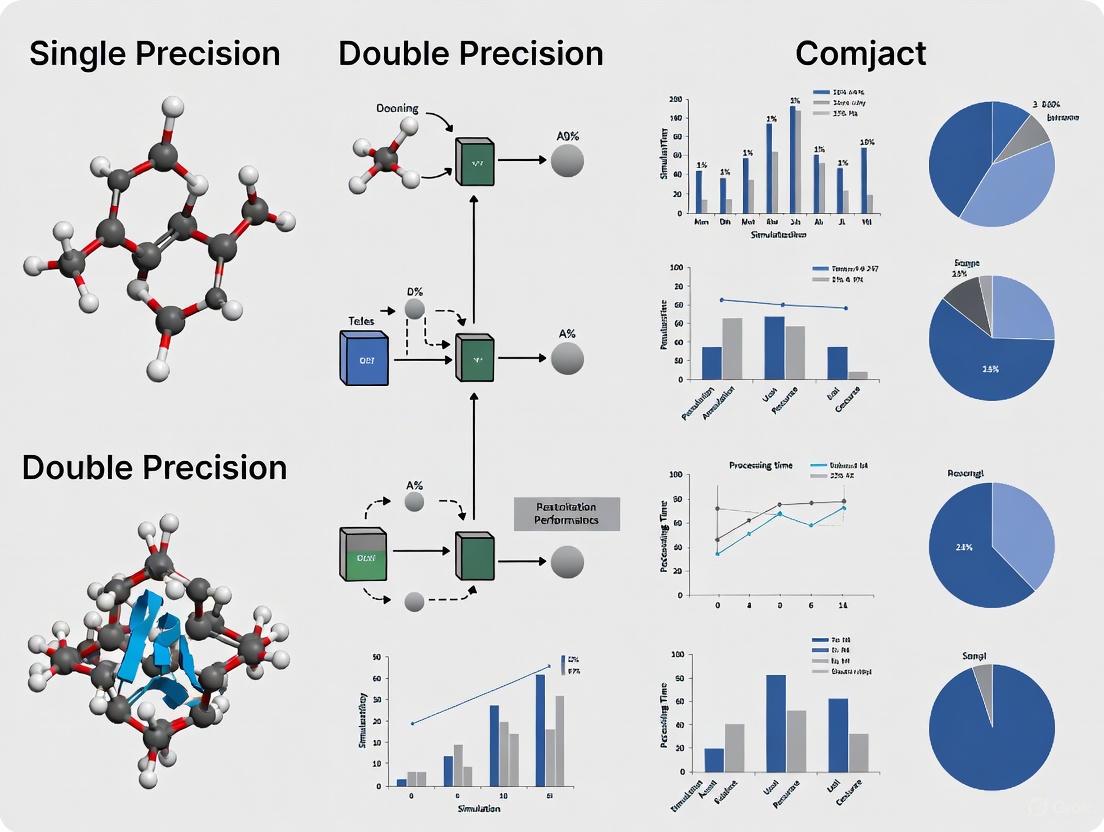
The choice between single and double floating-point precision is a critical, yet often overlooked, decision in ecological and environmental simulation modeling.
Single vs. Double Precision in Ecological Simulations: A Practical Guide for Accuracy and Performance
Abstract
The choice between single and double floating-point precision is a critical, yet often overlooked, decision in ecological and environmental simulation modeling. This article provides a comprehensive analysis for researchers and scientists, exploring the fundamental trade-offs between computational speed and numerical accuracy. We examine the theoretical foundations of floating-point arithmetic, present methodological approaches for implementing different precision levels, and offer strategies for troubleshooting common numerical errors. Through validation case studies and performance comparisons, we deliver evidence-based guidance to help practitioners select the appropriate precision for their specific research questions, from large-scale climate forecasts to fine-scale ecosystem models, ensuring both reliable results and efficient resource utilization.
Understanding Floating-Point Precision: Core Concepts and Ecological Implications
In scientific computing, particularly in ecological simulation, the choice of floating-point precision is a critical determinant of both the accuracy of results and the computational efficiency of models. Floating-point numbers allow computers to represent real numbers across an extreme range of magnitudes, from the atomic to the galactic scale, making them indispensable for scientific applications [1]. The Institute of Electrical and Electronics Engineers (IEEE) 754 standard establishes consistent formats for these representations, with single-precision (32-bit) and double-precision (64-bit) being the most prevalent in scientific computing [2] [1] [3].
The tension between computational cost and numerical accuracy forms the core challenge in precision selection. As ecological models grow in complexity and spatial resolution, the computational demands can become prohibitive [4] [5]. This guide provides an objective comparison of single and double-precision floating-point formats, with specific attention to their implications for ecological simulation results, to empower researchers in making informed decisions for their computational experiments.
Technical Specifications: A Structural Comparison
The fundamental architectural differences between single and double-precision formats directly influence their computational characteristics and suitability for different applications.
Structural Composition
- Single-Precision (FP32): Utilizes 32 bits of computer memory: 1 bit for the sign, 8 bits for the exponent, and 23 bits for the significand (fraction/mantissa) [2] [1] [6]. The exponent employs a bias of 127 [2] [6].
- Double-Precision (FP64): Utilizes 64 bits: 1 bit for the sign, 11 bits for the exponent, and 52 bits for the significand [7] [1] [6]. The exponent bias is 1023 [1] [6].
The "hidden bit" convention in both formats adds an implicit leading 1 to the significand, effectively providing 24 bits of precision for single-precision and 53 bits for double-precision [2].
Quantitative Comparison
Table 1: Technical specification comparison between single and double-precision formats.
| Feature | Single-Precision (FP32) | Double-Precision (FP64) |
|---|---|---|
| Total Bits | 32 bits [1] [6] | 64 bits [1] [6] |
| Sign Bits | 1 [2] [1] | 1 [7] [1] |
| Exponent Bits | 8 [2] [1] [6] | 11 [7] [1] [6] |
| Significand Bits | 23 (effectively 24) [2] [6] | 52 (effectively 53) [7] [6] |
| Exponent Bias | 127 [2] [6] | 1023 [1] [6] |
| Approximate Decimal Precision | 7-8 significant digits [2] [6] | 15-16 significant digits [6] |
| Numerical Range | ±1.18×10⁻³⁸ to ±3.4×10³⁸ [2] | ±2.23×10⁻³⁰⁸ to ±1.80×10³⁰⁸ [1] |
| Memory Usage | 4 bytes [1] | 8 bytes [1] |
Performance and Accuracy in Scientific Applications
The choice between precision formats represents a fundamental trade-off between computational efficiency and numerical accuracy, with significant implications for ecological modeling.
Computational Performance and Resource Utilization
Single-precision operations generally provide superior computational performance due to several factors: they require less memory bandwidth, enable better cache utilization, and on certain hardware (particularly GPUs), can be executed at higher throughput [1] [3] [8]. In practice, this can translate to speed improvements of approximately 30-40% in scientific simulations [5]. One study on the Model for Prediction Across Scales – Atmosphere (MPAS-A) reported runtime reductions of 5.7% to 28.6% when using optimized single-precision approaches compared to pure double-precision [5].
The memory advantage is also substantial – single-precision requires exactly half the memory of double-precision for storing floating-point values [1] [6]. This difference becomes critically important when working with large ecological datasets or high-resolution models where memory bandwidth often represents a primary bottleneck.
Accuracy and Round-off Error Considerations
Double-precision's primary advantage lies in its superior accuracy and reduced susceptibility to round-off errors [5] [6]. The additional significand bits provide approximately twice the decimal precision, which becomes crucial when dealing with:
- Ill-conditioned problems where small errors propagate dramatically
- Long-time simulations where round-off errors accumulate over millions of operations
- Processes with widely varying scales where adding large and small numbers can cause catastrophic cancellation [5]
Recent research in fluid dynamics turbulence simulations has demonstrated that "flow physics are remarkably robust with respect to reduction in lower floating-point precision" [9]. In many cases, other uncertainty sources, such as time averaging, had greater impact on results than precision reduction [9].
Table 2: Performance and accuracy trade-offs in precision selection.
| Characteristic | Single-Precision | Double-Precision |
|---|---|---|
| Computational Speed | Faster (ideal for real-time applications) [1] [6] | Slower due to increased processing requirements [1] [6] |
| Memory Efficiency | Higher (4 bytes per value) [1] | Lower (8 bytes per value) [1] |
| Numerical Accuracy | ~7-8 decimal digits [2] [6] | ~15-16 decimal digits [6] |
| Error Accumulation | Higher risk in long-running simulations [5] | Lower risk due to reduced round-off error [5] |
| Typical Applications | Graphics processing, machine learning, games [1] [6] | Scientific computing, financial calculations, high-fidelity simulation [1] [6] |
Experimental Protocols and Case Studies in Environmental Science
Climate and Oceanographic Modeling
Research into precision reduction for climate and ocean models provides valuable insights for ecological simulation. The NEMO (Nucleus for European Modelling of the Ocean) ocean model study found that 95.8% of its 962 variables could be computed using single precision without significant accuracy loss [4] [5]. Similarly, the Regional Ocean Modeling System (ROMS) demonstrated that all 1146 variables could use single precision, with 80.7% compatible with half-precision [5].
Methodology: Researchers typically employ a porting tool to automatically convert model code to mixed precision, then analyze the impact on key output variables across different test cases. The evaluation compares results against double-precision reference simulations using statistical metrics to identify precision-sensitive components [4].
Turbulence Simulation Studies
A multi-solver investigation published in 2025 examined effects of reduced precision on scale-resolving numerical simulations of turbulence across four computational fluid dynamics solvers [9]. The study employed test cases including turbulent channel flow and compressible flow over a wing section.
Experimental Protocol:
- Implement identical simulation setups across multiple CFD solvers
- Execute parallel simulations in single and double precision
- Compare results using statistical analysis of flow fields
- Evaluate differences against other uncertainty sources (e.g., time averaging)
Finding: "Standard IEEE single precision can be used effectively for the entirety of the simulation, showing no significant discrepancies from double-precision results across the solvers and cases considered" [9].
Precision Compensation Algorithms
When pure single precision proves insufficient, quasi-double-precision (QDP) algorithms offer a middle ground. Applied to the MPAS-A model, the QDP algorithm "reduces the surface pressure bias by 68%, 75%, 97%, and 96%" across different test cases while maintaining runtime reductions of 5.7% to 28.6% compared to pure double precision [5].
Figure 1: Decision workflow for selecting appropriate precision in ecological simulations.
Mixed-Precision Strategies and Implementation
Mixed-Precision Computing
Mixed-precision computing, sometimes called transprecision, strategically employs different precision formats within a single application [3]. This approach performs the majority of calculations in lower precision (typically single) while reserving double precision for critical operations that determine numerical stability [5]. In machine learning applications, this often involves starting with half-precision (16-bit) values for rapid matrix multiplication, then storing accumulated results at higher precision [3].
Implementation Framework:
- Precision Auditing: Profile the model to identify variables sensitive to precision reduction
- Selective Promotion: Assign double precision only to precision-critical variables
- Validation: Compare mixed-precision results against double-precision benchmarks
- Optimization: Iteratively adjust precision assignment to balance performance and accuracy
The Researcher's Toolkit: Precision Management Solutions
Table 3: Essential tools and techniques for precision management in ecological simulation.
| Tool/Technique | Function | Application Context |
|---|---|---|
| Auto-Porting Tools | Automatically converts code to mixed precision | Identifying precision-sensitive code sections [4] |
| Quasi-Double-Precision (QDP) | Compensates for round-off errors in single precision | Maintaining accuracy while reducing precision [5] |
| Precision Emulation | Allows higher precision on hardware with native lower precision | Testing precision effects without specialized hardware [10] |
| Error Metric Analysis | Quantifies impact of precision reduction on model outputs | Validation of mixed-precision implementations [9] |
| Selective Precision Promotion | Applies higher precision only to critical operations | Balancing performance and accuracy [5] |
The choice between single and double precision in ecological simulation involves contextual trade-offs rather than universal prescriptions. For many applications, particularly those constrained by memory bandwidth or computational throughput, single precision provides sufficient accuracy with significant performance gains [9] [6]. For simulations requiring extreme numerical fidelity, modeling widely disparate scales, or running over extended temporal horizons, double precision remains necessary [5] [8].
Future developments in precision-aware algorithms and specialized hardware will likely expand the viable applications of reduced precision in scientific computing [10]. The emerging paradigm of precision as a tunable parameter, rather than a fixed constraint, promises to enhance both the efficiency and capability of ecological simulations, enabling more complex models and higher resolutions within existing computational resources [4] [5].
Figure 2: Mixed-precision simulation workflow with error compensation.
In the realm of numerical computing, particularly within ecological simulations, researchers face an unavoidable challenge: balancing the inherent errors that arise from representing continuous natural phenomena with discrete computational methods. These errors represent a fundamental trade-off that directly impacts the reliability, accuracy, and computational feasibility of environmental forecasts. As ecological models grow increasingly complex—aiming to create digital replicas of Earth systems with unprecedented precision—understanding and managing these errors becomes paramount for supporting real-time decision-making and long-term adaptation strategies [4].
Numerical errors primarily manifest in two distinct forms: rounding errors that stem from how computers represent numbers with finite precision, and truncation errors that arise from mathematical approximations of infinite processes. For researchers working with single versus double precision ecological simulations, this trade-off presents critical decisions in model design. Reduced precision calculations can dramatically improve computational efficiency and reduce resource consumption—vital considerations for large-scale or real-time forecasting—but may introduce unacceptable errors that compromise predictive validity [11]. This guide systematically compares these error types, their behaviors in ecological contexts, and provides experimental frameworks for quantifying their impacts on simulation outcomes.
Defining Rounding and Truncation Errors
In numerical analysis, errors are categorized based on their origin and behavior. Rounding error, also called arithmetic error, is an unavoidable consequence of working in finite precision arithmetic [12]. Computers use a finite amount of memory (64-bits for double precision) to store floating point numbers, which means they cannot represent the infinite set of numbers in the number line exactly [13]. This leads to approximations when storing values and during arithmetic operations. A classic example is the number 0.1, which cannot be exactly represented in floating point format and is actually stored as approximately 0.10000000000000000555 [13].
Truncation error, also called discretization or approximation error, arises when infinite mathematical processes are approximated by finite ones [12]. Many standard numerical methods (for example, the trapezoidal rule for quadrature, Euler's method for differential equations, and Newton's method for nonlinear equations) can be derived by taking finitely many terms of a Taylor series. The terms omitted constitute the truncation error [12]. For instance, when approximating a derivative using the finite difference method ( f'(x) \approx \frac{f(x+h) - f(x)}{h} ), the error introduced is proportional to ( h )—a classic truncation error [13].
Comparative Analysis of Error Properties
Table 1: Fundamental Characteristics of Rounding and Truncation Errors
| Property | Rounding Error | Truncation Error |
|---|---|---|
| Origin | Finite precision of computer arithmetic | Approximation of mathematical procedures |
| Dependence | Computer architecture, precision level (single/double) | Algorithm choice, step size, discretization method |
| Behavior | Generally unpredictable, can accumulate | Often quantifiable, typically reduces with refined approximation |
| Control Methods | Increased precision, algorithmic restructuring | Decreasing step size, higher-order methods |
| Impact in Chaotic Systems | Can trigger divergent solutions via butterfly effect | Affects convergence rate and stability |
The essential trade-off emerges from the relationship between these errors in practical computation. As one reduces truncation error by using smaller step sizes or higher-order methods, the number of computational operations increases, potentially amplifying rounding errors. Conversely, reducing operations to minimize rounding error may necessitate larger step sizes that increase truncation error. This fundamental tension necessitates careful balancing based on the specific requirements of each ecological simulation [13].
Quantitative Error Analysis in Ecological Simulations
Experimental Protocols for Error Quantification
To assess the impact of precision choices in ecological modeling, researchers can implement the following experimental methodologies:
Error Propagation Analysis Protocol:
- Baseline Establishment: Run simulations using high-precision benchmarks (double64) as reference values
- Precision Variation: Execute identical simulations with reduced precision formats (float32, float16)
- Error Metrics Calculation: Compute quantitative error measures including:
- Statistical Analysis: Perform sensitivity analysis across multiple simulation runs with varying initial conditions
Mixed-Precision Implementation Protocol:
- Variable Sensitivity Classification: Categorize model variables based on their mathematical properties and physical sensitivities [11]
- Precision Allocation: Assign precision levels (double64, float32, float16) to variable types based on their sensitivity
- Performance Benchmarking: Compare computational efficiency (execution time, memory usage) against accuracy metrics
- Validation: Verify physical realism of results against observational data
Case Study: MASNUM Ocean Wave Model
The MArine Science and Numerical Modeling (MASNUM) ocean wave model provides an exemplary case study for precision-error trade-offs in ecological simulations. Researchers applied a mixed-precision framework to this model, strategically reducing precision for non-critical variables while maintaining higher precision for sensitive components [11].
Table 2: Performance Metrics of Mixed-Precision Implementation in MASNUM Model
| Precision Scheme | Computational Speedup | Significant Wave Height SMAPE | Significant Wave Height RMSE | Memory Efficiency |
|---|---|---|---|---|
| Double-Precision Baseline | 1.0× | Baseline | Baseline | Baseline |
| Single-Precision (float32) | 2.97–3.39× | 0.12%–0.43% | 0.01m–0.02m | ~50% reduction |
| Mixed-Precision Framework | 2.97–3.39× | 0.12%–0.43% | 0.01m–0.02m | ~50% reduction |
The experimental results demonstrated that strategic precision reduction yielded substantial computational benefits with minimal accuracy loss. The mixed-precision approach achieved 2.97–3.39× speedup over double-precision baselines while maintaining SMAPE values for significant wave height between 0.12% and 0.43%, with RMSE ranging from 0.01m to 0.02m [11]. This highlights the potential for optimizing the error trade-off in ecological simulations.
The Scientist's Toolkit: Research Reagent Solutions
Table 3: Essential Computational Tools for Precision Management in Ecological Modeling
| Tool/Technique | Function | Application Context |
|---|---|---|
| Reduced-Precision Emulator (RPE) | Analyzes and implements precision reduction in existing models | NEMO ocean model precision optimization [11] |
| Automatic Mixed-Precision Porting Tools | Automates conversion of code to mixed precision | Barcelona Supercomputing Center's tool for oceanographic code [4] |
| CMIP6 Climate Projections | Provides future climate scenarios under different precision schemes | Ecological quality prediction using geographic information systems [15] |
| PLUS Model | Predicts land use patterns for ecological forecasting | Simulation of future ecological environment quality [15] |
| Taylor Diagrams | Visualizes model performance across multiple statistics | Evaluation of regression models for ecological indices [15] |
Visualization of Error Dynamics in Ecological Simulations
The following diagram illustrates how rounding and truncation errors propagate through a typical ecological simulation workflow and interact with precision decisions:
Chaos and Sensitivity: The Special Challenge of Ecological Systems
Ecological and climate systems exhibit chaotic behavior where small errors can amplify dramatically over time—the famous "butterfly effect" [16]. This behavior was first documented by Edward Lorenz in the 1950s when he discovered that rounding input parameters to three decimal places instead of six led to dramatically different weather forecasts [16]. In such systems, the trade-off between rounding and truncation errors becomes particularly critical.
The chaotic nature of climate systems means that tiny rounding errors can potentially trigger divergent solutions, similar to the uncertainty introduced by inexact initial conditions. This has profound implications for precision selection in ecological forecasting. As evidenced in operational settings, minute rounding errors can accumulate to create significant forecast discrepancies. In one documented case, a round-off error in the Patriot missile defense system's timing calculation resulted in a 687-meter shift in target tracking, far exceeding the 137-meter tolerance for considering a target out of range [17].
The trade-off between rounding and truncation errors in numerical solvers represents a fundamental consideration for ecological modelers. Rather than seeking to eliminate either error type—an impossibility—successful implementation requires strategic balancing based on the specific application context. The experimental evidence from oceanographic and climate modeling demonstrates that mixed-precision approaches can optimize this balance, delivering substantial computational gains with acceptable accuracy loss.
For researchers engaged in single versus double precision ecological simulations, the key lies in classifying variables by sensitivity, applying rigorous error quantification protocols, and continuously validating against physical realities. As ecological models grow increasingly critical for addressing environmental challenges, sophisticated management of numerical errors will remain essential for producing reliable, timely, and computationally feasible forecasts.
Numerical climate models are fundamental tools for understanding and projecting the future of Earth's climate, particularly for sensitive systems like permafrost. These models solve complex differential equations using discretized numerical algorithms and finite precision arithmetic, introducing two unavoidable sources of error: truncation errors from finite increments in time and space, and rounding errors from representing real numbers with finite-sized computer words [18]. While decades of research have focused on minimizing truncation errors through improved numerical techniques, the effects of rounding errors from floating-point arithmetic have received comparatively little attention [18]. The choice between single precision (32-bit) and double precision (64-bit) arithmetic represents a critical trade-off between computational efficiency and numerical accuracy, with profound implications for simulating slowly evolving systems like deep soil temperatures and permafrost dynamics.
The precision selection determines both the dynamic range (±10³⁰⁸ for double precision vs. ±10³⁸ for single precision) and the accuracy (machine precision ~10⁻¹⁶ for double precision vs. ~10⁻⁷ for single precision) of numerical representations [19]. For temperature values, this means double precision can represent extremely fine details (e.g., 296.45678912345676 K), while single precision offers coarser resolution (e.g., 296.4568 K) [19]. This distinction becomes critically important when modeling processes occurring over decadal to centennial timescales, where models must capture deep soil temperature trends as small as 1–10 K per century, corresponding to instantaneous rates of change accurate to order 10⁻⁹ to 10⁻¹⁰ K s⁻¹ [18].
Experimental Evidence: Precision-Dependent Accuracy in Soil Temperature Simulations
Deep Soil Temperature Simulations in the CLASS Model
A foundational study examining the Canadian LAnd Surface Scheme (CLASS) provides crucial experimental evidence of precision-dependent accuracy in deep soil temperature simulations [18]. This research systematically analyzed the theoretical and practical effects of using single versus double precision on simulated deep soil temperatures, revealing striking differences in model performance.
Table 1: Precision-Dependent Accuracy in CLASS Model Soil Temperature Simulations
| Precision Level | Reliable Simulation Depth | Key Limitations | Impact of Smaller Timesteps |
|---|---|---|---|
| Single Precision (32-bit) | Limited to ~20-25 meters | Complete loss of accuracy below critical depth | Further reduction in accuracy |
| Double Precision (64-bit) | No loss to several hundred meters | Maintains accuracy at all depths | Minimal impact on accuracy |
The research demonstrated that reliable single-precision temperatures were limited to depths of less than approximately 20-25 meters, while double precision showed no loss of accuracy to depths of at least several hundred meters [18]. This depth limitation poses a fundamental constraint for permafrost studies, as accurate representation of dynamics at depths of several tens of meters is essential for capturing deep permafrost behavior [18] [20].
Additionally, the study identified a counterintuitive relationship between temporal resolution and accuracy: for a given precision level, model accuracy deteriorated when using smaller time steps [18]. This further reduces the usefulness of single precision in applications requiring high temporal resolution, creating a fundamental constraint on how modelers can balance numerical accuracy with computational efficiency.
Ensemble Verification in Regional Climate Models
Recent research has employed sophisticated ensemble-based statistical methodologies to evaluate precision effects in regional climate simulations. One comprehensive study conducted 10-year-long ensemble simulations over the European domain of the Coordinated Regional Climate Downscaling Experiment (EURO-CORDEX) with 100 ensemble members in both single and double precision [19].
Table 2: Ensemble-Based Statistical Verification of Precision Effects
| Evaluation Metric | Single vs. Double Precision Differences | Comparison to Model Uncertainty |
|---|---|---|
| Distribution differences at grid-cell level | Marginally increased rejection rate | Much smaller than variations from diffusion coefficient changes |
| Temporal detection | Mostly detectable in first hours/days | Negligible for climate timescales |
| Practical significance | Deemed negligible for regional climate | Masked by inherent model uncertainty |
The analysis applied statistical testing at a grid-cell level for 47 output variables every 12 or 24 hours, detecting only a marginally increased rejection rate for single-precision climate simulations compared to the double-precision reference [19]. Crucially, this increase was much smaller than that arising from minor variations of the horizontal diffusion coefficient in the model, suggesting it is negligible as it is masked by model uncertainty [19].
This research highlights an important distinction: while single precision may be sufficient for atmospheric processes in weather forecasting and some climate applications, processes involving deep soil thermodynamics may require special consideration. In fact, some operational centers running mixed-precision models still maintain double precision for specific components like soil models [19].
Experimental Protocols and Methodologies
Permafrost Model Implementation
Research on permafrost processes in global land surface models has demonstrated the importance of accurately representing physical properties in frozen ground. Improved model formulations typically incorporate three key physical considerations:
Temperature-dependent thermophysical properties: Accounting for changes in heat capacity and thermal conductivity when soil moisture freezes, as frozen water has smaller heat capacity and greater thermal conductivity than liquid water [20].
Organic layer representation: Including the insulating effect of organic layers near the surface in high-latitude Taiga and Tundra regions [20].
Unfrozen water content: Modeling the presence of unfrozen water that decreases exponentially with subfreezing temperatures, with exponent coefficients predetermined by soil types (sand, silt, clay) [20].
These physical refinements significantly affect model projections. Using conventional formulations, one study predicted approximately 60% cumulative reduction in permafrost area by year 2100 under the RCP8.5 scenario, while the improved formulation projected only approximately 35% reduction [20]. This divergence underscores how structural model uncertainties interact with numerical precision considerations.
Precision Assessment Methodologies
The experimental protocols for evaluating precision effects typically follow these methodological steps:
Model configuration: Identical model setups are run in both single and double precision, often using the same compiler and computational architecture to isolate precision effects [18] [19].
Deep soil representation: Implementation of multi-layer soil models extending to significant depths (e.g., 6 vertical layers to 14 meters in MATSIRO [20] or even deeper in specialized permafrost models like GIPL 2.0, which can extend to 500-1000 meters [21]).
Statistical evaluation: Application of ensemble methods with multiple members (up to 100 in recent studies [19]) to distinguish precision-related differences from natural variability.
Validation against observations: Comparison of simulated permafrost distribution with observational datasets such as the International Permafrost Association maps [20] or the Map of the Snow, Ice and Frozen Ground in China [22].
Figure 1: Experimental workflow for assessing precision effects in permafrost models
Table 3: Research Reagent Solutions for Permafrost and Soil Temperature Modeling
| Tool/Model | Primary Application | Key Features | Precision Considerations |
|---|---|---|---|
| CLASS (Canadian LAND Surface Scheme) | Land surface processes | Soil temperature and moisture profiles | Shows depth-dependent precision limitations [18] |
| GIPL 2.0/2.1 | Permafrost dynamics | Finite difference method for non-linear heat conduction; enthalpy formulation | MPI-enabled for HPC; no communication between nodes [21] |
| MATSIRO | Global land surface interactions | Permafrost distribution; organic layer representation | Improved physics reduce projected permafrost loss [20] |
| Surface Frost Number Model | Permafrost distribution mapping | Incorporates soil temperature at 20cm depth | Uses LPJ model for soil temperature computation [22] |
| FDTD Methods | Nanoplasmonic structures | Finite-Difference Time-Domain computational electromagnetics | Double precision needed to avoid round-off errors [23] |
Implications for Climate Projections and Policy
The precision-dependent accuracy in deep soil temperature simulations has profound implications for climate change projections, particularly regarding permafrost thaw and its associated carbon feedbacks. The representation of permafrost processes in models directly influences projections of greenhouse gas releases from thawing permafrost [20]. Different model formulations show substantial variation in both the distribution and magnitude of projected permafrost thaw, explaining part of the wide variation in permafrost degradation predictions across climate models [20].
Permafrost degradation rates are closely related to multiple factors in the climate system, including changes in surface air temperature, precipitation, and evaporation in high latitudes, all of which involve significant uncertainty [20]. The numerical precision of soil temperature calculations represents an additional dimension of uncertainty that interacts with these physical processes.
For engineering applications and infrastructure planning in permafrost regions, reliable projections are essential for risk assessment. The simulated responses of permafrost distribution to climate change on the Qinghai-Tibet Plateau, for instance, show varying degradation rates across scenarios: approximately 17% reduction in the near-term (2011-2040) increasing to 64% reduction in the long-term (2071-2099) under high-emission scenarios [22]. These projections directly inform "decision-making for engineering construction programs on the QTP, and support local units in their efforts to adapt climate change" [22].
The evidence from multiple studies indicates a nuanced picture of precision requirements in environmental simulations. For many atmospheric processes in weather forecasting and regional climate modeling, single precision may provide sufficient accuracy while offering significant computational savings of 30-40% in runtime [19]. However, for deep soil temperatures and permafrost simulations, the limitations of single precision become critically important, restricting reliable simulations to depths of less than 20-25 meters [18].
This precision-dependent accuracy has particular significance for long-term climate projections, where deep permafrost dynamics play crucial roles in carbon cycle feedbacks. As one study unequivocally states, "any scientifically meaningful study of deep soil permafrost must at least use double precision" [18]. The computational cost of double precision appears to be a necessary investment for this specific application, despite the trend toward reduced precision in other components of climate models.
Modeling teams must therefore consider adopting mixed-precision approaches, where critical components like soil models maintain double precision while other model elements use single precision. This strategy balances the conflicting needs of computational efficiency and numerical accuracy, ensuring reliable projections of permafrost dynamics under changing climate conditions.
The accurate identification of high-risk ecological and climate scenarios is paramount for proactive environmental management and policy development. This pursuit is increasingly reliant on sophisticated computational simulations that operate over long-term horizons, across multiple spatial scales, and through coupled model frameworks. A critical yet often overlooked aspect of these simulations is the role of numerical precision—the choice between single and double floating-point arithmetic—in shaping model performance, predictive accuracy, and ultimately, the reliability of risk assessments. Precision selection creates a fundamental trade-off: reduced precision lowers computational cost and energy consumption, enabling higher-resolution or longer-term simulations, while double precision ensures mathematical rigor and minimizes error accumulation in complex, nonlinear systems [4] [24].
This guide provides a comparative analysis of contemporary modeling approaches deployed for high-risk scenario identification. It objectively evaluates the performance of various models and precision strategies by synthesizing current experimental data, detailing methodological protocols, and contextualizing findings within the broader research theme of precision ecology and climate modeling. The analysis aims to equip researchers and scientists with the practical insights needed to select appropriate modeling tools and precision levels for their specific simulation challenges.
Comparative Analysis of Modeling Approaches and Precision Strategies
Table 1: Comparative Performance of Ecological and Climate Simulation Models
| Model / Approach | Primary Application | Key Performance Metrics | Reported Performance Data | Notable Strengths | Documented Limitations |
|---|---|---|---|---|---|
| Mixed-Precision NEMO (Ocean Model) | Climate & Weather (Destination Earth) | Computational efficiency, Operational speed | Significant speedup on HPC resources; Precision reduction in computationally intensive functions [4] | Makes faster operational results feasible; Optimizes communication | Potential impact on accuracy in chaotic systems requires careful analysis |
| Quasi-Double Precision MPAS-A (Atmosphere Model) | Climate Prediction | Accuracy vs. Precision balance | Achieves double-precision accuracy while running in enhanced single-precision mode [24] | Reduces runtime and energy consumption; Maintains high accuracy | Implementation complexity; May not be suitable for all model components |
| PLUS Model (Patch-generating Land Use Simulation) | Land Use Change | Simulation accuracy, Landscape realism | Overall accuracy of 0.74 for predicting 2020 land use from historical data [25] | Simulates realistic land-use patches; Superior landscape representation | Limited ability to reflect deep process mechanisms of land change |
| Biomod2 Ensemble Algorithm | Species Distribution | Predictive Accuracy (AUC) | AUC up to 0.965 (0.083° resolution, 10,462 data points) [26] | High predictive accuracy with sufficient data; Enhanced stability from ensemble methods | High computational memory demand; Complex data preprocessing |
| MaxEnt Model (Maximum Entropy) | Species Distribution | Predictive Accuracy (AUC) | AUC up to 0.949 (0.083° resolution, 10,462 data points) [26] | High accuracy with presence-only data; User-friendly interface; Faster processing | Lower accuracy compared to Biomod2 with large datasets; Less suitable for absence data |
Table 2: Impact of Data Parameters on Species Distribution Model (SDM) Accuracy
| Factor | Model | Tested Conditions | Impact on Accuracy (AUC) | Experimental Findings |
|---|---|---|---|---|
| Spatial Resolution | Biomod2 Ensemble | 1°, 0.5°, 0.25°, 0.083° | Significant improvement with higher resolution [26] | Highest AUC (0.965) achieved at 0.083° resolution using EMwmean method. |
| Spatial Resolution | MaxEnt | 1°, 0.5°, 0.25°, 0.083° | Improvement with higher resolution | Highest AUC (0.949) achieved at 0.083° resolution. |
| Data Volume | Biomod2 & MaxEnt | 122 to 10,462 presence points | Significant improvement with larger data volume [26] | Model accuracy increased substantially with larger numbers of species presence records. |
The data reveals a clear performance-sensitivity trade-off in Species Distribution Models (SDMs). The Biomod2 ensemble algorithm achieves superior accuracy (AUC: 0.965) under optimal conditions of high-resolution data and large sample sizes, but this comes at the cost of significant computational memory and complex preprocessing [26]. In contrast, the MaxEnt model offers a more accessible and computationally efficient alternative, still achieving high accuracy (AUC: 0.949) under the same conditions, making it a robust choice for many research applications [26].
In climate modeling, strategies to manage precision demonstrate a direct trade-off between computational cost and numerical accuracy. The application of mixed-precision in the NEMO ocean model shows targeted precision reduction in specific functions can yield significant computational gains, crucial for operational forecasting and large-scale projects like Destination Earth [4]. Conversely, the "quasi-double precision" approach for the MPAS-A model seeks a balance, enhancing single-precision calculations to achieve double-precision accuracy, thereby reducing runtime and energy use without sacrificing the fidelity required for reliable climate projections [24].
Detailed Experimental Protocols
To ensure the reproducibility of the models and data discussed, this section outlines the standard experimental methodologies employed in the cited research.
Protocol for Multi-Scenario Land Use Simulation (PLUS Model)
The PLUS model is used to project future land use changes under different developmental scenarios, which serves as a critical input for assessing long-term landscape ecological risk [25] [27].
- Data Acquisition and Preparation: Collect historical land use/cover data for at least two past periods (e.g., 2000, 2010, 2020). Gather spatial driving factor data, which typically includes:
- Topographic: Elevation, slope.
- Socioeconomic: GDP, population density.
- Accessibility: Distance to roads, railways, water bodies, and city centers.
- Climatic: Annual precipitation, temperature.
- Land Use Demand Simulation: Use models like the Markov chain to predict the total quantitative demand for each land use type at a future date.
- Land Use Spatial Distribution Simulation:
- Rule Mining: The PLUS model uses a land expansion analysis strategy (LEAS) to extract the contributions of various driving factors to the expansion of each land use type between two historical periods.
- Multi-type Random Patch Seeds (CARS): The model integrates a cellular automata algorithm that uses multi-type random patch seeds to simulate the evolution of land use patches, generating spatially explicit projections.
- Scenario Definition: Define distinct future development scenarios. Common scenarios include:
- Natural Development (ND): Projects trends based on historical transitions.
- Rapid Economic Development (RED): Prioritizes the expansion of construction land.
- Ecological Protection (ELP): Restricts the conversion of ecological lands like forests and water bodies.
- Model Validation: Validate the model's accuracy by simulating a past year for which data is available (e.g., simulating 2020 using data from 2000 and 2010) and comparing the results to the actual map using metrics like overall accuracy.
Protocol for Species Habitat Modeling under Climate Scenarios
This protocol involves using SDMs like Biomod2 and MaxEnt to project species habitats under different climate pathways [26].
- Species and Environmental Data Collection:
- Species Occurrence: Obtain precise georeferenced records of species presence. Data can range from scientific surveys to commercial fishing logs.
- Environmental Variables: Acquire current and future climate data (e.g., sea surface temperature, salinity, currents) for the study area. Future data is typically derived from Global Climate Models (GCMs) under various emission scenarios (e.g., SSP1-2.6, SSP5-8.5).
- Data Preprocessing:
- Spatial Resolution: Re-sample all environmental raster data to a consistent, pre-defined resolution (e.g., 1°, 0.25°, 0.083°).
- Correlation Analysis: Check for high correlation between environmental variables to avoid multicollinearity, removing or combining variables as needed.
- Model Training and Evaluation:
- Data Partitioning: Split the species occurrence data into training (e.g., 70-80%) and testing (e.g., 20-30%) sets.
- Model Fitting: Train the Biomod2 (using ensemble methods like EMwmean) and MaxEnt models with the training data and environmental layers.
- Accuracy Assessment: Use the testing data to evaluate model performance. The Area Under the Receiver Operating Characteristic Curve (AUC) is a common metric, where a value of 1 indicates perfect prediction and 0.5 indicates no better than random.
- Habitat Projection: Apply the trained models to future climate layers to create maps of potential habitat distribution and shifts for each scenario and time period.
Protocol for Precision Reduction in Climate Models
This methodology assesses the impact of reduced floating-point precision on climate model simulation accuracy [4] [24].
- Base Model Selection: Choose a well-established climate model, such as NEMO (ocean) or MPAS-A (atmosphere).
- Precision Porting: Use automated tools or manual code modification to create mixed-precision or reduced-precision versions of the model. This typically involves converting specific, computationally intensive model components from 64-bit (double) to 32-bit (single) precision.
- Experimental Simulation:
- Run the double-precision model to establish a benchmark.
- Run the reduced-precision version(s) under identical experimental setups (e.g., initial conditions, forcing data, simulation length).
- Ensemble Verification: For chaotic systems like climate, use ensemble-based statistical verification. Run multiple simulations with minor perturbations to initial conditions for both precision versions to statistically compare their outputs against observational data or the benchmark.
- Performance and Diagnostics:
- Computational Performance: Measure runtime, energy consumption, and computational resource usage.
- Diagnostic Accuracy: Quantify differences in key physical diagnostics (e.g., sea surface temperature patterns, ocean heat content, atmospheric pressure fields) between the standard and reduced-precision simulations.
Visualizing Modeling Workflows
The following diagrams illustrate the core workflows for the key methodologies discussed, highlighting the role of precision and scenario planning.
Table 3: Key Computational Tools and Data Resources for Ecological and Climate Simulation
| Tool / Resource Name | Type | Primary Function in Research | Relevance to Precision/Sensitivity |
|---|---|---|---|
| Google Earth Engine (GEE) | Cloud Platform | Access and processing of satellite imagery and global geospatial datasets [28]. | Provides high-precision land use classification data (10m Sentinel-2) critical for model calibration. |
| InVEST Model | Software Model | Mapping and valuing ecosystem services, including carbon stock calculations [28]. | Outputs (e.g., carbon pools) serve as key inputs for assessing ecological risk and conflict. |
| R with Biomod2 Package | Software Library | Ensemble species distribution modeling using multiple algorithms [26]. | Allows precision tuning in data preprocessing and model fitting; sensitive to data volume and resolution. |
| MaxEnt Software | Standalone Software | Species distribution modeling using maximum entropy theory [26]. | Highly sensitive to the number of species presence points; efficient with presence-only data. |
| PLUS Model | Software Model | Simulating land use change by mining past transitions and generating patches [25] [27]. | Simulates scenarios with different precisions in spatial planning (economic vs. ecological). |
| Future Land Use Simulation (FLUS) | Software Model | Simulating future land use patterns under multiple scenarios [27]. | Similar to PLUS, used for projecting future spatial patterns that drive ecological risk assessments. |
| CMIP Data Portal | Data Archive | Access to coordinated climate model output from various institutions worldwide [29]. | Provides future climate projection data (various resolutions/uncertainties) essential for forcing ecological models. |
| Sentinel-2 MSI Data | Satellite Imagery | High-resolution (10m) multispectral imagery for land cover classification [28]. | Source of high-precision input data for land use maps, directly impacting model accuracy. |
| WorldPop Data | Population Dataset | High-resolution data on human population distributions [28] [25]. | A key socioeconomic driving factor in land use change models. |
The identification of high-risk scenarios through long-term, multi-scale simulations is a complex endeavor that requires careful consideration of model selection, data quality, and computational strategy. The comparative data presented in this guide demonstrates that no single model universally outperforms others; rather, the choice depends on the specific research question, data availability, and computational resources. The emergence of precision ecology underscores a paradigm shift towards leveraging big data and computational advances for site-specific, effective conservation interventions [30].
The trade-off between numerical precision and computational cost is a central theme. While reduced precision offers a viable path to greater computational efficiency and faster operational turnaround in projects like Destination Earth [4], it necessitates rigorous ensemble-based verification to ensure statistical reliability, particularly in chaotic climate systems. For ecological assessments, the sensitivity of model outputs to the precision of input data—such as spatial resolution and sample size—is often more critical than the numerical precision of the arithmetic itself [26]. Ultimately, robust risk identification hinges on a coupled-model philosophy: integrating diverse tools, validating across multiple scenarios, and transparently acknowledging the uncertainties inherent in each step of the simulation process.
Implementing Precision in Ecological Models: From Theory to Practice
In the computational realm of ecological and climate simulation, the choice between single and double precision is a critical design consideration that directly influences a model's accuracy, performance, and scientific validity. This guide provides an objective comparison of precision levels, drawing on current research to outline their respective advantages, limitations, and optimal applications. The drive for greater computational efficiency must be carefully balanced against the risk of introducing excessive rounding errors, which can corrupt long-term simulations and compromise the integrity of sensitive ecological forecasts [18]. By matching numerical precision to the specific scale and sensitivity of the physical process being modeled, researchers can make informed decisions that leverage the benefits of each precision standard without sacrificing reliability.
Comparative Analysis of Precision in Ecological Simulations
The table below summarizes key findings from recent studies on the application of single and double precision across various environmental modeling contexts.
Table 1: Comparison of Single and Double Precision in Environmental Models
| Model / Study | Precision Type | Key Findings on Accuracy | Key Findings on Performance | Recommended Use Case |
|---|---|---|---|---|
| CLASS Land Surface Model [18] | Single Precision (float32) | Reliable temperatures limited to depths <20–25 m; accuracy deteriorates with smaller time steps. | Not explicitly quantified, but offers inherent savings in memory and CPU usage. | Processes with limited dynamic range and shorter time scales. |
| CLASS Land Surface Model [18] | Double Precision (float64) | No loss of accuracy to depths of several hundred meters. | Higher computational and memory costs. | Deep soil processes (e.g., permafrost); long-term climate simulations. |
| MASNUM Ocean Wave Model [11] | Mixed Precision (Tailored) | Minimal accuracy loss: SMAPE for wave height 0.12%-0.43%, RMSE 0.01m-0.02m. | 2.97–3.39× speedup over double-precision baseline. | High-resolution, real-time forecasting applications. |
| ExaGeoStat Software [31] | Mixed Precision (Single/Double) | Maintains predictive accuracy for large-scale spatial statistics. | 1.9× speedup on average with V100 GPU; 10x speedup vs CPU for one iteration. | Large-scale environmental predictions (e.g., temperature, wind speed). |
| NEMO Ocean Model [4] | Mixed Precision (Automated) | Maintains stability and accuracy in chaotic climate applications when applied selectively. | Significant computational gains, better HPC resource utilization. | Large-scale oceanographic and climate models like Destination Earth. |
Experimental Protocols for Precision Analysis
Protocol 1: Assessing Precision in Deep Soil Heat Diffusion
This protocol is derived from a study that investigated the reliability of single precision for simulating deep soil temperatures, a process critical for permafrost thawing projections [18].
- Objective: To theoretically and experimentally analyze the effects of single and double precision on simulated deep soil temperature in a land surface model.
- Model Used: Canadian LAnd Surface Scheme (CLASS), a state-of-the-art land surface model [18].
- Methodology:
- Theoretical Analysis: A formalism of finite arithmetic was applied to identify the potential for rounding errors. The analysis focused on the vulnerability of operations involving numbers with extreme dynamic ranges or the subtraction of nearly identical numbers [18].
- Experimental Setup: The CLASS model was run in both single and double precision configurations. Simulations focused on deep soil temperature, tracking accuracy at various depths (from surface to several hundred meters) over long time scales [18].
- Accuracy Threshold: The study defined required accuracies for resolving deep soil temperature gradients, demanding temperatures be accurate to within 10⁻⁶ to 10⁻⁷ K when using typical time steps of order 10³ seconds [18].
- Key Outcome Variables:
- Maximum depth of reliable temperature simulation.
- Rate of accuracy degradation with reduced time step size.
- Comparison of simulated temperatures against the defined accuracy thresholds.
Protocol 2: Implementing a Mixed-Precision Framework in an Ocean Wave Model
This protocol outlines the methodology for applying mixed precision to the MASNUM ocean wave model, considering physical sensitivities to balance efficiency and accuracy [11].
- Objective: To enhance the computational performance of the MASNUM wave model via a mixed-precision framework while maintaining simulation accuracy.
- Model Used: MArine Science and Numerical Modeling (MASNUM) ocean wave model [11].
- Methodology:
- Variable Classification: Variables within the model were classified based on their mathematical properties and physical attributes. The sensitivity of different physical processes to reduced precision was analyzed [11].
- Precision Allocation: A mixed-precision scheme was implemented, strategically reducing the precision of non-critical variables to single-precision (float32) or half-precision (float16) while keeping critical variables in double-precision (float64) [11].
- Hardware/Software Environment:
- Key Outcome Variables:
- Computational Performance: Measured speedup over the double-precision baseline.
- Simulation Accuracy: Quantified using Symmetric Mean Absolute Percentage Error (SMAPE) and Root Mean Square Error (RMSE) for significant wave height against the double-precision benchmark [11].
Decision Framework for Precision Selection
The following diagram illustrates the logical workflow for selecting the appropriate numerical precision strategy based on the characteristics of the simulation.
The Scientist's Toolkit: Research Reagent Solutions
Table 2: Essential Tools and Solutions for Precision Analysis in Environmental Modeling
| Tool / Solution | Function | Relevance to Precision Research |
|---|---|---|
| Automatic Code Porting Tools (e.g., from Barcelona Supercomputing Center) [4] | Automatically ports oceanographic code to mixed precision. | Facilitates the transition to mixed precision by identifying suitable parts of the codebase for precision reduction, saving development time. |
| Reduced-Precision Emulator (RPE) [11] | Emulates the behavior of reduced precision on standard hardware. | Allows researchers to test and analyze the impact of lower precision (e.g., single, half) without fully porting the code, enabling risk-free experimentation. |
| ExaGeoStatR Software Package [31] | An R package for large-scale spatial statistics. | Provides a GPU-accelerated, accessible environment for statisticians to run large-scale models with mixed precision directly from the R programming language. |
| GPU Architectures (e.g., NVIDIA A100, V100) [11] [31] | Hardware accelerators for parallel computation. | Crucial for exploiting the performance benefits of mixed precision, especially with dedicated Tensor Cores for accelerated half-precision math. |
| High-Performance Computing (HPC) Suites (e.g., NVIDIA HPC SDK) [11] | A collection of compilers and libraries for HPC. | Provides the necessary compilers (e.g., nvfortran) and libraries to compile, optimize, and run environmental models on GPU and CPU architectures. |
The choice between single, double, or mixed precision is a fundamental aspect of ecological model design that cannot be reduced to a one-size-fits-all rule. As evidenced by the comparative data, double precision remains indispensable for processes requiring high numerical stability over long time scales, such as deep soil permafrost simulation [18]. Conversely, the strategic application of mixed precision, which leverages the performance advantages of single or half-precision for non-critical components, offers a compelling path forward for high-resolution and real-time forecasting applications [4] [11] [31]. The decision framework and tools outlined in this guide provide researchers and drug development professionals with a structured approach to selecting the appropriate precision level, ensuring that computational resources are used efficiently without compromising the scientific integrity of their simulations.
The computational demands of high-fidelity ecological and climate simulations present a significant bottleneck for researchers. Traditional models relying exclusively on double-precision (FP64) arithmetic offer high accuracy but at tremendous computational cost. Mixed-precision frameworks have emerged as a transformative solution, strategically allocating different numerical precisions within computational workflows to dramatically accelerate performance while maintaining scientific rigor. This approach recognizes that not all calculations require the same level of precision, enabling intelligent resource allocation that balances computational efficiency with simulation accuracy.
The core principle involves using lower-precision formats like single-precision (FP32) and half-precision (FP16) for calculations tolerant to reduced accuracy, while reserving double-precision for critical operations where numerical stability is paramount. This strategy is particularly valuable in ecological modeling where researchers must often choose between spatial resolution, temporal scope, and model complexity due to computational constraints. By leveraging hardware advancements like NVIDIA Tensor Cores that provide order-of-magnitude speedups for lower-precision operations, mixed-precision frameworks are enabling new scientific possibilities in environmental forecasting and climate research.
Performance Comparison: Quantitative Analysis of Mixed-Precision Benefits
Experimental Data from Environmental Modeling Applications
Table 1: Performance Comparison of Environmental Models Using Mixed-Precision Techniques
| Application Domain | Model/Framework | Precision Configuration | Speedup vs. FP64 | Accuracy Metrics | Hardware |
|---|---|---|---|---|---|
| Ocean Wave Modeling | MASNUM Wave Model | Mixed (FP64/FP32/FP16) | 2.97-3.39× | SMAPE: 0.12%-0.43%RMSE: 0.01m-0.02m | NVIDIA A100 |
| Regional Environmental Statistics | ExaGeoStatR | Mixed (FP64/FP32) | 1.9× | Equivalent statistical accuracy | NVIDIA V100 |
| Climate Simulation | NEMO (Destination Earth) | Mixed (FP64/FP32) | Significant operational gains | Maintained forecast quality | HPC Systems |
| Deep Learning Training | Various CNN/RNN Models | Mixed (FP32/FP16) | Up to 3× | Maintained model accuracy | Volta/Turing GPUs |
The data demonstrates that mixed-precision approaches consistently deliver substantial performance improvements across diverse environmental modeling applications. The MASNUM wave model achieved 3.39× speedup – one of the highest reported gains – while maintaining high accuracy with SMAPE (Symmetric Mean Absolute Percentage Error) values below 0.5% and minimal increases in RMSE [11]. Similarly, the ExaGeoStat framework for spatial statistics showed nearly 2× acceleration using mixed precision on V100 GPUs, enabling analysis of datasets comprising millions of locations that would be computationally prohibitive in double-precision alone [31].
Table 2: Precision Formats and Their Computational Characteristics
| Precision Format | Bits | Memory Usage | Dynamic Range | Appropriate Use Cases |
|---|---|---|---|---|
| Half-precision (FP16) | 16 | 2 bytes | 2^(-14) to 2^15 (~40 powers of 2) | Non-critical calculations, image processing, tolerant matrix operations |
| Single-precision (FP32) | 32 | 4 bytes | 2^(-126) to 2^127 (~264 powers of 2) | Most forward propagation, intermediate calculations |
| Double-precision (FP64) | 64 | 8 bytes | 2^(-1022) to 2^1023 | Reductions, master weights, sensitive convergence checks |
The strategic allocation of these precision formats follows the principle of using the lowest acceptable precision for each computational task. As evidenced by the NEMO ocean model analysis, approximately 69.2% of variables (652 total) could be successfully represented in single-precision without compromising results [11]. This precision tailoring is particularly effective in chaotic systems like climate models, where small perturbations naturally grow, reducing the long-term impact of minor numerical errors introduced by lower precision [4].
Experimental Protocols: Methodologies for Mixed-Precision Implementation
Precision Reduction in Oceanographic Models
The implementation of mixed-precision in the MASNUM wave model followed a systematic methodology that can serve as a template for ecological simulations [11]:
Variable Classification: Variables within the model were categorized based on their mathematical properties and physical attributes. This involved identifying which physical processes were sensitive to precision reduction through controlled experiments.
Precision Allocation Strategy:
- Critical variables (e.g., certain accumulation terms, sensitive physical parameters) remained in double-precision
- Intermediate calculations used single-precision
- Non-critical operations with high computational intensity utilized half-precision
GPU Porting and Optimization: The model was ported to GPU architectures using CUDA interfaces, with special attention to memory transfers between precision domains. The researchers utilized NVIDIA A100 GPUs with 6,912 CUDA cores, taking advantage of their 19.5 TFLOPS single-precision and significantly higher half-precision performance.
Validation Protocol: Results were validated against double-precision benchmarks using multiple metrics including SMAPE and RMSE for significant wave height predictions across different oceanic conditions.
The experimental workflow for mixed-precision implementation involves several critical stages that ensure maintained accuracy while achieving performance gains:
Figure 1: Mixed-Precision Implementation Workflow for Ecological Models
Loss Scaling and Gradient Preservation
A critical technical challenge in mixed-precision training is preserving small gradient values that may be lost when converted to lower precision. As shown in research on the Multibox SSD network, 31% of gradient values became zeros when directly converted to FP16, potentially causing training divergence [32]. The solution involves:
- Loss Scaling: Multiplying the loss value by a scaling factor (typically 8-32,000×) before backpropagation, which shifts gradient values into the FP16 representable range
- Weight Update Correction: Unscaling the gradients before weight updates to maintain correct magnitude
- Automatic Scaling Factor Determination: Modern frameworks like PyTorch's AMP (Automatic Mixed Precision) can algorithmically determine optimal scaling factors [33]
This approach ensures that relevant gradient information is preserved while still benefiting from the computational advantages of half-precision arithmetic. The methodology has been validated across diverse network architectures including convolutional neural networks, recurrent networks, and generative adversarial networks [33].
Table 3: Research Reagent Solutions for Mixed-Precision Implementation
| Tool/Category | Specific Examples | Function/Role | Application Context |
|---|---|---|---|
| Hardware Platforms | NVIDIA A100/V100 GPUs, TPUs | Provide Tensor Cores specialized for FP16/FP32 matrix operations | General mixed-precision computation, deep learning training |
| Software Frameworks | PyTorch AMP, TensorFlow Mixed Precision, ExaGeoStatR | Automated precision management, loss scaling, GPU acceleration | Accessible implementation for statisticians and researchers |
| Development Tools | NVIDIA HPC SDK, CUDA, cuDNN | Compiler support, library functions for reduced precision | Porting existing models to mixed-precision |
| Validation Tools | Custom validation scripts, SMAPE/RMSE metrics | Precision-emulation, result verification | Ensuring maintained accuracy in scientific applications |
| Precision Analysis Tools | Barcelona Supercomputing Center tools, RPE | Identify precision-sensitive components in existing code | Climate and oceanographic models |
The toolkit highlights the ecosystem of resources enabling mixed-precision research. The ExaGeoStatR package is particularly noteworthy for making GPU-accelerated mixed-precision statistics accessible to R users without requiring deep CUDA expertise [31]. Similarly, PyTorch's Automatic Mixed Precision (AMP) API simplifies implementation by automatically handling casting between precision formats and loss scaling [33].
For researchers working with legacy models, tools developed at the Barcelona Supercomputing Center enable automatic porting of oceanographic code to mixed precision, significantly reducing implementation effort [4]. These tools facilitate the identification of precision-tolerant sections in complex models like NEMO, which is crucial for the Destination Earth initiative creating digital replicas of our planet [4].
Mixed-precision frameworks represent a paradigm shift in computational science, moving from uniform high-precision computation to strategic precision allocation based on numerical sensitivity. The experimental evidence demonstrates that speedups of 2-3× are consistently achievable without sacrificing accuracy in ecological simulations, directly addressing the computational bottlenecks that have limited model resolution and scope.
The implications for ecological modeling are profound. As one research team noted, the efficiency gains enable "high-resolution, real-time ocean forecasting applications" that were previously computationally prohibitive [11]. Furthermore, the reduced energy consumption associated with faster computation represents an additional environmental benefit, making large-scale simulation research more sustainable.
For the research community, the rise of mixed-precision frameworks means that traditional trade-offs between model complexity and computational cost can be renegotiated. This enables more sophisticated ecological models that better represent complex biogeochemical processes, higher spatial resolutions that capture critical heterogeneity, and longer-term forecasts essential for understanding climate change impacts. As hardware continues to evolve with enhanced support for reduced-precision arithmetic, mixed-precision approaches will likely become the standard for large-scale ecological simulation, empowering researchers to tackle increasingly complex environmental challenges.
In the field of ecological and oceanographic simulation, researchers perpetually face a fundamental trade-off: the tension between computational efficiency and numerical accuracy. For complex models like the MArine Science and Numerical Modeling (MASNUM) ocean wave model, this challenge is particularly acute. The MASNUM model, a third-generation global ocean wave model developed in China, simulates wave dynamics by solving energy balance equations in spherical coordinates, incorporating complex physical processes including wind input, wave breaking dissipation, and nonlinear wave-wave interactions [11]. Such models are crucial for understanding marine environments, climate interactions, and maritime transportation safety.
Traditionally, scientific computing has relied heavily on double-precision (float64) arithmetic, which uses 64 bits to represent floating-point numbers, providing approximately 15-17 significant decimal digits of precision [34]. This high precision ensures numerical stability and accuracy but comes with substantial computational costs—higher memory usage, greater energy consumption, and slower execution times. Single-precision (float32) formats use 32 bits, offering a middle ground with about 7 decimal digits of precision, while half-precision (float16) utilizes merely 16 bits, enabling maximum speed but with significantly reduced numerical range and accuracy [11] [34].
Mixed-precision computing represents a paradigm shift, strategically employing different numerical precisions within a single application to optimize this efficiency-accuracy balance [11]. This article explores how researchers successfully applied mixed-precision techniques to the MASNUM model, achieving substantial performance gains while maintaining the accuracy required for reliable ecological and wave forecasting simulations.
Experimental Protocols: Implementing Mixed Precision in MASNUM
The MASNUM wave model is a numerical simulation approach based on the energy balance equation in wavenumber space, with the wave spectrum as its primary simulation target [11]. The core of the model solves the conservation equation of the wave energy spectrum in a spherical coordinate system, incorporating multiple source functions representing different physical mechanisms:
- SS = Sin + Sds + Sbo + Snl + Scu [11]
Where Sin represents wind input, Sds wave breaking dissipation, Sbo bottom friction dissipation, Snl nonlinear wave-wave interactions, and Scu wave-current interactions. The numerical implementation involves several critical functions, including propagat for solving wave propagation equations and implsch for handling local changes from source functions [35].
The mixed-precision implementation followed a systematic methodology based on variable-specific precision allocation. Researchers analyzed the sensitivity of different physical processes and variable types within MASNUM to numerical precision, then strategically assigned precision levels accordingly [11]. Critical variables maintaining numerical stability retained double-precision, while non-critical variables were downgraded to single-precision or half-precision formats.
Computational Environment and Experimental Setup
The experimental configuration was meticulously designed to enable fair comparison between traditional and mixed-precision approaches:
Table: Experimental Configuration for MASNUM Mixed-Precision Testing
| Component | Specification |
|---|---|
| CPU System | High-performance cluster with dual Intel Gold 6258R processors (56 cores), x86_64 architecture, 192GB memory |
| GPU System | NVIDIA A100 GPU cards (Ampere architecture), 6,912 CUDA cores, support for half-precision computation |
| Software Environment | NVIDIA HPC SDK suite (v22.2), CUDA v11.6, OpenMPI v3.1.5 |
| Optimization Level | Compiler flags set to -O2 for all configurations |
| Porting Method | CUDA interface for GPU implementation of mixed-precision operations |
The MASNUM program was ported to GPU architecture to leverage hardware-optimized half-precision operations, as CPU architectures typically lack efficient native support for float16 computations [11]. This porting process involved identifying computational bottlenecks and implementing GPU kernels with appropriate precision specifications.
Results and Performance Comparison
Quantitative Performance Metrics
The mixed-precision implementation yielded significant performance improvements across multiple metrics while maintaining acceptable accuracy levels:
Table: Performance Comparison of MASNUM Model Under Different Precision Schemes
| Precision Scheme | Speedup Factor | Significant Wave Height SMAPE | Significant Wave Height RMSE | Key Applications |
|---|---|---|---|---|
| Double-Precision (Baseline) | 1.00x | Baseline | Baseline | Reference standard for high-fidelity simulation |
| Single-Precision | ~2.0x (estimated) | 0.12%-0.43% | 0.01m-0.02m | Good balance for many operational scenarios |
| Mixed-Precision | 2.97x-3.39x | 0.12%-0.43% | 0.01m-0.02m | Optimal for high-resolution, real-time forecasting |
The accuracy metrics demonstrate that the mixed-precision approach introduced minimal error compared to the double-precision baseline. The Symmetric Mean Absolute Percentage Error (SMAPE) for significant wave height remained between 0.12% and 0.43%, while Root Mean Square Error (RMSE) values ranged from 0.01m to 0.02m—well within acceptable tolerances for operational wave forecasting [11].
Comparative Analysis with Alternative Approaches
When contextualized within broader scientific computing efforts, the MASNUM mixed-precision achievements align with successful implementations in other domains:
Table: Mixed-Precision Applications Across Scientific Domains
| Domain/Model | Precision Strategy | Performance Gain | Key Researcher/Institution |
|---|---|---|---|
| MASNUM Wave Model | Variable-specific precision allocation | 2.97x-3.39x speedup | Qilu University of Technology/OUC [11] |
| NEMO Ocean Model | RPE-based precision reduction | 69.2% variables to single-precision | Barcelona Supercomputing Center [4] |
| ExaGeoStat Statistics | FP16/FP32 combination | 1.9x speedup (V100 GPU) | KAUST [31] |
| Earthquake Simulation | Double-, single-, half-precision mix | 25x speedup | University of Tokyo/ORNL [34] |
The MASNUM implementation stands out for its systematic approach to variable classification based on physical sensitivities, which enabled more strategic precision allocation than one-size-fits-all reductions [11]. This methodology contrasts with earlier approaches that simply converted entire models to lower precision, often resulting in unacceptable accuracy degradation.
The Technical Foundation: Understanding Precision in Scientific Computing
Precision Formats and Their Characteristics
The effectiveness of mixed-precision strategies hinges on understanding the distinct properties of each floating-point format:
Figure: Floating-Point Precision Characteristics and Trade-offs
Half-precision (float16) utilizes 16 bits total: 1 sign bit, 5 exponent bits, and 10 significand bits. This compact representation enables maximum computational throughput and memory efficiency but has limited range and precision, making it susceptible to overflow and underflow [34]. Single-precision (float32) uses 32 bits: 1 sign bit, 8 exponent bits, and 23 significand bits, offering improved accuracy while maintaining better performance than double-precision [34]. Double-precision (float64) employs 64 bits: 1 sign bit, 11 exponent bits, and 52 significand bits, providing the highest numerical stability and accuracy at the cost of computational efficiency [11] [34].
Mixed-Precision Computational Workflow
The successful implementation of mixed-precision computing follows a systematic workflow that maintains accuracy while optimizing performance:
Figure: Mixed-Precision Implementation Workflow for Scientific Models
This approach leverages the principle that many operations, particularly matrix multiplications, can be performed rapidly in lower precision, while critical operations (such as accumulation and certain physically sensitive calculations) benefit from higher precision [11] [34]. In the MASNUM implementation, this involved classifying variables based on their mathematical properties and physical attributes, then determining optimal precision formats for different variable types [11].
Successfully implementing mixed-precision strategies requires both hardware and software components optimized for variable-precision computation:
Table: Essential Research Reagent Solutions for Mixed-Precision Implementation
| Tool/Category | Specific Examples | Function in Mixed-Precision Research |
|---|---|---|
| Hardware Platforms | NVIDIA A100 GPU, NVIDIA V100 Tensor Core GPU | Provide specialized cores for accelerated FP16/BF16/FP32 operations |
| Software Development Kits | NVIDIA HPC SDK, CUDA Toolkit | Enable programming of mixed-precision algorithms and GPU porting |
| Precision Emulation Tools | Reduced-Precision Emulator (RPE) | Allow precision reduction testing without hardware deployment |
| Deep Learning Frameworks | PyTorch AMP, TensorFlow Mixed Precision | Offer automatic mixed-precision features for AI-driven model components |
| Performance Profilers | NVIDIA Nsight Systems, Intel VTune Amplifier | Identify computational bottlenecks and precision-sensitive code sections |
| Mathematical Libraries | cuBLAS, cuSOLVER, MAGMA | Provide optimized mixed-precision implementations of linear algebra routines |
Modern GPU architectures, particularly those with Tensor Cores like NVIDIA's A100 and V100, are instrumental for efficient mixed-precision computation [11] [31]. These processors contain specialized hardware that dramatically accelerates half-precision and single-precision operations while maintaining double-precision capabilities for critical computations. The software ecosystem has similarly evolved, with frameworks like PyTorch Automatic Mixed Precision (AMP) and TensorFlow's mixed-policy API simplifying implementation through automated precision management and loss scaling [36].
The successful implementation of mixed-precision techniques in the MASNUM ocean wave model demonstrates a viable path forward for ecological simulations facing computational constraints. By achieving a 2.97-3.39× speedup while maintaining accuracy within 0.43% SMAPE for significant wave height, this approach addresses the core challenge of balancing computational efficiency with numerical precision [11].
The implications extend beyond ocean wave modeling to broader ecological simulation domains where computational limits constrain model resolution and forecasting capabilities. As research continues, emerging techniques like machine learning-based parameterization [37] combined with mixed-precision computing may further enhance simulation capabilities. These advances support critical applications including climate prediction, extreme weather forecasting, and sustainable ecosystem management—all requiring increasingly sophisticated modeling capabilities within practical computational constraints.
For researchers considering mixed-precision approaches, the MASNUM case study offers valuable lessons: conduct thorough sensitivity analysis of variables to precision, leverage modern hardware capabilities, and implement strategic rather than blanket precision reduction. Following these principles can help unlock significant performance gains while maintaining the scientific rigor required for reliable ecological simulation.
Best Practices for Code Development and Porting Models to Different Precision Standards
The computational demands of modern ecological simulation are staggering, particularly for large-scale models like digital replicas of the Earth and high-resolution ocean wave forecasting. As these models increase in complexity and resolution, researchers face critical trade-offs between numerical accuracy and computational efficiency. The choice between single and double precision floating-point arithmetic represents one of the most fundamental technical decisions in high-performance ecological computing.
Mixed-precision computing has emerged as a transformative approach that strategically allocates different numerical precisions across various components of a simulation. This methodology recognizes that not all calculations require the full accuracy of double-precision (64-bit) arithmetic. By selectively deploying single-precision (32-bit) or even half-precision (16-bit) for non-critical operations, researchers can achieve significant performance gains while maintaining acceptable accuracy levels for scientific validity [4] [11]. This guide examines best practices for developing and porting ecological models across precision standards, providing experimental data and methodologies for researchers navigating this complex landscape.
Performance Comparison: Precision Standards in Practice
Quantitative Performance Metrics
Table 1: Computational Performance Comparison Across Precision Standards
| Precision Format | Bits | Relative Speed | Memory Usage | Typical Use Cases | Key Limitations |
|---|---|---|---|---|---|
| Half-precision (float16) | 16 | 3.0-4.0× faster than double | ~75% reduction | Non-critical variables, post-processing | Limited dynamic range, precision loss |
| Single-precision (float32) | 32 | 1.5-2.0× faster than double | ~50% reduction | Intermediate calculations, less sensitive physics | Accumulated rounding errors in iterative processes |
| Double-precision (float64) | 64 | 1.0× (baseline) | Baseline | Critical variables, sensitive physical processes, validation | High computational cost and memory requirements |
| Mixed-precision | 16/32/64 | 2.97-3.39× faster than double [11] | Variable reduction | Optimized model components | Requires careful variable classification and validation |
Ecological Model Case Studies
Table 2: Experimental Results from Ecological and Oceanographic Models
| Model/Application | Precision Approach | Accuracy Metrics | Performance Gain | Experimental Conditions |
|---|---|---|---|---|
| MASNUM Ocean Wave Model [11] | Mixed-precision (GPU-optimized) | SMAPE: 0.12%-0.43% for significant wave height; RMSE: 0.01m-0.02m | 2.97-3.39× speedup over double-precision | A100 GPU, 20,000-core system, NVIDIA HPC SDK |
| NEMO Ocean Model [4] | Variable-specific precision | Maintained scientific validity for climate projections | 69.2% of variables successfully ported to single-precision | Barcelona Supercomputing Center tools, Destination Earth initiative |
| Destination Earth Digital Replicas [4] | Mixed-precision targeting computationally intensive functions | Operational results meeting precision requirements | Significant HPC resource optimization | Oceanographic code ported using automatic tools |
| Chaotic Climate Applications [4] | Precision reduction in non-critical pathways | Maintained stability in chaotic systems | Computational gains crucial for operational timelines | Focus on communication optimization and intensive functions |
Experimental Protocols and Methodologies
Variable Classification and Precision Allocation
The foundation of successful mixed-precision implementation lies in systematic variable classification based on mathematical properties and physical sensitivities. The following workflow outlines the standardized experimental protocol for precision porting:
Precision Porting Workflow: Systematic approach for transitioning models to mixed-precision architectures.
Phase 1: Sensitivity Analysis
- Step 1: Establish baseline metrics using double-precision implementation
- Step 2: Conduct parameter sensitivity studies to identify critical variables
- Step 3: Classify variables based on their impact on model stability and output quality
- Step 4: Determine precision thresholds for each variable class
Phase 2: Precision Allocation
- Critical Variables: Maintain double-precision for sensitive physical processes, validation steps, and accumulation operations [11]
- Intermediate Variables: Single-precision suitable for less sensitive physics and intermediate calculations
- Non-critical Variables: Half-precision appropriate for post-processing, visualization, and insensitive parameters
Phase 3: Implementation and Validation
- Incremental Porting: Port model components systematically rather than simultaneously
- Continuous Validation: Compare results against double-precision baseline at each stage
- Performance Profiling: Measure computational gains and identify bottlenecks
Accuracy Validation Methodology
The experimental protocol for validating mixed-precision implementations must include rigorous accuracy assessment:
Statistical Metrics:
- SMAPE (Symmetric Mean Absolute Percentage Error): Values below 0.5% indicate acceptable precision preservation [11]
- RMSE (Root Mean Square Error): Context-dependent thresholds based on model requirements
- Maximum Error Analysis: Identify worst-case precision loss scenarios
Physical Consistency Checks:
- Conservation laws (mass, energy, momentum)
- Stability in chaotic systems
- Long-term integration fidelity
Technical Implementation Strategies
Computational Architecture Considerations
Table 3: Hardware and Software Considerations for Precision Optimization
| Component | Double-Precision Focus | Mixed-Precision Optimization | Key Implementation Notes |
|---|---|---|---|
| CPU Architecture | Traditional HPC clusters | GPU-accelerated systems | CPUs limited in half-precision performance [11] |
| GPU Utilization | Limited advantage | Significant speedup potential | A100 GPU enables half-precision optimization [11] |
| Memory Hierarchy | High bandwidth requirements | Optimized memory access patterns | Reduced precision decreases memory bandwidth pressure |
| Compiler Options | Standard optimization flags | Precision-specific flags (-O2) | NVIDIA HPC SDK provides mixed-precision support [11] |
| Communication | High MPI overhead | Reduced communication volume | Precision reduction decreases inter-node communication [4] |
Code Development Best Practices
Algorithm Selection for Reduced Precision:
- Prefer algorithms with inherent numerical stability
- Avoid catastrophic cancellation in reduced-precision arithmetic
- Implement compensated summation for critical accumulations
- Use mixed-precision iterative refinement for linear algebra
Energy Efficiency Considerations: Energy consumption has become a critical factor in computational science. Green coding practices align with precision optimization:
Energy Impact of Precision Choices: Relationship between numerical precision and computational energy requirements.
- Computational Efficiency: Mixed-precision can reduce energy consumption by up to 30% through reduced computational intensity [38]
- Memory Efficiency: Lower precision decreases memory access energy, which accounts for significant portion of total energy consumption
- Carbon-Aware Computing: Schedule high-precision workloads during periods of renewable energy availability [38]
Research Reagent Solutions: Essential Tools and Platforms
Table 4: Essential Research Tools for Precision Porting and Validation
| Tool/Platform | Function | Precision Support | Application Context |
|---|---|---|---|
| NVIDIA HPC SDK [11] | Compiler suite for HPC | Full mixed-precision support | GPU-accelerated systems |
| RPE (Reduced Precision Emulator) [11] | Precision reduction analysis | Emulates lower precision without code modification | NEMO model development |
| Barcelona Supercomputing Center Tools [4] | Automatic code porting | Mixed-precision optimization | Oceanographic models |
| Green Software Foundation Tools [38] | Energy consumption profiling | Carbon awareness metrics | Sustainable computing |
| Oracle/ArcGIS SDE [39] | Ecological database management | Spatial data precision management | Rural ecological landscape control |
| InVEST Model [40] | Ecosystem services assessment | Standardized precision requirements | Habitat quality, carbon storage |
| FLUS Model [40] | Land use simulation | Multi-scenario precision needs | Urban development planning |
The strategic implementation of mixed-precision standards represents a paradigm shift in ecological simulation, offering substantial computational advantages while maintaining scientific rigor. The experimental data demonstrates that performance improvements of 2.97-3.39× are achievable with careful precision allocation and validation [11]. As ecological models continue to increase in complexity and scope, embracing these methodologies will be essential for advancing predictive capabilities within computational resource constraints.
Successful precision porting requires systematic approaches to variable classification, rigorous validation protocols, and appropriate tool selection. By adopting the best practices outlined in this guide, researchers can significantly enhance model performance while maintaining the accuracy standards required for meaningful ecological insights. The future of ecological simulation lies in smart precision allocation rather than uniform highest-precision computation, balancing numerical accuracy with practical computational constraints.
Diagnosing and Solving Common Precision-Related Errors in Simulations
In ecological simulation, the choice between single and double precision is not merely a technical detail but a foundational decision that directly determines the reliability, stability, and scientific validity of model outcomes. Numerical precision refers to the number of bits used to represent real numbers in computer memory, with single precision (32-bit) providing approximately 7 significant decimal digits and double precision (64-bit) providing about 16 significant digits. While single precision offers advantages in computational speed and memory efficiency, this comes at the potential cost of introducing numerical artifacts that can compromise long-term simulations essential for ecological forecasting.
The growing complexity of ecological models, which often integrate phenomena across multiple spatial and temporal scales, has intensified the debate around precision requirements. As researchers push toward higher-resolution simulations and digital twins of ecological systems, understanding the symptoms of insufficient precision becomes critical for distinguishing numerical artifacts from genuine ecological dynamics. This comparison guide examines the tangible effects of precision selection through experimental data and provides a framework for researchers to diagnose precision-related issues in their simulations.
Quantitative Comparison: Single vs. Double Precision in Environmental Modeling
Deep Soil Temperature Simulations
A critical study examining deep soil heat diffusion in the Canadian LAND Surface Scheme (CLASS) model provides revealing experimental data on precision effects. Researchers conducted identical simulations using single and double precision arithmetic to analyze temperature accuracy at various soil depths over time, with particularly significant findings for permafrost and long-term climate modeling applications.
Table 1: Precision Comparison for Soil Temperature Simulations
| Precision Level | Maximum Reliable Depth | Temperature Accuracy | Minimum Resolvable Trend |
|---|---|---|---|
| Single Precision | 20-25 meters | 10⁻³ K | >10⁻⁸ K s⁻¹ |
| Double Precision | >100 meters | 10⁻⁶ to 10⁻⁷ K | 10⁻⁹ to 10⁻¹⁰ K s⁻¹ |
The experimental protocol employed a state-of-the-art land surface model with identical initial conditions and forcing data, varying only the numerical precision. Simulations ran for decadal time scales with typical time steps of order 10³ seconds. The research found that single precision temperatures become unreliable beyond depths of about 20-25 meters, whereas double precision maintains accuracy to depths of several hundred meters [18].
For ecological applications involving deep soil processes, such as permafrost thawing, the study concluded that "any scientifically meaningful study of deep soil permafrost must at least use double precision" [18]. This is particularly relevant given that permafrost degradation operates with temperature trends of approximately 1-10 K per century, requiring the ability to resolve instantaneous rates of change accurate to 10⁻⁹ or 10⁻¹⁰ K s⁻¹.
Ocean Wave Modeling Efficiency vs. Accuracy
Recent research with the MASNUM ocean wave model demonstrates how mixed-precision approaches can balance computational efficiency with simulation accuracy. The study implemented a precision-tailored framework that strategically allocated precision levels based on variable-specific sensitivity analysis.
Table 2: Mixed-Precision Performance in Ocean Wave Modeling
| Precision Scheme | Computational Speedup | Significant Wave Height RMSE | SMAPE Values |
|---|---|---|---|
| Double Precision (Baseline) | 1.0x | 0.00 m | 0.00% |
| Mixed Precision | 2.97-3.39x | 0.01-0.02 m | 0.12-0.43% |
| Single Precision | ~3.5x (estimated) | >0.02 m (context-dependent) | >0.5% (context-dependent) |
The experimental methodology involved classifying variables within the MASNUM model based on mathematical properties and physical attributes, then determining optimal precision formats for different variables. The model was ported to GPU architecture to enable half-precision computation, with performance evaluated on a 20,000-core system [11]. Results demonstrated that strategic use of reduced precision for non-critical variables maintained sufficient accuracy for forecasting while significantly improving computational efficiency.
Diagnostic Framework: Recognizing Symptoms of Insufficient Precision
Manifestations of Numerical Instability
Insufficient precision manifests through several recognizable symptoms in ecological simulations:
Depth-Dependent Divergence: As demonstrated in soil models, inaccuracies amplify with increasing spatial scales (e.g., soil depth) or temporal scales, where rounding errors accumulate over thousands of time steps [18].
Unphysical Oscillations: Simulations may exhibit erratic fluctuations that violate known physical constraints, particularly in systems with large dynamic ranges or coupled processes with vastly different timescales.
Grid Dependency: Results show unexpected sensitivity to spatial discretization or time stepping that cannot be explained by numerical analysis of the truncation error alone.
Violation of Conservation Laws: Mass, energy, or momentum balances show systematic drift in closed systems, indicating that rounding errors are introducing non-physical sources or sinks.
The diagram below illustrates how insufficient precision introduces artifacts throughout the modeling workflow:
Data Drift and Model Resilience
The concept of "data drift" provides a crucial framework for understanding precision-related degradation in ecological models. Data drift occurs when the statistical properties of model variables change over time in ways not reflected in the underlying physics. From a machine learning perspective, models experiencing precision-induced drift exhibit:
Decreasing Predictive Accuracy: Model outputs gradually diverge from validation datasets or empirical observations.
Shortened Time to Instability (TTI): The operational lifespan before model performance degrades below acceptable thresholds compressed from years to months in documented cases [41].
Research across multiple domains indicates that tracking data stability – the tendency of data attributes to maintain consistent statistical properties over time – provides early warning of precision inadequacy. Stable data attributes drift little over time, whereas unstable data exhibits the opposite behavior, serving as indicators of potential precision issues [41].
Experimental Protocols for Precision Assessment
Methodology for Precision Sensitivity Analysis
Researchers can adapt the following experimental protocol to evaluate precision sensitivity in their ecological models:
Establish Baseline: Run simulations with double precision across relevant spatial and temporal scales to establish reference results.
Implement Mixed-Precision Framework: Adapt code to allow selective precision reduction for different variable classes, potentially using tools like the reduced-precision emulator (RPE) [11].
Systematic Precision Reduction: Conduct simulations with reduced precision for different variable categories (state variables, fluxes, forcing data), comparing results against double-precision baseline.
Quantitative Metrics Assessment: Evaluate differences using domain-specific metrics (e.g., soil temperature accuracy, wave height RMSE) alongside conservation laws (mass, energy balance).
Long-Term Stability Testing: Extend simulations to temporal scales relevant for ecological forecasting (decadal to centennial for climate-related processes).
This methodology mirrors approaches successfully implemented in oceanographic and climate modeling [4] [11], where computational gains must be balanced against scientific reliability.
Diagnostic Tools for Precision-Related Artifacts
Conservation Tracking: Monitor mass, energy, and momentum balances to detect non-physical sources/sinks introduced by rounding errors.
Sensitivity to Time Stepping: Test with progressively smaller time steps; increasing error with decreasing step size suggests precision limitations [18].
Statistical Stability Analysis: Apply data stability metrics (central tendency, dispersion, skewness, shape) to identify attributes prone to precision-induced drift [41].
Multivariate Precision Measures: For community ecology data, adapt pseudo multivariate dissimilarity-based standard error (MultSE) to quantify precision effects on composition analyses [42].
The Scientist's Toolkit: Research Reagent Solutions
Table 3: Essential Tools for Precision Analysis in Ecological Simulation
| Tool/Technique | Function | Application Context |
|---|---|---|
| Reduced Precision Emulator (RPE) | Emulates lower precision without code modification | Precision sensitivity analysis [4] |
| Mixed-Precision Framework | Allows variable-specific precision allocation | Performance-accuracy optimization [11] |
| Data Stability Metrics | Quantifies longitudinal drift in data attributes | Early detection of precision issues [41] |
| Multivariate Dissimilarity-based SE | Measures precision for assemblage data | Community ecology studies [42] |
| Conservation Law Monitoring | Tracks mass/energy balance violations | Detection of numerical artifacts [18] |
| Ensemble Simulations | Statistical analysis of rounding error effects | Quantifying uncertainty from precision limits |
The comparison between single and double precision in ecological simulation reveals a complex trade-off between computational efficiency and scientific reliability. Experimental evidence demonstrates that double precision remains essential for processes with large dynamic ranges, deep vertical domains, or long temporal scales, such as permafrost dynamics and deep soil processes [18]. However, strategic mixed-precision approaches can deliver significant performance gains with minimal accuracy loss for well-understood systems with appropriate sensitivity analysis [11].
Ecological researchers should adopt a nuanced approach to precision selection based on their specific modeling context:
For exploratory analysis and model development, double precision provides protection against numerical artifacts obscuring genuine dynamics.
For operational forecasting of well-constrained processes, mixed-precision approaches offer viable performance benefits after rigorous validation.
For long-term climate impact studies and deep ecosystem processes, double precision remains necessary to maintain scientific integrity across decadal to centennial simulations.
As ecological models grow in complexity and integration, developing systematic approaches to precision management will become increasingly vital. By recognizing the symptoms of insufficient precision and implementing the diagnostic frameworks outlined here, researchers can make informed decisions that balance computational constraints with scientific rigor.
Ecological models are fundamental tools for understanding complex processes like the global carbon cycle, yet their reliability is intrinsically tied to the numerical precision of the computations that power them. Within computational science, single precision (32-bit) and double precision (64-bit) refer to the number of bits used to represent a floating-point number. This difference is not merely technical; it has profound implications for the accuracy and stability of long-term simulations. Single precision numbers use 4 bytes of memory, yielding approximately 6 to 9 significant decimal digits, while double precision uses 8 bytes, providing 15 to 17 significant digits [43]. In the context of a broader thesis on single versus double precision in ecological simulations, this guide objectively compares the performance of these two precision levels. We provide supporting experimental data to help researchers, scientists, and modeling professionals make informed decisions that balance computational efficiency with numerical accuracy, ensuring the integrity of critical outputs such as Gross Primary Production (GPP) and Net Primary Production (NPP).
Experimental Benchmarks: Single vs. Double Precision in Practice
Performance and Accuracy in Hydrodynamic and Soil Models
Independent benchmarking tests provide concrete data on how precision affects simulation performance and numerical accuracy. The following table summarizes key findings from hydrodynamic and soil model studies, which highlight trade-offs between speed and reliability.
Table 1: Benchmarking single vs. double precision performance and accuracy
| Model / Application | Precision | Key Performance / Accuracy Metric | Implication for Ecological Outputs |
|---|---|---|---|
| TUFLOW Classic (CPU) [43] | Single Precision | Average runtime: 65.8 - 162.1 mins (across CPUs) | ~20-30% faster execution, but risk of high mass balance error in specific cases (e.g., direct rainfall). |
| Double Precision | Average runtime: 80.3 - 207.6 mins (across CPUs) | Required for accurate solutions in models with high ground elevations or when using direct rainfall. | |
| TUFLOW HPC (GPU) [43] | Single Precision | Runtime: 3.2 - 89.2 mins (across GPUs) | Dramatically faster on consumer-grade GPUs (e.g., 123% slower for DP on RTX 2080 Ti). |
| Double Precision | Runtime: 4.3 - 180.2 mins (across GPUs) | Scientific GPUs (e.g., Tesla V100) show a smaller performance penalty (~31%). | |
| CLASS Land Surface Model (Deep Soil) [18] | Single Precision | Reliable temperatures limited to depths of < 20-25 m; accuracy deteriorates with smaller time steps. | Unreliable for simulating deep soil processes like permafrost thawing (< 10⁻⁶ K accuracy). |
| Double Precision | No loss of accuracy to depths of several hundred meters. | Essential for scientifically meaningful studies of deep soil permafrost and long-term climate change. |
The Critical Role of Precision in Long-Term Climate Processes
The study involving the Canadian LAnd Surface Scheme (CLASS) underscores a critical limitation of single precision in ecological modeling. For processes like permafrost thaw, which occur over decades and involve vanishingly small temperature gradients (as low as 10⁻⁹ to 10⁻¹⁰ K s⁻¹), single precision computations were found to be inadequate. The simulated temperatures became unreliable below 20-25 meters, whereas double precision showed no loss of accuracy to depths of several hundred meters [18]. This demonstrates that for any long-term climate projection or study of deep ecological processes, double precision is not an option but a necessity to avoid the accumulation of debilitating rounding errors.
Detailed Experimental Protocols
Protocol 1: Benchmarking Hydrodynamic Model Precision
This protocol is based on the methodology used by TUFLOW to quantify the performance difference between its single (TUFLOWiSPw64.exe) and double (TUFLOWiDPw64.exe) precision executables [43].
- Objective: To compare the runtime performance and functional accuracy of single and double precision versions of a hydrodynamic model across different hardware architectures (CPU and GPU).
- Model Setup: The benchmark uses a modified version of the 2012 FMA Challenge model, which involves a coastal river in flood with two ocean outlets. The model is set up with a 20m cell size (181,981 2D cells) and runs for a 72-hour simulation period, outputting data every two hours [43].
- Hardware Configuration:
- CPU Testing: The same model is run on various CPU chips, including AMD Ryzen Threadripper and multiple Intel Core i7 and Xeon processors.
- GPU Testing: The model is run on a range of NVIDIA GPU cards, from gaming cards (e.g., GeForce RTX series) to scientific cards (e.g., Tesla V100).
- Execution: For each hardware configuration, the identical model is executed using both the single precision and double precision executables.
- Data Collection & Analysis:
- Primary Metric: Total runtime in minutes is recorded for each run.
- Performance Calculation: The percentage change in runtime is calculated as
((DP Runtime - SP Runtime) / SP Runtime) * 100. - Functional Assessment: Model results are checked for mass balance errors and solution stability, with specific attention to scenarios known to challenge single precision, such as high ground elevations or direct rainfall modeling [43].
Protocol 2: Evaluating Numerical Accuracy in Deep Soil Diffusion
This protocol is derived from experiments conducted to assess the reliability of single precision in simulating deep soil heat diffusion, a critical process for modeling permafrost [18].
- Objective: To determine the maximum soil depth at which single and double precision computations can reliably simulate soil temperature trends over long timescales.
- Model Setup: The experiment uses the Canadian LAnd Surface Scheme (CLASS), a state-of-the-art land surface model. The soil column is configured to extend to several hundred meters to adequately capture deep permafrost dynamics.
- Experimental Conditions:
- The model is forced with climate change projections leading to warming rates of 1–10 K per century.
- The required accuracy for resolving deep soil temperature gradients is on the order of 10⁻⁶ to 10⁻⁷ K, given typical time steps of 10³ seconds [18].
- Execution: The model is run for multi-decadal to centennial timescales using both single and double precision floating-point arithmetic.
- Data Collection & Analysis:
- Primary Metric: The simulated soil temperature at various depths is monitored over time.
- Accuracy Threshold: The depth at which the temperature solution from single precision computations begins to diverge significantly from the double precision solution is identified.
- Sensitivity Analysis: The impact of using smaller time steps on the accuracy of both single and double precision results is evaluated.
Workflow for Precision Impact Assessment
The following diagram illustrates the logical workflow a researcher can follow to assess the need for double precision in their ecological modeling project, based on the critical factors identified in the experimental data.
Table 2: Key research reagents and computational solutions for ecological modeling
| Resource / Solution | Function in Ecological Modeling | Relevance to Precision Studies |
|---|---|---|
| TUFLOW Classic & HPC [43] | A software package for simulating hydrodynamics in rivers, estuaries, and coastal environments. | Provides both SP and DP executables, enabling direct benchmarking of performance and functional accuracy for water-related ecological outputs. |
| Land Surface Models (e.g., CLASS) [18] | Simulate the exchanges of energy, water, and carbon between the land surface and the atmosphere. | Critical for testing the impact of precision on long-term, deep-earth processes like soil temperature diffusion and permafrost thaw. |
| Light Use Efficiency (LUE) Models [44] [45] | Estimate Gross Primary Production (GPP) by linking plant growth to absorbed sunlight. | While less precision-sensitive, they produce key ecological outputs (GPP); their integration with more complex models necessitates an understanding of overall precision requirements. |
| FLUXNET2015 & AmeriFlux Data [44] | Global networks of eddy covariance flux towers that measure ecosystem-scale exchanges of CO₂, water, and energy. | Provides essential ground-truthing data for validating model outputs like GPP, regardless of the numerical precision used in the simulation. |
| High-Performance Computing (HPC) GPU [43] | Provides massively parallel processing capabilities to accelerate complex simulations. | The choice of GPU is crucial, as "gaming" cards (GeForce) excel in SP, while "scientific" cards (Tesla) are optimized for DP performance. |
The experimental data clearly demonstrates that the choice between single and double precision is context-dependent, with significant trade-offs between computational performance and numerical reliability.
- For most hydrodynamic applications not involving high elevations or direct rainfall, single precision offers a performance benefit of approximately 20-30% on CPUs and can be over twice as fast on consumer-grade GPUs, with no significant loss of accuracy [43].
- For critical, long-term climate simulations, particularly those involving deep soil processes, carbon cycle feedbacks, or permafrost dynamics, double precision is indispensable. The use of single precision in these contexts can lead to physically unrealistic results and a fundamental inability to resolve the slow, subtle changes that characterize these systems [18].
Researchers must therefore align their precision choice with the scientific question at hand. Using single precision for ensemble runs or model spin-ups can save substantial computational resources. However, for the final production runs of models targeting long-term ecological stability and deep-earth processes, double precision provides the necessary foundation for trustworthy, scientifically valid results.
In computational ecology, the choice between single and double precision floating-point arithmetic presents a critical trade-off between performance and numerical accuracy. This guide objectively compares these approaches, providing experimental data to inform researchers' optimization strategies. While single precision can dramatically increase computation speed and reduce resource consumption, its inappropriate application can compromise simulation integrity, particularly in models involving long time scales, exponential functions, or subtle, cumulative processes. The strategic profiling of models to identify variables suitable for precision reduction is therefore an essential skill for modern computational scientists, enabling performance gains without sacrificing scientific validity. This guide synthesizes current research to provide a foundational comparison and practical methodologies for implementing precision reduction in ecological and drug development contexts.
Technical Comparison: Single vs. Double Precision
Fundamental Representation Differences
Floating-point arithmetic represents real numbers using a finite number of bits, dividing them into sign, exponent, and significand (mantissa) components. This finite representation inherently introduces rounding errors, the magnitude of which depends on the precision level.
- Single Precision (32-bit): Uses 1 bit for sign, 8 bits for exponent, and 23 bits for significand. It typically provides approximately 7-8 significant decimal digits of accuracy.
- Double Precision (64-bit): Uses 1 bit for sign, 11 bits for exponent, and 52 bits for significand. It typically provides approximately 15-16 significant decimal digits of accuracy.
The practical implication is that single precision has a smaller range and a larger gap between representable numbers (machine epsilon of ~1.19e-07) compared to double precision (machine epsilon of ~2.22e-16) [46].
Quantitative Performance and Accuracy Data
The table below summarizes key comparative characteristics and findings from experimental studies.
Table 1: Performance and Accuracy Characteristics of Single vs. Double Precision
| Characteristic | Single Precision (32-bit) | Double Precision (64-bit) | Experimental Context |
|---|---|---|---|
| Theoretical Accuracy | ~7-8 significant decimal digits | ~15-16 significant decimal digits | Mathematical computation [46] |
| Example: Pi Value | 3.1415927 | 3.1415926535897930 | Value representation test [46] |
| Speed Advantage | Up to 4x faster (GPU) | Baseline | Computational benchmark [46] |
| Soil Temp. Reliability | Limited to ~20-25m depth | Reliable to >100s of meters | Deep soil heat diffusion model [18] |
| Required Time Scale | Shorter time scales | Long-term climate & permafrost studies | Process sensitivity analysis [18] |
| Fitness Deviation | Observed in optimization tasks | Lower deviation, more stable results | Parameter optimization in MilkyWay@home [46] |
Experimental Protocols for Precision Analysis
To determine the suitability of precision reduction for a specific model, researchers should employ the following empirical protocols.
Methodology for Comparative Precision Studies
The foundational methodology for comparing precision levels involves a controlled computational experiment.
- Model Selection and Setup: Choose a well-understood model within the target domain (e.g., ecological, biochemical). The PISCES biogeochemical model and the CLASS land surface model are examples used in recent studies [47] [18].
- Dual Compilation: Compile the model code in two configurations: one using 32-bit single-precision floating-point variables and another using 64-bit double-precision variables. All other factors (hardware, compiler, initial conditions) must remain identical.
- Benchmark Execution: Run both model configurations for a standard set of initial conditions and parameter values. Crucially, the simulation should run for a sufficient number of time steps to capture the model's long-term dynamics.
- Result Comparison and Metric Calculation: Compare the outputs of the two runs. Key metrics include:
- Normalized Root Mean Square Error (NRMSE): Quantifies the overall deviation between the single and double precision results.
- Point-of-Divergence Analysis: Identifies the simulation time or condition at which results exceed a predefined error tolerance.
- Depth/Parameter Sensitivity: For spatial models, track how error propagates through different layers or components [18].
Profiling to Identify Candidate Variables for Reduction
A systematic profiling approach can identify which model variables are most tolerant of reduced precision.
Table 2: Variable Profiling for Precision Reduction
| Profiling Action | Procedure | Interpretation of Results |
|---|---|---|
| Global Sensitivity Analysis (GSA) | Use statistical techniques to rank parameters/variables by their influence on model output. | Parameters with low "main effects" and "total effects" on key outputs are primary candidates for single precision [47]. |
| Dynamic Range Assessment | Log the minimum, maximum, and average values of all model variables over a representative run. | Variables with a small dynamic range are less likely to suffer from catastrophic cancellation or rounding errors in single precision. |
| Targeted Precision Mixing | Selectively convert a subset of candidate variables to single precision while keeping sensitive variables (e.g., those in feedback loops, accumulators) in double precision. | Monitor for instability. A successful mix yields a significant performance gain with negligible impact on output fidelity. |
Visualizing the Precision Reduction Workflow
The following diagram illustrates the logical workflow for profiling a model and implementing a mixed-precision strategy, from initial assessment to final validation.
Diagram 1: Precision reduction workflow. This logic flow guides the systematic identification of variables tolerant to single precision.
Error Propagation in Sensitive Models
Some model structures are inherently more vulnerable to the rounding errors introduced by single precision. The diagram below maps how a small initial error can be amplified through different computational pathways in a sensitive model.
Diagram 2: Error propagation pathways. Illustrates how single precision errors are amplified in vulnerable model components like exponential functions and long-term integrations [46] [18].
The Scientist's Toolkit: Essential Research Reagents
Implementing a robust precision analysis requires both computational and analytical tools. The following table details key solutions and their functions in this process.
Table 3: Research Reagent Solutions for Precision Analysis
| Tool / Solution | Category | Primary Function in Precision Research |
|---|---|---|
| High-Performance Computing (HPC) Cluster | Hardware Infrastructure | Provides the computational power to run dual-precision model comparisons and sensitivity analyses efficiently [47]. |
| Global Sensitivity Analysis (GSA) Software | Analytical Software | Quantifies the influence of each model parameter on outputs, identifying low-sensitivity candidates for precision reduction [47]. |
| Iterative Importance Sampling (iIS) | Optimization Algorithm | Used within a parameter optimization framework to find optimal parameter sets and assess uncertainty under different precision settings [47]. |
| GPU with Double-Precision Support | Hardware | Essential for benchmarking, as some projects (e.g., MilkyWay@home) strictly require double precision for scientific validity [46]. |
| Numerical Analysis Libraries (e.g., LAPACK, BLAS) | Software Library | Provide rigorously tested, high-performance mathematical routines that can be compiled for either single or double precision evaluation. |
The decision to employ single or double precision is not a one-size-fits-all choice but a strategic optimization problem. Experimental data confirms that single precision can offer substantial performance benefits but at the cost of reliability in models with exponential functions, long-term integration, or processes dependent on small gradients, such as deep soil permafrost simulation [18]. The recommended path forward is a nuanced, mixed-precision approach. By systematically profiling models using Global Sensitivity Analysis and targeted experimentation, researchers can confidently identify a subset of variables for precision reduction. This methodology ensures computational resources are used efficiently while safeguarding the numerical integrity and scientific credibility of ecological and pharmaceutical simulations.
In statistical research, particularly when analyzing complex datasets from multiple sources or studies, researchers must choose between two fundamental methodological approaches: one-stage and two-stage analysis. Individual Participant Data (IPD) meta-analysis, a powerful technique for exploring heterogeneity and identifying subgroups that benefit most from interventions, commonly employs these approaches [48]. The one-stage method uses mixed-effects regression models to analyze all participant data simultaneously in a single step, accounting for within-study and between-study variability through a unified framework. In contrast, the two-stage approach first computes study-specific estimates using simpler regression models within each study, then pools these estimates using standard meta-analysis techniques in a separate second step [48] [49]. While both methods aim to derive overall effect estimates, their underlying assumptions, computational requirements, and performance characteristics differ substantially, making the choice between them consequential for research conclusions.
The extended two-stage design has emerged as a flexible framework for environmental research, allowing for more complex modeling structures including multivariate outcomes, hierarchical geographical structures, repeated measures, and longitudinal settings [49]. This extension relaxes constraints of the classical two-stage method by framing the second-stage meta-analysis as a mixed-effects linear model, thus bridging the methodological gap between traditional approaches. Understanding the relative strengths, limitations, and appropriate application contexts for each method is essential for researchers conducting complex statistical analyses across various scientific domains, including ecological simulations and drug development.
Performance Comparison: Quantitative Evidence from Simulation Studies
Comprehensive simulation studies have systematically compared the performance of one-stage and two-stage IPD meta-analysis methods across numerous scenarios. These investigations have generated thousands of datasets under varying conditions of IPD sizes and between-study variance assumptions, evaluating performance based on mean bias, mean error, coverage, and statistical power [48] [50]. The evidence from these rigorous comparisons provides crucial guidance for methodological selection.
Table 1: Performance Comparison of One-Stage vs. Two-Stage Models for Main Effects
| Model Specification | Bias | Coverage | Power | Recommended Context |
|---|---|---|---|---|
| One-Stage: Fully specified (random study intercept/effect) | Low | Adequate | High | When intercept heterogeneity is present |
| One-Stage: Common intercept | Variable | Inadequate when heterogeneity present | Moderate | Only when no intercept heterogeneity |
| Two-Stage approach | Low | Adequate | Moderate | When one-stage models fail to converge |
Table 2: Performance Comparison for Interaction Effects
| Model Specification | Bias | Coverage | Power | Relative Performance |
|---|---|---|---|---|
| One-Stage: Fully specified (random effects) | Lowest | Best | Highest | Superior |
| One-Stage: Fixed study-specific intercept | Low | Adequate | High | Excellent |
| Two-Stage approach | Higher | Lower | Reduced | Consistently outperformed |
For main effects, performance is nearly identical across one-stage and two-stage models unless intercept heterogeneity exists between studies, in which case fully specified one-stage models and two-stage models demonstrate better performance [48]. The differences become more pronounced when investigating interaction effects, where two-stage models are consistently outperformed by fully specified one-stage approaches [48]. Specifically, for interaction effects, the two fully specified one-stage models (with random study intercept or fixed study-specific intercept) show superior performance in simulations, with the two-stage approach demonstrating comparatively poorer performance across evaluation metrics [48].
Experimental Protocols and Methodological Specifications
One-Stage Approach Methodology
The one-stage approach utilizes mixed-effects multilevel regression models to analyze all participant data simultaneously while accounting for the hierarchical structure of the data. The fully specified one-stage model incorporates random effects for both study intercepts and exposure effects, with the potential inclusion of fixed study-specific effects for covariates [48]. The general model formulation can be expressed as:
Comprehensive One-Stage Model Specification: Yij = β0j + β1j·groupij + γ2j·xij + εij where β0j = γ0 + u0j and β1j = γ1 + u1j with εij ~ N(0,σj²), u0j ~ N(0,τ0²), u1j ~ N(0,τ1²) and cov(u0j,u1j) = ρ·τ0·τ1
In this notation, i represents the patient, j the study, Y the outcome variable, γ0 the overall fixed intercept, β1j the random exposure effect for study j, γ1 the mean exposure effect, group the binary exposure variable, γ2j the fixed covariate effect for study j, x the covariate, τ0² and τ1² the between-study variances for intercept and exposure respectively, and σj² the within-study variance for study j [48]. This comprehensive specification accounts for potential exposure, intercept, and interaction heterogeneity across studies.
Estimation of these multilevel models typically employs maximum likelihood or restricted maximum likelihood algorithms. The fully specified one-stage model should include either a random study intercept or fixed study-specific intercept, random exposure effect, and fixed study-specific effects for covariates [48]. When convergence issues arise with random study intercepts, the fixed study-specific intercept one-stage model represents a viable alternative.
Two-Stage Approach Methodology
The classical two-stage approach separates the analysis into distinct phases. In the first stage, study-specific associations are estimated independently within each location or study using appropriate regression models. These models typically adjust for relevant confounders and yield effect estimates (e.g., risk ratios, odds ratios, or mean differences) for each participating study [49]. The second stage then pools these study-specific estimates using meta-analytic techniques, most commonly random-effects models that account for between-study heterogeneity.
The extended two-stage framework enhances this approach by allowing more flexible modeling structures in the second stage, implemented through linear mixed-effects meta-analytical models [49]. The extended model can be specified as:
Extended Two-Stage Model Formulation: θ̂i = Xiβ + Zibi + εi with bi ~ N(0,Ψ), and εi ~ N(0,Si)
where θ̂i represents the first-stage effect estimates, Xi contains fixed-effect predictors with coefficients β, Zi is the design matrix for random effects bi, and εi represents the errors [49]. The random terms have covariance matrices Ψ and Si, representing between-location and within-location variances, respectively. This extended framework accommodates complex data structures including multivariate outcomes, geographical hierarchies, and repeated measurements.
Visual Guide: Model Selection and Workflow
Model Selection Workflow for One-Stage vs. Two-Stage Approaches
Structural and Functional Comparison of Modeling Approaches
Essential Research Reagent Solutions for Statistical Modeling
Table 3: Essential Tools and Software for Implementing Statistical Models
| Tool/Software | Function | Implementation Context |
|---|---|---|
| Mixed-effects models (e.g., lme4 in R) | Fits multilevel models for one-stage approach | Provides flexible framework for random intercepts, slopes, and complex covariance structures |
| Meta-analysis packages (e.g., metafor in R, ipdmeta in Stata) | Performs pooling of estimates in two-stage approach | Implements fixed-effect and random-effects models for study aggregation |
| mixmeta R package | Enables extended two-stage designs | Allows multivariate outcomes, hierarchical structures, and repeated measures |
| Simulation frameworks | Evaluates model performance under controlled conditions | Generates datasets with known parameters to assess bias, coverage, and power |
The evidence from simulation studies strongly supports the use of fully specified one-stage models for IPD meta-analysis, particularly when investigating interaction effects or when intercept heterogeneity is present between studies [48]. The one-stage approach demonstrates superior performance in terms of bias reduction, coverage probability, and statistical power for these complex analytical scenarios. However, analysts must remain aware of potential convergence issues with highly complex random-effects structures and have alternative approaches prepared.
The two-stage approach remains a valuable methodological option, particularly for main effects analyses without substantial intercept heterogeneity, and when computational resources are limited [48]. The extended two-stage framework developed for environmental research provides additional flexibility for modeling complex associations, including non-linear exposure-response relationships, effects clustered at multiple geographical levels, and differential risks by population subgroups [49]. This enhanced two-stage approach can accommodate multivariate outcomes, longitudinal settings, and multilevel structures within a unified analytical framework.
For practitioners, the selection between one-stage and two-stage approaches should be guided by the research question, the complexity of required effect structures, the presence of between-study heterogeneity, and computational considerations. When investigating interactions or dealing with substantial heterogeneity, fully specified one-stage models are generally recommended, switching to fixed study-specific intercept models if convergence problems arise. For standard main effects analyses without complex heterogeneity patterns, both approaches demonstrate comparable performance, allowing researchers to select based on familiarity, computational resources, and reporting requirements.
Benchmarking Performance: Validating and Comparing Single vs. Double Precision Outcomes
In the realm of ecological simulation, the choice between single (float32) and double (float64) precision represents a critical trade-off between computational efficiency and numerical accuracy. As models grow in complexity and spatial resolution, establishing a robust validation pipeline to compare model output against empirical data becomes essential for justifying precision choices. Driven by initiatives like Destination Earth, which aims to create digital replicas of the Earth, the computational gains from reduced precision are crucial for producing operational results faster and making better use of high-performance computing (HPC) resources [4]. This guide objectively compares simulation performance across precision levels, providing researchers with validated methodologies for implementing precision-tailored approaches in environmental modeling.
The fundamental challenge lies in balancing the computational advantages of single precision – which uses 4 bytes per value yielding 6-9 significant digits – against the enhanced accuracy of double precision, which uses 8 bytes per value providing 15-17 significant digits [51]. The validation frameworks presented herein enable researchers to quantify how precision reduction impacts predictive accuracy across diverse ecological applications.
Performance Benchmarks: Quantitative Comparisons Across Hardware
Computational Speed Assessment
Table 1: Single vs. Double Precision Performance Across Hardware Platforms
| Hardware Type | Model/Application | SP Runtime | DP Runtime | Performance Change |
|---|---|---|---|---|
| NVIDIA Tesla V100 (GPU) | TUFLOW HPC (Hydrology) | 3.2 min | 4.3 min | 31.4% slower [51] |
| NVIDIA GeForce RTX 2080 Ti (GPU) | TUFLOW HPC (Hydrology) | 5.1 min | 11.3 min | 123.1% slower [51] |
| NVIDIA GeForce RTX 2080 (GPU) | TUFLOW HPC (Hydrology) | 7.6 min | 16.1 min | 111.4% slower [51] |
| AMD Ryzen Threadripper 2990WX (CPU) | TUFLOW Classic (Hydrology) | 65.8 min | 80.3 min | 22.0% slower [51] |
| Intel i7-7700K (CPU) | TUFLOW Classic (Hydrology) | 71.7 min | 87.4 min | 21.9% slower [51] |
| Intel i7-7700K (CPU) | TUFLOW HPC on CPU | 216.8 min | 230.9 min | 6.5% slower [51] |
| A100 GPU (20,000-core system) | MASNUM (Ocean Waves) | Baseline | Baseline | 2.97-3.39x speedup (mixed precision) [11] |
Performance differentials vary significantly between hardware architectures. GPU systems demonstrate the most substantial performance penalties for double precision, particularly consumer-grade cards like the GeForce series which show 100-123% slower performance with double precision [51]. In contrast, CPU-based systems typically exhibit more moderate performance impacts of 20-32% for TUFLOW Classic and 5-25% for TUFLOW HPC [51]. The MASNUM ocean wave model achieved a 2.97-3.39× speedup through mixed-precision optimization on A100 GPUs, demonstrating the significant efficiency gains possible through strategic precision allocation [11].
Accuracy and Memory Utilization
Table 2: Accuracy Metrics and Memory Requirements Across Precision Formats
| Precision Format | Bytes per Value | Significant Digits | Memory Requirement | Representative Accuracy Metrics |
|---|---|---|---|---|
| Half precision (float16) | 2 bytes | 3-4 digits | ~25% of double precision | N/A (limited application) |
| Single precision (float32) | 4 bytes | 6-9 digits | ~50% of double precision | SMAPE: 0.12-0.43% for wave height [11] |
| Double precision (float64) | 8 bytes | 15-17 digits | 100% (baseline) | RMSE: 0.01-0.02m for wave height [11] |
For the MASNUM ocean wave model, mixed-precision approaches demonstrated minimal accuracy loss, with symmetric mean absolute percentage error (SMAPE) values for significant wave height ranging between 0.12% and 0.43%, and root mean square error (RMSE) ranging from 0.01m to 0.02m compared to double-precision baselines [11]. Memory requirements show a linear relationship with precision level, with single precision requiring approximately half the memory of double precision, enabling researchers to run larger models within available HPC memory constraints [51].
Validation Methodologies: Protocols for Precision Assessment
Validation Pipeline Framework
The validation workflow begins with defining precision requirements based on model characteristics and computational constraints. For ecological simulations, this involves identifying critical variables that require double precision and non-critical variables that can be reduced to single precision without significant accuracy loss [4] [11]. The model selection and precision allocation phase requires careful analysis of variable sensitivities across different physical processes.
Implementation of mixed-precision schemes involves code modification to apply appropriate numerical formats to different variable types. Execution of simulation runs across both precision levels generates output for comparison against empirical validation data. Statistical comparison employs metrics like SMAPE and RMSE to quantify differences between precision levels [11]. The final stage delivers precision optimization recommendations based on comprehensive performance and accuracy thresholds.
Model Selection and Variable Classification
Selecting appropriate models for precision reduction requires systematic evaluation of variable sensitivities. In the MASNUM ocean wave model, researchers classified variables based on mathematical properties and physical attributes, determining that 652 variables (69.2%) could be represented using single precision without significant accuracy loss [11]. Similar methodology applied to the NEMO ocean model demonstrated comparable potential for precision reduction [4].
The ideal model for precision optimization is developed in a population similar to the intended application context, with well-documented structural components and error models [52]. Model selection must consider:
- Target population characteristics: Demographics, environmental conditions, and system dynamics should align with intended use cases [52]
- Structural model robustness: Well-tested mathematical representations of ecological processes
- Covariate model completeness: Comprehensive inclusion of influential environmental factors
- Error model sophistication: Appropriate characterization of interindividual variability and residual uncertainty [52]
Statistical Validation Techniques
Statistical validation employs multiple approaches to assess model performance across precision levels. Internal validation examines model performance within the same dataset used for development, correcting for over-optimism through cross-validation or bootstrapping techniques [53]. External validation assesses performance in different datasets, with targeted validation providing the most meaningful assessment by evaluating models in populations and settings matching intended use cases [53].
Targeted validation is particularly crucial for ecological simulations, as model performance is highly dependent on population characteristics and environmental settings [53]. This approach estimates predictive performance for specific applications, avoiding misleading conclusions from arbitrary validation datasets that don't represent intended use conditions.
Precision Allocation Strategies
Mixed-Precision Implementation Framework
Strategic precision allocation requires analyzing variable sensitivities across different physical processes. Research indicates that reduced precision in high-resolution models often yields better results at lower computational costs compared to traditional high-precision, low-resolution numerical simulations [11]. The mixed-precision methodology follows a structured approach:
- Variable classification: Categorize model variables by mathematical properties and physical significance
- Sensitivity analysis: Test variable impact on output accuracy across precision levels
- Precision assignment: Allocate double precision to critical variables, single precision to non-critical variables
- Performance validation: Verify maintained accuracy while achieving computational improvements
In oceanographic applications like the MASNUM model, this approach has demonstrated that approximately 70% of variables can be reduced to single precision while maintaining simulation integrity [11]. Similar benefits have been realized in atmospheric models, where the ENDGame dynamical core explored mixed-precision arithmetic to enhance simulation efficiency [11].
Application-Specific Precision Requirements
Different ecological modeling domains exhibit distinct precision sensitivities:
- Hydrological models: TUFLOW Classic requires double precision for models with ground elevations greater than 100m or direct rainfall modeling, while TUFLOW HPC can typically use single precision for most applications [51]
- Ocean wave models: Critical output variables like significant wave height maintain high accuracy (SMAPE 0.12-0.43%) with mixed-precision approaches [11]
- Urban space evolution: Simulation precision exceeding 92% achievable with optimized modeling approaches, though not directly precision-dependent [54]
Application characteristics dictating precision needs include numerical stability requirements, magnitude ranges of state variables, and sensitivity of ecological processes to rounding errors. Models with high condition numbers or those simulating processes across multiple orders of magnitude typically demonstrate greater precision sensitivity.
Table 3: Research Reagent Solutions for Precision Validation Pipelines
| Tool/Category | Specific Examples | Function/Purpose |
|---|---|---|
| Precision Emulation | Reduced-precision emulator (RPE) [11] | Analyze variable sensitivity to precision reduction without full implementation |
| Performance Profiling | Nsight-Compute [55] | GPU performance analysis, instruction count on floating-point units |
| Model Porting Tools | Barcelona Supercomputing Center Auto-porting [4] | Automated code transition to mixed precision |
| Statistical Validation | One_Pass Python Package [56] | Compute statistics on streamed model output via one-pass algorithms |
| Climate Modeling | MASNUM wave model [11], NEMO [4] | Testbed applications for precision optimization studies |
| Hydrological Modeling | TUFLOW Classic/HPC [51] | Industry-standard hydrology models with SP/DP comparisons |
| Validation Frameworks | Targeted validation methodology [53] | Population-specific model performance assessment |
The research toolkit provides essential resources for implementing comprehensive precision validation pipelines. Precision emulation tools like the reduced-precision emulator (RPE) enable researchers to analyze variable sensitivities before committing to full implementation [11]. Performance profiling utilities such as Nsight-Compute provide granular insights into computational efficiency across different precision formats [55].
Specialized software packages address unique challenges in ecological simulation validation. The One_Pass Python package enables computation of statistical summaries on streamed climate data using one-pass algorithms, essential for handling the terabyte- to petabyte-scale data volumes produced by high-resolution models [56]. Automated code porting tools from supercomputing centers facilitate the transition to mixed precision without manual code modification [4].
Establishing a robust validation pipeline for comparing model output against empirical data reveals that strategic precision selection can yield significant computational advantages while maintaining scientific integrity. The experimental data demonstrates that mixed-precision approaches typically achieve 3x speedup with minimal accuracy loss (SMAPE <0.5%) in well-optimized models like MASNUM [11]. Performance gains are most pronounced on GPU architectures, where single precision can more than double execution speed compared to double precision [51].
The validation methodologies outlined provide researchers with structured frameworks for precision optimization across diverse ecological modeling domains. By implementing targeted validation approaches that match intended application environments [53], and leveraging specialized tools for precision analysis [11], researchers can make evidence-based decisions on precision allocation. This enables more efficient utilization of computational resources while maintaining confidence in simulation results, ultimately accelerating scientific discovery in ecological modeling and environmental forecasting.
The choice between single and double precision in computational modeling presents a critical trade-off between numerical accuracy, solution stability, and computational expense. In ecological simulations, where models may integrate processes over decades to centuries, this decision carries profound implications for the reliability of scientific inferences and policy recommendations. Single-precision (32-bit) arithmetic offers substantial computational advantages, including reduced memory requirements, decreased communication overhead, and potential performance gains on modern hardware. However, these benefits come with inherent risks of accumulated rounding errors, particularly in simulations with extensive temporal integration or processes characterized by wide dynamic ranges.
Conversely, double-precision (64-bit) arithmetic provides enhanced numerical stability and reduced susceptibility to rounding errors but demands significantly greater computational resources. In the context of ecological forecasting, where models increasingly incorporate multi-scale phenomena from microbial interactions to global biogeochemical cycles, understanding these trade-offs becomes essential for allocating limited computational resources effectively while maintaining scientific rigor. This guide objectively compares these approaches through the lens of standardized evaluation metrics—including RMSE and SMAPE—across multiple dimensions relevant to environmental researchers.
Foundational Metrics for Regression Model Evaluation
Regression analysis forms the mathematical backbone of many ecological modeling approaches, necessitating robust metrics to evaluate predictive performance against observational data. Different error metrics illuminate distinct aspects of model performance, with selection dependent on the specific characteristics of the research question and data structure.
Core Metric Definitions and Applications
Root Mean Square Error (RMSE): Represented mathematically as RMSE = √(Σ(Pi - Oi)²/N), where Pi represents predicted values, Oi represents observed values, and N is the number of observations, RMSE measures the standard deviation of prediction errors [57]. It penalizes large outlier errors more heavily than smaller errors due to the squaring of each term [58]. RMSE is particularly valuable in ecological contexts where major deviations carry disproportionate consequences, such as predicting extreme weather events or pollutant thresholds. The result is expressed in the same units as the predicted variable, enhancing interpretability [57].
Symmetric Mean Absolute Percentage Error (SMAPE): Calculated as SMAPE = (100%/n) × Σ(|Pi - Oi|/((|Oi| + |Pi|)/2)), SMAPE represents the average of absolute percentage differences between predicted and actual values [58]. Unlike standard MAPE, it is symmetric in its treatment of over-forecasting and under-forecasting [58]. SMAPE is most appropriately deployed when both forecasted and actual values are positive and of similar magnitudes, making it suitable for ecological measures like population densities or biomass estimates that inherently possess a natural zero boundary.
Mean Absolute Error (MAE): Computed as MAE = Σ|Pi - Oi|/n, MAE measures the average magnitude of errors without considering their direction [57]. Unlike RMSE, MAE does not disproportionately weight larger errors, making it preferable when all errors should be treated equally regardless of size [58]. This characteristic makes MAE valuable for assessing typical model performance in stable ecological systems without extreme fluctuation events.
Coefficient of Determination (R-squared): Unlike error metrics, R² measures the proportion of variance in the dependent variable that is predictable from the independent variables [59]. It provides a standardized measure of explanatory power ranging from 0 to 1, with higher values indicating better model fit. Recent analyses suggest R-squared offers more informative assessment of regression performance compared to SMAPE, MAE, MAPE, MSE, and RMSE because it contextualizes performance relative to data variability [59].
Table 1: Key Regression Metrics for Ecological Model Evaluation
| Metric | Mathematical Formulation | Primary Strengths | Ideal Use Cases | ||||||
|---|---|---|---|---|---|---|---|---|---|
| RMSE | √(Σ(Pi - Oi)²/N) | Heavy penalty for large errors; Same units as variable [57] | Extreme event prediction; Outlier-sensitive contexts [58] | ||||||
| SMAPE | (100%/n) × Σ( | Pi - Oi | /(( | Oi | + | Pi | )/2)) | Symmetric treatment of over/under-prediction; Percentage interpretation [58] | Positive-valued ecological metrics; Relative error assessment [58] |
| MAE | Σ | Pi - Oi | /n | Equal weighting of all errors; Robust to outliers [57] | Stable system modeling; Typical performance assessment | ||||
| R-squared | 1 - (Σ(Oi - Pi)²/Σ(Oi - Ō)²) | Variance explanation; Standardized scale (0-1) [59] | Explanatory model power; Comparative model selection [59] |
Metric Selection Framework
Choosing appropriate evaluation metrics requires consideration of both statistical properties and ecological context. RMSE proves most valuable when large errors carry disproportionate consequences in ecological applications, such as predicting threshold responses in ecosystem collapse or extreme climate events [58]. SMAPE offers advantages when communicating results to diverse stakeholders through its intuitive percentage interpretation, though it requires strictly positive values with meaningful zero points [58]. MAE provides the most transparent representation of average error magnitude when all discrepancies should be weighted equally [57]. For overall model assessment, R-squared provides crucial context about the proportion of variance explained, complementing absolute error measures [59].
Precision Comparison: Single vs. Double in Environmental Modeling
The tension between computational efficiency and numerical accuracy manifests distinctly in environmental simulations, where research increasingly explores reduced-precision approaches to manage escalating computational demands.
Performance and Accuracy Trade-offs
Empirical studies demonstrate significant variation in how precision reduction affects different environmental modeling contexts. In atmospheric modeling, the quasi-double-precision (QDP) algorithm—which enhances single precision with compensated summation techniques—has demonstrated remarkable efficacy. When applied to the Model for Prediction Across Scales - Atmosphere (MPAS-A), this approach reduced surface pressure bias by 68% to 97% across different cases while simultaneously decreasing runtime by 5.7% to 28.6% compared to full double-precision implementations [5]. This represents a rare win-win scenario where both accuracy and efficiency improve simultaneously.
Similar benefits emerged in ocean modeling contexts, where the Nucleus for European Modelling of the Ocean (NEMO) demonstrated that approximately 96% of model variables could be computed using single precision without significant accuracy degradation [5]. The Regional Ocean Modeling System (ROMS) showed even greater compatibility with reduced precision, with all model variables successfully computed at single precision [5]. These findings suggest substantial potential for computational savings in marine ecological simulations through selective precision implementation.
Table 2: Empirical Performance Comparisons Across Modeling Domains
| Model/System | Precision Approach | Accuracy Impact | Computational Efficiency |
|---|---|---|---|
| MPAS-A (Atmosphere) [5] | Quasi-Double-Precision (QDP) | 68%-97% reduction in surface pressure bias | 5.7%-28.6% runtime reduction vs. double precision |
| NEMO (Ocean) [5] | Mixed Precision | 95.8% of variables compatible with single precision | Significant memory and computation savings |
| ROMS (Ocean) [5] | Single Precision | All variables compatible with single precision | Substantial communication cost reduction |
| CLASS (Land Surface) [18] | Single Precision | Reliable depths limited to 20-25m vs. hundreds of meters for double | ~50% memory reduction but potential long-term instability |
Stability Limitations and Critical Applications
Despite promising efficiency gains, single-precision implementations demonstrate critical limitations in specific ecological modeling contexts. Deep soil heat diffusion simulations using the Canadian LAnd Surface Scheme (CLASS) revealed dramatically different behaviors between precision levels. While double precision maintained accuracy to depths of several hundred meters, single precision produced reliable results only to depths of approximately 20-25 meters [18]. This limitation proves particularly problematic for permafrost thaw projections, where modeling centuries-long dynamics requires simulating soil depths up to 60+ meters to accurately represent thermal inertia [18].
The CLASS study further revealed that single precision accuracy deteriorated with smaller timesteps—a counterintuitive finding that contradicts conventional numerical wisdom [18]. This phenomenon occurs because reduced timesteps increase the number of sequential operations, allowing rounding errors to accumulate progressively throughout the integration. Consequently, processes characterized by small but persistent forcing signals—such as gradual atmospheric composition changes or slow ecological succession—face heightened risk of numerical distortion in single-precision environments.
Experimental Protocols for Precision Assessment
Rigorous evaluation of precision effects requires standardized methodologies capable of isolating arithmetic influences from other sources of model error.
Climate Model Precision Experimentation
The MPAS-A investigation employed a structured approach comparing four distinct test cases—two idealized and two real-data scenarios—across three computational frameworks: standard double precision, standard single precision, and single precision enhanced with the QDP algorithm [5]. The experimental protocol maintained identical initial conditions, physical parameterizations, and spatial discretizations across all precision implementations, ensuring observed differences stemmed primarily from arithmetic precision rather than structural model variations. Researchers quantified accuracy through bias metrics relative to reference solutions and traditionally double-precision results, while performance measures included runtime comparisons and memory utilization assessments [5].
Deep Soil Process Evaluation Methodology
The CLASS model study implemented a distinct approach focused specifically on long-term integration stability [18]. Researchers designed experiments to examine precision effects on deep soil temperature simulations across multi-decadal timeframes, with particular attention to permafrost dynamics. The protocol involved:
- Vertical discretization extending to sufficient depths (60+ meters) to capture deep permafrost dynamics
- Forcing data representative of Arctic amplification scenarios with gradual temperature trends
- High-frequency monitoring of temperature gradients at depth interfaces where differences approach computational epsilon
- Cross-precision validation through comparison with analytical solutions where feasible
- Sensitivity analysis examining interactions between timestep duration and precision level
This methodology specifically targeted the identification of rounding error accumulation patterns, which manifest as spurious temperature drift in deeply buried soil layers under single precision but remain absent in double-precision equivalents [18].
Implementing rigorous precision analysis requires specialized computational tools and algorithms designed to optimize the accuracy-efficiency trade-off.
Table 3: Essential Research Reagents for Precision Experimentation
| Tool/Category | Specific Examples | Function/Purpose |
|---|---|---|
| Precision Algorithms | Quasi-Double-Precision (QDP) [5], Kahan summation [5] | Compensate for rounding errors in single-precision arithmetic |
| Mixed Precision Tools | Barcelona Supercomputing Center porting tool [4], Automatic precision reducers | Systematically identify variables compatible with precision reduction |
| Benchmarking Models | MPAS-A [5], CLASS [18], NEMO [5] | Established testbeds for precision experimentation |
| Evaluation Metrics | RMSE, SMAPE, R-squared [58] [59], Bias quantification | Quantify precision impacts on model accuracy and stability |
| High-Performance Computing | GPU-accelerated systems, Parallel computing architectures | Enable large-scale precision experiments with climate models |
The empirical evidence reveals no universal superior choice between single and double precision for ecological simulation; rather, optimal selection depends on specific model characteristics and research objectives. Single-precision approaches—particularly when enhanced with error-compensation algorithms like QDP—deliver compelling performance and accuracy for many atmospheric and oceanic applications [5]. However, double precision remains essential for simulations involving deep soil processes [18], long-term integrations [18], or any phenomena where small signals accumulate over extended temporal or spatial scales.
Researchers should adopt a nuanced framework for precision selection based on: (1) the dynamic range of key model variables, (2) the temporal and spatial integration scales, (3) the relative importance of computational efficiency versus numerical stability for the specific research question, and (4) the availability of error-compensation algorithms for targeted precision implementation. As ecological models continue to increase in complexity and scope, strategic precision management will become increasingly vital for balancing scientific fidelity with computational feasibility.
The accuracy of numerical models is paramount in environmental science, particularly for simulations of processes that occur over decadal or centurial timescales. While discretization errors have traditionally received significant attention, the impact of floating-point precision—the finite representation of real numbers in computer memory—has often been overlooked [18]. This comparison guide examines a critical case study on deep soil heat diffusion to objectively evaluate the practical implications of single versus double precision arithmetic in ecological simulations. As computational models increasingly leverage parallel architectures where precision choices affect performance, memory usage, and energy consumption, understanding these trade-offs becomes essential for researchers, scientists, and modeling professionals [18].
The investigation focuses on the Canadian LAND Surface Scheme (CLASS), a state-of-the-art land surface model used for climate projections. The reliability of its predictions for deep soil processes, particularly permafrost dynamics vulnerable to climate change, is examined under different numerical precision scenarios. This analysis provides experimental data and methodological insights crucial for selecting appropriate computational precision in environmental modeling applications.
Experimental Protocols and Methodologies
Core Model and Research Context
The case study centers on the CLASS model's simulation of deep soil temperature variations, a critical factor in understanding long-term climate phenomena such as permafrost thawing [18]. These processes involve vanishingly small temperature gradients (as low as 10⁻⁹ to 10⁻¹⁰ K s⁻¹) over depths extending to several hundred meters, requiring exceptional numerical stability and accuracy over century-scale simulations [18].
The experimental design quantified how rounding errors accumulate differently in single (32-bit) and double (64-bit) precision environments. Of particular concern were operations involving summation of numbers with extreme dynamic ranges and subtraction of nearly identical numbers, both of which can cause significant loss of numerical significance in finite-precision arithmetic [18].
Computational Implementation
The researchers implemented the soil heat diffusion equation within the CLASS framework using both single and double precision floating-point representations. The methodology specifically investigated:
- Depth-dependent accuracy across soil profiles from surface to hundreds of meters depth
- Temporal stability across climate-relevant timescales
- Time step sensitivity to identify interactions between discretization and rounding errors
The simulations were designed to capture the minimal accuracy required for resolving deep permafrost dynamics: temperatures accurate to within 10⁻⁶ to 10⁻⁷ K when using typical time steps of order 10³ s [18].
Comparative Performance Analysis
Quantitative Precision Comparison
The experimental results demonstrated substantial differences in model performance between single and double precision implementations. The table below summarizes the key quantitative findings:
Table 1: Comparative Performance of Single vs. Double Precision in Soil Heat Diffusion Modeling
| Performance Metric | Single Precision (32-bit) | Double Precision (64-bit) |
|---|---|---|
| Reliable Simulation Depth | 20-25 meters | >200 meters (no loss of accuracy) |
| Time Step Sensitivity | Significant accuracy deterioration with smaller time steps | Minimal accuracy impact from time step changes |
| Temperature Accuracy | Limited to ~10⁻³ K | Achieves required 10⁻⁶ to 10⁻⁷ K accuracy |
| Deep Permafrost Applications | Scientifically meaningless for deep processes | Required for meaningful studies |
| Computational Resources | Reduced memory and CPU requirements | Approximately double the memory usage |
The data reveals a fundamental limitation of single precision for deep soil processes. While potentially suitable for surface-level simulations, its rapid accuracy degradation beyond approximately 20 meters depth renders it unreliable for modeling deep permafrost dynamics [18].
Theoretical Framework for Precision Limitations
The observed performance differences stem from fundamental properties of floating-point arithmetic. The experimental analysis employed a formalism from numerical analysis to characterize these limitations:
- Catastrophic Cancellation: Subtraction of nearly identical numbers causes significant bit loss in their significands, disproportionately affecting single precision's limited 24-bit mantissa [18]
- Dynamic Range Limitations: Summation operations involving numbers differing by several orders of magnitude necessitate large bit-shifting operations, exacerbating rounding errors [18]
- Error Accumulation: Non-random rounding errors accumulate systematically in climate-scale simulations, becoming significant over the millions of time steps required for century-scale projections [18]
These factors collectively explain why single precision proves inadequate despite its potential advantages in computational efficiency and memory usage.
The Researcher's Toolkit: Essential Modeling Components
Table 2: Research Reagent Solutions for Soil Thermal Modeling
| Component | Function | Relevance to Precision Analysis |
|---|---|---|
| Land Surface Models (CLASS) | Simulates energy and moisture transfers between soil, vegetation, and atmosphere | Primary testbed for precision comparison [18] |
| Soil Thermal Diffusivity Data | Determines rate of heat propagation through soil medium | Affects stability requirements for numerical solutions [60] |
| Dual-Probe Heat Pulse Sensors | Empirically measures soil thermal properties | Provides validation data for model accuracy assessment [60] |
| Finite Difference/Element Solvers | Numerical discretization of partial differential equations | Implementation method for soil heat diffusion equations [18] |
| High-Performance Computing Clusters | Enables parallel processing of large-scale simulations | Platform where precision choices affect performance and scaling [18] |
Implications for Climate Modeling and Future Projections
Consequences for Permafrost Research
The precision limitations identified in this case study have profound implications for climate change research, particularly in modeling Arctic permafrost dynamics. These frozen soil layers extending hundreds of meters deep contain vast carbon stores, and their stability depends on accurately simulating heat transfer over centuries [18]. The demonstrated inability of single precision to maintain necessary accuracy below 20-25 meters depth means it cannot reliably predict permafrost carbon feedback mechanisms crucial for climate projections.
Computational Trade-Offs in Model Design
The findings present a complex optimization challenge for climate model development. While single precision offers potential advantages—including reduced memory footprint, decreased computational time, and lower energy consumption—these benefits come at the cost of scientific validity for deep processes [18]. This creates a tiered modeling paradigm where precision requirements depend on specific research questions:
- Surface process studies: Potentially suitable for single precision implementation
- Deep soil and long-term climate projections: Require double precision minimum
- Emerging applications: May eventually require extended precision schemes
(Precision Selection Workflow for Soil Diffusion Models)
This case study analysis demonstrates a clear hierarchy in numerical precision requirements for soil heat diffusion modeling. The experimental evidence unequivocally indicates that single precision arithmetic is insufficient for scientifically meaningful studies of deep soil processes, particularly permafrost dynamics vulnerable to climate change.
Based on the comparative data, we recommend:
- Deep Process Investigations (>25m depth): Require double precision minimum throughout the modeling pipeline
- Surface-Only Studies (<10m depth): May consider single precision with rigorous validation
- Model Development: Should implement precision flexibility to accommodate different research needs
- Future Architectures: Should consider extended precision capabilities for next-generation climate models
The findings underscore that as climate models expand to larger parallel systems and longer timescales, attention to numerical precision must become a fundamental aspect of model design alongside traditional concerns of physical parameterization and spatial discretization [18]. The pursuit of computational efficiency must not compromise the scientific validity of projections critical to understanding and addressing climate change.
In computational ecology, the choice between single and double-precision arithmetic represents a critical trade-off between numerical accuracy and computational performance. As ecosystem models grow in complexity and spatial resolution, their computational demands can become prohibitive [4]. Mixed-precision computing has emerged as a transformative approach, strategically employing different levels of numerical precision within a single simulation to maximize efficiency while maintaining sufficient accuracy for reliable results [3] [11].
This guide provides an objective comparison of how leading ecosystem simulation tools implement precision handling, examining the experimental data supporting these implementations and their practical impact on model performance and reliability.
Understanding Numerical Precision in Simulation
Numerical precision defines the level of detail used to represent real numbers in computer systems, primarily governed by the IEEE 754 standard for floating-point arithmetic [3].
- Single-Precision (FP32): Uses 32 bits (1 sign bit, 8 exponent bits, 23 mantissa bits). It offers a balance between performance and accuracy, suitable for many simulation components less sensitive to rounding errors [3].
- Double-Precision (FP64): Uses 64 bits (1 sign bit, 11 exponent bits, 52 mantissa bits). It provides high accuracy and a wider numerical range but requires more memory, bandwidth, and processing power [3].
- Half-Precision (FP16): Uses 16 bits, offering significant speed and efficiency gains at the cost of precision and range, often used in specialized matrix operations [11].
The core challenge lies in the accumulation of rounding errors. In complex, iterative simulations, small errors in individual calculations can propagate through millions of time steps, potentially leading to significant deviations in final results—a critical concern in chaotic systems like climate and ecosystems [61] [62].
Comparative Analysis of Ecosystem Models
The following table summarizes how different ecosystem and environmental models have implemented and benefited from mixed-precision techniques.
Table 1: Mixed-Precision Implementation in Environmental Models
| Model Name | Model Domain | Precision Strategy | Reported Performance Gain | Key Accuracy Metric |
|---|---|---|---|---|
| MASNUM Wave Model [11] | Ocean surface waves | Variable-specific precision allocation (Double, Single, Half) | 2.97x - 3.39x speedup over double-precision | SMAPE for wave height: 0.12% - 0.43%; RMSE: 0.01m - 0.02m |
| Second Order Moment (SOM) Scheme [62] | Ocean tracer advection | Full Single-Precision with Kahan summation for accuracy | 45% reduction in scheme time; ~14% total model speedup | Maintained climate-scale (300-year) simulation integrity |
| NEMO (Nucleus for European Modelling of the Ocean) [4] | General ocean circulation | Automated porting to mixed precision; 652 variables (69.2%) identified for single-precision | Significant computational gains (HPC resource optimization) | Supported operational forecasts in Destination Earth initiative |
| "kinaco" Non-Hydrostatic Model [11] | Ocean dynamics | Mixed-precision in P/H solver on GPU | 4.7x speedup on GPU vs. CPU | Not specified in context |
MASNUM Wave Model
The MASNUM model demonstrates a sophisticated, physics-informed approach to precision allocation. Rather than applying a uniform precision level, variables are classified based on their mathematical properties and physical sensitivity [11]. This selective reduction of non-critical variables to single-precision or half-precision allowed the model to achieve a near threefold speedup while maintaining high accuracy, with errors in significant wave height remaining minimal [11].
Second Order Moment (SOM) Advection Scheme
The SOM scheme, used in ocean models like MRI.COM, highlights the importance of long-term accuracy. While many studies test precision over short integrations (e.g., 30 days), this research validated its mixed-precision approach over a 300-year simulation, which is essential for climate-scale modeling (CMIP) [62]. The use of the Kahan summation algorithm—a compensated method that reduces numerical error in floating-point additions—was critical to maintaining accuracy without fully reverting to double-precision [62].
NEMO Ocean Model
The approach to NEMO emphasizes systematic analysis. Using the Reduced-Precision Emulator (RPE), researchers identified that the majority of the model's variables (over 69%) could be safely converted to single-precision without impacting the quality of forecast results [4]. This finding underscores that many computational components in complex models are not precision-sensitive.
Experimental Protocols for Precision Assessment
Adopting mixed-precision requires rigorous experimental validation. The workflow below outlines a standard methodology for assessing and implementing mixed-precision in an ecosystem model.
Mixed-Precision Implementation Workflow
Establishing a Baseline and Error Metrics
The first critical step is running the model in full double-precision to establish a ground-truth benchmark [11] [63]. The accuracy of reduced-precision runs is then quantified against this benchmark using multiple statistical metrics:
- SMAPE (Symmetric Mean Absolute Percentage Error): Useful for relative error assessment. In MASNUM, SMAPE for significant wave height was kept below 0.43% [11].
- RMSE (Root Mean Square Error): Measures absolute error magnitude. MASNUM reported RMSE values of 0.01m to 0.02m for wave height [11].
- Modeling Efficiency & Spearman Correlation: Used in the NEUS Atlantis model skill assessment to evaluate forecast performance against observed data [63].
Assessing Long-Term and Climatic Stability
For models intended for climate-scale simulation, short-term accuracy is insufficient. The SOM scheme study emphasized the necessity of long-term integration (century-scale) to reveal error accumulation not apparent in shorter tests [62]. A key diagnostic was checking the consistency between the continuity equation and tracer advection, as inconsistencies can generate artificial sources/sinks that degrade simulation quality over centuries [62].
Performance Benchmarking
Computational performance is measured by comparing the total wall-clock time or the execution time of specific optimized routines against the double-precision baseline. The MASNUM model achieved a speedup of 2.97x to 3.39x [11], while the SOM advection scheme alone saw a 45% reduction in computation time [62].
The Scientist's Toolkit
Implementing mixed-precision requires both software and hardware tools. The table below lists key solutions mentioned in the research.
Table 2: Research Reagent Solutions for Precision Experimentation
| Tool / Solution | Type | Primary Function | Relevance to Precision Research |
|---|---|---|---|
| Reduced-Precision Emulator (RPE) [11] | Software Library | Emulates lower precision on standard CPUs | Allows precision sensitivity testing without porting to GPUs |
| Automated Code Porting Tool [4] | Software Tool | Automates code translation to mixed-precision | Facilitates transition of legacy models (e.g., FORTRAN) |
| NVIDIA A100 GPU [11] | Hardware | Accelerated computing card | Provides native support for FP64, FP32, FP16, and BF16 math |
| Kahan Summation Algorithm [62] | Numerical Algorithm | Compensated summation technique | Reduces numerical error in FP32 calculations, preserving accuracy |
| AMD Vivado Design Suite [3] | Software Suite | FPGA design and simulation | Supports custom precision formats for hardware acceleration |
The strategic implementation of mixed-precision computing is a powerful methodology for overcoming computational barriers in ecosystem modeling. Evidence from leading models demonstrates that significant performance gains—often 2-3x speedups—are achievable with minimal impact on simulation accuracy [11] [62].
The key to success lies in a methodical, evidence-based approach that includes:
- Systematic identification of precision-tolerant variables.
- Rigorous validation using multiple error metrics against a double-precision baseline.
- Long-term integration tests to ensure climate-scale stability.
- The use of compensating algorithms, like Kahan summation, to safeguard critical operations.
As computational demands continue to grow with model complexity and resolution, mixed-precision techniques will be indispensable for enabling high-resolution, real-time forecasting and long-term climate projections, making efficient use of valuable HPC resources [4] [61].
Conclusion
The decision between single and double precision is not a one-size-fits-all rule but a strategic choice that balances numerical accuracy with computational feasibility. The evidence clearly shows that single precision poses significant risks for simulations of processes with low signal-to-noise ratios, such as deep soil heat diffusion or long-term carbon cycling, where rounding errors can accumulate and invalidate results. Conversely, mixed-precision approaches present a powerful and efficient alternative, allowing for significant performance gains without sacrificing the accuracy of critical output variables. For the biomedical and clinical research community, which increasingly relies on complex, multi-scale models, these findings underscore the necessity of rigorous numerical validation. Future work should focus on developing more intelligent, adaptive precision tools and establishing community-wide benchmarks to ensure that the simulations informing critical decisions are both computationally efficient and scientifically sound.
References
- 1. What Is a Floating Point Number? Understanding 32-Bit ... [https://www.lorric.com/en/Articles/flowmeter-technology/flowmeter-technology/floating-point]
- 2. Single-precision floating-point format [https://en.wikipedia.org/wiki/Single-precision_floating-point_format]
- 3. Single, Double, Multi, and Mixed-Precision Computing [https://www.amd.com/en/resources/articles/single-precision-vs-double-precision-main-differences.html]
- 4. Efficient variable precision reduction in chaotic climate ... [https://www.sciencedirect.com/science/article/pii/S0098300425001396]
- 5. achieving double-precision accuracy in the Model for ... - GMD [https://gmd.copernicus.org/articles/18/1089/2025/]
- 6. Difference between Single Precision and Double Precision [https://www.geeksforgeeks.org/computer-organization-architecture/difference-between-single-precision-and-double-precision/]
- 7. What's the difference between a single precision and ... [https://stackoverflow.com/questions/801117/whats-the-difference-between-a-single-precision-and-double-precision-floating-p]
- 8. Physics engine: use double or single precision? [https://stackoverflow.com/questions/20432006/physics-engine-use-double-or-single-precision]
- 9. Effects of lower floating-point precision on scale-resolving ... [https://arxiv.org/abs/2506.05150]
- 10. Precision Matters: Unlocking the Future of Floating Point at ... [https://nextgentriggers.web.cern.ch/precision-matters-unlocking-the-future-of-floating-point-at-cern/]
- 11. Precision-tailored ocean wave modeling: enhancing ... [https://www.frontiersin.org/journals/marine-science/articles/10.3389/fmars.2025.1586015/full]
- 12. Sources of Error [https://www.cs.unc.edu/~smp/COMP205/LECTURES/ERROR/lec23/node2.html]
- 13. Numerical Errors: Roundoff and Truncation - Michael Zingale [https://zingale.github.io/comp_astro_tutorial/basics/floating-point/numerical_error.html]
- 14. 1.02: Quantifying Errors [https://math.libretexts.org/Workbench/Numerical_Methods_with_Applications_(Kaw)/1%3A_Introduction/1.02%3A_Quantifying_Errors]
- 15. Assessment and Simulation of Urban Ecological ... [https://www.mdpi.com/2073-445X/13/5/687]
- 16. Butterflies, rounding errors, and the chaos of climate models [https://www.climate.gov/news-features/blogs/enso/butterflies-rounding-errors-and-chaos-climate-models]
- 17. 1.03: Sources of Error [https://math.libretexts.org/Workbench/Numerical_Methods_with_Applications_(Kaw)/1%3A_Introduction/1.03%3A_Sources_of_Error]
- 18. The reliability of single precision computations in the simulation of deep soil heat diffusion in a land surface model | Climate Dynamics [https://link.springer.com/article/10.1007/s00382-015-2809-5]
- 19. Reduced floating-point precision in regional climate simulations [https://gmd.copernicus.org/articles/17/5573/2024/]
- 20. Model improvement and future projection of permafrost processes in a global land surface model | Progress in Earth and Planetary Science | Full Text [https://progearthplanetsci.springeropen.com/articles/10.1186/s40645-020-00380-w]
- 21. Modeling | Permafrost Laboratory [https://permafrost.gi.alaska.edu/content/modeling]
- 22. Simulated responses of permafrost distribution to climate change on the Qinghai–Tibet Plateau | Scientific Reports [https://www.nature.com/articles/s41598-017-04140-7]
- 23. On the convergence and accuracy of the FDTD method for ... [https://opg.optica.org/oe/abstract.cfm?URI=oe-23-8-10481]
- 24. achieving double-precision accuracy in the Model for ... [https://gmd.copernicus.org/articles/18/1089/2025/gmd-18-1089-2025-relations.html]
- 25. Multi-scenario simulation and ecological risk analysis of ... [https://www.sciencedirect.com/science/article/abs/pii/S2210670722003730]
- 26. Comparative analysis of modeling methods and prediction ... [https://www.sciencedirect.com/science/article/abs/pii/S0025326X2500342X]
- 27. Multi-scenario assessment of landscape ecological risk in ... [https://www.frontiersin.org/journals/ecology-and-evolution/articles/10.3389/fevo.2024.1471164/full]
- 28. Multi-scenario simulation of carbon stock and landscape ... [https://www.nature.com/articles/s41598-025-03148-8]
- 29. An evolving Coupled Model Intercomparison Project phase 7 ... [https://gmd.copernicus.org/articles/18/6671/2025/]
- 30. Precision ecology for targeted conservation action [https://pubmed.ncbi.nlm.nih.gov/40437202/]
- 31. Researchers Accelerate Environmental Models with Mixed ... [https://blogs.nvidia.com/blog/kaust-environmental-models-mixed-precision/]
- 32. Train With Mixed Precision [https://docs.nvidia.com/deeplearning/performance/mixed-precision-training/index.html]
- 33. Benchmarking GPUs for Mixed Precision Training with ... [https://blog.paperspace.com/mixed-precision-training-benchmark/]
- 34. Difference Between Single-, Double-, Multi-, Mixed-Precision [https://blogs.nvidia.com/blog/whats-the-difference-between-single-double-multi-and-mixed-precision-computing/]
- 35. Optimization of Marine Science and Numerical Performance ... Modeling [https://journals.plos.org/plosone/article?id=10.1371/journal.pone.0169130]
- 36. Mixed Precision vs Standard Precision in AI Training [https://www.sabrepc.com/blog/deep-learning-and-ai/mixed-precision-vs-standard-precision-in-ai-training?srsltid=AfmBOopRK47aqYk7DQG3izBbgSzp6k6eXyaLhCHIEM1Iw1cpjMQyWhEV]
- 37. Machine learning-based intelligent parameterization of ... [https://www.sciencedirect.com/science/article/abs/pii/S1463500325001052]
- 38. Green Coding: How to Write Energy-Efficient Software in ... [https://www.besttechie.com/green-coding-how-to-write-energy-efficient-software-in-2025/]
- 39. A digital twin framework for innovating rural ecological ... [https://enveurope.springeropen.com/articles/10.1186/s12302-024-00888-8]
- 40. Ecosystem services scenario simulation in Guangzhou based ... [https://pmc.ncbi.nlm.nih.gov/articles/PMC12018969/]
- 41. Use the Drift and Stability of Data to Build More Resilient ... [https://towardsdatascience.com/use-the-drift-and-stability-of-data-to-build-more-resilient-models-13b531d0b6e7/]
- 42. Measures of precision for dissimilarity-based multivariate ... [https://pmc.ncbi.nlm.nih.gov/articles/PMC4311441/]
- 43. Hardware Benchmarking Topic Single Precision VS Double Precision ... [https://wiki.tuflow.com/index.php?title=Hardware_Benchmarking_Topic_Single_Precision_VS_Double_Precision]
- 44. Improving global gross primary productivity estimation ... [https://www.sciencedirect.com/science/article/abs/pii/S0048969724068293]
- 45. Tracking the Health of Earth's Ecosystems with New Global ... [https://landcarbonlab.org/insights/global-productivity-data-ecosystem-health]
- 46. . Single vs Double Precision [https://milkyway.cs.rpi.edu/milkyway/forum_thread.php?id=764]
- 47. A Multi-Variable BGC-Argo Data Assimilation Approach [https://egusphere.copernicus.org/preprints/2025/egusphere-2025-4369/]
- 48. A comparison of one‐stage vs two‐stage individual patient ... [https://pmc.ncbi.nlm.nih.gov/articles/PMC6175226/]
- 49. Extended two-stage designs for environmental research [https://ehjournal.biomedcentral.com/articles/10.1186/s12940-022-00853-z]
- 50. A comparison of one-stage vs two-stage individual patient ... [https://pubmed.ncbi.nlm.nih.gov/29786975/]
- 51. Hardware Benchmarking Topic Single Precision VS ... [https://wiki.tuflow.com/Hardware_Benchmarking_Topic_Single_Precision_VS_Double_Precision]
- 52. Tutorial on model selection and validation of model input into ... [https://pmc.ncbi.nlm.nih.gov/articles/PMC10725261/]
- 53. Targeted validation: validating clinical prediction models in ... [https://pmc.ncbi.nlm.nih.gov/articles/PMC9773429/]
- 54. Simulation and Analysis of Urban Production–Living ... [https://pmc.ncbi.nlm.nih.gov/articles/PMC8466617/]
- 55. Single vs double precision performance [https://forums.developer.nvidia.com/t/single-vs-double-precision-performance/312424]
- 56. Statistical summaries for streamed data from climate simulations [https://gmd.copernicus.org/articles/18/5873/2025/]
- 57. Metrics Evaluation: MSE, RMSE, MAE and MAPE [https://medium.com/@jonatasv/metrics-evaluation-mse-rmse-mae-and-mape-317cab85a26b]
- 58. sMAPE vs MAPE vs RMSE, when to use which regression metric [https://mlexplained.blog/2023/01/11/smape-vs-mape-vs-rmse-when-to-use-which-regression-metric/]
- 59. The coefficient of determination R-squared is more ... [https://pubmed.ncbi.nlm.nih.gov/34307865/]
- 60. Experimental and machine learning-based estimation of ... [https://www.sciencedirect.com/science/article/abs/pii/S0375650525002408]
- 61. AI Precision: The Hidden Cost of Cutting Corners [https://www.wwt.com/article/ai-precision-the-hidden-cost-of-cutting-corners]
- 62. On the speeding up and accuracy of the Second Order ... [https://www.sciencedirect.com/science/article/abs/pii/S1463500324001811]
- 63. Ecosystem Model Skill Assessment. Yes We Can! | PLOS One [https://journals.plos.org/plosone/article?id=10.1371/journal.pone.0146467]