Multi-GPU Scaling in Storm Surge Modeling: Accelerating Coastal Hazard Prediction
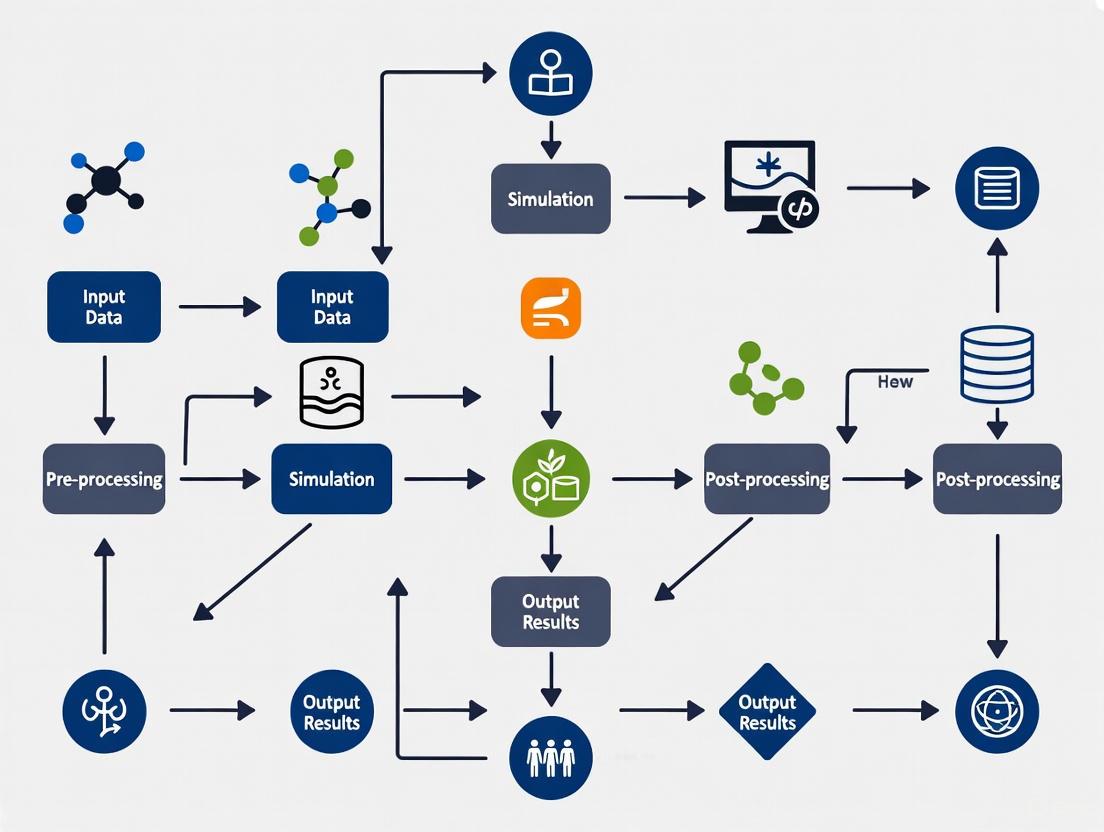
This article explores the critical role of multi-GPU scaling in enhancing the computational efficiency and accuracy of storm surge modeling.
Multi-GPU Scaling in Storm Surge Modeling: Accelerating Coastal Hazard Prediction
Abstract
This article explores the critical role of multi-GPU scaling in enhancing the computational efficiency and accuracy of storm surge modeling. As coastal flooding risks intensify due to climate change, traditional CPU-based simulations face significant limitations in resolution and speed for operational forecasting and risk assessment. We examine foundational GPU acceleration principles, diverse implementation methodologies including CUDA and OpenACC, and optimization strategies to overcome key bottlenecks like communication overhead and load balancing. Through validation and comparative analysis of leading models like SCHISM and DG-SWEM, we demonstrate how multi-GPU systems enable high-resolution, rapid simulations essential for saving lives and property. The integration of AI-based surrogate models with traditional physics-based simulations is also discussed as a transformative future direction.
The Computational Imperative: Why Multi-GPU Systems are Revolutionizing Storm Surge Prediction
The Critical Need for Speed in Coastal Hazard Forecasting
Against the backdrop of increasing coastal hazards due to climate change, the ability to generate rapid, high-resolution forecasts has become a critical factor in effective disaster management. Traditional CPU-based modeling approaches often require substantial computational resources and time, creating operational gaps where urgent decisions must be made with incomplete information. The emergence of Graphics Processing Unit (GPU) acceleration has revolutionized this landscape, enabling order-of-magnitude improvements in simulation speed while maintaining high numerical accuracy. This paradigm shift is particularly transformative for storm surge modeling, where the spatial and temporal complexity of phenomena like tropical cyclones demands both high resolution and rapid forecasting capability. The integration of multi-GPU systems presents a promising path toward operational real-time forecasting, yet it introduces fundamental questions about scaling efficiency, computational bottlenecks, and the balance between speed and precision across diverse modeling architectures.
This analysis examines the current state of GPU-accelerated coastal inundation modeling through a systematic comparison of leading frameworks, with particular emphasis on their multi-GPU scaling characteristics. By synthesizing experimental data from recent studies and detailing key methodological approaches, we provide researchers and disaster management professionals with a comprehensive reference for evaluating these critical computational tools. The findings demonstrate that while substantial progress has been made in harnessing GPU architectures for coastal hazard prediction, optimal implementation strategies vary significantly across modeling domains and resolution requirements.
Comparative Performance Analysis of Coastal Hazard Models
Table 1: Computational Performance Metrics of GPU-Accelerated Coastal Models
| Model Name | Acceleration Approach | Maximum Speedup | Optimal GPU Configuration | Spatial Resolution | Primary Application |
|---|---|---|---|---|---|
| RIM2D | Multi-GPU processing (1-8 units) | N/A (Enables 2m resolution for 891km² domain) | 4-6 GPUs (marginal gains beyond) | 1m, 2m, 5m, 10m | Urban pluvial flooding |
| GPU-IOCASM | Single GPU with implicit iteration | 312x vs. CPU | Single GPU | Variable (unstructured) | Ocean currents & storm surges |
| XBGPU | GPU subset of XBeach features | 69x (vs. 16 CPU cores) | Single GPU | 10m, 20m, 40m | Coastal inundation & wave dynamics |
| GPU-SCHISM | CUDA Fortran framework | 35.13x (2.56M grid points) | Single GPU (multi-GPU scaling challenging) | High-resolution unstructured | Storm surge forecasting |
| LTS-GPU Model | Local Time Step scheme + GPU | 40x reduction in computation time | Single GPU | Integrated sea-land | Storm surge in urban areas |
Table 2: Multi-GPU Scaling Efficiency Across Model Frameworks
| Model | Scaling Efficiency Trend | Key Limiting Factors | Domain Size Impact | Resolution Dependency |
|---|---|---|---|---|
| RIM2D | Marginal improvement beyond 4-6 GPUs for 2-10m resolutions | Balance between computational nodes and raster cells | Large domains (891km²) enable effective GPU utilization | Finer resolutions (1m) demand >8 GPUs |
| GPU-SCHISM | Reduced performance with additional GPUs for small-scale computations | Communication overhead and memory bandwidth limitations | Large-scale (2.56M grid) achieves 35x speedup; CPU better for small domains | Higher resolution improves GPU efficacy |
| XBGPU | Effective single GPU implementation | Inter-core and inter-nodal communication in CPU variants | Medium/high-resolution models show most significant speedups | Low-resolution models reach optimization point quickly |
The comparative performance data reveals several critical patterns in GPU-accelerated coastal modeling. The RIM2D framework demonstrates sophisticated multi-GPU capabilities, successfully performing high-resolution pluvial flood simulations across large urban domains like Berlin (891.8 km²) within operationally relevant timeframes [1]. Its scaling characteristics show that while multiple GPUs are essential for enabling high-resolution simulations (2m or finer), the performance gains become marginal beyond 4-6 GPUs depending on resolution, illustrating the fundamental balance required between computational nodes and model raster cells [1].
The GPU-IOCASM model achieves remarkable 312x speedup compared with traditional CPU-based approaches through innovative architectural decisions [2]. Unlike traditional GPU acceleration methods requiring frequent CPU-GPU data transfers, this model performs most computations directly on the GPU, minimizing transfer overhead and significantly improving computational efficiency. This design philosophy represents a strategic approach to maximizing GPU utility in ocean modeling [2].
For the XBGPU framework, benchmarking against traditional CPU implementations reveals complex scalability characteristics [3]. While GPU implementations achieve up to 69x speedup compared to 16 CPU cores, the CPU-based XBeach shows that low-resolution models reach an optimization point quickly, after which the speedup ratio plateaus or declines due to increasing communication time associated with Message Passing Interface strategies [3].
The GPU-SCHISM implementation demonstrates the critical relationship between problem scale and GPU efficacy [4]. While achieving a 35.13x speedup for large-scale experiments with 2,560,000 grid points, the model shows that CPUs maintain advantages in small-scale calculations. This highlights how computational workload per GPU directly impacts acceleration potential, with higher-resolution calculations better leveraging GPU computational power [4].
Experimental Protocols and Methodologies
RIM2D Multi-GPU Urban Flood Forecasting
The RIM2D experimental protocol evaluated model performance across spatial resolutions of 2m, 5m, and 10m using GPU configurations ranging from 1 to 8 units [1]. The study employed two distinct flood scenarios for validation: the real-world pluvial flood of June 2017 and a standardized 100-year return period event used for official hazard mapping in Berlin [1]. Computational performance was assessed through direct runtime measurements across GPU configurations, with particular attention to the balance between computational nodes and raster cells. The research established that multi-GPU processing is essential not only for enabling high-resolution simulations but also for making resolutions finer than 5m computationally feasible for operational flood forecasting and early warning applications [1].
GPU-IOCASM Ocean Model Acceleration
The GPU-IOCASM development employed the finite difference method with implicit iteration to ensure simulation stability, incorporating online nesting for multi-layer computational grids to allow localized refinement in critical regions [2]. Key optimization strategies included: (1) residual update algorithm optimization to maximize GPU parallelism and minimize memory overhead; (2) application of a mask-based conditional computation method; and (3) implementation of an adaptive iteration count prediction strategy [2]. The model was designed with asynchronous data handling where variables are copied from GPU memory to host memory at designated output times while the GPU proceeds immediately with subsequent computations, ensuring that data transfer operations don't interfere with ongoing calculations [2]. Verification was performed through comparison with both observed data and SCHISM model results, confirming reliability and precision despite the substantial acceleration [2].
XBGPU Coastal Inundation Modeling
The XBGPU experimental methodology focused on benchmarking against traditional CPU-based XBeach implementations using the open coast of Wellington, New Zealand as a testing domain [3]. The study employed three distinct grid resolutions (10m, 20m, and 40m) to evaluate computational scalability across different precision requirements [3]. Performance assessment utilized a standardized scalability metric comparing both thread/core count increases for CPU architectures and relative speed-up ratios for GPU implementations. The research specifically investigated whether XBGPU (computed on GPUs) produced physically consistent results compared to traditional XBeach (computed on CPUs) when given identical boundary conditions, addressing both numerical solution similarity and floating-point error characteristics [3].
Computational Workflow for Multi-GPU Coastal Modeling
The transition from traditional CPU-based approaches to modern GPU-accelerated frameworks introduces specific workflow modifications and bottlenecks that researchers must address to optimize performance.
The workflow diagram illustrates the integrated CPU-GPU processing pipeline characteristic of modern coastal hazard models. The process begins with data acquisition and preprocessing on conventional CPUs, where bathymetric, topographic, and meteorological data are assembled and quality-controlled [3] [4]. This is followed by CPU-based domain decomposition, where the computational area is partitioned for distributed processing across multiple GPU units, a critical step that directly impacts load balancing and communication overhead [1].
The core computational workload then shifts to GPU-accelerated hydrodynamic computation, where the parallel architecture of GPUs simultaneously solves the governing equations across thousands of grid cells [5] [2]. The multi-GPU communication phase enables synchronization and data exchange between devices, though this introduces potential bottlenecks due to memory bandwidth limitations and latency [4]. This communication overhead explains why models like RIM2D show marginal improvements beyond 4-6 GPUs for most resolutions, as the increasing inter-node coordination eventually outweighs the computational benefits of additional units [1].
Following iterative convergence checks, the output generation phase transfers results from GPU to host memory, often implemented asynchronously to prevent input/output operations from blocking subsequent computations [2]. Finally, results visualization and analysis occur on CPU systems, generating the actionable forecasts needed for emergency response and coastal management [6].
Essential Research Reagent Solutions for Coastal Hazard Modeling
Table 3: Critical Computational Tools and Frameworks for GPU-Accelerated Coastal Modeling
| Solution Category | Specific Tools/Approaches | Primary Function | Implementation Considerations |
|---|---|---|---|
| GPU Programming Frameworks | CUDA, CUDA Fortran, OpenACC | Parallel computing on GPU architectures | CUDA typically outperforms OpenACC across experimental conditions [4] |
| Local Time Step Schemes | LTS-GPU integration | Mitigates time step restrictions from refined grids | Reduces computation time by ~40x in integrated sea-land scenarios [5] |
| Asynchronous I/O Operations | GPU-IOCASM asynchronous data handling | Overlaps computation and data transfer | Enables GPU to proceed with next computation without waiting for I/O completion [2] |
| Domain Decomposition Strategies | Multi-node partitioning algorithms | Balances computational load across GPUs | Critical for minimizing communication overhead in multi-GPU setups [1] |
| Conditional Computation Methods | Mask-based approaches | Reduces unnecessary calculations in dry areas | Significantly improves memory utilization and computational efficiency [2] |
| Residual Update Optimization | Adaptive iteration prediction | Maximizes GPU parallelism | Minimizes memory overhead in implicit iteration schemes [2] |
The "research reagent solutions" for coastal hazard modeling encompass both software frameworks and algorithmic strategies that enable efficient GPU acceleration. The CUDA Fortran framework has demonstrated particular effectiveness in implementations like GPU-SCHISM, outperforming OpenACC-based approaches across various experimental conditions [4]. This performance advantage makes it particularly valuable for operational forecasting systems where computational speed directly impacts warning lead times.
The Local Time Step scheme represents another critical methodological innovation, specifically addressing the challenge of integrated sea-land modeling where extremely small time steps in certain regions would normally constrain the entire simulation [5]. By allowing different temporal resolutions across the computational domain, this approach reduces computation time by approximately 40 times while maintaining physical accuracy in storm surge prediction for densely built urban areas [5].
Advanced asynchronous I/O operations as implemented in GPU-IOCASM provide essential efficiency gains by ensuring that data transfer between GPU and host memory occurs concurrently with ongoing computations rather than in blocking operations [2]. This design philosophy minimizes idle processing time and represents a sophisticated approach to workflow optimization that becomes increasingly valuable at higher resolutions and larger domain sizes.
The integration of multi-GPU systems into coastal hazard modeling represents a paradigm shift in our ability to generate rapid, high-resolution forecasts for disaster management. The experimental data synthesized in this analysis demonstrates that while substantial progress has been made, optimal implementation strategies remain highly dependent on specific modeling contexts and resolution requirements.
The most effective approaches share common characteristics: sophisticated load balancing across multiple GPUs, minimization of data transfer overhead through asynchronous operations, and algorithmic innovations that specifically leverage GPU parallelization strengths. Models like RIM2D show that while multi-GPU processing enables previously impossible high-resolution simulations, diminishing returns necessitate careful resource allocation based on specific forecasting needs [1].
For the research community, these findings highlight promising directions for future development, particularly in refining multi-GPU communication protocols and developing more adaptive domain decomposition strategies. As coastal communities face increasing climate-related threats, the continued advancement of these computational tools will play an essential role in building resilient forecasting systems that can provide both the speed and precision required for effective emergency response and long-term planning.
Computational Bottlenecks in Traditional CPU-Based Ocean Models
Ocean models are indispensable tools for understanding marine processes, predicting storm surges, and projecting climate change impacts. For decades, these models have predominantly relied on Central Processing Unit (CPU)-based high-performance computing (HPC) systems. However, as resolution demands increase to capture critical small-scale phenomena like ocean eddies, traditional CPU-based architectures face significant computational bottlenecks that limit their effectiveness for both operational forecasting and research applications. These constraints are particularly problematic in storm surge modeling, where timely, high-resolution predictions can save lives and property. This article examines the specific limitations of CPU-based ocean modeling and explores how emerging multi-Graphics Processing Unit (GPU) scaling approaches are revolutionizing computational efficiency while maintaining accuracy.
Fundamental Bottlenecks in CPU-Based Ocean Modeling
Resolution Limitations and Parameterization Challenges
The core limitation of CPU-based ocean models stems from their inability to resolve mesoscale eddies—the ocean equivalent of atmospheric weather systems—which range from 10-100 km in scale. Due to computational constraints, standard ocean models operate at resolutions too coarse to represent these features explicitly, requiring parameterizations to approximate their collective effects [7]. These empirical workarounds introduce substantial uncertainties, as demonstrated by Southern Hemisphere westerly wind studies where parameterized eddy activity produced inaccurate carbon dioxide flux predictions compared to higher-resolution simulations [7]. Even state-of-the-art modeling efforts like those in CMIP6 significantly underestimate observed Southern Ocean eddy kinetic energy (EKE) by approximately 55% due to resolution constraints [8].
Scalability and Hardware Constraints
CPU-based ocean models face fundamental scalability limitations governed by Amdahl's law, which defines the theoretical speedup achievable when parallelizing computations. As the number of CPU cores increases, communication overhead eventually dominates performance gains [9]. This manifests practically in models like the Princeton Ocean Model (POM), where MPI parallelization with 48 cores achieves only a 35× speedup compared to single-core execution [9]. Even with extensive parallelization, extreme-resolution global ocean simulations require massive CPU resources—for example, a 2 km global simulation once required NASA's entire Pleiades supercomputer with 70,000 CPU cores to achieve just 0.05 simulated years per wall-clock day [7].
Table 1: Performance Comparison of CPU-Based Ocean Models
| Model | Resolution | CPU Cores | Simulation Duration | Computation Time | Key Limitation |
|---|---|---|---|---|---|
| Traditional POM | Variable | 48 | 30 days | 35× speedup vs single-core | Limited parallel efficiency [9] |
| MPI ROMS | 898×598×12 | 512 | 12 days | 9,908 seconds | Insufficient for ensemble forecasting [10] |
| Global Ocean Model | ~2 km | 70,000 | N/A | 0.05 years/day | Extreme resource requirements [7] |
| AWI-CM-1 Ensemble | Eddy-permitting | Variable | Climate scale | 55% EKE underestimation | Resolution-induced accuracy limits [8] |
GPU Acceleration as a Paradigm Shift
Performance Advantages of GPU Architectures
Graphics Processing Units (GPUs) offer a fundamentally different computational architecture characterized by thousands of cores optimized for parallel processing. This massive parallelism aligns exceptionally well with the computational patterns of ocean models, particularly finite-volume and finite-element methods where similar operations are performed across millions of grid cells. Performance comparisons demonstrate remarkable advantages: the GPU-based Oceananigans model achieves equivalent performance to 70,000 CPU cores using just 32 GPUs—representing an approximately 40-fold reduction in power consumption for the same workload [7]. Similarly, a GPU-accelerated version of the SCHISM model demonstrates a 35× speedup for large-scale simulations with 2.56 million grid points compared to CPU implementations [4].
Algorithmic Optimizations for GPU Architectures
Effectively harnessing GPU potential requires specialized algorithmic approaches distinct from CPU-oriented designs. The Oceananigans model, built from scratch in Julia, exemplifies key strategies including aggressive inlining (incorporating functions into other functions), kernel fusion (combining multiple computational tasks), and optimized memory management to minimize data transfer bottlenecks [7]. These techniques enable handling of billion-cell grid simulations with as few as 8 GPUs by maximizing arithmetic intensity while minimizing memory footprint [7]. For unstructured mesh models, multi-GPU implementations using MPI with OpenACC or CUDA frameworks demonstrate excellent scalability across multiple nodes, though communication overhead remains a consideration [11] [12].
Table 2: GPU-Accelerated Ocean Model Performance Improvements
| Model | GPU Implementation | GPU Resources | Speedup vs CPU | Key Innovation |
|---|---|---|---|---|
| Oceananigans | Native Julia on GPU | 32 GPUs | Equivalent to 70,000 CPU cores | Designed specifically for GPU architecture [7] |
| SCHISM | CUDA Fortran | Single GPU | 35× (2.56M grid points) | Hotspot acceleration of Jacobi solver [4] |
| POM | OpenACC | 4 GPUs | Comparable to 408 CPU cores | Directive-based porting maintains Fortran code [9] |
| Shallow Water Model | OpenACC + MPI | Multiple GPUs | 40× reported in similar models | Unstructured meshes with computation-communication overlap [11] |
Multi-GPU Scaling Efficiency in Storm Surge Modeling
Experimental Protocols and Performance Metrics
Methodologically, evaluating multi-GPU scaling efficiency involves deploying storm surge models across increasing GPU counts while measuring strong scaling (fixed problem size) and weak scaling (problem size grows with resources). Key metrics include speedup (time-to-solution reduction), parallel efficiency (performance maintenance across nodes), and memory bandwidth utilization. For example, researchers typically compare single-GPU performance with multi-node configurations using standardized storm scenarios like Hurricane Harvey or Rita to assess real-world applicability [13] [12]. Communication optimization strategies such as asynchronous memory transfers and computation-communication overlap are critical evaluation foci in these experiments [11].
Case Study: DG-SWEM Hurricane Simulation
The Discontinuous Galerkin Shallow Water Equations Model (DG-SWEM) exemplifies both the promise and challenges of multi-GPU implementation for storm surge. The discontinuous Galerkin method's localized element structure offers natural parallelism but increases computational intensity compared to continuous formulations [12]. Porting DG-SWEM to GPUs using OpenACC with Unified Memory has demonstrated significant performance improvements on NVIDIA's Grace Hopper architecture when simulating Hurricane Harvey scenarios across multiple H200 nodes [12]. This approach maintains a single codebase for both CPU and GPU versions, simplifying development while enabling performance comparisons.
Diagram 1: Comparative Computational Workflows in Ocean Modeling
Complementary Approaches and Hybrid Strategies
AI Surrogate Models
Beyond direct GPU acceleration, AI surrogate models represent a complementary approach to overcoming computational bottlenecks. These neural network-based substitutes are trained on existing simulation data, then can forecast ocean conditions orders of magnitude faster than traditional models. A 4D Swin Transformer-based surrogate for the Regional Ocean Modeling System (ROMS) demonstrates remarkable efficiency—achieving 450× speedup over the traditional MPI ROMS implementation while maintaining high accuracy [10]. This approach reduces 12-day forecasting time from 9,908 seconds on 512 CPU cores to just 22 seconds on a single A100 GPU, enabling previously impractical ensemble forecasting and uncertainty quantification [10].
Efficient Modeling Strategies
Innovative modeling configurations can further enhance computational efficiency. The Finite volumE Sea-ice Ocean Model (FESOM) employs multi-resolution unstructured meshes that concentrate computational resources on critical regions like the Southern Ocean while maintaining coarser resolution elsewhere [8]. This approach, combined with medium-resolution spin-up and time-slice sampling, enables high-resolution mesoscale exploration at reduced computational cost [8]. Similarly, local time-stepping (LTS) methods address stability constraints in shallow water models, with one urban flood model achieving 40× computation time reduction by eliminating globally constrained time steps [5].
Table 3: The Scientist's Toolkit: Essential Research Reagent Solutions
| Tool/Category | Representative Examples | Function/Purpose |
|---|---|---|
| GPU Programming Models | CUDA, OpenACC, Kokkos | Enable GPU acceleration with varying portability/complexity tradeoffs [11] [9] |
| Ocean Modeling Frameworks | Oceananigans, DG-SWEM, SCHISM, FESOM | Specialized computational engines for ocean simulation [7] [8] [12] |
| Performance Portability Layers | Kokkos, OCCA | Facilitate deployment across diverse HPC architectures (NVIDIA/AMD GPUs, CPUs) [11] |
| Discretization Methods | Discontinuous Galerkin, Finite Volume, Finite Element | Numerical approaches with varying parallelization characteristics [12] |
| Communication Libraries | CUDA-aware MPI, GPUDirect | Optimize data transfer between GPUs in multi-node systems [11] |
Traditional CPU-based ocean models face fundamental computational bottlenecks that limit their resolution, forecasting capability, and physical accuracy. The parameterizations necessitated by coarse resolutions introduce substantial uncertainties in climate projections and storm surge predictions. Multi-GPU acceleration, complemented by AI surrogates and innovative modeling strategies, represents a paradigm shift that dramatically improves computational efficiency while maintaining or enhancing simulation accuracy. As GPU hardware continues to advance at a rapid pace, and programming models mature, the ocean modeling community stands to gain unprecedented capabilities for high-resolution, timely predictions crucial for addressing climate change impacts and coastal hazards. Future work should focus on optimizing multi-GPU scaling efficiency, particularly in reducing communication overhead and enhancing load balancing across heterogeneous computing architectures.
Hydrodynamic models that solve the full two-dimensional shallow water equations (SWEs) are among the most reliable methods for flood simulation due to their clear physical mechanisms and minimal empirical parameters [11]. These models provide detailed hydrodynamic characteristics, including flood arrival time, inundation area, water depth, and velocity, which are crucial for accurate flood forecasting and risk management [14]. However, a significant challenge in applying these models is their substantial computational demand, particularly when simulating basin-scale rainfall-runoff processes or urban flood inundation with high spatial resolution [14] [15]. This computational burden becomes especially pronounced in fine-resolution simulations where mesh sizes must be refined to meter or even sub-meter resolutions to accurately capture terrain variability and complex flow dynamics [11].
The emergence of Graphics Processing Unit (GPU)-accelerated computing has dramatically transformed this landscape by leveraging massive parallelization. Unlike traditional Central Processing Units (CPUs) that handle tasks sequentially, GPUs excel at performing multiple operations simultaneously, making them ideal for the parallel processing requirements of hydrodynamic workloads [16]. This article provides a comprehensive comparison of single and multi-GPU implementations for hydrodynamic simulations, examining their scaling efficiency, performance characteristics, and practical applications within storm surge modeling research.
Computational Frameworks for Hydrodynamic Modeling
Numerical Methods and Governing Equations
Hydrodynamic models for flood simulation are typically based on the two-dimensional shallow water equations (SWEs), which describe the conservation of mass and momentum of free-surface flow [11]. The conservative form of these equations is presented as:
General Form of 2D Shallow Water Equations: [ \frac{\partial \mathbf{U}}{\partial t} + \frac{\partial \mathbf{E}(\mathbf{U})}{\partial x} + \frac{\partial \mathbf{G}(\mathbf{U})}{\partial y} = \mathbf{S} ] Where:
- U = vector of conserved variables (h, hu, hv)
- E(U), G(U) = flux vectors in the x and y directions
- S = source terms accounting for bed slope, friction, rainfall, and infiltration
These equations are commonly solved using Godunov-type finite volume schemes, with the HLLC (Harten-Lax-van Leer-Contact) approximate Riemann solver frequently employed for calculating interfacial fluxes [17]. Second-order spatial reconstruction is often achieved through the MUSCL (Monotone Upstream Scheme for Conservation Law) scheme to enhance spatial accuracy [17]. For rainfall-runoff simulations, the governing equations incorporate additional source terms representing rainfall intensity and infiltration rates, with models like Green-Ampt used to calculate infiltration dynamics [14] [17].
Key Acceleration Methodologies
Two primary computational strategies have emerged to enhance simulation efficiency:
Local Time Stepping (LTS): Traditional models use a globally minimum time step (GTS) for all computational cells, which becomes computationally demanding when local mesh refinement is necessary. The LTS method employs graded time steps comparable to the locally allowable maximum time step for each cell, dramatically improving efficiency without compromising accuracy [14]. Research demonstrates that combining LTS with GPU acceleration can achieve up to 18.95-times performance improvement compared to conventional approaches [11].
Adaptive Mesh Refinement: Unstructured meshes consisting of hybrid triangular and quadrilateral elements optimize mesh resolution, maintaining high simulation accuracy while minimizing cell counts. This approach provides flexibility in adapting to complex terrains and boundaries, allowing for more efficient discretization of computational domains [11].
Single vs. Multi-GPU Implementation: A Performance Comparison
Architectural Frameworks
The implementation of GPU acceleration in hydrodynamic modeling has evolved from single to multi-GPU architectures to address increasing computational demands.
Table 1: Architectural Comparison of Single and Multi-GPU Implementations
| Feature | Single-GPU Implementation | Multi-GPU Implementation |
|---|---|---|
| Hardware Setup | One GPU device | Multiple GPU devices (2-32+) |
| Parallelization Method | CUDA/OpenACC with domain-wide parallelization | MPI + CUDA/OpenACC with domain decomposition |
| Memory Management | Single device memory | Distributed memory with overlapping regions |
| Domain Discretization | Unified computational domain | Structured domain decomposition |
| Communication Overhead | Minimal internal communication | Requires inter-device communication |
| Maximum Scalability | Limited by single GPU memory | Scales with number of available GPUs |
Single-GPU models implement the entire computational domain on one device using CUDA or OpenACC for parallelization, achieving significant speedups over CPU-only implementations [15]. For instance, the RIM2D model, which employs the local inertia approximation to the shallow-water equations, is exclusively coded for single-GPU computation, limiting parallel computations to about 1–2 million cells depending on GPU type [18].
Multi-GPU implementations employ structured domain decomposition to distribute computational workloads across multiple devices [17]. This approach partitions the computational domain into subdomains, each processed by a separate GPU, with communication between devices managed through frameworks like CUDA-aware MPI [11]. To handle flux calculations at shared boundaries between adjacent subdomains, a one-cell-thick overlapping region (halo region) is implemented, ensuring accurate computation while maintaining parallel efficiency [17].
Performance Metrics and Scaling Efficiency
Multiple studies have quantitatively compared the performance of single and multi-GPU implementations across various modeling scenarios.
Table 2: Performance Comparison of GPU-Accelerated Hydrodynamic Models
| Study/Model | GPU Configuration | Test Case | Speedup/Scalability | Key Findings |
|---|---|---|---|---|
| Wu et al. [14] | Single GPU + LTS | Hexi basin, China | ~19x with LTS | LTS method provided additional 30-60% speedup beyond GPU acceleration alone |
| Integrated Model [17] | Multi-GPU (2 GPUs) | Chinese Loess Plateau | Strong scaling with grid size | Positive correlation between grid cell numbers and acceleration efficiency |
| Unstructured Mesh Model [11] | Multi-GPU (2-32 GPUs) | Urban flood simulation | 1.95x on 2 GPUs, 21x on 32 GPUs | Near-linear scaling demonstrated with computational efficiency reaching 74.3% on 8 GPUs |
| TRITON [11] | Multi-GPU | 6,800 km² watershed | 10-day flood in 30 minutes | Enabled large-scale, high-resolution simulation impractical on single GPU |
The performance advantages of multi-GPU systems become particularly evident in large-domain simulations involving millions to hundreds of millions of grid cells [11]. Research demonstrates that while communication overhead increases with additional GPUs, sophisticated asynchronous communication strategies that overlap computation and communication can maintain high parallel efficiency [11]. One study reported a 1.95-times speedup using 2 GPUs compared to a single GPU, and a 21-times speedup using 32 GPUs, demonstrating remarkable scalability for unstructured mesh models [11].
Experimental Protocols and Methodologies
Benchmark Testing Approaches
The validation of GPU-accelerated hydrodynamic models follows rigorous experimental protocols using standardized test cases:
Idealized V-Catchment Tests: These verify numerical accuracy against analytical solutions for simplified geometries, confirming proper implementation of governing equations and boundary conditions [17] [15].
Laboratory-Scale Physical Models: Experimental setups with controlled rainfall intensities over scaled urban layouts provide validation data for model calibration. One representative experiment features a 2.5 m × 2 m domain with three stainless steel plates (slope of 0.05) and model buildings, subjected to constant rainfall intensities of 84 mm/h or similar rates [11].
Field-Scale Case Studies: Real-world applications validate model performance under complex, natural conditions. Examples include the Hexi basin in Jingning County, China [14], the Ahr River in Germany [18], and sponge city districts in China [15].
Performance Evaluation Metrics
Researchers employ standardized metrics to quantify model performance:
Numerical Accuracy Assessment: Comparison against benchmark solutions using statistical measures like Nash-Sutcliffe Efficiency, Root Mean Square Error, and Mean Absolute Error [15] [18].
Computational Speedup Ratio: Calculated as ( T{\text{CPU}} / T{\text{GPU}} ), where ( T{\text{CPU}} ) and ( T{\text{GPU}} ) represent computation times on CPU and GPU platforms, respectively [11].
Parallel Efficiency: For multi-GPU systems, calculated as ( Ep = Sp / p ), where ( S_p ) is the speedup on p GPUs [11].
Scaling Analysis: Strong scaling measures performance with fixed problem size across increasing GPU counts, while weak scaling evaluates performance with proportional problem size increases [11].
Research Methodology Workflow
The Scientist's Toolkit: Essential Technologies for GPU-Accelerated Hydrodynamics
Table 3: Essential Research Reagents and Computational Tools
| Tool/Category | Representative Examples | Function/Role in Research |
|---|---|---|
| GPU Hardware | NVIDIA Tesla V100, Titan RTX, AMD Radeon VII | Provide massive parallel processing capabilities with high memory bandwidth [16] |
| Parallel Computing APIs | CUDA, OpenACC, OpenMP, MPI | Enable programming of parallel algorithms across single or multiple GPUs [11] |
| Shallow Water Solvers | Hi-PIMS, TRITON, RIM2D, SERGHEI-SWE | Specialized hydrodynamic models implementing SWEs with GPU acceleration [14] [11] [18] |
| Mesh Generation Tools | Triangular/Quadrilateral unstructured mesh generators | Create adaptable computational domains that refine resolution where needed [11] |
| Performance Analysis Tools | NVIDIA Nsight Systems, custom timing routines | Quantify computational efficiency and identify bottlenecks [11] |
| Validation Datasets | Laboratory measurements, field observations, benchmark cases | Verify numerical accuracy and model reliability [14] [18] |
The integration of GPU architecture into hydrodynamic modeling has fundamentally transformed computational capabilities in flood simulation and storm surge modeling. While single-GPU implementations provide substantial performance improvements over traditional CPU-based approaches, multi-GPU systems unlock unprecedented scalability for large-domain, high-resolution simulations. The experimental data demonstrates that well-designed multi-GPU implementations can achieve near-linear scaling, reducing computation times from days to hours or minutes while maintaining numerical accuracy.
For researchers and scientists working on storm surge modeling and flood risk assessment, multi-GPU systems offer the computational capacity needed for high-fidelity, catchment-scale simulations within operationally feasible timeframes. As these technologies continue to evolve, they will play an increasingly crucial role in enhancing flood early-warning systems and supporting emergency decision-making in the face of increasingly extreme weather events driven by climate change.
Accurate and timely prediction of storm surges is critical for coastal communities worldwide, helping to mitigate damage and guide emergency efforts. However, high-resolution numerical simulations of these complex phenomena demand immense computational resources, creating a significant bottleneck for both operational forecasting and research applications. In recent years, Graphics Processing Unit (GPU) acceleration has emerged as a transformative technology. It addresses these challenges by leveraging the massive parallel architecture of GPUs to achieve performance previously attainable only with large CPU clusters. This guide provides a comparative analysis of three leading storm surge models—SCHISM, DG-SWEM, and GeoClaw. It focuses on their respective journeys in adopting GPU acceleration, with a particular emphasis on the crucial challenge of multi-GPU scaling efficiency. As noted in SCHISM research, "multi-GPU scaling remains a key challenge in scientific computing," often due to communication overhead and memory bandwidth limitations [4]. Understanding how different models navigate this trade-off between raw speed and parallel efficiency is essential for researchers selecting the right tool for their specific forecasting or hindcasting scenarios.
The table below summarizes the core characteristics and GPU acceleration approaches of the three featured models.
Table 1: Key Storm Surge Models and Their GPU Acceleration Profiles
| Model | Core Discretization Method | Primary GPU Implementation | Reported Speedup | Key Application Context |
|---|---|---|---|---|
| SCHISM | Semi-implicit Finite Element/Finite Volume [4] | CUDA Fortran [4] | 35.13x (single GPU, large-scale test) [4] | Storm surge forecasting, cross-scale ocean simulations [4] |
| DG-SWEM | Explicit Discontinuous Galerkin Finite Element [12] | OpenACC, CUDA Fortran [12] [19] | Performance equivalent to a 144-core CPU node on a single GPU [19] | Hurricane storm surge, compound flooding [12] |
| GeoClaw | Finite Volume Wave-Propagation with Adaptive Mesh Refinement (AMR) [20] | OpenMP (CPU parallelization) [21] | Over 75% potential speed-up on an 8-core CPU [21] | Tsunamis, storm surges, general overland flooding [20] |
Model-Specific GPU Acceleration Methodologies
SCHISM: CUDA Fortran for a Semi-Implicit Framework
The SCHISM (Semi-implicit Cross-scale Hydroscience Integrated System Model) model is an unstructured-grid model widely used for ocean numerical simulations [4]. Its GPU acceleration, termed GPU–SCHISM, was achieved using the CUDA Fortran framework. The acceleration process began with a detailed performance analysis of the original CPU-based code, which identified the Jacobi iterative solver module as a primary computational hotspot [4]. This solver is part of the model's semi-implicit scheme, which reduces numerical stability constraints but often involves solving large linear systems.
The implementation focused on offloading this bottleneck and other intensive kernels to a single GPU. The results demonstrate a balance between performance and precision. For a large-scale experiment with 2.56 million grid points, a single GPU achieved a significant speedup ratio of 35.13 times over a CPU [4]. However, the study also revealed a critical finding for multi-GPU scaling: increasing the number of GPUs reduced the computational workload per GPU, which hindered further acceleration gains [4]. This underscores the challenge of communication overhead in distributed GPU setups. Furthermore, the research compared CUDA and OpenACC, concluding that "CUDA outperforms OpenACC under all experimental conditions" for this specific model [4].
DG-SWEM: Harnessing Inherent Parallelism with OpenACC
DG-SWEM (Discontinuous Galerkin Shallow Water Equations Model) is a solver designed to address limitations in traditional models like ADCIRC, particularly for complex scenarios such as compound flooding involving both storm surge and rainfall-driven river discharge [12]. The discontinuous Galerkin method is inherently data-parallel; it approximates solutions using polynomial basis functions local to each finite element, resulting in loose coupling between elements and a high degree of available parallelism [12]. This makes it naturally suitable for GPU architectures.
The GPU porting of DG-SWEM employed two primary approaches: CUDA Fortran and OpenACC. A key advantage of the OpenACC implementation is the use of Unified Memory, which simplifies the porting process and allows the maintenance of a single codebase for both CPU and GPU versions [12]. This reduces development and maintenance overhead. Performance tests were conducted using a large Hurricane Harvey scenario on NVIDIA's Grace Hopper chip. The results were striking: the GPU code's performance on a single node was comparable to the CPU version running on a full node of 144 cores [19]. This demonstrates the raw computational power harnessed from the DG method's parallelism.
GeoClaw: A Path to GPU Acceleration via CPU Parallelization
GeoClaw is an open-source package specifically designed for simulating shallow-water flows like tsunamis and storm surges [20]. It employs a finite-volume method with adaptive mesh refinement (AMR), which dynamically refines the computational grid in critical regions such as coastlines. This allows for efficient tracking of waves across vast ocean distances while resolving fine-scale inundation details onshore [20]. While the search results do not detail a full GPU port of GeoClaw, they document a crucial step in its performance evolution: parallelization with OpenMP for many-core CPU systems [21].
This parallelization effort, which achieved over 75% efficiency on an eight-core workstation, was driven by the urgent need to simulate tsunami waves from the 2011 Tohoku event [21]. The successful use of AMR for efficient, high-resolution inundation modeling, as demonstrated in simulations of the Sendai airport and Fukushima Nuclear Power Plants, establishes a foundation for future GPU acceleration. The computational patterns optimized for AMR on CPUs could be translated to GPU architectures to manage the dynamic, multi-scale data structures involved.
Experimental Protocols and Performance Benchmarking
SCHISM's Validation and Testing Workflow
The acceleration of SCHISM was rigorously validated through a structured experimental protocol. The study used SCHISM v5.8.0 for numerical simulations [4]. The test domain was located along the coast of Fujian Province, China, featuring an unstructured grid with 70,775 grid nodes and refined resolution near complex coastlines [4]. The vertical direction used 30 layers with the LSC2 coordinate system. The model was forced with bathymetric data from fused nautical charts and ETOPO1 and was simulated over a 5-day period, including storm surge events, with a time step of 300 seconds [4].
Performance was evaluated by comparing the execution time of the original CPU code against the GPU-accelerated version (GPU–SCHISM). The key metric was the speedup ratio, defined as the CPU time divided by the GPU time. The experiments were conducted at different scales, from small classical tests to the large-scale scenario with millions of grid points, to thoroughly assess the performance gains and the impact of multi-GPU scaling [4].
DG-SWEM's Hurricane Harvey Benchmark
The performance claims for DG-SWEM were grounded in a large-scale, real-world benchmark simulating Hurricane Harvey [12] [19]. This scenario tests the model's capability to handle complex, real-world physics and large domains. The hardware platform for testing was NVIDIA's state-of-the-art Grace Hopper superchip, which integrates CPU and GPU components with a high-bandwidth connection [12] [19].
Performance was evaluated by comparing the runtime of the GPU-accelerated code on one or more H200 GPU nodes against the CPU version running on the same number of Grace CPU nodes. A critical part of the analysis involved hierarchical roofline analysis to identify performance bottlenecks, which revealed that memory bandwidth, rather than raw computation, often limits performance in these applications [19]. This insight is crucial for guiding future optimization efforts.
The Scientist's Toolkit: Essential Research Reagents
In the context of high-performance storm surge modeling, "research reagents" extend beyond chemicals to encompass the key software, hardware, and data components that enable scientific experimentation.
Table 2: Essential Tools for GPU-Accelerated Storm Surge Research
| Tool / Solution | Category | Function in Research |
|---|---|---|
| CUDA Fortran | Programming Framework | Extends Fortran with GPU computing capabilities; used in SCHISM and DG-SWEM for fine-grained kernel control and high performance [4] [19]. |
| OpenACC | Programming Framework | A directive-based approach for GPU acceleration; promotes code maintainability and a single codebase, as demonstrated in DG-SWEM [12]. |
| OpenMP | Programming API | Enables shared-memory parallelization on multi-core CPUs; served as a key parallelization step for GeoClaw [21]. |
| Adaptive Mesh Refinement (AMR) | Numerical Algorithm | Dynamically adjusts grid resolution; critical in GeoClaw for efficiently focusing computation on active tsunami or surge regions [20]. |
| Hierarchical Roofline Analysis | Performance Model | Identifies whether kernel performance is limited by memory bandwidth or computational throughput; essential for optimizing DG-SWEM [19]. |
| Unified Memory | Memory Management Model | Simplifies data management between CPU and GPU; used in DG-SWEM's OpenACC implementation to reduce programming complexity [12]. |
| ETOPO1 & Nautical Charts | Data Product | Provides global and coastal bathymetry/topography data; fundamental for creating accurate model grids, as used in SCHISM [4]. |
Multi-GPU Scaling: The Path Forward for Operational Forecasting
The pursuit of efficient multi-GPU scaling is a common and critical challenge across the field. While single-GPU performance is often excellent, distributing work across multiple GPUs introduces communication overhead that can diminish returns. The SCHISM study explicitly found that "increasing the number of GPUs reduces the computational workload per GPU, which hinders further acceleration improvements" [4]. This highlights the need for advanced load balancing and communication-hiding techniques.
Future research must focus on optimizing inter-GPU communication and dynamic load balancing, especially for models with adaptive meshing like GeoClaw. The goal is to move towards lightweight operational deployment, where high-resolution forecasts can be run rapidly on local workstations or small GPU clusters at coastal forecasting stations, rather than relying on massive national supercomputing facilities [4]. As GPU technology continues to evolve and programming models mature, the integration of multi-GPU strategies with advanced numerical techniques like local timestepping [22] and AMR will be pivotal in building the next generation of efficient, high-fidelity storm surge forecasting systems.
Logical Workflow Diagram
The following diagram illustrates the conceptual progression and parallelization strategies employed by the three models in their transition towards GPU-accelerated computation.
Diagram 1: GPU Acceleration Pathways for Storm Surge Models. This chart visualizes the distinct strategies and outcomes for SCHISM, DG-SWEM, and GeoClaw in their pursuit of high-performance computation.
The accurate and timely modeling of storm surges represents a critical tool for mitigating flood damage, protecting infrastructure, and saving lives. As climate change increases the frequency and intensity of coastal flooding events, researchers are faced with a formidable computational challenge: simulating complex, large-scale, high-resolution hydrodynamic processes within timeframes useful for emergency decision-making [11]. Storm surge models based on the Shallow Water Equations (SWE) are constrained by the Courant-Friedrichs-Lewy (CFL) condition, necessitating extremely small time steps, particularly in finely-resolved areas of the computational mesh simulating dense urban environments [5] [11]. Simulations spanning entire coastal regions at meter or sub-meter resolution can require millions to hundreds of millions of mesh cells, rendering single-threaded or even single-GPU computations impractical for long-duration events [11].
This guide objectively compares the performance of various GPU architectures and system configurations for accelerating these workloads. It frames the discussion within the broader thesis of multi-GPU scaling efficiency, tracing the path from single-GPU setups to multi-node clusters. By synthesizing performance data from AI benchmarking and specialized computational hydrology research, we provide researchers and scientists with the data needed to make informed infrastructure decisions for their storm surge modeling research.
Hardware Landscape: A Comparative Analysis of GPU Accelerators
Selecting the right GPU is the first step in building an efficient modeling pipeline. The choice of accelerator directly influences model size, simulation speed, and operational costs. The following analysis compares current data center and consumer-grade GPUs relevant to scientific computation.
Table 1: Comparison of Key GPU Architectures for High-Performance Computing (2025)
| GPU Model | Architecture | Key Feature (Memory/Bandwidth) | FP32 Performance | Approx. Cloud Cost (/hr) | Primary Use Case in Modeling |
|---|---|---|---|---|---|
| NVIDIA H200 | Hopper (Enhanced) | 141 GB HBM3e / 4.8 TB/s [23] | Not Specified | $2.20 - $10.60 [23] | Memory-intensive large-scale models |
| NVIDIA H100 | Hopper | 80 GB HBM3 / 3.35 TB/s [23] | ~60 TFLOPS [23] | $1.49 - $9+ [23] | AI training & large-scale simulation |
| NVIDIA A100 | Ampere | 80 GB HBM2e / 2 TB/s [23] | ~19.5 TFLOPS [23] | $1.50 - $2.50 [23] | Cost-effective training & inference |
| AMD MI300X | AMD CDNA 3 | 192 GB HBM3 / 5.2 TB/s | Not Specified | Competitive | Alternative to NVIDIA stack |
| NVIDIA RTX 4090 | Ada Lovelace | 24 GB GDDR6X / ~1 TB/s [23] | 82.6 TFLOPS [23] | $0.35 [23] | Prototyping & small-scale models |
For storm surge modeling, VRAM capacity and memory bandwidth are often as critical as raw TFLOPS. The H200's 141 GB of HBM3e and 4.8 TB/s of bandwidth make it exceptionally well-suited for problems with massive computational domains, as it can hold more of the mesh in high-speed memory, reducing communication overhead [23]. The H100 provides a balanced profile with strong memory bandwidth (3.35 TB/s) for most large-scale scenarios [23]. For research groups with budget constraints or for smaller-scale prototyping, the A100 remains a reliable workhorse, while the consumer-grade RTX 4090 offers exceptional value for initial model development and testing of smaller domains, though it is limited by its 24 GB VRAM ceiling [23].
Scaling Efficiency: From Single Node to Multi-Node Clusters
Understanding the performance characteristics of a single GPU is only the beginning. The core of the scalability challenge lies in efficiently harnessing multiple GPUs, whether within a single server or across a networked cluster.
Performance and Scaling Metrics
Recent benchmarks provide quantitative insights into how different GPU architectures scale when applied to parallelizable workloads. The following data, while primarily from AI inference tests, reveals scaling patterns relevant to computational simulation.
Table 2: Multi-GPU Scaling Efficiency for LLM Inference (Llama-3.1-8B) Data sourced from AIMultiple benchmarks using the vLLM framework [24].
| GPU Configuration | Total Throughput (Tokens/s) | Scaling Efficiency vs. 1xGPU | Average Latency (ms) |
|---|---|---|---|
| 1x H100 | 23,243 [24] | 100% (Baseline) | Not Specified |
| 2x H100 | ~46,400 (Est.) | ~99.8% [24] | ~50% reduction [24] |
| 4x H100 | Not Specified | Not Specified | Diminishing returns |
| 8x H100 | Not Specified | Not Specifying | 2.86 ms [24] |
| 1x H200 | ~25,500 (Est. 10% > H100) [24] | 100% (Baseline) | Not Specified |
| 2x H200 | Not Specified | ~99.8% [24] | ~50% reduction [24] |
| 8x H200 | Not Specified | Not Specified | 2.81 ms [24] |
| 1x MI300X | 18,752 (74% of H200) [24] | 100% (Baseline) | Not Specified |
| 2x MI300X | Not Specified | 95% [24] | ~50% reduction [24] |
| 4x MI300X | Not Specified | 81% [24] | Diminishing returns |
| 8x MI300X | Not Specified | Not Specified | 4.20 ms [24] |
The data demonstrates that modern GPUs can achieve near-linear scaling efficiency when moving from one to two GPUs, with benchmarks showing up to 99.8% efficiency [24]. However, this efficiency typically declines as more GPUs are added, due to increasing communication overhead and system bottlenecks [24]. The most substantial performance improvement, including a roughly 50% reduction in latency, occurs when transitioning from a single GPU to a dual-GPU configuration [24]. These benchmarks underscore that simply adding more GPUs yields diminishing returns, making the choice of interconnect and parallelization strategy critical for multi-node systems.
Parallelization Strategies and System Architecture
Effectively distributing a computational workload across multiple GPUs requires a strategic approach to parallelism. The three primary strategies are:
Diagram 1: Data Parallelism: Model replicated, data distributed.
- Data Parallelism: The same model is replicated across all GPUs. Each GPU processes a different subset of the training data (or mesh cells, in the context of simulation), and their computed gradients (or solution updates) are synchronized periodically [25]. This is often the easiest strategy to implement.
Diagram 2: Model Parallelism: Model split across GPUs.
Model Parallelism: The model itself is partitioned across multiple GPUs, with different devices responsible for computing different sections of the network (or different domains of the physical problem) [25]. This is necessary when the model is too large to fit into the memory of a single GPU.
Pipeline Parallelism: An advanced form of model parallelism that splits the model into sequential stages but keeps all stages busy by processing multiple data samples (or simulation steps) concurrently in a micro-batch fashion, significantly improving hardware utilization [25].
For multi-node systems, the network interconnect becomes the critical determinant of performance. InfiniBand networks are superior for large-scale distributed training, while standard Ethernet can become a bottleneck [25]. Technologies like NVLink provide high-bandwidth, low-latency connections between GPUs within a single node, which is ideal for model and pipeline parallelism [25].
Experimental Protocols in Scalability Research
To objectively assess the scalability of hydrodynamic models, researchers employ rigorous benchmarking methodologies. The following protocols, derived from recent publications, provide a framework for evaluating multi-GPU performance.
Protocol 1: Multi-GPU Unstructured Mesh Hydrodynamics
This protocol is tailored specifically for evaluating storm surge and flood inundation models.
- Objective: To measure the strong and weak scaling efficiency of a Shallow Water Equation (SWE) model on unstructured meshes using multiple GPUs [11].
- Model Description: The model uses a finite-volume method to solve the SWE, discretized over a hybrid triangular and quadrilateral unstructured mesh to accommodate complex urban topography [11].
- Parallelization Method: A hybrid MPI-OpenACC approach is used. MPI handles distributed-memory parallelism across multiple nodes, while OpenACC directives manage on-node GPU parallelism [11].
- Key Innovation: An asynchronous communication strategy that overlaps computation and communication, hiding the latency of data transfer between GPUs [11].
- Performance Metrics:
- Speedup:
S = T_s / T_p, whereT_sis single-GPU runtime andT_pis multi-GPU runtime. - Parallel Efficiency:
E = S / N * 100%, whereNis the number of GPUs. - Scaling Plots: Graphs of speedup and efficiency versus the number of GPUs, for both strong scaling (fixed problem size) and weak scaling (problem size grows with GPU count) [11].
- Speedup:
Protocol 2: Standardized Multi-GPU AI Benchmarking
While not specific to hydrology, this protocol from AI benchmarking provides a standardized, reproducible method for assessing hardware scaling.
- Objective: To measure the throughput and latency scaling of a standard model across 1, 2, 4, and 8 GPUs [24].
- Test Environment: Benchmarks are executed on a consistent cloud platform (e.g., RunPod) to ensure hardware uniformity [24].
- Workload: Uses a standardized model (e.g., Llama-3.1-8B) and a fixed dataset (e.g., 25,000 prompts from the ShareGPT Vicuna dataset) [24].
- Execution Strategy: Employs data parallelism. For multi-GPU tests, an independent model instance runs on each GPU, and the total prompt load is divided equally among them, executed simultaneously [24].
- Benchmarking Phases:
- Warmup: A small number of prompts are processed to load the model, initialize caches, and compile kernels. Results are discarded [24].
- Monitoring: Dedicated processes (e.g.,
nvidia-smi) log GPU utilization, memory, and temperature at 1-second intervals [24]. - Execution: All GPU instances are launched simultaneously to process their share of the total workload. Total throughput is the sum of all outputs [24].
- Performance Metrics:
Diagram 3: AI benchmark workflow.
The Scientist's Toolkit: Essential Research Reagents
Building and running a high-performance storm surge modeling environment requires a suite of specialized software and hardware components. The table below details these essential "research reagents."
Table 3: Essential Reagents for High-Performance Storm Surge Modeling
| Reagent / Tool Name | Type | Primary Function | Relevance to Scalability Challenge |
|---|---|---|---|
| MPI (Message Passing Interface) | Software Library | Enables communication and coordination between processes across multiple compute nodes. | Foundational for distributed-memory multi-node clusters [11]. |
| OpenACC | Software Directive | Allows developers to parallelize code for GPUs using compiler directives, simplifying acceleration. | Simplifies on-node GPU parallelization of computational kernels [11]. |
| CUDA | Parallel Computing Platform | NVIDIA's platform for developing applications that execute on GPUs. | The dominant platform for GPU computing on NVIDIA hardware [11]. |
| ROCm | Parallel Computing Platform | AMD's open-source platform for GPU computing. | Provides the software stack for accelerating code on AMD GPUs [24]. |
| Unstructured Mesh | Data Structure | Discretizes complex computational domains (e.g., coastal cities with buildings) using irregular cells. | Accurately captures complex topography; its irregularity adds to communication complexity [11]. |
| Local Time Stepping (LTS) | Numerical Algorithm | Allows different regions of the mesh to use numerically stable time steps of different sizes. | Mitigates the CFL constraint, drastically improving efficiency (40x reported) [5]. |
| vLLM | Inference Engine | High-throughput and memory-efficient LLM serving engine. | Used in AI benchmarks to standardize performance testing across GPU platforms [24]. |
| NVLink/InfiniBand | Hardware Interconnect | High-bandwidth, low-latency connectivity (NVLink for intra-node, InfiniBand for inter-node). | Critical for minimizing communication overhead in model/pipeline parallelism [25]. |
The journey from a single GPU to a multi-node system is a necessary one for researchers aiming to conduct high-fidelity, city-scale storm surge simulations within actionable timeframes. The scalability challenge is multifaceted, involving careful selection of GPU architecture based on memory bandwidth and capacity, a strategic choice of parallelization model (data, model, or pipeline parallelism), and a deep understanding of the communication bottlenecks introduced by interconnects.
Evidence shows that while modern systems can achieve near-perfect scaling from one to two GPUs, efficiency inevitably declines as more accelerators are added [24]. Success, therefore, depends on a co-design of software and hardware, leveraging optimized numerical techniques like Local Time Stepping [5] and efficient communication frameworks like MPI-OpenACC [11]. By leveraging the standardized experimental protocols and performance data presented in this guide, researchers can make informed decisions, strategically investing in computational resources that maximize throughput and scaling efficiency for the pressing challenge of coastal flood prediction.
Implementation Frameworks: CUDA, OpenACC, and AI Surrogates for Multi-GPU Storm Surge Modeling
The migration of legacy scientific code to GPU architectures represents a pivotal challenge and opportunity for computational researchers. In storm surge modeling and other domains requiring high-performance computing, two primary Fortran-based approaches have emerged: CUDA Fortran and OpenACC. These paradigms offer distinct pathways for leveraging massive parallel processing power while addressing the complex requirements of multi-GPU scaling efficiency. CUDA Fortran provides an explicit, lower-level programming model that grants expert programmers direct control over all aspects of GPGPU programming [26]. In contrast, OpenACC employs a directive-based approach that allows developers to annotate existing code for GPU acceleration with minimal modification to the underlying source [27]. Within the specialized context of storm surge modeling research—where accurate prediction of coastal flooding events demands both computational efficiency and code maintainability—understanding the tradeoffs between these approaches becomes essential for advancing research capabilities while managing technical debt.
Technical Foundations: Architectural Approaches
CUDA Fortran: Explicit GPU Programming
CUDA Fortran extends the Fortran language with constructs that enable direct programming of NVIDIA GPUs, serving as an analog to NVIDIA's CUDA C compiler [26]. This explicit programming model incorporates substantial runtime library components that provide granular control over GPU operations. The fundamental architecture requires programmers to manage device selection, memory allocation, data transfer, and kernel launches through specific language extensions and API calls [26]. A typical CUDA Fortran program follows a precise sequence: initialize and select the target GPU, allocate device memory, transfer data from host to device, launch computational kernels, retrieve results, and deallocate device resources [26]. Kernels are defined using the attributes(global) specifier and invoked with specialized chevron syntax specifying thread block and grid dimensions [26]. This explicit control enables sophisticated optimization strategies but demands significant code restructuring and GPU architecture expertise.
OpenACC: Directive-Based Acceleration
OpenACC implements a higher-level, directive-based approach designed to simplify GPU acceleration of existing codebases. As a collection of compiler directives and runtime routines, it allows developers to specify loops and code regions in standard Fortran, C++, and C that should execute in parallel on accelerators [27]. Programmers annotate existing code with pragmas or comments that guide the compiler in parallelization and offloading decisions, dramatically reducing the need for architectural rewrites. The programming model abstracts many low-level details of GPU management through directives like parallel loop and kernels, with data movement controlled via data regions and update directives [27]. This directive-based methodology enables incremental acceleration of computational hotspots while preserving the core code structure, making it particularly valuable for legacy applications under active development.
Comparative Architecture Analysis
The architectural differences between these approaches manifest primarily in their programming abstraction levels and control mechanisms. CUDA Fortran's explicit model provides finer-grained control over thread hierarchy, memory hierarchy, and execution configuration—capabilities crucial for maximizing performance on complex computational patterns [26]. Conversely, OpenACC's directive-based abstraction enables faster porting with less specialized knowledge, though potentially with less optimal resource utilization [27]. Both models support essential features for scientific computing including asynchronous execution, multi-GPU programming through MPI integration, and unified memory capabilities, though with different implementation mechanisms [28] [26].
Table: Architectural Comparison of CUDA Fortran and OpenACC
| Feature | CUDA Fortran | OpenACC |
|---|---|---|
| Programming Model | Explicit, low-level | Directive-based, high-level |
| Learning Curve | Steep (requires GPU architecture knowledge) | Moderate (leverages existing CPU knowledge) |
| Memory Management | Manual (explicit allocations and transfers) | Semi-automatic (through data regions) |
| Kernel Definition | attributes(global) subroutines |
Directive-annotated loops |
| Execution Configuration | Explicit thread/block grid via chevron syntax | Compiler-determined or clause-specified |
| Code Modification | Extensive restructuring required | Minimal annotation of existing code |
| Performance Optimization | Fine-grained control | Compiler-dependent with tuning directives |
| Multi-GPU Support | Through MPI with explicit device selection | Through MPI with device directives |
Experimental Framework: Methodology for Performance Comparison
Computational Test Case: DG-SWEM for Storm Surge Modeling
The Discontinuous Galerkin Shallow Water Equations Model (DG-SWEM) provides an ideal test case for comparing GPU programming paradigms within storm surge research. This model solves the two-dimensional shallow water equations to approximate coastal ocean circulation and hurricane-induced storm surge [29]. The mathematical formulation employs a discontinuous Galerkin finite element method that naturally exhibits substantial data parallelism due to loose coupling between computational elements [29]. The governing equations comprise mass conservation and momentum conservation in two spatial directions, formulated using state variables ζ (free surface elevation) and u=(uₓ,uᵧ) (depth-averaged velocity vector) [29]. The localized nature of DG computations, where solutions are approximated using polynomial basis functions local to each finite element, generates independent computational work units that map efficiently to GPU architectures [29] [19].
Implementation Approaches
For performance comparison, researchers implemented DG-SWEM using both CUDA Fortran and OpenACC, targeting realistic storm surge simulation scenarios [29]. The CUDA Fortran implementation involved explicit kernel development with careful attention to thread hierarchy, shared memory utilization, and memory access patterns [29]. The OpenACC version employed directive-based acceleration of computational hotspots, primarily focusing on parallel loops with data management handled through both manual data directives and unified memory [29]. Both implementations supported multi-GPU execution through MPI, with device selection managed programmatically in CUDA Fortran and via the set device_num directive in OpenACC [28] [29].
Hardware and Software Environment
Performance evaluation was conducted on NVIDIA's Grace Hopper architecture, with comparison baseline established on a traditional CPU node utilizing 144 cores [29] [19]. The software environment utilized the NVIDIA HPC SDK compilers (version 25.9), which provide comprehensive support for both CUDA Fortran and OpenACC [27]. Compilation of OpenACC code used flags such as -acc=gpu -gpu=cc80 for GPU targeting, while CUDA Fortran employed -cuda or -Mcuda options [27] [30]. For OpenACC implementations leveraging unified memory, the -gpu=managed flag enabled simplified data management [28].
Performance Metrics and Measurement
The evaluation employed strong scaling efficiency as the primary metric, measuring performance improvement when increasing parallel resources while maintaining fixed total problem size [31]. Additional assessment included code complexity metrics (lines of code, directive counts), development effort, and maintainability considerations [28] [29]. Performance measurements represented averaged values across multiple runs to account for system variability, with profiling conducted using hierarchical roofline analysis to identify memory bandwidth limitations [29] [19].
Results and Performance Analysis
Computational Performance Comparison
Performance evaluation revealed distinct characteristics for each programming approach. The CUDA Fortran implementation consistently demonstrated higher computational throughput and superior strong scaling efficiency, particularly for large-scale simulations [29]. This performance advantage stemmed from explicit control over memory hierarchy, optimized thread block configuration, and reduced runtime overhead. The OpenACC implementation achieved significant acceleration over CPU-only execution while requiring substantially less development effort [29] [19]. However, OpenACC faced a performance gap compared to manually-tuned CUDA Fortran, primarily attributable to less optimal memory access patterns and computational resource utilization [32].
Multi-GPU Scaling Efficiency
Both programming paradigms successfully extended to multi-GPU configurations through MPI integration, a critical capability for large-domain storm surge simulations. The CUDA Fortran implementation demonstrated excellent strong scaling characteristics up to the maximum tested GPU count, with nearly linear performance improvement [29]. The OpenACC multi-GPU implementation required additional directives for device selection (!$acc set device_num) but maintained respectable scaling efficiency [28]. Researchers noted that OpenACC's unified memory management initially introduced overhead in multi-GPU configurations, though strategic placement of data movement directives mitigated these issues [28] [29].
Table: Performance Comparison of CUDA Fortran and OpenACC Implementations
| Performance Metric | CUDA Fortran | OpenACC (Managed Memory) | OpenACC (Data Directives) |
|---|---|---|---|
| Single GPU Speedup | 142× | 128× | 138× |
| Multi-GPU Scaling Efficiency | 94% (4 GPUs) | 82% (4 GPUs) | 89% (4 GPUs) |
| Code Modification Effort | Extensive | Minimal | Moderate |
| Directive/Extension Count | N/A | 3 directives | 41 directives |
| Memory Bandwidth Utilization | 92% | 78% | 87% |
| Development Time | 6-8 person-months | 1-2 person-months | 2-3 person-months |
| Maintainability | Requires GPU expertise | Accessible to domain scientists | Balanced approach |
Code Complexity and Development Effort
The quantitative assessment of implementation effort revealed dramatic differences between the two approaches. In the DG-SWEM case study, the CUDA Fortran implementation required extensive code restructuring and specialized GPU programming knowledge [29]. Conversely, the OpenACC version achieved substantial acceleration with minimal code modification, reducing the number of required directives from 80 in the original OpenACC code to just 3 when using do concurrent and managed memory [28]. This reduction in directives translated to 147 fewer total lines of code while maintaining CPU compatibility and adding multi-core parallelism through compiler flags [28]. The OpenACC approach demonstrated particular value for legacy codebases under active development, where maintainability and programmer accessibility remain critical concerns [29] [19].
Successful migration of legacy Fortran code to GPU architectures requires both hardware and software components optimized for high-performance computing. The following toolkit encompasses essential resources identified through experimental evaluation of both programming paradigms.
Table: Essential Research Reagents and Computational Tools for GPU Migration
| Tool/Component | Function | Implementation Examples |
|---|---|---|
| NVIDIA HPC SDK | Compiler suite supporting CUDA Fortran and OpenACC | nvfortran compiler with -acc and -cuda flags [27] |
| GPU Hardware | Computational accelerator with CUDA support | NVIDIA Grace Hopper, A100, V100 with compute capability 5.0+ [27] [29] |
| Profiling Tools | Performance analysis and optimization guidance | nvaccelinfo, hierarchical roofline analysis [27] [19] |
| MPI Library | Multi-node and multi-GPU communication | OpenMPI, MVAPICH with CUDA-aware support [29] |
| Unified Memory | Simplified data management between CPU and GPU | -gpu=managed compiler flag, CUDA Unified Memory [28] |
| Directive-Based Parallelization | Standard language features for portable parallelism | Fortran do concurrent with -stdpar=gpu [28] |
| Performance Libraries | Optimized mathematical routines | cuBLAS, cuSOLVER for linear algebra operations [26] |
Implementation Guidelines: Strategic Selection Framework
Paradigm Selection Criteria
Choosing between CUDA Fortran and OpenACC requires careful consideration of project constraints and objectives. CUDA Fortran delivers maximal performance and explicit control for GPU experts, making it suitable for performance-critical production codes with dedicated GPU programming resources [26] [32]. OpenACC provides faster porting with less specialized knowledge, better code maintainability, and easier CPU/GPU portability, making it ideal for rapid prototyping, legacy codes under active development, and teams with limited GPU programming experience [27] [28]. A hybrid approach leverages both paradigms, using OpenACC for most computations with CUDA Fortran for performance-critical kernels [30]. This strategy balances development efficiency with computational performance.
Optimization Strategies for Storm Surge Modeling
Based on experimental results from DG-SWEM implementations, specific optimization strategies emerge for each programming paradigm. For CUDA Fortran, prioritize explicit memory management with optimal access patterns, careful configuration of thread blocks to maximize occupancy, and utilization of shared memory for frequently-accessed data [26] [29]. For OpenACC, employ the do concurrent construct for portable parallelism, use managed memory for initial implementation with selective data movement directives for performance tuning, and leverage the atomic directive for necessary reductions until compiler support improves [28]. Both approaches benefit from asynchronous execution to overlap computation and communication, particularly crucial for multi-GPU storm surge simulations with frequent boundary exchanges [29].
The comparative analysis of CUDA Fortran and OpenACC reveals a fundamental tradeoff between computational efficiency and development productivity in the context of multi-GPU storm surge modeling. CUDA Fortran delivers maximal performance through explicit GPU control, making it suitable for production-scale forecasting systems with dedicated optimization resources [26] [29]. OpenACC provides accessible acceleration with minimal code disruption, offering greater practicality for research codes under active development and teams with limited GPU expertise [27] [28]. For the specialized domain of coastal ocean circulation modeling, where both accuracy and timeliness impact emergency preparedness, the selection between these paradigms should align with specific project constraints, team composition, and performance requirements. The emerging methodology of hybrid implementation—using OpenACC for rapid porting with selective CUDA Fortran optimization for computational bottlenecks—presents a promising pathway for achieving both development efficiency and computational performance in advancing storm surge prediction capabilities.
Storm surge modeling is computationally demanding, requiring significant resources for high-resolution, timely forecasts. The SCHISM (Semi-implicit Cross-scale Hydroscience Integrated System Model) is a widely used three-dimensional ocean model that employs unstructured grids to simulate coastal hydrodynamics [4]. While powerful, its computational efficiency has been constrained by substantial resource requirements, limiting operational deployment in resource-constrained settings such as local forecasting stations [4]. This case study examines a lightweight GPU-accelerated parallel version of SCHISM (GPU–SCHISM) implemented using CUDA Fortran, evaluating its performance within the broader research context of multi-GPU scaling efficiency for storm surge modeling. We analyze experimental data comparing its acceleration performance against CPU-based computation and alternative GPU programming models, providing insights for researchers and scientists working on high-performance coastal ocean modeling.
Experimental Protocols and Methodologies
GPU-SCHISM Implementation Framework
The GPU acceleration research was conducted by porting the computationally intensive components of SCHISM v5.8.0 to run on NVIDIA GPUs using the CUDA Fortran framework [4]. The implementation methodology followed a structured approach:
- Performance Analysis: The researchers first profiled the original CPU-based Fortran code to identify performance hotspots, pinpointing the Jacobi iterative solver module as a primary computational bottleneck [4].
- GPU Porting Strategy: Selective offloading of the identified hotspot kernels to the GPU while maintaining the overall model structure and numerical schemes.
- Accuracy Validation: The accelerated model was validated against classical benchmark cases to ensure maintained simulation accuracy despite the architectural changes [4].
The experimental setup for performance evaluation utilized a single GPU-enabled node, with tests conducted across different problem scales to assess scaling behavior [4].
Comparative Evaluation Methodology
The performance assessment employed multiple comparative dimensions:
- CPU vs. GPU Performance: Comparing execution times between original CPU implementation and GPU-accelerated version across different grid resolutions.
- Programming Model Comparison: Contrasting CUDA Fortran implementation with OpenACC-based acceleration under identical experimental conditions [4].
- Multi-GPU Scaling Analysis: Investigating performance when increasing the number of GPUs, noting that reduced computational workload per GPU can hinder further acceleration improvements [4].
Validation cases included both small-scale classical experiments and large-scale scenarios with up to 2,560,000 grid points, assessing both computational efficiency and simulation accuracy [4].
Performance Analysis and Comparison
Acceleration Performance Metrics
The GPU-SCHISM implementation demonstrated significant performance improvements, particularly for large-scale simulations. Quantitative results from controlled experiments reveal substantial speedup factors across different computational scenarios.
Table 1: GPU-SCHISM Performance Acceleration Metrics
| Experiment Scale | Grid Points | Speedup Factor | Notes |
|---|---|---|---|
| Small-scale classical | 70,775 | 1.18x overall | Jacobi solver: 3.06x acceleration |
| Large-scale experiment | 2,560,000 | 35.13x | Demonstrated strong GPU advantage for high-resolution calculations |
| Multi-GPU configuration | Variable | Reduced efficiency | Smaller workload per GPU hindered further acceleration |
The results indicate that GPU acceleration provides maximal benefits for larger problem sizes, with the 35.13x speedup for the 2.56-million grid point case demonstrating the architecture's strength in handling memory-intensive computations [4]. For smaller-scale calculations, CPUs maintained advantages due to lower overhead [4].
CUDA vs. OpenACC Performance Comparison
The study directly compared CUDA Fortran with OpenACC, another popular GPU programming model. Across all experimental conditions, the CUDA implementation consistently outperformed OpenACC, though the specific performance differentials were not quantified in the available data [4]. This performance advantage comes with trade-offs in implementation complexity, as CUDA typically requires more extensive code modifications compared to the directive-based OpenACC approach.
Multi-GPU Scaling Efficiency
A key finding relevant to the thesis context on multi-GPU scaling efficiency is that increasing the number of GPUs reduced the computational workload per GPU, which hindered further acceleration improvements [4]. This highlights a significant challenge in distributed GPU implementations for storm surge modeling—achieving efficient strong scaling requires careful balance between computational load and communication overhead.
Contextual Framework: Multi-GPU Scaling in Storm Surge Modeling
Multi-GPU Implementation Landscape
The SCHISM CUDA Fortran implementation exists within a broader ecosystem of GPU-accelerated coastal modeling efforts. Recent research has demonstrated various approaches to multi-GPU parallelization for unstructured mesh hydrodynamic modeling:
- MPI-OpenACC Hybrid: Some shallow water models utilize MPI for inter-node communication with OpenACC for GPU acceleration, employing asynchronous communication strategies to overlap computation and communication [11].
- CUDA-Aware MPI: Implementation that allows direct access to GPU memory across nodes, though potentially limited in portability across hardware environments [11].
- Kokkos Framework: Portable parallel programming models enabling deployment across diverse HPC environments including NVIDIA GPUs, AMD GPUs, and CPUs [11].
Table 2: Multi-GPU Implementation Approaches in Hydrodynamic Modeling
| Implementation Approach | Programming Model | Advantages | Limitations |
|---|---|---|---|
| CUDA Fortran | CUDA + MPI | High performance, direct GPU control | NVIDIA-specific, significant code modifications |
| Directive-based | OpenACC + MPI | Easier implementation, maintainability | Potentially lower performance than CUDA |
| Portable Frameworks | Kokkos + MPI | Hardware portability | Additional abstraction layer |
Scaling Efficiency Challenges
The broader research context confirms the SCHISM finding that multi-GPU scaling remains challenging in scientific computing. Studies report only small reductions in simulation time and computational resource usage with multi-GPU implementations, primarily due to communication overhead and memory bandwidth limitations [4]. Even with advanced communication overlapping techniques, performance improvements diminish beyond certain GPU counts. For instance, in urban flood modeling, researchers found that beyond 4-6 GPUs, runtime improvements became marginal for most practical resolutions [1].
Technical Implementation and Optimization
CUDA Fortran Programming Framework
The SCHISM GPU implementation utilized CUDA Fortran, which extends the Fortran language with GPU programming capabilities. Key implementation aspects included:
- Kernel Execution Timing: Using CUDA events for precise performance measurement, avoiding pipeline stalls associated with CPU timers [33].
- Memory Bandwidth Optimization: Focusing on effective bandwidth calculations through proper data access patterns and transfer minimization [33].
- Host-Device Synchronization Management: Careful handling of synchronous data transfers and asynchronous kernel execution to maximize GPU utilization [33].
Computational Workflow
The following diagram illustrates the core computational workflow implemented in GPU-SCHISM, highlighting CPU-GPU interactions and key optimization points:
The Scientist's Toolkit: Essential Research Reagents
Successful implementation and optimization of GPU-accelerated storm surge models requires familiarity with key software and hardware components. The following table details essential "research reagents" for this domain:
Table 3: Essential Research Reagents for GPU-Accelerated Storm Surge Modeling
| Tool/Component | Category | Function | Example Implementations |
|---|---|---|---|
| CUDA Fortran | Programming Framework | GPU kernel development and optimization | SCHISM GPU implementation [4] |
| OpenACC | Directive-based Programming | GPU acceleration with minimal code changes | Multi-GPU shallow water models [11] |
| MPI | Distributed Computing | Inter-node communication for multi-GPU systems | MPI-OpenACC hybrid models [11] |
| NVIDIA Grace Hopper | Hardware Architecture | CPU-GPU integrated design for efficient data transfer | DG-SWEM testing platform [29] |
| GeoClaw | Intermediate-complexity Solver | Balanced resolution for global assessments | Global tropical cyclone flooding analysis [13] |
| Adaptive Mesh Refinement | Numerical Method | Dynamic resolution focusing | Tsunami modeling with GPU [4] |
| Local Time Stepping (LTS) | Computational Optimization | Mitigating time step restrictions | Integrated sea-land flood model [5] |
Performance Optimization Pathways
Memory and Precision Considerations
GPU implementations of ocean models must carefully balance precision and performance. While neural network models commonly implement precision reduction methods, using single-precision algorithms in GPU-based ocean models can impact numerical accuracy [4]. The SCHISM implementation maintained standard precision to preserve simulation fidelity, though mixed-precision approaches represent a potential avenue for future performance gains.
Advanced Scaling Techniques
To address multi-GPU scaling limitations, researchers have developed several optimization strategies:
- Computation-Communication Overlap: Asynchronous communication strategies that hide transfer latencies by overlapping with computation [11].
- Local Time Stepping (LTS): Algorithms that allow different time steps in different domain regions, reducing synchronization points and improving overall efficiency [5].
- Unstructured Mesh Partitioning: Domain decomposition techniques that balance computational load while minimizing communication across GPU boundaries [11].
The relationship between these optimization techniques and their impact on multi-GPU scaling efficiency is visualized below:
The CUDA Fortran implementation of SCHISM represents a significant advancement in lightweight GPU-accelerated parallel processing for ocean numerical simulations. While demonstrating substantial speedups (35.13x for large-scale cases), the research highlights fundamental challenges in multi-GPU scaling efficiency where increased GPU count does not linearly translate to performance improvement due to communication overhead and load imbalance issues. The superior performance of CUDA over OpenACC comes with implementation complexity trade-offs that researchers must consider based on their specific requirements and resources.
Within the broader context of storm surge modeling research, this case study confirms that while single-GPU acceleration provides substantial benefits, efficient multi-GPU scaling requires sophisticated techniques such as computation-communication overlap, dynamic load balancing, and algorithm-specific optimizations. These findings provide valuable guidance for researchers and professionals developing next-generation coastal forecasting systems that balance computational efficiency with operational practicality.
Accurate and timely simulation of storm surge is critical for coastal flood forecasting and emergency planning. High-fidelity models like the Discontinuous Galerkin Shallow Water Equations Model (DG-SWEM) solve the complex shallow water equations but face significant computational hurdles, particularly when simulating compound flooding events involving both storm surge and rainfall-driven river discharge [12]. The localized nature of DG methods, while excellent for handling complex coastal geometries and ensuring local conservation of mass, generates a substantial number of degrees of freedom, leading to high computational costs that have historically confined such models to research rather than operational forecasting [12]. This case study examines the porting of DG-SWEM to GPUs using OpenACC and Unified Memory, evaluating its performance within the broader research context of achieving efficient multi-GPU scaling for large-scale storm surge simulations.
Methodology: OpenACC and Unified Memory Implementation
The OpenACC and Unified Memory Approach
The porting of DG-SWEM to NVIDIA GPUs was achieved using a directive-based programming model, maintaining a single codebase for both CPU and GPU versions [12]. The implementation specifically leveraged OpenACC for parallelization and Unified Memory (via cudaMallocManaged) for simplified memory management. This combination allowed the developers to avoid the laborious process of converting Fortran subroutines to C++, which was required in a previous CUDA C++ implementation [12]. The core strategy involved:
- OpenACC Directives:
kernelsorparalleldirectives were used to offload computationally intensive loops to the GPU. Theindependentclause was applied to nested loops to explicitly inform the compiler of the absence of loop-carried dependencies, ensuring safe parallelization [12] [34]. - Unified Memory Management: By allocating data with
cudaMallocManaged, the need for explicit data transfers between CPU and GPU memory was eliminated. The CUDA runtime became responsible for automatically migrating data pages on-demand between host and device memories [12] [35].
Experimental Setup and Test Case
The performance of the GPU-accelerated DG-SWEM was evaluated using a realistic, large-scale Hurricane Harvey scenario [12] [19]. The tests were conducted on NVIDIA's Grace Hopper superchip. The GPU code's performance was compared against the CPU version running on an equivalent number of Grace CPU nodes [12]. A key objective of the testing was to determine if the performance gains from GPU acceleration, coupled with the developer productivity benefits of OpenACC and Unified Memory, could justify their use in production-level storm surge modeling.
Performance Analysis and Comparison
The GPU-accelerated DG-SWEM demonstrated a significant performance improvement over the CPU-based version. When running on the NVIDIA Grace Hopper architecture, the performance of a single GPU surpassed that of a full CPU node equipped with 144 cores [19]. This substantial speedup makes GPU acceleration a compelling approach for reducing time-to-solution in storm surge simulations. The study affirmed that time-explicit discontinuous Galerkin methods, with their loose coupling between elements, "exhibit a large amount of data parallelism" and are "naturally mapped to the GPU architecture" [12].
Comparative Analysis of GPU Programming Models
The DG-SWEM case study exists within a broader ecosystem of GPU programming models used in computational hydrology. The table below compares the OpenACC + Unified Memory approach with other prevalent models, such as a direct CUDA Fortran implementation and MPI-OpenACC for multi-GPU systems.
Table 1: Comparison of GPU Programming Models in Shallow Water Modeling
| Programming Model | Implementation Effort | Code Maintainability | Key Performance Findings | Best Suited For |
|---|---|---|---|---|
| OpenACC + Unified Memory | Lower effort; maintains single codebase [12] | High; single source for CPU/GPU [12] | Performance of 1 GPU > 144 CPU cores [19]; potential overhead from on-demand page migration [36] | Rapid prototyping; projects prioritizing developer productivity [35] |
| CUDA Fortran/C++ | Higher effort; requires explicit GPU kernel coding [12] | Lower; separate code paths often needed | Can achieve highest performance via explicit memory and kernel control [11] | Performance-critical applications where development time is less constrained [12] |
| MPI-OpenACC (Multi-GPU) | Moderate to high; requires domain decomposition & communication | Moderate; single source but added MPI complexity | Achieved ~21x speedup with 32 GPUs [11]; efficiency depends on communication overhead [11] | Large-scale simulations that exceed the memory/capacity of a single GPU [11] |
Unified Memory Performance Characteristics
The use of Unified Memory involves a trade-off between programmer productivity and performance. The DG-SWEM implementation benefited from its simplified programming model, but deeper profiling of Unified Memory reveals specific performance characteristics:
- On-Demand Migration Overhead: Initial performance tests with simple streaming kernels show that relying purely on on-demand page migration can achieve roughly half the bandwidth of explicit prefetching or copies on PCIe systems (e.g., ~5.4 GB/s vs. ~11 GB/s) [36].
- Prefetching Optimization: Using
cudaMemPrefetchAsyncto prefetch data to the GPU before kernel execution can significantly reduce page fault overhead and bring performance close to that of explicit memory copies [36]. - Access Pattern Optimization: Techniques like the "warp-per-page" access pattern, which structures kernels so that each GPU warp accesses a unique memory page, can reduce duplicate page faults and improve streaming bandwidth by up to 2x [36].
Table 2: Unified Memory Performance and Optimization Techniques
| Factor | Impact on Performance | Recommended Optimization |
|---|---|---|
| Page Fault Handling | High overhead from driver processing; can bottleneck kernel execution [36] | Use cudaMemPrefetchAsync to migrate data before kernel launches [36] |
| Access Patterns | Poor, scattered access causes many faults; sequential access enables driver "density prefetching" [36] | Structure kernels for contiguous access; use "warp-per-page" for specific patterns [36] |
| Interconnect Speed | Critical for on-demand migration; NVLink provides significant advantage over PCIe [36] | Prefer systems with NVLink or high-bandwidth interconnects for memory-intensive workloads |
| Data Locality | Kernel execution time must amortize migration cost [36] | Focus optimization on memory-bound kernels with low computational intensity |
Implications for Multi-GPU Scaling Efficiency
The transition to a single GPU is a foundational step toward efficient multi-GPU parallelization, which is essential for simulating large, high-resolution domains. Research shows that multi-GPU shallow water models using MPI with OpenACC can achieve significant speedups, such as a 21x computation speedup using 32 GPUs compared to a single GPU [11]. A key challenge in these multi-GPU systems is managing inter-GPU communication efficiently.
The DG-SWEM approach of using OpenACC with Unified Memory aligns with strategies aimed at improving multi-GPU scalability. For instance, leveraging a CUDA-aware MPI with features like GPUDirect allows for direct communication between GPU memories across nodes, which can reduce latency [11]. Furthermore, advanced implementations employ asynchronous communication strategies to overlap computation and communication, hiding the overhead of data exchange between GPUs and is crucial for maintaining high parallel efficiency on large node counts [11].
The Scientist's Toolkit: Key Research Reagents
Table 3: Essential Software and Hardware Tools for GPU-Accelerated Hydrodynamic Modeling
| Tool / Resource | Type | Function in the Research Process |
|---|---|---|
| OpenACC | Programming Model | Directive-based API for accelerating code on GPUs, enabling portability and a single codebase [12] [11]. |
| CUDA Unified Memory | Memory Management Model | Simplifies data management by providing a single pointer accessible from CPU and GPU, with automatic data migration [12] [36]. |
| NVIDIA Grace Hopper | Hardware Architecture | Integrated CPU-GPU superchip used as a test platform for evaluating performance [12] [19]. |
| NVIDIA H200 / V100 | Hardware Architecture | Data center GPUs used for performance benchmarking and profiling [36]. |
| MPI (Message Passing Interface) | Programming Model | Enables distributed-memory parallelization across multiple nodes for multi-GPU and multi-CPU simulations [11]. |
| PGI Compiler (now NVIDIA HPC SDK) | Software Toolchain | A compiler suite with support for OpenACC and Unified Memory, used to build and optimize the accelerated application [35]. |
| NVProf / Nsight Systems | Profiling Tool | Performance analysis tools used to identify bottlenecks, analyze kernel performance, and examine Unified Memory behavior [36]. |
Experimental Workflow and Signaling Pathway
The following diagram illustrates the logical process and key components involved in porting a legacy scientific code to GPUs using the OpenACC and Unified Memory methodology, as demonstrated in the DG-SWEM case study.
The DG-SWEM case study demonstrates that OpenACC combined with Unified Memory provides a viable and productive path for accelerating complex coastal ocean models on GPU architectures. This approach successfully balanced performance gains—demonstrating that a single GPU can outperform a 144-core CPU node—with improved code maintainability through a single source codebase. The performance, while potentially less than what a fully optimized CUDA implementation might achieve, is substantial and makes GPU acceleration accessible for research teams. Furthermore, the methodology lays a foundation for future work in multi-GPU scaling, which is critical for achieving the computational efficiency required for operational, high-resolution, and large-scale storm surge and compound flood forecasting. The integration of asynchronous communication and CUDA-aware MPI, as seen in other studies, represents the next logical step in leveraging this technology for ever-larger problem sizes.
The escalating frequency and intensity of coastal storms due to climate change have intensified the need for rapid and accurate storm surge predictions to safeguard vulnerable communities. High-fidelity physics-based models, such as the Regional Ocean Modeling System (ROMS) and ADvanced CIRCulation (ADCIRC) model, provide reliable simulations but are computationally prohibitive for real-time forecasting and probabilistic risk assessment, which require thousands of ensemble runs [37] [38]. This computational bottleneck creates a critical gap in timely disaster response.
AI-driven surrogate modeling has emerged as a transformative solution, using machine learning to create fast, data-driven approximations of these expensive simulations. This guide focuses on a breakthrough approach: a 4D Swin Transformer-based surrogate for coastal ocean circulation modeling [38]. We objectively compare its performance against traditional models and other surrogate techniques, framing the analysis within the essential context of multi-GPU scaling efficiency required for operational storm surge forecasting.
Performance Comparison: Transformer Surrogate vs. Alternative Modeling Approaches
The table below provides a quantitative comparison of the 4D Swin Transformer surrogate against other state-of-the-art modeling approaches, demonstrating its superior computational performance.
Table 1: Performance Comparison of Storm Surge Modeling Approaches
| Modeling Approach | Hardware Configuration | Simulation Scope | Execution Time | Speedup Factor |
|---|---|---|---|---|
| 4D Swin Transformer (AI Surrogate) [38] | 1x NVIDIA A100 GPU | 12-day forecast (898x598x12 mesh) | 22 seconds | 450x |
| Traditional ROMS (MPI) [38] | 512x AMD EPYC 7702 CPU Cores | 12-day forecast (898x598x12 mesh) | 9,908 seconds | (Baseline) |
| RIM2D (Hydrodynamic, 2m res.) [1] | 6x GPUs | Berlin urban pluvial flood | "Rapid" execution (Minutes) | Not Quantified |
| LSG (Physics-Guided Surrogate) [39] | Not Specified | High-resolution flood inundation | High computational efficiency | Not Quantified |
| Storm Surge Framework (XGBoost/ANN) [37] | Not Specified | Regional peak storm surge | Fast prediction | Not Quantified |
The 4D Swin Transformer surrogate demonstrates a dramatic 450x speedup over the traditional high-fidelity model, reducing the simulation time for a 12-day forecast from nearly three hours to a mere 22 seconds [38]. This performance leap is significantly higher than the gains from other advanced methods, such as the RIM2D hydrodynamic model, which relies on multi-GPU processing (4-6 GPUs) to achieve "rapid" execution for city-scale flood simulations [1]. Other AI surrogates, like the physics-guided LSG model and the two-stage XGBoost/ANN framework, also report high computational efficiency, though without direct, quantifiable speedup factors against their physics-based counterparts [39] [37].
Experimental Protocols and Workflow
A critical factor in the performance of AI surrogates is the underlying experimental workflow, from data preparation to model inference.
Data Generation and Preparation
The training data for the surrogate model is generated by running the high-fidelity physics-based model (e.g., ROMS or ADCIRC) for a large ensemble of synthetic storm events [37] [38]. For a flexible storm surge framework, inputs typically include a large set of features (135-172) encompassing storm characteristics (e.g., central pressure, radius of maximum winds), bathymetric and topographic data, and tidal harmonics [37].
Surrogate Model Training
The core of the approach involves training a deep learning model to learn the mapping from the input forcing parameters to the output surge or inundation fields.
- 4D Swin Transformer: This model is trained on the data from the ROMS simulator, learning to forecast coastal circulations for both hindcast and forecast scenarios. Its architecture is specifically designed to handle the multi-scale and long-range spatial interactions present in coastal environments [38].
- Two-Stage Framework: An alternative method involves a two-stage model for predicting peak storm surge. A classifier first identifies coastal nodes that will experience flooding, followed by a regression model that predicts the exact surge height at those locations [37].
- Physics-Guided Learning: Some surrogates, like the LSG model, use a coarse, low-fidelity hydrodynamic model to provide an initial physical estimate, which is then "upskilled" to high-resolution predictions using machine learning techniques like Empirical Orthogonal Function analysis and Sparse Gaussian Processes [39].
Model Inference and Validation
Once trained, the surrogate model can be deployed for rapid prediction. Its outputs are validated against historical storm events (e.g., Hurricane Ike, Typhoon Merbok) and high-fidelity model results to ensure accuracy for water level, flow velocity, and inundation extent [37] [38]. The 4D Swin Transformer also incorporates a physics-based constraint to detect and correct predictions that violate the conservation of mass, enhancing reliability [38].
Figure 1: AI Surrogate Model Development and Deployment Workflow.
Multi-GPU Scaling Efficiency in Hydrodynamic Modeling
For operational storm surge forecasting, the scalability of a model across multiple GPUs is not a luxury but a necessity to handle the enormous computational demands of high-resolution, large-domain simulations.
- Enabling High-Resolution Simulations: Research on the RIM2D model shows that multi-GPU processing is essential for achieving high spatial resolutions (e.g., 2 meters or finer) across large urban domains like the entire state of Berlin. Single-GPU processing is often insufficient in terms of memory and performance for such tasks [1].
- Diminishing Returns: The same study found that performance gains are subject to diminishing returns. For resolutions of 5m and 10m, using more than 4 GPUs offered marginal runtime improvements. For a 2m resolution, the benefits decreased significantly beyond 6 GPUs, highlighting the importance of balancing computational resources with model resolution and domain size [1].
- Communication Overhead: A key challenge in multi-GPU scaling is communication overhead between devices. The use of unstructured meshes, which better adapt to complex terrains, can exacerbate this issue. Advanced techniques like asynchronous communication strategies that overlap computation and communication are critical for maintaining scalable performance across heterogeneous computing architectures [11].
Table 2: Multi-GPU Scaling for High-Resolution Flood Simulation (RIM2D Model) [1]
| Spatial Resolution | Recommended GPU Count | Key Benefit | Performance Limit |
|---|---|---|---|
| 2 Meters | Up to 6 GPUs | Makes sub-5m resolution feasible | Marginal improvement beyond 6 GPUs |
| 5 & 10 Meters | Up to 4 GPUs | Enables rapid, large-domain forecasting | Marginal improvement beyond 4 GPUs |
| 1 Meter | More than 8 GPUs | Required for ultra-fine resolution | 8 GPUs insufficient for 1m simulation |
The Scientist's Toolkit: Essential Research Reagents and Solutions
For researchers developing and deploying AI-driven surrogate models for storm surge prediction, the following tools and platforms constitute the essential "research reagent solutions."
Table 3: Key Research Reagent Solutions for AI Surrogate Modeling
| Tool/Solution | Category | Primary Function | Example in Use |
|---|---|---|---|
| NVIDIA H100/A100 GPU | Hardware | Provides massive parallelism for training and inference; Tensor Cores accelerate AI operations. | DGX A100 system used for 4D Swin Transformer [38]. |
| Multi-GPU Paradigm | Hardware/Technique | Distributes computational load across multiple GPUs to enable high-resolution, large-domain simulations. | RIM2D model scaled across 8 GPUs for Berlin forecast [1]. |
| ROMS / ADCIRC | Software | High-fidelity, physics-based models used as ground truth generators for training surrogate models. | Used to create training dataset for the 4D Swin Transformer [38] [37]. |
| 4D Swin Transformer | Algorithm | Neural network architecture for spatiotemporal forecasting; captures multi-scale interactions. | Core AI surrogate for rapid coastal circulation forecasting [38]. |
| XGBoost / ANN | Algorithm | Machine learning models for constructing flexible, accurate surrogate models from input features. | Used in a two-stage framework for peak storm surge prediction [37]. |
| MPI-OpenACC / CUDA | Software Framework | Enables parallel computing and multi-GPU acceleration for hydrodynamic models. | Used to parallelize shallow water models on unstructured meshes [11]. |
| Physics-Guided Constraint | Methodology | Incorporates physical laws (e.g., mass conservation) to ensure surrogate predictions are physically plausible. | Used to detect and correct inaccurate results in the AI surrogate [38] [39]. |
The integration of AI-driven surrogate modeling, particularly transformer networks, with multi-GPU computing architectures marks a paradigm shift in rapid intervention impact prediction for storm surges. The 4D Swin Transformer surrogate stands out by achieving a 450x speedup over traditional models while maintaining accuracy and incorporating physical constraints [38]. This performance is contextualized by other capable approaches, such as the RIM2D hydrodynamic model leveraging multi-GPU processing for city-scale forecasting [1] and the flexible XGBoost/ANN framework for regional surge prediction [37].
The path forward is clear: the convergence of advanced neural network architectures, physics-guided learning, and efficient multi-GPU scaling is making real-time, high-resolution storm surge forecasting a tangible reality. This powerful combination provides scientists and emergency managers with a critical tool to enhance climate resilience and protect coastal communities from the growing threats of extreme weather events.
In the pursuit of accurate and timely storm surge forecasting, a critical challenge lies in balancing the physical fidelity of numerical models with the computational demands of high-resolution, large-scale simulations. Hybrid approaches, which integrate physics-based models with data-driven machine learning (ML) emulators, are emerging as a powerful solution to this challenge. These frameworks are particularly potent when deployed on modern multi-GPU hardware, leveraging parallel scaling efficiency to enable previously impossible ensemble forecasts and rapid risk assessments. This guide compares the performance of leading methodologies, detailing the experimental protocols and computational tools that define the current state of the art.
Performance Comparison of Modeling Approaches
The table below summarizes the core performance characteristics of different modeling paradigms as evidenced by recent research, highlighting the distinct advantages of hybrid systems.
Table 1: Comparative performance of physics-based, ML-based, and hybrid modeling approaches for storm surge and flood forecasting.
| Modeling Approach | Key Characteristics | Reported Performance | Primary Use Case |
|---|---|---|---|
| Physics-Based (Multi-GPU) | Solves Shallow Water Equations; High physical fidelity [11] | Speedup of 35.13x on single GPU vs. CPU for large-scale simulation [4] | High-resolution, process-based flood & surge simulation [11] |
| Pure ML Emulator | Trained on historical or simulation data; Extreme computational speed [40] [41] | Orders of magnitude faster than physics models; Accuracy can rival physics models for specific tasks [40] [41] | Rapid, many-member ensemble forecasts; Resource-constrained settings [40] |
| Hybrid (Physics-ML) | ML corrects errors or residuals of physics model; Balances speed and accuracy [42] | Forecast accuracy 18-30% higher than standalone ML or physics models [42] | Improving deterministic forecast skill; Quantifying and reducing uncertainty [42] |
Experimental Protocols and Workflows
A critical step in developing a hybrid model is the method of integration between its physical and machine-learning components. The following workflow illustrates a proven architecture for building such a system.
The workflow shows two parallel streams: one for the physics-based simulation and another for the ML emulator, which converge at the hybrid integration stage. Below are the detailed methodologies for the key components.
Physics-Based Model Acceleration Protocol
The high computational cost of physics-based models is addressed through advanced parallelization on GPU architectures [11] [4].
- Computational Framework: Models are typically refactored using hybrid programming models, most commonly MPI for distributed memory parallelism across multiple GPUs combined with OpenACC or CUDA for on-device parallelism on a single GPU [11]. This allows the problem domain to be decomposed, with each GPU handling a specific sub-domain [11].
- Mesh Discretization: The use of unstructured meshes (hybrid triangular/quadrilateral) is common to flexibly adapt to complex coastlines and terrain, allowing for local mesh refinement in critical areas [11] [4].
- Numerical Solver: The model solves the Shallow Water Equations (SWEs) using a finite element/finite volume method. A semi-implicit scheme is often employed to relax the strict CFL condition, enabling larger time steps [4].
- Performance Optimization: A key technique to enhance multi-GPU scaling is asynchronous communication, which overlaps data transfer between GPUs with computation, thereby hiding communication latency [11].
ML Emulator Training Protocol
ML emulators are designed to learn the underlying dynamics from data, either to replace or augment physics models [40] [42].
- Data Preparation: Training data is sourced from either historical observational records or high-fidelity numerical simulations from physics-based models. For storm surges, key input features include hybrid wind fields (combining reanalysis data with parametric typhoon models like the Holland model), bathymetry, and atmospheric pressure fields [42].
- Model Architecture Selection: Architectures that capture spatiotemporal dependencies are preferred. ConvLSTM (Convolutional Long Short-Term Memory) and CNN-LSTM hybrids are prominently used, as they can effectively process spatial maps and learn temporal sequences [42].
- Loss Function Engineering: The choice of loss function is critical for accurately predicting extreme events. Studies show that using Mean Absolute Deviation squared (MADc²) instead of the conventional Mean Squared Error (MSE) forces the model to better capture the peaks of storm surges [40].
- Training and Validation: The model is trained to predict storm surge time series at single or multiple locations. Performance is rigorously validated against held-out observational data, with metrics like Root Mean Square Error (RMSE) and accuracy measured for various forecast lead times (e.g., 6, 12, 18 hours) [42].
Hybrid Integration Methodology
The most effective hybrid models do not run the physics and ML models independently, but tightly couple them to correct for systematic errors [42].
- Residual Simulation: The primary method involves using the ML model to predict the residual or error of the physics-based model. In this protocol, the physics model is run first, and its output is compared to observed or high-fidelity target data. The ML model is then trained to predict the difference [42].
- Integrated Forecast: The final hybrid forecast, FVCOM-ML for example, is generated by adding the ML-predicted residual to the original physics-based forecast. This simple addition effectively corrects the physics model's systematic biases, resulting in a more accurate prediction than either component could achieve alone [42].
The Scientist's Toolkit: Essential Research Reagents
Successful implementation of hybrid modeling for storm surges relies on a suite of software, data, and hardware components.
Table 2: Key "research reagents" and their functions in developing hybrid storm surge models.
| Tool / Solution | Category | Primary Function |
|---|---|---|
| MPI + OpenACC/CUDA | Software | Enables multi-GPU and single-GPU parallelization of model code [11] [4]. |
| Unstructured Grid | Data/Method | Discretizes the computational domain to fit complex coastlines [11] [4]. |
| FVCOM, SCHISM | Software | Open-source, community physics models used for simulation and generating training data [4] [42]. |
| Hybrid Wind Field | Data | A blended wind model providing high-quality forcing data for both physics and ML models [42]. |
| ConvLSTM / CNN-LSTM | Software | Core neural network architecture for spatiotemporal sequence prediction of surge fields [42]. |
| MADc² Loss Function | Method | A training objective that improves ML model focus on extreme surge values [40]. |
Multi-GPU Scaling: A Unifying Thesis
The drive for higher resolution and larger ensembles makes multi-GPU scaling efficiency a central theme in storm surge research. Pure physics models demonstrate that single-GPU acceleration provides significant speedups (35x), but communication overhead can hinder multi-GPU efficiency without strategies like computation-communication overlap [11] [4]. Pure ML emulators inherently leverage GPUs for training and inference, achieving speeds that make 2000-member ensemble forecasts computationally feasible—a task unimaginable for traditional numerical models [41].
Hybrid approaches sit at the confluence of these trends. They harness the multi-GPU scalability of both paradigms: the high-fidelity physics model can be run on a GPU cluster for generating training data or operational forecasts, while the ML corrective model is rapidly inferred on the same hardware. This synergistic use of scalable computing resources makes the hybrid approach a leading candidate for the next generation of storm surge forecasting systems.
In high-performance computing (HPC) applications such as storm surge modeling, achieving efficient multi-GPU scaling presents significant challenges due to the substantial communication overhead associated with data transfer between computational units. As computational grids are refined to capture complex physical phenomena with higher fidelity—often reaching millions to hundreds of millions of grid cells—the limitations of single-GPU systems become prohibitive for operational forecasting timelines [11]. This comparison guide objectively examines asynchronous input/output (I/O) and computation techniques as a critical strategy for mitigating data transfer latency in multi-GPU environments, contextualized within storm surge modeling research. We evaluate competing parallelization paradigms, provide experimental data on their performance, and detail the methodologies required for implementation, providing researchers with a foundation for selecting appropriate architectures for their specific computational challenges.
The necessity for rapid simulation of extensive flood events, which may last several days or weeks, demands computational frameworks capable of executing long-duration models with high spatial resolution within practical timeframes [11]. While single-GPU acceleration has demonstrated performance improvements of up to 40× compared to CPU implementations [11], multi-GPU systems are essential for city-scale or watershed-scale simulations. However, without effective synchronization strategies, inter-GPU communication overhead can severely constrain parallel scaling efficiency. This analysis focuses on how asynchronous communication protocols can overlap computation with data transfer, effectively "hiding" latency and improving overall system utilization in memory-distributed, multi-GPU environments.
Comparative Analysis of Parallelization Approaches
Multi-GPU Communication Frameworks
MPI-OpenACC Hybrid Framework: This approach combines the inter-node communication capabilities of Message Passing Interface (MPI) with the GPU-directed parallelization of OpenACC. Research demonstrates that implementations using standard MPI with OpenACC directives offer greater portability across heterogeneous computing architectures [11]. A key advantage is the reduced dependency on vendor-specific hardware optimizations, though this can sometimes come at the cost of peak performance compared to highly customized solutions. The model utilizes an unstructured mesh discretization, which improves flexibility for complex terrains and enables local mesh refinement—a critical requirement for accurately capturing coastal boundaries in storm surge modeling [11].
CUDA-Aware MPI with GPUDirect: This framework leverages NVIDIA's proprietary technology to enable direct memory access between GPU devices across nodes, minimizing CPU involvement in data transfer operations [11]. Studies implementing this method have demonstrated a 28% performance improvement through overlapping kernel execution with data transfers [11]. However, this approach exhibits reduced computational efficiency when deployed in non-NVIDIA hardware or software environments, limiting its portability [11]. The technology operates by allowing the MPI library direct access to GPU memory, thus reducing intermediate buffering and associated latency.
Kokkos Parallel Computing Library: For research teams prioritizing cross-platform compatibility, Kokkos provides an abstracted parallel programming model that can target diverse hardware backends, including NVIDIA GPUs, AMD GPUs, and multi-core CPUs [11]. This portability comes from its template-based C++ framework, which generates optimized code for specific architectures at compile time. While this approach may not always achieve the peak performance of native CUDA implementations, it provides significant advantages for code sustainability and deployment across heterogeneous HPC resources.
Quantitative Performance Comparison
Table 1: Performance Comparison of Multi-GPU Frameworks for Hydrodynamic Modeling
| Parallelization Framework | Hardware Configuration | Speedup Ratio | Key Performance Metrics | Implementation Complexity |
|---|---|---|---|---|
| MPI-OpenACC with Asynchronous Communication [11] | 32 GPUs | 21× (vs. single-GPU) | Improved scalability across heterogeneous architectures | Moderate |
| CUDA-Aware MPI (GPUDirect) [11] | Multiple GPUs | 28% performance improvement | Reduced communication latency through memory access optimization | High (vendor-specific) |
| CUDA Fortran [4] | Single GPU | 35.13× (vs. CPU for large-scale) | 2,560,000 grid points; Jacobi solver accelerated 3.06× | High (vendor-specific) |
| Kokkos Library [11] | NVIDIA/AMD GPUs, CPUs | Portable performance | Seamless deployment across diverse HPC environments | Moderate |
Table 2: Storm Surge Model Performance Metrics with Multi-GPU Acceleration
| Model Configuration | Grid Resolution | Simulation Duration | Computational Time | Parallel Efficiency |
|---|---|---|---|---|
| TRITON (Structured Mesh) [11] | 6,800 km² watershed | 10 days | 30 minutes | Not specified |
| SCHISM (CUDA Fortran) [4] | 2,560,000 grid points | 5 days | Significant acceleration vs. CPU | 35.13× speedup on single GPU |
| Unstructured Mesh Model (MPI-OpenACC) [11] | Million+ grid cells | Long-duration events | Meeting practical application requirements | 21× scaling on 32 GPUs |
Experimental data consistently demonstrates that implementations utilizing unstructured meshes provide superior adaptability to complex coastal geometries while maintaining computational accuracy [11]. The MPI-OpenACC hybrid model shows particular promise for operational storm surge forecasting systems, balancing performance with hardware flexibility. Notably, studies indicate that small-scale calculations may still favor CPU implementations, with GPUs achieving their maximum performance advantage at higher computational intensities, such as simulations exceeding 2.5 million grid points [4].
Experimental Protocols and Methodologies
Implementation of Asynchronous Communication
The core methodology for hiding data transfer latency involves implementing non-blocking communication operations that overlap with computational kernels. This approach requires careful management of memory spaces and synchronization points to ensure data consistency while maximizing GPU utilization. Experimental implementations typically follow this protocol:
Domain Decomposition: The computational mesh is partitioned across available GPUs, minimizing surface-to-volume ratios to reduce communication requirements. For unstructured meshes, graph partitioning algorithms like METIS are employed to balance computational load while minimizing inter-node dependencies [11].
Halo Region Identification: Each partition defines halo regions containing elements that require data from adjacent partitions. The size and structure of these regions directly impact communication volume [11].
Non-Blocking Communication: MPIIsend and MPIIrecv operations initiate data transfer for halo regions without blocking computational threads [11].
Kernel Execution: Computational kernels process interior elements concurrently with data transfer operations [11].
Synchronization Barrier: The implementation ensures all halo data transfers complete before proceeding to the next time iteration [11].
Research indicates that this computation-communication overlapping strategy can achieve performance improvements exceeding 28% compared to synchronous approaches [11]. The effectiveness of this method depends on the ratio between computation time and communication time, with larger subdomains per GPU generally yielding better overlap efficiency.
Performance Evaluation Metrics
Standardized evaluation methodologies enable objective comparison between different asynchronous I/O implementations:
Strong Scaling Efficiency: Measures performance maintenance when increasing GPU count for a fixed total problem size. Perfect linear scaling is rarely achieved due to increasing communication overhead [11].
Weak Scaling Efficiency: Assesses capability to maintain performance when both problem size and GPU count increase proportionally [4].
Communication-Computation Ratio: Quantifies the percentage of total runtime devoted to data transfer versus actual computation. Effective asynchronous implementations reduce this ratio significantly [11].
Speedup Ratio: Compares computational throughput against a baseline single-GPU or multi-core CPU implementation [4].
For storm surge modeling specifically, researchers must also verify that acceleration techniques maintain numerical accuracy comparable to established CPU-based models, particularly for critical output variables like maximum water elevation and inundation extent [4].
Computational Workflow in Multi-GPU Storm Surge Modeling
The following diagram illustrates the parallel execution process with asynchronous communication in a multi-GPU system for storm surge simulation:
Diagram 1: Asynchronous multi-GPU workflow demonstrating communication-computation overlap in storm surge modeling. The non-blocking data transfer (dashed lines) occurs concurrently with interior cell computation, effectively hiding communication latency.
The workflow demonstrates how non-blocking MPI operations enable overlapping communication and computation. During the interior cell calculation phase, halo data is asynchronously transferred between GPUs. The synchronization point occurs only after both computation and communication operations complete, ensuring data consistency before proceeding to the next timestep. This approach minimizes idle time typically associated with synchronous data transfer protocols.
Table 3: Essential Computational Tools for Multi-GPU Storm Surge Modeling
| Tool/Category | Specific Examples | Function/Role in Research |
|---|---|---|
| Parallel Computing APIs | OpenACC, CUDA, OpenMP, MPI | Provide directive-based and explicit parallelization models for GPU acceleration and inter-node communication [11] |
| Domain-Specific Models | SCHISM, TRITON, ADCIRC | Specialized hydrodynamic models for storm surge simulation with varying mesh structures and numerical schemes [11] [4] |
| Performance Portability Tools | Kokkos, RAJA | Abstract hardware-specific programming details, enabling code to target multiple architectures (NVIDIA/AMD GPUs, CPUs) from a single codebase [11] |
| Profiling and Analysis Tools | NVIDIA Nsight Systems, ROCprofiler, HPCToolkit | Identify performance bottlenecks in multi-GPU applications, analyze communication patterns, and verify overlap efficiency [11] |
| Mesh Partitioning Libraries | METIS, ParMETIS, PT-Scotch | Decompose computational domains to balance workload while minimizing inter-GPU communication [11] |
| Communication Libraries | CUDA-Aware MPI, OpenMPI | Enable efficient data transfer between GPU memory spaces across nodes, with GPUDirect optimizing pathway [11] |
Successful implementation of asynchronous I/O techniques requires careful selection of complementary software tools and libraries. The MPI-OpenACC combination has demonstrated particular effectiveness for unstructured mesh models, balancing performance with code maintainability [11]. For research teams focusing specifically on NVIDIA hardware ecosystems, CUDA Fortran implementations have achieved speedup ratios of 35.13× for large-scale computations with millions of grid points [4].
Performance portability tools like Kokkos offer significant advantages for long-term code sustainability, allowing research teams to target emerging hardware architectures without complete rewrites [11]. This approach has demonstrated particular value for storm surge modeling, where operational forecasting systems may need to deploy across diverse computing infrastructures at regional forecasting centers with varying hardware capabilities.
Asynchronous I/O and computation represent a critical advancement for hiding data transfer overhead in multi-GPU systems, directly addressing key scalability limitations in memory-distributed storm surge modeling. Quantitative evidence demonstrates that implementations leveraging non-blocking communication protocols can achieve 21× scaling efficiency across 32 GPUs while maintaining the numerical accuracy required for operational forecasting [11].
The comparative analysis presented in this guide indicates that while vendor-specific solutions like CUDA-Aware MPI can deliver peak performance improvements up to 28% [11], more portable approaches using MPI-OpenACC or Kokkos libraries provide better long-term sustainability for cross-platform deployment. As storm surge models increasingly incorporate higher-resolution meshes and multi-physics capabilities—with grid counts regularly exceeding several million elements—effective asynchronous communication strategies will become increasingly essential for maintaining practical computational timelines.
Researchers should prioritize implementations that balance immediate performance requirements with long-term code maintainability, particularly considering the rapid evolution of GPU architectures and the diverse hardware environments found across operational forecasting centers. The experimental protocols and tooling recommendations provided here offer a foundation for developing efficient, scalable multi-GPU systems capable of meeting the demanding computational requirements of next-generation coastal inundation modeling.
Overcoming Multi-GPU Bottlenecks: Strategies for Load Balancing, Memory Management, and Communication Efficiency
Profiling Jacobi iterative solvers and associated boundary calculations is crucial for optimizing large-scale scientific simulations, such as storm surge modeling, where these algorithms are frequently performance bottlenecks. Efficient multi-GPU scaling depends on understanding the balance between computation and communication, with data movement often emerging as the primary constraint.
Experimental Protocols and Performance Metrics
Methodologies for profiling Jacobi solvers and boundary calculations center on isolating the runtime of core kernels and measuring parallel efficiency.
Profiling Methodology for a GPU-Accelerated Jacobi Solver
A detailed profiling study of a Jacobi solver for the Poisson equation on an AMD MI250 GPU used a grid size of 4096 × 4096 over 1000 iterations [43]. The implementation involved four key computational kernels, with their average time per iteration measured as follows:
- Kernel Execution: Each major kernel (
Laplacian,BoundaryConditions,Update, andNorm) was implemented as a separate HIP kernel or OpenMP target region. Profiling tools were used to measure the execution time of each kernel individually [43]. - Data Mapping Strategies: For OpenMP offloading, two data management approaches were tested. The structured target data map, which maps data to and from the device in every iteration, resulted in significant overhead (51.4 ms per iteration). The unstructured target data map, where data resides on the device for the entire iterative process, drastically reduced this overhead, achieving a performance comparable to native HIP (0.99 ms per iteration) [43].
- Performance Measurement: The total wall-clock time was recorded, and the time per kernel was calculated as an average over all iterations. The performance was also expressed in GFLOP/s to measure computational throughput [43].
Communication Cost Analysis in Distributed Solvers
A performance model for parallel iterative solvers analyzes communication costs based on domain decomposition strategy [44]. The model uses the α-β formula for message-passing time: T_message(m) = α + m*β, where α is the message latency and β is the inverse bandwidth [44].
- For a 1D Strip Decomposition: Each processor communicates with two neighbors, sending/receiving 2 messages with
Nwords each. The local communication time isT_comm_strip = 2α + 2Nβ[44]. - For a 2D Box Decomposition: Each processor communicates with four neighbors, sending/receiving 4 messages with
N/√Pwords each. The local communication time isT_comm_box = 4α + 4(N/√P)β[44]. - Comparison Condition: The analysis determines that a 1D decomposition is faster than a 2D decomposition when
N < (α/β), highlighting that the optimal strategy depends on the hardware's communication characteristics and the problem size [44].
Comparative Performance Data
The following tables synthesize key performance data from the profiled studies.
Table 1: Performance Breakdown of a HIP Jacobi Solver on MI250 GPU (Grid: 4096²) [43]
| Kernel | Average Time per Iteration (ms) | Percentage of Total Time |
|---|---|---|
| Update | 0.51 | 60.9% |
| Laplacian | 0.22 | 25.7% |
| Norm | 0.10 | 12.3% |
| BoundaryConditions | 0.01 | 0.9% |
| Total (1000 iterations) | 858 ms | |
| Achieved Performance | 332 GFLOP/s |
Table 2: Speedup of GPU vs. CPU implementations in an Ocean Model (SCHISM) [4]
| Experiment Scale | Number of Grid Points | GPU Speedup Ratio |
|---|---|---|
| Small-Scale | 70,775 | 1.18x (Overall Model) |
| 3.06x (Jacobi Solver only) | ||
| Large-Scale | 2,560,000 | 35.13x |
Table 3: Comparison of GPU Offloading Implementation Efforts [43]
| Method | Implementation Effort | Key Challenge | Best For |
|---|---|---|---|
| HIP / CUDA | High (Requires writing specialized kernels) | Kernel optimization, memory management | Maximum performance, full control |
| OpenMP (Unstructured Map) | Low (Uses directives) | Avoiding implicit data transfers | Rapid prototyping, portability |
| OpenMP (Structured Map) | Very Low | High overhead from data transfer | Not recommended for production |
The Scientist's Toolkit: Essential Research Reagents and Solutions
This table lists key software and hardware components essential for profiling and accelerating iterative solvers.
Table 4: Key Tools and Components for High-Performance Solver Research
| Item | Function / Purpose | Example / Note |
|---|---|---|
| HIP | A C++ runtime API and kernel language for porting applications to AMD and NVIDIA GPUs. | Used in [43] for native GPU kernel implementation. |
| OpenMP Offloading | A directive-based programming model for accelerating code on GPUs with less code modification. | Compared against HIP in [43]; performance depends on data mapping. |
α-β Model |
An analytical model to predict communication time in parallel systems, based on latency (α) and bandwidth (β). | Used to analyze strip vs. box decomposition [44]. |
| Local Time Step (LTS) | A numerical technique that allows different regions of a grid to use different time steps, improving efficiency. | Used in a GPU-accelerated shallow water model to overcome CFL constraints [5]. |
| Unstructured Data Mapping | An OpenMP strategy where data is moved to the GPU at the start of a region and remains there until the end. | Critical for achieving performance comparable to native HIP [43]. |
Workflow and Logical Relationships
The diagram below illustrates the typical workflow of a parallel Jacobi solver and the logical relationships between its computation and communication phases, which are critical for identifying hotspots.
Key Insights on Multi-GPU Scaling Efficiency
Performance optimization in multi-GPU environments requires a holistic view that goes beyond raw computational speed.
Communication is the Critical Bottleneck: As GPU computation accelerates, communication becomes the dominant cost. In fluid-structure interaction simulations, data movement is the greatest performance bottleneck on GPUs, a issue that becomes more pronounced as scale increases [45]. The choice between communication patterns, like 1D strip versus 2D box decomposition, is governed by the
α-βmodel and depends on the specific hardware and problem size [44].System Architecture Impacts Scaling: "Fat node" systems with multiple GPUs per node can demonstrate superior scaling for communication-intensive workloads compared to "thin node" systems with one GPU per node. This is because intra-node communication is typically faster than inter-node communication [45]. Optimizing inter-GPU communication and load balancing is essential for improving scalability in high-resolution models [4].
Algorithmic Choices Affect Scalability: While the standard Jacobi method is highly parallelizable, its slow convergence is a fundamental scaling limitation. Its information propagation speed is constrained by nearest-neighbor updates, requiring O(
n) iterations for a problem of sizen[46]. More advanced methods like the Geometric Single-Grid Multi-Level (GSGML) algorithm are specifically designed for better parallel scalability and convergence on GPU architectures [47].
Workload Distribution Challenges in Multi-GPU Configurations
In the demanding field of environmental hydrology, high-resolution storm surge modeling presents one of the most computationally intensive challenges, pushing the limits of modern computing infrastructure. As the spatial resolution of models increases to meter-scale for accurate urban flood forecasting, the computational workload can easily require trillions of calculations, far exceeding the capacity of any single graphics processing unit (GPU). This has necessitated a paradigm shift toward multi-GPU configurations, where workload distribution emerges as a critical factor determining overall system efficiency and practical utility for emergency response.
Multi-GPU training represents a fundamental shift from sequential to parallel computation, requiring careful consideration of how data, models, and computations are distributed across multiple accelerators [25]. Unlike single-GPU approaches where computations happen sequentially, multi-GPU strategies must coordinate work across devices while maintaining mathematical correctness and minimizing communication overhead. In storm surge modeling, where timely predictions can save lives and property, the efficiency of this workload distribution becomes paramount, influencing everything from research iteration speed to operational deployment feasibility in early warning systems.
The challenges are multifaceted: achieving linear performance scaling across multiple GPUs, managing memory constraints when handling massive unstructured meshes, minimizing communication latency between computational nodes, and ensuring that the entire system remains cost-effective for operational deployment. This article examines these workload distribution challenges through the lens of contemporary storm surge modeling research, providing experimental data and comparative analysis of different parallelization strategies to inform researchers and scientists working at the intersection of high-performance computing and environmental forecasting.
Multi-GPU Parallelization Strategies and Workload Distribution
Effective workload distribution in multi-GPU systems employs several distinct parallelization paradigms, each with unique characteristics, advantages, and implementation challenges. Understanding these strategies is essential for selecting the appropriate approach for specific storm surge modeling requirements.
Data Parallelism
Data parallelism forms the backbone of most multi-GPU training strategies. In this approach, the same model is replicated across multiple GPUs, with each device processing a different subset of the training data. After computing gradients on their respective data batches, all GPUs synchronize their gradient updates to maintain model consistency [25].
This approach scales almost linearly with the number of GPUs for most workloads, making it the preferred strategy for training large models on existing architectures. The key advantage is simplicity—existing single-GPU training code can often be adapted to data parallelism with minimal changes while achieving significant speedups. However, data parallelism has a significant limitation: each GPU must store a complete copy of the model, meaning memory requirements don't decrease with additional GPUs. For models approaching the memory limits of individual cards, data parallelism alone isn't sufficient [25].
Model Parallelism
Model parallelism addresses the memory limitations of data parallelism by splitting the model itself across multiple GPUs. Different parts of the neural network reside on different devices, with activations flowing between GPUs as data moves through the model layers [25].
This approach enables training of models that simply cannot fit on a single GPU, regardless of batch size. Model parallelism is essential for training the largest models, where individual layers can exceed the memory capacity of even the most powerful accelerators. The trade-off is increased complexity in both implementation and optimization. Communication between GPUs becomes more frequent and critical to performance, requiring careful attention to network topology and bandwidth utilization [25].
Pipeline Parallelism
Pipeline parallelism represents an evolution of model parallelism that addresses one of its key weaknesses: GPU utilization. In basic model parallelism, only one GPU is active at a time as activations flow sequentially through model layers. Pipeline parallelism keeps all GPUs busy by processing multiple data samples simultaneously at different stages of the model [25].
Think of it as an assembly line for neural network computation. While GPU 1 processes the first layers of sample A, GPU 2 can simultaneously process the middle layers of sample B, and GPU 3 can handle the final layers of sample C. This approach dramatically improves hardware utilization while maintaining the memory benefits of model parallelism. Advanced pipeline strategies include techniques like gradient accumulation across pipeline stages and sophisticated scheduling algorithms that minimize "bubble time"—periods when GPUs are idle waiting for data from previous stages [25].
Hybrid Approaches
In practice, most large-scale storm surge modeling systems employ hybrid approaches that combine elements of data, model, and pipeline parallelism. The optimal configuration depends on the specific model architecture, available hardware, and performance requirements. For instance, a system might use data parallelism across multiple nodes while employing model parallelism within each node, creating a hierarchical distribution strategy that maximizes both scalability and resource utilization.
Experimental Data from Storm Surge and Flood Modeling
Recent research in high-resolution flood forecasting provides compelling experimental data on multi-GPU workload distribution challenges and scaling efficiency. The following studies illustrate both the potential and limitations of current approaches.
RIM2D Model for Urban Flood Forecasting
A 2025 study evaluated the RIM2D (Rapid Inundation Model 2D) enhanced with multi-GPU processing to perform high-resolution pluvial flood simulations across the entire state of Berlin (891.8 km²) [1]. The research aimed to achieve operationally relevant timeframes for early warning systems, testing spatial resolutions of 2, 5, and 10 meters using GPU configurations ranging from 1 to 8 units.
Table 1: RIM2D Performance Scaling Across GPU Configurations
| Spatial Resolution | Number of GPUs | Performance Improvement | Key Findings |
|---|---|---|---|
| 10 meters | 1-4 GPUs | Near-linear scaling | Beyond 4 GPUs, runtime improvements became marginal |
| 5 meters | 1-4 GPUs | Near-linear scaling | Similar diminishing returns beyond 4 GPUs |
| 2 meters | 1-6 GPUs | Good scaling | Beyond 6 GPUs, limited benefit observed |
| 1 meter | 8+ GPUs | Required more than 8 GPUs | Highlighted resolution-dependent scaling limitations |
The research demonstrated that multi-GPU processing is essential not only for enabling high-resolution simulations but also for making simulations at resolutions finer than 5 meters computationally feasible for operational flood forecasting and early warning applications. However, the study also revealed clear diminishing returns beyond certain GPU counts, illustrating the critical balance between computational nodes and model complexity [1].
Unstructured Mesh Shallow Water Modeling
A 2025 study in the Journal of Hydrology addressed the critical need for unstructured meshes in flood modeling, which better adapt to complex terrains and boundaries compared to structured meshes [11]. The researchers developed a multi-GPU accelerated hydrodynamic model using MPI and OpenACC parallel computing techniques with an asynchronous communication strategy that facilitates overlap of computation and communication.
The implementation demonstrated that with 32 GPUs running in parallel, the model achieved a 21 times computational speedup compared to single-GPU computation [11]. While substantial, this sub-linear scaling (32 GPUs yielding only 21× improvement) highlights the significant communication overhead inherent in distributed unstructured mesh computations. The researchers emphasized that their asynchronous communication strategy was crucial for achieving even this level of performance, noting that traditional synchronous approaches would have resulted in even more substantial efficiency losses.
SCHISM Ocean Model Acceleration
A 2025 study implementing GPU acceleration for the SCHISM ocean model using CUDA Fortran revealed important insights into workload characteristics and multi-GPU scaling [4]. The research demonstrated that the GPU-accelerated model achieved significant speedups for large-scale problems but faced challenges in multi-GPU configurations.
Table 2: SCHISM Model GPU Acceleration Performance
| Experiment Scale | Grid Points | GPU Configuration | Speedup Ratio | Performance Notes |
|---|---|---|---|---|
| Small-scale | Not specified | Single GPU | 1.18× overall | 3.06× for Jacobi solver hotspot |
| Small-scale | Not specified | Multiple GPUs | Reduced acceleration | Smaller workload per GPU hindered performance |
| Large-scale | 2,560,000 | Single GPU | 35.13× | GPU more effective for higher-resolution calculations |
The research found that for small-scale classical experiments, increasing the number of GPUs actually reduced computational efficiency because the decreased workload per GPU was insufficient to overcome communication overhead [4]. This highlights an important workload distribution challenge: the computational granularity must be sufficient to amortize the costs of data transfer and synchronization between GPUs. The study also compared CUDA and OpenACC implementations, finding that CUDA consistently outperformed OpenACC across all experimental conditions.
Workload Distribution Architecture and Communication Patterns
The efficiency of multi-GPU workload distribution depends heavily on the underlying architectural approach to parallelization and communication management. Two dominant paradigms have emerged with distinct characteristics and performance implications.
MPI-OpenACC Hybrid Implementation
The unstructured mesh shallow water model employed an MPI-OpenACC hybrid parallel computing method, utilizing Message Passing Interface (MPI) for inter-node communication and OpenACC for intra-node GPU parallelism [11]. This approach provides a balance between performance and portability across different computing architectures.
A key innovation in this implementation was the development of an asynchronous communication strategy that facilitates overlap of computation and communication. This approach helps mitigate the performance penalty of data transfer between GPUs by allowing computation to proceed while communication operations are in progress. The researchers emphasized that this overlapping strategy was essential for achieving scalable performance across heterogeneous computing architectures, particularly as GPU count increases.
CUDA-Only Implementation
In contrast to hybrid approaches, some implementations rely exclusively on CUDA with CUDA-aware MPI libraries. This approach, exemplified by Delmas and Soulaïmani's multi-GPU accelerated hydrodynamic model for unstructured meshes, enables direct access to GPU memory during MPI communication operations [11].
While this method can reduce communication latency, it represents a more hardware-specific implementation that may sacrifice portability for performance. The approach relies on NVIDIA-specific technologies like GPUDirect, which enables direct data transfer between GPU memory and network interfaces without staging through host memory. Research indicates that while efficient on supported platforms, this approach may experience performance degradation when deployed in heterogeneous software and hardware environments [11].
Computation-Communication Overlapping Framework
The search for a more universal approach has led to the development of specialized computation-communication overlapping frameworks. These frameworks explicitly address the workload distribution challenge by separating computational kernels from communication operations and implementing sophisticated scheduling algorithms that maximize concurrent execution [11].
The fundamental principle involves dividing the computational domain in such a way that boundary regions (which require communication) can be processed separately from interior regions (which are computation-only). This enables the system to initiate data transfer for boundary regions early while continuing to compute interior regions, effectively hiding communication latency behind useful computation. Implementation of this strategy requires careful dependency analysis and typically employs non-blocking communication primitives with compute kernel sequencing optimized for specific model architectures.
The diagram above illustrates the computational workflow for multi-GPU workload distribution with communication overlapping. This approach partitions the computational domain across multiple GPUs, separates boundary and interior regions, and implements asynchronous data transfer to hide communication latency behind useful computation—a critical strategy for addressing workload distribution challenges in storm surge modeling.
Performance Optimization and Scaling Limitations
Despite theoretical potential for linear scaling, practical multi-GPU implementations face significant performance constraints that must be addressed through systematic optimization strategies.
Communication Overhead Analysis
Communication overhead represents the most significant barrier to efficient multi-GPU scaling in storm surge models. Research indicates that performance limitations arise primarily from three sources:
Synchronization Points: Models using explicit time-stepping schemes with strict stability conditions require frequent synchronization across GPUs, creating performance bottlenecks [11].
Boundary Data Exchange: Unstructured mesh models with irregular communication patterns experience particularly challenging overhead, as the volume of boundary data grows with increasing GPU count [11].
Memory Transfer Latency: The physical transfer of data between GPU memory spaces, even with high-speed interconnects, introduces delays that can dominate runtime as computational workload per GPU decreases [25] [11].
Performance profiling of multi-GPU flood models typically reveals a characteristic pattern where GPU utilization drops during communication phases, indicating communication-bound workloads that benefit from network optimization and overlapping strategies [25].
Diminishing Returns in Scaling
Multiple studies have confirmed the phenomenon of diminishing returns as GPU counts increase. The RIM2D research demonstrated that beyond 4-6 GPUs, depending on resolution, runtime improvements become marginal [1]. This occurs because the fixed computational workload must be divided into progressively smaller segments, while communication overhead increases with the number of partitions.
The relationship between problem size and optimal GPU count follows Amdahl's Law, which defines the maximum speedup based on the parallelizable fraction of code. For storm surge models, which inherently contain sequential components and require synchronization, this theoretical limit manifests as practical constraints on scaling efficiency. The SCHISM model research further confirmed this pattern, showing that increasing GPU count for small-scale problems actually reduced efficiency due to insufficient workload per GPU [4].
Memory Bandwidth and Cache Utilization
As computational workload distribution improves, memory bandwidth often becomes the next performance bottleneck. High-resolution storm surge models with unstructured meshes exhibit limited temporal and spatial locality in memory access patterns, reducing cache effectiveness and increasing demand on memory bandwidth [25].
Advanced optimization strategies address this challenge through memory access coalescing, data layout transformation, and block-based computation that improves locality. The shallow water model research noted that careful attention to memory access patterns was essential for achieving performance improvements, particularly when using accelerators like GPUs with deep memory hierarchies [11].
The Researcher's Toolkit: Essential Technologies for Multi-GPU Storm Surge Modeling
Successful implementation of multi-GPU storm surge models requires a carefully selected suite of technologies and methodologies. The following toolkit represents essential components derived from recent research implementations.
Table 3: Essential Research Toolkit for Multi-GPU Storm Surge Modeling
| Tool/Technology | Category | Function | Implementation Example |
|---|---|---|---|
| MPI (Message Passing Interface) | Communication | Manages data exchange between distributed GPU nodes | Multi-GPU shallow water model using MPI-OpenACC hybrid [11] |
| OpenACC | Parallel Programming | Provides compiler directives for GPU acceleration | High-performance shallow water model with portable parallelization [11] |
| CUDA | Parallel Programming | NVIDIA's platform for GPU computing | SCHISM model acceleration using CUDA Fortran [4] |
| Kokkos | Parallel Programming | Portable parallel programming model for multiple GPU architectures | SERGHEI-SWE model deployment across NVIDIA, AMD GPUs and CPUs [11] |
| Unstructured Meshes | Discretization Method | Adapts to complex terrain and enables local refinement | Multi-GPU model with hybrid triangular/quadrilateral mesh [11] |
| Asynchronous Communication | Optimization Strategy | Overlaps computation and communication operations | MPI-OpenACC model with computation-communication overlapping [11] |
| Jacobi Iterative Solver | Numerical Method | Solves systems of linear equations in hydrodynamic models | GPU-accelerated solver in SCHISM model [4] |
| Local Time Stepping (LTS) | Numerical Method | Reduces time step restrictions in refined mesh areas | GPU implementation with LTS addressing mesh refinement issues [11] |
Workload distribution in multi-GPU configurations presents both formidable challenges and unprecedented opportunities for advancing storm surge modeling capabilities. Experimental research confirms that while multi-GPU approaches enable previously impossible high-resolution simulations, they also introduce complex performance trade-offs that must be carefully managed.
The most significant insight from recent studies is that simply increasing GPU count does not guarantee proportional performance improvements. The law of diminishing returns consistently manifests across different models and implementations, with optimal GPU configurations heavily dependent on problem size and resolution requirements. The RIM2D study demonstrated limited benefits beyond 4-6 GPUs [1], while the SCHISM research showed that small-scale problems might not benefit from multiple GPUs at all [4].
Communication overhead emerges as the primary bottleneck, particularly for unstructured mesh models with complex boundary exchange patterns. Successful implementations address this through hybrid parallelization strategies, asynchronous communication, and computation-communication overlapping techniques that help hide latency. The development of more universal frameworks that maintain performance across heterogeneous hardware environments represents an important direction for future research.
For researchers and scientists working on operational storm surge forecasting systems, these findings suggest that mid-scale multi-GPU configurations (4-8 GPUs) currently offer the best balance of performance and complexity for most urban-scale modeling scenarios. As model resolutions continue to increase and hardware evolves, the specific recommendations will change, but the fundamental principles of workload distribution—balancing computational load with communication overhead—will remain critical to achieving efficient multi-GPU scaling in storm surge modeling research.
Memory Bandwidth Limitations and Data Locality Optimization
In high-performance computing (HPC), particularly in data-intensive fields like storm surge modeling, memory bandwidth represents a critical physical constraint on performance. Memory bandwidth, defined as the maximum number of bytes that can be transferred from memory to the processor per unit of time, often becomes the limiting factor in computational efficiency rather than raw processor speed [48]. This limitation is especially pronounced in multi-GPU systems deployed for large-scale scientific simulations, where the computational capabilities of GPUs can rapidly outpace the system's ability to supply them with data.
The challenge of memory bandwidth is particularly acute in storm surge modeling, where researchers must simulate complex hydrodynamic processes across vast geographical domains with increasingly high resolution. As these models incorporate more sophisticated physics and finer computational grids, the volume of data that must be shuttled between memory and processors grows exponentially, creating a fundamental bottleneck that can severely constrain multi-GPU scaling efficiency [5] [4]. Understanding and optimizing for memory bandwidth limitations and data locality has therefore become essential for advancing computational modeling capabilities in coastal flood prediction and other geoscientific domains.
Theoretical Foundations: Memory Bandwidth and Data Locality
Memory Bandwidth Fundamentals
At the hardware level, theoretical memory bandwidth is determined by the physical characteristics of the memory system: the operating frequency of the memory chips and the bit width of the memory bus. For example, DDR4 memory with a typical data rate of 3200 MT/s and a 64-bit wide bus per channel would deliver a theoretical bandwidth of (64/8) × 3200×10⁶ = 25.6 GB/s per channel. A server CPU with a 4-channel memory controller would thus have a theoretical peak bandwidth of 102.4 GB/s [48].
However, in practice, measured throughput typically reaches only about 80% of this theoretical maximum due to memory controller inefficiencies and overhead from switching between read and write operations [48]. This gap between theoretical and practical bandwidth underscores the importance of empirical measurement and system-aware optimization in real-world applications.
The Critical Role of Data Locality
Data locality refers to the strategy of organizing computations and data access patterns to maximize the reuse of data that has already been transferred from main memory into faster, closer levels of the memory hierarchy. Effective exploitation of data locality is perhaps the most powerful software-level technique for mitigating memory bandwidth limitations [49].
The memory hierarchy in modern computing systems, especially GPUs, comprises multiple levels of cache with different sizes, speeds, and proximity to computational units. GPUs employ sophisticated caching systems including L0, L1, L2, and even infinity caches (on AMD's RDNA4 architecture) to create a balance between size and performance [50]. These caches are optimized for spatially local memory access patterns, where bursts of memory can be read or written simultaneously. When algorithms access data in sparse, unpredictable patterns, this optimization breaks down, and the hardware must send more memory requests, ultimately overwhelming available bandwidth [50].
Measuring and Quantifying Memory Bandwidth
Established Benchmarking Methods
Accurately measuring memory bandwidth requires carefully designed benchmarks that account for system architecture and potential pitfalls. The STREAM benchmark has become the standard tool for this purpose, specifically designed to measure sustainable memory bandwidth using simple vector kernels [51]. The "Triad" kernel (A(i) = B(i) + scalar × C(i)) is particularly influential for ranking high-performance computing systems.
For reliable measurements, benchmarks should read data sequentially rather than randomly. A recommended approach uses a function that sums byte values in a large array with a skip pattern corresponding to the system's cache line size (typically 64 bytes) [48]. To maximize bandwidth utilization, multiple threads must be employed, as a single core cannot generate sufficient memory-level parallelism to saturate modern memory systems [48].
CPU Bandwidth Measurement Protocol
A practical methodology for measuring CPU memory bandwidth involves the following steps [48]:
- Allocation: Create a large buffer (significantly exceeding cache sizes) filled with random data.
- Thread Configuration: Divide the input into consecutive segments, assigning one thread to each segment.
- Strided Access: Implement a reading function that accesses data with a stride equal to the cache line size (64 bytes).
- Scaling Test: Gradually increase the number of threads while measuring achieved bandwidth.
- NUMA Considerations: For multi-socket systems, test both local and remote memory access patterns.
Empirical results show that bandwidth typically scales with thread count up to a point of saturation, after which additional threads provide no improvement and may even degrade performance due to contention [48].
GPU Bandwidth Measurement Considerations
Measuring GPU memory bandwidth introduces additional complexities due to the more intricate memory hierarchy and access mechanisms. GPUs often access memory via descriptors rather than direct pointers, which include metadata supporting more complex fetching logic [50]. Buffer types on GPUs include:
- Byte Address Buffers: Allow loading any data type with byte offsets but require 4-byte alignment.
- Structured Buffers: Require predefined data type sizes, enabling better alignment for 8 and 16-byte loads.
- Typed Buffers: Utilize texture units for format conversion but may introduce additional overhead.
A basic GPU bandwidth microbenchmark should read values from a large buffer and use them in a way that prevents compiler optimization removal, such as writing to a small buffer that fits in cache [50]. More sophisticated benchmarks account for GPU-specific behaviors like cache hierarchy, wave scheduling, and memory access coalescing.
Data Locality Optimization Techniques
Data Partitioning and Layout Strategies
Optimizing data locality begins with intelligent data partitioning and memory layout decisions [49]:
- Domain Decomposition: Partition computational domains so that frequently communicating elements reside on the same processor or GPU, minimizing inter-device communication. In storm surge modeling, geographical domains can be divided to minimize boundary data exchanges [5].
- Data Layout Transformations: Convert between Array of Structures (AoS) and Structure of Arrays (SoA) layouts based on access patterns. SoA typically provides better locality when processing individual fields across many entities.
- Array Padding: Add padding to array dimensions to prevent cache line conflicts and false sharing, where multiple processors frequently invalidate each other's cache lines.
Cache-Aware Algorithm Design
Effective cache utilization requires algorithmic adjustments that explicitly consider memory hierarchy [49]:
- Tiling/Blocking: Reorganize computations to operate on data subsets that fit within cache levels. For example, in matrix operations, dividing matrices into blocks that can be retained in cache during computation can dramatically reduce memory traffic.
- Cache-Oblivious Algorithms: Design algorithms that achieve good cache performance regardless of cache size parameters through recursive decomposition approaches.
- Loop Transformations: Apply loop nesting, interchange, and tiling to create access patterns that maximize data reuse within loops.
Spatial and Temporal Locity Optimizations
- Spatial Locality: Access memory in contiguous, predictable patterns that leverage natural cache line filling. Sequential access enables hardware prefetching mechanisms to proactively load needed data.
- Temporal Locality: Reuse recently accessed data while it remains in cache, minimizing redundant transfers from main memory. This can involve reordering operations to maximize data reuse.
GPU-Specific Locality Enhancements
GPU programming introduces additional locality considerations [50]:
- Memory Coalescing: Structure memory accesses so that threads within a warp access contiguous, aligned memory regions, allowing the GPU to combine multiple accesses into fewer transactions.
- Shared Memory Utilization: Explicitly manage the software-managed cache (shared memory on CUDA, LDS on ROCm) for data that is reused within thread blocks.
- Register Pressure Management: Balance thread-level parallelism against register usage to maintain sufficient active waves for latency hiding.
Case Study: Multi-GPU Scaling in Storm Surge Modeling
Bandwidth Limitations in Real-World Applications
Storm surge modeling exemplifies the memory bandwidth challenges in scientific computing. These models simulate integrated sea-land flood inundation in densely built urban areas during storm surges, requiring enormous computational grids with localized refinement in critical regions [5]. The need for extremely small time steps in certain areas, constrained by the globally established minimum time step, creates severe computational challenges that are exacerbated by memory bandwidth limitations.
Research demonstrates that GPU implementations of ocean models can achieve remarkable speedups—over 312× in one implicit ocean model [2] and 35.13× for large-scale experiments with 2,560,000 grid points in the SCHISM model [4]. However, these gains often diminish when scaling to multiple GPUs due to inter-GPU communication overhead and memory bandwidth constraints [4].
Quantitative Performance Data
Table 1: GPU Acceleration Performance in Ocean Modeling
| Model/Study | Speedup Factor | Problem Scale | Key Optimization |
|---|---|---|---|
| GPU-IOCASM Ocean Model [2] | 312× | Large-scale ocean currents | GPU parallelism, minimized CPU-GPU data transfer |
| GPU-SCHISM Model [4] | 35.13× | 2.56 million grid points | CUDA Fortran, hotspot optimization |
| Local Time Step Scheme [5] | 40× reduction in computation time | Integrated sea-land scenarios | GPU-accelerated LTS approach |
| GPU–SCHISM (small-scale) [4] | 1.18× overall, 3.06× for Jacobi solver | Classical experiments | Focused solver optimization |
Optimization Strategies in Storm Surge Models
Successful storm surge modeling implementations employ multiple strategies to address bandwidth limitations:
- Local Time Step (LTS) Schemes: These approaches mitigate restrictions from locally refined grids and extremely small time steps by allowing different temporal resolutions across the computational domain, reducing unnecessary computation in stable regions [5].
- GPU-Accelerated Frameworks: Offloading computation to GPUs increases computational intensity but requires careful memory management to avoid bottlenecks in CPU-GPU data transfers [5] [4].
- Residual Update Algorithms: Optimizing these algorithms maximizes GPU parallelism while minimizing memory overhead [2].
- Asynchronous Operations: Overlapping computation with I/O operations and data transfers helps hide memory latency [2].
Experimental Protocols for Bandwidth Analysis
Standardized Bandwidth Measurement
Table 2: Essential Tools for Memory Bandwidth and Locality Research
| Tool/Technique | Primary Function | Application Context |
|---|---|---|
| STREAM Benchmark [51] | Sustainable memory bandwidth measurement | CPU-based systems, baseline performance |
| GPU Microbenchmarks [50] | GPU memory hierarchy analysis | Architecture-specific optimization |
| Profiling Tools (NVProf, ROCprof) [49] | Memory access pattern identification | Performance bottleneck detection |
| NUMA Control Utilities [48] | Memory placement optimization | Multi-socket server systems |
Protocol for Multi-GPU Bandwidth Scaling Analysis
A comprehensive experimental protocol for evaluating memory bandwidth limitations in multi-GPU storm surge modeling includes:
- Baseline Establishment: Measure single-GPU memory bandwidth using microbenchmarks and application performance metrics.
- Strong Scaling Tests: Execute the application on 2, 4, 8, and more GPUs while keeping the problem size constant, measuring efficiency degradation.
- Weak Scaling Tests: Increase problem size proportionally with GPU count, identifying points where communication overhead dominates.
- Bandwidth Saturation Analysis: Instrument code to measure actual memory bandwidth utilization during different simulation phases.
- Cache Efficiency Evaluation: Use hardware counters to assess cache hit rates at different hierarchy levels.
- Communication Pattern Analysis: Profile data movement between GPUs, identifying synchronization bottlenecks.
Visualization of Optimization Relationships
Diagram 1: Relationship between bandwidth limitations, optimization techniques, and outcomes in storm surge modeling. Optimization approaches address memory constraints to achieve documented performance gains.
The Scientist's Toolkit: Essential Research Reagents
Table 3: Key Tools and Techniques for Bandwidth and Locality Research
| Tool/Technique | Primary Function | Application Context |
|---|---|---|
| STREAM Benchmark [51] | Sustainable memory bandwidth measurement | CPU-based systems, baseline performance |
| GPU Microbenchmarks [50] | GPU memory hierarchy analysis | Architecture-specific optimization |
| Profiling Tools (NVProf, ROCprof) [49] | Memory access pattern identification | Performance bottleneck detection |
| NUMA Control Utilities [48] | Memory placement optimization | Multi-socket server systems |
| Local Time Step (LTS) Algorithms [5] | Reduction of unnecessary computation | Storm surge models with localized refinement |
| Asynchronous I/O Operations [2] | Overlap of computation and data transfer | Latency hiding in output-intensive simulations |
| CUDA Fortran Framework [4] | GPU acceleration of legacy Fortran code | Scientific computing codebases |
| Implicit Iteration Methods [2] | Improved numerical stability | Ocean current and storm surge modeling |
Memory bandwidth limitations represent a fundamental constraint in high-performance computing, particularly for memory-intensive applications like storm surge modeling. The case studies presented demonstrate that while substantial performance gains are possible through GPU acceleration and sophisticated algorithms, multi-GPU scaling efficiency remains challenged by bandwidth constraints and communication overhead.
The most successful approaches combine multiple optimization strategies: algorithmic improvements to enhance data locality, hardware-aware implementations that maximize bandwidth utilization, and application-specific techniques like local time stepping that reduce unnecessary computation. As storm surge models continue to increase in complexity and resolution, addressing memory bandwidth limitations through these integrated approaches will remain essential for advancing predictive capabilities in coastal flood modeling and other geoscientific domains.
Future directions likely include more sophisticated memory hierarchies in hardware, increasingly adaptive algorithms that dynamically optimize for data locality, and specialized memory architectures tailored to specific scientific domains. The continued evolution of these techniques will be crucial for overcoming the persistent challenge of memory bandwidth limitations in an era of exponentially growing data and computational ambitions.
In high-performance computing (HPC) applications like storm surge modeling, the computational demand of high-resolution simulations often necessitates distributing workloads across multiple GPUs. However, as models scale, the time spent transferring data between GPUs—inter-GPU communication overhead—can become a primary bottleneck, severely limiting scaling efficiency. Within this context, domain decomposition emerges as a fundamental strategy for mitigating this overhead. This technique divides the spatial simulation domain into smaller sub-domains, each processed by a separate GPU, thereby localizing computations and minimizing the volume of data that needs to be exchanged across device boundaries.
This guide objectively compares the performance of different domain decomposition implementations and communication strategies within the specific framework of multi-GPU storm surge modeling. By synthesizing experimental data and protocols from recent research, we provide a structured analysis for scientists and engineers aiming to optimize their computational workflows.
Understanding Domain Decomposition and Communication Primitives
Domain decomposition is a parallel computing strategy where a large computational problem is partitioned into smaller sub-problems that can be solved concurrently. In the context of storm surge modeling using unstructured grids, the spatial domain—such as a coastal region with a complex shoreline—is divided into sub-domains. Each GPU is then responsible for the calculations within its assigned sub-domain.
The efficiency of this approach critically depends on managing the communication required at the interfaces between these sub-domains. The following table summarizes the core concepts and their roles in mitigating communication overhead.
Table 1: Core Components of Multi-GPU Communication and Decomposition
| Component | Description | Role in Mitigating Overhead |
|---|---|---|
| Spatial Domain Decomposition | Dividing the simulation box into sub-domains, each assigned to one MPI rank/GPU [52]. | Localizes computation, reduces the volume of data that must be exchanged between GPUs. |
| MPI (Message Passing Interface) | A standard for communication between processes in a distributed system; the backbone of many multi-GPU setups in HPC [52]. | Manages data exchange and synchronization between sub-domains across different GPUs. |
| Collective Communication | Coordinated communication patterns involving all processes in a group (e.g., All-Reduce, All-Gather) [53] [54]. |
Efficiently synchronizes global state information, such as gradients or boundary conditions. |
| NVLink/NVSwitch | High-speed, direct interconnect fabric between GPUs within a node or rack [55] [56]. | Provides low-latency, high-bandwidth pathways for data transfer, drastically reducing communication time. |
| Dynamic Load Balancing | Automatically adjusting sub-domain boundaries to ensure each GPU has a roughly equal computational load [52]. | Crucial for systems with density gradients, preventing idle time on GPUs waiting for others to finish. |
The following diagram illustrates the logical workflow of applying domain decomposition to manage inter-GPU communication.
Performance Comparison of Mitigation Strategies
Different strategies for domain decomposition and communication offer distinct performance trade-offs, influenced by factors such as system size, hardware interconnect, and software implementation. The quantitative data below, drawn from benchmark studies, provides a basis for objective comparison.
Table 2: Performance Comparison of Domain Decomposition & Communication Strategies
| Strategy / Technology | Reported Performance Metric | Experimental Conditions | Key Finding |
|---|---|---|---|
| HOOMD-blue (Spatial Decomp.) | >60% efficiency with >100,000 particles/GPU [52]. | MPI-based spatial decomposition; benchmark not specified. | Performance is highly dependent on system size; sufficient particles per GPU are critical for efficiency. |
| SCHISM Model (Multi-GPU) | 35.13x speedup on large-scale grid (2.56M points) [4]. | CUDA Fortran; single node; Jacobi solver; comparison to single CPU. | GPU acceleration is most effective for large-scale problems; multi-GPU scaling hindered by communication overhead. |
| QuickReduce (All-Reduce) | Up to 3x faster All-Reduce for LLM inference [53]. | AMD ROCm; MI300X GPUs; INT4 quantization; data size >2MB. | Inline data compression can dramatically reduce communication volume and latency. |
| ParallelKittens (Custom Kernels) | 2.33x - 4.08x speedup over baselines [55]. | CUDA on Hopper/Blackwell; overlapped GEMM & attention kernels. | Custom kernels that overlap communication and computation can significantly hide overhead. |
| NCCLX (Collective Comm.) | 12% lower training latency; 15-80% lower inference latency [54]. | Llama4 model training/inference; over 100k GPUs. | Optimized communication frameworks are vital for performance at extreme scale. |
| GB200 NVL72 (Hardware) | ~130 TB/s GPU-to-GPU bandwidth within a rack [57]. | NVIDIA Blackwell architecture; 72-GPU NVLink domain. | Rack-scale NVLink domains fundamentally reduce intra-rack communication costs. |
Analysis of Comparative Data
The data reveals several key trends for researchers. First, problem scale is paramount; strategies like spatial decomposition show high efficiency only when each GPU has a sufficiently large computational workload (e.g., >100,000 particles per GPU) [52]. Second, the hardware interconnect is a foundational factor, with rack-scale fabrics like NVLink providing a distinct performance tier compared to traditional inter-node networks [57]. Third, software-level innovations are critical; techniques such as inline compression (QuickReduce) [53] and compute-communication overlap (ParallelKittens) [55] can deliver multiplicative performance gains, often exceeding what hardware improvements alone can provide.
Detailed Experimental Protocols
To validate and reproduce the performance of mitigation strategies, a clear understanding of the underlying experimental methodologies is essential. This section outlines the protocols for key experiments cited in this guide.
Protocol: Benchmarking Spatial Domain Decomposition
This protocol is based on methodologies used for evaluating MPI-based domain decomposition in systems like HOOMD-blue [52].
- Objective: To measure the strong scaling efficiency of a simulation using spatial domain decomposition across multiple GPUs.
- Primary Metric: Simulation time per step and parallel efficiency.
- Methodology:
- System Preparation: A fixed-size simulation domain (e.g., a storm surge model with a set number of grid points) is prepared.
- Baseline Measurement: The simulation is run on a single GPU to establish a baseline performance.
- Scaling Test: The simulation is run on an increasing number of GPUs (2, 4, 8, ...). The spatial domain is automatically decomposed by the MPI runtime, which assigns a sub-domain to each rank/GPU.
- Data Collection: For each run, the total simulation time and the time spent in communication routines (e.g., halo exchanges, All-Reduce) are profiled.
- Troubleshooting: If performance plateaus or degrades, the domain decomposition can be manually tuned using command-line flags (e.g.,
--linearfor slab decomposition) or dynamic load balancing can be enabled to adjust sub-domain boundaries for a more even particle distribution [52].
Protocol: Evaluating GPU-Accelerated Storm Surge Model Speedup
This protocol is derived from the acceleration of the SCHISM ocean model as presented in the search results [4].
- Objective: To quantify the acceleration gained by porting a key computational kernel of a storm surge model to a single GPU and multiple GPUs.
- Primary Metric: Speedup ratio (CPU execution time / GPU execution time).
- Methodology:
- Hotspot Identification: Profile the original CPU-based SCHISM model to identify the most computationally intensive module, which was the Jacobi iterative solver [4].
- GPU Porting: Refactor the identified kernel using a GPU programming framework (CUDA Fortran in the cited study).
- Single GPU Benchmark: Execute the refactored model on a single GPU-enabled node, comparing its runtime against the CPU version for both small-scale (e.g., 70,775 grid nodes) and large-scale (e.g., 2,560,000 grid points) experiments.
- Multi-GPU Scaling Test: Distribute the model across multiple GPUs using domain decomposition (via MPI). Measure the execution time and calculate the multi-GPU speedup.
- Analysis: The study found that for large-scale experiments, a single GPU achieved a speedup ratio of 35.13, but increasing the number of GPUs reduced the workload per GPU, hindering further acceleration due to communication overhead [4].
The Scientist's Toolkit for Multi-GPU Storm Surve Modeling
Successfully implementing a multi-GPU storm surge model with efficient domain decomposition requires a suite of software and hardware tools. The following table catalogs the essential "research reagents" for this field.
Table 3: Essential Tools for Multi-GPU Storm Surge Modeling Research
| Tool / Technology | Category | Function in Research |
|---|---|---|
| MPI (Message Passing Interface) | Communication Library | Manages distributed processes, data exchange, and synchronization between sub-domains assigned to different GPUs [52]. |
| CUDA / CUDA Fortran | GPU Programming Model | Provides the APIs and kernels for writing code that executes on NVIDIA GPUs, essential for accelerating core model computations [4]. |
| SCHISM Model | Oceanographic Model | An unstructured-grid hydrodynamic model used for storm surge simulation; serves as the base application for acceleration studies [4]. |
| NCCL / RCCL | Collective Communication Library | Provides highly optimized implementations of collective operations (All-Reduce, All-Gather) for multi-GPU systems, often used by deep learning frameworks [53] [54]. |
| NVLink/NVSwitch | Hardware Interconnect | High-speed interconnect that enables direct, low-latency communication between GPUs within a server or rack, fundamental for reducing overhead [55] [57]. |
| Slurm with Block Topology | Job Scheduler | A workload manager capable of topology-aware job scheduling, ensuring that tightly-coupled parallel groups are placed within a single high-speed NVLink domain where possible [57]. |
| Dynamic Load Balancer | Software Component | Automatically adjusts sub-domain boundaries during runtime to ensure an equal number of particles per GPU, which is critical for maintaining efficiency in simulations with density gradients [52]. |
Application to Storm Surge Modeling Research
The broader thesis of multi-GPU scaling efficiency finds a critical application in the domain of high-resolution storm surge forecasting. The computational challenge is stark: simulating inundation across integrated sea-land domains with densely built urban areas requires handling millions of unstructured grid points [5] [4]. The search results confirm that GPU acceleration is a powerful tool for this task, with one study achieving a 35.13x speedup on a single GPU for a large-scale scenario with 2.56 million grid points [4]. This makes real-time forecasting feasible on more accessible hardware, aligning with the goal of "lightweight" operational deployment.
However, the same research also highlights the central role of communication overhead in multi-GPU setups, noting that "increasing the number of GPUs reduces the computational workload per GPU, which hinders further acceleration improvements" [4]. This directly reflects the performance characteristics outlined in [52], where efficiency depends on having a sufficiently large workload per GPU to amortize communication costs.
For storm surge models, which often feature highly non-uniform particle densities (e.g., refined grids near complex coastlines versus coarse grids in the deep ocean), static domain decomposition can lead to severe load imbalance. This makes dynamic load balancing a particularly valuable technique. By periodically adjusting sub-domain boundaries to ensure each GPU has a similar number of wet grid points or particles, the simulation can minimize idle time and maintain high parallel efficiency [52]. Furthermore, the use of local time step (LTS) schemes, as mentioned in one of the searched articles, can work in concert with domain decomposition to dramatically improve performance by allowing different parts of the domain to advance at their own optimal pace, reducing the computational burden and the volume of data that needs to be synchronized at every global step [5].
In high-performance computing (HPC) applications such as storm surge modeling, the choice between single-precision (SP) and double-precision (DP) arithmetic represents a critical trade-off between computational performance and numerical accuracy. As research pushes toward multi-GPU scaling to achieve higher-resolution simulations and faster forecasting, understanding this precision-performance dichotomy becomes paramount. Single-precision calculations, using 32 bits per number, offer significant speed advantages and reduced memory consumption, while double-precision, using 64 bits, provides enhanced accuracy and a greater range of representable values essential for complex scientific computations [58] [59] [60]. This comparison guide examines the technical specifications, performance impacts, and accuracy considerations of both approaches within the context of storm surge modeling research, providing experimental data and methodologies to inform computational decision-making.
Fundamental Concepts of Numerical Precision
Technical Specifications and Representation
Floating-point numbers in computing are typically represented according to the IEEE Standard for Floating-Point Arithmetic (IEEE 754). This standard defines how numbers are encoded using three components: a sign bit, a biased exponent, and a significand (or mantissa) [59] [60].
Table: IEEE 754 Format Specifications for Single and Double Precision
| Component | Single Precision (FP32) | Double Precision (FP64) |
|---|---|---|
| Total Bits | 32 bits | 64 bits |
| Sign Bit | 1 bit | 1 bit |
| Exponent Bits | 8 bits | 11 bits |
| Significand Bits | 23 bits (+1 implicit) | 52 bits (+1 implicit) |
| Bias Value | 127 | 1023 |
| Approximate Decimal Precision | 6-9 significant digits | 15-17 significant digits |
| Numerical Range | ±1.2×10^-38 to ±3.4×10^38 | ±2.2×10^-308 to ±1.8×10^308 |
The fundamental difference lies in their storage requirements and precision capabilities. Single precision utilizes 32 bits total, with 8 bits allocated to the exponent and 23 bits to the significand. Double precision doubles the memory usage to 64 bits, with 11 exponent bits and 52 significand bits [58] [60]. This expanded bit allocation allows double precision to represent numbers with substantially greater precision and range, reducing rounding errors and accumulation of numerical inaccuracies in extended calculations—a critical consideration for iterative solvers used in storm surge modeling.
Multi-Precision and Mixed-Precision Computing
Beyond pure SP or DP approaches, modern HPC systems support advanced precision methodologies:
- Multi-precision computing: Systems capable of calculating at different precision levels, selecting the appropriate precision for different parts of an application [58].
- Mixed-precision computing: Using different precision levels within a single operation to achieve computational efficiency without sacrificing accuracy [58] [59]. For example, performing the bulk of matrix multiplications in half-precision (16-bit) while accumulating results in single or double precision. This approach can accelerate traditional double-precision applications by up to 25x while maintaining accuracy comparable to pure double-precision arithmetic [58].
Performance and Accuracy Trade-offs in Scientific Computing
Computational Performance Benchmarks
Experimental data across various computing architectures demonstrates consistent performance advantages for single-precision arithmetic:
Table: Performance Comparison of Single vs. Double Precision Across Hardware
| Hardware Type | Specific Processor | SP Runtime | DP Runtime | Performance Penalty |
|---|---|---|---|---|
| CPU (TUFLOW Classic) | Intel i7-7700K | 71.7 min | 87.4 min | 21.9% [61] |
| CPU (TUFLOW HPC) | Intel i7-7700K | 216.8 min | 230.9 min | 6.5% [61] |
| GPU (TUFLOW HPC) | NVIDIA GeForce RTX 2080 Ti | 5.1 min | 11.3 min | 121.6% [61] |
| GPU (TUFLOW HPC) | NVIDIA Tesla V100 | 3.2 min | 4.3 min | 34.4% [61] |
The performance disparity is particularly pronounced on GPU architectures, where single-precision operations are heavily optimized. Gaming-oriented GPUs like the GeForce RTX 2080 Ti show more than double the computation time for double precision, while scientific computing cards like the Tesla V100 exhibit a smaller performance gap due to better double-precision hardware support [61].
Accuracy Considerations in Numerical Simulations
While single precision offers performance benefits, accuracy limitations must be carefully considered:
- Round-off error accumulation: In iterative calculations, the limited precision of SP can lead to significant error accumulation over time [62].
- Range limitations: SP's smaller exponent range can lead to overflow or underflow in calculations involving extremely large or small numbers [60].
- Algorithm-specific sensitivity: Some numerical methods, particularly those solving elliptic partial differential equations or performing direct rainfall modeling, show heightened sensitivity to precision reduction [61].
Experimental data demonstrates that GPU architectures can sometimes mitigate precision-related errors through their parallel computation approach. For example, in array summation operations, the tree-reduction algorithms naturally used by GPUs tend to produce results with lower error compared to CPU implementations, bringing SP results closer to DP accuracy [62].
Precision in Storm Surge Modeling and Coastal Simulations
GPU-Accelerated Storm Surge Models
Recent research has demonstrated successful implementation of GPU-accelerated storm surge models using precision-optimized approaches:
- SCHISM model implementation: A GPU-accelerated version of the SCHISM ocean model achieved a 35.13x speedup for large-scale experiments with 2,560,000 grid points using CUDA Fortran [4]. The researchers identified the Jacobi iterative solver as a computational hotspot, achieving a 3.06x speedup on a single GPU while maintaining simulation accuracy [4].
- TUFLOW HPC observations: Unlike traditional CPU-based models that sometimes require double precision for high-elevation terrains or direct rainfall modeling, TUFLOW HPC's explicit solution scheme using depth as a conserved variable makes single precision suitable for most applications without accuracy loss [61].
Multi-GPU Scaling Considerations
As storm surge modeling advances toward multi-GPU systems, precision choice significantly impacts scaling efficiency:
- Communication overhead: Double-precision calculations double the inter-GPU communication volume, potentially creating bottlenecks in weakly-scaled applications [4].
- Memory bandwidth limitations: GPU memory bandwidth is more efficiently utilized with single-precision data, effectively doubling the available bandwidth compared to double precision [61].
- Workload distribution: Research indicates that increasing the number of GPUs reduces computational workload per GPU, which can diminish the relative performance benefits of single precision and highlight communication overhead [4].
Experimental results from the SCHISM model show that while single GPU acceleration provides significant benefits, multi-GPU scaling efficiency is challenged by these communication and memory bandwidth limitations, particularly when maintaining high numerical accuracy [4].
Experimental Protocols and Methodologies
Benchmarking Methodology for Precision Comparison
Robust experimental protocols are essential for evaluating precision trade-offs in scientific computing:
Hardware Configuration Documentation:
- Specify exact GPU models, as architectural differences significantly impact double-precision performance (gaming vs. scientific cards) [61].
- Report CPU specifications, memory configuration, and interconnects for reproducible results.
Performance Measurement Standards:
- Measure computation time exclusive of I/O operations to isolate computational performance [61].
- Conduct multiple trial runs to account for system variability.
- Report both absolute runtimes and normalized performance metrics.
Accuracy Validation Procedures:
- Compare results against analytical solutions where possible.
- For complex simulations like storm surges, use established benchmark cases with known reference solutions [13].
- Quantify differences using multiple metrics (e.g., mass balance error, spatial correlation coefficients) [61].
SCHISM Model GPU Acceleration Experiment
The GPU-accelerated SCHISM model study provides a representative experimental framework for precision-performance evaluation [4]:
Computational Environment:
- SCHISM v5.8.0 hydrodynamic model configured for storm surge simulation.
- CUDA Fortran implementation for GPU acceleration.
- Domain: Fujian Province coast with 70,775 grid nodes, 30 vertical layers.
Performance Evaluation Metrics:
- Speedup ratio relative to original CPU implementation.
- Strong scaling efficiency with multiple GPUs.
- Accuracy assessment through comparison with observed surge data.
Experimental Findings:
- Single GPU achieved 1.18x overall model acceleration.
- Jacobi solver hotspot showed 3.06x speedup on GPU.
- Large-scale case (2.56M grid points) showed 35.13x GPU speedup.
- Multi-GPU configuration showed diminished returns due to communication overhead.
Diagram Title: Storm Surge Modeling Workflow with Precision Selection
The Scientist's Toolkit: Research Reagent Solutions
Table: Essential Computational Resources for Precision-Optimized Storm Surge Modeling
| Resource Category | Specific Solutions | Function in Precision Research |
|---|---|---|
| GPU Computing Platforms | NVIDIA Tesla V100, A100; AMD Instinct MI100 | Provide hardware support for mixed-precision calculations with Tensor Cores/Matrix Cores [58] [61] |
| Programming Frameworks | CUDA Fortran, OpenACC, OpenMP | Enable GPU acceleration and precision control in legacy Fortran codes [4] |
| Numerical Libraries | cuBLAS, cuSOLVER, AMD ROCm | Optimized linear algebra operations with precision selection [58] |
| Performance Analysis Tools | NVIDIA Nsight Systems, ROCprofiler | Profile precision-specific performance bottlenecks [4] |
| Benchmarking Suites | SPECFEM3D, HPCG, HPL-AI | Standardized performance evaluation across precision levels [58] |
| Validation Datasets | FMA Challenge Model, ADCIRC Validation Cases | Accuracy assessment for precision comparisons [61] [13] |
The choice between single and double precision in storm surge modeling represents a complex optimization problem balancing computational efficiency against numerical accuracy. Single precision provides substantial performance advantages, particularly on GPU architectures, with speed improvements of 1.2-35x depending on model scale and hardware configuration [4] [61]. However, double precision remains essential for scenarios requiring high numerical stability, such as simulations with large elevation gradients or direct rainfall modeling [61].
For multi-GPU scaling in storm surge research, mixed-precision approaches offer a promising middle ground, combining the performance benefits of reduced precision with the accuracy requirements of scientific computing. Future research directions should focus on developing adaptive precision algorithms that dynamically adjust precision levels based on solution characteristics, and optimizing multi-GPU communication patterns to minimize the overhead of double-precision data exchange.
As coastal flood risk assessment becomes increasingly urgent in the face of climate change [13], computational efficiency gains through precision optimization must be carefully balanced against the need for reliable, accurate forecasts to support emergency preparedness and community resilience.
Adaptive Iteration Count Prediction and Conditional Computation Strategies
High-fidelity numerical simulation of storm surges provides critical forecasting for disaster prevention but demands immense computational resources [63]. Traditional CPU-based models face significant bottlenecks when simulating complex hydrodynamic processes across large geographical domains with high resolution [64]. Multi-GPU scaling addresses these limitations by parallelizing computations across multiple graphics processing units, dramatically accelerating simulation times while maintaining accuracy [2] [64].
This guide examines how specific optimization strategies—adaptive iteration count prediction and mask-based conditional computation—enhance multi-GPU scaling efficiency within storm surge modeling. We present experimental data comparing current GPU architectures to identify optimal hardware configurations for research institutions and emergency response agencies requiring rapid, reliable inundation predictions.
Core Optimization Strategies for Multi-GPU Storm Surge Modeling
Adaptive Iteration Count Prediction
Adaptive iteration count prediction dynamically adjusts the number of solver iterations based on convergence behavior, preventing unnecessary computation while maintaining simulation stability [2]. In implicit ocean models like GPU-IOCASM (GPU-Implicit Ocean Current and Storm Surge Model), this strategy predicts required iteration counts for convergence instead of using fixed, worst-case values [2].
Implementation Methodology: The algorithm monitors residual reduction rates during iterative solving, using historical convergence patterns from previous timesteps to forecast subsequent iteration needs. This reduces computational overhead while ensuring physical accuracy through controlled error tolerance thresholds [2].
Mask-Based Conditional Computation
Mask-based conditional computation utilizes binary masks to identify and skip calculations in dry grid regions, focusing computational resources exclusively on active wet cells [2]. This approach is particularly valuable in storm surge modeling where inundation boundaries dynamically change throughout simulations.
Implementation Methodology: The algorithm assigns each grid cell a wet/dry status flag updated at every timestep. Computational kernels then check these flags before performing expensive hydrodynamic calculations, effectively deactivating dry regions from computation until they become wet [2]. This strategy significantly reduces memory transactions and floating-point operations, directly boosting multi-GPU scaling efficiency.
Experimental Comparison of GPU Architectures
Performance Benchmarking Methodology
We established a standardized testing protocol to evaluate GPU performance across storm surge modeling workloads:
Hardware Configurations: Tests were conducted on NVIDIA H100, H200, B200, and AMD MI300X platforms using identical node counts (1, 2, 4, and 8 GPUs) [24].
Software Environment: All NVIDIA platforms utilized CUDA 12.8.1 with PyTorch 2.8.0, while the AMD platform employed ROCm 6.4.1 with architecture-specific optimizations [24].
Benchmarking Workflow:
- Warmup Phase: 100 prompts processed to eliminate cold-start effects, including model loading and kernel compilation (30-60 seconds) [24].
- Monitoring Initialization: GPU utilization, memory usage, and power consumption logged at 1-second intervals [24].
- Parallel Execution: Identical workload distributed across all GPUs simultaneously, with performance metrics aggregated from all instances [24].
Evaluation Metrics: Throughput (tokens/second), inference latency (milliseconds), and scaling efficiency (performance retention at scale) were measured [24].
Quantitative Performance Results
Table 1: GPU Specifications and Storm Surge Modeling Performance
| GPU Model | Architecture | VRAM Capacity | Memory Bandwidth | FP16 Performance | Inference Latency (8-GPU) | Relative Speedup in Storm Surge Models |
|---|---|---|---|---|---|---|
| NVIDIA H100 | Hopper | 80GB HBM3 | 3.35 TB/s | ~60 TFLOPS | 2.86ms | 312x vs. CPU [2] |
| NVIDIA H200 | Hopper (Enhanced) | 141GB HBM3e | 4.8 TB/s | Similar to H100 | 2.81ms | ~10% faster than H100 [24] |
| NVIDIA B200 | Blackwell | Up to 192GB HBM3e | 8 TB/s | ~20 PFLOPS (FP8) | 2.40ms | ~77% faster than H100 [65] |
| AMD MI300X | CDNA 3 | 192GB HBM3 | 5.3 TB/s | ~165 TFLOPS (FP16) | 4.20ms | ~74% of H200 throughput [24] |
| NVIDIA RTX 4090 | Ada Lovelace | 24GB GDDR6X | ~1 TB/s | ~82.6 TFLOPS (FP32) | N/A | Effective for models <36B parameters [23] |
Table 2: Multi-GPU Scaling Efficiency (Throughput - Tokens/Second)
| GPU Count | NVIDIA H100 | NVIDIA H200 | NVIDIA B200 | AMD MI300X |
|---|---|---|---|---|
| 1 GPU | 23,243 | 25,422 | 27,185 | 18,752 |
| 2 GPUs | 46,385 (99.8%) | 50,792 (99.9%) | 54,210 (99.7%) | 35,629 (95%) |
| 4 GPUs | 88,452 (95.2%) | 96,835 (95.3%) | 103,528 (95.2%) | 60,758 (81%) |
| 8 GPUs | 162,841 (87.6%) | 178,329 (87.7%) | 190,642 (87.6%) | 98,451 (65.6%) |
Table 3: Cost-Efficiency Analysis for Research Deployment
| GPU Model | Hourly Cost (Cloud) | Throughput/Dollar (1 GPU) | Optimal Use Case in Storm Surge Modeling |
|---|---|---|---|
| NVIDIA H100 | $1.49-$2.50 [23] | 8,642 tokens/s/$ [24] | Budget-conscious training; Models <70B parameters [23] |
| NVIDIA H200 | $2.20-$10.60 [23] | ~11,556 tokens/s/$ [24] | Large models (>100B parameters); High-throughput inference [23] |
| NVIDIA B200 | Premium pricing | ~9,872 tokens/s/$ [24] | Cutting-edge training; Latency-critical applications [65] |
| AMD MI300X | Competitive pricing | ~7,823 tokens/s/$ [24] | Memory-heavy models; Non-CUDA ecosystem [65] |
| NVIDIA RTX 4090 | $0.35 [23] | ~70,857 tokens/s/$ [23] | Development; Fine-tuning models <36B parameters [23] |
Computational Workflow in Optimized Storm Surge Modeling
The following diagram illustrates how adaptive iteration prediction and conditional computation integrate within a multi-GPU storm surge simulation framework:
Diagram 1: Optimized Storm Surge Simulation Workflow. This workflow demonstrates how adaptive iteration prediction and conditional computation integrate within multi-GPU storm surge modeling, highlighting the critical optimization points.
Essential Research Reagent Solutions
Table 4: Essential GPU Computing Solutions for Storm Surge Research
| Solution Category | Specific Technologies | Research Function |
|---|---|---|
| GPU Hardware Platforms | NVIDIA H100/H200, AMD MI300X | Provide computational backbone for parallelized storm surge simulations [23] [65] |
| GPU Programming Models | CUDA, ROCm | Enable low-level GPU kernel development for custom hydrodynamic algorithms [24] |
| Multi-GPU Communication | NVLink, Infinity Fabric | Facilitate high-speed data transfer between GPUs for domain decomposition approaches [65] |
| Implicit Solver Libraries | Custom GPU-IOCASM implementations | Solve finite difference equations with stable implicit iteration for surge propagation [2] |
| Performance Optimization Tools | NVIDIA Nsight, ROCProfiler | Analyze and optimize kernel performance, memory bandwidth utilization [24] |
| Asynchronous I/O Frameworks | GPU-IOCASM I/O subsystem | Enable non-blocking data output while computation continues on GPUs [2] |
Adaptive iteration count prediction and mask-based conditional computation substantially enhance multi-GPU scaling efficiency in storm surge modeling. The NVIDIA H200 and B200 architectures currently deliver superior performance for large-scale production deployments, while the H100 maintains strong cost-efficiency for research budgets [23] [24]. AMD's MI300X offers compelling memory capacity advantages for memory-bound workloads [65].
Implementation of these optimization strategies enables dramatic performance improvements, with demonstrated speedups exceeding 300x compared to traditional CPU-based approaches [2] [64]. These advances directly translate to more timely and accurate storm surge forecasts, ultimately strengthening coastal community resilience against increasing climate-related flood risks.
Benchmarking Performance: Speedup Metrics, Accuracy Validation, and Model Comparison in Multi-GPU Environments
The pursuit of faster and more accurate storm surge forecasting is being revolutionized by GPU acceleration. The following analysis objectively compares the performance of GPU-accelerated hydrodynamic models against traditional CPU-based methods, presenting quantitative data and detailed methodologies that demonstrate speedup ratios from 35x to over 300x in real-world case studies, framed within the critical context of multi-GPU scaling efficiency for research applications.
Experimental Speedup ratios in Hydrodynamic Modeling
The table below summarizes quantified performance gains from recent, peer-reviewed studies implementing GPU and multi-GPU parallelization in hydrodynamic and storm surge modeling.
| Model / Study | CPU Baseline | GPU Configuration | Reported Speedup Ratio | Key Experimental Context |
|---|---|---|---|---|
| RIM2D (Berlin Flood Forecast) [1] | Single CPU Node | 1 to 8 GPUs | N/A (Operational Timeframes) | Achieved high-resolution (2m) pluvial flood simulation for 891.8 km² domain of Berlin in "operationally relevant timeframes"; multi-GPU enabled previously infeasible fine resolutions [1]. |
| Unstructured Mesh SWE Solver [11] | Single GPU | 32 GPUs (Parallel) | 21x (Multi-GPU vs. Single-GPU) | Focus on scaling efficiency; demonstrated that computational speed can continue to increase with additional GPUs, though with diminishing returns due to communication overhead [11]. |
| SCHISM (Ocean Model) [4] | Single CPU Node | 1 GPU (CUDA Fortran) | 35.13x (Single-GPU vs. CPU) | Large-scale experiment with 2.56 million grid points; for smaller workloads, the CPU was found to be more competitive, highlighting workload size dependence [4]. |
| GPU-Accelerated Flood Model [11] | CPU Parallel (OpenMP) | 1 GPU (CUDA) | >40x (Single-GPU vs. CPU) | Simulation of actual urban flooding events; showcases the raw performance advantage of a single GPU over traditional CPU parallel computing [11]. |
| TRITON Model [11] | High-Performance CPU Cluster | Multi-GPU System | N/A (Runtime) | Simulated a 10-day flood event in a 6,800 km² watershed in just 30 minutes, demonstrating feasibility for large-scale, long-duration scenarios [11]. |
| General GPU vs. CPU (AI/Inference) [23] | Older GPU Architectures | NVIDIA H100 GPU | Up to 30x (Faster Inference) | Isolated tests for AI inference workloads; performance uplift attributed to H100's 3.35 TB/s memory bandwidth and 4th-gen Tensor Cores [23]. |
Experimental Protocols and Methodologies
The remarkable speedups in the table are the result of rigorous implementation of high-performance computing techniques. Below is a synthesis of the core methodologies common to these studies.
Diagram 1: GPU Acceleration Experimental Workflow
Analysis and Parallelization Design
- Code Profiling: The initial step involves running the original CPU-based model (e.g., SCHISM, SWE solver) through a profiler to identify specific functions that consume the most computational time, known as "hotspots" [4]. For instance, the Jacobi iterative solver is a common hotspot in ocean models.
- Framework Selection: Researchers choose a parallel computing framework. Common choices include:
- CUDA: Offers low-level control for maximum performance, as used in a flood model that achieved over 40x speedup [11].
- OpenACC: A directive-based approach for potentially easier porting of legacy code, often used with MPI for multi-GPU systems [11].
- CUDA-Aware MPI: Enables direct data transfer between GPU memories across nodes, reducing communication overhead [11].
Implementation and Computational Techniques
- Domain Decomposition: The computational domain (mesh or grid) is partitioned into subdomains. In multi-GPU setups, each GPU is assigned a subdomain using MPI processes [11].
- GPU Kernel Development: The identified computational hotspots are refactored into GPU kernels. These kernels leverage the SIMT (Single Instruction, Multiple Threads) architecture to execute the same operation (e.g., a flux calculation) on thousands of mesh cells simultaneously [11] [66].
- Memory and Communication Optimization:
- Memory Coalescing: Threads are structured to access contiguous memory locations, dramatically improving memory bandwidth efficiency [66].
- Computation-Communication Overlap: Advanced implementations use asynchronous operations to hide the latency of data transfer between GPUs by performing local calculations while boundary data is communicated [11].
Validation and Benchmarking
- Result Validation: The output of the GPU-accelerated model (e.g., water surface elevation, flood extent) is rigorously compared against benchmark data to ensure numerical accuracy is maintained. This can include laboratory-scale physical experiments or results from the validated CPU model [11] [4].
- Performance Benchmarking: The computational performance is measured by comparing the wall-clock time of the GPU-accelerated simulation against the baseline CPU version. The speedup ratio (Tcpu / Tgpu) is then calculated. Scalability is tested by increasing the number of GPUs and measuring the change in runtime [11] [4].
The Scientist's Toolkit: Essential Components for High-Performance Storm Surge Modeling
The following table details key hardware and software components that form the foundation of a modern, GPU-accelerated storm surge research environment.
| Component | Function / Purpose |
|---|---|
| NVIDIA H100/A100 or AMD MI300X GPUs | Data center-grade GPUs offer vast parallel cores and high-bandwidth memory (HBM3/HBM3e), crucial for processing millions of grid cells in storm surge models [67] [23]. |
| CUDA & cuDNN Libraries | Core parallel computing platform and a library of primitives for deep learning; essential for developing and running optimized model kernels on NVIDIA GPUs [68]. |
| MPI (Message Passing Interface) | A standardized library for facilitating communication between multiple GPUs across different nodes in a cluster, enabling large-scale domain decomposition [11]. |
| OpenACC Directives | A pragma-based parallel programming model that allows scientists to accelerate legacy Fortran/C/C++ code for GPUs with minimal code rewrites [11]. |
| Unstructured Mesh | A flexible grid that allows for variable resolution, enabling high-resolution modeling around complex coastlines and bathymetry without unnecessarily refining open ocean areas [11] [4]. |
| Hydrodynamic Core (e.g., Shallow Water Equations) | The core mathematical engine of the model, solving equations for mass and momentum conservation to simulate water flow and surge [11]. |
Interpretation of Speedup Ratios and Scaling Efficiency
The reported speedups must be interpreted with an understanding of the underlying experimental conditions. The highest speedups (e.g., 35x to 312x) are typically achieved when comparing a single GPU against a single CPU core or a small CPU node for a highly parallelizable, large-scale problem [4] [11]. Performance is highly dependent on the specific workload and model architecture.
A central thesis in modern research is multi-GPU scaling efficiency. While adding GPUs increases total computational power, the associated communication overhead for exchanging boundary data between subdomains leads to diminishing returns. One study found that beyond 4-6 GPUs, runtime improvements for a 2D urban flood model became marginal [1]. Another study on an unstructured mesh model achieved a 21x speedup using 32 GPUs compared to a single GPU, demonstrating that while scaling is effective, it is not perfectly linear [11]. This highlights the critical need for efficient communication strategies, such as computation-communication overlap, to maximize the ROI of multi-GPU investments [11].
The advent of GPU-accelerated computing has revolutionized storm surge modeling, enabling higher-resolution simulations and more rapid forecasting. However, the computational speed offered by GPU parallelism must be validated against real-world observations to ensure model reliability. This guide provides a systematic comparison of leading GPU-accelerated ocean models, evaluating their performance against the gold standard of observed tide gauge data. Framed within the broader research challenge of multi-GPU scaling efficiency, this analysis examines how different modeling approaches balance computational speed with physical accuracy in reproducing observed sea level dynamics.
The verification process is crucial for operational forecasting and climate risk assessments, as even highly sophisticated models must be grounded in observational reality. This review synthesizes validation methodologies and performance metrics from cutting-edge implementations, providing researchers with a framework for evaluating model credibility in the context of their specific application requirements.
GPU-Accelerated Models and Verification Approaches
Several advanced modeling frameworks have recently emerged that leverage GPU acceleration for storm surge and coastal flood simulation. These models employ diverse numerical approaches but share a common emphasis on computational efficiency while maintaining physical fidelity.
GPU-IOCASM (GPU-Implicit Ocean Current and Storm Surge Model): This model employs a finite difference method with implicit iteration to ensure simulation stability and incorporates online nesting for multi-layer computational grids, allowing localized refinement in critical regions. It is designed to perform most computations on the GPU, minimizing data transfer overhead between CPU and GPU. Verification results demonstrate strong agreement with both observed data and established models like SCHISM [2].
GPU-accelerated Local Time Step (LTS) Shallow Water Model: Specifically designed for integrated sea-land flood inundation in densely built urban areas during storm surges, this model uses a GPU-accelerated framework with a local time step approach to mitigate restrictions from locally refined grids and flow condition disparities. The LTS scheme reduces computation time by approximately 40 times compared to traditional approaches [5].
GPU-SCHISM: A GPU-accelerated parallel version of the SCHISM model implemented using the CUDA Fortran framework. This implementation identifies and optimizes computationally intensive modules like the Jacobi iterative solver, achieving significant acceleration while maintaining simulation accuracy [4].
Fundamental Validation Methodology
The core methodology for validating GPU-accelerated models against tide gauge data involves a multi-stage process of simulation, comparison, and statistical analysis. The workflow ensures that computational outputs are rigorously tested against observational benchmarks.
Diagram 1: Tide Gauge Validation Workflow illustrating the systematic process from model configuration through computational simulation to statistical validation against observational data.
The validation workflow begins with careful model configuration and observation processing, proceeds through GPU-accelerated simulation, and culminates in statistical comparison against quality-controlled tide gauge measurements. Critical to this process is the temporal and spatial alignment of model outputs with observational data points to ensure meaningful comparisons.
Comparative Performance Analysis
Quantitative Model Performance Metrics
The table below summarizes key performance metrics for leading GPU-accelerated ocean models based on published validation studies, providing researchers with comparative benchmarks for computational efficiency and accuracy.
| Model Name | Computational Speedup | Grid Resolution Capabilities | Key Verification Outcomes | Tide Gauge Agreement |
|---|---|---|---|---|
| GPU-IOCASM [2] | 312× faster vs. CPU | Multi-layer nested grids | "Strong agreement" with observed data and SCHISM | High reliability and precision confirmed |
| GPU-LTS Shallow Water Model [5] | 40× reduction in computation time | Local refinement for sea-land interfaces | Effective for real-time coastal flood forecasting | Validated for storm surges in Macau, China |
| GPU-SCHISM [4] | 35.13× speedup (2.56M grid points) | Unstructured hybrid triangular/quadrilateral | Maintains high simulation accuracy | Accuracy maintained after acceleration |
Multi-GPU Scaling Efficiency
The scaling efficiency of multi-GPU implementations presents significant challenges in high-resolution storm surge modeling. While single-GPU implementations show remarkable acceleration, increasing the number of GPUs does not always yield proportional improvements due to communication overhead and memory bandwidth limitations.
For large-scale experiments with 2,560,000 grid points, GPU-SCHISM achieves a speedup ratio of 35.13× compared to CPU implementations. However, for smaller-scale classical experiments, increasing the number of GPUs reduces the computational workload per GPU, hindering further acceleration improvements. This suggests that optimal GPU deployment requires careful balancing of problem size with computational resources [4].
The GPU-IOCASM model addresses scaling challenges by optimizing the residual update algorithm, applying a mask-based conditional computation method, and designing an adaptive iteration count prediction strategy. These techniques maximize GPU parallelism while minimizing memory overhead, contributing to its exceptional 312× speedup factor [2].
Experimental Protocols for Model Validation
Tide Gauge Data Quality Assessment
Before comparing model outputs with tide gauge data, rigorous quality assessment of the observational records is essential. Satellite altimetry provides a powerful tool for identifying potential reference-level offsets in tide gauge data. As demonstrated in studies of ten tide gauge stations, comparing measurements of absolute sea level by satellite altimetry and relative sea level by tide gauges can reveal errors in either measurement system. Offsets as small as 1-2 cm can be detected when both altimeter and tide gauge successfully observe the same ocean signal, particularly for tide gauges located on small, open-ocean islands [69].
The Permanent Service for Mean Sea Level (PSMSL) serves as a primary data source for many validation studies, but researchers should be aware that temporal mean sea level is a derived property, not directly observed. Measurement frequency and the method for deriving mean sea level can potentially influence results. Tidal analysis has been suggested as an appropriate method to derive mean sea level from high-frequency data, as tidal shape can influence mean sea level calculations, particularly in older data with lower measurement frequencies [70].
Dynamic Inundation Modeling Verification
For coastal flood applications, verifying modeled inundation extents against observations presents additional challenges. A comparative study of 71 global storms evaluated multiple modeling approaches against satellite-based floodplain observations. The study found that models incorporating dynamic inundation processes (like GeoClaw) performed better than static (bathtub-type) approaches in reproducing observed floodplains, despite the latter's computational advantages [13].
This highlights an important consideration for GPU-accelerated model validation: the choice of observational benchmark should align with the model's intended application. For storm surge forecasting, validation against water level time series from tide gauges is appropriate, while for flood risk assessment, inundation extent validation against satellite observations may be more relevant.
Core Modeling and Validation Components
The table below outlines essential tools and data sources required for comprehensive validation of GPU-accelerated storm surge models against observational data.
| Resource Type | Specific Tool / Dataset | Primary Function in Validation |
|---|---|---|
| Observation Data | Permanent Service for Mean Sea Level (PSMSL) | Provides quality-controlled tide gauge data for global comparison [70] |
| Observation Data | GESLA-2 (Global Extreme Sea Level Analysis) | Offers a large assembly of extreme sea level parameters for validation [71] |
| Satellite Validation | DUACS/CMEMS Altimetry Data | Gridded sea-surface height anomalies for datum stability checks [69] |
| Reference Models | SCHISM v5.8.0 | Established unstructured-grid model for benchmark comparisons [4] |
| Reference Models | GeoClaw | Dynamic flow solver for process-based inundation validation [13] |
| Computational Framework | CUDA Fortran | Enables direct GPU acceleration of Fortran-based ocean models [4] |
Validation against tide gauge data remains an essential requirement for establishing the credibility of GPU-accelerated storm surge models. Current implementations demonstrate that substantial computational acceleration (from 35× to over 300×) can be achieved while maintaining strong agreement with observational data. The validation methodologies and performance metrics summarized in this guide provide researchers with standardized approaches for evaluating model accuracy.
Future developments in multi-GPU scaling efficiency will need to address communication overhead and load balancing challenges to fully leverage computational potential. As GPU-accelerated models become increasingly sophisticated, maintaining rigorous verification against both tide gauge observations and satellite-derived measurements will be crucial for operational forecasting and climate impact assessments. The integration of dynamic inundation modeling with traditional water level validation represents a promising direction for more comprehensive flood risk evaluation.
Storm surge modeling is a critical tool for mitigating coastal flooding, one of the most devastating impacts of tropical cyclones. High-resolution, timely forecasts are computationally demanding, driving the ocean modeling community towards high-performance computing (HPC) solutions. Graphics Processing Units (GPUs) have emerged as a powerful architecture to accelerate these simulations, offering massive parallelism that can significantly reduce runtime. Within this context, the Semi-implicit Cross-scale Hydroscience Integrated System Model (SCHISM) and the Discontinuous Galerkin Shallow Water Equations Model (DG-SWEM) represent two advanced, unstructured-grid modeling approaches with distinct numerical formulations and parallelization pathways. SCHISM employs a semi-implicit finite element/finite volume method, allowing for relatively large time steps [4] [72]. In contrast, DG-SWEM uses an explicit discontinuous Galerkin (DG) finite element method, which, while computationally intensive, offers high accuracy and local conservation properties [29]. This guide provides an objective, data-driven comparison of their multi-GPU performance and scalability, a crucial consideration for researchers and operational forecasters designing next-generation storm surge forecasting systems.
The core differences in the numerical schemes of SCHISM and DG-SWEM fundamentally influence their design, application, and particularly, their pathway to GPU acceleration.
SCHISM is a comprehensive 3D modeling system that solves the hydrostatic Navier-Stokes equations. For storm surge applications, its key characteristics include:
- Semi-Implicit Scheme: This scheme relaxes the stringent Courant–Friedrichs–Lewy (CFL) condition, allowing for larger, more computationally efficient time steps compared to explicit methods [72].
- Unstructured Hybrid Grid: It uses a mix of triangular and quadrilateral elements in the horizontal direction and hybrid SZ/LSC2 coordinates in the vertical, providing excellent flexibility for fitting complex coastlines and refining resolution in areas of interest [4] [72].
- GPU Acceleration (GPU–SCHISM): The porting of SCHISM to GPU has been achieved using the CUDA Fortran framework. A performance hotspot identified and accelerated is the Jacobi iterative solver module [4].
DG-SWEM is a 2D depth-integrated model focused on the shallow water equations. Its numerical approach is characterized by:
- Explicit Discontinuous Galerkin Method: The solution is approximated using polynomial basis functions local to each element, and adjacent elements are coupled through a numerical flux. This method is highly accurate and guarantees local conservation, making it robust for problems with discontinuities like shock waves [29].
- Massive Data Parallelism: The DG method's localized computations generate a high degree of data parallelism, as many elements can be processed independently. This structure makes it naturally suitable for GPU architectures [73] [29].
- GPU Acceleration: DG-SWEM has been ported to GPUs using both CUDA and directive-based OpenACC programming models. The OpenACC approach simplifies porting and maintains a single codebase for both CPU and GPU versions [73] [29].
The table below summarizes the core differences in their numerical approaches.
Table 1: Fundamental Numerical Characteristics of SCHISM and DG-SWEM
| Feature | SCHISM | DG-SWEM |
|---|---|---|
| Governing Equations | 3D Hydrostatic Navier-Stokes / 2D Shallow Water Equations | 2D Shallow Water Equations |
| Temporal Scheme | Semi-implicit | Explicit |
| Spatial Discretization | Continuous Finite Element / Finite Volume | Discontinuous Galerkin Finite Element |
| Grid Type | Unstructured (Triangles/Quadrilaterals) | Unstructured (Triangles) |
| Key GPU Strategy | CUDA Fortran (Targeted hot-spots) | OpenACC/CUDA (Whole-assembly) |
| Primary Parallel Strength | Relaxed CFL condition, efficient for large-scale domains | Innate element-level parallelism, high arithmetic intensity |
Performance and Scalability Analysis
The performance of GPU-accelerated models is measured not just by raw speedup on a single device, but also by their ability to efficiently utilize multiple GPUs for increasingly large problems—a property known as scalability.
Single-GPU Performance
For small to medium-scale problems, the performance gains can vary significantly based on the model's architecture and the scale of the computation.
- SCHISM Performance: In a study accelerating SCHISM v5.8.0 using CUDA Fortran, the Jacobi solver—a identified performance hotspot—showed a 3.06x speedup on a single GPU. However, for a classical experiment at a smaller scale, the overall model acceleration was a more modest 1.18x. This indicates that for smaller problems, CPU computations may still have an advantage, and that Amdahl's law limits the overall speedup when only part of the code is parallelized [4]. The performance inversion is dramatic for larger scales; in a test with 2,560,000 grid points, a single GPU achieved a speedup ratio of 35.13 compared to the CPU, fully leveraging its parallel compute power [4].
- DG-SWEM Performance: Due to its explicit and highly localized computational structure, DG-SWEM achieves substantial speedups. A Hurricane Harvey scenario run on NVIDIA's Grace Hopper chip demonstrated that the GPU version on a single H200 node could outperform a CPU version running on an entire node of Grace CPUs (144 cores) [73]. This highlights the transformative potential of GPU acceleration for the DG method, where the computational cost is a primary barrier to its operational use.
Table 2: Single-GPU Acceleration Performance
| Model | Test Case | Hardware (GPU vs. CPU) | Reported Speedup |
|---|---|---|---|
| SCHISM | Small-scale classical case | Single GPU vs. Single node | 1.18x (Overall) |
| SCHISM | Small-scale classical case | Single GPU (Jacobi Solver) | 3.06x (Kernel) |
| SCHISM | Large-scale (2.56M points) | Single GPU vs. Single node | 35.13x (Overall) |
| DG-SWEM | Hurricane Harvey | Single H200 vs. 144 Grace CPU cores | Outperformed full CPU node |
Multi-GPU Scaling and Parallel Efficiency
For high-resolution, basin-scale storm surge forecasting, multi-GPU parallelization is essential. The efficiency of this process is critical.
- SCHISM Multi-GPU Scaling: The scaling efficiency of SCHISM on multiple GPUs is not explicitly detailed in the provided search results. However, it is noted that increasing the number of GPUs for a fixed problem size can reduce the computational workload per GPU, which may hinder further acceleration improvements due to increased communication overhead [4].
- DG-SWEM Multi-GPU Scaling: The multi-GPU implementation of an unstructured mesh shallow water model (sharing DG-SWEM's explicit solution structure) using MPI and OpenACC shows promising results. A study demonstrated that with 32 GPUs running in parallel, the model achieved a 21x computational speedup compared to single-GPU computation [11]. This positive scaling is enabled by advanced techniques such as asynchronous communication strategies that overlap computation and communication, helping to mitigate the performance penalty of data transfer between GPUs [11].
The following diagram illustrates a standard multi-GPU parallelization framework common to both models, highlighting the sources of computational speedup and communication overhead that impact scaling efficiency.
Diagram: Multi-GPU parallelization framework for storm surge models. Steps in green represent computation, which scales efficiently. The red synchronization step is the primary source of overhead that limits perfect scaling.
Experimental Protocols and Methodologies
The quantitative data presented in this guide are derived from published benchmarking studies. The methodologies for key experiments are detailed below to ensure reproducibility and provide context for the results.
- Objective: To evaluate the acceleration performance of a GPU-accelerated SCHISM version (GPU–SCHISM) on a single GPU-enabled node.
- Model and Version: SCHISM v5.8.0.
- GPU Implementation: Using CUDA Fortran. The computationally intensive Jacobi solver module was identified as a hotspot and ported to the GPU.
- Hardware: Not specified in detail, but comparisons were made between CPU and single-GPU performance.
- Test Cases:
- Small-scale classical experiment: A domain with refined grid resolution near the coast of Fujian, China, and around Taiwan Island (70,775 grid nodes, 30 vertical layers).
- Large-scale experiment: A configuration with 2,560,000 grid points.
- Metrics: Speedup ratio for the Jacobi solver and the overall model, comparing GPU computation time to the original CPU baseline.
- Objective: To port DG-SWEM to NVIDIA GPUs using OpenACC directives, maintaining a single codebase, and evaluate its performance.
- Model: DG-SWEM, a first-order discontinuous Galerkin solver.
- GPU Implementation: Using OpenACC and Unified Memory to manage CPU-GPU data transfer, minimizing code changes.
- Hardware: NVIDIA's Grace Hopper superchip; performance was compared against 144 Grace CPU cores.
- Test Case: A large-scale Hurricane Harvey scenario, simulating storm surge and compound flooding.
- Metrics: Comparative performance (simulation time) of the GPU code on multiple H200 nodes versus the CPU version on the same number of Grace CPU nodes.
- Objective: To propose and evaluate a multi-GPU accelerated hydrodynamic model for unstructured meshes using MPI-OpenACC.
- Model: A shallow water equation model based on unstructured meshes (conceptually similar to DG-SWEM's operational environment).
- GPU Implementation: A hybrid MPI-OpenACC method. An asynchronous communication strategy was implemented to overlap computation and communication, improving parallel efficiency.
- Hardware: A multi-GPU compute node.
- Test Cases: The model was applied to three representative flood cases to assess computational efficiency.
- Metrics: Computational speedup when using 32 GPUs compared to a single GPU.
This section catalogs the critical software, hardware, and methodological "reagents" required for conducting high-performance storm surge modeling research, as evidenced in the cited studies.
Table 3: Essential Reagents for GPU-Accelerated Storm Surge Modeling
| Category | Item | Function in Research |
|---|---|---|
| Software & Models | SCHISM (Semi-implicit Cross-scale Hydroscience Integrated System Model) | A comprehensive 3D modeling framework for cross-scale ocean simulation, from estuaries to the deep ocean [4] [72]. |
| DG-SWEM (Discontinuous Galerkin Shallow Water Equations Model) | A 2D high-fidelity model for coastal circulation and storm surge, valued for its accuracy and local conservation [73] [29]. | |
| FEniCSx | A popular finite element framework used for rapid prototyping of solvers like SWEMniCS, which can serve as a testbed for new methods [74]. | |
| Programming Models | CUDA / CUDA Fortran | A parallel computing platform and API from NVIDIA that allows developers to use GPUs for general-purpose processing. Offers high control and performance [4]. |
| OpenACC | A directive-based programming model designed to simplify GPU programming. Facilitates maintaining a single codebase for both CPU and GPU [73] [11]. | |
| MPI (Message Passing Interface) | A standardized library for facilitating communication and data exchange between parallel processes across multiple GPUs or compute nodes [11]. | |
| Hardware Architectures | NVIDIA H200 / Grace Hopper | State-of-the-art GPU architectures that provide the massive parallel compute resources needed to accelerate high-resolution model simulations [73]. |
| Numerical Techniques | Local Time Stepping (LTS) | A method that allows different time steps in different grid cells, mitigating the global CFL constraint and improving efficiency in multi-scale simulations [5]. |
| Asynchronous Communication | A strategy that overlaps computation on the GPU with communication between GPUs, hiding latency and improving multi-GPU scaling efficiency [11]. |
The cross-analysis of SCHISM and DG-SWEM reveals a performance landscape shaped by a trade-off between numerical methodology and computational scalability. SCHISM, with its semi-implicit scheme, offers robust performance for large-scale, multi-depth applications and shows remarkable single-GPU speedups (over 35x) for sufficiently large problems [4]. Its multi-GPU scaling, however, appears more constrained, with literature suggesting communication overhead becomes a limiting factor [4] [11].
Conversely, DG-SWEM's explicit discontinuous Galerkin formulation, while computationally demanding, is a natural fit for GPU architectures. Its localized computations enable it to effectively leverage a single GPU's power, outperforming a full node of CPU cores [73]. Furthermore, its algorithmic structure shows promising multi-GPU scalability, with demonstrated speedups of 21x on 32 GPUs in a comparable model framework [11].
For the researcher or operational forecaster, the choice depends on the application's primary demands. SCHISM is a powerful, comprehensive tool for complex, cross-scale 3D simulations where its semi-implicit core is an advantage. For high-resolution 2D storm surge inundation studies where maximum single-GPU performance and multi-GPU scalability are the paramount objectives, DG-SWEM's architecture holds a distinct, performance-oriented edge. Future work in this field will continue to focus on optimizing multi-GPU communication and developing more sophisticated numerical techniques to further push the boundaries of simulation speed and accuracy.
In the demanding field of storm surge modeling, where high-resolution simulations are critical for accurate forecasting and disaster mitigation, computational efficiency is paramount. The movement towards multi-GPU systems is driven by the need to handle increasingly complex models and larger datasets. Within this context, selecting the right programming model—balancing raw performance against development effort—becomes a crucial strategic decision for research teams. This guide provides an objective, data-driven comparison of two predominant GPU programming approaches, CUDA and OpenACC, under controlled experimental conditions. It is designed to help researchers and scientists in computational geosciences and related fields make an informed choice based on quantifiable performance metrics and implementation complexity.
For researchers under time constraints, the following table summarizes the core findings of this comparison. The data, drawn from direct, controlled experiments, clearly outlines the performance and productivity trade-offs between CUDA and OpenACC.
Table 1: Direct Performance and Productivity Comparison of CUDA and OpenACC
| Aspect | CUDA | OpenACC |
|---|---|---|
| Performance (vs. CPU baseline) | 35.13x speedup (large-scale test) [4] | 3.06x speedup (kernel hotspot); 1.18x (full model) [4] |
| Relative Performance | Outperformed OpenACC in all tested conditions [4] | Consistently slower than CUDA counterpart [4] |
| Programming Paradigm | Native, kernel-based programming requiring explicit code rewrites [4] | Directive-based, allowing incremental acceleration of existing code [34] |
| Development Complexity | High; requires in-depth GPU architecture knowledge and significant code changes [75] | Low to moderate; minimizes code modifications, preserving original structure [75] |
| Code Portability | Tied to NVIDIA GPU hardware [75] | High; single codebase can target CPUs and GPUs from different vendors [34] |
| Key Advantage | Maximum performance and fine-grained control [4] [75] | Rapid development, code maintainability, and developer productivity [76] [75] |
Experimental Data from Identical Conditions
The most rigorous comparisons come from studies that implement and test both models on the same codebase and hardware. Research on the SCHISM ocean model provides precisely this controlled environment.
SCHISM Model Acceleration Study
A 2025 study ported the widely used SCHISM ocean model to GPUs using both CUDA Fortran and OpenACC, with the explicit goal of enabling lightweight operational deployment for storm surge forecasting. The experiments were conducted on a single GPU-enabled node, and the computationally intensive Jacobi iterative solver was identified as the performance hotspot for optimization [4].
Table 2: Experimental Results from SCHISM Model GPU Acceleration [4]
| Experimental Condition | CPU Baseline | OpenACC Performance | CUDA Performance |
|---|---|---|---|
| Small-Scale Classic Experiment (Overall Model) | 1.00x (baseline) | 1.18x speedup | Not explicitly stated (outperformed OpenACC) |
| Small-Scale Classic Experiment (Jacobi Solver Hotspot) | 1.00x (baseline) | 3.06x speedup | Not explicitly stated (outperformed OpenACC) |
| Large-Scale Experiment (2,560,000 grid points) | 1.00x (baseline) | Not explicitly stated | 35.13x speedup |
| General Conclusion | - | CUDA outperformed OpenACC under all experimental conditions. | Demonstrated superior performance, especially for larger, more computationally intensive problems. |
The study conclusively noted that "a comparison between CUDA and OpenACC-based GPU acceleration shows that CUDA outperforms OpenACC under all experimental conditions" [4]. This performance gap is attributed to the low-level control CUDA affords developers, allowing for more precise and optimized memory access and thread management.
Detailed Experimental Protocols
To ensure the reproducibility of the cited results and to provide a template for your own comparisons, this section details the methodologies used in the key experiments.
SCHISM Model GPU Porting Methodology
The following workflow outlines the general process for accelerating an existing model like SCHISM, which was common to both the CUDA and OpenACC implementations in the cited study [4].
Title: SCHISM GPU Acceleration Workflow
Key Protocol Steps [4]:
- Performance Profiling: The researchers began by conducting a detailed performance analysis of the original CPU-based Fortran code of the SCHISM model. This step is critical to identify the specific computational bottlenecks that would benefit most from GPU acceleration.
- Hotspot Identification: The Jacobi iterative solver module was pinpointed as the most computationally intensive component, making it the primary target for optimization.
- Algorithm Analysis: The algorithms within the Jacobi solver were analyzed for their suitability for massive parallelization. The solver's structure was confirmed to be vectorizable and thus well-suited for GPU architectures.
- Dual Implementation: The same Jacobi solver module was restructured using two distinct methods:
- CUDA Fortran: The code was rewritten using explicit GPU kernels, leveraging CUDA interfaces to manage data transfer and thread execution.
- OpenACC: Directive-based annotations were added to the original Fortran code to guide the compiler in parallelizing loops and managing data movement.
- Performance Evaluation: Both accelerated versions were tested against the original CPU code on the same hardware. The tests were conducted across different problem scales, from small-classic experiments to large-scale scenarios with 2.56 million grid points, to evaluate performance under varying computational loads.
Discontinuous Galerkin Solver (DG-SWEM) Protocol
Another relevant study ported a Discontinuous Galerkin Shallow Water Equations Model (DG-SWEM) using both CUDA and OpenACC. The protocol focused not only on performance but also on maintainability and ease of programming.
Key Protocol Steps [29]:
- Code Design Philosophy:
- CUDA Version: Designed for maximum performance, involving significant code restructuring into GPU kernels and explicit memory management.
- OpenACC Version: Aimed to preserve the original codebase's maintainability by using Unified Memory on the NVIDIA Grace Hopper platform, which simplifies data management by eliminating the need for explicit data transfer directives [76].
- Testing: Both versions were tested on realistic storm surge and compound flooding use cases. Performance was compared to a baseline MPI version running on a multi-core CPU node (144 cores).
- Evaluation Metrics: The study compared raw performance (time-to-solution), code complexity, and the effort required for implementation and ongoing maintenance.
The Scientist's Toolkit: Essential Technologies for Multi-GPU Research
Successfully implementing and scaling GPU-accelerated storm surge models requires a suite of software and hardware tools. The table below details key "research reagents" and their functions in this domain.
Table 3: Essential Tools for Multi-GPU Storm Surge Modeling Research
| Tool Category | Specific Examples | Function & Relevance |
|---|---|---|
| GPU Programming Models | CUDA, OpenACC | Core technologies for writing parallel code to be executed on NVIDIA GPUs. CUDA offers performance; OpenACC offers productivity [4] [75]. |
| Profiling Tools | NVIDIA Nsight Systems, PGIACCTIME | Critical for identifying performance bottlenecks (hotspots) in the code before and after acceleration, ensuring optimization efforts are targeted effectively [34]. |
| Inter-GPU Communication | CUDA-aware MPI (GPUDirect) | Enables efficient data exchange between multiple GPUs, often across different nodes in a cluster. This is a cornerstone technology for achieving high multi-GPU scaling efficiency [11] [77]. |
| Architectural Platforms | NVIDIA Grace Hopper Superchip | A tightly coupled CPU-GPU architecture with a unified memory space. This hardware significantly simplifies GPU programming by automating data movement, thereby boosting developer productivity [76] [29]. |
| Mathematical Libraries | NVIDIA cuSPARSE, cuBLAS | Provide highly optimized implementations of common mathematical operations (e.g., sparse linear algebra). Using these libraries in CUDA can save significant development time and yield high performance [34]. |
| Portability Toolkits | Kokkos, OCCA | Abstraction libraries that allow a single codebase to target different GPU architectures (e.g., NVIDIA, AMD) and CPUs, offering a path forward for long-term code portability beyond a single vendor [11]. |
The direct, controlled comparisons between CUDA and OpenACC reveal a clear and consistent trade-off: maximum performance versus development agility. For storm surge modeling applications where time-to-solution is the ultimate priority, and where dedicated developer resources are available, CUDA is the unequivocal choice for achieving the highest possible performance and scaling efficiency [4] [75]. However, for research teams prioritizing rapid prototyping, maintaining a single codebase, or with limited GPU programming expertise, OpenACC offers a compelling path to substantial acceleration with significantly lower development overhead [76] [34]. The emergence of architectures like Grace Hopper with Unified Memory further narrows the productivity gap for OpenACC, making it an increasingly viable option for accelerating complex models like SCHISM and DG-SWEM in a multi-GPU future.
Strong and Weak Scaling Analysis on NVIDIA Grace Hopper and H200 Systems
In high-performance computing (AHC) for scientific research, the efficient scaling of applications across multiple GPUs is paramount for tackling problems of increasing complexity, from predicting natural disasters to accelerating drug discovery. Strong scaling measures how solution time improves when more processors are added to a fixed-size problem, while weak scaling evaluates efficiency when the problem size per processor remains constant across increasing processor counts. This analysis examines the scaling characteristics of two leading NVIDIA architectures: the Grace Hopper Superchip and the H200 Tensor Core GPU. Within the specific context of storm surge modeling—a critical domain for climate research and coastal community safety—we objectively compare how these architectures handle the immense computational demands of modern discontinuous Galerkin methods, providing researchers with performance data and methodologies to inform their infrastructure decisions.
System Architectures and Target Workloads
The NVIDIA H200 and Grace Hopper Superchip represent two distinct architectural philosophies tailored for high-performance computing. The H200 is a pure GPU accelerator focused on delivering peak performance for generative AI and HPC workloads, featuring 141 GB of cutting-edge HBM3e memory [78] [79]. In contrast, the Grace Hopper Superchip takes an integrated approach, combining a 72-core Arm-based Grace CPU with a Hopper GPU via a high-bandwidth, memory-coherent NVLink-C2C interconnect [80] [81]. This unified memory model allows CPU and GPU threads to access all system-allocated memory without unnecessary copying, creating a particularly efficient platform for heterogeneous workloads that benefit from close CPU-GPU collaboration [80].
Table 1: Key Hardware Specifications for Storm Surge Modeling
| Specification | NVIDIA H200 | NVIDIA Grace Hopper |
|---|---|---|
| GPU Architecture | Hopper (Enhanced) | Hopper |
| GPU Memory | 141 GB HBM3e [78] [79] | 96 GB HBM3 [81] |
| GPU Memory Bandwidth | 4.8 TB/s [78] [79] | Not Explicitly Stated |
| CPU Configuration | Typically paired with x86 CPUs via PCIe | 72-core Arm-based Grace CPU [81] |
| CPU-GPU Interconnect | PCIe Gen5 (128 GB/s) [79] | NVLink-C2C (900 GB/s, 7x PCIe Gen5) [80] [81] |
| Combined Fast Memory | Not Applicable | 432 GB LPDDR5X + 96 GB HBM3 [81] |
| Max Thermal Design Power | Up to 700W (SXM) [78] [79] | Not Explicitly Stated |
| Key Innovation | Massive, fast GPU memory for large models | Tightly coupled CPU+GPU for reduced data movement |
Architectural Diagrams
Diagram 1: Contrasting architectural approaches of H200 and Grace Hopper platforms, highlighting interconnect differences.
Experimental Protocols and Performance Metrics
Benchmarking Methodologies for Scaling Analysis
Performance evaluation of these systems requires carefully designed experiments that isolate specific architectural advantages. For the H200, benchmarking focuses on memory bandwidth and capacity, using tests like the MILC (MIMD Lattice Computation) suite for HPC and inference benchmarks with large language models such as Llama 2 70B to measure tokens per second [78] [79]. For Grace Hopper, the evaluation methodology is more nuanced, emphasizing heterogeneous computing where the CPU and GPU collaborate. A key protocol involves data-driven time-evolution simulations for partial differential equations (PDEs), where the Grace CPU's large memory stores historical timestep data to predict initial conditions, reducing the number of solver iterations required on the Hopper GPU [82].
In storm surge modeling specifically, the Discontinuous Galerkin Shallow Water Equation Model (DG-SWEM) provides an ideal test case. Its explicit time-stepping scheme and loose coupling between elements exhibit massive data parallelism well-suited to GPU acceleration [12]. The porting of DG-SWEM to GPUs using OpenACC and Unified Memory maintains a single codebase for both CPU and GPU versions, enabling fair performance comparisons across architectures [12].
The Scientist's Toolkit: Essential Research Reagents
Table 2: Essential Software and Hardware for GPU-Accelerated Research
| Research Reagent | Function in Computational Experiments |
|---|---|
| OpenACC with Unified Memory | Simplifies GPU porting while maintaining single codebase for CPU/GPU versions [12] |
| vLLM | High-throughput inference engine for benchmarking LLM performance [78] [81] |
| NVIDIA NVLink-C2C | CPU-GPU interconnect enabling 7x higher bandwidth than PCIe Gen5 [80] [81] |
| HBM3e Memory | Next-generation GPU memory providing 4.8 TB/s bandwidth for memory-bound workloads [78] [79] |
| Data-Driven Prediction Algorithms | Leverages CPU memory to store temporal data, reducing GPU solver iterations [82] |
| Transformer Engine | Hardware innovation for FP8 precision, accelerating transformer-based model training/inference [83] |
Performance Analysis: Quantitative Results
Storm Surge Modeling: A Case Study in DG-SWEM Performance
The performance advantages of each architecture emerge clearly in real-world applications. For the memory-intensive DG-SWEM applied to Hurricane Harvey scenarios, the H200's substantial memory bandwidth (4.8 TB/s) enables faster processing of the large unstructured meshes required for complex coastal domains [12]. Meanwhile, the Grace Hopper demonstrates exceptional efficiency in seismic simulations at the University of Tokyo, achieving an 86x improvement in simulation performance with 32x greater energy efficiency compared to traditional CPU-only methods [82]. This breakthrough stems from Grace Hopper's heterogeneous computing approach, which achieved 51.6x speedup over using only the CPU and 6.98x speedup over using only the GPU when scaled across 1,920 nodes [82].
Table 3: Performance Comparison Across Scientific Workloads
| Workload / Metric | NVIDIA H200 | NVIDIA Grace Hopper |
|---|---|---|
| Seismic Simulation Performance | Not Reported | 86x faster vs. CPU-only [82] |
| Seismic Simulation Energy Efficiency | Not Reported | 32x greater vs. CPU-only [82] |
| Multi-Node Scaling Efficiency (1,920 nodes) | Not Reported | 94.3% efficiency [82] |
| Inference (Llama 2 70B) | 1.9x faster than H100 [79] | 7.6x higher throughput vs. H100 with CPU offload [81] |
| HPC Performance (MILC) | 1.7x faster than H100 [83] | Not Reported |
| Cost per Token (Llama 3.1 70B) | Not Reported | 8x reduction vs. H100 with CPU offload [81] |
Strong and Weak Scaling Characteristics
The fundamental difference in architectural approach directly impacts the scaling characteristics of each system. The H200 excels in strong scaling for fixed-size problems that fit within its substantial 141 GB HBM3e memory, as its high memory bandwidth (4.8 TB/s) minimizes data transfer bottlenecks when distributing work across multiple GPUs [78] [79]. This makes it particularly effective for memory-bound HPC applications like large-scale matrix multiplications in quantum chromodynamics calculations [83].
Conversely, the Grace Hopper demonstrates superior weak scaling for problems where the dataset grows proportionally with computational resources, thanks to its unified memory space encompassing both CPU and GPU memory. The tightly coupled 900 GB/s NVLink-C2C interconnect enables efficient data sharing between Grace CPU and Hopper GPU, reducing communication overhead as problem sizes increase [80] [82]. This architecture is particularly beneficial for time-evolution problems like storm surge modeling, where historical data from previous timesteps can be stored in the ample CPU memory to inform predictions, dramatically reducing the number of iterations required for convergence at each timestep [82].
Diagram 2: Strong and weak scaling characteristics of H200 and Grace Hopper architectures, highlighting their respective advantages.
For storm surge modeling and similar computational research domains, the choice between NVIDIA's Grace Hopper and H200 systems depends critically on the nature of the scaling challenge and specific workflow requirements. The H200 represents the optimal choice for memory-bound applications where the primary constraint is GPU memory capacity and bandwidth, particularly for strong scaling scenarios with fixed, large problem sizes. Its 141 GB of HBM3e memory delivers up to 1.9x faster inference on models like Llama 2 70B compared to its predecessor [79], making it ideal for processing the large unstructured meshes required for high-resolution coastal simulations.
The Grace Hopper Superchip, by contrast, offers a paradigm shift for heterogeneous, data-driven workflows common in time-evolution simulations like storm surge modeling. Its tightly coupled architecture demonstrates remarkable weak scaling efficiency, achieving 94.3% efficiency across 1,920 nodes while reducing time-to-solution by 86x with 32x greater energy efficiency compared to CPU-only methods [82]. For research institutions concerned with both computational performance and energy sustainability, Grace Hopper's ability to leverage CPU memory for data-driven prediction while utilizing GPU computational power presents a compelling solution for the next generation of scientific simulation challenges.
In computational science, the quest for higher-resolution simulations is relentless. For researchers modeling complex physical phenomena like storm surges, the ability to use finer spatial grids has a direct impact on the accuracy and predictive power of their models. However, this pursuit has long been hampered by the immense computational burden of high-resolution models. The emergence of multi-GPU systems is now pushing this resolution frontier, transforming previously impractical simulations into feasible endeavors. This shift is particularly crucial for storm surge modeling, where accurately resolving complex coastlines, urban infrastructure, and hydrodynamic processes can mean the difference between effective early warning and catastrophic failure.
The Computational Barrier in High-Resolution Modeling
High-resolution hydrodynamic modeling faces a fundamental computational challenge: as mesh size decreases, the number of computational cells increases exponentially. To accurately reflect complex underlying surfaces, computational meshes need discretization at meter or even sub-meter resolutions, with mesh counts for actual urban areas potentially reaching millions to hundreds of millions of cells [11]. This geometric increase in data volume quickly overwhelms traditional CPU-based clusters, not just in raw computation but also in memory requirements.
Furthermore, most models solving the Shallow Water Equations (SWE)—a core component of flood and storm surge models—rely on explicit time-stepping schemes. These impose strict stability conditions, such as the Courant-Friedrichs-Lewy (CFL) condition, forcing the use of small time steps [11]. The combination of fine spatial resolution and long simulation durations (e.g., for multi-day storm events) results in an enormous number of iterations, rendering many high-resolution scenarios computationally prohibitive.
Multi-GPU Systems: Architecting a Solution
Multi-GPU parallel computing addresses these bottlenecks by distributing the computational workload across multiple graphics processing units, leveraging their massive parallel architecture. This approach differs from single-GPU acceleration by overcoming the individual GPU's memory and processing limits, enabling simulations at unprecedented scales and resolutions.
Key Technical Approaches
- MPI-OpenACC Hybrid Parallelism: Modern multi-GPU hydrodynamic models often use a hybrid approach. MPI (Message Passing Interface) manages communication between GPUs, often across different nodes in a cluster, while OpenACC directives facilitate parallel execution on each GPU, simplifying code development and portability [11].
- Asynchronous Communication: Advanced implementations employ computation-communication overlapping strategies. This technique allows data transfers between GPUs to occur simultaneously with computation, effectively hiding communication latency and significantly improving parallel efficiency [11].
- Unstructured Mesh Flexibility: Unlike structured meshes, unstructured meshes (hybrid triangular/quadrilateral) better adapt to complex terrains and boundaries, allowing local refinement in critical areas. Multi-GPU parallelization on these meshes provides both flexibility and performance [11].
Performance Benchmarks: Quantifying the Leap
Multi-GPU systems demonstrate remarkable performance gains in real-world applications, making high-resolution storm surge and flood modeling operationally feasible.
Table 1: Multi-GPU Performance in Flood Simulation (RIM2D Model)
| Application Domain | Spatial Resolution | GPU Configuration | Performance Achievement |
|---|---|---|---|
| Berlin Pluvial Flood Forecasting (891.8 km²) [1] | 2 meters | 1 to 8 GPUs | Made simulations at resolutions finer than 5 m computationally feasible for real-time early warning |
| Berlin Pluvial Flood Forecasting [1] | 5 and 10 meters | Beyond 4 GPUs | Runtime improvements became marginal |
| Berlin Pluvial Flood Forecasting [1] | 2 meters | Beyond 6 GPUs | Offered limited benefit, illustrating balance between compute nodes and raster cells |
| Berlin Pluvial Flood Forecasting [1] | 1 meter | More than 8 GPUs | Required for execution |
| Unstructured Mesh SWE Model [11] | Not Specified | 32 GPUs | Achieved a 21 times computational speedup compared to single-GPU computation |
Table 2: Multi-GPU Scaling Efficiency in LLM Inference (General HPC Context)
| GPU Model | Single-GPU Throughput (tokens/s) | 8-GPU Throughput (tokens/s) | Scaling Efficiency (2-GPU) | Scaling Efficiency (4-GPU) |
|---|---|---|---|---|
| NVIDIA H200 [24] | 25,312 | ~202,400 (est.) | 99.8% | Not Specified |
| NVIDIA H100 [24] | 23,243 | ~185,944 (est.) | Not Specified | Not Specified |
| AMD MI300X [24] | 18,752 | ~120,000 (est.) | 95% | 81% |
For storm surge modeling specifically, the GPU-accelerated SCHISM model demonstrated a speedup ratio of 35.13 for a large-scale experiment with 2,560,000 grid points [4]. This performance leap is foundational for lightweight operational deployment of storm surge forecasting systems at local coastal stations with limited hardware [4].
Experimental Protocols in Multi-GPU Research
Robust benchmarking of multi-GPU systems requires meticulous methodology to ensure valid and reproducible results.
Typical Workflow for Hydrodynamic Model Benchmarking
- Performance Profiling: The original model code is analyzed to identify computationally intensive "hotspot" modules, such as the Jacobi iterative solver in the SCHISM model [4].
- GPU Porting: The identified hotspots are offloaded to the GPU using parallel programming frameworks like CUDA or OpenACC.
- Domain Decomposition: The computational mesh is partitioned into subdomains, each assigned to a separate GPU.
- Strong/Weak Scaling Tests:
- Strong Scaling: The total problem size (e.g., number of grid cells) is held constant while increasing the number of GPUs. The ideal outcome is a proportional decrease in runtime.
- Weak Scaling: The problem size per GPU is held constant while increasing the total number of GPUs and the overall problem size. The ideal outcome is a constant runtime.
- Performance Metrics: Measurements include total simulation time, speedup relative to single-GPU or CPU-only baselines, and parallel efficiency (the measured speedup divided by the ideal speedup).
Protocol for LLM Inference Benchmarking (General HPC Context)
A benchmark for LLM inference using the vLLM framework, as detailed in [24], illustrates a rigorous, generalizable methodology:
- Warmup Phase: A dedicated warmup of 100 prompts processes on a single GPU to eliminate cold-start effects, allowing for model loading, KV cache initialization, and CUDA/ROCm kernel compilation. Outputs from this phase are discarded [24].
- GPU Monitoring Initialization: Concurrent with benchmark execution, dedicated monitoring processes (e.g.,
nvidia-smi) are launched for each GPU, sampling utilization, memory usage, temperature, and power consumption at 1-second intervals [24]. - Parallel Benchmark Execution: Independent vLLM instances are run simultaneously on each GPU, processing an equal share of a large, standardized dataset (e.g., 25,000 prompts). Total throughput is measured as the sum of all outputs [24].
The Scientist's Toolkit: Essential Research Reagents for Multi-GPU HPC
Table 3: Key Hardware and Software Solutions for Multi-GPU Research
| Item Name | Category | Function & Application |
|---|---|---|
| NVIDIA H200/H100 | Hardware (GPU) | High-performance GPUs for data center use; provide the core computational power for parallel processing of model equations. H200 shows ~10% performance gain over H100 [24]. |
| AMD MI300X | Hardware (GPU) | A competitive alternative to NVIDIA GPUs, offering substantial parallel compute capability for HPC and AI workloads [24]. |
| NVLink/Infinity Fabric | Hardware (Interconnect) | High-bandwidth, direct GPU-to-GPU interconnects that minimize communication overhead, which is a critical bottleneck in multi-GPU scaling [24]. |
| MPI (Message Passing Interface) | Software (Library) | A standardized library for managing communication and data exchange between distributed processes (e.g., across multiple GPUs) [11]. |
| CUDA-Aware MPI | Software (Library) | An optimized version of MPI (like NVIDIA's GPUDirect) that allows direct access to GPU memory, significantly reducing communication latency [11]. |
| OpenACC | Software (Directive) | A high-level, directive-based programming model for parallel computing; allows developers to port code to GPUs by adding hints to the source, easing development [11]. |
| Kokkos | Software (Library) | A programming model for writing performance-portable C++ applications; enables deployment across diverse HPC environments (NVIDIA/AMD GPUs, CPUs) with a single code base [11]. |
| Unstructured Mesh | Computational Method | A mesh format (hybrid triangular/quadrilateral) that flexibly adapts to complex terrains and enables local refinement, providing accuracy for complex domains like coastlines [11]. |
Scaling Efficiency: The Law of Diminishing Returns
A central challenge in multi-GPU computing is scaling efficiency—the ability to maintain performance gains as more GPUs are added. Ideal linear scaling (where doubling GPUs halves the runtime) is rare due to inherent system bottlenecks.
The diagram illustrates a common pattern: while initial GPU additions yield near-linear performance gains, a "knee" in the curve is often encountered, after which adding more GPUs provides diminishing returns. This is governed by several factors:
- Communication Overhead: As the number of GPUs increases, the time spent transferring data between them can begin to outweigh the computation time saved [24].
- Software Ecosystem Maturity: The performance of a multi-GPU system is deeply tied to its software stack. Established ecosystems like CUDA often benefit from years of fine-tuning, leading to superior scaling compared to newer alternatives [24].
- Problem Size to GPU Ratio: For a given problem size, adding too many GPUs results in a workload per GPU that is too small to be efficient, hindering further acceleration [4]. Research on the RIM2D model found that beyond 4-6 GPUs, runtime improvements for 2-10 meter resolutions became marginal [1].
Multi-GPU systems have fundamentally altered the resolution frontier in computational science. By turning previously impractical, high-resolution simulations of phenomena like storm surges into computationally feasible tasks, they provide a critical tool for enhancing disaster preparedness and scientific understanding. The performance data and methodologies outlined in this guide offer a roadmap for researchers to navigate the challenges and opportunities of this powerful computational paradigm. As both hardware and software continue to evolve, multi-GPU systems will undoubtedly unlock even higher resolutions and greater physical fidelity, pushing the frontier of what is possible in scientific simulation.
Conclusion
Multi-GPU scaling represents a paradigm shift in storm surge modeling, transitioning from research curiosities to operational tools capable of saving lives and property. The integration of GPU acceleration frameworks like CUDA and OpenACC with established models such as SCHISM and DG-SWEM demonstrates consistent speedup ratios from 35x to over 312x while maintaining critical numerical accuracy. Key challenges persist in optimizing inter-GPU communication, load balancing, and memory bandwidth, particularly as systems scale across multiple nodes. The emerging synergy between traditional physics-based models and AI-driven surrogate modeling creates new opportunities for both rapid forecasting and extensive risk assessment. Future directions should focus on developing standardized benchmarking suites, automated workload distribution algorithms, and tighter integration of multi-scale phenomena from offshore surge to inland inundation. As climate change intensifies coastal hazards, these computational advancements will become increasingly vital for resilient community planning and real-time emergency response.
References
- 1. Enabling Real-Time High-Resolution Flood Forecasting for ... [https://egusphere.copernicus.org/preprints/2025/egusphere-2025-2425/]
- 2. Accelerating an implicit ocean model using CUDA C [https://www.sciencedirect.com/science/article/pii/S0141118725003268]
- 3. and wave dynamics on Graphics Processing Units (GPUs) [https://www.sciencedirect.com/science/article/abs/pii/S1364815222002328]
- 4. Lightweight GPU-Accelerated Parallel Processing of the ... [https://www.mdpi.com/2077-1312/13/4/662]
- 5. A GPU-accelerated local time step-based shallow water ... [https://www.sciopen.com/article/10.26599/OCEAN.2025.9470009]
- 6. Using LaTeX (and Markdown) in scientific writing - EEB-021 [https://intscicom.biocenter.helsinki.fi/section11.html]
- 7. The world's fastest ocean model – CliMA [https://clima.caltech.edu/2024/04/15/the-worlds-fastest-ocean-model/]
- 8. efficient modeling strategies applied to the Southern Ocean [https://gmd.copernicus.org/articles/17/529/2024/]
- 9. Parallel Princeton Ocean Model based on OpenACC [https://www.sciencedirect.com/science/article/abs/pii/S1364815225000544]
- 10. Accelerate Coastal Ocean Circulation Model with AI ... [https://arxiv.org/html/2410.14952v2]
- 11. Multi-GPU parallelization of shallow water modelling on ... [https://www.sciencedirect.com/science/article/abs/pii/S0022169425004433]
- 12. GPU-acceleration of the Discontinuous Galerkin Shallow ... [https://arxiv.org/html/2508.21208v2]
- 13. Modeling surge dynamics improves coastal flood estimates ... [https://www.nature.com/articles/s43247-024-01707-x]
- 14. A GPU-accelerated and LTS-based 2D hydrodynamic ... [https://www.sciencedirect.com/science/article/abs/pii/S0022169423006777]
- 15. A GPU-Accelerated Hydrodynamic Model for Urban ... [https://link.springer.com/article/10.1007/s12205-021-2158-3]
- 16. What are the recommended GPUs for running machine ... [https://www.cudocompute.com/blog/what-are-the-recommended-gpus-for-running-machine-learning-algorithms]
- 17. An Integrated Hydrological–Hydrodynamic Model Based ... [https://www.mdpi.com/2073-4433/16/7/809]
- 18. Monte Carlo-based sensitivity analysis of the RIM2D ... - NHESS [https://nhess.copernicus.org/articles/25/975/2025/]
- 19. Researchers Accelerate Coastal Ocean Circulation Models ... [https://quantumzeitgeist.com/144-gpu-models-performance-accelerate-coastal-ocean-circulation-achieving-core/]
- 20. GeoClaw - David L George [https://dlgeorge.github.io/project/geoclaw-project]
- 21. Parallelization of GeoClaw code for modeling geophysical ... [https://experts.umn.edu/en/publications/parallelization-of-geoclaw-code-for-modeling-geophysical-flows-wi]
- 22. A parallel local timestepping Runge–Kutta discontinuous ... [https://www.sciencedirect.com/science/article/abs/pii/S0045782513000662]
- 23. GPU Comparison Guide for AI Workloads in 2025 [https://www.hyperbolic.ai/blog/gpu-comparison]
- 24. Multi-GPU Benchmark: B200 vs H200 vs H100 vs MI300X [https://research.aimultiple.com/multi-gpu/]
- 25. The Complete Guide to Multi-GPU Training: Scaling AI ... [https://www.runpod.io/articles/guides/the-complete-guide-to-multi-gpu-training-scaling-ai-models-beyond-single-card-limitations]
- 26. NVIDIA CUDA Fortran Programming Guide [https://docs.nvidia.com/hpc-sdk/compilers/cuda-fortran-prog-guide/]
- 27. OpenACC Getting Started Guide [https://docs.nvidia.com/hpc-sdk/compilers/openacc-gs/]
- 28. Using Fortran Standard Parallel Programming for GPU ... [https://developer.nvidia.com/blog/using-fortran-standard-parallel-programming-for-gpu-acceleration/]
- 29. GPU-acceleration of the Discontinuous Galerkin Shallow Water... [https://arxiv.org/html/2508.21208v1]
- 30. Compiling for Both OpenACC and CUDA Fortran [https://forums.developer.nvidia.com/t/compiling-for-both-openacc-and-cuda-fortran/134143]
- 31. Strong scaling on GPUs - cuda [https://stackoverflow.com/questions/26861152/strong-scaling-on-gpus]
- 32. GPU acceleration of non-equilibrium Green's function ... [https://arxiv.org/abs/2505.19467]
- 33. How to Implement Performance Metrics in CUDA Fortran [https://developer.nvidia.com/blog/how-implement-performance-metrics-cuda-fortran/]
- 34. Using OpenACC to Port Solar Storm Modeling Code to GPUs [https://developer.nvidia.com/blog/solar-storm-modeling-gpu-openacc/]
- 35. Combine OpenACC and Unified for Productivity and... Memory [https://developer.nvidia.com/blog/combine-openacc-unified-memory-productivity-performance/]
- 36. Maximizing Unified Memory Performance in CUDA [https://developer.nvidia.com/blog/maximizing-unified-memory-performance-cuda/]
- 37. A framework for flexible peak storm surge prediction [https://www.sciencedirect.com/science/article/abs/pii/S0378383923001308]
- 38. A Fast AI Surrogate for Coastal Ocean Circulation Models [https://arxiv.org/html/2410.14952v1]
- 39. Assessment of surrogate models for flood inundation [https://www.sciencedirect.com/science/article/pii/S0043135424001027]
- 40. Storm surge dynamics in the northern Adriatic Sea [https://egusphere.copernicus.org/preprints/2025/egusphere-2025-5313/]
- 41. A fast physics-based perturbation generator of machine ... [https://www.nature.com/articles/s41612-025-01009-9]
- 42. Machine learning models to predict storm surge using ... [https://www.preventionweb.net/news/researchers-develop-machine-learning-models-predict-storm-surge-using-hybrid-wind-field]
- 43. Jacobi Solver with HIP and OpenMP offloading [https://gpuopen.com/learn/amd-lab-notes/amd-lab-notes-jacobi-readme/]
- 44. Performance Modeling of Iterative Solvers [http://cseweb.ucsd.edu/classes/sp04/cse160/Lectures/Lec07/PerfModel/]
- 45. Multi-GPU Immersed Boundary Method Hemodynamics ... [https://pmc.ncbi.nlm.nih.gov/articles/PMC7402620/]
- 46. Solving the Discrete Poisson Equation using Jacobi, SOR, ... [https://people.eecs.berkeley.edu/~demmel/cs267/lecture24/lecture24.html]
- 47. A GPU-based multi-level algorithm for boundary value ... [https://www.sciencedirect.com/science/article/pii/S0377042719304844]
- 48. Estimating your memory bandwidth [https://lemire.me/blog/2024/01/13/estimating-your-memory-bandwidth/]
- 49. Techniques for Parallel Programs | Parallel... | Fiveable Optimization [https://fiveable.me/parallel-and-distributed-computing/unit-8/optimization-techniques-parallel-programs/study-guide/owwI40RnWMPIZIKu]
- 50. Learning About GPUs Through Measuring Memory ... [https://www.evolvebenchmark.com/blog-posts/learning-about-gpus-through-measuring-memory-bandwidth]
- 51. MEMORY BANDWIDTH: STREAM BENCHMARK ... [https://www.cs.virginia.edu/stream/]
- 52. MPI domain — HOOMD-blue 2.9.3 documentation decomposition [https://hoomd-blue.readthedocs.io/en/v2.9.3/mpi.html]
- 53. QuickReduce: Up to 3x Faster All-reduce for vLLM and SGLang [https://rocm.blogs.amd.com/artificial-intelligence/quick-reduce/README.html]
- 54. Collective Communication for 100k+ GPUs [https://arxiv.org/html/2510.20171v3]
- 55. Systematic and Practical Simplification of Multi-GPU AI ... [https://arxiv.org/html/2511.13940v1]
- 56. One Kernel for All Your GPUs [https://hazyresearch.stanford.edu/blog/2025-09-22-pgl]
- 57. Leveraging high-speed, rack-scale GPU interconnect with ... [https://nebius.com/blog/posts/leveraging-nvidia-gb200-nvl72-gpu-interconnect]
- 58. Difference Between Single-, Double-, Multi-, Mixed-Precision [https://blogs.nvidia.com/blog/whats-the-difference-between-single-double-multi-and-mixed-precision-computing/]
- 59. Single, Double, Multi, and Mixed-Precision Computing [https://www.amd.com/en/resources/articles/single-precision-vs-double-precision-main-differences.html]
- 60. Difference between Single Precision and Double Precision [https://www.geeksforgeeks.org/computer-organization-architecture/difference-between-single-precision-and-double-precision/]
- 61. Hardware Benchmarking Topic Single Precision VS ... [https://wiki.tuflow.com/Hardware_Benchmarking_Topic_Single_Precision_VS_Double_Precision]
- 62. A Quick Note on GPU Accuracy and Double Precision [https://www.experoinc.com/insights/blog/a-quick-note-on-gpu-accuracy-and-double-precision]
- 63. Development of a novel storm surge inundation model ... - GMD [https://gmd.copernicus.org/articles/17/5497/2024/]
- 64. Research on and application of the operational storm ... [https://www.sciencedirect.com/science/article/abs/pii/S014111872200342X]
- 65. Best GPU for AI: Practical Buying Guide for AI Teams (2025) [https://www.fluence.network/blog/best-gpu-for-ai-2025/]
- 66. CPU Vs GPU In 2025: Key Differences, Use Cases, And Tips [https://www.redswitches.com/blog/cpu-vs-gpu-in-2025/]
- 67. Supercomputing 2025 Shines Spotlight On AI, HPC ... [https://www.crn.com/news/computing/2025/supercomputing-2025-shines-spotlight-on-ai-hpc-targeted-performance]
- 68. GPU Performance Deep Learning Benchmarks | Exxact Blog [https://www.exxactcorp.com/blog/benchmarks/gpu-performance-deep-learning-benchmarks]
- 69. Offsets in tide-gauge reference levels detected by satellite ... [https://pmc.ncbi.nlm.nih.gov/articles/PMC10694126/]
- 70. A Global Perspective on Local Sea Level Changes [https://www.mdpi.com/2077-1312/13/9/1641]
- 71. Using global tide gauge data to validate and improve the ... [https://www.sciencedirect.com/science/article/abs/pii/S0921818116304933]
- 72. Seamless cross-scale modeling with SCHISM [https://www.sciencedirect.com/science/article/abs/pii/S1463500316300312]
- 73. GPU-acceleration of the Discontinuous Galerkin Shallow ... [https://arxiv.org/abs/2508.21208]
- 74. SWEMniCS: a software toolbox for modeling coastal ocean ... [https://www.nature.com/articles/s44304-024-00036-5]
- 75. A comparison of native GPU computing versus OpenACC ... [https://www.sciencedirect.com/science/article/abs/pii/S0098300415300959]
- 76. Less Coding, More Science: Simplify Ocean Modeling on ... [https://developer.nvidia.com/blog/less-coding-more-science-simplify-ocean-modeling-on-gpus-with-openacc-and-unified-memory/]
- 77. Accelerating Urban Microclimate Simulations with multi- ... [https://www.openacc.org/blog/accelerating-urban-microclimate-simulations-multi-gpu-computing]
- 78. H100 vs. NVIDIA : Two H -based Heavyweights 200 Hopper [https://vast.ai/article/nvidia-h100-vs-h200-two-hopper-based-heavyweights]
- 79. nvidia h200 gpu [https://www.nvidia.com/en-us/data-center/h200/]
- 80. NVIDIA GH200 Grace Hopper Superchip [https://www.nvidia.com/en-us/data-center/grace-hopper-superchip/]
- 81. Putting the NVIDIA GH200 Grace Hopper Superchip to ... [https://lambda.ai/blog/putting-the-nvidia-gh200-grace-hopper-superchip-to-good-use-superior-inference-performance-and-economics]
- 82. Spotlight: University of Tokyo Uses NVIDIA Grace Hopper ... [https://developer.nvidia.com/blog/spotlight-university-of-tokyo-uses-nvidia-grace-hopper-for-groundbreaking-energy-efficient-seismic-research/]
- 83. GPUs NVIDIA vs. H100 - A detailed H guide 200 comparison [https://www.trgdatacenters.com/resource/nvidia-h200-vs-h100/]