Mastering MCR Model Parameters: A Comprehensive Guide for Researchers and Scientists
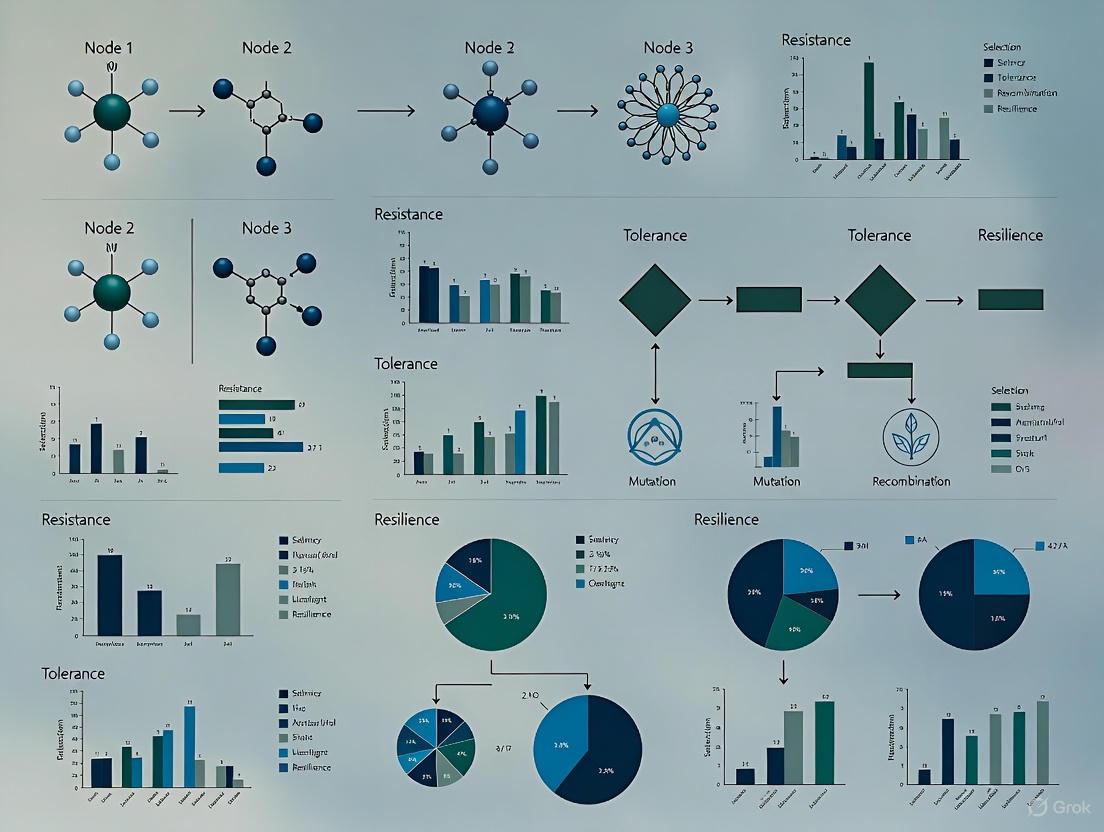
This comprehensive guide explores the critical parameters of the Minimum Cumulative Resistance (MCR) model, a powerful spatial analysis tool increasingly applied across ecological planning, urban development, and environmental risk assessment.
Mastering MCR Model Parameters: A Comprehensive Guide for Researchers and Scientists
Abstract
This comprehensive guide explores the critical parameters of the Minimum Cumulative Resistance (MCR) model, a powerful spatial analysis tool increasingly applied across ecological planning, urban development, and environmental risk assessment. Tailored for researchers and scientists, the article systematically addresses foundational principles, methodological applications, parameter optimization techniques, and validation approaches. By synthesizing current research and practical case studies, this resource provides actionable insights for effectively configuring MCR parameters to enhance model accuracy and reliability in diverse research contexts, from ecological security pattern construction to pollution risk assessment.
Understanding MCR Model Foundations: Core Concepts and Parameter Principles
The Minimum Cumulative Resistance (MCR) model is a spatial analysis tool originating from landscape ecology that quantifies the potential resistance or cost associated with movement between locations across a heterogeneous landscape. Initially developed to simulate species diffusion processes, the MCR model calculates the least costly path for movement from a source to a destination by accumulating resistance values encountered along the way [1]. The core principle of the MCR model is that movement between locations follows the path of minimum total resistance, analogous to the path of least effort or cost [2]. This powerful conceptual framework has evolved beyond its ecological origins to find applications in urban planning, environmental risk assessment, and infrastructure development, proving particularly valuable for simulating dynamic processes such as surface runoff, pollution transport, and urban expansion [3] [1].
The theoretical foundation of the MCR model integrates concepts from landscape ecology, source-sink theory, and cost-path analysis. According to the "source-sink" theory in landscape ecology, the model simulates the process of overcoming resistance during the movement of ecological flows, materials, or energy from "source" areas to "sink" areas [2] [4]. The model's adaptability, relatively simple data requirements, and visually expressive results through GIS technology have established it as a mainstream tool for constructing ecological networks and assessing landscape connectivity [5] [4].
Basic Principles and Algorithm
The fundamental principle of the MCR model is that the cumulative resistance encountered during movement from a source to a destination is calculated as the sum of the resistance values of all landscape units traversed along the path. The model can be mathematically represented as:
[MCR = f{\min} \sum{i=1}^{n} (Di \times Ri)]
Where:
- (MCR) is the minimum cumulative resistance value
- (D_i) represents the distance travelled through landscape unit (i)
- (R_i) represents the resistance value of landscape unit (i)
- (f_{\min}) indicates that the minimum cumulative resistance path is selected from all possible paths [2]
The following diagram illustrates the core workflow and key concepts of the MCR model framework:
Figure 1: MCR Model Framework and Workflow
Core Components of the MCR Model
The implementation of the MCR model relies on three core components, each with specific characteristics and methodological considerations as detailed in the table below:
Table 1: Core Components of the MCR Model
| Component | Definition | Identification Methods | Key Considerations |
|---|---|---|---|
| Ecological Sources | Landscape patches that facilitate ecological processes or serve as origins for movement | MSPA, landscape index method, ecosystem service value assessment, ecological sensitivity analysis [6] [4] | Size, quality, importance, spatial distribution; typically core habitat areas, natural landscapes [5] |
| Resistance Surface | Spatial representation of impedance to movement across different landscape types | Multi-factor weighted overlay; factors include land use, topography, vegetation, human disturbance [2] [1] | Factor selection, weight assignment, normalization; subjective weighting can introduce bias [3] |
| Movement Paths | Potential routes with minimum cumulative resistance between sources | Cost distance algorithm, least cost path analysis [2] [5] | Path width, connectivity, potential barriers; multiple paths possible between sources [6] |
Applications Across Disciplines
The MCR model has been successfully applied across various research domains, demonstrating its versatility as a spatial analysis tool. The following table summarizes key application areas with specific methodologies and findings:
Table 2: MCR Model Applications Across Disciplines
| Application Domain | Specific Study | Resistance Factors | Key Findings |
|---|---|---|---|
| Agricultural Pollution | Risk assessment of agricultural non-point source pollution in coastal zones [2] | Vegetation cover, slope, land use type, soil type, distance to rivers | Vegetation cover contributed most to resistance; eastern areas showed lower resistance than western areas |
| Urban Waterlogging | Assessing impact of urban land use on road waterlogging risk [3] | Surface permeability, terrain, drainage capacity, land use | Machine learning enhanced resistance surface accuracy; roads act as sinks for waterlogging risk transfer |
| Ecological Security | Constructing ecological security patterns in black soil areas [6] | Land use type, vegetation cover, topography, human disturbance | Ecological source areas increased despite numerical decrease; corridor connectivity fluctuated over time |
| Urban Expansion | Evaluating suitability of urban expansion in mountain areas [1] | Slope, geological hazards, GDP, landscape type | Only 23.5% of area suitable for expansion; 39.3% unsuitable due to ecological constraints |
| Biodiversity Conservation | Optimizing urban ecological networks in Shenzhen [4] | Land use, distance to roads, elevation, vegetation | 35 stepping stones and 17 ecological fault points identified; optimal corridor width 60-200m |
Methodological Protocols for MCR Implementation
Protocol for Ecological Network Construction
The following diagram illustrates a standardized protocol for constructing ecological networks using the MCR model, integrating MSPA for objective source identification:
Figure 2: MCR Model Implementation Protocol
Step-by-Step Procedure:
Data Preparation and Preprocessing
- Collect and preprocess spatial data including land use/cover maps, Digital Elevation Models (DEM), vegetation indices, and human disturbance data (e.g., distance to roads and settlements) [5] [4].
- Standardize all spatial data to consistent coordinate systems, resolutions, and extents. For most regional applications, a spatial resolution of 30-90 meters is appropriate [1].
Ecological Source Identification
- Apply Morphological Spatial Pattern Analysis (MSPA) to land cover data to identify core areas, bridges, and other structural landscape elements [4].
- Calculate landscape metrics (e.g., patch size, importance value) to quantitatively evaluate potential ecological sources [5].
- Select the most significant patches as ecological sources based on combined MSPA and landscape metric results [6].
Resistance Surface Construction
- Select appropriate resistance factors based on the specific research objectives (ecological protection, pollution transport, urban expansion, etc.) [2] [3].
- Determine factor weights using objective methods such as machine learning algorithms trained on historical data or expert judgment when sufficient data is unavailable [3].
- Generate an integrated resistance surface using weighted overlay analysis in GIS environments [1].
MCR Calculation and Corridor Extraction
- Calculate cumulative resistance from each ecological source across the landscape using cost distance algorithms [5].
- Identify minimum resistance paths between ecological sources using least cost path analysis [4].
- Extract ecological corridors based on the minimum cumulative resistance values and paths [6].
Network Optimization and Validation
- Identify strategic locations for stepping stones to enhance connectivity in fragmented landscapes [4].
- Validate the model results with field data when possible, or through comparison with known patterns and processes [2].
- Refine resistance factors and weights based on validation results to improve model accuracy [3].
Protocol for Pollution Risk Assessment
Application Specificity: This protocol adapts the MCR model for assessing agricultural non-point source pollution risk in coastal zones [2].
Procedure:
Define Pollution Sources and Sinks
Model Pollution Transport Resistance
- Select resistance factors influencing pollution transport: vegetation cover (most significant), slope, land use type, soil characteristics, and distance to rivers [2].
- Assign weights based on empirical measurements of their contribution to pollution transport resistance.
Simulate Pollution Transport Paths
Risk Zonation and Management
The Researcher's Toolkit
Implementation of the MCR model requires specific data types, analytical tools, and methodological approaches. The following table catalogs essential components of the MCR research toolkit:
Table 3: Essential Research Toolkit for MCR Model Implementation
| Tool Category | Specific Tools/Data | Purpose/Function | Application Notes |
|---|---|---|---|
| Spatial Data | Land use/cover data (30m resolution) | Baseline landscape representation | Available from CASDC, USGS [1] [4] |
| Digital Elevation Model (30m resolution) | Terrain analysis and slope calculation | Sourced from USGS or similar providers [1] | |
| Vegetation indices (EVI, NDVI) | Vegetation cover and health assessment | MODIS, Landsat data sources [5] | |
| Analytical Methods | Morphological Spatial Pattern Analysis (MSPA) | Objective identification of ecological sources | Guidos Toolbox software implementation [4] |
| Landscape metrics (patch size, connectivity) | Quantitative evaluation of source importance | FRAGSTATS software application [5] | |
| Machine learning algorithms | Factor weight determination | Reduces subjectivity in resistance surface [3] | |
| Software Platforms | ArcGIS | Spatial analysis and resistance surface modeling | Cost distance, weighted overlay tools [6] |
| R/Python | Statistical analysis and algorithm development | Custom script development for specialized applications [3] | |
| Model Extensions | Circuit theory | Complementary analysis of connectivity | Identifies multiple potential pathways [6] |
| Gravity model | Evaluation of corridor intensity | Assesses interaction between source areas [5] |
The Minimum Cumulative Resistance model provides a robust spatial analytical framework for modeling movement, diffusion, and flow processes across heterogeneous landscapes. Its theoretical foundation in landscape ecology and source-sink theory, combined with its adaptable methodology, enables diverse applications from ecological conservation to urban planning and environmental risk assessment. The continued development of the MCR model, particularly through integration with emerging techniques like machine learning for objective parameterization and dynamic time-series analysis for temporal evolution tracking, promises to further enhance its utility and accuracy in addressing complex spatial problems [2] [3] [6].
The standardized protocols and toolkit presented in this article provide researchers with comprehensive methodological guidance for implementing the MCR model across various domains. By following these detailed procedures and leveraging the essential tools outlined, scientists can effectively apply this powerful model to analyze landscape connectivity, simulate material flows, and support sustainable spatial planning decisions.
The Minimum Cumulative Resistance (MCR) model is a spatial analysis tool used to simulate the movement or flow of a substance, species, or process across a landscape by calculating the path of least resistance between a source and a destination. The model is grounded in landscape ecology and geographical information science, where it traditionally quantifies the resistance that species encounter during migration or that ecological processes face when spreading across a heterogeneous environment [2] [6]. The core principle is that the movement between two points follows the route where the cumulative cost, determined by various environmental or spatial factors, is minimized.
The fundamental equation of the MCR model is expressed as: [MCR = f{min} \sum{j=1}^{n} (D{ij} \times Ri)] In this equation, (f{min}) represents the function of minimizing the cumulative resistance, (D{ij}) denotes the distance through which the flow moves from source (j) to spatial unit (i), and (R_i) is the resistance coefficient of spatial unit (i) to the flow [2] [6]. The model's power lies in its ability to integrate multiple, weighted factors into a single resistance surface, providing a simulated pathway that reflects real-world constraints and facilitators.
Core Components of the MCR Model
Source Areas
Source areas are the origins of the flow or movement being modeled. They represent the starting points from which the process initiates. In ecological studies, these are often high-quality habitats or patches of conservation importance. In the context of agricultural non-point source pollution (AGNPSP) risk assessment, source areas are typically identified as cultivated land from which nitrogen and phosphorus pollutants originate [2] [7]. The accurate identification of these source areas is critical, as they form the foundation for all subsequent pathway analysis. In the cited AGNPSP-MCR study, source areas were defined as croplands, with their pollution export potential quantitatively differentiated, moving beyond vague qualitative elements [2].
Resistance Surfaces
The resistance surface is a raster layer where the value of each cell represents the perceived cost, friction, or resistance to movement for the flow or species in question. It is constructed by integrating and weighting multiple environmental or spatial factors that influence the process under investigation [2] [6]. The table below summarizes the key resistance factors and their respective weights from an AGNPSP-MCR study in the Yellow River Delta, demonstrating how multiple factors are objectively weighted to create a composite resistance surface.
Table 1: Resistance Factors and Weights for AGNPSP Transportation in the Yellow River Delta
| Environmental Factor | Contribution Weight | Influence on Resistance |
|---|---|---|
| Vegetation Cover (C) | 0.3433 | Most significant factor; higher cover increases resistance |
| Rainfall Erosivity (R) | 0.2608 | Higher rainfall intensity decreases resistance, accelerating transport |
| Soil Erodibility (K) | 0.2219 | More erodible soils decrease resistance |
| Distance to Rivers | 0.0837 | Greater distance increases resistance to pollution reaching waterways |
| Distance to Roads | 0.0517 | Influence varies based on road infrastructure and its effect on flow |
| Land Use Type | 0.0323 | Different land uses offer varying levels of resistance to pollutant flow |
| Slope (L) | 0.0053 | Least influential factor in this coastal zone study |
The construction of this surface employed an objective weighting method, the Analytic Hierarchy Process (AHP), to minimize subjectivity in assigning multi-factor weights [2]. Furthermore, the model incorporated a topographic wetness index (TWI) to account for the constraining effect of topography on surface runoff, acknowledging that AGNPSP flows with water and its direction is inherently shaped by the terrain [2].
Cost Pathways
Cost pathways are the final output of the MCR analysis, representing the simulated routes of least resistance between source and destination areas. The model iterates to find the path where the sum of the resistance values (from the resistance surface) is the lowest [2] [6]. These pathways can be mapped to visualize the most probable flow corridors. In the Yellow River Delta case study, the minimum cumulative resistance of AGNPSP transportation showed a significant positive correlation with the distance to the river and sea. Resistance was higher in western areas farther from the ocean and smaller in the eastern coastal areas near the sea, which consequently faced a higher pollution risk [7]. The pathways are crucial for identifying critical connection lines, or ecological corridors, in conservation planning, and potential pollution transport routes in environmental risk assessments [2] [6].
Experimental Protocol: MCR Model Application
Research Reagent Solutions and Essential Materials
Table 2: Key Research Materials and Tools for MCR Modeling
| Item/Tool | Function in MCR Modeling |
|---|---|
| GIS Software (e.g., ArcGIS) | Primary platform for spatial data management, resistance surface creation, and MCR calculation. |
| Remote Sensing Imagery | Provides land use/cover data for identifying source areas and calculating factors like vegetation cover. |
| Digital Elevation Model (DEM) | Serves as the base for calculating topographic factors like slope and topographic wetness index (TWI). |
| Analytic Hierarchy Process (AHP) | A structured technique for organizing and analyzing complex decisions, used for objective factor weighting. |
| Circuit Theory Models | Can be used in conjunction with MCR to simulate multi-path migration and identify key nodes [6]. |
Detailed Workflow for Constructing an MCR Model
The following protocol outlines the steps for applying the MCR model, as demonstrated in the agricultural non-point source pollution risk assessment [2] [7].
Step 1: Define the Objective and Identify "Sources" and "Sinks"
- Clearly state the process to be modeled (e.g., transport of nitrogen pollution, species movement).
- Identify Source Areas: Quantitatively define the origins. For AGNPSP, this was cultivated land, with its potential for pollution export calculated.
- Identify Sink Areas: Define the destinations. In the coastal study, the "sinks" were the bodies of water (rivers and sea) that receive the pollutants [2].
Step 2: Select Resistance Factors and Construct the Base Resistance Surface
- Select relevant spatial factors that influence the resistance to the flow being modeled. Refer to Table 1 for examples.
- For each factor, create a separate raster layer in GIS. Normalize these layers to a comparable scale (e.g., 0-100).
- Assign preliminary weights to each factor based on literature or expert opinion.
Step 3: Determine Objective Weights for Each Factor
- Utilize an objective method like the Analytic Hierarchy Process (AHP) to determine the final weight for each resistance factor. This step reduces subjectivity [2].
- The AHP involves constructing a pairwise comparison matrix of the factors, which is then processed to derive a vector of weights.
Step 4: Incorporate Directional Constraints
- If the flow is directional (e.g., surface runoff driven by gravity), incorporate a constraining parameter. The AGNPSP-MCR model used a Topographic Wetness Index (TWI) to guide the flow accumulation process, making the simulation more physically accurate [2].
Step 5: Calculate the Minimum Cumulative Resistance
- Use the GIS platform's cost-distance analysis tools.
- Input the weighted resistance surface from Step 3 and the source areas from Step 1.
- The algorithm will compute the cumulative cost of reaching every cell from the nearest source, resulting in a cumulative resistance surface.
Step 6: Extract Cost Pathways and Analyze Risk
- From the cumulative resistance surface, extract the least-cost paths from all source areas to the defined sinks.
- The resistance values can be classified to create a risk map. In the AGNPSP study, lower resistance values in eastern coastal areas indicated a higher risk of pollution transport into the sea [2] [7].
MCR Model Workflow and Inter-Model Relationships
The following diagram illustrates the logical workflow of the MCR model and its relationship with other analytical models like circuit theory.
Figure 1: Logical workflow of the MCR model and its relationship with circuit theory.
The Minimum Cumulative Resistance (MCR) model serves as a powerful spatial analysis tool for simulating the movement or flow processes across a landscape, whether for ecological species, pollutants, or other phenomena. The core principle of the MCR model is based on "source-sink" theory and quantifies the effort required to overcome landscape resistance during movement from a source to a destination [2]. The model's formula is expressed as:
[ MCR = f \min \sum{j=1}^{n} (D{ij} \times R_i) ]
Where ( D{ij} ) represents the distance from source ( j ) to cell ( i ), and ( Ri ) is the resistance value of cell ( i ) to movement [8]. The accuracy and realism of any MCR simulation are fundamentally dependent on the careful selection and weighting of key parameters that constitute the resistance surface. These parameters are universally categorized into three fundamental domains: Environmental, Socioeconomic, and Topographic factors. Environmental factors directly influence the inherent permeability of the landscape, Socioeconomic factors quantify anthropogenic pressures, and Topographic factors dictate the physical pathways and barriers to movement. This framework provides structured Application Notes and Protocols for researchers to identify, quantify, and integrate these critical parameter categories, with specific methodologies drawn from environmental science and pharmacology.
Parameter Categories and Quantitative Data
The following tables summarize the core parameters used in constructing resistance surfaces for MCR models across different research applications, providing a basis for selection and comparison.
Table 1: Key Parameter Categories for MCR Model Resistance Surfaces
| Category | Specific Factor | Measurement Units | Influence on Resistance | Typical Data Sources |
|---|---|---|---|---|
| Environmental | Land Use/Land Cover (LULC) | Categorical (e.g., forest, water, urban) | Defines baseline permeability; built-up areas confer high resistance [8]. | GLOBELAND30, Local Land Cover Maps |
| Vegetation Cover | Index (e.g., C-factor, NDVI) | Higher vegetation cover often increases resistance to pollutant transport [2]. | Satellite Imagery (Landsat, Sentinel) | |
| Soil Type and Permeability | Categorical / Index | Influences infiltration and subsurface flow; sandy soils lower runoff resistance. | Soil Maps (FAO Soil Grids) | |
| Distance from Water Bodies | Meters (m) | Proximity to rivers can lower resistance for pollutant transport into seas [2]. | GIS Buffering of Hydrological Data | |
| Socioeconomic | Night-Time Light Intensity | Digital Number (DN) | Proxy for human activity intensity; higher values indicate higher resistance [8]. | Luojia-1-01, VIIRS Nighttime Light |
| Population Density | Persons per km² | Denser populations typically create higher resistance to ecological flows. | Census Data, WorldPop | |
| Road Network Density | km/km² | Major roads and infrastructure act as significant barriers [8]. | OpenStreetMap, National Transport Databases | |
| Agricultural Fertilizer Use | kg/ha | Represents a "source" pressure for agricultural non-point source pollution [2]. | Agricultural Census, Statistical Yearbooks | |
| Topographic | Elevation | Meters (m) above sea level | Influences energy cost and directional flow; not always linearly correlated [8]. | ASTER GDEM, SRTM |
| Slope | Degrees (°) or Percent (%) | Steeper slopes can increase resistance for species but accelerate pollutant transport via runoff [2] [8]. | Calculated from DEM | |
| Aspect | Categorical (N, S, E, W) | Affects microclimate (solar radiation, moisture), influencing habitat suitability. | Calculated from DEM | |
| Topographic Wetness Index (TWI) | Index | Identifies areas of potential saturation, influencing hydrological pathways. | Calculated from DEM & Flow Accumulation |
Table 2: Example Factor Weights from an Agricultural NPSP Study [2]
| Resistance Factor | Weight Assigned | Justification / Method |
|---|---|---|
| Vegetation Cover (C-factor) | 42.6% | Identified as the most significant contributor to resistance against pollution transport. |
| Land Use Type | 22.6% | Directly determines the landscape's permeability and runoff potential. |
| Slope | 19.1% | Influences runoff velocity and energy; steeper slopes can reduce resistance to pollutant flow. |
| Soil Type | 15.7% | Affects infiltration capacity and subsurface transport. |
| Total | 100% | Weights were determined using an objective entropy weight method to reduce subjectivity. |
Experimental Protocols for MCR Application
Protocol 1: Assessing Agricultural Non-Point Source Pollution Risk
1. Research Question: What is the spatial pattern of risk for agricultural nitrogen pollution transport from terrestrial sources to the coastal sea?
2. Hypothesis: The transport resistance of pollutants is a function of landscape characteristics, and the least-resistant paths can be identified to map high-risk zones.
3. Materials and Reagent Solutions:
- GIS Software (e.g., ArcGIS, QGIS): For spatial data processing, analysis, and MCR calculation.
- Remote Sensing Imagery: Landsat or Sentinel data for land use/cover classification and vegetation index calculation.
- Digital Elevation Model (DEM): ASTER GDEM or similar for deriving slope.
- Soil Data: From national or global soil databases (e.g., FAO Soil Grids).
- Entropy Weight Method Script: A computational script (e.g., in Python or R) to objectively calculate factor weights based on data dispersion.
4. Experimental Workflow:
- Step 1: Define "Source" and "Sink". Quantify the pollution "source" spatially. In the Yellow River Delta case, this was the total nitrogen output from agricultural cultivation, calculated per township and spatially allocated to specific land use types (cropland) [2]. The "sink" is the offshore coastal waters.
- Step 2: Construct the Resistance Base Surface. Select resistance factors from Table 1 (e.g., Land Use, Slope, Soil Type, Vegetation Cover). Standardize each factor map and assign weights. The entropy weight method is recommended to minimize subjectivity [2]. The resistance value ( R ) is computed as: ( R = \sum (wi \times xi) ), where ( wi ) is the weight and ( xi ) is the standardized value of factor ( i ).
- Step 3: Run the MCR Model. Use the GIS-based MCR tool (e.g., Cost Distance or Circuit Theory tools) with the defined sources and the resistance surface to generate a cumulative resistance surface and the least-cost paths.
- Step 4: Validate the Model. Compare the simulated high-risk pathways and zones with empirical data, such as measured nitrogen concentrations in nearby rivers or coastal waters [2].
5. Data Analysis and Visualization: The primary outputs are a cumulative resistance surface (indicating overall pollution risk) and a map of minimum-cost paths (showing likely transport corridors). These should be overlaid with land use and hydrological data for interpretation.
Protocol 2: Constructing an Urban Ecological Network
1. Research Question: How can an ecological network be identified and evaluated to enhance habitat connectivity in a highly urbanized landscape?
2. Hypothesis: Integrating Morphological Spatial Pattern Analysis (MSPA) with the MCR model can objectively identify ecological sources and corridors, overcoming the subjectivity of direct land use selection.
3. Materials and Reagent Solutions:
- MSPA Software (e.g., GuidosToolbox): For the pixel-based segmentation of land use to identify core habitat patches, bridges, and branches.
- GIS Software: For managing spatial data, running the MCR model, and conducting spatial autocorrelation analysis (e.g., Global and Local Moran's I).
- Land Use Data: High-resolution (e.g., 30m) data such as GLOBELAND30.
- Night-time Light Data: From satellites like Luojia-1-01 or VIIRS to represent human activity intensity.
4. Experimental Workflow:
- Step 1: Identify Ecological Sources via MSPA. Input a reclassified land use raster (foreground: forest, water, grassland; background: others) into the MSPA tool. This identifies seven landscape types (Core, Islet, Perf, Edge, Loop, Bridge, Branch). The "Core" areas often serve as robust ecological sources [8].
- Step 2: Construct a Comprehensive Resistance Surface. Develop a resistance surface that integrates both natural (e.g., land use from MSPA, slope) and anthropogenic factors (e.g., night-time light index, road density). Assign weights based on literature or expert knowledge.
- Step 3: Generate Corridors and Evaluate Connectivity. Run the MCR model from the MSPA-derived core areas across the resistance surface to delineate potential ecological corridors. Use a gravity model to quantify the interaction intensity between source patches and prioritize corridors for protection [8].
- Step 4: Analyze Spatial Patterns. Use standard deviation ellipse and spatial autocorrelation analysis to evaluate the distribution direction and clustering characteristics of the ecological resistance surface.
5. Data Analysis and Visualization: The result is an ecological network map comprising sources, resistance surfaces, and corridors. The gravity model results can be presented in a matrix table to show the strength of connectivity between each pair of source patches.
Protocol 3: Modelling Cellular Drug Uptake and Response
1. Research Question: What are the kinetic profiles and spectral signatures associated with the cellular uptake of a chemotherapeutic drug and the subsequent cellular response?
2. Hypothesis: Multivariate Curve Resolution-Alternating Least Squares (MCR-ALS) with tailored kinetic constraints can resolve the complex, non-linear pharmacokinetic processes in vitro.
3. Materials and Reagent Solutions:
- Raman Microspectroscopy System: A label-free technique for acquiring molecularly specific spectral data from live or fixed cells over time.
- Cell Lines and Drugs: Relevant biological models (e.g., A549, Calu-1 human lung cells) and chemotherapeutic agents (e.g., Doxorubicin).
- MCR-ALS Software: Computational environment (e.g., MATLAB with MCR-ALS toolbox) capable of implementing hard-and-soft modelling with kinetic constraints.
- Kinetic Modelling Script: A script defining the system of Ordinary Differential Equations (ODEs) that represent the proposed drug uptake and cellular response pathway.
4. Experimental Workflow:
- Step 1: Spectral Data Acquisition. Inoculate cells with the drug and acquire Raman spectra at consistent time intervals (e.g., every 0.5 h over 72 h) to create a time-series data matrix
D[9]. - Step 2: Define the Kinetic Model. Propose a system of ODEs to describe the process (e.g., ( \text{Drug}{external} \xrightarrow{k1} \text{Drug}{internal} \xrightarrow{k2} \text{Drug-Bound} \rightarrow \text{Cellular Response} )). This model is the "hard" constraint.
- Step 3: Apply Hard-and-Soft MCR-ALS. Decompose the spectral data matrix
Dinto concentration matrixCand spectral matrixSusing MCR-ALS (( D = CS^T )). Crucially, at each iteration of the alternating least squares, constrain the concentration profiles inCto fit the proposed kinetic model, optimizing the rate constants ( k1, k2, ... ) [9]. - Step 4: Resolve Components and Constants. The algorithm iterates until convergence, simultaneously providing the pure spectra of each component (free drug, bound drug, cellular metabolites) and their concentration profiles over time, along with accurate computation of the kinetic constants.
5. Data Analysis and Visualization: The final output includes resolved concentration profiles that follow chemically plausible kinetics and the corresponding pure spectra, allowing for the elucidation of the drug's mechanism of action and cellular resistance pathways.
The Scientist's Toolkit: Essential Research Reagents and Materials
Table 3: Essential Research Tools for MCR-Based Studies
| Tool / Reagent | Function / Purpose | Application Context |
|---|---|---|
| ArcGIS / QGIS | Primary platform for spatial data management, resistance surface calculation, and running MCR algorithms. | Environmental & Urban Planning |
| MCR-ALS Toolbox | A computational toolbox (e.g., for MATLAB) that enables multivariate curve resolution with alternating least squares and custom constraints. | Pharmacology & Chemometrics |
| GuidosToolbox | Specialized software for performing Morphological Spatial Pattern Analysis (MSPA) to identify core habitat structures. | Ecology & Urban Planning |
| GLOBELAND30 | A 30-meter resolution global land cover dataset used to define land use types for resistance surfaces or MSPA foreground. | Environmental Science |
| ASTER GDEM | A global Digital Elevation Model used to derive topographic parameters like slope and elevation. | Environmental Science |
| Luojia-1-01 Data | High-resolution night-time light data serving as a proxy for the intensity of human activity and socioeconomic factors. | Urban Studies & Ecology |
| Raman Microspectrometer | A label-free instrument for acquiring molecular vibration spectra, used to monitor drug-cell interactions over time. | Pharmacology & Cell Biology |
| Entropy Weight Script | A custom script (Python/R) to objectively calculate the weights of resistance factors based on data dispersion, reducing subjectivity. | All Fields (Weighting) |
The Role of 'Source-Sink' Theory in Landscape Ecology
The source-sink theory within landscape ecology provides a critical framework for understanding the dynamics of ecological flows, including species, energy, and pollutants, across heterogeneous landscapes. The theory distinguishes between "source" landscapes, which contribute positively to an ecological process, and "sink" landscapes, which absorb or impede these flows [10]. This conceptual model has been powerfully integrated with the Minimum Cumulative Resistance (MCR) model, a spatial analysis tool that quantifies the effort required for an ecological flow to traverse a landscape from a source to a destination [2] [4]. The synergy of this theoretical and computational framework allows researchers to simulate dynamic ecological processes—such as nutrient runoff, species dispersal, or pollutant transport—and assess associated risks, thereby informing targeted landscape management and conservation strategies [2] [11]. These Application Notes and Protocols detail the practical implementation of this combined approach for environmental risk assessment, specifically tailoring methodologies for a research audience focused on MCR model parameterization.
Application Note: Assessing Agricultural Non-Point Source Pollution Risk
Background and Objective
Agricultural Non-Point Source Pollution (AGNPSP), particularly from nitrogen and phosphorus fertilizers, is a major cause of environmental degradation in coastal waters [2]. Unlike point-source pollution, AGNPSP is characterized by spatial and temporal randomness, dispersion, and uncertainty, making it difficult to monitor and control. The transport of AGNPSP into seas is a dynamic process that depends on surface runoff in coastal zones [2].
Objective: This application note outlines a protocol for using the source-sink theory and the MCR model to simulate the transport process of AGNPSP and assess its risk, enabling proactive pollution control and zoning deployment. A specific case study from the Yellow River Delta (YRD) in China is referenced to illustrate the application [2].
Key Parameters and Data
Table 1: Key Parameters for AGNPSP-MCR Model Construction
| Parameter Category | Specific Parameters | Description & Role in MCR Model |
|---|---|---|
| Source Identification | Cropland areas; Nitrogen application rate; Fertilizer utilization rate | Quantifies the pollution "source" strength. Areas with higher fertilizer application and lower utilization become more potent sources [2]. |
| Resistance Factors | Vegetation Cover (C); Slope (S); Soil Erodibility (K); Rainfall Erosivity (R); Distance from Rivers | These geographic environmental factors constitute the resistance base surface. They influence the ease with which pollutants are transported by surface runoff [2]. |
| Weight Determination | Analytical Hierarchy Process (AHP); Principal Component Analysis (PCA) | Used to assign objective weights to the relative contribution of each resistance factor, minimizing subjectivity [2] [11]. |
| Topographic Constraints | Digital Elevation Model (DEM) | Used to define flow direction and accumulation, ensuring the pollution transport simulation follows topographic realities [2]. |
Workflow and Experimental Protocol
The following diagram illustrates the integrated workflow for applying the source-sink theory and MCR model to AGNPSP risk assessment.
Protocol Steps:
Identify and Quantify Pollution 'Sources':
- Delineate all cropland areas within the study region using land use/land cover (LULC) data.
- Quantify the source strength of each cropland patch. This can be calculated based on factors like nitrogen application rate (kg/ha) and fertilizer utilization rate. For example, the AGNPSP-MCR model defines source intensity using the "RUSLE factor C," which is influenced by land use type [2].
Construct the Resistance Surface:
- Select Resistance Factors: Choose geographic environmental factors that influence the transport of pollutants via surface runoff. Key factors include [2]:
- Vegetation Cover (C): Higher cover increases resistance.
- Slope (S): Steeper slopes decrease resistance, facilitating faster runoff.
- Soil Erodibility (K): Soils more prone to erosion decrease resistance.
- Rainfall Erosivity (R): Higher intensity rainfall decreases resistance.
- Distance from Rivers: Proximity to rivers decreases resistance to the sea.
- Determine Factor Weights: Use an objective method like the Analytical Hierarchy Process (AHP) or Principal Component Analysis (PCA) to assign weights to each factor based on its relative contribution to the resistance. In the YRD study, the vegetation cover factor (C) contributed the most to the overall resistance [2].
- Spatial Layer Integration: Combine the weighted factors in a Geographic Information System (GIS) to create a single, continuous resistance surface raster.
- Select Resistance Factors: Choose geographic environmental factors that influence the transport of pollutants via surface runoff. Key factors include [2]:
Define Pollution 'Sinks':
- Identify the final destination of the pollutant, which in this case is the sea or other receiving water bodies [2]. These are the "sinks" in the model.
Run MCR Simulation and Analyze Results:
- Use the MCR model to calculate the least-cost path (i.e., the path of least resistance) for pollution to travel from each source (cropland) to the sink (sea). The formula for MCR is [2]:
MCR = f min Σ (Dij * Rij)whereDijis the distance through landscape patchij, andRijis the resistance of that patch. - The output will map the potential transport paths and cumulative resistance values.
- Risk Zoning: Areas with lower cumulative resistance values represent higher pollution risk zones. The study area can be classified into different risk levels (e.g., high, medium, low) based on these values for targeted management [2].
- Use the MCR model to calculate the least-cost path (i.e., the path of least resistance) for pollution to travel from each source (cropland) to the sink (sea). The formula for MCR is [2]:
Application Note: Constructing and Optimizing Ecological Security Patterns
Background and Objective
Rapid urbanization leads to landscape fragmentation, threatening biodiversity and ecosystem stability [4]. An Ecological Security Pattern (ESP) is a network of ecological components, including sources, corridors, and nodes, designed to maintain ecosystem connectivity and functionality [4] [12].
Objective: This protocol provides a methodology for constructing and optimizing urban ecological networks by integrating Morphological Spatial Pattern Analysis (MSPA) with the MCR model. This combined approach offers a more objective identification of ecological sources and corridors, supporting urban planning and biodiversity conservation [4].
Key Parameters and Data
Table 2: Key Parameters for Ecological Network Construction
| Parameter Category | Specific Parameters | Description & Role in MCR Model |
|---|---|---|
| Ecological Source Identification | MSPA (Core Areas); Landscape Index (dPC) | MSPA objectively identifies core habitat areas from land cover data. The landscape index (e.g., dPC) prioritizes the most important cores as ecological sources [4]. |
| Resistance Surface Setup | Land Use Type; NDVI; Distance from Roads; Distance from Settlements; Nighttime Light Data; Slope | Assigns a resistance value to each grid cell based on its permeability to species movement. Lower resistance is assigned to natural landscapes like forests [12]. |
| Network Analysis | Gravity Model; Circuit Theory | The Gravity Model assesses the interaction strength between source patches. Circuit Theory identifies pinch points and barrier points for restoration within corridors [4] [12]. |
| Network Optimization | Stepping Stones; Ecological Nodes | Small habitat patches that act as relays for species movement. Their addition optimizes network connectivity [4]. |
Workflow and Experimental Protocol
The following diagram illustrates the workflow for constructing and optimizing an ecological security pattern.
Protocol Steps:
Objectively Identify Ecological Sources using MSPA:
- Input a binary land cover map (e.g., foreground as natural habitat vs. background as non-habitat) into an MSPA tool (e.g., GuidosToolbox).
- MSPA classifies the foreground into seven patterns: core, edge, bridge, etc. The "core areas" are identified as the primary ecological sources [4].
- To further prioritize core areas, use a landscape index like the probability of connectivity (dPC) to select cores with the highest importance for maintaining overall landscape connectivity [4].
Construct the Resistance Surface:
- Select factors that influence species movement, such as land use type, vegetation cover (NDVI), distance from roads, distance from settlements, and slope [12].
- Assign a resistance value (e.g., 1-100) to each class of these factors, where higher values indicate greater resistance to movement. For example, forests have low resistance, while urban areas have very high resistance.
- Integrate the weighted factors in GIS to create the final resistance surface.
Extract Corridors and Build the Network:
Analyze and Optimize the Ecological Network:
- Network Analysis: Use the Gravity Model to assess the interaction strength between paired source patches via corridors, helping to identify which corridors are most important [4].
- Pinch Point Identification: Apply Circuit Theory (e.g., using Linkage Mapper software) to identify narrow, crucial areas within corridors (pinch points) for priority protection, as well as areas that block flow (barrier points) for restoration [12].
- Optimization: Add stepping stones (small habitat patches) within long corridors to facilitate species movement. The final optimized network will include ecological sources, corridors, stepping stones, and nodes [4].
The Scientist's Toolkit: Essential Reagents and Data Solutions
Table 3: Key Research Reagent Solutions for MCR Modeling
| Tool/Reagent | Type | Function in Experiment | Example Source/Platform |
|---|---|---|---|
| GIS Software | Software Platform | The primary environment for spatial data management, resistance surface construction, MCR model execution, and map creation. | ArcGIS, QGIS (open source) |
| Land Use/Land Cover (LULC) Data | Spatial Dataset | Fundamental data for identifying source-sink landscapes and defining resistance values. | CLCD [12], CNLUCC [12], National Land Cover Database (NLCD) |
| Remote Sensing Indices (NDVI) | Derived Spatial Data | Used to assess vegetation health and density, a key parameter for constructing resistance surfaces. | MODIS, Landsat, Sentinel-2 |
| Digital Elevation Model (DEM) | Spatial Dataset | Provides topographic data (elevation, slope, aspect) crucial for defining topographic constraints in runoff and movement models. | SRTM, ASTER GDEM |
| MCR Modeling Tool | Software Extension/Toolbox | Dedicated tools for calculating minimum cumulative resistance and extracting corridors. | Linkage Mapper [12], ArcGIS Cost Distance Tools |
| MSPA Tool (GuidosToolbox) | Software Platform | Objectively identifies and classifies landscape structures (core, edge, etc.) from binary raster images for ecological source identification. | GuidosToolbox [4] |
| InVEST Model | Software Suite | Integrates with MCR studies by modeling and mapping ecosystem services, helping to identify ecologically important "source" areas. | Natural Capital Project [12] |
The Minimum Cumulative Resistance (MCR) model serves as a foundational analytical tool in spatial ecology, geography, and urban planning, quantifying the impedance that landscapes impose on ecological flows. The model calculates the least costly path for species movement or material transport between source and destination points across a resistance surface. The core formula is expressed as:
[ MCR = f{min} \sum{j=1}^{n} (D{ij} \times Ri) ]
where (D{ij}) represents the distance through landscape patch (ij), (Ri) is the resistance coefficient of landscape type (i), and (f_{min}) denotes the positive correlation with the minimum cumulative resistance [13]. The accuracy and predictive power of the MCR model are critically dependent on the appropriate parameterization of key resistance factors, primarily vegetation, slope, land use, and anthropogenic influences. Properly quantifying these factors is essential for constructing reliable ecological security patterns, identifying pollution risks, and optimizing land use planning [14] [3] [15]. This protocol provides a standardized framework for parameterizing these critical resistance factors, complete with quantitative benchmarks and experimental methodologies for researchers applying the MCR model across diverse ecological and geographical contexts.
Quantitative Resistance Factor Values
The following tables synthesize standardized resistance coefficients and classification schemes for the four critical resistance factors, compiled from recent peer-reviewed studies applying the MCR model across various geographical contexts.
Table 1: Vegetation Coverage Resistance Values based on NDVI and Land Use
| Vegetation Type / NDVI Range | Resistance Value | Application Context |
|---|---|---|
| Forest Land / Core Ecological Sources | 1-10 | Ecological security patterns, habitat connectivity [14] [6] [16] |
| High-Coverage Grassland / High NDVI | 10-30 | Species migration, ecological corridor construction [17] [18] |
| Medium-Coverage Grassland / Medium NDVI | 30-50 | General ecological flow, soil retention [18] |
| Sparse Vegetation / Low NDVI | 50-100 | Limited ecological function, higher resistance [14] |
| Cropland (Paddy Fields as NPS Source) | 50-80 | Non-point source (NPS) pollution diffusion [15] |
Table 2: Slope Gradient Resistance Values
| Slope Gradient (Degrees) | Resistance Value | Ecological Process Implication |
|---|---|---|
| 0-5° | 1-20 | Minimal resistance to flow, high risk for NPS pollution transport [15] |
| 5-15° | 20-50 | Moderate resistance, suitable for corridor placement [14] |
| 15-25° | 50-100 | High resistance, significant barrier to species movement [6] |
| >25° | 100-500 | Very high resistance, often acts as absolute barrier [14] |
Table 3: Land Use and Anthropogenic Factor Resistance Values
| Land Use / Anthropogenic Factor | Resistance Value | Rationale and Application Notes |
|---|---|---|
| Water Bodies | 1-10 | Low resistance for aquatic species, can be barrier for terrestrials [16] |
| Forest & Natural Reserves | 1-30 | Core ecological sources, minimal resistance [14] [4] |
| Grassland & Pasture | 20-50 | Moderate permeability depending on vegetation density [18] |
| Agricultural Land | 50-300 | Varies by crop type; paddy fields significant NPS sources [15] |
| Rural Settlement | 300-500 | High resistance due to human activity [13] |
| Urban/Built-Up Land | 500-1000 | Maximum resistance, strong barrier to ecological flows [14] [16] |
| Road Networks (Distance Buffer) | 100-500 | Resistance decreases with increasing distance from roads [6] |
| Nighttime Light Index | 100-500 | Proxy for human activity intensity; higher values = higher resistance [14] |
Experimental Protocols for Parameterization
Protocol for Constructing a Base Resistance Surface
Application: Creating a foundational resistance surface for ecological security assessment or heritage corridor planning.
Workflow Overview:
Materials and Reagents:
- GIS Software: ArcGIS 10.8 or equivalent open-source platform (QGIS)
- Remote Sensing Data: Land use classification maps (30m resolution), SRTM DEM or ASTER GDEM, Landsat 8/9 or Sentinel-2 imagery for NDVI calculation
- Anthropogenic Data: Nighttime light data (NPP-VIIRS), road network vector data, population density grids
Procedure:
- Data Preparation: Collect and preprocess all spatial datasets to a uniform coordinate system and resolution (e.g., 30m × 30m grid) [18] [16].
- Factor Reclassification: Reclassify each factor layer according to the resistance values in Tables 1-3. For example, reclassify a land use map so that urban pixels receive a value of 500, forest pixels a value of 10, etc. [14] [13].
- Weight Assignment: Determine the relative importance of each factor using objective methods like the entropy method [13] or subjective methods like the Analytic Hierarchy Process (AHP) if expert knowledge is incorporated [14].
- Spatial Overlay Analysis: Use the GIS Raster Calculator to execute the weighted overlay:
Composite Resistance = (Weight_LandUse × R_LandUse) + (Weight_Slope × R_Slope) + (Weight_NDVI × R_NDVI) + ...[13]. - Validation: Validate the resistance surface using known animal migration paths, historical waterlogging points, or pollution data [3] [15].
Protocol for Machine Learning-Optimized Resistance Surfaces
Application: Enhancing the objectivity and accuracy of resistance surfaces for complex processes like urban waterlogging risk prediction.
Workflow Overview:
Materials and Reagents:
- Machine Learning Environment: Python with XGBoost, scikit-learn libraries, or R equivalent
- Training Data: Pre-identified ecological source areas (positive samples) and areas with low ecosystem service values or historical disaster points (negative samples) [14] [3]
- Predictor Variables: Raster stacks of all resistance factors (slope, land use, NDVI, etc.)
Procedure:
- Sample Definition: Digitize or import polygons of known ecological source areas (e.g., nature reserves, core forest patches) as positive samples (Y=1). Define areas of high ecological degradation or historical waterlogging points as negative samples (Y=0) [14] [3].
- Data Extraction: For a random set of points within these sample areas, extract the corresponding values from all predictor variable rasters (e.g., slope value, land use class, NDVI value for each point).
- Model Training: Train a machine learning model (e.g., XGBoost) using the extracted data, where the predictors (X) are the factor values and the target variable (Y) is the sample class (1 or 0). The model learns the complex, nonlinear relationships between the spatial factors and ecological security [14].
- Spatial Prediction: Apply the trained model to the entire set of raster layers for the study area. The model's output is a probability surface that is used directly as the optimized resistance surface [14] [3].
- MCR Calculation: Use this machine learning-generated resistance surface as input for the standard MCR calculation to identify corridors or risk pathways [14].
The Scientist's Toolkit: Essential Research Reagents and Materials
Table 4: Key Research Reagent Solutions for MCR Modeling
| Reagent/Material | Function/Application | Specification Notes |
|---|---|---|
| Land Use/Land Cover (LULC) Data | Primary classifier for assigning base resistance values; identifies ecological sources and anthropogenic barriers. | 30m resolution is standard; ensure classification system (e.g., GB/T21010-2017) matches study needs [18]. |
| Digital Elevation Model (DEM) | Derives slope and topographic position; a fundamental cost factor for movement and flow. | SRTM (30m) or ALOS AW3D (30m) recommended; derive slope using GIS surface analysis [14] [6]. |
| Normalized Difference Vegetation Index (NDVI) | Quantifies vegetation density and health; refines resistance within broad land use classes. | Derived from Landsat 8/9 (30m) or Sentinel-2 (10m); use time series to identify permanent vegetation [14] [16]. |
| Nighttime Light (NTL) Data | Proximal measure of human activity intensity and urbanization level; critical for anthropogenic resistance. | NPP-VIIRS data preferred over DMSP-OLS for absence of saturation and higher resolution [14] [6]. |
| Analytic Hierarchy Process (AHP) | A structured method for determining the weights of resistance factors based on expert judgment. | Use a consistent and validated pairwise comparison matrix (scale 1-9); ensure consistency ratio < 0.1 [14]. |
| Entropy Method | An objective weighting technique that determines factor importance based on data dispersion. | Preferred for minimizing subjectivity; implemented via standard equations in spreadsheet or code [13]. |
| Linkage Mapper Toolbox | A specialized GIS toolkit that automates MCR corridor mapping and network analysis. | Open-source extension for ArcGIS; critical for efficient corridor identification and network modeling [16]. |
Concluding Remarks
The rigorous parameterization of vegetation, slope, land use, and anthropogenic factors is paramount to the success of any study employing the MCR model. The standardized values and detailed protocols provided herein offer a replicable framework for researchers, enhancing the comparability and scientific robustness of findings across different case studies and geographical regions. Future work should focus on further refining these coefficients for specific taxonomic groups or ecological processes and exploring dynamic resistance surfaces that account for seasonal variation and land use change. The integration of machine learning techniques, as demonstrated, presents a promising path toward overcoming the subjectivity inherent in traditional methods, leading to more accurate and defensible spatial models for ecological planning and conservation.
Spatial Scale Considerations in Parameter Selection
The Minimum Cumulative Resistance (MCR) model serves as a crucial analytical framework for simulating spatial processes across ecological, environmental, and epidemiological domains. This model fundamentally quantifies the cost or resistance that a specific phenomenon encounters when moving through a heterogeneous landscape. The core principle states that the minimum cumulative resistance to movement between a source and a destination is a function of the landscape's resistance and the actual distance traveled [5]. The model is mathematically represented as:
[ MCR = f{\min} \sum{j=1}^{n} (D{ij} \times Ri) ]
Where ( D{ij} ) represents the distance from source ( j ) to spatial unit ( i ), and ( Ri ) is the resistance of spatial unit ( i ) to movement. The selection of an appropriate spatial scale is not merely a technical prerequisite but a fundamental determinant of model accuracy, determining the resolution at which ecological processes are represented and dictating the relevance of the output for decision-making. Inadequate scale selection can lead to significant overestimation or underestimation of connectivity, misidentification of critical corridors, and ultimately, flawed conservation or intervention strategies.
Core Spatial Scale Parameters in MCR Modeling
The effective application of the MCR model hinges on the deliberate selection of several interdependent spatial scale parameters. These parameters collectively define the resolution, extent, and granularity of the analysis, each introducing specific considerations for the model's output.
Table 1: Key Spatial Scale Parameters in MCR Modeling
| Parameter | Definition | Impact on Model | Common Selection Methods |
|---|---|---|---|
| Study Area Extent | The total geographical boundary of the analysis. | Defines the ecological or processes context and sources/sinks. | Based on administrative boundaries, watershed divides, or species-specific ranges. |
| Spatial Resolution (Cell Size) | The size of the individual grid cells in the resistance surface. | Influences the precision of resistance pathways; too coarse may miss narrow corridors, too fine increases computational load. | Often chosen based on data availability (e.g., 30m LANDSAT, 90m SRTM) or the scale of the movement process being modeled. |
| Maximum Cluster/Window Size | The upper limit for the spatial scope of cluster detection or pathway search. | Affects the size and shape of detected corridors or clusters; larger values can identify broader patterns [19]. | Typically set as a percentage of the total population or area (e.g., 5-50%); chosen based on resource constraints or focus on compact vs. diffuse patterns [19]. |
| Analysis Buffer Width | A zone added around the area of immediate interest to account for edge effects. | Prevents the artificial truncation of potential pathways for activity centers near the study boundary [20]. | Determined iteratively; a common rule of thumb is 4 times the spatial parameter (sigma) of the movement or dispersion process [20]. |
Experimental Protocols for Parameter Determination
Protocol 1: Determining Optimal Spatial Resolution for a Resistance Surface
Objective: To establish a method for selecting the appropriate cell size for a resistance grid in an MCR analysis, balancing computational efficiency with model accuracy.
Materials and Reagents:
- Geographic Information System (GIS) Software: (e.g., ArcGIS, QGIS) for spatial data handling and MCR calculation.
- Spatial Datasets: High-resolution base data for resistance factors (e.g., land use/cover, elevation, vegetation indices).
- Computing Hardware: A system with sufficient RAM and processing power for raster analysis.
Methodology:
- Data Aggregation: Begin with the finest resolution data available. Systematically aggregate these data to create multiple resistance surfaces at progressively coarser resolutions (e.g., 10m, 30m, 50m, 100m).
- MCR Calculation: Run the MCR model using an identical set of ecological sources and resistance weightings across all resolution surfaces.
- Corridor Comparison: For each resulting corridor network, calculate key landscape metrics, such as total corridor area, corridor length, and connectivity index.
- Sensitivity Analysis: Determine the point at which these metrics stabilize or begin to change disproportionately. The resolution immediately prior to this inflection point is often considered optimal.
- Validation: Where possible, validate corridor predictions against independent movement data (e.g., telemetry, genetic data) for each resolution to assess predictive accuracy.
Protocol 2: Calibrating Maximum Cluster Size for Spatial Scan Statistics
Objective: To empirically determine the optimal maximum cluster size parameter when using scan statistics (e.g., in SaTScan) to identify significant source or sink areas for MCR modeling.
Materials and Reagents:
- Spatial Scan Software: SaTScan or an equivalent statistical package.
- Case and Population Data: Georeferenced data on case incidence and population-at-risk.
Methodology:
- Parameterization: Define a range of maximum cluster size values (e.g., 1%, 5%, 10%, 25%, 50% of the population at risk) based on the study's scope [19].
- Simulation: Conduct spatial scan analyses across the defined parameter range. For robust results, perform a large number of Monte Carlo simulations (e.g., 999 or 9,999) for each run to ensure reliable significance testing.
- Performance Measurement: For each parameter value, calculate performance measures including:
- Statistical Power: The probability of correctly rejecting the null hypothesis when a true cluster exists.
- Sensitivity: The proportion of true cluster cases that are correctly identified.
- Positive Predictive Value (PPV): The proportion of detected cluster cases that are truly part of the cluster [19].
- Optimization: Plot the performance measures against the maximum cluster size. The optimal parameter is context-dependent; for instance, a size of 50% may maximize power and sensitivity, while a smaller size (e.g., 5%) may yield a better PPV [19]. The choice should align with the study's objective—whether to maximize detection or precision.
Protocol 3: Integrating an Improved MCR Model for Agricultural Pollution Risk
Objective: To implement an enhanced MCR (AGNPSP-MCR) model for assessing agricultural non-point source pollution risk, as applied in the Yellow River Delta, which refines source definition and resistance weighting [2].
Materials and Reagents:
- Source Data: Spatial data on pollution "sources" (e.g., cropland with nitrogen export coefficients).
- Resistance Factors: Raster layers for key environmental factors: vegetation cover (C), slope length and steepness (LS), soil erodibility (K), and rainfall erosivity (R) [2].
- Ancillary Data: A high-resolution Digital Elevation Model (DEM) to constrain flow direction based on topography.
Methodology:
- Quantify Pollution Sources: Move beyond qualitative sources. Define sources quantitatively using nitrogen output coefficients for different cropland types, creating a continuous source strength surface [2].
- Construct Objective Resistance Surface:
- Calculate the Revised Universal Soil Loss Equation (RUSLE) factors: R, K, LS, and C.
- Instead of subjective scoring, use objective methods like Principal Component Analysis (PCA) to determine the weight of each factor's contribution to the overall resistance surface. In the Yellow River Delta case, the vegetation cover factor (C) was found to be the most significant contributor [2].
- Run Topography-Constrained MCR Model: Execute the MCR model with the constraint that pollution transport follows surface runoff pathways as dictated by the DEM. This prevents ecologically unrealistic diffusion and simulates the actual flow accumulation process [2].
- Delineate and Validate Risk Zones: Classify the resulting cumulative resistance values into high, medium, and low pollution risk zones. Validate these zones against in-situ water quality measurements.
Table 2: Research Reagent Solutions for MCR Modeling
| Tool/Reagent | Function in MCR Workflow | Application Note |
|---|---|---|
| R with 'secr' package | Fits spatially explicit capture-recapture models to estimate movement parameters (sigma) for defining buffer width and scale [20]. | Essential for incorporating animal movement data into MCR parameterization; provides maximum likelihood estimates of spatial scale parameters. |
| SaTScan Software | Performs spatial, temporal, and space-time scan statistics to identify significant clusters of events (e.g., disease, species sightings) [19]. | Used to objectively identify potential "sources" or "sinks" in the landscape prior to MCR analysis. Optimal maximum cluster size must be determined via simulation. |
| GIS Software (e.g., QGIS, ArcGIS) | The primary platform for constructing, managing, and analyzing spatial data, and for running MCR algorithms (via plugins or built-in tools). | Supports the creation of resistance surfaces through raster calculator operations and map algebra. Required for implementing the AGNPSP-MCR protocol. |
| LANDSAT/Sentinel-2 Imagery | Provides multi-spectral data for deriving land use/cover maps and vegetation indices (e.g., EVI), which are key inputs for resistance surfaces [5]. | The spatial resolution (30m/10m) directly determines the finest possible resolution of the MCR model. |
Workflow Visualization
The process of selecting spatial scale parameters for the Minimum Cumulative Resistance model is a critical, iterative, and objective-driven endeavor. There exists no universal default setting; rather, the optimal configuration of study extent, spatial resolution, maximum cluster size, and buffer width must be determined through rigorous sensitivity analysis and performance validation, tailored to the specific process and landscape under investigation. The protocols outlined herein, particularly the refined AGNPSP-MCR approach, demonstrate that moving beyond qualitative assessments and subjective weighting towards quantitative, data-driven methods significantly enhances the model's realism and utility. By systematically addressing these spatial scale considerations, researchers can ensure their MCR models yield robust, reliable, and actionable insights for informing land-use planning, conservation strategies, and environmental risk assessment.
MCR Parameterization Methods: From Theory to Practical Application
Resistance surfaces are spatial representations of the cost, or resistance, to movement across a landscape. In ecological research, they quantify the difficulty an organism faces when moving through different habitat types and across human-modified terrain [21]. The accuracy of any connectivity model, whether for species movement, cultural heritage preservation, or rural development planning, fundamentally depends on the reliability of its underlying resistance surface [22]. The construction of these surfaces has evolved from expert-opinion-driven assignments to sophisticated, data-driven optimization procedures. This progression reflects a broader shift in ecological and spatial modeling towards more empirical, reproducible, and biologically realistic methods. This article details both traditional and advanced methodologies for resistance surface construction, providing application notes and protocols for researchers and spatial analysts engaged in minimum cumulative resistance (MCR) model parameter research.
Theoretical Foundation and Key Concepts
Defining Resistance and Connectivity
The concept of resistance describes the degree to which a landscape feature impedes movement. It is an integrative measure combining an organism's behavioral reluctance to cross a feature with the physiological costs incurred by doing so [22]. Resistance is distinct from habitat suitability; while highly suitable habitat often correlates with low resistance, the relationship is not always linear or inverse, as some species will readily traverse sub-optimal habitats during dispersal [21].
Functional connectivity is the species-specific degree to which a landscape facilitates or impedes movement, gene flow, or other ecological flows. Unlike structural connectivity, which merely describes physical connectedness, functional connectivity is a process-based metric that resistance surfaces are designed to capture [21]. The core application of resistance surfaces is in constructing ecological security patterns (ESPs), which are networks of ecological sources, corridors, and nodes identified as crucial for maintaining regional ecological stability and biodiversity [23] [24].
The Minimum Cumulative Resistance (MCR) Model
The MCR model is a cornerstone for applying resistance surfaces. It calculates the least-cost path for movement from a source to a destination across a resistance surface. The fundamental formula is:
[ MCR = f{min} \sum{i=1}^{n} (Di \times Ri) ]
Where:
- MCR is the minimum cumulative resistance value.
- ( f_{min} ) is a function that finds the path of minimum resistance.
- ( D_i ) is the distance through landscape grid cell ( i ).
- ( R_i ) is the resistance value of landscape grid cell ( i ) [25] [13].
This model is widely used to extract ecological corridors, identify key nodes, and optimize spatial networks in fields ranging from ecology to cultural heritage preservation [26] [25] [13].
Traditional Approaches to Resistance Surface Construction
Expert Opinion and Literature Review
The most traditional method involves assigning resistance values based on expert knowledge and a thorough review of existing scientific literature.
Protocol:
- Landscape Classification: Define and map relevant landscape classes (e.g., land cover types: forest, urban, water, farmland).
- Value Assignment: Convene a panel of species experts to assign resistance values (e.g., on a scale of 1-100, where 1 is lowest resistance) to each landscape class through discussion and consensus.
- Literature Integration: Cross-reference and calibrate assigned values with resistance values published in peer-reviewed studies for the same or similar species.
- Surface Creation: Compile the values into a single, continuous raster layer in a GIS environment, ensuring all layers have the same coordinate system, extent, and resolution [21].
Application Notes:
Habitat Suitability Transformation
This method derives a resistance surface from a pre-existing habitat suitability model (HSM).
Protocol:
- Develop HSM: Construct a habitat suitability model using techniques like Resource Selection Functions (RSFs) or MaxEnt, based on species occurrence or telemetry data.
- Transform Suitability to Resistance: Convert habitat suitability values into resistance values. A simple linear inversion (Resistance = 100 - Suitability) is often inadequate.
- Apply Non-linear Transformation: Implement a negative exponential function (e.g., ( R = a \times e^{-bS} ), where ( S ) is suitability) or a logistic function, which better reflects the reality that organisms can traverse areas of low suitability more easily than a linear model predicts [21].
Application Notes:
- Caveat: Habitat suitability models often reflect within-home-range habitat use and may not accurately represent resistance to dispersal or long-distance movement [21].
The workflow below contrasts the traditional habitat suitability transformation with advanced empirical optimization approaches.
Advanced and Empirical Approaches
Resource Selection Functions (RSFs) and Step Selection Functions (SSFs)
These functions use animal movement data (e.g., from GPS telemetry) to statistically relate environmental variables to an animal's choice of location or movement steps.
Protocol for SSFs:
- Data Preparation: For each observed GPS relocation ("used step"), generate a set of random "available" steps originating from the same starting point.
- Variable Extraction: Extract environmental variables (e.g., land cover, elevation, distance to road) for the end points of both used and available steps.
- Model Fitting: Fit a conditional logistic regression model to estimate the relative selection strength (RSS) for each environmental variable. The model evaluates how environmental factors influence step selection.
- Surface Generation: The modeled RSS values across the study area form a relative selection surface, which can be inverted or transformed into a resistance surface [21] [22].
Application Notes:
Landscape Genetics
This approach uses genetic data to infer historical gene flow and optimize resistance surfaces to best explain observed genetic distances.
Protocol:
- Data Collection: Obtain genetic samples from individuals across multiple subpopulations. Calculate a matrix of genetic differentiation (e.g., ( F_{ST} )) or individual-based genetic distances.
- Hypothesis Surface Creation: Develop multiple candidate resistance surfaces representing different ecological hypotheses (e.g., resistance is driven by land cover, elevation, or climate).
- Optimization: Use a genetic algorithm or maximum likelihood population effects (MLPE) models to find the resistance surface parameterization that yields the strongest correlation between cost-distances (derived from the MCR model) and genetic distances [21].
Application Notes:
- This method reflects successful reproduction and long-term gene flow, integrating the effects of movement and breeding.
- Software: Tools like
ResistanceGAin R automate this optimization process [21].
Integrated and Multi-Dimensional Resistance Surfaces
Increasingly, resistance surfaces are being constructed to model complex flows beyond species movement, integrating social, economic, and environmental factors.
Protocol for Socio-Ecological Resistance:
- Indicator Selection: Select indicators across multiple dimensions. For example, in a study on Minority Characteristic Villages (MCVs), 15 indicators were chosen across social (education, healthcare), economic (income, tourism), and environmental (air quality, forest cover) dimensions [13].
- Weighting: Use a method like the entropy method to objectively assign weights to each indicator based on its variability and impact.
- Surface Integration: Combine the weighted single-factor resistance surfaces in a GIS using map algebra to create a comprehensive resistance surface [13].
Application Notes:
The following protocol, adapted from a study in a rapidly urbanizing region of Hunan Province, China, provides a holistic advanced approach [23].
Aim: To construct an Ecological Security Pattern (ESP) that not only identifies corridors but also optimizes the initial ecological sources and refines the resistance surface.
Step-by-Step Workflow:
- Preliminary Source Identification: Identify initial ecological sources using a comprehensive evaluation of ecosystem service value (e.g., soil conservation, biodiversity, carbon fixation) and landscape connectivity (e.g., using the probability of connectivity, ( dPC ), index) [23] [24].
- Source Optimization: Analyze the optimal diffusion distance for each ecological source with poor landscape connectivity. This expands the radial range of ecosystem services and enhances internal connectivity, meeting future ecological needs. In the Hunan case, this led to a 9.60% increase in the total area of optimized ecological sources [23].
- Resistance Surface Construction with Radial Effect:
- Base Surface: Construct a base resistance surface using factors like habitat quality, land use type, and distance from human threats (roads, settlements).
- Integrate Radial Effect: Modify the base surface by considering the radial effect of resistance in high-resistance areas. This involves incorporating the characteristics of species migration, where resistance may decrease non-linearly with distance from a high-resistance feature like a city core [23].
- Boundary Analysis: Further refine the resistance surface using boundary analysis of key landscape features [23].
- Corridor Extraction and Network Construction: Use the optimized sources and refined resistance surface in an MCR model or circuit theory model to extract ecological corridors and identify key pinch points and barriers [23] [24].
- Propose Ecological Framework: Based on the results, propose a comprehensive spatial ecological framework. The Hunan study, for instance, proposed a framework of "two axes, four cores, and four belts" to guide regional ecological protection and development planning [23].
The Scientist's Toolkit: Essential Reagents and Computational Tools
The field of connectivity research is supported by a diverse suite of software tools. A 2022 review identified 43 tools useful for preparing, constructing, and using resistance surfaces [21].
Table 1: Key Computational Tools for Resistance Surface Workflows
| Tool Category | Tool Name | Primary Function | Application Note |
|---|---|---|---|
| Data Preparation & GIS | ArcGIS | Spatial data management, processing, and visualization; includes MCR toolset. | Industry standard for spatial analysis; used for pre-processing layers and final map production [26] [25] [13]. |
| Landscape Pattern Analysis | Fragstats | Calculates a wide range of landscape pattern metrics from raster data (patch, class, landscape level). | Essential for quantifying landscape structure and fragmentation prior to connectivity analysis [25]. |
| Connectivity Analysis | Conefor Sensinode | Quantifies landscape connectivity importance of habitat patches using metrics like Probability of Connectivity (PC). | Used to classify and prioritize ecological sources (GPAs) based on their functional role in the network [25]. |
| Circuit Theory Modeling | Circuitscape | Applies circuit theory to model connectivity as electrical current flow, identifying corridors, pinch points, and barriers. | Provides a more stochastic and diffuse model of movement compared to single-path MCR models [24]. |
| R Packages for Movement Analysis | amt (R package) |
Provides functions for managing and analyzing animal movement data, including step selection functions. | Key tool for empirically deriving resistance from GPS telemetry data [21]. |
| Resistance Surface Optimization | ResistanceGA (R package) |
Uses genetic algorithms to optimize resistance surfaces based of genetic or movement data. | Automates the process of finding the best resistance surface among multiple competing hypotheses [21]. |
| Parameter Category | Specific Metric | Data Source & Protocol Note |
|---|---|---|
| Landscape Structure | Class Area (CA), Percent of Landscape (PLAND), Number of Patches (NP) | Calculated from land use/land cover (LULC) maps using Fragstats [25]. |
| Habitat Quality | Soil conservation capacity, Carbon fixation (NPP), Biodiversity potential | Derived from RUSLE models, MODIS NPP data, and land use classifications [24]. |
| Connectivity Importance | ( dPC ) (delta Probability of Connectivity) | Calculated using Conefor. Represents the importance of a patch to overall landscape connectivity [25]. |
| Anthropogenic Pressure | Distance to roads, Distance to settlements, Land use type (e.g., construction land) | Extracted from OpenStreetMap, satellite imagery, and LULC maps. High resistance is typically assigned to human-dominated areas [24]. |
The construction of resistance surfaces has matured from a subjective, expert-driven exercise into a rigorous, quantitative science. While traditional approaches based on literature and expert opinion remain valuable in data-limited contexts, the field is moving decisively towards empirical, data-driven methods that use direct observations of movement, gene flow, and spatial behavior. The integration of optimization techniques, multi-model frameworks, and multi-dimensional factors allows researchers to create more realistic and effective resistance surfaces. These advanced surfaces are critical for constructing reliable ecological security patterns and for informing spatial planning in ecology, cultural heritage, and sustainable development. Future development in this field will likely focus on incorporating temporal dynamics, better accounting for uncertainties, and increasing the biological realism of connectivity models [21].
Within Model-Informed Drug Development (MIDD), the quantitative weighting of model parameters is a critical step for ensuring accurate predictions and reliable decision-making [27]. The "minimum cumulative resistance" (MCR) concept in this context represents the optimization of a system—whether a biological pathway, a drug delivery system, or a therapeutic regimen—to achieve a desired outcome with the least overall opposition or metabolic cost. Determining the MCR often hinges on accurately weighting numerous interdependent parameters, a complex task requiring robust, quantitative methods [27]. The Analytical Hierarchy Process (AHP) and Entropy Methods offer two distinct, yet potentially complementary, methodologies for this purpose. AHP provides a structured framework for incorporating expert judgment to weigh parameters, while Entropy Methods are data-driven, deriving weights from the inherent variation and information content within experimental or observational datasets [28] [29]. This note details the application of these methods for weighting parameters within MCR models, providing clear protocols and reagent solutions for researchers and scientists in drug development.
The Analytical Hierarchy Process (AHP): Protocol and Application
The Analytical Hierarchy Process (AHP), developed by Thomas Saaty in the 1970s, is a multi-criteria decision-making (MCDM) method that helps decision-makers set priorities and make the best decision when both qualitative and quantitative aspects of a problem need to be considered [28] [30]. Its core principle involves decomposing a complex problem into a hierarchical structure, then making pairwise comparisons between elements at each level of the hierarchy to establish their relative importance [31]. The output is a set of priority weights for the lowest-level elements (e.g., model parameters), which can be synthesized to determine their overall contribution to the top-level goal (e.g., minimizing cumulative resistance) [30].
Step-by-Step Experimental Protocol
Step 1: Structure the Decision Hierarchy
- Define the Goal: Clearly state the top-level objective (e.g., "Determine the most influential parameters in the MCR model for drug X").
- Identify Criteria and Parameters: List the major criteria and sub-criteria that influence the goal. At the lowest level of the hierarchy, list the specific model parameters to be weighted.
- Build the Hierarchy Tree: Represent the goal, criteria, and parameters in a multi-level hierarchy [30]. An example for an MCR model in drug delivery is provided in Figure 1.
Step 2: Construct Pairwise Comparison Matrices
- For each set of elements (e.g., parameters) under a common parent (e.g., a criterion), create a pairwise comparison matrix.
- Compare every possible pair of elements using the standard AHP 9-point preference scale (Table 1) to assign a numerical value representing the relative importance of one element over another [30] [31].
- A matrix ( A ) is formed where the entry ( a{ij} ) represents the relative importance of element ( i ) over element ( j ), and ( a{ji} = 1 / a_{ij} ) [31].
Step 3: Calculate Priority Weights
- The priority vector (weights) for the parameters is derived from the pairwise comparison matrix. A common method is the eigenvector method [30] [31].
- Squared Matrix Method: A computationally simpler approximation involves:
- Squaring the pairwise comparison matrix (multiplying the matrix by itself).
- Summing the values in each row of the squared matrix to get a "row total."
- Normalizing the row totals by dividing each by the sum of all row totals. This produces the priority vector [30].
- This process is repeated for all matrices in the hierarchy.
Step 4: Check Consistency
- Human judgments may not be perfectly consistent. AHP provides a mechanism to check the consistency of the pairwise comparisons.
- Calculate the Consistency Index (CI): ( CI = (\lambda{\text{max}} - n) / (n - 1) ), where ( \lambda{\text{max}} ) is the principal eigenvalue of the comparison matrix and ( n ) is the number of elements [31].
- Calculate the Consistency Ratio (CR): ( CR = CI / RI ), where ( RI ) is the Random Index (a known value based on ( n )).
- A CR value of ≤ 0.10 is generally considered acceptable. If the CR is higher, the comparisons should be reviewed and revised [31].
Step 5: Synthesize Overall Weights
- Combine the local weights of parameters across all levels of the hierarchy to generate an overall weight for each parameter with respect to the main goal [28] [30].
AHP Workflow Visualization
The following diagram illustrates the core workflow of the AHP protocol for determining parameter weights.
Figure 1. AHP Parameter Weighting Workflow. This flowchart outlines the key steps, from problem structuring to final weight synthesis, including the critical consistency check feedback loop [28] [30] [31].
AHP Preference Scale
Table 1: The Fundamental Scale for AHP Pairwise Comparisons [30].
| Intensity of Importance | Definition | Explanation |
|---|---|---|
| 1 | Equal Importance | Two activities contribute equally to the objective. |
| 3 | Moderate Importance | Experience and judgment slightly favor one activity over another. |
| 5 | Strong Importance | Experience and judgment strongly favor one activity over another. |
| 7 | Very Strong Importance | An activity is favored very strongly over another; its dominance is demonstrated in practice. |
| 9 | Extreme Importance | The evidence favoring one activity over another is of the highest possible order of affirmation. |
| 2, 4, 6, 8 | Intermediate Values | Used when a compromise is needed between two judgments. |
| Reciprocals | If activity i has one of the above numbers assigned to it when compared to activity j, then j has the reciprocal value when compared to i. |
Entropy Methods: Protocol and Application
In the context of MCDM and parameter weighting, the Entropy Method is an objective technique that determines weights based on the amount of information contained in the data itself [29]. The core idea is derived from information theory: the greater the dispersion of values for a specific parameter across different alternatives (e.g., different experimental conditions or candidate drugs), the more information it provides, and thus, the higher its weight should be [29] [32]. A parameter with identical values across all alternatives carries no useful information for discrimination and receives a weight of zero. This makes entropy methods particularly valuable for MCR model parameter research, as they can objectively highlight which parameters contribute most to variability in the system's resistance profile.
Step-by-Step Experimental Protocol
Step 1: Construct the Decision Matrix
- Organize the raw data into a decision matrix ( D ), where rows represent the alternatives (e.g., different drug formulations, time points) and columns represent the parameters (criteria) to be weighted.
- Let ( d_{ij} ) be the value of the ( j )-th parameter for the ( i )-th alternative, for ( i = 1, \dots, m ) (alternatives) and ( j = 1, \dots, n ) (parameters).
Step 2: Normalize the Decision Matrix
- To make the different parameters dimensionless and comparable, normalize the matrix to obtain the projection matrix ( P ).
- For each parameter ( j ), calculate: ( p{ij} = d{ij} / \sum{i=1}^{m} d{ij} ). This ensures that the sum of ( p_{ij} ) for each parameter ( j ) is equal to 1 [29].
Step 3: Calculate the Entropy for Each Parameter
- The entropy ( Ej ) of the ( j )-th parameter is calculated as: ( Ej = -k \sum{i=1}^{m} p{ij} \ln(p{ij}) ) where ( k = 1 / \ln(m) ) is a normalization constant that ensures ( 0 \leq Ej \leq 1 ) [29].
Step 4: Calculate the Degree of Divergence
- The degree of divergence ( divj ) for each parameter indicates the intrinsic intensity of contrast of the parameter. It is calculated as: ( divj = 1 - E_j ).
- A higher ( div_j ) means the parameter provides more divergent information and should be given a higher weight.
Step 5: Determine the Entropy Weight
- Finally, the objective weight ( wj ) for each parameter ( j ) is obtained by normalizing the divergence values: ( wj = divj / \sum{j=1}^{n} div_j ).
- The sum of all entropy weights ( w_j ) is equal to 1 [29].
Entropy Method Workflow Visualization
The following diagram illustrates the sequential, data-driven workflow of the Entropy weighting method.
Figure 2. Entropy-Based Parameter Weighting Workflow. This flowchart shows the transformation of raw data into objective parameter weights, with each step acting on the entire dataset [29].
Comparative Analysis and Hybrid Approaches
Method Selection Guide
Table 2: Comparison of AHP and Entropy Methods for Parameter Weighting.
| Feature | Analytical Hierarchy Process (AHP) | Entropy Method |
|---|---|---|
| Nature | Subjective / Expert-driven | Objective / Data-driven |
| Data Input | Expert judgments (pairwise comparisons) | Quantitative dataset (decision matrix) |
| Key Strength | Incorporates experience and intuition; handles tangible and intangible factors. | Eliminates bias from human judgment; relies solely on inherent data variation. |
| Main Limitation | Subject to expert bias and potential inconsistencies in judgments. | Requires a reliable and sufficiently large dataset; ignores expert opinion. |
| Best Used When | Expert knowledge is crucial and reliable, or when quantitative data is scarce. | Robust quantitative data is available, and an objective, unbiased weighting is required. |
| Validation Mechanism | Consistency Ratio (CR) | Sensitivity analysis on the input dataset. |
Integrated AHP-Entropy Hybrid Approach
A powerful approach for MCR model parameter research is to combine AHP and Entropy methods into a hybrid model [29] [32]. This leverages the strengths of both methods: the expert knowledge from AHP and the objective data analysis from the Entropy method.
A common hybrid protocol involves:
- Calculating Weights Independently: Determine parameter weights using both the AHP protocol (( W{\text{AHP}} )) and the Entropy protocol (( W{\text{Entropy}} )) as described in previous sections.
- Combining the Weights: The final integrated weight for each parameter ( j ) can be calculated using a linear combination: ( W{\text{Integrated}, j} = \alpha \cdot W{\text{AHP}, j} + (1 - \alpha) \cdot W_{\text{Entropy}, j} ) where ( \alpha ) (( 0 \leq \alpha \leq 1 )) is a coefficient that reflects the decision-maker's confidence in the expert judgment versus the objective data. A value of 0.5 gives equal importance to both methods.
- Normalization: Ensure the final set of integrated weights sums to 1. This hybrid approach provides a balanced and defensible weighting scheme for critical MCR parameters [29].
Research Reagent Solutions
Table 3: Essential Reagents and Materials for MCR Parameter Studies.
| Reagent / Material | Function / Application in MCR Research |
|---|---|
| In vitro Permeability Assay Kits | Quantify drug transport and resistance across cellular barriers (e.g., Caco-2, MDCK cell models). |
| Metabolic Stability Assays | Determine the metabolic resistance of a compound in liver microsomes or hepatocytes. |
| Efflux Transporter Assays | Evaluate the role of transporters like P-gp in active drug efflux, a key resistance mechanism. |
| Proteomic & Genomic Profiling Kits | Identify and quantify biomarkers and expression levels of proteins/genes associated with drug resistance. |
| Physiologically Based Pharmacokinetic (PBPK) Modeling Software | Mechanistic modeling software to simulate and predict ADME (Absorption, Distribution, Metabolism, Excretion) processes and drug-drug interactions [27]. |
| Quantitative Systems Pharmacology (QSP) Platforms | Integrative modeling platforms to simulate drug mechanisms and effects within a biological system context [27]. |
| Population PK/PD Analysis Software | Tools for analyzing variability in drug exposure (Pharmacokinetics, PK) and response (Pharmacodynamics, PD) within a target population [27]. |
Integrating Machine Learning for Objective Parameter Determination
The Minimum Cumulative Resistance (MCR) model is a powerful spatial analysis tool that calculates the least-cost path for movement or diffusion between source and destination points across a landscape. Traditional MCR parameter determination often relies on expert judgment, which can introduce subjectivity and limit reproducibility [33]. This protocol details a methodology for integrating machine learning (ML) with the MCR framework to objectively derive resistance parameters, enhancing the model's scientific rigor and predictive accuracy for applications in environmental science, urban planning, and drug development research.
Theoretical Framework and Key Concepts
The Minimum Cumulative Resistance (MCR) Model
The MCR model quantifies the effort required to overcome landscape resistance during movement or diffusion processes. The fundamental MCR equation is expressed as:
[MCR = f\min{\sum{j=1}^{n} D{ij} \times R_i}]
Where:
- (MCR) is the minimum cumulative resistance value
- (D_{ij}) represents the spatial distance through landscape unit (i) from source (j)
- (R_i) is the resistance coefficient of landscape unit (i)
- (f\min) denotes the positive correlation function of the minimal cumulative resistance [13] [4]
Machine Learning for Parameterization
Machine learning algorithms can establish complex, non-linear relationships between multiple environmental factors and observed phenomena to derive optimal resistance values. This approach replaces subjective weight assignments with data-driven mapping, resulting in more objective and scientifically robust parameter determination [33].
Integrated ML-MCR Workflow
The following diagram illustrates the comprehensive workflow for integrating machine learning with MCR parameter determination:
Experimental Protocols
Protocol 1: Resistance Surface Development Using Machine Learning
Objective: Create an objective, data-driven resistance surface for MCR modeling.
Table 1: Data Requirements for ML-MCR Integration
| Data Category | Specific Variables | Data Format | Preprocessing Requirements |
|---|---|---|---|
| Response Variables | Historical waterlogging points [33], species occurrence data [4], village sustainability metrics [13] | Point shapefile, CSV with coordinates | Spatial join to analysis units, binary encoding (0/1) for presence/absence |
| Explanatory Variables | Elevation, slope, land use type, soil permeability, distance to water bodies, population density, road density, vegetation index | Raster grids (30m resolution recommended) | Reproject to common coordinate system, resample to consistent resolution, normalize values |
| Validation Data | Independent observation points, expert delineated corridors, historical flow paths | Point/line shapefiles | Temporal separation from training data |
Procedure:
Data Collection and Preprocessing
- Compile geospatial datasets representing potential resistance factors (see Table 1)
- Process all spatial data to common projection, extent, and resolution
- Extract values at training locations (e.g., historical waterlogging points) using GIS tools
Model Training
- Implement gradient boosting machine (GBM) algorithm with Bayesian optimization for hyperparameter tuning [34]
- Train model to establish relationship between explanatory variables and observed phenomena:
- Input: Normalized values of resistance factors
- Output: Probability of phenomenon occurrence (e.g., waterlogging)
- Use k-fold cross-validation to prevent overfitting
Resistance Surface Generation
- Apply trained model to generate continuous resistance values across study area
- Transform probabilities to resistance values using logarithmic transformation: (Ri = -log(pi)) where (p_i) is occurrence probability
- Export final resistance surface as GeoTIFF for MCR analysis
Protocol 2: MCR Model Implementation with ML-Derived Parameters
Objective: Implement MCR model using machine learning-derived resistance surface.
Table 2: MCR Parameter Scenarios for Different Applications
| Application Domain | Source Definition | Destination Definition | Key Resistance Factors | Validation Method |
|---|---|---|---|---|
| Urban Waterlogging Risk [33] | Historical waterlogging points | Road networks | Surface permeability, elevation, drainage capacity | Compare predicted vs. actual waterlogging during extreme rainfall events |
| Ecological Network Planning [4] | Core habitat areas (from MSPA) | Other core areas, stepping stones | Land use intensity, road density, topographic barriers | Field survey of species presence, corridor functionality |
| Village Sustainability [13] | High-sustainability villages | Low-sustainability villages | Economic indicators, social factors, environmental constraints | Correlation with independent sustainability metrics |
Procedure:
Source and Destination Definition
- Digitize source locations based on application (see Table 2)
- Define destination points or areas for resistance calculation
- Ensure spatial representation matches analysis scale
Cumulative Resistance Calculation
- Implement MCR algorithm in spatial analysis software (ArcGIS, GRASS GIS, or R)
- Use ML-derived resistance surface as cost layer
- Calculate cumulative resistance from each source to all areas in the study region
- Generate resistance distance raster for analysis
Corridor Identification
Protocol 3: Model Validation and Optimization
Objective: Validate ML-MCR integration accuracy and optimize parameters.
Procedure:
Spatial Cross-Validation
- Partition study area into distinct spatial folds
- Implement leave-one-region-out cross-validation
- Calculate performance metrics for each fold
Resistance Surface Sensitivity Analysis
- Systematically vary input parameters using Monte Carlo simulation
- Assess impact on corridor delineation and connectivity
- Identify critical thresholds and non-linear responses
Network Connectivity Assessment
- Apply graph theory metrics to evaluate network structure
- Calculate probability of connectivity (PC) and delta PC (dPC) [25]
- Quantify improvement over traditional parameterization methods
Research Reagent Solutions
Table 3: Essential Analytical Tools for ML-MCR Integration
| Tool/Category | Specific Software/Packages | Primary Function | Application Notes |
|---|---|---|---|
| Geospatial Processing | ArcGIS 10.2+, QGIS 3.1+, GRASS GIS | Spatial data management, MCR implementation | Use SAGA GIS for advanced terrain analysis in ecological studies [13] |
| Machine Learning Framework | Python Scikit-learn, XGBoost, R caret | Resistance surface modeling | XGBoost particularly effective for handling non-linear relationships in environmental data [35] |
| Landscape Analysis | Fragstats 4.4, Conefor 2.6 | Landscape pattern metrics, connectivity analysis | Essential for quantifying habitat fragmentation and corridor quality [25] |
| Specialized MCR Tools | Linkage Mapper, Circuitscape | Corridor identification, connectivity modeling | Useful for comparing MCR results with circuit theory approaches [4] |
| Statistical Analysis | R with sf, raster packages; MATLAB | Statistical validation, result visualization | R provides comprehensive spatial statistics capabilities |
Implementation Example: Urban Waterlogging Assessment
The integrated ML-MCR approach was successfully applied to assess road waterlogging risk in Suqian City, China [33]:
ML Component: Machine learning models established complex relationships between multiple waterlogging factors and historical waterlogging points to determine resistance costs.
MCR Application: The model quantified impact of urban land use on road waterlogging risk by calculating MCR associated with waterlogging risk diffusion to urban roads.
Results: The approach identified potential transfer directions and pathways of waterlogging risk, enabling more precise evaluation of various factors affecting waterlogging risk at urban scale.
This methodology provided insights for improved management and mitigation of road waterlogging risks, demonstrating the practical value of integrating machine learning with the MCR framework.
Agricultural non-point source (NPS) pollution, primarily caused by rainfall and snowmelt moving over and through the ground, poses a significant threat to coastal water quality [36]. This runoff carries natural and human-made pollutants from agricultural lands into lakes, rivers, and coastal waters [36]. In the United States, agricultural operations affect water quality over nearly 1.2 billion acres, making agricultural runoff the leading cause of water quality impacts to rivers and streams [37]. This case study establishes a risk assessment framework for agricultural NPS pollution in coastal zones by integrating the Minimum Cumulative Resistance (MCR) model with geospatial analysis. The MCR model comprehensively considers spatial heterogeneity and horizontal processes to calculate the path of least cost for pollutant movement, providing a spatially explicit method for identifying critical source areas and pollution pathways [26]. This approach addresses the pressing need to target conservation efforts in watersheds most vulnerable to exporting nutrients, sediments, and other contaminants to sensitive coastal ecosystems [37].
MCR Model Theoretical Foundation
The Minimum Cumulative Resistance model is built upon the foundation of calculating the least costly path for movement across a landscape, accounting for spatial heterogeneity [26]. The core MCR formula is expressed as:
[ MCR = f{min} \sum{i=j}^{n} (D{ij} \times Ri) ]
Where:
- ( MCR ) represents the minimum cumulative resistance value.
- ( D_{ij} ) denotes the distance through landscape unit i.
- ( R_i ) signifies the resistance value of landscape unit i to the spatial movement process.
- ( f_{min} ) indicates the function of minimum cumulative resistance [25].
When applied to NPS pollution, the model simulates the potential pathways and accumulation areas for pollutants like nitrogen, phosphorus, and sediments based on landscape characteristics and source distribution [26]. The MCR model has demonstrated effectiveness in identifying potential corridor networks and clarifying hierarchical relationships in environmental management, providing a robust framework for coastal pollution risk assessment [26].
Experimental Protocol for MCR-Based NPS Pollution Assessment
Data Requirements and Preprocessing
Data Acquisition and Preparation:
- Land Use/Land Cover (LULC) Data: Obtain high-resolution (≤30m) satellite imagery and classify into categories including agricultural crop types, pastures, natural vegetation, water bodies, and urban areas. Convert to raster format with consistent cell size (e.g., 100m) [25].
- Digital Elevation Model (DEM): Acquire DEM data to derive slope, aspect, and flow accumulation characteristics using GIS hydrologic tools.
- Soil Properties: Collect soil survey data including texture, hydraulic conductivity, and organic matter content from national soil databases (e.g., SSURGO).
- Agricultural Management: Compile data on fertilizer application rates, timing, and methods; livestock density; and conservation practice implementation through agricultural census data and field surveys.
- Hydrological Network: Map streams, rivers, and drainage ditches with connectivity to coastal waters.
- Pollution Source Inventory: Georeference locations of concentrated agricultural activities, including feedlots, manure storage facilities, and fields with high nutrient application [37].
Data Integration:
- Establish a unified coordinate system and resample all spatial data to consistent resolution.
- Create a geodatabase to manage the MCR model parameters and input layers.
- Perform quality checks to ensure data integrity and spatial alignment.
Resistance Surface Development
The resistance surface quantifies the landscape's impedance to pollutant movement. Lower values indicate higher permeability, while higher values represent greater resistance to flow.
Table 1: Resistance Values for NPS Pollution Modeling
| Landscape Factor | Category/Value Range | Resistance Value | Justification |
|---|---|---|---|
| Land Use Type | Pasture/Rangeland | 10 | Low resistance due to vegetation cover |
| Row Crops (conservation tillage) | 30 | Moderate resistance with soil disturbance | |
| Row Crops (conventional tillage) | 50 | High resistance due to bare soil exposure | |
| Concentrated Animal Feeding Operations | 80 | Very high resistance as pollution source | |
| Natural Forest/Wetlands | 5 | Very low resistance with filtration capacity | |
| Slope (%) | 0-2 | 60 | Low slope increases runoff potential |
| 2-5 | 40 | Moderate slope with variable runoff | |
| 5-10 | 25 | Steeper slopes with infiltration potential | |
| >10 | 15 | High infiltration reduces surface transport | |
| Soil Infiltration Capacity | High (sandy soils) | 20 | Rapid infiltration reduces surface runoff |
| Moderate (loamy soils) | 40 | Balanced infiltration-runoff relationship | |
| Low (clay soils) | 70 | Poor infiltration increases surface transport | |
| Distance from Waterways | 0-100m | 90 | Highest pollution risk to coastal waters |
| 100-300m | 60 | Moderate connectivity to water bodies | |
| >300m | 30 | Lower direct connectivity to waterways |
MCR Model Implementation
Source Identification:
- Delineate agricultural NPS pollution sources based on land use, fertilizer application rates, and livestock density.
- Classify source strength as high, medium, or low based on pollutant loading estimates.
Resistance Surface Calculation:
- Develop integrated resistance surface using weighted overlay analysis in GIS environment: [ R{total} = \sum{i=1}^{n} (wi \times Ri) ] Where ( w_i ) represents the relative weight of each factor based on local conditions.
Cumulative Resistance Analysis:
- Execute cost distance analysis from pollution sources to coastal receptors.
- Generate cumulative resistance raster indicating potential pollution flow pathways.
- Identify critical source areas where high pollution potential coincides with low transport resistance.
Corridor Delineation:
- Apply least-cost path analysis to identify primary pollution transport corridors.
- Define corridor widths based on resistance gradients and hydrological connectivity.
- Classify corridors by pollution risk level (high, moderate, low) for prioritization.
Validation Methods
- Water Quality Monitoring: Collect and analyze nutrient, sediment, and bacteria concentrations at strategic points in the watershed and coastal receiving waters [37].
- Field Verification: Conduct ground-truthing of predicted high-risk areas through visual inspection and soil/water sampling.
- Model Performance Metrics: Calculate statistical measures (e.g., R², RMSE) comparing predicted risk with observed pollution concentrations.
- Sensitivity Analysis: Test model robustness to variations in resistance values and weighting schemes.
MCR Analysis Workflow
The following diagram illustrates the integrated workflow for conducting an agricultural NPS pollution risk assessment using the MCR model:
Table 2: Research Reagent Solutions for MCR-Based NPS Pollution Studies
| Tool/Category | Specific Examples | Function/Application | Technical Specifications |
|---|---|---|---|
| GIS Software | ArcGIS (Spatial Analyst, Hydrologic Modeling) | Spatial data analysis, resistance surface development, MCR model implementation | Requires advanced spatial analyst extension for cost distance tools |
| QGIS (GRASS, SAGA plugins) | Open-source alternative for geospatial analysis and hydrological modeling | Compatible with multiple raster processing algorithms | |
| Landscape Analysis Tools | FRAGSTATS | Landscape pattern analysis and metric calculation | Quantifies landscape fragmentation affecting pollutant transport |
| Conefor | Landscape connectivity assessment | Evaluates functional connectivity between habitat patches | |
| Pollution Loading Models | Pollutant Load Estimation Tool (PLET) | Calculates nutrient and sediment loads from different land uses | Estimates load reductions from conservation practices [38] |
| Social Indicators Data Management (SIDMA) | Organizes and analyzes social indicators related to NPS management | Links socioeconomic factors with environmental outcomes [38] | |
| Field Validation Equipment | Multiparameter Water Quality Sensors | In-situ measurement of nutrients, turbidity, conductivity | Provides real-time data for model validation |
| GPS Receivers & Mobile Data Collection | Precise location mapping of sampling sites and field observations | Enaccurate georeferencing of monitoring data | |
| Data Resources | USDA Agricultural Census | Comprehensive data on cropping patterns, inputs, and management practices | Provides critical input for source identification [37] |
| USGS Stream Gauge Network | Historical and real-time streamflow and water quality data | Supports hydrologic model calibration |
Data Synthesis and Interpretation
MCR Output Analysis
The MCR model generates critical outputs for prioritizing NPS pollution management:
Table 3: MCR Model Outputs and Management Implications
| Output Type | Description | Management Application |
|---|---|---|
| Cumulative Resistance Map | Spatial representation of landscape resistance to pollutant transport | Identifies areas with high pollution connectivity to coastal waters |
| Pollution Risk Corridors | Linear features representing likely pathways for contaminant movement | Targets placement of vegetative buffers and retention practices |
| Critical Source Areas | Locations where high pollution potential coincides with low transport resistance | Prioritizes implementation of conservation practices for maximum impact |
| Suitability Zoning | Classification of areas by vulnerability to NPS pollution | Informs zoning decisions and land use planning in coastal watersheds |
Integration with Conservation Planning
The MCR-based risk assessment directly supports the selection and placement of conservation practices:
- High-Risk Corridors: Implement practices such as vegetated filter strips, riparian buffers, and constructed wetlands to intercept pollutants before reaching coastal waters [37].
- Critical Source Areas: Apply nutrient management planning, cover crops, and conservation tillage to reduce pollutant generation at the source [37].
- Monitoring Network Design: Use identified corridors to strategically place water quality sampling stations for effective assessment of management practice performance [37].
This protocol presents a comprehensive framework for assessing agricultural non-point source pollution risk in coastal zones using the Minimum Cumulative Resistance model. By integrating landscape characteristics, hydrological connectivity, and agricultural management factors, the MCR approach provides a spatially explicit method to identify critical source areas and pollution pathways, enabling targeted implementation of conservation practices. The structured workflow, coupled with the essential research tools and validation methods outlined, offers researchers and resource managers a robust methodology for protecting coastal water quality from agricultural impacts. Future refinements should focus on dynamic modeling of pollutant transport under changing climate conditions and integrating economic factors to optimize conservation investment decisions.
Ecological Security Patterns (ESPs) provide a strategic spatial framework for balancing ecological conservation with urban development pressures. In mountainous cities, complex topography and ecological fragility make ESP construction particularly critical for maintaining biodiversity, ecosystem services, and sustainable development [39]. The Minimum Cumulative Resistance (MCR) model serves as a core analytical tool in this process, simulating the resistance that ecological flows encounter when moving across heterogeneous landscapes [1]. This case study examines the application of the MCR model within a broader thesis research context on parameter optimization, providing detailed protocols for constructing ESPs in mountainous urban settings.
Theoretical Framework and Key Concepts
The construction of ESPs follows the fundamental paradigm of "ecological sources - resistance surface - ecological corridors" [40]. Ecological sources are landscape elements that facilitate ecological processes, while resistance surfaces represent the cost or difficulty species face when moving across different landscape types. The MCR model calculates the least-cost path for ecological flows between sources, forming the basis for identifying ecological corridors and nodes [6].
In mountainous cities, this framework requires special consideration of topographic constraints, geological hazards, and vertical ecological processes that differ significantly from plain areas [39] [1]. The integrated application of MCR with circuit theory has emerged as a robust approach for identifying key landscape elements, including corridors, pinch points, and barriers, enabling more targeted conservation and restoration strategies [41] [42].
Essential Research Reagent Solutions
Table 1: Key Data Inputs for MCR Model Implementation in Mountain Cities
| Research Reagent | Specification & Resolution | Ecological Function | Data Sources |
|---|---|---|---|
| Land Use/Land Cover (LULC) | 1:100,000 scale; 5-30m resolution | Base layer for resistance surface; identifies ecological sources | Cold and Arid Regions Science Data Center; Resource and Environment Science and Data Center [1] [40] |
| Digital Elevation Model (DEM) | 30m resolution (e.g., SRTM, ASTER) | Derives slope, aspect; critical for topographic resistance in mountains | United States Geological Survey (USGS); Geospatial Data Cloud [1] [40] |
| Vegetation Index (NDVI) | 30m resolution (e.g., Landsat) | Proxies habitat quality, biomass; input for ecosystem services | Geospatial Data Cloud [40] |
| Meteorological Data | 1km resolution monthly datasets | Input for water yield, soil conservation models | National Tibetan Plateau Data Center; Peng's datasets [6] [40] |
| Nighttime Light Data | DMSP-OLS/SNPP-VIIRS composites | Anthroprogenic activity indicator; resistance factor | NOAA National Centers for Environmental Information [6] [40] |
| Geological Hazard Data | Incident maps, susceptibility | Critical safety factor in mountain city planning | Local geological survey bureaus [1] |
Methodological Protocol for ESP Construction
Ecological Source Identification Protocol
Objective: Delineate ecologically significant areas that serve as origins and destinations for ecological flows.
Experimental Steps:
Ecosystem Service Assessment: Use the InVEST model to quantify four key services:
- Water Yield (WY): Apply the water balance equation using precipitation, evapotranspiration, and soil data [40].
- Soil Conservation (SC): Calculate the difference between potential and actual soil loss using the Revised Universal Soil Loss Equation (RUSLE) [40].
- Carbon Storage (CS): Estimate carbon pools in above-ground and below-ground biomass, soil, and dead organic matter based on land use types [40].
- Habitat Quality (HQ): Model the influence of threatening stressors (e.g., urban areas, roads) on habitat degradation [41] [40].
Ecological Sensitivity Evaluation: Analyze vulnerability to environmental changes by creating a comprehensive index from factors such as:
Spatial Overlay Analysis: Integrate ecosystem service importance and ecological sensitivity results in ArcGIS. Extract contiguous high-value areas as potential ecological sources [40].
Landscape Connectivity Assessment: Refine source selection using Morphological Spatial Pattern Analysis (MSPA) to identify core landscape elements with high connectivity importance [39] [42].
Ecological Resistance Surface Construction Protocol
Objective: Create a spatially explicit representation of landscape resistance to ecological flow movement.
Experimental Steps:
Resistance Factor Selection: Choose factors influencing species movement and ecological processes in mountainous contexts:
Factor Weight Determination: Use Analytical Hierarchy Process (AHP) to assign weights through pairwise comparison matrices, ensuring consistency ratio (CR) < 0.1 [40].
Resistance Value Assignment: Standardize factors to a common scale (e.g., 1-100) and compute the comprehensive resistance surface using the weighted overlay: Resistance = Σ(Weight~i~ × Factor~i~) [1].
Corridor and Node Extraction Protocol
Objective: Identify potential movement pathways and critical intervention areas.
Experimental Steps:
MCR Model Application: Calculate the cumulative resistance cost between ecological sources using GIS cost-distance algorithms. The MCR formula is: MCR = f~min~ (Σ (D~ij~ × R~ij~)) where D~ij~ is the distance and R~ij~ is the resistance [1].
Corridor Extraction: Apply the Linkage Mapper toolbox to extract least-cost paths and corridors between sources [39].
Pinch Point and Barrier Analysis: Use circuit theory (via Circuitscape) to identify:
Case Study Data and Results
Comparative Case Study Analysis
Table 2: MCR Model Parameters and Results in Mountain City Case Studies
| City/Region | Ecological Sources | Resistance Factors | Corridors Identified | Key Nodes | Optimization Strategy |
|---|---|---|---|---|---|
| Chongqing, China [39] | 43 sources (986.56 km²) MSPA + Invest model | Land use, slope, vegetation, anthropogenic interference | 86 corridors (315.14 km) | 17 barrier points, 22 pinch points | Conservation-restoration of key points |
| Hechi Karst Area, China [41] | 22 sources (4886.40 km²) based on habitat quality | Habitat quality, anthropogenic activities | 34 corridors within 7000 resistance threshold | 32 pinch points, 1966.91 km² barriers | "Three axis, five belts, six zones" pattern |
| Leshan, China [1] | Logic MCR model for urban expansion | Landscape, geological hazards, GDP | Suitable expansion area: 23.5% | 90m × 90m optimal grid scale | Ecological barriers for urban containment |
| Yanhe River Basin [42] | 41 sources (75.61% in central/west) | Water conservation, vegetation coverage | 82 corridors along water systems/valleys | 15 new ecological nodes added | Complex network theory for resilience |
Data Visualization and Pattern Mapping
Analytical Framework for Mountain Cities
The constructed ESP provides a foundation for spatial planning and ecological management through several analytical applications:
Priority Protection Zoning: Ecological sources and corridors form protected areas, while pinch points require strict conservation measures [41] [39].
Restoration Planning: Barrier areas identified through circuit theory represent focal points for ecological restoration to improve landscape connectivity [41] [42].
Development Control: Unsuitable expansion areas with high ecological resistance inform urban growth boundaries and constrain unsustainable development [1].
Ecological Network Optimization: Integrating ESP with complex network theory enables resilience evaluation and hierarchical optimization of the ecological spatial network [42].
This protocol outlines a comprehensive methodology for constructing ecological security patterns in mountainous cities using the MCR model. The integrated approach combining MCR with circuit theory and landscape connectivity analysis provides a robust framework for addressing unique mountainous terrain challenges. The resulting ESP serves as a scientific basis for territorial spatial planning, ecological protection, and sustainable development decisions in complex urban environments.
Urban waterlogging presents a significant threat to cities worldwide, causing extensive property damage, infrastructure destruction, traffic paralysis, and public health risks [3]. The Minimum Cumulative Resistance (MCR) model has emerged as a powerful spatial analysis tool for assessing urban waterlogging risk by quantifying how waterlogging risks propagate across urban landscapes [3] [2]. This case study explores the integration of machine learning methodologies with the MCR model to assess the impact of urban land use on road waterlogging risk, providing researchers with a comprehensive framework for urban flood risk assessment [3].
Traditional approaches to waterlogging risk assessment include comprehensive index systems, hydrological-hydraulic models, and machine learning models [3]. However, these methods often evaluate waterlogging risks in isolation, overlooking critical interactions between urban elements [3]. The integrated MCR-machine learning approach addresses this limitation by quantifying risk transfer effects and diffusion patterns across urban landscapes, particularly focusing on how waterlogging risks transfer from built-up areas to urban roads [3].
Methodology
Integrated Modelling Framework
The integrated modelling framework combines the predictive capabilities of machine learning with the spatial connectivity analysis of the MCR model. This hybrid approach consists of two primary phases: (1) machine learning-based assessment of landscape resistance using historical waterlogging data and multiple predictive factors, and (2) MCR-based analysis of waterlogging risk diffusion from source areas to vulnerable urban infrastructure [3].
The fundamental MCR equation is expressed as:
[ MCR = f{min} \sum{j=1}^{n} (D{ij} \times Ri) ]
Where (f{min}) represents the minimal cumulative resistance path, (D{ij}) denotes the distance from source (j) to grid (i), and (R_i) signifies the resistance coefficient of grid (i) [2]. The model simulates the actual dynamics of water flow and risk propagation across the urban landscape.
Experimental Protocol for Integrated Urban Waterlogging Assessment
Objective: To assess urban waterlogging risk through integration of machine learning and MCR modelling. Primary Applications: Urban planning, disaster prevention, road safety management, and drainage system optimization [3].
Table 1: Key Research Reagent Solutions for Urban Waterlogging Assessment
| Category | Specific Data/Solutions | Function/Purpose | Data Sources |
|---|---|---|---|
| Spatial Data | Land use/cover data (30m resolution) | Identifies impervious surfaces, green spaces, water bodies | GlobeLand30 [43] |
| Digital Elevation Model (DEM) | Determines topographic flow directions, slope analysis | Geospatial Data Cloud [43] [44] | |
| Normalized Difference Vegetation Index (NDVI) | Assesses vegetation cover impact on runoff | National Earth Observation Data Platform [45] | |
| Meteorological Data | Historical rainfall records, extreme event data | Quantifies precipitation patterns and intensity | Meteorological stations, satellite precipitation estimates [46] |
| Urban Infrastructure | Road network density, drainage system data | Evaluates transportation vulnerability and drainage capacity | OpenStreetMap, municipal engineering data [47] |
| Socioeconomic | Population density, GDP distribution | Assesses exposure and vulnerability factors | National census, statistical yearbooks [48] |
| Model Validation | Historical waterlogging points | Verifies model accuracy and performance | Field surveys, government records [3] [49] |
Phase 1: Data Collection and Preprocessing (Duration: 2-3 weeks)
- Spatial Data Collection: Acquire land use data, DEM, NDVI, and soil data from recommended platforms (Table 1). Ensure consistent spatial resolution and coordinate systems [43] [44].
- Urban Data Compilation: Gather road networks, drainage system maps, building footprints, and population distribution data [47].
- Meteorological Data Assembly: Collect historical rainfall records, particularly focusing on extreme events that caused previous waterlogging incidents [46].
- Data Harmonization: Project all spatial data to a unified coordinate system. Convert vector data to raster format with consistent cell size for analysis.
Phase 2: Machine Learning-Based Resistance Calculation (Duration: 1-2 weeks)
- Factor Selection: Identify key waterlogging factors through literature review and correlation analysis, including elevation, slope, impervious surface percentage, distance to water bodies, road density, and population density [46].
- Model Training: Utilize historical waterlogging points as dependent variables and spatial factors as explanatory variables to train machine learning models (e.g., Random Forest, Support Vector Machines) [3].
- Resistance Surface Generation: Convert model outputs to resistance values, representing the landscape's impedance to water flow [3].
Phase 3: MCR Model Implementation (Duration: 1 week)
- Source Identification: Designate historical waterlogging points and flood-prone areas as risk sources [3] [2].
- Cost-Path Analysis: Calculate minimum cumulative resistance paths from sources to roads and critical infrastructure using GIS-based MCR algorithms [3] [43].
- Corridor Extraction: Identify potential risk transfer pathways and diffusion routes through urban landscapes [3].
Phase 4: Validation and Accuracy Assessment (Duration: 1 week)
- Spatial Validation: Compare model outputs with recorded waterlogging points from recent extreme rainfall events [49].
- Statistical Validation: Calculate confusion matrices, ROC curves, and accuracy metrics to quantify model performance [47].
- Sensitivity Analysis: Test model robustness to variations in input parameters and resistance values [2].
Figure 1: Integrated Urban Waterlogging Assessment Workflow
Case Study Implementation
Application in Suqian City, China
The integrated machine learning-MCR approach was implemented in Suqian City, Jiangsu Province, China, a region experiencing an average annual precipitation of 922 mm, with 74.36% occurring during the flood season [3]. The study demonstrated how urban land use configurations influence road waterlogging risk through quantifiable transfer effects.
Table 2: Key Parameters for MCR Model Implementation in Urban Waterlogging Assessment
| Parameter Category | Specific Parameters | Implementation Method | Influence on Model Output |
|---|---|---|---|
| Resistance Factors | Entrainment rate (entrorg) | Statistical surrogate modeling | Higher values cause general drying effect, decreased precipitation [50] |
| Terminal fall speed of ice (zvz0i) | Parameter sensitivity analysis | Affects high- and mid-level cloud cover distribution [50] | |
| Soil moisture evaporation fraction (c_soil) | Multi-objective optimization | Higher values increase dew points, alter precipitation patterns [50] | |
| Spatial Factors | Vegetation cover (C factor) | Objective weighting calculation | Highest contribution to pollution transport resistance [2] |
| Slope | GIS-based spatial analysis | Determines flow direction and accumulation patterns [48] | |
| Land use type | Resistance coefficient assignment | Impervious surfaces increase runoff, water bodies decrease risk [49] | |
| Model Weights | Factor importance | Expert opinion and analytical hierarchy process | Optimal parameters depend on assigned objective weights [50] |
The implementation successfully identified potential transfer directions and pathways of waterlogging risk, enabling urban planners to prioritize intervention measures [3]. The integration of machine learning improved upon traditional MCR approaches by replacing subjective weight assignments with data-driven resistance calculations [3].
Advanced MCR Model Improvements
Recent improvements to the MCR model for environmental risk assessment include:
- Objective Weighting Methods: Replacing expert opinion-based scoring with statistical approaches to determine factor weights, reducing subjectivity [2].
- Topographic Constraints: Incorporating flow direction algorithms that account for the unidirectional nature of surface runoff under gravitational influence [2].
- Quantified Source Strengths: Differentiating pollution sources by export coefficients rather than treating them as uniform entities [2].
These improvements address critical limitations in traditional MCR applications and enhance model accuracy for simulating urban waterlogging processes.
Figure 2: MCR Model for Waterlogging Risk Transfer Pathways
Discussion
Advantages of the Integrated Approach
The machine learning-MCR integration offers several advantages over traditional waterlogging assessment methods:
- Comprehensive Factor Integration: The approach incorporates diverse factors including socioeconomic data, moving beyond purely physical parameters [3].
- Spatial Connectivity Analysis: Unlike isolated grid-based assessments, the model captures risk transfer and diffusion patterns between urban elements [3].
- Objective Resistance Calculations: Machine learning replaces subjective weight assignments with data-driven relationships between waterlogging factors and historical incidents [3] [2].
- Pathway Identification: The approach identifies not only vulnerable areas but also the potential pathways through which waterlogging risks propagate [3].
Implementation Challenges and Solutions
Despite its advantages, researchers may encounter several challenges during implementation:
- Data Requirements: The integrated approach requires extensive spatial and temporal datasets. Solutions include utilizing open-data sources [46], satellite-derived precipitation estimates [46], and multi-source data fusion techniques [47].
- Parameter Sensitivity: MCR model outputs are sensitive to resistance values and weight assignments. Implementing objective weighting methods and conducting sensitivity analyses can mitigate this issue [2] [50].
- Computational Complexity: Large-scale urban applications require significant processing resources. Leveraging GIS parallel processing and cloud computing can address scalability concerns [47].
- Model Validation: Comprehensive validation requires historical waterlogging records, which may be incomplete. Supplementing with field surveys and citizen-reported data can enhance validation robustness [49].
This case study demonstrates that integrating machine learning with the Minimum Cumulative Resistance model provides a robust framework for assessing urban waterlogging risk. The approach effectively quantifies how urban land use configurations influence waterlogging risk propagation to critical infrastructure like road networks. By implementing the detailed experimental protocol outlined in this study, researchers can develop accurate urban waterlogging risk assessments that support evidence-based urban planning, disaster prevention strategies, and climate resilience initiatives.
The integration of objective weighting methods, topographic constraints, and quantified source strengths represents significant advancements in MCR modeling for urban water applications. Future research directions should focus on enhancing model computational efficiency, incorporating climate change projections, and developing real-time assessment capabilities for emergency response during extreme rainfall events.
Resistance Surface Modification Using Remote Sensing Ecological Index (RSEI)
The Minimum Cumulative Resistance (MCR) model is a crucial tool in landscape ecology and environmental risk assessment, simulating the potential paths and cumulative costs for ecological flows across a heterogeneous landscape [2] [26]. The core of the MCR model is the "resistance surface," a raster layer where each cell's value represents the perceived cost, or resistance, to the movement of ecological processes, materials, or species. The accuracy of the resistance surface directly determines the model's reliability. The Remote Sensing Ecological Index (RSEI) has emerged as a powerful, comprehensive tool for constructing and modifying these resistance surfaces. The RSEI is a holistic index derived from remote sensing data that integrates four primary ecological indicators: greenness, wetness, heat, and dryness [51] [52]. By providing an objective, quantifiable, and spatially continuous measure of ecological quality, the RSEI offers a robust empirical basis for calibrating resistance values, thereby significantly enhancing the performance of MCR models in applications like non-point source pollution tracking [2] and ecological corridor planning [26].
Key Concepts and Quantitative Data
The following table summarizes the core indicators used in the standard and karst-adapted RSEI models, which are essential for informing resistance surfaces.
Table 1: Core Indicators of the Remote Sensing Ecological Index (RSEI) for Resistance Surface Construction
| Index Component | Description | Typical Data Source | Influence on Resistance Surface |
|---|---|---|---|
| Greenness | Represents vegetation cover and vitality. Typically measured by NDVI (Normalized Difference Vegetation Index) or NDMVI (Normalized Difference Mountain Vegetation Index) [51]. | MODIS, Landsat | High greenness often indicates lower resistance for species movement and ecological flows [2]. |
| Wetness | A component from a Tasseled Cap transformation, indicating soil and vegetation moisture [51]. | MODIS, Landsat | Areas with higher moisture may facilitate movement and reduce resistance, especially in arid regions. |
| Heat | Land Surface Temperature (LST). Higher temperatures can indicate environmental stress [51] [52]. | MODIS | High LST often correlates with higher resistance to ecological processes. |
| Dryness | Indexed by combining built-up and bare soil indices. Represents artificial impervious surfaces and bare land [52]. | Landsat | High dryness values significantly increase resistance, acting as barriers in the landscape [2]. |
| Karst-Specific (SIRF) | The Rocky Desertification Index (SIRF) is added in the KRSEI model for karst regions, replacing the standard dryness index [51]. | MODIS | Directly quantifies the fragile karst environment, a key factor for resistance in these areas. |
The utility of the RSEI is demonstrated in its application. A study in the Yellow River Delta utilized an RSEI-informed MCR model (AGNPSP-MCR) to assess agricultural non-point source pollution risk. The research quantitatively showed that the vegetation cover factor (Greenness) was the most significant contributor to the resistance surface, profoundly influencing the transport pathways of nitrogen and phosphorus pollution [2]. Furthermore, the development of a specialized Karst RSEI (KRSEI) highlights the model's adaptability. The KRSEI integrates indicators like NDMVI and SIRF to better reflect the ecological heterogeneity of fragile karst landscapes in Southwest China, providing a more accurate baseline for resistance surface modification in these sensitive areas [51].
Application Notes & Protocols
This section provides a detailed, step-by-step protocol for modifying an MCR model resistance surface using the RSEI, specifically within the context of assessing pollution risk or constructing ecological corridors.
Protocol 1: RSEI-Based Resistance Surface Modification for an MCR Model
Application: This protocol is designed for integrating a dynamically weighted RSEI into the construction of a resistance surface for an MCR model, suitable for applications such as tracking pollutant transport or identifying ecological corridors [2] [26].
Reagents and Tools: Table 2: Essential Research Reagent Solutions and Tools
| Item Name | Function/Description | Example Sources/Tools |
|---|---|---|
| Remote Sensing Imagery | Source data for calculating RSEI component indices. | Landsat 8/9, MODIS (e.g., MOD09A1, MOD11A2) [2] [51]. |
| GIS Software | Platform for spatial data processing, raster calculation, and MCR model execution. | ArcGIS, QGIS, GRASS GIS. |
| Cloud Computing Platform | Optional platform for handling large-scale remote sensing data processing. | Google Earth Engine (GEE) [52]. |
| Principal Component Analysis (PCA) Tool | For integrating the four RSEI indicators into a single, objective composite index. | Built-in tools in GIS software or statistical packages like R. |
Experimental Workflow:
The following diagram illustrates the integrated workflow for modifying a resistance surface using the RSEI within an MCR model framework.
Procedure Steps:
Data Acquisition and Preprocessing:
RSEI Component Calculation:
- Using raster calculation tools in your GIS software, compute the four key indicator layers from the pre-processed imagery:
- Greenness: Calculate the Normalized Difference Vegetation Index (NDVI) or a region-specific variant like NDMVI [51].
- Wetness: Derive the wetness component from a Tasseled Cap transformation.
- Heat: Calculate the Land Surface Temperature (LST) from the thermal infrared bands.
- Dryness: Create an index that combines the Normalized Difference Built-up Index (NDBI) and the Bare Soil Index (BSI) [52].
- Using raster calculation tools in your GIS software, compute the four key indicator layers from the pre-processed imagery:
Composite RSEI Construction:
- Normalize all four indicator layers to a common scale (e.g., 0-1) to ensure comparability.
- Perform Principal Component Analysis (PCA) on the four normalized layers. The first principal component (PC1) typically integrates the most information from the original indicators and is used to create the composite RSEI [51] [52]. This objective, data-driven method of integration is a key advantage over subjective weighting.
Resistance Surface Generation from RSEI:
- The raw RSEI value (from PC1) represents ecological quality, where a higher value indicates better quality. For a resistance surface, this relationship must be inverted.
- Use the raster calculator to create the preliminary resistance surface with the formula:
Preliminary Resistance = 1 - RSEI. This ensures areas of high ecological quality have low resistance, and vice-versa [2].
Resistance Surface Calibration and Integration:
- The preliminary RSEI-based resistance surface may need to be integrated with other relevant geographic factors depending on the specific MCR application (e.g., distance to rivers for pollution models [2], or elevation for species movement).
- Calibrate the final resistance surface by assigning weights to the RSEI and other integrated factors. This can be done using an objective method like the Analytic Hierarchy Process (AHP) or by employing geographical detectors to analyze factor contributions, as demonstrated in the AGNPSP-MCR model [2].
MCR Model Execution and Validation:
- Define the "source" and "sink" points for your MCR simulation (e.g., pollution sources and the sea [2], or patches of intangible cultural heritage [26]).
- Run the MCR model using the calibrated RSEI-based resistance surface to generate cumulative resistance paths and values.
- Validate the model outputs against independent data, such as field-measured pollution concentrations [2] or known heritage pathways [26], to assess the model's accuracy.
Discussion
Modifying MCR resistance surfaces using the RSEI represents a significant methodological advancement. The primary strength of this approach lies in its objectivity and comprehensive nature. The use of PCA to construct the RSEI eliminates the subjectivity inherent in manually assigning weights to different ecological factors [52]. Furthermore, the RSEI provides a synoptic view of the ecological landscape, capturing complex interactions between greenness, moisture, heat, and anthropogenic disturbance that single-indicator approaches might miss.
However, practitioners must be aware of its limitations. The model's accuracy is contingent on the quality and resolution of the input remote sensing data. The standard RSEI may not be sufficiently sensitive in unique ecosystems like karst regions, necessitating the development of tailored indices like the KRSEI [51]. Finally, the inversion of the RSEI to create a resistance surface, while logical, is a conceptual model that must be validated and potentially integrated with other site-specific factors to achieve optimal performance [2]. Future research should focus on developing more ecosystem-specific RSEI variants and automating the integration of RSEI into MCR workflows within cloud-based platforms like Google Earth Engine.
Optimizing MCR Parameters: Overcoming Challenges and Improving Accuracy
Common Parameterization Pitfalls and Solution Strategies
Parameterization is a fundamental process in computational modeling across diverse scientific fields, from ecology to climate science. It involves representing sub-grid scale processes or complex system components through simplified mathematical representations and their associated parameters. Within the research on the Minimum Cumulative Resistance (MCR) model and beyond, parameterization significantly influences model accuracy, reliability, and practical applicability. This article details common parameterization pitfalls and provides structured solution strategies framed within the context of MCR model parameter research, offering researchers, scientists, and drug development professionals actionable protocols for enhancing model robustness.
Common Parameterization Pitfalls in the MCR Framework and Beyond
The process of parameterization, while essential, introduces several challenges that can compromise model integrity if not properly addressed.
Table 1: Common Parameterization Pitfalls and Their Impacts
| Pitfall Category | Specific Manifestation in MCR Context | Broader Modeling Impact | Primary Consequence |
|---|---|---|---|
| Subjective Parameter Selection | Arbitrary designation of ecological sources and resistance values without objective methodology [4]. | Introduction of implicit biases; reduces model reproducibility [53]. | Model outputs reflect preconceptions rather than system reality. |
| Inadequate Uncertainty Quantification | Treating resistance surfaces as deterministic without representing parameter uncertainty [54]. | Overconfident predictions; inability to assess prediction reliability. | Decision-making based on incomplete risk assessment. |
| Scale Disconnect | Mismatch between the scale of parameter derivation and the scale of model application [5]. | Poor model transferability; inaccurate spatial simulations. | Limited practical applicability for regional planning. |
| Structural Oversimplification | Using overly simplistic resistance factors that fail to capture complex landscape interactions [26]. | Systematic model bias; failure to capture emergent phenomena. | Model misses critical ecological processes and connectivity. |
| Validation Insufficiency | Relying solely on visual coincidence of predicted corridors without quantitative validation [4]. | Unknown model accuracy; potential for spurious correlations. | Unverified model outputs of questionable scientific value. |
The Underlying Challenge: Subjectivity and Expert Judgment
A cross-cutting issue in parameterization is the inherent role of expert judgment, which introduces subjective elements not fully constrained by theory or observation. In climate modeling, for instance, parameterizations are often characterized as "semi-empirical" components that turn models into "hybrid" structures [53]. Similarly, in MCR applications, the selection of ecological sources—a foundational parameterization step—has been noted as subjective in many studies [4]. This subjectivity becomes particularly problematic when parameter tuning is conducted manually in what is often described as an "'artisanal' process" [53], where adjustments are made without a well-founded mathematical or statistical framework.
Solution Strategies: Protocols for Robust Parameterization
Strategy 1: Objective Source Identification with MSPA
Application Context: Identifying ecological source areas in MCR model for urban ecological network construction.
Experimental Protocol:
- Data Preparation: Obtain high-resolution land-cover data, classifying landscapes into binary foreground (ecological habitats) and background (non-habitats) [4].
- MSPA Analysis: Process the binary map using Guidos Toolbox or similar MSPA-enabled software to classify the foreground into seven spatial patterns: core, edge, bridge, branch, loop, perforation, and islet [4].
- Core Area Selection: Extract the "core" areas from MSPA results as potential ecological sources based on their spatial characteristics and connectivity importance [4].
- Importance Evaluation: Calculate landscape metrics (e.g., Patch Importance Value) for each core area to quantitatively identify the most significant patches as final ecological sources for the MCR model [4].
Rationale: This method replaces subjective source selection with an objective, data-driven process based solely on land-cover patterns, enhancing reproducibility and reducing arbitrary expert bias [4].
Strategy 2: Machine Learning for Parameter Optimization
Application Context: Determining optimal parameter values in complex models where traditional tuning methods fail.
Experimental Protocol:
- Training Data Generation: Create a high-quality dataset from observations or high-resolution model outputs that the parameterization aims to emulate [54].
- Model Selection: Choose an appropriate ML architecture (e.g., Deep Neural Networks for complex non-linear relationships or Gaussian Processes for automated tuning) [53].
- Feature Engineering: Select relevant resolved-scale variables as inputs for the ML model to predict sub-grid scale tendencies or optimal parameter values [54].
- Training and Validation: Train the ML model on a subset of data, validating its predictions against held-out data to ensure it captures underlying physical relationships without overfitting [54].
- Implementation: Replace traditional parameterization schemes with the ML-based emulator in the host model, monitoring for stability and physical consistency during integration [54].
Rationale: ML approaches can automate parameter tuning within a well-defined mathematical framework, reducing manual "artisanal" adjustments and potentially improving accuracy by learning from high-fidelity data [53] [54].
Strategy 3: Stochastic Parameterization Frameworks
Application Context: Incorporating uncertainty in sub-grid scale processes for climate and weather models, with transferable principles to ecological resistance factors.
Experimental Protocol:
- Uncertainty Identification: Determine which parameters or processes contribute most significantly to model uncertainty through sensitivity analysis.
- Distribution Specification: For each key uncertain parameter, define a probability distribution representing plausible values instead of a single deterministic value [54].
- Model Integration: Implement sampling methods to draw parameter values from these distributions during model simulation, creating ensemble projections [54].
- Analysis: Evaluate the ensemble output to quantify uncertainty in model predictions and identify which parameter uncertainties drive most variability in results.
Rationale: Stochastic approaches explicitly acknowledge that "grid-scale variables cannot fully constrain the subgrid motions" [54], transforming parameterization from a deterministic guess to a probabilistic representation of uncertainty, thereby improving forecast reliability and model realism.
Strategy 4: Multi-Model Resistance Surface Calibration
Application Context: Developing robust resistance surfaces for MCR models that avoid structural oversimplification.
Experimental Protocol:
- Factor Identification: Compile a comprehensive set of potential resistance factors (e.g., land use, topography, vegetation index, human disturbance) based on literature and ecological theory [5] [26].
- Hypothesis Development: Formulate multiple competing resistance surface models representing different ecological hypotheses.
- Model Testing: Construct corridors using each resistance surface and validate against independent movement data (e.g., species occurrence, cultural heritage flow) [26].
- Model Selection or Averaging: Use model selection criteria (e.g., AIC) or ensemble averaging to identify the most supported resistance surface or combined model.
Rationale: This approach mitigates structural uncertainty by formally testing multiple parameterization structures rather than relying on a single potentially oversimplified model.
The Scientist's Toolkit: Essential Research Reagent Solutions
Table 2: Key Research Reagents and Computational Tools
| Tool/Reagent Category | Specific Example | Function in Parameterization Research |
|---|---|---|
| Spatial Analysis Software | GIS 10.2 Software [26] | Visualizes spatial data, constructs databases, and performs MCR calculations and corridor mapping. |
| Morphological Pattern Analysis | Guidos Toolbox (MSPA) [4] | Objectively identifies core ecological habitats from land-cover data using image processing algorithms. |
| Machine Learning Libraries | TensorFlow/PyTorch (for DNNs) [53] | Emulates complex parameterization schemes or tunes parameters using deep neural networks. |
| Statistical Modeling Environments | R/Python with Gaussian Process libraries [53] | Implements automated parameter tuning and uncertainty quantification within a statistical framework. |
| Landscape Metric Calculators | FRAGSTATS [4] | Quantifies landscape patterns and connectivity metrics to evaluate ecological source importance. |
| High-Resolution Data Sources | Land-cover maps [4], EVI data [5], Census data | Provides empirical basis for parameter estimation and model validation across different scales. |
Workflow Visualization for Parameterization Strategy
Parameterization Strategy Workflow: This diagram outlines a systematic approach for selecting and implementing parameterization strategies while avoiding common pitfalls.
Effective parameterization requires navigating the delicate balance between computational tractability and representational accuracy while minimizing the introduction of subjective biases. By implementing the structured protocols outlined—including MSPA for objective source identification, machine learning for optimization, stochastic methods for uncertainty quantification, and multi-model approaches for resistance surface development—researchers can significantly enhance the robustness of MCR models and other computational frameworks. These strategies transform parameterization from an ad hoc, subjective process into a rigorous, transparent, and reproducible scientific practice that supports more reliable decision-making in research and applied contexts from ecology to drug development.
The Minimum Cumulative Resistance (MCR) model serves as a critical framework for simulating movement and transport processes across heterogeneous landscapes. In the context of drug development, this model provides a powerful analogy for understanding how therapeutic compounds overcome various biological and pathological barriers to reach their intended targets. The core principle of the MCR model involves calculating the least costly path for movement from a source to a destination, accounting for resistance factors that impede this flow [2]. The assignment of accurate resistance values to these barriers constitutes a fundamental step in model construction, directly influencing the reliability and predictive power of the simulation outcomes.
This application note systematically analyzes three distinct methodological approaches for assigning resistance values: Favorable, Moderate, and Unfavorable methods. Each approach carries specific implications for model accuracy, resource allocation, and implementation timelines in pharmaceutical research and development. The assignment of resistance parameters parallels the need for careful planning in early drug discovery, where target validation, proof-of-concept criteria, and cost analyses require meticulous consideration [55]. By providing a structured comparison and detailed experimental protocols, this document aims to equip researchers with the necessary tools to implement these methods effectively within their investigative workflows, thereby enhancing the strategic planning of therapeutic development programs.
Theoretical Framework of MCR Models
The Minimum Cumulative Resistance model fundamentally simulates the process of an entity overcoming resistance to move from a source to a destination within a spatially explicit context. In ecological applications, this entity might be a species moving through a landscape; in pharmaceutical applications, it conceptually represents a drug molecule navigating biological systems to reach its target site of action. The model operates on the principle that movement follows the path of least cumulative resistance, which is calculated by integrating the resistance values of all landscape elements traversed along the pathway [2] [4].
The mathematical foundation of the MCR model is expressed as:
[MCR = min\sum{i=1}^{n} (Di × R_i)]
Where (Di) represents the distance traveled through landscape element (i), and (Ri) represents the resistance value assigned to that element. The model iteratively calculates cumulative resistance values across all feasible paths, selecting the minimum value as the optimal pathway [2]. This computational approach has been successfully applied to simulate diverse transport processes, including the movement of agricultural non-point source pollution toward coastal waters [2] [7] and the construction of urban ecological networks to enhance habitat connectivity [4].
In adapting the MCR framework to drug development, resistance values correspond to the various biological barriers that a therapeutic compound must overcome, including cell membranes, tissue boundaries, metabolic degradation sites, and efflux transport systems. Proper parameterization of these resistance factors enables researchers to simulate drug distribution patterns, predict target engagement levels, and optimize compound properties for improved bioavailability and efficacy.
Resistance Assignment Methods: Comparative Analysis
The assignment of accurate resistance values to landscape elements represents the most critical step in MCR modeling, directly influencing the validity and utility of simulation outcomes. This section provides a detailed comparative analysis of three methodological approaches for resistance assignment, each characterized by distinct implementation requirements, analytical outputs, and application contexts.
Table 1: Comprehensive Comparison of Resistance Assignment Methods
| Feature | Favorable Approach | Moderate Approach | Unfavorable Approach |
|---|---|---|---|
| Methodological Basis | Empirical measurements; Objective data-driven weighting (e.g., Analytical Hierarchy Process) [2] | Integration of empirical data with expert opinion; Hybrid methodology [2] | Subjective expert opinion; Qualitative scoring systems [2] |
| Data Requirements | High-quality experimental data; Quantitative environmental factors [2] [7] | Mixed data sources; Limited empirical datasets | Primarily qualitative assessments; Limited objective data |
| Implementation Complexity | High (requires specialized statistical analysis) | Moderate (balanced approach) | Low (minimal technical barriers) |
| Computational Demand | High | Moderate | Low |
| Result Accuracy | High reliability; Minimized subjectivity [2] | Moderate reliability; Context-dependent | Low reliability; Significant subjectivity bias [2] |
| Resource Intensity | High (time, personnel, financial) | Moderate | Low |
| Optimal Application Context | Regulatory submissions; Critical pathway analysis; Quantitative decision-making | Preliminary assessments; Resource-constrained environments; Iterative model refinement | Exploratory research; Hypothesis generation; Low-stakes simulations |
| Key Limitations | Resource-intensive; Requires technical expertise | Potential inconsistencies; Balancing challenges | Limited predictive validity; High susceptibility to bias [2] |
Favorable Resistance Assignment Method
The favorable approach constitutes the most rigorous methodology for resistance assignment, characterized by its foundation in empirical measurements and objective data-driven analytical techniques. This method employs multi-factor weighting systems derived from statistical analyses of observed data, substantially minimizing subjectivity in the modeling process [2]. For instance, in assessing resistance to agricultural pollution transport, the favorable method quantified the relative contributions of environmental factors through objective weighting, revealing that vegetation cover (weight: 0.3433), rainfall erosivity (weight: 0.2608), and soil erodibility (weight: 0.2219) constituted the most significant resistance factors, while slope (weight: 0.0053) demonstrated negligible influence [2] [7].
The implementation of this method typically incorporates advanced spatial analysis techniques, including Geographic Information Systems (GIS) and statistical modeling platforms such as R, which provide robust environments for handling complex geospatial datasets and performing sophisticated resistance calculations [56]. The primary advantage of this approach lies in its high reliability and reduced potential for bias, making it particularly suitable for high-stakes applications such as regulatory submissions, critical pathway analysis, and quantitative decision-making in drug development programs. However, these benefits come with substantial resource requirements, including the need for comprehensive datasets, technical expertise in statistical analysis, and significant computational resources.
Moderate Resistance Assignment Method
The moderate approach represents a pragmatic hybrid methodology that integrates available empirical data with structured expert opinion. This method seeks to balance the scientific rigor of the favorable approach with the practical implementation constraints often encountered in research environments. By combining objective data with qualitative assessments, the moderate approach provides a viable alternative when comprehensive datasets are unavailable or resource limitations preclude full implementation of the favorable method.
In practice, this methodology might utilize limited empirical measurements for key resistance factors while incorporating expert-derived scoring for secondary elements. For example, a researcher might employ experimentally determined values for membrane permeability while using literature-derived estimates for metabolic stability parameters. The implementation typically involves structured workshops or Delphi methods to systematize expert input, enhancing consistency across assessments. While this approach offers practical advantages in terms of reduced resource requirements and implementation timelines, it introduces greater potential for inconsistencies and context-dependent variations in model outcomes. The moderate method finds optimal application in preliminary assessments, resource-constrained environments, and during iterative model refinement cycles where rapid feedback informs subsequent development steps.
Unfavorable Resistance Assignment Method
The unfavorable approach relies primarily on subjective expert opinion and qualitative scoring systems for resistance assignment. This method typically employs simplified classification schemes that categorize landscape elements or biological barriers according to perceived resistance levels without rigorous empirical validation. While this approach offers advantages in terms of implementation speed and minimal technical requirements, it suffers from significant limitations in predictive accuracy and reliability due to its susceptibility to individual and systemic biases [2].
The methodological foundation of this approach often involves export opinion or scoring methods where experts assign resistance values based on personal experience and qualitative assessments rather than quantitative measurements. In the context of environmental modeling, previous applications of this method have been criticized for their subjective nature and limited capacity to accurately simulate complex transport processes [2]. In drug development applications, this might manifest as arbitrary classification of biological barriers as "high," "medium," or "low" resistance without experimental verification. While the unfavorable approach may serve limited purposes in exploratory research or hypothesis generation, its utility for predictive modeling or decision support remains severely constrained. Researchers should exercise caution when interpreting results derived from this method, particularly in high-stakes applications where model accuracy directly impacts development decisions or regulatory outcomes.
Experimental Protocols for Resistance Parameterization
Protocol for Favorable Resistance Assignment
Objective: To empirically determine resistance values through systematic measurement and objective statistical weighting.
Materials:
- High-throughput screening systems for rapid data collection
- Analytical instrumentation specific to the barrier property being measured
- Statistical software packages (e.g., R, including the mcr package for method comparison) [56]
- GIS platforms for spatial resistance modeling
Procedure:
- Factor Identification: Systematically identify all relevant factors contributing to resistance. In environmental applications, this included vegetation cover, rainfall erosivity, soil erodibility, distance to rivers, distance to roads, and land use type [2].
- Data Collection: Implement standardized measurement protocols for each identified factor. Collect quantitative data across representative samples or spatial units.
- Normalization: Normalize all datasets to a consistent scale (typically 0-1) to enable cross-factor comparison using min-max scaling or z-score standardization.
- Weight Assignment: Employ objective weighting methods such as the Analytical Hierarchy Process (AHP) or principal component analysis to determine relative factor contributions based on empirical data rather than expert opinion [2].
- Resistance Surface Generation: Calculate integrated resistance values using the weighted factors and generate continuous resistance surfaces using spatial interpolation techniques.
- Validation: Conduct sensitivity analyses to determine model robustness and validate predictions against observed transport patterns or movement pathways.
Data Analysis: The mcr package in R provides comprehensive statistical tools for method comparison and regression analysis, supporting the validation of resistance values against reference measurements [56]. Implement correlation analyses between predicted resistance and observed transport efficiency to quantify model performance.
Protocol for Moderate Resistance Assignment
Objective: To develop resistance values through integration of limited empirical data with structured expert judgment.
Materials:
- Limited empirical datasets
- Expert panel with relevant domain expertise
- Structured data integration frameworks
- Multi-criteria decision analysis software
Procedure:
- Empirical Core Identification: Identify critical resistance factors for which empirical data will be collected based on literature review and preliminary analyses.
- Targeted Data Collection: Implement focused data collection for these core factors while acknowledging resource constraints.
- Expert Panel Formation: Convene a multidisciplinary panel of subject matter experts with representatives from relevant disciplines.
- Structured Elicitation Process: Conduct facilitated workshops using modified Delphi techniques to systematically capture expert judgments for secondary resistance factors.
- Data Integration: Develop integration rules to combine empirical measurements with expert-derived scores, typically using weighted averaging approaches.
- Consensus Building: Iteratively refine resistance values through group discussion and examination of supporting evidence until consensus is achieved.
- Documentation: Thoroughly document all assumptions, rationales, and decision pathways to maintain methodological transparency.
Data Analysis: Perform consistency checks between empirical and expert-derived components. Implement plausibility testing through comparison with published values and conduct limited validation in controlled scenarios where feasible.
Protocol for Unfavorable Resistance Assignment
Objective: To rapidly assign resistance values using primarily qualitative assessment methods.
Materials:
- Literature resources for baseline values
- Expert opinion from limited sources
- Simple classification frameworks
- Basic spreadsheet software for data management
Procedure:
- Literature Review: Conduct limited literature review to identify previously published resistance values for similar contexts or analogous systems.
- Preliminary Classification: Categorize landscape elements or biological barriers into broad resistance classes (e.g., high, medium, low) based on qualitative descriptions.
- Value Assignment: Assign numerical resistance scores to each class based on arbitrary scaling systems (e.g., 1-10 scale or 1-100 scale).
- Limited Expert Consultation: Solicit input from available domain experts to review and adjust preliminary classifications.
- Resistance Matrix Generation: Compile assigned values into a comprehensive resistance matrix or lookup table for model implementation.
Data Analysis: Acknowledge the limitations of this approach in all reporting. Exercise extreme caution in interpreting results and avoid positioning findings as predictive. Use outcomes primarily for hypothesis generation and preliminary scenario exploration.
Research Reagent Solutions and Materials
The implementation of resistance assignment methods requires specific research tools and materials tailored to the methodological approach. The following table details essential research reagent solutions for conducting MCR studies.
Table 2: Essential Research Reagents and Materials for Resistance Assignment Studies
| Item | Function | Application Context |
|---|---|---|
| R Statistical Software | Open-source environment for statistical computing and graphics; Includes specialized packages for method comparison [56] | Data analysis for favorable method; Statistical weighting calculations; Model validation |
| mcr R Package | Implements method comparison regression analyses following CLSI guidelines; Provides tools for bias estimation [56] | Validation of resistance values; Comparison of different assignment methods |
| GIS Software | Spatial analysis platform for creating resistance surfaces; Conducts cost-distance analyses [2] [4] | Spatial implementation of all methods; Cartographic visualization of resistance landscapes |
| High-Throughput Screening Systems | Automated platforms for rapid data collection across multiple parameters | Empirical data generation for favorable method; Validation data collection |
| Analytical Hierarchy Process Tools | Multi-criteria decision-making software for objective factor weighting [2] | Determining relative importance of resistance factors in favorable approach |
| Delphi Method Protocols | Structured communication techniques for expert consensus building | Eliciting and systematizing expert judgment in moderate approach |
| Literature Databases | Access to published resistance values and methodological approaches | Foundational research for all methods; Primary source for unfavorable approach |
Implementation Workflow and Decision Pathways
The effective implementation of resistance assignment methods requires a structured workflow that aligns methodological choices with research objectives, resource constraints, and decision-critical thresholds. The following diagram illustrates the integrated workflow for selecting and applying resistance assignment methods in MCR modeling:
MCR Method Selection Workflow
This decision pathway emphasizes the critical relationship between resource allocation and methodological rigor, guiding researchers toward appropriate implementation strategies based on project-specific requirements and constraints.
The comparative analysis presented in this document demonstrates that resistance assignment methods exist along a continuum of methodological rigor, predictive accuracy, and implementation requirements. The favorable approach, characterized by empirical measurement and objective weighting, provides the highest reliability for decision-critical applications but demands substantial resources. The moderate method offers a pragmatic compromise for resource-constrained environments, while the unfavorable approach serves limited exploratory purposes.
Within the broader context of MCR model parameter research, this analysis underscores the fundamental importance of methodological transparency and appropriate application context. Researchers should carefully align their choice of resistance assignment method with specific research objectives, acknowledging both the capabilities and limitations of each approach. The experimental protocols and implementation workflows provided herein offer practical guidance for integrating these methodologies into comprehensive research programs, ultimately enhancing the validity and utility of MCR modeling in drug development and related fields.
As the field advances, future research should focus on developing standardized validation frameworks for resistance values, establishing domain-specific reference datasets, and creating hybrid approaches that maximize predictive accuracy while optimizing resource utilization. Through continued methodological refinement and critical assessment of parameterization techniques, MCR modeling will remain an invaluable tool for simulating complex transport processes across diverse research domains.
The Minimum Cumulative Resistance (MCR) model is a fundamental spatial analysis tool used to model the movement of ecological flows, species, or even abstract concepts like information across a landscape. At its core, the MCR algorithm calculates the least costly path between a source and a destination over a resistance surface, where each cell in the landscape is assigned a value representing the cost or difficulty of traversal. The model is mathematically represented as:
[ MCR = f{min} \sum{i=j}^{n} (D{ij} \times Ri) ]
Where (D{ij}) represents the distance through cell (i) in path (j), and (Ri) represents the resistance value of cell (i) [57]. The construction of the ecological resistance surface is therefore the most critical step in determining the accuracy and utility of the MCR model output.
Traditionally, the development of resistance surfaces has relied heavily on expert weighting approaches, where researchers assign resistance values to various landscape factors based on literature review, empirical data, and professional judgment. For instance, in ecological applications, factors such as land use type, elevation (DEM), slope, vegetation cover (NDVI), and distance from human infrastructure like roads and settlements are commonly selected [58] [57]. The resistance values for each factor class (e.g., assigning high resistance to urban areas and low resistance to forests) and the relative weights between different factors are typically determined subjectively. This introduces significant subjectivity and uncertainty into the model outcomes, as different experts might assign substantially different weights based on their experiences and perspectives.
Limitations of Traditional Factor Weighting Methods
Subjectivity and Expert Bias
The conventional approach to factor weighting in MCR models suffers from several methodological limitations that compromise the objectivity and reproducibility of results. The assignment of resistance values is inherently tied to the domain knowledge and individual judgment of the researchers involved. For example, in constructing an ecological network for Kunming's main urban area, resistance factors included land use, DEM, slope, and NDVI, with values assigned based on previous studies and regional characteristics [58]. Similarly, a study in Qujing City utilized resistance factors of DEM, slope, NDVI, and land use type, with values "assigned between" established ranges [57]. While these assignments are informed by existing literature, they nevertheless represent a singular perspective on landscape permeability that may not accurately reflect actual ecological processes or species-specific responses.
Static Representation of Dynamic Systems
Traditional resistance surfaces typically represent a static snapshot of landscape resistance, failing to capture temporal variations in factor importance or resistance values. Ecological systems are dynamic, with seasonal changes, anthropogenic impacts, and natural succession altering landscape permeability over time. Furthermore, the interdependencies and non-linear relationships between different resistance factors are rarely accounted for in conventional weighting schemes. The assumption of factor independence oversimplifies complex ecological systems where the combined effect of multiple factors may differ significantly from their individual impacts.
Limited Validation and Optimization
Empirical validation of subjectively weighted resistance surfaces remains challenging, creating a circular logic problem where models are rarely tested against independent data. Without robust validation mechanisms, there is limited opportunity for iterative refinement of resistance values based on observed patterns of movement, gene flow, or other processes the MCR model seeks to represent. This validation gap is particularly problematic when applying MCR models to novel environments or for non-traditional applications where expert knowledge may be limited.
Table 1: Traditional Approaches to Resistance Surface Construction in MCR Models
| Study Area | Selected Resistance Factors | Weighting Approach | Limitations Cited |
|---|---|---|---|
| Ebinur Lake Basin [59] | Land use type, topography, vegetation | Based on landscape connectivity index and professional judgment | Limited consideration of species-specific responses; static resistance values |
| Kunming's Main Urban Area [58] | Land use, DEM, slope, NDVI, distance from human infrastructure | Combined previous studies with regional characteristics | Subjectivity in factor selection; assumed factor independence |
| Qujing City [57] | Land use type, DEM, slope, NDVI | Referenced previous studies and regional actual situation | No accounting for temporal dynamics; limited validation |
Machine Learning Alternatives for Factor Weighting
Conceptual Framework for ML-Enhanced MCR
Machine learning (ML) offers a paradigm shift from subjective expert weighting to data-driven resistance estimation for MCR models. Rather than relying on predetermined resistance values, ML algorithms can derive optimal weights directly from observed movement data, genetic information, or other proxies for landscape permeability. The fundamental premise involves treating resistance factors as predictor variables and actual movement patterns or genetic differentiation as the response variable, allowing algorithms to learn the complex relationships between landscape features and functional connectivity.
ML approaches can capture non-linear relationships and complex interactions between multiple resistance factors that are difficult to specify in traditional models. For instance, the effect of a road on species movement may depend on adjacent land cover, time of day, or synergistic effects with other barriers—relationships that ML models like random forests or neural networks can automatically detect and quantify. Furthermore, certain ML techniques provide feature importance metrics that objectively rank the contribution of each resistance factor to model predictions, offering empirical evidence for factor selection and weighting [60].
Comparison of Machine Learning Approaches
Table 2: Machine Learning Techniques for Factor Weighting in MCR Models
| ML Technique | Mechanism for Factor Weighting | Advantages | Limitations |
|---|---|---|---|
| Random Forests [60] | Ensemble of decision trees; mean decrease in accuracy or Gini impurity for importance | Handles non-linear relationships; robust to outliers | Limited extrapolation beyond training data; computational intensity |
| Gradient Boosting Machines (XGBoost) [60] [61] | Sequential trees correcting predecessors; gain-based feature importance | High predictive accuracy; handles mixed data types | Hyperparameter sensitivity; potential overfitting |
| Neural Networks [60] [61] | Multi-layer processing; connection weights and activation patterns | Captures complex interactions; handles high-dimensional data | "Black box" interpretation; large data requirements |
| Regularized Regression (LASSO) [61] | Shrinks coefficients of less important features to zero | Feature selection inherent to modeling; highly interpretable | Limited to linear relationships; correlated features problematic |
ML-Enhanced MCR Model Development Workflow
Experimental Protocols for ML-Enhanced MCR
Data Collection and Preprocessing Protocol
Movement Data Collection:
- GPS Tracking: Deploy GPS collars/tags on target species (minimum n=15 individuals for statistical power). Collect locations at intervals appropriate to species mobility (e.g., 15-minute intervals for highly mobile species, daily for sedentary species). Record data for a minimum of one full seasonal cycle.
- Genetic Sampling: Collect tissue samples from across the study area (minimum n=30 locations). Use standardized molecular markers (microsatellites or SNPs) to generate genetic distance matrices (e.g., Fst, Nei's D) as proxies for historical connectivity.
- Citizen Science Observations: Compile validated occurrence records from platforms like iNaturalist or eBird, applying spatial thinning to reduce sampling bias.
Landscape Predictor Variables:
- Acquire remote sensing data for land cover classification (Landsat 8/9, Sentinel-2 at 10-30m resolution).
- Process digital elevation models (DEMs) to derive slope, aspect, and topographic complexity indices.
- Calculate distance transforms from roads, settlements, and water bodies using Euclidean distance tools in GIS.
- Compute vegetation indices (NDVI, EVI) from multispectral imagery.
- Normalize all continuous predictors to a common scale (0-1) to ensure comparability in ML feature importance outputs.
Data Integration:
- Convert all spatial data to consistent projection and resolution using bilinear resampling for continuous data and majority resampling for categorical data.
- Extract landscape predictor values at movement locations using point sampling tools.
- For genetic data, compile predictor values for pairwise resistance distances between sampling locations.
Random Forest Implementation for Factor Weighting
Algorithm Configuration:
- Implement Random Forest regression (for continuous genetic distance) or classification (for movement points vs. available points) using scikit-learn or R randomForest packages.
- Use genetic distance or movement probability as response variable Y.
- Use landscape predictors as feature matrix X.
Python Implementation Code:
Parameter Optimization:
- Optimize hyperparameters (number of trees, maximum depth, minimum samples per leaf) using grid search or random search with cross-validation.
- Use out-of-bag (OOB) error to assess model performance without separate test data.
- Validate model performance using spatial cross-validation to account for spatial autocorrelation.
Resistance Surface Development and MCR Modeling
Resistance Surface Generation:
- Transform feature importance scores from Random Forest into resistance weights using the formula: [ Weighti = \frac{Importancei}{\sum{i=1}^{n} Importancei} ]
- Create standardized resistance values for each land cover class using partial dependence plots from the trained model.
- Generate final resistance surface using raster calculator to apply weights to individual factor layers.
MCR Model Execution:
- Define ecological sources based on MSPA (Morphological Spatial Pattern Analysis) of core habitat areas [58] [57].
- Execute MCR model using the ML-weighted resistance surface.
- Extract ecological corridors using least-cost path or circuit theory approaches.
- Identify key pinch points, barriers, and restoration priorities using corridor centrality metrics.
Model Validation:
- Compare ML-weighted MCR output with traditionally-weighted MCR using independent movement data not used in model training.
- Calculate connectivity metrics (probability of connectivity, integral index of connectivity) for both approaches.
- Validate corridor predictions with camera trap data or field surveys of species presence.
Case Studies and Applications
Ecological Network Optimization
In the construction of an ecological network for Kunming's main urban area, researchers applied MSPA-MCR integration to identify ecological source areas and extract corridors [58]. The study identified 13 ecological source areas totaling 2102.89 km² (45.58% of the total area) and 178 potential ecological corridors. While this study referenced the integration of "various resistance factors and corrective factors," it acknowledged that most studies "focus solely on network quantification analysis, thus overlooking the importance of spatial analysis" [58]. This highlights the opportunity for ML approaches to objectively determine these resistance factors rather than relying on subjective correction.
The Qujing City case study similarly utilized MSPA and MCR models to construct an ecological network, identifying 14 important ecological source areas and 91 potential ecological corridors [57]. After optimization through additional source areas and corridors, the network connectivity indices (α, β, and γ) showed significant improvement: α-index increased from 2.36 to 3.8, β-index from 6.5 to 9.5, and γ-index from 2.53 to 3.5 [57]. These quantifiable improvements in connectivity metrics demonstrate the value of optimization approaches that could be further enhanced through ML-driven factor weighting.
Translational Applications in Pharmaceutical Sciences
The principles of ML-enhanced resistance modeling in ecology have direct parallels in pharmaceutical sciences, particularly in understanding drug resistance and optimizing therapeutic strategies. In cancer research, biomarker signatures are increasingly used to predict drug resistance and optimize multi-targeted therapies. For example, in colon cancer research, the CatBoost algorithm has been employed to classify patients based on molecular profiles and predict drug responses, achieving 98.6% accuracy in predicting therapeutic outcomes [61].
The Adaptive Bacterial Foraging (ABF) optimization algorithm has been integrated with CatBoost to refine search parameters and maximize predictive accuracy of therapeutic outcomes [61]. This approach addresses drug resistance by analyzing mutation patterns, adaptive resistance mechanisms, and conserved binding sites—analogous to how ML-enhanced MCR models landscape resistance to ecological flows. The ABF-CatBoost integration facilitates a multi-targeted therapeutic approach that dynamically adjusts to resistance patterns, similar to how ecological corridors are optimized based on landscape permeability.
Table 3: Performance Comparison of ML Models in Predicting Resistance Patterns
| Application Domain | ML Algorithm | Performance Metrics | Comparative Advantage |
|---|---|---|---|
| Colon Cancer Drug Response [61] | ABF-CatBoost | Accuracy: 98.6%, Specificity: 0.984, Sensitivity: 0.979, F1-score: 0.978 | Outperformed SVM and Random Forest in predicting multi-drug resistance |
| Ecological Network Planning [58] | MSPA-MCR (traditional) | 13 source areas identified; 178 corridors extracted | Integrated structural and spatial analysis but lacked objective weighting |
| Multi-Factor Investing [60] | Random Forest | Improved Sharpe ratio and alpha capture | Identified non-linear factor interactions missed by linear models |
Cross-Domain Application of ML Resistance Modeling
The Scientist's Toolkit: Research Reagent Solutions
Table 4: Essential Research Materials and Computational Tools for ML-Enhanced MCR
| Category | Specific Tool/Reagent | Application Function | Implementation Notes |
|---|---|---|---|
| Spatial Data Acquisition | Landsat 8/9 OLI-TIRS | Land cover classification | 30m resolution; 16-day revisit; free access via USGS |
| Sentinel-2 MSI | Vegetation indices, land cover | 10-60m resolution; 5-day revisit; free access via Copernicus | |
| SRTM DEM | Topographic analysis | 30m resolution global DEM; free access via USGS EarthExplorer | |
| Movement Data Collection | GPS Collars/Tags | Animal movement tracking | Various sizes for species; battery life trade-offs with fix frequency |
| Tissue Sampling Kits | Genetic sample collection | Standardized protocols for DNA preservation and extraction | |
| Machine Learning Platforms | scikit-learn (Python) | ML algorithm implementation | Comprehensive library for Random Forest, XGBoost, neural networks |
| R randomForest | Statistical ML implementation | Robust implementation with detailed variable importance metrics | |
| Google Colab/Kaggle | Computational environment | Cloud-based with GPU support for processing-intensive algorithms | |
| Spatial Analysis Software | ArcGIS Pro | GIS processing and MCR modeling | Commercial platform with Spatial Analyst extension |
| Guidos Toolbox | MSPA analysis | Free software for morphological spatial pattern analysis | |
| Circuitscape | Circuit theory modeling | Open-source alternative to MCR for landscape connectivity | |
| Validation Tools | Camera Traps | Field validation of corridors | Infrared-triggered; require proper placement and periodic maintenance |
| Portable DNA Sequencer | Rapid genetic analysis | Oxford Nanopore MinION for field-based genetic validation |
The integration of machine learning approaches with traditional MCR models represents a significant methodological advancement in addressing the longstanding challenge of subjectivity in factor weighting. By leveraging data-driven algorithms like Random Forests, Gradient Boosting Machines, and neural networks, researchers can derive objective, empirically-validated resistance weights that more accurately reflect actual movement patterns and functional connectivity. The translational potential of these approaches extends beyond ecological applications to pharmaceutical sciences, particularly in understanding and predicting drug resistance mechanisms.
Future research directions should focus on developing temporally dynamic resistance surfaces that account for seasonal variations and land cover changes through time-series analysis and recurrent neural networks. Multi-species optimization approaches could leverage transfer learning to develop resistance surfaces that benefit multiple target species simultaneously. Additionally, integrated deep learning architectures that combine convolutional neural networks for spatial feature extraction with traditional ML for resistance weighting could further enhance model performance. As these methodologies mature, they will enable more effective conservation planning, landscape management, and therapeutic strategy development through objectively optimized resistance modeling.
Integrating Topographic Constraints for Hydrological Accuracy
Topography is a fundamental input to hydrologic models, critical for generating realistic streamflow networks, defining watershed boundaries, and simulating infiltration and groundwater flow processes [62]. The accuracy and resolution of topographic data directly influence the reliability of hydrological simulations, including flood forecasting, aquifer recharge estimation, and contaminant transport prediction [63] [64]. Digital Elevation Models (DEMs) serve as the primary representation of topography in distributed hydrologic models, but raw DEMs often require significant processing to become hydrologically consistent and useful for numerical simulation [62] [64].
The integration of processed topographic data with Minimum Cumulative Resistance (MCR) modeling creates a powerful framework for understanding spatial hydrologic processes. The MCR model, originally developed for ecological applications, calculates the least difficult path for movement across a landscape based on cumulative resistance values [13]. In hydrological applications, this translates to modeling the pathways where water flows with least resistance, making it invaluable for watershed delineation, groundwater recharge zoning, and flood risk assessment. This protocol details the methods for preparing topographic data and integrating it with MCR parameters to achieve heightened hydrological accuracy.
Data Acquisition and Pre-processing Protocols
The first critical step involves selecting appropriate DEM data based on the spatial scale and resolution requirements of the hydrological study. The table below summarizes primary DEM data sources and their characteristics:
Table 1: Digital Elevation Model Data Sources for Hydrological Applications
| Data Source | Spatial Resolution | Relative Accuracy | Primary Applications | Access Information |
|---|---|---|---|---|
| National Elevation Dataset (NED) | 30 m | High (USA) | Watershed-scale modeling, regional assessments | USGS EarthExplorer |
| Light Detection and Ranging (LiDAR) | 0.5-5 m | Very High | Flood risk mapping, urban hydrology, channel flow | OpenTopography, national spatial data infrastructures |
| UAV-SfM (Structure from Motion) | 0.1-0.5 m | Extremely High | Site-specific studies, channel morphology, hydraulic structures | Custom UAV surveys |
| National Water Model DEM | 250 m | Moderate | Continental-scale modeling, national water forecasting | NOAA/National Water Model |
| HydroSHEDS | ~90 m | Moderate/Variable | Global and transnational river basin studies | World Wildlife Fund |
LiDAR-derived DEMs are particularly valuable for hydraulic modeling as they provide high-resolution data (1m or better) with vertical accuracy of 15-30 cm, enabling precise identification of hydraulic structures such as embankments, channels, and floodplains [63]. For studies requiring current, very high-resolution topography, Unmanned Aerial Vehicle (UAV) photogrammetry with Structure from Motion (SfM) techniques can achieve resolutions of 5-10 cm, capturing subtle features critical for accurate flow simulation [63].
DEM Hydro-Conditioning and Processing Workflow
Raw DEMs contain artifacts and errors that impede hydrological simulation. The following hydro-conditioning protocol ensures DEMs are suitable for hydrological applications and MCR integration:
Step 1: Artifact Removal and Filtering
- Apply Gaussian or median filters to reduce high-frequency noise while preserving significant topographic features
- Remove spurious pits and spikes through neighborhood averaging algorithms
- For LiDAR data: Differentiate ground surface points from vegetation and structures using classification algorithms [63]
Step 2: Hydrologic Conditioning
- Apply depression-filling algorithms (Priority Flood, Wang and Liu) to ensure continuous flow paths
- Implement "stream burning" to enforce flow along known drainage networks
- Consider depression-preserving approaches (D2P algorithm) for maintaining physically significant depressions [64]
Step 3: Slope Calculation and Smoothing
- Calculate slope gradients using D4 or D8 algorithms based on cell face differences
- Apply slope smoothing to reduce numerical instability in finite difference models
- Generate slope inputs compatible with the specific hydrologic model being used [62]
Step 4: Resolution Matching and Upscaling
- Resample DEMs to match the resolution of other model inputs using minimum elevation selection for upscaling [62]
- Maintain resolution consistency across all spatial datasets in the MCR model
Table 2: DEM Processing Algorithms and Their Hydrological Applications
| Processing Step | Recommended Algorithms | Key Parameters | Impact on Hydrological Output |
|---|---|---|---|
| Depression Removal | Priority-Flood | Minimum depression depth | Eliminates artificial inland catchments; ensures basin connectivity |
| Stream Burning | AGREE model, ANUDEM | Stream buffer width, sharp drop | Enforces accurate flow alignment with known channels |
| Slope Processing | D4 finite difference | Smoothing factor, weighting | Affects overland flow velocity and direction |
| Artifact Removal | Morphological filtering | Kernel size, elevation difference threshold | Reduces numerical instability in flow routing |
Integration of Processed Topography into MCR Modeling
Resistance Surface Development Protocol
The core of MCR modeling for hydrological applications lies in developing appropriate resistance surfaces that represent the difficulty of water movement through different landscape elements. The following protocol ensures scientifically defensible resistance values:
Step 1: Resistance Factor Identification
- Select resistance factors across topographic, land cover, soil, and geological dimensions
- Key topographic factors: slope gradient, curvature, flow accumulation, surface roughness
- Land cover factors: vegetation type, impervious surface percentage, soil sealing
- Soil factors: hydraulic conductivity, infiltration capacity, soil depth
- Geological factors: bedrock permeability, fault density, aquifer characteristics [65] [13]
Step 2: Resistance Value Assignment
- Assign relative resistance values (1-100) through literature review, field measurements, or expert judgment
- Higher values indicate greater resistance to water movement
- Calibrate resistance values using observed flow data where available
Step 3: Resistance Surface Integration
- Apply the MCR formula to calculate cumulative resistance:
MCR = f_min(Σ(Dij × Ri))where Dij is the distance from source j to landscape unit i, and Ri is the resistance value [25] [13] - Implement the calculation in GIS environments using cost distance algorithms
Step 4: Hydrological Interpretation
- Identify pathways of least resistance as primary flow channels
- Define zones of high cumulative resistance as potential groundwater recharge areas or runoff generation areas [65]
- Delineate watershed boundaries based on cumulative resistance watersheds
MCR Model Calibration and Validation
Calibration ensures the MCR model accurately represents actual hydrological processes:
Stream Network Validation
- Compare modeled drainage networks with observed stream networks from aerial imagery or field surveys
- Calculate goodness-of-fit metrics: drainage density, stream order accuracy, network positional accuracy [62]
Flow Accumulation Validation
- Validate simulated flow accumulation patterns against observed drainage areas from stream gauge data
- Assess accuracy using metrics such as Nash-Sutcliffe Efficiency and Root Mean Square Error [62]
Model Performance Assessment
- Quantitative assessment: Compare simulated and observed flow paths, watershed boundaries, and inundation extents
- Statistical measures: Kappa coefficient, area under ROC curve, mean absolute error [63]
Application Notes: Case Studies and Implementation
Case Study 1: Flood Modeling in Versilia River, Italy
A study on the Versilia River demonstrated the critical importance of high-resolution topography for hydraulic modeling. Researchers compared 1m LiDAR DEMs with UAV-SfM derived DEMs (10cm resolution) for flood simulation [63]. The LiDAR data failed to resolve 40cm thick embankment walls, significantly altering maximum flow rate calculations from 400 m³/s to just 150 m³/s. After integrating high-resolution UAV data, model accuracy improved dramatically, with simulated maximum flow rates matching estimated values. This case highlights how topographic resolution directly influences hazard assessment and engineering design.
Case Study 2: Groundwater Recharge Assessment
Research on groundwater recharge demonstrates the value of integrating LULC (Land Use Land Cover) data with topographic constraints in MCR modeling. Urbanization creates impervious surfaces that increase resistance to infiltration, directly reducing groundwater recharge while increasing surface runoff and evapotranspiration [65]. By developing MCR surfaces that combine slope, soil type, and land cover, researchers can identify priority zones for managed aquifer recharge and predict impacts of future development on water resources.
Implementation Workflow for Hydrological MCR Applications
The following diagram illustrates the integrated workflow for applying topographic constraints in hydrological MCR modeling:
Successful implementation of topographic-constrained hydrological MCR modeling requires specific computational tools, software, and data resources. The following table details essential "research reagents" for this methodology:
Table 3: Essential Research Reagents for Topographic MCR Modeling
| Tool/Resource Category | Specific Solutions | Function in Methodology | Implementation Notes |
|---|---|---|---|
| GIS Software Platforms | ArcGIS 10.2+ with Spatial Analyst | Spatial analysis, resistance surface development, MCR calculation | Industry standard; requires proprietary license [25] [13] |
| Open-Source GIS Alternatives | QGIS with GRASS, SAGA | DEM processing, hydrological analysis, cost distance calculation | Free alternative with extensive hydrological toolkits |
| DEM Processing Tools | TauDEM, Terrain Analysis using Digital Elevation Models | Automated extraction of hydrological information from DEMs | Open-source package specialized for hydrological applications [62] |
| Specialized Hydrological Models | ParFlow, FLO-2D, GSFLOW | Integrated surface-subsurface flow modeling with topographic constraints | ParFlow specifically designed for fully distributed modeling [64] |
| MCR Implementation Scripts | Python with scikit-learn, R with gdistance | Custom MCR modeling, cluster analysis, resistance optimization | DBSCAN algorithm useful for feature classification [66] |
| High-Performance Computing | CyVerse, National Supercomputing Centers | Large-domain, high-resolution DEM processing and MCR calculation | Essential for continental-scale modeling at fine resolution [62] |
| Validation Data Sources | USGS Stream Gauge Network, NWIS | Model validation using observed flow and drainage area data | Critical for calibrating resistance values [62] |
Troubleshooting and Technical Notes
Common Implementation Challenges and Solutions
Challenge 1: DEM Resolution vs. Computational Limitations High-resolution DEMs (1m or finer) create computational bottlenecks for watershed-scale MCR modeling. Solution: Implement progressive resolution techniques where high-resolution data is used only for critical areas, with coarser resolution elsewhere. Utilize high-performance computing resources like CyVerse for large-domain modeling [62].
Challenge 2: Resistance Value Calibration Subjectively assigned resistance values may not accurately represent actual hydrological processes. Solution: Employ inverse modeling approaches to calibrate resistance values using observed flow data. Implement automated calibration routines that optimize resistance values to minimize difference between simulated and observed flow patterns.
Challenge 3: Integration of Surface and Subsurface Processes Traditional MCR approaches primarily model surface processes. Solution: Develop coupled resistance surfaces that incorporate subsurface characteristics, including aquifer permeability, depth to water table, and preferential flow paths. This is particularly important for groundwater recharge studies [65].
Advanced Applications and Future Directions
Emerging applications of topographic-constrained MCR modeling include:
- Climate Change Impact Assessment: Modeling shifts in hydrological pathways under different climate scenarios
- Integrated Water Resources Management: Combining topographic MCR with socioeconomic factors for holistic water governance
- Ecological-Hydrological Coupling: Applying MCR to model interactions between hydrological pathways and species migration corridors [13]
- Urban Water Management: High-resolution MCR modeling for green infrastructure planning and flood mitigation in cities
The integration of machine learning with MCR modeling presents promising avenues for automated parameterization and more accurate resistance surface development, potentially revolutionizing how topographic constraints are incorporated in hydrological forecasting.
Dynamic Parameter Adjustment for Temporal Analysis
Within the broader thesis on Minimum Cumulative Resistance (MCR) model parameters research, dynamic parameter adjustment for temporal analysis represents a critical methodological advancement for addressing ecosystem and landscape changes over time. The MCR model, fundamentally rooted in "source-sink" theory and landscape ecology, quantifies the resistance to ecological flows and species movement by calculating the least-cost path between source areas across a resistance surface [2] [67]. Traditional MCR applications often rely on static parameters, limiting their ability to accurately reflect dynamic ecological processes, urban expansion, and anthropogenic impacts that evolve over decades [6].
Dynamic parameter adjustment introduces time-series analysis to the MCR framework, enabling researchers to capture spatial-temporal evolution patterns and trends [6]. This approach is particularly valuable for tracking the effects of rapid urbanization, climate change, and conservation policies on ecological connectivity and security patterns. By incorporating temporal dynamics into resistance surfaces and source identification, the MCR model transforms from a static planning tool into a dynamic simulation system capable of informing proactive ecological management and restoration strategies [6] [68].
Theoretical Framework and Key Concepts
Foundations of Dynamic MCR Modeling
The dynamic MCR model extends the standard MCR formula through the incorporation of temporal variables. The core MCR equation calculates the minimal cost path as:
[ MCR = f{min} \sum{i=j}^{n} (D{ij} \times Ri) ]
Where (D{ij}) represents the distance through landscape patch (ij), and (Ri) represents the resistance coefficient [2]. In dynamic applications, both distance and resistance parameters become time-dependent variables, responding to changes in land use, vegetation cover, human activities, and climate patterns [6].
Dynamic parameter adjustment operates on the principle that ecological resistance surfaces are not static but evolve in response to natural and anthropogenic drivers. For example, in agricultural coastal zones, the transport resistance of non-point source pollution varies seasonally with rainfall patterns, fertilizer application schedules, and vegetation growth cycles [2]. Similarly, in urbanizing regions, resistance surfaces transform annually with infrastructure development, land use changes, and conservation interventions [6] [68].
Temporal Scaling Considerations
Implementing dynamic parameters requires careful consideration of temporal scales, which can be categorized into three levels:
- Short-term dynamics (1-5 years): Capturing seasonal variations, annual land management cycles, and immediate responses to disturbance events.
- Medium-term dynamics (5-15 years): Tracking ecological succession, urban expansion trends, and climate pattern shifts [6] [68].
- Long-term dynamics (15+ years): Modeling fundamental landscape transformations, climate change impacts, and sea-level rise effects [6].
The selection of appropriate temporal resolution depends on research objectives, data availability, and the specific processes being modeled. Time-series analysis at 5-10 year intervals has proven effective for capturing significant ecological pattern changes while maintaining computational feasibility [6].
Dynamic Parameter Framework for MCR Models
Classification of Dynamic Parameters
Table 1: Dynamic Parameter Categories for Temporal MCR Analysis
| Parameter Category | Key Variables | Temporal Adjustment Methods | Data Sources |
|---|---|---|---|
| Source Dynamics | Ecological source areas, Habitat quality, Ecosystem service value | Land use change tracking, Morphological Spatial Pattern Analysis (MSPA), Ecosystem service valuation over time [6] [8] | Remote sensing imagery, Land cover maps, Ecosystem service databases |
| Resistance Factors | Land use/cover, Vegetation indices, Human footprint, Topography | Time-series analysis of resistance values, Weighting based on landscape changes, Circuit theory integration [2] [6] | Multitemporal land use data, Nighttime light data, Satellite-derived vegetation indices |
| Connectivity Elements | Corridor permeability, Barrier effects, Stepping stone availability | Dynamic corridor modeling, Gravity model applications, Network analysis across time intervals [6] [67] | Habitat connectivity indices, Fragmentation metrics, Least-cost path analysis |
Quantitative Methods for Parameter Adjustment
Dynamic parameter adjustment employs both continuous and discrete temporal functions:
Continuous adjustment applies to parameters with gradual, measurable changes across time periods, such as vegetation cover (C factor) in soil erosion models [2]. This approach uses regression models or trend analysis to project parameter values between time points.
Discrete adjustment applies to parameters that change abruptly at specific intervals, such as land use classifications following policy implementations or extreme weather events [6]. This method requires distinct parameter sets for each time period based on observed or projected conditions.
The integration of these approaches enables the MCR model to simulate both gradual ecological processes and sudden landscape transformations within a unified analytical framework.
Experimental Protocols for Dynamic MCR Analysis
Protocol 1: Time-Series Ecological Security Pattern Analysis
Purpose: To construct and analyze dynamic ecological security patterns across multiple time points using the MCR model [6].
Materials and Software:
- GIS software (ArcGIS 10.8 or equivalent)
- Remote sensing imagery for target years (e.g., 2002, 2012, 2022)
- Land use/cover classification data for each time point
- Resistance factor weights derived from expert consultation or statistical analysis
- Circuit theory modeling tools (Circuitscape or equivalent)
Procedure:
- Ecological source identification: For each time point, identify ecological sources through ecosystem service value analysis and ecological sensitivity assessment [6].
- Resistance surface construction: Develop comprehensive resistance surfaces for each time period incorporating natural and anthropogenic factors:
- Dynamic MCR calculation: Apply the MCR model separately for each time period to generate cumulative resistance surfaces:
MCR_t = f_min(Σ(D_ij × R_i(t)))whereR_i(t)represents time-specific resistance [6]
- Ecological corridor extraction: Identify potential ecological corridors for each time point using least-cost path analysis or circuit theory [6].
- Temporal change analysis: Compare ecological source areas, resistance patterns, and corridor networks across time periods to identify spatial-temporal evolution trends [6].
- Validation: Verify model accuracy using historical landscape pattern data and conduct sensitivity analysis on parameter weights.
Protocol 2: Dynamic Urban Development Boundary Delineation
Purpose: To delineate urban development boundaries (UDB) by integrating MCR-based supply perspective with CA-Markov demand modeling across multiple future scenarios [68].
Materials and Software:
- Multi-temporal land use data (2010, 2015, 2020)
- Nighttime light data for urban extent mapping
- CA-Markov model implementation (IDRISI/TerrSet or equivalent)
- Resistance factors for urban expansion suitability
- Python/R scripting capabilities for model integration
Procedure:
- Historical urban expansion analysis: Quantify past urban growth patterns, directions, and rates using multi-temporal land use data [68].
- MCR-based supply analysis:
- Construct urban expansion resistance surfaces based on topographic, ecological, and agricultural constraints
- Calculate minimum cumulative resistance from existing urban areas
- Delineate supply-oriented development boundaries for future time points (2025, 2030, 2035) [68]
- CA-Markov demand projection:
- Calibrate land transition probabilities based on historical changes
- Simulate future land demand under business-as-usual scenarios
- Generate demand-oriented urban growth boundaries for matching future time points [68]
- Supply-demand integration: Balance actual supply constraints and ideal land demand through spatial overlay and logical intersection of MCR and CA-Markov results [68].
- Dynamic boundary delineation: Establish final urban development boundaries that accommodate growth needs while respecting ecological and agricultural constraints.
- Scenario testing: Evaluate boundary robustness under different development policy and climate change scenarios.
Visualization Framework
Dynamic MCR Analysis Workflow
Parameter Adjustment Logic
Research Reagent Solutions
Table 2: Essential Research Tools for Dynamic MCR Analysis
| Tool Category | Specific Solutions | Application Context | Key Functions |
|---|---|---|---|
| Spatial Analysis Platforms | ArcGIS Pro (v3.0+), QGIS (v3.28+) | Core MCR modeling, resistance surface creation, corridor mapping [6] [68] | Spatial analyst tools, cost distance analysis, raster calculator operations |
| Remote Sensing Data | Landsat series (30m), Sentinel-2 (10m), LUCC datasets | Land use classification, vegetation monitoring, change detection [6] [68] | Multi-spectral analysis, time-series compositing, land cover classification |
| Specialized Extensions | Circuitscape, Linkage Mapper, GuidosToolbox | Ecological connectivity analysis, corridor optimization [6] [67] | Circuit theory implementation, barrier identification, network prioritization |
| Statistical Software | R (vegan, raster packages), Python (scikit-learn, gdal) | Parameter optimization, statistical validation, sensitivity analysis [2] | Multivariate analysis, regression modeling, automated scripting |
| Land Change Modeling | TerrSet IDRISI, DINAMICA EGO | Future scenario projection, land change simulation [68] | CA-Markov implementation, land transition probability modeling |
Applications and Case Studies
Dynamic Ecological Security in Black Soil Regions
A 2025 study on China's black soil regions demonstrated the value of dynamic parameter adjustment across a 20-year timeframe (2002-2022) [6]. Researchers identified ecological sources through ecosystem service value and ecological sensitivity analyses at three time points, then constructed ecological corridors using the MCR model combined with circuit theory [6]. Key findings included:
- Ecosystem service functions exhibited a spatial pattern of higher values in the east and lower values in the west
- Ecological sensitivity decreased annually despite agricultural pressures
- While the number of ecological source areas decreased, their total area increased significantly
- Ecological corridors decreased in number but increased in length, with stepping stones significantly multiplying [6]
This dynamic analysis informed a "point-line-polygon-network" optimization strategy that improved regional ecosystem stability and provided scientific guidance for policymakers [6].
Urban Development Boundary Delineation in Wuhan
Research in Wuhan, China, integrated MCR with CA-Markov models to delineate urban development boundaries from 2025-2035 [68]. The MCR model evaluated urban expansion suitability from a land supply perspective, while the CA-Markov model projected ideal land demand [68]. This hybrid approach balanced:
- Supply-side constraints: Ecological protection, farmland preservation, topographic limitations
- Demand-side pressures: Population growth, economic development, infrastructure needs
The resulting urban development boundaries followed natural expansion trends while protecting ecological and agricultural resources, demonstrating how dynamic MCR parameters can reconcile urban growth with environmental sustainability [68].
Dynamic parameter adjustment transforms the MCR model from a static analytical tool into a sophisticated temporal modeling framework capable of capturing complex ecological and urban dynamics. By incorporating time-series data, adjusting resistance surfaces across multiple periods, and integrating complementary modeling approaches, researchers can develop more accurate projections of landscape changes and more effective conservation strategies.
The protocols and methodologies presented provide a systematic approach for implementing dynamic temporal analysis in MCR applications, with particular relevance for ecological security assessment, urban planning, and environmental impact forecasting. As remote sensing technologies advance and temporal datasets expand, dynamic parameter adjustment will increasingly become the standard methodology for MCR applications addressing the complex, evolving challenges at the interface of human and natural systems.
Resistance Surface Calibration Techniques and Best Practices
Calibrating a resistance surface is a critical step in the application of the Minimum Cumulative Resistance (MCR) model, a foundational tool for modeling movement, diffusion, and connectivity across heterogeneous landscapes. The MCR model calculates the least costly path for movement between a source and a destination by accumulating resistance values across a spatial grid, mathematically represented as MCR = f_min * Σ(Dij * Ri), where Dij is the distance through landscape type i, and Ri is the resistance value of that landscape type [25] [13]. The accuracy and reliability of any MCR analysis are wholly dependent on the quantitative values and relationships assigned to the resistance surface. mproperly calibrated resistance values can lead to erroneous corridors, flawed connectivity maps, and ultimately, unsound scientific conclusions and planning decisions. This document provides detailed application notes and protocols for the calibration of resistance surfaces, framed within broader research on MCR model parameters, to ensure robust, defensible, and reproducible results for researchers and scientists.
Core Calibration Frameworks and Quantitative Data
Calibration of resistance surfaces can be approached through several methodological frameworks, each with distinct data requirements and mathematical underpinnings. The choice of framework often depends on the nature of the movement process being modeled and the type of empirical data available. The table below summarizes three primary calibration approaches.
Table 1: Core Frameworks for Calibrating Resistance Surfaces
| Calibration Framework | Underlying Principle | Typical Data Requirements | Best-Suited Application Context |
|---|---|---|---|
| Expert Opinion & Analytic Hierarchy Process (AHP) [26] | Derives resistance values from structured expert judgment, often using pairwise comparisons to weigh factors. | Stakeholder surveys; literature synthesis; land cover/use maps. | Preliminary models; systems with limited empirical data; intangible flows (e.g., cultural diffusion). |
| Empirical Parametrization [69] [13] | Uses observed movement data (e.g., animal telemetry, gene flow) to statistically relate movement paths to landscape variables. | GPS tracking data; genetic samples; land use/cover maps; environmental variables. | Modeling species movement and dispersal; habitat connectivity analysis. |
| Inverse Calibration [69] | Iteratively adjusts resistance values until the model output optimally matches observed patterns (e.g., known corridors or genetic distances). | Known connectivity patterns or corridors; genetic distance matrices. | Model refinement; systems where direct movement data is scarce but distribution patterns are known. |
The selection of resistance factors (Ri) is a cornerstone of the empirical and inverse frameworks. Researchers must construct a comprehensive resistance surface by integrating key variables. The following table outlines common factors across different dimensions, as applied in a sustainability study of minority characteristic villages [13].
Table 2: Example Resistance Factors for a Multi-Dimensional Resistance Surface [13]
| Dimension | Thematic Area | Example Resistance Factors |
|---|---|---|
| Social | Education, Healthcare, Population | Education expenditure as % of GDP; school enrollment rate; hospital beds per 1000 population; mortality rate; natural population growth rate. |
| Economic | Income, Consumption | GDP per capita; total tourism revenue; growth rate of public budget expenditure; energy consumption per unit of gross output value. |
| Environmental | Climate, Water, Waste | Forest coverage rate; ambient air quality (e.g., PM2.5/PM10); household waste harmless treatment rate; domestic sewage treatment rate. |
Experimental Protocols for Resistance Surface Calibration
This section provides a step-by-step protocol for a robust, empirically grounded calibration of a resistance surface, synthesizing methodologies from recent studies [26] [25] [13].
Protocol 1: Resistance Surface Development and Empirical Calibration
Objective: To construct and calibrate a resistance surface using empirical movement data and spatial statistics.
Materials and Reagents:
- GIS Software: ArcGIS 10.2 or equivalent open-source platform (e.g., QGIS).
- Landscape Data: Raster layers of land use/cover, elevation, slope, and other relevant environmental variables.
- Movement Data: GPS tracking data from collared individuals or genetic data indicating gene flow between populations.
- Statistical Software: R or Python with appropriate spatial analysis packages.
Procedure:
- Data Preparation and Preprocessing:
- Standardize all spatial data to a consistent coordinate system, spatial extent, and cell resolution. Convert vector data (e.g., land use polygons) into raster formats [25].
- For movement data, process GPS fixes to define actual movement paths or derive straight-line paths between source and destination points for genetic data.
Generate a Preliminary Resistance Hypothesis:
- Assign initial resistance values to each landscape class based on a literature review or expert opinion. This creates a preliminary resistance surface [26].
Calculate Observed Movement Cost:
- For each observed path (from GPS or genetic data), use the
Path Distancetool in ArcGIS or equivalent to calculate the actual cumulative cost incurred along that path using the preliminary resistance surface.
- For each observed path (from GPS or genetic data), use the
Statistical Model Fitting:
- Use a statistical model, such as Maximum Likelihood or a resource selection function, to relate the observed movement data (used as the response variable) to the landscape variables (predictor variables). The model will estimate the resistance coefficients that best explain the observed movement patterns.
Generate the Calibrated Resistance Surface:
- Apply the coefficients from the fitted statistical model to the respective landscape variables to create a new, calibrated resistance surface. This surface quantitatively reflects the actual resistance of the landscape to the movement being modeled.
Model Validation:
- Validate the calibrated model using a withheld portion of the movement data or through k-fold cross-validation. Compare the model's performance against the preliminary hypothesis or a null model.
Protocol 2: Inverse Calibration for Model Refinement
Objective: To refine an existing resistance surface by iteratively adjusting values until model-predicted corridors align with known corridors or connectivity patterns.
Materials and Reagents:
- Calibrated resistance surface from Protocol 1.
- Map of known, high-confidence corridors or connectivity network.
Procedure:
- Run the MCR Model: Use the current resistance surface to generate a map of predicted corridors or a cumulative resistance surface [69].
Compare with Observed Patterns: Statistically compare the model output with the map of known corridors. A simple method is to extract resistance values from the MCR output within the known corridors and compare their distribution to values outside these corridors.
Adjust Resistance Values: Systematically adjust the resistance values of landscape categories that are over- or under-represented in the predicted corridors compared to the known corridors.
Iterate: Repeat steps 1-3, adjusting resistance values in small increments, until the spatial correspondence between the predicted corridors and the known corridors is maximized. This process can be automated using optimization algorithms.
Figure 1: Resistance surface calibration workflow.
The Scientist's Toolkit: Essential Research Reagents and Materials
Successful resistance surface calibration relies on a suite of software tools and data sources. The following table details the essential "research reagents" for this process.
Table 3: Essential Toolkit for Resistance Surface Calibration
| Tool/Reagent | Function in Calibration | Example Sources |
|---|---|---|
| GIS Software Platform | Core environment for spatial data management, resistance surface construction, MCR model execution, and visualization. | ArcGIS [26] [13], QGIS. |
| Landscape Analysis Tools | Quantify landscape structure and pattern, providing metrics that can inform resistance values. | FRAGSTATS [25]. |
| Connectivity Analysis Software | Calculate complex connectivity metrics (e.g., Probability of Connectivity) to classify source importance and validate models. | Conefor [25]. |
| Spatial Data Layers | Serve as the basis for assigning resistance values. Represent physical, environmental, and socio-economic barriers/facilitators. | Land Use/Land Cover (LULC) maps, Digital Elevation Models (DEM), population density data [26] [69] [13]. |
| Empirical Movement Data | The "ground truth" used for empirical calibration and validation of the resistance surface. | GPS telemetry data, genetic data, direct observation records. |
Advanced Topics: Addressing Uncertainty and Model Transferability
Even a carefully calibrated model contains uncertainties that must be acknowledged and quantified. Probabilistic calibration techniques, which explicitly account for the uncertainty in model parameters, are increasingly important for robust reliability assessments [70]. Furthermore, the spatial variability of key properties (e.g., soil strength in geotechnical models) introduces significant complexity, requiring advanced methods like random finite element analysis to capture its impact on system resistance [71].
A critical consideration is the transferability of a calibrated resistance surface. A model calibrated for one species in one region may not be applicable to a different species or even the same species in a different geographic context. Similarly, a resistance surface for cultural diffusion in one basin must be re-validated before application in another [26]. Best practice dictates that resistance surfaces should be re-calibrated for each unique application, using locally relevant data wherever possible.
Optimizing Ecological Networks Through Parameter Refinement
The Minimum Cumulative Resistance (MCR) model has emerged as a cornerstone methodology for analyzing ecological networks, simulating species movement, identifying conservation corridors, and developing ecological security patterns [3] [58]. The fundamental principle of MCR modeling calculates the least costly path for ecological flows across a landscape, representing the resistance that species encounter when dispersing from a "source" to a "destination" [3]. Within this framework, parameter refinement—the precise calibration of resistance values assigned to different landscape elements—represents the most critical determinant of model accuracy and practical utility. Research demonstrates that optimized parameterization significantly enhances the functionality of ecological networks, with studies reporting 15-25% improvements in network connectivity metrics after systematic parameter refinement [58].
The integration of MCR with complementary methodologies has created powerful analytical frameworks for ecological network optimization. The MSPA-MCR model integration exemplifies this trend, combining Morphological Spatial Pattern Analysis (MSPA) for identifying core ecological areas with MCR for corridor optimization [58]. Similarly, coupling MCR with circuit theory enables researchers to overcome the limitation of single-path identification, instead simulating multiple potential migration pathways and providing a more robust foundation for ecological security pattern construction [6]. These advanced applications all depend fundamentally on precise parameterization, making parameter refinement an essential research priority within landscape ecology and conservation planning.
Theoretical Foundation: MCR Model Principles and Parameter Types
The MCR model quantifies the energetic cost or difficulty associated with movement across a heterogeneous landscape. The core MCR formula calculates the minimal cumulative resistance encountered during movement from a source to a destination:
MCR = f × ∑(D × R )
Where D represents the distance through landscape type i, R is the resistance value of landscape type i, and f is a monotonic function representing the positive correlation between cumulative resistance and actual movement cost [3] [58]. This mathematical foundation enables researchers to simulate ecological flows and identify optimal connectivity pathways.
Parameter refinement focuses primarily on the accurate determination of R values, which represent the resistance coefficients assigned to different land cover types, human infrastructure, and topographic features. These parameters directly control model outputs, making their calibration a scientific imperative rather than a technical formality. The assignment of resistance values has evolved from expert opinion and literature review toward empirically-derived values based on species occurrence data, genetic markers, or movement tracking [58] [6]. This evolution reflects growing recognition that parameter quality determines the practical utility of MCR modeling for conservation planning and ecosystem management.
Table 1: Core Parameter Categories in MCR Modeling
| Parameter Category | Description | Example Factors | Refinement Methods |
|---|---|---|---|
| Source Identification | Ecological patches serving as origins/destinations | Core habitats, protected areas, MSPA-identified cores [58] | MSPA, landscape connectivity indices, ecosystem service value assessment [6] |
| Landscape Resistance | Cost values for different land cover/types | Urban areas, forests, water bodies, agricultural land [3] [58] | Species occurrence data, genetic analysis, expert validation, machine learning [3] |
| Distance Factors | Spatial calculations between sources | Euclidean distance, functional distance, topographic distance [58] | Least-cost path algorithms, circuit theory [6] |
| Corrective Factors | Parameters adjusting for specific contexts | Road density, nighttime light index, slope, elevation [58] [6] | Multivariate regression, AIC analysis, sensitivity testing [6] |
Parameter Refinement Framework: Methodologies and Approaches
Integrated Quantitative and Spatial Assessment
Contemporary parameter refinement employs a dual approach combining quantitative assessment with spatial analysis to overcome limitations of traditional methods. The integration of hotspot analysis (HSA) with standard deviational ellipse (SDE) spatial analysis represents a significant methodological advancement, enabling researchers to identify spatial clustering patterns and directional characteristics of ecological elements [58]. This approach facilitates more scientifically-grounded resistance surface modification by revealing how ecological factors concentrate and orient across landscapes.
Case study research demonstrates the efficacy of this integrated approach. In the main urban area of Kunming, researchers applied HSA-SDE spatial analysis to ecological networks identified through MSPA-MCR methodology, resulting in the construction of a comprehensive "one axis, two belts, five zones" ecological security pattern [58]. The optimization led to measurable improvements in network connectivity, with 15.16%, 24.56%, and 17.79% enhancements in network closure (α), network connectivity (β), and network connectivity rate (γ) indices, respectively [58]. These substantial improvements underscore the value of sophisticated parameter refinement methodologies.
Machine Learning Integration for Resistance Calibration
Machine learning algorithms offer powerful capabilities for establishing complex, non-linear relationships between multiple environmental factors and ecological responses, thereby enabling more objective resistance parameterization [3]. This approach replaces subjective weight assignments with data-driven modeling, analyzing relationships between historical observation data and multiple landscape variables to derive optimal resistance values.
Research in Suqian City demonstrated how machine learning models could determine resistance costs by establishing complex relationships between waterlogging factors and historical waterlogging points [3]. This approach incorporated socioeconomic data into ecological modeling, generating more objective and scientifically robust parameterization compared to traditional expert opinion approaches. The machine-learning refined resistance values subsequently fed into MCR analysis to quantify how urban land use impacts road waterlogging risk diffusion [3].
ML-Enhanced Parameter Refinement Workflow
Application Notes: Case Studies in Parameter Refinement
Ecological Security Pattern Construction in Kunming
The construction of ecological security patterns for Kunming's main urban area exemplifies comprehensive parameter refinement in a rapidly urbanizing region. Researchers identified 13 ecological source areas totaling 2102.89 km² (45.58% of the study area) using MSPA and landscape connectivity indices [58]. Resistance surface construction incorporated multiple refined parameters, including land use type, vegetation coverage, slope, elevation, and distance from human disturbances, with each parameter weighted based on empirical validation.
The refinement process employed a species distribution distance factor to correct the ecological resistance surface, creating a more biologically realistic representation of landscape permeability [58]. This parameter-refined model identified 178 potential ecological corridors, including 15 level-one and 19 level-two corridors, plus 103 ecological nodes and 70 "stepping stones" [58]. The optimization based on refined parameters added six new ecological source areas (16.22 km²) and increased potential ecological corridors to 324, with 11 new level-two corridors and 51 new ecological nodes [58]. This case demonstrates how systematic parameter refinement directly enhances ecological network completeness and functionality.
Dynamic Black Soil Region Conservation Planning
Research in China's black soil region illustrates the importance of temporal parameter refinement for addressing evolving ecological challenges. This study implemented a time-series analysis of ecological security patterns across 2002, 2012, and 2022, identifying dynamic changes in ecosystem service value and ecological sensitivity [6]. Parameters were refined annually to reflect changing environmental conditions, including soil erosion, salinization, and climate impacts.
The parameter refinement process integrated ecosystem service value assessment and ecological sensitivity analysis to identify ecological source areas, then constructed ecological corridors using a refined MCR model coupled with circuit theory [6]. This approach revealed that despite a decrease in the number of ecological source areas, their total area increased over time, while corridor numbers decreased but length fluctuated, and stepping stones significantly increased [6]. These findings enabled researchers to propose a "point-line-polygon-network" optimization strategy with specific interventions including ecological belts, barrier strengthening, and connectivity restoration [6].
Table 2: Parameter Refinement Impact Assessment in Case Studies
| Case Study | Refinement Methodology | Key Parameters Refined | Ecological Outcomes |
|---|---|---|---|
| Kunming Urban Area [58] | MSPA-MCR with HSA-SDE spatial analysis | Resistance factors, connectivity indices, corridor importance | 15-25% improvement in network connectivity indices; 324 potential corridors identified |
| Black Soil Region [6] | Time-series MCR with circuit theory | Ecosystem service values, ecological sensitivity weights | Increased total ecological source area despite fewer sources; identification of dynamic corridors |
| Suqian City Waterlogging [3] | Machine learning with MCRM | Landscape resistance, urban land use factors | Accurate assessment of waterlogging risk diffusion to urban roads |
Experimental Protocols: Detailed Methodologies for Parameter Refinement
Protocol 1: Resistance Surface Calibration Using Integrated Field Data
Purpose: To empirically derive and validate landscape resistance parameters for MCR modeling using integrated field survey and remote sensing data.
Materials and Equipment:
- GPS tracking equipment for species movement monitoring
- Remote sensing imagery (multispectral, minimum 10m resolution)
- GIS software with spatial analyst capabilities
- Statistical analysis software (R, Python, or equivalent)
- Field data collection forms and mobile data entry devices
Procedure:
- Field Data Collection: Conduct systematic field surveys to document species presence/absence across major landscape types. Deploy GPS tracking on target species where feasible to obtain actual movement paths.
- Environmental Variable Extraction: Process remote sensing imagery to classify land cover types and extract relevant environmental variables (vegetation density, impervious surfaces, water bodies).
- Initial Resistance Assignment: Assign preliminary resistance values based on literature review and expert consultation, establishing a baseline parameter set.
- Statistical Modeling: Employ generalized linear models (GLMs) or maximum entropy (MaxEnt) modeling to quantify relationships between species occurrence/movement and environmental variables.
- Resistance Value Optimization: Iteratively adjust resistance values to maximize correlation between predicted movement corridors and observed species distribution patterns.
- Cross-Validation: Implement k-fold cross-validation (typically k=5) to assess parameter robustness and prevent overfitting.
- Field Validation: Conduct independent field surveys along predicted corridors to validate model accuracy using standardized survey protocols.
Data Analysis: Calculate correlation coefficients between predicted and observed distributions; compute AUC (Area Under Curve) values to assess model performance; perform sensitivity analysis to identify parameters with greatest influence on model outcomes.
Protocol 2: Dynamic Parameter Refinement for Temporal Analysis
Purpose: To refine MCR parameters across multiple time periods for assessing ecological network evolution and climate change impacts.
Materials and Equipment:
- Multi-temporal remote sensing datasets (multiple years/decades)
- Climate data (temperature, precipitation, extreme events)
- Land use change maps for historical periods
- Time-series analysis software capabilities
- High-performance computing resources for complex temporal modeling
Procedure:
- Historical Data Compilation: Gather historical land use/land cover maps, climate records, and species distribution data for multiple time points (minimum 3 time points recommended).
- Parameter Baseline Establishment: Develop resistance parameters for the earliest time period using standard methodologies (Protocol 1).
- Change Detection Analysis: Quantify land use change trajectories and climate trend analysis between time periods.
- Dynamic Parameter Adjustment: Adjust resistance values to reflect quantified landscape changes, giving particular attention to rapidly changing elements (urban expansion, deforestation, infrastructure development).
- Time-Series MCR Modeling: Execute MCR models for each time period using period-specific parameters.
- Network Metric Calculation: Compute ecological network metrics (connectivity, corridor density, node importance) for each time period.
- Change Trajectory Analysis: Statistically analyze network metric changes over time to identify significant trends and thresholds.
- Future Scenario Projection: Develop projected parameters for future time points based on identified trends and planned development scenarios.
Data Analysis: Perform trend analysis on temporal network metrics; conduct change point detection to identify significant transitions; implement scenario comparison to assess potential future impacts of different development pathways.
The Scientist's Toolkit: Essential Research Reagents and Materials
Table 3: Essential Research Toolkit for MCR Parameter Refinement
| Tool/Reagent | Specification | Application Function | Expert Notes |
|---|---|---|---|
| GIS Software | ArcGIS, QGIS, GRASS GIS | Spatial data processing, resistance surface creation, corridor mapping | Requires Spatial Analyst extension; open-source alternatives available [58] [6] |
| Remote Sensing Data | Landsat, Sentinel, high-resolution commercial imagery | Land cover classification, change detection, habitat quality assessment | 10-30m resolution suitable for regional studies; higher resolution for local applications [6] |
| GPS Tracking Equipment | High-frequency GPS loggers, wildlife telemetry systems | Empirical movement data collection for resistance validation | Critical for species-specific parameterization; deployment requires ethical approvals [58] |
| R/Python Statistical Environment | R with SDM, raster packages; Python with scikit-learn, GDAL | Statistical modeling, machine learning, parameter optimization | Essential for implementing advanced calibration algorithms [3] |
| Circuit Theory Software | Circuitscape, Omniscape | Complementary corridor analysis, connectivity assessment | Validates MCR outputs; identifies additional pathways [6] |
| Field Validation Equipment | Camera traps, acoustic monitors, vegetation survey tools | Ground-truthing model predictions, parameter accuracy assessment | Necessary for model validation; establishes ecological realism [58] [6] |
Research Toolkit Integration Framework
Parameter refinement in MCR modeling continues to evolve with emerging technologies and novel applications. Ecological network analysis has expanded beyond traditional conservation planning to diverse fields including cancer research, where network robustness analysis reveals how chaperone-client interaction networks vary across cancer types [72]. This interdisciplinary translation demonstrates the versatility of refined network analysis approaches.
Future parameter refinement methodologies will likely incorporate real-time sensor data, citizen science observations, and advanced machine learning techniques such as deep neural networks for detecting complex nonlinear relationships between landscape patterns and ecological flows [3]. The integration of dynamic climate projections will further enhance the temporal dimension of parameter refinement, enabling proactive conservation planning under various climate change scenarios [6]. These advances will solidify parameter refinement as a scientific discipline within ecological network optimization, with profound implications for biodiversity conservation, ecosystem service maintenance, and sustainable landscape planning in an era of rapid global change.
Validating MCR Models: Comparative Analysis and Performance Metrics
Model validation is a critical step in ensuring the reliability and predictive power of computational frameworks used across scientific disciplines. This document outlines detailed application notes and protocols for the statistical and spatial assessment of models, with a specific focus on the context of Minimum Cumulative Resistance (MCR) model parameter research. The MCR model, which calculates the least cost-path for movement or diffusion across a landscape by summing the resistance values of traversed grid cells, is widely applied in ecology, heritage science, and landscape planning [26] [73] [25]. The robustness of an MCR model is highly dependent on the accurate calibration of its parameters, particularly the resistance values assigned to different landscape features or factors [13]. This protocol provides a comprehensive validation framework, integrating Bayesian statistics for parameter estimation and spatial analysis for output validation, tailored for researchers and scientists engaged in model development and application, including in drug development where spatial dynamics of biological systems are relevant.
Foundational Principles of MCR Model Validation
The core of the MCR model is expressed by the formula:
MCR = f_min * ∑(D_ij * R_i)
where f_min is a positive function of the minimum cumulative resistance, D_ij represents the spatial distance, and R_i is the resistance factor [73] [13]. The model's output is a spatial surface representing the cost or difficulty of moving from a source to any location in the landscape.
Validating an MCR model involves two complementary approaches:
- Statistical Assessment: This focuses on the model's parameters and its predictive accuracy against empirical data. It answers the question: "Are the estimated resistance values and resulting predictions statistically sound and supported by data?"
- Spatial Assessment: This evaluates the geographical pattern and structural logic of the model's output. It answers the question: "Does the simulated corridor or pathway make sense within the real-world spatial context?"
A robust validation framework must address both dimensions to ensure the model is both quantitatively accurate and spatially plausible.
Statistical Assessment Methods and Protocols
Statistical validation is crucial for quantifying the uncertainty in model parameters and assessing the model's fit to observed data.
Bayesian Parameter Estimation with MCMC
Principle: Bayesian Parameter Estimation (BPE) combines prior knowledge about parameters with new empirical data to produce a posterior distribution, which represents updated belief about the parameter values. Markov Chain Monte Carlo (MCMC) sampling is a powerful method for approximating this posterior distribution, especially when analytical solutions are intractable [74].
- Workflow Overview: The following diagram illustrates the iterative cycle of Bayesian parameter estimation for refining model parameters.
Protocol 3.1.1: Implementing Bayesian Estimation with MCMC
- Objective: To estimate the posterior distribution of resistance parameters (
R_i) in an MCR model. Research Reagents:
- Software: R (with
RStanorrstanarmpackages), Python (withPyMC3oremcee), or specialized Bayesian software (e.g., JAGS, WinBUGS). - Computing Resources: High-performance computing (HPC) resources are often necessary due to the computational intensity of MCMC [75].
- Data: Observed pathway data (e.g., animal movement tracks, historical routes) or point distribution data that the MCR model aims to predict.
- Software: R (with
Procedure:
- Define the Prior Distribution (
P(θ)): Specify prior distributions for all resistance parameters (θ). For example, if no strong prior information exists, use weakly informative priors like a Normal distribution with a large variance. - Construct the Likelihood Function (
P(D|θ)): Formulate the probability of the observed data (D) given the parameters. For presence-only data, a Poisson or Bernoulli likelihood is common. The MCR model output is used to predict the likelihood of observed locations. - Specify the Posterior Distribution (
P(θ|D)): According to Bayes' Theorem:P(θ|D) ∝ P(D|θ) * P(θ). - Configure MCMC Sampler: Choose an MCMC algorithm (e.g., Hamiltonian Monte Carlo, No-U-Turn Sampler). Set the number of chains (typically 4), iterations (e.g., 10,000), and warm-up/burn-in period (e.g., 5,000).
- Run Sampling and Diagnose Convergence:
- Execute the MCMC sampling.
- Check convergence using the Gelman-Rubin diagnostic (R-hat ≈ 1.0) and examine trace plots for stable, well-mixed chains [74].
- Validate and Interpret Posterior: Analyze the posterior distributions of parameters (e.g., calculate posterior means, medians, and 95% credible intervals). Posterior Predictive Checks (PPC) should be performed to assess if simulated data from the posterior looks like the observed data.
- Define the Prior Distribution (
Sequential Design of Experiments (DoE) for Parameter Estimation
Principle: When experiments or data collection are resource-intensive, Sequential DoE provides a mathematical framework to iteratively select the most informative experiments to run, thereby improving parameter accuracy with minimal resource expenditure [74].
Protocol 3.2.1: Sequential DoE for Optimal Data Collection
- Objective: To guide the sequential collection of spatial data for efficiently calibrating MCR model parameters.
Research Reagents:
- Software: MATLAB, Python (with
scikit-learnorDOEpackages), or specialized process systems engineering tools. - Data: Initial, limited dataset of observed pathways or presences.
- Software: MATLAB, Python (with
Procedure:
- Initial Experiment: Conduct an initial experiment or collect a preliminary dataset.
- Preliminary Parameter Estimation: Perform an initial parameter estimation (e.g., using least squares or a preliminary Bayesian analysis).
- Optimal Experimental Design: Using the current parameter estimates, calculate the "informativeness" of potential new sampling locations. Common criteria include D-optimality or A-optimality.
- Execute and Update: Conduct the experiment or collect data from the identified optimal location(s).
- Iterate: Update the parameter estimates with the new, combined dataset. Repeat steps 3-5 until parameter estimates converge or a desired level of precision is achieved [74].
Quantitative Model Performance Metrics
Principle: The model's predictive performance must be quantified using independent validation data not used in model calibration.
Table 3.1: Key Statistical Metrics for Model Validation
| Metric | Formula | Interpretation | Application Context |
|---|---|---|---|
| Coefficient of Determination (R²) | R² = 1 - (SS_res / SS_tot) |
Proportion of variance in the observed data explained by the model. Closer to 1 is better. | General goodness-of-fit for continuous data [76]. |
| Root Mean Square Error (RMSE) | RMSE = √(mean((y_obs - y_pred)²)) |
Measures the average magnitude of prediction errors. Closer to 0 is better. | Quantifying average prediction error in the same units as the data [77]. |
| Leave-One-Out Cross-Validation (LOO-CV) Error | LOO-CV = mean((y_obs_i - y_pred_-i)²) |
Measures prediction performance when model is trained on all data except one point, repeated for all points. | Assessing model robustness and overfitting, especially with limited data [77]. |
| Training Error | Training Error = mean((y_obs - y_pred_train)²) |
Measures how well the model fits the data it was trained on. | Useful for comparison with validation error to diagnose overfitting [77]. |
Spatial Assessment Methods and Protocols
Spatial validation ensures that the model's outputs are not just statistically sound but also geographically and ecologically plausible.
Spatial Cross-Validation
Principle: Standard cross-validation can be invalid for spatial data due to spatial autocorrelation. Spatial cross-validation involves partitioning data based on location to obtain a realistic measure of a model's predictive performance for new, unseen regions [78].
Protocol 4.1.1: Implementing k-Fold Spatial Cross-Validation
- Objective: To assess the transferability of the MCR model to unseen geographic areas.
Research Reagents:
- Software: R (with
blockCVpackage), Python (withscikit-learnandgeopandas), ArcGIS. - Data: Georeferenced dataset of observed pathways or presences.
- Software: R (with
Procedure:
- Define Spatial Blocks: Divide the study area into
knumber of spatially contiguous blocks (e.g., using a grid or by natural boundaries like watersheds). - Iterative Training and Validation: For each unique block:
- Assign the block to the validation set.
- Use the data from all other
k-1blocks to train the MCR model and calibrate its parameters. - Use the trained model to predict pathways for the held-out validation block.
- Calculate performance metrics (e.g., RMSE, sensitivity) by comparing predictions to the held-out observations.
- Aggregate Performance: Aggregate the performance metrics from all
kfolds to get a robust estimate of the model's spatial predictive performance.
- Define Spatial Blocks: Divide the study area into
Connectivity and Landscape Pattern Analysis
Principle: The output of an MCR model is often a potential connectivity corridor. This corridor should be evaluated using landscape ecology metrics to assess its structural integrity and functional potential [25].
Table 4.1: Key Spatial Metrics for MCR Corridor Validation
| Metric | Description | Calculation Method / Software | Relevance to MCR Output |
|---|---|---|---|
| Probability of Connectivity (PC) | A graph-based metric quantifying functional connectivity in a landscape [25]. | PC = ∑∑ a_i * a_j * p_ij / A²; Calculated using Conefor software [25]. |
Evaluates how well a proposed corridor improves overall landscape connectivity. |
| Importance (dPC) | The change in PC (%) after removing a specific corridor or patch [25]. | dPC = (PC - PC_remove) / PC * 100%; Calculated using Conefor. |
Identifies the most critical corridors (highest dPC) for maintaining connectivity. |
| Class Area (CA) & Number of Patches (NP) | Measures the area and fragmentation of a land cover class [25]. | Calculated using FragStats software. | Describes the landscape context in which the MCR corridor is embedded. |
| Corridor Length & Width | Physical dimensions of the identified corridor. | Measured using GIS software (e.g., ArcGIS). | Provides basic structural attributes for planning and feasibility assessment [26]. |
Protocol 4.2.1: Validating Corridor Structure with Conefor and FragStats
- Objective: To quantitatively assess the connectivity contribution and landscape context of an MCR-derived corridor.
Research Reagents:
- Software: Conefor (connectivity analysis), FragStats (landscape pattern analysis), ArcGIS/QGIS.
- Data: Raster map of the MCR corridor output and the base landscape resistance surface.
Procedure:
- Preprocessing in GIS: Convert the MCR corridor output into a polygon or patch layer. Integrate it with the source and destination patches to create a complete "network" layer.
- Calculate Connectivity Metrics:
- Input the network layer and the relevant attribute (e.g., patch area) into Conefor.
- Calculate the Probability of Connectivity (
PC) for the entire network. - Calculate the importance
dPCfor the MCR corridor by removing it from the network and recalculatingPC.
- Calculate Landscape Metrics:
- Input the land use/land cover map into FragStats.
- Calculate metrics like CA, NP, and PLAND for the corridor land cover type and its surroundings to understand fragmentation.
- Interpretation: A high
dPCvalue for the corridor indicates it is a critical element for landscape connectivity, validating its spatial utility.
Integrated Validation Workflow for MCR Models
For comprehensive validation, statistical and spatial methods should be combined into a single workflow.
The Scientist's Toolkit: Essential Reagents and Software
Table 6.1: Key Research Reagent Solutions for MCR Model Validation
| Category | Item / Software | Primary Function | Key Features |
|---|---|---|---|
| Statistical Analysis | R & RStan | Bayesian statistical modeling and MCMC sampling. | Extensive packages for Bayesian analysis (rstan, brms) and spatial statistics. |
| Python (PyMC3, emcee) | A general-purpose language for probabilistic programming and MCMC. | Flexible and powerful libraries for building custom Bayesian models. | |
| MATLAB | Numerical computing and algorithm development. | Strong toolboxes for optimization and model fitting, used in parameter estimation [77]. | |
| Spatial Analysis & GIS | ArcGIS | Desktop GIS for spatial analysis and visualization. | Industry standard; contains built-in tools for cost-distance analysis (basis for MCR). |
| QGIS | Open-source desktop GIS. | Free alternative to ArcGIS with MCR capabilities via plugins. | |
| FragStats | Landscape pattern analysis. | Quantifies landscape structure and fragmentation from raster maps [25]. | |
| Conefor | Landscape connectivity analysis. | Computes graph-based connectivity metrics like Probability of Connectivity (PC) [25]. | |
| Computing Resources | High-Performance Computing (HPC) Cluster | Parallel processing for computationally intensive tasks. | Essential for running complex MCMC simulations or large spatial analyses [75]. |
Within the research on Minimum Cumulative Resistance (MCR) model parameters, selecting an appropriate spatial connectivity model is fundamental. The MCR model and circuit theory are two pivotal analytical methods that address this need from distinct conceptual foundations. The MCR model, rooted in graph theory, calculates the least-cost path for ecological or functional flows across a resistance surface [25]. In contrast, circuit theory, adapted from electrical circuit principles, analyzes movement and connectivity by considering all possible pathways and their probabilities, much like electrical current flowing through a circuit [79]. This analysis details the core principles, applications, and methodological protocols for both approaches, providing a framework for their informed selection and use in research.
Core Principles and Comparative Framework
The fundamental difference between these models lies in their conceptualization of movement. The MCR model is deterministic, identifying a single optimal path, whereas circuit theory is probabilistic, accounting for the inherent randomness in processes like species dispersal and simulating multiple potential pathways [79].
Comparative Overview:
| Feature | MCR Model | Circuit Theory |
|---|---|---|
| Theoretical Basis | Graph theory, cost-path analysis [25] | Electrical circuit theory (Ohm's Law, Kirchoff's Law) [79] |
| Movement Simulation | Deterministic (single least-cost path) | Probabilistic (all possible paths) |
| Key Outputs | Least-cost paths, cumulative resistance values [26] | Connectivity maps, pinch points, barriers |
| Handling of Uncertainty | Low; assumes perfect knowledge of the landscape | High; accommodates random walk behavior |
| Primary Strength | Identifying the most efficient corridor location [26] | Assessing landscape permeability and critical bottlenecks |
| Data & Computational Demand | Generally lower | Generally higher |
Application Notes and Experimental Protocols
The following sections provide detailed protocols for implementing each model, from initial setup to final analysis.
Protocol for MCR Model Implementation
The MCR model is ideal for projects aimed at identifying the most efficient corridor linking two specific ecological or functional "source" areas [26].
Workflow Diagram: MCR Model Protocol
Step-by-Step Procedure:
Land Use Data Acquisition and Classification
- Obtain a land use/land cover (LULC) raster map for the study area. Common data sources include the China Land Cover Dataset (CLCD), USGS Earth Explorer, or Copernicus Land Monitoring Service [79].
- Reclassify the LULC map into a resistance surface. Assign a resistance value (e.g., 1-100) to each land use class, where higher values represent greater impediment to movement or flow. For example, forests may have low resistance (e.g., 10), while urban areas have high resistance (e.g., 100) [80].
Define Ecological or Functional Sources
- Identify the core areas ("sources") between which connectivity is to be modeled. These can be:
Run MCR Calculation
- Use the MCR formula to calculate the least cumulative cost path:
VMCR = f_min(Σ Dij * Ri)- Where
VMCRis the minimum cumulative resistance value,Dijis the distance through landscape gridi, andRiis the resistance value of gridi[25].
- This calculation is performed in GIS software like ArcGIS using tools such as the Cost Distance and Cost Path functions [25].
- Use the MCR formula to calculate the least cumulative cost path:
Corridor Extraction and Validation
Protocol for Circuit Theory Implementation
Circuit theory is superior for assessing overall landscape permeability, identifying critical "pinch points" and barriers to movement that might be missed by a single-path model [79].
Workflow Diagram: Circuit Theory Protocol
Step-by-Step Procedure:
Land Use Data and Resistance Surface Preparation
- Follow the same initial step as the MCR protocol to create a resistance surface. In circuit theory, this surface is treated as a conductance surface (the inverse of resistance) [79].
Define All Patches as Node Sources
- In circuit theory, all habitat patches or functional sources of interest are typically defined as nodes. A voltage is applied across a pair of nodes, and the flow of "current" between them is simulated across the entire landscape [79].
Run Circuit Theory Simulation
- Use specialized software like Circuitscape or Omniscape to run the simulations.
- The software treats the landscape as a conductive surface and uses algorithms derived from Ohm's Law to calculate current flow [79].
Analyze Current Density and Identify Critical Areas
- The primary output is a current density map (or cumulative current map). Areas with high current density represent high-probability movement pathways and are critical for connectivity.
- Analyze these maps to identify:
- Pinch Points: Narrow areas of high current density where movement is funneled.
- Barriers: Areas with very low current density that block movement [79].
The Scientist's Toolkit: Essential Research Reagents & Materials
Successful application of these models relies on a suite of data and software tools.
Table: Key Research Reagents and Materials
| Category | Item/Software | Function/Description |
|---|---|---|
| Data Sources | Land Use/Land Cover (LULC) Datasets (e.g., CLCD) | Base raster map for defining landscape types and constructing resistance surfaces [79]. |
| Digital Elevation Model (DEM) | Provides topographical data (elevation, slope) as input factors for resistance surfaces [79]. | |
| Road & Infrastructure Vector Data | Used to map high-resistance features that impede movement [79]. | |
| Software & Tools | ArcGIS | Primary platform for spatial data processing, MCR model execution, and map visualization [25]. |
| Conefor | Software for quantifying landscape connectivity importance (dPC) of habitat patches [25]. | |
| Circuitscape | Core software package for implementing circuit theory-based connectivity analysis [79]. | |
| Guidos Toolbox | Used for performing Morphological Spatial Pattern Analysis (MSPA) to identify core habitat areas [79]. | |
| Analytical Models | MSPA Model | Identifies and classifies the spatial pattern of ecological cores, which serve as sources [80]. |
| Probability of Connectivity (PC) Index | A graph-based metric to quantify the overall connectivity of a landscape [25]. |
The choice between the MCR model and circuit theory is not a matter of which is superior, but which is most appropriate for the specific research question and system dynamics. For projects requiring the delineation of a single, most efficient corridor between defined points, the MCR model provides a straightforward, effective solution [26]. For research focused on understanding the holistic connectivity of a landscape, identifying critical bottlenecks, and accounting for the stochasticity of movement, circuit theory offers a more powerful and nuanced framework [79]. Integrating both approaches, such as using MCR to define initial corridors and circuit theory to analyze their robustness and critical points, can yield the most comprehensive insights for spatial planning and conservation.
Network connectivity metrics are quantitative tools essential for analyzing the structure and function of ecological networks, particularly within the framework of the Minimum Cumulative Resistance (MCR) model. These metrics allow researchers to quantify how landscape patterns influence ecological processes, such as species movement and material flows [81] [82]. In MCR-based studies, which simulate the movement of ecological flows or pollutants across a landscape by calculating the least-cost path from a source to a destination, understanding network connectivity is paramount for assessing landscape permeability and identifying critical corridors [2] [7] [82]. The α (alpha), β (beta), and γ (gamma) indices provide a standardized way to measure this connectivity, enabling scientists to compare different landscapes, assess the impact of urban expansion, and design effective ecological restoration strategies [81] [82].
The relevance of these metrics extends to various applications, including risk assessment of agricultural non-point source pollution (AGNPSP) in coastal zones [2] [7], optimization of ecological networks in urban agglomerations [82], and analysis of multi-scale connectivity for biodiversity conservation [81]. By integrating these indices with the MCR model, researchers can transition from qualitative descriptions to quantitative predictions of how changes in land use and landscape structure affect ecological connectivity and associated risks.
Core Connectivity Metrics: Definitions and Calculations
The γ Index (Gamma Index)
The γ index is a measure of overall network connectivity that compares the existing number of links in a network to the maximum possible number of links. It is a landscape-level index that describes the probability of two nodes being connected.
Formula: γ = L / Lmax Where:
- L = The observed number of functional links (corridors) in the ecological network.
- Lmax = The maximum theoretically possible number of links, calculated as Lmax = n(n-1)/2 for an undirected network without self-loops, where n is the number of nodes (ecological sources) in the network.
Interpretation:
- The γ index ranges from 0 to 1.
- A value of γ = 0 indicates a completely disconnected network.
- A value of γ = 1 indicates a completely connected network where every node is directly linked to every other node.
- In ecological applications, higher gamma values indicate a more interconnected landscape, which generally facilitates greater movement of species, energy, and materials [81] [82].
The β Index (Beta Index)
The β index is a simple measure of network connectivity that expresses the ratio of links to nodes. It indicates the average connectivity per node within the network.
Formula: β = L / n Where:
- L = The number of links (ecological corridors).
- n = The number of nodes (ecological sources).
Interpretation:
- β < 1: Indicates a branched or tree-like network structure, which is more vulnerable to fragmentation.
- β = 1: Indicates a simply connected network forming a single closed loop.
- β > 1: Indicates a more complex and interconnected network with multiple alternative pathways, which is more resilient to the loss of a single link [82].
The α Index (Alpha Index)
The α index, or the loop index, measures the degree to which a network contains independent loops or cycles. It quantifies the presence of redundant pathways, which is a key factor in network resilience.
Formula: α = (L - n + 1) / (2n - 5) For a planar network, the denominator represents the maximum possible number of independent loops.
Interpretation:
- The α index ranges from 0 to 1.
- α = 0: Indicates a network with no loops (a tree-like structure).
- α = 1: Indicates a network with the maximum possible number of loops.
- Higher alpha values signify greater network redundancy and resilience, as the failure or removal of a single link does not necessarily disconnect the network. This is critical for maintaining ecological flows even when parts of the habitat are lost or degraded [81] [82].
Table 1: Summary of Key Network Connectivity Metrics
| Metric | Formula | Range | Ecological Interpretation |
|---|---|---|---|
| α Index (Loopiness) | α = (L - n + 1) / (2n - 5) | 0 to 1 | Measures network redundancy and resilience; higher values indicate more alternative pathways. |
| β Index (Connectivity per Node) | β = L / n | ≥ 0 | Measures the average number of links per node; indicates network complexity. |
| γ Index (Overall Connectivity) | γ = L / [n(n-1)/2] | 0 to 1 | Measures the probability of two nodes being connected; describes overall landscape connectivity. |
Application Protocol: Integrating Metrics with the MCR Model
This protocol details the steps for calculating α, β, and γ indices within an MCR model framework, using a typical ecological network analysis as an example.
Experimental Workflow and Materials
Table 2: Research Reagent Solutions and Essential Materials
| Item Name | Function/Description | Application Context |
|---|---|---|
| Land Use/Land Cover (LULC) Data | Raster data identifying landscape types (e.g., forest, urban, water). | Serves as the base layer for identifying ecological sources and assigning resistance values. [81] [82] |
| Resistance Surface | A raster where each cell's value represents the cost for a species or process to move across it. | The core of the MCR model; determines the ease of movement and corridor placement. [2] [82] |
| Ecological Sources | Patches of habitat with high ecological value (e.g., core areas from MSPA, nature reserves). | Act as the nodes (n) in the network; the starting and ending points for MCR calculations. [81] [82] |
| GIS Software (e.g., ArcGIS) | Platform for spatial analysis, map algebra, and running MCR algorithms. | Used to process spatial data, compute resistance surfaces, and calculate least-cost paths. [82] |
| Graph Theory Toolbox (e.g., in R) | Software library for calculating network metrics from link and node data. | Used to compute the final α, β, and γ indices after the ecological network is constructed. [83] |
The following workflow diagram illustrates the integrated protocol for applying connectivity metrics within an MCR model study.
Graph 1: Workflow for MCR-based connectivity analysis.
Step-by-Step Calculation Methodology
Step 1: Identify Ecological Sources and Construct the Resistance Surface
- Ecological Sources (Nodes): Identify core ecological patches using methods like Morphological Spatial Pattern Analysis (MSPA) and evaluations of landscape connectivity (e.g., based on patch area and connectivity indices like the probability of connectivity (PC)) [81] [82]. The number of identified core patches becomes n, the number of nodes.
- Resistance Surface: Construct a raster where each cell's value represents the cost for an ecological flow to traverse it. This is built by assigning a resistance weight to each land use type and other relevant environmental factors (e.g., slope, vegetation cover). Weights can be assigned via expert opinion or statistical methods like Spatial Principal Component Analysis (SPCA) [2] [82].
Step 2: Generate Corridors and Define Links using the MCR Model
- Apply the MCR model to delineate the least-cost paths or corridors between pairs of ecological sources. The fundamental formula for MCR is: MCR = f min (∑ Dij × Ri) where Dij is the distance through a grid cell, and Ri is the resistance value of that cell [2] [82].
- Not all possible source pairs will have functional corridors. A gravity model or a threshold based on cumulative resistance can be used to select which pairs are meaningfully connected. The number of retained corridors becomes L, the number of links [82].
Step 3: Calculate Network Connectivity Indices
- With n (number of sources) and L (number of functional corridors) defined, compute the metrics using the formulas in Section 2.
- Example Calculation:
Assume a study identifies 10 ecological sources (n=10) and, via the MCR model, 15 functional corridors (L=15) between them.
- β index = L / n = 15 / 10 = 1.5
- γ index = L / [n(n-1)/2] = 15 / [10*9/2] = 15 / 45 ≈ 0.33
- α index = (L - n + 1) / (2n - 5) = (15 - 10 + 1) / (20 - 5) = 6 / 15 = 0.4
Step 4: Interpret the Results
- In the example above, a β index of 1.5 suggests a moderately complex network with more than one connection per node on average.
- A γ index of 0.33 indicates that only 33% of all possible connections exist, reflecting a landscape with moderate connectivity.
- An α index of 0.4 shows a moderate level of loopiness, suggesting some redundancy exists, but the network may still be somewhat vulnerable to corridor disruption.
Advanced Analysis and Multi-Scale Considerations
Connectivity is not an absolute property but is relative to the organism or ecological process being studied. Different species possess different dispersal capabilities, which directly influences the calculated network metrics [81]. A network that is well-connected for a large-scale disperser like a mammal may be highly fragmented for a small-scale disperser.
Protocol for Multi-Scale Connectivity Analysis:
- Define Multiple Species Dispersion Scales: For example, define five dispersal distances: 3 km (small-scale), 10 km (mesoscale), 30 km (large-scale), 60 km (extra-large-scale), and 100 km (ultra-large-scale) [81].
- Construct Separate Resistance Surfaces: The resistance values for land use types may need to be adjusted for different species or processes.
- Run MCR and Calculate Metrics per Scale: For each dispersal scale, run the MCR model to generate corridors. Then, calculate the α, β, and γ indices for each resulting network.
- Compare Results Across Scales: Analyze how connectivity trends change with dispersal distance. Research shows that overall connectivity (IIC, PC) and metrics like γ often increase with larger dispersal distances, as organisms can bypass barriers more easily. However, the connectivity of local ecological groups may decline at very large scales due to the loss of specific core patches [81].
Table 3: Example Multi-Scale Metric Variations
| Species Dispersion Scale | Number of Nodes (n) | Number of Links (L) | γ Index | Interpretation |
|---|---|---|---|---|
| Small-Scale (3 km) | 25 | 28 | 0.09 | Limited connectivity; highly fragmented for short-range dispersers. |
| Mesoscale (10 km) | 25 | 45 | 0.15 | Improved connectivity as more corridors become feasible. |
| Large-Scale (30 km) | 25 | 68 | 0.23 | Significantly more interconnected network for vagile species. |
The following diagram visualizes the conceptual relationship between species dispersal scale and network connectivity.
Graph 2: Network connectivity varies with species dispersal scale.
The α, β, and γ connectivity metrics are powerful tools for translating the spatial outputs of a Minimum Cumulative Resistance model into quantifiable, comparable indices of network structure and function. Their calculation, when integrated into a rigorous protocol involving the identification of ecological sources, the construction of a weighted resistance surface, and the application of the MCR model, provides critical insight into landscape permeability, ecosystem health, and the potential risks of pollution dispersal or species isolation. By applying these metrics across multiple scales, researchers and planners can make informed, scientifically-grounded decisions for ecological conservation, restoration, and sustainable land use planning.
Time-series validation represents a critical methodological framework for assessing predictive model performance in sequential data analysis. Unlike standard validation approaches that assume independent observations, time-series data possess inherent temporal dependencies that require specialized validation techniques to avoid biased performance evaluations [84]. In the context of Minimum Cumulative Resistance (MCR) model parameter research, robust validation becomes particularly crucial for establishing reliable parameters that maintain predictive accuracy across diverse temporal contexts.
The fundamental challenge in time-series validation stems from the time dependence inherent in the data structure. Conventional validation approaches that employ random data splitting violate the temporal ordering of observations, potentially allowing models to learn from future data to predict past events—a scenario impossible in real-world forecasting applications [84]. Additionally, seasonal patterns and trend components further complicate validation design, as models must be evaluated on their ability to capture these recurring and long-term patterns across multiple time horizons [84].
Within pharmaceutical research and development, MCR models facilitate complex optimization challenges, such as balancing multiple drug properties simultaneously [85]. When applied to time-series data—such as continuous manufacturing process monitoring, clinical response tracking, or longitudinal efficacy studies—proper validation of MCR parameters across multiple periods ensures that optimized solutions maintain performance throughout the product lifecycle, ultimately supporting more robust drug development decisions.
Core Principles of Time-Series Validation
Foundational Concepts and Challenges
Time-series validation techniques are governed by several foundational principles that distinguish them from conventional validation approaches. The temporal ordering principle mandates that training data must always precede validation data in time, preserving the real-world condition that future values cannot inform past predictions [84]. This principle necessitates specialized validation techniques that respect chronological sequence.
The horizon dependency principle recognizes that model performance may vary significantly across different prediction horizons. Short-term forecasts (e.g., next-hour predictions) often demonstrate higher accuracy than long-term projections (e.g., next-month forecasts), as errors tend to accumulate over extended horizons [84]. Consequently, validation must assess performance across multiple horizons relevant to the specific application context.
A third key consideration involves seasonal pattern recognition. As noted in time-series analysis, "most time series have some form of seasonal trends, i.e., variations specific to a particular time frame" [84]. Effective validation must therefore test model performance across multiple seasonal cycles to ensure consistent capture of these periodic fluctuations rather than merely fitting to anomalous periods.
Implications for MCR Parameter Research
In MCR model parameter research, these validation principles translate to specific methodological requirements. First, parameter optimization must yield solutions that demonstrate temporal stability—maintaining performance when applied to future time periods not included in model training. Second, parameters should exhibit horizon robustness, providing accurate results across short, medium, and long-term prediction contexts relevant to the pharmaceutical application. Finally, parameter sets must accommodate seasonal adaptability, appropriately weighting seasonal factors without overfitting to specific temporal patterns.
The consequences of inadequate time-series validation in pharmaceutical MCR applications can be severe, including flawed dosage optimization, inaccurate stability projections, or misleading efficacy timelines. As emphasized in drug discovery optimization, dealing with "complex, multi-parameter data with high uncertainty is an enormous challenge" [85], requiring approaches that consider "the overall balance of properties as early as possible in the process" to maximize downstream success rates.
Time-Series Validation Methodologies
Validation Techniques for Temporal Data
Several specialized validation techniques have been developed to address the unique challenges of time-series data. Each method offers distinct advantages for specific research contexts and data characteristics.
Single Train-Test Split with Temporal Separation: This approach reserves a contiguous block of the most recent observations as the test set, ensuring no future information leaks into training. While simple to implement, this method provides only a single performance estimate, potentially missing variability across different temporal contexts [84].
Rolling-Origin Validation (Expanding Window): This technique maintains the training start date while progressively updating the training end date to incorporate more recent data. With each iteration, the model is retrained on an expanding window of data and tested on a subsequent period, simulating how models would be updated as new data becomes available in practice [86].
Walk-Forward Validation (Sliding Window): Unlike rolling-origin, walk-forward validation maintains a fixed training window size that slides forward through the time series. This approach is particularly valuable for assessing model performance stability when historical data availability is limited or when older observations may become less relevant for predicting future states [86].
Nested Cross-Validation: This comprehensive approach combines an outer loop for performance assessment with an inner loop for parameter tuning, with both respecting temporal ordering. Though computationally intensive, nested cross-validation provides robust performance estimates while mitigating overfitting risks [87].
Table 1: Comparison of Time-Series Validation Techniques
| Validation Technique | Best Application Context | Advantages | Limitations |
|---|---|---|---|
| Single Train-Test Split | Large datasets with stable patterns | Simple implementation, computationally efficient | Single performance estimate, potentially high variance |
| Rolling-Origin Validation | Environments with continuously accumulating data | Simulates real-world model updating, uses all available data | Increasing computational cost, potential model drift |
| Walk-Forward Validation | Data with changing underlying patterns, limited history | Consistent training window size, adapts to changing patterns | Discards older data, potentially losing long-term patterns |
| Nested Cross-Validation | Parameter tuning requiring robust performance estimates | Unbiased performance estimation, robust parameter tuning | High computational demand, complex implementation |
Application to MCR Parameter Validation
For MCR model parameter research, walk-forward validation often provides the most practical approach, as it directly tests parameter stability under conditions similar to real-world deployment. The fixed training window size ensures that MCR parameters are validated across multiple temporal contexts rather than being optimized for a specific historical period. This is particularly important in pharmaceutical applications where manufacturing conditions, raw material properties, or patient populations may gradually shift over time.
When applying these techniques to MCR parameter validation, researchers should ensure that each validation fold contains complete seasonal cycles where relevant, as MCR parameters that appear optimal for specific seasonal periods may perform poorly when applied to different times of year. This is especially critical for medications with seasonal usage patterns or conditions influenced by environmental factors.
Performance Metrics for Time-Series Validation
Quantitative Assessment Metrics
Comprehensive time-series validation requires multiple metrics to assess different aspects of model performance. While simple accuracy measures provide baseline assessments, additional metrics capture error distribution characteristics particularly relevant to MCR parameter optimization.
Mean Absolute Error (MAE): Represents the average magnitude of errors without considering direction. MAE provides a linear scoring method where all individual differences are weighted equally in the average [88].
Root Mean Square Error (RMSE): Calculates the square root of the average squared differences between predicted and actual values. RMSE disproportionately penalizes larger errors, making it particularly sensitive to outliers [86] [88].
Mean Absolute Percentage Error (MAPE): Expresses accuracy as a percentage of error, facilitating comparison across different scales or units of measurement. However, MAPE becomes problematic when actual values approach zero or contain zeros [88].
Mean Absolute Scaled Error (MASE): Scales errors based on the in-sample MAE of a naive forecast, providing a scale-free error metric that works well with data containing zeros or intermittent demand patterns.
Table 2: Time-Series Validation Metrics for MCR Model Assessment
| Metric | Formula | Interpretation | Application in MCR Research | ||||
|---|---|---|---|---|---|---|---|
| Mean Absolute Error (MAE) | $\frac{1}{n}\sum_{i=1}^{n} | yi-\hat{y}i | $ | Average magnitude of errors | Assessing typical parameter performance deviation | ||
| Root Mean Square Error (RMSE) | $\sqrt{\frac{1}{n}\sum{i=1}^{n}(yi-\hat{y}_i)^2}$ | Standard deviation of prediction errors | Identifying parameter instability with large errors | ||||
| Mean Absolute Percentage Error (MAPE) | $\frac{100\%}{n}\sum_{i=1}^{n}\left | \frac{yi-\hat{y}i}{y_i}\right | $ | Percentage-based error measure | Comparing parameter performance across different scales | ||
| Mean Absolute Scaled Error (MASE) | $\frac{\frac{1}{n}\sum_{i=1}^{n} | yi-\hat{y}i | }{\frac{1}{n-1}\sum_{i=2}^{n} | yi-y{i-1} | }$ | Scale-free relative accuracy | Benchmarking parameters against naive forecasting |
Diagnostic Approaches for MCR Parameters
Beyond quantitative metrics, several diagnostic approaches provide deeper insights into MCR parameter performance across validation periods:
Residual Analysis: Examining patterns in prediction errors over time can reveal systematic biases in MCR parameters, such as consistent over-prediction during specific seasonal periods or growth phases.
Forecast Bias Tracking: Monitoring the mean error across validation windows helps identify parameters that consistently over- or under-estimate actual values, indicating potential calibration issues.
Variance Stability Assessment: Comparing error variances across validation folds tests parameter robustness, with stable variances suggesting consistent performance across different temporal contexts.
For MCR parameter research, it is particularly valuable to track metric performance across validation windows rather than simply calculating aggregate measures. This approach helps identify "parameter drift"—scenarios where initially optimal MCR parameters degrade in performance as temporal patterns evolve. Such analysis directly supports the pharmaceutical development goal of creating "balanced" solutions that maintain efficacy across varying conditions [85].
Experimental Protocol: Time-Series Validation for MCR Parameters
Comprehensive Validation Workflow
This protocol outlines a standardized approach for validating MCR model parameters across multiple time periods, with specific application to pharmaceutical development contexts.
Pre-Validation Phase
Objective Definition: Clearly specify the temporal horizons, seasonal patterns, and performance thresholds relevant to the pharmaceutical application. For drug stability modeling, this might include defining critical degradation timepoints and acceptable prediction error bounds.
Data Collection and Preparation: Gather historical time-series data with sufficient length to encompass multiple seasonal cycles and trend periods. For MCR parameter research, ensure data includes all variables relevant to the multi-criteria optimization problem.
Temporal Data Partitioning: Implement walk-forward validation schema with training window size determined by data frequency and business requirements. For monthly pharmaceutical production data, a 24-month training window with 6-month validation periods often provides reasonable balance between stability and adaptability.
Validation Execution Phase
MCR Parameter Initialization: Establish initial parameter sets based on domain knowledge or preliminary analysis. In pharmaceutical contexts, this may include weighting factors for efficacy, safety, and manufacturability criteria.
Iterative Model Training and Testing: For each validation window, train MCR models using the designated training period and test on the subsequent validation period. Record all performance metrics for cross-period comparison.
Performance Metric Calculation: Compute comprehensive metrics (MAE, RMSE, MAPE) for each validation window, with particular attention to metric stability across periods.
Post-Validation Analysis Phase
Cross-Period Performance Analysis: Compare metric distributions across all validation windows to identify MCR parameters with most stable performance.
Temporal Pattern Assessment: Examine whether specific parameter sets perform better during particular temporal contexts (e.g., growth vs. stable periods).
Validation Reporting: Document comprehensive results, including parameter recommendations and identified temporal sensitivities.
Research Reagent Solutions
Table 3: Essential Research Materials for Time-Series MCR Validation
| Research Tool | Specifications | Application in Validation |
|---|---|---|
| Time-Series Database | InfluxDB or similar specialized TSDB | Efficient storage and retrieval of temporal data for validation workflows |
| Statistical Analysis Environment | R (v4.0+) or Python (v3.8+) with pandas, statsmodels | Implementation of validation algorithms and metric calculations |
| Validation Framework | Custom scripts or libraries (e.g., sktime, neuralforecast) | Standardized implementation of temporal cross-validation |
| Performance Monitoring | Custom dashboard or visualization tools | Tracking metric stability across validation windows |
| Computational Resources | Multi-core processors (8+ cores) with 16GB+ RAM | Handling computational demands of multiple validation iterations |
Application Case Study: Pharmaceutical Manufacturing Optimization
Case Context and Implementation
To illustrate the practical application of time-series validation for MCR parameters, consider a pharmaceutical manufacturing optimization scenario where multiple quality attributes must be balanced across continuous production batches. In this case, historical batch data spanning three years (36 monthly observations) was available, with each record containing multiple quality metrics and operational parameters.
The validation objective was to identify MCR parameters that would maintain consistent performance in balancing critical quality attributes (purity, yield, stability) while accommodating seasonal variations in raw material properties and environmental conditions. Walk-forward validation was implemented with 24-month training windows and 6-month validation periods, creating two complete validation folds.
Validation Results and Interpretation
Performance metrics collected across validation periods revealed significant variation in MCR parameter effectiveness. Parameters optimized solely for short-term performance demonstrated 23% higher MAE in the second validation period compared to the first, indicating poor temporal stability. In contrast, parameters selected through the cross-period validation approach maintained consistent performance, with less than 5% MAE variation between periods.
Residual analysis further revealed that temporally-stable parameters successfully captured seasonal raw material quality variations that significantly impacted downstream quality attributes. This finding aligned with the drug discovery principle that "an alternative approach is required, taking a holistic approach to designing compounds with a good balance of properties as early as possible in the process" [85].
Comprehensive time-series validation provides an essential methodological foundation for developing robust MCR parameters that maintain performance across multiple temporal contexts. By implementing rigorous validation techniques that respect temporal dependencies and seasonal patterns, pharmaceutical researchers can identify parameter sets that deliver consistent results despite changing conditions—a critical capability in drug development environments characterized by complex, multi-parameter optimization challenges.
The structured validation protocol presented in this document enables systematic assessment of parameter temporal stability, while the associated diagnostic approaches facilitate deeper understanding of parameter behavior across different time horizons. Through rigorous application of these methods, researchers can enhance the reliability of MCR-based decisions throughout the pharmaceutical development lifecycle, ultimately supporting more efficient and effective drug discovery and development processes.
Application Notes
This document details the application of the Minimum Cumulative Resistance (MCR) model for optimizing the ecological network in Kunming's main urban area. The work is situated within a broader thesis research context focusing on the refinement of MCR model parameters to enhance ecological security patterns in rapidly urbanizing plateau mountain cities. The methodology and findings are intended to provide researchers and environmental scientists with a reproducible framework for integrating landscape ecology principles into urban planning.
Kunming, a pivotal plateau city in Southwest China, has experienced significant landscape fragmentation and ecosystem service decline due to rapid urban expansion [58]. The application of the MCR model, integrated with morphological spatial pattern analysis (MSPA), was therefore employed to construct and optimize an ecological security pattern, addressing the urgent need for sustainable landscape management in this ecologically sensitive region [58] [89].
Key Quantitative Findings
The following table summarizes the core quantitative results from the ecological network analysis before and after optimization using the MSPA-MCR model [58].
Table 1: Ecological Network Structure Metrics Before and After Optimization
| Metric | Pre-Optimization Value | Post-Optimization Value | Percentage Improvement |
|---|---|---|---|
| Network Closure Index (α) | - | - | 15.16% |
| Network Connectivity Index (β) | - | - | 24.56% |
| Network Connectivity Rate (γ) | - | - | 17.79% |
| Number of Ecological Source Areas | 13 | 19 (added 6) | - |
| Area of Ecological Source Areas | 2102.89 km² | 2119.11 km² (added 16.22 km²) | - |
| Number of Potential Ecological Corridors | 178 | 324 | - |
| Number of Level-One Corridors | 15 | 15 | - |
| Number of Level-Two Corridors | 19 | 30 (added 11) | - |
| Number of Ecological Nodes | 103 | 154 (added 51) | - |
Developed Ecological Security Pattern
Based on the network structure quantification and spatial analysis, a coherent ecological security pattern was constructed for Kunming's main urban area. The final optimized pattern is conceptualized as "One Axis, Two Belts, Five Zones", providing a strategic spatial guide for conservation and urban development planning [58] [89].
Experimental Protocols
Detailed Methodology for Ecological Network Construction
The core protocol for this case study involves a multi-stage process to identify ecological sources, construct a resistance surface, extract corridors, and optimize the network.
Workflow Overview:
The following diagram illustrates the logical sequence and key components of the MSPA-MCR methodology used in this study.
Protocol 1: Identification of Ecological Source Areas
- Objective: To delineate core ecological patches that serve as primary habitats and sources for species dispersal.
- Procedure:
- MSPA Analysis: Input high-resolution land use and land cover (LULC) data into GuidosToolbox or similar software capable of MSPA. The analysis should classify the landscape into seven classes: core, islet, perforation, edge, loop, bridge, and branch. Core areas are identified as the primary ecological sources [58].
- Evaluation of Landscape Connectivity: Calculate connectivity indices for the identified core areas.
- Use a connectivity analysis software like Conefor Sensinode.
- Calculate the Probability of Connectivity (PC) and the Importance Index (dI) for each core patch. The formula for the PC index is:
- ( PC = \frac{\sum{i=1}^n \sum{j=1}^n ai \cdot aj \cdot p{ij}^{}}{AL^2} )
- Where ( ai ) and ( aj ) are the areas of patches i and j, ( p{ij}^{} ) is the maximum product probability of all paths between patches i and j, and ( AL ) is the total landscape area [58].
- Threshold Application: Select core areas with a high dI value and a large area as the final ecological sources. In the Kunming study, this resulted in 13 ecological source areas totaling 2102.89 km² [58].
Protocol 2: Construction of the Ecological Resistance Surface
- Objective: To create a raster surface representing the cost or difficulty that species face when moving across the landscape.
- Procedure:
- Factor Selection: Select resistance factors based on the regional ecological context of a plateau mountain city. Key factors include:
- Land Use Type
- Distance from Roads
- Topography (Slope, Elevation)
- Human Disturbance Intensity
- Factor Weighting: Determine the weight of each factor using an objective method such as the Analytic Hierarchy Process (AHP) or Principal Component Analysis (PCA) to minimize subjectivity [1].
- Surface Integration: Use the Raster Calculator in a GIS environment (e.g., ArcGIS or QGIS) to create a weighted overlay of all factor layers. The general formula is:
- ( R = \sum (Wi \cdot Ri) )
- Where ( R ) is the composite resistance value, ( Wi ) is the weight of factor i, and ( Ri ) is the resistance value of factor i [58].
- Correction: Incorporate a species distribution distance factor to correct the base resistance surface, making it more representative of actual species migration costs [58].
- Factor Selection: Select resistance factors based on the regional ecological context of a plateau mountain city. Key factors include:
Protocol 3: Extraction and Gradation of Ecological Corridors
- Objective: To identify the least-cost paths for species movement between ecological sources and classify their importance.
- Procedure:
- MCR Model Simulation: Run the MCR model in a GIS platform. The fundamental formula is:
- Corridor Extraction: The model output will generate cumulative resistance surfaces from each source. The least-cost paths between pairs of sources are identified as potential ecological corridors.
- Gravity Model Evaluation: Evaluate the interaction strength between source patches using a gravity model to classify corridor importance.
- The formula used is:
- ( G{ab} = \frac{{L{max}}^2}{{L{ab}}^2} \cdot \frac{Na Nb}{{Pa Pb}} )
- Where ( G{ab} ) is the interaction force between patches a and b, ( L{max} ) is the maximum resistance in the study area, ( L{ab} ) is the potential maximum resistance between patches a and b, ( Na ) and ( Nb ) are the weight values of the two patches (e.g., area), and ( Pa ) and ( Pb ) are the resistance values of the two patches [58].
- The formula used is:
- Gradation: Corridors linking patches with a high gravity value are classified as Level-One Corridors (most important), followed by Level-Two Corridors.
Protocol for Ecological Network Optimization
- Objective: To enhance the connectivity and functionality of the initial ecological network.
- Procedure:
- Identify Key Gaps: Analyze the initial network to locate ecological breakpoints (areas of high resistance within corridors) and areas with poor connectivity.
- Add Strategic Elements:
- Introduce six new ecological source areas in strategically located, smaller core patches to act as stepping stones [58].
- Propose new corridors to increase connectivity, particularly 11 new Level-Two corridors [58].
- Add 51 new ecological nodes and 15 'stepping stone' patches to facilitate species movement across high-resistance areas [58].
- Spatial Analysis for Security Pattern: Conduct Hotspot Analysis (Getis-Ord Gi*) and Standard Deviational Ellipse (SDE) analysis on the optimized network elements. This identifies spatially significant clusters of high-value ecological elements and reveals the directional distribution of the network, forming the basis for the "One Axis, Two Belts, Five Zones" security pattern [58] [89].
- Re-calculate Metrics: Quantify the improvement by re-calculating the network structure indices (α, β, γ) to validate the optimization.
The Scientist's Toolkit: Research Reagent Solutions
The following table details the essential data, software, and analytical tools required to replicate this ecological network analysis.
Table 2: Essential Research Materials and Tools for MCR-based Ecological Analysis
| Item Name | Type/Supplier | Function in the Experiment |
|---|---|---|
| Land Use/Land Cover (LULC) Data | Spatial Data (e.g., FROM-GLC, ESA CCI) | Serves as the foundational raster data for MSPA analysis and resistance factor derivation. |
| Digital Elevation Model (DEM) | Spatial Data (e.g., USGS EarthExplorer, ASTER GDEM) | Provides topographical information (elevation, slope) used in constructing the ecological resistance surface. |
| Road Network & POI Data | OpenStreetMap; Local Government GIS Databases | Used to calculate distance-based resistance factors representing human activity and interference. |
| GuidosToolbox | Software (European Commission JRC) | The primary software for performing Morphological Spatial Pattern Analysis (MSPA). |
| Conefor Sensinode 2.6 | Software | A command-line program indispensable for quantifying landscape connectivity importance (dI values). |
| ArcGIS / QGIS | Software (ESRI / Open Source) | The core Geographic Information System (GIS) platform for spatial data management, resistance surface calculation, MCR model execution, and cartographic visualization. |
| MCR Model Module | Algorithm/Plugin (Integrated into GIS) | The core computational engine for calculating cumulative resistance and extracting least-cost paths as ecological corridors. |
The Minimum Cumulative Resistance (MCR) model is a foundational spatial analysis tool in landscape ecology used to model movement processes across heterogeneous landscapes. It calculates the least-cost path for ecological flows between source and destination points, simulating how species, energy, or materials move through landscapes with varying resistance [4]. While powerful, the MCR model achieves its fullest potential when integrated with complementary analytical frameworks. This integration addresses individual model limitations and provides a more comprehensive understanding of ecological networks and processes [90] [4].
This protocol details methodologies for integrating the MCR model with three key analytical frameworks: Morphological Spatial Pattern Analysis (MSPA) for structural connectivity assessment, the Integrated Valuation of Ecosystem Services and Tradeoffs (InVEST) model for functional habitat evaluation, and Circuit Theory for identifying precise connectivity pathways and critical nodes [90] [39]. These integrated approaches are particularly valuable for constructing robust ecological networks, identifying priority areas for conservation and restoration, and supporting sustainable land-use planning [4] [8] [39].
Integration Frameworks and Quantitative Comparisons
MCR-MSPA Integration
The integration of MCR with Morphological Spatial Pattern Analysis (MSPA) addresses the critical challenge of subjectively selecting ecological sources in traditional MCR applications [4] [8]. MSPA provides a quantitative, pixel-based method for identifying core habitat patches based solely on land cover data, using mathematical morphology to categorize landscapes into seven classes: core, islet, perforation, edge, loop, bridge, and branch [8].
Table 1: MCR-MSPA Integration Framework
| Integration Aspect | MSPA Contribution | MCR Contribution | Integrated Outcome |
|---|---|---|---|
| Ecological Source Identification | Objectively identifies core areas based on structural connectivity and configuration [4] [8] | Not applicable | Scientifically robust source selection avoiding subjective bias |
| Resistance Surface | Not applicable | Constructs resistance surface based on landscape permeability [4] | Resistance values reflecting actual movement costs |
| Corridor Delineation | Identifies existing structural connectors (bridges) [8] | Models least-cost paths between MSPA-identified cores [4] | Potential and existing corridor network |
| Application Example | Identified 10 core areas in Shenzhen using landscape indexes [4] | Constructed corridors between identified cores [4] | Optimized ecological network with stepping stones |
MCR-InVEST Integration
The MCR model integrates with the InVEST (Integrated Valuation of Ecosystem Services and Tradeoffs) model to enhance ecological source identification by incorporating ecosystem service valuation into the connectivity analysis [39]. This integration combines structural habitat importance with functional ecosystem service provision.
Table 2: MCR-InVEST Complementary Framework
| Analytical Dimension | InVEST Contribution | MCR Contribution | Synergistic Value |
|---|---|---|---|
| Ecological Source Significance | Evaluates habitat quality and ecosystem service provision [39] | Assesses landscape connectivity and accessibility | Combines functional importance with structural connectivity |
| Spatial Prioritization | Identifies areas critical for ecosystem service maintenance [39] | Identifies connectivity pathways and barriers | Comprehensive conservation prioritization |
| Data Requirements | Requires biophysical and land use data for service modeling [39] | Requires resistance factors and source locations | Shared land use data enhances efficiency |
| Application Example | Used in Chongqing to assess eco-environmental quality [39] | Applied to identify corridors and key points [39] | Integrated ecological security pattern identification |
MCR-Circuit Theory Integration
Integrating MCR with Circuit Theory addresses a significant limitation of the basic MCR model: its inability to identify the spatial range of ecological corridors and pinpoint critical nodes [90]. Circuit theory, which simulates ecological flows as electrical currents moving through a circuit, enables the identification of pinch points (areas where movement is concentrated) and barriers (areas blocking connectivity) [90] [39].
Table 3: MCR-Circuit Theory Integration in Practice
| Study Characteristics | Shandong Peninsula Urban Agglomeration [90] | Mountainous City (Chongqing) [39] |
|---|---|---|
| Ecological Sources | 6,263.73 km² identified using MSPA and habitat quality [90] | 43 sources (986.56 km²) using MSPA and Invest model [39] |
| Corridors Identified | 12,136.61 km² of ecological corridors [90] | 86 ecological corridors totaling 315.14 km [39] |
| Pinch Points | 283.61 km² identified [90] | 22 segments (19.27 km) identified [39] |
| Barriers | 347.51 km² identified [90] | 17 sites (24.20 km) identified [39] |
| Primary Outcome | Spatial range of ENs and priority restoration areas [90] | Ecological restoration strategies for mountainous cities [39] |
Integrated Experimental Protocols
Protocol 1: MCR-MSPA Integrated Analysis
Purpose: To objectively identify ecological networks by combining structural pattern analysis with connectivity modeling.
Workflow Steps:
- Data Preparation: Collect land use/land cover (LULC) data with 30m resolution or finer. Reclassify into binary foreground (ecological land: forests, grasslands, wetlands, water) and background (non-ecological land: built-up, agriculture) [8].
- MSPA Execution: Process binary data using GuidosToolbox or similar MSPA-enabled software with eight-connectedness rule. Identify core areas exceeding minimum area threshold (e.g., 100 ha) [4] [8].
- Landscape Connectivity Assessment: Calculate connectivity indexes (dPC, dIIC) for core areas using Conefor software. Select sources with highest connectivity values [8].
- Resistance Surface Construction: Develop resistance surface based on land use types, with higher resistance for developed areas. Incorporate modifiers like nighttime light data, slope, or NDVI to refine resistance values [90] [39].
- Corridor Delineation: Use MCR model to construct corridors between MSPA-identified cores. Apply gravity model to assess interaction intensity between patches and classify corridors by importance [8].
Protocol 2: MCR-InVEST-Circuit Theory Triangulation
Purpose: To develop comprehensive ecological security patterns by combining habitat quality assessment, connectivity modeling, and barrier analysis.
Workflow Steps:
- Habitat Quality Assessment: Run InVEST Habitat Quality model with LULC data and threat layers (urban, roads, agricultural areas). Extract high-quality habitat patches as potential ecological sources [39].
- Source Finalization: Integrate InVEST results with MSPA-identified cores. Select patches scoring highly on both structural connectivity and habitat quality [39].
- Resistance Surface Development: Create composite resistance surface incorporating land use type, elevation, slope, and human modification index. Calibrate using species-specific data when available [90].
- Circuit Theory Application: Use Linkage Mapper toolbox with Circuitscape to calculate cumulative current flow and identify pinch points and barriers [39].
- Priority Area Identification: Classify results into: (1) Priority protection areas: ecological sources and pinch points; (2) Priority restoration areas: barriers and breakpoints in corridors [90] [39].
The Scientist's Toolkit: Essential Research Reagents and Solutions
Table 4: Key Research Tools and Data Requirements
| Tool/Data Category | Specific Products | Application Function | Data Sources |
|---|---|---|---|
| Spatial Analysis Software | ArcGIS, QGIS, GuidosToolbox | Spatial data processing, analysis, and visualization [4] [8] | Commercial, Open Source |
| Specialized Toolboxes | Linkage Mapper, Circuitscape | Corridor identification, current flow analysis [39] | Free Conservation Tools |
| Connectivity Software | Conefor Sensinode | Landscape connectivity index calculation [8] | Free Academic Software |
| Land Use Data | GLOBELAND30, local LULC maps | Base layers for MSPA and resistance surfaces [8] | Academic, Government |
| Environmental Data | ASTER GDEM, Nighttime Light (Luojia-1) | Resistance surface modification [8] [39] | USGS, Satellite Data |
| Ecosystem Service Models | InVEST Model Suite | Habitat quality assessment, ecosystem service valuation [39] | Natural Capital Project |
The integration of the MCR model with MSPA, InVEST, and Circuit Theory represents a methodological advancement in landscape ecological analysis. These integrated frameworks overcome the limitations of single-model approaches by combining structural pattern analysis, functional ecosystem service assessment, and sophisticated connectivity modeling. The protocols outlined provide researchers with robust methodologies for ecological network construction, priority area identification, and evidence-based conservation planning. As demonstrated in diverse applications from urban agglomerations to mountainous cities, these integrated approaches yield actionable insights for maintaining ecological connectivity in rapidly changing landscapes.
Performance Benchmarks for Different Application Domains
For researchers dedicated to minimum cumulative resistance (MCR) model parameters, performance benchmarks provide critical empirical foundations for technology selection and methodology validation. These standardized evaluations deliver quantifiable metrics that enable direct comparison across computational platforms, algorithmic approaches, and experimental techniques. In the context of MCR research—where parameter optimization requires balancing computational efficiency with predictive accuracy—benchmarks serve as essential tools for guiding resource allocation and methodological refinement. This application note synthesizes current performance benchmarks across three domains particularly relevant to MCR investigations: artificial intelligence training and inference, genomic sequence analysis, and quantum computing for complex system simulation. By establishing standardized evaluation protocols and metrics, these benchmarks create a structured framework for assessing how different computational strategies might optimize the trade-offs inherent in MCR parameter space exploration.
AI Training and Inference Benchmarks
Performance Metrics for AI Systems
Artificial intelligence benchmarks, particularly the MLPerf suite, provide standardized assessments of computational performance across diverse workloads including large language model training, inference, and specialized analytical tasks. For MCR researchers, these metrics offer critical insights into computational platform capabilities for parameter optimization and model training tasks.
Table 1: MLPerf Training v5.1 Performance Results (Time to Train)
| Benchmark | Model | Performance | Platform |
|---|---|---|---|
| LLM Pretraining | Llama 3.1 405B | 10 minutes | NVIDIA Blackwell |
| LLM Pretraining | Llama 3.1 8B | 5.2 minutes | NVIDIA Blackwell |
| LLM Fine-Tuning | Llama 2 70B LoRA | 0.40 minutes | NVIDIA Blackwell |
| Image Generation | FLUX.1 | 12.5 minutes | NVIDIA Blackwell |
| Recommender Systems | DLRM-DCNv2 | 0.71 minutes | NVIDIA Blackwell |
| Graph Neural Network | R-GAT | 0.84 minutes | NVIDIA Blackwell |
| Object Detection | RetinaNet | 1.4 minutes | NVIDIA Blackwell |
Table 2: MLPerf Inference v5.1 Performance Results (Data Center Category)
| Benchmark | Offline (Tokens/Sec) | Server (Tokens/Sec) | Interactive (Tokens/Sec) |
|---|---|---|---|
| DeepSeek-R1 | 5,842 | 2,907 | * |
| Llama 3.1 405B | 224 | 170 | 138 |
| Llama 2 70B 99.9% | 12,934 | 12,701 | 7,856 |
| Llama 3.1 8B | 18,370 | 16,099 | 15,284 |
| Stable Diffusion XL | 4.07 samples/sec | 3.59 queries/sec | * |
Experimental Protocol for AI Benchmarking
MLPerf Inference Benchmarking Protocol for Large Language Models
Objective: Quantify inference performance across offline, server, and interactive scenarios for accurate MCR computational resource planning.
Materials:
- System Under Test (SUT) with specified hardware configuration
- MLPerf Inference v5.1 benchmark suite
- Load generators for simulating request patterns
- Precision measurement tools (FP4, FP8 support required)
Methodology:
- Environment Configuration: Deploy benchmark suite in prescribed conditions with fixed hardware and software stacks.
- Model Loading: Load target model (e.g., Llama 3.1 405B, Llama 2 70B) with optimized inference runtime (TensorRT LLM, vLLM).
- Scenario Implementation:
- Offline: Process entire input dataset in batch mode, report tokens/second.
- Server: Simulate query queue with multiple simultaneous users, measure throughput under latency constraints.
- Interactive: Enforce strict time-to-first-token (TTFT < 500ms) and time-per-output-token (TPOT < 150ms) requirements.
- Metric Collection: Execute standardized workloads, record throughput (tokens/second) and latency percentiles (P50, P90, P99).
- Validation: Verify accuracy against reference implementation within specified tolerances (99.9% for Llama 2 70B).
Quality Control: All results must meet MLPerf's reproducibility requirements and pass accuracy verification against ground truth references [91] [92].
Genomics and Biomedical Benchmarks
Performance Metrics for Genomic Analysis
Genomic benchmarking provides standardized evaluation frameworks for DNA sequence analysis, with particular relevance to MCR researchers investigating biological systems and molecular dynamics.
Table 3: DNALONGBENCH Performance Comparison Across Model Types
| Task | Expert Model | DNA Foundation Model | CNN | Evaluation Metric |
|---|---|---|---|---|
| Enhancer-Target Gene Prediction | ABC Model: 0.891 AUROC | HyenaDNA: 0.782 AUROC | 0.701 AUROC | AUROC/AUPR |
| Contact Map Prediction | Akita: 0.841 SACC | Caduceus-PS: 0.712 SACC | 0.653 SACC | Stratum-Adjusted Correlation |
| eQTL Prediction | Enformer: 0.823 AUROC | Caduceus-Ph: 0.761 AUROC | 0.692 AUROC | AUROC/AUPR |
| Regulatory Sequence Activity | Enformer: 0.795 Pearson | HyenaDNA: 0.683 Pearson | 0.601 Pearson | Pearson Correlation |
| Transcription Initiation Signals | Puffin-D: 0.733 Score | Caduceus-PS: 0.108 Score | 0.042 Score | Task-Specific Score |
Experimental Protocol for Genomic Benchmarking
DNALONGBENCH Evaluation Protocol for Long-Range Genomic Dependencies
Objective: Assess model capability to capture DNA dependencies spanning up to 1 million base pairs, relevant to MCR parameter optimization in biological contexts.
Materials:
- DNALONGBENCH dataset (enhancer-target, eQTL, contact maps, regulatory activity, transcription signals)
- Model implementations (expert models, DNA foundation models, CNN baselines)
- Computational resources with minimum 16GB GPU memory
- Genomic coordinate processing tools (BED format compatibility)
Methodology:
- Data Preparation:
- Download DNALONGBENCH datasets from authorized repositories.
- Format sequences according to task specifications (100bp-1Mbp contexts).
- Split data into training/validation/test sets (70/15/15 ratio).
Model Training & Fine-Tuning:
- Expert Models: Implement task-specific architectures (ABC, Enformer, Akita, Puffin-D) with published hyperparameters.
- Foundation Models: Fine-tune HyenaDNA (medium-450k) and Caduceus variants on task-specific data.
- CNN Baselines: Train lightweight convolutional networks with optimized architectures per task.
Evaluation:
- Execute model inference on standardized test sets.
- Compute task-specific metrics (AUROC, AUPR, correlation coefficients).
- Compare against established expert model performance baselines.
Analysis:
- Assess performance variation across sequence lengths.
- Evaluate computational efficiency (throughput, memory usage).
- Document failure modes and limitations for MCR parameter optimization contexts.
Quality Control: Validate all predictions against experimental ground truth data; ensure reproducibility through standardized evaluation pipelines [93].
Quantum Computing Benchmarks
Performance Metrics for Quantum Systems
Quantum computing benchmarks demonstrate emerging capabilities for complex system simulation, offering potential pathways for MCR parameter optimization in high-dimensional spaces.
Table 4: Quantum Computing Performance Benchmarks (2025)
| Platform | Qubit Count | Fidelity | Key Achievement | Relevant MCR Application |
|---|---|---|---|---|
| IonQ Tempo | 36 qubits | 99.99% 2-qubit gate | #AQ 64 | Molecular simulation |
| Google Willow | 105 qubits | Below threshold error correction | 13,000x speedup on Quantum Echoes | Optimization problems |
| IBM Roadmap | 200 logical (2029) | 90% error reduction | Quantum Starling system | Complex system modeling |
| Atom Computing | 112 atoms (logical) | 1,000x error reduction | 24 entangled logical qubits | Parameter space exploration |
Experimental Protocol for Quantum Advantage Demonstration
Quantum Utility Validation Protocol for Molecular Simulation
Objective: Verify quantum computing advantage for simulation tasks relevant to MCR parameter optimization in molecular systems.
Materials:
- Quantum processing unit (IonQ, Google Willow, or IBM system)
- Classical co-processing infrastructure
- Problem-specific algorithm implementation (VQE, QAOA)
- Performance benchmarking suite
Methodology:
- Problem Formulation:
- Encode target system (molecular geometry, electronic structure) into quantum representation.
- Select appropriate algorithm based on problem characteristics and hardware capabilities.
Hardware Configuration:
- Calibrate quantum processor to achieve target fidelity metrics (>99.9% 1-qubit, >99% 2-qubit gates).
- Implement error mitigation strategies (readout correction, dynamical decoupling).
Execution:
- Run quantum algorithm with optimized parameter initialization.
- Utilize hybrid quantum-classical approaches where appropriate.
- Execute reference calculation on classical HPC system.
Validation:
- Compare results against classical simulation for accuracy verification.
- Measure performance metrics: time-to-solution, energy consumption, solution quality.
- Document quantum advantage threshold crossing with statistical significance.
Quality Control: Implement randomized benchmarking for gate fidelity verification; validate results against classical simulations; document all error mitigation strategies [94] [95].
Research Reagent Solutions
Table 5: Essential Research Reagents and Computational Tools
| Reagent/Platform | Function | Application Context |
|---|---|---|
| MLPerf Benchmark Suite | Standardized AI performance evaluation | Comparative assessment of computational platforms for MCR parameter optimization |
| DNALONGBENCH Dataset | Long-range genomic dependency benchmarking | Biological validation of MCR models in genomic contexts |
| CETSA (Cellular Thermal Shift Assay) | Target engagement validation in intact cells | Experimental verification of computational predictions in drug discovery applications |
| TensorRT LLM | Optimized inference runtime for large language models | Deployment of AI assistants for MCR research workflow acceleration |
| PyTorch Geometric | Graph neural network library | Implementation of graph-based MCR models for network analysis |
| Quantum Development Kits (QDK) | Hybrid quantum-classical algorithm implementation | Exploration of quantum approaches for MCR parameter optimization |
Visualization of Benchmarking Workflows
AI Benchmarking Process
Genomic Benchmarking Pipeline
Quantum Advantage Validation
Performance benchmarks across AI, genomics, and quantum computing provide standardized metrics that enable informed decision-making for MCR parameter research. The structured protocols and quantitative results presented in this application note offer reproducible methodologies for technology evaluation specific to resistance model optimization. By adopting these benchmarking standards, researchers can objectively assess computational strategies, validate methodological approaches, and allocate resources toward the most promising directions for MCR parameter space exploration. The continuous evolution of these benchmarks—particularly in addressing emerging challenges like long-range dependencies in genomic data and quantum advantage demonstration—will further enhance their utility for advancing MCR model parameter research.
Conclusion
The effective parameterization of MCR models requires careful consideration of resistance factors, weighting methods, and validation approaches tailored to specific research contexts. Current research demonstrates that integrating objective weighting techniques like machine learning, modifying resistance surfaces with remote sensing data, and combining MCR with complementary models significantly enhances predictive accuracy. Future directions should focus on developing standardized parameterization frameworks, creating dynamic models that incorporate temporal changes, and establishing robust validation protocols across diverse application domains. As MCR modeling continues to evolve, these advancements will further solidify its position as an essential tool for spatial analysis in ecological conservation, urban planning, and environmental risk assessment, ultimately contributing to more sustainable landscape management and development policies.
References
- 1. Evaluating the Suitability of Urban Expansion Based on the ... [https://www.mdpi.com/2220-9964/8/7/291]
- 2. An improved minimum cumulative resistance model for risk ... [https://www.sciencedirect.com/science/article/abs/pii/S0269749122012507]
- 3. Integrating machine learning with the Minimum Cumulative ... [https://www.sciencedirect.com/science/article/abs/pii/S0022169425001805]
- 4. Integrating morphological spatial pattern analysis and the ... [https://ecologicalprocesses.springeropen.com/articles/10.1186/s13717-021-00332-2]
- 5. Construction and Optimization of Ecological Security ... [https://www.mdpi.com/2072-4292/14/22/5906]
- 6. Construction and optimization of ecological security ... [https://www.nature.com/articles/s41598-025-95927-6]
- 7. An improved minimum cumulative resistance model for risk ... [https://pubmed.ncbi.nlm.nih.gov/36030960/]
- 8. Combining MSPA-MCR Model to Evaluate the Ecological ... [https://www.mdpi.com/2073-445X/11/2/213]
- 9. MCR-ALS Hard-and-Soft Modelling of Drug Uptake In Vitro ... [https://pmc.ncbi.nlm.nih.gov/articles/PMC9099467/]
- 10. Optimization of Land Use Based on the Source and Sink ... [https://www.mdpi.com/2073-445X/10/11/1242]
- 11. Application of source-sink theory and MCR model to ... [https://www.sciencedirect.com/science/article/abs/pii/S0195925523000902]
- 12. A spatiotemporal analysis framework of the ecological ... [https://www.frontiersin.org/journals/ecology-and-evolution/articles/10.3389/fevo.2024.1480198/full]
- 13. Sustainability Assessment and Spatial Optimization of ... [https://www.mdpi.com/2073-445X/14/6/1154]
- 14. Ecological Security Pattern based on XGBoost-MCR model [https://www.sciencedirect.com/science/article/abs/pii/S095965262402701X]
- 15. Exploring the scale effect of nonpoint source pollution risk ... [https://peerj.com/articles/18247/]
- 16. Multi-Scenario Land Use Simulation and Cost Assessment ... [https://www.mdpi.com/2072-4292/17/18/3257]
- 17. Multi-scenario simulation of land use optimization based ... [https://www.frontiersin.org/journals/environmental-science/articles/10.3389/fenvs.2025.1647039/full]
- 18. Landscape ecological risk assessment and driving factor ... [https://www.nature.com/articles/s41598-024-74506-1]
- 19. Optimal selection of the spatial scan parameters for cluster ... [https://www.sciencedirect.com/science/article/abs/pii/S1877584512000330]
- 20. Spatial Capture-Recapture [https://kevintshoemaker.github.io/NRES-746/SCR.html]
- 21. An overview of computational tools for preparing, ... [https://link.springer.com/article/10.1007/s10980-022-01469-x]
- 22. What is the best approach to estimate resistance? [https://conservationcorridor.org/digests/2016/05/what-is-the-best-approach-to-estimate-resistance/]
- 23. Construction and optimization strategy of ecological ... [https://www.sciencedirect.com/science/article/pii/S1470160X22000759]
- 24. Construction of Ecological Security Patterns Based on Circuit ... [https://pmc.ncbi.nlm.nih.gov/articles/PMC9140524/]
- 25. Green space system planning and optimization coupling ... [https://www.frontiersin.org/journals/environmental-science/articles/10.3389/fenvs.2025.1642739/full]
- 26. Research on the construction of intangible cultural heritage ... [https://www.nature.com/articles/s40494-024-01387-y]
- 27. Advancing drug development with “Fit-for-Purpose” modeling ... [https://pmc.ncbi.nlm.nih.gov/articles/PMC12436579/]
- 28. Analytic hierarchy process [https://en.wikipedia.org/wiki/Analytic_hierarchy_process]
- 29. Evaluation of entropy-coupled multi-criteria decision- ... [https://www.sciencedirect.com/science/article/pii/S2405844024143307]
- 30. What is the Analytic Hierarchy Process (AHP)? [https://www.1000minds.com/decision-making/analytic-hierarchy-process-ahp]
- 31. Analytical Hierarchy Process - an overview [https://www.sciencedirect.com/topics/computer-science/analytical-hierarchy-process]
- 32. An Entropy-Based Approach to Model Selection with ... [https://pmc.ncbi.nlm.nih.gov/articles/PMC11941135/]
- 33. Integrating machine learning with the Minimum Cumulative ... [https://www.sciencedirect.com/science/article/pii/S0022169425001805]
- 34. Integration of machine learning and genome-scale metabolic ... [https://pmc.ncbi.nlm.nih.gov/articles/PMC8113601/]
- 35. Predicting self-healing efficiency in recycled aggregate ... [https://www.nature.com/articles/s41598-025-12365-0]
- 36. Polluted Runoff: Nonpoint Source (NPS) Pollution [https://www.epa.gov/nps]
- 37. Nonpoint Source: Agriculture | US EPA [https://www.epa.gov/nps/nonpoint-source-agriculture]
- 38. Nonpoint Source Pollution: Technical Guidance and Tools [https://www.epa.gov/nps/nonpoint-source-pollution-technical-guidance-and-tools]
- 39. Ecological Restoration Strategies for Mountainous Cities ... [https://pmc.ncbi.nlm.nih.gov/articles/PMC9778476/]
- 40. Construction of Ecological Security Pattern Based on ... [https://www.mdpi.com/2073-445X/13/12/2243]
- 41. Construction of ecological security pattern in national land ... [https://www.sciencedirect.com/science/article/pii/S1470160X22003387]
- 42. Evaluation and optimization of ecological spatial resilience ... [https://www.nature.com/articles/s41598-024-51966-z]
- 43. Optimizing the construction of ecological networks in ... [https://www.frontiersin.org/journals/environmental-science/articles/10.3389/fenvs.2024.1325880/full]
- 44. Optimization of the Ecological Network Structure Based on ... [https://www.mdpi.com/2072-4292/14/20/5245]
- 45. Multiple scenario simulation and optimization of an urban ... [https://ecologicalprocesses.springeropen.com/articles/10.1186/s13717-022-00372-2]
- 46. Predicting Urban Waterlogging Risks by Regression ... [https://www.mdpi.com/2073-4441/12/3/879]
- 47. Multi-Source Data Fusion and Hydrodynamics for Urban ... [https://pmc.ncbi.nlm.nih.gov/articles/PMC9915001/]
- 48. Comprehensive Risk Assessment of Urban Waterlogging ... [https://www.mdpi.com/2072-4292/14/13/3101]
- 49. Assessment of the urban waterlogging resilience and ... [https://www.sciencedirect.com/science/article/abs/pii/S004896972208425X]
- 50. Surrogate-based model parameter optimization in simulations ... [https://wcd.copernicus.org/articles/6/113/2025/]
- 51. Karst remote sensing ecological index KRSEI for ... [https://www.nature.com/articles/s41598-025-20425-8]
- 52. Evaluation and Prediction of Ecological Quality Based on ... [https://www.mdpi.com/2071-1050/17/8/3640]
- 53. Machine learning and the quest for objectivity in climate model parameterization - PMC [https://pmc.ncbi.nlm.nih.gov/articles/PMC10354127/]
- 54. Machine learning for stochastic parametrization | Environmental Data Science | Cambridge Core [https://www.cambridge.org/core/journals/environmental-data-science/article/machine-learning-for-stochastic-parametrization/267286F203DA40DCAF0B4491C77CB25C]
- 55. Early Drug Discovery and Development Guidelines - NCBI [https://www.ncbi.nlm.nih.gov/books/NBK92015/]
- 56. mcr: Method Comparison Regression [https://cran.r-project.org/web/packages/mcr/index.html]
- 57. Construction of ecological network in Qujing city based on ... [https://www.nature.com/articles/s41598-024-60048-z]
- 58. Ecological Network Optimization and Security Pattern ... [https://www.mdpi.com/2071-1050/17/8/3623]
- 59. Construction and optimization of ecological security pattern ... [https://www.sciencedirect.com/science/article/pii/S1470160X22003284]
- 60. Machine Learning in Multi-Factor Investing: A Deep Dive [https://leomercanti.medium.com/machine-learning-in-multi-factor-investing-a-deep-dive-9ec8a64690bb]
- 61. Machine learning-driven multi-targeted drug discovery in ... [https://www.nature.com/articles/s41698-025-01058-6]
- 62. A national topographic dataset for hydrological modeling over ... [https://essd.copernicus.org/articles/13/3263/2021/essd-13-3263-2021.html]
- 63. Case Study of the Versilia River (Italy) [https://www.mdpi.com/2072-4292/11/13/1630]
- 64. Topographic hydro-conditioning to resolve surface ... [https://www.sciencedirect.com/science/article/abs/pii/S0309170823000842]
- 65. Integrated modeling of hydrological processes and ... [https://www.sciencedirect.com/science/article/pii/S266676572200059X]
- 66. A Python Model for Hydrologic and Topographic Constraints ... [https://numericalenvironmental.wordpress.com/2019/01/29/a-python-model-for-hydrologic-and-topographic-constraints-on-playa-lake-formation/]
- 67. Integrating the MCR and DOI models to construct an ... [https://www.sciencedirect.com/science/article/abs/pii/S0048969720353973]
- 68. A New Perspective for Urban Development Boundary ... [https://www.mdpi.com/2073-445X/11/3/401]
- 69. Ecological security pattern: A new idea for balancing ... [https://www.sciencedirect.com/science/article/pii/S2351989421000226]
- 70. Probabilistic calibration of design resistance models for the ... [https://www.sciencedirect.com/science/article/pii/S0167473025000591]
- 71. Deep learning-based calibration of resistance factors for ... [https://link.springer.com/article/10.1007/s11440-025-02634-7]
- 72. Ecological network analysis reveals cancer-dependent ... [https://pmc.ncbi.nlm.nih.gov/articles/PMC10560210/]
- 73. Integrity protection of the Chang Zhen Great Wall heritage ... [https://www.nature.com/articles/s40494-025-02044-8]
- 74. Sequential Design of Experiments for Parameter ... [https://www.sciencedirect.com/science/article/abs/pii/B9780443288241505342]
- 75. Monte Carlo method [https://en.wikipedia.org/wiki/Monte_Carlo_method]
- 76. Assessing the value of integrating national longitudinal ... [https://pmc.ncbi.nlm.nih.gov/articles/PMC10663456/]
- 77. Parameter Estimation for Kinetic Models of Chemical Reaction ... [https://pmc.ncbi.nlm.nih.gov/articles/PMC10526083/]
- 78. Harnessing machine learning and geospatial technologies ... [https://link.springer.com/article/10.1007/s12665-025-12270-9]
- 79. Multi-scale differences in landscape connectivity evaluation ... [https://pmc.ncbi.nlm.nih.gov/articles/PMC11811276/]
- 80. Construction of forest ecological security patterns based on ... [https://www.nature.com/articles/s40494-025-01973-8]
- 81. Research on Multi-Scale Ecological Network Connectivity ... [https://pmc.ncbi.nlm.nih.gov/articles/PMC9690939/]
- 82. Balancing Urban Expansion and Ecological Connectivity ... [https://www.mdpi.com/2073-445X/12/7/1379]
- 83. Understanding network concepts in modules [https://bmcsystbiol.biomedcentral.com/articles/10.1186/1752-0509-1-24]
- 84. Time series forecasting: 2025 complete guide [https://www.influxdata.com/time-series-forecasting-methods/]
- 85. Multi-parameter optimization: The delicate balancing act of ... [https://www.drugdiscoverynews.com/multi-parameter-optimization-the-delicate-balancing-act-of-drug-discovery-5401]
- 86. Evaluating Time Series Models for Real-World Forecasting [https://medium.com/@karanbhutani477/evaluating-time-series-models-for-real-world-forecasting-a-practical-comparison-5c9622618715]
- 87. A Comparative Evaluation of Time-Series Forecasting ... [https://www.mdpi.com/2073-431X/14/7/246]
- 88. Time Series Forecasting: Mastering Predictive Sales ... [https://forecastio.ai/blog/time-series-forecasting]
- 89. Ecological Network Optimization and Security Pattern ... [https://ui.adsabs.harvard.edu/abs/2025Sust...17.3623C/abstract]
- 90. Linking MSPA and Circuit Theory to Identify the Spatial ... [https://www.frontiersin.org/journals/ecology-and-evolution/articles/10.3389/fevo.2022.828979/full]
- 91. NVIDIA: MLPerf AI Benchmarks [https://www.nvidia.com/en-us/data-center/resources/mlperf-benchmarks/]
- 92. MLCommons Releases New MLPerf Inference v5.0 Benchmark Results - MLCommons [https://mlcommons.org/2025/04/mlperf-inference-v5-0-results/]
- 93. a benchmark suite for long-range DNA prediction tasks [https://www.nature.com/articles/s41467-025-65077-4]
- 94. Quantum Computing Industry Trends 2025: A Year of ... [https://www.spinquanta.com/news-detail/quantum-computing-industry-trends-2025-breakthrough-milestones-commercial-transition]
- 95. IonQ Advances to Stage B of DARPA's Quantum ... [https://www.oxionics.com/announcements/ionq-advances-to-stage-b-of-darpas-quantum-benchmarking-initiative-qbi/]