Land Sparing vs. Land Sharing: Resolving the Conservation Debate with Data-Driven Strategies
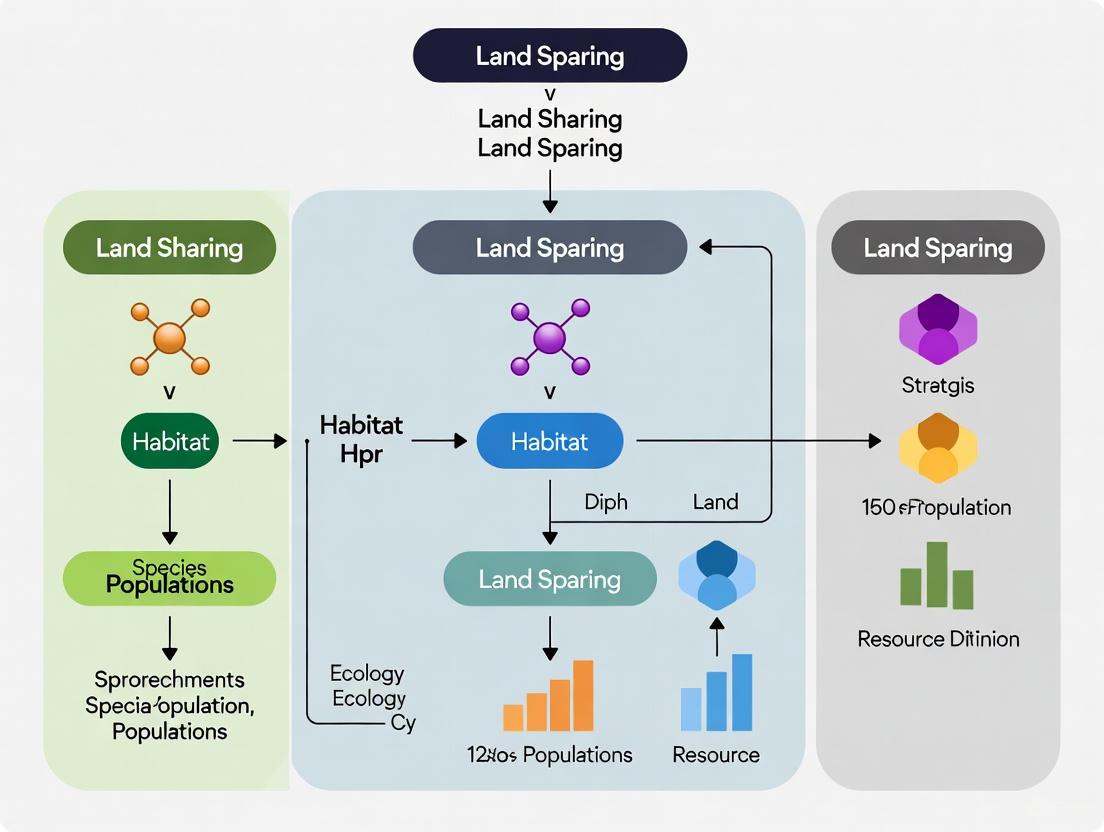
This article synthesizes the latest empirical evidence and theoretical frameworks in the long-standing land sparing versus land sharing debate.
Land Sparing vs. Land Sharing: Resolving the Conservation Debate with Data-Driven Strategies
Abstract
This article synthesizes the latest empirical evidence and theoretical frameworks in the long-standing land sparing versus land sharing debate. Moving beyond a polarized dichotomy, we explore how emerging strategies like 'land blending' and spatial optimization are shaping context-specific solutions for balancing biodiversity conservation with agricultural production. Tailored for researchers and scientists, the analysis covers foundational concepts, methodological applications, common pitfalls, and a comparative validation of outcomes, providing a comprehensive evidence base for informing environmental policy and land-use planning.
The Great Debate: Unpacking Land Sparing and Land Sharing
The "land sparing" versus "land sharing" debate presents a critical framework for addressing one of the modern era's most pressing challenges: how to meet the growing global demand for agricultural products while halting and reversing the widespread loss of biodiversity [1]. This debate has long been polarized, forcing a choice between two seemingly opposing strategies. However, emerging empirical evidence is refining this discourse, pointing toward more nuanced, context-dependent solutions [2]. This application note details the core principles of these paradigms and provides structured protocols for their empirical study, aiming to equip researchers with the tools to advance this field beyond ideological divides.
Paradigm Definitions and Conceptual Framework
Land Sparing is a conservation strategy that emphasizes the physical segregation of agricultural production and biodiversity conservation. Its core principle is to maximize yields on existing farmland to reduce the total land area required for agriculture, thereby enabling the protection or "sparing" of larger tracts of natural habitat from conversion to farmland [1]. This approach often relies on agricultural intensification.
Land Sharing (also known as wildlife-friendly farming) is a strategy that integrates production and conservation on the same land units. The core principle is to boost densities of wild populations on farmland by incorporating natural habitat features (such as hedgerows, woodlots, or fallow land) into agricultural landscapes, albeit at the potential cost of lower yields per unit area [1].
The relationship between yield and biodiversity under these two paradigms can be conceptually modeled. The following diagram illustrates the fundamental trade-off and the theoretical basis for comparing the two strategies:
Figure 1: Conceptual Framework of Land-Use Strategies. This diagram shows the core focus of each paradigm: Land Sparing prioritizes high agricultural yield to spare land for nature, while Land Sharing prioritizes on-farm biodiversity, often accepting lower yields.
Quantitative Analysis of Empirical Evidence
A seminal 2025 meta-analysis by Augustiny et al., which synthesized 57 peer-reviewed studies, provides the most current quantitative evidence for evaluating the sparing-sharing debate [2]. The analysis revealed that a majority of empirical cases support a combined approach. The key findings are summarized in the table below:
Table 1: Meta-Analysis of Land-Use Strategy Effectiveness (Augustiny et al., 2025) [2]
| Analysis Scope | Sample Size | Combined Approach Best | Sparing Alone Best | Sharing Alone Best | Key Interpretation |
|---|---|---|---|---|---|
| Focused Comparison Subset | 17 studies enabling direct comparison | 52% of cases | 41% of cases | 7% of cases | Clearly demonstrates that a mixed strategy is most often optimal for biodiversity. |
| Full Dataset | 57 studies | 34% of cases | 36% of cases | 19% of cases | Highlights variability in the literature; context is critical. |
The data strongly suggests that the debate is not a binary choice. The study concluded that "landscapes need to contain a mix of both in order to effectively protect biodiversity and feed the world" [2]. The variability in findings across the full dataset underscores that the optimal strategy depends on specific local contexts, including the types of species studied and the agricultural metrics used.
Experimental Protocols for Paradigm Evaluation
To standardize research in this field, the following protocols outline a methodology for empirically comparing land sparing and sharing strategies in a given landscape.
Protocol 1: Landscape-Scale Comparison of Biodiversity and Yield
1. Objective: To quantify the trade-offs and synergies between agricultural yield and biodiversity conservation across landscapes dominated by sparing, sharing, or mixed strategies.
2. Experimental Design:
- Site Selection: Select multiple study landscapes that represent a gradient of agricultural management, from heavily intensified (potential sparing) to wildlife-friendly (potential sharing). Each landscape should be a minimum of 10 km² to capture meaningful ecological processes.
- Sampling Units: Within each landscape, establish sampling transects in both agricultural fields and adjacent natural or semi-natural habitats.
- Replication: A minimum of 5 replicate landscapes per broad strategy type is recommended for statistical robustness.
3. Methodology:
- Biodiversity Metrics:
- Taxon Selection: Focus on key indicator taxa (e.g., birds, pollinators, soil arthropods). As noted in the research, be aware that studies focusing on "specialist and tropical species that require undisturbed, intact habitats" can naturally bias findings toward land-sparing [2].
- Sampling Methods: Use standardized methods like point counts for birds, pan traps for pollinators, and pitfall traps for ground-dwelling arthropods. Conduct surveys during peak activity seasons with multiple visits per year.
- Agricultural Yield Metrics:
- Data Collection: In collaborating farms within the study landscapes, collect yield data (e.g., tons per hectare for crops) through farmer interviews, farm records, or direct field measurements.
- Broader Metrics: Move beyond mere crop yield. The protocol should also collect data on other metrics of agricultural performance often neglected in the debate, including input efficiency (e.g., water, fertilizers, pesticides), yield stability (variance over time), and profitability [1].
4. Data Analysis:
- Construct yield-density relationships for different species [1].
- Use multivariate statistics (e.g., PERMANOVA) to test for differences in species communities between strategies.
- Model the overall population size of species for different land-use configurations to determine whether sparing, sharing, or a mix maximizes biodiversity at a regional production target.
The workflow for this comprehensive assessment is outlined below:
Figure 2: Workflow for Comparative Landscape Evaluation. This protocol provides a standardized approach for collecting the empirical data needed to evaluate the land-use strategies in a specific context.
The Scientist's Toolkit: Key Research Reagents and Solutions
Table 2: Essential Materials and Tools for Field and Data Analysis
| Item Category | Specific Examples | Function in Research |
|---|---|---|
| Field Sampling Equipment | Pan traps, pitfall traps, mist nets, binoculars, GPS units, soil corers. | Standardized collection of biodiversity data (arthropods, birds) and precise geolocation of sampling points. |
| Data Collection Software | OpenDataKit (ODK), Survey123. | Digital collection of farmer survey data, yield metrics, and field observations, minimizing transcription error. |
| Spatial Analysis Tools | GIS Software (QGIS, ArcGIS), Raster and Vector Data (land cover/use maps). | Delineate study landscapes, classify land-use types, and analyze habitat configuration and connectivity. |
| Statistical Software | R (with vegan, lme4 packages), Python (with pandas, scikit-learn). |
Perform complex statistical modeling, including yield-density relationships and multivariate analysis of species communities. |
The discourse on land sparing and land sharing is evolving from a polarized debate to a synthesis that recognizes the necessity of both approaches. The empirical evidence increasingly indicates that context-specific solutions are needed, where biodiversity protection depends on the presence of both sustainable agricultural production areas and tracts of least-disturbed habitat within a landscape [2]. Future research must adopt more holistic metrics of agricultural performance and move beyond the narrow focus on crop yield to fully understand the trade-offs and synergies at play. By employing the standardized protocols and frameworks outlined in this document, researchers can generate robust, comparable data to guide the development of integrated landscapes that effectively balance the dual imperatives of production and conservation.
Historical Context and Evolution of the Scientific Debate
Application Notes
Historical Origins and Key Concepts
The land sparing versus land sharing debate emerged prominently in 2005 with the publication of a pivotal theoretical model in Science by Green et al. [3]. This model framed the relationship between agricultural yield and biodiversity, positing a fundamental trade-off and presenting two primary strategic responses [4] [3]. The debate has since become a central socio-technical controversy in conservation and agricultural policy, representing divergent imaginaries of human-nature relationships [3].
Table 1: Core Definitions in the Land Sparing-Sharing Debate
| Term | Definition | Key Characteristics |
|---|---|---|
| Land Sparing | A strategy that strictly separates high-yield agriculture from dedicated, undisturbed natural habitats [4]. | - Spatial segregation of functions- High-yield, intensive agriculture- Prioritizes large, contiguous natural areas |
| Land Sharing | A strategy that integrates biodiversity-friendly practices within agricultural landscapes, accepting lower yields per unit area [4]. | - Integration of functions within the same area- Wildlife-friendly farming practices (e.g., organic, agroforestry)- Complex landscape structures with natural elements |
| Borlaug Hypothesis | The proposition that increasing agricultural yields will passively result in land being spared for nature [5]. | Often conflated with but conceptually distinct from active land-sparing interventions. |
The ethical underpinnings of this debate reflect deeper, contrasting worldviews. Land sparing often aligns with a perspective that sees human systems as separate from natural systems, while land sharing tends to be rooted in an ethic that envisions humans and nature as integrated [3]. This fundamental difference in human-nature relationships has contributed to the polarization of the debate.
Evolution of the Empirical Evidence Base
Initial arguments in the debate were largely theoretical. In subsequent years, researchers began applying the sparing-sharing framework to empirical field data from various global contexts, including Ghana, India, Uganda, and countries in Latin America [5]. A significant shift in the debate has been the growing recognition of the limitations of a binary approach.
A major systematic review in 2025, which analyzed 57 peer-reviewed studies, provided a crucial synthesis of the available empirical evidence [4]. This analysis revealed that the empirical basis for advocating for one strategy over the other is less robust than often assumed. The findings demonstrate that context is critical, and the best outcomes often involve a mix of both strategies.
Table 2: Empirical Outcomes from a Systematic Review (2025) of 57 Studies [4]
| Strategy | Percentage of Cases Where Strategy Performed Best (from 17 Comparable Studies) | Key Contexts and Considerations |
|---|---|---|
| Combined Strategies | 52% | Context-specific solutions that integrate elements of both sparing and sharing at the landscape level were most frequently optimal. |
| Land Sparing | 41% | Often performed best for specialist species, particularly tropical forest birds requiring large, undisturbed habitats [4]. |
| Land Sharing | 7% | Effective in specific contexts, but the evidence base for it being the superior strategy is limited [4]. |
Critiques of the sparing-sharing model highlight its oversimplification of complex realities. The framework has been criticized for neglecting socio-economic factors, governance, livelihood impacts, and equity concerns [4] [3]. Furthermore, the methods used, such as density-yield functions, have been questioned for their robustness in predicting long-term species survival [4].
Experimental Protocols
Protocol for a Comparative Empirical Study of Land Sparing and Sharing
This protocol outlines a methodology for collecting field data to assess the relationship between biodiversity, agricultural yield, and land-use strategy, based on the established land sparing-sharing analytical framework [5].
Research Reagent Solutions and Essential Materials
Table 3: Key Materials and Equipment for Field Data Collection
| Item | Function/Application |
|---|---|
| GPS Unit | Precisely georeferencing study plots and transects for spatial analysis and accurate area calculations. |
| Field Meter for Vegetation Structure | Quantifying habitat complexity (e.g., canopy cover, vegetation height) as a covariate for biodiversity. |
| Standardized Species Survey Equipment | Equipment is taxon-specific (e.g., mist nets for birds, pitfall traps for ground-dwelling insects, camera traps for mammals). |
| Yield Measurement Tools | Standardized tools for measuring agricultural production (e.g., scales for crop weight, quadrats for biomass estimation). |
| GIS Software & Land-Cover Maps | Defining the study landscape, classifying land-use types (from natural habitat to high-yield farmland), and scaling up plot-level data. |
Methodology
Site Selection and Land-Use Gradient Establishment:
- Select a study landscape that contains a gradient of land-use intensity, from intact natural ecosystems (the reference state) to low-yield wildlife-friendly farms and high-yield intensive farms [5].
- Use GIS and land-cover maps to identify and categorize these different land-use types.
- Randomly select multiple replicate sampling plots within each land-use category to ensure robust data.
Biodiversity Metrics Data Collection:
- For the target species groups (e.g., birds, insects, plants), conduct standardized surveys in each plot.
- Record species richness (number of different species) and population density (number of individuals per unit area) for each plot [5]. The density data is crucial for the model.
- Conduct surveys multiple times throughout a relevant biological season (e.g., breeding season) to account for temporal variation.
Agricultural Yield Data Collection:
- In each agricultural plot (both sharing and sparing types), measure the actual crop yield. This should be quantified as the mass of harvestable product per unit area per growing season (e.g., tons/hectare/year) [5].
- It is critical to measure real-world yields rather than relying on potential or theoretical yields.
Data Analysis and Modeling:
- For each species, fit a statistical model (a density-yield curve) that describes how its population density changes across the gradient of agricultural yields [5].
- These models can take various forms (e.g., linear, quadratic, sigmoidal), and the best-fit model should be selected for each species.
Scenario Projection:
- Define a constant total level of agricultural production required for the landscape.
- Using the fitted density-yield curves, project the total population size for each species under different land-use configurations that meet this production goal [5]:
- Land Sharing: A large area under low-yield, wildlife-friendly farming.
- Land Sparing: A small area under high-yield farming, with the remaining land allocated to natural habitat.
- Intermediate Strategies: Various mixes of the two.
- The "optimal" strategy for a given species is the one that results in the largest total population size.
Diagram 1: Experimental workflow for a sparing-sharing study
Visualization of Conceptual Relationships
Diagram 2: Evolution of the sparing-sharing debate
Protocol for Meta-Analysis and Systematic Review
For researchers seeking to synthesize existing evidence, the protocol from the 2025 systematic review provides a model [4].
- Literature Search: Conduct comprehensive searches in multiple scientific databases (e.g., Web of Science, Scopus) using a defined set of keywords related to "land sparing," "land sharing," "biodiversity," and "agriculture."
- Screening and Eligibility: Apply pre-defined inclusion and exclusion criteria. Studies must empirically compare land sharing and land sparing in an agricultural setting and assess biodiversity. A key step is evaluating whether studies contain a clear assessment of agricultural production performance, which is essential for a valid comparison [4].
- Data Extraction: Extract data into a standardized sheet. Key fields include: geographic location, species groups studied, biodiversity metrics used, methods for measuring agricultural intensity and production, and the study's main conclusions regarding optimal strategy.
- Categorization and Synthesis: Categorize studies based on whether they allow a direct comparison of strategies. Synthesize findings quantitatively (e.g., percentage of cases favoring each strategy) and qualitatively, noting the contexts and methodological approaches that lead to different outcomes [4].
The debate between land sharing and land sparing represents a central theoretical framework in conservation agriculture, focusing on how best to reconcile food production with biodiversity conservation. Land sharing integrates biodiversity-friendly practices within agricultural landscapes, while land sparing intensifies production on existing farmland to spare other land for natural habitats [2]. For decades, this debate has been polarized, but emerging research reveals that neither strategy is universally superior. A comprehensive meta-analysis of 57 studies published in 2025 demonstrates that a context-dependent mixture of both approaches is most effective for balancing biodiversity and crop yields [2]. This protocol provides the methodological foundation for assessing these trade-offs, enabling researchers to generate comparable, high-quality data across different ecological and agricultural contexts.
Quantitative Data Synthesis
Table 1: Meta-Analysis Findings on Land Sharing vs. Land Sparing Effectiveness (2025)
| Strategy | Percentage of Cases Finding it Optimal | Key Contextual Factors | Notable Strengths and Limitations |
|---|---|---|---|
| Combined Approach | 52% (from key studies) | Landscape configuration, species traits, yield targets | Maximizes biodiversity in mixed landscapes; requires integrated planning [2]. |
| Land Sparing Alone | 41% (from key studies) | Presence of specialist species needing intact habitat | Can protect sensitive species; risks oversimplification and neglects agrochemical impacts [2]. |
| Land Sharing Alone | 7% (from key studies) | Farmland with high potential for wildlife coexistence | Supports farmland biodiversity; may not suffice for area-sensitive species [2]. |
Table 2: Impact of Landscape Context on Village Biodiversity (2025) [6]
| Landscape Characteristic | Impact on Multitrophic Diversity | Impact on Human Well-being (Better Life Index) |
|---|---|---|
| Forest-Dominated (Complex) | 15% higher diversity | Higher well-being, association with healthier environment [6]. |
| Agricultural (Simplified) | 15% lower diversity | Lower well-being metrics [6]. |
| City Vicinity (Agglomeration) | No significant effect on biodiversity | Enhanced well-being due to infrastructure access [6]. |
Experimental Protocols
Protocol for Assessing Biodiversity in Agricultural Landscapes
Objective: To quantify the effects of different land-use strategies (sharing, sparing, mixed) on multitrophic diversity and community composition.
Materials:
- Standardized field equipment (e.g., pitfall traps, sweep nets, bird point count kits, plant quadrats)
- GPS receiver
- Environmental data loggers (for microclimate)
- Preservative materials for specimens
- Data recording forms or digital devices
Methodology:
- Site Selection: Stratify sampling sites across the landscape to include:
- Land Sharing: Wildlife-friendly farms, polycultures, agroforestry systems.
- Land Sparing: High-yield intensive farms paired with adjacent natural or semi-natural habitat reserves.
- Reference Sites: Remnant patches of natural habitat for baseline data [2].
- Taxonomic Group Sampling: Sample multiple trophic levels to capture comprehensive biodiversity responses, as demonstrated in village studies [6].
- Plants: Conduct quadrat surveys to determine species richness and cover.
- Arthropods: Use standardized transects of pitfall traps for ground-dwelling insects and spiders; sweep nets for foliar arthropods; and trap nests for cavity-nesting bees, wasps, and their parasitoids [6].
- Birds: Perform fixed-radius point counts to record species and abundances [6].
- Data Collection:
- Record species abundance and richness for all target groups.
- Document key management practices and landscape variables (e.g., yield, pesticide/fertilizer use, proximity to natural habitat).
- Quantify local and landscape complexity using GIS-based metrics (e.g., percentage of semi-natural habitat, NDVI) [6].
- Data Analysis:
- Calculate diversity indices (e.g., Shannon-Wiener, Simpson) for local (alpha) diversity.
- Analyze community composition shifts using multivariate statistics (e.g., NMDS, PERMANOVA).
- Model the relationship between yield and biodiversity to identify trade-off curves for different strategies [2].
Protocol for Assemblage-Level Conservation Analysis
Objective: To model and manage the simultaneous responses of multiple species within a community to environmental drivers and conservation actions.
Materials:
- Large-scale biodiversity occurrence or abundance dataset
- Environmental covariate data (e.g., climate, land-use)
- Computational resources and statistical software (e.g., R, Python)
- Hierarchical modeling frameworks
Methodology:
- Data Compilation: Collate data from long-term monitoring schemes, citizen science platforms, or targeted field studies for an entire taxonomic group (e.g., butterflies, birds) [7].
- Model Fitting: Implement multi-species hierarchical models (e.g., Joint Species Distribution Models). These models estimate:
- Species-specific responses to environmental gradients.
- Overall community trends and composition.
- Improved estimates for rare species by borrowing information from more common ones [7].
- Conservation Prioritization: Use model outputs to identify geographic areas or management actions that benefit the largest number of species simultaneously or halt the decline of the entire assemblage [7].
Visualizations and Workflows
Diagram 1: Land Management Decision Workflow
Diagram 2: Assemblage-Level Conservation Analysis
The Scientist's Toolkit: Research Reagent Solutions
Table 3: Essential Materials for Field and Data Analysis
| Item/Solution | Function in Research | Application Context |
|---|---|---|
| Standardized Traps (Pitfall, Malaise) | Captures ground-dwelling and flying arthropods for diversity and abundance metrics. | Essential for quantifying invertebrate responses in sharing vs. sparing grids [6]. |
| GPS Receiver & GIS Software | Precisely geolocates sampling points and calculates landscape metrics (e.g., habitat cover, proximity). | Critical for linking local biodiversity data to landscape-scale configuration in meta-analyses [6] [2]. |
| Multi-Species Hierarchical Models | Statistical framework to analyze data for entire species groups simultaneously, improving estimates for rare species. | Core tool for assemblage-level conservation, moving beyond single-species focus [7]. |
| Environmental DNA (eDNA) Sampling | Non-invasive method to detect species presence from soil or water samples, useful for cryptic taxa. | Emerging technology for rapid biodiversity assessment across different management regimes. |
| Normalized Difference Vegetation Index (NDVI) | Remote sensing metric for quantifying green biomass and vegetation structure in landscapes. | Used to assess habitat quality and landscape complexity around study villages [6]. |
Key Stakeholders and Their Diverging Perspectives and Values
Table 1: Core Concepts in Land Management Strategies
| Concept | Core Definition | Key Objective |
|---|---|---|
| Land Sparing | Spatial separation of high-yield production and dedicated conservation areas [8] [9]. | Maximize biodiversity preservation in undisturbed habitats [8]. |
| Land Sharing | Integration of biodiversity conservation within production landscapes [8] [1]. | Maintain biodiversity across managed landscapes [8]. |
| Triad Management | Division of landscape into intensive production, extensive management, and reserve areas [10]. | Balance multiple objectives across designated zones [10]. |
The debate between land sparing and land sharing represents a critical fork in the road for managing working landscapes. This document provides researchers and practitioners with a structured framework for analyzing the stakeholders, values, and methodologies central to this discourse. A comprehensive understanding of these elements is essential for designing context-specific strategies that reconcile biodiversity conservation with agricultural and forestry production.
Stakeholder Analysis: Perspectives and Underlying Values
Engaging with the land-sparing versus land-sharing debate requires a clear understanding of the diverse stakeholders involved, their preferred strategies, and the fundamental values that shape their positions. The divergence in perspectives often stems from differing priorities regarding ecological theory, economic outcomes, and social justice.
Table 2: Key Stakeholder Groups and Their Perspectives
| Stakeholder Group | Preferred Strategy (Typical) | Core Motivations & Values | Cited Rationale |
|---|---|---|---|
| Conservation Organizations & Regional Administrations [8] | Land Sparing | - Ecological theory favoring large habitat patches [8]- Species conservation (esp. specialist species) [8] [2]- Carbon storage maximization [10] | "larger habitat patches host larger populations, decreasing the risk of local extinctions" [8] |
| Forest Companies & Corporate Agribusiness [8] [9] | Land Sparing | - Economic efficiency and production maximization [8] [9]- Simplified management and planning | Relies on "sustained access to fertilizers, improved varieties... and conventional agricultural advisory services" [9] |
| Recreational Orgs., Municipalities, & Forest Owners' Associations [8] | Land Sharing | - Delivery of multiple ecosystem services (e.g., recreation) [8]- Social and aesthetic values [8]- Multi-functional landscapes | Motivated by "the delivery of ecosystem services" and social values [8] |
| Agricultural Scientists & Agroecologists [9] [1] | Intermediate/Sharing | - Social justice, land rights, and community participation [9]- Beyond yield-only metrics (e.g., resilience, profitability) [9] [1]- Synergies between agriculture and biodiversity | Argues the framework "places too much emphasis on crop yield, neglecting other metrics of agricultural performance which may be more important to local farmers" [1] |
| Local & Indigenous Communities [9] | Context-Dependent | - Livelihood security and food sovereignty [1]- Empowerment and local governance [9]- Maintenance of cultural practices | Success requires "empowering local communities" and respecting land rights [9] |
Figure 1: A conceptual workflow for analyzing stakeholder positions, illustrating how different value systems lead to preferences for specific management strategies and the evaluation of different outcomes.
Quantitative Data and Comparative Analysis
Empirical studies and models provide critical insights into the potential outcomes of different land-use strategies. The performance of each strategy can vary significantly based on the specific metrics being evaluated, such as biodiversity, carbon storage, or timber production.
Table 3: Documented Outcomes of Land-Use Strategies from Empirical Studies and Models
| Study Context / Model | Land-Sparing Outcomes | Land-Sharing Outcomes | Triad / Mixed Outcomes |
|---|---|---|---|
| Boreal Forests (Stakeholder Scoring) [8] | "Biodiversity Management" scenario ranked highest | "People Engagement" and "Management Plan" scored lower | "Management Plan" (a mixed approach) ranked second |
| Forest Landscape Model (Oregon) [10] | Maximized carbon storage | Highest tree/shrub diversity and occupancy | Balanced timber, carbon, and diversity (variants) |
| Meta-analysis (57 studies) [2] | Best in 36% of cases | Best in 19% of cases | Combination best in 34% of cases |
| Agricultural Science Perspective [1] | May perpetuate social/environmental costs | Can combine productivity and biodiversity | Recognized as necessary for complex realities |
Experimental Protocols and Methodologies
Robust research and informed decision-making rely on standardized methods for data collection, modeling, and stakeholder engagement. The following protocols outline established approaches in the field.
This protocol is designed to qualitatively and quantitatively gather and analyze stakeholder perspectives on land-use scenarios [11].
Workshop Preparation
- Define Objectives: Clearly state the goal (e.g., ranking management scenarios).
- Select Stakeholders: Identify representatives from key groups (Table 2).
- Develop Scenarios: Create detailed descriptions of land-sparing, land-sharing, and hybrid scenarios (e.g., "Biodiversity Conservation," "People Engagement," "Low Budget") [11].
Workshop Faciliation
- Present Scenarios: Introduce each scenario to all participants.
- Deliberative Discussions: Facilitate structured discussions where stakeholders debate the potential impacts of each scenario.
- Repeated Scoring: Ask participants to individually score the scenarios on predefined criteria (e.g., biodiversity benefit, economic viability) both before and after discussions to capture shifts in perspective [11].
Data Analysis
- Quantitative Analysis: Calculate mean scores and rankings for each scenario across stakeholder groups. Perform statistical analysis (e.g., ANOVA) to test for significant differences.
- Qualitative Analysis: Transcribe discussions and use thematic analysis to identify key arguments, concerns, and underlying values associated with each strategy.
Protocol: Modeling Forest Management Strategies with LANDIS-II
This protocol uses the LANDIS-II model to quantitatively project long-term outcomes of different management strategies under climate change [10].
Model Setup and Initialization
- Define Study Area: Input raster data for the forest landscape.
- Initialize Forest Composition: Use species-specific data (e.g., succession parameters, life history traits) to represent the starting forest conditions.
- Parameterize Disturbances: Configure modules for natural disturbances like wildfires and windthrow.
Implement Management Strategies
- Land Sparing: Designate specific zones for high-intensity timber production and other zones as reserves with no harvesting.
- Land Sharing: Apply extensive, low-intensity forestry practices across the entire landscape.
- Triad Management: Divide the landscape into three zones: intensive production, extensive management, and reserved areas [10].
Run Simulations and Validate
- Run Models: Simulate forest succession, management, and disturbances from a baseline year (e.g., 2016) to a future year (e.g., 2100) under multiple climate projections.
- Validate Outputs: Calibrate the model by comparing initial outputs to historical data if available.
Output Analysis
- Quantify Metrics: Calculate key output variables for each strategy: total harvested timber volume, aboveground biomass (carbon storage), and species diversity indices (e.g., Shannon diversity index) [10].
- Compare Performance: Analyze trade-offs by comparing the output metrics across the different management strategies and climate scenarios.
Figure 2: A workflow for modeling forest management strategies using the LANDIS-II platform, showing the phases from setup and strategy implementation to simulation and output analysis.
The Scientist's Toolkit: Research Reagent Solutions
Table 4: Essential Tools and Data Sources for Land-Use Strategy Research
| Tool / Data Source | Type | Primary Function in Research |
|---|---|---|
| LANDIS-II Model [10] | Software | Spatially explicit simulation of forest succession, management, and disturbance under climate change. |
| Global Impervious Surface Data [12] | Geospatial Data | Serves as a key indicator of urbanization level for identifying peri-urban areas and analyzing land-use change. |
| Nighttime Light Data (NPP-VIIRS) [12] | Geospatial Data | Provides a proxy for economic activity and urban extent, used to differentiate urban, peri-urban, and rural zones. |
| Generalized Additive Models (GAMs) [13] | Statistical Model | A non-parametric statistical approach for modeling complex, non-linear relationships in land-use change drivers. |
| Semi-Structured Surveys [8] | Research Instrument | Elicits qualitative and quantitative data on stakeholder preferences and underlying values for different strategies. |
| Markov Chain Models [13] | Statistical Model | Projects future land-use change based on transition probabilities from historical data, useful when predictor data is limited. |
From Theory to Practice: Implementing Sparing and Sharing Strategies
Spatial Optimization and Land-Use Modeling for Strategic Planning
Spatial optimization in land-use allocation (SO-LUA) provides a critical computational framework for addressing one of the most pressing dilemmas in landscape management: the choice between land-sparing and land-sharing strategies. Land-sparing involves the spatial separation of land for intensive production and dedicated conservation, while land-sharing integrates biodiversity conservation within production landscapes through wildlife-friendly practices [14]. This debate has become polarized, yet emerging evidence suggests that the most effective approach may involve a strategic combination of both methods tailored to specific regional contexts [2]. Spatial optimization models offer quantitative methods to navigate this complexity by identifying optimal configurations of land uses that balance competing objectives—including agricultural production, biodiversity conservation, and ecosystem service delivery—within a spatially explicit framework [15].
The fundamental challenge lies in allocating limited land resources among competing uses while accounting for spatial interactions, economic trade-offs, and ecological constraints. In the context of land sparing versus land sharing, spatial optimization helps resolve whether to segregate intensive production from natural habitats (sparing) or to integrate conservation measures within working lands (sharing). A 2025 meta-analysis of 57 studies revealed that in 52% of cases, a combination of both approaches proved most beneficial for biodiversity, while pure land-sparing was optimal in 41%, and land-sharing in only 7% of cases [2]. This highlights the context-dependent nature of optimal solutions and underscores the value of spatial optimization tools for developing targeted landscape strategies.
Key Concepts and Quantitative Foundations
Defining the Conservation Strategies
Land Sparing is characterized by the spatial segregation of conservation and production objectives. This approach designates specific areas for intensive production while protecting separate, undisturbed natural habitats [14]. The ecological theory supporting this strategy suggests that larger, contiguous habitat patches better support viable populations and reduce extinction risks [14]. In practice, land-sparing often manifests as protected areas, nature reserves, and set-asides where commercial extraction is prohibited.
Land Sharing integrates production and conservation within the same landscape units through practices such as extended rotation periods, retention of habitat features, and continuous cover forestry [14]. This approach aims to maintain biodiversity across the entire production landscape while simultaneously yielding economic returns. The strategy is particularly relevant in forest landscapes where managed stands can maintain some characteristics of natural habitats.
Core Quantitative Metrics for Strategy Evaluation
Spatial optimization models employ specific quantitative metrics to evaluate the performance of different land-use configurations. The table below summarizes key indicators used to compare land-sparing and land-sharing outcomes:
Table 1: Key Quantitative Metrics for Evaluating Land-Use Strategies
| Metric Category | Specific Indicators | Relevance to Sparing/Sharing |
|---|---|---|
| Biodiversity Metrics | Species richness, population viability, habitat connectivity | Measures conservation effectiveness of each strategy [14] [2] |
| Production Indicators | Crop yields, timber volume, economic returns | Quantifies production efficiency under different approaches [2] |
| Spatial Configuration | Patch size, connectivity, edge density | Evaluates landscape pattern differences between strategies [15] |
| Ecosystem Services | Carbon storage, water quality, recreation value | Assesses co-benefits and trade-offs [14] |
Statistical analysis of these metrics enables direct comparison between strategies. Common quantitative methods include cross-tabulation to analyze relationships between categorical variables (e.g., land-use type and species presence) [16], gap analysis to identify discrepancies between current and desired states and maximum difference (MaxDiff) analysis to prioritize management options based on stakeholder preferences [16].
Data Analysis Methods and Visualization Protocols
Spatial Data Processing Workflow
Implementing spatial optimization requires systematic processing of heterogeneous data sources. The following workflow outlines the core procedural protocol:
Figure 1: Spatial Data Processing Workflow
Protocol 1: Data Collection and Preprocessing
- Spatial Data Acquisition: Collect georeferenced data on land cover, soil types, topography, infrastructure, and protected areas. Remote sensing data (e.g., satellite imagery) typically serves as the primary source.
- Biodiversity Data Compilation: Gather species occurrence records, habitat suitability models, and ecological connectivity requirements.
- Economic Data Integration: Compile information on land productivity, management costs, commodity prices, and market access.
- Data Standardization: Convert all data to a consistent spatial resolution and coordinate system. Generate raster datasets with identical cell sizes and extents for analytical compatibility.
Protocol 2: Optimization Model Formulation
- Decision Variables: Define binary decision variables (Xᵢⱼ) representing whether land use j is assigned to cell i.
- Objective Function: Formulate a multi-objective function that balances competing goals, typically maximizing both agricultural/forestry production and biodiversity conservation.
- Spatial Constraints: Implement constraints to ensure realistic spatial patterns, including adjacency requirements, minimum patch sizes, and connectivity thresholds.
- Resource Limitations: Incorporate constraints on available budget, labor, or other limited resources.
Visualization Techniques for Land-Use Scenarios
Effective communication of spatial optimization results requires appropriate visualization methods. The following techniques facilitate interpretation of complex model outputs:
Table 2: Data Visualization Methods for Land-Use Analysis
| Visualization Type | Best Use Cases | Accessibility Considerations |
|---|---|---|
| Thematic Maps | Displaying spatial allocation patterns | Ensure 3:1 contrast ratio for adjacent regions [17] |
| Bar Charts | Comparing metrics across strategies | Use 4.5:1 contrast for normal text labels [18] |
| Scatter Plots | Revealing trade-offs between objectives | Differentiate markers by shape and color [16] |
| Line Graphs | Showing sensitivity to parameter changes | Maintain 3:1 contrast for graph elements [19] |
Experimental Protocols for Strategy Evaluation
Comparative Landscape Scenario Development
Protocol 3: Designing Alternative Landscape Configurations
- Land-Sparing Scenario: Delineate specific zones for intensive production and separate conservation areas. Protected areas should be configured as large, contiguous patches where extractive activities are prohibited. Model production zones for maximum efficiency with minimal set-asides.
- Land-Sharing Scenario: Implement conservation measures throughout the production landscape. Incorporate features such as wildlife corridors, retention trees, buffer zones, and reduced chemical inputs. Model lower per-area productivity but higher overall habitat availability.
- Integrated Scenario: Develop a hybrid approach that combines elements of both strategies. Allocate some areas to intensive production, others to biodiversity-friendly production, and designate core protected areas.
Protocol 4: Performance Metric Calculation
- Biodiversity Assessment: Calculate species-specific habitat suitability indices using relationship models between species and habitat features. Estimate population viability for focal species.
- Production Quantification: Sum production outputs (crop yields, timber volume) across all productive areas. Apply regional yield models that account for management intensity and environmental constraints.
- Ecosystem Service Valuation: Model secondary benefits including carbon sequestration, water purification, and recreational opportunities using established biophysical and economic valuation techniques.
Stakeholder Preference Integration
Understanding stakeholder motivations is essential for developing socially viable land-use strategies. Research indicates that organizations focused primarily on species conservation tend to prefer land-sparing approaches, while those emphasizing ecosystem service delivery often support land-sharing strategies [14]. The following protocol facilitates incorporation of these perspectives:
Protocol 5: Multi-Stakeholder Preference Analysis
- Stakeholder Identification: Categorize stakeholders by their primary interests (e.g., conservation organizations, forest owners, recreational users, indigenous communities).
- Preference Elicitation: Implement structured surveys, such as a MaxDiff analysis, to quantify relative preferences for different landscape outcomes [16].
- Motivation Documentation: Record written justifications for preferences to understand underlying values (ecocentric versus anthropocentric mindsets).
- Inclusion in Optimization: Incorporate preference weights as coefficients in the multi-objective function or as constraints in the optimization model.
The Scientist's Toolkit: Essential Research Reagent Solutions
Table 3: Essential Tools and Data Sources for Land-Use Optimization Research
| Tool Category | Specific Solutions | Primary Function |
|---|---|---|
| GIS Platforms | ArcGIS, QGIS, GRASS GIS | Spatial data management, analysis, and visualization |
| Optimization Software | Gurobi, CPLEX, PuLP (Python) | Solving mathematical programming problems |
| Statistical Packages | R, Python (Pandas), SPSS | Data analysis, statistical modeling, and visualization |
| Remote Sensing Data | Landsat, Sentinel, MODIS | Land cover classification and change detection |
| Ecological Data | Species distribution models, habitat maps | Biodiversity representation in optimization |
Implementation Framework and Decision Support
The final phase translates optimization results into actionable landscape plans. The following diagram illustrates the decision pathway for selecting appropriate strategies based on spatial context and conservation objectives:
Figure 2: Land-Use Strategy Decision Framework
Protocol 6: Context-Specific Strategy Implementation
- Land-Sparing Application: Prioritize in landscapes with significant intact habitat, high-quality conservation areas, or presence of specialist species requiring undisturbed habitat [14] [2]. Implement through protected area expansion and consolidation.
- Land-Sharing Application: Deploy in extensively modified landscapes where habitat fragmentation is already advanced, or where ecosystem service provision is a primary objective. Implement through agroecological practices and retention forestry.
- Mixed Strategy Development: Combine approaches in landscapes with intermediate conservation values or where both intensive production and biodiversity conservation are required. Allocate specific zones to different strategies based on their relative suitability.
Spatial optimization provides the computational foundation for navigating the complex trade-offs between land sparing and land sharing. By employing the protocols, metrics, and visualization techniques outlined in this document, researchers and planners can develop evidence-based landscape strategies that balance production and conservation objectives in specific regional contexts. The iterative nature of spatial optimization allows for continuous refinement as new data emerges and stakeholder preferences evolve.
Agroecology and Wildlife-Friendly Farming as Land-Sharing Applications
Agroecology is defined as a holistic and integrated approach that applies ecological and social concepts to the design and management of sustainable agriculture and food systems [20]. It seeks to optimize interactions between plants, animals, humans, and the environment while addressing social equity in food systems [20]. Within the scientific debate on balancing agricultural production with biodiversity conservation, agroecology aligns firmly with the land-sharing paradigm. This approach integrates wildlife-friendly habitats directly into agricultural landscapes, creating a mosaic of production and conservation areas rather than segregating them.
The land-sharing approach contrasts with land-sparing, which separates intensive agriculture from designated natural habitats. A 2025 meta-analysis of 57 studies published in PNAS Nexus revealed that neither strategy is universally superior [2]. Significantly, 52% of cases in studies directly comparing both approaches found that a combination of sharing and sparing at the landscape level was optimal for biodiversity [2]. This positions agroecology as an essential component within broader conservation strategies.
Core Agroecological Principles for Land-Sharing
Agroecology implements land-sharing through specific, actionable principles that transform farming systems into multifunctional landscapes supporting both production and biodiversity.
Table 1: Core Agroecology Principles and Their Land-Sharing Applications
| Principle | Scientific Rationale | Specific Land-Sharing Application |
|---|---|---|
| Diversity | Enhances ecosystem stability, niche partitioning, and resource use efficiency [20] | Implementation of polycultures, crop-livestock integration, and agroforestry systems [20] |
| Resilience | Creates buffering capacity against climate, pest, and market shocks [21] | Design of diversified, well-integrated systems that maintain functions under stress [21] |
| Systems Thinking | Addresses interconnected ecological, social, and economic factors [20] [21] | Planning that considers watersheds, wildlife corridors, and community knowledge networks |
| Social Equity | Ensures sustainable adoption and community support for conservation | Co-creation of knowledge with farmers and recognition of gender/indigenous knowledge [20] |
These principles are operationalized through the 10 Elements of Agroecology framework developed by FAO, which provides a comprehensive guide for planning and evaluating agroecological transitions [20]. This framework assists researchers and practitioners in designing context-specific land-sharing interventions.
Application Notes: Implementing Wildlife-Friendly Farming
Habitat Management Protocols
Vegetated Buffer Zone Establishment
- Protocol: Establish perennial flowering strips along field margins and waterways. Minimum width should be 5-10 meters, composed of native grass and forb species selected for sequential blooming.
- Experimental Measurement: Monitor pollinator abundance using pan traps and transect counts weekly during growing season. Quantify natural enemy populations (e.g., carabid beetles, spiders) using pitfall traps.
- Land-Sharing Benefit: Provides refuge, nesting sites, and alternative food sources for beneficial insects, leading to enhanced biological control of pests [20].
Hedgerow and Field Border Installation
- Protocol: Plant multi-layered hedgerows using native shrubs and trees that provide food (berries, nuts) and shelter across multiple seasons. Maintain connectivity between habitat patches to form wildlife corridors.
- Experimental Measurement: Conduct bird point counts and small mammal trapping (e.g., Sherman livetraps) quarterly to assess species richness and abundance. Compare diversity indices between farms with and without hedgerows.
- Land-Sharing Benefit: Supports higher trophic levels (birds, mammals) and connects fragmented habitats, increasing landscape permeability for wildlife movement [20].
On-Farm Vegetation Diversity Protocols
Cover Cropping and Green Manures
- Protocol: Implement diverse cover crop mixtures (e.g., legumes, grasses, brassicas) in rotation cycles. Terminate covers at flowering stage to maximize resource provision for pollinators.
- Experimental Measurement: Analyze soil organic matter, water infiltration rates, and nitrogen mineralization potentials seasonally. Use root ingrowth cores to measure belowground biomass production.
- Land-Sharing Benefit: Improves soil structure and fertility while providing seasonal forage for ground-foraging insects and birds.
Agroforestry System Implementation
- Protocol: Integrate native timber trees, fruit trees, or nitrogen-fixing trees into crop and livestock systems. Optimize tree spacing and canopy architecture to balance light availability with shade provision.
- Experimental Measurement: Quantify carbon sequestration through allometric equations and soil carbon sampling. Monitor microclimate moderation (temperature, humidity) using data loggers.
- Land-Sharing Benefit: Mimics natural forest structure, providing habitat for forest-dwelling species while producing multiple harvestable products [20].
Quantitative Framework for Land-Sharing Assessment
Researchers should employ the following metrics to quantitatively evaluate the efficacy of agroecological land-sharing interventions.
Table 2: Key Performance Indicators for Agroecological Land-Sharing
| Assessment Dimension | Key Metrics | Measurement Methods |
|---|---|---|
| Biodiversity | Species richness (α-diversity), functional diversity, sensitive species incidence | Standardized transects, acoustic monitoring, camera traps, molecular methods (eDNA) |
| Ecosystem Function | Pollination service efficiency, pest predation rates, soil respiration, water retention | Sentinel pest assays, exclusion experiments, soil probes, infiltrometer tests |
| Agricultural Yield | Crop yield (primary product), yield stability across seasons, product quality | Harvest quadrats, farmer diaries, nutritional/content analysis |
| Economic | Input cost reduction, revenue diversity, livelihood resilience | Farm-gate economic analysis, household surveys, diversification indices |
| Social | Farmer knowledge co-creation, gender equity in decision-making, community cohesion | Semi-structured interviews, participatory rural appraisal, social network analysis |
The 2025 meta-analysis on land-use strategies found that in landscapes incorporating both sharing and sparing approaches, 34% showed superior outcomes for biodiversity and production combined, compared to 36% where sparing alone was best and 19% where sharing alone was most effective [2]. This underscores the importance of context-specific evaluation.
Experimental Protocols for Land-Sharing Research
Biodiversity Monitoring Protocol
Research Question: How does agroecological management affect functional biodiversity compared to conventional systems?
Site Selection:
- Paired design: Select adjacent agroecological and conventional farms (minimum 5 pairs)
- Control for soil type, topography, and farm size
- Include monitoring in adjacent natural habitat as reference
Data Collection:
- Plants: Floristic surveys in 1m² quadrats (10 per field)
- Arthropods: Pitfall traps (72-hour collection) and sweep netting
- Birds: 10-minute point counts at dawn and dusk
- Soil Biota: Soil cores (0-15cm) for microbial biomass and earthworm counts
Sampling Frequency: Three times annually (early, mid, late growing season)
Analysis: Multivariate statistics (PERMANOVA), diversity indices (Shannon-Wiener), and indicator species analysis.
Ecosystem Service Quantification Protocol
Research Question: What is the relationship between habitat complexity and regulating ecosystem services?
Experimental Setup:
- Establish habitat complexity gradient across study farms
- Deploy standardized sentinel prey (e.g., clay caterpillars, aphid cards)
- Measure pollination using seed set assays in standardized plants
- Quantify soil health through comprehensive soil profiling
Measurement Timeline:
- Pre-implementation baseline
- Annual monitoring for 3-5 years to track changes
Statistical Analysis: Structural equation modeling to link habitat features to service provision.
Research Reagent Solutions and Essential Materials
Table 3: Essential Research Materials for Agroecology and Land-Sharing Studies
| Research Tool Category | Specific Items | Application in Land-Sharing Research |
|---|---|---|
| Biodiversity Monitoring | Sherman small mammal traps, mist nets for birds, pitfall traps for arthropods, camera traps | Inventory of vertebrate and invertebrate communities utilizing agricultural habitats [20] |
| Soil and Plant Health | Soil corers, infiltrometers, portable chlorophyll meters, root scanners | Assessment of belowground ecosystem functions and plant physiological responses |
| Remote Sensing & GIS | NDVI sensors, multispectral cameras, GPS units, GIS software with land-use classification capabilities [22] | Landscape-scale analysis of habitat connectivity and land-use change over time [22] |
| Molecular Ecology | Environmental DNA (eDNA) sampling kits, portable PCR equipment, DNA barcoding primers | Detection of cryptic species and comprehensive biodiversity assessment through metabarcoding |
| Microclimate Monitoring | Temperature/humidity data loggers, anemometers, soil moisture sensors | Characterization of physical habitat conditions created by diverse vegetation structure |
| Social Science Tools | Structured interview protocols, participatory mapping materials, survey platforms | Integration of local knowledge and assessment of socio-economic impacts of land-sharing |
Visualization Frameworks
Land-Sharing Conceptual Framework
Experimental Assessment Workflow
Agroecology represents a sophisticated application of land-sharing that systematically designs agricultural landscapes to support both production and biodiversity. The evidence from recent research indicates that the debate between land-sharing and land-sparing presents a false dichotomy [2]. As the 2025 meta-analysis concluded, "There is no universal solution. Rather context-specific solutions are needed: biodiversity protection depends on both the presence of sustainable agricultural production areas and areas with least disturbed habitats in a landscape" [2].
Future research should focus on developing finer-scale understanding of how different taxonomic groups respond to varying levels of habitat complexity within agricultural matrices. Furthermore, longitudinal studies are needed to track how agroecological systems build resilience to climate change over time, providing critical evidence for policymakers and farmers navigating the transition toward more sustainable and wildlife-friendly farming systems.
Protected Area Networks and Sustainable Intensification in Land-Sparing
Application Notes: Strategic Expansion of Protected Area Networks
Context and Rationale
The land-sparing strategy advocates for physically separating areas of intensive agricultural production from designated natural habitats to achieve both food security and biodiversity conservation goals [1]. Within this framework, Protected Area (PA) networks serve as the cornerstone for preserving biodiversity and maintaining ecosystem integrity. The Kunming-Montreal Global Biodiversity Framework has established an ambitious global target of protecting 30% of terrestrial land by 2030, making the strategic expansion and interconnection of PAs a critical conservation priority [23] [24]. Effective PA network design must balance competing land-use demands while maximizing ecological benefits through systematic planning approaches.
Quantitative Evidence from Case Studies
Table 1: Protected Area Expansion Strategy Comparisons from Hainan Island Case Study
| Expansion Strategy | PA Coverage | Ecosystem Service Protection | Biodiversity Conservation | Habitat Fragmentation | Area Requirement |
|---|---|---|---|---|---|
| Locking (existing PAs) | 15% of island | 86.84% | Lower effectiveness | Reduced fragmentation | Smaller area |
| Unlocking (reassess boundaries) | 15% of island | 66.49% | Higher effectiveness | Increased fragmentation | Larger area |
| Current PA System | 8.82% of island | Inadequate | Inadequate | High | - |
Empirical research from Hainan Island, China, demonstrates the trade-offs inherent in different PA expansion approaches [23]. The "locking" strategy, which focuses on expanding existing PAs, proved superior for protecting ecosystem services but performed less effectively for biodiversity conservation. Conversely, the "unlocking" strategy, which reassesses boundaries across the entire landscape, better conserved biodiversity but required more land and increased habitat fragmentation [23].
Table 2: Conservation Strategy Effectiveness for Agricultural Landscapes
| Conservation Strategy | Contextual Performance | Key Strengths | Key Limitations |
|---|---|---|---|
| Land Sparing | Best in 41% of cases [25] | Protects specialist species; maximizes yield on productive land | High input requirements; potential displacement effects |
| Land Sharing | Best in 7% of cases [25] | Supports farmland biodiversity; maintains connectivity | Lower yields may drive expansion elsewhere |
| Combined Approach | Best in 52% of cases [25] | Balances multiple objectives; context-specific | Complex implementation; requires sophisticated planning |
Integration with Sustainable Intensification
Sustainable intensification within land-sparing strategies requires increased agricultural productivity on existing farmland to reduce conversion pressure on natural habitats [26]. This approach must be implemented with careful consideration of potential land-use spillovers, where conservation in one area displaces impacts to other regions [27]. Successful integration involves:
- Implementing high-precision agriculture to minimize external inputs
- Developing strategic ecological compensation mechanisms
- Establishing buffer zones around core protected areas
- Employing systematic monitoring to detect displacement effects
Experimental Protocols for PA Network Design and Assessment
Protocol 1: Spatial Prioritization for PA Expansion
Objective
To identify optimal areas for PA expansion that maximize biodiversity and ecosystem service protection while minimizing economic costs and social conflicts.
Materials and Reagents
Table 3: Essential Research Tools for Spatial Conservation Prioritization
| Tool/Reagent | Specification | Primary Function |
|---|---|---|
| Marxan Software | Version 2.0 or higher | Spatial conservation prioritization using simulated annealing algorithms |
| GIS Platform | ArcGIS, QGIS, or GRASS | Spatial data management, analysis, and visualization |
| Human Footprint Dataset | Country-specific (e.g., China Human Footprint Dataset) | Quantification of anthropogenic pressure on landscapes |
| Species Distribution Data | GBIF or national biodiversity inventories | Habitat suitability modeling for target species |
| InVEST Model | Version 3.8.0 or higher | Ecosystem service quantification and mapping |
| Remote Sensing Imagery | Landsat 8/9, Sentinel-2 | Land cover classification and change detection |
Methodology
- Define Planning Units: Watersheds or hexagonal grid cells (1-10 km²) across the study region [23].
- Develop Conservation Features: Map biodiversity importance using species distribution models for multiple taxonomic groups (plants, mammals, birds, reptiles, amphibians) [23]. Quantify ecosystem services (water yield, soil retention, carbon sequestration, flood mitigation) using the InVEST model [23].
- Assign Costs: Use planning unit area as primary cost metric; incorporate land values or opportunity costs where available [23].
- Set Conservation Targets: Establish quantitative targets (e.g., protect 40% of each biodiversity feature and ecosystem service) based on regional conservation goals [23].
- Configure Marxan Parameters:
- Compare Expansion Strategies:
- Validate Results: Conduct field verification of high-priority areas and engage local stakeholders.
Protocol 2: Conservation Corridor Design
Objective
To identify and prioritize ecological corridors that connect protected areas, facilitating species movement and maintaining functional habitat networks.
Materials and Reagents
- Graphab Software (version 2.6 or higher) for graph-based connectivity analysis [24]
- Digital Elevation Model (30m resolution or higher)
- Species dispersal data (allometric estimates based on body weight and diet) [24]
- Resistance surfaces (human footprint index weighted by slope) [24]
Methodology
- Define Dispersal Distances: Establish species-specific or multi-species dispersal thresholds (10 km, 30 km, 100 km) based on allometric relationships for target fauna [24].
- Create Resistance Surface: Combine human footprint index with slope data to model landscape permeability [24].
- Construct Ecological Networks: Use Graphab to generate least-cost paths and identify critical connectivity corridors between PA patches [24].
- Calculate Corridor Importance: Quantify based on number of overlapping least-cost paths and ecological flow [24].
- Designate Conservation Priority Corridors: Allocate 30% of additional land as informal conservation corridors to complement formal PA expansion [24].
Protocol 3: Management Effectiveness Assessment
Objective
To evaluate the effectiveness of protected area management in achieving conservation objectives and implementing land-sparing goals.
Materials and Reagents
- Bhutan METT+ Questionnaire (adapted from Management Effectiveness Tracking Tool) [28]
- Stakeholder engagement framework (managers, local communities, experts)
- Threat assessment classification (Conservation Measures Partnership unified taxonomy) [28]
Methodology
- Customize Assessment Tool: Adapt the METT questionnaire to regional context, adding context-specific questions and guidance [28].
- Conduct Stakeholder Workshops: Engage protected area managers, local communities, and technical experts in evaluation process [28].
- Score Management Effectiveness: Rate 35 multiple-choice questions on a scale of 0 (poor) to 3 (excellent) across six elements [28]:
- Context and planning
- Inputs (resources)
- Processes (management)
- Outputs (actions)
- Outcomes (results)
- Impacts (conservation status)
- Identify Threats: Rank and score current and potential threats using standardized classification system [28].
- Develop Management Responses: Prioritize interventions based on assessment results and resource availability [28].
Table 4: Key Analytical Tools for PA Network Research
| Tool Category | Specific Tools | Application Context | Key Function |
|---|---|---|---|
| Spatial Prioritization | Marxan, Zonation | Systematic conservation planning | Identify priority areas for protection that meet biodiversity targets efficiently |
| Connectivity Analysis | Graphab, Circuitscape | Corridor design and landscape permeability | Model ecological flows and identify critical connectivity areas |
| Ecosystem Service Assessment | InVEST, ARIES | Quantifying nature's benefits | Map and value ecosystem services (water, carbon, soil) |
| Species Distribution Modeling | MaxEnt, Random Forests | Habitat suitability analysis | Predict species occurrences based on environmental variables |
| Remote Sensing & GIS | Google Earth Engine, QGIS | Land cover change detection | Monitor habitat loss and fragmentation over time |
| Management Effectiveness | METT, SMART | Protected area performance evaluation | Assess management quality and conservation outcomes |
Strategic Implementation Framework
The design and implementation of effective PA networks within land-sparing strategies requires context-specific solutions that balance multiple objectives. Empirical evidence indicates that combined approaches (utilizing both sparing and sharing elements) outperform exclusive strategies in 52% of cases [25] [2]. Successful implementation requires:
- Multi-scale Planning: Integrating local conservation actions with regional landscape planning [24]
- Formal-Informal Protection Mix: Combining legally designated PAs with informal conservation priority corridors [24]
- Adaptive Management: Regularly assessing effectiveness and adjusting strategies based on monitoring data [28]
- Stakeholder Engagement: Ensuring local community participation in planning and management [28]
The proposed protocols provide a comprehensive framework for expanding and connecting PA networks while balancing the competing demands of biodiversity conservation and agricultural production within the land-sparing paradigm.
Application Notes
Theoretical Foundation and Rationale
The 'land blending' approach represents a strategic synthesis in the longstanding land sharing versus sparing debate, proposing integrated matrices rather than mutually exclusive strategies. This hybrid framework challenges the polarized paradigm by acknowledging that neither sharing nor sparing alone universally optimizes the balance between biodiversity conservation and agricultural production. Contemporary meta-analyses of 57 studies reveal that over half (52%) of cases demonstrate that a combined approach at the landscape level is most beneficial for biodiversity, while sparing alone performs best in 41% of cases, and sharing in only 7% [2]. This empirical evidence substantiates that context-specific solutions incorporating both sustainable agricultural areas and minimally disturbed habitats yield superior outcomes.
The conceptual foundation for land blending draws significantly from Triad zoning, a forest management model that divides landscapes into three complementary management zones: reserves, ecological/extensive management areas, and intensive production zones [29]. This zoning approach provides the structural template for implementing blended strategies, allowing for the simultaneous achievement of conservation objectives and production demands. The hybrid approach integrates principles from both sharing and sparing philosophies, recognizing that biodiversity protection depends on the presence of both sustainable agricultural production areas and regions with least disturbed habitats within a landscape [2].
Quantitative Evidence Base
Table 1: Meta-Analysis of Land Management Strategies Across 57 Studies
| Management Strategy | Percentage of Cases Favoring Strategy | Key Strengths | Primary Limitations |
|---|---|---|---|
| Hybrid/Combined Approach | 52% | Maximizes landscape-level biodiversity; balances multiple objectives; adaptable to local contexts | Increased management complexity; requires sophisticated spatial planning |
| Land Sparing Alone | 41% | Benefits specialist species requiring intact habitat; maximizes yield efficiency | Neglects adverse impacts of intensive inputs; oversimplifies ecological relationships |
| Land Sharing Alone | 7% | Supports biodiversity in production landscapes; maintains ecosystem connectivity | Compromises yield potential; may not protect habitat-sensitive species |
Table 2: Suitability Assessment Outcomes for Spatial Planning (Istanbul Case Study) [30]
| Suitability Category | Percentage of Project Area | Recommended Management Approach | Key Influencing Criteria |
|---|---|---|---|
| High Priority Risk Zones | 28.1% | Immediate planning of new emergency facilities | Urban fire risk, response time >5 minutes, population density |
| Moderate Suitability | 35.2% | Ecological forestry with extensive management | Proximity to existing infrastructure, mixed land use patterns |
| Conservation Priority | 22.4% | Reserve designation with minimal disturbance | Habitat connectivity, ecosystem services, biodiversity value |
| Intensive Use Zones | 14.3% | High-yield production with strict input controls | Existing development, agricultural potential, infrastructure access |
Implementation Framework
The operationalization of land blending strategies requires sophisticated spatial decision support systems that integrate Multi-Criteria Decision Analysis (MCDA) with geographic information systems (GIS) [30]. This integration enables the evaluation of numerous ecological, social, and economic criteria to identify optimal landscape configurations. The hybrid GIS-MCDA approach allows decision-makers to assess trade-offs directly between conservation and production objectives, determining the mix of management approaches that best balances these competing needs at various spatial scales [30] [29].
Validation of land blending models incorporates sensitivity analysis methods, particularly the one-at-a-time (OAT) approach, to identify criteria with the strongest influence on decision outcomes [30]. This methodological rigor ensures that the proposed landscape configurations remain robust under varying conditions and priority weightings, enhancing the practical implementation of blended approaches across diverse biogeographic and socio-economic contexts.
Experimental Protocols
GIS-MCDA Hybrid Methodology for Suitability Assessment
Objective
To delineate optimal areas for conservation, extensive management, and intensive production within a landscape using a hybrid analytical hierarchy process (AHP)-Entropy method integrated with geographic information systems (GIS).
Materials and Equipment
- GIS software with spatial analysis capabilities (e.g., ESRI ArcGIS, QGIS)
- Multi-criteria decision analysis extensions or scripting environments
- Spatial datasets representing ecological, social, and economic criteria
- High-resolution land cover/land use maps
- Biodiversity distribution data
- Agricultural yield potential data
- Infrastructure and transportation networks
- Digital elevation models
- Stakeholder preference survey instruments
Procedure
Step 1: Criteria Selection and Standardization
- Identify and select relevant evaluation criteria through expert consultation and literature review [30]. Essential criteria typically include: biodiversity value, agricultural productivity, soil quality, water resources, connectivity, proximity to existing protected areas, infrastructure access, and social acceptance.
- Convert raw spatial data into comparable units using standardization procedures. Apply linear scale transformation techniques to normalize criterion values to a common numeric range (e.g., 0-1) where higher values indicate greater suitability for designated management objectives [30].
Step 2: Hybrid Criterion Weight Assessment
- Subjective Weighting (AHP Component):
- Construct pairwise comparison matrices where experts evaluate the relative importance of each criterion against others using the Saaty's 1-9 scale [30].
- Calculate criterion weights from the eigenvector of the comparison matrix.
- Verify consistency ratio (CR) to ensure judgement reliability (CR < 0.10 acceptable).
Objective Weighting (Entropy Component):
- Compute entropy values for each criterion based on the information content of initial criterion value distributions [30].
- Calculate divergence degrees to determine the intrinsic contrast intensity between criteria.
- Derive objective weights inversely proportional to entropy values.
Integrated Weight Determination:
- Combine subjective and objective weights using additive aggregation to generate final hybrid weights for each criterion.
- Apply the formula: Wcombined = αWAHP + (1-α)W_Entropy, where α represents the relative contribution of subjective expert judgement (typically 0.5 for balanced integration).
Step 3: Spatial Modeling and Suitability Mapping
- Implement Weighted Linear Combination (WLC) in GIS environment using the raster calculator function [30].
- Execute the decision rule: S = Σ(wi × xi), where S represents suitability score, wi is the hybrid weight for criterion i, and xi is the standardized criterion value.
- Generate separate suitability maps for conservation prioritization, extensive management, and intensive production designations.
- Classify output suitability scores into management categories using natural breaks or predefined thresholds.
Step 4: Model Validation and Sensitivity Analysis
- Perform one-at-a-time (OAT) sensitivity analysis by systematically varying criterion weights ±10% and observing changes in suitability classifications [30].
- Validate model outcomes against existing land use designations or expert delineations where available.
- Calculate area statistics for each management category and assess spatial configuration for functional connectivity.
Step 5: Landscape Zoning Delineation
- Integrate the three suitability maps (conservation, extensive, intensive) using cross-tabulation to identify areas of overlap and conflict.
- Apply spatial constraints and regional policies to refine zoning boundaries.
- Allocate landscape proportions according to the Triad principle: typically 15-20% intensive production, 30-40% extensive management, and 40-55% conservation reserves, adjusted for local context [29].
Meta-Analytical Protocol for Strategy Evaluation
Objective
To quantitatively assess the relative performance of land sharing, land sparing, and hybrid approaches across multiple studies and contexts.
Data Collection and Screening
- Conduct systematic literature search using predefined keywords and databases.
- Apply inclusion criteria: empirical studies comparing at least two strategies with quantifiable biodiversity and yield metrics.
- Extract effect sizes for biodiversity indicators (species richness, abundance, composition) and agricultural productivity.
- Categorize studies by biome, taxonomic focus, spatial scale, and methodological approach.
Statistical Analysis
- Calculate response ratios for biodiversity and yield outcomes across management strategies.
- Perform mixed-effects meta-regression to account for heterogeneity among studies.
- Generate summary effect sizes and confidence intervals for each strategy type.
- Conduct subgroup analyses to identify contextual factors influencing strategy success.
Visualization Schematics
Land Blending Conceptual Workflow
GIS-MCDA Technical Methodology
Research Reagent Solutions
Table 3: Essential Analytical Tools for Land Blending Research
| Research Tool | Technical Specification | Primary Function | Application Context |
|---|---|---|---|
| GIS Platform with MCDA | ESRI ArcGIS 10.8+ or QGIS 3.16+ with MCDA plugins | Spatial data integration, analysis, and suitability modeling | Core platform for spatial decision support and landscape zoning |
| AHP Software Tools | Expert Choice 11.0 or Super Decisions 3.2 | Structured pairwise comparisons and criterion weight derivation | Subjective weight assessment incorporating expert judgement |
| Entropy Algorithm | Python 3.8+ with NumPy/SciPy libraries | Mathematical determination of objective weights based on information theory | Objective weight assessment to counter expert bias |
| Sensitivity Analysis Module | SimLab 2.2 or custom R/Python scripts | One-at-a-time (OAT) and global sensitivity testing | Model validation and robustness assessment under uncertainty |
| Remote Sensing Data | Landsat 8/9, Sentinel-2 imagery (10-30m resolution) | Land cover classification and change detection | Baseline environmental monitoring and criterion mapping |
| Spatial Statistics Package | GeoDa 1.20 or R-spatial packages | Spatial autocorrelation and pattern analysis | Identification of habitat clusters and connectivity corridors |
Implementation Specifications
The effective application of land blending approaches requires specific technical capacities and analytical resources. The AHP-Entropy integrated weighting method represents a critical innovation, combining the strengths of subjective expert judgement with objective mathematical determination to minimize bias in criterion importance assessment [30]. This hybrid weighting approach typically allocates approximately 60-70% of weight to ecological criteria and 30-40% to socioeconomic factors in conservation-oriented applications, though these proportions should be adjusted based on local priorities and stakeholder input.
For spatial modeling, the Weighted Linear Combination (WLC) method provides the most accessible and interpretable decision rule for suitability assessment, though more sophisticated techniques such as Ordered Weighted Averaging (OWA) may be employed to incorporate different risk perspectives [30]. The one-at-a-time (OAT) sensitivity analysis remains essential for identifying criteria with disproportionate influence on model outcomes, with typical acceptance thresholds requiring less than 15% change in suitability classifications with ±10% weight variation [30].
Field validation should incorporate ground-truthing of at least 5-10% of the total study area, stratified across the different suitability classifications and management zones. This empirical verification ensures that model outputs correspond to observable landscape conditions and ecological realities, enhancing the practical implementation of the proposed land blending framework.
Navigating Challenges and Optimizing Conservation Outcomes
Addressing the Jevons Paradox and Economic Rebound Effects
The Jevons Paradox describes the counter-intuitive phenomenon where technological improvements that increase the efficiency of resource use lead to an overall increase in the consumption of that resource, rather than a decrease [31]. In the context of land use, this translates to a risk that agricultural intensification—a core tenet of land sparing strategies—could, under specific conditions, lead to greater farmland expansion and associated deforestation, a process often termed "backfire" [32] [33]. This Application Note provides a structured framework for researchers to quantitatively assess this risk, enabling the design of robust land-use policies that effectively deliver conservation outcomes.
The core mechanism driving the paradox is a combination of economic rebound effects. Increased efficiency lowers the cost of production, which can:
- Stimulate demand for the agricultural commodity (the direct rebound effect) [31].
- Increase profitability, incentivizing the expansion of the cultivated area to capture more economic benefit (the indirect rebound effect) [32] [33].
Understanding and measuring these effects is critical for predicting whether a given intensification strategy will result in land sparing (where higher yields reduce the need for agricultural land) or Jevons Paradox (where higher yields lead to more land conversion) [34] [33].
Quantitative Data Synthesis
Meta-analyses and multi-regional studies provide empirical estimates of the relationship between agricultural yield and land use change. The data below summarizes key findings on the prevalence and strength of the Jevons Paradox in agricultural contexts.
Table 1: Empirical Evidence for Jevons Paradox in Tropical Agriculture (2000-2015)
| Region | Association Between Yield Increase & Deforestation | Estimated Effect Size (Elasticity) | Support for Jevons Paradox |
|---|---|---|---|
| Sub-Saharan Africa | Positive [34] | Not Specified | Yes [34] |
| Latin America & Caribbean | Positive [34] | Not Specified | Yes [34] |
| East Asia & Pacific | Positive (farmland expansion) [34] | Not Specified | Yes [34] |
| Brazil (Soybean Case Study) | Positive (area expansion) [32] | 2.2% to 3.6% area increase per yield increase [32] | Yes [32] |
| Global (Counterfactual Model) | Negative (land sparing) [33] | ~173 million hectares spared (1991-2010) [33] | No (Net Global Effect) |
The following table synthesizes findings on economy-wide rebound effects from energy efficiency, which provide an analogous framework for understanding potential rebound magnitudes in agricultural systems.
Table 2: Economy-Wide Rebound Effects from Efficiency Improvements
| Study Focus | Typical Rebound Magnitude | Key Determinants | Implication for Land Use |
|---|---|---|---|
| Energy Efficiency | Often exceeds 50% of expected energy savings [35] | Price elasticity of demand; macroeconomic growth effects [35] [31] | Suggests strong rebound potential for land-based resources. |
| Agricultural Productivity | Can be >100% (Jevons Paradox) locally; land sparing frequent globally [33] | Market integration, crop type (staples vs. cash crops), governance [32] [33] | Local backfire is possible, but net global sparing is common. |
Experimental and Modeling Protocols
Protocol for Detecting Jevons Paradox in Land Use Change
Objective: To empirically determine the causal relationship between agricultural yield increases and subsequent land use change (e.g., deforestation or farmland expansion) in a specific study region.
Workflow Overview:
Materials and Reagents:
- Land Use Change Data: Satellite imagery (e.g., Landsat, Sentinel) and derived land cover classification products (e.g., FROM-GLC, Global Forest Watch). Function: Provides high-resolution, temporal data on forest cover and agricultural extent.
- Agricultural Productivity Data: National or sub-national agricultural census data, or yield estimates from remote sensing (e.g., MODIS NDVI). Function: Quantifies the primary independent variable—crop or livestock yield.
- Socioeconomic Data: Population density, GDP per capita, infrastructure maps, and agricultural commodity price data. Function: Serves as essential control variables in statistical models to isolate the effect of yield.
- Governance Indicators: World Governance Indicators (WGI), such as control of corruption, government effectiveness, and regulatory quality. Function: To test the moderating role of institutional quality on the yield-land use relationship [32].
Methodology:
- Define Study System: Select a geographically bounded region (e.g., a country, state, or biome) and a time period (e.g., 1990-2020) with documented agricultural intensification.
- Data Collection: Compile a panel dataset for the study period.
- Model Specification: Employ a panel regression model (with fixed or random effects) to account for unobserved heterogeneity between spatial units. A simplified model specification is:
LandUseChange_it = β_0 + β_1*Yield_it + β_2*Controls_it + μ_i + λ_t + ε_itwhereiis the spatial unit,tis the year,μ_iare unit fixed effects, andλ_tare year fixed effects. - Analysis and Interpretation: The key parameter of interest is
β_1.- If
β_1is positive and statistically significant, it indicates that yield increases are associated with land expansion, supporting the Jevons Paradox hypothesis. - If
β_1is negative and statistically significant, it supports the land sparing hypothesis. The magnitude ofβ_1represents the elasticity of land use with respect to yield.
- If
- Governance Interaction: Introduce an interaction term between yield and a governance indicator (e.g.,
Yield * ControlOfCorruption) into the model. A significant interaction term indicates that the strength of the Jevons Paradox is moderated by the quality of governance [32].
Protocol for Modeling Economy-Wide Rebound Effects
Objective: To project the global land-use consequences of localized yield improvements using a computable general equilibrium (CGE) model, capturing market-mediated spillover effects.
Workflow Overview:
Materials and Reagents:
- CGE Model Platform: Software such as GTAP (Global Trade Analysis Project) or MAGNET (Modular Applied GeNeral Equilibrium Tool). Function: Simulates how changes in one economic sector (e.g., agriculture) ripple through the entire global economy via trade and price adjustments.
- Social Accounting Matrix (SAM): A comprehensive, internally consistent dataset representing flows of all economic transactions for a given year. Function: Provides the foundational data for calibrating the CGE model.
Methodology:
- Establish Baseline: Run the CGE model under a "business-as-usual" scenario to project future land use without the yield intervention.
- Define Scenario: Introduce an exogenous shock to agricultural total factor productivity (TFP) in the target region (e.g., a 10% yield increase for soy in South America).
- Model Run: Execute the simulation. The model will calculate new equilibria for prices, production, consumption, and trade across all regions and sectors.
- Compare Outcomes: Calculate the difference in total global agricultural land area between the baseline and shock scenarios.
- Key Insight: A yield shock in one region typically lowers global commodity prices. This can cause land expansion in the intervention region (due to increased profitability) but land contraction in other, less competitive regions. The net global effect is often land sparing, even if local Jevons Paradox occurs [33]. This highlights the critical importance of a global, systemic analysis.
The Scientist's Toolkit: Research Reagent Solutions
Table 3: Essential Reagents and Tools for Land Use Rebound Research
| Item Name | Supplier / Source | Function / Application Note |
|---|---|---|
| Global Forest Watch | World Resources Institute | Near-real-time satellite-based forest change alerts; used for quantifying deforestation as the dependent variable. |
| FAOSTAT | United Nations Food and Agriculture Organization | Comprehensive time-series data on agricultural production, area harvested, and yields at national levels. |
| World Governance Indicators (WGI) | World Bank | A composite dataset of six governance dimensions; critical for testing the moderating role of institutions. |
| GTAP Data Base | Center for Global Trade Analysis, Purdue University | The standard global database for CGE modeling; contains detailed bilateral trade, protection, and energy data. |
Panel Data Regression Package (e.g., plm) |
R or Stata Statistical Software | Econometric software tools specifically designed for estimating fixed-effects and random-effects panel models. |
The empirical and modeling protocols outlined herein provide a robust methodology for moving beyond the theoretical debate between land sparing and the Jevons Paradox. The key insight for researchers and policymakers is that local outcomes are not predictive of global outcomes [33]. A yield improvement that triggers local farmland expansion may still result in net global land sparing due to market adjustments. Therefore, conservation strategies must be designed with an understanding of these economy-wide rebound effects. Effective policy requires coupling yield improvements with explicit conservation safeguards, such as stringent land-use zoning, protected areas, and supply-chain governance, to ensure that efficiency gains translate into tangible environmental benefits [31] [32].
Governance, Policy Levers, and Ensuring Effective Implementation
Application Note: Quantitative Synthesis for Policy Design
Background and Context
The debate between land sparing (intensifying agriculture on smaller land areas to spare natural habitats) and land sharing (integrating wildlife-friendly practices within agricultural landscapes) represents a critical governance challenge in environmental policy. A 2025 meta-analysis of 57 peer-reviewed studies provides a quantitative evidence base to inform policy levers, revealing that a mixed strategy is often superior to a purely ideological commitment to either approach [2].
The following table synthesizes the core findings from the meta-analysis, which should form the basis for designing robust environmental governance frameworks.
Table 1: Evidence Synthesis from Land-Sparing and Land-Sharing Meta-Analysis
| Analysis Scope | Number of Studies/Cases | Strategy Found Most Effective | Key Findings and Contextual Notes |
|---|---|---|---|
| Focused Comparison Subset | 17 studies providing direct comparisons | Combined Strategies (52%): A mix of sparing and sharing in the landscape.Land Sparing (41%)Land Sharing (7%) | Highlights that over half the cases show a combined approach is optimal for biodiversity [2]. |
| Full Dataset Analysis | 57 total studies | Land Sparing (36%)Combined Strategies (34%)Land Sharing (19%) | The variability in results across the full dataset underscores the context-dependency of outcomes. Many studies had methodological limitations, such as not measuring agricultural yields or focusing only on species that require pristine habitat [2]. |
Governance Implications and Protocol
Protocol 1.1: Implementing an Adaptive Policy-Mixing Framework
- Objective: To establish a governance protocol that moves beyond ideological debates and enables context-specific implementation of land-use strategies.
- Materials and Stakeholders: Policy makers, agricultural extension officers, GIS and spatial planning tools, environmental monitoring systems, and funding mechanisms for ecosystem services.
- Methodology:
- Landscape Zoning Audit:
- Utilize spatial data to map existing land uses, biodiversity hotspots, high-yield farmland, and degraded areas.
- Identify regions where intensive production can be concentrated (sparing) and corridors where wildlife-friendly practices (sharing) are most beneficial.
- Stakeholder Engagement and Co-Design:
- Convene farmers, conservationists, and local community representatives to review the zoning audit.
- Co-develop a regional plan that designates areas for specific strategies, ensuring social license and practical feasibility.
- Policy Lever Implementation:
- For Sparing Zones: Implement governance levers such as strict protected area enforcement, subsidies for high-efficiency inputs, and conditional land-use permits tied to yield targets.
- For Sharing Zones: Implement levers such as payments for ecosystem services, cost-sharing for planting hedgerows or maintaining natural features, and certification premiums for agro-ecological products [2].
- Monitoring and Adaptive Feedback Loop:
- Establish key performance indicators (KPIs) for both biodiversity (e.g., species richness) and agricultural output.
- Use a phased implementation plan, with regular review periods (e.g., every 3-5 years) to assess KPIs.
- Based on monitoring data, adjust the boundaries of zones and the mix of policy levers in an adaptive management cycle.
- Landscape Zoning Audit:
Experimental and Policy Analysis Protocols
Protocol for Meta-Analysis and Evidence Evaluation
The following workflow details the methodology for synthesizing research to inform policy, as utilized in the foundational 2025 study.
Protocol for Policy Implementation and Monitoring
Effective governance requires a structured process for translating evidence into action and measuring its impact.
The Scientist's and Policy-Maker's Toolkit
Table 2: Essential Research Reagent Solutions for Land-Use Policy Analysis
| Item | Function/Explanation |
|---|---|
| Geographic Information System (GIS) Software | A platform for spatial analysis, crucial for conducting the landscape zoning audit, mapping habitats, agricultural yields, and human land use [2]. |
| Structured Literature Repository (e.g., Zotero, Mendeley) | Reference management software essential for organizing and synthesizing the dozens to hundreds of studies involved in a rigorous meta-analysis [2]. |
| Standardized Biodiversity Metrics | A defined set of indicators (e.g., species richness, abundance of key taxa) to ensure consistent measurement and comparison of outcomes across different studies and monitoring programs [2]. |
| Agricultural Yield Data | Reliable, spatially-explicit data on crop or livestock production. A key finding was that many studies lacked this data, undermining a full assessment of trade-offs [2]. |
| Stakeholder Engagement Framework | A formal protocol for facilitating workshops and co-design sessions with farmers, conservationists, and community members to ensure policy legitimacy and practical uptake. |
| Policy Lever Catalog | A predefined "toolkit" of governance instruments (e.g., Payments for Ecosystem Services, conservation easements, zoning regulations) that can be selectively deployed based on the zoned strategy [2]. |
Application Note: Integrating Land Tenure and Community Governance in Landscape Strategies
Rationale and Context
Within the land sparing versus land sharing framework, the recognition of Indigenous Peoples' and local communities' (IPLCs) land rights emerges as a critical factor for achieving both biodiversity conservation and agricultural production goals [2] [36]. Evidence demonstrates that IPLC-managed lands achieve superior conservation outcomes compared to other management regimes, with deforestation rates falling by 36% in Brazil and 49% in Colombia following the strengthening of Indigenous land rights [36]. This application note provides protocols for integrating land tenure security and participatory governance into landscape-scale conservation strategies.
Key Quantitative Evidence
Table 1: Empirical Evidence on Land Management Strategies from 57 Studies
| Strategy | Percentage of Studies Finding it Optimal | Key Contextual Factors |
|---|---|---|
| Combined Sparing & Sharing | 52% (of comparable studies) | Most effective at landscape scale for balancing biodiversity and yield goals [2] |
| Land Sparing Alone | 41% (of comparable studies) | Particularly benefits specialist and tropical species requiring intact habitats [2] |
| Land Sharing Alone | 7% (of comparable studies) | Limited effectiveness for species sensitive to agricultural disturbance [2] |
Table 2: Conservation Outcomes from Indigenous Land Rights Recognition
| Region | Intervention | Documented Outcome | Scale of Impact |
|---|---|---|---|
| Global | IPLC land management | Better climate outcomes than other management | 36% of world's intact forests managed by IPLCs [36] |
| Brazil | Land rights recognition | 36% reduction in deforestation rates | Millions of hectares secured [36] |
| Colombia | Land rights recognition | 49% reduction in deforestation rates | Millions of hectares secured [36] |
| Congo Basin | Women-led conservation initiatives | Enhanced climate resilience | Multiple countries participating [36] |
Experimental Protocols and Methodologies
Protocol 1: Assessing Biodiversity and Yield Trade-offs Across Governance Types
Objective: To quantitatively compare biodiversity conservation and agricultural yield outcomes across landscapes with varying land tenure arrangements and management strategies.
Materials and Reagents:
- GPS/GIS mapping equipment for precise land demarcation and boundary delineation
- Standardized biodiversity survey kits including vegetation plot templates, avian point count protocols, and camera traps
- Soil testing kits for analyzing agricultural input use and soil health parameters
- Structured interview questionnaires for documenting local knowledge and yield assessments
- Remote sensing data (e.g., Landsat, Sentinel) for historical land use change analysis
Methodology:
- Site Selection: Identify matched landscape pairs in similar ecological zones with contrasting tenure systems (e.g., Indigenous-owned vs. state-managed vs. privately-held).
- Experimental Design: Implement a stratified random sampling design with permanent monitoring plots established across the sparing-sharing continuum [2].
- Data Collection:
- Biodiversity Metrics: Conduct species richness and abundance surveys for focal taxa (birds, pollinators, mammals) using standardized protocols [2].
- Yield Measurements: Quantify agricultural output per unit area through harvest measurements and farmer interviews.
- Tenure Security Assessment: Document legal status, boundary recognition, and conflict history through community interviews and legal records [37].
- Governance Analysis: Map decision-making structures and community participation mechanisms using participatory rural appraisal techniques [37].
- Data Analysis: Employ multivariate statistical models to test for interactions between tenure security, management strategy, and ecological outcomes while controlling for contextual variables.
Protocol 2: Implementing Participatory Land Use Planning
Objective: To establish inclusive processes for developing land use plans that balance sparing and sharing approaches while respecting local rights.
Materials and Reagents:
- Participatory mapping tools including 3D models, sketch maps, and mobile GIS applications
- Land use zoning templates with clear legend systems for different management categories
- Stakeholder analysis frameworks for identifying rightsholders and their interests
- Conflict resolution protocols for addressing competing land claims
- Monitoring and evaluation frameworks with community-defined indicators
Methodology:
- Stakeholder Identification: Systematically identify all rightsholders and stakeholders, with particular attention to marginalized groups (women, youth, Indigenous representatives) [36].
- Participatory Mapping: Conduct community-led mapping exercises to document traditional territories, resource uses, and culturally significant sites.
- Scenario Development: Facilitate multi-stakeholder workshops to develop alternative land use scenarios ranging from fully integrated to fully segregated approaches.
- Zoning Negotiation: Support negotiated zoning processes that designate areas for:
- Strict Protection (sparing): Intact habitats with limited human use
- Sustainable Use (sharing): Wildlife-friendly agricultural and gathering areas
- Intensive Production: High-yield agricultural zones
- Governance Mechanism Design: Co-create management committees with equitable representation and clear decision-making protocols [37].
- Implementation Planning: Develop phased implementation plans with clearly assigned responsibilities and resource requirements.
Visualization: Land Tenure and Management Decision Framework
Land Management Decision Pathway
Table 3: Research Reagent Solutions for Land Tenure and Community Participation Studies
| Research Tool | Function/Application | Protocol Reference |
|---|---|---|
| Standardized Biodiversity Survey Kits | Quantifying species richness and abundance across land use types | Protocol 1, Step 3a [2] |
| Participatory Mapping Kits | Documenting traditional territories and resource uses through community engagement | Protocol 2, Step 2 [36] |
| Land Tenure Assessment Framework | Systematically evaluating legal status, recognition, and conflict history | Protocol 1, Step 3c [37] |
| Stakeholder Analysis Matrix | Identifying rightsholders and mapping power relationships | Protocol 2, Step 1 [36] |
| Governance Institution Mapping Tools | Documenting decision-making structures and participation mechanisms | Protocol 1, Step 3d [37] |
| Remote Sensing & GIS Data | Analyzing historical land use change and spatial patterns | Protocol 1, Step 3d [38] |
| Socio-ecological Survey Protocols | Integrating ecological and social data collection | Protocol 1, Step 3 [2] |
The Critical Role of Habitat Connectivity and Landscape Corridors
Habitat connectivity, defined as the degree to which the landscape facilitates or impedes movement between resource patches, is a critical component in mitigating biodiversity loss driven by habitat fragmentation [39]. In the central debate between land sparing (separating conservation land from high-yield agriculture) and land sharing (integrating wildlife-friendly habitats within production landscapes), connectivity provides an essential framework for evaluation [40]. Functional connectivity – the species-specific response to landscape structure – determines whether fragmented habitats embedded in either strategy effectively support genetic exchange, climate migration, and population persistence [39]. Enhancing connectivity through deliberate corridor establishment offers a tangible mechanism to overcome inherent limitations in both approaches, creating resilient ecological networks that support biodiversity conservation within human-modified landscapes.
Quantitative Assessment of Connectivity
Core Connectivity Metrics and Indices
Table 1: Key Landscape Connectivity Metrics [39] [40]
| Metric Name | Type | Description | Application in Land Sparing/Sharing |
|---|---|---|---|
| Probability of Connectivity (PC) | Structural & Functional | Quantifies the likelihood that two patches are connected, based on habitat area and dispersal probability. | Evaluates overall network effectiveness in spared lands or shared landscapes. |
| Delta PC (dPC) | Importance | Measures the relative importance of a specific patch for maintaining overall connectivity. | Identifies critical patches to spare or key stepping stones in shared landscapes. |
| Least-Cost Path | Functional | Identifies the route between patches that minimizes movement resistance. | Designs optimal corridors in spared networks or identifies wildlife-friendly pathways in farmland. |
| Current Flow | Functional | Models movement as a function of multiple possible paths using circuit theory. | Assesses connectivity robustness and pinpoints potential bottlenecks in both strategies. |
Multi-Scale Connectivity Analysis
Table 2: Multi-Scale Connectivity Differences in Chongqing, China [40]
| Spatial Scale | Key Findings on Structural Connectivity (dPC) | Key Findings on Functional Connectivity |
|---|---|---|
| Urban Core (Small Scale) | Core areas experienced a significant decline in dPC ranking. | Corridors (394.79 km²) and source areas (39.61 km²) in specific districts were crucial. |
| Metropolitan Area (Medium Scale) | Districts exhibited significant degradation, moderate degradation, and upgrading. | --- |
| Municipal Level (Large Scale) | --- | Corridors (11.33 km²) and source areas (1,180.41 km²) in other districts were pivotal. |
Experimental Protocols for Connectivity Assessment
Protocol 1: Assessing Structural Connectivity using Landscape Indices
This protocol evaluates the physical configuration of habitat patches, applicable to both land sparing (e.g., assessing a network of protected areas) and land sharing (e.g., evaluating hedgerow networks) [40].
Workflow Overview:
Methodology Details:
- Data Preparation: Obtain a recent land use/land cover (LULC) dataset. Reclassify the raster into a binary map: foreground (habitat, e.g., forests, grasslands) and background (non-habitat, e.g., urban, agriculture) [40].
- MSPA Analysis: Process the binary map using software like Guidos Toolbox. This identifies seven landscape structure classes: Core, Islet, Perforation, Edge, Loop, Bridge, and Branch [40].
- Core Area Extraction: Isolate the 'Core' areas from the MSPA result. These large, interior habitat patches are crucial for sustaining populations and serve as the foundation for connectivity analysis [40].
- Connectivity Calculation: Use software such as Conefor. Calculate the overall Probability of Connectivity (PC) index for the landscape. Subsequently, compute the delta PC (dPC) for each core patch by removing it from the network and quantifying the change in overall PC. Patches with high dPC values are critical for maintaining connectivity [39] [40].
Protocol 2: Modeling Functional Connectivity using Circuit Theory
This protocol models species movement through a landscape, identifying important corridors and pinch-points. It is vital for predicting the efficacy of corridors in land sparing or the permeability of the matrix in land sharing [40].
Workflow Overview:
Methodology Details:
- Define Ecological Sources: Select high-value habitat patches to serve as sources for movement. These can be the core areas from Protocol 1, or known species populations [40].
- Construct Resistance Surface: Create a raster map where each cell's value represents the cost for a focal species to move through it. Assign resistance values based on land use type (e.g., high for urban areas, low for natural forests), and factors like slope, elevation, and distance to roads [40]. This surface should reflect the land sharing/sparing context; for example, a resistant matrix in land sharing versus a permeable one in land sparing.
- Circuit Theory Modeling: Use tools like Omniscape or Circuitscape. The model treats the landscape as an electrical circuit, with sources as nodes and the resistance surface defining conductivity. It calculates patterns of "current flow" representing the probability of movement across all possible paths, not just a single least-cost path [40].
- Interpret Results: Identify corridors (areas of sustained high current flow) and pinch-points (narrow, constricted areas in the flow path that are critical for maintaining connectivity). These areas are priority targets for protection or restoration [40].
Table 3: Key Research Tools for Habitat Connectivity Analysis
| Tool / Resource | Function | Relevance to Land Sparing/Sharing |
|---|---|---|
| GIS Software (e.g., QGIS, ArcGIS) | Platform for managing spatial data, constructing resistance surfaces, and mapping results. | Fundamental for mapping habitat configurations in both spared reserves and shared agricultural landscapes. |
| Guidos Toolbox | Performs MSPA to delineate core habitat areas and other structural patterns from a binary map [40]. | Quantifies the structural elements of habitat networks, a first step in evaluating either strategy. |
| Conefor | Computes graph-based connectivity metrics, including the PC and dPC indices [39] [40]. | Quantifies the functional importance of individual patches, informing which habitats are most critical to spare or maintain. |
| Circuitscape | Implements circuit theory to model functional connectivity and identify movement corridors and barriers [40]. | Models how species actually move through a spared network or a shared landscape matrix, identifying critical linkages. |
| Annual China Land Cover Dataset (CLCD) | Provides high-resolution, validated land use/land cover data [40]. | A key data source for conducting the initial landscape assessment in studies, particularly in Asia. |
| Focal Species Data | Ecological traits (e.g., dispersal distance) of a species used to parameterize models. | Makes connectivity assessments biologically relevant; the choice of species can favor sparing (forest interior) or sharing (generalist) strategies. |
Integrating habitat connectivity assessments provides an empirical basis for navigating the land sparing versus land sharing debate. The protocols outlined enable researchers to move beyond theoretical arguments to quantify how different landscape configurations support biodiversity. Structural connectivity analysis reveals the physical skeleton of habitat networks, while functional connectivity modeling predicts their ecological performance [39] [40]. A multi-scale perspective is crucial, as the effectiveness of corridors and the prioritization of patches can vary significantly across spatial scales [40]. Ultimately, strategic corridor implementation, guided by robust spatial analysis, can enhance the resilience of conservation networks, enabling species adaptation and ecosystem stability in the face of ongoing environmental change.
Empirical Evidence and Comparative Analysis of Strategy Efficacy
The debate between land sharing and land sparing represents a critical frontier in the quest to reconcile global food production with biodiversity conservation. Land sharing integrates production and conservation on the same land through wildlife-friendly farming practices, while land sparing separates these functions by intensifying production on some lands to spare others for dedicated conservation [1]. This framework has dominated ecological and agricultural discourse for nearly two decades, polarizing researchers, policymakers, and practitioners. A seminal 2005 paper formally established this dichotomy, triggering extensive research and policy discussion [41] [5]. The core tension lies in the perceived trade-off: making farmland more wildlife-friendly typically reduces yields, potentially requiring more land for production, whereas intensifying production can protect more natural habitat but often degrades the agricultural land's ecological value [5].
Recent developments have fundamentally challenged this polarized perspective. A 2025 meta-analysis in PNAS Nexus, synthesizing 57 peer-reviewed studies, has provided compelling evidence that the scientific community may be asking the wrong question [2] [25]. The analysis reveals that the empirical basis for declaring one strategy universally superior is sparse, and that context-specific solutions combining elements of both strategies most frequently achieve the best outcomes for biodiversity and agricultural production [2]. This application note examines these recent findings, translates them into actionable experimental protocols, and provides the necessary tools for researchers to advance this field beyond ideological contention toward evidence-based, context-specific solutions.
Current State of Evidence: A Quantitative Synthesis
The 2025 meta-analysis by Augustiny et al. systematically evaluated 57 empirical studies to assess the comparative effectiveness of land sparing and land sharing. The findings indicate a significant shift in understanding is required.
Table 1: Overall Findings from the 2025 Meta-analysis of 57 Studies
| Category of Findings | Number of Studies/Cases | Key Conclusion |
|---|---|---|
| Studies Allowing Direct Comparison | 17 studies (27 total cases) | Only a minority of studies contained the necessary data for a rigorous comparison. |
| Best Strategy: Combined Approach | 52% of cases (14 of 27) | A mix of sparing and sharing at the landscape level was most effective for biodiversity. |
| Best Strategy: Land Sparing Alone | 41% of cases (11 of 27) | Land sparing was the best single strategy in a plurality of cases. |
| Best Strategy: Land Sharing Alone | 7% of cases (2 of 27) | Land sharing was rarely the single best strategy. |
A critical insight from the meta-analysis is that the broader dataset of 57 studies was often ill-suited to settle the debate, with 40 studies lacking essential elements for a fair comparison, such as concurrent assessment of agricultural yield [2] [25]. This highlights a major methodological gap in the existing literature. Furthermore, the research has been taxonomically narrow, focusing heavily on specific species like tropical forest birds, while neglecting other taxonomic groups, broader ecosystem services, and socio-economic outcomes [42]. This bias can lead to conclusions that are ungeneralizable. For instance, research on disturbance-dependent species in Swedish forests and grasslands found that land sparing ensured higher-quality disturbances, but land sharing provided greater spatial extent, making a combination of both essential for effective conservation [43].
Experimental Protocols for Strategy Comparison
To overcome the identified gaps in previous research, the following protocols provide a standardized framework for comparing land-use strategies in a robust and comprehensive manner.
Protocol 1: Yield-Density Relationship Analysis
This protocol is designed to collect the fundamental data required for the foundational land sparing-sharing model [5].
- Objective: To quantify the relationship between agricultural yield and species density across a gradient of management intensity.
- Application Scope: Empirical, place-based studies in agricultural landscapes.
- Materials & Reagents: (See Section 6 for detailed reagent solutions)
- GPS/GNSS Receiver
- Vegetation Survey Kit
- Animal Survey Equipment (e.g., camera traps, acoustic recorders, mist nets)
- Soil Corer and Soil Testing Kit
- Data Logging Device
- Procedure:
- Site Selection: Delineate a study landscape of at least 100 km². Within this, select multiple sampling sites (≥ 30) that represent a continuous gradient of agricultural yield, from unfarmed natural habitat to high-yield farmland.
- Yield Quantification: At each site, measure the mass of marketable crop produced per unit area per harvesting cycle (e.g., kg/ha/year). For livestock systems, measure biomass gain or carrying capacity.
- Biodiversity Sampling: At the same sites, conduct standardized surveys for multiple taxonomic groups (e.g., plants, birds, insects, soil fauna). Record species identity and abundance. Sampling effort must be consistent across the yield gradient.
- Data Analysis: For each species, plot its population density against agricultural yield. Fit statistical models (e.g., General Linear or Additive Models) to these data to define the shape of the yield-density relationship (convex, concave, or linear).
- Population Modeling: Use the fitted models to project the total population size of each species under different land-use scenarios that meet a fixed regional production target.
Protocol 2: Landscape-Scale Simulation Modeling
This protocol uses computational models to project long-term outcomes of different strategies under future uncertainties, such as climate change.
- Objective: To simulate and compare the long-term effects of land sharing, sparing, and hybrid strategies on biodiversity, carbon storage, and timber production.
- Application Scope: Forested landscapes; requires substantial computational resources and spatial data.
- Materials & Reagents:
- High-Performance Computing Workstation
- LANDIS-II Forest Landscape Model or equivalent
- GIS Software and Spatial Data Layers (soil, climate, land cover)
- Climate Projection Data (e.g., CMIP6)
- Procedure:
- Model Initialization: Compile input data for the model, including initial forest composition, age structure, and spatial configuration across the landscape.
- Strategy Parameterization: Define the rules for different management strategies within the model [44]:
- Land Sharing: Apply extensive management (e.g., variable retention harvesting) across 100% of the production area.
- Land Sparing: Divide the landscape into intensive management plantations (50%) and reserved natural habitats (50%).
- Hybrid Triad: Implement a mix (e.g., 60% extensive, 20% intensive, 20% reserve).
- Introduce Disturbances: Configure the model to simulate natural disturbances (e.g., wildfire, windthrow) based on regional historical data and future climate projections.
- Run Simulations: Execute the model from the present to a future date (e.g., 2100) under different climate and management scenarios. Use multiple model runs to account for stochasticity.
- Output Analysis: Extract and compare time-series data on key response variables: timber yield, above-ground biomass (carbon storage), and species diversity metrics.
Conceptual Framework and Visualization
The following diagram synthesizes the core logical relationships and decision-making pathways derived from the meta-analysis findings, illustrating why a hybrid approach is often necessary.
Socio-ecological strategy decision pathway.
The logic model demonstrates that the choice between strategies is not binary but is dictated by a series of contextual diagnostic questions. Positive indications for both sparing and sharing from these diagnostics point directly toward a hybrid landscape mosaic as the optimal outcome [2] [43].
Key Considerations for Applied Research
When designing research based on these protocols, scientists must account for several critical factors that influence outcomes:
- Beyond Crop Yield: Agricultural performance must be evaluated using metrics beyond mere yield, including profitability, resilience to climate shocks, labor efficiency, and nutritional output, as these are often more important to local farmers [1].
- Socio-Economic Dimensions: The "rebound effect" or Jevons Paradox—where efficiency gains make farming more profitable and can lead to further expansion—must be considered. Effective land sparing requires robust governance to protect natural habitats [9] [41].
- Spatial Scale and Connectivity: Analyses must be conducted at the landscape scale, as the benefits of a strategy applied at a single farm can be reversed when scaled up. Connectivity between spared habitats is critical for population persistence [5].
- Climate Change and Disturbances: As shown in forest modeling, climate change and natural disturbances (fire, wind) can diminish the benefits of all strategies, but their relative differences often persist. Future projections are essential for long-term planning [44].
The Scientist's Toolkit: Research Reagent Solutions
Table 2: Essential Research Materials and Equipment for Field Studies
| Item | Function/Application | Key Considerations |
|---|---|---|
| GPS/GNSS Receiver | Georeferencing survey plots and habitat boundaries. | Sub-meter accuracy is required for precise spatial analysis and mapping. |
| Vegetation Survey Kit | (DBH tape, densiometer, quadrat frames, plant press). | Quantifying plant diversity, forest structure, and habitat complexity. |
| Animal Survey Equipment | (Camera traps, acoustic recorders, mist nets, pitfall traps). | Monitoring vertebrate and invertebrate diversity across the land-use intensity gradient. |
| Soil Testing Kit | (Soil corer, pH meter, nutrient test kits). | Assessing soil health and biogeochemical cycles, which are fundamental supporting ecosystem services. |
| Data Logging Device | (Ruggedized tablet or smartphone with customized forms). | Standardizing and streamlining in-field data collection to minimize errors. |
The recent meta-analytic evidence convincingly demonstrates that the debate between land sparing and land sharing is indeed a draw. No single strategy holds universal supremacy. The most effective path forward requires abandoning this polarized framework in favor of diagnostic approaches that determine the optimal spatial arrangement of sharing and sparing elements for a given landscape's ecological and social context. The protocols and tools provided here are designed to empower researchers to generate the robust, multi-dimensional evidence needed to guide this transition, ultimately contributing to landscapes that successfully sustain both biodiversity and human well-being.
The recovery of the tiger (Panthera tigris) population in India represents one of the most significant conservation successes of the 21st century. From an all-time low of approximately 1,411 individuals in 2006, India's wild tiger population has more than doubled, reaching an estimated 3,682 animals by 2022 [45]. This achievement is particularly notable as it occurred within a framework of high human population density, offering critical insights into the longstanding debate between land sparing and land sharing conservation strategies [46] [47]. India's success demonstrates that these approaches are not mutually exclusive but are complementary when integrated with habitat connectivity and socio-economic incentives [47]. This case study examines the integrated protocols and application notes that have enabled this remarkable recovery, providing a transferable model for large carnivore conservation worldwide.
Quantitative Analysis of Tiger Population Recovery
National and Global Population Trends
India's tiger conservation achievements must be understood within both national and global contexts. The following data illustrates population trends and current distributions:
Table 1: Tiger Population Growth in India (2006-2022)
| Year | Estimated Tiger Population | Percentage Growth | Source |
|---|---|---|---|
| 2006 | 1,411 | — | All India Tiger Estimation Report [45] |
| 2010 | 1,706 | +21% | All India Tiger Estimation Report [45] |
| 2014 | 2,226 | +30% | All India Tiger Estimation Report [45] |
| 2018 | 2,967 | +33% | All India Tiger Estimation Report [45] |
| 2022 | 3,682 | +24% | All India Tiger Estimation Report [45] |
Table 2: Global Tiger Distribution by Country (2025 Estimates)
| Country | Estimated Tiger Population | Percentage of Global Population | Change Since 2010 |
|---|---|---|---|
| India | 3,682 | 66.0% | +85% |
| Russia | 750 | 13.5% | +25% |
| Nepal | 400 | 7.2% | Stable |
| Indonesia | 355 | 6.4% | +190% |
| Thailand | 189 | 3.4% | +40% |
| Other | 198 | 3.5% | Variable |
| Global Total | 5,574 | +74% since 2010 |
Source: Global Tiger Forum and WWF (2024) [45]
Habitat Expansion and Contraction Metrics
Between 2006 and 2018, tigers reclaimed 41,767 km² of lost habitat in India, with the most significant expansion occurring between 2014 and 2018 at an average annual increase of 2,929 km² [46]. This progress, however, was not uniform across all regions. Local extinctions were recorded across 17,992 km² during this 12-year period, with the most severe declines (64%) occurring between 2006 and 2010, primarily driven by urbanization, infrastructure development, and armed conflicts [46]. These metrics highlight the dynamic nature of species recovery, where colonization and extirpation occur simultaneously across different landscapes.
Conceptual Framework: Integrated Land Sparing and Sharing
The theoretical foundation of India's tiger recovery success rests on a dual approach that synthesizes land sparing and land sharing strategies within a connected landscape framework.
Diagram 1: Integrated Tiger Conservation Framework
This conceptual framework demonstrates how India's strategy successfully integrates protected core areas (land sparing) with multi-use landscapes (land sharing), connected through wildlife corridors and supported by socio-economic incentives for local communities [46] [47]. The approach recognizes that while protected core areas ensure sustainable breeding populations, connected shared landscapes facilitate dispersal and genetic exchange while accommodating human presence [46].
Experimental Protocols and Methodologies
Tiger Monitoring and Population Estimation Protocol
Application Note AN-TM-001: This protocol outlines the standardized method for monitoring tiger populations and habitats, adopted nationwide since the implementation of the Tiger Task Force recommendations in 2005 [46].
Table 3: Tiger Monitoring Protocol Components
| Component | Description | Implementation Frequency |
|---|---|---|
| Camera Trapping | Grid-based deployment of camera traps for individual identification using stripe patterns | Every 4 years (synchronized national census) |
| M-STrIPES Platform | Mobile Monitoring System for Tigers: Intensive Protection and Ecological Status; geotags all tiger signs and patrol data | Continuous (used by 44,000 personnel) [46] |
| Genetic Analysis | DNA extraction from scat, hair, and other biological samples for population genetics | Quarterly sampling with annual analysis |
| Sign Surveys | Standardized documentation of pugmarks, scat, scrapes, and kills | Monthly patrols with immediate M-STrIPES logging |
| Prey Base Assessment | Density estimation of primary prey species (chital, sambar, wild pig) | Synchronized with 4-year tiger census |
Step-by-Step Workflow:
- Stratified Sampling Design: Divide tiger landscapes into 4x4 km grid cells for systematic sampling
- Camera Trap Deployment: Position paired camera traps at strategic locations within each grid to capture both flanks of individuals
- Data Collection: Maintain continuous operation for 45-60 days with standardized data protocols
- Genetic Sampling: Collect all scat and hair samples encountered during camera trap servicing
- Spatial Data Integration: Upload all records to M-STrIPES with precise GPS coordinates
- Individual Identification: Use pattern recognition software combined with manual verification
- Spatial Capture-Recapture Analysis: Generate density estimates using maximum likelihood methods
- Habitat Connectivity Assessment: Map movement corridors using circuit theory and least-cost path analysis
Behavioral Ecology and Movement Analysis Protocol
Application Note AN-BE-002: This protocol details the methodology for investigating tiger movement behavior across life stages and human-modified landscapes, based on research from the Eastern Vidarbha Landscape [48].
Diagram 2: Tiger Movement Behavior Analysis Workflow
Methodological Details:
- GPS Collaring Specifications: GPS Plus collars (Vectronic Aerospace) programmed with 1-5 hour fix intervals depending on life stage
- Animal Immobilization: Combination of medetomidine hydrochloride, ketamine hydrochloride, and xylazine (dosages weight-adjusted)
- Hidden Markov Model (HMM) Application: Three behavioral states classified:
- Resting: Stationary movement with very short step lengths
- Area-Restricted Movement: Tortuous movement with short to intermediate step lengths
- Traveling: Highly directional movement with long step lengths [48]
- Covariate Analysis: Integrated effects of temperature, diel period, habitat type, road proximity, and human population density on transition probabilities between behavioral states
Human-Tiger Conflict Mitigation Protocol
Application Note AN-HC-003: Standardized approach for managing human-tiger conflicts in shared landscapes, as implemented in the Kanha-Achanakmar Corridor and other regions with significant interface [49].
Implementation Framework:
- Livestock Compensation Program:
- Immediate financial relief for livestock depredation
- Standardized verification protocols within 72 hours of incident report
- Direct bank transfer within 15 working days post-verification
Community-Based Protection Measures:
- Secure night-time livestock housing construction
- Predator-proof fencing initiatives
- Community-based anti-poaching units
Alternative Livelihood Development:
- Sustainable honey collection cooperatives with bee-safe suits and training
- Ecotourism revenue sharing models
- Sustainable non-timber forest product harvesting
Early Warning Systems:
- SMS alerts for tiger movements near village boundaries
- Community radio networks
- Designated safe travel routes and schedules
The Scientist's Toolkit: Research Reagent Solutions
Table 4: Essential Research Materials and Technologies for Tiger Conservation Science
| Tool/Technology | Function/Application | Specifications/Protocol |
|---|---|---|
| GPS Telemetry Collars | Animal movement tracking and behavioral analysis | GPS Plus collars (Vectronic Aerospace); 1-5 hour fix intervals; VHF backup [48] |
| Camera Traps | Population monitoring, individual identification, density estimation | Infrared-triggered, weather-proof models with night vision capability |
| M-STrIPES Platform | Ecological monitoring, anti-poaching patrol coordination, data integration | Mobile application with GPS functionality; real-time data upload; centralized database [46] |
| Genetic Sampling Kits | Non-invasive genetic sampling for population genetics and individual ID | Scat collection tubes with desiccant; hair snaggers; standardized DNA extraction protocols |
| Remote Sensing Imagery | Habitat mapping, corridor identification, land-use change detection | Satellite imagery (Landsat, Sentinel) with GIS integration for landscape analysis |
| Hidden Markov Models | Behavioral state classification from movement data | R-based packages (moveHMM); step length and turn angle analysis [48] |
Analysis of Key Success Factors
Socio-Economic and Governance Drivers
The recovery of tigers in India cannot be attributed to ecological factors alone. Critical socio-economic and governance elements include:
- Political Commitment: Establishment of the Tiger Task Force (2005) and sustained funding for Project Tiger created institutional stability [46]
- Economic Incentives: Revenue sharing from ecotourism generated local support; Sawai Madhopur district exemplifies how tiger tourism can transform local economies [46]
- Tenure Security: Clearly demarcated protected areas with differentiated management regimes for core and buffer zones
- Community Engagement: Programs like the honey collective in the Kanha-Achanakmar Corridor provide alternative livelihoods while reducing forest dependency [49]
Ecological and Behavioral Adaptations
Research reveals remarkable behavioral plasticity in tigers that enables persistence in human-dominated landscapes:
- Temporal Partitioning: Tigers exhibit crepuscular and nocturnal movement peaks, particularly in shared landscapes, with traveling behavior highest at dusk and throughout the night until dawn [48]
- Context-Dependent Movement: Dispersing tigers increase movement speed in fragmented, non-forest habitats and areas with high human density [48]
- Microhabitat Selection: Area-restricted movement behavior shows longer step lengths in forest habitats and faster travel speeds in human-agricultural matrices [48]
Challenges and Limitations
Despite overall success, significant challenges persist that qualify the conservation outcomes:
- Regional Disparities: Extreme poverty and ongoing armed conflicts (particularly in Naxal-affected regions of Chhattisgarh, Jharkhand, and Odisha) have hindered recovery, contributing to 47% of local extinction events [46]
- Connectivity Threats: Infrastructure development continues to fragment critical corridors, with isolation probability increasing with distance from core habitats [46]
- Monitoring Limitations: Some experts note methodological inconsistencies in population assessments over time, highlighting needs for continued standardization [50]
- Genetic Sustainability: Small, isolated populations in some regions face potential genetic bottlenecks despite overall numerical recovery
India's integrated approach to tiger recovery offers a transferable model for large carnivore conservation worldwide. The synthesis of land sparing (core protected areas) and land sharing (connected multi-use landscapes) strategies, supported by robust monitoring protocols and socio-economic incentives, has demonstrated that large carnivores can persist and recover even in regions with significant human presence. The research protocols and application notes detailed in this case study provide a scientifically-grounded framework that can be adapted to other contexts where large carnivores interface with human populations. Future conservation initiatives should incorporate this integrated perspective, recognizing that successful species recovery requires simultaneous attention to ecological connectivity, scientific monitoring, and community engagement.
Application Notes
The long-standing debate in conservation between land sharing and land sparing presents a false dichotomy. Empirical evidence demonstrates that the optimal strategy for balancing biodiversity conservation with agricultural production is not universal but is instead determined by a complex interplay of ecological and social factors. A 2025 meta-analysis of 57 studies revealed that in 52% of cases, a mixed strategy combining elements of both sharing and sparing was most beneficial for biodiversity [2]. This application note provides a framework for researchers to identify context-specific solutions, moving beyond polarized ideological debates to evidence-based, multi-faceted landscape management.
The following table synthesizes the key quantitative findings from the seminal meta-analysis, highlighting the distribution of optimal strategies across different studies [2]:
Table 1: Summary of Meta-Analysis Findings on Optimal Land Management Strategies
| Dataset Scope | Combined Strategy Most Effective | Land Sparing Most Effective | Land Sharing Most Effective |
|---|---|---|---|
| Focused Subset (17 comparable studies) | 52% of cases | 41% of cases | 7% of cases |
| Full Dataset (57 studies) | 34% of cases | 36% of cases | 19% of cases |
A separate 2025 forest landscape modeling study further illustrates the trade-offs, showing that while land sharing promoted higher diversity of early and mid-successional species, Triad management (a mixed strategy) and land sparing tended to maximize landscape-level carbon storage [44]. The performance of these strategies is not absolute but is mediated by external pressures; under extreme climate projections, carbon storage was equally compromised across all management approaches [44].
Experimental Protocols
Protocol 1: Conducting a Systematic Meta-Analysis on Sharing-Sparing Trade-offs
This protocol outlines the methodology for a quantitative synthesis of existing empirical studies, based on the approach described by Augustiny et al. (2025) [2].
1. Research Question Formulation:
- Objective: To empirically test the relative performance of land sharing, land sparing, and mixed strategies in achieving biodiversity and/or yield outcomes.
- Population, Intervention, Comparison, Outcome (PICO) Framework:
- Population: Terrestrial landscapes under agricultural or forestry production.
- Intervention: Land sharing, land sparing, or mixed management strategies.
- Comparison: Comparison between the interventions.
- Outcome: Measured effects on biodiversity metrics (e.g., species richness, abundance) and/or agricultural/forestry yields.
2. Literature Search and Screening:
- Sources: Query multiple academic databases (e.g., Web of Science, Scopus, PubMed) using structured keyword strings. Example: (
"land sharing"OR"land sparing"OR"wildlife-friendly farming") AND (biodiversityOR"species richness") AND (yieldORproduction). - Inclusion/Exclusion Criteria: Pre-define criteria for study selection. Include only peer-reviewed studies that provide quantitative data on both biodiversity and production outcomes, allowing for a direct comparison between strategies.
- Screening Process: Perform initial screening based on titles and abstracts, followed by a full-text review for eligibility. The goal is to identify a core set of studies with directly comparable methodologies.
3. Data Extraction and Harmonization:
- For each included study, extract data into a standardized form:
- Study location and biome.
- Taxonomic groups studied.
- Biodiversity metrics reported.
- Yield or production metrics.
- Definitions and spatial configuration of management strategies.
- Key findings and author conclusions.
- Critical Step: Code each case within the studies for the primary strategy identified as "best" (sharing, sparing, or mixed).
4. Data Analysis:
- Perform a quantitative meta-analysis if sufficient homogeneous data is available.
- Alternatively, conduct a qualitative synthesis by calculating the frequency and proportion of cases favoring each strategy, as shown in Table 1.
- Investigate sources of heterogeneity by analyzing how outcomes vary with context, such as the presence of species requiring pristine habitat versus generalist species [2].
Protocol 2: Modeling Forest Management Strategies Under Climate Change
This protocol details the application of a spatial forest landscape model to simulate long-term outcomes of different management strategies, based on the research by et al. (2025) [44].
1. Study Area and Model Setup:
- Define the Landscape: Select a forest landscape for modeling (e.g., the 33,500-hectare Elliott State Research Forest). Compile initial data on forest composition, age structure, and soil types [44].
- Select a Model: Employ a spatially interactive, raster-based forest landscape model such as LANDIS-II.
- Configure Model Parameters:
- Succession: Parameterize species vital attributes (e.g., longevity, shade tolerance).
- Management: Define prescriptions for different zones (see Table 2).
- Disturbances: Implement modules for windthrow and wildfire, including their frequency and intensity.
- Climate Scenarios: Parameterize the model for a range of potential climate futures (e.g., from moderate to extreme projections) from the present day to 2100.
2. Implement Management Strategies:
- Define the spatial allocation and management rules for each strategy to be tested, as illustrated in the following table derived from the ESRF case study [44]:
Table 2: Forest Management Strategy Definitions for Landscape Modeling
| Management Strategy | Extensive Management (Ecological Forestry) | Intensive Management (Plantation) | Reserve (No Management) |
|---|---|---|---|
| Land Sharing | 100% of management area | 0% | 0% |
| Land Sparing | 0% | 50% of management area | 50% of management area |
| Triad-Share | 60% of management area | 20% of management area | 20% of management area |
| Triad-Spare | 20% of management area | 40% of management area | 40% of management area |
3. Simulation and Output Analysis:
- Run the LANDIS-II model for each management strategy under each climate scenario, typically for multiple decades or centuries (e.g., 2016-2100). Use multiple replicates to account for stochasticity.
- Output Metrics: Track and output key response variables over time for each simulation run:
- Timber Production: Volume harvested.
- Biodiversity: Species richness, Shannon diversity index, biomass of key species.
- Carbon Storage: Total above and belowground live and dead biomass.
- Statistical Comparison: Analyze the simulated data to compare the performance of the different strategies against the target outcomes.
Visualizations
Landscape Mgmt. Pathways
Modeling Workflow
The Scientist's Toolkit: Research Reagent Solutions
Table 3: Essential Resources for Land Management Strategy Research
| Research Tool / Material | Function / Application | Example / Notes |
|---|---|---|
| Spatial Forest Landscape Model (e.g., LANDIS-II) | Simulates long-term forest succession, seed dispersal, management, and natural disturbances (fire, wind) under changing climate conditions on a landscape scale. | Used to project outcomes decades into the future for different strategies, as in the ESRF case study [44]. |
| Geographic Information System (GIS) | Manages, analyzes, and visualizes spatial data; essential for defining management units, analyzing land-use change, and mapping habitat configuration. | Used to create input maps for models and analyze spatial outcomes of simulations. |
| Field Survey Protocols (Biodiversity) | Provides standardized methods for collecting empirical data on species presence, abundance, and richness across different management zones. | Critical for validating models and providing data for meta-analyses. Focuses on specific taxa (e.g., birds, plants, insects). |
| Yield Assessment Methodology | Quantifies agricultural or timber production output per unit area under different management intensities. | Allows for the direct comparison of production trade-offs between sharing and sparing approaches. |
| Meta-Analysis Framework | A structured, quantitative approach for synthesizing results from multiple independent studies to draw general conclusions. | The methodology used by Augustiny et al. (2025) to reconcile the land-sharing vs. sparing debate [2]. |
The debate between land sharing and land sparing represents a critical framework for addressing the competing demands of agricultural production, biodiversity conservation, and ecosystem service provision. Land sparing involves segregating land uses, with high-yield agriculture separated from dedicated natural habitats, while land sharing integrates biodiversity conservation within agricultural landscapes through wildlife-friendly practices [51] [9]. Historically presented as opposing strategies, emerging evidence suggests this dichotomy requires refinement to account for co-benefits, particularly for carbon sequestration and additional ecosystem services [2] [52]. This application note synthesizes recent empirical evidence and provides standardized protocols for quantifying these co-benefits within land-use decision frameworks, offering researchers methodological guidance for evaluating multifunctional landscapes that deliver climate mitigation alongside other ecological benefits.
Theoretical Framework and Quantitative Comparisons
Extended Land Sharing-Sparing Framework for Ecosystem Services
The traditional sharing-sparing dichotomy has been expanded to address trade-offs among three critical land functions: urban services, food production, and ecosystem services [51]. This extended framework recognizes that land-use competition manifests as an external expression of human prioritization of different functions. When evaluating these strategies, it's crucial to consider that land sparing can reduce the occupation of agricultural and natural land by urban sprawl, potentially creating win-win situations for food production and ecosystem services [51]. However, this approach may elevate costs for accessing urban services, creating a different set of trade-offs that must be quantified context-specifically.
Quantitative Evidence of Co-benefits Across Systems
Table 1: Carbon and Biodiversity Outcomes Across Land-Use Strategies
| System Type | Land Use Strategy | Carbon Impact | Biodiversity Impact | Key Study Findings |
|---|---|---|---|---|
| Agricultural Landscapes | Land Sparing | Higher potential carbon storage [53] | Larger populations of most species [53] | Separating high-yield cattle production from natural habitats benefited both carbon and biodiversity [53] |
| Land Sharing | Variable based on practices | Enhanced soil macrofauna diversity [54] | Tree-based systems increased landscape carbon storage by 153% and macrofauna diversity by 25% [54] | |
| Urban Systems | Land Sparing (dense development with contiguous green spaces) | Not quantified | Support for forest species and cavity nesters [55] | Mitigates loss of local food production and ecosystem services but increases urban service access costs [51] |
| Land Sharing (low-density with scattered green elements) | Not quantified | General decline in avian diversity with population density [55] | Creates trade-offs between urban services and food production/ecosystem services [51] | |
| Degraded Land Restoration | Assisted Natural Regeneration (ANR) | Carbon markets could fund full restoration cost [56] | Optimized biodiversity outcomes [56] | Conservative carbon prices in established markets could pay the price of restoration [56] |
Table 2: Meta-Analysis Findings on Sharing-Sparing Strategies (57 Studies)
| Strategy | Percentage of Cases Favored | Contextual Dependencies | Key Limitations in Evidence Base |
|---|---|---|---|
| Combined Approach | 52% | Most frequently optimal across varied contexts [2] [52] | Requires landscape-scale planning and coordination |
| Land Sparing Only | 34-41% | Best for specialist species needing intact habitats [2] | Often overlooks ecosystem impacts of intensive inputs [2] |
| Land Sharing Only | 7-19% | Valuable in less urbanized areas and for certain taxa [51] [2] | May not support habitat-sensitive species [2] |
| Context-Specific Solutions | Emerging consensus | Depends on species traits, history of disturbance, and yield levels [53] [52] | Current evidence has geographic and taxonomic biases [52] |
Experimental Protocols for Quantifying Co-benefits
Protocol 1: Landscape-Scale Carbon and Biodiversity Assessment
Objective: Quantify aboveground carbon stocks and biodiversity metrics across sharing and sparing configurations.
Materials:
- GPS unit
- Diameter at breast height (DBH) tape
- Species identification guides
- Soil corer (for belowground carbon)
- 1-ha sampling quadrats
- Data recording forms or mobile data collection system
Methodology:
- Site Selection: Identify paired landscapes representing sharing and sparing strategies within similar ecological and edaphic conditions [53].
- Plot Establishment: Establish 1-ha permanent plots in both natural habitats and agricultural areas within each landscape (minimum 3 replicates per land use type) [54] [53].
- Carbon Stock Assessment:
- Measure DBH and height of all trees >10 cm DBH within plots
- Calculate aboveground biomass using allometric equations appropriate for the ecoregion
- Convert biomass to carbon stocks using standard conversion factor (0.5) [54]
- Collect soil cores (0-20 cm depth) from systematic locations within each plot for soil organic carbon analysis [54]
- Biodiversity Quantification:
- Data Analysis:
- Compare carbon stocks and biodiversity metrics between strategies using multivariate statistics
- Analyze trade-offs and synergies using correlation analysis and multivariate modeling
Figure 1: Workflow for landscape-scale assessment of carbon and biodiversity co-benefits across land-use strategies.
Protocol 2: Tree-Based Land Use Influence on Adjacent Areas
Objective: Quantify spillover effects of tree-based land uses on carbon storage and biodiversity in adjacent agricultural areas.
Materials:
- Soil sampling equipment (corer, auger)
- Macrofauna extraction apparatus (Berlese-Tullgren funnels)
- Vegetation survey equipment
- Tape measures and transect lines
- Soil carbon analysis kit or access to laboratory facilities
Methodology:
- Site Selection: Identify tree-based land uses (forest patches, plantations, hedgerows) adjacent to croplands or pastures [54].
- Transect Establishment: Establish perpendicular transects from the edge of tree-based land uses into adjacent agricultural areas (minimum 50m length) [54].
- Sampling Design:
- Place sampling points at 0m (edge), 10m, 25m, and 50m along each transect
- Establish minimum of 3 transects per tree-based land use type
- Soil Carbon Sampling:
- Collect soil cores (0-20 cm depth) at each sampling point
- Analyze for soil organic carbon using standard laboratory methods (e.g., loss-on-ignition, elemental analyzer)
- Biodiversity Assessment:
- Collect soil macrofauna using standardized hand-sorting or pitfall traps at each sampling point [54]
- Identify specimens to functional group or species level where possible
- Conduct vegetation surveys for herbaceous plant diversity (1m² quadrats)
- Data Analysis:
- Model decay functions for carbon and biodiversity metrics with distance from tree-based elements
- Calculate landscape-scale contributions using spatial interpolation
Protocol 3: Biodiversity-Carbon Feedback Quantification
Objective: Model how plant biodiversity loss affects carbon storage potential under climate and land-use change scenarios.
Materials:
- Species distribution data (regional databases)
- Climate projection data (CMIP models)
- Land-use change scenarios
- Biomass inventory data
- Statistical software (R, Python with appropriate packages)
Methodology:
- Species Loss Projection:
- Use biogeographic models (e.g., BILBI) to project plant species richness under alternative scenarios [57]
- Incorporate climate and land-use drivers specific to study region
- Biomass Relationships:
- Carbon Stock Mapping:
- Obtain projected terrestrial carbon stock maps (without biodiversity effects) from available sources [57]
- Adjust carbon projections based on projected biodiversity losses
- Feedback Quantification:
- Calculate carbon emissions resulting specifically from biodiversity loss
- Compare to other emission sources (land-use change, permafrost melt)
- Scenario Analysis:
- Run models under multiple climate and socioeconomic pathways
- Quantify uncertainty ranges using sensitivity analysis
The Scientist's Toolkit: Research Reagent Solutions
Table 3: Essential Materials for Land-Use Ecosystem Service Research
| Research Tool Category | Specific Items | Function/Application | Key Considerations |
|---|---|---|---|
| Field Assessment Equipment | DBH tape, clinometer, hypsometer | Tree biomass estimation | Ensure species-specific allometric equations available [54] |
| Soil corers (standardized volume) | Belowground carbon assessment | Consistent depth (0-20cm) and volume enables cross-study comparison [54] | |
| Berlese-Tullgren extractors | Soil macrofauna biodiversity | Standardize extraction time and wattage for comparability [54] | |
| Biodiversity Survey Tools | Point count protocols (avian) | Bird diversity monitoring | Standardize timing, duration, and distance estimation [55] [53] |
| Pitfall traps (invertebrates) | Ground-dwelling arthropod assessment | Use same preservative and deployment period across sites [53] | |
| Vegetation survey quadrats | Plant diversity assessment | Consistent area and minimum size requirements per growth form [54] | |
| Modeling & Analysis | FullCAM model | Carbon accounting | Calibrate with local growth data where available [56] |
| BILBI framework | Plant species persistence | Requires substantial occurrence data for parameterization [57] | |
| R packages (vegan, lme4) | Multivariate statistics | Essential for biodiversity and ecosystem function analysis [57] [53] |
Implementation Framework and Decision Support
Context-Specific Strategy Selection
Emerging evidence strongly indicates that neither pure land sharing nor land sparing is universally superior [2] [52]. A meta-analysis of 57 studies revealed that in 52% of cases, context-specific solutions combining elements of both strategies performed best for balancing biodiversity and production goals [2] [52]. The optimal configuration depends on multiple contextual factors:
- Species characteristics: Land sparing particularly benefits specialist species requiring intact habitats, while sharing may support generalist species [2] [55]
- Historical disturbance: Ecosystems with long histories of habitat disturbance may show resilience to low-yield agriculture [53]
- Socioeconomic context: Land rights, economic inequalities, and community participation fundamentally influence strategy success [9]
- Spatial scale: Benefits manifest differently across local, landscape, and regional scales requiring multi-scale assessment
Figure 2: Decision-support framework for identifying appropriate land-use strategies based on ecological and social context.
Integrating Carbon and Biodiversity Co-benefits in Policy
Effective implementation requires bridging ecological understanding with policy and market mechanisms:
- Carbon markets: Emerging evidence shows carbon finance can fund restoration of degraded native vegetation, potentially covering the full cost of biodiversity recovery under favorable conditions [56]
- Spatial planning: Zoning regulations should protect critical carbon stocks and biodiversity hotspots while directing intensive production to areas of lower ecological value [51]
- Monitoring frameworks: Long-term assessment of both carbon and biodiversity outcomes is essential for adaptive management [54] [57]
- Community engagement: Successful implementation requires addressing land tenure, economic inequalities, and integrating local knowledge [9]
The land sharing versus sparing framework provides a valuable conceptual foundation, but emerging evidence demands more nuanced, context-specific approaches that recognize the potential for carbon sequestration and ecosystem service co-benefits across landscape configurations [2] [52]. Rather than ideological adherence to either strategy, researchers and policymakers should focus on designing integrated landscapes that strategically deploy elements of both sharing and sparing to optimize multiple benefits [2]. Critical research gaps remain, particularly regarding long-term sustainability of yields in spared landscapes, socio-economic impacts on rural communities, and the dynamics of carbon-biodiversity relationships across environmental gradients [9] [53]. Standardized protocols, as provided herein, enable comparable assessment across systems, supporting evidence-based land-use planning that simultaneously addresses the climate and biodiversity crises.
Conclusion
The empirical evidence increasingly concludes that the land sparing versus land sharing framework is a false dichotomy; neither strategy is universally superior. A 2025 meta-analysis found that over half of the cases studied required a combined approach for optimal outcomes. The future of effective land-use planning lies in context-specific, hybrid strategies—'land blending'—that leverage spatial optimization to create multifunctional landscapes. For researchers and policymakers, this necessitates moving beyond ideological debates toward integrated solutions that are ecologically sound, socially just, and adaptable to local conditions, ensuring the simultaneous achievement of biodiversity, climate, and production goals.
References
- 1. Sparing or sharing land? Views from agricultural scientists [https://www.sciencedirect.com/science/article/abs/pii/S0006320721002196]
- 2. The debate over land sparing vs land sharing may be a draw [https://www.anthropocenemagazine.org/2025/09/the-great-debate-over-the-best-way-to-protect-nature-land-sparing-or-land-sharing-may-be-a-draw/]
- 3. land sharing controversy: Tracing the politics of knowledge [https://www.sciencedirect.com/science/article/abs/pii/S0264837717309821]
- 4. Empirical evidence supports neither land sparing nor land ... [https://pmc.ncbi.nlm.nih.gov/articles/PMC12403063/]
- 5. What Have We Learned from the Land Sparing-sharing ... [https://www.mdpi.com/2071-1050/10/6/1760]
- 6. Biodiversity and human well-being trade-offs and ... [https://www.nature.com/articles/s41893-025-01592-y]
- 7. MSU researchers bring new approach to stopping the ... [https://msutoday.msu.edu/news/2025/02/msu-researchers-bring-new-approach-to-stopping-the-biodiversity-crisis]
- 8. “Land-sparing benefits biodiversity while land-sharing ... [https://link.springer.com/article/10.1007/s13280-023-01926-0]
- 9. Land sparing or land sharing: what light can agricultural ... [https://www.cirad.fr/en/cirad-news/news/2025/land-sparing-land-sharing]
- 10. Land sharing, land sparing, and triad forestry: Modeling forest ... [https://research.fs.usda.gov/treesearch/69737]
- 11. Comparing stakeholder perspectives and biodiversity ... [https://www.sciencedirect.com/science/article/pii/S0301479725005171]
- 12. Comparative study of quantitative identification methods for ... [https://www.nature.com/articles/s41598-024-80848-7]
- 13. Comparison of Statistical Approaches for Modelling Land- ... [https://www.mdpi.com/2073-445X/7/4/144]
- 14. “Land-sparing benefits biodiversity while land-sharing benefits ... [https://pmc.ncbi.nlm.nih.gov/articles/PMC10692042/]
- 15. in Spatial - Optimization Allocation Problems Land use [https://research.vu.nl/en/publications/spatial-optimization-in-land-use-allocation-problems]
- 16. Top 6 Visualizations for Quantitative Data Analysis Methods [https://chartexpo.com/blog/quantitative-data-analysis-methods]
- 17. Understanding WCAG 2 Contrast and Color Requirements [https://webaim.org/articles/contrast/]
- 18. Color Contrast Guidelines for Text & UI Accessibility [https://daily.dev/blog/color-contrast-guidelines-for-text-and-ui-accessibility]
- 19. 7 Best Comparison Charts for Effective Data Visualization [https://ninjatables.com/types-of-comparison-charts/?srsltid=AfmBOoqja1Qv7NnBakAx4nrh7qE9uFkFjKvYa24mQiZ9VZWHewL1D5G3]
- 20. Overview | Agroecology Knowledge Hub [https://www.fao.org/agroecology/overview/en/]
- 21. Agroecology at the 2025 Summer Southwest Florida Small ... [https://blogs.ifas.ufl.edu/polkco/2025/06/25/agroecology-at-the-2025-summer-southwest-florida-small-farmer-network-meeting/]
- 22. Land Use Colors & Zoning Color Codes Guide [https://farmonaut.com/remote-sensing/land-use-categories-5-color-codes-for-smart-management]
- 23. A comparative analysis of protected area expansion ... [https://www.frontiersin.org/journals/ecology-and-evolution/articles/10.3389/fevo.2024.1483133/full]
- 24. Conservation priority corridors enhance the effectiveness ... [https://www.nature.com/articles/s43247-025-02227-y]
- 25. Empirical evidence supports neither land sparing nor ... [https://pubmed.ncbi.nlm.nih.gov/40904492/]
- 26. A systematic literature review and application to regional ... [https://www.sciencedirect.com/science/article/pii/S0167880918300458]
- 27. Land-use spillovers from environmental policy interventions [https://www.sciencedirect.com/science/article/pii/S0959378025000500]
- 28. Assessing the effectiveness of a protected area network [https://www.cambridge.org/core/journals/oryx/article/assessing-the-effectiveness-of-a-protected-area-network-a-case-study-of-bhutan/D8A3E495A456BAE88F0375F3E172DC22]
- 29. Producing wood at least cost to biodiversity [https://pubmed.ncbi.nlm.nih.gov/33663020/]
- 30. A Hybrid Approach Integrating Entropy-AHP and GIS for ... [https://www.mdpi.com/2220-9964/9/7/419]
- 31. Jevons paradox [https://en.wikipedia.org/wiki/Jevons_paradox]
- 32. Sustainable agricultural intensification or Jevons paradox? ... [https://www.sciencedirect.com/science/article/abs/pii/S0959378013001118]
- 33. Raising Agricultural Yields Spares Land [https://thebreakthrough.org/issues/food-agriculture-environment/raising-agricultural-yields-spares-land]
- 34. Sparing or expanding? The effects of agricultural yields on ... [https://www.canr.msu.edu/resources/sparing-or-expanding-the-effects-of-agricultural-yields-on-farm-expansion-and-deforestation-in-the-tropics]
- 35. Energy efficiency and economy-wide rebound effects [https://www.sciencedirect.com/science/article/pii/S1364032121000769]
- 36. The Movement to Restore Indigenous Land Rights [https://ssir.org/articles/entry/movement-to-restore-indigenous-land-rights]
- 37. The Effects of Land Management Policies on the Environment ... [https://pmc.ncbi.nlm.nih.gov/articles/PMC12558594/]
- 38. Assessment, Inventory, and Monitoring (AIM) [https://www.blm.gov/aim]
- 39. Assessing habitat connectivity: A comparative analysis of ... [https://www.sciencedirect.com/science/article/abs/pii/S0048969725023691]
- 40. Multi-scale differences in landscape connectivity ... [https://www.nature.com/articles/s41598-025-88629-6]
- 41. Land Sharing vs. Land Sparing: A Review on Conservation ... [https://thorstenarnold.com/land-sharing-vs-land-sparing-a-review-on-conservation-agroecology-and-ecosystem-embedded-farming/]
- 42. Land sharing versus land sparing—What outcomes are ... [https://www.cec.lu.se/henrik-smith/publication/182ddcbf-6611-4b2c-9c0d-15efe96ab924]
- 43. Land sharing complements land sparing in the ... [https://link.springer.com/article/10.1007/s13280-022-01820-1]
- 44. Land sharing, land sparing, and Triad forestry [https://link.springer.com/article/10.1007/s10980-024-02041-5]
- 45. Tiger Population 2025: Global Trends and India's ... [https://factodata.com/tiger-population-2025-global-trends-indias-success/]
- 46. The rise, fall, and return of India's tigers [https://india.mongabay.com/2025/02/the-rise-fall-and-return-of-indias-tigers/]
- 47. Land sharing, sparing and connectivity aid tiger recovery [https://conservationcorridor.org/digests/2025/02/land-sharing-sparing-and-connectivity-aid-tiger-recovery/]
- 48. Rest to roam: behavioural adaptations of tigers in ... [https://movementecologyjournal.biomedcentral.com/articles/10.1186/s40462-025-00594-x]
- 49. Return of the roar: Tiger recovery in India - WWF [https://www.wwf.org.uk/success-stories/return-roar-tiger-recovery-india]
- 50. Conservation efforts double India's tiger population [https://www.dw.com/en/conservation-efforts-double-indias-tiger-population/a-71577773]
- 51. Sharing or sparing? The trade-offs among urban services ... [https://www.sciencedirect.com/science/article/abs/pii/S0197397524000377]
- 52. Empirical evidence supports neither land sparing nor ... [https://orgprints.org/id/eprint/56284/]
- 53. Land-use strategies to balance livestock production, ... [https://pubmed.ncbi.nlm.nih.gov/28614629/]
- 54. Tree-based land uses enhance the provision of ecosystem ... [https://www.sciencedirect.com/science/article/abs/pii/S0167880922003620]
- 55. Designing the biodiversity-friendly city of the future [https://www.sciencedirect.com/science/article/pii/S0169204625001690]
- 56. Carbon Can Pay But Biodiversity Must Lead [https://pmc.ncbi.nlm.nih.gov/articles/PMC10973032/]
- 57. Biodiversity loss reduces global terrestrial carbon storage [https://www.nature.com/articles/s41467-024-47872-7]