Implementing an Integrated Bio-logging Framework (IBF): A New Paradigm for Predictive Drug Development
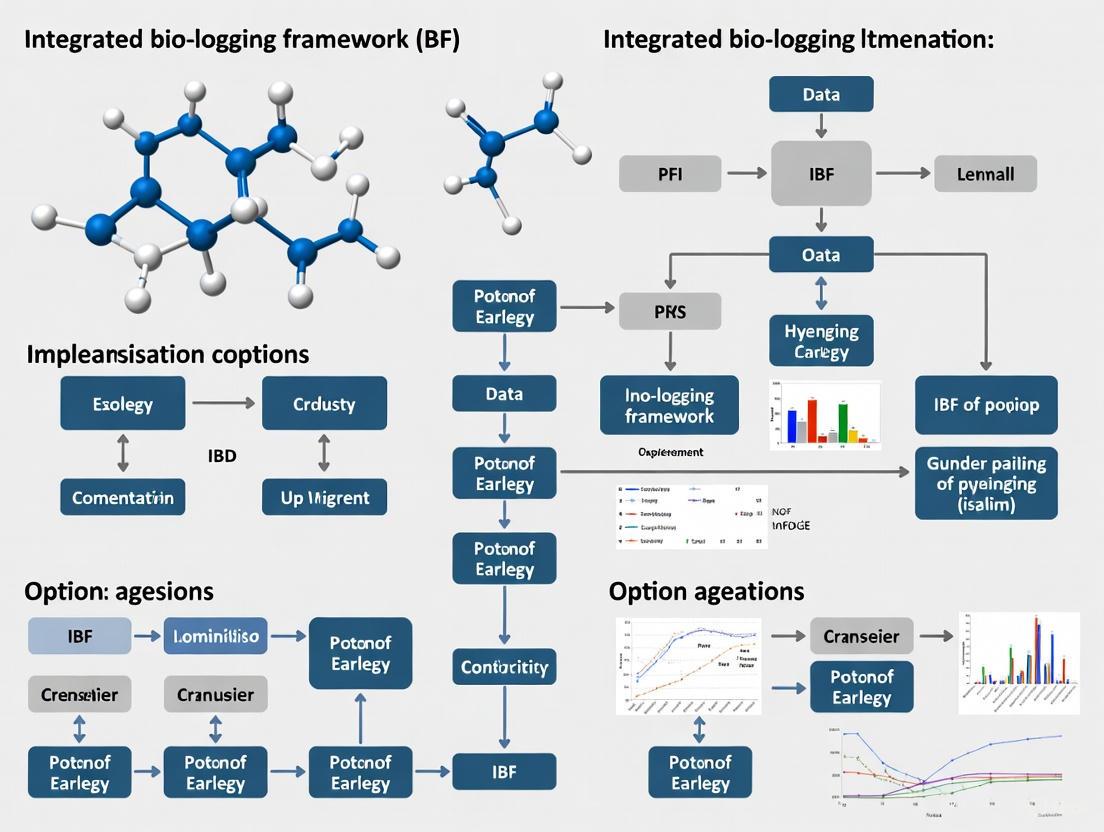
This article explores the implementation of an Integrated Bio-logging Framework (IBF) to revolutionize preclinical drug development.
Implementing an Integrated Bio-logging Framework (IBF): A New Paradigm for Predictive Drug Development
Abstract
This article explores the implementation of an Integrated Bio-logging Framework (IBF) to revolutionize preclinical drug development. It details how animal-attached sensors provide high-resolution, multivariate data on physiology, behavior, and environmental interactions, offering a more predictive alternative to traditional models. We cover the foundational principles of biologging, methodological steps for integration into existing R&D workflows, strategies for troubleshooting data and analysis challenges, and the framework for validating IBF against conventional approaches. Aimed at researchers and drug development professionals, this guide provides a roadmap for leveraging IBF to de-risk pipelines, improve translational success, and adhere to the principles of the 3Rs (Replacement, Reduction, Refinement) in animal testing.
The Foundational Shift: Why Bio-logging is the Future of Preclinical Data
Traditional preclinical models have long relied on reductionist, single-endpoint studies that often fail to capture the complex physiological responses and clinical relevance required for successful therapeutic development. This approach has contributed to significant challenges in translational research, with many promising laboratory findings failing to translate into effective clinical treatments [1] [2]. The limitations of these conventional methodologies are particularly evident in complex disease areas such as glioblastoma (GBM), where survival rates have remained stubbornly low despite decades of research, due in part to preclinical models that fail to fully recapitulate the disease's complex pathobiology [2].
The integrated bio-logging framework (IBF) represents a transformative approach that addresses these limitations through multi-dimensional data collection and analysis. Originally developed for movement ecology, the IBF's principles of multi-sensor integration, multidisciplinary collaboration, and sophisticated data analysis provide a robust methodological foundation for enhancing preclinical research across therapeutic areas [3]. This framework enables researchers to move beyond single-endpoint measurements toward a more comprehensive understanding of disease mechanisms and treatment effects in physiological contexts that more accurately model human conditions.
Limitations of Traditional Preclinical Models
Key Methodological Shortcomings
Traditional preclinical studies often employ simplified experimental designs that overlook critical aspects of clinical reality, creating significant knowledge gaps in our understanding of how therapies perform in realistic clinical settings [1]. These limitations manifest in several critical areas:
Oversimplified Disease Context: Preclinical studies tend to replicate pathological states as simply as possible, without considering the impact of complex disease states or localized pathology on therapeutic function. For example, studies of continuous glucose monitors (CGMs) typically use chemically-induced diabetes models without accounting for common comorbidities like obesity or non-alcoholic fatty liver disease that significantly alter metabolic and immune responses [1].
Inadequate Assessment of Foreign Body Response: For implantable medical devices (IMDs), the foreign body response (FBR) represents a critical factor influencing device safety and performance. Traditional preclinical models often provide limited assessment of the step-wise process of inflammation, wound healing, and potential end-stage fibrosis and scarring that can impair device integration and long-term functionality [1].
Limited Generalizability: Single-laboratory studies demonstrate significantly larger effect sizes and higher risk of bias compared to multilaboratory studies, which show smaller treatment effects and greater methodological rigor analogous to trends well-recognized in clinical research [4].
Quantitative Evidence: Single vs. Multilaboratory Studies
Table 1: Comparison of Single Laboratory vs. Multilaboratory Preclinical Studies
| Study Characteristic | Single Laboratory Studies | Multilaboratory Studies |
|---|---|---|
| Median Sample Size | Not reported | 111 animals (range: 23-384) |
| Typical Number of Centers | 1 | 4 (range: 2-6) |
| Risk of Bias | Higher | Significantly lower |
| Effect Size (Standardized Mean Difference) | Larger by 0.72 (95% CI: 0.43-1.0) | Significantly smaller |
| Generalizability Assessment | Limited | Built into study design |
| Common Model Systems | Various rodent models | Stroke, traumatic brain injury, myocardial infarction, diabetes |
The data reveal that multilaboratory studies demonstrate trends well-recognized in clinical research, including smaller treatment effects with multicentric evaluation and greater rigor in study design [4]. This approach provides a method to robustly assess interventions and the generalizability of findings between laboratories, addressing a critical limitation of traditional single-laboratory preclinical research.
The Integrated Bio-logging Framework (IBF): Principles and Implementation
The Integrated Bio-logging Framework (IBF) offers a systematic approach to overcoming the limitations of traditional preclinical models by facilitating the collection and analysis of high-frequency multivariate data [3]. This framework connects four critical areas—questions, sensors, data, and analysis—through a cycle of feedback loops linked by multidisciplinary collaboration.
Core Components of the IBF
IBF Framework Diagram: Integrated approach to preclinical study design
The IBF enables researchers to address fundamental questions in movement ecology and therapeutic development through optimized sensor selection and data analysis strategies [3]. The framework emphasizes that multi-sensor approaches represent a new frontier in bio-logging, while also identifying current limitations and avenues for future development in sensor technology.
Sensor Technologies for Comprehensive Data Collection
Table 2: Bio-logging Sensor Types and Applications in Preclinical Research
| Sensor Category | Specific Sensors | Measured Parameters | Preclinical Applications |
|---|---|---|---|
| Location Sensors | GPS, pressure sensors, acoustic telemetry, proximity sensors | Animal position, altitude/depth, social interactions | Space use assessment, interaction studies, migration patterns |
| Intrinsic Sensors | Accelerometers, magnetometers, gyroscopes, heart rate loggers, temperature sensors | Body posture, dynamic movement, orientation, physiological states | Behavioural identification, energy expenditure, 3D movement reconstruction, feeding activity, stress response |
| Environmental Sensors | Temperature loggers, microphones, video loggers, proximity sensors | Ambient conditions, soundscape, visual environment | Contextual behavior analysis, environmental preference studies, external factor impact assessment |
The combined use of multiple sensors can provide indices of internal 'state' and behavior, reveal intraspecific interactions, reconstruct fine-scale movements, and measure local environmental conditions [3]. This multi-dimensional data collection represents a significant advancement over traditional single-endpoint measurements.
Application Notes: Implementing the IBF in Specific Disease Contexts
Protocol 1: Comprehensive Assessment of Implantable Medical Devices
Background: Implantable medical devices (IMDs) represent a rapidly growing market expected to reach a global value of $153.8 billion by 2026 [1]. Traditional preclinical assessment of IMDs often focuses on simplified functional endpoints without adequate consideration of complex physiological responses, particularly the foreign body response (FBR) that can significantly impact device safety and performance.
Detailed Experimental Workflow:
IMD Assessment Workflow: Comprehensive device evaluation protocol
Key Methodological Considerations:
Animal Model Selection: Choose models that replicate clinically relevant comorbidities. For diabetes device testing, this includes models incorporating conditions like non-alcoholic fatty liver disease (NAFLD) that create distinct physiological contexts affecting device performance [1].
Multi-sensor Integration: Combine accelerometers for activity monitoring, temperature sensors for local inflammation assessment, and continuous physiological monitoring relevant to device function (e.g., glucose monitoring for CGMs).
Histopathological Correlation: Conduct detailed histopathology at multiple time points post-implantation to assess inflammation and fibrosis at the device-tissue interface, correlating these findings with sensor-derived functional data [1].
Foreign Body Response Monitoring: Systematically evaluate the step-wise FBR process, including initial inflammation, wound healing, and potential fibrotic encapsulation that can impair device functionality [1].
Protocol 2: Advanced Glioblastoma Therapeutic Assessment
Background: Glioblastoma (GBM) remains one of the most challenging cancers with less than 5% of patients surviving 5 years, due in part to preclinical models that fail to fully recapitulate GBM pathophysiology [2]. Traditional models have limited ability to mimic the disease's complex heterogeneity and highly invasive potential, hindering efficient translation from laboratory findings to successful clinical therapies.
Detailed Experimental Workflow:
GBM Therapeutic Assessment: Multi-stage evaluation approach
Key Methodological Considerations:
Novel Model Systems: Implement emerging animal-free approaches that show evidence of more faithfully recapitulating GBM pathobiology with high reproducibility, offering new biological insights into GBM etiology [2].
Multilaboratory Validation: Engage multiple research centers in therapeutic assessment to enhance generalizability and reduce the risk of bias, following the established principle that multilaboratory studies demonstrate significantly smaller effect sizes and greater methodological rigor compared to single laboratory studies [4].
Multi-parameter Assessment: Move beyond traditional endpoint measures like tumor volume to include functional assessments of invasion, metabolic activity, and treatment response heterogeneity using integrated sensor systems.
Data Integration: Develop advanced analytical approaches for integrating high-dimensional data from multiple sources to identify complex patterns and biomarkers of treatment response.
The Scientist's Toolkit: Essential Research Reagents and Materials
Table 3: Key Research Reagent Solutions for IBF Implementation
| Reagent/Material Category | Specific Examples | Function in IBF Research | Implementation Considerations |
|---|---|---|---|
| Bio-logging Sensors | Accelerometers, magnetometers, gyroscopes, pressure sensors, temperature loggers | Capture patterns in body posture, dynamic movement, orientation, and environmental conditions | Miniaturization requirements, power consumption, data storage capacity, sampling frequency optimization |
| Telemetry Systems | Implantable telemetry, external logging devices, data transmission systems | Enable remote monitoring of physiological parameters and device function in freely moving subjects | Transmission range, data integrity, battery life, biocompatibility for implantable systems |
| Data Analysis Platforms | Machine learning algorithms, Hidden Markov Models, multivariate statistical packages | Facilitate analysis of complex, high-frequency multivariate data to identify patterns and behavioral states | Computational requirements, algorithm validation, integration of multiple data streams |
| Specialized Animal Models | Comorbid disease models, patient-derived xenografts, genetically engineered systems | Provide pathophysiological contexts that more accurately reflect clinical conditions | Model validation, reproducibility assessment, relevance to human disease mechanisms |
| Histopathological Tools | Specialized staining techniques, digital pathology platforms, 3D reconstruction software | Enable detailed assessment of tissue responses and correlation with functional data | Standardized scoring systems, quantitative analysis methods, integration with sensor data |
Statistical Considerations and Meta-analytical Approaches
The implementation of IBF principles generates complex, high-dimensional data that requires sophisticated statistical approaches. Meta-analysis of preclinical data plays a crucial role in evaluating the consistency of findings and informing the design and conduct of future studies [5]. Unlike clinical meta-analysis, preclinical data often involve many heterogeneous studies reporting outcomes from a small number of animals, presenting unique methodological challenges.
Advanced Statistical Methods for IBF Data
Heterogeneity Estimation: Restricted maximum likelihood (REML) and Bayesian methods should be preferred over DerSimonian and Laird (DL) for estimating heterogeneity in meta-analysis, especially when there is high heterogeneity in the observed treatment effects across studies [5].
Multivariable Meta-regression: This approach explains substantially more heterogeneity than univariate meta-regression and should be preferred to investigate the relationship between treatment effects and multiple study design and characteristic variables [5].
Machine Learning Integration: Incorporate machine learning approaches for identifying behaviors from tri-axial acceleration data and Hidden Markov Models (HMMs) to infer hidden behavioral states, balancing model complexity with interpretability [3].
The implementation of the Integrated Bio-logging Framework represents a paradigm shift in preclinical research, moving beyond traditional single-endpoint models toward a more comprehensive, multidimensional approach. By adopting the principles of multi-sensor integration, multidisciplinary collaboration, and sophisticated data analysis, researchers can address fundamental limitations in current preclinical models and enhance the translational potential of their findings.
The evidence clearly demonstrates that multilaboratory studies incorporating IBF principles demonstrate greater methodological rigor, smaller effect sizes that may more accurately reflect clinical reality, and enhanced generalizability compared to traditional single-laboratory approaches [4]. Furthermore, the integration of multiple data streams through advanced sensor technologies enables researchers to capture the complex physiological responses and environmental interactions that significantly impact therapeutic safety and efficacy in clinical settings.
As preclinical research continues to evolve, the adoption of IBF principles and methodologies will be essential for developing more accurate models of human disease, improving the efficiency of therapeutic development, and ultimately enhancing the translation of laboratory findings to clinical applications across a wide range of therapeutic areas, from implantable medical devices to complex neurological conditions like glioblastoma.
The Integrated Bio-logging Framework (IBF) is a structured methodology designed to optimize the use of animal-attached electronic devices (bio-loggers) for ecological research, particularly in movement ecology. It addresses the critical challenge of matching the most appropriate sensors and analytical techniques to specific biological questions, a process that has become increasingly complex with the proliferation of bio-logging technologies [3]. The IBF synthesizes the decision-making process into a cohesive system that emphasizes multi-disciplinary collaboration to catalyze the opportunities offered by current and future bio-logging technology, with the goal of developing a vastly improved mechanistic understanding of animal movements and their roles in ecological processes [3].
The Core Framework and Its Components
The IBF connects four critical areas for optimal study design—Questions, Sensors, Data, and Analysis—within a cycle of feedback loops. This structure allows researchers to adopt either a question/hypothesis-driven (deductive) or a data-driven (inductive) approach to their study design, providing flexibility to accommodate different research paradigms [3]. The framework is built on the premise that bio-logging is now so multifaceted that establishing multi-disciplinary collaborations is essential for its successful implementation. For instance, physicists and engineers can advise on sensor capabilities and limitations, while mathematical ecologists and statisticians can aid in framing study design and modeling requirements [3].
Diagram: Integrated Bio-logging Framework (IBF) Structure
From Biological Questions to Sensor Selection
The first critical transition in the IBF involves matching appropriate bio-logging sensors to specific biological questions. This process should be guided by the fundamental questions posed by movement ecology, which include understanding why animals move (motivation), how they move (movement mechanisms), what the movement outcomes are, and when and where they move [3]. The IBF provides a structured approach to selecting sensors that can best address these questions, moving beyond simple location tracking to multi-sensor approaches that can reveal internal states, intraspecific interactions, and fine-scale movements [3].
Table 1: Bio-logging Sensor Types and Their Applications
| Sensor Type | Examples | Description | Relevant Biological Questions |
|---|---|---|---|
| Location | Animal-borne radar, pressure sensors, passive acoustic telemetry, proximity sensors | Determines animal position based on receiver location or other reference points | Space use; animal interactions; habitat selection |
| Intrinsic | Accelerometer, magnetometer, gyroscope, heart rate loggers, stomach temperature loggers | Measures patterns in body posture, dynamic movement, body rotation, orientation, and physiological metrics | Behavioural identification; internal state; 3D movement reconstruction; energy expenditure; biomechanics; feeding activity |
| Environmental | Temperature sensors, microphones, proximity sensors, video loggers | Records external environmental conditions and context | Space use in relation to environmental variables; energy expenditure; external factors influencing behaviour; interactions with environment |
Diagram: Question-to-Sensor Selection Workflow
Data Management and Analytical Protocols
The IBF emphasizes the importance of efficient data exploration, advanced multi-dimensional visualization methods, and appropriate archiving and sharing approaches to tackle the big data issues presented by bio-logging [3]. This is particularly critical given the high-frequency, multivariate data generated by modern bio-logging sensors, which greatly expand the fundamentally limited and coarse data that could be collected using location-only technology such as GPS [3]. The framework addresses the challenges of matching peculiarities of specific sensor data to statistical models, highlighting the need for advances in theoretical and mathematical foundations of movement ecology to properly analyse bio-logging data [3].
Multi-Sensor Data Integration Protocol
Objective: To reconstruct fine-scale 3D animal movements using dead-reckoning procedures that combine multiple sensor data streams.
Materials and Equipment:
- Inertial Measurement Unit (IMU) containing accelerometer, magnetometer, and gyroscope
- Depth or pressure sensor for aquatic/terrestrial altitude measurement
- GPS or Argos location sensor for periodic ground-truthing
- Data storage or transmission unit
- Animal attachment harness appropriate to species
Procedure:
- Sensor Calibration: Calibrate all sensors prior to deployment according to manufacturer specifications.
- Synchronization: Ensure all sensors are synchronized to a common time source with sufficient resolution for the behavior of interest.
- Data Collection:
- Collect tri-axial acceleration data at frequency sufficient to capture behaviors of interest (typically >10Hz)
- Collect tri-axial magnetometer data at same frequency as accelerometer
- Collect depth/pressure data at frequency appropriate for vertical movement patterns
- Collect periodic GPS fixes for position reference
- Data Processing:
- Calculate speed using speed-dependent dynamic body acceleration (DBA) for terrestrial animals [3]
- Determine animal heading from magnetometer data, corrected for local magnetic declination
- Integrate change in altitude/depth from pressure data
- Path Reconstruction:
- Calculate successive movement vectors using speed, heading, and change in altitude/depth
- Apply periodic position fixes from GPS to correct for cumulative error in dead-reckoning
- Validation: Compare reconstructed path with known movements or direct observations where possible
Essential Research Reagent Solutions
The successful implementation of the IBF requires access to appropriate technological tools and analytical resources. The following table details key research reagent solutions essential for conducting bio-logging research within this framework.
Table 2: Essential Research Reagent Solutions for Bio-logging Research
| Category | Specific Tools/Techniques | Function/Application |
|---|---|---|
| Positioning Sensors | GPS, Argos, Geolocators, Acoustic telemetry arrays | Determining animal location and large-scale movement patterns |
| Movement & Posture Sensors | Accelerometers, Magnetometers, Gyroscopes, Gyrometers | Quantifying patterns in body posture, dynamic movement, body rotation, and orientation; dead-reckoning path reconstruction |
| Physiological Sensors | Heart rate loggers, Stomach temperature loggers, Neurological sensors, Speed paddles | Measuring internal state, energy expenditure, feeding activity, and specific behaviors |
| Environmental Sensors | Temperature sensors, Salinity sensors, Microphones, Video loggers | Recording external environmental conditions and context of animal behavior |
| Analytical Frameworks | State-space models, Hidden Markov Models (HMMs), Machine learning classifiers, Kalman filters | Inferring hidden behavioral states, identifying behaviors from sensor data, and dealing with measurement error and uncertainty |
| Data Management Tools | Movebank, Custom databases, Visualization platforms | Storing, exploring, and sharing complex bio-logging datasets |
Multi-Disciplinary Collaboration Framework
The IBF places multi-disciplinary collaboration at the center of successful bio-logging research implementation. This recognizes that the complexity of modern bio-logging requires expertise from multiple domains [3]. The framework formalizes these collaborations at different stages of the research process, from study inception through data analysis and interpretation.
Diagram: Multi-Disciplinary Collaboration Network
Implementation Pathways and Case Examples
The IBF provides structured pathways for implementation, accommodating both hypothesis-driven and data-driven approaches to research design. These pathways illustrate how researchers can navigate the framework based on their specific research goals and available resources.
Question-Driven Implementation Pathway
Protocol for Hypothesis-Driven Bio-logging Study
Objective: To implement the IBF using a deductive, question-driven approach that begins with a specific biological hypothesis.
Procedure:
- Formulate Precise Biological Question: Start with a specific hypothesis based on ecological theory or previous observations.
- Sensor Selection: Identify the sensors and sensor combinations most appropriate for addressing the biological question, considering trade-offs between data resolution, device size, power requirements, and cost.
- Study Design: Determine sampling frequencies, deployment durations, and sample sizes based on statistical power considerations and technological constraints.
- Pilot Deployment: Conduct small-scale pilot studies to validate sensor performance and experimental setup.
- Full-Scale Data Collection: Implement the full data collection protocol with appropriate controls and replication.
- Data Exploration: Use visualization techniques to identify patterns, outliers, and data quality issues.
- Analytical Model Selection: Match data characteristics to appropriate analytical frameworks (e.g., HMMs for discrete behavioral states, random walks for movement patterns).
- Interpretation and Refinement: Interpret results in biological context and refine questions for future research cycles.
Data-Driven Implementation Pathway
Protocol for Exploratory Bio-logging Analysis
Objective: To implement the IBF using an inductive, data-driven approach that begins with available datasets and seeks to identify novel patterns or relationships.
Procedure:
- Data Inventory: Compile and document available bio-logging datasets, including metadata on sensor specifications and deployment conditions.
- Data Quality Assessment: Evaluate data completeness, sensor accuracy, and potential artifacts or errors.
- Exploratory Visualization: Apply multi-dimensional visualization techniques to identify patterns, clusters, or anomalies in the data.
- Pattern Identification: Use statistical and machine learning approaches to detect significant patterns or relationships within the data.
- Biological Interpretation: Interpret identified patterns in the context of ecological theory and animal biology.
- Hypothesis Generation: Formulate specific, testable hypotheses based on the patterns observed.
- Targeted Validation: Design focused studies or analyses to validate the newly generated hypotheses.
- Model Refinement: Refine analytical models and visualization approaches based on validation results.
Future Directions and Framework Evolution
The IBF is designed to accommodate ongoing technological and analytical developments in bio-logging science. Multi-sensor approaches represent a new frontier in bio-logging, with ongoing development needed in sensor technology, particularly in reducing device size and power requirements while maintaining functionality [3]. Similarly, continued advances in data exploration, multi-dimensional visualization methods, and statistical models are needed to fully leverage the rich set of high-frequency multivariate data generated by modern bio-logging platforms [3]. The establishment of multi-disciplinary collaborations remains essential for catalyzing the opportunities offered by current and future bio-logging technology, with the IBF providing a structured framework to facilitate these collaborations and guide their productive application to fundamental questions in movement ecology.
The Integrated Bio-logging Framework (IBF) represents a paradigm shift in movement ecology and preclinical research, addressing the critical challenge of matching appropriate sensors and sensor combinations to specific biological questions [6]. This framework facilitates a cyclical process of feedback between four key areas: biological questions, sensor selection, data management, and analytical techniques, all linked through multidisciplinary collaboration [6]. The emergence of multisensor approaches marks a new frontier in bio-logging, enabling researchers to move beyond the limitations of single-sensor methodologies and gain a more comprehensive understanding of animal physiology, behavior, and environmental interactions [6]. This approach is revolutionizing both wildlife ecology and preclinical research by providing continuous, high-resolution data streams that capture subtle biological patterns previously undetectable through conventional observation or testing methods [7] [6].
Hardware Solutions: Multisensor Biologging Collars and Monitoring Systems
Integrated Multisensor Collar (IMSC) for Wildlife Research
Field Performance Metrics of IMSC
| Parameter | Performance Metric | Biological Application |
|---|---|---|
| Collar Recovery Rate | 94% success | Long-term field studies; high-value data retrieval |
| Data Recording Success | 75% cumulative rate | Reliable continuous data collection |
| Maximum Logging Duration | 421 days | Long-term ecological studies; seasonal behavior patterns |
| Behavioral Classification Accuracy | 90% overall accuracy (IMSC data) | Precise ethological studies; automated behavior recognition |
| Magnetic Heading Accuracy | Median deviation of 1.7° (lab), 0° (field) | Precise dead-reckoning path reconstruction; movement ecology |
Recent technological advances have yielded robust hardware solutions for multisensor data collection in free-ranging animals. The Integrated Multisensor Collar (IMSC) represents one such innovation, custom-designed for terrestrial mammals and extensively field-tested on 71 free-ranging wild boar (Sus scrofa) over two years [8] [9]. This system integrates multiple sensing technologies into a single platform, including GPS for positional fixes, tri-axial accelerometers for dynamic movement, and tri-axial magnetometers for orientation data, all synchronized to provide comprehensive behavioral and spatial information [8] [9]. The durability and capacity of these collars have exceeded expectations, with a 94% collar recovery rate and maximum logging duration of 421 days, demonstrating their suitability for long-term ecological studies [8] [9].
Complementing wildlife applications, multisensor home cage monitoring systems have emerged as transformative tools for preclinical research, addressing the reproducibility crisis that plagues an estimated 50-90% of published findings [7]. These systems integrate capacitive sensing, video analytics, RFID tracking, and thermal imaging to provide continuous, non-intrusive monitoring of animals in their home environments [7]. By leveraging complementary data streams and cross-validation mechanisms, multisensor platforms enhance data quality and reliability while reducing environmental artifacts and stress-induced behaviors that commonly compromise conventional testing approaches [7].
Research Reagent Solutions: Essential Materials for Multisensor Biologging
Essential Research Materials for Multisensor Biologging
| Category | Specific Tools/Reagents | Function/Purpose |
|---|---|---|
| Sensor Systems | Tri-axial accelerometers (LSM303DLHC, LSM9DS1); tri-axial magnetometers; GPS modules (Vertex Plus); pressure sensors | Capture movement, orientation, position, and depth data |
| Data Management | Wildbyte Technologies Daily Diary data loggers; 32 GB MicroSD cards; SAFT 3.6V lithium batteries (LS17500CNR) | Data storage, power supply, and continuous recording |
| Deployment Hardware | Custom-designed polyurethane housings; PVC-U cylindrical tube housings; plastic collar belts; integrated drop-off mechanisms; VHF beacons | Animal attachment, equipment protection, and tag recovery |
| Calibration Tools | Hard- and soft-iron magnetometer correction algorithms; bench calibration fixtures | Sensor calibration and data accuracy validation |
| Software Platforms | MATLAB tools (CATS-Methods-Materials); Animal Tag Tools Project; Ethographer; Igor-based analysis packages | Data processing, visualization, and analysis |
Experimental Protocols for Multisensor Biologging
Protocol 1: IMSC Deployment and Data Collection in Free-Ranging Terrestrial Mammals
Objective: To deploy integrated multisensor collars on free-ranging terrestrial mammals for the continuous monitoring of physiology, behavior, and environmental interactions within an Integrated Bio-logging Framework.
Materials Preparation:
- Integrated Multisensor Collars (IMSCs) with integrated drop-off mechanisms and VHF beacons
- Sedation equipment appropriate for target species (e.g., dart tranquilizer methods for wild boar)
- Calibration equipment for pre-deployment sensor validation
- GPS-enabled tracking devices for collar recovery
Procedure:
- Pre-deployment Sensor Calibration: Conduct laboratory bench calibrations for all sensors, particularly focusing on magnetometer calibrations for hard- and soft-iron corrections to ensure accurate heading data [9] [10].
- Animal Capture and Handling: Capture target animals using species-appropriate methods (corral traps for wild boar); sedate using protocols approved by relevant ethics committees [9].
- Collar Deployment: Fit IMSCs ensuring proper orientation of sensors relative to major body axes; record deployment metadata including animal biometrics, collar orientation, and deployment timestamp [8] [9].
- Field Monitoring: Monitor animal movements via VHF signals as needed; record environmental conditions and potential confounding factors throughout deployment period.
- Collar Recovery: Activate drop-off mechanisms at pre-programmed intervals or locate via VHF beacons; retrieve collars for data download.
- Data Download and Verification: Download stored sensor data; verify data integrity and completeness before proceeding to analysis.
Validation Methods:
- Compare recovered collar data with field observations
- Validate sensor readings against known values or conditions where possible
- Calculate performance metrics including data recording success rate and logging duration [8]
Protocol 2: Multisensor Home Cage Monitoring in Preclinical Research
Objective: To implement multisensor home cage monitoring systems for continuous, non-intrusive assessment of animal behavior and physiology in preclinical research settings.
Materials Preparation:
- Multisensor home cage monitoring system (e.g., capacitive sensing arrays, video tracking, RFID)
- Standardized individually ventilated cages (IVCs) compatible with sensor systems
- Data acquisition and storage infrastructure capable of handling large datasets
- Environmental control systems to maintain standardized conditions
Procedure:
- System Calibration: Calibrate all sensors according to manufacturer specifications; validate tracking accuracy using known objects or animals prior to study initiation [7].
- Experimental Setup: Place capacitive sensors non-intrusively on cage rack under home cages; position infrared high-definition cameras for side-view video acquisition; install RFID baseplates with antenna matrix [7].
- Animal Acclimation: Acclimate animals to monitored home cages for a minimum of 48 hours prior to data collection to reduce stress-induced artifacts.
- Continuous Data Collection: Initiate simultaneous data collection from all sensors at appropriate sampling frequencies (e.g., capacitive sensors at 250 ms intervals) [7].
- Environmental Monitoring: Record and maintain standardized environmental conditions (light-dark cycles, temperature, humidity) throughout study duration.
- Data Integration: Synchronize timestamps across all sensor data streams to enable multimodal data fusion and cross-validation.
Validation Methods:
- Correlate baseplate-derived ambulatory activity with manual tracking and side-view whole-cage video pixel movement [7]
- Implement cross-validation between sensor modalities to confirm behavioral classifications
- Compare system outputs with manual behavioral scoring by trained observers
Protocol 3: Behavioral Classification Using Machine Learning from Multisensor Data
Objective: To develop and validate a machine learning classifier for identifying specific behaviors from multisensor accelerometer and magnetometer data.
Materials Preparation:
- Multisensor data (accelerometer, magnetometer, GPS) from animal-borne tags or monitoring systems
- Ground truth behavioral observations (video recordings or direct observations)
- Computing infrastructure with appropriate machine learning libraries (MATLAB, Python, R)
- Data partitioning framework for training, validation, and testing datasets
Procedure:
- Data Preparation: Extract raw accelerometer and magnetometer data at appropriate sampling frequency (e.g., 10 Hz for wild boar) [8] [9].
- Feature Engineering: Calculate relevant features from raw sensor data including dynamic body acceleration, pitch, roll, heading, and spectral components across defined time windows.
- Ground Truth Labeling: Synchronize sensor data with ground truth behavioral observations from video or direct observation; assign behavioral labels to corresponding sensor data segments.
- Classifier Training: Partition labeled data into training and validation sets; train machine learning classifier (e.g., k-nearest neighbor, random forest, or support vector machine) using selected features.
- Classifier Validation: Test trained classifier on withheld validation data; calculate overall accuracy and class-specific performance metrics.
- Cross-Platform Validation: Validate classifier performance across different collar designs or sensor configurations to assess robustness [8].
Validation Methods:
- Calculate overall classification accuracy and create confusion matrices for behavioral classes
- Compare classifier performance across different sensor configurations
- Validate against ground truth observations collected in controlled settings [8] [9]
Data Processing and Analysis Workflows
The transformation of raw multisensor data into biologically meaningful metrics requires sophisticated processing workflows. The following diagram illustrates the comprehensive data processing pipeline from raw sensor data to ecological insights:
Multisensor Data Processing and Analysis Workflow
Data Integration and Sensor Calibration
The initial stage in multisensor data processing involves importing and synchronizing diverse data streams from various sensors into a common format to facilitate downstream analysis [10]. This is particularly crucial as different tag manufacturers use proprietary data formats and compression techniques to maximize storage capacity and minimize download time [10]. Following data import, comprehensive sensor calibration is essential to ensure data accuracy. For magnetometers, this involves both hard-iron and soft-iron corrections to account for fixed magnetic biases and field distortions caused by the tag structure or nearby ferromagnetic materials [9] [10]. Additionally, accelerometer-based tilt-compensation corrections are necessary for deriving accurate magnetic compass headings from raw magnetometer data [9].
Orientation, Motion, and Behavioral Classification
Once sensor data is calibrated, the processing pipeline advances to calculating animal orientation (pitch, roll, and heading), motion metrics (speed, specific acceleration), and positional information (depth, spatial coordinates) [10]. The integration of GPS technology with accelerometer and magnetometer data significantly enhances the accuracy of dead-reckoning path reconstruction by mitigating drift and heading errors that accumulate over time [9]. The final analytical stage applies machine learning techniques to classify behaviors from the processed sensor data. As demonstrated in wild boar studies, this approach can identify six distinct behavioral classes with 85-90% accuracy, validated across individuals equipped with different collar designs [8] [9]. The magnetometer data significantly enhances classification performance by providing additional orientation information beyond what can be derived from accelerometers alone [9].
Implementation Framework and Best Practices
Integrated Bio-logging Framework Decision Pathway
The effective implementation of multisensor biologging requires careful planning within the context of an Integrated Bio-logging Framework. The following diagram illustrates the decision pathway from biological questions through sensor selection to analytical outcomes:
Integrated Bio-logging Framework Decision Pathway
Performance Metrics and Validation Standards
Performance Metrics of Multisensor Biologging Systems
| System Component | Performance Metric | Validation Method | Reported Performance |
|---|---|---|---|
| Integrated Multisensor Collar | Recovery Rate | Field deployments with VHF tracking | 94% success [8] |
| Data Recording System | Success Rate | Cumulative data integrity checks | 75% across all deployments [8] |
| Behavioral Classifier | Classification Accuracy | Comparison with ground truth video | 85-90% for 6 behavioral classes [8] |
| Magnetic Compass | Heading Accuracy | Laboratory and field calibration | Median deviation 1.7° (lab), 0° (field) [8] |
| Home Cage Monitoring | Tracking Accuracy | Correlation with manual scoring | Over 99% in markerless multi-animal tracking [7] |
| Dead-Reckoning Path | Positional Accuracy | Comparison with GPS fixes | Improved drift correction with sensor fusion [9] |
Best Practices for Multisensor Biologging Implementation
Successful implementation of multisensor biologging requires adherence to several key principles. First, researchers should adopt a question-driven approach to sensor selection, carefully matching sensor combinations to specific biological questions rather than deploying maximum sensor capacity indiscriminately [6]. Second, multidisciplinary collaboration is essential throughout the process, involving expertise from ecology, engineering, computer science, and statistics to optimize tag design, data processing, and analytical interpretation [6]. Third, researchers must implement robust data management strategies to handle the large, complex datasets generated by multisensor systems, including efficient data exploration techniques, advanced multi-dimensional visualization methods, and appropriate archiving and sharing approaches [6].
For preclinical applications, multisensor home cage monitoring systems should prioritize non-intrusive data collection that minimizes disruption to natural behavioral patterns while maximizing data quality through complementary sensor modalities [7]. Validation against established behavioral scoring methods is essential, and researchers should leverage the cross-validation capabilities of multisensor systems to enhance data reliability through technological complementarity [7]. Finally, standardization of data formats and processing pipelines across research groups will facilitate comparison between studies and species, addressing a critical challenge in the biologging field [8] [6].
The multisensor advantage in capturing integrated data on physiology, behavior, and environment represents a transformative approach in both movement ecology and preclinical research. Through the implementation of Integrated Bio-logging Frameworks, researchers can leverage complementary sensor technologies to overcome the limitations of single-sensor methodologies, generating rich, high-dimensional datasets that provide unprecedented insights into animal biology. The continued refinement of multisensor collars, home cage monitoring systems, and analytical techniques will further enhance our ability to study the unobservable, advancing both fundamental ecological knowledge and applied biomedical research. As the field progresses, emphasis on standardized protocols, multidisciplinary collaboration, and sophisticated data management will be crucial for realizing the full potential of multisensor approaches in addressing complex biological questions.
The paradigm-changing opportunities of bio-logging sensors for ecological research, particularly in movement ecology, are vast [3]. These miniature animal-borne devices log and/or relay data about an animal's movements, behaviour, physiology, and environment, enabling researchers to observe the unobservable [11]. However, the crucial challenge lies in optimally matching the most appropriate sensors and sensor combinations to specific biological questions while effectively analyzing the complex, high-dimensional data generated [3]. The Integrated Bio-logging Framework (IBF) addresses this challenge by providing a structured approach to connect research questions with sensor capabilities through a cycle of feedback loops [3].
The IBF connects four critical areas for optimal study design—questions, sensors, data, and analysis—linked by multi-disciplinary collaboration [3]. This framework guides researchers in developing their study design, typically starting with the biological question but accommodating both question-driven and data-driven approaches [3]. As bio-logging has become increasingly multifaceted, establishing multi-disciplinary collaborations has become essential, with physicists and engineers advising on sensor types and limitations, while mathematical ecologists and statisticians aid in framing study design and modeling requirements [3].
Sensor Selection Framework and Question Alignment
Matching Sensors to Core Research Questions
Selecting appropriate bio-logging sensors should be fundamentally guided by the biological questions being asked [3]. The IBF provides a structured approach to align sensor capabilities with key movement ecology questions posed by Nathan et al. (2008), ensuring that research design drives technological implementation rather than vice versa [3].
Table: Alignment of Bio-logging Sensor Types with Research Questions
| Research Question Category | Primary Sensor Types | Specific Applications | Data Outputs |
|---|---|---|---|
| Where is the animal going? | GPS, ARGOS, Geolocators, Acoustic Tracking Arrays, Pressure Sensors (altitude/depth) [3] | Space use; Migration patterns; Habitat selection [3] | Location coordinates; Altitude/Depth measurements; Movement trajectories [3] |
| What is the animal doing? | Accelerometers, Magnetometers, Gyroscopes, Microphones, Hall Sensors [3] | Behavioural identification; Feeding activity; Social interactions; Vocalizations [3] | Body posture; Dynamic movement; Specific behaviours; Vocalization counts [3] |
| What is the animal's internal state? | Heart Rate Loggers, Stomach Temperature Loggers, Neurological Sensors, Speed Paddles/Pitot Tubes [3] | Energy expenditure; Physiological stress; Digestive processes; Metabolic rate [3] | Heart rate variability; Gastric temperature; Neural activity; Speed through medium [3] |
| How does the animal interact with its environment? | Temperature Sensors, Microphones, Proximity Sensors, Video Loggers, Salinity Sensors [3] | Environmental preferences; Social dynamics; Response to environmental variables [3] | Ambient temperature; Soundscapes; Association patterns; Visual context [3] |
Multi-sensor approaches represent a new frontier in bio-logging, with the combined use of multiple sensors providing indices of internal state and behaviour, revealing intraspecific interactions, reconstructing fine-scale movements, and measuring local environmental conditions [3]. For example, combining geolocator and accelerometer tags has enabled researchers to record flight behaviour of migrating swifts, while micro barometric pressure sensors have uncovered the aerial movements of migrating birds [3]. A key advantage of multi-sensor approaches is that when one sensor type fails (e.g., GPS fails under canopy cover), others can compensate through techniques like dead-reckoning, which uses speed, animal heading, and changes in altitude/depth to calculate successive movement vectors [3].
Advanced Multi-Modal Sensor Integration
The most powerful applications of bio-logging emerge from integrating multiple sensor types to create comprehensive pictures of animal lives. Inertial Measurement Units (IMUs)—particularly accelerometers, magnetometers, and pressure sensors—have revolutionized our ability to study animals as necessary electronics have gotten smaller and more affordable [10]. These animal-attached tags allow for fine-scale determination of behavior in the absence of direct observation, particularly useful in the marine realm where direct observation is often impossible [10].
Modern devices can integrate more power-hungry and sensitive instruments, such as hydrophones, cameras, and physiological sensors [10]. For instance, recent research on basking sharks has employed "a Frankenstein-style set of biologgers" including CATS animal-borne camera tags to measure feeding frequency and energetic costs, alongside acoustic proximity loggers to create social networks from detection data [12]. This multi-modal approach simultaneously tests hypotheses about both foraging efficiency and social drivers of aggregation behavior [12].
Image-based bio-logging represents a particularly promising frontier, with rapid advancements in technology—especially in the miniaturization of image sensors—changing the game for understanding marine ecosystems [13]. Small, lightweight devices can now capture a wide range of underwater visuals, including still images, video footage, and sonar readings of everything animals do, see, and encounter in their daily lives [13]. When aligned with other bio-logging data streams like depth, movement, and location, these image data sources provide unprecedented windows into animal behavior and environmental interactions.
Experimental Protocols for IBF Implementation
Protocol 1: Multi-Sensor Deployment for Terrestrial Carnivores
This protocol outlines a methodology for studying fine-scale energetics and behavior of wolves using accelerometers and GPS sensors, based on research presented at the "Wolves Across Borders" conference [12].
Objective: To understand wolf activity patterns, energetic expenditure, and livestock depredation behavior through high-resolution sensor data.
Materials and Equipment:
- GPS collars with integrated tri-axial accelerometers
- Data download station or remote data retrieval system
- Computer with appropriate data processing software (e.g., MATLAB, R)
- Calibration equipment for sensor validation
Procedure:
- Sensor Configuration: Program accelerometers to sample at minimum 20 Hz frequency to capture detailed movement signatures. Set GPS to record locations at 5-minute intervals or more frequently during focused studies.
- Deployment: Fit collars on target animals following ethical guidelines and weight restrictions (<5% of body mass). Record individual metadata including sex, weight, and age class.
- Data Collection: Allow for continuous data collection over deployment period (typically 3-12 months depending on battery life).
- Data Retrieval: Use remote download when possible or recapture animals for collar retrieval.
- Acceleration Data Processing:
- Convert raw acceleration voltages to biological metrics using calibration parameters
- Calculate overall dynamic body acceleration (ODBA) as proxy for energy expenditure
- Use machine learning classifiers (e.g., random forests) to identify behaviors from acceleration signatures
- Validate behavior classifications with field observations where possible
- Data Integration: Combine classified behaviors with GPS location data to create movement path annotations.
- Analysis: Correlate behavioral states with landscape features, time of day, and livestock presence to identify depredation risk factors.
Applications: This approach enables researchers to move beyond simple location tracking to understand behavioral states and their environmental correlates, providing crucial information for human-wildlife conflict mitigation [12].
Protocol 2: Marine Megafauna Tracking with Camera Tags
This protocol details the deployment of multi-sensor packages on marine megafauna, specifically adapted from basking shark research in Irish waters [12].
Objective: To determine drivers of basking shark aggregations by testing foraging and social hypotheses using integrated sensor packages.
Materials and Equipment:
- CATS (Customized Animal Tracking Solutions) camera tags or similar multi-sensor packages
- Suction cup attachment system or other appropriate mounting
- Boat-based echosounder for prey field mapping
- Acoustic proximity loggers for social networks
- Drones for morphological measurements
Procedure:
- Tag Preparation:
- Configure sensors including video, accelerometers, magnetometers, temperature, and depth sensors
- Test all sensor functions and memory capacity
- Calibrate sensors according to manufacturer specifications
- Animal Encounter:
- Identify target animals in aggregation hotspots
- Approach slowly to minimize disturbance
- Deploy tags using pole attachment system while animal is at surface
- Complementary Data Collection:
- Conduct boat-based echosounder transects to quantify prey density around tagged animals
- Use drones to obtain morphological measurements and context imagery
- Record group composition and size through visual surveys
- Tag Monitoring:
- Track tagged animals visually or via VHF signal if available
- Note release of tags and retrieve floating units
- Data Processing:
- Download all sensor data from recovered tags
- Synchronize video with accelerometer and depth data
- Extract feeding events from video and correlate with acceleration signatures
- Analyze proximity logger data to construct social networks
- Integrate prey field measurements with feeding behavior observations
Applications: This multi-faceted approach has revealed that basking sharks in Irish waters employ both efficient filter-feeding strategies and social information transfer, explaining their seasonal aggregations in specific coastal locations [12].
IBF Workflow Visualization
The IBF workflow operates as a continuous cycle where each stage informs and refines the others, supported throughout by multi-disciplinary collaboration [3]. Research typically begins with formulating a Biological Question, which directly guides Sensor Selection based on the parameters needed to address the question [3]. The selected sensors then Implement Data Collection, generating raw data that undergoes Data Processing to convert voltages and raw measurements into biologically meaningful metrics [3]. Processed data then Informs Analysis and Interpretation, whose findings ultimately Refine the original Biological Question, completing the iterative cycle [3]. Throughout this process, Multi-disciplinary Collaboration provides essential support at every stage, with engineers and physicists advising on sensor capabilities, statisticians guiding analytical approaches, and computer scientists developing visualization tools [3].
Research Reagents and Materials
Table: Essential Research Reagents and Equipment for Bio-Logging Studies
| Category | Specific Equipment | Function | Example Applications |
|---|---|---|---|
| Primary Sensors | GPS/ARGOS transmitters [3] | Records location coordinates | Space use, migration patterns, home range analysis [3] |
| Motion Sensors | Tri-axial accelerometers [3] [10] | Measures dynamic body acceleration | Behaviour identification, energy expenditure, dead-reckoning [3] |
| Motion Sensors | Magnetometers [3] [10] | Determines heading/orientation | 3D movement reconstruction, navigation studies [3] |
| Motion Sensors | Gyroscopes [10] | Measures rotation rates | Stabilizing orientation estimates, fine-scale kinematics [10] |
| Environmental Sensors | Pressure sensors [3] [10] | Depth/altitude measurement | Diving behavior, flight altitude, 3D positioning [3] |
| Environmental Sensors | Temperature/salinity loggers [3] | Ambient environmental conditions | Habitat selection, environmental preferences [3] |
| Audio/Visual | Animal-borne cameras [13] | Records visual context of behavior | Foraging tactics, social interactions, environmental features [13] |
| Audio/Visual | Hydrophones/microphones [10] | Acoustic environment recording | Vocalization studies, soundscape analysis [10] |
| Physiological | Heart rate loggers [3] | Measures cardiac activity | Energy expenditure, physiological stress [3] |
| Data Processing | MATLAB tools (CATS) [10] | Converts raw data to biological metrics | Sensor calibration, orientation calculation, dead-reckoning [10] |
Data Management and Analytical Considerations
Effective implementation of the IBF requires careful attention to data management and analytical challenges. The rapid growth in bio-logging has created unprecedented volumes of complex data, presenting both opportunities and challenges for researchers [14]. Taking advantage of the bio-logging revolution requires significant improvement in the theoretical and mathematical foundations of movement ecology to properly analyze the rich set of high-frequency multivariate data [3].
Data Processing and Standardization
Processing raw bio-logging data into biologically meaningful metrics requires specialized tools and approaches. For inertial sensor data, key steps include:
- Data Import and Synchronization: Raw data from various sensors must be imported and synchronized into a common format, often challenging due to proprietary formats and varying sampling rates [10].
- Sensor Calibration: Bench calibrations are essential to correct for sensor-specific errors and misalignments, particularly for accelerometers and magnetometers [10].
- Orientation Estimation: Fusion of accelerometer, magnetometer, and gyroscope data enables calculation of animal orientation (pitch, roll, and heading) [10].
- Motion and Position Estimation: Specific acceleration (body movement independent of orientation) can be derived, and techniques like dead-reckoning combine speed estimates with heading data to reconstruct fine-scale movements between GPS fixes [10].
Establishing standardization frameworks for bio-logging data is critical for advancing ecological research and conservation [14]. Standardized vocabularies, data transfer protocols, and aggregation methods enable data integration across studies and species, facilitating broader ecological insights [14].
Emerging Analytical Approaches
Artificial intelligence and computer vision tools are transforming bio-logging data analysis, though they remain underutilized in marine science [13]. These approaches offer particular promise for:
- Automated Image Analysis: AI can dramatically improve and speed up analysis of underwater imagery collected from animal-borne cameras [13].
- Behavior Classification: Machine learning algorithms can identify behaviors from complex accelerometer data signatures [3].
- Sensor Integration: Developing lightweight models that could process images directly on-board the device while the animal is still roaming free in the wild [13].
Future advancements in bio-logging will depend on collaborative research communities at the intersection of ecology and AI, sharing data, tools, and knowledge across disciplines to accelerate discovery and drive more innovative science [13].
From Theory to Practice: A Step-by-Step Guide to IBF Implementation
The implementation of an Integrated Bio-logging Framework (IBF) requires a systematic approach to selecting sensing devices that are precisely matched to specific biological questions. This selection is critical because the capabilities of a sensor directly determine the quality, type, and reliability of data that can be acquired, which in turn influences the validity of subsequent scientific conclusions and conservation decisions. A well-defined sensor selection matrix ensures that researchers can navigate the complex trade-offs between technological specifications, biological relevance, and practical constraints. This document provides detailed application notes and protocols for aligning sensor capabilities with research objectives within an IBF context, incorporating recent methodological advances and standardized practices endorsed by the International Bio-Logging Society [15].
The foundational step in this process involves understanding the nature of the data to be collected, which directly informs sensor requirements. Biological data can be classified by its scale of measurement—nominal, ordinal, interval, or ratio—and as either qualitative/categorical or quantitative [16]. This classification guides the selection of sensors with appropriate precision, dynamic range, and data output characteristics. Furthermore, for an IBF to be successful, the selected sensors must enable data interoperability through community-accepted standards, facilitating collaboration and data fusion across studies and institutions [17].
Sensor Selection Fundamentals
Key Considerations for Sensor Assessment
Selecting a sensor for use within a bio-logging framework or clinical investigation requires a multi-faceted assessment. The following ten considerations provide a systematic evaluation framework, particularly when differentiating between medical-grade and consumer-grade devices [18].
- Regulatory Compliance and Data Security: Medical-grade devices typically comply with regulations like FDA 21 CFR Part 11 and HIPAA, ensuring data integrity and privacy. Their data ingestion and visualization platforms are designed for clinical trials, including features like audit trails. Consumer-grade devices are not required to meet these standards, potentially introducing risks related to data handling and privacy [18].
- Endpoint Degree and Suitability: The choice between medical-grade and consumer-grade sensors can depend on whether study endpoints are primary/secondary (often requiring medical-grade validation) or exploratory (where consumer-grade may be suitable). Suitability is also determined by the validation status of the sensor's measurements in the specific therapeutic or biological context [18].
- Data Display and Bias Mitigation: Medical-grade applications often include functionality to blind sensor data (e.g., blood glucose, step counts) from participants and/or researchers to prevent bias in trial outcomes. Consumer-grade apps typically display this data to users by default, which can unintentionally influence behavior and study results [18].
- Technical and Operational Characteristics: Key technical factors include device size, wearability, waterproofing, battery life, and charging requirements. From an operational standpoint, medical-grade device providers often offer dedicated support services (training, user manuals, help desks) designed for clinical trials, whereas consumer-grade companies may not [18].
- Data Transparency and Algorithmic Openness: Medical-grade device companies are more likely to provide access to raw data and details about the algorithms used to derive metrics. This allows for re-analysis with updated algorithms. The algorithms and data processing methods for consumer-grade devices are often proprietary and can change without notice, jeopardizing data consistency across a long-term study [18].
Theoretical Foundations for Sensor Performance
Beyond practical considerations, theoretical frameworks provide quantitative benchmarks for sensor performance, especially in dynamic biological environments.
Observability-Guided Biomarker Discovery: Recent advances apply observability theory from systems engineering to biomarker selection. This methodology establishes a general framework for identifying optimal biomarkers from complex datasets, such as time-series transcriptomics, by determining which sensors (e.g., specific molecules) provide the most informative signals about the underlying biological system state. The method of dynamic sensor selection further extends this to maximize observability over time, even when system dynamics themselves are changing [19].
Information-Theoretic Assessment of Transient Dynamics: Biological sensors often operate far from steady states. A comprehensive theoretical framework quantifies a sensor's performance using the Kullback-Leibler (KL) divergence between the probability distributions of the sensor's stochastic paths under different environmental signals. This trajectory KL divergence, calculated as an accumulated sum of observed transition events, sets an upper limit on the sensor's ability to distinguish temporal patterns in its environment [20]. This is particularly relevant for assessing a sensor's recovery capability—its ability to reset after previous exposure to a stimulus.
Sensor Selection Matrix: Matching Capabilities to Research Goals
The following matrix synthesizes key considerations to guide researchers in aligning sensor capabilities with specific biological questions and data requirements within an IBF.
Table 1: Sensor Selection Matrix for Biological Research
| Biological Question / Data Type | Critical Sensor Capabilities | Recommended Sensor Type & Data Standards | Key Performance Metrics |
|---|---|---|---|
| Animal Movement & Migration | GPS accuracy, sampling frequency, battery longevity, depth rating, accelerometer sensitivity. | Satellite transmitters, GPS loggers. Data standardized per IBioLS frameworks [15] [17]; use device/deployment/input-data templates. | Fix success rate, location error (m), data yield (fixes/day), deployment duration. |
| Fine-Scale Behaviour (e.g., foraging) | High-frequency accelerometry, tri-axial magnetometry, animal-borne video/audio. | Animal-borne camera tags (e.g., CATS), acoustic proximity loggers, accelerometers. Data processed into defined behaviour classifications [12]. | Sampling rate (Hz), dynamic range (g), battery life, classification accuracy. |
| Neurobiology / Neurotransmitter Dynamics | High sensitivity (μM to nM), molecular specificity, temporal resolution (real-time). | Electrochemical sensors (amperometric/potentiometric); enzymatic (GluOx) for sensitivity vs. non-enzymatic for stability [21]. | Limit of Detection (LOD), sensitivity (μA/μM·cm²), selectivity, response time. |
| Pathogen Detection (e.g., SARS-CoV-2) | High angular sensitivity, label-free detection, real-time binding kinetics. | Surface Plasmon Resonance (SPR) biosensors with heterostructures (e.g., CaF₂/TiO₂/Ag/BP/Graphene) [22]. | Sensitivity (°/RIU), Detection Accuracy, Figure of Merit (FOM). |
| Cellular & Molecular Biomarker Discovery | High-plexity, ability to monitor dynamic processes, compatibility with multi-omics data. | Technologies enabling time-series transcriptomics, chromosome conformation capture. Analysis via observability-guided dynamic sensor selection [19]. | Observability score, dimensionality of state space, biomarker robustness over time. |
Detailed Experimental Protocols
Protocol: Assessing Transient Sensory Performance using Information Theory
This protocol outlines a procedure to quantify the performance of a biological sensor when it is exposed to dynamic, non-steady-state signals, based on an information-theoretic benchmark [20].
1. Research Question and Preparation
- Objective: To measure a sensor's ability to distinguish between two different time-varying ligand concentration protocols,
c^A(t)andc^B(t), and to identify anomalous effects like the "sensory withdrawal effect." - Materials:
- Sensor System: A purified multi-state ligand-receptor system (e.g., a 4-state sensor with defined bound and unbound states).
- Microfluidic Setup: A system capable of delivering precise, time-varying concentration profiles to the sensor.
- Data Acquisition System: Equipment for recording the sensor's state transitions at high temporal resolution (e.g., a patch-clamp setup, fluorescence spectrometer, or other appropriate modality).
2. Experimental Procedure
1. System Characterization: For the chosen sensor, map all possible states and the transition rates (R_ij) between them. Confirm which transitions are concentration-dependent.
2. Protocol Design:
* Design at least two distinct temporal protocols for ligand concentration. For example:
* Protocol A: A direct step-up in concentration.
* Protocol B: A high-concentration pulse followed by a reset period at low concentration, then a step-up.
3. Pathway Recording:
* Expose the sensor to Protocol A and record its stochastic state-transition trajectory, X_τ^A, over a fixed observation time τ. Repeat for a large number of trials (N > 1000) to build robust statistics.
* Repeat the process for Protocol B to obtain X_τ^B.
4. Data Processing:
* From the recorded trajectories, compute the probability distributions P^A[X_τ] and P^B[X_τ].
* Calculate the detailed probability current J_{x'x}^A(t) for transitions from state x to x' under Protocol A.
3. Data Analysis
1. Compute Trajectory KL Divergence: Use the following formula to calculate the sensor's performance metric [20]:
D_KL^AB(τ) = Σ∫_0^τ J_{x'x}^A(t) • ln(R_{x'x}^A(t) / R_{x'x}^B(t)) dt
where the sum is over all possible state transitions <x, x'>.
2. Interpretation: A higher D_KL^AB(τ) indicates a greater ability for the sensor (and its downstream networks) to distinguish between the two temporal patterns A and B. A "sensory withdrawal effect" is demonstrated if performance under Protocol B exceeds that of Protocol A.
Protocol: Deploying Bio-logging Tags for Behavioural Ecology
This protocol provides a generalized workflow for deploying animal-borne tags to investigate movement ecology and behaviour, incorporating community standards for data collection [15] [17] [12].
1. Research Question and Preparation
- Objective: To document fine-scale foraging behaviour and social interactions in a marine predator (e.g., basking shark).
- Materials:
- Biologgers: Multi-sensor tags (e.g., CATS camera tags, accelerometers, acoustic proximity loggers).
- Attachment Equipment: Species-specific attachment tools (e.g., poles, suction cups, bolts).
- Field Equipment: Vessel, drones for scale assessment, GoPros for sex identification.
- Data Standards Templates: Device, Deployment, and Input-Data templates from the bio-logging standardization framework [17].
2. Experimental Procedure 1. Pre-Deployment: * Complete the Device Metadata Template for each tag, detailing instrument type, serial number, sensor specifications, and calibration data. * Program the tag with the desired sampling regimen (e.g., accelerometer at 50 Hz, video on a duty cycle). 2. Deployment: * Approach the target animal and securely attach the tag using the designated method. * Record all Deployment Metadata immediately: date/time, location, animal species, estimated size/sex, attachment method, and environmental conditions. * Use auxiliary methods (drones, GoPros) to gather complementary data on the individual. 3. Data Collection: * The tag records data autonomously. For proximity loggers, data on encounters with other tagged individuals is logged. * Upon tag recovery (via release mechanism or recapture), download the raw data.
3. Data Analysis 1. Data Standardization: * Compile the raw data according to the Input-Data Template. * Use automated procedures (e.g., in R or Python) to translate the raw data and metadata into standardized data levels (e.g., Level 1: raw; Level 2: corrected; Level 3: interpolated) as per the framework [17]. 2. Behavioural Classification: * Use accelerometry and video data to train machine learning models (e.g., random forest, hidden Markov models) to classify distinct behaviours (e.g., foraging, traveling, resting). 3. Data Synthesis: * Integrate classified behaviour with GPS location, prey field data (from echo-sounders), and social proximity data to test ecological hypotheses regarding habitat use and social dynamics.
Visualizing Workflows and System Relationships
Sensor Selection Logic for an Integrated Bio-logging Framework
This diagram visualizes the decision-making workflow for selecting and integrating sensors within an IBF.
Multi-State Sensor Dynamics and the Sensory Withdrawal Effect
This diagram illustrates the state transitions of a multi-state sensor and the conceptual basis for the sensory withdrawal effect.
The Scientist's Toolkit: Essential Research Reagents and Materials
Table 2: Key Reagent Solutions for Featured Sensor Applications
| Item / Reagent | Function / Application | Example Use Case |
|---|---|---|
| Glutamate Oxidase (GluOx) | Enzyme for selective catalytic oxidation of glutamate in electrochemical sensors. | Enzymatic amperometric sensing of glutamate in biofluids for pain or neurodegenerative disease monitoring [21]. |
| Transition Metal Oxides (NiO, Co₃O₄) | Active materials for non-enzymatic electrochemical sensor working electrodes. | Functionalized with CNTs or beta-cyclodextrin to enhance sensitivity and stability of glutamate detection [21]. |
| 2D Nanomaterials (Graphene, BP, MoS₂) | Enhance electron transfer and provide high surface area in sensor fabrication. | Used in heterostructure SPR biosensors (e.g., CaF₂/TiO₂/Ag/BP/Graphene) to dramatically increase sensitivity for viral detection [22]. |
| IBioLS Data Standardization Templates | Standardized digital templates for reporting device, deployment, and input data metadata. | Ensuring bio-logging data is FAIR (Findable, Accessible, Interoperable, Reusable) and usable across global research networks [15] [17]. |
| Controlled Vocabularies (Darwin Core, Climate & Forecast) | Community-agreed terms for describing biological and sensor-based information. | Annotating bio-logging data fields to maximize interoperability with global data systems like OBIS and GEO BON [17]. |
The paradigm-changing opportunities of bio-logging sensors for ecological research, especially movement ecology, are vast. However, researchers face significant challenges in matching appropriate sensors to biological questions and analyzing the complex, high-volume data generated. The Integrated Bio-logging Framework (IBF) was developed to optimize the use of biologging techniques by creating a cycle of feedback loops connecting biological questions, sensors, data, and analysis through multi-disciplinary collaboration [3]. This framework addresses the crucial need to manage the entire data pipeline from acquisition to reusable digital assets, ensuring that valuable data can be discovered and reused for downstream investigations. The FAIR Guiding Principles provide a foundational framework for this process, emphasizing the ability of computational systems to find, access, interoperate, and reuse data with minimal human intervention [23]. This is particularly critical in movement ecology, where bio-logging has expanded the fundamentally limited and coarse data that could previously be collected using location-only technology such as GPS [3].
Table 1.1: Core Components of the Integrated Bio-logging Framework (IBF)
| Framework Component | Description | Role in Data Pipeline |
|---|---|---|
| Biological Questions | Drives sensor selection and data collection strategies [3] | Defines data requirements and purpose |
| Sensors | Animal-attached devices collecting behavioral & environmental data [3] | Data acquisition interface |
| Data | Raw and processed digital outputs from sensors [3] | Primary research asset |
| Analysis | Methods and models to extract meaning from data [3] | Creates knowledge from data |
| Multi-disciplinary Collaboration | Links all components through diverse expertise [3] | Ensures appropriate technical and analytical execution |
The FAIR Guiding Principles for Scientific Data
The FAIR Principles were published in 2016 as guidelines to improve the Findability, Accessibility, Interoperability, and Reuse of digital assets [24]. These principles put specific emphasis on enhancing the ability of machines to automatically find and use data, in addition to supporting its reuse by individuals [24]. This machine-actionability is crucial because humans increasingly rely on computational support to deal with data as a result of the increase in volume, complexity, and creation speed of data [23]. For bio-logging researchers, applying these principles transforms data from a supplemental research output into a primary, reusable research asset.
The Four FAIR Principles Explained
Findable: The first step in (re)using data is to find them. Metadata and data should be easy to find for both humans and computers. Machine-readable metadata are essential for automatic discovery of datasets and services [23]. This requires that both metadata and data are registered or indexed in a searchable resource [23].
Accessible: Once the user finds the required data, they need to know how they can be accessed, possibly including authentication and authorization [23]. The goal is to ensure that data can be retrieved by humans and machines using standard protocols.
Interoperable: Data usually need to be integrated with other data and to interoperate with applications or workflows for analysis, storage, and processing [23]. This requires the use of formal, accessible, shared, and broadly applicable languages for knowledge representation.
Reusable: The ultimate goal of FAIR is to optimize the reuse of data. To achieve this, metadata and data should be well-described so that they can be replicated and/or combined in different settings [23]. This includes accurate licensing and provenance information.
Protocol: Implementing the FAIR Data Pipeline for Bio-logging
Stage 1: Sensor Selection and Data Acquisition Planning
Purpose: To match the most appropriate sensors and sensor combinations to specific biological questions within the IBF [3].
Materials:
- Research question defining the movement ecology study
- Catalog of available bio-logging sensors
- Power requirements assessment
- Animal ethics approval protocols
- Multi-disciplinary team (biologists, engineers, physicists)
Procedure:
- Define Research Question: Clearly articulate the biological question using the movement ecology framework (why, how, what, where) [3].
- Consult Multi-disciplinary Team: Engage physicists and engineers to advise on sensor types, their limitations, and power requirements [3].
- Select Sensor Combination: Choose appropriate single or multi-sensor approaches based on Table 3.1.
- Plan Data Collection Parameters: Determine sampling rates, deployment duration, and data storage requirements.
- Design Data Management Plan: Outline the complete data lifecycle from collection to archiving.
Table 3.1: Bio-logging Sensor Selection Guide for Movement Ecology Questions
| Sensor Type | Examples | Relevant Biological Questions | Data Output | FAIR Consideration |
|---|---|---|---|---|
| Location | GPS, Animal-borne radar, Pressure sensors | Space use; interactions; migration patterns | Coordinate data, altitude/depth | Standardized coordinate reference systems |
| Intrinsic | Accelerometer, Magnetometer, Gyroscope | Behavioural identification; energy expenditure; biomechanics | Tri-axial acceleration, orientation | Calibration metadata; measurement units |
| Environmental | Temperature, Salinity, Microphone | Habitat selection; environmental drivers | Temperature readings, soundscapes | Environmental data standards |
| Physiological | Heart rate loggers, Stomach temperature | Internal state; feeding events; stress responses | Heart rate variability, temperature spikes | Biological ontologies for states |
Stage 2: Data Collection and Metadata Generation
Purpose: To collect high-quality, well-documented bio-logging data with sufficient metadata for future reuse.
Materials:
- Deployed bio-logging tags
- Data retrieval system
- Metadata template
- Calibration records
- Field data collection protocols
Procedure:
- Pre-deployment Calibration: Record calibration procedures and parameters for all sensors.
- Deploy Tags: Implement animal capture and tag attachment following ethical guidelines.
- Retrieve Data: Recover tags and download raw sensor data.
- Record Metadata: Complete metadata template including deployment details, animal information, and sensor specifications.
- Perform Quality Control: Check data for anomalies, gaps, or sensor malfunctions.
Stage 3: Data Processing and FAIRification
Purpose: To transform raw bio-logging data into FAIR-compliant datasets ready for analysis and sharing.
Materials:
- Data processing software (R, Python, MATLAB)
- Computing infrastructure
- Data standards vocabulary
- Repository selection criteria
- Provenance tracking system
Procedure:
- Data Cleaning: Remove artifacts, filter noise, and interpolate small gaps.
- Data Integration: Combine multiple sensor streams using timestamps.
- Format Standardization: Convert data to standard formats (NetCDF, HDF5).
- Annotation: Add descriptive metadata using community standards.
- Provenance Documentation: Record all processing steps and parameters.
Stage 4: Data Publication and Repository Deposition
Purpose: To archive bio-logging data in appropriate repositories with persistent identifiers and clear usage licenses.
Materials:
- Selected data repository (general or domain-specific)
- Data publication agreement
- Persistent identifier system (DOI)
- Usage license
- Data paper template (optional)
Procedure:
- Repository Selection: Choose between general-purpose (e.g., Dryad, Zenodo) or domain-specific repositories based on data type [24].
- Prepare Submission Package: Include data files, documentation, code, and metadata.
- Assign Persistent Identifier: Obtain DOI or similar persistent identifier.
- Set Usage License: Select appropriate license (e.g., CC-BY, CC-0).
- Publish Data: Complete repository submission and make data publicly available.
The Scientist's Toolkit: Research Reagent Solutions
Table 4.1: Essential Materials for Bio-logging Data Pipeline Implementation
| Tool Category | Specific Tool/Solution | Function in FAIR Data Pipeline |
|---|---|---|
| Data Collection | Multi-sensor bio-logging tags (accelerometer, magnetometer, GPS) [3] | Capture high-frequency multivariate movement and environmental data |
| Data Storage | Tag-embedded memory (SD cards, flash storage) | Temporary storage of raw sensor data during deployment |
| Data Transfer | Bluetooth, USB, or satellite data retrieval systems | Transfer collected data from tags to computing infrastructure |
| Data Processing | R, Python with specialized packages (moveHMM, aniMotum) | Clean, integrate, and analyze complex bio-logging data |
| Data Visualization | Multi-dimensional visualization software [3] | Explore and communicate patterns in complex multivariate data |
| Data Repository | General-purpose (Zenodo, Dryad) or domain-specific repositories [24] | Provide persistent storage and access to published datasets |
| Metadata Standards | Ecological Metadata Language (EML), Darwin Core | Standardize description of datasets for interoperability |
Data Presentation: Quantitative Standards for FAIR Implementation
Table 5.1: Quantitative Requirements for FAIR Principle Implementation
| FAIR Principle | Quantitative Metric | Target Value | Measurement Method |
|---|---|---|---|
| Findable | Persistent Identifier Coverage | 100% of datasets | Inventory check of dataset identifiers |
| Findable | Rich Metadata Completeness | >90% of required fields | Metadata quality assessment |
| Accessible | Data Retrieval Success Rate | >95% for human users | User testing with task completion |
| Accessible | Machine Access Protocol Support | ≥2 standard protocols | Technical capability verification |
| Interoperable | Vocabulary/Ontology Use | >80% of data elements | Semantic analysis of metadata |
| Interoperable | Standard Format Adoption | 100% for primary data | File format validation |
| Reusable | Provenance Documentation | 100% of processing steps | Provenance traceability audit |
| Reusable | License Clarity Score | 100% clear usage rights | Legal compliance review |
Table 5.2: Color Contrast Requirements for Data Visualization Accessibility
| Text Type | Minimum Contrast Ratio | Enhanced Contrast Ratio | Example Application |
|---|---|---|---|
| Normal Text | 4.5:1 [25] | 7:1 [26] | Axis labels, legends, annotations |
| Large Text | 3:1 [25] | 4.5:1 [26] | Chart titles, section headings |
| User Interface Components | 3:1 [25] | N/A | Buttons, form elements, icons |
| Graphical Objects | 3:1 [25] | N/A | Diagram elements, arrows, symbols |
Advanced Protocol: Multi-sensor Data Integration and Analysis
Purpose: To integrate data from multiple bio-logging sensors for comprehensive movement analysis and behavioral classification.
Materials:
- Time-synchronized multi-sensor data
- Computing environment with sufficient RAM and processing power
- Data fusion algorithms
- Statistical modeling software
- Visualization tools for multivariate data
Procedure:
- Temporal Alignment: Precisely align all sensor data streams using recorded timestamps.
- Coordinate Transformation: Convert sensor-local coordinates to global reference frame where applicable.
- Behavioral Classification: Apply machine learning or Hidden Markov Models to identify behavioral states from sensor patterns [3].
- Path Reconstruction: Use dead-reckoning approaches combining speed, heading, and depth/altitude data to reconstruct fine-scale movements [3].
- Data Reduction: Implement appropriate summarization methods for efficient storage and analysis of high-frequency data.
The implementation of a structured data pipeline from acquisition to FAIR principles represents a critical advancement for movement ecology and bio-logging research. By systematically applying the protocols outlined in these application notes, researchers can transform raw sensor outputs into valuable, reusable knowledge assets. The integration of the Integrated Bio-logging Framework with the FAIR Guiding Principles creates a robust foundation for accelerating discovery in movement ecology, enabling both human and computational stakeholders to build upon existing research. This approach maximizes the return on research investment by ensuring that complex bio-logging data can be discovered, accessed, integrated, and analyzed for years to come, ultimately supporting the development of a vastly improved mechanistic understanding of animal movements and their roles in ecological processes [3].
Leveraging AI and Machine Learning for Automated Data Processing and Insight Generation
The Integrated Bio-logging Framework (IBF) represents a paradigm-changing approach in movement ecology and related fields, designed to optimize the use of animal-attached sensors for biological research [3]. This framework connects four critical areas—biological questions, sensor selection, data acquisition, and analytical techniques—through a cycle of feedback loops, facilitating optimal study design. The core challenge IBF addresses is the exponentially growing volume and complexity of data generated by modern bio-logging sensors, which include accelerometers, magnetometers, gyroscopes, heart rate loggers, and environmental sensors [3]. The integration of Artificial Intelligence (AI) and Machine Learning (ML) is fundamental to this framework, transforming raw, high-frequency multivariate data into actionable insights. By automating the processing of these complex datasets, AI and ML enable researchers to uncover patterns in animal behavior, physiology, and ecology at a scale and precision previously unattainable, moving the field from simple data collection to sophisticated, mechanistic understanding [3].
AI and ML Methodologies for Bio-logging Data
The application of AI and ML within the IBF context is multifaceted, addressing the various stages of the data lifecycle from processing to insight generation.
Data Processing Automation
AI dramatically streamlines the initial stages of the data processing pipeline. This begins with data extraction, where AI, and particularly Optical Character Recognition (OCR) and Natural Language Processing (NLP), can automatically pull data from diverse sources such as sensor readings, images, or scanned documents [27]. Following extraction, data classification is crucial for organizing information into meaningful categories. Machine learning algorithms can automatically classify data based on predefined criteria; for instance, deep learning models can classify animal behaviors from accelerometer data or images from camera tags [3] [27]. The stage of data preprocessing—which involves cleaning data, handling missing values, and normalizing datasets—is also enhanced and automated by ML algorithms, ensuring data quality before analysis [27].
Insight Generation and Anomaly Detection
Beyond processing, AI is pivotal in generating biological insights. Intelligent decision support systems use processed data to identify patterns and trends, providing researchers with actionable insights [27] [28]. Furthermore, anomaly detection is an area where AI excels. Machine learning algorithms learn normal patterns within datasets and can flag significant deviations, which in a bio-logging context could indicate rare behavioral events, physiological stress, or potential sensor malfunctions [27]. This capability transforms large datasets from a mere record into a source of novel discovery.
Advanced Techniques: RAG and Parallel Processing
For handling the specific challenges of bio-logging data, advanced AI architectures are particularly relevant. The Retrieval-Augmented Generation (RAG) framework, when combined with vector databases, enables intelligent document processing by semantically searching through large volumes of data to retrieve the most relevant context [29]. This is especially useful for integrating heterogeneous data sources. Moreover, parallel processing architectures allow for the simultaneous analysis of different data streams, which can reduce processing times for complex documents from 15 minutes to 30 seconds—a 30x performance improvement crucial for dealing with the big data nature of bio-logging studies [3] [29].
Table 1: AI and ML Techniques for Bio-logging Data Challenges
| Bio-logging Challenge | AI/ML Technique | Function | Reported Outcome/Accuracy |
|---|---|---|---|
| Large Document Processing | RAG with Vector Databases [29] | Semantic search and information retrieval from large documents | 85% accuracy, 30x faster processing [29] |
| Data Classification & Behavioral Identification | Machine/Deep Learning [3] [27] | Automatically classify data and identify behaviors from sensor data (e.g., accelerometers) | Replaces manual identification; accuracy approaches 92-93% human benchmark with refinement [29] |
| Anomaly Detection | Machine Learning Algorithms [27] | Identify deviations from normal patterns in sensor data | Enables early detection of rare events or system issues [27] |
| Data Preprocessing & Transformation | Automated ML Workflows [27] | Clean, normalize, and transform raw data for analysis | Increases efficiency and reduces manual errors [27] |
| Turning Data into Insights | Business Intelligence (BI) & Analytics Platforms [28] | Derive actionable insights from analyzed data for decision-making | Moves organizations from "hunches" to data-backed decisions [28] |
Experimental Protocols for IBF Implementation
Integrating AI into an IBF-driven research project requires structured methodologies. The following protocols provide a scaffold for reproducible science.
Protocol 1: RAG-Based Processing for Multi-Sensor Data
Objective: To automate the integration and structuring of heterogeneous bio-logging data from multiple sensors and sources. Materials: Multi-sensor bio-logger data (e.g., accelerometer, magnetometer, GPS), computational environment (e.g., Python), vector database (e.g., ChromaDB), and access to Large Language Models (LLMs) [29]. Methodology:
- Data Chunking: Ingest raw data from all sensors and segment it into coherent chunks based on temporal windows or data structures.
- Vector Embedding: Generate vector embeddings for each data chunk and store them in a vector database to enable semantic search.
- Query and Retrieval: For a specific biological query (e.g., "identify all diving events"), the system retrieves the most semantically relevant data chunks from the database.
- Structured Output Generation: An LLM processes the retrieved context to generate a structured output (e.g., JSON format) that labels events, timestamps, and associated sensor readings.
- Validation: Implement a human-in-the-loop feedback system where domain experts review a subset of outputs weekly, with feedback used to iteratively refine the model prompts and improve accuracy [29].
Protocol 2: ML-Driven Behavioral Classification from Accelerometry
Objective: To classify specific animal behaviors from tri-axial accelerometer data using a supervised machine learning approach. Materials: Tri-axial accelerometer data logs, video validation data (for ground truthing), computational environment for machine learning (e.g., Python with scikit-learn or TensorFlow) [3]. Methodology:
- Data Labeling: Use synchronized video recordings to label the accelerometer data with ground-truthed behaviors (e.g., foraging, running, resting).
- Feature Engineering: From the raw accelerometer signals, extract relevant features in a sliding time window. These may include:
- Static Acceleration: Mean and variance of each axis.
- Dynamic Acceleration: Overall Dynamic Body Acceleration (ODBA) or Vectorial Dynamic Body Acceleration (VeDBA).
- Spectral Features: Dominant frequency and magnitude from a Fast Fourier Transform (FFT).
- Model Training: Train a supervised classification model, such as a Random Forest, Support Vector Machine (SVM), or a Hidden Markov Model (HMM) for temporal sequences, using the extracted features and labeled data.
- Model Validation: Validate the model's performance using k-fold cross-validation on held-out data, reporting metrics such as accuracy, precision, and recall for each behavior class.
- Application: Apply the trained model to classify behaviors in unlabeled accelerometer datasets.
Protocol 3: AI-Powered Anomaly Detection in Movement Paths
Objective: To autonomously detect anomalous movements or behaviors from reconstructed animal movement paths. Materials: Reconstructed 2D or 3D movement paths (e.g., from GPS or dead-reckoning), environmental data layers [3] [27]. Methodology:
- Path Parameterization: Calculate movement parameters from the trajectory data, such as step length, turning angle, speed, and residence time.
- Model Fitting: Fit an unsupervised anomaly detection model, such as an Isolation Forest or a One-Class SVM, to the movement parameters to learn the "normal" movement patterns.
- Anomaly Scoring: Use the fitted model to calculate an anomaly score for each track segment or data point.
- Contextual Integration: Overlay the detected anomalies with concurrent environmental data (e.g., temperature, habitat type) to assess potential causes.
- Visualization and Verification: Flag high-anomaly segments for further biological investigation and validation.
Table 2: Key Research Reagent Solutions for AI-Enhanced Bio-logging
| Reagent / Tool | Type | Function in Protocol |
|---|---|---|
| Vector Database (e.g., ChromaDB) [29] | Software Tool | Stores and enables semantic search over embedded bio-logging data chunks in a RAG pipeline. |
| LLM Models (e.g., OpenAI) [29] | AI Model | Processes retrieved data context to generate structured outputs, classify text-based data, or assist in insight generation. |
| Scikit-learn / TensorFlow/PyTorch | Software Library | Provides algorithms for machine learning tasks including behavioral classification (Random Forest, SVM) and anomaly detection (Isolation Forest). |
| Tri-axial Accelerometer [3] | Sensor | Collects high-frequency data on animal body posture and dynamic movement, which is the primary data source for behavioral classification protocols. |
| Magnetometer & Pressure Sensor [3] | Sensor | Provides heading and depth/altitude data, essential for 3D movement reconstruction (dead-reckoning) and path-based anomaly detection. |
| Pydantic [29] | Python Library | Validates and enforces data structure and types for the JSON outputs generated by AI models, ensuring schema compliance. |
Workflow Visualization
The following diagrams illustrate the core workflows for implementing AI within the Integrated Bio-logging Framework.
AI-Enhanced IBF Workflow
RAG Data Processing Protocol
Behavioral Classification Workflow
Unexpected toxicity accounts for approximately 30% of failures in drug development, presenting a major obstacle in the pharmaceutical industry [30]. Conventional toxicity assessments, which rely on cellular and animal models, are not only time-consuming and costly but also raise ethical concerns and often yield unreliable results due to cross-species differences [30]. The emerging paradigm of Integrated Bio-logging Framework (IBF) offers a transformative approach by combining multi-sensor data acquisition with artificial intelligence (AI) to enable real-time, high-resolution assessment of drug-induced toxicity and therapeutic efficacy [3]. This case study details the application of IBF principles to preclinical drug safety assessment, providing a structured methodology for researchers to implement this innovative framework in their investigative workflows.
Theoretical Background and Definitions
Integrated Bio-logging Framework (IBF) Core Concepts
The IBF is a structured approach that connects four critical areas—biological questions, sensor selection, data management, and analytical techniques—through a cycle of feedback loops, fundamentally supported by multi-disciplinary collaboration [3]. In toxicology, its implementation facilitates a shift from traditional endpoint observations to dynamic, mechanistic profiling of compound effects. The framework promotes the use of multiple sensors to capture indices of internal physiological 'state' and behavior, enabling researchers to reconstruct fine-scale biological responses to pharmaceutical compounds [3].
Key Toxicity Endpoints in Drug Discovery
AI-based prediction models have been developed for various critical toxicity endpoints, which can be effectively monitored using bio-logging approaches [30] [31]. These endpoints include:
- Organ-Specific Toxicities: Hepatotoxicity (drug-induced liver injury), cardiotoxicity (e.g., hERG channel blockade), nephrotoxicity, and neurotoxicity [30] [31].
- Cellular and Molecular Toxicities: Hematotoxicity, mitochondrial toxicity, and genotoxicity [30].
- Clinical and Acute Toxicity: Harmful effects observed during clinical use or short-term exposure, often quantified through LD50 values [30].
Table 1: Publicly Available Benchmark Datasets for Toxicity Prediction
| Dataset Name | Toxicity Endpoint | Number of Compounds | Key Applications |
|---|---|---|---|
| Tox21 [31] | Nuclear receptor & stress response | 8,249 | Qualitative toxicity across 12 biological targets |
| ToxCast [31] | High-throughput screening | ~4,746 | In vitro toxicity profiling across hundreds of endpoints |
| ClinTox [31] | Clinical trial failure | Not specified | Differentiates approved drugs from those failed due to toxicity |
| hERG Central [31] | Cardiotoxicity | >300,000 records | Prediction of hERG channel blockade (classification & regression) |
| DILIrank [31] | Hepatotoxicity | 475 | Drug-Induced Liver Injury risk assessment |
Application Notes: IBF Implementation for Real-Time Toxicity Assessment
Sensor Selection and Integration Strategy
Following the IBF principle of matching sensors to specific biological questions, researchers should deploy a multi-sensor approach to capture comprehensive toxicity profiles [3]:
- For Metabolic and Behavioral Assessment: Miniaturized accelerometers detect alterations in locomotor activity, grooming, and feeding behaviors—sensitive indicators of overall animal health and compound effects on the central nervous system [3].
- For Cardiovascular Toxicity: Heart rate loggers and electrocardiogram (ECG) sensors provide continuous monitoring of cardiac function, enabling early detection of arrhythmogenic potential, particularly crucial for assessing hERG channel blockade [3].
- For Feeding Activity and Gastrointestinal Toxicity: Stomach temperature loggers and hall sensors monitor feeding patterns and potential gastrointestinal disruptions, which are common off-target drug effects [3].
- For Internal State and Stress Response: Neurological sensors and microphones can capture vocalizations and neurological patterns associated with distress or neurotoxicity [3].
AI and Machine Learning Integration
The vast, high-frequency multivariate data generated by bio-logging sensors requires advanced analytical approaches for meaningful interpretation [3]. Machine learning (ML) and deep learning (DL) models are robustly contributing to innovation in toxicology research [30]. The selection of an appropriate model depends significantly on the size and quality of the available dataset:
- Traditional ML Algorithms (effective with small to medium-sized datasets): Random Forest (RF), Support Vector Machine (SVM), and eXtreme Gradient Boosting (XGB) often outperform deep learning models when training data is limited, with RF frequently showing the best performance in acute toxicity prediction tasks [30].
- Deep Learning Algorithms (optimal for large datasets): Graph Neural Networks (GNN), Deep Neural Networks (DNN), and Transformer-based models excel with large training datasets and can directly learn from molecular graph structures, enhancing both prediction accuracy and model interpretability through attention mechanisms [30] [31].
Table 2: Machine Learning Models for Different Toxicity Prediction Tasks
| Toxicity Type | Recommended ML Models | Key Research Findings |
|---|---|---|
| Acute Toxicity (LD50) | Random Forest, Bayesian models [30] | RF showed best performance in rat models; ML often outperforms DL with insufficient training data [30] |
| Cardiotoxicity (hERG) | SVM, XGBoost, GNNs [31] | Models trained on hERG Central dataset can predict channel blockade from structural features [31] |
| Hepatotoxicity (DILI) | Multi-task Learning, GNNs [31] | DILIrank dataset enables prediction of hepatotoxic potential; multi-task learning improves generalizability [31] |
| Multi-target Toxicity | Attentive FP, Graph Transformer [30] | Attentive FP reported lowest prediction error across four virulence tasks; attention weights provide interpretability [30] |
Data Visualization and Interpretation Framework
Effective communication of complex bio-logging data is essential for translating sensor outputs into actionable insights. Adherence to established data visualization standards enhances clarity and interpretability:
- Implement IBCS Principles: Apply International Business Communication Standards (IBCS) to ensure consistent, comparable, and simplified visual representations of temporal toxicity data [32].
- Progressive Disclosure: Use layer-by-layer information reveal to prevent cognitive overload, beginning with high-level summaries before drilling down into specific toxicological endpoints [33].
- Color and Accessibility: Employ color strategically to highlight key toxicity alerts and trends, ensuring sufficient contrast and considering color blindness accessibility by combining color with patterns or shapes [34] [33].
Experimental Protocols
Protocol: Real-Time Multi-Sensor Cardiotoxicity and Behavioral Profiling
Objective: To simultaneously assess the cardiotoxic and neurotoxic potential of a novel small-molecule compound in a preclinical model through continuous, multi-parameter monitoring.
Materials Required:
Table 3: Essential Research Reagent Solutions and Materials
| Category | Specific Item/Reagent | Function/Application |
|---|---|---|
| Bio-logging Sensors | Implantable telemetry transmitter (e.g., DSI HD-X02) | Continuous ECG, heart rate, and body temperature monitoring [3] |
| Bio-logging Sensors | Tri-axial accelerometer (e.g., ADXL 355) | Quantification of locomotor activity and behavioral patterns [3] |
| Data Analysis Software | MATLAB with Signal Processing Toolbox | Preprocessing and feature extraction from raw sensor data [3] |
| Machine Learning Tools | Python with Scikit-learn, RDKit, PyTorch Geometric | Molecular representation, model training, and interpretation [30] [31] |
| Public Toxicity Data | hERG Central, DILIrank, Tox21 | Model training and benchmarking against known toxic compounds [31] |
Procedure:
Pre-Compound Baseline Recording (48 hours):
- Surgically implant telemetry transmitters for continuous cardiovascular monitoring according to established surgical protocols and allow a minimum 14-day recovery period.
- Attach miniaturized accelerometers to capture baseline behavioral patterns and locomotor activity.
- Record continuous ECG (sampling rate ≥ 1000 Hz), core body temperature, and tri-axial acceleration (sampling rate ≥ 50 Hz) throughout the baseline period in the animals' home cage environment.
Compound Administration and Data Acquisition:
- Randomly allocate subjects to treatment groups (vehicle control, low dose, high dose of test compound, and positive control with known toxicity profile).
- Administer a single dose of the test compound via the intended clinical route (e.g., oral gavage, subcutaneous injection).
- Continue continuous multi-sensor data acquisition for 72 hours post-administration, ensuring consistent time-synchronization across all sensor streams.
Data Preprocessing and Feature Engineering:
- Process raw ECG signals to extract heart rate variability (HRV) metrics (SDNN, RMSSD), arrhythmia incidence, and PR/QT/QRs intervals.
- Calculate Dynamic Body Acceleration (DBA) from accelerometer data as a proxy for energy expenditure and overall activity levels [3].
- Apply machine learning classifiers (e.g., Random Forest) to accelerometry data to automatically identify and quantify specific behavioral states (e.g., resting, grooming, exploration, tremor/seizure activity) [3].
Predictive Modeling and Interpretability:
- Compute molecular descriptors and fingerprints (e.g., Morgan fingerprints, MACCS keys) for the test compound using cheminformatics tools [30].
- Input both the sensor-derived physiological features and molecular representations into a multi-input neural network or ensemble model to predict toxicity scores.
- Apply interpretability methods such as SHAP (SHapley Additive exPlanations) analysis to quantify the contribution of each sensor feature and molecular descriptor to the final toxicity prediction, identifying key drivers of the toxic outcome [30].
Protocol: High-Content Screening with Real-Time Cell Analysis (RTCA) for Biofilm-Mediated Toxicity
Objective: To evaluate antibiotic-induced toxicity and biofilm stimulation using real-time cell analysis technology, capturing dynamic cellular responses that traditional endpoint assays would miss.
Background: Sub-inhibitory concentrations of certain antibiotics, such as linezolid and clarithromycin, can paradoxically stimulate biofilm growth, a phenomenon that requires continuous monitoring to be properly characterized [35].
Procedure:
Cell Culture and Instrument Setup:
- Seed clinical isolates of Staphylococcus aureus and Staphylococcus epidermidis into specialized microtiter plates equipped with gold microelectrodes.
- Place the plate into the RTCA station and initiate continuous impedance monitoring (Cell Index measurement) to establish baseline cellular growth and attachment.
Antibiotic Exposure and Real-Time Monitoring:
- After biofilm formation is detected (indicated by rising Cell Index values), introduce a range of antibiotic concentrations (from sub-inhibitory to therapeutic levels).
- Continue impedance monitoring every 15 minutes for 24-48 hours to capture the dynamic response of the biofilm to antibiotic challenge.
Data Analysis and Toxicity Profiling:
- Normalize Cell Index values to the time point of antibiotic addition.
- Calculate derivative metrics including slope of impedance change, maximum stimulation/inhibition, and time to reach peak effect.
- Compare the real-time biofilm resistance patterns to traditional minimum inhibitory concentration (MIC) values obtained through standard methods, noting any significant discrepancies that highlight the importance of growth condition (planktonic vs. biofilm) on antibiotic efficacy and potential toxicity [35].
Discussion and Future Perspectives
The implementation of IBF for drug-induced toxicity assessment represents a significant advancement over traditional toxicological methods. By enabling continuous, multi-parameter monitoring of physiological responses in real-time, this framework facilitates the early detection of adverse effects that might be missed by conventional endpoint measurements. The integration of interpretable AI models with rich sensor data not only improves prediction accuracy but also provides mechanistic insights into toxicity pathways, helping researchers understand why a compound is toxic rather than just that it is toxic [30].
Future developments in IBF for toxicology will likely focus on several key areas. Miniaturization of sensor technology will enable more comprehensive monitoring with less invasive form factors, while advances in battery technology and energy harvesting will support longer-duration studies [3]. The creation of standardized data formats and shared repositories for bio-logging data will be crucial for building larger, more diverse training datasets for AI models, thereby enhancing their predictive power and generalizability across compound classes [30] [3]. Furthermore, the incorporation of multi-omics data (genomics, proteomics, metabolomics) into the IBF paradigm promises to create even more comprehensive models of compound effects, bridging molecular initiating events with whole-organism physiological responses [30].
As these technologies mature, IBF implementation has the potential to fundamentally transform drug safety assessment, creating a more predictive, mechanistic, and human-relevant paradigm that reduces both cost and time while improving patient safety.
Navigating Challenges: Data Integrity, Analysis, and Regulatory Hurdles
The adoption of Integrated Bio-logging Frameworks (IBF) is revolutionizing movement ecology and related fields by enabling the collection of high-frequency, multivariate data from animal-borne sensors. This paradigm shift presents a significant challenge: managing the resulting torrent of complex data. Bio-logging devices, equipped with sensors like accelerometers, magnetometers, and gyroscopes, generate rich datasets that far exceed the volume and complexity of traditional location-only tracking data [3] [36]. This article details application notes and protocols for overcoming the critical big data obstacles of storage, visualization, and computational workloads within the context of IBF implementation, providing researchers with practical methodologies to harness the full potential of their data.
Application Note: A Standardized Framework for Data Storage and Management
The Data Standardization Protocol
Efficient storage and management begin with standardization. The following protocol, adapted from a global framework for bio-logging data, ensures data is reusable, interoperable, and manageable [17].
- Objective: To standardize bio-logging data from raw collection to structured data products, promoting efficient data collation, usage, and sharing.
Materials:
- Raw bio-logging data files (e.g., CSV, proprietary formats).
- Metadata templates (Device, Deployment, Input-data).
- A controlled vocabulary (e.g., Darwin Core for biological terms, Climate and Forecast for sensor data).
- Computational environment (e.g., MATLAB, R, Python) for data transformation.
Procedure:
- Metadata Compilation: Populate the three standardized metadata templates.
- Device Metadata Template: Record all information pertaining to the bio-logging instrument (e.g., sensor types, calibration coefficients, firmware version).
- Deployment Metadata Template: Document all information about the device's attachment to the animal (e.g., deployment date, location, animal ID, species).
- Input-Data Template: Describe the actual data collected by the device during deployment (e.g., parameters, units, sampling frequency).
- Data Ingestion and Translation: Use an automated procedure at the repository level to translate ingested raw data and metadata into four levels of standardized data products. This maximizes interoperability and facilitates traceable aggregations.
- Archiving: Store the standardized data products (e.g., in NetCDF format) alongside their complete metadata in a compliant data repository (e.g., the Ocean Tracking Network). This enables the data to join global initiatives like the Biological Essential Ocean Variables [17].
- Metadata Compilation: Populate the three standardized metadata templates.
Research Reagent Solutions: Data Management Essentials
Table 1: Key Tools and Standards for Bio-logging Data Management
| Item Name | Function/Application | Specifications |
|---|---|---|
| Darwin Core (DwC) Standard | Provides a controlled vocabulary for biologically-sourced metadata terms. | Ensures consistency for terms like species name, life stage, and other biological parameters [17]. |
| Sensor Model Language (SensorML) | Standardized language for describing sensor systems and processes. | Used for representing manufacturer-provided sensor information and processing steps [17]. |
| NetCDF File Format | A machine-independent data format for storing array-oriented scientific data. | Used for creating standardized, portable data products (Levels 1-4) that are self-describing [17]. |
| GitHub Repository | A platform for version control and collaborative development of data processing scripts. | Essential for maintaining and sharing open-source code for data import, calibration, and processing [10]. |
Application Note: Advanced Visualization for High-Dimensional Data
Multi-Dimensional Data Exploration Protocol
Moving beyond basic graphs is crucial for exploring complex bio-logging data. This protocol outlines the use of advanced and interactive visualization methods [3] [36] [37].
- Objective: To explore and interpret high-frequency, multivariate bio-logging data to identify behavioral patterns, movement trajectories, and relationships between variables.
Materials:
- Processed bio-logging data (e.g., PRH files containing pitch, roll, heading, depth, acceleration).
- Visualization software (e.g., R with ggplot2, MATLAB, dedicated tools like ChartExpo).
- Packages for advanced plots (e.g.,
ggbreakfor space optimization,smplotfor statistical graphs).
Procedure:
- Data Preparation: Ensure data is in a processed format, such as the "prh.mat" file which contains derived metrics like animal orientation, motion, and position [10].
- Visualization Selection: Choose visualization types based on the data and question.
- For 3D movement reconstruction, use dead-reckoning paths integrated with environmental data [3].
- For identifying behavioral states, use multi-panel plots combining depth, acceleration, and heading over time.
- For comparing groups or categories, use bar charts or boxplots. Note: Bar graphs are appropriate for categorical data, not continuous data [38].
- For evaluating relationships between two continuous variables (e.g., body acceleration and depth), use scatter plots [38] [39].
- Interactive Exploration: Utilize interactive web applications and tools where possible. Interactivity significantly improves the user experience of exploring data, allowing researchers to zoom, filter, and manipulate visualizations in real-time [37].
- Visualization for Presentation: For publication, use tools like
ggbreakto optimally arrange and display key parts of a graph in limited space, while keeping a panorama of the entire data series [37].
The following workflow diagram illustrates the decision process for selecting an appropriate visualization method based on the biological question and data type, a core component of the IBF.
Application Note: Managing Computational Workloads in Data Processing
Protocol for Processing Inertial Sensor Data
The conversion of raw sensor voltages into biologically meaningful metrics is computationally intensive. This protocol provides a start-to-finish process for handling this workload [10].
- Objective: To convert raw data from inertial measurement units (IMUs) into metrics of orientation, motion, and position (e.g., pitch, roll, heading, speed, depth, spatial coordinates).
Materials:
- Raw data from bio-logging tags (e.g., CATS, Wildlife Computers tags).
- MATLAB environment (v2014a–2021a or later) with required toolboxes.
- Custom MATLAB tools (available open-source from GitHub repositories like
CATS-Methods-Materials). - Bench calibration data for individual sensors.
Procedure:
- Setup and Data Import:
- Install code via GitHub desktop client and add the folder to the MATLAB path.
- Organize data according to a recommended folder structure for efficiency.
- Use platform-specific import scripts (e.g.,
importCATSdata.m) to conglomerate raw data into a common format (e.g., anAdatamatrix andAtimevector).
- Sensor Calibration:
- Perform bench calibrations for accelerometers, magnetometers, and gyroscopes to correct for sensor biases, scale factors, and misalignments. This is a critical step for data accuracy.
- Data Processing and Integration:
- Calculate Orientation: Use accelerometer and magnetometer data to compute the animal's pitch, roll, and heading. This may involve sensor fusion techniques.
- Determine Motion: Derive specific acceleration (dynamic body acceleration) as a proxy for energy expenditure and movement.
- Reconstruct Position: Use a dead-reckoning procedure. This integrates the animal's speed (from accelerometer data), heading (from magnetometer data), and change in depth (from pressure sensor data) to calculate successive movement vectors between known GPS positions [3] [10].
- Output Generation: The final output is a "prh.mat" file containing the processed and derived metrics, ready for biological interpretation and analysis.
- Setup and Data Import:
Computational Strategies and Reagents
Effectively managing the computational demands of the above protocol requires strategic planning and tools.
- High-Performance Computing (HPC): For training complex models or processing large datasets, leverage HPC systems or cloud computing resources. These systems provide the significant computational power and parallel processing capabilities required to reduce processing times significantly [40].
- Modular Code Design: Use and develop modular, open-source tools. This allows researchers to adapt and optimize specific parts of the processing pipeline (e.g., calibration, dead-reckoning) without reprocessing the entire dataset [10].
- Multi-disciplinary Collaboration: Establish collaborations with computer scientists, statisticians, and mathematicians. They can aid in developing efficient algorithms and models to handle the vagaries of specific sensor data and large datasets [3] [36].
Table 2: Key Computational Tools for Bio-logging Data Processing
| Tool Name | Function/Application | Specifications |
|---|---|---|
| MATLAB with Custom Tools | Primary environment for importing, calibrating, and processing raw tag data. | Provides scripts for creating PRH files and specialized tools like Trackplot for visualization [10]. |
| Animal Tag Tools Project | A repository of open-source code for viewing and processing bio-logging data. | Hosts code for platforms like MATLAB, Octave, and R, fostering community-driven development [10]. |
| Python (Pandas, NumPy) | For handling large datasets and automating quantitative analysis. | An open-source alternative for data manipulation, statistical computing, and visualization [39]. |
| GitHub Desktop Client | Version control and collaboration on data processing scripts. | Ensures seamless updates and allows researchers to track changes and contribute to code [10]. |
Integrated Workflow: From Data Collection to Insight
The following diagram synthesizes the protocols for storage, visualization, and computation into a single, integrated workflow based on the IBF, highlighting the critical feedback loops and multi-disciplinary collaboration.
Successfully overcoming the big data obstacles in bio-logging is a prerequisite for unlocking a mechanistic understanding of animal movement and its role in ecological processes. As the field continues to evolve with new sensor technologies and larger datasets, the standardized, visual, and computationally efficient practices outlined in these application notes and protocols will be indispensable. By adopting the Integrated Bio-logging Framework and fostering multi-disciplinary collaborations, researchers can transform the challenge of big data into unprecedented opportunities for discovery in movement ecology and beyond.
Ensuring Data Quality and Preventing AI Hallucinations in Regulated Environments
The integration of artificial intelligence (AI) into regulated research environments, such as drug development and bio-logging data analysis, offers transformative potential but is fraught with the risk of AI hallucinations. These are instances where models generate plausible but factually incorrect or fabricated information [41] [42]. In high-stakes fields, where decisions can impact patient safety and regulatory approval, such errors are unacceptable. This document outlines application notes and protocols for ensuring data quality and mitigating AI hallucinations, framed within the implementation of an Integrated Bio-logging Framework (IBF). The IBF emphasizes a cyclical, collaborative approach to study design, connecting biological questions with appropriate sensor technology, data management, and analysis [3]. The strategies herein are designed to help researchers, scientists, and drug development professionals build reliable, auditable, and compliant AI-augmented research workflows.
The Hallucination Challenge: Quantitative Landscape
Understanding the current state of AI model reliability is the first step in risk assessment. Hallucination rates vary significantly across models and tasks. The table below summarizes recent benchmark data, which is crucial for selecting an appropriate AI model for regulated research.
Table 1: AI Hallucination Rates for Various Models and Tasks (2025 Benchmarks)
| Model Name | Hallucination Rate | Task Type | Key Context |
|---|---|---|---|
| Google Gemini 2.0 Flash | 0.7% [41] | Summarization [41] | Current industry leader for lowest rate. |
| Google Gemini 2.0 Pro | 0.8% [41] | Summarization [41] | Top-tier performance. |
| OpenAI o3-mini-high | 0.8% [41] | Summarization [41] | Top-tier performance. |
| OpenAI GPT-4o | 1.5% [41] | Summarization [41] | Strong balanced model. |
| Claude 3.7 Sonnet | 4.4% [41] | Summarization [41] | Middle-tier performance. |
| Falcon 7B Instruct | 29.9% [41] | Summarization [41] | Example of a high-risk model. |
| General-Purpose LLMs | 17% - 45% [43] | General Question Answering | Highlights risk of ungrounded models. |
| Legal Information QA | ~6.4% [41] | Domain-Specific QA | Showcasing higher risk in specialized domains. |
A critical and concerning trend is the performance of advanced reasoning models. Research indicates that OpenAI's o3 model hallucinated on 33% of person-specific questions, double the rate of its o1 predecessor (16%) [41]. This demonstrates that increased reasoning capability can paradoxically introduce more failure points if not properly constrained [41]. Furthermore, AI performance drops significantly in multi-turn conversations, with an average performance decrease of 39% across tasks, making complex, multi-step research workflows particularly susceptible to cascading errors [43].
Core Principles and Mitigation Architectures
Preventing hallucinations requires a systematic architectural approach that moves beyond simply selecting a model. The core principle is to shift from using AI as an opaque, probabilistic oracle to a controllable, grounded reasoning engine [43]. This involves making systems Repeatable (consistent outputs), Reliable (using verified tools for logic and math), and Observable (fully traceable and auditable) [43].
The Grounded AI Workflow
The following diagram illustrates a reliable, multi-stage workflow for integrating AI into a research data pipeline, incorporating key mitigation strategies like Retrieval-Augmented Generation (RAG) and Human-in-the-Loop (HITL) review.
Key Mitigation Strategies
The workflow is enabled by several key technical and operational strategies:
- Retrieval-Augmented Generation (RAG): This technique grounds the LLM's responses in a curated knowledge base of verified source documents, rather than relying solely on its internal training data. When a query is received, RAG first retrieves relevant snippets from the knowledge base (e.g., a database of standardized bio-logging data or medical literature) and then instructs the model to generate an answer based solely on that context. This can reduce hallucinations by up to 71% [41].
- Deterministic Tool Calling: AI models are notoriously bad at precise calculation and logic. In this architecture, the LLM is restricted to interpreting questions and drafting responses, while any mathematical operation, data sorting, or statistical analysis is offloaded to dedicated, pre-verified tools (e.g., a Python script for calculating p-values). This ensures computational reliability [43].
- Human-in-the-Loop (HITL) with Tiered Review: Human oversight is non-negotiable in regulated environments. A scalable HITL system uses automatic triggers to flag outputs for human review. Triggers include low confidence scores, semantic uncertainty, logical contradictions with source data, or topics related to sensitive or regulated domains [43]. This ensures "AI never takes action without a human being able to review, revise, or reject it" [43].
- Multi-Agent Adversarial Review: To further automate quality control, a separate "judge" AI agent, potentially from a different model provider to reduce bias, critiques the primary agent's output for logic, source alignment, and consistency. Divergent opinions are automatically escalated for human review [43].
Experimental Protocols for Data Quality Assurance
High-quality outputs require high-quality inputs. The following protocols are essential for preparing data for use in AI-driven research, directly aligning with the "Data" and "Analysis" nodes of the IBF.
Protocol: Data Cleansing and Augmentation for AI Training
This protocol ensures that both the reference data used for grounding (RAG) and the business data being analyzed are fit for purpose.
- Objective: To profile, clean, and enrich datasets to minimize AI-induced hallucinations stemming from poor data quality [44].
- Materials:
- Raw source data (e.g., bio-logging sensor outputs, experimental readings).
- Data profiling and cleansing software (e.g., low-code/no-code platforms).
- Gold-standard reference datasets (e.g., UMLS for medical terms) [44].
- Methodology:
- Profiling: Analyze source data to identify inconsistencies, missing values, duplicates, and outliers.
- Cleansing:
- Correct structural errors and remove duplicates.
- Standardize formats (e.g., date/time, units of measurement).
- Apply semantic rules to resolve contradictions (e.g., "a common 15mg dose, available in pill form" would be flagged by a rule stating "pills are not prescribed above 5mg for this drug") [44].
- Enrichment & Harmonization:
- Integrate and harmonize data from multiple sources.
- Augment data with relevant metadata to improve context for AI models.
- Validation: Cross-reference a sample of cleansed data against gold-standard references. The cleansed data should be used to successfully correct AI-generated errors in a test suite.
Protocol: Implementing Retrieval-Augmented Generation (RAG)
This protocol details the steps to create a grounded Q&A system for a specific research domain.
- Objective: To build a RAG system that provides verified, source-grounded answers to research queries, drastically reducing factual hallucinations.
- Materials:
- Curated and cleansed document corpus (e.g., published research papers, standardized bio-logging data protocols [15], internal lab reports).
- Embedding model (e.g., all-MiniLM-L6-v2).
- Vector database (e.g., Chroma, Pinecone).
- LLM of choice (e.g., from Table 1).
- Methodology:
- Indexing:
- Chunk the document corpus into manageable sections (e.g., 500 words with overlap).
- Generate vector embeddings for each chunk and store them in the vector database.
- Retrieval and Generation:
- For a user query, generate its vector embedding.
- Retrieve the top-k most semantically similar chunks from the vector database.
- Construct a prompt for the LLM that includes the user's query and the retrieved chunks as context, with explicit instructions to base the answer solely on the provided context.
- Generate and return the final answer.
- Indexing:
- Validation: Use a benchmark of questions with known answers to measure the factual consistency of the RAG system versus the base LLM. The rate of unsupported claims should be significantly lower with RAG active.
The IBF Connection and the Scientist's Toolkit
The IBF's core cycle—Questions → Sensors → Data → Analysis—provides a natural structure for implementing these AI safety measures [3]. The "Data" node is where cleansing, standardization, and curation for the RAG knowledge base occurs. The "Analysis" node is where the Grounded AI Workflow operates, ensuring that insights are derived reliably from the collected data.
Table 2: Research Reagent Solutions for Trustworthy AI Systems
| Item / Solution | Function in the Protocol |
|---|---|
| Gold-Standard Reference Data (e.g., UMLS, NCBO Ontologies) [44] | Provides verified facts and relationships for semantic validation, used to correct AI outputs automatically. |
| Vector Database | Stores embedded chunks of the curated knowledge base, enabling fast semantic search for RAG. |
| Deterministic Tool Library | A collection of pre-verified scripts and functions for statistical tests, data manipulation, and visualization that the AI can call but not perform internally. |
| Semantic Rules & Ontologies [44] | Encodes domain expertise and business logic (e.g., "maximum dosage rules") to automatically flag or correct illogical AI outputs. |
| Adversarial AI Agent | A separate model used to critique the primary AI's outputs, checking for logical consistency and alignment with source data. |
| Tiered HITL Platform | A software system that manages the routing of AI outputs to human reviewers based on configurable risk and confidence triggers. |
For researchers and drug development professionals operating in regulated environments, trusting AI is not an option without robust safeguards. By adopting the architectures and protocols outlined in these application notes—centered on the principles of grounded data, deterministic tooling, and scalable human oversight—teams can harness the power of AI while maintaining the rigorous data quality and audit trails required by their fields. Integrating these practices into the foundational structure of the Integrated Bio-logging Framework ensures that AI becomes a reliable partner in the scientific process, from hypothesis generation to data analysis and reporting.
Mitigating Sensor Impact on Animal Welfare and Data Validity
The implementation of an Integrated Bio-logging Framework (IBF) represents a paradigm shift in movement ecology and animal welfare assessment, enabling an unprecedented collection of high-frequency, multivariate data from free-ranging animals [3]. Bio-logging devices, equipped with an array of sensors such as accelerometers, magnetometers, GPS, and physiological loggers, have revolutionized our ability to study animal behavior, physiology, and ecology in situ [45] [46]. However, the attachment of these devices and their inherent operational characteristics can potentially impact both animal welfare and the validity of collected data. These impacts present a significant challenge, as compromised welfare not only raises ethical concerns but can also induce stress-related artifacts that skew behavioral and physiological measurements, ultimately undermining scientific conclusions [47] [48]. Within an IBF, which emphasizes a cyclical feedback between biological questions, sensor selection, data analysis, and collaborative interpretation [3], mitigating these effects is not merely an ethical obligation but a fundamental methodological necessity. This document provides detailed application notes and experimental protocols for researchers, scientists, and drug development professionals to proactively identify, quantify, and minimize the impact of bio-logging sensors within their IBF-driven research programs.
Quantitative Impact Assessment and Sensor Trade-offs
Selecting appropriate sensors requires a balanced consideration of their data collection capabilities against their potential welfare and data integrity impacts. The following tables summarize key metrics and trade-offs for common sensor types used in bio-logging.
Table 1: Performance and Welfare Impact Metrics of Common Bio-logging Sensors
| Sensor Type | Key Measured Parameters | Typical Weight/Size Range | Reported Impact on Behavior | Data Validity Concerns |
|---|---|---|---|---|
| GPS Collar | Location, movement speed, habitat use [47] | Dozens to hundreds of grams [47] | Can affect mobility and energy expenditure in smaller species; potential for collar entanglement [47] | Positional error (<10m to >100m); fix success rate dependent on habitat [3] |
| Accelerometer | Body posture, dynamic movement, behavior identification, energy expenditure [3] [10] | <1g to ~30g | Generally low, but attachment method (e.g., collar, glue) can cause irritation or restraint [47] | High-frequency noise; requires calibration and validation against direct observation [10] |
| Physiological Logger (Heart Rate, Temp) | Heart rate, internal body temperature [48] [45] | Varies by implantation/size | High for implantable devices due to surgical invasion and risk of infection [48] [49] | Sensor drift over time; anesthesia effects for implantation [49] |
| Video Bio-logger | Direct visual of behavior and environment [10] | >10g for full systems | Potential for increased drag in aquatic/avian species; may alter social interactions [10] | Limited field of view; short battery life restricts deployment duration [10] |
| Rumen Bolus | Rumen pH, internal temperature [50] | ~200-500g | Minimal after ingestion; initial stress during administration [50] | Signal loss; calibration shift in rumen environment [50] |
Table 2: Sensor Data Validation Statistical Framework [47] [49]
| Validation Metric | Definition | Interpretation in IBF Context |
|---|---|---|
| Sensitivity (Se) | Probability that a true state/event triggers a correct alarm/classification [47]. | High Se ensures genuine welfare issues or behaviors are rarely missed. |
| Specificity (Sp) | Probability that the absence of a state does not produce a false alarm [47]. | High Sp minimizes false positives that could lead to unnecessary interventions. |
| Positive Predictive Value (PPV) | Probability that a positive system output corresponds to a true event [49]. | Crucial for automated alerting systems to ensure alerts are trustworthy. |
| Concordance Correlation Coefficient (CCC) | Measures agreement between sensor data and a gold-standard reference [47]. | Quantifies how well sensor-derived measures (e.g., activity count) match direct observation. |
Experimental Protocols for Impact Mitigation
The following protocols provide a methodological roadmap for integrating welfare-centric practices into every stage of an IBF study.
Protocol: Pre-Deployment Sensor Selection and Fitting
Objective: To select the most appropriate, minimally intrusive sensor and attachment method for the target species and research question, thereby pre-emptively minimizing welfare impact and data bias [3].
Materials:
- Digital precision scale (0.01g resolution)
- Materials for attachment (e.g., custom-fitted collars, hypoallergenic adhesives, harnesses)
- Tools for mock deployment (mannequins, models)
- 3D printer for creating custom, form-fitting sensor housings
Method:
- Weight Threshold Calculation: Determine the maximum device weight using established species-specific guidelines (e.g., the 3-5% body weight rule). The final packaged device must be below this threshold [47].
- Biocompatibility Testing: For any materials contacting the animal (e.g., collar padding, adhesive), conduct controlled tests on model skin or in limited in vivo trials to assess the risk of dermatitis, abrasion, or allergic reaction.
- Attachment Fitting: a. For collars, ensure a fit that allows for normal swelling, growth, and movement without slipping over the head or causing chafing. Typically, two fingers should fit snugly between the collar and the animal's neck. b. For glued attachments, fur should be cleaned and dried. The sensor should be attached with the minimum amount of adhesive required for secure placement for the study duration.
- Hydrodynamic/Aerodynamic Profiling: For aquatic or avian species, profile the sensor package in a flow tank or wind tunnel to minimize drag and streamlining disruption. The goal is a form factor that mimics the animal's natural silhouette as closely as possible [10].
Protocol: In-Situ Welfare Monitoring and Data Validation
Objective: To continuously monitor animal welfare and validate behavioral classifications during deployment, ensuring that collected data reflect natural states and not sensor-induced artifacts [49].
Materials:
- Bio-loggers with tri-axial accelerometers and magnetometers [10]
- Video recording equipment for ground-truthing (e.g., stationary cameras, drones [47])
- Data processing software (e.g., MATLAB with custom tools, R) [10]
Method:
- Baseline Data Collection: Pre-deployment, record a suite of natural behaviors (for a subset of animals or in a controlled setting) to establish baseline sensor data signatures.
- Co-Deployment of Validation Sensors: a. Deploy a primary sensor (e.g., GPS-accelerometer collar) alongside a secondary, minimally intrusive data-logger (e.g., a smaller accelerometer attached with less invasive method) on the same individual to cross-validate data. b. Use drone-based observation or remote video to record the tagged animal's behavior, correlating visual observations with simultaneous sensor readings [47].
- Data Processing and Anomaly Detection: a. Process inertial sensor data using open-source tools (e.g., CATS-Methods-Materials in MATLAB) to calculate animal orientation (pitch, roll, heading) and specific acceleration [10]. b. Implement machine learning classifiers (e.g., Random Forest, Hidden Markov Models) trained on ground-truthed data to automatically identify behaviors from acceleration data [3] [50]. c. Integrate algorithms for automated welfare alerting. For example, establish a rolling baseline for motion; a significant drop in normalized motion (e.g., >50% decrease for >2 hours compared to the previous 24-hour period) triggers an alert for potential sickness or distress [49].
- Statistical Validation: Calculate validation metrics (See Table 2) by comparing sensor-classified behaviors and alerts with the ground-truthed video observations. A robust classifier should achieve sensitivity and specificity >80% for key behaviors [47] [50].
Protocol: Virtual Fence Implementation and Training
Objective: To implement a digitally defined boundary using auditory and electrical stimuli while minimizing the frequency of aversive stimuli to safeguard welfare [47].
Materials:
- Virtual fencing system (GPS collar with audio cue and electrical stimulus capability)
- Training enclosure with physical fences
Method:
- Acclimatization Phase: Fit animals with inactive collars within a secure physical enclosure for a period of 3-5 days to habituate them to the device.
- Audio-Only Association: Activate the system. When an animal approaches the virtual boundary, administer a consistent audio cue (e.g., beep). A retreat from the boundary upon hearing the cue results in the cessation of the audio. No electrical stimulus is applied in this phase.
- Conditioned Stimulus Phase: If the animal continues forward after the audio cue warning, a weak electric shock is applied. The shock immediately stops when the animal turns away from the boundary.
- Individualized Monitoring and Adjustment: a. Monitor the number of electrical stimuli per animal per day. Individuals receiving an excessively high number of stimuli (>10/day) may not have learned the association and should be temporarily removed from the system or retrained, as repeated shocks compromise welfare [47]. b. The learning success rate should be tracked. Studies suggest a significant proportion of cattle and sheep can learn virtual fencing, but individual variation is high, necessitating this individualized approach [47].
The Scientist's Toolkit: Research Reagent Solutions
Table 3: Essential Materials and Analytical Tools for IBF Studies
| Category/Item | Specific Example | Function/Application Note |
|---|---|---|
| Hardware Platforms | CATS (Customized Animal Tracking Solutions) video tags [10] | Integrates video, audio, IMU, GPS. Ideal for fine-scale kinematic calibration and behavior validation. |
| Wildlife Computers TDR-10/SPLASH tags [10] | Records accelerometer and pressure data for extended periods; well-suited for diving physiology. | |
| "Daily Diary" loggers [10] | Multi-sensor packages (ACC, MAG, gyro, pressure) for long-term deployments on a variety of species. | |
| Sensor Suites | Inertial Measurement Unit (IMU) [3] [10] | Core package of 3-axis accelerometer, 3-axis magnetometer, gyroscope. For orientation, movement, and behavior. |
| Physiological Bio-loggers [48] | Implantable or ingestible devices for heart rate, internal temperature, rumen pH. Provides direct physiological state data. | |
| Analytical Software | MATLAB with CATS-Methods-Materials [10] | Open-source toolbox for "volts to metrics" processing: calibration, orientation, dead-reckoning, and visualization. |
| Animal Tag Tools Project [10] | A repository of open-source code (MATLAB, R) for analyzing bio-logging data, promoting reproducibility. | |
| Machine Learning Libraries (e.g., in Python/R) | For developing classifiers to identify behaviors from complex, high-dimensional sensor data [3] [50]. | |
| Validation Tools | Drone (UAV) with camera [47] | For remote, non-invasive animal location counting, behavioral observation, and herding. |
| Infrared Thermography Camera | Non-contact measurement of surface temperature for detecting inflammation at attachment sites or fever. |
Workflow and System Diagrams
IBF Sensor Integration Workflow
The following diagram illustrates the integrated workflow for deploying sensors within the Bio-logging Framework, highlighting critical points for welfare monitoring and data validation.
Automated Welfare Alerting System
This diagram details the logical structure and data flow of an automated system for monitoring animal welfare using sensor data, as implemented in digital vivarium platforms.
Aligning with Evolving Regulatory Guidelines for Novel Data Streams
The integration of novel data streams—from high-resolution accelerometry to environmental sensors—into bio-logging research presents unprecedented scientific opportunities alongside significant regulatory challenges. As the field progresses toward a more unified Integrated Bio-logging Framework (IBF) [3], researchers must navigate an increasingly complex landscape of data privacy, governance, and compliance requirements. The paradigm-changing opportunities of bio-logging sensors for ecological research, especially movement ecology, are vast [3], but they come with the crucial responsibility of ensuring that data collection, management, and sharing practices align with evolving regulatory standards. This document provides application notes and experimental protocols to help researchers implement compliant bio-logging practices within their IBF-based research programs, addressing key regulatory considerations for 2025 and beyond.
Foundational Regulatory Principles for Bio-logging Data
The regulatory environment governing scientific data is characterized by increasing emphasis on privacy, security, and ethical reuse. Several key principles form the foundation of compliant bio-logging research:
Data Minimization: Collect only data strictly necessary for research objectives, as emphasized by regulations like the California Privacy Rights Act (CPRA) [51]. This principle is particularly relevant when bio-logging research involves sensitive location data or potentially identifiable research subjects.
Transparency and Explainability: With AI integration into data governance processes, there is growing pressure to ensure that AI models used for data governance are transparent and accountable [51]. This is essential when using machine learning algorithms to process bio-logging data.
FAIR Guiding Principles: Findability, Accessibility, Interoperability, and Reusability of digital assets [14] provide a framework for managing bio-logging data in ways that support both scientific collaboration and regulatory compliance.
Ethical Oversight: The use of AI in data governance raises ethical concerns, particularly around biases embedded in algorithms that could lead to discriminatory practices [51]. Implementing formal data ethics programs is increasingly necessary.
Table 1: Core Data Compliance Regulations Relevant to Bio-logging Research
| Regulation/Standard | Primary Jurisdiction | Key Relevance to Bio-logging |
|---|---|---|
| General Data Protection Regulation (GDPR) | European Union | Governs collection and processing of personal data; strict consent requirements [52] |
| California Consumer Privacy Act (CCPA) | California, USA | Provides rights to access, delete, and opt-out of personal data sale [52] |
| FAIR Principles | Global scientific community | Framework for enhancing data reuse and interoperability [14] |
| TRUST Principles | Digital repositories | Requirements for transparency, responsibility, and sustainability [14] |
Quantitative Data Requirements and Compliance Standards
Implementing compliant bio-logging research requires adherence to specific quantitative standards and data management protocols. The tables below summarize key requirements for different aspects of bio-logging data management.
Table 2: Data Management and Documentation Requirements for Bio-logging Studies
| Aspect | Minimum Requirement | Compliance Consideration |
|---|---|---|
| Data Inventory | Complete documentation of all data assets [52] | Required for regulatory compliance and audit readiness |
| Metadata Standards | Use of community-developed schemas and vocabularies [14] | Enables data integration and interoperability |
| Access Controls | Role-based permissions following least privilege principle [52] | Mitigates unauthorized data access risks |
| Retention Periods | Defined based on data type and regulatory requirements [52] | Must align with data minimization principles |
| Audit Trails | Comprehensive logging of data access and modifications [52] | Essential for demonstrating compliance |
Table 3: Sensor-Specific Data Considerations in IBF Implementation
| Sensor Type | Data Characteristics | Primary Regulatory Concerns |
|---|---|---|
| Location (GPS, ARGOS) | Personal identifiable information potential | Privacy regulations, data anonymization requirements |
| Intrinsic (Accelerometer, Heart Rate) | Biological response data, potentially sensitive | Health information protections, ethical use guidelines |
| Environment (Temperature, Salinity) | Generally lower sensitivity | Limited regulatory concerns, but context-dependent |
| Video/Audio Recording | High identifiability, rich behavioral data | Strict consent requirements, privacy impact assessments |
Experimental Protocols for Compliant Bio-logging Research
Protocol: Pre-Collection Regulatory Assessment
Purpose: To identify and address regulatory requirements before initiating bio-logging data collection.
Materials: Regulatory checklist, data protection impact assessment template, stakeholder identification matrix.
Procedure:
- Regulatory Identification: Identify all applicable regulations based on research jurisdiction, data types collected, and subject characteristics [52].
- Data Classification: Categorize anticipated data streams according to sensitivity levels (e.g., public, internal, confidential, restricted).
- Impact Assessment: Conduct a formal Data Protection Impact Assessment for studies involving potentially identifiable subjects or sensitive locations.
- Documentation Plan: Establish protocols for data documentation throughout the lifecycle, including metadata standards following IBF recommendations [3].
- Ethics Review: Submit comprehensive research protocol to relevant ethics committees, highlighting bio-logging-specific considerations.
Quality Control: Review by institutional legal and compliance experts; validation through mock audit.
Protocol: Real-Time Data Governance Implementation
Purpose: To implement dynamic, real-time data governance capabilities for streaming bio-logging data.
Materials: Data governance platform, automated policy enforcement tools, real-time monitoring dashboard.
Procedure:
- Policy Definition: Establish machine-readable data governance policies based on regulatory requirements and ethical guidelines [51].
- Stream Processing Architecture: Implement data processing pipelines capable of applying governance rules during data ingestion.
- Anomaly Detection: Configure automated monitoring for data flows that deviate from established governance policies [51].
- Access Control Enforcement: Implement attribute-based access controls that dynamically adjust permissions based on data sensitivity and user roles.
- Compliance Documentation: Automate generation of compliance evidence through comprehensive audit logging.
Quality Control: Regular testing of policy enforcement mechanisms; validation of real-time monitoring alerts.
Visualization of Compliant IBF Data Workflow
The following diagram illustrates the integrated workflow for managing novel data streams within a regulatory-compliant IBF implementation:
Compliant IBF Data Workflow: This diagram illustrates the integration of regulatory considerations throughout the bio-logging data lifecycle, from collection through archival.
Research Reagent Solutions for Regulatory-Compliant Studies
Table 4: Essential Research Reagents and Tools for Compliant Bio-logging Research
| Tool Category | Specific Solution | Function in Regulatory Compliance |
|---|---|---|
| Data Governance Platforms | Ataccama Data Governance Platform | Centralized policy management and compliance monitoring [52] |
| Metadata Standards | MoveBank Data Model | Standardized vocabulary for interoperability and compliance documentation [14] |
| Secure Storage Solutions | Encrypted cloud repositories with geo-fencing | Ensures data sovereignty compliance through technical controls [51] |
| Access Management Systems | Role-based access control (RBAC) systems | Implements principle of least privilege for data protection [52] |
| Audit Trail Generators | Automated logging frameworks | Creates comprehensive compliance evidence for regulators [52] |
As bio-logging technologies continue to evolve, regulatory frameworks will similarly advance to address emerging challenges in data privacy, AI ethics, and cross-border data transfers. The implementation of a standardized Integrated Bio-logging Framework with built-in regulatory compliance provides a path forward for researchers seeking to leverage novel data streams while maintaining ethical and legal standards. By adopting the protocols, visualizations, and reagent solutions outlined in this document, research teams can position themselves at the forefront of both scientific innovation and responsible research practices. The establishment of community-led coordinating bodies [14] and adoption of common standards will be critical to achieving these dual objectives as the field continues to mature.
Demonstrating Value: Validating IBF Against Traditional Models and NAMs
The implementation of an Integrated Bio-logging Framework (IBF) represents a paradigm shift in biomedical research, particularly in the development and validation of novel biomarkers. This framework provides a structured, multi-disciplinary approach to optimize study design, data collection, and analysis [3]. Within oncology, the IBF approach is particularly valuable for benchmarking non-invasive diagnostic tools against established clinical standards. This application note details protocols for the critical validation of serum biomarkers within an IBF, using histopathological analysis as the definitive benchmark for assessing diagnostic, prognostic, and classificatory performance in metastatic lung cancer [53] [54]. The core challenge addressed is the transition from traditional, single-marker tests to a multi-sensor, data-rich approach that can handle the complexity of cancer biology, thereby fulfilling the promise of precision medicine [3] [55].
Application Notes
The Role of IBF in Biomarker Research
The Integrated Bio-logging Framework (IBF) is a cyclical process built on four critical nodes: biological questions, sensor selection, data management, and analytical techniques, all linked by multi-disciplinary collaboration [3]. In the context of cancer biomarkers, this framework moves beyond the traditional, siloed approach to foster a question-driven, yet iterative, research strategy.
- Question to Sensor: The IBF mandates that sensor (or assay) selection is guided by the specific biological question. For instance, distinguishing histologic subtypes requires different biomarkers (e.g., ProGRP for SCLC) than predicting overall survival (e.g., CYFRA 21-1) [53] [54]. The framework encourages a multi-sensor approach—using biomarker panels—to build a more detailed and accurate picture of the disease state than any single biomarker could provide [3].
- Data to Analysis: The high-dimensional data generated from multi-analyte panels necessitate advanced analytical methods. The IBF promotes the use of multivariate statistical models and machine learning to decipher complex patterns and infer hidden biological states, ensuring that the analytical technique is matched to the data's peculiarities [3].
The U.S. Food and Drug Administration (FDA) emphasizes that biomarker development is a graded evidentiary process, linking the biomarker with biological and clinical endpoints for a specific Context of Use (COU) [56] [57]. The IBF provides the structured workflow necessary to navigate this multi-step qualification process, from discovery and analytical validation to clinical qualification and eventual utilization [57].
Benchmarking Serum Biomarkers Against Histological Standards
Histological examination remains the gold standard for cancer diagnosis and sub-typing. Benchmarking serum biomarkers against this standard is a fundamental step in establishing their clinical utility. Research in metastatic lung cancer demonstrates the viability of this approach, showing that serum protein biomarkers can accurately correlate with histology and patient outcomes [53] [54].
Table 1: Performance of Serum Biomarkers in Differentiating Lung Cancer Histology
| Biomarker | Histological Comparison | Odds Ratio (OR) | 95% Confidence Interval | p-value | Accuracy |
|---|---|---|---|---|---|
| ProGRP | SCLC vs. NSCLC | 3.3 | 1.7 - 6.5 | < 0.001 | 94% (Combined) |
| NSE | SCLC vs. NSCLC | 4.8 | 2.6 - 8.8 | < 0.0001 | 94% (Combined) |
| SCC-Ag | Squamous vs. Adenocarcinoma | 4.4 | 1.7 - 11.5 | < 0.01 | N/R |
Abbreviations: SCLC (Small Cell Lung Cancer), NSCLC (Non-Small Cell Lung Cancer), N/R (Not Reported). Data derived from [53] [54].
The data in Table 1 highlight that specific biomarkers are powerful tools for non-invasive histological classification. A multivariate model using ProGRP and NSE can distinguish SCLC from NSCLC with high accuracy, which is critical for selecting appropriate first-line therapies [53] [54]. Furthermore, serum biomarkers show significant prognostic value.
Table 2: Prognostic Value of Serum Biomarkers for Survival in Metastatic Lung Cancer
| Biomarker | Outcome | Hazard Ratio (HR) | 95% Confidence Interval | p-value |
|---|---|---|---|---|
| CYFRA 21-1 | Progression-Free Survival (PFS) | 1.3 | 1.1 - 1.5 | < 0.01 |
| CYFRA 21-1 | Overall Survival (OS) | 1.4 | 1.2 - 1.7 | < 0.001 |
| CYFRA 21-1 | OS (Multivariate Analysis) | 1.3 | 1.1 - 1.6 | < 0.01 |
Data demonstrates that higher levels of CYFRA 21-1 are associated with worsened survival. Adapted from [53] [54].
As shown in Table 2, CYFRA 21-1 is a strong independent predictor of survival. Elevated levels are significantly associated with worsened progression-free and overall survival, providing a valuable tool for risk stratification and patient monitoring [53] [54].
Visualizing the IBF-Based Benchmarking Workflow
The following diagram illustrates the integrated workflow for benchmarking serum biomarkers against histology within an IBF, highlighting the critical feedback loops.
Diagram 1: IBF Workflow for Biomarker Benchmarking. This diagram shows the iterative, question-driven process of validating serum biomarkers against the histological gold standard, supported by continuous multi-disciplinary collaboration.
Experimental Protocols
Protocol 1: Pre-Analytical Serum Collection and Biomarker Assay
Objective: To standardize the collection, processing, and analysis of serum samples for the quantification of lung cancer biomarkers (ProGRP, NSE, CYFRA 21-1, SCC-Ag) using validated immunoassays.
Materials:
- Research Reagent Solutions: See Section 4 for a detailed list.
Methodology:
- Patient Selection and Ethics: Enroll patients with confirmed metastatic lung cancer prior to initiation of systemic therapy. Obtain written informed consent. The study protocol should be approved by an Institutional Review Board (IRB).
- Blood Collection: Draw blood using serum separation tubes (e.g., SST). Gently invert the tube 5-10 times and allow it to clot vertically at room temperature for 30-60 minutes.
- Serum Separation: Centrifuge clotted blood at 1,200 - 2,000 x g for 10 minutes in a refrigerated centrifuge (4°C). Carefully pipette the resulting supernatant (serum) into pre-labeled polypropylene microtubes.
- Sample Storage: Aliquot serum to avoid freeze-thaw cycles and immediately store at -80°C until analysis.
- Biomarker Quantification: a. Use commercially available, CE-marked or FDA-cleared Enzyme-Linked Immunosorbent Assay (ELISA) kits for each biomarker. b. Follow the manufacturer's protocol precisely. In brief: coat plates with capture antibody, block, add standards, controls, and patient samples, incubate, wash, add detection antibody, incubate, wash, add substrate, and measure absorbance. c. Include all standards and quality controls in duplicate on each plate.
- Data Calculation: Generate a standard curve for each assay using a 4- or 5-parameter logistic curve fit. Interpolate sample concentrations from the standard curve.
Validation Notes: This protocol aligns with the FDA's emphasis on using validated bioanalytical methods [58]. Key validation parameters include:
- Precision and Accuracy: Determine intra-assay and inter-assay coefficients of variation (CV) using quality control samples.
- Parallelism: Assess to ensure accurate quantification in the patient sample matrix.
- Stability: Evaluate analyte stability under storage and freeze-thaw conditions [58] [57].
Protocol 2: Histopathological Classification and Correlation
Objective: To establish the definitive histological diagnosis of lung cancer subtypes, which serves as the benchmark for validating serum biomarker performance.
Materials:
- Tissue samples from primary lung tumors or metastatic sites (core biopsies or surgical resections)
- Formalin-fixative and paraffin-embedding materials
- Hematoxylin and Eosin (H&E) stain
- Immunohistochemistry (IHC) antibodies (e.g., TTF-1, p40, CD56, Chromogranin) for sub-typing
Methodology:
- Tissue Processing: Fix tissue samples in 10% neutral buffered formalin for 6-72 hours. Process and embed in paraffin using standard protocols.
- Sectioning: Cut paraffin blocks into 4-5 µm thick sections and mount on glass slides.
- H&E Staining: Stain slides with H&E according to standard laboratory procedures.
- Histopathological Evaluation: a. A qualified pathologist, blinded to the serum biomarker results, examines the H&E-stained slides. b. The tumor is classified according to the current World Health Organization (WHO) classification of lung tumors. Key distinctions include: - Non-Small Cell Lung Carcinoma (NSCLC) vs. Small Cell Lung Carcinoma (SCLC). - Further subclassification of NSCLC into adenocarcinoma and squamous cell carcinoma.
- Immunohistochemical Confirmation: Use IHC to resolve diagnostically challenging cases.
- Adenocarcinoma: Positive for TTF-1, Napsin A.
- Squamous Cell Carcinoma: Positive for p40, p63.
- SCLC: Positive for CD56, Synaptophysin, Chromogranin.
- Data Integration for Correlation: Create a database linking the final histologic diagnosis for each patient to their corresponding serum biomarker levels. This dataset is used for statistical correlation and biomarker performance analysis (see Protocol 3).
Protocol 3: Statistical Analysis for Biomarker Benchmarking
Objective: To quantitatively assess the relationship between serum biomarker levels and histological outcomes or survival.
Software: Use statistical software such as R or SAS.
Methodology:
- Data Preparation: Log-transform biomarker concentrations if they are not normally distributed.
- Correlation with Histology (Univariate Analysis): a. Use logistic regression to model the relationship between each biomarker (independent variable) and a binary histological outcome (e.g., SCLC vs. NSCLC). b. Report the Odds Ratio (OR), 95% Confidence Interval (CI), and p-value for each biomarker.
- Correlation with Histology (Multivariate Analysis): a. Combine significant biomarkers from the univariate analysis into a single multivariate logistic regression model. b. Assess the model's performance using metrics like the Area Under the Curve (AUC) of the Receiver Operating Characteristic (ROC) curve and overall classification accuracy.
- Survival Analysis: a. For time-to-event outcomes (Overall Survival - OS, Progression-Free Survival - PFS), use Cox proportional hazards regression. b. Correlate biomarker levels (as a continuous variable) with survival, reporting the Hazard Ratio (HR), 95% CI, and p-value.
- Benchmarking Conclusion: A biomarker or panel is considered successfully benchmarked if it shows a statistically significant and clinically meaningful association with the histological standard or survival endpoint.
The workflow for the core experimental and analytical process is detailed below.
Diagram 2: Experimental Benchmarking Workflow. The protocol involves parallel processing of serum and tissue samples, with convergence at the statistical analysis phase where biomarker levels are formally benchmarked against histology.
The Scientist's Toolkit: Research Reagent Solutions
Table 3: Essential Reagents and Materials for Serum Biomarker Studies
| Item | Function/Description | Example Use-Case |
|---|---|---|
| Serum Separation Tubes (SST) | Facilitates clean separation of serum from blood cells after centrifugation. | Pre-analytical sample collection for biomarker studies. |
| Commercial ELISA Kits | Pre-validated immunoassays for specific quantitation of protein biomarkers. | Measuring ProGRP, NSE, CYFRA 21-1, and SCC-Ag levels in patient serum [53] [54]. |
| CLIA-Certified Laboratory Services | Ensures assays are performed in an environment adhering to Clinical Laboratory Improvement Amendments, ensuring reliability and reproducibility. | Outsourcing of critical biomarker assays to meet regulatory standards for data quality [53] [54]. |
| IHC Antibody Panel | Antibodies for immunohistochemical staining to confirm and subtype lung cancer. | TTF-1, p40, and Chromogranin for distinguishing adenocarcinoma, squamous cell carcinoma, and SCLC [55]. |
| Reference Standards & Controls | Calibrators and quality control materials with known analyte concentrations. | Generating standard curves and monitoring assay performance across multiple runs [58]. |
Regulatory and Clinical Considerations
Translating a biomarker from research to clinical use requires careful navigation of regulatory pathways. The FDA's Biomarker Qualification Program provides a formal process for evaluating a biomarker for a specific Context of Use (COU) in drug development [56]. The IBF directly supports this by ensuring the generation of robust, well-documented evidence.
Recent FDA guidance on Bioanalytical Method Validation (BMV) for Biomarkers, while referencing ICH M10, has sparked discussion as the latter explicitly excludes biomarkers [58]. This highlights a critical point: "biomarkers are not drugs." Therefore, the validation criteria for biomarker assays must be fit-for-purpose, closely tied to the COU, rather than applying fixed criteria from drug bioanalysis [58]. The IBF, with its emphasis on question-driven design, is ideal for defining this purpose and ensuring the analytical methods are appropriately validated.
Emerging trends, such as the integration of artificial intelligence (AI) with multi-analyte biomarker panels and the development of point-of-care testing devices, are set to further transform the landscape [59] [60]. These innovations, developed within a collaborative IBF, promise to enhance diagnostic accuracy and expand access to precision oncology tools globally.
The Integrated Bio-logging Framework (IBF) provides a structured, multidisciplinary approach for the collection, standardization, and analysis of high-frequency, multivariate data from animal-borne sensors [3]. In parallel, New Approach Methodologies (NAMs) represent a suite of innovative, non-animal technologies aimed at improving chemical safety assessment and drug development. This article posits that the data management and analytical principles of IBF are directly transferable to NAMs, creating a complementary partnership essential for navigating the data-rich landscape of modern toxicology and pharmacology.
The core synergy lies in a shared challenge: both fields generate complex, multi-dimensional datasets. IBF was conceived to manage the "big data issues" presented by bio-logging sensors, which capture everything from location and acceleration to physiology and environmental context [3]. Similarly, NAMs platforms, such as high-throughput transcriptomics, complex in vitro models, and computational systems, produce vast amounts of information. The IBF's structured cycle of question formulation, sensor (or assay) selection, data management, and analysis offers a proven template for managing this complexity in a NAMs context, promoting reproducible and mechanistically insightful research.
Core IBF Principles and Their Application to NAMs
The IBF is built upon a cycle of four critical areas—Questions, Sensors, Data, and Analysis—linked by continuous feedback loops and underscored by the necessity of multi-disciplinary collaboration [3]. This framework is not static but adaptive, designed to integrate new technologies and analytical methods.
- Question-Driven Design: The IBF emphasizes that experimental design must be guided by the specific biological questions asked, which in turn dictates the selection of appropriate sensors [3]. In NAMs, this translates to a Hypothesis-Driven Assay Selection. The choice of NAMs platform (e.g., high-content imaging, organ-on-a-chip, omics technologies) should be precisely matched to the toxicological or pharmacological question, moving beyond a one-size-fits-all approach.
- Multi-Sensor Data Integration: A frontier in bio-logging is the use of multiple sensors to build a more complete picture of an animal's state and environment [3]. The analogous principle for NAMs is Multi-Parameter Endpoint Integration. By combining data from various endpoints—such as gene expression, protein synthesis, metabolic activity, and morphological changes—researchers can develop a more holistic understanding of a compound's mechanism of action.
- Standardization and Sharing: IBF addresses the challenge of diverse data formats by promoting standardized metadata and data storage, as seen in platforms like the Biologging intelligent Platform (BiP) [61] and the standardization framework proposed by the Ocean Tracking Network [17]. For NAMs, adopting similar Standardized Data Protocols is critical for ensuring data reproducibility, facilitating cross-study comparisons, and enabling the pooling of datasets for more powerful computational toxicology models.
Quantitative Data Synthesis in NAMs
The following tables summarize key quantitative data types and reagent solutions relevant to implementing IBF principles within NAMs.
Table 1: Synthesis of Quantitative Data from NAMs Studies Aligned with IBF Principles
| NAMs Platform | Core Measurable Endpoints | Associated IBF Data Analogue | Potential Bio-logging Sensor |
|---|---|---|---|
| High-Content Screening | Cell count, nuclear size, mitochondrial membrane potential, neurite length | Behavioral identification, internal state, fine-scale movement | Accelerometer, Gyroscope [3] |
| Transcriptomics/Proteomics | Gene/protein expression fold-change, pathway enrichment scores | Physiological response to environment, energy expenditure | Heart rate loggers, Temperature sensors [3] |
| Organ-on-a-Chip | Transepithelial electrical resistance (TEER), metabolite concentrations, contractile force | Internal state, feeding activity, environmental interactions | Stomach temperature loggers, Salinity sensors [3] |
| Pharmacokinetic Modeling | Clearance, volume of distribution, half-life | Space use, movement reconstruction, environmental context | Location (GPS), Depth/Pressure sensors [3] |
Table 2: Key Research Reagent Solutions for NAMs Implementation
| Reagent/Material | Function in NAMs Context | IBF Principle Addressed |
|---|---|---|
| 3D Human Cell Cultures | Provides a more physiologically relevant model for toxicity testing and disease modeling than 2D cultures. | Multi-sensor approach: Recapitulates complex tissue-level interactions. |
| Multi-omics Kits | Enable comprehensive profiling of molecular changes (genomic, proteomic, metabolomic) in response to compounds. | Data Integration: Combines multiple data streams for a systems-level view. |
| Biosensors (e.g., FRET, MPS) | Allow real-time monitoring of intracellular ions, metabolites, and electrical activity in living cells. | Sensor Technology: Provides high-frequency, dynamic data on internal state. |
| Standardized Reference Compounds | Serve as positive/negative controls to calibrate assays and ensure inter-laboratory reproducibility. | Standardization: Critical for data comparability and sharing, as in BiP [61]. |
| Bioinformatic Analysis Pipelines | Software tools for processing, visualizing, and modeling complex NAMs data. | Data Analysis: Essential for translating raw data into interpretable results. |
Experimental Protocols for an IBF-Informed NAMs Workflow
Protocol: Multi-Parameter Toxicity Profiling Using a High-Content Analysis Workflow
Objective: To systematically evaluate compound-induced cytotoxicity using a hypothesis-driven, multi-parameter approach that mirrors the IBF's multi-sensor strategy.
Materials:
- Test compounds and vehicle controls.
- Relevant cell line (e.g., HepG2 for hepatotoxicity).
- 96-well or 384-well imaging plates.
- High-content imaging system.
- Multiplexed fluorescent dyes: Hoechst 33342 (nuclei), MitoTracker Red CMXRos (mitochondria), FLICA caspase-3/7 kit (apoptosis).
- Data analysis software (e.g., CellProfiler, ImageJ).
Methodology:
- Cell Seeding and Treatment: Seed cells at an optimized density and allow to adhere for 24 hours. Treat with a concentration range of the test compound and vehicle control for 24-48 hours.
- Staining: Following treatment, incubate cells with the multiplexed dye cocktail according to manufacturer protocols.
- Image Acquisition: Image each well using a high-content imager with predefined channels (DAPI, TRITC, FITC). Acquire multiple fields per well to ensure statistical robustness.
- Image and Data Analysis:
- Use analysis software to identify individual cells and quantify the following parameters per cell:
- Nuclear Area and Intensity (from Hoechst).
- Mitochondrial Mass and Membrane Potential (from MitoTracker).
- Apoptosis Activation (from FLICA).
- Export single-cell data for population-level analysis.
- Use analysis software to identify individual cells and quantify the following parameters per cell:
- Data Integration and Interpretation: Analyze data to determine if the compound induces a specific phenotype (e.g., apoptosis via caspase activation and mitochondrial depolarization) versus general cytotoxicity.
Protocol: Establishing a Standardized Data Pipeline for NAMs
Objective: To create a standardized workflow for data storage, sharing, and analysis, inspired by the Biologging intelligent Platform (BiP) [61] and other bio-logging standards [17].
Materials:
- Raw and processed data from NAMs experiments.
- Centralized database or electronic lab notebook (ELN).
- Metadata schema definition document.
- Cloud or local computational resources for analysis.
Methodology:
- Define Metadata Schema: Prior to data generation, define a comprehensive metadata schema. This must include:
- Assay Metadata: Platform, protocol version, readout parameters.
- Compound Metadata: Compound ID, structure (SMILES), concentration, vehicle.
- Cell Metadata: Cell line, passage number, seeding density.
- Experimental Conditions: Date, operator, equipment settings.
- Data Ingestion and Standardization: Upon experiment completion, upload raw and processed data to the ELN/database. The system should automatically link data with the predefined metadata.
- Format Standardization: Convert data into standardized formats (e.g., Anndata for single-cell data, defined table structures for HCS). This mirrors the function of platforms like BiP, which standardizes diverse sensor data [61].
- Controlled Access and Sharing: Implement a tiered access system:
- Integrated Analysis: Provide or link to tools for initial data exploration, visualization, and statistical analysis to facilitate immediate insight generation.
Visualizing the IBF-NAM Partnership
The following diagrams, generated using Graphviz DOT language, illustrate the logical workflow and data integration pathways of the IBF-NAM partnership.
IBF-NAM Integrated Workflow
Multi-Parameter Data Integration
Late-stage drug failure represents one of the most significant financial and temporal burdens in pharmaceutical development. Analysis of recent failures reveals that a substantial portion of these costly late-phase trial discontinuations could be prevented through more rigorous early-stage investigation [62]. These failures can be broadly categorized into two themes: (1) those occurring despite mature science, where failures could have been avoided through prospective decision-making criteria and disciplined follow-up on emerging findings, and (2) those resulting from insufficiently advanced scientific knowledge, where the limits of current understanding were reached [62].
The Integrated Bio-logging Framework (IBF), adapted from movement ecology for pharmaceutical applications, provides a structured methodology to address these challenges. IBF creates a cycle of feedback loops connecting critical research areas—biological questions, sensor technology, data acquisition, and analytical interpretation—through multidisciplinary collaboration [3] [36]. This approach enables a more mechanistic understanding of compound effects during early development, thereby de-risking later stages and generating a substantial return on investment by avoiding the enormous costs associated with Phase 3 failures.
The IBF Paradigm: A Structured Approach to De-risking Development
The core innovation of IBF lies in its integrated, question-driven approach to experimental design. Originally developed to optimize the use of biologging sensors in ecology, its principles are directly transferable to preclinical and early clinical development [3]. The framework connects four critical nodes—biological questions, sensor technology, data acquisition, and analytical methods—into a cohesive workflow that emphasizes learning in early stages, while Phase 3 is reserved for confirmation of safety and efficacy [62].
The Four-Node IBF Cycle
The IBF operates through three primary feedback loops that create a dynamic, adaptive research process [3]:
- Question-to-Sensor Loop: The biological question dictates the selection of appropriate sensing technologies, ensuring measurement strategies are fit-for-purpose from the outset.
- Sensor-to-Data Loop: Sensor capabilities and limitations inform data collection strategies, emphasizing quality and relevance over quantity.
- Data-to-Analysis Loop: Data characteristics drive the selection of analytical models, ensuring appropriate interpretation while identifying gaps in current methodological capabilities.
This structured approach stands in stark contrast to traditional linear development paths, where these elements often operate in siloes, leading to critical information gaps that only become apparent in late-phase trials.
Table 1: Core Components of the Integrated Bio-logging Framework (IBF)
| IBF Component | Definition | Application in Drug Development |
|---|---|---|
| Biological Question | The precise mechanistic or clinical question driving the investigation | Framing hypotheses about drug efficacy, safety, pharmacokinetics, or pharmacodynamics |
| Sensor Technology | Tools for measuring biological responses (e.g., biomarkers, imaging) | Selection of fit-for-purpose biomarkers and endpoints for a given Context of Use |
| Data Acquisition | Methods for collecting, storing, and managing high-volume data | Standardized protocols for biomarker measurement and data collection |
| Analytical Methods | Statistical and computational models for data interpretation | Quantitative frameworks for decision-making based on multi-dimensional data |
| Multidisciplinary Collaboration | Integration of diverse expertise throughout the process | Engaging clinicians, statisticians, biologists, and data scientists early |
Quantitative Impact: ROI of IBF Implementation
The financial rationale for implementing IBF is compelling when examining the staggering costs of late-stage failure. Case studies from the last decade reveal that failures often stem from inadequate understanding of the therapeutic pathway, pharmacological responses, pharmacokinetics, optimum dosing, and patient sub-populations [62]. The following table quantifies the potential savings from IBF-driven early attrition.
Table 2: Quantifying the Impact of IBF on Development Costs and Attrition
| Development Metric | Traditional Approach | With IBF Implementation | Quantitative Benefit |
|---|---|---|---|
| Phase 3 Failure Rate | High (≥50% for novel mechanisms) [62] | Potentially significantly reduced | Prevents costs of failed Phase 3 trials (~$50-150M each) |
| Cost of Failed Compound | All costs through Phase 3 | Earlier failure (Phase 1/2) | Reduces loss by ~$80-120M per compound |
| Key Failure Reasons | Inadequate understanding of efficacy, safety, and target population [62] | Informed, early go/no-go decisions | Shifts resources to more viable candidates |
| Regulatory Compliance | Potential biomarker validation issues [58] | Adherence to FDA Biomarker Guidance [58] | Prevents delays due to regulatory questions |
| Data-Driven Decisions | Often limited in early phases | Comprehensive early data package | Increases confidence in Phase 3 trial design |
Case Evidence: Learning from Past Failures
Analysis of specific late-stage failures illuminates how IBF could have provided crucial early warnings:
- Alzheimer's Disease Programs: Multiple late-stage failures for amyloid-targeting therapies (e.g., bapineuzumab) highlighted the disconnect between target engagement and clinical benefit [62]. An IBF approach would have integrated multiple data streams—brain imaging, fluid biomarkers, and high-frequency cognitive measures—to establish a more comprehensive early efficacy profile and potentially avoid costly Phase 3 investments.
- CETP Inhibitors (e.g., dalcetrapib, evacetrapib): Despite raising HDL cholesterol, these compounds failed to reduce cardiovascular events [62]. IBF would have mandated a more rigorous investigation of the relationship between biomarker change (HDL) and functional cardiovascular outcomes earlier in development, questioning the underlying hypothesis before Phase 3.
Experimental Protocols for IBF Implementation
Translating the IBF paradigm into practical action requires structured protocols. The following section provides detailed methodologies for implementing IBF in drug development settings.
Protocol 1: Context-of-Use Driven Biomarker Selection
This protocol aligns with the FDA's emphasis on Context of Use (COU) in biomarker application [58] and should be initiated during preclinical candidate selection.
Objective: To select and validate biomarkers with a clearly defined COU for early decision-making. Materials:
- Candidate therapeutic compound
- Relevant in vitro, in vivo, or ex vivo models
- Proposed biomarker panels (pharmacodynamic, safety, predictive)
- Analytical platforms for biomarker measurement
Procedure:
- Define Context of Use: Explicitly state how the biomarker will be used (e.g., proof of mechanism, patient stratification, safety monitoring).
- Map Biomarker to Biological Question: Ensure a direct conceptual link between the biomarker and the therapeutic hypothesis.
- Select Sensor/Analytical Technique: Choose the appropriate bioanalytical method (e.g., chromatography, ligand-binding assays) following ICH M10 principles where applicable [58].
- Establish Performance Criteria: Define accuracy, precision, and stability requirements based on the COU, recognizing that fixed criteria may not be appropriate for all biomarkers [58].
- Conduct Parallelism Assessment: Validate that the biomarker response behaves similarly in the study matrix compared to the reference standard [58].
- Implement Continuous Verification: Throughout early phases, continuously assess whether biomarker data supports the COU and therapeutic hypothesis.
Protocol 2: Multi-Dimensional Data Integration for Go/No-Go Decisions
Objective: To integrate diverse data streams for robust early portfolio decisions. Materials:
- Pharmacokinetic data
- Target engagement biomarkers
- Pharmacodynamic biomarkers
- Early safety signals
- Statistical analysis plan
Procedure:
- Define Decision Criteria Prospectively: Before data collection, establish quantitative go/no-go criteria for each key data dimension.
- Acquire Multi-Dimensional Data: Collect synchronized data on exposure, target modulation, pathway engagement, and early efficacy.
- Apply Analytical Integration: Use mechanistic modeling or multivariate statistics to understand relationships between data types.
- Conduct Interim Analysis: Schedule formal interim assessments against pre-defined criteria.
- Make Data-Driven Decision: Use the integrated data package to recommend compound progression, termination, or adaptation.
The Scientist's Toolkit: Essential Research Reagent Solutions
Successful IBF implementation requires specific tools and methodologies. The following table details key solutions for integrating IBF into development workflows.
Table 3: Essential Research Reagent Solutions for IBF Implementation
| Tool Category | Specific Solution | Function in IBF Workflow |
|---|---|---|
| Bioanalytical Platforms | Validated Ligand-Binding Assays (e.g., ELISA, MSD) | Quantification of protein biomarkers in biological matrices |
| Bioanalytical Platforms | LC-MS/MS Systems | Sensitive measurement of small molecule drugs and metabolites |
| Data Management | FAIR/TRUST Data Principles [63] | Ensuring data is Findable, Accessible, Interoperable, and Reusable |
| Data Management | Network Common Data Form (netCDF) [63] | Standardized format for storing multi-dimensional bio-logging data |
| Statistical Software | MATLAB Tools for Sensor Integration [10] | Processing complex inertial measurement unit (IMU) data |
| Statistical Software | R/Python with Machine Learning Libraries | Advanced analysis of high-dimensional biomarker data |
| Sensor Technologies | Inertial Measurement Units (IMUs) [10] | Capturing high-frequency motion and orientation data |
| Sensor Technologies | Physiological Sensors (Heart Rate, Temperature) | Monitoring real-time physiological responses |
Regulatory Synergy: IBF and Modern Quality Frameworks
The IBF approach aligns closely with evolving regulatory paradigms that emphasize quality-by-design and risk-based approaches. The ICH E6(R3) guidelines for Good Clinical Practice, effective in the EU from July 2025, promote "principles-based and risk-proportionate approach to GCP" and encourage "media-neutral" language to facilitate technological innovation [64] [65]. Similarly, the FDA's 2025 Bioanalytical Method Validation for Biomarkers guidance, while creating some confusion by referencing ICH M10 (which explicitly excludes biomarkers), reinforces the need for high standards in biomarker bioanalysis for regulatory submissions [58].
Implementing IBF within this modern regulatory context creates a powerful synergy. The framework's emphasis on question-driven design, appropriate sensor selection, and robust data analysis directly supports the quality culture and proactive risk management required by ICH E6(R3) [64] [65].
The Integrated Bio-logging Framework provides a systematic methodology for addressing the root causes of late-stage drug attrition. By creating structured feedback loops between biological questions, measurement technologies, data acquisition, and analytical interpretation, IBF enables more informed decision-making in early development phases. This approach generates a substantial return on investment not merely through operational efficiency, but through fundamental risk reduction—shifting failure points earlier in the development timeline when costs are lower and learning opportunities are greater. As regulatory frameworks evolve to emphasize quality-by-design and fit-for-purpose methodologies, IBF implementation represents a strategic imperative for organizations seeking to improve R&D productivity and bring more effective therapies to patients.
Building a Validation Dossier for Regulatory Submissions
The Integrated Bio-logging Framework (IBF) represents a paradigm-shifting approach in movement ecology research, designed to optimize the use of animal-borne electronic tags for studying animal movements, behavior, physiology, and environmental interactions [3]. Within this research framework, building a comprehensive validation dossier is paramount for ensuring the reliability, reproducibility, and regulatory acceptance of data collected through bio-logging technologies. The IBF connects four critical areas—biological questions, sensor selection, data management, and analytical techniques—through a cycle of feedback loops, emphasizing the importance of multi-disciplinary collaboration between ecologists, engineers, physicists, and statisticians [3].
As bio-logging technologies advance, incorporating an ever-increasing array of sensors from accelerometers and magnetometers to video loggers and environmental sensors, the need for rigorous validation protocols becomes increasingly important. These protocols ensure that the complex, high-frequency multivariate data generated meet the stringent standards required for both scientific research and regulatory submissions, particularly when such data inform conservation policies, environmental impact assessments, or pharmaceutical safety studies involving animal models [14]. This document outlines detailed application notes and experimental protocols for constructing validation dossiers within the context of IBF implementation research.
Core Components of a Validation Dossier
A robust validation dossier for bio-logging research must provide sufficient detail to demonstrate that the methodologies employed are fit-for-purpose, thereby reducing requests for further information from regulatory bodies while minimizing superfluous content [66]. The structure should follow logical scientific principles and align with the integrated nature of bio-logging research.
The validation dossier should begin with comprehensive administrative information that provides context and clarity for assessors. A well-structured cover page listing all validation components with appropriate cross-referencing offers a clear overview of the dossier's contents [66].
Table: Example Validation Summary for Bio-logging Sensor Systems
| Sensor Type | Validation Method | Cross-reference | Status |
|---|---|---|---|
| Accelerometer | Dynamic body acceleration validation | Section 3.1 | Completed |
| Magnetometer | Heading accuracy assessment | Section 3.2 | Completed |
| Pressure sensor | Depth/altitude calibration | Section 3.3 | Completed |
| GPS receiver | Location accuracy testing | Section 4.1 | Completed |
| Temperature logger | Thermal response validation | Section 4.2 | Completed |
Following the cover page, a validation summary should provide a brief description of the bio-logging system being validated, referencing the specific research context within the IBF. This section should explicitly state the compliance standards adhered to during validation (e.g., ICH guidelines, FAIR Guiding Principles for scientific data management) [66] [14]. A summary table of validation results allows for rapid assessment of key parameters and their compliance with pre-defined acceptance criteria.
Experimental Validation Protocols for Bio-logging Systems
Sensor Accuracy Validation Protocol
Purpose: To verify the measurement accuracy of bio-logging sensors against known standards and reference measurements.
Materials and Equipment:
- Bio-logging devices/sensors under validation
- Reference measurement system (certified calibration equipment)
- Environmental chamber (for temperature, pressure, or humidity testing)
- Motion simulation platform (for accelerometers, gyroscopes)
- Magnetic field reference (for magnetometers)
- Data acquisition and analysis software
Methodology:
- Setup Configuration: Mount bio-logging sensors alongside reference measurement systems in standardized orientations.
- Environmental Controls: For environmental sensors (temperature, pressure, salinity), place devices in controlled environmental chambers that systematically vary parameters across expected operational ranges.
- Motion Validation: For movement sensors (accelerometers, gyroscopes), secure devices to motion simulation platforms that reproduce characteristic animal movements at varying frequencies and amplitudes.
- Positional Accuracy: For location sensors (GPS, ARGOS), conduct stationary and mobile tests in environments with known coordinates and varying canopy cover or water depth [3].
- Data Collection: Record simultaneous measurements from bio-logging sensors and reference systems at frequencies exceeding the highest frequency of interest.
- Analysis: Calculate agreement metrics between test sensors and reference systems, including mean absolute error, root mean square error, and correlation coefficients.
Validation Parameters and Acceptance Criteria:
- Accuracy: Mean measurement error should not exceed sensor resolution specifications.
- Precision: Coefficient of variation for repeated measurements should be <5% for physiological sensors and <10% for movement sensors.
- Resolution: Should meet or exceed manufacturer specifications for the intended biological application.
Multi-sensor Integration Validation Protocol
Purpose: To verify the temporal synchronization and data integrity across multiple sensors within integrated bio-logging devices, a critical component of the IBF that enables reconstruction of animal movements in 2D and 3D using dead-reckoning procedures [3].
Materials and Equipment:
- Multi-sensor bio-logging devices
- Integrated data validation platform
- Synchronization signal generator
- Reference sensor array
- Data fusion analysis software
Methodology:
- Temporal Synchronization: Subject all sensors within the bio-logging device to a common synchronization signal while collecting data from reference sensors.
- Cross-sensor Interference Testing: Activate sensors simultaneously and sequentially to identify potential electromagnetic or physical interference patterns.
- Data Fusion Assessment: Implement dead-reckoning procedures using speed (from dynamic body acceleration), animal heading (from magnetometer data), and change in altitude/depth (from pressure data) to calculate successive movement vectors [3].
- Power Management Testing: Evaluate battery life and power distribution under various sensor combination scenarios to optimize deployment duration.
Validation Parameters and Acceptance Criteria:
- Temporal Synchronization: Inter-sensor timing offsets should be less than 1% of the shortest sampling interval.
- Data Integrity: Packet loss during simultaneous sensor operation should not exceed 0.1% under standard operating conditions.
- Sensor Fusion Accuracy: Reconstructed paths via dead-reckoning should correlate with known reference paths with >95% accuracy under controlled conditions.
The following workflow diagram illustrates the multi-sensor validation process within the IBF context:
Field Performance Validation Protocol
Purpose: To validate bio-logging system performance under real-world field conditions, assessing factors that cannot be fully evaluated in laboratory settings.
Materials and Equipment:
- Bio-logging devices
- Reference tracking systems (GPS, video surveillance)
- Environmental monitoring equipment
- Data retrieval and backup systems
- Animal handling equipment (for attached devices)
Methodology:
- Controlled Field Deployment: Deploy bio-logging devices on animal models or robotic proxies in natural habitats with simultaneous reference data collection.
- Environmental Challenge Testing: Expose devices to expected environmental extremes (temperature, pressure, humidity, salinity) while monitoring data integrity.
- Attachment Validation: Assess device effects on animal behavior and physiology using established methods [14].
- Data Recovery Protocols: Verify robustness of data storage, transmission, and recovery systems under field conditions.
- Long-term Performance: Monitor sensor drift and performance degradation over extended deployment periods representative of intended research applications.
Validation Parameters and Acceptance Criteria:
- Field Accuracy: Measurement accuracy should remain within 10% of laboratory performance specifications.
- Device Effects: Devices should not alter natural animal behaviors beyond established ethical thresholds [14].
- Data Recovery: Successful data recovery should exceed 95% for deployed devices under standard field conditions.
Data Management and Documentation Standards
Within the IBF, proper data management is essential for ensuring validation integrity and supporting regulatory submissions. The framework emphasizes the importance of efficient data exploration, multi-dimensional visualization methods, appropriate archiving, and sharing approaches to tackle the big data issues presented by bio-logging [3].
Data Standards and Metadata Documentation
Purpose: To establish standardized protocols for data and metadata documentation, facilitating data integration, sharing, and reproducibility in alignment with the IBF vision for establishing bio-logging data collections as dynamic archives of animal life on Earth [14].
Protocol:
- Metadata Specification: Document all relevant metadata using standardized vocabularies and transfer protocols, including device specifications, calibration histories, deployment details, and animal information.
- Data Structure: Implement the Movebank data model or similar standardized structures for animal tracking data [14].
- Quality Flags: Incorporate automated quality control flags indicating potential data anomalies or sensor malfunctions.
- Provenance Tracking: Maintain comprehensive records of all data transformations, processing steps, and analytical procedures applied throughout the research lifecycle.
Statistical Validation Protocols
Purpose: To provide quantitative validation of analytical methods used to process and interpret bio-logging data, with particular attention to matching the peculiarities of specific sensor data to appropriate statistical models [3].
Materials and Equipment:
- Raw and processed bio-logging datasets
- Statistical analysis software (R, Python, MATLAB)
- Computational resources for advanced modeling
- Reference behavior datasets for validation
Methodology:
- Model Selection Justification: Provide theoretical justification for selected analytical approaches (e.g., machine learning for behavior identification, Hidden Markov Models for inferring hidden behavioral states) [3].
- Performance Benchmarking: Compare analytical methods against established reference standards or manually annotated datasets.
- Sensitivity Analysis: Assess model robustness to variations in input parameters and data quality.
- Error Quantification: Quantify classification or prediction errors using appropriate metrics (e.g., confusion matrices for behavior classification, RMSE for path reconstruction).
Validation Parameters and Acceptance Criteria:
- Behavior Classification: Accuracy should exceed 90% for well-defined behaviors when validated against expert-coded reference datasets.
- Path Reconstruction: Dead-reckoned paths should maintain spatial correlation >0.8 with known reference paths.
- Statistical Power: Analytical methods should demonstrate sufficient sensitivity to detect biologically relevant effects given expected sample sizes.
The Researcher's Toolkit: Essential Research Reagent Solutions
The following table details key technologies, instruments, and methodological approaches essential for implementing validation protocols within the Integrated Bio-logging Framework:
Table: Essential Research Toolkit for Bio-logging Validation Studies
| Tool Category | Specific Examples | Function in Validation |
|---|---|---|
| Sensor Systems | Accelerometers, Magnetometers, Gyroscopes, Pressure sensors | Capture movement, orientation, and environmental data fundamental to bio-logging research [3] |
| Location Technologies | GPS, ARGOS, Acoustic telemetry arrays, Geolocators | Provide reference position data for validating movement reconstructions and sensor accuracy [3] |
| Data Management Platforms | Movebank, Wireless Remote Animal Monitoring (WRAM) | Support data preservation through public archiving and ensure long-term access to bio-logging data [14] |
| Analytical Frameworks | Hidden Markov Models (HMMs), Machine Learning classifiers, Dead-reckoning algorithms | Enable inference of hidden behavioral states from sensor data and reconstruction of animal movements [3] |
| Validation Software | eCTD validation tools, Statistical packages (R, Python) | Perform technical validation of submissions and statistical validation of analytical methods [67] [66] |
Integrated Validation Workflow
The following diagram illustrates the complete validation workflow within the Integrated Bio-logging Framework, connecting laboratory validation, field testing, and data management components:
Building a comprehensive validation dossier for regulatory submissions within the Integrated Bio-logging Framework requires meticulous attention to sensor validation, multi-sensor integration, field performance assessment, and data management standards. By implementing the application notes and experimental protocols outlined in this document, researchers can generate robust evidence demonstrating that their bio-logging systems produce reliable, high-quality data suitable for addressing fundamental questions in movement ecology and beyond.
The IBF emphasizes that multi-sensor approaches represent a new frontier in bio-logging, while also highlighting the importance of proper data management, advanced visualization methods, and multi-disciplinary collaborations to fully capitalize on the opportunities presented by current and future bio-logging technology [3]. As the field continues to evolve, validation frameworks must similarly advance to ensure that bio-logging data can contribute meaningfully to both scientific knowledge and conservation policy while meeting rigorous regulatory standards.
Conclusion
The implementation of an Integrated Bio-logging Framework marks a pivotal shift towards a more dynamic, predictive, and human-relevant preclinical research model. By providing continuous, high-fidelity data from animal models, IBF bridges the critical translational gap that sees 90% of drug candidates fail in human trials. The key takeaways are the necessity of a structured, question-driven approach to sensor selection, the central role of robust data governance and AI, and the importance of rigorous validation against established endpoints. Future directions will involve deeper integration with other NAMs like organ-on-chip technologies, the development of standardized data formats for global collaboration, and the creation of clear regulatory pathways for these complex, multivariate data streams. For biomedical research, the widespread adoption of IBF promises to enhance mechanistic understanding of drug effects, usher in an era of more precise and effective therapies, and accelerate the entire drug development lifecycle.
References
- 1. TESTING - Expanding Opportunities in Implantable... PRECLINICAL [https://drug-dev.com/preclinical-testing-expanding-opportunities-in-implantable-medical-devices-with-optimized-preclinical-studies/]
- 2. of glioblastoma: Preclinical of current models and... limitations models [https://pubmed.ncbi.nlm.nih.gov/34852856/]
- 3. Optimising the use of bio - loggers for movement ecology research ... [https://pmc.ncbi.nlm.nih.gov/articles/PMC7041970/]
- 4. A systematic assessment of preclinical multilaboratory studies and... [https://elifesciences.org/articles/76300]
- 5. of commonly used methods in random effects... Comparison [https://pmc.ncbi.nlm.nih.gov/articles/PMC8647574/]
- 6. Optimising the use of bio-loggers for movement ecology research - PMC [https://www.ncbi.nlm.nih.gov/pmc/articles/PMC7041970/]
- 7. Revolutionizing Preclinical Research: Multisensor Home Cage... [https://www.linkedin.com/pulse/revolutionizing-preclinical-research-multisensor-home-stefano-u6ilf]
- 8. Development of a multisensor biologging collar and analytical... [https://pubmed.ncbi.nlm.nih.gov/39318532/]
- 9. Development of a multi - sensor biologging collar... | Research Square [https://www.researchsquare.com/article/rs-3874325/v1]
- 10. Tools for integrating inertial sensor data with video bio - loggers ... [https://animalbiotelemetry.biomedcentral.com/articles/10.1186/s40317-021-00256-w]
- 11. International Bio-Logging Society [https://bio-logging.net/]
- 12. News – International Bio-Logging Society [https://bio-logging.net/news/]
- 13. Practical tools to advance Image-Based bio-logging in marine ecosystems – Methods Blog [https://methodsblog.com/2025/06/25/practical-tools-to-advance-image-based-bio-logging-in-marine-ecosystems/]
- 14. Establishing bio-logging data collections as dynamic archives of animal life on Earth | Nature Ecology & Evolution [https://www.nature.com/articles/s41559-024-02585-4]
- 15. Data Standardisation Working Group – International Bio-Logging Society [https://bio-logging.net/wg/data-standardisation/]
- 16. Ten simple rules to colorize biological data visualization | PLOS Computational Biology [https://journals.plos.org/ploscompbiol/article?id=10.1371/journal.pcbi.1008259]
- 17. GitHub - ocean-tracking-network/biologging_standardization [https://github.com/ocean-tracking-network/biologging_standardization]
- 18. Ten Considerations for Sensor in Clinical Trials Selection [https://www.appliedclinicaltrialsonline.com/view/ten-considerations-for-sensor-selection-in-clinical-trials]
- 19. Dynamic sensor for biomarker discovery selection [https://pubmed.ncbi.nlm.nih.gov/41055977/]
- 20. Information Benchmark for Biological Beyond Steady States... Sensors [https://arxiv.org/html/2406.04304v1]
- 21. Glutamate sensing in biofluids: recent advances and research... [https://pubs.rsc.org/en/content/articlehtml/2020/an/c9an01609k]
- 22. A performance of heterostructure surface plasmon... comparison [https://pmc.ncbi.nlm.nih.gov/articles/PMC10039361/]
- 23. - GO FAIR Principles FAIR [https://www.go-fair.org/fair-principles/]
- 24. The FAIR Guiding Principles for scientific data management and stewardship | Scientific Data [https://www.nature.com/articles/sdata201618]
- 25. Text has minimum contrast | ACT Rule | WAI | W3C [https://www.w3.org/WAI/standards-guidelines/act/rules/afw4f7/]
- 26. Text has enhanced contrast | ACT Rule | WAI | W3C [https://www.w3.org/WAI/standards-guidelines/act/rules/09o5cg/]
- 27. How AI is Redefining large-scale Industries Data Processing [https://www.energy-robotics.com/post/how-ai-data-processing-is-redefining-large-scale-industries]
- 28. Turning data into actionable insights with machine learning | TechTarget [https://www.techtarget.com/searchcio/post/Turning-data-into-actionable-insights-with-machine-learning]
- 29. -Powered AI - Notch Automated Data Processing [https://wearenotch.com/use-case/ai-powered-automated-data-processing/]
- 30. Machine Learning‐Enabled Drug ‐ Induced Prediction - PMC Toxicity [https://pmc.ncbi.nlm.nih.gov/articles/PMC12021114/]
- 31. Frontiers | Recent advances in AI-based toxicity prediction for drug ... [https://www.frontiersin.org/journals/chemistry/articles/10.3389/fchem.2025.1632046/full]
- 32. Good Data Visualisation - Who Are IBCS? [https://petenicholson.co.uk/good-data-visualisation-who-are-ibcs/]
- 33. The Art Of Data Visualization Presenting: Techniques To Engage And Inform | Sigma [https://www.sigmacomputing.com/blog/data-visualization-presenting]
- 34. Presenting Data | Digital Experience Studio | Michigan State University [https://dxstudio.msu.edu/analytics/data-visualization]
- 35. Effect of antibiotics on biofilm inhibition and induction measured by... [https://pubmed.ncbi.nlm.nih.gov/27930835/]
- 36. Optimizing the use of biologgers for movement ecology research [https://research-portal.st-andrews.ac.uk/en/publications/optimizing-the-use-of-biologgers-for-movement-ecology-research]
- 37. Editorial: Biomedical Data : Visualization and Applications... Methods [https://pmc.ncbi.nlm.nih.gov/articles/PMC9092592/]
- 38. Presenting Data – Graphs and Tables – Principles of Biology [https://openoregon.pressbooks.pub/mhccmajorsbio/chapter/presenting-data/]
- 39. Top 6 Visualizations for Quantitative Analysis Data Methods [https://chartexpo.com/blog/quantitative-data-analysis-methods]
- 40. AI Workloads in 2025: Challenges and Best Practices [https://www.koombea.com/blog/ai-workloads/]
- 41. AI Hallucination Rates Across Different Models In 2025 [https://www.aboutchromebooks.com/ai-hallucination-rates-across-different-models/]
- 42. AI Hallucinations in 2025: Causes, Impact, and Solutions for Trustworthy AI [https://www.getmaxim.ai/articles/ai-hallucinations-in-2025-causes-impact-and-solutions-for-trustworthy-ai/]
- 43. White Paper: The State of Hallucinations in AI-Driven Insights - Fuel Cycle [https://fuelcycle.com/resources/white-paper-the-state-of-hallucinations-in-ai-driven-insights/]
- 44. Data quality for unbiased results: Preventing AI-induced hallucinations - DataScienceCentral.com [https://www.datasciencecentral.com/data-quality-for-unbiased-results-preventing-ai-induced-hallucinations/]
- 45. Recent advances in bio-logging science: Technologies and methods for understanding animal behaviour and physiology and their environments - ScienceDirect [https://www.sciencedirect.com/science/article/abs/pii/S0967064512001865]
- 46. (PDF) The golden age of bio - logging : how animal -borne sensors are... [https://www.academia.edu/13948813/The_golden_age_of_bio_logging_how_animal_borne_sensors_are_advancing_the_frontiers_of_ecology]
- 47. Animal Welfare Implications of Digital Tools for Monitoring and Management of Cattle and Sheep on Pasture - PMC [https://pmc.ncbi.nlm.nih.gov/articles/PMC8000582/]
- 48. Frontiers | Editorial: Animal - Volume II: Using Bio- Welfare ... sensing [https://www.frontiersin.org/journals/physiology/articles/10.3389/fphys.2022.848955/full]
- 49. Automated and Continuous Monitoring of Animal Welfare through Digital Alerting - PMC [https://pmc.ncbi.nlm.nih.gov/articles/PMC7446638/]
- 50. Catching up with the trend: Artificial Intelligence (AI) to monitor farm... [https://www.innovationnewsnetwork.com/catching-up-with-the-trend-artificial-intelligence-ai-to-monitor-farm-animal-welfare/40193/]
- 51. Data Governance Trends in 2025 - DATAVERSITY [https://www.dataversity.net/data-governance-trends-in-2025/]
- 52. Data compliance regulations in 2025: What you need to know | Ataccama [https://www.ataccama.com/blog/data-compliance-regulations]
- 53. for assessing Serum and biomarkers in patients... histology outcomes [https://pubmed.ncbi.nlm.nih.gov/24934363/]
- 54. for assessing Serum and biomarkers in patients... histology outcomes [https://experts.umn.edu/en/publications/serum-biomarkers-for-assessing-histology-and-outcomes-in-patients]
- 55. Emerging biomarkers for early cancer detection and diagnosis... [https://eurjmedres.biomedcentral.com/articles/10.1186/s40001-025-03003-6]
- 56. Biomarker Qualification Program | FDA [https://www.fda.gov/drugs/drug-development-tool-ddt-qualification-programs/biomarker-qualification-program]
- 57. Biomarkers as drug development tools: discovery, validation, qualification and use | Nature Reviews Rheumatology [https://www.nature.com/articles/s41584-018-0005-9]
- 58. FDA Guidance for Industry on Bioanalytical Method Validation (BMV) for Biomarkers [https://labs.iqvia.com/blog/fda-guidance-bioanalytical-method-validation-biomarkers]
- 59. Analysis Serum and Forecasts 2033: Unveiling... Biomarkers 2025 [https://www.datainsightsmarket.com/reports/serum-biomarkers-1214587]
- 60. Cancer Serum in the Real World: 5 Uses You'll Actually... Biomarkers [https://www.linkedin.com/pulse/serum-cancer-biomarkers-real-world-5-uses-youll-actually-xqeff]
- 61. Biologging intelligent Platform (BiP): an integrated and standardized platform for sharing, visualizing, and analyzing biologging data | Movement Ecology | Full Text [https://movementecologyjournal.biomedcentral.com/articles/10.1186/s40462-025-00551-8]
- 62. Why Drugs Fail in Late Stages of Development: Case Study Analyses from the Last Decade and Recommendations | The AAPS Journal [https://link.springer.com/article/10.1208/s12248-018-0204-y]
- 63. A standardisation framework for bio-logging data to advance ecological research and conservation [https://research-repository.st-andrews.ac.uk/handle/10023/21770]
- 64. (R3) Explained: A ICH to the E GCP Update | IntuitionLabs 6 Guide 2025 [https://intuitionlabs.ai/articles/ich-e6-r3-gcp-guidelines-2025]
- 65. Good clinical practice - Scientific guideline | European... ICH E 6 [https://www.ema.europa.eu/en/ich-e6-good-clinical-practice-scientific-guideline]
- 66. How to author a robust validation of an analytical method... - Regulink [https://regulink.com/media-centre/how-to-author-a-robust-validation-of-an-analytical-method-for-regulatory-submission/]
- 67. How an eCTD Software Solution Simplifies Regulatory ... Submissions [https://knowledgenet.sarjen.com/ectd-submission/how-an-ectd-software-solution-simplifies-regulatory-submissions/]