Habitat Fragmentation and Biodiversity: Ecological Consequences, Research Methods, and Clinical Research Implications
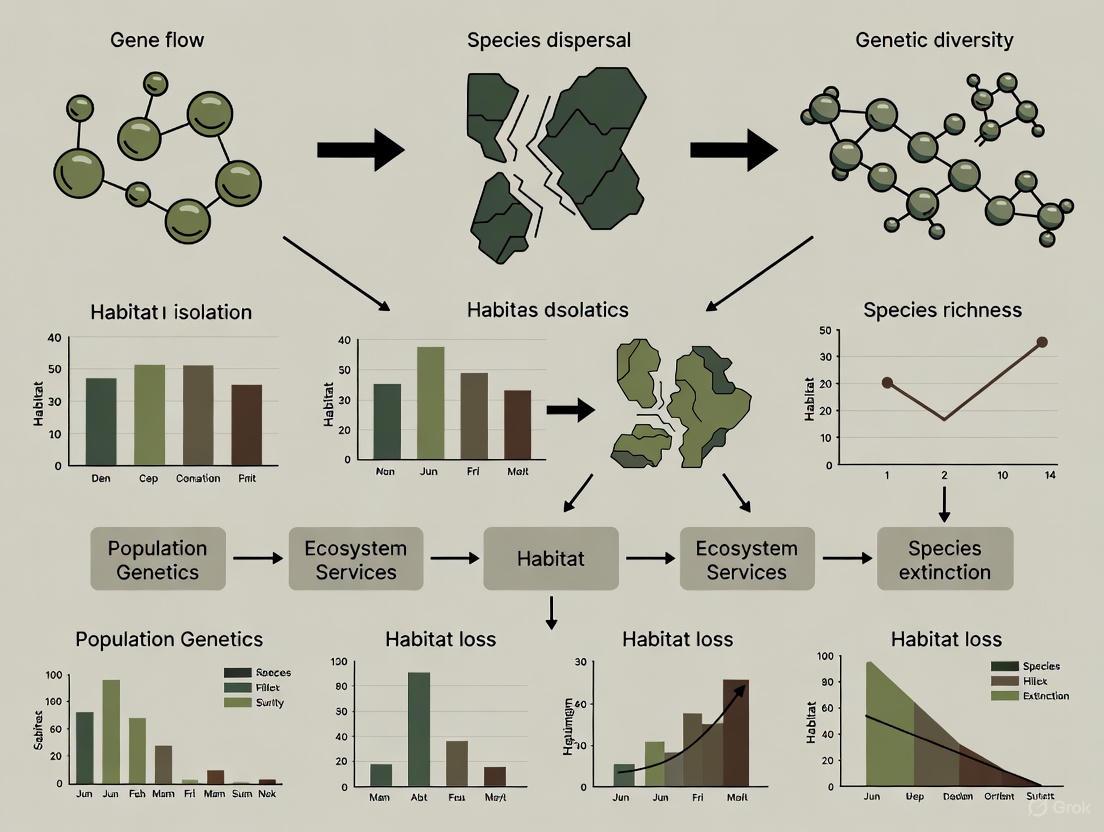
This article synthesizes the latest ecological research on habitat fragmentation, a primary driver of global biodiversity loss.
Habitat Fragmentation and Biodiversity: Ecological Consequences, Research Methods, and Clinical Research Implications
Abstract
This article synthesizes the latest ecological research on habitat fragmentation, a primary driver of global biodiversity loss. It explores foundational concepts and direct ecological consequences, examines innovative methodological approaches like individual-based metabolic models and genetic analyses, and discusses troubleshooting through conservation strategies such as ecological corridors. The content also addresses the validation of long-standing ecological debates through large-scale syntheses. Aimed at researchers and drug development professionals, the article concludes by exploring the potential implications of fragmented ecological networks for biomedical research, including the study of disease dynamics and genetic diversity.
Defining the Problem: The Mechanisms and Scale of Habitat Fragmentation
In landscape ecology and conservation biology, precisely distinguishing between habitat loss and habitat fragmentation is a fundamental prerequisite for understanding anthropogenic impacts on biodiversity. Habitat loss refers simply to the outright reduction in the total area of a natural habitat, whereas habitat fragmentation describes the process by which a continuous habitat becomes subdivided into smaller, more isolated patches, a change in spatial configuration independent of the total area [1]. This distinction is critical; the two processes often occur simultaneously but have different ecological mechanisms and consequences. Within scientific discourse, the term "fragmentation per se" is used to isolate the effects of the breaking apart and isolation of habitat from the effects of the overall loss of habitat area [2]. Framing research within this context is essential for disentangling the primary drivers of biodiversity decline and developing effective mitigation strategies.
Quantitative Distinctions: Core Concepts and Metrics
The conceptual distinction between habitat loss and fragmentation is operationalized through specific, measurable landscape characteristics. The following table summarizes the core defining features of each concept.
Table 1: Key Conceptual and Quantitative Distinctions Between Habitat Loss and Fragmentation
| Feature | Habitat Loss | Fragmentation Per Se |
|---|---|---|
| Core Definition | Reduction in the total area of a habitat type [2]. | Subdivision of habitat into smaller, more isolated patches, independent of area loss [2] [1]. |
| Primary Measurable | Decrease in total habitat cover (%) [2]. | Increase in the number of patches, decrease in mean patch size, increase in edge-to-interior ratio, and increased isolation between patches [1]. |
| Typical Landscape Metrics | Habitat amount or percentage of landscape [2]. | Patch density, Mean Patch Size, Edge Contrast, Nearest-Neighbor Distance, Connectance Index [1]. |
| Ecological Analogy | "How much" habitat remains. | "How arranged" the remaining habitat is. |
Methodological Approaches: From Pattern-Based to Activity-Based Metrics
Quantifying fragmentation and its effects has evolved from traditional pattern-based metrics to more functional, activity-based approaches.
Traditional Pattern-Based Metrics
Traditional methods rely on landscape metrics derived from GIS and remote sensing to quantify the composition and configuration of habitat patches [3]. While widely used, these pattern-based metrics can be highly correlated with habitat amount, making it difficult to isolate the effect of fragmentation per se [3]. Furthermore, the plethora of available metrics and their sensitivity to spatial scale and resolution presents challenges for comparison across studies [3].
Emerging Activity-Based Metrics
A novel approach proposes using the "cost" for a theoretical organism to traverse a landscape as a proxy for fragmentation [3]. This activity-based assessment uses least-cost path analysis on simulated binary landscapes (with cells designated as easy or difficult to traverse) to derive metrics that are more directly tied to ecological function.
Table 2: Key Research Reagent Solutions for Fragmentation Analysis
| Reagent/Material | Function in Research |
|---|---|
| Geographic Information System (GIS) | The foundational platform for storing, analyzing, and visualizing spatial data on habitat cover and landscape structure. |
| Remote Sensing Imagery | Provides the primary data on land cover classification and change over time, essential for calculating habitat amount and patch configuration. |
| Conditional Autoregressive (CAR) Models | A statistical model used to simulate realistic binary landscapes with controlled levels of spatial autocorrelation and habitat proportion for methodological testing [3]. |
| Least-Cost Path (LCP) Analysis | An algorithm that calculates the easiest route for an organism to move between two points across a landscape with variable resistance, forming the basis of activity-based metrics [3]. |
R landscapeR/SDMTools |
Software packages in the R environment used to simulate landscapes and compute a suite of pattern-based landscape metrics [3]. |
The experimental workflow for developing and validating these activity-based metrics involves a structured process of landscape simulation, analysis, and comparison, as shown in the following diagram.
Experimental Evidence: Disentangling Effects in Ecological Networks
A 2025 macroecological study on Neotropical plant-vertebrate pollinator networks provides a powerful experimental case for isolating these drivers. The research investigated the independent effects of forest loss and fragmentation per se (measured as patch density) on network structure, including plant and pollinator richness, number of interactions, and nestedness [2].
Methodology Summary:
- Data Collection: The study aggregated 67 plant-vertebrate (hummingbird and bat) pollinator networks from twelve Neotropical countries [2].
- Landscape Metrics: For each network location, researchers calculated the total forest cover (habitat amount) and patch density (fragmentation per se) within a 2 km radius [2].
- Statistical Analysis: The team used Generalized Linear Mixed Models (GLMMs) to analyze the effects of forest cover and patch density on various network properties, controlling for spatial autocorrelation and elevation [2].
Key Finding: The results demonstrated that forest loss (habitat amount) was the primary driver of structural changes in the pollination networks. Lower forest cover was associated with reduced plant and pollinator richness, fewer interactions, and lower nestedness. In contrast, fragmentation per se (patch density) showed limited to no significant independent effects on these network properties [2]. This provides strong evidence that the amount of habitat can be a more critical factor than its spatial configuration for these specific ecological networks.
Ecological Consequences: Differential Impacts on Populations and Processes
The ecological consequences of habitat loss versus fragmentation per se manifest through different pathways and affect species differently.
Consequences of Habitat Loss
- Biodiversity Decline: Habitat loss is widely recognized as the greatest threat to species globally, directly reducing population sizes and leading to local extinctions [1] [2].
- Network Simplification: As demonstrated in the pollinator study, habitat loss simplifies mutualistic networks by reducing species richness and the number of interactions, potentially undermining ecosystem stability and function [2].
Consequences of FragmentationPer Se
- Edge Effects: Fragmentation increases the ratio of edge to interior habitat, creating different microclimatic conditions (e.g., in light, temperature, wind) that can favor generalist species and predators while disadvantaging specialist species dependent on core interior habitat [1].
- Reduced Connectivity and Isolation: Smaller, isolated patches can prevent normal dispersal and migration, disrupting gene flow and eliminating the "rescue effect" where immigrants from other patches can prevent a local population from going extinct [1].
- Altered Species Interactions: Fragmentation can disrupt coevolutionary relationships. A 2025 simulation study on cuckoo-host brood parasitism found that severe habitat fragmentation increased the extinction risk for the cuckoo by narrowing the range of host rejection rates that allow for coevolutionary persistence [4].
The following diagram synthesizes the primary cause-effect pathways through which habitat loss and fragmentation per se impact ecological systems.
This whitepaper examines the primary drivers linking infrastructure development to increased climate disaster risks, framed within the ecological context of habitat fragmentation research. Infrastructure expansion directly fragments landscapes, creating cascading vulnerabilities that amplify climate disaster impacts on both human and ecological systems. The interaction between built infrastructure and natural systems creates a feedback loop: infrastructure development fragments habitats, which undermines ecosystem resilience and services, thereby increasing regional vulnerability to climate disasters like floods, which in turn damage the very infrastructure that caused the fragmentation [5] [6]. Understanding these interconnected drivers is essential for researchers developing predictive models and mitigation strategies for coupled human-natural systems under climate change.
Quantitative Data on Infrastructure and Disaster Resilience
Urban Infrastructure Resilience Metrics
Research assessing urban infrastructure resilience under flood disasters in China's Pearl River Delta region (2018-2023) provides quantifiable metrics for evaluating system performance [7]. The study employed a Pressure-State-Response (PSR) model combined with an extension catastrophe progression method to objectively measure resilience across multiple infrastructure domains.
Table 1: Urban Infrastructure Resilience Assessment Metrics (Pearl River Delta, 2018-2023)
| Evaluation Dimension | Sample Indicators | Measurement Approach | Key Findings |
|---|---|---|---|
| Pressure | Extreme precipitation frequency, Population density, Urbanization rate | Statistical analysis of climate and census data | Quantifies external climate and demographic stresses on infrastructure systems |
| State | Road network density, Drainage system capacity, Power grid reliability | Engineering assessments and performance monitoring | Measures current performance and robustness of infrastructure components |
| Response | Emergency response time, Infrastructure investment, Disaster planning | Document analysis and budget tracking | Evaluates institutional and technical capacity to address disruptions |
| Overall Resilience | Composite resilience index (0-1 scale) | Extension catastrophe progression model | Guangzhou and Shenzhen scored significantly higher (≈0.82) than Zhaoqing and Jiangmen (≈0.45) |
Climate Policy and Development Outcomes
Cross-national analysis using natural language processing of climate policy documents reveals significant associations between policy orientation and development outcomes [8]. This data-driven approach classifies policies into four domains and links them to socioeconomic metrics through panel regression analysis.
Table 2: Climate Policy Emphasis and Associated Development Outcomes (Cross-National Analysis)
| Policy Domain | Key Associated Outcomes | Statistical Significance | Interpretation |
|---|---|---|---|
| Mitigation | Positive: GDP, GNI, debt stocks; Negative: Secondary education enrollment | Strongly significant (p<0.01) | Associated with economic growth metrics but potentially trades off with social investments |
| Adaptation | Negative: Electricity consumption | Weakly significant (p<0.05) | Suggests potential efficiency gains but limited measurable effects on core development indicators |
| Disaster Risk Management | Positive: GNI (PPP), debt; Negative: Foreign Direct Investment | Mixed significance | Indicates domestic resource mobilization for preparedness alongside investor caution |
| Loss & Damage | No significant associations | Not significant | Reflects limited global implementation and institutional development |
Experimental Protocols and Methodologies
Habitat Fragmentation Assessment Protocol
Research on habitat fragmentation employs rigorous field methods to quantify biodiversity responses to landscape change [5]. The following protocol outlines key methodological considerations for assessing fragmentation impacts:
Field Design and Data Collection:
- Site Selection: Establish study plots across a gradient of habitat patch sizes and isolation levels. Include both "relaxing systems" (recently fragmented intact habitats) and "assembling systems" (successional patches in previously denuded landscapes) to account for different fragmentation histories [5].
- Biodiversity Monitoring: Conduct systematic surveys of species richness, community composition, and trophic organization across taxonomic groups. Record population dynamics, not just presence/absence data, to detect early warning signals of population decline before extirpation occurs [5].
- Edge Effects Quantification: Measure microclimatic variables (temperature, humidity, wind shear) at varying distances from habitat edges. The Biological Dynamics of Forest Fragments Project demonstrated that previously unimportant drivers like wind shear can become dominant in fragmented systems [5].
- Matrix Assessment: Characterize the quality and permeability of the surrounding landscape matrix, as this strongly influences connectivity and spillover effects [5].
Data Analysis Framework:
- Spatial Prioritization: Use tools like Zonation software with Core Area Zonation algorithms to identify priority conservation areas based on species distributions, with particular emphasis on small-ranged, threatened, and data-deficient taxa [6].
- Temporal Analysis: Compare land use and land cover changes at regular intervals (e.g., 5-year periods) to track fragmentation progression and loss of conservation opportunities over time [6].
- Metacommunity Dynamics: Analyze how edge contrast and matrix quality affect patch-specific dispersal, colonization, and extirpation probabilities across multiple species [5].
Infrastructure-Health Nexus Research Protocol
Understanding the pathways through which climate-infrastructure interactions affect health outcomes requires mixed-methods approaches [9]:
Qualitative Data Collection:
- Focus Groups: Conduct structured focus groups with vulnerable populations across diverse ethnic and residential contexts (e.g., urban/rural, different cultural backgrounds) [9].
- Systematic Coding: Transcribe and systematically code discussions to identify pathways through which infrastructure failures affect health and the adaptation practices individuals and communities employ [9].
Integration with Quantitative Data:
- Infrastructure Performance Metrics: Collect data on infrastructure failure frequency, duration, and extent across different community types.
- Health Outcome Tracking: Correlate infrastructure failure events with health indicators to quantify direct and cascading health impacts.
Visualization: Cascading Disaster Pathways
The diagram below illustrates the causal pathways through which infrastructure development initiates habitat fragmentation and increases climate disaster vulnerability, creating a feedback loop that exacerbates risks to both human and natural systems.
Cascading Disaster Pathways Diagram: This visualization shows how infrastructure development drives habitat fragmentation, which diminishes ecosystem services that normally buffer climate impacts. The resulting climate disasters damage infrastructure, creating cascading health and ecological effects and often triggering a maladaptive feedback loop of reconstruction without resilience measures.
The Scientist's Toolkit: Research Reagent Solutions
Table 3: Essential Research Materials and Computational Tools
| Tool/Resource | Function | Application Context |
|---|---|---|
| Zonation Software | Spatial prioritization for conservation planning | Identifies key areas for protection to maximize representation of endemic species in fragmented landscapes [6] |
| Current Protocols Series | Standardized methodological guidance | Provides validated laboratory and field methods across biological disciplines including molecular biology and ecology [10] |
| Springer Nature Experiments | Access to methodological repositories | Database of >60,000 peer-reviewed protocols, particularly strong in molecular biology and biomedical methods [10] |
| Cold Spring Harbor Protocols | Interactive research techniques | Definitive source for new and classic techniques with unique features like protocol cautions and recipe specifications [10] |
| JoVE Journal | Visualized experimental methods | Peer-reviewed video demonstrations of experimental procedures across biology, medicine, and environmental science [10] |
| DistilBERT Model | Natural language processing for policy analysis | Classifies climate policy documents into thematic domains (mitigation, adaptation, DRM, loss/damage) for quantitative analysis [8] |
| Extension Catastrophe Progression Method | Resilience assessment without subjective weighting | Evaluates urban infrastructure resilience based on intrinsic mathematical relationships between indicators [7] |
| Correspondence Analysis | Dimensionality reduction for policy-country relationships | Visualizes how countries cluster based on relative prioritization of different climate policy domains [8] |
The primary drivers from infrastructure development to climate disasters operate through interconnected pathways that combine physical, ecological, and social dimensions. Habitat fragmentation serves as both a consequence of infrastructure expansion and an amplifier of climate vulnerability, creating cascading risks that transcend system boundaries. Breaking this cycle requires integrated approaches that combine spatial conservation planning with resilient infrastructure design, recognizing that ecological integrity and human security are mutually reinforcing. The experimental protocols and analytical frameworks presented here provide researchers with robust methodologies for quantifying these relationships and developing evidence-based interventions that address the root causes of escalating climate disaster risks in an increasingly fragmented world.
Habitat fragmentation is a dominant process reshaping global ecosystems, creating a mosaic of forest patches isolated within a human-modified matrix. A fundamental consequence of this process is the dramatic increase in forest edge habitat. Current estimates indicate that 70% of the world's forest area lies within one kilometer of an edge [11] [12]. These edges are not mere boundaries but are active ecotones where pronounced environmental gradients trigger a cascade of ecological changes known as edge effects. This whitepaper examines the immediate ecological consequences of habitat fragmentation, focusing specifically on the microclimatic changes at forest edges and their direct impacts on forest structure, function, and biodiversity. Framed within a broader thesis on fragmentation ecology, this technical guide synthesizes recent global findings and provides detailed methodologies for researchers investigating these critical phenomena.
Global Significance of Edge Effects
The creation of forest edges initiates a suite of biophysical changes that profoundly alter ecosystem conditions. The global impact of these changes is staggering. A comprehensive analysis of eight million forested locations revealed that 97% of examined areas displayed negative edge effects on aboveground biomass (AGB), with biomass density near edges being 16% lower on average than in interior forests [11]. The total impact of these edge effects is estimated to be a 9% reduction in global forest AGB, equivalent to a loss of 58 Pg of carbon [11]. This reduction demonstrates that the consequences of fragmentation extend far beyond the immediate area of forest loss, introducing significant indirect effects that compromise the carbon storage capacity of remaining forests.
Table 1: Global Variation in Edge Effects on Aboveground Biomass (AGB) Across Forest Biomes
| Forest Biome | Mean Effect Strength (ΔAGB/ΔD) | AGB Reduction Near Edges | Key Regional Examples |
|---|---|---|---|
| Tropical | 53 | Strongest (>>16%) | Amazon, Congo Basin, Southeast Asia [11] |
| Temperate | 43 | ~16% | Europe, United States [11] |
| Boreal | Variable (weakest) | <16% (except Western Siberian grain belt) [11] |
The direction and magnitude of edge effects are not uniform globally. While negative edge effects (reduced biomass near edges) predominate, positive edge effects occur in approximately 3.7% of cases, primarily in high-latitude boreal forests near the biophysical growth limits of trees [11]. In these specific contexts, the warmer microclimatic conditions at edges can potentially enhance growth [12].
Microclimatic Mechanisms and Drivers
The primary mechanism driving ecological change at forest edges is the abrupt alteration of microclimatic conditions. When a forest edge is created, the buffering capacity of the forest canopy is compromised, leading to immediate changes in the physical environment.
Fundamental Microclimatic Changes
The following diagram illustrates the causal pathway from edge creation to ultimate ecological consequences:
The most consistent microclimatic changes observed at forest edges include:
- Increased Light Availability: Edges experience significantly higher levels of direct and diffuse light, with distribution patterns affected by gap size, shape, and orientation [13].
- Temperature Extremes: Air temperatures at 1.3m height typically increase at edges, while ground-level temperatures show more complex patterns depending on light availability and evaporative cooling [13].
- Reduced Moisture: Edges experience lower humidity and soil moisture due to increased evaporation and vapor pressure deficit (VPD) [14] [12].
- Increased Wind Exposure: Edges face stronger wind currents, which can exacerbate mechanical damage and water stress [12].
Modifying Factors and Environmental Drivers
The magnitude of microclimatic edge effects is not constant but is influenced by a suite of environmental variables. A global machine-learning analysis (XGBoost model with R² = 0.67) identified the most important drivers of edge effect variation [11]:
Table 2: Key Environmental Drivers of Edge Effect Magnitude
| Driver | Relative Importance (mean | SHAP | ) | Effect on Edge Magnitude | Mechanism |
|---|---|---|---|---|---|
| Mean Annual Temperature (MAT) | 7.2 (Highest) | Stronger negative effects in high-MAT regions | Heat stress increases tree vulnerability [11] | ||
| Agricultural Land Cover | 4.9 | Stronger negative effects with more agriculture | Increased fire frequency, nutrient inputs, disturbance [11] | ||
| Mean Annual Precipitation (MAP) | 3.9 | Variable by region | Interacts with evaporation to determine water stress [11] | ||
| Geographical Orientation | Not quantified globally | Varies by hemisphere; equator-facing edges show stronger effects | Differential exposure to solar radiation [14] |
Edge orientation creates significant variation in microclimatic conditions. In the Northern Hemisphere, south-facing edges experience higher temperature peaks, while in the Southern Hemisphere, north-facing edges show stronger edge effects [14]. These orientation effects are more pronounced in winter when the sun's angle is lower [14].
The structural contrast between the forest and adjacent matrix (patch contrast) also determines edge effect magnitude. Higher-contrast edges (e.g., forest to agriculture) typically exhibit stronger microclimatic gradients than low-contrast edges (e.g., forest to shrubland) [15] [12].
Methodologies for Quantifying Edge Effects
Large-Scale Remote Sensing Approaches
For landscape-to-global scale assessments, remote sensing provides the most comprehensive data. A robust protocol involves:
- Data Integration: Combine high-resolution (30m) global forest cover maps with aboveground biomass maps derived from satellite LiDAR and multispectral imagery [11].
- Spatial Sampling: Overlay a systematic grid (e.g., 100km × 100km) across the forest area and sample random points within each cell, ensuring proportional representation of different forest types [11].
- Model Fitting: Apply spatial log-linear regression models at the grid cell level to predict biomass density as a function of log10-transformed distance to forest edge, accounting for spatial autocorrelation [11].
- Validation: Conduct sensitivity analyses by (a) replacing linear models with non-parametric Spearman correlations, (b) excluding pixels within 30m of edges to avoid mixed-pixel effects, and (c) using canopy cover as an alternative response variable to verify patterns [11].
Field-Based Microclimatic Monitoring
For fine-scale mechanistic studies, field measurements provide critical ground-truthing:
Sensor Deployment: Install automated data loggers along edge-to-interior transects, with replication across different edge orientations and ages [14]. Standard parameters include:
- Air temperature at multiple heights (e.g., 1.3m and ground level)
- Soil temperature and moisture at multiple depths
- Relative humidity
- Photosynthetically active radiation (PAR)
- Wind speed and direction
Temporal Design: Conduct continuous monitoring across multiple seasons to capture seasonal variation in edge effects [14]. Summer and winter measurements typically reveal contrasting patterns due to differences in sun angle and vegetation phenology.
Biological Validation: Couple microclimatic measurements with quantification of biological responses, including:
- Tree mortality and recruitment rates
- Aboveground biomass estimates
- Species composition shifts
- Insect development rates using degree-day models [14]
Experimental Warming Protocols
Passive warming experiments using Open-Top Chambers (OTCs) can simulate future climate conditions at edges:
- Chamber Design: Employ hexagonal OTCs (following ITEX standards) made of transparent polycarbonate, which passively increase temperature by trapping shortwave radiation [16].
- Experimental Layout: Establish blocked designs with random placement of OTC and control plots within representative habitats [16]. Sample sizes of 20 OTCs and 50 control plots provide sufficient statistical power.
- Response Variables: Monitor both microclimatic parameters (air and soil temperature, soil moisture) and ecological responses (aboveground biomass, species diversity, growth form composition) over multiple years (≥3 years) to capture long-term trends [16].
- Data Analysis: Compare mean monthly, daily, and night temperatures between OTCs and controls, with particular attention to frequency and intensity of freezing events [16].
The Scientist's Toolkit: Research Reagent Solutions
Table 3: Essential Materials and Methods for Edge Effect Research
| Category/Item | Specification/Function | Application Example |
|---|---|---|
| Remote Sensing Data | 30m resolution forest cover and AGB maps [11] | Global analysis of edge effects on carbon stocks |
| Microclimate Sensors | Temperature, humidity, and PAR loggers | Quantifying edge-interior environmental gradients [14] |
| Open-Top Chambers (OTCs) | Hexagonal passive warming structures (ITEX design) | Simulating warming conditions at forest edges [16] |
| Spatial Analysis Software | R, QGIS, or ArcGIS with spatial autocorrelation functions | Modeling biomass-distance relationships [11] |
| Degree-Day Models | Thermal summation algorithms | Predicting insect development rates in edge habitats [14] |
The immediate ecological consequences of edge effects and microclimatic changes represent a critical pathway through which habitat fragmentation alters ecosystem structure and function. The evidence presented demonstrates that these effects are not merely local curiosities but constitute a globally significant phenomenon with measurable impacts on carbon storage, species distributions, and ecosystem processes. The methodological frameworks outlined provide researchers with robust tools for quantifying these changes across spatial scales. As fragmentation continues to reshape global landscapes, integrating edge effects into ecological models and conservation planning becomes increasingly imperative for accurate carbon accounting and biodiversity preservation. Future research should prioritize understanding the interactive effects of edge creation and climate change, particularly how warming temperatures might amplify or alter the fundamental edge effects described herein.
Habitat fragmentation, the process by which large, continuous habitats are divided into smaller, isolated patches, represents one of the most significant threats to global biodiversity [17]. This fragmentation directly impacts population viability by disrupting ecological connectivity and evolutionary processes [18]. Specifically, it restricts gene flow—the transfer of genetic material between populations through the movement of individuals or their gametes—leading to profound long-term consequences for genetic diversity and inbreeding risk [19].
Genetic diversity constitutes the fundamental building block for species adaptation and resilience, enabling populations to evolve in response to environmental changes, diseases, and other selective pressures [18]. When this diversity erodes, populations face increased extinction risks through multiple pathways, including inbreeding depression (the reduction in fitness resulting from mating between closely related individuals) and diminished adaptive potential [18]. Understanding these genetic consequences is therefore critical for developing effective conservation strategies aimed at maintaining viable populations in increasingly fragmented landscapes.
This technical guide synthesizes current scientific knowledge on the genetic impacts of habitat fragmentation, providing researchers with empirical evidence, methodological frameworks, and conservation applications. By framing these issues within the broader context of ecological consequences of habitat fragmentation research, we aim to bridge the gap between theoretical population genetics and practical conservation management.
Theoretical Framework: Linking Fragmentation to Genetic Consequences
The Population Genetic Pathways
Habitat fragmentation triggers a cascade of genetic consequences through several interconnected mechanisms. The primary pathway begins with dispersal limitation, where physical barriers (e.g., roads, agricultural land, urban development) or behavioral avoidance reduces movement between habitat patches [19]. This restriction directly impedes gene flow, which would otherwise homogenize genetic variation between populations and introduce new alleles [19].
With reduced gene flow, small isolated populations become vulnerable to genetic drift—random fluctuations in allele frequencies across generations that disproportionately affect small populations [18] [19]. Genetic drift leads to the progressive loss of rare alleles and overall reduction in heterozygosity, ultimately diminishing the genetic variation essential for adaptation [19]. The rate of genetic drift is inversely proportional to the effective population size (Nₑ), a key parameter representing the number of individuals actively contributing to the gene pool [18].
As genetic diversity declines, inbreeding inevitably increases in small, closed populations [17] [18]. This results in elevated homozygosity of deleterious recessive alleles, manifesting as inbreeding depression with documented fitness consequences including reduced reproductive success, survival rates, and disease resistance [18]. The interaction between these processes creates a feedback loop known as the "extinction vortex," where genetic and demographic factors mutually reinforce population decline [18].
Conceptual Diagram of Genetic Erosion Pathways
The following diagram illustrates the sequential relationship between habitat fragmentation and its genetic consequences:
Figure 1: Causal pathways linking habitat fragmentation to population extinction risk through genetic erosion processes. Green ovals represent amplifying factors.
Empirical Evidence and Quantitative Assessment
Global Patterns of Genetic Diversity Loss
A comprehensive global meta-analysis published in Nature (2025) provides compelling evidence for widespread genetic erosion across taxa [20]. Analyzing 3,983 temporal measures of genetic diversity from 622 species across animal, plant, fungal, and chromist kingdoms, the study revealed an overall significant decline in within-population genetic diversity (Hedges' g* = -0.11; 95% HPD credible interval: -0.15, -0.07) [20]. This pattern was consistent across most terrestrial realms, though marine systems showed more variable responses [20].
Table 1: Global Patterns of Genetic Diversity Loss Across Taxonomic Classes [20]
| Taxonomic Class | Posterior Mean Hedges' g* | 95% HPD Credible Interval | Severity of Loss |
|---|---|---|---|
| Aves (Birds) | -0.43 | -0.57, -0.30 | Most severe |
| Mammalia (Mammals) | -0.25 | -0.35, -0.17 | Severe |
| Actinopterygii (Ray-finned fishes) | -0.14 | -0.26, -0.03 | Moderate |
| Insecta (Insects) | -0.09 | -0.22, 0.03 | Mild/Non-significant |
| Magnoliopsida (Flowering plants) | -0.05 | -0.16, 0.06 | Mild/Non-significant |
The analysis identified specific threats associated with genetic diversity loss, with land use change, disease, abiotic natural phenomena, and harvesting or harassment having significant impacts [20]. Importantly, less than half of the studied populations received any form of conservation management, highlighting the implementation gap in addressing genetic erosion [20].
Case Studies in Genetic Erosion
Time-Lagged Genomic Erosion in Avian Species
Research on the critically endangered regent honeyeater (Anthochaera phrygia) demonstrates the phenomenon of time-lagged genetic erosion [21]. Despite a population decline from hundreds of thousands to fewer than 300 individuals over 100 years, this species has lost only 9% of its genetic diversity, with no significant evidence of inbreeding or connectivity loss [21]. Genomic simulations indicate this time lag conceals ongoing erosion risk, as genetic diversity metrics may not immediately reflect demographic collapse, creating a false sense of security in conservation assessment [21].
Freshwater Fish Population Fragmentation
Studies on the endangered Macquarie perch (Macquaria australasica) reveal severe genetic consequences of habitat fragmentation in aquatic systems [18]. Most remaining populations exhibited low genetic diversity with effective population sizes below thresholds required to retain adaptive potential [18]. Simulation models indicated that without intervention, smaller populations would face inbreeding depression within decades, while regular small-scale translocations could rapidly rescue populations from genetic deterioration [18].
Edge Effects in Fragmented Landscapes
Habitat fragmentation increases the proportion of edge habitat, which differs markedly from interior habitat conditions [17]. This "edge effect" alters microclimate, resource availability, and species interactions, potentially creating ecological traps where population persistence is compromised even before genetic effects manifest [17]. For example, forest edges often contain more light-demanding, drought-tolerant plant species, changing food availability for animals and further restricting functional habitat area [17].
Methodological Approaches for Genetic Assessment
Experimental Protocols for Genetic Monitoring
Temporal Genetic Sampling Design
Robust assessment of genetic diversity trends requires carefully designed temporal sampling [20] [21]. The following protocol applies to longitudinal studies of population genetic parameters:
- Site Selection: Identify populations representing a gradient of fragmentation intensity, ensuring replication across ecological contexts [20].
- Sampling Strategy: Collect genetic samples (tissue, blood, or non-invasive samples) from multiple individuals (minimum 20-30 per population) at multiple time points (minimum 5-year intervals for long-lived species) [21].
- Marker Selection: Utilize appropriate genetic markers based on research questions:
- Laboratory Analysis: Standardize DNA extraction, amplification, and genotyping protocols across time points to minimize technical artifacts [20].
- Data Quality Control: Implement strict filters for missing data, null alleles, and genotyping errors to ensure comparability across datasets [20].
Landscape Genetic Analysis
To quantify fragmentation effects on gene flow, landscape genetics integrates genetic data with spatial environmental variables [19]:
- Genetic Distance Matrix: Calculate pairwise genetic differentiation (FST, DPS) or individual-based genetic dissimilarity [18].
- Environmental Predictors: Compile GIS layers representing potential barriers (roads, developed areas) and corridors (riparian zones, forest cover) [19].
- Spatial Modeling: Use resistance surface modeling (Circuitscape, MAXENT) to test alternative hypotheses about landscape effects on gene flow [19].
- Statistical Testing: Employ matrix correlation methods (Mantel tests, MRDM) or nonlinear machine learning approaches to identify significant relationships [18].
The Researcher's Toolkit: Essential Reagents and Methods
Table 2: Key Research Reagent Solutions for Genetic Diversity Assessment
| Reagent/Method | Primary Function | Applications in Fragmentation Studies | Technical Considerations |
|---|---|---|---|
| Microsatellite Markers | Multi-locus genotyping of neutral variation | Measuring recent gene flow, genetic diversity, population structure | High variability but limited genomic coverage; being superseded by SNPs |
| SNP Arrays | Genome-wide variant discovery | Genome-wide diversity, pedigree reconstruction, adaptive locus identification | Requires reference genome; high throughput but fixed loci |
| Whole Genome Sequencing | Comprehensive variant detection | Demographic history, deleterious mutation load, local adaptation | Highest resolution; computationally intensive; requires high-quality DNA |
| RADseq (Restriction-site Associated DNA) | Reduced-representation sequencing | Population genomics without prior genomic resources | Cost-effective for multiple populations; missing data challenges |
| - RNA Sequencing | Gene expression analysis | Functional responses to fragmentation stress | Requires immediate sample preservation; tissue-specific |
| - Environmental DNA (eDNA) | Non-invasive population detection | Presence/absence in fragmented habitats | Low quantity/quality; requires specialized amplification |
Genomic Data Analysis Workflow
The following diagram outlines a standardized workflow for analyzing genomic data in fragmentation studies:
Figure 2: Standardized workflow for genomic analysis in habitat fragmentation studies, showing key decision points (red diamonds) and analytical outputs (green rectangles).
Conservation Applications and Management Interventions
Genetic Rescue and Restoration Strategies
Conservation interventions specifically targeting genetic deterioration include several evidence-based approaches:
Assisted Gene Flow involves the intentional movement of individuals between populations to increase genetic diversity [18]. This strategy encompasses:
- Genetic Rescue: Alleviating inbreeding depression in small, isolated populations through introduction of unrelated individuals [18]
- Genetic Restoration: Enhancing adaptive potential by increasing overall genetic diversity [18]
For the Macquarie perch, simulations demonstrated that regular translocations of even 1-2 individuals per generation could significantly reduce extinction risk by counteracting genetic drift [18]. The success of such programs depends on careful source population selection, with recently diverged, genetically healthy populations posing minimal risk of outbreeding depression [18].
Table 3: Genetic Management Strategies for Fragmented Populations
| Intervention | Mechanism | Target Population Criteria | Implementation Considerations |
|---|---|---|---|
| Habitat Corridors | Restoring natural connectivity | Populations with recent isolation; moderate genetic depletion | Matrix quality determines effectiveness; potential for disease spread |
| Assisted Gene Flow | Introducing new genetic variants | Small populations (Nₑ < 100) showing inbreeding effects | Risk assessment for outbreeding depression; genetic monitoring essential |
| - Source-Sink Management | Bolstering demographic and genetic strength | Metapopulations with identified source and sink dynamics | Requires understanding of population connectivity and vital rates |
| - Captive Breeding | Genetic management ex situ | Critically small populations requiring rapid intervention | Maintaining genetic diversity requires careful pedigree management |
| - Cryopreservation | Banking genetic material for future use | Species with declining trajectory but current genetic health | Long-term commitment; technological limitations for some taxa |
Risk Assessment Framework for Genetic Interventions
When considering genetic management, conservation practitioners should evaluate multiple risk factors:
- Population Viability Assessment: Determine current and projected effective population sizes, with Nₑ < 100 indicating high risk for inbreeding depression and Nₑ < 1,000 insufficient for long-term adaptive potential [18].
- Outbreeding Depression Risk: Evaluate divergence time (risk low if <500 years), karyotypic differences, and ecological differentiation between potential source and recipient populations [18].
- Demographic Considerations: Assess whether recipient populations have sufficient carrying capacity to support introduced individuals and whether demographic structure can incorporate new genetic material [18].
- Monitoring Protocol: Establish pre- and post-intervention genetic and demographic monitoring to evaluate success and detect potential negative consequences [18].
The empirical evidence unequivocally demonstrates that habitat fragmentation imposes significant genetic consequences through disrupted gene flow, leading to erosion of genetic diversity and increased inbreeding risk [20] [18] [19]. These genetic processes often operate insidiously, with time lags between habitat fragmentation and observable genetic effects potentially concealing extinction debt [21]. The global meta-analysis confirms these patterns are widespread across taxa, with particularly severe impacts on birds and mammals [20].
Future research should prioritize integrating genomic tools with landscape ecology to better predict population vulnerabilities [21] [19]. Specifically, understanding the genetic architecture of inbreeding depression and identifying genomic regions underlying local adaptation will enable more targeted conservation interventions [18]. Additionally, developing improved thresholds for proactive genetic management—before populations require emergency intervention—represents a critical frontier in conservation science [18].
For researchers and conservation professionals, the imperative is clear: genetic diversity must be explicitly considered in fragmentation impact assessments and mitigation strategies [20]. Active, genetically informed interventions, including assisted gene flow and habitat corridor restoration, demonstrate substantial promise in halting and potentially reversing genetic diversity loss [20] [18]. As habitat fragmentation continues to accelerate globally, incorporating these genetic principles into conservation practice becomes increasingly essential for maintaining biodiversity and ecosystem resilience in the Anthropocene.
Habitat fragmentation, the process by which large, continuous forests are broken into smaller, isolated patches, is a primary driver of global biodiversity loss and ecosystem degradation [22]. Accurate quantification of this process is paramount for predicting its ecological consequences and formulating effective conservation policies. However, the dynamic and multi-faceted nature of fragmentation has led to seemingly contradictory findings in the scientific literature, underscoring a critical need for standardized, comprehensive assessment methodologies [23] [22]. This guide synthesizes the latest research and advanced protocols for quantifying global forest fragmentation, providing researchers and scientists with the tools to measure, analyze, and interpret fragmentation trends within a robust ecological framework.
Conflicting Global Trends: A Tale of Two Studies
Recent high-impact studies have presented differing pictures of global forest fragmentation, largely due to variations in the definition and measurement of the phenomenon.
| Study Focus | Key Finding on Fragmentation Trend (2000-2020) | Primary Regions of Increased Fragmentation | Primary Regions of Decreased Fragmentation | Core Measurement Approach |
|---|---|---|---|---|
| Zou et al. (2025) in Science [24] | 51-67% of global forests became more fragmented.58-80% of tropical forests became more fragmented. | Tropical forests (e.g., Amazon, Congo Basin, Indochina Peninsula). | Not highlighted in results. | A composite of three indices focusing on connectivity, aggregation, and structure. The connectivity-based index was prioritized for its strong alignment with species metapopulation capacity. |
| Ma et al. (2023) in Nature Communications [22] | 75.1% of global forests experienced a decrease in fragmentation. | Tropical areas, western North America, central Siberia. | Northern Eurasia, South China, western Canada. | A Synthetic Forest Fragmentation Index (FFI) integrating edge density, patch density, and the inverse of mean patch area. |
The divergence between these studies, particularly the finding of increased fragmentation in the tropics by Zou et al. versus the global decrease found by Ma et al., can be attributed to their methodological focus. The connectivity-based metrics used by Zou et al. are more sensitive to changes that impact species movement and ecological flows, potentially revealing degradation that structural metrics miss [24]. This highlights that the choice of quantification method is not merely technical but fundamentally shapes our understanding of forest ecosystem health.
Experimental Protocols: Core Methodologies for Quantification
To resolve conflicting trends and advance the field, researchers must employ rigorous and transparent methodologies. The following protocols detail the approaches used in the cited key studies.
Protocol 1: Constructing a Multi-Dimensional Fragmentation Index (Zou et al., 2025)
This protocol involves creating multiple composite indices to capture different aspects of fragmentation [24].
- Data Acquisition: Obtain global forest cover data for the time period of interest (e.g., 2000 and 2020) from sources like Landsat satellites at a resolution of 30 meters.
- Metric Calculation: For each time point, calculate a suite of standard landscape metrics, including:
- Edge Density (ED): The total length of forest edge per unit area.
- Patch Density (PD): The number of forest patches per unit area.
- Mean Patch Area (MPA): The average area of forest patches.
- Index Construction: Group the metrics to form three composite indices:
- Connectivity-based Index: Emphasizes the functional connectedness of the landscape for species dispersal.
- Aggregation-based Index: Measures how clustered the forest patches are.
- Structure-based Index: Focuses on the physical size and number of patches.
- Statistical Validation: Use Principal Component Analysis (PCA) to determine which composite index aligns most closely with an independent measure of ecological function, such as metapopulation capacity. The index with the strongest alignment (in this case, the connectivity-based index) should be prioritized for final analysis.
- Trend Analysis: Calculate the change in the chosen index over time to classify landscapes as experiencing increased or decreased fragmentation.
Protocol 2: Implementing a Synthetic Forest Fragmentation Index (FFI) (Ma et al., 2023)
This protocol outlines the steps for creating a single, integrated index to measure static and dynamic fragmentation [22].
- Data Preparation: Source and pre-process global forest cover maps (e.g., from Hansen et al.) to create binary forest/non-forest rasters for your target years.
- Calculate Component Metrics: Using landscape ecology software (e.g., FRAGSTATS), compute the following for each grid cell in the study area:
- Edge Density (ED)
- Patch Density (PD)
- Mean Patch Area (MPA)
- Normalize Metrics: Normalize each metric to a 0-1 scale to ensure comparability. For MPA, use
1 - normalized MPAso that all components move in the same direction (higher value = more fragmented). - Compute FFI: Calculate the Synthetic Forest Fragmentation Index as a weighted average of the normalized components:
FFI = (ED_normalized + PD_normalized + (1 - MPA_normalized)) / 3
- Analyze Dynamic Change (ΔFFI): Determine the change in fragmentation over time by subtracting the initial FFI from the final FFI (
ΔFFI = FFI_final - FFI_initial). A positive ΔFFI indicates increased fragmentation. - Identify Fragmentation Modes: Classify each area showing change into one of eight modes based on the individual increase or decrease of ED, PD, and MPA (e.g., EDupPDupMPAdown) to understand the underlying process.
The logical relationship and workflow for these methodologies is outlined in the diagram below.
The Scientist's Toolkit: Key Research Reagents and Materials
Successful quantification of forest fragmentation relies on a suite of data, software, and analytical tools. The following table details the essential components of the modern forest fragmentation researcher's toolkit.
| Tool Category | Specific Examples & Names | Primary Function in Research |
|---|---|---|
| Remote Sensing Data | Landsat Series, Sentinel-2, MODIS | Provides multi-spectral, multi-temporal satellite imagery used to classify forest cover and detect changes over time. The foundation for all spatial analysis. |
| GIS & Spatial Analysis Software | ArcGIS, QGIS, GRASS GIS | The primary platform for managing, processing, and analyzing spatial data; used to calculate core landscape metrics from forest cover maps. |
| Landscape Ecology Metrics Tools | FRAGSTATS, GuidosToolbox | Specialized software that automates the computation of standardized landscape metrics like edge density, patch density, and patch cohesion index. |
| Statistical Analysis Environment | R, Python (with libraries like pandas, scikit-learn) | Used for data normalization, index construction, statistical modeling (e.g., GLMs), and creating visualizations to interpret results and identify drivers. |
| Computational Hardware | High-performance computing (HPC) clusters | Essential for processing the massive datasets (big data) involved in global-scale analyses within a feasible timeframe. |
Conceptual Framework: Disentangling Fragmentation Effects
A critical step in interpreting quantification results is understanding the theoretical framework that explains different biodiversity outcomes. Research distinguishes between two fundamental types of fragmentation effects [23]:
- Geometric Fragmentation Effects: These effects arise solely from the spatial arrangement of habitat fragments relative to the pre-existing distribution of species. They are a simple spatial sampling process.
- Mechanism: When a landscape is fragmented, the new spatial pattern of habitat acts like a "cookie-cutter," preserving individuals that fall within fragments and eliminating those in the non-habitat matrix.
- Impact on Biodiversity: The effect is highly dependent on initial species distribution. For aggregated species distributions (a very common pattern in nature), several small (SS) fragments are more likely to capture at least some individuals of a given species, leading to a positive effect of fragmentation on species survival. For randomly distributed species, there is no geometric effect, and for regularly distributed species, the effect can be weakly negative.
- Demographic Fragmentation Effects: These effects alter population and community dynamics due to biological and physical changes caused by fragmentation.
- Mechanisms: Include increased demographic stochasticity in small populations, negative edge effects (e.g., changed microclimate), altered species interactions, and reduced migration among isolated fragments.
- Impact on Biodiversity: Typically, these effects are negative and can lead to long-term species extinction debts.
This framework explains why empirical studies can find positive, neutral, or negative effects of fragmentation per se—the geometric effect can be positive and offset negative demographic effects, depending on the context [23]. The relationship between this theory and empirical data flow is shown in the following workflow.
Quantifying global forest fragmentation reveals a complex and spatially varied picture. The key takeaway is that methodological choices directly influence the observed trends and subsequent ecological interpretations. The integration of connectivity-focused metrics, as demonstrated by Zou et al., with the systematic classification of fragmentation modes, as shown by Ma et al., represents the state-of-the-art approach [24] [22]. Furthermore, dissecting results through the lens of geometric and demographic effects provides a powerful explanatory framework for reconciling disparate findings [23]. For researchers and conservation professionals, this guide underscores that effective policy and management—particularly in the critically threatened tropical forests—must be informed by robust, multi-faceted quantification that captures the true ecological implications of forest fragmentation.
Research Tools and Models: Quantifying Fragmentation's Impact from Genes to Ecosystems
Habitat fragmentation, the process where once-continuous natural areas are broken into isolated patches, is recognized as one of the biggest threats to global biodiversity [17]. Traditional approaches to studying its ecological consequences have focused on structural landscape changes and species distribution patterns. However, a transformative perspective is emerging that links individual physiology to community-level outcomes. Recent research demonstrates that individual energetics scale up to influence community coexistence, particularly in fragmented landscapes [25]. This whitepaper explores how Individual-Based Metabolic Models (IBMMs) provide a computational framework to simulate these energetic costs and predict coexistence patterns, offering researchers a powerful tool for conservation planning in human-modified landscapes.
The integration of metabolic theory into fragmentation ecology represents a paradigm shift from pattern description to mechanism-based prediction. By modeling how individuals acquire, allocate, and utilize energy across fragmented spaces, scientists can now simulate the energy balance dynamics that ultimately determine species persistence [25] [26]. This approach is particularly valuable for understanding how ecologically similar species coexist despite food competition, and how landscape fragmentation alters the energetic equations that govern biodiversity outcomes.
Theoretical Foundation: Metabolic Principles in Fragmented Landscapes
Core Energetic Concepts for Terrestrial Mammals
Individual-Based Metabolic Models for terrestrial mammals are grounded in allometric relationships that connect body mass to metabolic rates and resource requirements [25] [26]. These models simulate how individuals maintain energy balance through foraging activities while accounting for costs associated with basal metabolism, locomotion, reproduction, growth, and digestion [26]. In fragmented landscapes, the spatial arrangement of habitat patches directly influences these energetic costs by altering movement requirements and resource accessibility.
The fundamental principle governing coexistence in competitive environments is that only individuals of different species capable of balancing their incoming and outgoing energy over the long-term can persist together [25]. This energy balance perspective explains why habitat fragmentation affects species differently: some may experience energetic benefits while others face unsustainable costs depending on their specific metabolic requirements and movement capabilities.
Habitat Fragmentation as an Energetic Challenge
Habitat fragmentation transforms continuous energy landscapes into patchy distributions with varying accessibility. According to global assessments, 51-67% of forests worldwide have become more fragmented between 2000 and 2020, with even higher rates in tropical regions (58-80%) [27]. This fragmentation creates several energetic challenges for wildlife:
- Increased locomotion costs as animals must travel longer distances through unsuitable matrix habitat to access resources [17] [25]
- Reduced energy intake due to diminished access to foraging areas and resource patches
- Higher metabolic costs from stress responses and altered microclimate exposures
- Disrupted migratory pathways that historically provided seasonal energy subsidies [17]
These energetic challenges manifest in reduced body condition, lowered reproductive investment, and ultimately population declines—particularly for species with specialized habitat requirements or large home range needs [17].
Technical Implementation of Individual-Based Metabolic Models
Model Architecture and Computational Framework
Individual-Based Metabolic Models simulate energy dynamics and home range behavior in different environments using an agent-based approach where each individual is represented as an autonomous agent with species-specific metabolic parameters [26] [28]. The model architecture incorporates several core components:
- Individual agents with body mass-defined metabolic rates
- Landscape representation with configurable fragmentation levels
- Resource distribution and regeneration dynamics
- Movement algorithms for foraging and habitat selection
- Energy accounting systems tracking intake and expenditure
The simulation workflow implements a dynamic feedback loop between energy acquisition, allocation, and fitness consequences, as illustrated below:
Figure 1: Core feedback loops in Individual-Based Metabolic Models showing how landscape structure influences individual energetics and scales to community-level patterns.
Metabolic Rate Calculations and Allocation
IBMMs quantify energy flows using allometric equations derived from empirical studies of mammalian metabolism. The key energetic parameters calculated for each individual include:
Field Metabolic Rate (FMR) = Basal Metabolic Costs + Locomotion Costs + Reproduction Costs + Growth Costs + Digestion Costs [26]
These models typically incorporate several metabolic components that determine an individual's energy balance:
- Basal metabolic rate calculated using established allometric equations (e.g., Kleiber's Law)
- Locomotion costs proportional to movement distance and body mass
- Thermoregulatory costs influenced by environmental conditions
- Digestive costs dependent on diet quality and quantity
- Reproductive costs including gestation and lactation
The models simulate how these metabolic components interact with landscape structure to determine whether individuals can maintain positive energy balance—a prerequisite for survival and reproduction [25] [26].
Application to Habitat Fragmentation Research
Experimental Design for Fragmentation Scenarios
When applying IBMMs to habitat fragmentation research, scientists systematically vary landscape configuration parameters to simulate different fragmentation scenarios [26]. The typical experimental design includes:
Table 1: Landscape Fragmentation Parameters in Metabolic Model Simulations
| Parameter | Description | Experimental Levels | Ecological Interpretation |
|---|---|---|---|
| Habitat Clumpiness | Spatial aggregation of suitable habitat | Low-Medium-High | Degree of fragmentation |
| Habitat Proportion | Percentage of landscape comprising suitable habitat | 20%-80% | Habitat loss severity |
| Matrix Permeability | Resistance of non-habitat areas to movement | Low-High | Landscape connectivity |
| Resource Distribution | Spatial arrangement of food resources | Uniform-Patchy-Random | Foraging efficiency |
Researchers implement these parameters in simulation environments such as NetLogo or Python, running multiple replicates across different fragmentation gradients to account for stochasticity [26] [28]. Each simulation tracks energy metrics for individuals over extended time periods (typically representing multiple generations) to observe long-term population and community consequences.
Data Collection and Output Metrics
IBMMs generate comprehensive data on individual energetics and population outcomes. Key output variables recorded during fragmentation experiments include:
Table 2: Core Output Metrics in Metabolic Fragmentation Studies
| Metric Category | Specific Variables | Measurement Units | Ecological Significance |
|---|---|---|---|
| Population Metrics | Population size, Density, Age structure | Individuals/km² | Population viability |
| Energetic Metrics | Field Metabolic Rate, Energy intake, Energy balance | kJ/day | Individual health status |
| Cost Allocation | Basal, Locomotion, Reproduction, Growth, Digestion costs | % of total budget | Energy trade-offs |
| Fitness Outcomes | Lifetime reproductive success, Survival rates | Offspring, Probability | Evolutionary fitness |
| Community Metrics | Species richness, Diversity indices, Coexistence patterns | Count, Index values | Biodiversity outcomes |
These output metrics allow researchers to test specific hypotheses about how fragmentation alters energetic constraints and how these constraints scale to influence coexistence dynamics [25] [26].
Key Findings: Energetics and Coexistence in Fragmented Landscapes
Context-Dependent Effects of Fragmentation
IBMM simulations reveal that the effects of habitat fragmentation on animal populations are strongly context-dependent [25]. Contrary to simplistic assumptions that fragmentation universally harms biodiversity, metabolic models demonstrate nuanced outcomes:
- Single-species scenarios: Populations of species living alone in fragmented landscapes were mostly positively affected by fragmentation [25]
- Multi-species communities: Diversity was highest under medium fragmentation scenarios where energy balance and reproductive investment were most similar among species [25]
- Coexistence mechanism: Similarity in energy balance among species promotes coexistence, suggesting an energetic basis for biodiversity patterns [25]
These findings challenge blanket conservation policies and emphasize the need for context-specific fragmentation assessments that account for community composition and energetic requirements.
Energy Balance as a Predictor of Coexistence
The relationship between individual energetics and community coexistence represents one of the most significant insights from IBMM applications. Research demonstrates that:
- Coexisting species show convergence in energy balance despite differences in specific metabolic strategies [25]
- Medium fragmentation scenarios promote this energetic similarity by creating heterogeneous resource distributions that support different foraging strategies
- Reproductive investment patterns mirror energy balance outcomes, providing a link between individual energetics and population persistence [25]
This suggests that landscapes can potentially be designed and protected to maximize coexistence by creating configurations that enable multiple species to achieve positive energy balance through different behavioral strategies.
Computational Tools and Platforms
Implementing Individual-Based Metabolic Models requires specific computational tools and programming frameworks. The following table details essential resources for researchers:
Table 3: Essential Research Tools for Implementing Metabolic Models
| Tool Category | Specific Software/Platform | Key Features | Implementation Notes |
|---|---|---|---|
| Modeling Platforms | NetLogo 6.1.0, Python 3.8+ with MESA | Agent-based modeling, Visualization, Statistical analysis | NetLogo preferred for education; Python for scalability [26] |
| Data Analysis | Python (Pandas, NumPy), R | Statistical testing, Data visualization, Model validation | Jupyter notebooks for reproducible analysis [26] [28] |
| Model Validation | TRACE documentation framework | Model credibility, Pattern-oriented validation | Essential for publication and peer acceptance [26] |
| Data Management | Dryad, Zenodo | Version control, Data preservation, Code sharing | Critical for open science and reproducibility [26] [28] |
Model Validation and Documentation Protocols
Establishing model credibility requires rigorous validation against empirical data. Recommended protocols include:
- Pattern-oriented validation comparing model outputs to real-world patterns of home range dynamics and field metabolic rates [26]
- Sensitivity analysis testing model responses to parameter variations
- TRACE document preparation providing comprehensive model description following standard protocols [26]
- Experimental replication using multiple programming implementations (e.g., both NetLogo and Python) to verify results [26]
These validation steps ensure that metabolic models produce biologically realistic outputs before being applied to conservation planning scenarios.
Conservation Applications and Future Directions
Applied Conservation Planning
The insights from Individual-Based Metabolic Models directly inform conservation strategies in fragmented landscapes:
- Habitat corridor design optimized for species-specific energetic requirements rather than just structural connectivity [17]
- Protected area networks configured to maintain energy balance for sensitive species [17] [27]
- Climate adaptation planning that anticipates shifting energetic constraints under changing climate conditions [17]
- Human-wildlife conflict mitigation through understanding energetic drivers of wildlife movements into human settlements [17]
Specific initiatives like IFAW's "Room to Roam" project for elephants demonstrate how metabolic principles can be applied to landscape-scale conservation, connecting and securing space elephants and other wildlife need to maintain energy balance [17].
Emerging Research Frontiers
Several promising research directions are emerging from current work with IBMMs:
- Multi-scale integration linking individual energetics to ecosystem processes like nutrient cycling and carbon storage [27]
- Cross-taxon applications extending mammalian models to other taxonomic groups with different metabolic constraints
- Dynamic landscape modeling incorporating real-time fragmentation data from satellite monitoring [27]
- Global change scenarios simulating interactive effects of fragmentation, climate change, and other anthropogenic stressors
These research frontiers position Individual-Based Metabolic Models as increasingly vital tools for predicting biodiversity responses to accelerating global environmental change.
Individual-Based Metabolic Models represent a transformative approach to understanding and predicting the ecological consequences of habitat fragmentation. By simulating how energetic constraints scale from individuals to communities, these models provide mechanistic insights into coexistence patterns that traditional correlative approaches cannot offer. The demonstration that medium fragmentation can enhance biodiversity by promoting energy balance similarity among species offers a nuanced perspective for conservation planning.
As global assessments reveal increasing fragmentation across most of the world's forests [27], the need for predictive tools that can guide effective conservation responses becomes increasingly urgent. Individual-Based Metabolic Models offer such a tool, enabling researchers to test landscape configurations before implementation and optimize conservation outcomes for diverse species assemblages. By placing energy balance at the center of fragmentation research, these models illuminate the fundamental mechanisms that determine which species persist and which disappear from human-modified landscapes.
Habitat fragmentation presents one of the most urgent challenges to global biodiversity, disrupting gene flow among populations and diminishing their capacity to adapt to environmental change [29]. Within this context, genetic and genomic analyses of gene flow and hybrid zones have become indispensable tools for understanding and mitigating the ecological consequences of fragmented landscapes. Gene flow—the transfer of genetic material between populations—plays a dual role in population persistence: it can introduce adaptive variation that increases resilience, yet also risks disrupting local adaptations. Hybrid zones, the regions where genetically distinct populations meet and interbreed, serve as natural laboratories for studying these evolutionary processes and have recently been recognized as potential catalysts for ecosystem resilience in fragmented habitats [29]. Contemporary genomic technologies now enable researchers to precisely track the movement of genetic material across complex landscapes, quantifying connectivity patterns and identifying barriers to dispersal. This technical guide provides researchers and conservation professionals with advanced methodologies for analyzing gene flow and hybrid zones, with particular emphasis on their application to habitat fragmentation research.
Core Concepts and Ecological Significance
Defining Gene Flow and Hybrid Zones
Gene flow represents the movement of genetic material between populations through processes including migration, pollen dispersal, seed dispersal, or gamete exchange. This genetic connectivity is fundamental to maintaining population genetic diversity and evolutionary potential. In contrast, hybrid zones are geographic areas where previously isolated populations or closely related species interbreed, producing offspring of mixed ancestry. These zones range from narrow tension zones maintained by a balance between dispersal and selection against hybrids, to mosaic hybrid zones where hybridization occurs patchily across environmental gradients [29] [30].
The ecological significance of these phenomena has been highlighted in recent research on anchor plant species in western North American rangelands. Studies of rubber rabbitbrush, big sagebrush, and globemallow have demonstrated that mosaic hybrid zones can substantially expand the geographic footprint of plant communities—in some cases by up to 270,000 km²—by producing hybrids that bridge environmental gaps between parental distributions [29]. These hybrids occupy unique environmental spaces characterized by distinct combinations of heat load, seasonal rainfall, and snow cover, effectively creating more continuous distributions that counteract fragmentation effects.
Genetic Consequences of Habitat Fragmentation
Habitat fragmentation triggers a cascade of genetic consequences that ultimately threaten population persistence:
- Reduced Gene Flow: Isolation by distance and physical barriers diminish genetic connectivity
- Genetic Drift: Small population sizes accelerate random fluctuations in allele frequencies
- Inbreeding Depression: Increased mating among relatives reduces fitness
- Loss of Adaptive Potential: Diminished genetic variation limits responses to environmental change
Severe fragmentation can reduce effective population sizes (Nₑ) below critical thresholds, jeopardizing long-term persistence. Research suggests Nₑ ≥ 100 is required to prevent short-term inbreeding depression, while Nₑ ≥ 1,000 is necessary to maintain adaptive potential [18]. Studies on endangered Australian Macquarie perch have demonstrated how fragmentation reduces Nₑ below these thresholds, necessitating active genetic management through translocations to prevent inbreeding depression within decades [18].
Table 1: Key Genetic Metrics for Assessing Fragmentation Impacts
| Metric | Calculation Method | Interpretation in Fragmented Landscapes |
|---|---|---|
| Fₛₜ | Weir & Cockerham's estimator | High Fₛₜ (>0.15) indicates significant isolation |
| Effective Population Size (Nₑ) | Linkage disequilibrium, temporal method | Nₑ < 100 indicates high extinction risk |
| Allelic Richness | Mean number of alleles per locus | Reduced diversity suggests genetic erosion |
| Migration Rate (Nm) | Bayesian methods, coalescent approaches | Nm < 1 indicates insufficient gene flow for population connectivity |
| Admixture Proportion | STRUCTURE, ADMIXTURE | Reveals historical and contemporary hybridization |
Quantitative Analytical Frameworks
Measuring Gene Flow and Population Connectivity
Modern gene flow analysis employs sophisticated statistical frameworks to quantify genetic connectivity:
Population Structure and Admixture Analysis
- Tools: ADMIXTURE, STRUCTURE, PCA (PLINK/EIGENSOFT)
- Objective: Identify ancestry proportions and admixture events between populations
- Output: Bar plots showing individual ancestry coefficients and PCA scatterplots [31]
Migration Rate Estimation
- Fₛₜ-based approaches: Compare genetic differentiation between populations (Fₛₜ ≈ 0 suggests panmixia)
- Coalescent Models: Use ∂a∂i or G-PhoCS to estimate historical migration rates
- Bayesian Inference: Migrate-n or BayesAss to infer contemporary gene flow [31]
Hybridization and Introgression Detection
- ABBA-BABA tests (D-statistics): Detect excess shared ancestry using ANGSD or Dsuite
- Local Ancestry Inference: RFMix or ELAI to map introgressed tracts
- Application: Identify hybrid zones and adaptive introgression [31]
Table 2: Genomic Technologies for Gene Flow Analysis
| Technology | Application Scenario | Key Advantages | Limitations |
|---|---|---|---|
| ddRAD-seq | Non-model organisms, budget-limited studies | Reduced genome complexity, unbiased locus sampling | Limited genomic coverage |
| Whole Genome Sequencing (WGS) | Deep ancestry inference, rare variant detection | Full genomic coverage, no ascertainment bias | Higher cost, computational demands |
| Mitochondrial/Y-chromosome markers | Maternal/paternal gene flow tracking | High copy number, conserved regions for phylogeography | Sex-biased or lineage-specific patterns only |
| Pool-seq | Large population screens, allele frequency estimation | Cost-effective for pooled samples | Loss of individual-level information |
Hybrid Zone Characterization
The spatial and genetic architecture of hybrid zones provides critical insights into evolutionary processes:
Cline Analysis
- Geographic cline fitting characterizes how allele frequencies change across hybrid zones
- Comparison of cline centers and widths across loci identifies selection patterns
- Non-coincident cline centers suggest hybrid zone movement [30]
Environmental Association Analysis
- Machine learning models predict hybrid and parental distributions based on environmental variables
- Identification of environmental factors maintaining hybrid zones
- Projection of range shifts under climate change scenarios [29]
Recent research on Pinus strobiformis and P. flexilis has demonstrated northward hybrid zone movement, likely driven by adaptive introgression of alleles suited to cooler conditions [30]. Such studies highlight how hybridization can facilitate range shifts in response to climate change—a critical consideration for conservation in fragmented landscapes.
Experimental Protocols and Methodologies
Genomic Data Collection and Processing
Sample Collection and Population Selection
- Target Populations: Define study groups (geographically isolated populations, subspecies, or hybrid zones)
- Sample Types: Tissue biopsies, non-invasive samples, or environmental DNA (eDNA)
- Sampling Strategy: Ensure spatial/temporal replication to capture gene flow dynamics [31]
Data Quality Control
- Sample-Level QC: Remove related individuals (PI_HAT > 0.1875 in PLINK), exclude samples with low coverage (<5x for WGS) or high missingness (>30%)
- Variant-Level QC: Filter SNPs with MAF < 1%, Hardy-Weinberg equilibrium p < 1×10⁻⁶, or missingness > 20%; prune SNPs in strong LD (r² > 0.8) [31]
Data Processing
- Format conversion and transformation (log transforming, normalizing)
- Alignment to reference genomes and quantification over genomic regions
- Normalization to account for technical variability [32]
Figure 1: Genomic Analysis Workflow for Gene Flow Studies. This workflow outlines the key phases in gene flow analysis, from initial study design to final interpretation and application.
Hybrid Zone Monitoring Protocol
Field-Based Hybrid Identification
- Establish transects across suspected hybrid zones with systematic sampling
- Collect tissue samples for genetic analysis and record spatial coordinates
- Measure morphological traits associated with parental types and hybrids
Genetic Assessment of Hybrids
- Genotype individuals using appropriate markers (SNPs, microsatellites)
- Assign hybrid scores using Bayesian clustering methods (STRUCTURE, NEWHYBRIDS)
- Characterize hybrid classes (F1, F2, backcrosses) based on ancestry proportions
Environmental Data Integration
- Extract environmental variables for sampling locations (climate, soil, topography)
- Model hybrid and parental distributions using machine learning approaches
- Identify environmental correlates of hybrid occurrence [29]
A recent study on western North American plant systems integrated genetic data with environmental conditions including temperature, moisture, and snow cover, then built machine learning models to predict current and future distributions of parental species and hybrids [29]. This approach revealed that hybrids expanded the total area suitable for plant growth by bridging gaps between parental distributions.
Data Visualization and Interpretation
Visualizing Gene Flow Patterns
Effective visualization is essential for interpreting complex gene flow patterns:
Gene Flow Maps
- Tools: QGIS, R (ggplot2/sf)
- Features: Overlay migration arrows (weighted by Nm) on geographic maps; color-code populations by ancestry; include barriers to gene flow for ecological context [31]
Admixture Graphs
- Tools: TreeMix, qpGraph
- Objective: Visualize historical splits, migrations, and admixture events as a bifurcating tree with migration edges
- Enhancements: Add bootstrap support values for nodes and migration edges [31]
Introgression Heatmaps
- Implementation: Plot D-statistics or f-statistics across the genome
- Integration: Highlight regions with significant introgression using sliding windows and annotate candidate genes [31]
Color Accessibility in Scientific Visualization
With approximately 300 million people worldwide affected by color vision deficiency (CVD), accessible color choices are essential for inclusive scientific communication [33]. The most common forms of CVD affect perception of reds and greens, requiring careful palette selection:
Colorblind-Friendly Palettes
- Okabe-Ito Color Palette: Designed for all CVD types, especially useful in scientific visuals
- Kelly's 22-Color Palette: Chosen for maximum contrast and distinction
- Blue/Orange combinations: Generally safe as most CVD types preserve blue perception [33]
Problematic Combinations to Avoid
- Red & green, Green & brown, Green & blue
- Blue & gray, Blue & purple, Green & gray, Green & black [33]
Figure 2: Hybrid Zone Monitoring and Application Pipeline. This diagram illustrates the sequential process from field sampling to conservation applications, highlighting the analytical and application phases.
The Scientist's Toolkit: Research Reagent Solutions
Table 3: Essential Research Reagents and Platforms for Gene Flow Studies
| Category | Specific Products/Platforms | Primary Function | Considerations for Fragmentation Studies |
|---|---|---|---|
| Sequencing Technologies | Illumina NovaSeq, PacBio HiFi, Oxford Nanopore | Generate genomic data for population analysis | Balance between read length, accuracy, and cost for population genomics |
| Genotyping Platforms | ddRAD-seq, SNP arrays, Whole Genome Sequencing | Identify genetic variants across individuals | ddRAD-seq cost-effective for non-model organisms across multiple fragmented populations |
| Analysis Software | PLINK, ADMIXTURE, STRUCTURE, ANGSD | Population structure and ancestry analysis | Cross-platform compatibility enables reproducible analysis pipelines |
| Landscape Genetics Tools | CDMetaPOP, ResistanceGA, CIRCUITSCAPE | Model gene flow across complex landscapes | Integration with GIS enables realistic landscape resistance surfaces |
| Visualization Packages | ggplot2 (R), QGIS, TreeMix | Create publication-quality figures and maps | Accessibility features essential for inclusive science communication |
Applications to Habitat Fragmentation Research
Conservation Genetic Management
Gene flow analysis directly informs conservation strategies in fragmented landscapes:
Genetic Rescue and Restoration
- Assisted gene flow can reverse genetic deterioration in small populations
- Regular small-scale translocations rapidly rescue populations from inbreeding depression
- Increasing genetic connectivity within catchments helps maintain large effective population sizes [18]
Risk Assessment for Outbreeding Depression
- Low risk if populations have same karyotype, were isolated <500 years, and adapted to similar environments
- Up to 20% gene flow from source populations typically improves adaptive potential without swamping local adaptation
- Benefits of gene flow generally outweigh risks of inaction for small, isolated populations [18]
Restoration Ecology and Climate Adaptation
Hybrid-Based Restoration Strategies
- Integration of hybrids into seed-based restoration reduces risk of restoration failure
- Hybrids may play stabilizing role in maintaining plant communities under climate change
- Mosaic hybrid zones create more continuous distributions that reduce fragmentation [29]
Climate Adaptation Planning
- Climate projections suggest hybrid patterns will persist and strengthen, with ranges expanding up to 5x in coming decades
- While parent lineages may lose ground in warming regions, hybrids help maintain communities across broader landscapes
- Hybrid zones offer natural mechanism for reconnecting fragmented habitats under rapid change [29]
Genomic analyses of gene flow and hybrid zones provide powerful approaches for understanding and addressing the ecological consequences of habitat fragmentation. By quantifying genetic connectivity, identifying barriers to dispersal, and characterizing adaptive potential, these methods offer critical insights for conservation planning in increasingly fragmented landscapes. The integration of advanced genomic techniques with landscape ecology and climate modeling enables researchers to predict population responses to environmental change and develop targeted management strategies. As habitat fragmentation continues to threaten global biodiversity, these genetic and genomic approaches will become increasingly essential for developing effective conservation interventions that maintain evolutionary processes and promote ecosystem resilience.
Habitat fragmentation, characterized by the breaking apart of habitats into smaller, isolated patches, is a principal driver of the global biodiversity crisis [34]. Understanding and quantifying this process is crucial for effective conservation and land management. Within this research context, remote sensing and landscape metrics have emerged as indispensable tools for mapping, measuring, and monitoring the spatial patterns of landscapes, particularly the critical elements of connectivity and aggregation [35] [36] [34]. This technical guide details the methodologies and applications of these techniques for researchers investigating the ecological consequences of habitat fragmentation.
Remote sensing provides the foundational data, enabling large-scale, repetitive observation of land cover [34]. The analysis of this data relies on landscape metrics—quantitative indices that describe the composition and spatial configuration of landscapes [37]. By applying these metrics, scientists can move beyond simple habitat loss measurements to quantify complex spatial patterns such as patch isolation, habitat sub-division, and landscape connectivity, which are vital for predicting species survival and ecosystem function [36] [34].
Core Concepts and Key Metrics
Landscape metrics quantify two fundamental components of spatial patterns: composition (the variety and abundance of patch types) and configuration (the spatial arrangement of those patches) [37]. The following tables summarize essential metrics for measuring connectivity and aggregation.
Table 1: Key Class and Landscape-Level Metrics for Connectivity and Aggregation
| Metric Name | Level | Description | Ecological Interpretation |
|---|---|---|---|
| Patch Cohesion Index (COHESION) [38] | Landscape | Measures the physical connectedness of patches. | Higher values indicate greater landscape connectivity. |
| Landscape Shape Index (LSI) [38] | Landscape | Standardized measure of total edge density, adjusted for landscape size. | A measure of landscape complexity; higher values indicate more irregular shapes. |
| Percentage of Landscape (PLAND) [38] | Class | Measures the proportional abundance of a particular patch type. | Determines habitat availability; critical for assessing habitat loss. |
| Patch Density (PD) [38] | Class | Number of patches of a class per 100 hectares. | Higher values indicate a more fragmented landscape for that class. |
| Number of Patches (NP) [38] | Class/ Landscape | Total number of patches in the landscape or of a specific class. | A straightforward measure of habitat subdivision. |
| Largest Patch Index (LPI) [38] | Landscape/ Class | Percentage of total landscape area comprised by the largest patch. | Identifies dominant patches; crucial for core-dependent species. |
Table 2: Advanced Analysis Metrics and Indices
| Metric/Index | Data Type | Application | Function |
|---|---|---|---|
| Normalized Difference Vegetation Index (NDVI) [35] | Spectral (Optical) | Monitor vegetation dynamics and habitat condition. | Serves as a proxy for photosynthetic activity and vegetation health. |
| Conditional Latin Hypercube Sampling (cLHS) [35] | Sampling | Select representative samples from remote sensing data (e.g., NDVI images). | Ensures samples replicate the original data's distribution and correlation structure. |
| Spatial Analysis (Variogram, Moran's I) [35] | Geostatistical | Delineate spatial variations and patterns from remote sensing images. | Quantifies spatial autocorrelation and the scale of spatial variability. |
Methodological Workflow
A robust methodology for assessing connectivity and aggregation involves a sequence of steps from data acquisition to metric calculation and interpretation.
Data Acquisition and Preprocessing
The process begins with acquiring multimodal remote sensing data. Key sources include:
- Optical Imagery: Landsat, Sentinel-2, and SPOT satellites provide multispectral data for calculating indices like NDVI and generating Land Use/Land Cover (LULC) classifications [35] [39] [34].
- Synthetic Aperture Radar (SAR): Satellites like Sentinel-1 provide data independent of weather conditions, useful for structural information [39].
- Ancillary Data: Digital Surface Models (DSM) and GIS data offer topographical and contextual information [39].
Preprocessing is critical and includes atmospheric correction, geometric rectification, and image classification to create a categorical raster map (LULC map) [36]. To reduce noise from misclassification, image filtering using a Sieve function can be applied to merge small, spurious pixel aggregations (e.g., areas smaller than 20 connected pixels) with surrounding larger classes [38].
Experimental Protocols for Landscape Analysis
Protocol 1: Multi-Temporal Analysis of Habitat Fragmentation This protocol is designed to quantify changes in landscape structure over time [36].
- Data Collection: Acquire time-series satellite imagery (e.g., Landsat) for the study area for multiple dates (e.g., 1985, 1995, 2005, 2017) [36].
- Image Classification: Classify each image into LULC classes (e.g., forest, grassland, farmland) using supervised classification algorithms in software like ArcGIS [36].
- Metric Calculation: Input the classified rasters into software such as FRAGSTATS [36] [38] or the
landscapemetricsR package [37]. Calculate a suite of metrics at both class and landscape levels, including PLAND, NP, PD, LPI, and COHESION. - Trend Analysis: Analyze the calculated metrics over time. An increase in NP and PD, coupled with a decrease in LPI and COHESION, indicates progressive fragmentation and loss of connectivity [36].
Protocol 2: Assessing Connectivity via Spatial Sampling and Simulation This advanced protocol uses spatial statistics to characterize landscape changes induced by disturbances [35].
- NDVI Calculation: Compute multi-temporal NDVI images from satellite data (e.g., SPOT HRV) for periods before and after a major disturbance (e.g., an earthquake or typhoon) [35].
- Spatial Sampling: Apply Conditional Latin Hypercube Sampling (cLHS) to the NDVI images. This method selects a sample set that maximally stratifies the marginal distribution of the NDVI values, ensuring an efficient and representative sample [35].
- Spatial Simulation: Use a geostatistical conditional simulation technique, such as Sequential Gaussian Simulation (SGS), with the cLHS-selected samples to generate multiple simulated maps of NDVI distribution, capturing spatial variability [35].
- Spatial Analysis: Analyze the original and simulated NDVI maps using spatial analysis techniques like variograms and Moran's I to delineate and quantify changes in spatial patterns, heterogeneity, and connectivity caused by the disturbance [35].
The following diagram illustrates the core workflow for a landscape connectivity and aggregation study.
Diagram 1: Core workflow for landscape analysis.
The Scientist's Toolkit
Successful implementation of these methodologies relies on a suite of software tools and data sources.
Table 3: Essential Research Tools and Platforms
| Tool/Platform | Type | Primary Function | Key Feature |
|---|---|---|---|
| FRAGSTATS 4.2 [36] [38] | Standalone Software | The benchmark software for calculating a wide array of landscape metrics. | Extensive metric library, user-friendly interface. |
| R landscapemetrics [37] | R Package | Calculate landscape metrics in the R programming environment. | Integrates with R's spatial analysis and data manipulation ecosystem. |
| R motif [37] | R Package | Compare and cluster landscape patterns between different times or areas. | Pattern-based spatial analysis beyond traditional metrics. |
| Google Earth Engine (GEE) [34] | Cloud Computing | Planetary-scale analysis of satellite imagery and geospatial datasets. | Access to massive data catalog, high-performance computing. |
| QGIS [38] | GIS Software | Visualize, preprocess, and filter raster and vector geospatial data. | Open-source, powerful plugins for remote sensing. |
| eCognition [40] | Remote Sensing Platform | Object-based image analysis (OBIA) for segmenting and classifying imagery. | Transforms interpretation units from pixels to object features. |
| Copernicus Open Access Hub [39] | Data Repository | Source for Sentinel satellite data (e.g., SAR, multispectral). | Free and open access to data from ESA's Sentinel missions. |
| MDAS Dataset [39] | Benchmark Dataset | Multimodal dataset (SAR, MS, HS, DSM, GIS) for a single city and date. | Enables testing of fusion algorithms on co-registered, multi-sensor data. |
The integration of remote sensing and landscape metrics provides a powerful, quantitative framework for mapping connectivity and aggregation within habitat fragmentation research. By following standardized methodological protocols and leveraging modern computational tools and cloud platforms, researchers can consistently monitor landscape changes at regional to global scales. The metrics of connectivity and aggregation are not merely abstract indices; they are vital signs of landscape health, directly informing the potential for species movement, genetic exchange, and the long-term persistence of biodiversity in human-modified environments.
This technical guide presents a framework for modeling drought resilience in small mammal communities, situated within the broader research on ecological consequences of habitat fragmentation. Incorporating recent findings, this study demonstrates how quantitative analysis of taxonomic and functional traits can predict community responses to climatic stressors. The protocols and models provided herein are designed for researchers and scientists requiring robust, reproducible methods for assessing climate change impacts on vertebrate populations.
Habitat fragmentation has emerged as a critical driver of biodiversity loss, with over half of global forests becoming more fragmented between 2000 and 2020 [27]. These structural landscape changes interact with climatic stressors like drought, creating synergistic threats to animal communities. Small mammals serve as ideal model systems for investigating these combined effects due to their functional importance in ecosystems, rapid generation times, and sensitivity to environmental changes [41] [42].
Understanding drought resilience requires moving beyond simple taxonomic diversity metrics to incorporate functional traits and landscape connectivity. Recent studies demonstrate that connectivity-based fragmentation indices align most closely with ecological indicators of species persistence, revealing that many forests have lost critical links that support species movement and ecosystem function [27]. This case study integrates these concepts through quantitative modeling of how fragmented landscapes mediate small mammal community responses to drought stress.
Theoretical Framework and Key Concepts
Habitat Fragmentation Metrics
Contemporary fragmentation assessment utilizes three composite indices that provide complementary information:
- Connectivity-based Fragmentation Index (CFI): Incorporates patch size and spatial configuration to represent landscape facilitation of movement [27]
- Aggregation-based Fragmentation Index (AFI): Assesses how clustered or dispersed forest patches are arranged [27]
- Structure-based Fragmentation Index (SFI): Focuses on how forests are subdivided into patches [27]
These indices show divergent trends, with connectivity-based metrics indicating 51-67% of global forests became more fragmented from 2000-2020, while structure-based methods showed only 30-35% fragmentation [27].
Drought Resilience Framework
Drought resilience in small mammals can be quantified through three component responses:
- Resistance: Ability to maintain population stability during drought
- Recovery: Rate of return to pre-drought abundance and diversity metrics
- Functional redundancy: Capacity of functionally similar species to compensate for drought-sensitive taxa
Methodological Approaches
Experimental Design and Field Protocols
Sampling Design
- Trap transects: Establish minimum 100m transects across habitat gradients with trap stations at 10-15m intervals [41]
- Temporal sampling: Conduct trapping sessions before, during, and after drought events (minimum 4-night sessions per period) [42]
- Habitat characterization: Vegetation surveys in 5x5m plots around each trap station quantifying plant diversity, canopy cover %, diameter at breast height, and vegetation height [42]
Data Collection Metrics
- Taxonomic metrics: Species richness, Shannon's diversity index, capture abundance (individuals per trap night) [42]
- Functional traits: Body mass, reproductive status, trophic level, activity patterns, habitat specificity [41]
- Environmental variables: Temperature, precipitation, vegetation structure, soil moisture, habitat connectivity [41] [42]
Quantitative Analysis Methods
Statistical Modeling
Linear Mixed-effects Models (LMMs) are recommended for analyzing hierarchical data structures:
- Fixed effects: Habitat type, drought severity, fragmentation metrics
- Random effects: Transect, season, reproductive state [42]
- Model selection: Stepwise selection using R package "lmerTest" [42]
Resilience Indices Calculation
Experimental Workflow
The following diagram illustrates the complete research workflow from experimental design through data analysis:
Quantitative Data Synthesis
Small Mammal Responses to Environmental Stressors
Table 1: Comparative responses of small mammal communities to combined habitat degradation and climatic events based on studies in Madagascar and Romania
| Species/Community Metric | Pre-Stressor Baseline | Immediate Impact | 4-5 Month Recovery | Habitat Type |
|---|---|---|---|---|
| Shannon's Diversity Index | 1.85 (±0.24) | Decreased 25-40% [42] | Rebounded to 92% of baseline [42] | Primary forest |
| Eliurus minor (abundance) | 12.3 captures/100 trap-nights | Decreased 62% [42] | Rebounded to 88% of baseline [42] | Primary forest |
| Eliurus minor (body mass) | 84.2g (±6.3) | Decreased 15% [42] | Full recovery [42] | Primary forest |
| Rattus rattus (abundance) | 3.1 captures/100 trap-nights | Increased 42% in degraded habitats [42] | Maintained elevated levels [42] | Crop fields |
| Species Richness | 8.7 (±1.2) species | Decreased 31% [41] | Increased 18% above baseline [41] | Abandoned pasture |
| Functional Diversity | 2.34 (±0.41) | Increased 27% post-abandonment [41] | Further increased to 42% above baseline [41] | Pastures |
Habitat Fragmentation Drivers and Impacts
Table 2: Global forest fragmentation drivers and protected area effectiveness (2000-2020)
| Factor | Contribution to Global Fragmentation | Regional Variation | Protection Effectiveness |
|---|---|---|---|
| Shifting Agriculture | 37% [27] | Tropical forests: 61% [27] | Strict protection: 82% reduction [27] |
| Forestry | 34% [27] | Temperate regions: 81% [27] | Less strict protection: 45% reduction [27] |
| Wildfires | 14% [27] | Boreal regions: Significant driver [27] | Variable outside tropics [27] |
| Commodity-Driven Deforestation | 14% [27] | Widespread across biomes [27] | Limited data available |
Drought Resilience Modeling Framework
Conceptual Model of Resilience Mechanisms
The following diagram illustrates the conceptual framework for modeling drought resilience in small mammal communities:
Resilience Modeling Protocol
Data Requirements
- Time-series data: Minimum 3 sampling periods (pre-, during, post-drought)
- Environmental covariates: Temperature, precipitation, vegetation indices
- Landscape metrics: Connectivity indices, patch size distribution, matrix permeability
- Community data: Species composition, abundance, functional traits
Analytical Code Framework
The Scientist's Toolkit: Research Reagent Solutions
Table 3: Essential materials and equipment for small mammal drought resilience research
| Category | Specific Items | Technical Specifications | Application in Research |
|---|---|---|---|
| Field Equipment | Sherman live traps | 7.5 × 9 × 23 cm folding traps [41] | Small mammal capture without injury |
| Tomahawk traps | 15 × 15 × 40 cm for larger species [42] | Capture of medium-sized mammals | |
| GPS units | ≤5m accuracy | Georeferencing trap locations and habitat features | |
| Data Collection | Digital calipers | 0.01mm precision | Morphometric measurements |
| Precision scales | 0.1g accuracy | Body mass measurements [42] | |
| Vegetation survey kits | Diameter tapes, clinometers, densiometers | Habitat structure quantification [42] | |
| Laboratory Analysis | DNA extraction kits | Tissue preservation and genetic analysis | Population genetics and inbreeding assessment [17] |
| Stable isotope analyzers | δ¹³C, δ¹⁵N analysis | Trophic position and dietary shifts [41] | |
| Software Tools | R Statistical Environment | Packages: lme4, lmerTest, vegan [42] | Statistical modeling and diversity analysis |
| QGIS / ArcGIS | Spatial analysis extensions | Landscape metrics and connectivity modeling [27] | |
| FRAGSTATS | Landscape pattern analysis | Habitat fragmentation metrics [27] |
This case study provides a comprehensive methodological framework for modeling drought resilience in small mammal communities within fragmented landscapes. The integrated approach combining taxonomic monitoring, functional trait analysis, and landscape metrics enables researchers to predict vulnerability to climate change and inform conservation strategies.
The protocols and analytical frameworks presented here are designed for immediate application in research settings, with particular relevance for:
- Biodiversity monitoring programs in changing climates
- Conservation planning for habitat networks
- Impact assessments of development projects
- Climate adaptation strategy development
Habitat fragmentation presents one of the most significant threats to global biodiversity and ecosystem function, impeding gene flow and limiting adaptive potential in the face of climate change. This whitepaper examines the emerging paradigm that natural hybrid zones in plant systems can function as evolutionary bridges, mitigating the detrimental effects of fragmented landscapes. Through specific case studies and experimental approaches, we demonstrate how mosaic hybrid zones facilitate genetic exchange, enhance ecological resilience, and expand species' distributional ranges. The synthesis of empirical evidence provides a compelling framework for integrating hybrid zone dynamics into conservation and restoration strategies, offering novel solutions for maintaining biodiversity in increasingly fragmented environments.
Habitat fragmentation, the process by which continuous natural landscapes are broken into smaller, isolated patches, represents a primary driver of biodiversity loss worldwide [17]. Its consequences extend beyond mere habitat loss to include reduced gene flow between populations, limited access to resources, increased edge effects, and diminished genetic diversity through inbreeding [17] [43]. Recent analyses indicate that 51-67% of global forests have become more fragmented between 2000 and 2020, with tropical regions experiencing even higher rates of 58-80% [27]. This fragmentation poses urgent challenges for species adaptation, particularly under accelerating climate change.
Traditional conservation approaches have emphasized the preservation of locally adapted genotypes, often avoiding hybridized material due to concerns about genetic dilution or outbreeding depression. However, contemporary research reveals that hybridization serves as a natural evolutionary process that can enhance adaptive potential and ecosystem resilience [29] [44]. Hybrid zones—geographic areas where interbreeding between divergent taxa occurs—function as natural laboratories where genetic exchange can create novel combinations capable of persisting in changing environments and reconnecting fragmented habitats [45] [44].
This technical guide examines hybrid zones as natural bridges within fragmented plant systems, presenting a synthesis of current research, methodological approaches, and conservation applications. By integrating genetic, ecological, and landscape-level perspectives, we provide a comprehensive framework for researchers and practitioners seeking to leverage natural hybridization processes for ecosystem resilience.
Conceptual Framework: Hybrid Zones as Natural Bridges
Defining Hybrid Zones in Fragmented Landscapes
Hybrid zones represent geographic regions where genetically distinct populations meet, interbreed, and produce hybrid offspring [44]. In the context of fragmented landscapes, these zones can form where previously isolated populations establish secondary contact, often due to human disturbance or climatic shifts that alter species distributions [44]. The structure and dynamics of hybrid zones vary considerably, with several established models explaining their maintenance and evolutionary significance:
Table 1: Models of Hybrid Zone Dynamics Relevant to Fragmented Landscapes
| Model Type | Key Characteristics | Role in Fragmented Landscapes | Plant System Examples |
|---|---|---|---|
| Mosaic Hybrid Zone | Patchy distribution of parental forms and hybrids across environmentally heterogeneous landscapes | Connects habitat patches through locally adapted hybrid genotypes | Senecio species on Mount Etna [45]; Rubber rabbitbrush, big sagebrush, and globemallow in western North America [29] |
| Bounded Hybrid Superiority | Hybrids exhibit higher fitness than parents in intermediate or ecotonal habitats | Bridges distinct habitat types along environmental gradients | Artemisia tridentata subspecies in Wasatch Mountains [45]; Picea glauca × P. engelmannii in British Columbia [45] |
| Tension Zone | Maintained by balance between dispersal and selection against hybrids | Can form along fragmentation boundaries where divergent populations meet | Populus fremontii × P. angustifolia in Weber River, UT [45] |
| Ephemeral Zone | Temporary hybridization events leading to fusion or reinforcement | Can rapidly fill habitat gaps following disturbance | Not specifically documented in plant fragmentation contexts |
Genetic and Ecological Mechanisms of Bridge Formation
Hybrid zones facilitate connectivity through multiple interdependent mechanisms. Introgression—the transfer of genetic material between taxa through repeated backcrossing—introduces adaptive alleles into parental populations, enhancing their capacity to persist in modified environments [46] [44]. Transgressive segregation generates phenotypic variation in hybrids that exceeds the parental range, creating novel genotypes capable of colonizing habitats unavailable to either parent [45]. Furthermore, heterosis (hybrid vigor) often confers enhanced fitness, growth, or stress tolerance in first-generation hybrids, enabling more robust establishment in degraded or transitional habitats [44].
The following conceptual diagram illustrates how hybrid zones function as bridges in fragmented landscapes:
Empirical Case Studies
Western North American Rangeland Systems
A seminal 2025 study examined three foundational plant systems in western North America—rubber rabbitbrush (Ericameria nauseosa), big sagebrush (Artemisia tridentata), and globemallow (Sphaeralcea spp.)—demonstrating how mosaic hybrid zones enhance connectivity across fragmented rangelands [29]. Researchers employed comprehensive genetic analyses coupled with environmental modeling to quantify the hybrid zones' capacity to bridge ecological gaps.
Table 2: Quantitative Impacts of Hybrid Zones in Western North American Rangelands
| Metric | Rubber Rabbitbrush | Big Sagebrush | Globemallow |
|---|---|---|---|
| Additional Suitable Area Created by Hybrids | Up to 270,000 km² cumulative across systems | Up to 270,000 km² cumulative across systems | Up to 270,000 km² cumulative across systems |
| Primary Environmental Factors | Heat load, seasonal rainfall | Heat load, seasonal rainfall | Heat load, seasonal rainfall |
| Projected Range Expansion under Climate Change | Up to 5x increase in coming decades | Up to 5x increase in coming decades | Up to 5x increase in coming decades |
| Fragmentation Reduction | More continuous distributions | More continuous distributions | More continuous distributions |
The research methodology integrated genomic data to identify parent species and hybrids, environmental variables (temperature, moisture, snow cover), and machine learning algorithms to model current and future distributions. Results demonstrated that hybrids occupied intermediate environments along gradients of heat load and seasonal rainfall, effectively filling distributional gaps between parental species and creating more continuous habitat networks [29].
Altitudinal Hybrid Zones in Alpine Systems
Altitudinal gradients create natural fragmentation where hybrid zones facilitate connectivity across elevation-specific habitats. Research on Mount Etna, Sicily, revealed a stable hybrid zone between Senecio aethnensis (high altitude) and S. chrysanthemifolius (low altitude), where hybrids exhibit intermediate morphological and physiological traits adapted to mid-elevation environments [45]. This system demonstrates how hybrid zones enable genetic exchange across steep environmental clines that would otherwise represent significant barriers to dispersal.
Similarly, studies of willow (Salix) hybrid zones in the European Alps document secondary contact between vicariant species pairs (S. alpina and S. breviserrata; S. foetida and S. waldsteiniana) following postglacial recolonization [47]. Genomic analyses using RAD sequencing revealed asymmetric introgression patterns, suggesting selective incorporation of adaptive alleles that enhance fitness in specific microhabitats within the fragmented alpine landscape.
Methodological Approaches for Research and Application
Experimental Protocols for Hybrid Zone Characterization
Genomic Analysis Protocol:
- Sample Collection: Obtain tissue samples from parental populations and putative hybrids across the suspected hybrid zone transect, including ecological gradient extremes.
- DNA Extraction: Use high-quality extraction methods suitable for next-generation sequencing (e.g., CTAB protocol for plants).
- Genotyping: Employ restriction site-associated DNA sequencing (RAD-seq) or whole-genome sequencing to identify single nucleotide polymorphisms (SNPs) diagnostic of parental lineages.
- Hybrid Classification: Apply Bayesian clustering methods (e.g., STRUCTURE, ADMIXTURE) to assign individuals to hybrid classes (F1, F2, backcrosses).
- Introgression Analysis: Use genomic cline models to detect loci with exceptional patterns of introgression, potentially indicating adaptive significance.
Ecological Niche Modeling Protocol:
- Environmental Data Layer Compilation: Collect high-resolution bioclimatic variables (temperature, precipitation, soil characteristics) and remote sensing data (NDVI, land cover).
- Species Occurrence Data: Compile georeferenced occurrence records for parental taxa and hybrids from field surveys and herbarium records.
- Model Training: Implement machine learning algorithms (e.g., MaxEnt, Random Forests) to develop ecological niche models for parental taxa and hybrids separately.
- Niche Overlap Analysis: Quantify niche overlap using Schoener's D or I statistics to test for transgressive niche evolution in hybrids.
- Climate Change Projection: Project future distributions under multiple climate scenarios to assess hybrid zone stability and potential range shifts.
The following workflow diagram illustrates the integrated methodological approach for studying hybrid zones as natural bridges:
Table 3: Essential Research Resources for Hybrid Zone Studies
| Resource Category | Specific Examples | Application in Hybrid Zone Research |
|---|---|---|
| Genetic Markers | RAD-seq libraries, SSR (microsatellite) primers, SNP arrays | Genotype assignment, hybrid classification, introgression detection |
| Sequencing Platforms | Illumina NovaSeq, PacBio HiFi, Oxford Nanopore | Whole genome sequencing for fine-scale mapping of introgressed regions |
| Bioinformatics Tools | STRUCTURE, ADMIXTURE, introgress, bgc | Population genetic analysis, hybrid index calculation, genomic cline detection |
| Environmental Sensors | Soil moisture loggers, temperature dataloggers, PAR sensors | Microhabitat characterization across hybrid zone transects |
| Spatial Analysis Software | GIS platforms (ArcGIS, QGIS), R packages (raster, SDM) | Landscape genetics, ecological niche modeling, connectivity assessment |
| Herbarium Resources | Digitized specimen databases, georeferenced occurrence records | Historical distribution data, validation of model projections |
Conservation and Restoration Applications
The empirical evidence supporting hybrid zones as natural bridges has profound implications for conservation practice and restoration ecology. Incorporating hybrids into restoration strategies can significantly reduce the risk of restoration failure by introducing genotypes with broader environmental tolerances and enhanced adaptive potential [29]. Current findings suggest that carefully selected hybrid material can increase the geographic footprint of restored plant communities by up to 270,000 km² in western North American rangelands alone [29].
Specific applications include:
- Seed Transfer Guidelines: Revising policies to permit managed introduction of hybrid germplasm where parental species face adaptation limits.
- Corridor Design: Prioritizing conservation of existing hybrid zones as natural connectivity elements in landscape planning.
- Climate Resilience Planning: Utilizing hybrids with demonstrated fitness under future climate scenarios to maintain ecosystem function.
- Genetic Rescue: Introducing hybrid genotypes into small, inbred populations to restore genetic diversity while maintaining local adaptation.
Monitoring protocols should track not only hybrid establishment success but also potential unintended consequences, including reproductive interactions with rare congeners and long-term evolutionary trajectories. Strategic implementation requires balancing the adaptive benefits of hybridization against potential risks such as outbreeding depression or genetic swamping of rare taxa [44].
Hybrid zones represent powerful natural mechanisms for enhancing ecological connectivity in an increasingly fragmented world. The case studies presented demonstrate conclusively that mosaic hybrid zones can expand the geographic range of plant communities, bridge environmentally distinct habitats, and enhance resilience to climate change. The methodological framework provides researchers with robust tools for identifying, characterizing, and applying hybrid zone dynamics in conservation contexts.
Future research priorities should include:
- Long-term monitoring of hybrid zone stability under climate change
- Experimental tests of hybrid fitness across environmental gradients
- Genomic studies to identify loci underlying adaptive introgression
- Development of decision-support tools for managing hybridization in restoration
- Investigation of community-level consequences of plant hybridization
As global fragmentation intensifies, embracing the dynamic interplay between evolutionary processes and ecological connectivity will be essential for effective biodiversity conservation. Hybrid zones offer a promising, naturally occurring solution to one of conservation biology's most persistent challenges—maintaining functional landscapes in a fragmented world.
Conservation Strategies: Mitigating Fragmentation and Restoring Connectivity
Habitat fragmentation represents one of the most severe threats to global biodiversity, directly impacting ecosystem functionality and species persistence across taxonomic groups. Recent research demonstrates that fragmented landscapes harbor 12.1% fewer species than continuous habitats, creating an urgent need for scientific interventions that can reconnect these fragmented ecosystems [17]. The conceptual framework of ecological corridors has emerged as a principal response to this challenge, offering a evidence-based approach to restoring connectivity at multiple spatial scales. This technical guide examines the core principles and practical applications of corridor ecology, with particular emphasis on "Room to Roam" initiatives as implemented across global conservation contexts.
The science of connectivity has evolved substantially since its early formulations, with the proliferation of sophisticated modeling approaches and empirical validation studies transforming corridor design from conceptual exercise to quantifiable conservation strategy. Current global assessments reveal that 51-67% of forests worldwide have experienced increased fragmentation between 2000 and 2020 based on connectivity-based metrics, underscoring the accelerating need for intentional corridor implementation [27]. This analysis examines the theoretical foundations, methodological frameworks, and practical implementations of corridor ecology within the broader context of fragmentation research, providing researchers and conservation practitioners with evidence-based tools for connectivity conservation.
Theoretical Foundations: Structural and Functional Connectivity
Defining Ecological Corridors
Ecological corridors represent strategically planned and managed areas of habitat that facilitate movement between otherwise isolated habitat patches. These corridors maintain or restore key ecological processes, including animal migration, seed dispersal, and genetic exchange, which are essential for population viability in fragmented landscapes [48]. Corridors function as conduits that allow species to access resources, establish new territories, and respond to environmental changes, particularly climate-induced range shifts.
The theoretical basis for corridors emerged from island biogeography theory and metapopulation dynamics, which established the relationship between habitat connectivity and population persistence. Contemporary corridor science recognizes two complementary dimensions of connectivity:
Structural connectivity: Concerns the physical arrangement of habitat patches in a landscape, including their spatial configuration and the physical features that may impede or facilitate movement [48]. This dimension is often assessed through remote sensing and geographic information systems (GIS).
Functional connectivity: Describes how effectively a landscape facilitates the movement of organisms and ecological processes, measured through empirical data on species movement, gene flow, and population dynamics [48]. This dimension requires field-based validation of structural models.
Species-Specific Vulnerability to Fragmentation
Habitat fragmentation does not affect all species equally. Research identifies three primary categories of vulnerable species:
Table: Species Vulnerability to Habitat Fragmentation
| Vulnerability Category | Characteristics | Representative Taxa |
|---|---|---|
| Migratory Species | Require seasonal movement between habitats; vulnerable to disruption of migration routes | Wildebeest, pronghorn, river herring [49] |
| Area-Sensitive Species | Require large home ranges; less likely to persist in small, isolated fragments | Grizzly bears, tigers [49] |
| Habitat Specialists | Have specific ecological requirements; less adaptable to altered environments | Orangutans, tiger salamanders, Lumholtz's tree kangaroo [49] |
The "edge effect" further compounds fragmentation impacts by increasing the ratio of habitat edge to interior, creating ecological conditions that favor generalist species over specialists. This phenomenon alters microclimate conditions, species interactions, and resource availability, ultimately reducing habitat suitability for interior-dependent species [17].
Methodological Framework: Corridor Design and Assessment
Quantitative Metrics for Fragmentation Assessment
Recent advances in fragmentation assessment have demonstrated the critical importance of metric selection when evaluating connectivity. A 2025 global forest analysis employed nine distinct landscape metrics grouped into three composite indices, revealing dramatic contrasts in fragmentation trends depending on the measurement approach [27]:
Table: Comparative Analysis of Forest Fragmentation Metrics (2000-2020)
| Metric Category | Measurement Focus | Global Forests Showing Increased Fragmentation | Tropical Forests Showing Increased Fragmentation | Key Insights |
|---|---|---|---|---|
| Connectivity-Based Index (CFI) | Patch size and spatial configuration facilitating movement | 51-67% | 58-80% | Most ecologically meaningful; aligns with species persistence needs [27] |
| Aggregation-Based Index (AFI) | Spatial clustering of habitat patches | 57-83% | Not specified | Correlates well with connectivity metrics [27] |
| Structure-Based Index (SFI) | Habitat subdivision into patches | 30-35% | Not specified | Often underestimates fragmentation by missing configuration importance [27] |
The disparity between structure-based and connectivity-based metrics underscores a critical methodological insight: traditional patch-based assessments may substantially underestimate functional fragmentation by failing to account for the spatial arrangement of habitat and its implications for species movement.
Experimental Protocols for Corridor Validation
Movement Ecology Studies
Objective: Quantify species-specific permeability of different landscape elements to inform corridor design.
Methodology:
- Animal Capture and Tagging: Fit target species with GPS transmitters or radio collars with pre-programmed fix schedules appropriate to the species' movement ecology [50].
- Movement Tracking: Collect telemetry data over multiple seasons to capture seasonal variations in movement patterns.
- Path Analysis: Apply step selection functions or integrated step selection analyses to quantify habitat selection during movement.
- Resistance Surface Validation: Compare observed movement pathways with predicted resistance surfaces to validate or refine corridor models.
This approach has been successfully implemented in the Yellowstone to Yukon region, where monitoring by researchers such as Dr. Michael Proctor has verified grizzly bear use of identified corridors [49].
Genetic Isolation Analysis
Objective: Assess functional connectivity by measuring gene flow between subpopulations.
Methodology:
- Non-invasive Sampling: Collect hair, scat, or feather samples from multiple habitat patches using systematic grid-based sampling or targeted sampling at likely movement pinch points.
- Genetic Analysis: Extract DNA and genotype individuals using appropriate molecular markers (e.g., microsatellites, SNPs).
- Population Genetic Structure: Apply F-statistics, assignment tests, or Bayesian clustering to quantify genetic differentiation.
- Landscape Genetics: Use causal modeling or resistance GA approaches to identify landscape variables most strongly associated with genetic structure.
This method provides retrospective assessment of functional connectivity over multiple generations, complementing movement-based approaches that capture contemporary patterns.
Camera Trap Monitoring
Objective: Document corridor use across multiple taxa and temporal scales.
Methodology:
- Strategic Placement: Deploy camera traps at potential corridor entry/exit points and along predicted movement pathways.
- Continuous Monitoring: Maintain cameras for minimum one annual cycle to capture seasonal patterns.
- Species Identification: Process images using standardized protocols for species and individual identification.
- Occupancy Modeling: Analyze detection/non-detection data using multi-season occupancy models to estimate use patterns while accounting for imperfect detection.
The Cornell University Hudson River Estuary Program has successfully implemented this approach for documenting mammal movement through identified corridors [48].
Connectivity Modeling Approaches
The following diagram illustrates the integrated workflow for corridor identification and validation:
Diagram: Corridor Identification and Validation Workflow
Global Implementation: Case Studies in Connectivity Conservation
Terrestrial Corridor Initiatives
Yellowstone to Yukon (Y2Y) Conservation Initiative
The Y2Y initiative represents one of the most ambitious corridor projects globally, encompassing 502,000 square miles across western North America [49]. This large-scale approach recognizes that conservation at the scale of entire ecosystems is necessary to maintain viable populations of wide-ranging species like grizzly bears.
Key Implementation Strategies:
- Road Mitigation: Development of more than 100 wildlife underpasses and overpasses to reduce wildlife-vehicle collisions and restore landscape permeability [49].
- Strategic Land Acquisition: Collaboration with land trusts to secure priority connection points, such as lands west of Missoula, Montana, to facilitate grizzly bear movement between the Ninemile and Bitterroot Ranges [49].
- Multi-Taxa Considerations: Addressing connectivity needs for species ranging from large mammals to western toads, demonstrating the importance of cross-species corridor design [49].
Room to Roam African Elephant Initiative
This initiative applies corridor ecology at continental scales, focusing on 330,000 African savannah elephants across 10 key landscapes in East and southern Africa [50]. The program is founded on more than 20 years of scientific research and community engagement, recognizing that elephant conservation requires protecting and connecting critical habitats across their historical range.
Scientific Foundation:
- Ecosystem Engineer Perspective: Focus on elephants recognizes their role as keystone species whose conservation provides umbrella benefits for entire ecosystems [50].
- Climate Resilience Framework: Explicit incorporation of climate adaptation into corridor design, ensuring connectivity facilitates range shifts in response to climate change [50].
- Community-Centered Implementation: Integration of local communities as essential partners in corridor conservation, addressing both human-wildlife conflict and community livelihood needs [50].
Aquatic and Marine Connectivity
While terrestrial corridors have received greater attention, aquatic and marine connectivity represents an emerging frontier in corridor ecology. Research in marine environments has expanded to include both deep-sea connectivity and near-shore coral reef systems [49]. In freshwater systems, initiatives focus on removing barriers to fish movement and restoring riparian corridors that connect aquatic and terrestrial habitats.
The Hudson River Estuary program exemplifies comprehensive aquatic connectivity conservation, addressing:
- Fish Passage Restoration: Removing barriers to migration for species like river herring [48].
- Riparian Corridor Protection: Conserving streamside habitats to maintain water quality and terrestrial-aquatic linkages [48].
- Wetland-Upland Connections: Protecting complexes that allow species like wood turtles to move seasonally between aquatic and terrestrial habitats [48].
The Research Toolkit: Essential Methodologies and Reagents
Table: Essential Research Components for Corridor Ecology
| Research Component | Specific Application | Technical Specifications |
|---|---|---|
| GPS Telemetry Systems | Animal movement tracking | High-frequency location acquisition (e.g., 15-minute intervals); satellite uplink capability for remote areas [50] |
| Genetic Sampling Kits | Non-invasive population monitoring | Sample preservation buffers; species-specific primer sets for microsatellite or SNP analysis [17] |
| Remote Sensing Data | Habitat mapping and change detection | High-resolution multispectral imagery (e.g., Landsat, Sentinel); LiDAR for vegetation structure [27] |
| Camera Traps | Wildlife presence and behavior documentation | Infrared trigger systems; time-lapse capabilities; cellular transmission options [48] |
| Landscape Genetics Software | Analyzing gene flow patterns | Packages like ResistanceGA for optimizing resistance surfaces [17] |
Discussion: Synthesis and Future Directions
The implementation of ecological corridors represents a paradigm shift in conservation biology, moving from isolated protected areas to connected landscape networks. Evidence from initiatives worldwide demonstrates that intentional connectivity conservation can mitigate fragmentation impacts, with protected areas showing 82% less fragmentation in tropical forests compared to unprotected areas [27]. However, corridor effectiveness depends critically on methodological choices, particularly the selection of appropriate fragmentation metrics and validation approaches.
Future corridor research should prioritize:
- Multi-Scale Validation: Coordinating assessments across spatial and temporal scales to evaluate corridor effectiveness for diverse taxa.
- Climate Integration: Explicitly incorporating climate projections into corridor design to ensure long-term functionality.
- Community Engagement: Developing scientifically rigorous yet socially equitable approaches to corridor implementation.
- Policy Integration: Translating corridor science into governance mechanisms that institutionalize connectivity conservation.
The scientific foundation for corridor ecology has advanced substantially, providing conservation practitioners with robust tools for addressing habitat fragmentation. As global initiatives work toward targets like 30×30, the integration of connectivity principles into conservation policy and practice will be essential for maintaining biodiversity and ecosystem function in an increasingly fragmented world.
The Role of Rewilding and Protected Areas in Reconnecting Landscapes
Habitat fragmentation, comprising both the reduction of total habitat area and the division of remaining habitat into smaller, isolated patches, represents a primary threat to global biodiversity [51]. This process severs the ecological connectivity that is crucial for numerous biological processes, including dispersal, gene flow, demographic rescue, and climate-driven range shifts [52]. The consequences are severe: fragmentation can lead to decreased population sizes, increased inbreeding, reduced genetic diversity, and ultimately, species extinction [52] [53]. For plant populations, these effects persist across generations, with progeny in fragmented habitats showing reduced genetic diversity and lower vigor [53]. Reconnecting these fragmented landscapes is therefore an urgent conservation priority. This guide examines the integrated roles of protected area networks and rewilding as strategic responses to this crisis, providing a technical and methodological framework for researchers and practitioners.
Protected Area Networks as a Foundational Strategy
Protected Areas (PAs) are a cornerstone of global conservation strategy, central to achieving targets like the 30x30 goal (protecting 30% of lands and waters by 2030) [54]. However, their effectiveness is often compromised by isolation. A PA's capacity to support biodiversity depends not just on its quality, but also on its functional connectivity within a broader ecological network [54] [52].
Synergies in Protected Area Categories
The International Union for Conservation of Nature (IUCN) classifies PAs into six categories, ranging from strict protection to sustainable use [55]. A recent multilayer network analysis conducted in France, studying 397 species of vertebrates, invertebrates, and plants, demonstrated that these categories can function synergistically [54].
- Non-Strict PAs (e.g., Category V-VI: Protected Landscapes/Seascapes and Areas with Sustainable Use) often provide the bulk of connectivity due to their larger aggregate area. They facilitate broad-scale movement, though the habitat quality may be lower.
- Strict PAs (e.g., Category I-II: Strict Nature Reserves and National Parks) act as high-quality core habitats. While often more isolated, they provide essential source populations and refuges.
The critical finding is that the combined multilayer network of strict and non-strict PAs revealed a strong synergy. Non-strict PAs facilitated movement across the landscape, providing access to the high-quality habitats found within strict PAs. This effect was particularly pronounced for mammals and birds, while connectivity for species with shorter dispersal distances (e.g., insects, amphibians, reptiles) remained more limited [54]. This evidence underscores that achieving 30x30 targets will be insufficient without explicit planning for connectivity between PAs.
Rewilding as an Active Restoration Tool
Rewilding is defined as the restoration of ecosystems through the reinstatement of wildlife and natural processes in areas no longer under human management [56]. Its goal is to restore self-sustaining ecosystems that require minimal ongoing intervention. When applied safely and effectively, rewilding can restore ecosystems at a landscape scale, help mitigate climate change, and provide socio-economic opportunities [56].
Core Principles and Documented Outcomes
The IUCN's Commission on Ecosystem Management has developed ten principles to guide effective rewilding initiatives. Key principles include using wildlife to restore food webs, engaging local communities, recovering ecological processes, and employing adaptive management informed by science and monitoring [56].
Quantitative evidence for rewilding's benefits is growing. A 2025 global meta-analysis quantified the impacts of rewilding on ecosystem resilience, finding that rewilded areas show enhanced recovery from and resistance to disturbances [57]. Case studies provide tangible examples:
- Chacabuco Valley, Chile: The removal of livestock and farming infrastructure from 890 km² allowed native vegetation and wildlife to recreate Patagonian steppe and temperate beech forest systems that now function without human intervention [56].
- North America: Rewilding efforts focus on implementing continental "Wildways"—interconnected networks of wildlife highways. Specific projects include campaigns to build wildlife crossings to reduce road mortality by over 90%, modifying fencing to permit mule deer migration, and protecting corridors to enable jaguar range expansion [58].
Risks and the Importance of Protocol
Poorly planned rewilding carries risks. The Oostvaardersplassen (OVP) project in the Netherlands serves as a cautionary example; introduced herbivore populations were not managed and could not disperse, leading to overgrazing and mass starvation (30% winter mortality) before the management plan was revised [56]. Furthermore, projects that fail to engage local communities or that reintroduce species without considering human-wildlife conflict risk public opposition and failure [56]. Adherence to established guidelines, such as the IUCN Guidelines for Reintroductions and Other Conservation Translocations, is critical for mitigating these risks [56].
Methodologies for Prioritizing and Implementing Connectivity
Experimental and Modeling Workflow
A critical first step in reconnecting landscapes is identifying where to act. The following workflow, synthesizing established methodologies, outlines the process from initial assessment to implementation.
A Novel Methodology for Barrier Detection
While corridor mapping identifies important movement pathways, a complementary approach identifies barriers—landscape features that impede movement, the removal of which would most improve connectivity [59]. This method is applicable in least-cost, circuit-theoretic, and simulation modeling frameworks.
Experimental Protocol: Detecting Impactful Barriers
- Inputs: The model requires two key data inputs: a set of core habitat patches to be connected, and a species-specific resistance surface representing the cost of movement across each pixel in the landscape [59].
- Cost-weighted Distance (CWD) Calculation: Calculate the CWD from each core habitat patch to every pixel in the landscape [59].
- Barrier Analysis: For a given pixel, a circular moving window of a user-defined diameter (e.g., 500m, representing a restorable barrier size) is applied. The minimum CWD values from each of the two core patches, within this window, are summed. The formula for the new potential least-cost distance (LCD′) is:
LCD′ = CWD₁_min + CWD₂_min + (L × R′)- Where
Lis the search window diameter andR′is the new, lower resistance value after restoration [59].
- Quantifying Improvement: The connectivity improvement from restoring the barrier area is calculated as
ΔLCD = LCD - LCD′, where LCD is the original least-cost distance. This metric allows practitioners to rank barriers by their impact and prioritize restoration efforts where the greatest connectivity gain can be achieved for the investment [59].
Quantitative Evidence of Fragmentation and Restoration Outcomes
Table 1. Documented Impacts of Habitat Fragmentation and Corresponding Restoration Outcomes
| Stressory/Intervention | Measured Impact | Taxa/System Studied | Source |
|---|---|---|---|
| Habitat Fragmentation | Progeny with decreased genetic diversity, increased inbreeding, and lower vigor. | 150+ plant species across global biomes | [53] |
| U.S.-Mexico Border Wall | 86% reduction in wildlife movement; 0% crossing rate for large mammals. | Mammals in borderlands (bears, deer, turkeys) | [58] |
| Wildlife Crossings | >90% reduction in wildlife-vehicle collisions; reconnection of crucial habitats. | General wildlife (e.g., red wolves, mule deer) | [58] |
| Fence Modification | Improved permeability for migrating mule deer. | Mule deer in southern Utah | [58] |
| Rewilding (Meta-analysis) | Enhanced ecosystem resilience to disturbances. | Global ecosystems | [57] |
The Scientist's Toolkit: Key Research Reagents and Solutions
Table 2. Essential Methodologies and Tools for Connectivity Research
| Tool/Solution | Primary Function | Technical Application in Connectivity Research |
|---|---|---|
| Species Distribution Models (SDMs) | Predict suitable habitat. | Used to map core habitat patches and ecological continuities for connectivity modeling [54]. |
| Resistance Surface | Quantify landscape permeability. | A raster map where cell values represent the cost of movement for a focal species; foundational for connectivity models [59]. |
| GPS Telemetry/Collars | Track individual animal movement. | Used to validate model predictions, document migration routes (e.g., pronghorn), and assess barrier impacts [58]. |
| Remote Camera Traps | Monitor wildlife presence and behavior. | Deployed to document species use of wildlife crossings, fence modifications, and other restoration sites [58]. |
| Genetic Analysis | Measure population connectivity and gene flow. | Used to quantify the genetic consequences of fragmentation (e.g., inbreeding) and the success of reconnection [53]. |
| Omniscape Algorithm | Model landscape connectivity. | A widely used circuit theory or diffusion-based model to map ecological continuities and potential movement pathways [54]. |
| Graph Theory / Multilayer Network Analysis | Analyze complex connectivity. | Models protected areas as nodes and connections as links to quantify synergies between different PA types [54]. |
Reconnecting fragmented landscapes is a complex but achievable goal essential for conserving biodiversity in an era of global change. The evidence demonstrates that an integrated approach is most effective: well-designed protected area networks create a resilient backbone of core habitats, while scientifically-guided rewilding and barrier restoration actively heal the tears in the ecological fabric. For researchers and practitioners, this requires leveraging advanced methodological tools—from barrier detection algorithms to multilayer network analyses—to prioritize actions and monitor outcomes. By moving beyond the protection of isolated patches to the active restoration of ecological flows, we can build functional, resilient landscapes capable of sustaining biodiversity for generations to come.
Leveraging Hybridization for Ecosystem Resilience in Restoration
Habitat fragmentation, the process where once-continuous habitats are broken into smaller, isolated patches, is one of the contemporary greatest challenges for maintaining biodiversity and ecosystem function [29]. As landscapes fragment, opportunities for gene flow among populations diminish, making it harder for species to adapt to shifting environments [29]. This problem becomes critically urgent under climate change, where species require both spatial connectivity and genetic diversity to persist [29]. Within this challenging ecological context, hybridization—the interbreeding between genetically distinguishable groups—has emerged as a potentially significant evolutionary process that can enhance population resilience to changing conditions [60]. While traditional restoration strategies often emphasize locally adapted plants, this approach can inadvertently overlook the evolutionary processes that naturally build resilience [29]. This technical guide examines how strategic incorporation of hybridization into restoration ecology can counter the negative effects of fragmentation, focusing on practical methodologies, empirical data, and theoretical frameworks for researchers and conservation practitioners.
The biological species concept, which defines species based on reproductive isolation, has historically created conservation policy challenges regarding hybrids [60]. However, a more functional perspective recognizes that hybridization can provide evolutionary benefits through the introduction of adaptive alleles and increases in genetic diversity [61] [60]. In fragmented landscapes where genetic exchange is limited, these benefits become particularly valuable. Natural hybridization occurs at the periphery of species ranges, in areas with empty niches or low abundance, or where biogeographical barriers exist [61]. These hybrid zones can function as evolutionary laboratories, producing genotypes capable of bridging environmental gradients across fragmented landscapes [29].
Quantitative Evidence: Measuring Hybridization Benefits
Recent empirical studies provide quantitative evidence for the role of hybridization in enhancing ecosystem resilience. The following tables summarize key findings from foundational research in this domain.
Table 1: Resilience Benefits of Hybrid Zones in Three Plant Systems (Western North America)
| Plant System | Hybridization Impact on Distribution | Key Environmental Factors for Hybrid Success | Future Climate Projections (Range Change) |
|---|---|---|---|
| Rubber Rabbitbrush | Increased suitable geographic area | Heat load, seasonal rainfall | Expected expansion up to 5x current range |
| Big Sagebrush | Bridges gaps between parental distributions | Temperature, moisture gradients | Maintains presence in warming regions |
| Globemallow | Expanded footprint by up to 270,000 km² | Snow cover, drought tolerance | Enhanced persistence in drying conditions |
Research on these three foundational plant systems in western North America reveals that hybrids occupied intermediate environments shaped by factors like heat load and seasonal rainfall, creating more continuous distributions that reduce fragmentation [29]. The presence of hybrids expanded the total area suitable for plant growth by bridging gaps between parental distributions, in some cases increasing the geographic footprint of plant communities by up to 270,000 km² [29]. Climate projections suggest these patterns will persist and even strengthen, with hybrids expected to expand their ranges by up to 5x in the coming decades [29].
Table 2: Genetic Consequences of Rockfish Hybridization in Puget Sound
| Species | Hybridization Rate & Pattern | Effect on Population Structure | Management Implications |
|---|---|---|---|
| Brown Rockfish | Widespread, asymmetrical introgression | Significant effect from hybridization | Distinct population segments may require genetic monitoring |
| Copper Rockfish | Non-recent, low-level genomic introgression | Affected by hybridization | Inflated genetic differentiation estimates |
| Quillback Rockfish | Asymmetrical (donor to other species) | Limited effect from hybridization | Two isolated populations confirmed |
Studies of rockfish hybridization in Puget Sound demonstrate how hybridization effects are species-specific, even within the same ecosystem [61]. This research found that hybridization affected population structure in Copper and Brown rockfish, but not in Quillback rockfish [61]. After accounting for hybridization, researchers found limited directional dispersal in Brown and Copper rockfish, and evidence for two isolated populations in Quillback Rockfish [61]. These findings highlight that population structure cannot be reliably inferred from one species to another despite similar life history, with important implications for spatial management [61].
Experimental Protocols: Methodologies for Hybridization Research
Genetic Analysis of Plant Hybrid Zones
Research on plant hybrid zones employs sophisticated genetic and environmental modeling techniques. A recent study on mosaic hybrid zones in plants utilized the following methodology [29]:
Field Sampling and Genetic Data Collection: Researchers collected genetic data from three important plant systems in western North America (rubber rabbitbrush, big sagebrush, and globemallow) that anchor rangeland ecosystems. This included sampling both parent species and hybrid individuals across their distribution ranges.
Environmental Variable Measurement: For each sampling location, researchers measured key environmental conditions including temperature, moisture availability, and snow cover. These variables were used to characterize the ecological niches occupied by different genotypes.
Machine Learning Modeling: Using the genetic and environmental data, researchers built machine learning models to:
- Predict where each group (parent species and hybrids) is likely to grow under current conditions
- Project how ranges might shift under future climate scenarios
- Quantify how hybridization helps plants fill gaps in fragmented landscapes
Landscape Connectivity Analysis: The models allowed researchers to measure how hybrid zones create more continuous distributions that reduce fragmentation effects and increase landscape-scale connectivity.
This approach demonstrated that hybrids expand the total area suitable for plant growth by bridging environmental gradients between parental distributions, creating resilience to fragmentation [29].
RADseq Protocol for Marine Hybridization Assessment
Research on marine hybridization employs genomic techniques to quantify introgression and its effects on population structure. A study on rockfish hybridization utilized this detailed protocol [61]:
Sample Collection: Researchers collected 290 individuals from three species of rockfish (Brown, Copper, and Quillback) from four regions within and outside Puget Sound, Washington. Tissue was clipped from individual fins and preserved in 95% ethanol or dried.
RADseq Library Preparation: The protocol used restriction-site associated DNA sequencing (RADseq), which involves:
- Digesting genomic DNA with restriction enzymes
- Ligating adapters with barcodes for sample multiplexing
- Shearing or size-selecting fragments
- Performing PCR amplification
- Sequencing the resulting libraries on a high-throughput platform
Bioinformatic Processing: Raw sequence data was processed using a standard bioinformatics pipeline:
- Demultiplexing samples by barcode
- Clustering sequences into loci across individuals
- Calling single nucleotide polymorphisms (SNPs)
- Filtering for quality and missing data
Hybridization and Population Structure Analysis: The resulting genetic data was analyzed using multiple approaches:
- Assignment tests to identify hybrid individuals and estimate admixture proportions
- Calculation of genetic differentiation statistics (FST)
- Analysis of molecular variance (AMOVA) to partition genetic variation
- Tests for isolation by distance and directional dispersal
This methodology revealed that hybridization within Puget Sound was asymmetrical, not recent, widespread among individuals, and relatively low level within the genome [61].
Research workflow for hybridization studies showing integration of genetic and ecological approaches.
The Scientist's Toolkit: Essential Research Reagents and Materials
Table 3: Essential Research Materials for Hybridization Studies
| Research Tool Category | Specific Examples | Function in Hybridization Research |
|---|---|---|
| Genetic Sampling Supplies | Fine tissue clips, 95% ethanol, silica gel desiccant, cryovials | Preservation of genetic material from field collections for subsequent DNA analysis |
| Genomic Sequencing Technologies | RADseq kits, restriction enzymes, adapters with barcodes, high-throughput sequencers | Identification of genetic markers across the genome to detect hybridization and introgression |
| Environmental Sensors | Temperature loggers, soil moisture probes, snow depth sensors | Characterization of environmental conditions at sampling sites for niche modeling |
| Bioinformatics Software | STACKS, ADMIXTURE, R packages for landscape genetics | Processing raw sequence data, identifying hybrid individuals, and analyzing population structure |
| Ecological Niche Modeling Tools | MAXENT, Random Forests, climate projection data | Predicting current and future distributions of parent species and hybrids |
The selection of appropriate research tools is critical for successful hybridization studies. RADseq has emerged as a particularly valuable method as it does not require a reference genome and can be applied to non-model organisms commonly encountered in restoration contexts [61]. Proper tissue preservation is essential for downstream genetic analyses, with 95% ethanol providing effective DNA preservation for most applications [61]. For ecological niche modeling, machine learning algorithms like Random Forests can integrate genetic and environmental data to predict how hybrid zones will respond to climate change [29].
Practical Application: Integrating Hybridization into Restoration
The theoretical and empirical evidence for hybridization benefits leads to practical applications in restoration ecology. Current restoration practices often avoid hybrid material due to concerns about genetic mismatches, but evidence suggests hybrids may play a stabilizing role [29]. By integrating hybrids into restoration strategies, managers could reduce the risk of restoration failure and support plant communities that remain resilient to uncertain climate trajectories [29].
Conceptual framework showing how hybridization counters fragmentation effects.
This approach represents a shift from traditional conservation perspectives that often viewed hybridization primarily as a threat. Instead, it recognizes that human-induced hybridization may also be a tool to enhance the likelihood of adaptation to changing environmental conditions or to increase the genetic diversity of taxa affected by inbreeding depression [60]. This is particularly valuable in fragmented landscapes where small, isolated populations suffer from reduced genetic diversity [17].
When implementing hybridization-based restoration, several practical considerations emerge:
Selection of Appropriate Source Material: Identify parent species with complementary adaptive traits that may confer resilience to projected climate conditions.
Landscape Context Assessment: Evaluate fragmentation patterns to identify locations where hybrid populations would maximally enhance connectivity.
Monitoring Protocols: Establish long-term monitoring to track ecological success and potential unintended consequences.
Adaptive Management: Implement flexible strategies that can be adjusted based on monitoring results and changing environmental conditions.
This framework aligns with the perspective that conservation biology should protect biodiversity as a dynamic evolutionary system rather than focusing exclusively on fixed taxonomic units [60].
Hybridization offers a natural mechanism for reconnecting fragmented habitats, allowing lineages to persist in the face of rapid change [29]. By recognizing the ecological importance of mosaic hybrid zones, conservation and restoration efforts can better align with the realities of a fragmented and warming world. The experimental protocols, empirical evidence, and conceptual frameworks presented in this technical guide provide researchers and practitioners with the tools needed to strategically incorporate hybridization into restoration planning. As global conservation works toward targets such as the 30×30 goal of protecting 30% of lands and waters by 2030, integrating evolutionary processes like hybridization into connectivity planning will be essential for creating resilient ecosystems capable of withstanding ongoing environmental change [27]. Understanding and leveraging these processes is critical to ensuring ecosystems remain functional and diverse in the decades ahead [29].
Community-Based Adaptation and Nature-based Solutions (NbS)
Community-Based Adaptation (CBA) represents a paradigm in climate resilience that empowers local communities to plan for and cope with climate change impacts based on their specific needs, knowledge, and capacities. When coupled with Nature-based Solutions (NbS)—defined as actions to protect, sustainably manage, and restore natural and modified ecosystems to address societal challenges effectively and adaptively—these approaches deliver simultaneous human well-being and biodiversity benefits [62]. Within the context of habitat fragmentation research, CBA and NbS offer critical pathways to enhance landscape connectivity and mitigate fragmentation's detrimental effects.
Habitat fragmentation, characterized by the division of habitat into smaller, more isolated fragments separated by a matrix of human-transformed land cover, reduces biodiversity by 13-75% and impairs key ecosystem functions [63]. A global analysis reveals the extreme magnitude of this issue, with 70% of remaining forest located within 1 km of a forest edge, subject to the degrading effects of fragmentation [63]. NbS implemented through community-driven approaches directly addresses these connectivity challenges through ecological corridors, restoration initiatives, and sustainable land-use planning that reintegrates fragmented landscapes.
Table 1: Key Concepts in Habitat Fragmentation and NbS
| Concept | Definition | Relevance to CBA and NbS |
|---|---|---|
| Habitat Fragmentation | Process where habitat is divided into smaller, isolated patches | Primary threat to biodiversity; addressed through connectivity-focused NbS |
| Nature-based Solutions (NbS) | Actions to protect, manage, and restore ecosystems to address societal challenges | Framework for designing interventions that benefit both ecosystems and communities |
| Community-Based Adaptation (CBA) | Bottom-up approach to climate adaptation based on local community needs and knowledge | Ensures NbS are context-specific, culturally appropriate, and socially equitable |
| Landscape Connectivity | Degree to which the landscape facilitates or impedes movement among resource patches | Key metric for assessing NbS effectiveness in mitigating fragmentation |
| Edge Effects | Ecological changes at habitat boundaries that extend into fragments | NbS can buffer these effects through strategic habitat restoration |
Ecological Consequences of Habitat Fragmentation: The Imperative for Action
Long-term fragmentation experiments spanning multiple biomes, five continents, and 35 years provide robust evidence of the profound ecological changes caused by habitat fragmentation. These experimental manipulations isolate the effects of fragmentation from habitat loss alone, offering critical insights into causal mechanisms [63].
Documented Impacts from Experimental Studies
Synthesis of fragmentation experiments reveals that reduced fragment area decreases animal residency within fragments, while increased isolation reduces movement among fragments, thus reducing recolonization after local extinction [63]. These population-level impacts manifest at community and ecosystem levels, with clear reductions in species richness across taxonomic groups. Perhaps most significantly, these effects are greatest in the smallest and most isolated fragments, and they magnify with the passage of time, indicating an urgent need for interventions that improve landscape connectivity [63].
The ecological consequences of fragmentation create cascading effects on ecosystem functioning. Studies demonstrate decreased biomass and altered nutrient cycles in fragmented landscapes, ultimately impairing nature's ability to provide critical ecosystem services that communities depend upon for climate resilience [63]. This creates a vicious cycle where fragmentation reduces ecosystem functionality, which in turn decreases community resilience to climate impacts.
Table 2: Quantified Ecological Impacts of Habitat Fragmentation from Experimental Studies
| Ecological Parameter | Impact of Fragmentation | Time Scale of Effect |
|---|---|---|
| Biodiversity | Reductions of 13-75% across taxa | Increases over time |
| Species Richness | Consistent declines, especially for interior species | Immediate with delayed extinctions |
| Animal Movement | Reduced residency and inter-fragment dispersal | Immediate |
| Ecosystem Function | Decreased biomass; altered nutrient cycles | Chronic, often delayed |
| Edge Sensitivity | Increased in smaller fragments (<100 ha) | Immediate with accumulating effects |
Nature-based Solutions as a Response to Fragmentation
NbS present a multifaceted approach to addressing habitat fragmentation while simultaneously building climate resilience. The International Union for Conservation of Nature (IUCN) recognizes seven societal challenges that NbS can address, with reversing environmental degradation and biodiversity loss being central, though social development, health, and security challenges are also relevant [62].
Typology of NbS for Fragmentation and Adaptation
Restoration NbS focus on actively restoring degraded habitats and creating ecological corridors between fragments. This includes reforestation of native vegetation, riparian zone restoration, and rehabilitation of degraded soils. Protection NbS emphasize conserving remaining intact habitats to prevent further fragmentation, including establishing protected areas, creating buffer zones around existing fragments, and implementing conservation easements. Management NbS involve adapting agricultural, forestry, and fishing practices to enhance connectivity while maintaining sustainable production, such as through agroforestry systems, sustainable grazing management, and ecological aquaculture [62] [64].
The multiple benefits of these approaches are particularly valuable in community contexts. For example, riparian restoration in agricultural landscapes can simultaneously reconnect fragmented habitat, improve water quality, reduce flood risk for downstream communities, and provide additional income sources through non-timber forest products [64].
Methodological Framework: Integrating CBA and NbS in Fragmented Landscapes
Implementing effective CBA through NbS requires systematic approaches that integrate ecological and social methodologies. The following framework provides a structured process for designing, implementing, and monitoring NbS interventions specifically targeted at mitigating habitat fragmentation while building community resilience.
Participatory Vulnerability Assessment
Begin with a comprehensive assessment that evaluates both ecological and community vulnerability to fragmentation and climate change. This includes mapping habitat fragments, connectivity corridors, and climate exposure factors, while simultaneously engaging communities through participatory workshops to identify climate impacts, adaptive capacity, and valued ecological assets [65]. Spatial analysis using GIS should quantify fragmentation metrics (patch size, isolation, edge-to-interior ratio), while community surveys assess dependence on ecosystem services, traditional knowledge of landscape connectivity, and perceived barriers to adaptation.
Figure 1: Methodological workflow for implementing Community-Based Adaptation through Nature-based Solutions
Experimental Protocols for NbS Effectiveness Monitoring
Robust monitoring is essential to evaluate the effectiveness of NbS interventions in mitigating fragmentation and building resilience. The following protocols provide standardized methodologies for key metrics.
Protocol 1: Vegetation Connectivity Assessment
- Objective: Quantify changes in structural connectivity following corridor restoration.
- Methodology: Establish permanent transects (100m × 10m) within restored corridors and control sites. Conduct quarterly measurements of native vegetation density, canopy cover, and understory complexity. Use camera traps or track pads to monitor wildlife usage.
- Data Analysis: Calculate changes in permeability metrics and compare species movement frequencies between treatment and control sites.
Protocol 2: Social-Ecological Resilience Indicators
- Objective: Assess community capacity to adapt to climate change while maintaining ecological connectivity.
- Methodology: Implement pre- and post-intervention household surveys (n≥100) measuring livelihood diversity, natural resource dependence, and participation in NbS governance. Combine with focus group discussions on perceived landscape connectivity changes.
- Data Analysis: Develop composite resilience indices and analyze correlations with specific NbS interventions.
Case Studies and Scaling Potential
Examining real-world applications provides critical insights for implementing CBA through NbS in fragmented landscapes. These cases illustrate the contextual adaptation required for success and demonstrate measurable outcomes.
Coffee Agroforestry in Northeastern Peru
Smallholder coffee farmers in Peru's Andean-Amazonian landscapes face climate change impacts compounded by habitat fragmentation. Research reveals that farmers are the most vulnerable actors in the value chain, with high sensitivity to climate impacts and low adaptive capacity due to economic asymmetries and limited access to assets [65]. A territorial approach to NbS implementation integrated shade-grown coffee agroforestry with forest fragment conservation and riparian corridor restoration.
The intervention combined diversified agroforestry systems (incorporating multiple native tree species with coffee) with community-managed ecological corridors connecting remnant forest fragments. This approach reduced fragmentation metrics by 32% over five years while increasing farmer climate resilience through livelihood diversification and improved microclimate regulation [65]. Success factors included strong community organizations, alignment with cultural values around forest stewardship, and integration of traditional knowledge with scientific monitoring.
Table 3: Quantitative Outcomes from Peruvian Coffee Agroforestry NbS
| Indicator | Pre-Intervention | Post-Intervention (5 years) | Change |
|---|---|---|---|
| Forest Connectivity | 15% habitat connectivity index | 47% habitat connectivity index | +32% |
| Average Farm Biodiversity | 12 bird species/plot | 28 bird species/plot | +133% |
| Household Climate Resilience | 22% households resilient | 61% households resilient | +39% |
| Income Diversity | 1.3 income sources/household | 2.8 income sources/household | +115% |
| Soil Organic Matter | 2.8% | 4.1% | +46% |
Scaling Nature-based Solutions Across Contexts
While NbS demonstrate significant potential, scaling beyond pilot projects remains challenging. Research identifies three distinct scaling pathways: scaling out (replicating interventions in similar contexts), scaling up (integrating approaches into policies and institutions), and scaling deep (changing cultural values and relationships) [64]. Successful scaling depends on demonstrating cost-effectiveness, building multi-stakeholder partnerships, and adapting interventions to local biophysical and socio-cultural conditions.
The European Environment Agency analysis highlights that economic drivers and funding continuity represent the most common challenges for scaling NbS [64]. Case studies from Germany and Sweden show that quantification of social and economic benefits is crucial for attracting private investment and transitioning from public funding dependence to sustainable business models. For example, the Green Roof implementation in Hamburg, Germany, achieved scaling success through a combination of regulatory mandates (requiring green roofs on new buildings), financial incentives, and clear communication of multiple benefits including stormwater management, urban heat island mitigation, and habitat connectivity [64].
The Scientist's Toolkit: Research Reagents and Essential Materials
Field research on CBA and NbS requires specific tools and methodologies for data collection, monitoring, and analysis. The following table details essential materials for conducting rigorous scientific investigation in this interdisciplinary field.
Table 4: Essential Research Materials for CBA and NbS Field Studies
| Research Tool | Specifications | Application in Fragmentation/NbS Research |
|---|---|---|
| GPS/GIS Equipment | High-precision GPS units; GIS software with fragmentation analysis extensions | Mapping habitat patches, measuring connectivity, monitoring corridor usage |
| Vegetation Survey Kit | Diameter tapes, clinometers, densiometers, soil corers | Quantifying habitat structure, restoration progress, and ecosystem condition |
| Wildlife Monitoring | Camera traps, acoustic recorders, track identification guides | Documenting species presence/absence and movement through corridors |
| Social Science Tools | Structured interview protocols, participatory mapping materials, survey instruments | Assessing community perceptions, traditional knowledge, and adaptive capacity |
| Microclimate Sensors | Temperature/humidity loggers, soil moisture probes, rain gauges | Monitoring edge effects and microclimate regulation by NbS |
| Remote Sensing Data | High-resolution satellite imagery, drone photography, LIDAR | Landscape-scale fragmentation analysis and change detection over time |
| Water Quality Test Kits | Turbidity meters, nitrate test strips, dissolved oxygen probes | Assessing watershed health and impact of riparian restoration |
Knowledge Gaps and Research Frontiers
Despite significant advances, critical knowledge gaps remain in understanding the long-term effectiveness of CBA through NbS in mitigating habitat fragmentation. Future research should prioritize: (1) longitudinal studies examining ecological and social outcomes over decadal timescales; (2) controlled experiments testing the individual and synergistic effects of different NbS types on connectivity; (3) development of standardized metrics for assessing social-ecological resilience in fragmented landscapes; and (4) economic valuation of the connectivity benefits provided by NbS compared to engineered alternatives [62] [63].
Recent analyses indicate that four societal challenges remain significantly understudied in NbS research: economic and social development, human health, food security, and water security [62]. This represents a critical research frontier, particularly in community contexts where these challenges are often interconnected with habitat fragmentation. Future research programs should prioritize these understudied linkages to fully realize the potential of CBA and NbS to address simultaneous climate, biodiversity, and community well-being challenges.
Evaluating the 'Single Large or Several Small' (SLOSS) Debate for Conservation
The Single Large Or Several Small (SLOSS) debate is a foundational controversy in conservation biology, centering on the most effective design of protected areas for biodiversity preservation [66]. Originating in the 1970s from applications of Island Biogeography Theory, the debate questions whether a single large habitat patch (SL) or several small patches (SS) of equal total area better support species diversity [66] [67] [68]. This question is not merely academic; it is a critical practical dilemma for conservation planners, policymakers, and land managers working within the broader context of habitat fragmentation and loss. The debate has evolved from simple comparisons of species richness to a more nuanced understanding incorporating metapopulation dynamics, habitat heterogeneity, and functional connectivity. This guide synthesizes historical theories, recent empirical evidence, and methodological approaches to provide a comprehensive technical evaluation of the SLOSS debate for a scientific audience.
Historical Context and Theoretical Foundations
The SLOSS debate was ignited in 1975 when Jared Diamond, drawing on MacArthur and Wilson's Theory of Island Biogeography, proposed a set of design principles for nature reserves, including that a single large reserve would support more species than several smaller ones of the same total area [66]. This "SL > SS principle" was quickly challenged by Simberloff and Abele, who argued that the theory was agnostic on the question and that several small patches could harbor more species if their species compositions were sufficiently different (high beta diversity) [66] [67].
This initial exchange framed a debate that has persisted for decades, driven by several competing theoretical mechanisms summarized in the table below.
Table 1: Core Theoretical Mechanisms in the SLOSS Debate
| Theoretical Mechanism | Prediction (SL > SS or SS > SL) | Underlying Rationale |
|---|---|---|
| Extinction-Colonization Dynamics (Extinction-dominated) | SL > SS | Larger patches support larger populations, reducing extinction risk from demographic stochasticity and inbreeding; negative edge effects are disproportionately stronger in small patches [67]. |
| Extinction-Colonization Dynamics (Colonization-dominated) | SS > SL | A network of small, closely-spaced patches experiences higher immigration rates, facilitating recolonization and supporting a larger meta-community [67]. |
| Spreading-of-Risk | SS > SL | Isolated patches spread the risk of landscape-scale extinction from catastrophes, diseases, or antagonistic species interactions [67]. |
| Habitat Heterogeneity | SS > SL | Several small patches are more likely to capture a wider range of environmental conditions, micro-habitats, and successional stages, increasing beta diversity [67]. |
| Landscape Connectivity | SS > SL | When total habitat is constant, more small patches can act as stepping stones, enhancing landscape connectivity for dispersal [69] [68]. |
A significant advancement in theory is the SLOSS cube hypothesis, which posits that the outcome depends on the interplay of three variables: between-patch movement, the importance of spreading-of-risk, and across-habitat heterogeneity [67]. It predicts SL > SS only under the rare combination of low between-patch movement, low spreading-of-risk importance, and low heterogeneity [67].
Quantitative Synthesis of Recent Empirical Evidence
Recent large-scale studies have provided robust, quantitative data to inform the debate. A pivotal 2025 meta-analysis in Nature synthesized data from 4,006 taxa across 37 studies on six continents, offering a global test of fragmentation effects across spatial scales [70] [71] [72].
Table 2: Quantitative Biodiversity Loss in Fragmented Landscapes (2025 Global Synthesis)
| Diversity Metric | Scale of Measurement | Effect of Fragmentation (Compared to Continuous Habitat) | Magnitude of Change |
|---|---|---|---|
| Alpha (α) Diversity | Local / Patch Scale | Decrease | -13.6% species per patch [71] [72] |
| Beta (β) Diversity | Among Patches | Increase | Higher species turnover between patches [70] [72] |
| Gamma (γ) Diversity | Overall Landscape Scale | Decrease | -12.1% total species across the landscape [71] [72] |
The critical finding is that the observed increase in beta diversity within fragmented landscapes was insufficient to compensate for the severe local species loss [70] [72]. This refutes the long-held hypothesis that higher turnover among small patches would ultimately enhance landscape-level diversity.
Conflicting findings persist, however. A 2022 review noted that most empirical studies find SS > SL or no consistent difference [67]. The divergence often stems from the specific dimension of biodiversity being measured. For instance, a study in Inner Mongolia's grasslands found that taxonomic diversity (species richness) supported the "SS" strategy, while phylogenetic and functional diversity supported the "SL" strategy [73]. This underscores the necessity of considering multiple biodiversity dimensions in conservation planning.
Methodological Framework and Experimental Protocols
Resolving the SLOSS debate requires rigorous methodologies that control for confounding variables and standardize comparisons. Key analytical approaches and their workflows are detailed below.
Core Analytical Techniques
- SLOSS Curve Analysis (The Classic Method): This method involves constructing two cumulative species-area curves for a given set of patches [67] [68]. One curve is generated by sequentially adding patches from smallest to largest (S-L), and the other from largest to smallest (L-S). The relationship between these curves indicates the SLOSS outcome: if the S-L curve is entirely above the L-S curve, SS > SL; if the L-S curve is above, SL > SS; if they cross, the result is inconclusive [68].
- Null Models and Saturation Indices: To overcome the sampling effects inherent in curve analysis, researchers use null models that randomize species distributions across patches [68]. Derived indices, such as the SLOSS Saturation Index (ISU) and the SLOSS Deviation Index (IDI), help quantify the deviation from random expectation and determine if a set of small patches is more or less saturated than a single large one [68].
- Global Synthesis Protocol (2025 Study): The recent definitive study employed a strict protocol [72]:
- Dataset Compilation: Gathered 37 datasets that recorded species abundances in both fragmented forest patches and nearby continuous forests.
- Diversity Calculation: Computed α, β, and γ diversity for both landscape types.
- Statistical Control: Explicitly accounted for habitat amount, spatial distance between samples, and sampling effort to isolate the effect of fragmentation per se.
- Scale Comparison: Tested for biodiversity differences at both the patch (α) and landscape (γ) scales.
The following diagram illustrates the logical decision-making process for applying SLOSS theory, based on the SLOSS Cube Hypothesis.
Table 3: Essential Methodological Components for SLOSS and Fragmentation Studies
| Tool / Resource | Function in Research | Application Example |
|---|---|---|
| Geographic Information Systems (GIS) | Spatial data analysis, patch delineation, and landscape metric calculation (e.g., patch area, isolation, connectivity). | Mapping forest fragments from satellite imagery to calculate core habitat area [69] [74]. |
| Metapopulation Models | Simulating population persistence in patchy landscapes by modeling colonization and extinction dynamics. | Predicting the long-term survival probability of a species across a network of small patches [66] [67]. |
| Field Sampling Protocols (e.g., transects, traps) | Standardized collection of species occurrence and abundance data within habitat patches. | Quantifying α-diversity of birds, insects, or plants in multiple small vs. single large fragments [72]. |
| Molecular Analysis Kits (e.g., for eDNA or genotyping) | Assessing genetic diversity, inbreeding, and gene flow between populations in isolated patches. | Measuring genetic connectivity of mammals between forest fragments separated by farmland [66]. |
| Global Biodiversity Databases | Providing large-scale, standardized occurrence data for multi-site comparative analyses and meta-analyses. | Sourcing data for a global synthesis on fragmentation effects across different biomes [72]. |
The weight of current evidence, particularly from large-scale, multi-taxa studies, strongly indicates that fragmented landscapes with several small patches consistently support lower overall biodiversity than continuous habitats of the same total area [71] [72] [75]. While a combination of single large and several small (SLASS) patches can enhance heterogeneity and benefit certain species or traits [69], the ideal of small patches compensating for large-scale diversity loss through species turnover is not generally supported.
The practical implication is that conservation efforts should prioritize the protection and restoration of large, intact ecosystems and seek to increase connectivity between existing fragments [70] [71] [75]. However, in highly modified landscapes where large tracts of habitat are no longer available, such as the Brazilian Atlantic Forest, small fragments retain immense conservation value [75]. They serve as refugia for endemic species, potential stepping stones for dispersal, and nuclei for future restoration [74] [75]. Therefore, the most effective conservation strategy is not a universal prescription of SL or SS, but a context-dependent approach that leverages the strengths of both within a connected landscape, while acknowledging the superior capacity of large, continuous habitats to conserve biodiversity at all scales.
Synthesizing Evidence: Resolving Debates and Validating Models with Global Data
For half a century, a fundamental debate has persisted in conservation ecology regarding the ecological consequences of habitat fragmentation. This debate has centered on a critical question: does habitat fragmentation independently drive biodiversity loss, or are its effects merely a byproduct of habitat loss? The scientific community has been divided, with some studies suggesting that the increased spatial isolation of habitat patches could potentially enhance biodiversity at landscape scales by increasing species turnover between patches. This controversy has profound implications for conservation strategy, particularly in the long-standing "SLOSS" debate (Single Large Or Several Small reserves) regarding optimal reserve design [70].
This debate persisted primarily due to methodological challenges in disentangling the effects of habitat loss from fragmentation per se—defined as the spatial subdivision of habitat independent of total area reduction. Earlier studies produced conflicting results because fragmentation is a complex, multi-scale process, and research often measured different variables or focused on single taxonomic groups [27] [70]. A landmark global synthesis has now resolved this debate by analyzing an unprecedented dataset, providing a definitive assessment of fragmentation's consequences across multiple spatial scales and taxonomic groups.
Methodological Framework: A Multi-Scale Analytical Approach
Data Compilation and Taxonomic Scope
The research synthesized data from 37 independent datasets distributed across six continents, encompassing over 4,000 taxa of vertebrates, invertebrates, and plants. This global scope ensures the findings are not limited to specific biogeographic regions or taxonomic groups. Data were collected from both fragmented forest patches and nearby continuous (unfragmented) forests, with detailed recording of species abundance and distribution [70].
Quantifying Biodiversity Across Spatial Scales
The study employed a multi-scale approach to biodiversity measurement, analyzing diversity components simultaneously:
- α-diversity: Species richness within individual habitat patches
- β-diversity: Species turnover (dissimilarity) between different habitat patches
- γ-diversity: Overall species richness across the entire fragmented landscape
This multi-scale framework enabled researchers to test whether increased β-diversity in fragmented landscapes could compensate for reduced α-diversity to maintain overall γ-diversity [70].
Statistical Accounting for Confounding Variables
Advanced statistical methods were employed to control for potential confounding variables:
- Spatial distance effects: Accounting for increased β-diversity due solely to greater distances between samples in fragmented landscapes
- Habitat amount: Separating the effects of reduced total habitat area from fragmentation per se (spatial configuration)
- Sampling effort: Standardizing comparisons through rigorous sampling design and statistical corrections [70]
Table 1: Core Components of the Global Synthesis Methodology
| Methodological Component | Specification | Ecological Significance |
|---|---|---|
| Spatial Scale | 6 continents, 37 datasets | Global representation beyond regional limitations |
| Taxonomic Coverage | >4,000 taxa (vertebrates, invertebrates, plants) | Comprehensive biodiversity assessment |
| Diversity Metrics | α, β, and γ-diversity | Multi-scale biodiversity analysis |
| Control Measures | Habitat amount, spatial distance, sampling effort | Isolation of fragmentation effects |
Key Findings: Quantifying Fragmentation Impacts
Biodiversity Loss Across Spatial Scales
The global synthesis revealed consistent negative effects of habitat fragmentation across all spatial scales measured. At the patch level (α-diversity), fragmented habitats supported significantly fewer species than comparable areas in continuous habitats. Critically, at the landscape level (γ-diversity), fragmented landscapes contained an average of 12.1% fewer species overall compared to continuous habitats [76] [70].
The study definitively demonstrated that increased species turnover between patches (β-diversity) in fragmented landscapes failed to compensate for species loss within individual patches. This increased β-diversity was primarily attributable to the increased spatial distance between samples rather than ecological processes. When accounting for these underlying distance effects, fragmentation consistently decreased γ-diversity [70].
Disentangling Habitat Loss vs. Fragmentation
A critical advancement of this synthesis was its ability to disentangle the effects of habitat loss from fragmentation per se. The findings confirmed that both processes contribute independently to biodiversity decline. Even when accounting for habitat amount, fragmentation exerted significant negative effects through mechanisms such as edge effects and loss of connectivity [70].
Supporting evidence comes from a 2025 analysis of global forests, which found that 51-67% of forests worldwide became more fragmented between 2000 and 2020, with connectivity-based metrics showing the most severe impacts. This fragmentation was primarily driven by human activities including shifting agriculture (37%), forestry (34%), wildfires (14%), and commodity-driven deforestation (14%) [27].
Table 2: Quantitative Findings on Fragmentation Impacts
| Impact Metric | Finding | Ecological Implication |
|---|---|---|
| Overall Species Loss | 12.1% fewer species in fragmented landscapes | Net biodiversity decline at landscape scale |
| Forest Fragmentation (2000-2020) | 51-67% of global forests increased in fragmentation | Widespread global degradation of forest ecosystems |
| Tropical Forest Fragmentation | 58-80% increased fragmentation | Disproportionate impact on high-biodiversity regions |
| Protected Area Efficacy | 82% less fragmentation in strictly protected tropical forests | Conservation effectiveness when properly implemented |
Experimental Protocols and Metrics
Landscape-Scale Metrics and Measurement
The synthesis employed multiple complementary approaches to quantify fragmentation effects:
4.1.1 Connectivity-Based Fragmentation Index (CFI) This index incorporates both patch size and spatial configuration to represent how well landscapes facilitate species movement. It aligns most closely with ecological indicators, revealing that many forests have lost critical links that support species movement and ecosystem function [27].
4.1.2 Aggregation-Based Fragmentation Index (AFI) This metric assesses how clustered or dispersed forest patches are within a landscape. Based on aggregation metrics, 57-83% of global forests became more fragmented between 2000-2020 [27].
4.1.3 Structure-Based Fragmentation Index (SFI) This approach focuses on how forests are subdivided structurally but may underestimate functional fragmentation, as it treats the loss of small connecting patches as reduced fragmentation. Structure-based methods indicated only 30-35% fragmentation increase, contrasting sharply with connectivity-based measures [27].
Metapopulation and Network Analysis
The research employed metapopulation capacity analysis to measure how well landscapes support long-term species persistence. Additionally, for specific species interactions such as plant-pollinator networks, a network approach was used to study how environmental disturbances reshape ecological interactions and network structure [27] [2].
The Scientist's Toolkit: Research Reagent Solutions
Table 3: Essential Research Tools for Fragmentation Ecology
| Research Tool / Solution | Function / Application | Technical Specification |
|---|---|---|
| Global Forest Change Dataset | Baseline data on tree cover loss/gain | 30-meter resolution, annual (2001-2024) [77] |
| Tree Cover Loss Driver Classification | Identifies causes of fragmentation | Neural network model (ResNet), 90.5% overall accuracy [77] |
| Web of Life Interaction Database | Mutualistic network analysis | Curated species interaction data for network approaches [2] |
| High-Resolution Satellite Imagery | Habitat patch delineation | Landsat 7/8 (30m), Sentinel-2 (10m) for temporal analysis [77] |
| Emerging Hot Spot Analysis | Identifies spatial-temporal trends | Getis-Ord Gi* statistic with Mann-Kendall trend test [77] |
Ecological Mechanisms and Consequences
Genetic and Demographic Impacts
Habitat fragmentation transforms connected populations into isolated remnants with severe genetic consequences. Disrupted corridors reduce or eliminate gene flow, causing rapid onset of genetic bottlenecks. Recent data show gene flow reduction of up to 70% across major highways, with critical species such as jaguars in Mesoamerica persisting in isolated genetic "islands" containing fewer than 20 reproductive adults per patch—below long-term viability thresholds [78].
Trophic and Ecosystem-Level Effects
Fragmentation impacts extend throughout ecological networks:
- Pollination systems: A 2025 study on plant-vertebrate pollinator networks found that habitat loss, rather than fragmentation per se, primarily drives structural changes and species turnover. Networks in landscapes with lower forest cover supported fewer plant and pollinator species with fewer interactions and reduced nestedness due to loss of specialist species [2].
- Edge effects: The creation of habitat edges through fragmentation causes significant ecological changes, including elevated temperatures, wind exposure, predation risk, and invasive species colonization. Effective habitat area contracts by 30-60% even without visible deforestation due to these edge effects [17] [78].
- Species-specific impacts: Bumblebees show 50% reduction in foraging radius in fragmented cropland, while amphibians crossing urbanized roads during seasonal migrations face mortality rates exceeding 90% [78].
Implications for Conservation Policy and Practice
Protected Area Design and Management
The synthesis provides definitive evidence for conservation planning, emphasizing that protecting large, intact ecosystems must be prioritized over creating networks of small, isolated patches. The research demonstrated that strictly protected tropical forests experienced 82% less fragmentation than comparable unprotected areas, while less strictly protected zones showed a 45% reduction [27].
Connectivity Conservation and Restoration
The findings underscore that progress toward global conservation targets such as 30×30 (protecting 30% of lands and waters by 2030) requires more than expanding protected area coverage. Conservation planning must incorporate metrics that capture connectivity and aggregation, not just structure, to ensure landscapes function as cohesive ecological networks [27]. This includes creating wildlife corridors, overpasses, and other ecological infrastructure to reconnect fragmented habitats.
Monitoring and Measurement Standards
The study highlights the critical importance of using appropriate metrics in conservation monitoring. Connectivity-based measures aligned most closely with ecological indicators, while structure-based methods often underestimated functional fragmentation. This suggests that global conservation frameworks must adopt more sophisticated connectivity metrics to accurately track progress [27].
This landmark global synthesis definitively resolves the 50-year scientific debate: habitat fragmentation unequivocally reduces biodiversity at multiple spatial scales. The comprehensive analysis demonstrates that increased species turnover between patches cannot compensate for species loss within patches, resulting in net biodiversity decline across fragmented landscapes.
The ecological consequences extend beyond simple species counts to include genetic degradation, disruption of species interactions, and impairment of ecosystem functions. These findings mandate a shift in conservation strategy toward protecting and reconnecting large, intact ecosystems rather than preserving small, isolated habitat patches.
Future research should focus on developing more sophisticated connectivity metrics, understanding fragmentation thresholds for ecosystem collapse, and designing effective landscape-scale conservation interventions. As human modification of landscapes continues, applying these insights will be crucial for maintaining global biodiversity and ecosystem functionality.
{Abstract} The ecological consequences of habitat fragmentation represent a critical area of research for conservation biology. For decades, a central debate has persisted: does the increased species turnover (beta diversity) observed in fragmented landscapes compensate for local species loss (alpha diversity), thereby rescuing overall landscape biodiversity (gamma diversity)? This whitepaper synthesizes findings from a landmark 2025 global synthesis study to demonstrate that fragmented landscapes consistently exhibit significant reductions in biodiversity across all scales. We provide a technical guide to the methodologies and metrics central to this conclusion, offering researchers a framework for quantifying fragmentation impacts and informing strategic habitat restoration.
{Introduction: Resolving a 50-Year Scientific Debate} Habitat loss and fragmentation are among the primary drivers of the ongoing global biodiversity crisis. While the detrimental effect of habitat loss is widely accepted, the ecological impact of fragmentation per se—the breaking apart of habitat independent of the total amount lost—has been the subject of intense scientific debate for over half a century [79] [70]. This debate was historically framed by the "SLOSS" (Single Large or Several Small) dilemma concerning optimal reserve design [70] [80].
The core of this controversy lies in the interpretation of different biodiversity metrics. Some theorists argued that although fragmentation reduces alpha diversity (species richness within a single patch), it could increase beta diversity (species turnover between patches) due to isolation and divergent ecological processes. This elevated beta diversity, they proposed, might subsequently enhance gamma diversity (the total species richness across the entire landscape) [81] [71]. However, a comprehensive, globally coordinated study has now rigorously tested this hypothesis, analyzing 4,006 species of vertebrates, invertebrates, and plants across 37 sites on six continents [79] [81] [82]. The findings resoundingly refute the claim that beta diversity compensates for fragmentation-induced loss, providing a definitive resolution to this long-standing question and sharpening the focus for future conservation and restoration efforts.
{Quantitative Synthesis of Biodiversity Metrics} The global analysis provided a clear, quantitative comparison of biodiversity metrics between continuous and fragmented forest landscapes. The following table summarizes the key findings at both the local patch and broader landscape scales.
Table 1: Comparative Analysis of Biodiversity Metrics in Fragmented vs. Continuous Landscapes
| Biodiversity Metric | Definition | Impact of Fragmentation | Quantitative Change |
|---|---|---|---|
| Alpha (α) Diversity | The number of species found within a single local habitat patch [79] [81]. | Significant decrease in fragmented patches. | –13.6% on average [79] [81] [71]. |
| Beta (β) Diversity | The difference in species composition between different habitat patches within a landscape [79] [81]. | Tends to increase, but primarily due to spatial distance between patches, not ecological processes [70]. | Increase noted, but does not compensate for alpha loss [70] [82]. |
| Gamma (γ) Diversity | The total species richness across all patches within the entire landscape [79] [81]. | Significant decrease across the fragmented landscape as a whole. | –12.1% on average [79] [81] [71]. |
The data demonstrates that the increase in beta diversity is insufficient to offset the losses in alpha diversity, leading to a net negative effect on gamma diversity [70] [82]. Furthermore, fragmented landscapes experience a shift in community composition, becoming increasingly dominated by generalist species that can survive in various environments, while habitat specialists are lost [79] [81] [71].
{Experimental Protocols and Methodologies} The conclusive findings of the 2025 global synthesis were made possible by a rigorous methodological framework designed to overcome the limitations of previous, often conflicting, studies.
{1. Global Data Compilation and Standardization}
- Data Source: The study aggregated raw data from 37 independent ecological studies, creating a unified dataset of 4,006 taxa [81] [82].
- Site Selection: Sampling sites were strategically chosen to include both fragmented landscapes and nearby continuous (unfragmented) forests, allowing for direct, controlled comparison [81] [70].
- Taxonomic Scope: The analysis encompassed multiple taxonomic groups, including vertebrates, invertebrates, and plants, to ensure broad ecological relevance [79].
{2. Analytical Framework and Statistical Correction} A key innovation was the development of an analysis that explicitly accounted for and corrected previous confounding factors.
- Multi-Scale Calculation: Alpha, beta, and gamma diversity were calculated in a spatially nested and consistent manner for both fragmented and continuous landscapes [70].
- Controlling for Covariates: The statistical models controlled for potential confounding variables, particularly habitat amount and spatial distance between samples [70] [82]. This was critical to isolate the effect of fragmentation per se from the effect of simply having less habitat.
- Distance-Effect Isolation: The study demonstrated that the observed increase in beta diversity in fragmented landscapes was largely an artifact of the greater geographical distance between isolated patches, rather than a result of ecological processes like dispersal limitation driving ecological divergence [70].
This workflow illustrates the logical progression from data collection to the conclusive finding that increased beta diversity does not rescue gamma diversity:
{The Scientist's Toolkit: Key Research Reagents and Models} Research into habitat fragmentation relies on a combination of field-based methodologies and advanced computational models. The following table details essential "research reagents" and tools used in this field.
Table 2: Essential Tools and Models for Fragmentation Biodiversity Research
| Tool / Model | Type | Primary Function & Application |
|---|---|---|
| GLOBIO Model | Computational Model | A global biodiversity model used to quantify human-induced losses in local terrestrial biodiversity intactness using the Mean Species Abundance (MSA) metric [83]. |
| Mean Species Abundance (MSA) | Metric / Indicator | A dimensionless metric (0-1) representing the average abundance of original species relative to their abundance in undisturbed ecosystems; used as an indicator of biodiversity intactness [83]. |
| Life Cycle Assessment (LCA) | Analytical Framework | A methodology for assessing environmental impacts associated with all stages of a product's life; used to calculate biodiversity footprints using characterization factors [83]. |
| Spatially Explicit Metacommunity Models | Computational Model | Individual-based simulation models that track competitive species communities in heterogeneous, spatially continuous landscapes to test the effects of habitat configuration [80]. |
| Standardized Field Sampling Protocols | Field Method | Consistent methodologies (e.g., transects, camera traps, plot surveys) for collecting data on species abundance and richness across multiple taxa and continents [81] [82]. |
{Discussion and Research Implications} The finding that habitat fragmentation erodes biodiversity at both local and landscape scales has profound implications for ecological research, conservation policy, and corporate sustainability.
- Conservation Prioritization: The results argue strongly for prioritizing the protection and restoration of large, continuous habitat areas and increasing connectivity between existing fragments [79] [70]. This is more critical than debating the value of many small patches.
- Beyond Biodiversity: The negative impacts of fragmentation extend beyond species loss. Emerging research indicates that fragmented landscapes also have a reduced capacity to store carbon, linking fragmentation directly to climate change mitigation efforts [81].
- Quantifying Biodiversity Footprints: The development of datasets like the Intactness-based Biodiversity Impact Factors (IBIF) enables the quantification of biodiversity footprints associated with specific economic activities or consumption patterns, supporting initiatives like the Kunming-Montreal Global Biodiversity Framework and the European Corporate Sustainability Reporting Directive (CSRD) [83].
- The Role of Protection: A concurrent global study found that protected areas are remarkably effective in preventing fragmentation, with strictly protected tropical forests showing 82% less fragmentation than similar non-protected areas [24]. This underscores the continued importance of formal protection as a key conservation strategy.
{Conclusion} This technical guide synthesizes the definitive evidence that habitat fragmentation consistently diminishes biodiversity across alpha, beta, and gamma diversity scales. The increased species turnover (beta diversity) in fragmented landscapes is a biogeographical artifact that fails to compensate for the pervasive local extinctions, resulting in a net loss of species at the landscape level. For researchers and conservation professionals, this resolution shifts the scientific priority from debate to action: the focus must now be on protecting intact ecosystems, restoring degraded habitats, and creating connected landscapes to mitigate the ongoing biodiversity crisis.
Validating Model Predictions with Empirical Field Data
Ecological models are powerful tools for understanding the complex consequences of habitat fragmentation, but their predictive power and utility for conservation depend entirely on rigorous validation against empirical field data. Model validation transforms theoretical projections into credible evidence for decision-making, particularly in habitat fragmentation research where management decisions have long-lasting impacts on biodiversity. The validation process establishes a critical feedback loop between modeling and observation, ensuring that virtual simulations accurately represent real-world ecological processes. As habitat loss and fragmentation (HLF) continue to be leading drivers of biodiversity decline globally, the need for reliably validated models has never been greater [84].
The importance of validation is particularly evident in fragmentation studies, where models must capture not only direct habitat loss but also the intricate effects of spatial arrangement and matrix quality. Recent research demonstrates that fragmentation and matrix condition can be stronger predictors of species extinction risk than habitat loss alone, highlighting the need for models that accurately represent these complex relationships [84]. Furthermore, studies of coevolutionary systems, such as brood parasitic birds and their hosts, reveal that habitat fragmentation can disrupt delicate interspecific interactions—effects that can only be captured through meticulous validation of model outputs against field observations [4].
Foundational Validation Methodologies
Core Validation Framework and Standards
Establishing a standardized validation framework is essential for assessing model performance in habitat fragmentation research. A robust validation protocol should be implemented through sequential phases, beginning with conceptual model evaluation and proceeding through quantitative comparison with empirical data, uncertainty analysis, and finally, assessment of management utility.
Model vetting against prediction error and parameter sensitivity standards provides a mathematically rigorous approach to establishing model credibility [85]. This process evaluates models through multiple lenses: structural validation (does the model correctly represent ecological processes?), predictive validation (does the model match observed patterns?), and theoretical consistency (are the model's mechanisms ecologically plausible?). Each validation stage should employ appropriate statistical measures including Root Mean Square Error (RMSE) for predictive accuracy, sensitivity analysis for parameter influence, and goodness-of-fit tests for distribution matching.
Vetted models must meet specific performance standards to be considered credible for conservation applications. For presence-absence predictions, the true skill statistic (TSS) should exceed 0.5, while continuous abundance predictions should maintain a coefficient of determination (R²) above 0.6 when compared to field observations [84]. These thresholds ensure minimum acceptable performance while encouraging continuous model improvement through iterative validation cycles.
Leveraging Long-Term Data for Validation
Long-term ecological data collection provides the essential empirical foundation for rigorous model validation, particularly for fragmentation studies where ecological responses may unfold over decades. Research demonstrates that studies lasting several decades yield disproportionately valuable insights into ecological patterns and processes, with study value increasing exponentially with duration rather than linearly [86]. This temporal depth enables validation of model predictions against population trends that manifest over multiple generations and in response to fluctuating environmental conditions.
The critical importance of long-term data is particularly evident in studies of spatial synchrony—the tendency of population fluctuations to correlate across space. Analyses of these patterns have revealed how synchrony influences population stability and extinction risk, with direct implications for fragmentation research [86]. Validated models can leverage these insights to predict how fragmentation might alter synchrony patterns and consequently affect metapopulation persistence in fragmented landscapes. Long-term datasets from initiatives like the National Ecological Observatory Network (NEON) provide essential resources for this validation, offering standardized measurements across multiple fragmented ecosystems [87].
Quantitative Validation in Current Habitat Fragmentation Research
Recent research exemplifies sophisticated approaches to validating model predictions against empirical data in fragmentation ecology. The following table summarizes key validation methodologies from contemporary studies:
Table 1: Validation Methods in Recent Habitat Fragmentation Research
| Study Focus | Model Type | Validation Data | Validation Metrics | Key Validation Insight |
|---|---|---|---|---|
| Global extinction risk of terrestrial mammals [84] | Random Forest classification | IUCN Red List category changes (1996-2020) for 4,426 species | Cross-validation accuracy (81.2%), sensitivity (60.5%), specificity (90.9%), True Skill Statistic (0.51) | Fragmentation metrics showed higher predictive importance than life-history traits for extinction risk |
| Cuckoo-host coevolution under fragmentation [4] | Individual-based stochastic simulation with reinforcement learning | Empirical data on brood parasitism behavior and population dynamics | Population persistence thresholds, rejection rate stability, comparison to observed coevolutionary dynamics | Severe fragmentation narrows the range of host rejection rates that permit cuckoo persistence |
| Marine species distribution under climate change [88] | Bayesian Additive Regression Trees (BART) | Georeferenced occurrence data from GBIF; k-fold cross-validation | Comparison with MaxEnt and GAMs; accuracy, sensitivity, specificity under pseudo-absence settings | BART performed slightly better overall, with more stable sensitivity and specificity |
These studies demonstrate a trend toward more sophisticated validation approaches, including machine learning techniques that provide robust out-of-sample testing and comparison against multiple modeling approaches. The global mammal extinction risk study exemplifies particularly comprehensive validation, with the Random Forest model undergoing rigorous cross-validation and demonstrating strong predictive performance for extinction risk transitions [84].
Experimental Protocols for Validation
Protocol 1: Validating Extinction Risk Models
Objective: To validate model predictions of extinction risk for terrestrial mammals in fragmented landscapes using empirical Red List data [84].
Methodology:
- Data Collection: Compile spatial data on habitat fragmentation (degree of fragmentation and patch isolation), matrix condition (human footprint index), habitat amount, and life-history traits for 4,426 terrestrial mammal species.
- Model Training: Implement a Random Forest classification algorithm using extinction risk transitions (1996-2020) as the response variable and fragmentation metrics, matrix condition, and biological traits as predictors.
- Validation Design: Apply k-fold cross-validation (k=10) to assess model performance, partitioning data into training and testing subsets to evaluate out-of-sample predictive accuracy.
- Performance Assessment: Calculate accuracy, sensitivity, specificity, and true skill statistic (TSS) to quantify model predictive performance.
- Variable Importance Analysis: Use permutation importance metrics to compare the predictive contribution of fragmentation variables relative to other drivers.
Validation Outcomes: The validated model demonstrated that fragmentation metrics had higher predictive importance than life-history traits, with cross-validation accuracy of 81.2% and TSS of 0.51, establishing credibility for predicting extinction risk in fragmented landscapes [84].
Protocol 2: Validating Coevolutionary Dynamics Models
Objective: To validate individual-based model predictions of coevolutionary dynamics between brood parasites and their hosts under habitat fragmentation [4].
Methodology:
- Model Structure: Develop an individual-based simulation incorporating both stochastic inheritance (genetic traits) and reinforcement learning (behavioral adaptation) components.
- Parameterization: Initialize model parameters with empirical data on cuckoo and host life history traits, including lifespan, egg production, parasitism rates, and rejection behaviors.
- Fragmentation Scenarios: Simulate population dynamics and coevolutionary trajectories under varying fragmentation intensities (moderate vs. severe habitat loss and fragmentation).
- Validation Metrics: Compare model outputs against empirical observations of population persistence, rejection rate stability, and occurrence of backup parasitism strategies.
- Sensitivity Analysis: Assess model robustness to parameter uncertainty and stochastic variation through multiple simulation runs.
Validation Outcomes: The validated model revealed that severe habitat fragmentation disproportionately increases extinction risk for parasitic species and narrows the range of host rejection rates that permit coexistence, providing mechanistic insights into fragmentation impacts on species interactions [4].
Visualizing Validation Workflows
The following diagram illustrates the integrated model validation workflow for habitat fragmentation studies, showing how empirical data and modeling interact throughout the process:
Figure 1: Model Validation Workflow for Habitat Fragmentation Studies
Essential Research Tools for Validation Studies
Successful validation of habitat fragmentation models requires specialized research tools and resources. The following table catalogues essential solutions for empirical data collection, analysis, and model validation:
Table 2: Research Reagent Solutions for Habitat Fragmentation Studies
| Tool Category | Specific Solution | Function in Validation | Application Example |
|---|---|---|---|
| Field Data Collection | NEON Research Support Services [87] | Standardized long-term ecological monitoring across fragmented landscapes | Providing validation data on population dynamics in habitat fragments |
| Remote Sensing & GIS | Human Footprint Maps [84] | Quantifying matrix condition and habitat fragmentation patterns | Validating predictions about extinction risk based on matrix quality |
| Species Occurrence Data | GBIF (Global Biodiversity Information Facility) [88] | Providing species presence records for distribution model validation | Testing predictions of species distributions in fragmented landscapes |
| Model Validation Platforms | ColorBrewer [89] [90] | Creating accessible color palettes for data visualization | Ensuring research findings are interpretable by diverse audiences |
| Statistical Validation | R packages (randomForest, caret) [84] | Implementing cross-validation and performance metrics | Quantifying model prediction accuracy against empirical data |
| Spatial Analysis | Google Earth Engine [87] | Processing satellite imagery to quantify habitat patterns | Validating model representations of landscape structure |
These research tools enable the collection of robust empirical data and facilitate rigorous comparison between model predictions and observed patterns. Long-term monitoring networks like NEON are particularly valuable for validation, as they provide standardized measurements across multiple fragmented ecosystems, enabling researchers to test model predictions against consistent, high-quality data [87].
Validating model predictions with empirical field data remains both a critical challenge and opportunity in habitat fragmentation research. As models grow more sophisticated—incorporating complex species interactions, genetic processes, and landscape dynamics—validation approaches must similarly advance through improved statistical methods, enhanced data collection, and more meaningful performance metrics. The integration of machine learning techniques with traditional ecological modeling shows particular promise for improving predictive accuracy while maintaining ecological interpretability [88].
Future directions for validation science should emphasize several priorities: developing standardized validation protocols specific to fragmentation studies, increasing support for long-term monitoring programs that provide essential validation data, and fostering greater integration between empirical and modeling research communities. The validated understanding that emerges from these efforts will be essential for addressing the biodiversity crisis, particularly as habitat fragmentation continues to reshape ecosystems worldwide. By strengthening the connection between models and data, researchers can provide more reliable guidance for conservation decisions in fragmented landscapes, ultimately contributing to more effective protection of global biodiversity.
Habitat fragmentation, the process by which large, continuous habitats are subdivided into smaller, isolated patches, elicits divergent responses across biological systems. This whitepaper synthesizes findings from contemporary research to demonstrate how varying ecological traits and spatial scales mediate these responses. Drawing upon case studies from primate populations to plant communities, and incorporating a groundbreaking 2025 synthesis of over 4,000 taxa, we present a quantitative framework for understanding these contrasting outcomes. The analysis reveals that while some species exhibit resilience or even positive responses to fragmentation, biodiversity loss at multiple scales remains the dominant pattern, necessitating context-specific conservation strategies.
Habitat fragmentation is a principal driver of global biodiversity loss, yet its ecological consequences are not uniform. The long-standing scientific debate—exemplified by the "SLOSS" (Single Large or Several Small) discourse—stems from observed variability in species and ecosystem responses to fragmented landscapes [91]. The core thesis of this research is that contrasting system responses to fragmentation are governed by a complex interplay of biological traits, landscape configuration, and regional context. Resolving this heterogeneity is critical for developing predictive models and effective conservation interventions in human-modified landscapes.
For 50 years, a central puzzle in conservation biology has been whether habitat fragmentation per se consistently decreases biodiversity. Early hypotheses suggested that increased species turnover (β-diversity) between fragments could compensate for local species loss (α-diversity), potentially maintaining regional diversity (γ-diversity) [91] [70]. However, a 2025 meta-analysis resolving this debate demonstrated that fragmentation consistently reduces biodiversity across α-, β-, and γ-diversity scales, even after controlling for habitat amount [70]. This work analyzed 37 datasets spanning over 4,000 taxa across six continents, providing the most comprehensive evidence to date that the increases in β-diversity are insufficient to offset local extinctions, resulting in net biodiversity loss at landscape scales.
Case Study I: Primate Responses to Landscape Structure
Regional Context Mediates Primate Abundance
Research on howler monkeys (Alouatta palliata and A. pigra) in the fragmented rainforests of Mexico provides a compelling case study on the role of regional context. A multi-region assessment investigated the effects of forest cover, matrix quality, and fragmentation per se on primate abundance and reproductive success (measured as immature-to-female ratio) [92].
Table 1: Landscape Factors Affecting Howler Monkeys in Mexican Rainforests
| Landscape Factor | Predicted Effect | Observed Effect | Context Dependence |
|---|---|---|---|
| Forest Cover | Positive correlation with abundance & reproduction | Positive for abundance in 2 of 4 regions; Negative for reproduction in high-deforestation region | Strongly mediated by regional deforestation history |
| Matrix Quality | Positive correlation with abundance & reproduction | Positive for reproduction in high-deforestation region | Most critical in highly deforested landscapes |
| Fragmentation Per Se | Non-significant or positive | Positive for abundance in 1 region | Weakest effect, contingent on regional forest cover |
The study found that landscape forest cover was positively related to primate abundance, but only in two of the four regions studied. Contrary to expectations, forest cover was negatively related to the immature-to-female ratio in the region with the highest deforestation level (∼95% deforestation). This suggests that in severely modified landscapes, factors beyond habitat amount, such as matrix quality, become critical [92]. The proportion of arboreal elements in the matrix (e.g., trees, living fences) was positively related to the immature-to-female ratio, but only in the region with the highest deforestation, highlighting how the conservation value of the matrix is magnified in regions where natural forest is scarce.
Dietary Ecology as a Buffer against Fragmentation
Primates' ecological flexibility, particularly their dietary breadth, can mediate their response to fragmentation. A global analysis of 112 primate species revealed that just 10 of 205 angiosperm plant families form the core of primate diets, with Moraceae (figs) and Fabaceae (legumes) being the most widely and frequently consumed [93]. These plant families likely represent keystone resources for primates in fragmented landscapes.
Table 2: Key Plant Families in Primate Diets and Fragmentation Implications
| Plant Family | Consumption by Primate Species | Primary Plant Part Consumed | Ecological Significance in Fragmentation |
|---|---|---|---|
| Moraceae | >75% of species | Mainly fruit | Year-round fruit availability; asynchronous phenology supports fauna |
| Fabaceae | >75% of species | Mainly non-fruit (leaves) | High protein content (nitrogen-fixing); critical for folivores |
| Combined Median Dietary Proportion | ~13% of total diet |
The consumption of Moraceae is associated with smaller home range sizes [93]. This is notable because more frugivorous primates typically require larger home ranges to locate patchy fruit resources. The year-round availability and asynchronous phenology of moraceous fruits may allow primates to meet their nutritional needs within smaller fragments, thereby enhancing their persistence in fragmented landscapes.
Case Study II: Plant and Biodiversity Responses
The Edge Effect on Plant Communities
Habitat fragmentation dramatically increases the proportion of edge habitat, triggering ecological changes known as the edge effect [17]. For plant communities, this results in stark differences between the interior and edges of fragments. The edges of forests are often characterized by more light-demanding and drought-tolerant plant species, which alters the availability of food sources for animals [17]. As fragments grow smaller, interior habitat conditions diminish, leading to the proliferation of edge-adapted species and the loss of shade-tolerant, interior specialist plants. This restructuring of the plant community forms the foundation for many subsequent changes in animal assemblages.
Multi-Scale Biodiversity Loss
The 2025 meta-analysis provided a definitive resolution to the 50-year fragmentation debate, demonstrating that the potential for β-diversity increases to rescue γ-diversity is not realized in fragmented landscapes [70]. The study found:
- ⍺-diversity (local species richness) is lower in fragmented habitats compared to continuous forests.
- β-diversity (species turnover between patches) increases in fragmented landscapes.
- γ-diversity (total biodiversity across the landscape) is lower in fragmented landscapes.
Critically, the increase in β-diversity was entirely attributable to the increased spatial distance between samples in fragmented landscapes (an effect known as distance-decay of similarity), rather than ecological processes such as dispersal limitation. When this underlying sampling effect was accounted for, fragmentation was found to decrease γ-diversity. This confirms that the contrasting responses at different scales do not negate the overall negative impact of fragmentation on biodiversity [70].
Experimental Protocols & Methodologies
Protocol for Primate Landscape Ecology Studies
The research on Mexican howler monkeys [92] provides a robust methodological template for assessing species responses to landscape structure:
- Site Selection: Define multiple study regions (e.g., ∼116,000-ha territories) that differ in key regional variables such as time since disturbance and deforestation level.
- Landscape Sampling: Within each region, select a set of forest patches (e.g., 12 patches per region) that vary in size, degree of isolation, and surrounding matrix quality.
- Field Data Collection:
- Primate Surveys: Conduct standardized censuses (e.g., line-transect surveys) in each patch to estimate species abundance and group composition. The immature-to-female ratio is calculated as a proxy for reproductive success.
- Matrix Assessment: Quantify the quality of the matrix surrounding each patch by classifying land cover types (e.g., pastures, arboreal crops, secondary vegetation) and calculating the proportion of arboreal cover.
- GIS and Landscape Metrics:
- Calculate landscape metrics (forest cover, matrix quality, patch density) at multiple spatial scales (e.g., from 100m to 2500m radii around patches).
- Identify the "scale of effect" for each predictor by determining the scale at which the species-landscape association is strongest.
- Statistical Analysis: Use generalized linear models (GLMs) to test the effects of landscape predictors on response variables, while accounting for the regional context and the identified scale of effect.
Protocol for Multi-Scale Biodiversity Assessment
The global synthesis on fragmentation effects [70] employed a meta-analytic framework:
- Data Compilation: Compile a global dataset from independent studies that record species abundances in both fragmented forest patches and nearby continuous forests. The 2025 study integrated 37 such datasets.
- Biodiversity Metric Calculation: For each dataset, calculate three biodiversity measures within and across all fragments and continuous forest sites:
- ⍺-diversity: The mean species richness per individual site (patch) within a landscape.
- β-diversity: The dissimilarity in species composition between pairs of sites within a landscape.
- γ-diversity: The total number of species found across all sites within a landscape.
- Accounting for Confounders: Statistically control for potential confounding variables, most critically habitat amount and the spatial distance between samples, to isolate the effect of fragmentation per se.
- Comparative Analysis: Compare the calculated α-, β-, and γ-diversity metrics between fragmented and continuous forest landscapes using statistical models (e.g., linear mixed-effects models) to draw generalized conclusions.
The Scientist's Toolkit: Research Reagent Solutions
Table 3: Essential Materials and Analytical Tools for Fragmentation Research
| Tool / Material | Category | Function in Research |
|---|---|---|
| GIS Software & Satellite Imagery | Landscape Analysis | To map habitat patches, quantify landscape metrics (forest cover, patch density), and model connectivity. |
| CLASlite Software | Land Use Classification | A specialized tool for quantifying deforestation and forest disturbance from satellite imagery [92]. |
| Line-Transect Survey Protocol | Field Ecology | A standardized method for censusing primate populations and estimating density in forest patches [92]. |
| Plants of the World Online | Taxonomy Database | A reference for standardizing plant taxonomic identities in dietary studies [93]. |
| Global Dietary Datasets | Bioinformatics | Compiled databases of species' ecological interactions (e.g., primate-plant feeding records) for synthesis [93]. |
| Linear Mixed-Effects Models | Statistical Analysis | To analyze hierarchical data (e.g., sites nested within landscapes) and account for random effects in multi-study meta-analyses [70]. |
Conceptual Framework and Visual Synthesis
The contrasting responses of biological systems to habitat fragmentation can be conceptualized as a process driven by interacting factors and manifesting at different ecological levels. The following diagram synthesizes the key relationships and outcomes documented in the case studies.
Figure 1: A conceptual model of how fragmentation drives contrasting ecological responses through the filters of species traits, regional context, and spatial scale.
The investigation of contrasting system responses to habitat fragmentation, from primates to plants, reveals that while ecological generality is elusive, predictability is emerging. The resilience of certain primate populations is not a refutation of the overarching negative impact of fragmentation but rather a testament to the role of dietary flexibility, matrix quality, and regional history in mediating outcomes. The seminal finding that fragmentation reduces biodiversity across α-, β-, and γ-diversity scales provides a critical benchmark [70]. Conservation strategies must therefore be spatially explicit, prioritizing both the protection of continuous habitats and the intelligent management of fragmented landscapes by enhancing connectivity and improving matrix quality, particularly in regions where large habitat blocks are no longer an option.
The Unexpected Role of Intermediate Fragmentation in Buffering Stressors
Within the broader thesis on the ecological consequences of habitat fragmentation, conventional understanding often posits a linear, negative relationship between fragmentation and biodiversity. However, emerging research challenges this paradigm, revealing that the effects of habitat fragmentation are not universally detrimental but are instead highly context-dependent [94]. This whitepaper examines the unexpected finding that intermediate habitat fragmentation can act as a critical buffer against secondary stressors, particularly drought-induced resource shortage, thereby promoting species coexistence and ecosystem resilience [94] [95]. This insight is pivotal for developing accurate predictive models and effective conservation strategies in an era of compounded global change. By integrating individual-based metabolic modeling with community ecology, we can disentangle the complex mechanisms through which fragmentation interacts with climate extremes to determine biodiversity outcomes.
Core Findings: Intermediate Fragmentation as a Buffer
Mechanistic Basis of the Buffering Effect
The buffering capacity of intermediate habitat fragmentation emerges from its influence on individual energy dynamics within ecological communities. The following diagram illustrates the core logical relationship between landscape configuration, individual energy balance, and community-level outcomes.
Quantitative Evidence from Simulation Studies
Individual-based metabolic modeling simulating a community of small mammals (body mass 10g–100g) provides quantitative support for the buffering effect. The simulations, which incorporated observed drought time series from monitoring data, reveal a clear pattern where intermediately fragmented landscapes show superior resilience [94].
Table 1: Impact of Habitat Fragmentation Level on Species Response to Drought
| Fragmentation Level | Energy Balance During Drought | Mortality Driver | Post-Drought Species Richness |
|---|---|---|---|
| Low | Highly variable; some individuals maintain high intake | Intense local competition for limited resources | Poor recovery; competitive exclusion |
| Intermediate | Most consistent across species; balanced intake and needs | Lowest overall stress; optimal energy storage | Best recovery and coexistence |
| High | Consistently low across species | Insufficient energy intake and depleted reserves | High mortality; lowest richness |
Table 2: Model Parameters and Allometric Scaling for Small Mammal Community
| Parameter | Basis | Range/Scaling |
|---|---|---|
| Body Mass | Species-defining trait | 10 g – 100 g |
| Maximum Movement Radius | Allometrically determined | Based on body mass |
| Energetic Costs | Metabolic theory | Allometric scaling |
| Home Range Size | Daily adjustment based on energy needs & resources | Determined by resource availability & competition |
| Landscape Simulation Area | Fixed parameter | 1 km² |
| Cell Size | Spatial resolution | 10 m × 10 m |
Experimental Methodology
Individual-Based Metabolic Community Model
The core methodology for investigating the fragmentation-drought interaction employs an individual-based metabolic modeling approach that simulates energy allocation in small mammal communities [94].
3.1.1 Model Framework and Design
- Spatial Structure: The model simulates a 1 km² landscape composed of habitat and non-habitat cells (10 m × 10 m each) with varying fragmentation patterns [94].
- Temporal Resolution: Daily timesteps capture short-term responses to resource fluctuations and seasonal patterns (modeled via sinusoidal curves) [94].
- Species Representation: Ten species characterized by body mass (10g–100g), with traits allometrically scaled from mass including maximum movement radius and energetic costs [94].
3.1.2 Individual Agent Processes The model simulates how individual animals forage, compete, and allocate energy to essential functions through the following workflow:
3.1.3 Home Range and Foraging Behavior
- Home Range Establishment: Individuals establish home ranges by evaluating potential core cells based on resource availability and energy needs, expanding search radius until meeting requirements or reaching maximum size constraints [94].
- Dynamic Adjustment: Home range sizes adjust daily according to resource availability, competition intensity, and individual energetic states [94].
- Foraging Competition: Resource availability is influenced by inter-specific and intra-specific competition, with randomized foraging order daily (slight advantage given to larger individuals) [94].
3.1.4 Stressor Implementation
- Drought Simulation: Implemented as experimental droughts of varying length and magnitude, as well as through integration of observed drought time series from monitoring data [94].
- Fragmentation Gradients: Landscapes with low, intermediate, and high fragmentation levels created by varying the proportion and configuration of habitat versus non-habitat cells [94].
Validation and Analysis
- Model Validation: The model underwent transparent and comprehensive ecological modeling documentation (TRACE protocol) to ensure robustness and reproducibility [94].
- Response Metrics: Primary outcomes included species richness, population persistence, individual energy balance, and fat reserve levels across fragmentation treatments and drought scenarios [94].
The Scientist's Toolkit: Research Reagent Solutions
Table 3: Essential Research Tools for Metabolic Community Modeling
| Tool/Component | Function | Application in Study |
|---|---|---|
| Individual-Based Model (IBM) | Simulates individual agents with unique traits and behaviors | Core framework for tracking energy dynamics of each animal |
| Dynamic Energy Budget (DEB) | Mathematically formalizes energy acquisition and allocation | Quantifies energy flow to maintenance, movement, growth, reproduction, and storage |
| Spatially Explicit Landscape | Represents habitat configuration and resource distribution | Testing fragmentation scenarios with habitat and non-habitat cells |
| Allometric Scaling Equations | Predicts biological traits based on body size | Derives movement capacity, metabolic rates, and home range size from mass |
| Climate Stressor Module | Introduces temporal resource variation | Simulates drought events as resource shortages of varying severity and duration |
| Parameter Sensitivity Analysis | Tests model robustness to parameter variation | Ensures findings are not artifacts of specific parameter choices |
Discussion and Implications
The unexpected role of intermediate fragmentation in buffering drought stress represents a significant advancement in understanding the ecological consequences of habitat fragmentation. This non-linear relationship necessitates a reevaluation of conservation strategies that traditionally prioritize minimal fragmentation without considering context-dependent benefits of landscape heterogeneity [94].
The mechanistic explanation—that intermediate fragmentation balances the trade-offs between intense competition in continuous habitats and energy deficits in highly fragmented landscapes—provides a predictive framework for anticipating community responses to multiple simultaneous stressors [94] [95]. This energy-centric perspective offers a unifying principle that transcends specific taxonomic groups, suggesting that the balance between energy intake, allocation, and storage may govern resilience across diverse ecosystems.
For researchers and conservation professionals, these findings highlight the importance of:
- Considering individual energy dynamics when predicting population and community responses to global change
- Recognizing that habitat configuration can be as important as habitat amount in mediating climate change impacts
- Developing management strategies that incorporate landscape heterogeneity as a potential buffer against extreme weather events
The individual-based metabolic modeling approach demonstrates how integrating physiological mechanisms with community ecology can yield novel insights into complex ecological problems, offering a powerful methodology for addressing future challenges in biodiversity conservation under global change.
Conclusion
Synthesizing recent, high-impact studies confirms that habitat fragmentation independently erodes biodiversity at local and landscape scales, with fragmented forests harboring 12-13% fewer species on average. Methodological advances, particularly individual-based metabolic models, provide mechanistic explanations for these patterns by revealing how fragmentation alters energy allocation, storage, and species coexistence. Conservation strategies that proactively restore connectivity, such as ecological corridors and the strategic use of hybrid zones, are validated as essential for ecosystem resilience. For biomedical and clinical research, these ecological findings highlight the critical importance of genetic diversity and population connectivity. The principles governing disease dynamics in fragmented wildlife populations may offer powerful analogues for understanding pathogen spread and resilience in human populations, while the erosion of genetic diversity in isolated patches underscores a universal risk to health and adaptive potential across species, including our own. Future research should prioritize cross-disciplinary collaboration to explore these critical interfaces between ecology and human health.
References
- 1. Habitat fragmentation [https://en.wikipedia.org/wiki/Habitat_fragmentation]
- 2. Habitat loss, not fragmentation per se, drives structural ... [https://www.sciencedirect.com/science/article/abs/pii/S0006320725004562]
- 3. Activity-based measures of landscape fragmentation - PMC [https://pmc.ncbi.nlm.nih.gov/articles/PMC11568996/]
- 4. Anthropogenic Habitat Loss and Fragmentation May Alter ... [https://pmc.ncbi.nlm.nih.gov/articles/PMC12264393/]
- 5. Habitat fragmentation and biodiversity conservation: key ... [https://link.springer.com/article/10.1007/s10980-015-0312-3]
- 6. How habitat loss and fragmentation are reducing conservation ... [https://www.perspectecolconserv.com/en-how-habitat-loss-fragmentation-are-articulo-S2530064423000184]
- 7. Assessment and evolution analysis of urban infrastructure ... [https://www.nature.com/articles/s41598-025-20939-1]
- 8. Quantifying Climate Policy Action and Its Links to ... [https://arxiv.org/html/2510.17425v2]
- 9. Exploring the climate change, infrastructure, health nexus ... [https://www.sciencedirect.com/science/article/pii/S0197397525002516]
- 10. Ecology & Conservation Biology: Protocols and Methods [https://guides.library.ucdavis.edu/ecology-conservation-biology/protocols-methods]
- 11. A globally consistent negative effect of edge on ... [https://www.nature.com/articles/s41559-025-02840-2]
- 12. A unifying framework for understanding how edge effects ... [https://pmc.ncbi.nlm.nih.gov/articles/PMC12445831/]
- 13. A matter of size and shape: Microclimatic changes induced ... [https://www.sciencedirect.com/science/article/pii/S004896972300918X]
- 14. Are all edges equal? Microclimatic conditions ... [https://www.sciencedirect.com/science/article/abs/pii/S0167880919301227]
- 15. Global impacts of edge effects on species richness [https://www.sciencedirect.com/science/article/abs/pii/S0006320722002075]
- 16. Microclimatic Warming Leads to a Decrease in Species ... [https://www.frontiersin.org/journals/ecology-and-evolution/articles/10.3389/fevo.2021.673655/full]
- 17. How habitat fragmentation affects animals [https://www.ifaw.org/journal/habitat-fragmentation-affects-animals]
- 18. Severe consequences of habitat fragmentation on genetic ... [https://pmc.ncbi.nlm.nih.gov/articles/PMC5469170/]
- 19. How Does Habitat Fragmentation Affect Gene Flow? [https://climate.sustainability-directory.com/question/how-does-habitat-fragmentation-affect-gene-flow/]
- 20. Global meta-analysis shows action is needed to halt ... [https://www.nature.com/articles/s41586-024-08458-x]
- 21. Time-lagged genomic erosion and future environmental ... [https://pubmed.ncbi.nlm.nih.gov/40132633/]
- 22. Global forest fragmentation change from 2000 to 2020 [https://www.nature.com/articles/s41467-023-39221-x]
- 23. The geometry of habitat fragmentation: Effects of species ... [https://pmc.ncbi.nlm.nih.gov/articles/PMC6405897/]
- 24. More than half the world's forests fragmented in 20 years [https://news.mongabay.com/2025/09/more-than-half-the-worlds-forests-fragmented-in-20-years-but-protection-works-study/]
- 25. Individual energetics scale up to community coexistence [https://pubmed.ncbi.nlm.nih.gov/38932441/]
- 26. Individual energetics scale up to community coexistence ... [https://datadryad.org/dataset/doi:10.5061/dryad.4qrfj6qjf]
- 27. Over half of global forests have become more fragmented [https://conservationcorridor.org/digests/2025/10/over-half-of-global-forests-have-become-more-fragmented/]
- 28. Individual energetics scale up to community coexistence [https://zenodo.org/records/11394735]
- 29. Hybrid zones expand plant resilience in fragmented ... [https://conservationcorridor.org/digests/2025/09/hybrid-zones-expand-plant-resilience-in-fragmented-landscapes/]
- 30. Tracing the footprints of a moving hybrid zone under a ... [https://pmc.ncbi.nlm.nih.gov/articles/PMC6935588/]
- 31. Gene Flow Analysis for Migration & Genetic Exchange ... [https://www.cd-genomics.com/pop-genomics/bioinfo/gene-flow-analysis.html]
- 32. 2.1 Steps of (genomic) data analysis [https://compgenomr.github.io/book/steps-of-genomic-data-analysis.html]
- 33. Colorblind-Friendly Palettes: Why & How to Use in Design [https://venngage.com/blog/color-blind-friendly-palette/]
- 34. Monitoring Habitat Fragmentation and Biodiversity in ... [https://link.springer.com/chapter/10.1007/978-3-031-82206-3_9]
- 35. Detecting the Land-Cover Changes Induced by Large ... [https://pmc.ncbi.nlm.nih.gov/articles/PMC3290484/]
- 36. Class and landscape level habitat fragmentation analysis in ... [https://pmc.ncbi.nlm.nih.gov/articles/PMC8327354/]
- 37. The landscapemetrics and motif packages for measuring ... [https://arxiv.org/html/2405.06559v1]
- 38. Landscape analysis with landscape metrics [https://www.darklab.lu.se/swedigarch-tutorials/tutorials/landscape-analysis-with-landscape-metrics/]
- 39. MDAS: a new multimodal benchmark dataset for remote sensing [https://essd.copernicus.org/articles/15/113/2023/]
- 40. Quantitative Analysis of Surface Landscape Elements for ... [https://www.sciencedirect.com/science/article/pii/S2772941925001437]
- 41. Structural and Functional Responses of Small Mammal ... [https://pmc.ncbi.nlm.nih.gov/articles/PMC12248777/]
- 42. Combined impacts of habitat degradation and cyclones on ... [https://www.nature.com/articles/s41598-025-00740-w]
- 43. Ecological consequences of habitat fragmentation [https://www.sciencedirect.com/science/article/abs/pii/S0169204696003416]
- 44. Hybrid zone [https://en.wikipedia.org/wiki/Hybrid_zone]
- 45. Altitudinal gradients, plant hybrid zones and evolutionary novelty [https://pmc.ncbi.nlm.nih.gov/articles/PMC4071520/]
- 46. Mating system variation in hybrid zones: facilitation, barriers ... [https://pmc.ncbi.nlm.nih.gov/articles/PMC6856794/]
- 47. Hybrid zones in the European Alps impact ... [https://www.frontiersin.org/journals/plant-science/articles/10.3389/fpls.2025.1507275/full]
- 48. Connectivity Planning [https://hudson.dnr.cals.cornell.edu/conservation-planning/inventory-and-planning/connectivity-planning]
- 49. Room to Roam: How Animals Benefit From Wildlife Corridors [https://therevelator.org/hilty-wildlife-corridors/]
- 50. A visionary approach to conservation in Africa [https://www.ifaw.org/initiative/room-to-roam]
- 51. Фрагментация местообитаний [https://docs.sibecocenter.ru/programs/biolconserv/files/09.htm]
- 52. The role of landscape connectivity in planning and ... [https://research.fs.usda.gov/treesearch/42229]
- 53. Habitat fragmentation and its consequences for plant ... [https://conservationcorridor.org/digests/2019/06/habitat-fragmentation-and-its-consequences-for-plant-progeny/]
- 54. Synergies between protected area types strengthen ... [https://conservationcorridor.org/digests/2025/11/synergies-between-protected-area-types-strengthen-connectivity/]
- 55. IUCN protected area categories [https://en.wikipedia.org/wiki/IUCN_protected_area_categories]
- 56. The benefits and risks of rewilding - resource | IUCN [https://iucn.org/resources/issues-brief/benefits-and-risks-rewilding]
- 57. Quantifying the impacts of rewilding on ecosystem resilience to disturbances: A global meta-analysis - ScienceDirect [https://www.sciencedirect.com/science/article/pii/S0301479725003366]
- 58. 2025 Impact Report [https://www.wildlandsnetwork.org/impactreport2025]
- 59. Where to Restore Ecological Connectivity? Detecting Barriers ... [https://pmc.ncbi.nlm.nih.gov/articles/PMC3531461/]
- 60. Harmonizing hybridization dissonance in conservation - PMC [https://pmc.ncbi.nlm.nih.gov/articles/PMC7374702/]
- 61. Contrasting effect of hybridization on genetic differentiation in ... [https://pmc.ncbi.nlm.nih.gov/articles/PMC11259572/]
- 62. The evolution and future of research on Nature-based ... [https://www.nature.com/articles/s43247-024-01308-8]
- 63. Habitat fragmentation and its lasting impact on Earth's ... [https://pmc.ncbi.nlm.nih.gov/articles/PMC4643828/]
- 64. Scaling nature-based solutions for climate resilience and ... [https://www.eea.europa.eu/publications/scaling-nature-based-solutions]
- 65. Planning for Adaptation: A System Approach to Understand ... [https://www.frontiersin.org/journals/climate/articles/10.3389/fclim.2022.788369/full]
- 66. SLOSS debate [https://en.wikipedia.org/wiki/SLOSS_debate]
- 67. Resolving the SLOSS dilemma for biodiversity conservation [https://pmc.ncbi.nlm.nih.gov/articles/PMC9290967/]
- 68. A review of the SLOSS debate: Analysis methods, theoretical ... [https://www.biodiversity-science.net/EN/10.17520/biods.2025081]
- 69. Single large AND several small habitat patches [https://www.sciencedirect.com/science/article/pii/S1439179122000780]
- 70. Resolving a 50-year debate: fragmentation decreases ... [https://conservationcorridor.org/digests/2025/03/resolving-a-50-year-debate-fragmentation-decreases-biodiversity-on-multiple-scales/]
- 71. New study refutes habitat fragmentation claim | iDiv [https://www.idiv.de/new-study-refutes-habitat-fragmentation-claim/]
- 72. Species turnover does not rescue biodiversity in ... [https://www.nature.com/articles/s41586-025-08688-7]
- 73. The SLOSS debate in fragmented grasslands [http://www.sciencedirect.com/science/article/pii/S2468265925001763]
- 74. Is a Big Patch of Protected Land Better Than Many Small ... [https://www.sierraclub.org/sierra/big-patch-protected-land-better-many-small-patches]
- 75. Protect one large forest, or many small ones? New study ... [https://news.mongabay.com/2025/06/protect-one-large-forest-or-many-small-ones-new-study-reignites-conservation-debate/]
- 76. Global Study Confirms Habitat Fragmentation Severely ... [https://news.sustainability-directory.com/ecosystems/global-study-confirms-habitat-fragmentation-severely-reduces-ecosystem-biodiversity/]
- 77. Data and Methods | Global Forest Review [https://gfr.wri.org/data-methods]
- 78. Global Habitat Connectivity and Fragmentation (2025) [https://planetarypl.com/the-archive/wildlife-crossings-and-ecological-infrastructure/the-fragmented-landscape]
- 79. Want to preserve biodiversity? Keep natural areas connected ... [https://natsci.msu.edu/news/2025/2025-03-want-to-preserve-biodiversity-keep-natural-areas-connected-researchers-say.aspx]
- 80. Habitat fragmentation and species diversity in competitive ... [https://pmc.ncbi.nlm.nih.gov/articles/PMC7027465/]
- 81. Want to preserve biodiversity? Go big, U-M researchers say [https://news.umich.edu/want-to-preserve-biodiversity-go-big-u-m-researchers-say/]
- 82. Species turnover does not rescue biodiversity in ... [https://pubmed.ncbi.nlm.nih.gov/40074894/]
- 83. Impact factors for quantifying country-level terrestrial ... [https://www.nature.com/articles/s41597-025-05946-1]
- 84. Matrix condition mediates the effects of habitat ... [https://www.nature.com/articles/s41467-022-28270-3]
- 85. Models vetted against prediction error and parameter ... [https://www.sciencedirect.com/science/article/pii/S0304380024002886]
- 86. Major Ecological Study Underscores Critical Importance of ... [https://environment.virginia.edu/news/major-ecological-study-underscores-critical-importance-long-term-data-collection]
- 87. ESA 2025: Ecology is Everywhere [https://www.neonscience.org/get-involved/events/esa-2025-ecology-everywhere]
- 88. Machine learning applied to global scale species ... [https://www.nature.com/articles/s41598-025-20797-x]
- 89. Best Color Palettes for Scientific Figures and Data ... [https://www.simplifiedsciencepublishing.com/resources/best-color-palettes-for-scientific-figures-and-data-visualizations]
- 90. How to Choose Color Palettes for Graph and Data ... [https://mindthegraph.com/blog/how-to-choose-color-palettes-for-graph-and-data-visualization/]
- 91. The Fragmented World of Fragmentation Research [https://wildlifemanagement.institute/node/1657]
- 92. Regional context mediates the response of Mexican ... [https://www.sciencedirect.com/science/article/abs/pii/S0006320721000586]
- 93. Ecological and evolutionary significance of primates' most ... [https://pmc.ncbi.nlm.nih.gov/articles/PMC8206700/]
- 94. Intermediate Habitat Fragmentation Buffers Droughts [https://pmc.ncbi.nlm.nih.gov/articles/PMC12077070/]
- 95. Intermediate Habitat Fragmentation Buffers Droughts [https://pubmed.ncbi.nlm.nih.gov/40365963/]