From Data to Discovery: The Transformative Role of Accelerometers in Wildlife Biologging
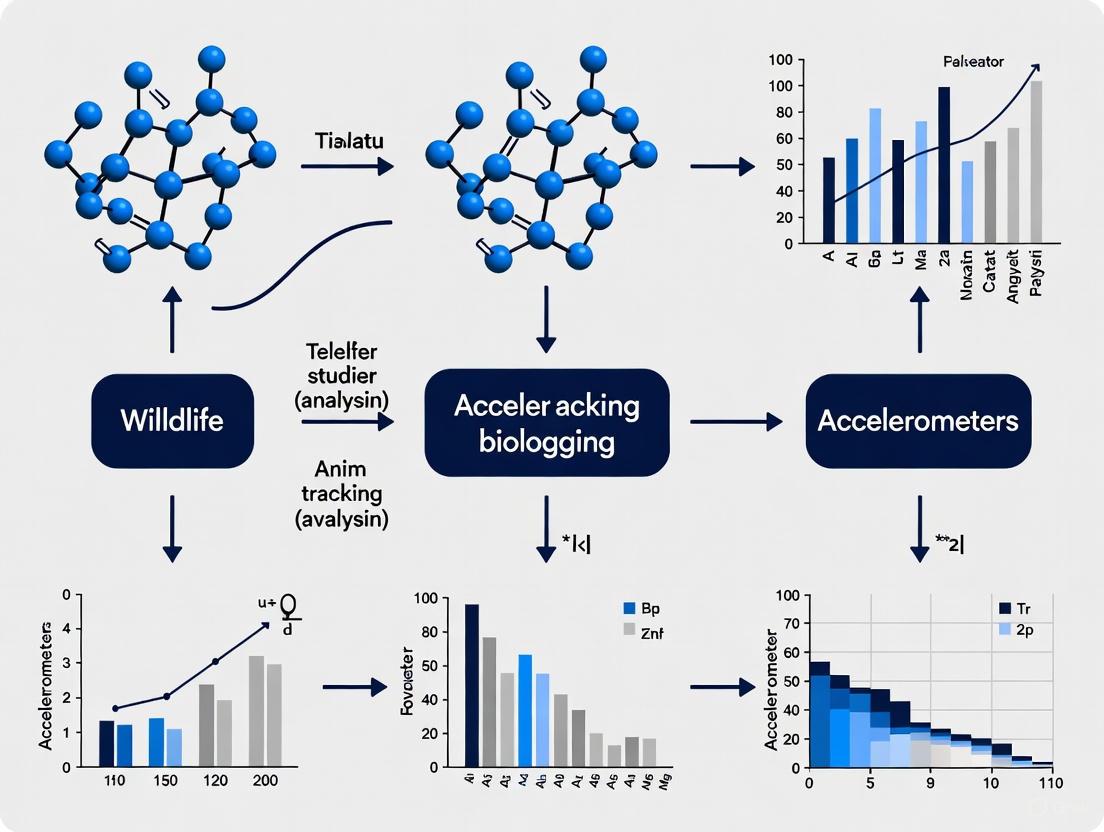
This article explores the pivotal role of accelerometers in modern wildlife biologging, a field revolutionizing animal ecology and conservation.
From Data to Discovery: The Transformative Role of Accelerometers in Wildlife Biologging
Abstract
This article explores the pivotal role of accelerometers in modern wildlife biologging, a field revolutionizing animal ecology and conservation. It covers the foundational principles of how these sensors record animal kinematics, then delves into advanced methodologies for behavioral classification, including the application of machine and deep learning. The content addresses critical troubleshooting and optimization techniques to ensure data quality and animal welfare, and provides a rigorous framework for model validation and comparative analysis of different computational approaches. Aimed at researchers and scientists, this synthesis offers a comprehensive guide for leveraging accelerometer data to uncover fine-scale behaviors, estimate energy expenditure, and generate actionable insights for species conservation and management.
The Biologging Revolution: How Accelerometers Unlock the Secret Lives of Animals
The use of animal-borne sensors, or biologgers, has revolutionized movement ecology by enabling researchers to remotely study animal behavior, physiology, and environmental interactions [1] [2]. Accelerometers have become a primary tool in these investigations, providing key insights into species' migrations, energy expenditure, and behavioral patterns [1] [3]. However, a fundamental limitation persists: these sensors typically measure movement from just a single point on the body, usually near the center of mass, providing limited information about the underlying whole-body kinematics that constitute specific behaviors [1].
This constraint creates significant challenges for behavioral inference. First, many biologically important behaviors require coordinated movement of multiple, spatially-isolated body parts. Second, vital ecophysiological behaviors such as ventilation, foraging, and appendage movement often occur far from the center of mass where tags are typically attached [1]. Consequently, researchers must often infer distal behaviors from movement metrics measured at a single, distant body position, which can obscure important kinematic details and reduce classification accuracy. This technical guide examines the core principles, methods, and emerging solutions for overcoming these limitations in wildlife biologging research.
Fundamental Constraints and Theoretical Framework
The Nyquist-Shannon Sampling Theorem in Biologging
A critical principle in sensor-based behavioral analysis is the Nyquist-Shannon sampling theorem, which states that the sampling frequency must be at least twice the frequency of the fastest essential body movement to accurately characterize a behavior [4]. However, practical applications reveal that merely meeting the Nyquist frequency may be insufficient for certain research objectives.
Experimental studies with European pied flycatchers (Ficedula hypoleuca) demonstrate that short-burst behavioral movements like swallowing food (mean frequency: 28 Hz) require sampling frequencies exceeding 100 Hz for accurate classification—significantly higher than the theoretical Nyquist frequency of 56 Hz [4]. In contrast, continuous rhythmic movements like flight can be adequately characterized using much lower sampling frequencies (12.5 Hz), though identifying rapid transient maneuvers within these bouts again requires higher-frequency sampling (100 Hz) [4].
Table 1: Accelerometer Sampling Requirements for Different Behavioral Types
| Behavior Type | Example | Minimum Recommended Sampling Frequency | Key Considerations |
|---|---|---|---|
| Short-burst behaviors | Swallowing, prey capture | 100 Hz (1.4× Nyquist frequency) | Essential for capturing rapid, transient events |
| Continuous rhythmic movements | Flight, steady swimming | 12.5 Hz | Adequate for general classification |
| Energy expenditure estimation | ODBA/VeDBA calculations | 10 Hz to 0.2 Hz | Varies with observation window length |
| Signal amplitude estimation | Biomechanical analysis | 4× signal frequency (2× Nyquist) | Required for accurate amplitude measurement |
The combination of sampling frequency and sampling duration significantly affects measurement accuracy. For long sampling durations, sampling at the Nyquist frequency suffices for accurate signal frequency and amplitude estimation. However, accuracy declines with decreasing sampling duration, particularly for signal amplitude estimation, which can show up to 40% standard deviation of normalized amplitude difference at low sampling durations [4].
Sensor Placement and Calibration Principles
Tag placement critically affects the acceleration signal and subsequent behavioral interpretation. Research comparing different attachment positions reveals substantial variation in dynamic body acceleration (DBA) metrics:
- Upper and lower back-mounted tags on pigeons (Columba livia) varied by 9% in DBA measurements [3]
- Tail and back-mounted tags on black-legged kittiwakes (Rissa tridactyla) varied by 13% in DBA [3]
- Different tag generations and attachment protocols on red-tailed tropicbirds (Phaethon rubricauda) resulted in DBA variations of 25% between seasons [3]
Absolute sensor accuracy presents another fundamental challenge. Laboratory trials demonstrate that individual acceleration axes require a two-level correction to eliminate measurement error [3]. Proper calibration is essential, as uncalibrated tags can produce DBA differences up to 5% for humans walking at various speeds [3]. A simple six-orientation (6-O) method—placing tags motionless in six defined orientations with each axis perpendicular to Earth's surface—can correct these inaccuracies under field conditions [3].
Methodological Advances: Overcoming Single-Point Limitations
Integrated Magnetometry for Appendage Tracking
A powerful approach to overcome single-point sensing limitations involves coupling magnetometers with miniature magnets attached to peripheral body parts. This method enables direct measurement of distal appendage movements that are difficult to detect with traditional accelerometry [1].
The underlying principle uses the magnetometer as a proximity sensor for a magnet affixed to a moving body part. Changes in magnetic field strength (MFS) correlate with the distance between sensor and magnet, enabling quantification of appendage position and movement dynamics [1]. This approach has successfully measured diverse behaviors including:
- Ventilation rates in flounder (operculum beat rate at 0.5 Hz)
- Scallop valve angles (revealing circadian modulation patterns)
- Shark jaw angles and chewing events during foraging
- Squid fin and jet propulsion movements during high-acceleration swimming [1]
Table 2: Magnetometry Applications Across Taxa
| Species Group | Target Behavior | Measurement Type | Key Finding |
|---|---|---|---|
| Bay scallop (Argopecten irradians) | Valve opening | Valve angle | Circadian rhythm modulation |
| Flounder | Ventilation | Operculum beat rate | 0.5 Hz frequency, few degrees magnitude |
| Shark | Foraging | Jaw angle, chewing events | Quantified feeding kinematics |
| Squid | Propulsion | Fin and jet coordination | Three distinct movements during acceleration |
Implementation requires careful consideration of three factors: (1) sensor and magnet size (minimized to reduce animal impact), (2) placement (based on target behavior kinematics), and (3) magnet orientation (pole surfaces normal to magnetometer to maximize MFS measurement range) [1].
The calibration process establishes the relationship between MFS and magnet distance using the equation:
d = [x1/(M(o)-x3)]^0.5 - x2
where d is magnetometer-magnet distance, M(o) is the root-mean-square of tri-axial MFS, and x1, x2, x3 are model coefficients [1]. Distance can then be converted to joint angle using trigonometric relationships based on the fixed distance from the focal body joint to the tag and magnet [1].
Diagram 1: Magnetometry deployment workflow for measuring peripheral movements.
Multi-Sensor Data Integration and Analysis Frameworks
The Integrated Bio-logging Framework (IBF) provides a systematic approach for matching appropriate sensors and analytical techniques to specific biological questions [2]. This framework emphasizes that multi-sensor approaches represent a new frontier in bio-logging, combining data from accelerometers, magnetometers, gyroscopes, pressure sensors, and environmental sensors to build comprehensive pictures of animal behavior [2].
A critical advancement in behavioral classification involves the Bio-logger Ethogram Benchmark (BEBE), the largest publicly available benchmark for comparing machine learning techniques across diverse taxa [5]. BEBE includes 1654 hours of data from 149 individuals across nine taxa, enabling systematic evaluation of analytical methods [5].
Key findings from BEBE implementation reveal:
- Deep neural networks outperform classical machine learning methods (e.g., random forests) across all tested datasets [5]
- Self-supervised learning approaches, particularly those pre-trained on human accelerometer data, outperform alternatives, especially when limited training data is available [5]
- Cross-species transfer learning shows promise for applying models to species with minimal annotation data [5]
Experimental Protocols and Implementation Guidelines
Sensor Selection and Deployment Protocol
Accelerometer Specification Protocol:
- Determine the fastest behavioral frequency of interest through pilot studies or literature review
- Calculate Nyquist frequency (2× fastest frequency) and apply safety margin (1.4-2×) based on behavior type [4]
- Select sensors with appropriate measurement range (±8g suitable for most bird flight studies) [4]
- Verify resolution requirements (8-bit resolution at 0.063g sufficient for many applications) [4]
Magnetometry Implementation Protocol:
- Conduct benchtop tests to determine minimum magnet size for target behavior detection [1]
- Select magnet with magnetic influence distance greater than maximum appendage movement range [1]
- Orient magnet pole surfaces normal to magnetometer plane [1]
- Use cyanoacrylate adhesive (e.g., Reef Glue) for marine applications [1]
Calibration and Validation Procedures
Accelerometer Calibration Protocol (6-O Method):
- Place tag motionless in six orientations with each axis perpendicular to Earth's surface [3]
- Record raw acceleration values for approximately 10 seconds per orientation [3]
- Calculate vectorial sum maxima for each orientation:
‖a‖ = √(x² + y² + z²)[3] - Apply two-level correction: (a) equalize maxima per axis, (b) apply gain to normalize to 1.0g [3]
Magnetometry Calibration Protocol:
- Position magnet at known discrete distances from magnetometer [1]
- Record MFS at each distance [1]
- Fit continuous model:
d = [x1/(M(o)-x3)]^0.5 - x2[1] - For joint angle calculation:
a = 2•arcsin(0.5d/L) × 100where L is distance from joint to tag/magnet [1]
Diagram 2: Behavioral classification workflow comparing classical and machine learning approaches.
The Scientist's Toolkit: Essential Research Materials
Table 3: Essential Research Reagents and Materials for Biologging Studies
| Item | Specification | Research Function | Application Examples |
|---|---|---|---|
| Tri-axial accelerometer | ±8g range, 100Hz sampling capability | Primary movement data collection | Behavior classification, energy expenditure estimation [4] |
| Magnetometer | High sensitivity anisotropic type | Appendage movement tracking via magnetic field detection | Measuring valve angles, jaw movements, fin motions [1] |
| Neodymium magnets | Cylindrical, 11mm diameter × 1.7mm height | Creating measurable magnetic field disturbances | Attachment to scallop valves, shark jaws, fish opercula [1] |
| Cyanoacrylate adhesive | Reef Glue for marine environments | Secure attachment of sensors and magnets | Affixing tags to marine invertebrates and fishes [1] |
| Leg-loop harness | Teflon or elastic cord material | Secure tag attachment to birds | Back-mounted sensor placement on flying birds [4] |
| Calibration apparatus | Level surface with precise orientation capability | Sensor calibration before deployment | 6-O method accelerometer calibration [3] |
The limitations of single-point sensing in animal biologging are being systematically addressed through methodological innovations in sensor technology, sampling protocols, and analytical frameworks. The integration of magnetometry with accelerometry enables researchers to overcome the fundamental constraint of single-point measurement by directly quantifying peripheral appendage movements [1]. Adherence to Nyquist-Shannon sampling principles with appropriate safety margins ensures accurate characterization of diverse behavioral types, from short-burst events to sustained rhythmic movements [4]. The development of standardized benchmarks and frameworks like BEBE and IBF provides structured approaches for matching sensor combinations and machine learning techniques to specific biological questions [5] [2]. As these methodologies continue to evolve, they will dramatically expand our ability to measure and understand the full complexity of animal behavior in natural environments.
The field of wildlife ecology has been transformed by the development of bio-logging devices, which acquire information on the secret lives of animals in the wild that would otherwise be challenging to obtain via direct observations [6]. These devices have rapidly evolved in recent years, featuring reduced size, increased battery life, and an increasing number of sensors [6]. Among these sensors, accelerometers have emerged as particularly valuable tools for quantifying animal behavior, energy expenditure, and physiological states across a diverse range of species, from small songbirds to large mammals [4].
Accelerometers measure proper acceleration along three orthogonal axes, providing detailed information about body orientation, movement, and specific behaviors [6]. The data obtained from these devices on animals both in captivity and in the wild have been used to assess several aspects of their biology and physiology, with applications including estimating activity patterns, habitat use, energy expenditure, body temperature, sleep, mortality, and reproductive events [6]. This technical guide examines the methodologies, analytical frameworks, and ecological insights derived from accelerometer data in wildlife biologging studies, providing researchers with a comprehensive resource for implementing these technologies in their research programs.
The Accelerometer Data Processing Pipeline
The transformation of raw acceleration signals into meaningful ecological data follows a structured pipeline encompassing data collection, preprocessing, behavioral classification, and ecological interpretation. Each stage requires careful consideration of technical parameters and analytical decisions that ultimately determine the validity and utility of the resulting ecological insights.
Table 1: Stages in the Accelerometer Data Processing Pipeline
| Processing Stage | Key Considerations | Output |
|---|---|---|
| Data Collection | Sampling frequency, device placement, deployment duration, calibration | Raw tri-axial acceleration data (x, y, z axes) |
| Data Preprocessing | Filtering (high-pass, low-pass), calibration, vector calculation | Static acceleration (body position), dynamic acceleration (movement) |
| Feature Extraction | Window size, feature selection (e.g., ODBA, VeDBA, pitch, roll) | Quantitative metrics for classification |
| Behavioral Classification | Machine learning algorithms (random forest, SVM), validation method | Classified behaviors (resting, foraging, moving, etc.) |
| Ecological Interpretation | Contextual data (GPS, landscape metrics, temporal factors) | Ecological insights on behavior, energy, habitat use |
Figure 1: The accelerometer data processing workflow, from raw data collection to ecological insight generation.
Critical Technical Considerations for Data Collection
Sampling Frequency Requirements
The selection of appropriate sampling frequencies represents a fundamental compromise between data resolution and logger deployment duration due to battery and storage constraints. The Nyquist-Shannon sampling theorem establishes that the sampling frequency should be at least twice the frequency of the fastest body movement essential to characterize the behavior of interest [4]. However, empirical studies demonstrate that real-world applications often require exceeding this theoretical minimum.
Experimental research with European pied flycatchers (Ficedula hypoleuca) revealed that a sampling frequency higher than the Nyquist frequency at 100 Hz was needed to classify fast, short-burst behavioral movements such as swallowing food with a mean frequency of 28 Hz [4]. In contrast, high-frequency movements with longer durations such as flight could be characterized adequately using much lower sampling frequency of 12.5 Hz [4]. To identify rapid transient prey catching manoeuvres within flight bouts, however, a high frequency sampling at 100 Hz was again necessary [4].
Table 2: Sampling Frequency Requirements for Different Behavioral Types
| Behavior Category | Representative Behaviors | Minimum Sampling Frequency | Recommended Sampling Frequency |
|---|---|---|---|
| Short-Burst Behaviors | Swallowing, prey capture, escape responses | 2 × Nyquist frequency | 1.4 × Nyquist frequency (≥100 Hz for 28 Hz behaviors) |
| Rhythmic Sustained Behaviors | Flight, walking, running | Nyquist frequency | 12.5-32 Hz depending on species |
| Postural Changes | Resting, standing, vigilance | 1-10 Hz | 5-10 Hz |
For both experimental data and simulated data, the combination of sampling frequency and sampling duration affects the accuracy of signal frequency and amplitude estimation [4]. For long sampling durations, the sampling frequency equal to the Nyquist frequency was adequate for accurate signal frequency and amplitude estimation. Accuracy declined with decreasing sampling duration, especially for signal amplitude estimation with up to 40% standard deviation of normalized amplitude difference [4]. To accurately estimate signal amplitude at low sampling duration, a sampling frequency of four times the signal frequency was necessary (two times the Nyquist frequency) [4].
Device Attachment and Calibration
Proper device attachment is critical for obtaining meaningful acceleration data. Accelerometers are typically attached to animals using harnesses, collars, or adhesives, with placement location depending on the species and research questions. For birds, attachment over the synsacrum using a leg-loop harness has proven effective [4], while for mammals, collar-mounted systems are commonly employed [7].
Calibration procedures must be implemented before logger deployment to ensure data quality. This includes assessing the output of each axis relative to gravity and correcting for any sensor offsets [4]. For tri-axial accelerometers, it is possible to calculate variables that help understand how animals move, such as static and dynamic acceleration, the amplitude of dynamic acceleration, body pitch (vertical orientation of equipped animal), standard error, and overall dynamic body acceleration (ODBA) [6].
Behavioral Classification Methodologies
Machine Learning Approaches
The classification of animal behaviors from accelerometer data predominantly employs machine learning algorithms trained on validated datasets. Random forest models have demonstrated particular efficacy in this domain, achieving prediction accuracies exceeding 80% for various species [6]. For example, tri-axial accelerometers used to predict the behaviors of a captive Bengal slow loris achieved an accuracy of 80.7 ± 9.9%, with resting predicted with 99.8% accuracy and lower accuracy for feeding and locomotor behaviors [6].
The behavioral classification process typically involves several standardized steps. First, accelerometer data is collected concurrently with video recordings to establish ground-truth behavior labels [6]. Next, features are extracted from the acceleration signals within defined time windows, including metrics such as ODBA, variance, mean, and frequency-domain features [4]. The labeled dataset is then used to train machine learning classifiers, with performance validation conducted through k-fold cross-validation or hold-out testing [6].
Case Study: European Hare Behavior and Landscape Ecology
Accelerometer research on European hares (Lepus europaeus) demonstrates the ecological insights possible through this technology. In a study examining 34 hares in contrasting agricultural landscapes, accelerometer data classified behavior into five categories: resting, foraging, moving, grooming, and standing upright (vigilance behavior) [7]. The research revealed that during peak breeding, hares in areas of high habitat diversity rested more, moved less and spent less time searching for resources [7]. During winter, hares moved more and rested less, and females rested less and foraged more in areas with large agricultural fields [7].
These behavioral findings translated into significant ecological conclusions: complex landscapes are particularly important during the breeding season, allowing animals to allocate enough energy into reproduction, while in winter, hares in areas of low habitat diversity may not find enough thermal and anti-predator shelter to move as much as they would need to meet their requirements [7]. This demonstrates how accelerometer data can directly inform conservation strategies by identifying critical habitat requirements across different seasons.
Figure 2: The conceptual pathway from landscape characteristics to conservation implications, with accelerometer data providing critical behavioral evidence.
Estimating Energy Expenditure from Acceleration Data
The estimation of energy expenditure represents a major application of accelerometer data in wildlife studies. The most common approaches utilize Overall Dynamic Body Acceleration (ODBA) and Vector of Dynamic Body Acceleration (VeDBA) as proxies for energy utilization [4]. These metrics sum the dynamic components of acceleration across the three axes after removing the static gravitational component, providing a measure of movement-based energy expenditure.
Research indicates that for estimating animal field energy expenditure, lower accelerometer sampling frequencies (i.e., from 10 down to 0.2 Hz) may be sufficient when calculations of ODBA are consistent over a 5-minute window [4]. However, the relationship between ODBA and energy expenditure varies across species, behaviors, and environmental contexts, requiring validation through concurrent measures of energy expenditure such as doubly labeled water or respirometry when possible.
The integration of accelerometer-derived energy metrics with GPS data enables researchers to create energy landscapes, mapping spatial patterns of energy expenditure across an animal's home range. This approach reveals how landscape features influence movement costs and energy allocation strategies, with significant implications for understanding habitat selection, resource use, and the energetic consequences of human-modified environments.
Data Visualization and Communication Strategies
Effective visualization of accelerometer-derived data remains challenging due to the multidimensional and temporal nature of the data. A review of visualization practices for 24/7 human movement behavior (with applications to wildlife studies) found that most researchers use bar charts, line graphs, or pie graphs to visualise movement behaviour data [8]. However, these conventional approaches may not optimally communicate complex behavioral patterns to diverse audiences including policymakers, conservation practitioners, and the public.
The development of context-specific visualization frameworks represents an emerging priority in the field. Based on the sender-receiver model for effective communication, such frameworks guide researchers in selecting visualizations that align not only with the characteristics of the data but also with the needs and expectations of the target audience [8]. The optimal visualization strategy depends on the specific research question, the metrics being communicated, and the intended audience, whether scientific peers, conservation stakeholders, or public outreach.
Research Toolkit: Essential Methodological Components
Table 3: Essential Research Toolkit for Accelerometer Biologging Studies
| Component Category | Specific Tools & Methods | Function & Application |
|---|---|---|
| Hardware Solutions | Tri-axial accelerometers, GPS loggers, video validation systems | Data collection, positional context, ground-truth labeling |
| Data Processing Tools | High-pass/low-pass filters, calibration algorithms, ODBA/VeDBA calculations | Data preprocessing, metric extraction, quality control |
| Classification Algorithms | Random forest, convolutional neural networks, support vector machines | Behavioral classification from acceleration signals |
| Validation Approaches | Video recording, direct observation, cross-validation | Model training and accuracy assessment |
| Analysis Frameworks | Machine learning pipelines, statistical models, landscape metrics | Ecological interpretation, hypothesis testing |
Accelerometer biologging has fundamentally transformed our ability to quantify animal behavior, energy expenditure, and ecological relationships across temporal and spatial scales. The translation of raw acceleration data into meaningful ecological insight requires careful attention to sampling protocols, analytical methods, and interpretive frameworks. As technological advancements continue to reduce device size and increase battery capacity, the applications of accelerometers in wildlife research will expand accordingly.
Future developments in the field will likely include improved machine learning classification techniques, the integration of accelerometer data with other sensor modalities (e.g., physiological sensors, environmental sensors), and enhanced visualization tools for communicating results to diverse audiences. Furthermore, standardized protocols for data collection and analysis will facilitate cross-study comparisons and meta-analyses, strengthening the ecological insights derived from accelerometer studies across taxa and ecosystems. By implementing the methodologies and considerations outlined in this technical guide, researchers can maximize the ecological knowledge gained from accelerometer biologging studies, advancing both theoretical ecology and applied conservation efforts.
The role of accelerometers in wildlife biologging studies research is foundational, providing critical data on animal posture, dynamic body movement, and activity-specific energy expenditure [2]. However, a paradigm shift is underway, moving from single-sensor studies toward the integration of multi-sensor suites. By fusing data from magnetometers, gyroscopes, and environmental sensors with core accelerometer data, researchers can overcome the limitations of a single data point of attachment and gain a more holistic, mechanistic understanding of animal behavior, movement ecology, and physiology in natural environments [1] [2]. This integration enables the reconstruction of fine-scale 3D movements, direct measurement of specific behaviors, and the contextualization of animal movement within its environment.
The Integrated Sensor Suite: Core Technologies and Functions
The power of modern biologging emerges from the complementary data streams provided by different sensors. The table below summarizes the primary functions of each core sensor technology.
Table 1: Core Sensors in an Integrated Biologging Toolkit
| Sensor Type | Primary Measurable | Key Applications in Biologging | Example |
|---|---|---|---|
| Accelerometer | Dynamic body acceleration and posture [2] | Behavior identification, energy expenditure, activity levels [2] [9] | Classifying foraging vs. traveling [10] |
| Magnetometer | Earth's magnetic field (compass heading); relative position via attached magnets [1] [2] | Animal heading/orientation; measuring appendage movement (e.g., jaw angles, fin beats) [1] [11] | Quantifying shark jaw angle during foraging [1] |
| Gyroscope | Angular velocity [11] | High-temporal resolution turning rates, attitude change, reconstruction of complex maneuvers [11] | Measuring fast-start escape performance in fish [11] |
| Environmental (e.g., Pressure, Temperature) | Depth/altitude, ambient environmental conditions [2] | 3D space use, reconstructing paths via dead-reckoning, ecological context [2] | Tracking dive profiles of marine predators |
Magnetometry: Augmenting Behavioral Inferencing
Technical Principles and Methodologies
Although commonly used as a compass, a magnetometer can function as a proximity sensor when coupled with a small magnet affixed to a peripheral appendage [1]. This method leverages changes in magnetic field strength (MFS) to directly measure the movement of spatially-isolated body parts that are difficult to observe with an accelerometer alone. The technical workflow involves:
- Sensor and Magnet Selection: Choosing the smallest possible magnet with a magnetic influence distance greater than the maximum expected movement range. The magnet's pole surfaces should be oriented normal to the magnetometer to maximize the range of MFS measurements [1].
- Calibration: Establishing a continuous model between the root-mean-square of tri-axial MFS and the magnetometer-magnet distance. This relationship is described by the equation: (d = {\left[\frac{x1}{M\left(o\right)-x3}\right]}^{0.5}-x2) where (d) is the distance, (M(o)) is the MFS, and x1, x2, and x3 are coefficients from a best-fit model [1].
- Conversion to Joint Angle: The distance, (d), can be converted to the angle of the connecting joint ((a)) using the equation: (a=2\bullet \arcsin\left(\frac{0.5d}{L}\right)\times 100) where (L) is the distance from the focal body joint to the tag or magnet [1].
Experimental Applications and Protocols
This magnetometry method has been successfully applied across diverse taxa to measure previously elusive behaviors, demonstrating its broad utility.
Table 2: Experimental Applications of Magnetometry in Biologging
| Species | Target Behavior | Experimental Protocol | Key Findings |
|---|---|---|---|
| Bay Scallop (Argopecten irradians) | Valve opening angle [1] | Sensor glued to upper valve, magnet on lower valve; animals placed in natural conditions for 5 days [1] | Scallops modulated valve opening angles on a circadian rhythm [1] |
| Shark | Jaw movement during foraging [1] | Magnetometer and magnet placed to measure gape angle [1] | Method quantified jaw angle and identified chewing events [1] |
| Squid | Fin and jet propulsion movements [1] | Sensor and magnet configured to detect fin and mantle motions [1] | Revealed three prominent, coordinated movements during high-acceleration swimming [1] |
Gyroscopes: Capturing High-Frequency Rotational Dynamics
Technical Advantages Over Accelerometer-Only Systems
While accelerometers can estimate attitude, they cannot directly measure rotational movement. Gyroscopes fill this gap by directly measuring angular velocity with high temporal resolution (e.g., 100 Hz to 1 kHz) [11]. This is critical for analyzing brief, rapid behaviors like escape responses or aerial maneuvers. A key advantage is the ability to accurately separate gravity-based acceleration from dynamic, movement-induced acceleration, which is challenging with an accelerometer alone [11]. Sensor fusion, using a gyroscope alongside an accelerometer and magnetometer (a 9-axis system), allows for robust reconstruction of fine-scale dynamic acceleration, gravity-based acceleration, and animal attitude [11].
Experimental Protocol: Measuring Fish Escape Performance
A dedicated experiment on Japanese amberjack (Seriola quinqueradiata) demonstrates the application of a gyroscope-incorporating data logger ("gyro logger") [11]:
- Sensor Package: A custom gyro logger containing a 3-axis gyroscope, a 3-axis accelerometer, and a 3-axis magnetometer was used.
- Sampling Frequency: Data was recorded at a high frequency of 500 Hz to capture the rapid nuances of fast-start escape movements.
- Experimental Setup: Escape movements of fish were elicited in a tank and simultaneously recorded by the gyro logger and high-speed video cameras (200 Hz) for validation.
- Data Analysis: Locomotor variables such as cumulative distance, velocity, acceleration, turning rate, and turning angle were reconstructed from the gyro logger measurements and compared to camera-derived data to validate accuracy [11].
The results showed significant linear relationships between most locomotor variables obtained from the gyro logger and those from high-speed video, confirming the gyro logger's high accuracy for monitoring movement performance [11].
The Scientist's Toolkit: Essential Research Reagent Solutions
Implementing advanced multi-sensor biologging requires careful selection of hardware and analytical tools. The following table details key components and their functions.
Table 3: Essential Research Reagents and Materials for Multi-Sensor Biologging
| Item | Function/Description | Key Considerations |
|---|---|---|
| Inertial Measurement Unit (IMU) | A sensor package that typically includes an accelerometer, gyroscope, and magnetometer [11]. | The core of the multi-sensor tag. Select based on required sampling frequency, resolution, and size/weight constraints [2] [11]. |
| Neodymium Magnets | Small, powerful magnets used in magnetometry applications to track appendage movement [1]. | Size and magnetic strength must be calibrated to the species and behavior. The total mass of the sensor and magnet should follow the 3% body mass rule or more updated athleticism metrics [1]. |
| Custom Data Logger (e.g., Gyro Logger) | A device housing the sensors, processor, memory, and battery [11]. | Often requires custom development for specific research questions. Must be miniaturized and packaged for the target species. |
| Supervised Machine Learning Algorithms | Computational methods for classifying fine-scale behaviors from multi-sensor data [9] [10]. | Requires labeled data for training. Models include Random Forests, Hidden Markov Models (HMMs), and Neural Networks [10]. Rigorous validation is critical to avoid overfitting [9]. |
A Workflow for Multi-Sensor Data Acquisition and Analysis
The following diagram illustrates the integrated workflow from data collection to behavioral insight, highlighting the role of each sensor and the importance of rigorous validation.
Analytical Frontiers: Data Fusion and Machine Learning Validation
The Integrated Bio-logging Framework (IBF)
To navigate the complexity of multi-sensor studies, researchers can adopt an Integrated Bio-logging Framework (IBF) [2]. This framework connects four critical areas—biological questions, sensors, data, and analysis—through a cycle of feedback loops, with multi-disciplinary collaboration at its core [2]. The IBF aids in matching the most appropriate sensors and analytical techniques to specific biological questions, whether following a question-driven or data-driven approach.
The Critical Importance of Robust Model Validation
The application of supervised machine learning (ML) to classify behavior from accelerometer and other sensor data is increasingly common [9] [10]. A paramount challenge in this process is overfitting, where a model memorizes specifics of the training data rather than learning generalizable patterns, leading to poor performance on new data [9]. A systematic review revealed that 79% of studies using supervised ML for behavior classification did not adequately validate for overfitting [9].
Key guidelines for robust validation include:
- Independent Test Sets: Data must be split into independent training and testing sets. The test set must be totally unseen by the model during training to avoid "data leakage" and provide a realistic estimate of performance on new data [9].
- Temporal and Individual Independence: For biologging data, the most robust validation tests the model on data from different individuals or from the same individuals but at future time periods, rather than a simple random split of all data [10]. This tests the model's ability to generalize, which is the ultimate goal.
- Appropriate Performance Metrics: Researchers must select performance metrics that are appropriate for their specific biological question and data set, and be aware that overfitting can be masked by optimization on an inappropriate metric [9].
The integration of accelerometers into wildlife biologging studies has revolutionized our ability to quantify animal behavior, physiology, and ecology remotely. As core sensors in animal-attached tags, accelerometers provide high-resolution data on animal movement, enabling researchers to infer activity budgets, estimate energy expenditure, and understand habitat use at unprecedented spatial and temporal scales. This technical guide details the core methodologies, applications, and analytical frameworks for employing accelerometers in wildlife research, situating these applications within the broader thesis of their transformative role in biologging. By converting raw acceleration data into biologically meaningful metrics, researchers can address fundamental questions in behavioral ecology, conservation, and energy allocation across a wide range of species.
Tracking Activity Budgets
From Raw Data to Behavioral Classification
The process of determining activity budgets from accelerometer data involves classifying time-series data into discrete behaviors.
- Data Collection: Tri-axial accelerometers sample acceleration at high frequencies (typically 20-100 Hz), capturing data on posture and dynamic movement [12].
- Data Processing: Raw data is segmented into epochs (e.g., 2-second windows), from which summary statistics (features) like mean, variance, and pitch/roll are calculated [13].
- Behavior Classification:
- Supervised Machine Learning: A model is trained on labeled data where accelerometer data is paired with direct behavioral observations. This model then classifies unlabeled data into behavioral states [13] [14].
- Unsupervised Learning: Data is clustered based on similarities in the acceleration signal, with clusters subsequently assigned to behaviors by expert interpretation [13].
Methodological Considerations and Protocols
The accuracy of activity budgets is highly dependent on data collection and processing protocols.
- The Importance of Continuous Sampling: Intermittent sampling of accelerometer data can miss rare but critical behaviors. Research on Pacific Black Ducks showed that for rare behaviors like flying, sampling intervals longer than 10 minutes led to error ratios greater than 1, meaning the sampling error was larger than the actual time spent on the behavior [13]. Continuous on-board processing ensures accurate time-activity budgets.
- On-Board Processing: To overcome battery and data storage limitations, a powerful advancement involves processing raw accelerometer data directly on the tag. This allows for continuous behavior recording over extended periods, providing a more complete picture of animal behavior [13].
- Handling Imperfect Models: Machine learning models for behavior classification are often evaluated with performance metrics (e.g., F1-score). However, biological validation is crucial. A model with a seemingly 'low' F1 score (e.g., 60-70%) can still be powerful for detecting expected biological patterns and testing ecological hypotheses [14].
Table 1: Advantages of Continuous On-Board Behavior Classification [13]
| Aspect | Intermittent Sampling | Continuous On-Board Classification |
|---|---|---|
| Time-Activity Budget Accuracy | Prone to missing rare behaviors; accuracy decreases with longer intervals | High fidelity; captures all behavior bouts |
| Data Volume & Battery Life | Lower data volume per day, but transmission of raw data is costly | Highly efficient; only behavior codes are stored/transmitted |
| Study Duration | Limited by need to transmit large raw data files | Can be extended for long-term ecological studies |
| Application to Home Range | Provides location data only | Enables understanding of how specific sites are used for specific behaviors |
Estimating Energy Expenditure
Key Methodological Approaches
Two primary methods are used to derive energy expenditure from accelerometry: Dynamic Body Acceleration and the Time-Energy Budget approach.
- Dynamic Body Acceleration (DBA): DBA is a integrated metric that measures the high-frequency, movement-induced component of acceleration, excluding the static gravitational force. It includes:
- Overall DBA (ODBA): The sum of the dynamic acceleration from all three axes.
- Vectorial DBA (VeDBA): The magnitude of the dynamic acceleration vector, calculated as the square root of the sum of squared dynamic accelerations for each axis. DBA serves as a proxy for movement-based energy expenditure [12] [3].
- Time-Energy Budgets: This approach first uses accelerometry (often with GPS) to classify an animal's behavior over time. Then, activity-specific metabolic rates—determined via calibration studies using Doubly Labelled Water (DLW)—are assigned to each behavior. Total energy expenditure is the sum of the products of time spent in each behavior and its respective metabolic rate [12].
Experimental Protocol: Calibrating Energy Expenditure with Doubly Labelled Water
A critical protocol for validating accelerometry-based energy estimates involves calibration against the Doubly Labelled Water (DLW) technique, as demonstrated in a study on black-legged kittiwakes [12].
- Animal Instrumentation: Fit study animals (e.g., breeding kittiwakes, n=80) with GPS-accelerometer tags.
- DLW Administration and Measurement:
- Capture birds and administer an intraperitoneal or intramuscular injection of DLW.
- Take an initial blood sample to establish baseline isotope levels.
- Release the birds back into the wild for a measurement period (typically hours to days).
- Recapture the birds and take a final blood sample.
- Analyze blood samples to determine the rate of CO2 production, which is converted to energy expenditure.
- Data Correlation and Model Building:
- Calculate DBA and construct time-energy budgets from the accelerometer and GPS data collected during the DLW measurement period.
- Use statistical models (e.g., linear regression) to correlate DBA and time-energy budget metrics with the DLW-derived energy expenditure.
- Derive calibration coefficients that allow future acceleration data to be converted into estimates of energy expenditure without the need for DLW.
Comparative Analysis of Energetic Models
Research on black-legged kittiwakes has shown that while energy expenditure from DLW correlates with DBA, time-energy budgets often provide a superior predictive model [12]. This is particularly true for species that engage in behaviors with low movement but divergent metabolic costs, such as gliding flight, where DBA can be zero but energy expenditure is not.
Table 2: Comparison of Energy Expenditure Estimation Methods [12]
| Method | Principle | Advantages | Limitations | Best For |
|---|---|---|---|---|
| Dynamic Body Acceleration (DBA) | Proxy for energy expenditure based on movement intensity | Direct calculation from acceleration; works well for active, movement-based behaviors | Can be inaccurate during low-movement activities (e.g., gliding, resting); sensitive to tag placement | Species with consistently active lifestyles |
| Time-Energy Budget | Sum of (Time per behavior × Behavior-specific metabolic rate) | Accounts for divergent costs of different activities; more robust for inactive species | Requires calibration to determine activity-specific metabolic rates | Species with mixed activity types (e.g., flapping vs. gliding flight) |
The same kittiwake study provided specific energetic costs, calibrated with DLW, revealing stark contrasts:
- Flapping Flight: 5.54 × Basal Metabolic Rate (BMR)
- Gliding Flight: 0.80 × BMR (equivalent to the cost of resting at the colony) [12]
This highlights the critical importance of distinguishing between energetically distinct behaviors in models.
Determining Habitat Use
Integrating accelerometer data with GPS positioning allows researchers to move beyond simple spatial location (habitat) to understand the functional significance of that habitat use (behavior).
- Linking Behavior to Location: By matching continuous behavior records from accelerometers with simultaneous GPS fixes, researchers can create maps that show not just where an animal is, but what it is doing there. This reveals how specific habitats are used for critical activities like foraging, resting, or nesting [13].
- Refining Distance Traveled: Estimates of daily distance traveled based solely on hourly GPS fixes can be significantly underestimated. When combined with behavior records (e.g., identifying flying bouts), the distance can be recalculated based on actual movement paths, leading to estimates up to 540% higher than those from GPS alone [13].
- Energetic Landscapes: By combining habitat use, behavior, and energy expenditure (from DBA or time-energy budgets), researchers can model the "energy landscape" an animal experiences, identifying areas of high foraging yield or high locomotor cost [12].
The Scientist's Toolkit: Essential Research Reagents and Materials
Table 3: Key Materials and Equipment for Accelerometry Studies
| Item | Function | Technical Notes |
|---|---|---|
| Tri-axial Accelerometer Tag | Measures acceleration in three perpendicular axes (surge, heave, sway) at high frequencies. | Sampling rates typically 20-100 Hz; should be a small, lightweight percentage of the animal's body mass [12] [15]. |
| GPS Logger | Provides spatiotemporal data on animal position. | Integrated with accelerometers to link behavior with location; fix interval can be programmed [13]. |
| Doubly Labelled Water (DLW) | Gold-standard method for measuring field metabolic rate for calibration. | Involves injecting isotopes (²H, ¹⁸O) and tracking their elimination via blood samples [12]. |
| Machine Learning Software | Used to classify behaviors from raw accelerometer data. | Platforms like R or Python with specialized libraries (e.g., scikit-learn) are used to build and train supervised classification models [14] [13]. |
| Calibration Rig | Used to assess and correct for sensor inaccuracies. | A simple 6-orientation method corrects for offset and gain errors, ensuring data accuracy across devices [3]. |
Critical Experimental Considerations
Sensor Calibration and Tag Placement
The accuracy of accelerometer data is paramount and can be affected by hardware and deployment choices.
- Sensor Calibration: Accelerometers can have inherent inaccuracies introduced during manufacturing. A simple 6-orientation (6-O) calibration method—where the tag is placed motionless in six defined orientations—can identify and correct for these errors. This involves applying correction factors to ensure the vector sum of the three axes is 1g when stationary. Failure to calibrate can lead to errors in DBA of up to 5% [3].
- Tag Placement: The position of the tag on the animal's body (e.g., back, tail, sternum) significantly affects the amplitude of the acceleration signal. Studies on kittiwakes and pigeons show that DBA can vary by 9-13% depending on tag placement. This is due to differential movement of body parts (e.g., tail vs. thorax). Consistent placement is critical for within-study comparisons, and placement should be documented and reported for cross-study data integration [3] [15].
Workflow Visualization
The following diagram illustrates the integrated workflow for using accelerometers to study activity budgets, energy expenditure, and habitat use.
Integrated Workflow for Wildlife Biologging
Accelerometers have fundamentally expanded the scope of wildlife biologging, providing a window into the hidden lives of animals. Through robust protocols for classifying behavior, calibrating energy expenditure, and integrating data with spatial location, researchers can now construct comprehensive pictures of how animals allocate time and energy across their environments. As technologies advance, particularly in on-board processing and machine learning, the potential for long-term, fine-scale studies will only grow. Careful attention to sensor calibration, tag placement, and biological validation remains essential to ensure that the data driving these ecological insights are both accurate and meaningful.
Behavioral Inference in Action: Machine Learning and Sensor Fusion Techniques
The integration of machine learning (ML) with data from animal-borne accelerometers is revolutionizing wildlife biologging studies. This synergy addresses a fundamental challenge in ecology: converting vast volumes of raw sensor data into quantifiable, meaningful insights about animal behavior, energy expenditure, and ecological interactions [16]. The workflow from raw data to classified behaviors enables researchers to move beyond simple location tracking to understand how animals interact with their environments at fine spatiotemporal scales. This is particularly crucial for conservation, as it allows for rapid assessment of wildlife responses to environmental change and human pressures [17] [16]. However, the path from data collection to a reliable classification model is complex, requiring careful attention to sensor calibration, data processing, model validation, and ethical considerations to avoid biased or ecologically invalid results [3] [9] [18].
The Biologging Data Acquisition Foundation
The machine learning workflow is fundamentally dependent on the quality and characteristics of the input data. Biologging devices, or bio-loggers, are sophisticated miniaturized sensors attached to animals to record their movements and environment.
Core Sensors and Specifications
Modern bio-loggers often package multiple sensors into a single, low-impact device. The Inertial Measurement Unit (IMU) is particularly central to behavior recognition, typically comprising a 3-axis accelerometer, a 3-axis magnetometer, and sometimes a 3-axis gyroscope [19]. These sensors measure acceleration, orientation, and rotation, respectively. For instance, the WildFi tag—a state-of-the-art bio-logger—samples its 9-axis IMU (accelerometer, gyroscope, magnetometer) at 50 Hz, generating approximately 900 bytes of data per second [19]. GPS sensors provide location context, while depth sensors are used for aquatic species. Device specifications are a careful balance between data resolution, device size, weight, and battery life, often constrained by the need to keep the tag's weight below 3-5% of the animal's body mass [1] [19].
Emerging Sensing Techniques
Beyond standard accelerometry, new methods are expanding the behavioral features that can be measured. Magnetometry is one such advanced technique. By affixing a small magnet to a moving appendage (e.g., a jaw, fin, or valve) and a magnetometer on the main tag, researchers can precisely track the distance and angle between them. This method has successfully quantified shark jaw angles during foraging, scallop valve opening cycles, and squid fin movements during propulsion—behaviors that are difficult to measure with traditional accelerometry alone [1].
The Machine Learning Workflow: A Step-by-Step Guide
Transforming raw sensor data into labeled behaviors is a multi-stage process. The following diagram and sections detail this workflow.
Step 1: Data Acquisition and Calibration
The initial phase involves collecting high-quality sensor data. Calibration is a critical first step that is often overlooked. Accelerometers can exhibit measurement inaccuracies due to sensor manufacturing and soldering processes. These inaccuracies introduce error into proxies for energy expenditure like Dynamic Body Acceleration (DBA) [3]. A simple 6-orientation (6-O) calibration method can be performed in the field: the static tag is placed in six distinct orientations (e.g., like the faces of a die) where each sensor axis is aligned with gravity. The recorded values are used to correct for bias and scaling errors in each axis, ensuring the vector sum of static acceleration is precisely 1g [3].
Tag placement on the animal's body significantly affects the signal. Studies on birds have shown that DBA values can vary by 9-13% depending on whether the tag is mounted on the back versus the tail [3]. Therefore, calibration and placement must be standardized within a study to ensure data consistency.
Step 2: Data Pre-processing
Raw time-series data must be cleaned and formatted for analysis.
- Filtering: High-frequency noise is removed using low-pass filters. Some studies also apply a high-pass filter to separate the dynamic acceleration (resulting from movement) from the static acceleration (gravity) component.
- Segmentation: The continuous data stream is divided into short, fixed-length windows (e.g., 3-10 seconds) for analysis. Windows may be overlapping or non-overlapping. The choice of window length involves a trade-off: shorter windows can capture brief behaviors, while longer windows provide more data for stable feature calculation [9].
Step 3: Ground Truth Collection
For supervised ML, sensor data must be paired with accurate behavior labels.
- Direct Observation: Researchers visually observe tagged animals and log their behaviors in real time, synchronizing these observations with the sensor data timeline [20].
- Animal-Borne Video: Cameras mounted on the animals, such as the i-Pilot tag, provide direct visual validation of behaviors corresponding to specific sensor readings [21]. This is especially valuable for cryptic or aquatic species that are difficult to observe directly.
Step 4: Feature Engineering
From each data window, a set of quantitative features is extracted that characterize the signal. These features, rather than the raw data points, are what the ML model uses to learn patterns. Common features calculated for each axis and their derived vectors (like ODBA and VeDBA) include:
- Statistical Features: Mean, standard deviation, skewness, kurtosis.
- Frequency-Domain Features: Dominant frequency, magnitude of the dominant frequency, calculated using a Fast Fourier Transform (FFT).
- Signal Entropy: A measure of signal unpredictability and complexity.
Step 5: Model Training and Rigorous Validation
A variety of ML algorithms can be used for classification. A study on wild red deer compared multiple algorithms and found Discriminant Analysis to be the most accurate for classifying behaviors like lying, feeding, standing, walking, and running using low-resolution data [20]. Other commonly used models include Random Forests, Support Vector Machines, and more recently, deep learning models [16].
Validation is the cornerstone of a reliable model. A review of 119 studies found that 79% did not employ sufficient validation methods to robustly detect overfitting [9]. An overfit model appears to perform well on its training data but fails to generalize to new, unseen data.
Key validation practices include:
- Strict Data Splitting: The labeled dataset must be split into a training set (e.g., 70%), a validation set (e.g., 15%) for tuning model hyperparameters, and a held-out independent test set (e.g., 15%) for the final performance evaluation. Data from the same individuals must not leak across these sets; a "leave-one-animal-out" cross-validation strategy is often best [9].
- Appropriate Performance Metrics: For imbalanced datasets (e.g., where 'running' is rare), overall accuracy can be misleading. Metrics like F1-score, precision, and recall per behavior class provide a more realistic picture [20].
Step 6: Model Deployment and Inference
Once validated, the model can be deployed to classify new data from wild animals. A growing trend is on-board processing, where the classification model is run directly on the bio-logger. For example, simple models like decision trees can be deployed to recognize specific behaviors in real-time [19]. This allows for selective data transmission, where only relevant data summaries or triggers are transmitted via energy-intensive satellite or radio links, dramatically extending battery life and enabling longer-term studies [19].
Advanced Technical Considerations
Magnetometry for Fine-Scale Behavior Capture
The magnetometry method provides a direct way to measure peripheral appendage movements. The technique involves attaching a small, lightweight magnet to the moving appendage and a magnetometer on the main tag body. The magnetic field strength (MFS) measured by the magnetometer changes predictably with the distance to the magnet. This relationship is established through a calibration procedure specific to the species and body part [1].
The following diagram illustrates the technical workflow and analytical process for using this method.
Comparative Performance of ML Algorithms
The choice of ML algorithm can significantly impact classification accuracy. Research on wild red deer provides a quantitative comparison of different algorithms for behavior classification [20].
Table 1: Machine Learning Algorithm Performance for Red Deer Behavior Classification (Adapted from [20])
| Machine Learning Algorithm | Reported Key Findings |
|---|---|
| Discriminant Analysis | Most accurate model for classifying lying, feeding, standing, walking, and running using min-max normalized acceleration data. |
| Random Forest | An ensemble method that often performs well but was outperformed by Discriminant Analysis in the specific red deer study. |
| Recursive Partitioning (Classification Trees) | Used in previous cervid studies; provides interpretable models but may be less accurate than other algorithms. |
| k-Nearest Neighbors (k-NN) | Provided an easy-to-use solution for non-specialists; accuracy can be influenced by the choice of 'k' and feature scaling. |
Energy Efficiency of On-Board ML
Deploying ML models on bio-loggers creates a trade-off between the energy cost of computation and the energy saved by reducing data transmission. Research using the WildFi tag has quantified this balance. Transmission is by far the most energy-intensive operation, with WiFi transmission consuming about 108 mA of current [19]. One study demonstrated that using a decision tree for on-board classification and selective transmission can more than double the bio-logger's operational runtime [19]. The energy cost of running the classification model is about ten times cheaper than the cost of transmitting the raw data, making the approach highly beneficial for long-term monitoring [19].
The Scientist's Toolkit: Essential Research Reagents and Materials
Table 2: Key Materials and Tools for Accelerometer-Based Wildlife Biologging
| Item Category | Specific Examples | Function & Application |
|---|---|---|
| Bio-logging Tags | WildFi Tag, Daily Diary Tag, VECTRONIC GPS Collars, i-Pilot/G-Pilot Towed Tags | Core data acquisition units. House sensors, memory, and transmission modules. Selection is based on target species, weight limits, and research questions [3] [20] [21]. |
| Calibration Equipment | Level surface, 6-O orientation jig | Used for the 6-orientation method to calibrate accelerometers, ensuring measurement accuracy and comparability across devices and studies [3]. |
| Sensor Augmentation | Neodymium magnets | Used in magnetometry studies. Affixed to animal appendages (jaws, fins) to measure fine-scale movements via an on-body magnetometer [1]. |
| Validation Tools | Animal-borne video cameras (e.g., i-Pilot), Field observation equipment (binoculars, notebooks) | Provide ground truth data for correlating sensor signals with observed behaviors, which is essential for training and validating supervised ML models [20] [21]. |
| Data Processing Software | Python (with scikit-learn, Pandas), R (with caret, acc packages) |
Open-source programming environments used for data cleaning, feature extraction, model training, and validation [20] [19]. |
| Data Sharing Platforms | Movebank, Biologging intelligent Platform (BiP) | Repositories for storing, sharing, and standardizing biologging data and metadata, facilitating collaboration and meta-analyses [22]. |
The machine learning workflow for converting raw accelerometer data into labeled behaviors provides a powerful, scalable framework for modern wildlife research. This technical guide has outlined the critical steps—from rigorous sensor calibration and ground-truth collection to feature engineering and, most importantly, robust model validation. By adhering to these practices and leveraging emerging techniques like magnetometry and on-board intelligence, researchers can unlock deep insights into animal behavior. This approach is indispensable for addressing pressing conservation challenges, from understanding how species adapt to human-modified landscapes to monitoring the effectiveness of global biodiversity targets [17]. As the field progresses, a commitment to methodological rigor, ethical standards, and open data sharing will ensure that biologging continues to transform our understanding of the natural world.
The use of accelerometers in animal-attached tags has revolutionized our understanding of wild animal behavioral ecology, enabling researchers to determine behavior and use Dynamic Body Acceleration (DBA) as a proxy for movement-based energy expenditure [3]. However, a significant challenge persists: conventional biologging tags provide data from a single point of attachment, typically near the animal's center of mass. This makes it difficult to measure specific, kinematically-driven behaviors that involve coordinated movements of peripheral body appendages, such as feeding, chewing, or fin propulsion [1]. These vital ecophysiological behaviors often occur far from the tag's location and cannot be fully characterized by acceleration data alone.
Sensor fusion—the process of combining data from several different sensors to estimate the state of a dynamic system—offers a solution, providing information that is more accurate, reliable, and available than from sensors used individually [23]. This technical guide details how magnetometry, fused with traditional accelerometry, can be leveraged to directly measure the fine-scale movements of peripheral appendages, thereby resolving a key limitation in wildlife biologging and opening new avenues for ecological and biomechanical discovery.
Technical Foundations: From Basic Sensor Fusion to Advanced Magnetometry
The Principles of Sensor Fusion for Orientation Estimation
A common sensor fusion goal in biologging is to estimate an animal's orientation (or attitude). This is often achieved by fusing data from a Magnetic, Angular Rate, and Gravity (MARG) sensor suite, which includes a triaxial accelerometer, a triaxial gyroscope, and a triaxial magnetometer [24] [25].
- Accelerometers measure proper acceleration, which at rest is the gravity vector, thus indicating the direction of "down."
- Magnetometers measure the Earth's magnetic field, providing a heading reference toward magnetic north.
- Gyroscopes measure the rate of angular rotation, allowing for precise tracking of orientation changes over short periods.
By combining these sensors in a Kalman filter or similar fusion algorithm, researchers can obtain a robust orientation estimate that compensates for the weaknesses of individual sensors, such as the accelerometer's sensitivity to non-gravitational linear acceleration and the magnetometer's vulnerability to local magnetic disturbances [26] [24] [25].
Limitations of Traditional Accelerometry for Appendage Tracking
Despite their utility, accelerometer-based measurements are constrained when studying movements not directly coupled to the animal's core body. The accuracy of acceleration signals and derived metrics like DBA is critically affected by:
- Tag placement and attachment: Variations in mounting position on an animal can lead to significant differences in DBA measurements, with studies showing variations of 9% to 13% depending on whether tags are mounted on the back, tail, or other locations [3].
- Sensor accuracy: Inherent inaccuracies in tri-axial accelerometers, if uncorrected, can introduce error into the estimation of dynamic acceleration [3].
- Spatial limitation: A single tag cannot measure the independent kinematics of distant, articulated appendages such as jaws, fins, or opercula [1].
Magnetometry as a Proximity Sensing Solution
Magnetometry expands sensing capabilities beyond orientation estimation. The core principle involves using a magnetometer as a proximity sensor for a magnet separately affixed to a moving appendage. Changes in the magnetic field strength (MFS) measured by the magnetometer are correlated with the changing distance and/or angle between the sensor and the magnet, enabling direct measurement of the appendage's motion [1]. This method leverages the physical principle that a magnet's magnetic field strength decreases predictably with distance.
Table 1: Core Components of the Magnetometry Method
| Component | Role & Function | Technical Considerations |
|---|---|---|
| Biologging Tag | Houses the magnetometer and other sensors (accelerometer, gyroscope). | Size, weight, sampling rate, and sensor sensitivity must be appropriate for the study species and target behavior [1]. |
| Magnet | Generates a stable magnetic field for the magnetometer to detect. | Size, material (e.g., neodymium), shape, and magnetic influence distance must be selected based on the expected range of motion [1]. |
| Calibration Model | Converts raw Magnetic Field Strength (MFS) data into a physical measurement (distance or angle). | Requires benchtop tests to establish the precise relationship between MFS and magnet distance [1]. |
Experimental Protocols and Methodologies
Key Workflow for Implementing Appendage Tracking
The following diagram illustrates the end-to-end workflow for designing and executing a study using coupled magnetometer-magnet sensing.
Detailed Experimental Protocols
1. Sensor and Magnet Selection The first step is a careful selection of the magnet and sensor combination, guided by the need to minimize impact on the animal.
- Size and Mass: The combined mass of the magnet and sensor should adhere to established guidelines, such as the 3% body mass rule or more modern metrics based on animal athleticism and lifestyle [1].
- Magnet Specification: The magnet must have a magnetic influence distance greater than the maximum expected movement range of the appendage. For example, to measure the valve angle of a bivalve, the magnet's influence distance must exceed the shell's maximum gape [1].
- Placement Strategy: Either the magnetometer or the magnet is affixed to the moving appendage. Magnets are typically smaller and lighter, making them suitable for fragile structures like fish pectoral fins or shark jaws [1].
- Orientation: For cylindrical magnets, the flat pole surfaces should be oriented normal (perpendicular) to the magnetometer to maximize the range and consistency of MFS measurements [1].
2. Calibration Procedure Calibration is critical for converting MFS readings into meaningful kinematic data.
- Setup: The appendage (or a model thereof) is positioned at a series of known, discrete distances between the magnet and magnetometer.
- Data Collection: The MFS is recorded at each distance. The root-mean-square of the tri-axial MFS values is calculated for each position.
- Model Fitting: These data are used to generate a continuous model that describes the relationship between MFS (
M(o)) and distance (d). A common model is:d = [x1 / (M(o) - x3)]^0.5 - x2wherex1,x2, andx3are coefficients determined by a best-fit procedure [1]. - Angle Calculation: If the anatomy allows, distance
dcan be converted to a joint angleausing the equation:a = 2 • arcsin(0.5d / L) * 100whereLis the distance from the body joint to the tag or magnet on the appendage [1].
3. Data Collection and Fusion with Accelerometry
- Synchronized Sampling: The magnetometer and accelerometer should sample data synchronously. While magnetometers for this application can sometimes sample at lower rates (e.g., 2 Hz for measuring scallop gape), higher frequencies (e.g., 100 Hz) may be needed for rapid movements [1].
- Fusion for Context: Accelerometer data provides crucial context about the animal's overall body posture and activity (e.g., swimming, resting), which helps in interpreting the magnetometer-derived appendage movements. For instance, a jaw movement detected via magnetometry can be classified as "foraging" if it co-occurs with swimming bursts detected by the accelerometer.
Quantitative Data and Applications
The magnetometry method has been successfully applied to quantify behaviors in a diverse range of marine species, providing data that was previously difficult or impossible to obtain.
Table 2: Summary of Quantitative Findings from Magnetometry Applications
| Species | Target Behavior | Key Quantitative Findings | Implications for Behavioral Ecology |
|---|---|---|---|
| Bay Scallop (Argopecten irradians) | Valve opening angle [1] | Scallops modulated their valve opening angles on a circadian rhythm over 5 days of monitoring. | Provides insight into feeding activity, respiration, and response to environmental stimuli over full diel cycles. |
| Flounder | Operculum (gill cover) beat rate [1] | Operculum beats occurred at a steady rate of 0.5 Hz, with most beats reaching only a few degrees in magnitude. | Offers a direct metric for ventilation rate, which is a fundamental physiological measure linked to metabolic rate and stress. |
| Shark | Jaw angle during foraging [1] | The method quantified precise jaw angle and chewing events during foraging sequences. | Enables detailed study of foraging strategy, prey handling time, and energy intake in the wild. |
| Squid | Fin and jet propulsion movements [1] | Revealed three prominent and coordinated fin and jet propulsion movements during high-acceleration swimming. | Illuminates the biomechanics of locomotion and escape responses in soft-bodied cephalopods. |
The Scientist's Toolkit: Essential Research Reagents and Materials
Successful implementation of this technique requires a specific set of tools and reagents, as detailed below.
Table 3: Essential Materials for Magnetometry-Based Appendage Tracking
| Item | Function/Description | Example Specifications & Notes |
|---|---|---|
| Biologging Tag | A device containing a magnetometer, accelerometer, and data logger. | E.g., TechnoSmart Axy 5 XS (2.2 × 1.3 × 0.8 cm) or custom "ITags." Must have a suitable sampling rate (2-100 Hz) [1]. |
| Neodymium Magnet | Creates the magnetic field for proximity sensing. | Cylindrical magnets (e.g., 11 mm diameter, 1.7 mm height). Size and strength are behavior-dependent [1]. |
| Calibration Apparatus | Jig or tool to hold magnet and sensor at precise, known distances. | Can be a simple ruler-based setup or a custom 3D-printed fixture for complex joints. |
| Attachment Materials | Securely and safely affixes tags and magnets to the study animal. | Cyanoacrylate glue (e.g., Reef Glue), epoxy, sutures, or other non-toxic, durable adhesives [1]. |
| Sensor Fusion Software | Algorithmic platform for processing and fusing magnetometer and accelerometer data. | MATLAB with Sensor Fusion and Tracking Toolbox [24], or custom scripts in R/Python implementing Kalman filters [26]. |
| Magnetometer Calibration Tool | Corrects for hard and soft iron effects in the magnetometer itself. | MATLAB's magcal function or equivalent to compute correction matrices [25]. |
The fusion of magnetometry with traditional accelerometry addresses a fundamental gap in wildlife biologging: the inability to directly measure fine-scale, peripheral appendage movements that underlie critical behaviors like foraging, feeding, and respiration. This technical guide has outlined the principles, methodologies, and applications of this powerful approach. By moving beyond the limitations of a single-point measurement, researchers can now explore a new size class of species and behaviors, generating novel insights into animal ecology, biomechanics, and energy expenditure in the wild. This technique, firmly situated within the broader thesis of enhancing accelerometer-based research, represents a significant advancement in our toolkit for remotely observing and interpreting the hidden lives of animals.
The field of wildlife biology has been transformed by the advent of biologging technologies, which provide unprecedented insights into the secret lives of animals in their natural environments. Animal-attached sensors, particularly tri-axial accelerometers, have revolutionized our ability to study behavior, physiology, and ecology across diverse taxa [6]. These devices measure both gravitational and inertial acceleration at high frequencies, capturing detailed information about animal movement and orientation that would be impossible to obtain through direct observation alone [27]. The integration of accelerometers with other sensors such as magnetometers, gyroscopes, and GPS creates powerful multi-sensor platforms that can reconstruct three-dimensional movements, quantify energy expenditure, and classify specific behaviors with increasing precision [28].
This technical guide explores three specific case studies that exemplify the application of accelerometer data in classifying biologically significant behaviors: shark foraging, turtle nesting, and seabird flight. These behaviors present unique challenges for classification algorithms due to their varied duration, kinematic signatures, and environmental contexts. By examining the experimental protocols, analytical frameworks, and technical implementations across these case studies, researchers can identify transferable methodologies for their own investigations into animal behavior using accelerometry and machine learning.
Experimental Protocols and Analytical Frameworks
Case Study 1: Classifying Flatback Turtle Diving Behavior
Research Objective: To provide the first detailed description of environmental influences on flatback turtle (Natator depressus) diving behavior during its foraging life-history stage using high-resolution multi-sensor biologging data [28].
Field Protocol: Researchers captured 24 adult flatback turtles in Roebuck Bay, Western Australia, between 2018-2020. Animals were instrumented with Customized Animal Tracking Solutions (CATS) multi-sensor tags (either Camera or Diary models) attached to the carapace. Both tag types contained tri-axial accelerometers, magnetometers, and gyroscopes (20-50 Hz) alongside pressure and temperature sensors (10 Hz). GPS data was collected using a depth trigger, recording location only when turtles were at or near the surface (depth <1m). Tags were deployed for 24 hours to 7 days using a galvanic timed release mechanism [28].
Data Processing and Analysis: The team extracted 16 dive variables associated with three-dimensional and kinematic characteristics for 4,128 dives. After preliminary analyses using K-means and hierarchical clustering failed to identify distinct dive types, researchers employed principal component analysis (PCA) to objectively condense the dive variables, removing collinearity and highlighting the main features of diving behavior. The main principal components were then analyzed using generalized additive mixed models (GAMMs) to identify seasonal, diel, and tidal effects on diving behavior [28].
Table 1: Key Dive Variables Analyzed for Flatback Turtle Behavior Classification
| Category | Specific Variables | Biological Significance |
|---|---|---|
| Temporal Metrics | Dive duration, surface interval | Oxygen management, metabolic demands |
| Kinematic Signatures | Body pitch, roll, stroke frequency | Locomotor effort, maneuverability |
| Spatial Parameters | Maximum depth, dive shape | Habitat utilization, vertical distribution |
| Environmental Context | Water temperature, tidal phase | Thermoregulation, energy optimization |
Case Study 2: Identifying Giant Tortoise Nesting Behavior
Research Objective: To develop a method for identifying cryptic nesting events of Galapagos giant tortoises (Chelonoidis donfaustoi) using non-continuous accelerometer data and machine learning classification [29].
Field Validation: Researchers obtained accelerometry data from loggers mounted on the carapaces of 21 giant tortoises, with 112 nesting events field-validated for model training and testing. Unlike continuous sampling approaches, this study employed burst sampling to balance data resolution with storage and transmission constraints [29].
Analytical Framework: From sequences of tortoise activity, researchers derived summary statistics based on accelerometry including Overall Dynamic Body Acceleration (ODBA) and metrics comparing acceleration before and after probable events. These derived variables served as inputs for two ensemble machine learning algorithms: Random Forest and Boosted Regression Trees. The final model produced an F1-score (harmonic mean of precision and sensitivity) of 0.91 and demonstrated strong performance when applied to novel individuals and years [29].
Key Variables: The most important variable for accurate classification was the proportion of acceleration data bursts above an activity threshold, followed by the average ODBA value of the bursts. This approach successfully identified nesting events despite their prolonged duration (8-12 hours) using non-continuous data sampling [29].
Case Study 3: Analyzing Seabird Flight and Foraging Behavior
Research Objective: To evaluate the advantages of continuous on-board processing of accelerometer data for classifying behaviors and calculating time-activity budgets in Pacific Black Ducks (Anas superciliosa) [13].
Methodology: Six ducks were equipped with trackers containing tri-axial accelerometers sampling at 25 Hz. Every 2 seconds, accelerometer data was processed on-board into one of eight behavior codes: dabbling, feeding, floating, flying, preening, resting, running, and walking. This continuous behavior recording was complemented by hourly GPS positions and ODBA values summarized every 10 minutes [13].
Comparative Analysis: Using 690 days of behavior records across six individuals, researchers compared time-activity budgets derived from continuous records versus those sampled at different intervals (10 seconds to 60 minutes). For rare behaviors such as flying and running, error ratios >1 were common when sampling intervals exceeded 10 minutes. The study also demonstrated that behavior-based daily distance estimation was significantly higher (up to 540%) than distance calculated from hourly sampled GPS fixes alone [13].
Table 2: Comparison of Accelerometer Sampling Regimes in Wildlife Studies
| Sampling Approach | Temporal Resolution | Data Volume | Ideal Behavioral Applications |
|---|---|---|---|
| Continuous High-Frequency | 20-50 Hz | Very large | Subtle postural adjustments, fine-scale kinematics |
| Continuous Coarse-Resolution | ≤1 Hz | Moderate | Diel activity patterns, general activity budgets |
| Burst Sampling | High-frequency bursts with gaps | Small to moderate | Prolonged behaviors, event-based classification |
| On-board Processing | Continuous processing with summary output | Small | Long-term monitoring, remote transmission |
Technical Implementation and Machine Learning Approaches
Data Processing Pipeline for Behavior Classification
The classification of animal behaviors from accelerometer data follows a structured pipeline from raw data collection to validated behavior predictions. The workflow begins with sensor configuration and calibration, where sampling frequencies are optimized for target behaviors. For fast-paced movements like flight, higher frequencies (≥25 Hz) are necessary, while slower, prolonged behaviors like nesting can be identified with lower resolution sampling [27] [13].
Following data collection, feature extraction transforms raw acceleration signals into meaningful variables. Common metrics include:
- Static and dynamic acceleration components [27]
- Overall Dynamic Body Acceleration (ODBA) and Vectorial Dynamic Body Acceleration (VeDBA) [13] [29]
- Pitch and roll orientations [27]
- Tail beat frequencies for aquatic species [13]
- Dominant power spectrum frequency and amplitude [27]
These variables are then used to train machine learning models using labeled data segments. Random Forest models have proven particularly effective for behavior classification, generating multiple decision trees from subsets of variables and data to reduce overfitting while maintaining accuracy [27] [29]. Finally, model validation against independent observations is essential, as models trained on captive individuals may perform differently when applied to wild counterparts [27].
Figure 1: Machine learning workflow for classifying animal behaviors from accelerometer data
Enhancing Classification Accuracy Through Data Processing
Research demonstrates that predictive accuracy of behavior classification models can be significantly improved through three key data processing techniques:
Additional Calculated Variables: Including supplementary metrics beyond basic acceleration statistics enhances model specificity. These may include ratios of VeDBA to dynamic acceleration, running standard error of waveforms, and spectral characteristics of the acceleration signal [27].
Optimized Sampling Frequencies: Higher sampling frequencies (≥25 Hz) improve identification of fast-paced behaviors like running or flight, while lower frequencies (1 Hz) or averaged values may better capture slower, aperiodic behaviors like grooming and feeding [27].
Standardized Behavior Durations in Training Data: Balancing the duration of each behavior class in training datasets prevents model bias toward over-represented behaviors. Models trained with inconsistent behavior durations tend to skew predictions in favor of more abundant behavior classifications [27].
Table 3: Essential Research Reagents and Technical Solutions
| Research Reagent | Technical Specification | Primary Function in Behavioral Classification |
|---|---|---|
| Tri-axial Accelerometer | 3-axis, 20-50 Hz sampling | Captures raw movement data in three dimensions |
| GPS Logger | Duty-cycled with depth triggering | Provides spatiotemporal context for behaviors |
| Data Transmission System | 3G mobile network or satellite | Enables remote data retrieval without recapture |
| Galvanic Timed Release | Pre-programmed detachment | Facilitates tag recovery for data-heavy studies |
| Random Forest Algorithm | Ensemble of decision trees | Classifies behaviors from acceleration features |
| Overall Dynamic Body Acceleration (ODBA) | Sum of absolute dynamic acceleration | Quantifies activity level and energy expenditure |
Discussion: Implications for Wildlife Research and Conservation
The case studies presented demonstrate how accelerometer-based behavior classification provides insights critical to both fundamental ecology and conservation management. For flatback turtles, understanding how diving behavior responds to tidal cycles and water temperature informs predictions of climate change impacts and guides marine protected area design [28]. The tortoise nesting detection system enables efficient monitoring of reproductive activity in remote areas, directing limited conservation resources to nest protection at the most critical times and locations [29]. For seabirds and waterfowl, accurate time-activity budgets derived from continuous behavior records reveal energy allocation patterns and habitat requirements essential for population viability assessments [13].
A significant methodological advancement illustrated across these studies is the move toward on-board data processing to overcome constraints in data storage and transmission. By processing raw accelerometer data into behavior classifications or summary metrics on the tag itself, researchers can extend deployment durations and enable near-real-time behavioral monitoring [13]. This approach is particularly valuable for long-term studies and species where tag retrieval is challenging.
Future directions in the field include developing more sophisticated multi-sensor data fusion techniques that integrate accelerometry with complementary data streams such as animal-borne video, environmental sensors, and physiological monitors. Additionally, standardization of classification methodologies would facilitate cross-species comparisons and meta-analyses. As sensor technology continues to miniaturize while increasing in capability, applications will expand to smaller species and more subtle behaviors, further unlocking the mysteries of animal lives in the wild.
Figure 2: Research and conservation applications of animal behavior classification
The field of wildlife biologging has evolved from simply documenting an animal's location to quantifying its behavior, physiology, and energy expenditure in unprecedented detail. At the forefront of this revolution are accelerometers, miniature sensors that measure the rate of change in an animal's velocity, thus quantifying its movement. While initially prized for classifying discrete behaviors (e.g., resting, foraging, traveling), their application has expanded to a more complex challenge: estimating energy expenditure. This guide focuses on the theory and application of Dynamic Body Acceleration (DBA), a metric derived from accelerometer data that has become a central technique for estimating the energy expenditure of free-ranging animals [30]. This approach is grounded in Newtonian biomechanics, where the acceleration of a mass requires force, and the application of force requires energy [30]. By measuring the dynamic acceleration produced by an animal's movement, researchers can obtain a proxy for mechanical work, which can, in turn, be calibrated to estimate metabolic energy expenditure. This capability transforms our understanding of how animals allocate energy to different activities and how they respond to environmental challenges, making it a cornerstone of modern biologging research.
Core Concepts: Understanding DBA and its Derivations
Theoretical Foundation: From Movement to Energy
The fundamental premise of using DBA is that the acceleration of an animal's body mass, resulting from limb and torso movement, is directly proportional to the force the animal exerts. Since work is the product of force and distance, and power is the rate of doing work, the summed acceleration over time provides an index of the power output attributable to movement [31]. This measure of overall dynamic body acceleration (ODBA) or vectorial dynamic body acceleration (VeDBA) can be empirically calibrated against a direct measure of metabolic rate, such as oxygen consumption (({\dot{\text{V}}\text{O}}_{2})) or field metabolic rate derived from the doubly labelled water (DLW) technique [30] [31]. It is crucial to recognize that DBA primarily captures the cost of movement. Therefore, energy expended on processes such as thermoregulation, digestion, or growth may not be fully reflected in the DBA signal, which is a key limitation and an important area of ongoing research [32] [31].
Key Metrics: ODBA vs. VeDBA
Two primary calculations exist for deriving DBA from raw tri-axial accelerometer data. The choice between them depends on the specific research context and the consistency of device orientation.
Overall Dynamic Body Acceleration (ODBA): This is the sum of the absolute values of the dynamic acceleration from the three orthogonal axes (surge, sway, and heave). The formula is: ODBA = |X~dynamic~| + |Y~dynamic~| + |Z~dynamic~| [33] ODBA has been empirically validated in numerous species and generally shows a strong linear relationship with the rate of oxygen consumption [34]. Its main advantage is a slightly stronger correlation with energy expenditure in some controlled studies [34]. However, a key disadvantage is its sensitivity to the orientation of the accelerometer on the animal; if the device shifts or is mounted differently between individuals, ODBA values may not be directly comparable [34] [33].
Vectorial Dynamic Body Acceleration (VeDBA): This metric calculates the vector magnitude of the dynamic acceleration from the three axes. The formula is: VeDBA = √(X~dynamic~² + Y~dynamic~² + Z~dynamic~²) [33] VeDBA is less sensitive to device orientation than ODBA because it calculates the overall magnitude of acceleration irrespective of the direction of the individual axes [34] [33]. This makes it more robust for field studies where consistent device placement cannot be guaranteed or for species where tag movement is likely. While some studies have found ODBA to be a marginally better proxy, the practical advantages of VeDBA often make it the preferred choice [34].
Table 1: Comparison of ODBA and VeDBA.
| Feature | ODBA | VeDBA |
|---|---|---|
| Calculation | Sum of absolute dynamic accelerations | Vector magnitude of dynamic accelerations |
| Sensitivity to Orientation | High | Low |
| Empirical Performance | Slightly stronger correlation with VO₂ in some controlled studies [34] |
Robust performance, especially with variable device orientation [34] [33] |
| Primary Use Case | Controlled settings with fixed tag placement | Field studies where tag orientation may vary |
Practical Implementation: From Data Collection to Energy Estimation
A Workflow for Deploying DBA in Field Studies
Successfully implementing DBA to estimate energy expenditure requires a structured workflow that links laboratory calibration with field deployment. The following diagram outlines the critical stages of this process.
Critical Methodological Considerations
Device Deployment and Placement: The accelerometer must be firmly attached to the animal's body to minimize independent movement of the device, which would create noise in the acceleration signal [31]. The ideal placement is as close as possible to the animal's center of mass (e.g., on the back or torso) to best capture whole-body movement [31]. The specific location should be chosen to ensure the device does not impede the animal's natural behavior.
Data Processing and Derivation of DBA: Raw acceleration data contains both static acceleration (primarily gravity, used to infer body posture) and dynamic acceleration (the high-frequency variation due to movement). To obtain DBA, the static acceleration must be removed using a high-pass filter or by subtracting a running mean (e.g., over a 1-5 second window) from the raw signal for each axis [31]. The resulting dynamic acceleration values for each axis are then used to calculate ODBA or VeDBA.
Calibration is Key: A universal DBA-to-energy equation does not exist. The relationship must be calibrated for the specific species, and sometimes for different activities or contexts [30] [32]. This is typically done in a laboratory setting where an individual's DBA and rate of oxygen consumption (({\dot{\text{V}}\text{O}}_{2})) are measured simultaneously during controlled exercise, such as on a treadmill [32] [31]. The resulting linear regression provides the conversion parameters. In the field, the doubly labelled water (DLW) technique is considered the gold standard for validating estimates of daily energy expenditure (DEE) derived from DBA [30] [35].
Advanced Considerations and Current Research Frontiers
Accounting for Extrinsic and Intrinsic Factors
A significant challenge in DBA energetics is that the relationship between movement and total energy expenditure is not always fixed. Several extrinsic and intrinsic factors can modulate this relationship, and the most robust studies account for these where possible.
Environmental Temperature: Ambient temperature ((T_a)) has a profound effect on resting energy expenditure (REE), particularly in homeotherms. Below the lower critical temperature, REE increases to support thermoregulation, while above the upper critical temperature, costs associated with cooling also increase REE [32]. For example, in pygmy goats, REE was highest at low temperatures (~9.7 °C), stabilized within the thermoneutral zone (22-30 °C), and began to rise again above 30.5 °C [32]. Since DBA does not directly capture thermoregulatory costs, energy expenditure can be underestimated in thermally challenging environments.
Terrain Slope: The incline of the terrain dramatically impacts the energetic cost of locomotion. Research on pygmy goats demonstrated that walking uphill (+15°) increased energetic costs approximately three-fold compared to level ground, while walking downhill (-15°) still increased costs by about one third [32]. This has major implications for estimating the energy expenditure of animals in complex, sloped landscapes.
Physiological and Behavioral State: Factors such as digestion (specific dynamic action), reproductive state (e.g., gestation, lactation), and growth can increase metabolic rate independently of movement, leading to an underestimation of total energy expenditure if based on DBA alone [31]. Furthermore, different gaits and activity modes (e.g., swimming vs. flying) can have unique DBA-energy relationships [30].
Table 2: Impact of Extrinsic Factors on Energy Expenditure (based on a pygmy goat model) [32].
| Factor | Condition | Impact on Energy Expenditure |
|---|---|---|
| Ambient Temperature | Below thermoneutral zone (<22°C) | Increased REE for thermoregulation |
| Within thermoneutral zone (22-30°C) | Stable, minimal thermoregulatory cost | |
| Above upper critical limit (>30.5°C) | Increased REE for cooling | |
| Terrain Slope | Level (0°) | Baseline cost of locomotion |
| Uphill (+15°) | ~3x increase vs. level ground | |
| Downhill (-15°) | ~1.3x increase vs. level ground |
Current Research and Validation Studies
The application of DBA is being refined and validated across a wide range of taxa. A 2025 review highlighted that ~90% of DBA energetics studies focus on endotherms, despite the potential for the technique to work well for ectotherms [30]. Research continues to explore the consistency of DBA-energy relationships across species and contexts. For instance, a study on six seabird species found that DBA-DEE slopes were consistent across species for flight, suggesting that activity-specific calibrations might be transferable among similar taxa [30].
Validation in the field remains crucial. A 2024 study on Peruvian boobies used doubly labelled water to validate DBA-derived DEE in a plunge-diving seabird foraging in warm waters [35]. While DBA alone provided a good model for estimating DEE, the study also found that time spent in colony-based activities (like nest defense) was a major contributor to overall energy budgets, highlighting the value of combining DBA with time-budget analysis [35]. These studies underscore that while DBA is a powerful proxy, it is most informative when integrated with behavioral and environmental data.
Table 3: Key Research Reagent Solutions for DBA Studies.
| Item | Function in DBA Research |
|---|---|
| Tri-axial Accelerometer Loggers | The primary data collection device. Must be miniaturized, waterproof, and capable of recording high-frequency acceleration data on three orthogonal axes. |
| Respirometry System (Indirect Calorimetry) | The gold-standard laboratory tool for measuring an animal's rate of oxygen consumption (({\dot{\text{V}}\text{O}}_{2})), which is used to calibrate the DBA signal against metabolic rate [32]. |
| Doubly Labelled Water (DLW) | The gold-standard technique for validating estimates of daily energy expenditure (DEE) in free-ranging animals, providing a crucial check on field-based DBA estimates [30] [35]. |
| Treadmill / Exercise Chamber | Provides a controlled environment for inducing calibrated levels of activity in the laboratory, enabling the establishment of the DBA-({\dot{\text{V}}\text{O}}_{2}) relationship [32]. |
| Data Processing & Analysis Software (e.g., R, Python) | Essential for the complex data pipeline, which includes filtering raw acceleration, calculating ODBA/VeDBA, classifying behaviors via machine learning, and applying calibration equations. |
Dynamic Body Acceleration has fundamentally expanded the utility of accelerometers in wildlife biologging, moving beyond simple classification to the quantitative estimation of energy expenditure. While not without its limitations—particularly its primary reflection of movement-based costs and its need for context-specific calibration—DBA offers a scalable and practical method for exploring the energetic ecology of animals in their natural environments. The future of this technique lies in the development of more sophisticated models that integrate DBA with other sensor data (e.g., temperature, heart rate) and environmental variables to account for the full suite of factors driving energy use. As biologging devices become ever smaller and more powerful, the application of DBA will be critical for understanding how wild animals survive, reproduce, and persist in a rapidly changing world.
Navigating Practical Challenges: From Device Impact to Data Integrity
The use of biologging devices has revolutionized wildlife ecology, providing unprecedented insights into animal behavior, movement, and physiology [17]. These technologies allow researchers to collect real-time data on individual animal performances, survival strategies, and reproductive successes in dynamically changing environments [17]. However, the attachment of external devices inevitably imposes a burden on the study animals, potentially affecting their behavior, energy expenditure, and even survival [36]. This creates a critical ethical and scientific dilemma: how to balance the need for high-quality data with the welfare of the studied subjects. The solution lies in rigorously understanding and minimizing device impact through optimized device design, judicious placement, and appropriate attachment methods. As research demonstrates, these considerations are not merely about animal welfare—they are essential for collecting unbiased, scientifically valid data that accurately reflects natural behaviors and movements [36] [3]. This technical guide synthesizes current research to provide evidence-based protocols for minimizing device impact while maximizing data quality in wildlife biologging studies.
The Consequences of Device Impact
Effects on Animal Welfare and Data Integrity
The attachment of biologging devices can significantly affect studied animals across multiple dimensions, with implications for both welfare and data quality. These effects extend far beyond the simplistic consideration of device weight that has traditionally dominated field practices.
Behavioral and Energetic Impacts: Research on Northern Bald Ibises has demonstrated that device shape and positioning significantly influence flight distances and energetics. Unfavorable configurations increase heart rate and Vector of Dynamic Body Acceleration (VeDBA), both established proxies for energy expenditure [36]. These effects are particularly pronounced during gliding or soaring flight in rising air, where devices can impair the bird's ability to utilize favorable air currents, forcing them to perform more energetically demanding flapping flight [36].
Physical and Sensory Impairments: In Northern Bald Ibises, a correlative relationship has been observed between devices attached on the upper back (via wing-loop harnesses) and progressive corneal opacity, including cases of blindness. Notably, these symptoms can reverse after device removal if the damage is not irreversible [36]. This highlights that impacts can be severe and affect sensory systems critical for survival.
Population-Level Consequences: When device attachment affects energy expenditure, behavior, or sensory capabilities, it can ultimately influence reproductive success and survival rates [36] [7]. Such impacts not only raise ethical concerns but also bias research findings, potentially leading to erroneous conclusions about animal ecology, migration patterns, and responses to environmental change [36].
The Critical Need for Standardized Protocols
The field currently suffers from a lack of standardization in attachment protocols and device settings, which affects the reproducibility and comparability of studies [3] [37]. For instance, accelerometers—frequently used to classify behavior and estimate energy expenditure—are deployed in various positions (e.g., lower back, tail, belly) depending on species and researcher preference [3]. This variability introduces significant noise into datasets, as the position critically affects the amplitude and characteristics of the recorded signal [3]. One analysis revealed that improperly calibrated accelerometers can lead to differences in VeDBA of up to 5% in humans, while device position was associated with variations of 9-13% in birds [3]. Such discrepancies can generate trends that have no biological meaning, fundamentally undermining the scientific process.
Key Factors Determining Device Impact
Device Positioning
The position of a biologging device on an animal's body is a primary determinant of its impact, influencing both the animal's welfare and the quality of the collected data.
Table 1: Comparative Analysis of Device Positioning in Avian Species
| Position | Harness Type | Drag Coefficient | Effect on Flight Performance | Data Quality Implications | Animal Welfare Concerns |
|---|---|---|---|---|---|
| Upper Back | Wing-loop | Increased by up to 50-100% [36] | Shorter flight stages; impaired gliding [36] | Potential for biased energy expenditure data [36] | Corneal opacity and blindness in Northern Bald Ibises [36] |
| Lower Back | Leg-loop | Lower than wing-loop [36] | Longer flight stages; less impairment to gliding [36] | More accurate representation of natural flight behavior [36] | Reduced physical impact reported [36] |
Research on marine animals reinforces the importance of position. A study on loggerhead and green sea turtles found that attaching accelerometers on the first vertebral scute versus the third scute significantly increased drag coefficient and reduced the accuracy of behavioral classification in Random Forest models [37]. The more posterior position (third scute) provided superior behavioral classification accuracy (0.86 for loggerheads and 0.83 for green turtles) while simultaneously minimizing hydrodynamic drag [37].
Device Shape and Hydrodynamic/Aerodynamic Profile
The shape of the device housing fundamentally determines the additional drag imposed on the animal during movement through air or water.
Table 2: Impact of Device Shape on Drag and Energetics
| Shape | Description | Impact on Drag | Energetic Consequences | Experimental Evidence |
|---|---|---|---|---|
| Cube/Rectangular | Conventional box-like housing | High drag; increases drag coefficient significantly [36] [37] | Higher heart rate and VeDBA during flight [36] | Northern Bald Ibis wind tunnel tests [36] |
| Drop/Streamlined | Rounded front with tapered rear | Approximately one-third reduction in drag compared to cube [36] | Reduced heart rate and VeDBA; less impairment to gliding [36] | Northern Bald Ibis wind tunnel tests [36] |
| Streamlined (Marine) | Hydrodynamically optimized profile | Up to 22% less drag than conventional tags [36] | Reduced energy expenditure during swimming | Computational Fluid Dynamics simulations on seals [36] |
The effect of shape extends beyond merely increasing the effort required for flapping or powered swimming. For soaring birds, the more energetically significant impact is that poorly shaped devices impair their ability to glide or soar, forcing them to perform energetically expensive flapping flight more frequently [36]. This effect was more pronounced in rising air than in horizontal airflow [36].
Device Attachment Method
The method used to affix the device to the animal affects both the degree of impact and the potential for injury. Harnesses, glue, tapes, and implants all present different trade-offs between attachment security and animal welfare. Harnesses must be carefully designed to avoid chafing, restricting movement, or creating pressure points, while adhesives must be strong enough to secure the device without damaging integument (feathers, fur, or skin) upon removal. For marine turtles, researchers have successfully used a combination of VELCRO superglued to the scute and the accelerometer, sealed with waterproof tape [37]. The key consideration is selecting an attachment method that minimizes the device's cross-sectional area exposed to the flow while ensuring firm contact with the body to accurately capture motion signals [3].
Experimental Protocols for Impact Assessment
Wind Tunnel Testing for Avian Species
Objective: To quantitatively measure the effects of device shape and position on flight energetics in controlled conditions. Protocol Based on: Northern Bald Ibis wind tunnel experiments [36].
Key Methodology Details:
- Habituation & Training: Birds were hand-raised and gradually trained by foster parents to fly in the wind tunnel using socio-positive interactions and operant conditioning [36].
- Experimental Conditions: Testing should combine different housing shapes (aerodynamic vs. non-aerodynamic) with varying wind flow directions (horizontal vs. updraft) to simulate different flight challenges [36].
- Data Collection: Heart rate should be recorded at high frequency (1600 Hz) using an external ECG logger. Simultaneously, tri-axial acceleration data should be collected for calculating VeDBA [36].
- Session Design: Each test session should consist of multiple consecutive flights with adequate breaks to avoid exhaustion while collecting sufficient data for robust statistical analysis.
Behavioral Classification Optimization in Marine Tetrapods
Objective: To determine the optimal device position and settings for classifying behavior from accelerometer data while minimizing hydrodynamic impact. Protocol Based on: Sea turtle accelerometer study [37].
Key Methodology Details:
- Simultaneous Multi-Position Deployment: Accelerometers should be attached at different positions simultaneously (e.g., first and third scute) to control for individual variability and behavior states [37].
- Comprehensive Ground-Truthing: Extensive video recording synchronized to UTC time is essential for creating a detailed ethogram. Behavior should be labeled by a single observer using software like BORIS to ensure consistency [37].
- Data Processing: Accelerometer data should be processed using multiple window lengths (1s and 2s) and resampled at various frequencies (2-50 Hz) to optimize settings [37].
- Model Validation: Use individual-based k-fold cross-validation in Random Forest models to account for repeated measures structure and avoid pseudoreplication [37].
- Hydrodynamic Assessment: Employ Computational Fluid Dynamics (CFD) to simulate the interaction between the animal's body with attached devices and the surrounding media, quantifying changes in drag coefficient [37].
The Scientist's Toolkit: Essential Research Reagents and Materials
Table 3: Essential Materials for Biologging Impact Studies
| Category | Specific Items | Function & Application | Research Example |
|---|---|---|---|
| Biologging Devices | Axy-trek Marine accelerometers; Neurologger 2A ECG logger | Record acceleration (100 Hz) and heart rate (1600 Hz) for energetics and behavior [36] [37] | Sea turtle behavioral classification; Ibis flight energetics [36] [37] |
| Attachment Materials | Leg-loop and wing-loop harnesses; VELCRO; T-Rex waterproof tape; Superglue | Securely affix devices while minimizing negative impacts on animal [36] [37] | Comparing harness types on Northern Bald Ibises [36] |
| Experimental Facilities | Blower-type wind tunnel (max 16 ms⁻¹ flow); Aquatic housing facilities | Provide controlled environment for testing device impact during flight/swimming [36] [37] | Northern Bald Ibis wind tunnel tests [36] |
| Data Collection & Analysis | GoPro Hero cameras; BORIS software; R packages (caret, ranger) | Record behavior for ground-truthing; analyze acceleration data; train ML models [37] | Sea turtle behavioral classification [37] |
| Calibration Tools | Static calibration jigs; Rotational-tilt platforms | Ensure accelerometer accuracy by correcting for sensor bias and gain issues [3] | 6-orientation method for accelerometer calibration [3] |
The critical roles of device placement and attachment in biologging studies extend far beyond technical considerations—they represent fundamental commitments to both animal welfare and scientific integrity. Research has unequivocally demonstrated that streamlined device shapes and caudal attachment positions (such as leg-loop harnesses in birds or posterior placement on turtle carapaces) significantly reduce drag and energetic costs while simultaneously improving the quality of behavioral data [36] [37]. The adoption of standardized, evidence-based protocols for device deployment—including wind tunnel testing, rigorous accelerometer calibration, and computational fluid dynamics modeling—provides a pathway to minimize these impacts [36] [3] [37]. As the field moves forward, researchers must prioritize impact assessment as an integral component of study design rather than an afterthought. This approach will ensure that biologging continues to transform our understanding of wildlife ecology while respecting the wellbeing of the animals that make this research possible.
The expansion of biologging technologies has fundamentally transformed wildlife ecology, enabling researchers to decipher animal movement, behavior, and physiology at unprecedented resolutions [1] [6]. Accelerometers, as core sensors in animal-borne tags, provide the data streams essential for classifying specific behaviors and estimating energy expenditure [3] [4]. However, the ecological inference drawn from these studies is only as reliable as the raw data collected by the sensors [3]. The process of sensor fabrication, which involves soldering components at high temperatures, can alter the factory calibration of accelerometers [3]. Furthermore, the positioning of tags on different body parts and variations in attachment methods can introduce significant signal variation [3]. Consequently, in-field calibration is not a mere supplementary step but a fundamental prerequisite for ensuring the scientific rigor, comparability, and reproducibility of accelerometer-based biologging research. This guide details the protocols necessary to achieve this signal accuracy.
Understanding the Need for Calibration
The accuracy of accelerometer data can be compromised by several factors, which calibration seeks to mitigate:
- Inherent Sensor Inaccuracy: Post-manufacturing, the vector sum of the three acceleration axes of a stationary sensor should be 1g (the gravity of Earth). Deviations from this value indicate sensor error that requires correction [3].
- Tag Placement: The same behavior can produce different acceleration signals depending on whether the tag is mounted on an animal's back, tail, or neck. For instance, studies on birds have shown that Dynamic Body Acceleration (DBA) can vary by 9% to 13% simply due to tag placement [3].
- Attachment Protocol: Variations in how collars or harnesses are fitted can affect the signal amplitude, potentially generating trends that lack biological meaning [3].
The Impact on Ecological Metrics
Uncalibrated data directly affects the validity of core ecological metrics. Overall Dynamic Body Acceleration (ODBA) and Vector of Dynamic Body Acceleration (VeDBA), commonly used as proxies for energy expenditure, are sensitive to these inaccuracies [3] [38]. Studies have shown that proper calibration can result in DBA differences of up to 5% for walking humans, a discrepancy that would significantly skew energy expenditure models in wildlife studies [3].
Pre-Deployment Calibration Protocol
A robust pre-deployment calibration corrects for the inherent biases in each accelerometer axis. The following "6-O method" is a standardized procedure that can be executed under field conditions [3].
The 6-Orientation (6-O) Method
This method involves placing the static sensor in six predefined orientations relative to Earth's gravity, ensuring each axis records both a positive and negative gravity value.
Experimental Protocol:
- Equipment: A perfectly level surface and a fixture to hold the sensor motionless in each orientation.
- Procedure: Place the sensor in each of the six orientations, as shown in Table 1. At each orientation, record data for approximately 10 seconds while the sensor is completely stationary [3].
- Data Recording: For each orientation, note the raw acceleration values (x, y, z) from the sensor's output.
Table 1: The Six-Orientation Calibration Protocol
| Orientation Number | X-Axis Value | Y-Axis Value | Z-Axis Value | Description |
|---|---|---|---|---|
| 1 | +1g | 0g | 0g | Sensor right-side down |
| 2 | -1g | 0g | 0g | Sensor left-side down |
| 3 | 0g | +1g | 0g | Sensor forward down |
| 4 | 0g | -1g | 0g | Sensor backward down |
| 5 | 0g | 0g | +1g | Sensor front-face down |
| 6 | 0g | 0g | -1g | Sensor front-face up |
Data Processing and Correction
The recorded data is used to calculate correction factors for each axis.
- Calculate Maxima: For each of the six static periods, calculate the vector sum:
‖a‖ = √(x² + y² + z²)[3]. For a perfect sensor, all six maxima should be 1.0g. - Determine Correction Factors: The two maxima for each axis (e.g., Orientation 1 and 2 for the x-axis) will likely differ. Correction requires two steps [3]:
- a) Bias Correction: Apply a correction factor to equalize the two absolute maxima for each axis.
- b) Gain Correction: Apply a gain to convert both corrected maxima to exactly 1.0g.
- Apply Correction: These derived correction factors must be archived with the resulting data and applied to all subsequent data collected by that sensor [3].
The following workflow diagram summarizes the end-to-end calibration process, from preparation to validation.
The Scientist's Toolkit: Essential Research Reagents and Materials
Successful calibration and deployment require careful selection of equipment. The following table details key materials and their functions.
Table 2: Essential Research Reagents and Materials for Accelerometer Calibration and Deployment
| Item Category | Specific Examples & Specifications | Function & Rationale |
|---|---|---|
| Accelerometer Loggers | Daily Diary tags [3], Axy-5 XS [1], custom-built units [4] | Measures tri-axial acceleration. Selection is based on species size, battery life, memory, and sampling rate needs. |
| Calibration Magnets | Cylindrical neodymium magnets (e.g., 11mm diameter, 1.7mm height) [1] | Used with magnetometers to measure peripheral appendage movement (e.g., jaw angle, limb position) [1]. |
| Calibration Fixture | Precision leveling table, 3D-printed mounting jigs | Provides a perfectly level and stable base for performing the 6-O static calibration, ensuring measurement accuracy [3]. |
| Attachment Materials | Cyanoacrylate glue (e.g., Reef Glue) [1], leg-loop harnesses [4], collars with drop-off mechanisms [39] | Secures the sensor to the animal with minimal impact. Must be selected for the specific anatomy and lifestyle [1] [39]. |
| Validation Tools | High-speed cameras (e.g., GoPro Hero 4) [4], synchronized video systems [39] | Provides ground-truth behavioral data to validate classified behaviors from acceleration data [4] [39]. |
Advanced Applications: Integrating Magnetometer Calibration
Magnetometers in biologging tags are crucial for determining animal orientation and, when coupled with a magnet, can directly measure the movement of peripheral appendages [1] [39]. This novel method has been used to quantify shark jaw angles, scallop valve openings, and squid fin movements [1].
Calibration Protocol for Magnetometer-Magnet Coupling:
- Magnet Selection: The magnet must have a magnetic influence distance greater than the maximum movement range of the appendage. Larger pole surface areas minimize measurement variation due to small changes in angle [1].
- Calibration: The appendage with the magnet must be moved through known, discrete distances from the magnetometer. The recorded magnetic field strength (MFS) at these distances is used to generate a continuous model for converting MFS to magnetometer-magnet distance [1].
- Conversion to Kinematic Data: The distance (
d) can be converted to the joint angle (a) using the equation:a = 2 • arcsin(0.5d / L), whereLis the distance from the body joint to the tag or magnet [1].
Post-Deployment Validation and Data Handling
Calibration is the first step in a data quality pipeline. Post-deployment validation is essential for detecting overfitting in behavioral classification models, a prevalent issue where a model memorizes training data and fails to generalize [9].
Key Validation Guidelines:
- Independent Test Sets: To robustly identify overfitting, models must be validated on data from individuals that were not included in the training set [9]. A review found that 79% of accelerometer-based studies did not meet this standard, limiting the interpretability of their results [9].
- Assess Generalizability: A significant drop in performance between the training set and the independent test set is a key indicator of an overfit model [9].
- Archiving Calibration Data: The calibration parameters and raw data should be archived alongside the collected behavioral data to ensure reproducibility and facilitate future meta-analyses [3].
Integrating rigorous in-field calibration protocols is a non-negotiable standard for modern wildlife biologging. By systematically correcting for sensor error and validating data quality throughout the research workflow, scientists can ensure that the groundbreaking insights into animal behavior, energy expenditure, and movement ecology are built upon a foundation of reliable and accurate data. As the field progresses towards larger datasets and more complex multi-sensor integrations, these protocols will be paramount in upholding scientific rigor and enabling cross-study comparisons.
The use of animal-borne accelerometers has revolutionized wildlife biologging, enabling researchers to infer behavior, estimate energy expenditure, and understand animal movement ecology at unprecedented resolutions. These sensors provide a continuous, high-resolution record of an animal's movement in three dimensions, offering insights into behaviors that are often impossible to observe directly in the wild. The core challenge in leveraging this technology lies in optimizing device settings to balance data quality against critical constraints of battery life and memory storage. As biologging devices become increasingly miniaturized and accessible, establishing species-specific and question-specific protocols for accelerometer configuration has emerged as a fundamental requirement for generating valid, interpretable data. This guide synthesizes current methodological research to provide evidence-based recommendations for optimizing sampling frequency, window length, and data volume in wildlife accelerometry studies.
Core Principles and Definitions
Understanding the key parameters and principles is essential for designing effective accelerometry studies.
Key Optimization Parameters
- Sampling Frequency: The number of accelerometer readings taken per second, measured in Hertz (Hz). This determines the temporal resolution of the recorded data.
- Window Length: The duration of the data segment (in seconds) used as the smallest unit for behavioral analysis or feature calculation.
- Data Volume: The total amount of data collected, influenced by both sampling frequency and study duration, which directly impacts device memory and battery requirements.
The Nyquist-Shannon Sampling Theorem
A fundamental principle in signal processing, the Nyquist-Shannon sampling theorem states that to accurately represent a continuous signal, the sampling frequency must be at least twice the highest frequency component of the behavior of interest [4]. Sampling below this "Nyquist frequency" results in aliasing, where high-frequency signals are misrepresented as lower frequencies, distorting the true signal. Research on European pied flycatchers demonstrates that for very rapid, short-burst behaviors like swallowing food (mean frequency: 28 Hz), a sampling frequency higher than the theoretical Nyquist frequency (100 Hz) was necessary for accurate classification [4]. For longer-duration rhythmic behaviors like flight, a much lower sampling frequency of 12.5 Hz proved sufficient [4].
Optimizing Sampling Protocols: Evidence and Recommendations
Choosing the correct sampling settings requires balancing data needs with practical device constraints.
Sampling Frequency Requirements for Different Behaviors
The optimal sampling frequency is primarily determined by the kinematic properties of the target behaviors. The table below summarizes research-based recommendations.
Table 1: Recommended sampling frequencies for different behavior types based on empirical studies
| Behavior Type | Characteristics | Example Behaviors | Recommended Sampling Frequency | Study Species |
|---|---|---|---|---|
| Short-Burst Behaviors | Rapid, transient events lasting only a few movement cycles | Swallowing, prey capture, escape responses | ≥ 100 Hz (≥1.4 x Nyquist Frequency) | European pied flycatcher [4] |
| Rhythmic Locomotion | Sustained, cyclic movements | Flight, swimming, running | 12.5 Hz (Can be at or slightly above Nyquist) | European pied flycatcher [4] |
| General Classification | Mixed behavior repertoire | Dabbling, feeding, resting, preening | 25 Hz | Pacific Black Duck [13] |
| Captive Sea Turtles | Swimming, feeding, breathing | 2 Hz (Adequate, but 3rd scute placement is crucial) | Loggerhead and Green turtles [40] |
A study on loggerhead and green turtles in captivity found that a sampling frequency of 2 Hz was sufficient for high-accuracy behavioral classification when combined with optimal device placement and a 2-second smoothing window [40]. Furthermore, this study determined that increasing the sampling frequency beyond 2 Hz provided no significant improvement in model accuracy, suggesting that for many applications involving larger vertebrates, relatively low sampling frequencies are adequate and help conserve battery life and memory [40].
Window Length and Its Impact on Classification
The window length used to segment accelerometer data for analysis significantly affects classification performance. A longer window provides more data for calculating summary metrics but can obscure brief, important behaviors.
- Loggerhead and Green Turtles: Research demonstrated that a 2-second window length significantly outperformed a 1-second window for behavioral classification accuracy (P < 0.001) [40].
- Rare Behaviors: For rarely performed behaviors, shorter windows increase the number of independent data segments, improving the statistical power for detecting these events. Studies on Pacific Black Ducks showed that sampling intervals longer than 10 minutes led to significant errors (error ratio > 1) in estimating time-activity budgets for rare behaviors like flying and running [13].
The Interplay of Sampling Frequency and Duration for Energy Expenditure
The accuracy of estimating signal metrics like frequency and amplitude, which are proxies for energy expenditure, depends on both sampling frequency and the duration of the sampling window.
Table 2: Combined effect of sampling frequency and window length on signal metric estimation
| Sampling Duration | Signal Frequency Estimation | Signal Amplitude Estimation | Recommendation |
|---|---|---|---|
| Long Duration | Accurate at the Nyquist Frequency | Accurate at the Nyquist Frequency | Nyquist frequency is sufficient. |
| Short Duration | Accuracy declines moderately | Accuracy declines severely (up to 40% SD of normalized difference) | Use 4x signal frequency (2x Nyquist) for accurate amplitude. |
For studies aiming to estimate energy expenditure via amplitude-based proxies like ODBA, if the behaviors of interest are brief, a sampling frequency of four times the signal frequency (twice the Nyquist frequency) is recommended to achieve accurate amplitude estimation with short window lengths [4].
Experimental Protocols for Accelerometer Studies
A rigorous methodology is required to translate raw accelerometer data into validated behavioral classifications.
Workflow for Behavioral Classification
The following diagram illustrates the standard workflow for developing and validating a supervised machine learning model for behavioral classification from accelerometer data.
Diagram 1: Behavioral Classification Workflow
Detailed Methodology from a Sea Turtle Case Study
Background: A study aimed to classify behaviors in captive loggerhead and green turtles and assess the impact of device placement [40].
Accelerometer Attachment and Configuration:
- Devices: Two Axy-trek Marine accelerometers were attached to each turtle's carapace.
- Placement: Devices were placed on the first and third vertebral scutes to test position effects. Attachment was done using VELCRO superglued to the scute and device, sealed with waterproof tape.
- Settings: Based on a pilot deployment, devices were configured to record at 100 Hz with a dynamic range of ±2 g for loggerheads and ±4 g for green turtles [40].
Behavioral Recording and Ethogram Creation:
- Video Recording: Turtle behavior was recorded using stationary GoPro cameras, pole-mounted GoPros, or animal-borne video cameras.
- Synchronization: Videos were synchronized to UTC via online clocks or GPS apps to align with accelerometer timestamps.
- Ethogram Development: A single observer defined 18 behaviors for loggerheads and 14 for green turtles using BORIS software, based on published ethograms and video observation [40].
Data Analysis and Machine Learning:
- Data Preparation: Labeled accelerometer data were split into 1-second and 2-second windows. Data were then resampled to various frequencies (2-50 Hz) to test frequency effects.
- Feature Calculation: 18 summary metrics (e.g., mean, SD, correlation) were calculated for each axis and data window [40].
- Model Training: Random Forest (RF) models were trained using 70% of the data. To ensure robust validation, a leave-one-individual-out cross-validation approach was used, where all data from one individual were iteratively excluded from training and used for validation [40].
- Performance Evaluation: Model accuracy was calculated on the remaining 30% test set. The relative importance of each summary metric was determined.
Advanced Techniques and Validation
The Scientist's Toolkit: Essential Research Reagents and Materials
Table 3: Key materials and technologies for accelerometer studies
| Item | Function/Benefit | Example Use Case |
|---|---|---|
| Tri-axial Accelerometer | Measures acceleration in 3 dimensions (surge, heave, sway). | Core sensor for all behavioral biologging studies. |
| Waterproof Housing & Adhesive | Protects electronics and secures device to animal. | Marine turtle studies using VELCRO and waterproof tape [40]. |
| Synchronized Video System | Provides "ground truth" data for behavior labeling. | GoPro cameras used to validate behaviors in aviaries [4]. |
| Magnetometer | Measures orientation; can be coupled with a magnet to track peripheral appendage movements. | Quantifying jaw angle in foraging sharks or valve gape in scallops [1]. |
| On-board Processing Algorithm | Classifies behaviors in real-time on the tag, reducing data volume for transmission. | Continuous behavior recording in Pacific Black Ducks [13]. |
Critical Importance of Model Validation
A systematic review revealed that 79% of accelerometer-based supervised machine learning studies did not adequately validate their models for overfitting [9]. Overfitting occurs when a model memorizes noise and specific instances in the training data rather than learning generalizable patterns, leading to poor performance on new data.
Best Practices for Robust Validation:
- Independent Test Set: Always evaluate the final model on a portion of the data that was never used during training or model tuning.
- Leave-One-Individual-Out Cross-Validation: When tuning model parameters, use a cross-validation scheme where all data from one individual are left out for validation in each fold. This ensures the model generalizes to new individuals, a key requirement for wild applications [40] [9].
- Avoid Data Leakage: Ensure no information from the test set inadvertently influences the training process, as this masks overfitting and inflates performance metrics [9].
On-board Processing and Magnetometry
On-board Processing: To overcome battery and memory limitations, one advanced solution is to process data directly on the tag. A study on Pacific Black Ducks used tags that continuously classified accelerometer data into eight behaviors every 2 seconds. This method allowed for continuous behavioral recording over 690 days and revealed that estimates of daily distance flown were up to 540% higher when based on behavior records compared to calculations from hourly GPS fixes alone [13].
Magnetometry for Fine-scale Behaviors: A novel method couples a magnetometer on the tag with a small magnet attached to a peripheral appendage. The diagram below illustrates this principle for measuring jaw angle in a shark.
Diagram 2: Magnetometry for Jaw Angle Measurement
This technique transforms the magnetometer into a proximity sensor, enabling direct measurement of behaviors like ventilation in flounder, valve angles in scallops, and jaw movements during shark foraging, which are difficult to detect from core-body acceleration alone [1].
Optimizing accelerometer settings is not a one-size-fits-all process but a deliberate trade-off between data resolution and device resources. The key evidence-based findings for researchers to implement are:
- Set sampling frequency based on the fastest, shortest-duration behavior of interest, often requiring oversampling beyond the Nyquist frequency.
- Use a 2-second window length for segmenting data when analyzing behaviors of larger vertebrates, as it often provides superior classification accuracy.
- Validate machine learning models rigorously using leave-one-individual-out cross-validation to ensure results generalize to new animals.
- Consider advanced techniques like on-board processing and magnetometry to overcome data volume constraints and measure fine-scale, peripheral behaviors.
By applying these optimized protocols, researchers can collect higher-fidelity data, extend deployment durations, and draw more robust ecological inferences about the secret lives of wild animals.
Addressing Ethical and Welfare Considerations in Biologging Studies
The rapid growth of biologging has transformed wildlife research, providing unprecedented insights into animal behaviour and ecology. However, this technological advancement is outpacing the development of essential ethical and methodological safeguards [18]. The current lack of a robust error culture causes repeated mistakes and a file drawer effect, where negative results go unreported, ultimately hampering scientific progress and animal welfare [18]. This technical guide addresses these critical issues within the specific context of accelerometer-based wildlife studies, providing researchers with practical frameworks and methodologies to balance technological potential with ethical responsibility. As accelerometers become increasingly central to behavioural ecology studies—used to determine behaviour and provide proxies for movement-based energy expenditure—understanding the associated welfare implications becomes paramount for ensuring sustainable research practices [3].
Ethical Challenges Specific to Accelerometer Deployment
Device-Related Welfare Impacts
The deployment of accelerometers on free-ranging animals introduces several welfare risks that researchers must acknowledge and mitigate. Device effects can significantly impact both the individual animal and the resulting data quality. Proper device attachment requires careful consideration of species-specific morphology and behaviour, as inappropriate mounting can cause injury, increase energy expenditure, or alter natural behaviours [3]. Research shows that device position critically affects signal amplitude and may even generate trends that have no biological meaning, potentially leading to erroneous scientific conclusions [3].
Tag placement varies considerably across species and research teams. In birds, for instance, researchers deploy tags on the lower back, tail, or belly depending on the species and the position associated with least detriment [3]. Such variability in deployment practices creates challenges for data comparability across studies while introducing different welfare considerations for each attachment method. For example, raptors may be equipped using backpack or leg-loop harnesses, each presenting different potential for abrasion or restriction of movement [3].
The 5R Principle: An Ethical Framework
To address these ethical challenges, the biologging community has adopted the 5R principle as a foundational framework for ethical deployment and research practices [18]. This framework expands upon the traditional 3Rs (Replacement, Reduction, Refinement) to provide more comprehensive ethical guidance:
Table 1: The 5R Principle for Ethical Biologging
| Principle | Application to Accelerometer Studies |
|---|---|
| Replace | Use alternative methods when possible (e.g., computer simulations, captive studies) |
| Reduce | Minimize device size and number of animals instrumented while maintaining statistical power |
| Refine | Improve attachment methods, device design, and deployment protocols to minimize welfare impacts |
| Responsibility | Prioritize animal welfare throughout study design, implementation, and post-deployment |
| Reuse | Archive and share data to maximize knowledge gained from each deployment |
This framework emphasizes that researchers have a responsibility to continuously implement these principles throughout all study phases, from conceptualization to data archiving [18]. By adopting this approach, the biologging community can balance technological progress with ethical responsibility, improving research quality while safeguarding animal welfare [18].
Methodological Standards for Enhanced Data Quality and Animal Welfare
Accelerometer Calibration Protocols
Accelerometer accuracy is fundamental to both data quality and animal welfare, as improperly calibrated sensors may require larger sample sizes or longer deployment periods to achieve statistical power. Laboratory trials have demonstrated that individual acceleration axes require a two-level correction to eliminate measurement error [3]. This calibration process is essential because the fabrication of loggers with accelerometers involves extensive heating as sensors are soldered to circuit boards, which can change the output versus acceleration in a fundamentally different manner [3].
A simple field calibration method can be executed prior to deployments and should be archived with resulting data [3]. The "6-O method" (six orientations) involves the following protocol:
- Set the accelerometer motionless in a series of six defined orientations (each for approximately 10 seconds)
- Orient the device so that each of its three acceleration axes is alternately perpendicular to the Earth's surface
- Rotate according to the six axes of a die so that each accelerometer axis nominally reads -1 and 1 g
- Derive the six respective maxima of the acceleration vectorial sum using the formula: ‖a‖=√(x²+y²+z²)
For a device with perfect acceleration sensors, all maxima should be 1.0 g when stationary [3]. However, values typically deviate slightly, requiring a two-step correction where: (a) a correction factor is applied to values in each axis to ensure both absolute 'maxima' per axis are identical, then (b) a gain is applied to both readings to convert them to exactly 1.0 g [3]. This calibration results in Dynamic Body Acceleration (DBA) differences of up to 5% between calibrated and uncalibrated tags for humans walking at various speeds, demonstrating the significance of proper calibration for data accuracy [3].
Standardized Attachment Methodologies
Device position and attachment methodology critically affect both welfare outcomes and data quality. Research demonstrates that device position creates substantial variation in acceleration metrics, with upper and lower back-mounted tags varying by 9% in pigeons, and tail- and back-mounted tags varying by 13% in kittiwakes [3]. These discrepancies highlight the importance of standardizing attachment protocols within and across studies.
The following experimental protocol, adapted from primate research, provides a methodological framework for optimizing accelerometer deployment [41]:
Device Design and Construction: Develop species-specific collars or attachments that weigh less than 3% of the animal's body mass, with streamlined designs to minimize snagging risk [41]. For baboons, researchers used in-house constructed collars (F2HKv2 collars) containing tri-axial accelerometers recording at 40 Hz, sufficient to study behaviours of most terrestrial animals whose fastest movements range between 0.5-1 second [41].
Attachment Procedure: Implement safe capture and sedation protocols performed by certified veterinary surgeons, with careful attention to proper fit that prevents chafing while ensuring sensor stability [41]. Device rotation must be minimized as it affects data interpretation [3].
Validation Period: Conduct post-deployment observation to assess both device effects on behaviour and sensor performance. For baboons, researchers conducted 15.3 hours of total video recording with a mean of 1.7±0.96 hours per individual, synchronizing footage with accelerometer data to validate behavioural classifications [41].
Technical Considerations for Accelerometer Data Collection
Data Processing and Behavioural Classification
The analysis of accelerometer data presents significant technical challenges, particularly for datasets extending over weeks or months, which typically generate extremely large volumes of data [41]. To infer behaviour from acceleration data, researchers must implement robust processing pipelines, which generally follow two approaches: supervised machine learning using labelled field observations, or unsupervised methods that cluster data based on movement characteristics.
Table 2: Accelerometer Data Processing Variables for Behavioural Identification
| Variable Category | Specific Metrics | Application in Behavioural Classification |
|---|---|---|
| Static Acceleration | Tri-axial static acceleration (stX, stY, stZ) | Describes animal posture relative to gravity [41] |
| Dynamic Acceleration | Vectorial Dynamic Body Acceleration (VeDBA) | Reflects body movement of the animal [41] |
| Derived Metrics | Pitch and roll | Orientation parameters useful for gait analysis [41] |
| Spectral Analysis | Power spectrum density (PSD) by axis | Identifies dominant movement frequencies [41] |
In a study of wild chacma baboons, researchers successfully applied machine learning techniques to process complex accelerometer data, identifying six broad state behaviours that represented 93.3% of the baboons' time budget [41]. Resting, walking, running, and foraging were all identified with high recall and precision, representing the first classification of multiple behavioural states from accelerometer data for a wild primate [41]. This methodological approach provides a template for accelerometer studies across taxa.
Continuous Monitoring vs. Intermittent Sampling
Technological advances now enable continuous recording of animal behaviour through on-board processing of raw accelerometer data, providing significant advantages over intermittent sampling approaches. Research with Pacific Black Ducks demonstrated that continuous behaviour records substantially improve estimation accuracy for time-activity budgets and daily traveling distances [42]. For rare behaviours such as flying and running, error ratios >1 were common when sampling intervals exceeded 10 minutes, highlighting how intermittent sampling can miss biologically significant events [42].
The implementation of continuous behavioural monitoring also enables more sophisticated ecological analyses. By integrating behaviour into home-range estimation, researchers can determine how animals use specific sites within their entire home range to satisfy particular needs (e.g., roosting and foraging) [42]. This approach aligns with suggestions from Powell and Mitchell that home range analysis should incorporate multiple metrics beyond simple spatial location, including energy expenditure and behaviour, to better understand how animals interact with their environment [42].
The Research Toolkit: Essential Solutions for Ethical Biologging
Table 3: Research Reagent Solutions for Accelerometer Studies
| Tool/Technique | Function | Ethical and Welfare Benefits |
|---|---|---|
| Tri-axial Accelerometers | Measures acceleration in three dimensions (surge, sway, heave) to quantify movement and behaviour [3] | Enables non-invasive behavioural monitoring without continuous human presence [43] |
| Machine Learning Classification | Processes complex accelerometer data to identify specific behaviours [41] | Reduces need for invasive observational methods; enables rapid data processing [41] |
| Customizable Collar Systems | Species-specific attachment methods to secure devices without injury [41] | Minimizes device effects on welfare and natural behaviour [18] |
| Field Calibration Protocols | Standardized procedures to verify sensor accuracy before deployment [3] | Ensures data quality, potentially reducing required sample sizes [3] |
| Video Validation Systems | Time-synchronized behavioural recording to train classification algorithms [41] | Improves behavioural identification accuracy; validates welfare impact assessments [41] |
Implementing Systemic Change: A Path Forward
Addressing the ethical and methodological challenges in biologging requires systemic changes across the research community. Four key directions for action have been proposed to foster sustainable practices [18]:
Establish a biologging expert registry to enhance collaboration and knowledge sharing between research groups, preventing repetition of past mistakes and promoting ethical innovation [18].
Implement preregistration and postreporting of studies and devices to reduce publication bias and improve transparency, particularly regarding device effects and methodological failures [18].
Demand industry standards for biologging devices to ensure reliability and minimize harm through improved device design and manufacturing consistency [18].
Develop educational programs and ethical guidelines tailored to the unique challenges of biologging research, emphasizing the 5R principle throughout researcher training [18].
These structural changes would help address the current "lack of error culture" in biologging, which causes repeated mistakes and a file drawer effect that ultimately compromises both scientific rigor and animal welfare [18]. By openly sharing both successes and failures, the research community can accelerate ethical innovation while minimizing unnecessary animal impacts.
Biologging research using accelerometers presents tremendous opportunities for advancing animal ecology and behaviour understanding, but these opportunities come with significant ethical responsibilities. By implementing robust methodological standards, embracing the 5R principle, and fostering a culture of transparency and error reporting, researchers can ensure that technological progress aligns with animal welfare considerations. The frameworks and protocols outlined in this guide provide a pathway toward more ethically grounded and scientifically valid biologging practices that will ultimately enhance both data quality and animal welfare in wildlife research.
Ensuring Scientific Rigor: Model Validation and Benchmarking Performance
The deployment of supervised machine learning (ML) in wildlife biologging has opened a new frontier in behavioural ecology, enabling researchers to decipher the fine-scale behaviours of wild animals from accelerometer data [9]. However, this powerful approach is fraught with a significant peril: overfitting. An overfit model learns the specific patterns, noise, and random fluctuations in the training data to such an extent that it fails to generalize to new, unseen data [44] [45]. In the context of wildlife research, where data collection is arduous and expensive, an overfit model can produce misleading biological insights that are not representative of an animal's true behavioural repertoire.
The most critical defence against this peril is the rigorous use of independent test sets. This article delves into the prevalence of overfitting in accelerometer-based animal behaviour studies, outlines the experimental protocols for its detection and prevention, and underscores why independent validation is non-negotiable for robust ecological inference.
The Overfitting Epidemic in Biologging Research
A systematic review of the animal accelerometer-based behaviour classification literature reveals a concerning trend. Out of 119 studies reviewed, a striking 79% (94 papers) did not validate their models in a manner sufficient to robustly identify potential overfitting [9] [46]. This does not inherently mean all these models were overfit, but it highlights a widespread interpretability crisis; without an independent test set, the reported performance metrics are difficult to trust and likely over-optimistic [9].
Overfitting occurs when a model's complexity is too high relative to the amount and quality of the training data, causing it to "memorize" specific instances rather than learn the underlying signal [9] [45]. The consequences are particularly acute in biologging because the ultimate goal is not just high accuracy on a captive dataset, but reliable prediction on data from new individuals, seasons, or environmental conditions [9].
Table 1: Common Pitails in ML Validation for Animal Biologging (Based on Systematic Review)
| Pitfall | Description | Consequence |
|---|---|---|
| Lack of Test Set Independence | Data leakage between training and testing sets, often from incorrect data splitting [9]. | Masks overfitting, leading to a significant overestimation of model performance on new data [9]. |
| Non-Representative Test Set | The test data does not encompass the full variability (individuals, behaviours, contexts) the model will encounter [9]. | Model performance appears high but fails in real-world application to new scenarios [9]. |
| Inadequate Hyperparameter Tuning | Model settings are optimized directly on the test set, or without a dedicated validation set [9]. | The model becomes subtly tailored to the test set, compromising its independence [9]. |
| Ignoring Data-Specific Noise | Failure to account for error from accelerometer inaccuracy, tag placement, and attachment methods [3]. | Introduces confounding noise that the model may mistakenly learn, harming generalizability [3]. |
The Critical Role of Independent Test Sets
An independent test set is a portion of the labelled data that is held out from the entire model training and tuning process. Its sole purpose is to provide a final, unbiased evaluation of the model's performance on data it has never seen before [9] [44].
The tell-tale sign of an overfit model is a significant performance gap between the training set and the independent test set [9] [47]. For instance, a model might achieve 99.9% accuracy on the data it was trained on but only 45% on the independent test data [47]. This discrepancy indicates that the model has memorized the training data rather than learning generalizable patterns.
Detecting Overfitting: A Workflow for Biologging Data
The following diagram outlines a robust validation workflow to detect and prevent overfitting in accelerometer-based behaviour classification studies.
Beyond the Test Set: A Multi-Faceted Experimental Protocol
Rigorous validation requires more than a simple data split. The following methodologies and considerations are essential for building reliable models in wildlife biologging.
Advanced Validation Techniques
- K-Fold Cross-Validation: This technique is used during the model development and tuning phase. The training/validation set is split into k subsets (folds). The model is trained k times, each time using a different fold as the validation set and the remaining k-1 folds as the training set. The results are averaged to produce a more robust estimate of model performance [44]. This helps ensure the model is not "lucky" with a particular validation split.
- Stratified Splitting: For animal behaviour data, it is critical that the training and test sets are representative of the overall data. Splits should be stratified by key factors such as individual animal and behaviour class to prevent a scenario where, for example, all data from one individual is in the training set and the model is tested on entirely new individuals, which is a harder but more realistic test [9] [46].
Data Collection and Pre-processing Protocols
The quality of the input data is paramount. Flaws in data collection can introduce noise that models are prone to overfit.
- Accelerometer Calibration: Raw accelerometer signals can contain errors. A simple 6-orientation (6-O) method is recommended: the logger is placed motionless in six different orientations (e.g., like the faces of a die) and the data is used to correct for sensor bias and gain [3]. Uncalibrated tags can lead to errors in Dynamic Body Acceleration (DBA) of up to 5%, which can be misinterpreted by the model [3].
- Sampling Frequency and Duration: The Nyquist-Shannon sampling theorem dictates that the sampling frequency should be at least twice the frequency of the fastest behaviour of interest [4]. For short-burst behaviours like a bird swallowing food (mean frequency 28 Hz), a sampling frequency of 100 Hz or higher may be necessary. In contrast, longer-duration behaviours like flight can be characterized with a lower frequency (e.g., 12.5 Hz) [4].
- Tag Placement and Attachment: The position of the biologger on the animal (e.g., back vs. tail) can significantly affect the acceleration signal. Studies have shown variations in DBA of 9% to 13% due to placement alone [3]. Researchers must archive attachment procedures and, where possible, standardize placement across studies.
Table 2: Essential Research Reagent Solutions for Biologging Experiments
| Item / Reagent | Function in Experiment |
|---|---|
| Tri-axial Accelerometer Loggers | The primary sensor for capturing high-resolution movement data. Key specifications include measurement range (e.g., ±8g), resolution, and battery life [4]. |
| Calibration Jig | A device or defined protocol to hold loggers motionless in multiple orientations for the 6-O calibration method prior to deployment [3]. |
| Harness Materials | Leg-loop, backpack, or tail-mounted harnesses for secure and standardized tag attachment. The design aims to minimize impact on the animal while preventing logger rotation [3] [4]. |
| Video Recording System (Synchronized) | High-speed cameras used to ground-truth and label behaviours observed in the accelerometer data. Synchronization between video and accelerometer is critical [4]. |
| Data Processing Pipeline | Software for data segmentation, feature extraction (e.g., calculating VeDBA, pitch/roll), and implementing ML validation protocols like cross-validation [9]. |
Mitigating Overfitting: A Toolkit for the Scientist
When overfitting is detected, several strategies can be employed to improve model generalization:
- Increase Training Data: Using more data is one of the most effective ways to prevent overfitting, as it makes it harder for the model to memorize noise [47] [48].
- Apply Regularization: Techniques like L1 (Lasso) and L2 (Ridge) regularization add a penalty to the model's loss function for complexity, discouraging it from relying too heavily on any one feature [47] [45].
- Simplify the Model: Reducing model complexity by limiting parameters (e.g., tree depth in a Random Forest) or using feature selection (pruning) can directly counter overfitting [44] [47].
- Early Stopping: For iterative models like neural networks, training can be halted once performance on the validation set stops improving and begins to degrade [44] [48].
The Bias-Variance Tradeoff Explained
Understanding the fundamental concepts of bias and variance is key to diagnosing model performance issues.
In the demanding field of wildlife biologging, where models are tasked with translating raw accelerometer data into meaningful ecological insight, the peril of overfitting is a direct threat to scientific integrity. The systematic review finding that 79% of studies lack sufficient validation is a clear call to action [9] [46].
The use of an independent test set is non-negotiable. It is the cornerstone of trustworthy model evaluation, providing the only realistic estimate of how a model will perform on the unseen data that truly matters. By adopting rigorous experimental protocols—including proper data splitting, cross-validation, meticulous sensor calibration, and standardized attachment—researchers can fortify their models against overfitting. This commitment to methodological rigor ensures that the powerful tools of machine learning yield not just impressive training accuracy, but genuine, reliable discoveries about the secret lives of animals.
The field of wildlife biologging has undergone a transformative shift with the advent of animal-borne sensors, or bio-loggers. These devices, particularly accelerometers, record vast amounts of kinematic data, providing unprecedented insights into animal behavior, ecophysiology, and movement ecology [5]. However, the absence of a standardized framework for comparing machine learning (ML) techniques has hampered progress in behavioral classification from bio-logger data [5] [49]. This lack of standardization makes it difficult to identify effective methodologies, evaluate novel algorithms, and establish best practices across diverse taxonomic groups.
The Bio-logger Ethogram Benchmark (BEBE) addresses this critical gap by providing a common ground for comparative analysis. As the largest and most taxonomically diverse publicly available benchmark of its kind, BEBE enables robust evaluation of ML methods, fostering reproducibility and accelerating methodological advancements in animal behavior research [5] [49]. This technical guide examines BEBE's architecture, performance metrics, and implementation protocols, contextualizing its role within the broader framework of wildlife biologging research.
The Need for Standardization in Biologging Research
The analysis of accelerometer data presents unique challenges that necessitate standardized benchmarking. Traditional approaches have relied heavily on species-specific models with limited cross-study comparability. A systematic review of 119 studies using accelerometer-based supervised ML revealed that 79% did not adequately validate their models to robustly identify potential overfitting [9]. This validation gap underscores the critical need for benchmarks like BEBE that enforce rigorous evaluation standards.
Without standardized benchmarks, several persistent issues plague the field:
- Inconsistent Validation Practices: Studies often fail to maintain independence between training and testing datasets, leading to data leakage and overoptimistic performance estimates [9].
- Limited Generalizability: Models trained on single-species datasets frequently fail to transfer effectively to related taxa or different environmental contexts [5].
- Methodological Fragmentation: The predominance of classical ML methods like random forests, despite evidence suggesting superior performance of deep learning approaches in many applications [5] [49].
BEBE's structured framework directly addresses these challenges by providing standardized datasets, evaluation metrics, and validation protocols that enable meaningful cross-study comparisons and methodological improvements.
BEBE Benchmark Architecture and Design
Dataset Composition and Taxonomy
BEBE integrates nine diverse datasets collected from various research groups, encompassing 1,654 hours of data from 149 individuals across nine taxa [5]. This taxonomic diversity is intentional, designed to capture the challenges of behavior classification across different species with varying movement patterns and behavioral repertoires.
Table 1: BEBE Dataset Composition and Characteristics
| Taxonomic Group | Individuals | Data Duration | Sensor Types | Behavioral States |
|---|---|---|---|---|
| Multiple avian species | 47 | 384 hours | Accelerometer, Gyroscope | 7-15 states |
| Marine mammals | 28 | 566 hours | Accelerometer, Depth sensor | 5-12 states |
| Terrestrial mammals | 56 | 427 hours | Accelerometer, GPS | 6-18 states |
| Reptiles | 18 | 277 hours | Accelerometer, Temperature | 4-9 states |
The benchmark focuses primarily on tri-axial accelerometer (TIA) data, supplemented by gyroscope and environmental sensors, as TIAs are widely incorporated into bio-loggers due to their affordability, lightweight properties, and proven utility for inferring behavioral states at second-scale resolution [5].
Benchmark Task and Evaluation Metrics
BEBE formalizes a supervised behavior classification task where models predict behavioral labels from time-series bio-logger data [5]. The benchmark employs standardized evaluation metrics including:
- Overall Accuracy: Proportion of correctly classified instances across all behavioral classes.
- Per-Class Precision and Recall: Measures of prediction quality for individual behavioral categories.
- F1-Score: Harmonic mean of precision and recall, providing a balanced assessment.
- Cross-Validation Protocol: Structured k-fold cross-validation with strict separation between training and testing individuals to prevent data leakage [50].
This rigorous evaluation framework ensures that reported performance metrics reflect true generalizability rather than overfitting to specific individuals or contexts.
Experimental Framework and Performance Analysis
BEBE enables systematic comparison of classical and deep learning approaches for behavior classification. The experimental protocol involves:
Data Preprocessing: Raw accelerometer signals are processed to extract both static (posture-related) and dynamic (movement-related) components [41]. For tri-axial acceleration data, researchers compute 25 variables including static acceleration for each axis, pitch and roll, vectorial dynamic body acceleration (VeDBA), power spectrum density, and associated frequencies [41].
Model Training and Validation: The benchmark employs a structured cross-validation approach where data from the same individual is never simultaneously present in both training and testing sets [9]. This prevents overfitting and ensures realistic performance estimation.
Performance Evaluation: Models are evaluated on held-out test sets using standardized metrics, with particular attention to performance variation across behavioral classes and individual animals [5].
Comparative Performance Results
Comprehensive evaluations using BEBE have yielded significant insights into the relative performance of different ML approaches:
Table 2: Performance Comparison of Machine Learning Methods on BEBE
| Model Type | Average Accuracy | Data Efficiency | Cross-Taxa Transfer | Implementation Complexity |
|---|---|---|---|---|
| Random Forest | 74.3% | Moderate | Limited | Low |
| Hidden Markov Models | 68.7% | Low | Limited | Medium |
| Conventional Neural Networks | 81.2% | High | Moderate | High |
| Self-Supervised Pre-training | 85.6% | High | Strong | High |
The results demonstrate that deep neural networks consistently outperform classical ML methods across all nine datasets in BEBE [5] [49]. This performance advantage is particularly pronounced in low-data regimes, where self-supervised approaches show remarkable efficiency.
Self-Supervised Learning Advancements
A groundbreaking application of BEBE involves testing self-supervised learning approaches for animal behavior classification. Researchers adapted a deep neural network pre-trained on 700,000 hours of human wrist-worn accelerometer data, then fine-tuned it on animal bio-logger data [5] [49]. This approach significantly outperformed alternatives, especially when limited annotated training data was available, confirming that transfer learning from human activity recognition represents a powerful strategy for animal behavior classification [5].
The self-supervised approach demonstrates particular strength in addressing the "reduced data setting," where annotated behavioral labels are scarce. When training data was reduced by a factor of four, self-supervised pre-training maintained significantly higher accuracy compared to models trained from scratch [49].
Technical Implementation Guide
Experimental Workflow
The following diagram illustrates the end-to-end workflow for behavior classification using bio-logger data, as formalized by BEBE:
Self-Supervised Learning Protocol
For self-supervised learning implementation, BEBE provides a structured protocol:
Table 3: Research Reagent Solutions for Bio-logger Studies
| Tool Category | Specific Solution | Function | Implementation Example |
|---|---|---|---|
| Bio-logger Hardware | Tri-axial Accelerometers | Capture kinematic data in 3 dimensions | Axy-trek Marine (100Hz) [37] |
| Data Annotation Software | BORIS | Behavioral annotation from video recordings | Time-synced behavioral labeling [37] |
| Machine Learning Frameworks | Random Forests | Classical behavior classification | 25 acceleration features [41] |
| Deep Learning Architectures | CNNs/CRNNs | Deep learning-based classification | Raw signal processing [5] |
| Self-Supervised Models | Pre-trained Transformers | Transfer learning from human data | Human accelerometer pre-training [49] |
| Evaluation Metrics | Cross-Validation Scripts | Performance assessment | Individual-based k-fold testing [9] |
Best Practices and Implementation Guidelines
Validation Protocols to Prevent Overfitting
Robust validation is critical for reliable behavior classification. BEBE enforces strict protocols to detect and prevent overfitting:
- Individual-Based Splitting: Ensuring data from the same individual does not appear in both training and testing sets simultaneously [9].
- Temporal Separation: When applicable, maintaining temporal separation between training and testing periods to account for seasonal behavioral variations.
- Cross-Validation: Implementing k-fold cross-validation with distinct individuals in each fold to provide realistic performance estimates [50].
Optimization Guidelines
Based on comprehensive benchmarking, BEBE enables concrete suggestions for study design:
- Sensor Configuration: Tri-axial accelerometers sampling at 40-100Hz provide sufficient resolution for most behavioral classification tasks [41] [37].
- Window Length: Analysis windows of 1-2 seconds typically optimize behavioral discrimination while maintaining temporal precision [37].
- Model Selection: Deep neural networks are recommended for maximum accuracy, with self-supervised pre-training providing particular advantages in data-limited scenarios [5].
- Feature Engineering: For classical approaches, comprehensive feature sets including static and dynamic acceleration components, spectral features, and posture metrics yield best results [41].
The Bio-logger Ethogram Benchmark represents a transformative development for wildlife biologging research, providing the standardized framework necessary for rigorous comparison of behavioral classification methods. By enabling systematic evaluation across diverse taxa and modeling approaches, BEBE facilitates methodological advancements that enhance our understanding of animal behavior, ecophysiology, and movement ecology.
The benchmark's demonstration of deep learning superiority, particularly self-supervised approaches using human data for pre-training, establishes a new performance standard while highlighting the importance of data-efficient methodologies. As the field progresses, BEBE's modular design allows for expansion to include additional sensor modalities, behavioral contexts, and taxonomic groups, ensuring its continued utility as biologging technology evolves.
For researchers, adopting BEBE's standardized protocols and evaluation metrics promises more reproducible, comparable, and reliable behavioral classification outcomes, accelerating scientific discovery while maintaining rigorous methodological standards. The benchmark's open availability ensures broad accessibility, encouraging community adoption and collaborative refinement of analysis techniques across the biologging research community.
The field of wildlife biologging has undergone a transformative shift with the advent of animal-borne sensors, particularly accelerometers, which generate vast datasets on animal behavior, movement, and physiology. Accelerometers have emerged as a powerful tool in behavioral ecology, enabling researchers to determine behavior and provide proxies for movement-based energy expenditure [3]. These sensors are now widely deployed across diverse taxa, collecting data across systems, seasons, and device types. However, this data deluge has created a significant analytical challenge: how to efficiently and accurately extract meaningful behavioral information from the complex acceleration signals.
Machine learning (ML) has become an indispensable tool for interpreting these large biologging datasets. The fundamental task involves classifying raw sensor data into predefined behavioral categories (e.g., foraging, flying, resting) through supervised learning approaches. As noted in recent literature, "ML deals with learning patterns from data. Presented with large quantities of inputs (e.g., images) and corresponding expected outcomes, or labels, a supervised ML algorithm learns a mathematical function leading to the correct outcome prediction when confronted with new, unseen inputs" [16]. This capability is particularly valuable in ecology, where manual annotation of behavioral data is time-consuming, subject to human error and bias, and often impractical for large-scale studies.
The critical question for researchers today is not whether to use machine learning, but which machine learning approach—classical methods or deep learning—is most appropriate for their specific research context. This whitepaper provides a comprehensive comparative analysis of these approaches, focusing on their performance in classifying behaviors from accelerometer data in wildlife studies. We examine quantitative performance metrics, methodological considerations, and provide practical guidance for researchers working at the intersection of animal ecology and computational analysis.
Technical Foundations: Accelerometer Data in Animal Ecology
Accelerometer Fundamentals and Applications
Accelerometers in animal-attached tags measure proper acceleration in three spatial dimensions (tri-axial acceleration), providing detailed information about body movement, orientation, and kinematics. The primary acceleration metrics used in behavioral analysis include:
- Dynamic Body Acceleration (DBA): A measure derived from the dynamic components of acceleration, used as a proxy for movement-based energy expenditure. Studies have validated DBA against established methods like doubly labeled water and heart rate [30].
- Vector of Dynamic Body Acceleration (VeDBA): An extension of DBA calculated as the vector sum of dynamic acceleration across all three axes.
- Overall Dynamic Body Acceleration (ODBA): The sum of the absolute values of dynamic acceleration along each axis.
These metrics have revolutionized studies of animal energetics and behavior, enabling researchers to estimate energy expenditure in free-ranging animals across diverse taxa, from seabirds to marine mammals [3] [30]. The widespread adoption of accelerometers has been driven by their decreasing size, power requirements, and cost, making them suitable for even small-bodied species.
Data Challenges and Processing Pipeline
The accelerometer data processing pipeline involves several critical stages: data collection, preprocessing, feature extraction (for classical ML), model training, and behavioral classification. Key challenges include:
- Sensor calibration: Proper calibration is essential, as uncalibrated tags can introduce measurement error affecting DBA by up to 5% [3].
- Tag placement: Device position significantly impacts signal quality, with variations in DBA of 9-13% depending on mounting location [3].
- Sampling requirements: Appropriate sampling frequency depends on target behaviors. Short-burst behaviors like swallowing in birds require high sampling frequencies (~100 Hz), while sustained behaviors like flight can be characterized at lower frequencies (12.5 Hz) [4].
The Nyquist-Shannon sampling theorem provides guidance, suggesting sampling at twice the frequency of the fastest behavior of interest, though in practice, higher sampling rates are often needed for accurate classification of rapid movements [4].
Comparative Framework: Experimental Design for ML Performance Evaluation
The BEBE Benchmark
The Bio-logger Ethogram Benchmark (BEBE) provides a standardized framework for evaluating ML approaches in animal behavior classification [5]. As the largest publicly available benchmark of its type, BEBE includes:
- 1,654 hours of animal behavior data
- 149 individuals across nine taxa
- Diverse behavioral states, sampling rates, and sensor types
- Standardized evaluation metrics and procedures
This benchmark enables direct comparison of different ML methods across multiple species and behaviors, addressing the historical limitation of single-species studies that hampered cross-taxa insights.
Experimental Protocols
Methodologies for comparing ML approaches typically follow this protocol:
Data Collection: Accelerometer data is collected at high frequencies (typically 20-100 Hz) simultaneously with visual behavioral observations for ground-truth labeling [4].
Data Preparation: The continuous sensor data is segmented into fixed-length windows (e.g., 1-10 seconds), each labeled with the corresponding behavior.
Feature Engineering (Classical ML): For classical methods, domain-specific features are extracted, including:
- Temporal features (mean, variance, skewness)
- Frequency-domain features (FFT coefficients, spectral entropy)
- Behavioral-specific metrics (ODBA, VeDBA)
Model Training: Both classical and deep learning models are trained on the annotated dataset using k-fold cross-validation to prevent overfitting.
Performance Evaluation: Models are evaluated on held-out test data using metrics including accuracy, precision, recall, F1-score, and computational efficiency.
The critical distinction between approaches lies in step 3: classical ML requires manual feature engineering, while deep learning automatically learns relevant features from raw or minimally processed data.
Table 1: Key Evaluation Metrics for Behavior Classification Models
| Metric | Definition | Importance in Behavior Classification |
|---|---|---|
| Accuracy | Proportion of correct predictions | Overall performance measure, but can be misleading with class imbalance |
| Precision | Proportion of true positives among positive predictions | Critical for rare but important behaviors (e.g., predation events) |
| Recall | Proportion of actual positives correctly identified | Essential for ensuring all occurrences of a behavior are captured |
| F1-Score | Harmonic mean of precision and recall | Balanced measure for class-imbalanced datasets |
| Computational Efficiency | Training and inference time | Important for real-time applications and large datasets |
Performance Analysis: Quantitative Comparison of ML Approaches
The BEBE benchmark study provides comprehensive performance comparisons between deep learning and classical methods across multiple species [5]. Their findings demonstrate that:
- Deep neural networks consistently outperformed classical ML methods across all nine datasets in the BEBE benchmark.
- The performance advantage of deep learning was particularly pronounced in scenarios with limited training data.
- Self-supervised learning approaches, pre-trained on large human accelerometer datasets (700,000 hours), showed superior performance after fine-tuning on animal data, especially in low-data regimes.
These results challenge the conventional wisdom that classical methods are sufficient for most behavior classification tasks and suggest that deep learning approaches offer tangible benefits for ecological applications.
Case Study: DeepHL for Trajectory Analysis
DeepHL, a deep learning platform specifically designed for comparative analysis of animal movement data, demonstrates the advanced capabilities of neural networks in behavioral analytics [51]. The system uses:
- A multi-scale layer-wise attention mechanism to identify characteristic segments in trajectories
- Combination of 1D convolutional and LSTM layers to capture both short-term and long-term movement patterns
- Visualization tools to highlight biologically significant segments in animal trajectories
In tests across diverse species (worms, insects, mice, bears, seabirds), DeepHL discovered new movement features that had not been identified through manual analysis or classical machine learning approaches [51]. This highlights one of the key advantages of deep learning: the ability to discover novel patterns without relying on pre-defined hypotheses or feature sets.
Table 2: Performance Comparison Across Multiple Taxa (Based on BEBE Benchmark)
| Taxon/Group | Classical ML (F1-Score) | Deep Learning (F1-Score) | Performance Gap | Key Behaviors Classified |
|---|---|---|---|---|
| Marine Predators | 0.76 | 0.87 | +11% | Foraging, Transit, Resting |
| Terrestrial Mammals | 0.82 | 0.89 | +7% | Walking, Feeding, Vigilance |
| Seabirds | 0.71 | 0.83 | +12% | Flying, Diving, Floating |
| Primates | 0.79 | 0.85 | +6% | Social behaviors, Foraging |
| Average Across Taxa | 0.77 | 0.86 | +9% | Species-specific ethograms |
Methodological Considerations and Best Practices
Data Requirements and Preparation
The performance advantage of deep learning comes with specific data requirements:
- Dataset Size: Deep learning typically requires larger annotated datasets than classical methods, though techniques like transfer learning can mitigate this requirement.
- Data Quality: Accurate ground-truth labels are essential, obtained through simultaneous video recording or expert observation [4].
- Class Imbalance: Natural behaviors often exhibit imbalanced distributions (e.g., more resting than hunting), requiring sampling strategies or loss-function adjustments.
For classical ML, the feature engineering process demands domain expertise to identify biologically relevant features. Common features include statistical moments (mean, variance, skewness), spectral features, and behavior-specific metrics like wingbeat frequency for birds [4].
Implementation Workflow
The following diagram illustrates the comparative workflow for classical machine learning versus deep learning approaches in accelerometer-based behavior classification:
Diagram 1: Workflow for ML-Based Behavioral Classification
Table 3: Research Reagent Solutions for Biologging Studies
| Tool/Category | Specific Examples | Function/Application |
|---|---|---|
| Biologging Platforms | Daily Diary tags, Axy-5 XS, TechnoSmart loggers | Multi-sensor data acquisition (acceleration, magnetometry, GPS) |
| Sensor Types | Tri-axial accelerometers, magnetometers, gyroscopes | Capture movement, orientation, and rotation data |
| Calibration Tools | 6-O method calibration platform | Pre-deployment sensor calibration to ensure measurement accuracy |
| Annotation Software | BORIS, AnimalTA, DeepLabCut | Behavioral annotation from video recordings for ground truth labels |
| ML Frameworks | TensorFlow, PyTorch, Scikit-learn | Implementation of classical and deep learning algorithms |
| Specialized Algorithms | Random Forests, CNNs, LSTMs, DeepHL | Behavior classification from sensor data |
| Benchmark Datasets | BEBE Benchmark, Movebank repositories | Standardized datasets for method development and comparison |
| Magnetometry Accessories | Neodymium magnets | Enable measurement of peripheral appendage movements when paired with magnetometers [1] |
The comparative analysis demonstrates that deep learning approaches generally outperform classical machine learning methods for behavior classification from accelerometer data across diverse taxa. The performance advantage of approximately 9% based on the BEBE benchmark [5], combined with the ability to discover novel behavioral patterns without predefined features [51], makes deep learning an increasingly attractive option for wildlife researchers.
However, classical methods retain value in scenarios with limited training data, when computational resources are constrained, or when interpretability is paramount. The integration of ecological domain knowledge with machine learning expertise represents the most promising path forward, potentially through hybrid models that leverage the strengths of both approaches [16].
Future developments in self-supervised learning, transfer learning across species, and real-time processing on edge devices will further enhance our ability to extract ecological insights from biologging data. As these technologies mature, they will transform our understanding of animal behavior, ecology, and support more effective conservation strategies in an increasingly human-modified world [52] [17].
The proliferation of animal-borne accelerometers has revolutionized wildlife biologging studies, providing unprecedented insights into the secret lives of animals [7]. These sensors generate high-resolution data on animal movement, enabling researchers to infer behavior, energy expenditure, and ecological interactions [9]. However, a significant challenge persists in the field: the transition from collecting quantitative metrics to achieving meaningful biological validation and interpreting the results from inevitably imperfect models. As machine learning (ML) becomes increasingly central to behavior classification, the biologging community faces pressing methodological questions concerning model generalizability, individual variability, and ecological interpretability [9] [53].
This technical guide addresses the critical gap between technical model performance and biological meaning. We synthesize current methodologies for robust validation, provide protocols for assessing model utility in ecological contexts, and introduce standards for reporting that acknowledge and account for model imperfections. By framing these technical considerations within the broader context of ecological research questions, we provide a pathway for researchers to ensure their accelerometer-based findings are both statistically sound and biologically relevant.
The Validation Imperative: Beyond Accuracy Scores
The Overfitting Crisis in Biologging Research
Supervised machine learning has become a cornerstone technique for classifying animal behavior from accelerometer data. However, a systematic review of 119 studies revealed that 79% (94 papers) did not adequately validate their models to robustly identify potential overfitting [9]. Overfitting occurs when models become hyperspecific to training data, memorizing nuances rather than learning generalizable patterns, ultimately compromising their performance on new data [9]. This validation gap represents a fundamental crisis in the field, as ungeneralizable models can produce misleading ecological inferences.
Table 1: Common Validation Pitfalls in Accelerometer-Based Behavior Classification
| Pitfall | Consequence | Recommended Solution |
|---|---|---|
| Non-independent test sets | Data leakage; overestimated performance | Strict temporal separation of training and test data [9] |
| Insufficient individual representation | Models that don't generalize across individuals | Individual-based k-fold cross-validation [37] [53] |
| Ignoring individual variability | Reduced accuracy when applied to new subjects | Incorporate data from multiple individuals in training [53] |
| Inappropriate performance metrics | Misleading assessment of model utility | Use multiple metrics including AUC and balanced accuracy [37] |
| Inadequate sample sizes for rare behaviors | Poor detection of biologically important states | Upsampling techniques for minority classes [37] |
Robust Validation Frameworks
The cornerstone of biological validation is implementing validation techniques that accurately assess real-world performance. Individual-based k-fold cross-validation has emerged as a critical practice, where data from a single individual is iteratively excluded from training and used for validation [37]. This approach ensures models can generalize across individuals rather than simply performing well on familiar subjects.
For time-series biologging data, strict temporal separation between training and testing datasets is essential [9] [54]. Models must be tested on data from different temporal ranges than they were trained on to account for autocorrelation in animal movement data. Studies should report not only overall accuracy but also balanced accuracy metrics for each behavior class, as performance can vary significantly across different behavioral states [37].
Experimental Protocols for Biological Validation
Case Study: Sea Turtle Behavior Classification
A representative experimental protocol for validating accelerometer-based behavior classification can be drawn from recent work with loggerhead (Caretta caretta) and green (Chelonia mydas) turtles [37]. This study provides a robust template for biological validation across taxa.
Experimental Setup and Data Collection:
- Device Attachment: Two accelerometers (Axy-trek Marine, TechnoSmart Europe) were attached to each turtle's carapace at distinct positions (first and third scutes) using VELCRO superglued to scutes and sealed with waterproof tape.
- Sensor Configuration: Accelerometers recorded at 100 Hz with dynamic ranges tailored to species (±2 g for loggerhead, ±4 g for green turtles) based on pilot deployments.
- Ground-Truthing: Simultaneous behavioral recording via:
- Stationary GoPro Hero 11 cameras mounted above tanks
- Hand-held GoPro cameras on telescopic poles
- Animal-borne video cameras (Little Leonardo DVL400M130)
- Synchronization: Videos synchronized to UTC via time.is or GPS test apps to align accelerometer data with observed behaviors.
Behavioral Ethogram Development: Researchers defined 18 and 14 distinct behaviors for loggerhead and green turtles respectively, based on established ethograms and direct observation [37]. To ensure robust cross-validation, behaviors occurring in three or fewer individuals were excluded from ML models.
Data Processing Pipeline:
- Segmentation: Labeled accelerometer data divided into equal blocks of 1 and 2-second windows
- Resampling: Original 100 Hz data resampled to produce 50, 25, 12, 10, 8, 4, and 2 Hz datasets
- Feature Extraction: 18 summary metrics calculated for each dataset
- Model Training: Random Forest models trained on datasets for each species, window length, and sampling frequency
- Validation: Implementation of individual-based k-fold cross-validation with upsampling for minority behaviors
This protocol achieved high classification accuracy (0.86 for loggerhead and 0.83 for green turtles) and revealed that device positioning on the third scute provided significantly higher accuracy than the first scute, demonstrating how biological validation can inform methodological standards [37].
Magnetometry as a Complementary Validation Tool
Beyond accelerometry, magnetometers coupled with small magnets can provide direct measurements of peripheral body movements to validate specific behaviors [1]. This approach has been successfully used to quantify:
- Ventilation rates in flatfish via operculum movements
- Valve angles in bivalves like scallops
- Jaw angles and chewing events in foraging sharks
- Fin and jet propulsion movements in squid [1]
The magnetometry method functions by using the tag's magnetometer as a proximity sensor for a magnet affixed to a moving body part. Changes in magnetic field strength are calibrated to appendage position through benchtests, establishing a relationship between magnetic field strength and magnet distance [1]. This independent measurement of body part movement provides a valuable tool for validating accelerometer-based behavior classifications.
The Scientist's Toolkit: Essential Research Reagents and Materials
Table 2: Essential Research Reagents and Materials for Biologging Validation
| Item | Function | Example Specifications |
|---|---|---|
| Tri-axial accelerometers | Measures acceleration in three dimensions for behavior inference | Axy-trek Marine (TechnoSmart Europe); 100 Hz sampling; ±2-4 g range [37] |
| Animal-borne video systems | Ground-truthing for behavior classification | Little Leonardo DVL400M130 cameras [37] |
| Neodymium magnets | Coupling with magnetometers to measure appendage movement | Cylindrical magnets (11 mm diameter, 1.7 mm height) [1] |
| GPS loggers | Positional data for spatial context and movement analysis | Vertex Plus GPS; 30-min fix intervals [39] |
| Tri-axial magnetometers | Orientation data and enhanced behavior classification | LSM9DS1 (ST Microelectronics); 10 Hz sampling [39] |
| Synchronization tools | Time-alignment of sensor data with video observations | GPS time apps (GPS test, Chartcross Limited); time.is [37] |
| Adhesive attachment systems | Secure yet reversible device attachment | VELCRO with cyanoacrylate glue; T-Rex waterproof tape [37] |
Navigating Model Imperfections: From Metrics to Meaning
Accounting for Individual Variability
A critical challenge in biologging is the substantial individual variability in movement signatures, which can significantly impact model performance [53]. Studies integrating unsupervised and supervised ML approaches have demonstrated that considering this variability results in higher agreement (>80%) in behavioral classifications and minimal differences in energy expenditure estimates [53]. However, outliers with <70% agreement highlight how behaviors characterized by signal similarity are frequently confused.
Strategies to address individual variability include:
- Incorporating data from multiple individuals across different sampling seasons into training sets
- Combining unsupervised and supervised ML approaches to capture a broader range of behavioral expressions
- Assessing model performance separately for each individual to identify subjects for whom models perform poorly
- Explicitly reporting the degree of individual variability in classification performance
Behavioral and Environmental Context
The predictive performance of accelerometer models is profoundly influenced by environmental context. Research on European hares has demonstrated that landscape composition and seasonality significantly influence behavioral expressions [7]. Hares in complex landscapes with high habitat diversity rested more and moved less, particularly during peak breeding season, while those in simple landscapes with large agricultural fields exhibited increased movement and reduced resting [7].
These findings underscore that models trained in one environmental context may not transfer directly to another. Biological validation must therefore consider:
- Seasonal variations in behavior and movement patterns
- Landscape composition and habitat diversity
- Reproductive status and life-history events
- Social context and group dynamics
Energy Expenditure and Ecological Interpretation
Ultimately, the utility of accelerometer-based behavior classification lies in its ability to generate ecologically meaningful insights, particularly regarding energy expenditure. Dynamic Body Acceleration (DBA) has emerged as a common proxy for energy expenditure, but its accuracy depends on robust behavior classification [53]. Studies show that different ML approaches can produce varying time-activity budgets, leading to divergent estimates of daily energy expenditure (DEE) [53].
The integration of behavioral classification with environmental data enables researchers to create "energy landscapes" that quantify how habitat features influence energetic costs [53]. This powerful approach demonstrates the ultimate value of moving beyond metrics to biological meaning – connecting model outputs to fundamental ecological processes.
Visualization: Biological Validation Workflow
Biological Validation Workflow for Behavioral Models
The future of accelerometer-based wildlife biologging lies not in pursuing perfect models, but in developing a sophisticated understanding of model limitations and their implications for biological inference. By implementing robust validation frameworks that account for individual variability, environmental context, and temporal dynamics, researchers can extract meaningful insights from imperfect models.
The field must move beyond simplistic accuracy metrics toward a more nuanced interpretation of model performance that acknowledges:
- Context-dependent utility of behavioral classifications
- Variability in performance across individuals and behaviors
- The complementary value of multiple sensing modalities
- The ultimate measure of success - ecological relevance and biological insight
As biologging continues to generate increasingly complex datasets, the principles of biological validation outlined here will ensure that the models we build serve not as black boxes generating metrics, but as tools for genuine ecological discovery.
Conclusion
Accelerometers have fundamentally transformed wildlife biologging from a descriptive practice into a quantitative, predictive science. The journey from raw sensor data to robust ecological insight requires a careful, integrated approach that combines sophisticated machine learning with rigorous validation and a steadfast commitment to ethical standards. Key takeaways include the superiority of sensor fusion for measuring specific behaviors, the necessity of standardized calibration and benchmarking to ensure data comparability, and the realization that models with imperfect metrics can still power meaningful hypothesis testing. Future directions point toward larger, collaboratively built datasets, more energy-efficient on-board analytics, self-supervised learning to reduce annotation burdens, and the direct integration of biologging data into real-time conservation decision-making and population viability models to directly address the global biodiversity crisis.
References
- 1. Improved behavioral inferencing from biologging tags through ... [https://animalbiotelemetry.biomedcentral.com/articles/10.1186/s40317-025-00435-z]
- 2. Optimising the use of bio-loggers for movement ecology ... [https://pmc.ncbi.nlm.nih.gov/articles/PMC7041970/]
- 3. Ecological inference using data from accelerometers needs ... [https://pmc.ncbi.nlm.nih.gov/articles/PMC9303593/]
- 4. Accelerometer sampling requirements for animal behaviour ... [https://animalbiotelemetry.biomedcentral.com/articles/10.1186/s40317-023-00339-w]
- 5. A benchmark for computational analysis of animal behavior ... [https://movementecologyjournal.biomedcentral.com/articles/10.1186/s40462-024-00511-8]
- 6. Applications of Accelerometers and Other Bio-Logging ... [https://pmc.ncbi.nlm.nih.gov/articles/PMC9855032/]
- 7. The secret life of wild animals revealed by accelerometer ... [https://link.springer.com/article/10.1007/s10980-023-01765-0]
- 8. Visualising accelerometer-based 24/7 human movement ... [https://pmc.ncbi.nlm.nih.gov/articles/PMC12625468/]
- 9. Practical guidelines for validation of supervised machine ... [https://pmc.ncbi.nlm.nih.gov/articles/PMC12214441/]
- 10. Quantifying mating behaviour using accelerometry and ... [https://www.sciencedirect.com/science/article/pii/S0003347223002683]
- 11. Animal-mounted gyroscope/accelerometer/magnetometer [https://www.sciencedirect.com/science/article/abs/pii/S0022098113003729]
- 12. Time–energy budgets outperform dynamic body acceleration ... [https://pmc.ncbi.nlm.nih.gov/articles/PMC11574358/]
- 13. Increasingly detailed insights in animal behaviours using ... [https://movementecologyjournal.biomedcentral.com/articles/10.1186/s40462-022-00341-6]
- 14. Moving towards more holistic machine learning-based ... [https://www.sciencedirect.com/science/article/pii/S0003347225003136]
- 15. Analysis of dog movement using a single accelerometer in ... [https://www.frontiersin.org/journals/veterinary-science/articles/10.3389/fvets.2025.1551341/full]
- 16. Perspectives in machine learning for wildlife conservation [https://www.nature.com/articles/s41467-022-27980-y]
- 17. Transforming conservation with real-time data of individual ... [https://ourenvironment.berkeley.edu/news/transforming-conservation-real-time-data-individual-animals]
- 18. Burden of a failed error culture in biologging [https://www.sciencedirect.com/science/article/pii/S000334722500315X]
- 19. Resource efficient data transmission on animals based ... [https://arxiv.org/html/2503.10277v1]
- 20. Comparing the accuracy of machine learning methods for ... [https://animalbiotelemetry.biomedcentral.com/articles/10.1186/s40317-025-00401-9]
- 21. The advantages and challenges of non-invasive towed PILOT ... [https://animalbiotelemetry.biomedcentral.com/articles/10.1186/s40317-022-00310-1]
- 22. Biologging intelligent Platform (BiP): an integrated and ... [https://movementecologyjournal.biomedcentral.com/articles/10.1186/s40462-025-00551-8]
- 23. sciencedirect.com/topics/engineering/ sensor - fusion [https://www.sciencedirect.com/topics/engineering/sensor-fusion]
- 24. IMU and GPS Fusion for Inertial Navigation - MATLAB & Simulink [https://ww2.mathworks.cn/help/nav/ug/imu-and-gps-fusion-for-inertial-navigation.html]
- 25. Fusing a Mag, Accel, and Gyro to Estimate Orientation | Understanding... [https://www.mathworks.com/videos/sensor-fusion-part-2-fusing-a-mag-accel-and-gyro-to-estimate-orientation-1569411056638.html]
- 26. Accuracy of the Orientation Estimate Obtained Using Four Sensor ... [https://pubmed.ncbi.nlm.nih.gov/31946305/]
- 27. Identifying animal behaviours from accelerometers [https://pmc.ncbi.nlm.nih.gov/articles/PMC11097004/]
- 28. Multivariate analysis of biologging data reveals the ... [https://pmc.ncbi.nlm.nih.gov/articles/PMC9364005/]
- 29. Using non-continuous accelerometry to identify cryptic nesting ... [https://animalbiotelemetry.biomedcentral.com/articles/10.1186/s40317-024-00387-w]
- 30. A review of the use of accelerometers to estimate energy ... [https://pubmed.ncbi.nlm.nih.gov/41204787/]
- 31. Assessing the development and application of ... [https://www.sciencedirect.com/science/article/abs/pii/S1095643310004733]
- 32. Behaviour, temperature and terrain slope impact estimates of ... [https://animalbiotelemetry.biomedcentral.com/articles/10.1186/s40317-021-00269-5]
- 33. Estimating the Energy Expenditure of Grazing Farm ... [https://www.mdpi.com/2076-2615/14/15/2140]
- 34. Tri-axial dynamic acceleration as a proxy for animal energy ... [https://pubmed.ncbi.nlm.nih.gov/22363576/]
- 35. Plunge-diving into dynamic body acceleration and energy ... [https://pubmed.ncbi.nlm.nih.gov/39330255/]
- 36. The impact of shape and attachment position of biologging ... [https://animalbiotelemetry.biomedcentral.com/articles/10.1186/s40317-023-00322-5]
- 37. Using accelerometers for tracking loggerhead and green sea ... [https://animalbiotelemetry.biomedcentral.com/articles/10.1186/s40317-025-00415-3]
- 38. Classification of behaviour with low-frequency accelerometers ... [https://journals.plos.org/plosone/article?id=10.1371/journal.pone.0318928]
- 39. Development of a multisensor biologging collar and ... [https://pmc.ncbi.nlm.nih.gov/articles/PMC11420106/]
- 40. Using accelerometers for tracking loggerhead and green ... [https://pmc.ncbi.nlm.nih.gov/articles/PMC12177017/]
- 41. Identification of behaviours from accelerometer in a data social... wild [https://animalbiotelemetry.biomedcentral.com/articles/10.1186/s40317-017-0121-3]
- 42. Increasingly detailed insights in animal behaviours using continuous... [https://pmc.ncbi.nlm.nih.gov/articles/PMC9594961/]
- 43. Research stories: Using accelerometers to uncover wildlife ... [https://appliedecologistsblog.com/2023/07/12/research-stories-using-accelerometers-to-uncover-wildlife-behaviour/]
- 44. Overfitting in Machine Learning Explained [https://aws.amazon.com/what-is/overfitting/]
- 45. ML | Underfitting and Overfitting [https://www.geeksforgeeks.org/machine-learning/underfitting-and-overfitting-in-machine-learning/]
- 46. Systematic review of validation of supervised machine learning ... [https://datadryad.org/dataset/doi:10.5061/dryad.fxpnvx14d]
- 47. Prevent overfitting and imbalanced data with Automated ML [https://learn.microsoft.com/en-us/azure/machine-learning/concept-manage-ml-pitfalls?view=azureml-api-2]
- 48. Overfitting Data: A Beginner's Guide [https://www.coursera.org/articles/overfitting]
- 49. A benchmark for computational analysis of animal behavior ... [https://arxiv.org/html/2305.10740v2]
- 50. earthspecies/BEBE: The Biologger Ethogram Benchmark [https://github.com/earthspecies/BEBE]
- 51. Deep learning-assisted comparative analysis of animal ... [https://www.nature.com/articles/s41467-020-19105-0]
- 52. From biologging to conservation: Tracking individual ... [https://pmc.ncbi.nlm.nih.gov/articles/PMC12337290/]
- 53. The role of individual variability on the predictive ... [https://www.nature.com/articles/s41598-022-22258-1]
- 54. Inferring an animal's environment through biologging [https://pmc.ncbi.nlm.nih.gov/articles/PMC7574229/]