Connecting Landscapes: A Scientific Framework for Community Forest Management to Enhance Habitat Connectivity
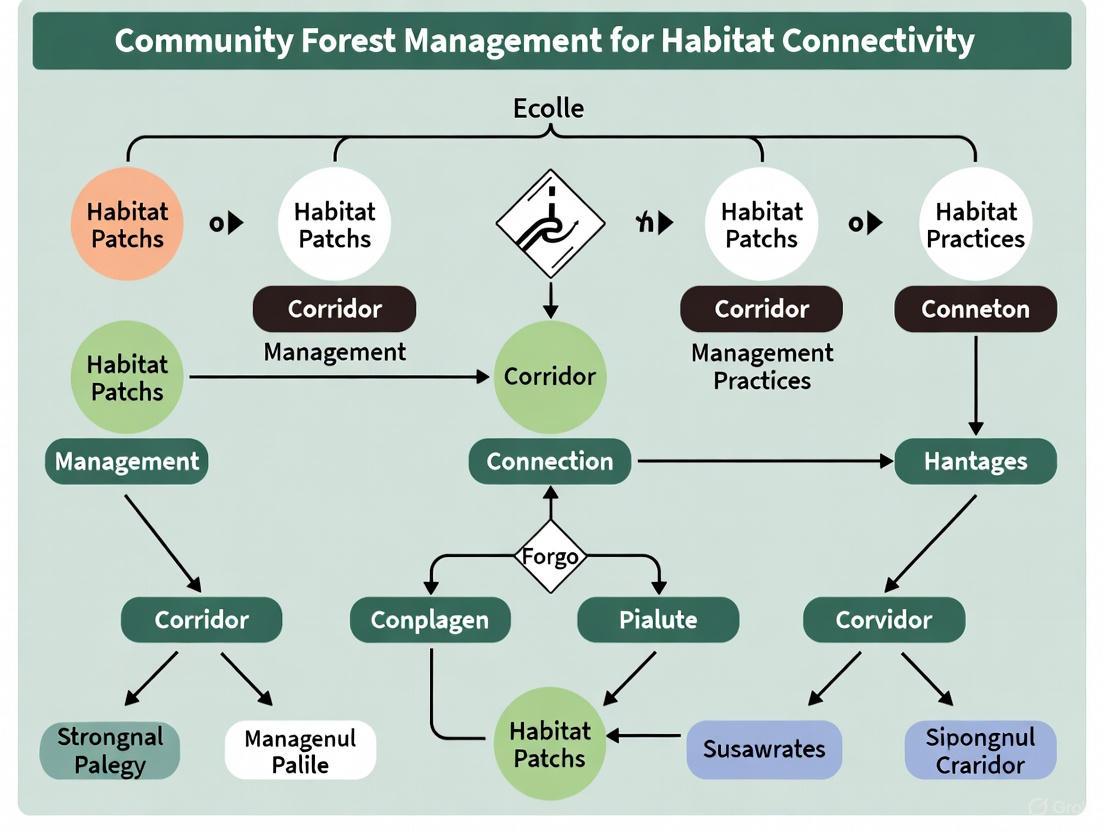
This article provides researchers, scientists, and conservation professionals with a comprehensive framework for integrating habitat connectivity into community forest management.
Connecting Landscapes: A Scientific Framework for Community Forest Management to Enhance Habitat Connectivity
Abstract
This article provides researchers, scientists, and conservation professionals with a comprehensive framework for integrating habitat connectivity into community forest management. It explores the ecological and social foundations of connectivity, details practical implementation methodologies, addresses common challenges, and presents validation metrics for assessing conservation outcomes. By synthesizing current policy tools, scientific principles, and case study evidence, this resource supports the strategic planning and execution of community-led initiatives that sustain biodiversity, build ecological resilience, and deliver co-benefits to local populations.
The Science of Habitat Connectivity and the Community Forestry Model
Table 1: Sensitivity Analysis of Key Factors in Landscape Permeability (Continuum Suitability Index) [1]
| Factor | Relative Sensitivity / Influence on CSI | Key Metrics / Rationale |
|---|---|---|
| Population Pressure | Highest Sensitivity | Measures anthropogenic impact on ecosystems; most influential single factor. |
| Land Use | High Sensitivity | Evaluates type and intensity of land use; critical for permeability modeling. |
| Topography | High Sensitivity | Includes slope and elevation; influences species movement and dispersal. |
| Environmental Protection | High Sensitivity (Most influential for red-listed species) | Presence of protected areas; strongest correlation with threatened species. |
| Landscape Fragmentation | Least Influence | Degree of habitat fragmentation; least sensitive factor in CSI model. |
Table 2: Comparative Genetic Diversity and Gene Flow in Contrasting Landscapes [2]
| Parameter | Agricultural Landscape (High Human Impact, Productive Habitat) | Forested Landscape (Low Human Impact, Less Productive Habitat) |
|---|---|---|
| Overall Genetic Diversity | Lower | Higher |
| Level of Gene Flow | Higher | Lower |
| Key Determinants of Landscape Resistance | Microclimatic moisture conditions, Vegetation cover | Microclimatic moisture conditions, Vegetation cover, Minor roads |
| Vulnerability to Human Interference | Lower (Matrix more permeable) | Higher (Matrix more vulnerable) |
| Primary Conservation Mechanism | Increasing population stability | Conserving dispersal corridors to reduce isolation and genetic drift |
Experimental Protocols
1.1 Objective To structurally assess terrestrial landscape permeability for ecological connectivity at a macro-regional scale by integrating anthropogenic impact factors.
1.2 Materials
- Geospatial software (e.g., QGIS, ArcGIS)
- Regional datasets for the five key factors:
- Land use/land cover maps
- Human population density data
- Landscape fragmentation metrics (e.g., effective mesh size)
- Digital Elevation Model (DEM)
- Boundaries and categories of protected areas
1.3 Methodology
- Step 1: Factor Standardization
- Compile all input datasets to a consistent spatial resolution and coordinate system.
- Reclassify each factor layer into a normalized suitability scale (e.g., 0-1, where 1 represents high permeability).
- Step 2: Index Calculation
- Apply the CSI algorithm, which integrates the five weighted factors:
CSI = f(Land Use, Population Pressure, Landscape Fragmentation, Environmental Protection, Topography) - Generate a continuous permeability surface map across the study region.
- Apply the CSI algorithm, which integrates the five weighted factors:
- Step 3: Validation and Plausibility Check
- Perform sensitivity analysis to confirm the relative influence of factors (Population Pressure > Fragmentation).
- Validate model plausibility by correlating output with independent data, such as presence records of red-listed species, giving particular weight to the Environmental Protection factor.
- Step 4: Identification of Strategic Connectivity Areas
- Analyze the permeability map to identify potential wildlife corridors and key areas for conservation or restoration interventions.
2.1 Objective To compare the effects of agricultural and forested landscapes on genetic diversity, gene flow, and landscape resistance for Triturus cristatus.
2.2 Materials
- Tissue samples (non-invasive: tail clips, buccal swabs) or ethanol-preserved larvae/adults from multiple breeding ponds.
- DNA extraction kits.
- PCR reagents and equipment for species-specific microsatellite markers.
- Genotyping apparatus (capillary sequencer).
- Landscape variable layers (land cover, moisture, roads, vegetation).
2.3 Methodology
- Step 1: Study Design and Sampling
- Select paired study landscapes: one agricultural and one forested.
- Georeference and non-invasively sample individuals from a minimum of 10 breeding ponds per landscape.
- Step 2: Laboratory Analysis
- Extract genomic DNA from all samples.
- Amplify a panel of 10-15 polymorphic microsatellite loci via PCR.
- Genotype all individuals to obtain multi-locus genetic data.
- Step 3: Genetic Data Analysis
- Calculate genetic diversity indices (e.g., allelic richness, expected heterozygosity) for each population.
- Estimate contemporary gene flow and genetic differentiation between ponds using assignment tests (e.g., in STRUCTURE) and F-statistics.
- Step 4: Landscape Genetics Analysis
- Use Circuitscape or similar software to model landscape resistance to gene flow.
- Test the resistance effect of various landscape variables (microclimatic moisture, vegetation cover, road density) using Maximum Likelihood population effects models.
- Compare the most supported resistance models between the two landscape types.
Visualization Diagrams
Diagram 1: Integrated Research Workflow for Ecological Connectivity.
Diagram 2: Conceptual Framework from Landscape Factors to Connectivity.
The Scientist's Toolkit: Research Reagent Solutions
Table 3: Essential Materials for Ecological Connectivity Research
| Category / Item | Function / Application |
|---|---|
| Field Sampling & Data Collection | |
| GPS Unit | Precise georeferencing of sample locations and habitat features. |
| Tissue Sampling Kits (Swabs, Ethanol) | Non-invasive collection and preservation of genetic material. |
| Camera Traps | Documenting wildlife presence and movement through potential corridors. |
| Genetic & Molecular Analysis | |
| DNA Extraction Kits | Isolating high-quality genomic DNA from tissue or non-invasive samples. |
| Microsatellite/PCR Primers | Species-specific markers for genotyping individuals and assessing diversity. |
| Capillary Sequencer | Fragment analysis for genotyping microsatellites or sequencing. |
| Spatial Analysis & Modeling | |
| GIS Software (e.g., QGIS, ArcGIS) | Platform for managing, analyzing, and visualizing spatial data. |
| Continuum Suitability Index (CSI) Model | Integrated framework for modeling macro-regional landscape permeability [1]. |
| Landscape Genetics Software (e.g., Circuitscape) | Modeling landscape resistance and predicting functional connectivity from genetic data [2]. |
| Conservation Planning | |
| Local Government Planning Guides | Policy tools and strategies for integrating connectivity into land-use decisions [3]. |
| Integrated Forest Management Frameworks | Strategies for harmonizing ecological, economic, and community needs in forest landscapes [4]. |
Habitat connectivity is the degree to which landscapes and seascapes facilitate the movement of organisms, genes, and ecological processes [5]. In the context of community forest management, it is a critical component for maintaining biodiversity, supporting ecosystem resilience to climate change, and sustaining the ecosystem services upon which human communities depend. As landscapes become increasingly fragmented by transportation infrastructure, urban expansion, and other land-use changes, wildlife populations face growing barriers to movement, increasing risks of genetic isolation, habitat loss, and population decline [5]. This application note provides a scientific framework and practical protocols for integrating habitat connectivity research into community-based forest management strategies.
Quantitative Data on Connectivity Priorities
The following tables synthesize key quantitative metrics and threat assessments essential for prioritizing connectivity conservation actions in managed forest landscapes.
Table 1: Core Connectivity Metrics for Prioritization [5]
| Metric Category | Specific Metrics | Application in Community Forestry |
|---|---|---|
| Landscape Connectivity Values | Ecosystem connectivity, Network importance, Landscape permeability | Identifies broad areas crucial for maintaining landscape-scale ecological flows. |
| Species-Based Metrics | Hot spots of Species of Greatest Conservation Need (SGCN), Focal species functional connectivity | Evaluates connectivity for specific threatened, endangered, or keystone species. |
| Climate Resilience | Climate connectivity, Climate corridors | Maps areas that facilitate species range shifts and adaptation to climate change. |
| Ancillary Conservation Value | Consistency with pre-existing landscape conservation priorities (e.g., resilient carbon storage) [6] | Aligns connectivity goals with other objectives like carbon sequestration. |
Table 2: Threat Assessment and Barrier Analysis for Habitat Connectivity [5]
| Threat Category | Key Indicators | Potential Mitigation Actions |
|---|---|---|
| Transportation Barriers | Wildlife-vehicle collision data, Ecological barrier status of road miles, Permeability maps. | Wildlife crossing structures (underpasses/overpasses), Road decommissioning. |
| Residential & Commercial Development | Habitat conversion pressure models, Projected land-use change maps. | Conservation easements, Cluster development, Zoning codes, Critical areas ordinances. |
| Energy Development | Maps of areas suitable for solar/wind development. | Strategic siting of new projects, Habitat restoration offsets. |
| Recreation & Human Disturbance | Trail and campground density, Data from State and Tribal Recreation Impacts Initiative (STRII). | Seasonal trail closures, Visitor management, Designated recreation zones. |
Experimental Protocols for Connectivity Assessment
This section outlines detailed methodologies for conducting habitat connectivity research relevant to forest management units.
Protocol for Mapping Landscape Connectivity Values
Objective: To synthesize multiple data layers into a single, comprehensive Landscape Connectivity Values map for a defined study area (e.g., a community forest).
Materials:
- Geographic Information System (GIS) software (e.g., QGIS, ArcGIS).
- Spatial data layers for the 10 connectivity metrics listed in Table 1.
- The WAHCAP spatial synthesis methodology as a reference [5].
Method:
- Data Acquisition and Standardization: Acquire or develop spatial data for all 10 connectivity metrics. Standardize all raster layers to a consistent resolution, extent, and coordinate system.
- Metric Normalization: Reclassify the values of each input layer to a normalized scale (e.g., 0 to 1, where 1 represents the highest connectivity value).
- Spatial Overlay and Synthesis: Use a weighted overlay or a similar multi-criteria decision analysis (MCDA) technique in GIS to combine the 10 normalized layers into a single composite "Landscape Connectivity Values" map. Weights can be assigned based on the specific conservation objectives of the community (e.g., higher weight for climate connectivity if that is a primary concern).
- Validation: Ground-truth model outputs using field data, such as camera trap records of wildlife movement, telemetry data, or indirect sign surveys.
Protocol for Identifying Connected Landscapes of Regional Significance (CLORS)
Objective: To delineate broad, functional corridors that support wildlife movement and ecological processes at a regional scale, feeding into larger Statewide Significance (CLOSS) networks [5].
Materials:
- The composite Landscape Connectivity Values map from Protocol 3.1.
- Maps of major existing barriers (highways, urban areas).
- Maps of core protected areas.
Method:
- Define Core Areas: Identify large, intact habitat blocks (core areas) within and adjacent to the study area that serve as source populations for wildlife.
- Model Linkages: Use GIS-based corridor modeling tools (e.g., Circuit Theory, Least-Cost Path analysis) to identify the pathways of highest connectivity value between the core areas. The composite map from Protocol 3.1 serves as the primary resistance or conductance surface.
- Delineate CLORS: Manually refine the model outputs to define broad, viable corridors (CLORS) that connect core areas. These are not single-pixel paths but swaths of land that provide multiple movement options.
- Integrate Local Knowledge: Incorporate local and tribal ecological knowledge to validate and refine the CLORS boundaries, ensuring they align with on-the-ground observations of wildlife movement and landscape permeability [5].
Protocol for Integrating Rewilding Principles into Forest Management
Objective: To enhance habitat connectivity and ecosystem resilience by promoting natural forest processes and trophic complexity [6].
Materials:
- Forest management plan documents.
- Baseline data on forest structure and composition.
- Species inventories (flora and fauna).
Method:
- Foster Natural Regeneration: Prioritize natural regeneration over replanting in harvest areas. Where planting is necessary, use a diverse mix of native species to break up monocultures and mimic natural succession [6].
- Promote Structural Complexity: Modify silvicultural practices to retain biological legacies such as deadwood (snags and logs), canopy gaps, and trees of varying ages and sizes to create a more heterogeneous forest structure.
- Reintroduce Keystone Species: Where ecologically and socially feasible, develop plans for the reintroduction of keystone species, such as beavers (to create wetland habitats) or large carnivores (to restore top-down trophic regulation) [6].
- Assisted Migration: In areas where climate change is rapidly shifting habitats, consider the experimental use of assisted migration, introducing populations of native tree species from warmer climates to facilitate adaptation [6].
Visualization of Connectivity Workflows
The following diagrams, generated using Graphviz, illustrate the logical workflows for assessing and managing habitat connectivity.
Workflow for connectivity assessment and corridor designation
Rewilding-inspired forest management framework
The Scientist's Toolkit: Research Reagent Solutions
Table 3: Essential Materials and Tools for Habitat Connectivity Research
| Tool / Material | Category | Function in Research |
|---|---|---|
| GIS Software (e.g., QGIS, ArcGIS) | Software Platform | The primary tool for spatial data management, analysis, corridor modeling, and map production. |
| Circuit Theory Toolbox (Circuitscape) | Analytical Tool | Models landscape connectivity by simulating electrical current flow, identifying pinch points and diffuse movement pathways. |
| GPS Receiver / GPS Mobile App | Field Equipment | Precisely records locations of field observations, wildlife signs, and ground-truthing points for model validation. |
| Camera Traps | Field Equipment | Non-invasively monitors wildlife presence, species richness, and movement patterns across potential corridors. |
| PARTNER CPRM | Network Management | A community partner relationship management platform used to map and analyze collaboration networks among stakeholders [7]. |
| Colorblind-Friendly Palettes (e.g., Okabe-Ito) | Data Visualization | Ensures that maps and charts are interpretable by all audiences, including those with color vision deficiency [8]. |
| R for Data Science (ggplot2) | Statistical & Visualization Software | An open-source programming environment for advanced statistical analysis and creating publication-quality data visualizations [9]. |
Application Note: Conceptual Framework and Quantitative Benchmarks
Community forests represent a transformative governance model that shifts forest management authority from distant central governments or corporations to local communities, ensuring that decision-making and benefits are closely aligned with local priorities and needs [10]. This model is characterized by four interdependent pillars: local ownership, community-driven governance, diversified community benefits, and permanent conservation [11]. When applied to habitat connectivity research, this framework enables the design of conservation landscapes that are both ecologically resilient and socially supported.
Defining Characteristics of the Community Forest Model
The operationalization of this model is guided by a set of core principles derived from established definitions and practices [10]:
- Ownership: The forest is owned by an organization acting on behalf of the community, typically a local or Tribal government, or a community organization like a land trust.
- Rights, Benefits, and Access: The community possesses secure, durable, and predictable access to the forest and the benefits it generates.
- Governance: Management goals and objectives are determined by the community, which exercises substantive and meaningful participation in the decision-making process.
- Conservation: The forest's conservation values are permanently protected from conversion to non-forest uses, while allowing for sustainable resource utilization.
National Benchmarking Data
A national survey of 98 community forests in the United States, including Puerto Rico, provides critical baseline data on the scope and objectives of this governance model. The following table summarizes key quantitative findings from this 2020-2023 dataset [12] [13].
Table 1: Key Characteristics of Community Forests in the United States (n=98)
| Characteristic | Category | Prevalence/Finding |
|---|---|---|
| Primary Management Objectives | Recreation & Environmental Services | Most important goals [12] [13] |
| Timber Production | Occurs on >2/3 of forests [12] [13] | |
| Geographic Distribution | Conterminous US & Puerto Rico | Widespread [12] |
| Alaska & Hawaii | No CFs meeting study criteria at time of study [12] | |
| Governance & Benefits | Varied Governance Approaches | Demonstrated across all forests [12] |
| Range of Forest Goods & Services | Managed for diverse benefits [12] |
Experimental Protocol: Establishing a Community Forest for Habitat Connectivity
This protocol provides a step-by-step methodology for establishing a community forest with a primary research focus on enhancing and monitoring habitat connectivity.
Workflow for Community Forest Establishment
The following diagram illustrates the key stages from initial conceptualization to long-term management.
Phase 1: Project Initiation and Ecological Baseline Assessment (Months 1-6)
Objective: To define project goals and establish a quantitative baseline for habitat connectivity and forest structure.
Step 1.1: Community Visioning and Stakeholder Mapping
- Procedure: Convene a steering committee with representatives from local government, Tribal nations, conservation NGOs, and residents. Conduct structured workshops to identify primary conservation concerns, including habitat fragmentation and desired wildlife corridors.
- Deliverable: A stakeholder map and a preliminary statement of community-defined goals for connectivity.
Step 1.2: GIS-Based Habitat Connectivity Analysis
- Procedure: Utilize spatial data (e.g., LandMark, local government maps) to map priority habitat corridors and potential project boundaries [3] [14]. Analyze landscape connectivity using circuit theory or least-cost path models. Identify key parcels for acquisition that serve as critical linkages between larger protected areas.
- Deliverable: A habitat connectivity map identifying core areas, corridors, and potential project boundaries.
Step 1.3: Field Baseline Data Collection
- Procedure: Establish permanent monitoring plots within the proposed community forest area.
- Forest Structure: Conduct tree inventories to measure species composition, diameter at breast height (DBH), and canopy cover.
- Wildife Presence: Deploy remote camera traps along suspected wildlife trails and use transect surveys for scat, tracks, and other sign.
- Soil and Water Sampling: Collect and analyze soil cores and water samples from riparian zones to establish baseline biogeochemical conditions.
- Deliverable: A comprehensive ecological baseline report.
- Procedure: Establish permanent monitoring plots within the proposed community forest area.
Phase 2: Project Establishment and Management Planning (Months 7-24)
Objective: To permanently secure the land and develop a participatory management plan.
Step 2.1: Land Acquisition and Financial Structuring
- Procedure: Negotiate acquisition of the identified parcel. A primary funding source is the USDA Forest Service's Community Forest Program (CFP), which provides a 50% cost-share grant for acquisition, requiring a 50% non-federal match [15]. Conservation easements are not eligible for CFP funding; full fee-title acquisition is required [15]. Explore complementary funding from state programs, private foundations, and community fundraising.
- Deliverable: Secured land title held by a qualified local government, tribal government, or non-profit entity [15].
Step 2.2: Development of a Participatory Management Plan
- Procedure: Facilitate a series of public meetings and technical working groups to draft a formal management plan. The plan must integrate community priorities (e.g., recreation, education) with scientific habitat connectivity goals. Key elements include:
- Timber Harvesting: If applicable, prescribe sustainable harvests using methods that maintain structural diversity and canopy cover, following high standard plans often seen in community forests [11].
- Recreation Management: Design trail systems to minimize wildlife disturbance in core habitat areas.
- Habitat Enhancement: Schedule and map specific interventions such as invasive species control, riparian buffer restoration, and creation of wildlife crossing structures [3].
- Deliverable: A formally adopted Community Forest Management Plan.
- Procedure: Facilitate a series of public meetings and technical working groups to draft a formal management plan. The plan must integrate community priorities (e.g., recreation, education) with scientific habitat connectivity goals. Key elements include:
Phase 3: Implementation, Monitoring, and Adaptive Management (Year 2+)
Objective: To implement the management plan and establish a long-term monitoring protocol for adaptive management.
Step 3.1: Implementation of Connectivity Projects
- Procedure: Execute habitat enhancement projects as outlined in the management plan. Examples include working with local transportation departments to install wildlife crossing structures in identified corridors or restoring native vegetation in degraded riparian zones [3].
Step 3.2: Long-Term Ecological and Social Monitoring
- Procedure: Annually re-survey the permanent plots established in Phase 1. Track changes in forest structure and wildlife presence. Additionally, conduct periodic social surveys to measure shifts in community attachment, recreational use, and support for conservation measures.
- Deliverable: Annual monitoring reports comparing current data to the established baseline.
Step 3.3: Adaptive Management Cycle
- Procedure: Convene an annual review committee comprising stakeholders and scientists to evaluate monitoring reports. Based on the findings, formally adjust the management plan to improve outcomes for both habitat connectivity and community benefits.
- Deliverable: Updated and adapted management plans.
The Scientist's Toolkit: Research Reagents and Materials
The following table details essential materials and tools for conducting habitat connectivity research within a community forest.
Table 2: Key Research Reagent Solutions for Habitat Connectivity Studies
| Item | Specification/Example | Primary Function in Research |
|---|---|---|
| GPS/GIS Unit | Handheld GPS receiver; ArcGIS or QGIS software with Spatial Analyst extension. | Georeferencing field data points; creating and analyzing habitat suitability and connectivity models. |
| Remote Camera Traps | Passive infrared (PIR) motion-sensor cameras. | Non-invasively monitoring wildlife presence, species richness, and movement patterns through the landscape. |
| Field Data Collection Software | Mobile apps (e.g., Survey123, CyberTracker) for smartphones and tablets. | Standardizing and digitizing field data collection for forest structure plots and wildlife sign surveys. |
| Vegetation Survey Kit | Diameter tape, clinometer, spherical densiometer, soil corer. | Quantifying forest structure (DBH, canopy cover, height) and collecting soil samples for biogeochemical analysis. |
| Spatial Data | LandMark global dataset of Indigenous and community lands [14]; Local government habitat maps [3]. | Providing base layers for mapping community land rights and regional habitat connectivity priorities. |
Quantitative Foundation: Global Fragmentation Metrics and Drivers
Table 1: Global Forest Fragmentation Trends (2000-2020) [16]
| Biome / Region | Percentage with Increased Fragmentation | Primary Driver(s) | Secondary Driver(s) |
|---|---|---|---|
| Global Forests | 51% - 67% | Varies by region (see below) | Forestry, Wildfires |
| Tropical Forests | 58% - 80% | Shifting cultivation (>60%) | Road construction, logging |
| Temperate Forests | Not specified in results | Forestry | Development |
| Boreal Forests | Not specified in results | Wildfires | Forestry |
Table 2: Fragmentation Metrics for Ecological Analysis [17]
| Metric Name | Abbreviation | Description | Ecological Interpretation |
|---|---|---|---|
| Patch Size | N/A | Area of the forest patch (hectares). | Larger patches generally support larger populations and more species. |
| Nearest Neighbour Distance | NND | Shortest straight-line distance to the nearest adjacent patch (meters). | Measures isolation; higher isolation reduces colonization potential. |
| Proximity Index | PROX | Sum of (patch area / edge-to-edge distance²) for all patches within a specified radius (e.g., 2.5 km). | Considers the size and proximity of all neighbouring patches; a higher value indicates less isolation. |
| Shape Index | SI | Ratio of patch perimeter to area (unitless). | A higher value indicates a more complex and irregular shape, which often increases edge effects. |
Experimental Protocols for Fragmentation and Connectivity Research
Protocol: Assessing Avian Community Response to Fragmentation and Social Cues
Application: This protocol provides a methodology for studying the interactive effects of habitat fragmentation and social information on bird populations, which can serve as a model for investigating the impacts of development and infrastructure. [17]
Workflow:
Detailed Methodology: [17]
Study Area and Site Selection:
- Location: Southern Poland (Lesser Poland Province, north of Cracow).
- Landscape: An agricultural landscape dominated by 163 discrete forest patches.
- Selection Criteria: Include patches of varying sizes and isolation distances. Exclude the very smallest tree clumps. The number of selected patches (163) should exceed the requirement for planned experiments to allow for the exclusion of outliers post-selection.
Habitat Characterization:
- Data Source: Utilize national forest inventory data (e.g., Forest Data Bank) and GIS shapefiles.
- Forest Parameters: For each patch, calculate the mean of the following from all forest compartments within it:
- Forest Age (years)
- Share of Dominant Tree Species (0-10 scale)
- Forest Stand Density/Compactness (%)
- Percentage of Coniferous Species (%)
- Fragmentation Metrics: Calculate using GIS software (e.g., ArcGIS with Patch Analyst toolbox or Fragstats):
- Patch Size (ha)
- Nearest Neighbour Distance (NND, m)
- Proximity Index (PROX)
- Shape Index (SI)
Baseline Biodiversity Assessment:
- Taxon: Forest bird communities.
- Survey Method: Standardized field surveys conducted by experienced birdwatchers.
- Temporal Scale: Three surveys per patch during the bird breeding season.
Experimental Manipulation of Social Information:
- Model Species Selection:
- Attractive Cue: Song Thrush (Turdus philomelos). Its loud song indicates suitable habitat rich in food resources and relatively free from predators.
- Repulsive Cue: Northern Goshawk (Accipiter gentilis). Its vocalizations create a "landscape of fear," deterring potential prey species.
- Experimental Design: In the second year of study, select 150 patches from the initial set and divide them into five groups (n=30 per group).
- Playback Treatment: Prior to field surveys, broadcast different playback types to each group:
- Group 1: Attractive cue (Song Thrush)
- Group 2: Repulsive cue (Northern Goshawk)
- Group 3: Mixed cues (alternating attractive and repulsive)
- Group 4 & 5: Control groups (no playback)
- Model Species Selection:
Post-Treatment Survey: Repeat the biodiversity assessment (Step 3) following the experimental manipulation.
Data Analysis:
- Correlate fragmentation metrics and forest parameters with measures of bird diversity (taxonomic, phylogenetic, functional).
- Analyze the effect of social information playback on species composition and settlement decisions.
- Compare effect sizes across experimental groups to isolate the impact of social cues from physical habitat structure.
Protocol: Integrating Connectivity into Local Planning and Policy
Application: This protocol outlines a systematic approach for researchers to engage with and inform local government planning processes to mitigate fragmentation from development. [3]
Workflow:
Detailed Methodology: [3]
Spatial Analysis and Mapping:
- Data Layers: Consolidate data on existing land use, protected areas, known wildlife movement corridors, road networks, and planned development zones.
- Habitat Connectivity Value: Synthesize multiple metrics (e.g., ecosystem connectivity, landscape permeability, climate connectivity, focal species movement) into a single map identifying core habitats and linkage zones. [5]
- Output: Create a map of "Connected Landscapes of Statewide Significance" (CLOSS) or regional equivalents, which serve as a blueprint for conservation. [5]
Threat and Barrier Assessment:
- Analyze current and proposed infrastructure (roads, energy development) and residential/commercial expansion for overlap with priority connectivity areas. [5]
- Use tools like the Washington Habitat Connectivity Action Plan's (WAHCAP) "Full Highway System Rankings" to evaluate the ecological barrier status of every road mile. [5]
Development of Policy Tools and Strategies: [3]
- For Local Governments (Towns & Counties):
- Comprehensive Plans: Incorporate language that prioritizes the protection of wildlife corridors.
- Zoning and Ordinances: Implement tools such as:
- Overlay Zones: Create special districts (e.g., "Florida Black Bear Scenic Byway Corridor Overlay District") that establish standards for maintaining safe corridors. [3]
- Conservation Design/Cluster Development: Mandate or incentivize development layouts that minimize fragmentation and preserve contiguous open space.
- Buffer Requirements: Require vegetated buffers around sensitive resources like streams and forests.
- For State and Federal Agencies:
- Funding and Technical Assistance: Establish programs (e.g., Vermont's Community Wildlife Program) to provide local governments with technical services and information. [3]
- Transportation Policy: Integrate habitat connectivity into transportation planning, prioritizing funding for wildlife crossing structures in high-priority zones. [5] [18]
- For Local Governments (Towns & Counties):
Implementation and On-the-Ground Actions:
- Priority Actions: Focus on securing open space, decommissioning unused roads, modifying fencing to be wildlife-permeable, and constructing wildlife crossing structures. [5] [18]
- Cross-Jurisdictional Collaboration: Facilitate partnerships between state agencies, local governments, tribes, land trusts, and non-governmental organizations to implement conservation actions across administrative boundaries. [5]
The Scientist's Toolkit: Research Reagent Solutions
Table 3: Essential Materials and Tools for Connectivity Research
| Item / Solution | Function / Application | Example from Context |
|---|---|---|
| GIS Software & Spatial Data | To calculate fragmentation metrics (Patch Size, PROX, NND, SI), map habitat, and model connectivity. | Using ESRI ArcGIS with Patch Analyst toolbox to calculate metrics from Forest Data Bank shapefiles. [17] |
| Playback Equipment & Audio Libraries | For experimental manipulation of social information cues (attractive/repulsive) to study their impact on animal settlement. | Using speakers to broadcast Song Thrush (attractive) and Northern Goshawk (repulsive) calls in forest patches. [17] |
| Camera Traps & GPS Collars | To non-invasively monitor wildlife presence, behavior, and movement in response to fragmentation and barriers. | Used by Wildlands Network to document an 86% reduction in wildlife movement due to the U.S.-Mexico border wall. [18] |
| Landscape Connectivity Models | Computational models (e.g., circuit theory, least-cost path) to predict movement corridors and identify priority areas for protection. | Used in WAHCAP to synthesize 10 connectivity values into a single map for prioritizing actions. [5] |
| Standardized Biodiversity Survey Protocols | To ensure consistent, comparable data collection on species richness, abundance, and community composition across study sites. | Conducting three surveys per forest patch during the breeding season for bird communities. [17] |
The Critical Role of Local Governments in Land-Use Planning for Connectivity
Local governments hold a critical and often underutilized authority in shaping landscapes for wildlife habitat connectivity. With land use authority across nearly two-thirds of the land in the U.S., towns and counties are essential actors in preserving connected ecosystems that support biodiversity, climate adaptation, and ecological resilience [3]. This document provides application notes and experimental protocols to equip researchers and scientists with the tools to effectively integrate habitat connectivity into local government planning, with a specific focus on community forest management. By bridging scientific research and practical implementation, these guidelines aim to enhance the role of community forests as vital hubs in a larger connected landscape.
Quantitative Data on Connectivity Planning
Documented Impacts of Local Planning
Local government actions directly influence habitat connectivity and community forest functions. The following table summarizes quantitative data from implemented plans and projects.
Table 1: Documented connectivity impacts from local planning and community forest projects
| Location / Project | Key Metric | Quantitative Impact / Target | Primary Tool(s) Applied |
|---|---|---|---|
| Buckeye, Arizona [3] | Development Guidance | Creation of a Wildlife Corridors Best Practices Guide for future development. | Policy Guide |
| Lake County, Florida [3] | Corridor Standards | Establishment of a Florida Black Bear Scenic Byway Corridor Overlay District to create a safe corridor for wildlife and people. | Overlay Zoning, Wildlife Crossing Structures |
| Scott County, Minnesota [3] | Development Incentives | Mapping of Natural Area Corridors to guide development away from key areas via incentives. | Incentive-based Zoning, Corridor Mapping |
| Washington State (WAHCAP) [5] | Statewide Analysis | Identification of 13 Connected Landscapes of Statewide Significance (CLOSS) as a statewide blueprint. | Spatial Prioritization, Regional Profiling |
| Forest Legacy Program (2025) [19] | Acreage Conserved | Permanent conservation of >259,000 acres of forestland across 18 states. | Conservation Easements, Fee Acquisition |
| Sonoita Creek, Arizona [19] | Species & Acreage | 756 acres conserved to facilitate movement for jaguar and 40 other at-risk species. | Conservation Easement |
| Blackfoot Community Conservation Area, Montana [10] | Collaborative Management | 41,000-acre area with a 5,600-acre community-owned core balancing ecology and local economy. | Community Forest Model, Collaborative Governance |
Land-Use Change Projections
Multi-scenario land-use simulations are critical for forecasting the impacts of planning decisions. Research in Yunnan Province, China, demonstrates how different policy priorities can lead to divergent land-use outcomes by 2040 [20].
Table 2: Projected land-use changes under different policy scenarios (2000-2020 baseline & 2040 projections) [20]
| Land Use Type | Historical Change (2000-2020) | Natural Development Scenario (2040 Projection) | Ecological Protection Scenario (2040 Projection) | Economic Priority Scenario (2040 Projection) | Cultivated Land Protection Scenario (2040 Projection) |
|---|---|---|---|---|---|
| Cultivated Land | Decreased by 1.98% (-1405.05 km²) | Continued loss around urban agglomerations | Increased pressure from reforestation goals | High risk of loss to development | New, potentially lower-quality land in mountainous areas |
| Forest Land | Net increase of 0.84% | Stable or slight decrease | Effective protection and restoration in NW mountains | Risk of damage to protection zones | Potential conversion to cropland |
| Construction Land | Increased by 133.54% | Steady expansion | Constrained expansion | Rapid, potentially underutilized expansion | Limited expansion |
Experimental Protocols for Connectivity Assessment
This section provides a detailed, step-by-step methodology for researchers and practitioners to assess and integrate habitat connectivity into local land-use planning, with an emphasis on community forests.
Protocol 1: Multi-Scenario Land Use Simulation for Community Forests
Objective: To model and predict the impact of different local planning decisions on future habitat connectivity and community forest integration.
Background: The Markov-FLUS model is a coupled model that overcomes the limitations of single models by balancing top-down macro-drivers (e.g., policy, demand) with bottom-up micro-evolution of land use, effectively handling the uncertainty of land use transformations [20]. This protocol is adapted from published research on simulating complex geographic environments [20].
Materials & Software:
- Land Use Data: Historical land use classification maps (e.g., 2000, 2010, 2020) for the region of interest.
- Driving Factor Data: Spatial data for natural (e.g., slope, elevation), economic, and location-based factors.
- Software: Dinamica-EGO, QGIS or ArcGIS Urban, Markov-FLUS modeling platform [21] [20] [22].
Procedure:
- Data Collection and Harmonization:
- Collect at least three historical land use maps at regular intervals (e.g., 2000, 2010, 2020).
- Collect and process raster and vector data for a suite of driving factors, including:
- Natural: Digital Elevation Model (DEM), slope, distance to rivers.
- Socio-economic: Distance to roads, distance to urban centers, population density.
- Policy & Cultural: Protected area boundaries, tribal lands, community forest boundaries.
Model Calibration and Validation:
- Use the land use maps from T1 and T2 to calculate a transition probability matrix using a Markov chain.
- In the FLUS model, apply a Random Forest (RF) algorithm to calculate the probability of occurrence of each land use type based on the driving factors.
- Calibrate the model by simulating the land use pattern for T3. Compare the simulation to the actual map using metrics like Figure of Merit (FoM) and Kappa coefficient. Adjust parameters until validation accuracy is acceptable.
Scenario Definition and Simulation:
- Define the following four scenarios by adjusting the transition probabilities and constraints in the model [20]:
- A. Natural Development: Extends historical trends.
- B. Ecological Protection: Increases conversion cost for forests/grasslands; promotes afforestation.
- C. Economic Priority: Lowers conversion cost for construction land; simulates development pressure.
- D. Cultivated Land Protection: Imposes strict rules for cropland conversion; simulates "compensatory" cropland creation.
- Integrate local community forest boundaries as fixed or high-cost-to-convert areas in scenarios B and D.
- Run the model for each scenario to project the land use pattern for a target year (e.g., 2040).
- Define the following four scenarios by adjusting the transition probabilities and constraints in the model [20]:
Analysis of Connectivity Impacts:
- Analyze the projected maps to identify:
- Fragmentation: Increased parceling of forest cover.
- Corridor Disruption: Pinch points in key wildlife corridors, especially those linking community forests to larger protected areas.
- Urban Sprawl Pressure: Encroachment on community forest buffers.
- Analyze the projected maps to identify:
Diagram 1: Land use simulation workflow.
Protocol 2: Field Validation of Wildlife Corridor Use
Objective: To empirically validate the use of modeled habitat corridors and community forest linkages by target wildlife species.
Background: Even the best models require ground-truthing. This protocol provides a method for confirming the functionality of corridors identified through spatial analysis [5].
Materials & Equipment:
- Camera Traps: Robust, weather-proof trail cameras (e.g., Reconyx, Bushnell).
- GPS Unit: For geotagging camera locations and recording tracks.
- Data Management Software: Camera-specific software (e.g., Camera Base, Timelapse2).
- Topographic Maps & GIS Data: Of the study area.
Procedure:
- Site Selection:
- Based on the WAHCAP framework or local connectivity models, identify potential corridor locations, focusing on areas that connect community forests to other habitat patches [5].
- Select both a "control" site (within the core of a community forest) and "treatment" sites (within the modeled corridor).
Camera Trap Deployment:
- Deploy a systematic grid of camera traps within the study area. Prioritize funnels and natural constrictions (e.g., ridges, valley bottoms, fence crossings).
- Secure cameras to trees or posts at a height appropriate for the target species (e.g., 30-40 cm for mid-sized mammals).
- Set cameras to take a burst of 3 images per trigger with a 1-minute quiet period between triggers. Record GPS coordinates of each unit.
Data Collection and Management:
- Service cameras every 4-8 weeks to replace batteries and download images.
- Classify all animal images by species, count, date, and time.
- Enter data into a standardized database, using a unique identifier for each detection event.
Data Analysis:
- Calculate Relative Abundance Index (RAI) for each species and site: (Number of Detections / Total Camera Trap Nights) * 100.
- Compare RAI between corridor and core sites for target species.
- Use single-species, single-season occupancy models to estimate probability of corridor use, accounting for imperfect detection.
The Scientist's Toolkit: Research Reagent Solutions
This table details key tools and data sources essential for conducting rigorous habitat connectivity research in a land-use planning context.
Table 3: Essential research tools and resources for connectivity planning
| Tool / Resource Name | Type | Primary Function in Connectivity Research | Application Example |
|---|---|---|---|
| ArcGIS Urban [22] | Software / Planning Tool | 3D modeling and visualization of land-use and zoning scenarios; stakeholder collaboration. | Modeling the shadow impact of new development on a community forest's microclimate. |
| QGIS [22] | Software / GIS | Open-source spatial analysis; mapping land-use change, corridor design, and basic spatial statistics. | Calculating forest fragmentation metrics from satellite imagery. |
| Washington Habitat Connectivity Action Plan (WAHCAP) [5] | Data & Framework | Spatial data and prioritization framework for identifying connected landscapes and transportation barriers. | Using the Landscape Connectivity Values layer to prioritize local conservation actions. |
| Markov-FLUS Model [20] | Modeling Platform | Multi-scenario simulation of future land-use patterns under different policy and development assumptions. | Projecting the impact of a new zoning code on habitat permeability around a community forest. |
| Camera Traps (Field Equipment) | Field Instrument | Non-invasive wildlife monitoring to validate species presence and movement through modeled corridors. | Documenting use of a riparian corridor by black bears between two protected areas. |
| Center for Large Landscape Conservation Guide [3] | Policy & Implementation Guide | Compendium of policy tools and case studies for integrating connectivity into local government planning. | Drafting language for a Critical Areas Ordinance that includes wildlife corridors. |
Local governments, armed with robust scientific protocols and data-driven tools, are indispensable partners in the effort to maintain and restore habitat connectivity. The application notes and detailed methodologies provided here offer a pathway for researchers and scientists to translate ecological models into actionable plans for local planners and community forest managers. By integrating multi-scenario land-use simulation with rigorous field validation and leveraging a modern toolkit of spatial and policy resources, stakeholders can ensure that community forests function not as isolated islands, but as resilient, interconnected nodes in a thriving ecological network.
Implementing Connectivity: Policy Tools, Mapping, and Management Strategies
Application Notes
Conceptual Foundation and Ecological Rationale
Cluster conservation development represents a strategic land-use planning approach that reconfigures residential and commercial development to protect ecological connectivity and maintain landscape integrity. This strategy involves concentrating built structures on a smaller portion of a development parcel while permanently protecting the remaining land as interconnected open space [23]. The core objective is to allow necessary development while simultaneously protecting environmental features, preserving farmland, and maintaining the character of rural communities without necessarily increasing overall housing density [23].
The ecological rationale for this approach centers on mitigating habitat fragmentation, which occurs when human activities such as urbanization, agriculture, and infrastructure development create barriers that disrupt wildlife movement and ecological processes [24] [25]. When habitats become fragmented, animal populations become isolated, leading to reduced genetic diversity, increased inbreeding, and heightened vulnerability to diseases and environmental changes [25]. Cluster development directly counters these effects by maintaining contiguous habitat areas that support animal movement, plant seed dispersal, and overall ecosystem resilience [25] [23].
This strategy proves particularly valuable in maintaining habitat connectivity across increasingly human-modified landscapes. By creating networks of protected open space, cluster development enables species to access resources, find mates, establish new territories, and adapt to changing environmental conditions, including those driven by climate change [24] [25]. The preserved open space can include environmentally sensitive areas, wildlife corridors, riparian buffers, and working landscapes, all of which contribute to maintaining biodiversity and ecological functionality [23].
Implementation Framework and Design Considerations
Successful implementation of cluster conservation development requires careful planning and interdisciplinary collaboration. The process begins with a comprehensive ecological assessment to identify priority conservation areas, including existing wildlife corridors, riparian zones, wetlands, and other environmentally sensitive features [25]. These areas are designated as non-buildable open space during the initial planning phases [23].
The design phase involves strategically siting development to minimize ecological impacts while maximizing functional connectivity between protected areas. This includes orienting residential clusters to avoid disrupting wildlife movement pathways and maintaining vegetation cover between building groups [23]. Creative design elements may incorporate green infrastructure, such as wildlife-friendly drainage swales instead of curb and gutter systems, which simultaneously manage stormwater and provide habitat connectivity [23].
Legal and regulatory frameworks are crucial for successful implementation. Most traditional zoning ordinances require modification to accommodate cluster developments, as conventional regulations often mandate minimum lot sizes, uniform road frontage, and standard setbacks that discourage innovative design [23]. Updated ordinances should emphasize performance standards related to open space preservation, habitat connectivity, and environmental protection rather than rigid dimensional requirements [23].
Long-term management and protection mechanisms ensure the perpetual conservation of open spaces. These typically include conservation easements—legally binding agreements that restrict future development—and homeowners' associations responsible for maintaining the protected areas [23]. In some cases, communities may establish special taxing districts to fund ongoing maintenance if necessary [23].
Table 1: Key Advantages and Challenges of Cluster Conservation Development
| Advantages | Challenges |
|---|---|
| Provides larger recreation areas and creates desired openness [23] | Requires overcoming predisposition toward traditional development designs [23] |
| Benefits environment through wildlife habitat and natural stormwater filtration [23] | Demands extra planning for optimal lot and home layout [23] |
| Enables development of environmental corridors between communities [23] | Necessitates careful development of open space protection and maintenance mechanisms [23] |
| Reduces developer costs and may increase market value of plots [23] | Requires careful design of wastewater management systems for smaller lots [23] |
| Reinforces rural character preservation goals in comprehensive plans [23] | May face regulatory hurdles without updated zoning ordinances [23] |
Experimental Protocols
Habitat Connectivity Assessment Methodology
Objective: To quantitatively evaluate landscape connectivity and identify priority areas for conservation within proposed cluster development sites.
Materials and Equipment:
- Geographic Information System (GIS) software with spatial analysis capabilities
- GPS receivers for field verification
- Remote sensing imagery (aerial photographs, satellite images)
- Species occurrence and movement data
- Landscape metrics software (e.g., FRAGSTATS)
- Soil maps, topographic maps, and hydrological data
Procedural Workflow:
Step 1: Baseline Data Collection Assemble existing spatial data layers including land cover/land use, transportation networks, hydrological features, elevation, and existing protected areas. Conduct field surveys to ground-truth remotely sensed data and document current wildlife presence through direct observation, camera traps, or track identification [24] [25].
Step 2: Species-Focused Vulnerability Assessment Identify focal species vulnerable to habitat fragmentation based on life history characteristics, including species with large home ranges, low dispersal abilities, or specialized habitat requirements [25]. For each focal species, map existing habitat patches and assess functional connectivity using resistance surfaces that quantify the difficulty of movement through different landscape types [25].
Step 3: Landscape Connectivity Analysis Calculate connectivity metrics using circuit theory or least-cost path analysis to identify current wildlife movement corridors and potential barriers [25]. Analyze landscape patterns using metrics such as patch size, inter-patch distance, and landscape permeability [25]. Incorporate genetic analysis where possible to assess population connectivity and identify potential isolation thresholds [25].
Step 4: Climate Resilience Evaluation Integrate climate projection data to assess how changing temperature and precipitation patterns might alter habitat suitability and species movement pathways. Identify areas that may serve as climate refugia or future connectivity corridors [24] [25].
Step 5: Conservation Priority Mapping Synthesize analytical results to map priority areas for protection, including core habitat patches, critical wildlife corridors, and potential stepping-stone habitats. Rank areas based on multiple criteria including connectivity value, habitat quality, and vulnerability to development pressure [25].
Cluster Development Design and Open Space Configuration Protocol
Objective: To design clustered development layouts that optimize habitat connectivity while accommodating necessary development.
Materials and Equipment:
- GIS with parcel data and conservation priority maps
- CAD software for site design
- Soil evaluation kits for septic system suitability assessment
- Wildlife passage design specifications
- Conservation easement templates
Procedural Workflow:
Step 1: Conservation Area Delineation Using conservation priority maps generated through habitat connectivity assessment, delineate primary conservation zones comprising environmentally sensitive areas, existing wildlife corridors, riparian buffers, and core habitat patches. These areas should be designated as permanently protected open space [23].
Step 2: Development Area Allocation Calculate the maximum allowable development density based on existing zoning regulations, then concentrate this development potential into compact clusters located on the least environmentally sensitive portions of the property. Ensure development areas avoid fragmentation of conservation zones and maintain functional connectivity between open space areas [23].
Step 3: Connectivity Infrastructure Integration Design and incorporate specific connectivity features where development intersects wildlife movement pathways. These may include wildlife underpasses or overpasses for road crossings, maintenance of vegetation corridors between building clusters, and strategic fencing to guide animal movement while protecting residential areas [24] [25].
Step 4: Open Space Management Planning Develop comprehensive management plans for protected open spaces, specifying conservation objectives, permitted uses, and maintenance responsibilities. Establish legal protection mechanisms such as conservation easements to ensure permanent protection. Define the organizational structure (e.g., homeowners' association, land trust) responsible for long-term stewardship [23].
Step 5: Implementation and Monitoring Framework Create implementation phasing plans that prioritize protection of conservation areas before development begins. Establish monitoring protocols to assess the effectiveness of connectivity conservation, including wildlife use of corridors, water quality maintenance, and vegetation health. Implement adaptive management strategies to address any deficiencies identified through monitoring [25].
Table 2: Open Space Configuration Options and Conservation Applications
| Open Space Type | Primary Conservation Function | Management Considerations |
|---|---|---|
| Wildlife Corridors [25] | Connect habitat patches; enable animal movement between resource areas | Maintain vegetation structure; minimize human disturbance; implement wildlife-friendly fencing |
| Riparian Buffers [25] | Protect water quality; provide aquatic and terrestrial habitat; maintain stream temperature | Control invasive species; limit livestock access; preserve native vegetation |
| Core Habitat Patches [23] | Support sensitive species; maintain interior habitat conditions; serve as population sources | Minimize edge effects; control predators and competitors; maintain natural disturbance regimes |
| Stepping Stone Habitats [25] | Facilitate movement across fragmented landscapes; provide temporary refuge | Ensure adequate spacing; maintain habitat quality; supplement with corridors where possible |
| Green Infrastructure [23] | Manage stormwater naturally; provide habitat in developed areas; reduce impervious surfaces | Select native plants; design for multiple functions; integrate with gray infrastructure |
The Scientist's Toolkit
Table 3: Essential Research Reagents and Materials for Habitat Connectivity Studies
| Research Tool | Technical Specification | Ecological Application |
|---|---|---|
| GPS Collaring Systems [24] | GPS receivers with satellite data transmission; extended battery life; programmable location scheduling | Tracks large mammal movement patterns; identifies wildlife corridors and barriers; quantifies home range size and habitat use [24] |
| Geographic Information Systems (GIS) [25] | Spatial analysis software with raster and vector data processing; landscape metrics calculation; circuit theory modeling | Analyzes habitat fragmentation; models wildlife movement corridors; identifies conservation priorities through spatial optimization [25] |
| Camera Traps | Weather-proof enclosures; infrared motion sensors; time-lapse capability; cellular data transmission | Documents wildlife presence and behavior; estimates population parameters; monitors use of wildlife crossings and corridors |
| Environmental DNA (eDNA) Sampling | Water or soil collection kits; PCR primers for target species; portable filtration equipment; cold chain storage | Detects species presence without direct observation; monitors aquatic connectivity; identifies biodiversity hotspots |
| Landscape Genetics Tools | Tissue sampling kits; microsatellite markers or SNP panels; population genetics software; spatial autocorrelation analysis | Quantifies gene flow between populations; identifies barriers to dispersal; measures functional connectivity effectiveness |
Community Engagement and Adaptive Management Framework
The successful implementation of cluster conservation development strategies requires meaningful community engagement and robust adaptive management practices. Research demonstrates that effective community forest management must balance multiple objectives, including conservation goals, community rights, livelihood support, and Indigenous autonomy [26]. Different stakeholder groups often emphasize distinct aspects of forest management, with perspectives ranging from technical oversight for forest protection to support for grassroots Indigenous control over resource management [26].
Engagement protocols should incorporate methodologies such as Q-methodology to identify areas of consensus and divergence among stakeholders, including Indigenous leaders, government policymakers, NGO technicians, academics, and local community members [26]. This approach facilitates dialogue around shared pathways and agendas, acknowledging that community forest management serves as a mechanism that can simultaneously support community rights and conservation goals when properly structured [26].
Adaptive management frameworks should include regular monitoring of both ecological and social indicators. Ecological monitoring should track wildlife movement patterns, habitat quality, and corridor functionality, while social monitoring should assess community satisfaction, economic benefits, and management effectiveness [23] [26]. This integrated approach ensures that cluster conservation developments maintain their ecological functions while continuing to meet human needs over the long term.
Conservation Overlay Zoning represents a critical municipal-level tool for advancing habitat connectivity within broader community forest management goals. As a form of site-specific zoning district, conservation overlays provide additional regulatory protections beyond base zoning to safeguard sensitive environmental features and connect fragmented landscapes [27]. In an era of accelerating habitat fragmentation, these regulatory tools offer a mechanism to proactively conserve ecological networks and maintain biodiversity in developing regions.
The scientific imperative for these tools is clear: habitat fragmentation creates barriers to species dispersal, reduces gene flow and genetic diversity, and ultimately leads to local extinctions [28]. Conservation overlay zones directly address these challenges by protecting interconnected natural systems rather than isolated parcels. When strategically implemented, these regulations can transform a patchwork of disconnected green spaces into resilient ecological networks that support wildlife movement and maintain ecosystem functions across human-modified landscapes.
Comparative Analysis of Zoning Tools for Habitat Connectivity
Types of Conservation Zoning Mechanisms
Local governments employ multiple regulatory approaches to protect ecological connectivity, each with distinct mechanisms and conservation outcomes. The following table summarizes the primary zoning tools available to communities:
Table 1: Zoning Mechanisms for Habitat Connectivity
| Zoning Mechanism | Key Features | Conservation Focus | Connectivity Effectiveness |
|---|---|---|---|
| Conservation Overlay Zoning [27] | Creates special districts with additional regulations atop base zoning; maps specific natural resources | Stream corridors, wildlife habitats, drinking water watersheds, scenic ridgelines | High when designed to connect protected features across multiple properties |
| Conservation Subdivisions [29] | Requires 40-70% of net buildable land as protected open space; open space must connect ecological features | Woodland habitats, vernal pools, riparian zones; prioritizes connectivity during subdivision | Superior permeability for wildlife; creates interconnected open space networks |
| Cluster Zoning [29] | Preserves portion of developed land as open space; more flexible arrangement than conservation subdivisions | General open space preservation; may protect some natural features | Variable; depends on design—open space may be fragmented without connectivity focus |
| Transferable Development Rights [29] | Shifts development potential from sensitive areas to designated growth areas; market-based approach | Agricultural lands, ecologically sensitive areas, large habitat blocks | Moderate to high when targeting connectivity corridors specifically |
Quantitative Outcomes of Zoning Approaches
Research directly comparing zoning approaches demonstrates significant differences in their conservation effectiveness. A case study in Falmouth, Maine, modeled landscape permeability for wood frogs (Rana sylvatica) under different regulatory scenarios, with results summarized below:
Table 2: Permeability Outcomes: Conservation vs. Cluster Zoning [29]
| Zoning Approach | Open Space Requirement | Percent of Pools Buffered | Average Patch Size (ha) | Inter-patch Distance (m) | Habitat Connectivity |
|---|---|---|---|---|---|
| Cluster Zoning | 40% | 50% | 12.3 | 184.7 | Moderate |
| Conservation Zoning | 40% | 50% | 16.9 | 152.4 | High |
| Cluster Zoning | 20% | 50% | 9.8 | 201.5 | Low |
| Conservation Zoning | 20% | 50% | 14.2 | 168.3 | Moderate-High |
This research demonstrated that Conservation Subdivision design generally improves landscape permeability compared to Cluster Subdivisions, with the design of open space being as important as the amount preserved [29]. The study also found that Maine's vernal pool protection law (creating 250-ft protective buffers around significant vernal pools) significantly enhanced connectivity when combined with conservation zoning approaches.
Implementation Protocol: Designing Conservation Overlay Zones
Workflow for Conservation Overlay Implementation
The following diagram illustrates the comprehensive workflow for establishing effective conservation overlay zones, from initial assessment through monitoring:
Delineation Methodology and Resource Assessment
The initial phase of overlay creation involves comprehensive resource assessment using geospatial analysis:
Habitat Mapping: Identify core habitats, wildlife corridors, and fragmentation patterns using landscape metrics such as Total Edge (TE), Edge Density (ED), Total Core Area (TCA), and Core Area Index (CAI) [28]. Studies show that in highly fragmented landscapes, over 80% of fragments may lack a minimum central area when considering just a 50-meter edge effect buffer [28].
Connectivity Analysis: Evaluate functional connectivity using tools like Probability of Connectivity (PC) which analyzes the landscape based on habitat availability and connectivity. Research demonstrates that most forest fragments (>99%) may show very low PC values in fragmented landscapes, highlighting the need for strategic corridor planning [28].
Least-Cost Path Analysis: Determine optimal corridor locations using resistance surfaces based on land use, vegetation cover, and anthropogenic pressures [28]. This approach identifies the most efficient pathways for connecting priority habitat patches while minimizing restoration costs and implementation barriers.
Regulatory Framework Design
Effective overlay regulations combine protective standards with flexible implementation:
Performance Standards: Establish specific criteria for disturbance limitations, impervious surface thresholds, and vegetation retention tailored to different resource types (e.g., stream buffers, upland habitats) [27].
Allowed Uses: Define permitted, conditional, and prohibited uses within overlay boundaries, typically allowing low-impact activities while regulating development that would compromise ecological function [29] [27].
Incentive Mechanisms: Incorporate density bonuses, expedited review, or technical assistance to encourage landowner compliance and participation in conservation efforts [30].
Table 3: Research Reagent Solutions for Connectivity Planning
| Tool Category | Specific Applications | Research Function |
|---|---|---|
| Geographic Information Systems (GIS) [31] [29] | Spatial analysis of habitat fragmentation; modeling landscape permeability; overlay zone delineation | Provides spatial context for conservation planning; enables simulation of development scenarios |
| Remote Sensing & Satellite Data [32] [28] | Land use/cover classification; vegetation health assessment (via Enhanced Vegetation Index); change detection | Delivers landscape-scale data for monitoring; enables identification of priority restoration areas |
| Least-Cost Path Analysis [33] [28] | Modeling optimal ecological corridor routes; balancing ecological needs with implementation costs | Identifies most efficient connections between habitat patches based on resistance surfaces |
| Landscape Metrics [28] | Quantifying fragmentation (edge density, patch size); assessing connectivity (Probability of Connectivity) | Provides quantitative measures of landscape pattern and functional connectivity |
| AI-ML Classification [33] | Automated land cover classification; predictive modeling of species movement patterns | Enhances accuracy and efficiency of landscape analysis; enables processing of large datasets |
Case Study Applications and Outcomes
Ecological Corridor Implementation: Atlantic Forest, Brazil
A comprehensive study in Brazil's highly fragmented Atlantic Forest demonstrated the practical application of corridor planning principles similar to conservation overlay zones. Researchers identified 35,344 forest fragments, with 94% smaller than 10 hectares, creating a landscape with critically low connectivity [28]. Through multi-criteria analysis integrating Enhanced Vegetation Index (EVI) and Probability of Connectivity (PC), they identified 13 priority fragments for protection and proposed five ecological corridors connecting six fragments.
The implementation required restoration of 283.93 hectares at an estimated cost of approximately US$550,000, demonstrating that conserving biodiversity in highly fragmented regions can be achieved at modest costs through strategic protection of key fragments and their reconnection [28]. The corridors averaged 100 meters in width and varied in length from 6.7 to 16.9 kilometers, with land acquisition and restoration costs calculated based on opportunity costs of current land uses (primarily pasture, sugarcane, and agriculture).
Watershed-Scale Restoration: Suzhou Grand Canal, China
Research on the Suzhou Grand Canal ecosystem demonstrates the application of corridor restoration in heavily urbanized contexts. The study found a large built area, limited ecological zones, low habitat quality and connectivity, and high habitat fragmentation within the canal corridor [31]. To address these challenges, researchers developed integrated strategies including:
- Water pollution control measures to improve instream habitat quality
- Watershed ecosystem restoration to enhance riparian function
- Ecological network construction to connect multidimensional corridors [31]
This comprehensive approach emphasized that building a watershed ecological network based on ecosystem restoration and connection of multi-dimensional ecological corridors would dramatically increase the maintenance of aquatic-terrestrial system biodiversity and improve regional ecological security patterns [31].
Monitoring and Adaptive Management Protocol
Ecological Performance Metrics
Effective conservation overlay zones require ongoing monitoring to assess ecological performance and guide adaptive management:
Habitat Quality Indicators: Track vegetation health using indices such as Enhanced Vegetation Index (EVI), with values between 0.2-0.8 generally indicating healthy vegetation conditions [28].
Structural Connectivity Metrics: Monitor changes in landscape pattern metrics including edge density, patch size distribution, and inter-patch distances to evaluate corridor functionality [28].
Functional Connectivity Assessment: Document wildlife utilization through methods such as camera traps, track stations, or genetic analysis to verify species movement through corridor areas [29].
Adaptive Management Framework
Conservation overlay management should incorporate regular review and adjustment based on monitoring data:
Effectiveness Evaluations: Conduct periodic assessments (e.g., every 3-5 years) of regulatory standards to ensure they remain scientifically sound and practically implementable.
Corridor Adjustments: Modify designated corridors based on observed wildlife use patterns, land use changes, or improved scientific understanding of habitat needs.
Stakeholder Engagement: Maintain ongoing dialogue with landowners, conservation partners, and community members to address concerns and improve implementation strategies [30].
Application Notes
Conceptual Foundation and Ecological Principles
Habitat corridors are strategically designated zones that connect fragmented environments, facilitating safe animal movement and preserving biodiversity. These corridors enable species to migrate, forage, and reproduce without the hindrances imposed by urban development, roads, and other human activities [34]. The fundamental purposes of wildlife corridors include colonization (allowing species to move and occupy new areas), migration (enabling seasonal relocation), and enhancement of genetic diversity by providing more mating options to strengthen populations and reduce inbreeding [35]. In community forest management contexts, these principles become vital for maintaining ecological balance while accommodating human needs.
Corridors can be categorized by structure and scale. Structurally, they include continuous corridors (large, unbroken strips of green corridor) and stepping stone corridors (small habitat patches connected by smaller corridors) [35]. According to scale, corridors function at:
- Regional level (>500m wide): Connecting major land masses such as migratory pathways
- Sub-regional level (>300m wide): Connecting larger vegetated landscape features
- Local level (some <50m wide): Connecting remnant patches of woodland, marshes, and wetlands [35]
Quantitative Assessment of Corridor Effectiveness
Table 1: Corridor Efficacy Metrics from Global Case Studies
| Location/Initiative | Key Species | Study Duration | Primary Outcomes | Quantitative Results |
|---|---|---|---|---|
| Central India Tiger Landscape [36] | Tiger (Panthera tigris) | Multi-year synthesis | Consensus Connectivity Areas (CCAs) identified | 63% of study area showed agreement across ≥3 of 5 studies; >40% of high average current-flow pixels had low variation, indicating consensus |
| Lamahi Bottleneck Area, Nepal [37] | Elephant, hyena, small carnivores | 2001-2016 (16 years) | Forest restoration impact | Forest area increased by ~20 km²; financial benefit to communities: ~US$1,252 from vegetable farming |
| Lake Tahoe Basin, USA [38] | 159 vertebrate species | 100-year simulation | Management scenario impacts | Scenarios with extensive thinning provided better reproductive habitat outcomes compared to fire-dominated approaches |
| Global Assessment [34] | Multiple indicator species | Varied | Wildlife crossing structure efficacy | Survival rates >90% for specific species (e.g., tigers) using dedicated passage routes |
Integration with Community Forest Management
The Kalapani Community Forest case study in Nepal's Terai Arc Landscape demonstrates the powerful linkages between forest restoration, water resource management, and wildlife conservation [37]. This community-based approach resulted in:
- Improved forest cover: 20 km² increase over 16 years through community forest user groups (CFUGs)
- Enhanced water resources: Increased water spouts along tributaries, conserved in ponds for downstream irrigation
- Wildlife benefits: Documented presence of elephant, hyena, and small carnivores in previously degraded areas
- Economic benefits: Community income generation through vegetable farming using conserved water [37]
The Three-Phase Restoration Model implemented in Lamahi exemplifies this integrated approach:
- Institutional development: Formation and strengthening of CFUGs regarding forest protection and management
- Active restoration: CFUG mobilization in forest protection for natural regeneration supplemented by enrichment planting
- Dependency reduction: Supporting CFUGs to reduce reliance on forest resources [37]
Experimental Protocols
Multi-Method Corridor Assessment Protocol
This integrated protocol combines geospatial analysis, field surveys, and community engagement to identify and validate habitat corridors.
Figure 1: Corridor assessment workflow showing the integration of geospatial, field, and community methods
Phase I: Geospatial Analysis
- Forest cover change analysis: Utilize Landsat satellite imagery with supervised classification in ERDAS IMAGINE or similar platforms. Perform post-classification and change analysis in ArcGIS (Ver. 10.2+) [37]
- Forest canopy density mapping: Apply Forest Canopy Density (FCD) mapper software (Ver. 1.1) with standardized protocol:
- Initial image registration and subset
- Geometric correction
- Masking of water bodies, clouds, and shadow areas
- Indexing using vegetation, thermal, and shadow indices
- FCD range classification: <10% (no vegetation), 10-40% (open canopy), 40-70% (moderate canopy), >70% (dense canopy) [37]
- Connectivity modeling: Implement Least Cost Path analysis in ArcGIS Pro to determine optimal wildlife movement routes [34]. For multi-species approaches, use virtual species representing groups with similar habitat requirements [39]
Phase II: Field Validation
- Camera trap surveys: Deploy camera traps systematically across potential corridor areas. In the Lamahi study, this method documented presence of elephant, hyena, and small carnivores [37]
- Water source assessment: Identify and map natural water spouts and conservation ponds, documenting their use by wildlife and communities [37]
- Infrastructure assessment: Document linear infrastructure (roads, railways, transmission lines) and their intersections with potential corridors [36]
Phase III: Community Engagement
- Household questionnaires: Administer structured surveys to document:
- Resource use patterns (fuelwood, fodder, water)
- Livelihood strategies (livestock farming, wage labor, remittance)
- Energy sources and consumption patterns [37]
- Process documentation: Record historical changes in resource management and community perspectives on wildlife presence [37]
- Stakeholder workshops: Organize participatory mapping sessions to integrate local knowledge with scientific data [34]
Consensus Connectivity Area (CCA) Delineation Protocol
For landscapes with multiple existing connectivity studies, this protocol synthesizes results to identify priority corridors.
Figure 2: Consensus connectivity area delineation protocol for prioritizing corridor implementation
Multi-Study Synthesis Methodology
- Data harmonization: Collect resistance layers from multiple independent connectivity studies (e.g., five tiger connectivity studies in central India) [36]
- Agreement quantification: Calculate spatial agreement where multiple studies identify similar resistance values. In central India, 63% of the study area showed agreement across ≥3 of 5 studies [36]
- Current flow analysis: Apply circuit theory to identify areas with high potential movement. Prioritize areas where >40% of high average (top 20%) current-flow pixels show low variation (high agreement) across studies [36]
- Stakeholder association: Overlay CCAs with:
- Village administrative boundaries (∼70% of CCAs in central India fell within village boundaries)
- Forest department management boundaries (100% overlap in central India)
- Linear infrastructure locations (document crossings of roads, railways, transmission lines) [36]
Climate-Resilient Corridor Planning Protocol
This advanced protocol integrates climate resilience with connectivity planning, particularly relevant for community forests facing climate impacts.
Table 2: Multi-Risk Assessment Matrix for Corridor Prioritization
| Risk Factor | Data Sources | Analysis Method | Application in Planning |
|---|---|---|---|
| Social Vulnerability | CDC's Social Vulnerability Index (SVI) [40] | Overlay with flood risk and corridor data | Identify communities with limited resources for targeted interventions |
| Flood Risk | Flood risk indices (FEMA, local models) [40] | Classification as "Moderate," "High," or "Very High" risk | Prioritize infrastructure upgrades in flood-prone corridor areas |
| Wildlife-Vehicle Collisions | State transportation databases, public reporting [40] | Spatial analysis of collision hotspots | Target crossing structures in high-mortality zones |
| Habitat Connectivity | State Wildlife Corridor Action Plans, Eastern Wildway data [40] | Corridor and core area mapping | Maintain and enhance critical connectivity pathways |
Implementation Steps
- Multi-layer mapping: Create interactive maps layering social vulnerability, flood risk, and wildlife-vehicle collisions using platforms like ArcGIS [40]
- Infrastructure assessment: Evaluate existing culverts and crossings for:
- Aquatic species passage (∼50% of Virginia's culverts block aquatic movement)
- Flood capacity (adequacy for projected climate-driven increased flooding)
- Terrestrial wildlife passage potential [40]
- Priority area identification: Identify locations with overlapping risks where infrastructure improvements would provide multiple benefits (reduced flooding, decreased wildlife-vehicle collisions, enhanced connectivity) [40]
- Implementation sequencing: Develop phased plans prioritizing areas with:
- Highest social vulnerability
- Critical connectivity value
- Greatest flood risk reduction potential [40]
The Scientist's Toolkit
Essential Research Reagent Solutions
Table 3: Critical Research Tools and Platforms for Corridor Mapping
| Tool/Platform | Primary Function | Application Context | Access/Source |
|---|---|---|---|
| ERDAS IMAGINE | Satellite image processing and classification | Forest cover change analysis [37] | Commercial license |
| ArcGIS (10.2+) | Spatial analysis and map production | Post-classification change analysis, Least Cost Path modeling [37] | Commercial license |
| Forest Canopy Density Mapper | Canopy density classification | FCD mapping using vegetation, thermal, and shadow indices [37] | JOFCA, Ver. 1.1 |
| LANDIS-II | Landscape disturbance and succession modeling | Simulating forest change as function of growth, succession, and management [38] | Open source platform |
| Circuit Theory | Connectivity modeling | Predicting movement pathways and identifying consensus connectivity areas [36] | Circuitscape, UNICOR |
| Camera Traps | Wildlife presence documentation | Field validation of species use of potential corridors [37] | Various commercial brands |
| FEGN Data Layer | Ecological network assessment | Informing land acquisition programs [41] | Florida DEP Geospatial Data |
| CWHR Database | Habitat suitability classification | Predicting habitat suitability based on vegetation type, structure, seral stage [38] | California Wildlife Habitat Relationships |
Field Assessment Equipment
- GPS units: For georeferencing field observations and camera trap locations
- Vegetation survey tools: Densiometers, clinometers, and diameter tapes for habitat structure assessment
- Water quality testing kits: For assessing aquatic habitat quality in riparian corridors [37]
- Unmanned Aerial Vehicles (UAVs/drones: For high-resolution imagery of potential corridor areas
- Participatory mapping materials: Physical maps and markers for community workshops
- Structured questionnaires: For systematic documentation of local knowledge and resource use [37]
- Camera trap photo archives: For demonstrating wildlife presence to communities [41]
Advanced Analytical Frameworks
Multi-Species Connectivity Modeling
The Custer Gallatin National Forest approach demonstrates an efficient method for addressing connectivity needs for hundreds of species:
- Virtual species development: Create a small number of virtual species representing groups of real species with similar habitat requirements and movement patterns [39]
- Landscape context consideration: Explicitly model how USFS lands link with other areas of high-quality wildlife habitat in the region [39]
- Public data utilization: Leverage existing, publicly available datasets to minimize time and resource requirements [39]
- Key Linkage Area designation: Identify and designate specific zones for connectivity management with appropriate restrictions [39]
Long-Term Habitat Projection
The Lake Tahoe Basin modeling approach provides a framework for projecting corridor efficacy under future scenarios:
- LANDIS-II platform: Model forest change as a function of growth, succession, and disturbance at 1-ha resolution [38]
- Management scenario evaluation: Compare different fuel reduction treatments (fire suppression, mechanical thinning, prescribed burning, managed wildfire) [38]
- Wildlife habitat relationships: Utilize CWHR classification to predict habitat suitability across future landscapes [38]
- Climate integration: Incorporate climate projections to assess long-term corridor viability [38]
These protocols provide researchers with comprehensive methodologies for designing, implementing, and validating habitat corridors within community forest management contexts, with particular emphasis on integrating scientific rigor with community engagement and practical conservation outcomes.
Application Notes: Principles and Quantitative Guidance
These notes provide a scientific framework for implementing habitat connectivity projects within community-managed forests. The principles are grounded in landscape ecology and designed to reverse the decline of biodiversity caused by habitat fragmentation [42].
Table 1: Buffer Zone Width Efficacy and Metabolic Impacts
Summary of quantitative findings on the effect of riparian buffer width on stream ecosystem metabolism downstream of clear-cuts [43].
| Buffer Zone Width | Impact on Biofilm Gross Primary Productivity (GPP) | Impact on Whole Ecosystem Productivity | Mitigation Efficacy |
|---|---|---|---|
| < 10 meters (Thin) | July: Average increase of 54% downstream of clear-cut.September: Decrease of 50% downstream of clear-cut. | Decrease (due to high respiration rates). | Ineffective; clear-cut effects propagate downstream. |
| ≥ 15 meters (Wide) | No significant longitudinal changes in most cases. | No significant longitudinal decrease. | Effective at mitigating downstream propagation of effects. |
Table 2: Habitat Connectivity Planning Framework
Adapted from the Connectivity Benefits Framework (CBF) for community forest management [44].
| Connectivity Category | Definition & Focus | Key Management Objectives | Exemplar Benefits |
|---|---|---|---|
| Habitat Connectivity | The ability of organisms and their genetic materials to move within and between habitats [44]. | Protect and restore corridors for species movement; expand habitat patches. | Enhanced genetic diversity; greater species resilience to stress (e.g., climate change) [42]. |
| Geophysical Connectivity | The permeability of the landscape to matter and energy flows (e.g., water, sediments) [44]. | Maintain natural hydrology; stabilize soils; regulate microclimates. | Carbon sequestration; improved water quality and storage; reduced impact of natural disasters [44]. |
| Eco-Social Connectivity | Spatial and infrastructure properties that facilitate people's access to nature and its benefits [44]. | Create green infrastructure; ensure equitable access to natural spaces. | Improved human health (e.g., reduced urban heat, respiratory illness); strengthened local economies; equitable service delivery [44]. |
Experimental Protocols
Protocol 1: Assessing Downstream Propagation of Clear-Cut Effects on Stream Metabolism
This protocol details the methodology for evaluating how forest harvesting impacts stream ecosystem processes locally and in downstream recipient waters [43].
1. Site Selection:
- Select headwater streams that traverse recently harvested clear-cuts (1-6 years post-harvest).
- Identify sites with a range of riparian buffer zone widths (e.g., <10m and ≥15m).
- For each stream, establish three study reaches:
- Reach 1 (Reference): Upstream of the clear-cut influence.
- Reach 2 (Impact): Within the clear-cut area.
- Reach 3 (Propagation): Downstream of the clear-cut (e.g., within 100m).
2. Field Data Collection:
- Biofilm Metabolism: Measure periphytic algal and bacterial mat productivity.
- Whole-Stream Metabolism: Use diel dissolved oxygen measurements to calculate:
- Gross Primary Productivity (GPP): Total rate of carbon fixation by photosynthesis.
- Ecosystem Respiration (ER): Total rate of carbon dioxide release.
- Net Ecosystem Productivity (NEP): NEP = GPP - ER.
- Abiotic Drivers: Simultaneously record light intensity, water temperature, and nutrient concentrations (e.g., carbon, nitrogen, phosphorus).
3. Data Analysis:
- Compare GPP, ER, and NEP across the three reaches (Upstream, Clear-cut, Downstream) for different buffer width categories.
- Use statistical models (e.g., ANOVA) to determine if the magnitude of change in the clear-cut reach is a significant predictor of the change in the downstream reach.
- Analyze the relationship between abiotic drivers (e.g., nutrient concentrations) and the metabolic responses.
Protocol 2: Modeling Forest Habitat Networks for Focal Species
This protocol outlines the use of the BEETLE (Biological and Environmental Evaluation Tools for Landscape Ecology) suite to assess and plan functional habitat networks [42].
1. Define Generic Focal Species (GFS):
- Conceptual species reflecting the ecological requirements of a range of real species with limited data [42].
- Create GFS profiles for both specialists (e.g., dependent on broadleaved woodland) and generalists.
- For each GFS, parameterize:
- Habitat Definition: The land cover type(s) it requires (e.g., broadleaved woodland with >10% canopy cover).
- Dispersal Ability: The maximum distance it can travel through non-habitat "matrix" land.
- Edge Sensitivity: The internal buffer applied to habitat patches to account for reduced core habitat quality.
2. GIS Data Preparation:
- Compile spatial data layers for land cover, woodland type and age, soil type, and topography.
- Process data to create a habitat map for each GFS, applying the defined edge effects.
3. Habitat Network Modeling:
- Apply an accumulated cost-distance buffer model to test functional connectivity [42].
- The model calculates the dispersal range of the GFS from existing habitat patches, factoring in the resistance of the surrounding landscape.
- Outputs are maps showing the existing habitat network and potential areas for network expansion and linkage.
4. Validation and Prioritization:
- Ground-truth model outputs with field surveys of species presence.
- Use the network maps to prioritize areas for strategic habitat protection, management, restoration, and expansion.
Visualizations
Habitat Network Modeling Workflow
Connectivity Benefits Framework
The Scientist's Toolkit
Table 3: Essential Research Reagents and Materials
| Item / Solution | Function / Explanation |
|---|---|
| BEETLE Suite of Tools | A set of models for landscape ecology, used to assess functional connectivity for focal species and test land-use change scenarios [42]. |
| Dissolved Oxygen Sensors & Loggers | High-resolution instruments for measuring diel oxygen changes in water, which are the primary data for calculating whole-stream metabolism (GPP, ER, NEP) [43]. |
| Generic Focal Species (GFS) | Conceptual or virtual species reflecting the combined ecological needs (habitat, dispersal) of a range of real species, used for modeling when species-specific data are unavailable [42]. |
| GIS Data Layers | Spatial data on land cover, woodland type, soil, and hydrology; the foundational input for creating habitat maps and running connectivity models [42]. |
| Accumulated Cost-Distance Model | A core algorithm that calculates the functional connectivity of a landscape by modeling the "cost" of movement for an organism between habitat patches [42]. |
Federal Funding Programs for Habitat Connectivity
For researchers and project managers, understanding the specific quantitative and qualitative requirements of major federal grant programs is a critical first step in strategic planning. The following table summarizes key active programs for the 2025 funding cycle.
Table 1: Key Federal Grant Programs for Habitat Connectivity and Community Forestry (2025)
| Program Name | Administering Agency | 2025 Funding Scale / Award Range | Project Scale Emphasis | Key Habitat Connectivity Objectives |
|---|---|---|---|---|
| Forest Legacy Program [19] | US Forest Service | Supporting 259,000+ acres across 18 states; Individual project awards from $435,000 to $37.5M [19] | Landscape-scale conservation of private working forestlands [19] | Conserve economically/environmentally important forests; secure wildlife corridors (e.g., Sonoita Creek Wildlife Corridor for jaguars) [19] |
| Community Forest Program [45] | US Forest Service | $3.1 million for 8 community forests; Individual awards from $89,000 to $600,000 [45] | Local community-driven projects (e.g., 25 to 625 acres) [45] | Create permanently conserved forests for public access, recreation, and watershed protection; connect fragmented habitats [45] |
| Conservation Partners Program [46] | National Fish and Wildlife Foundation (with USDA NRCS, EPA, USFWS) | $200,000 to $1,000,000 per award; Average ~$500,000 [46] | Landscape-scale impact (1,000s to 10,000s of acres); preference for larger projects [46] | Accelerate regenerative agriculture to improve soil health, water quality, and wildlife habitat connectivity on working lands [46] |
Application Notes and Protocols for Federal Grants
Protocol 1.1: Pre-Proposal Planning and Geospatial Alignment
- Objective: Ensure project concept aligns with a program's defined geographic and ecological priorities.
- Materials: Program-specific Request for Proposal (RFP) documents, Geographic Information System (GIS) software, regional conservation planning maps.
- Procedure:
- RFP Analysis: Identify stated Geographic Focus Areas from the RFP. For the Conservation Partners Program, these are explicitly defined as the Great Plains, Upper Mississippi River Basin, Great Lakes Basin, and Western Grazing Lands [46].
- Data Overlay: Use GIS to overlay your proposed project boundary with:
- Gap Analysis: Document how the project fills a specific conservation gap within the prioritized landscape, referencing the aligned data layers in the project narrative.
Protocol 1.2: Quantitative Metric Integration for Monitoring and Evaluation
- Objective: Integrate standardized, quantifiable outcome metrics into project design to meet reporting requirements and demonstrate efficacy.
- Materials: Program-specific metric guidance (e.g., CPP Metric Table), project baseline data.
- Procedure:
- Metric Selection: From the program's required metrics, select those most relevant to habitat connectivity (e.g., "acres of habitat connected or restored," "miles of stream with improved connectivity," "number of wildlife crossings installed") [46].
- Baseline Establishment: Collect pre-implementation data for all selected metrics. For connectivity, this may involve camera trap data on wildlife presence, vegetation transects, or aerial imagery analysis.
- Target Setting: Define ambitious but achievable numeric targets for each metric for the project period. The Conservation Partners Program emphasizes projects achieving impact on "thousands or tens of thousands of acres" [46].
- Reporting Integration: Design the monitoring plan to directly feed into the required final grant report format.
State-Level and Public-Private Partnership Models
Beyond direct federal grants, state-level and private partners provide critical matching funds, technical assistance, and implementation capacity. The structure of these partnerships is diverse and can be tailored to project needs.
Table 2: Models for State-Level and Private Partnership Leveraging
| Partnership Model | Key Actors | Representative Project / Function | Research & Implementation Utility |
|---|---|---|---|
| SFI Implementation Committees [49] | State committees, SFI-certified companies, state natural resource agencies, academics | Alabama "Home Tweet Home" Project: Collaborative education on species biodiversity; development of workshops and outreach materials for landowners and professionals [49]. | Provides localized knowledge and networks; facilitates access to industry-owned lands for research; develops regionally specific outreach tools. |
| USDA Migratory Big Game Initiative (MBGI) [50] | USDA, state wildlife agencies, private landowners, Tribes | Habitat Connectivity on Working Lands Act: Aims to codify MBGI; uses EQIP and Grassland CRP to enhance wildlife habitat connectivity on private working lands [50]. | Creates a framework for researching and implementing voluntary, incentive-based conservation on private lands, which are critical for connectivity. |
| Community-Based Coalitions [45] [3] | Local governments, Land Trusts, Non-profits, Community Members | Sugar Creek Community Forest, OH: A 600-acre forest that connects state parks and national forest trails, supporting economic growth and recreation on former mine lands [45]. | Offers a model for post-industrial land restoration; demonstrates how to integrate community economic goals with ecological connectivity. |
Application Notes and Protocols for Partnership Development
Protocol 2.1: Structuring a Collaborative Partnership Agreement
- Objective: Formally define roles, responsibilities, and data sharing agreements among diverse project partners.
- Materials: Draft Memorandum of Understanding (MoU) or Partnership Agreement template, organizational charts.
- Procedure:
- Role Delineation: For each partner organization (e.g., university research team, state agency, local non-profit, private company), explicitly document their contribution (e.g., data analysis, land access, technical assistance, outreach).
- Data Protocol Establishment: Define protocols for data ownership, sharing, intellectual property, and publication rights. This is critical when partnering with private entities.
- Communication Structure: Establish a governance structure, including a steering committee with defined meeting frequencies and decision-making processes. The Georgia SFI Committee's partnership with the Department of Natural Resources is a model for aligning state and non-state actors [49].
Protocol 2.2: Leveraging Partner-Generated Data and Tools
- Objective: Utilize existing datasets and tools from partners to strengthen grant proposals and reduce project costs.
- Materials: State wildlife action plans, forest management plans, GIS data from land trusts, industry harvest data (where available).
- Procedure:
- Data Inventory: Prior to proposal writing, inventory available data from potential partners. For example, state heritage programs (like the Alabama Natural Heritage Program) often hold biodiversity data critical for demonstrating project necessity [49].
- Tool Integration: Incorporate partner-developed tools, such as the Center for Large Landscape Conservation's guide for local governments [3], which provides sample policies and ordinances for habitat connectivity, directly into the project's implementation plan.
- Cost-Sharing Justification: Use the value of these in-kind data and tool contributions as a significant component of the project's matching contributions, a key criterion for programs like the Conservation Partners Program [46].
Conceptual Workflow for Funding and Partnership Strategy
The following diagram visualizes the integrated, multi-staged protocol for developing a successful habitat connectivity project, from foundational analysis through to implementation and reporting.
The Scientist's Toolkit: Essential Research Reagents and Materials
For researchers designing field studies and monitoring plans for habitat connectivity projects, the following toolkit details essential materials and their specific functions in generating robust, quantifiable data.
Table 3: Essential Research Reagents and Materials for Habitat Connectivity Fieldwork
| Tool / Material | Primary Function in Connectivity Research | Application Example / Protocol |
|---|---|---|
| GPS/GIS Units & Software | Precise spatial mapping of project boundaries, habitat features, transects, and installation sites (e.g., for wildlife crossings). | Used in Protocol 1.1 for project alignment; essential for creating baseline maps and monitoring changes in land use and habitat extent over time. |
| Remote Camera Traps | Non-invasive monitoring of wildlife presence, species abundance, behavior, and use of corridors or crossing structures. | Deployed along suspected wildlife movement paths to collect data for Protocol 1.2 metrics, providing evidence of corridor functionality. |
| Soil & Water Quality Test Kits | Quantifying biogeochemical changes resulting from restoration practices, a key secondary benefit of connectivity projects. | Measures outcomes linked to programs like the Conservation Partners Program, which prioritizes improved water quality and soil health [46]. |
| Field Data Collection Platforms (e.g., Survey123, Fulcrum) | Digital standardized data capture for vegetation surveys, wildlife sign, and infrastructure condition, ensuring data consistency. | Streamlines data collection for Protocol 1.2, enabling real-time data upload and integration with central GIS databases for analysis. |
| Habitat Connectivity Model Software (e.g., Circuitscape, Linkage Mapper) | Analytical tools to model wildlife movement, identify potential corridors, and prioritize areas for conservation action. | Used during Protocol 1.1 to scientifically justify the project's location within a landscape and predict its impact on connectivity. |
Navigating Challenges: From Human-Wildlife Conflict to Funding Constraints
Within the framework of community forest management, habitat connectivity is essential for maintaining biodiversity, supporting ecological resilience, and facilitating climate adaptation [5]. However, as landscapes become more fragmented, interactions between wildlife and human communities intensify, leading to human-wildlife conflict [51]. This conflict manifests as damage to crops, predation of livestock, and risks to human safety, often resulting in retaliatory killings of wildlife and reduced support for conservation initiatives [51]. Effective mitigation requires a multifaceted approach that combines community-based strategies, practical tools, and landscape-level planning to foster coexistence. This document outlines specific application notes and experimental protocols for researchers and practitioners working at the intersection of community forestry and habitat connectivity.
Application Notes: Core Strategies for Coexistence
The following strategies have been successfully implemented in various global contexts, aligning conservation goals with community needs.
Deterrence and Early Warning Systems
Implementing non-lethal deterrents and early warning systems can proactively prevent conflict before it occurs.
- HEC Toolbox: A mobile toolkit developed in Mozambique contains a range of deterrents, including firecrackers, high-power solar LED torches, airhorns, and reflective tape strung on ropes to fence small fields or pathways. Preliminary results from a four-week deployment showed a 100% success rate in deterring elephant incursions, with the reflective tape and torchlights being particularly effective [52].
- Beehive Fences: In the Tsavo Conservation Area in Kenya, communities have co-developed beehive fences that deter elephants from raiding crops. This method provides the added benefit of honey production, creating an alternative income source for locals [51].
- SAFER System: In Thailand, a System for Alerting Farmers to Elephant Raids (SAFER) uses cameras and training to provide communities with advance warnings, allowing them to safely drive elephants away from crops [51].
Physical Protection and Barrier Technologies
Securing assets with physical structures is a direct method to reduce losses.
- Predator-Proof Corrals: In lowland Nepal and Northern India, hundreds of households have built predator-proof corrals to protect livestock from tigers. This has significantly reduced livestock losses and the subsequent retaliatory killings of endangered big cats [51].
- Electric Fencing: While not suitable everywhere, strategic use of electric fencing can be effective. In one case, elephants chose to knock down an existing reserve fence rather than pass through an area installed with reflective tape, indicating the deterrent's effectiveness [52].
Economic and Incentive-Based Solutions
Addressing the economic impact of wildlife conflict is crucial for building community support for conservation.
- Compensation and Insurance Schemes: Community-managed compensation funds, supported by robust verification systems, can offset economic losses. Modern approaches include mobile-based damage documentation and GPS tracking to improve the efficiency and fairness of claim processing [53].
- Conservation Enterprises: Programs that link wildlife presence to community benefits are highly effective. These include promoting sustainable tourism, craft production, and other conservation-related employment, thereby transforming wildlife from a liability into an asset [53] [51].
Table 1: Summary of Core Mitigation Strategies and Documented Outcomes
| Strategy Category | Specific Intervention | Documented Location | Key Outcome |
|---|---|---|---|
| Deterrence & Early Warning | HEC Toolbox (reflective tape, lights, sound) | Namaacha Valley, Mozambique | No conflicts registered over 4-week trial period [52] |
| Beehive Fences | Tsavo Conservation Area, Kenya | Crop protection with co-benefit of honey production [51] | |
| Physical Protection | Predator-Proof Livestock Corrals | Lowland Nepal & Northern India | Significant reduction in livestock losses to tigers [51] |
| Economic & Livelihood | Conservation Enterprise (e.g., tailoring, tourism) | Nepal & India | Provides income streams not vulnerable to conflict [51] |
| Community-Managed Compensation Funds | Various (Ksapa experience) | Compensates losses, reduces retaliatory killings [53] |
Experimental Protocols for Field Research
For researchers validating and adapting these strategies, the following protocols provide a methodological foundation.
Protocol for Testing Deterrent Efficacy (HEC Toolbox)
Objective: To quantitatively evaluate the effectiveness of a multi-tool deterrent kit in preventing crop raiding by elephants. Background: This protocol is based on a successful field test in Maputo Special Reserve, Mozambique [52].
Materials:
- Human-Elephant Coexistence (HEC) Toolbox (containing: 10 firecrackers, 2 solar high-power LED torches, 300m of rope, reflective tape, 2 airhorns)
- Camera traps for monitoring
- GPS unit for mapping
- Data sheets for logging incidents
Procedure:
- Site Selection: Identify a site with a history of recurrent human-elephant conflict. Document previous frequency and patterns of raids.
- Baseline Monitoring: Deploy camera traps and conduct daily field surveys for a minimum of two weeks prior to intervention to establish a baseline of elephant activity.
- Intervention Deployment:
- Install a perimeter fence around the test field using rope and reflective tape at a height of ~1-1.5 meters.
- Position solar torches to illuminate key approach paths.
- Train local community responders in the safe use of airhorns and firecrackers for active deterrence.
- Experimental Monitoring: Monitor the site for a minimum of four weeks. Use camera traps and daily patrols to record:
- The number of elephant approach events.
- The point at which the elephant(s) were deterred (e.g., at the tape, upon hearing an airhorn).
- Any successful incursions.
- Data Analysis: Compare the frequency of successful incursions post-intervention with the baseline data. Use a chi-squared test to determine statistical significance.
Protocol for Assessing Connectivity and Conflict Risk
Objective: To model the relationship between riparian habitat connectivity and potential for human-wildlife conflict. Background: This protocol adapts methodologies from landscape ecology studies in British Columbia, Canada [54].
Materials:
- GIS software (e.g., ArcGIS, QGIS)
- Land cover classification data (e.g., satellite imagery)
- Circuit theory modeling software (e.g., Omniscape.jl)
- Data on conflict incidents (e.g., GPS coordinates of crop raids, livestock predation)
Procedure:
- Habitat Mapping: Using land cover data, classify riparian forest habitats within the study landscape for two time points (e.g., 2000 and 2021) to quantify habitat loss [54].
- Connectivity Modeling:
- Develop a resistance surface where high resistance values represent human-dominated landscapes and low resistance represents natural habitat.
- Use circuit theory (Omniscape) to model habitat connectivity across the landscape. Run the model for multiple search radii (e.g., 500m, 1000m) to represent species with different movement capabilities [54].
- Conflict Data Overlay: Spatially overlay recorded conflict incidents with the connectivity models.
- Statistical Analysis: Use random forest regression or logistic regression to quantify the relationship between the loss of connectivity (independent variable) and the occurrence of conflict incidents (dependent variable), while controlling for topographical variables (elevation, slope) and management regime [54].
The Scientist's Toolkit: Research Reagent Solutions
This table details essential materials and tools for field research on human-wildlife conflict mitigation.
Table 2: Essential Research and Field Implementation Tools
| Item / Solution | Function / Application | Research Context |
|---|---|---|
| HEC Toolbox | A mobile kit for rapid response to dynamic elephant conflict situations. | Field testing of integrated, multi-method deterrent strategies [52]. |
| Circuit Theory Models (e.g., Omniscape) | A resistance-based modeling framework to quantify functional landscape connectivity for wildlife. | Analyzing the impact of habitat fragmentation on wildlife movement and conflict risk [54]. |
| Camera Traps | Remote, motion-activated cameras for monitoring wildlife presence, behavior, and incident frequency. | Essential for baseline data collection and non-intrusive monitoring of intervention efficacy [51]. |
| GPS Collars & Loggers | Tracking device to monitor animal movement patterns, home ranges, and migration corridors. | Critical for understanding animal movement in relation to community lands and habitat corridors [55] [5]. |
| Beehive Fences | A deterrent system that uses the natural aversion of elephants to bees to protect crop fields. | Studying the effectiveness of bio-fencing and its socio-economic co-benefits [51]. |
| GIS Software & Data | Geographic Information System for mapping habitats, modeling connectivity, and analyzing spatial conflict data. | Foundational for all spatial analysis, from landscape-level planning to project siting [5]. |
Integrated Workflow for Mitigation Planning
The following diagram illustrates a logical workflow for developing and implementing a human-wildlife conflict mitigation strategy within a habitat connectivity framework.
Application Note: Quantitative Foundations for Multi-Objective Management
Core Management Trade-Offs and Synergies
Community forest management requires navigating complex interactions between competing objectives. Research reveals measurable thresholds and relationships that can guide this balancing act, as summarized in Table 1.
Table 1: Quantitative Benchmarks for Balancing Forest Management Objectives
| Management Objective | Key Quantitative Metric | Recommended Threshold/Value | Source Context |
|---|---|---|---|
| Forest Conservation | Minimum forest cover for habitat-dependent birds | >30% of landscape area | [56] |
| Forest Conservation | Critical species loss threshold | 18/46 species lost below 30% forest cover | [56] |
| Forest Conservation | Species loss vs. gain ratio | 2 forest-dependent species lost per 1 generalist gained for every 10% forest cover reduction | [56] |
| Human Wellbeing | Primary impact pathway | Equitable governance has larger impact on wellbeing than financial benefits | [57] |
| Economic Production | Private land recreation percentage | 32.7% of U.S. private land used for wildlife-associated recreation | [58] |
| Economic Production | Annual recreation spending | $17.1 billion on private land wildlife-associated recreation | [58] |
Conceptual Framework for Integrated Management
The 4Rs framework (Rights, Responsibilities, Returns/Revenues, and Relationships) provides a structured approach to analyzing stakeholder dynamics in community forestry [59]. This framework helps identify potential conflicts and synergies before implementing management interventions. Successful applications demonstrate that collaborative strategies, while transaction-intensive, yield more sustainable outcomes than traditional "fines and fences" approaches [59].
Experimental Protocols for Objective Balancing
Protocol: Assessing Conservation Thresholds in Fragmented Landscapes
Purpose and Applications
This protocol provides a standardized methodology for determining species-specific forest cover requirements to maintain habitat connectivity for forest-dependent species, particularly birds [56]. The results inform minimum conservation thresholds within community forest management plans.
Materials and Equipment
- GPS receiver and GIS software with spatial analysis capabilities
- Bird survey equipment (mist nets, audio recorders, binoculars)
- Forest cover mapping data (aerial/satellite imagery)
- Statistical analysis software (R, Python, or equivalent)
Step-by-Step Procedure
- Landscape Selection: Identify 40+ landscape sample units representing a forest cover gradient (1-90%) within the study region [56]
- Forest Cover Quantification: Calculate exact forest cover percentage for each landscape using GIS analysis of recent satellite imagery
- Avian Survey Implementation:
- Conduct point count surveys at predetermined locations within each landscape
- Classify species as habitat-dependent or habitat-generalist based on established criteria
- Perform surveys during peak activity periods (early morning) across multiple seasons
- Data Analysis:
- Calculate α-diversity (species richness) and β-diversity (species composition) metrics
- Perform regression analysis between forest cover percentages and diversity metrics
- Identify species-specific thresholds using breakpoint analysis
Data Interpretation Guidelines
- The 30% forest cover threshold indicates where significant species loss occurs [56]
- β-diversity changes indicate shifts in community composition beyond simple species loss
- Results should directly inform minimum protected area requirements within community forests
Protocol: Evaluating Social-Ecological Interactions in Certified Community Forests
Purpose and Applications
This mixed-methods protocol assesses the causal pathways through which community forests impact human wellbeing, equitable governance, and forest restoration outcomes [57]. It enables researchers to identify win-win scenarios and trade-offs between conservation and development objectives.
Materials and Equipment
- Structured questionnaires with wellbeing indicators
- Focus group discussion guides
- Key informant interview protocols
- Satellite imagery for forest cover change detection
- Statistical matching software (MatchIt in R or equivalent)
Step-by-Step Procedure
- Treatment-Control Matching:
- Identify certified community forests established for ≥5 years (treatment)
- Select control villages using statistical matching on socio-environmental variables
- Validate matches through expert panel review [57]
- Multi-dimensional Data Collection:
- Administer questionnaires to 50+ respondents per village stratified by gender, elite status, and wealth
- Measure wellbeing across five domains: material, health, social relations, security, freedom
- Conduct focus groups separately with women, men, elites, and non-elites
- Perform key informant interviews with governance stakeholders
- Pathway Analysis:
- Develop conceptual model integrating actor perspectives
- Test pathways using structural equation modeling
- Triangulate quantitative results with qualitative analysis
Data Interpretation Guidelines
- Positive wellbeing impacts are often mediated more strongly by equitable governance than direct financial benefits [57]
- Identify both synergistic pathways (win-wins) and trade-offs between conservation and agriculture
- Document contextual factors that explain variation in outcomes between villages
Visualization: Causal Pathways in Community Forest Management
Pathway Diagram: Certified Community Forest Impacts
Workflow Diagram: Multi-Objective Assessment Protocol
The Scientist's Toolkit: Research Reagent Solutions
Table 2: Essential Methodological Tools for Community Forest Research
| Research Tool | Primary Application | Protocol Reference | Critical Function |
|---|---|---|---|
| Statistical Matching | Treatment-control study design | Section 2.2.3 | Isolates causal impacts of governance interventions by creating comparable counterfactuals [57] |
| Structural Equation Modeling | Pathway analysis | Section 2.2.3 | Tests complex causal relationships between social and ecological variables [57] |
| GIS Forest Cover Analysis | Landscape threshold assessment | Section 2.1.3 | Quantifies spatial patterns of forest cover and fragmentation for connectivity planning [56] |
| 4Rs Framework Analysis | Stake relationship assessment | Conceptual Framework | Analyzes stakeholder Rights, Responsibilities, Returns, and Relationships to identify power imbalances [59] |
| Dynamic Baseline Methodologies | Carbon project validation | Improved Forest Management Criteria | Establishes conservative baselines that account for regional forest management trends [60] |
| Multi-dimensional Wellbeing Assessment | Social impact evaluation | Section 2.2.3 | Measures human wellbeing across material, health, social, security, and freedom domains [57] |
Securing sustained financial support is a cornerstone of effective community forest management, particularly for research aimed at enhancing habitat connectivity. Long-term conservation projects require robust funding strategies that align with both scientific objectives and programmatic grant requirements. This document provides detailed application notes and protocols for researchers and scientists seeking to navigate the complex landscape of grant funding, with specific emphasis on overcoming matching fund challenges and developing competitive proposals that meet rigorous scientific and administrative criteria. The guidance is framed within the context of advancing habitat connectivity research, utilizing quantitative metrics for assessing conservation outcomes, and establishing reproducible funding protocols that can be adapted across varied research institutions and forest management contexts.
Grant Program Analysis and Quantitative Comparison
The Community Forest Program (CFP) administered by the U.S. Forest Service represents a significant federal funding opportunity for conservation initiatives. This program provides a unique mechanism for communities to acquire and conserve forests that provide public access, protect water supplies, preserve wildlife habitat, and serve as demonstration sites for private forest landowners [61]. The program fundamentals include:
- Eligible Entities: Local governments, tribal governments, and qualified nonprofit organizations
- Acquisition Requirement: Full fee title acquisition is required (conservation easements are not eligible)
- Public Access Mandate: All projects must provide public access to the conserved lands
- Active Management Requirement: Acquired lands must be actively managed in accordance with a community forest plan to provide community benefits [61]
Comparative Analysis of Funding Mechanisms
Table 1: Quantitative Comparison of Grant Programs for Habitat Connectivity Research
| Program Characteristic | Community Forest Program [61] | Long Island Sound Stewardship Grants [62] | Conservation Nation Grants [63] |
|---|---|---|---|
| Maximum Award Amount | Not specified (covers 50% of project costs) | $88,708 - $100,060 | $5,000 |
| Matching Fund Requirement | 50% non-federal match required | Not explicitly stated | No match specified |
| Project Duration | Not specified | Not explicitly stated | 13 months (Sept 2025 - Oct 2026) |
| Eligibility | Local governments, tribal governments, nonprofits | Nonprofits, educational institutions, tribal nations | Individual early-mid career conservationists |
| Research Focus Areas | Forest conservation, public access, water resources | Marine conservation, habitat restoration, public engagement | Wildlife conservation, biodiversity, sustainable practices |
Funding Strategy Development
Developing a successful funding strategy requires understanding the distinct advantages and limitations of various grant programs. The Community Forest Program provides substantial support for land acquisition but requires significant matching funds and focuses on public access benefits [61]. The Long Island Sound stewardship grants offer higher dollar amounts for specific conservation activities with emphasis on quantifiable pollutant reduction and habitat restoration [62]. Conservation Nation targets individual researchers with smaller, more accessible grants that can serve as seed funding for preliminary research or supplement larger projects [63].
Matching Fund Protocols and Strategic Implementation
Matching Requirement Analysis
The matching fund requirement of the Community Forest Program, which mandates a 50% non-federal match, presents both a challenge and opportunity for researchers [61]. This requirement necessitates careful planning and resource identification well in advance of proposal submission. The protocol for meeting matching requirements involves:
- Source Identification and Validation: Documenting potential matching sources including state and local funding, private foundation grants, donated materials and equipment, and in-kind services
- Eligibility Verification: Ensuring proposed match sources meet program criteria for "non-federal" status and are allowable under program guidelines
- Documentation System: Establishing auditable tracking systems for all matching contributions throughout the project period
Strategic Matching Fund Development
Table 2: Matching Fund Sources and Implementation Protocols
| Match Category | Allowable Sources | Documentation Requirements | Strategic Considerations |
|---|---|---|---|
| Cash Contributions | State/local grants, private donations, corporate sponsorships | Award letters, bank statements, transfer documentation | Most straightforward to document; requires established partnerships |
| In-Kind Services | Salaried time, volunteer hours, professional services | Time records, salary documentation, service agreements | Must be valued at fair market rates; requires detailed tracking |
| Donated Equipment | Research equipment, vehicles, technology hardware | Appraisal documents, receipt of transfer | Values must be justified and consistent with market rates |
| Third-Party Projects | Complementary research with aligned objectives | Project descriptions, budget allocations, outcome reports | Must demonstrate direct benefit to CFP objectives |
Matching Fund Optimization Protocol
Researchers can optimize their matching fund strategies through several evidence-based approaches:
- Layered Funding Strategy: Combine multiple smaller grants from private foundations or state programs to accumulate matching funds
- In-Kind Contribution Maximization: Document all eligible researcher time, volunteer efforts, and equipment usage at appropriate market rates
- Phased Project Approach: Structure projects with initial phases funded by non-federal sources that then qualify as match for subsequent CFP phases
- Partnership Development: Establish formal partnerships with organizations that can provide qualifying matching resources
Experimental Design and Methodological Framework
Habitat Connectivity Assessment Metrics
For research projects focused on habitat connectivity within community forests, employing rigorous quantitative metrics is essential for demonstrating project impact and justifying funding requests. Graph theoretic approaches provide a robust framework for quantifying connectivity in terms of representation, resiliency, and redundancy - the "3 Rs" of conservation planning [64].
The Integrated Index of Connectivity (IIC) and Probability of Connectivity (PC) are two particularly valuable metrics that overcome limitations of traditional landscape pattern metrics. These area- and distance-weighted measures accurately describe habitat availability as a function of dispersal distance across the entire gradient of habitat area and isolation [64]. The mathematical formulations are:
- IIC Formula: A binary index that considers all patches within a given threshold distance to be connected
- PC Formula: Incorporates a user-specified declining probability of connection across increasing distances
Connectivity Research Protocol
The experimental protocol for habitat connectivity research in grant applications should include:
- Baseline Assessment: Quantify current connectivity using IIC and PC metrics for the existing landscape
- Intervention Modeling: Project changes in connectivity metrics resulting from proposed conservation actions
- Scenario Comparison: Evaluate alternative management scenarios using the same quantitative metrics
- Validation Framework: Establish protocols for empirical validation of model predictions through field studies
This approach allows conservation practitioners to develop objective, measurable criteria for evaluating how well a network of sites represents a baseline condition and how connectivity would change under different landscape configurations [64].
Application Development Workflow
Research Reagent Solutions for Habitat Connectivity Studies
Table 3: Essential Research Materials and Analytical Tools for Connectivity Studies
| Research Tool Category | Specific Products/Platforms | Research Application | Funding Considerations |
|---|---|---|---|
| Spatial Analysis Software | ArcGIS, QGIS, FRAGSTATS | Habitat patch delineation, landscape metric calculation | License costs allowable as direct expenses |
| Remote Sensing Data | Landsat, Sentinel-2, LiDAR | Land cover classification, change detection | Data acquisition costs eligible in most grants |
| Field Equipment | GPS units, camera traps, drones | Ground truthing, species presence monitoring | Equipment <$5k may qualify under Conservation Nation [63] |
| Genetic Analysis Tools | Microsatellite kits, sequencing services | Population connectivity assessment | High-cost items require justification in budget narrative |
| Climate Data Sources | WorldClim, PRISM, local weather stations | Climate resilience assessment | Publicly available data reduces project costs |
Proposal Development and Submission Protocol
Strategic Proposal Framework
Successful grant applications in the competitive conservation funding landscape require careful attention to both scientific merit and programmatic alignment. Based on analysis of successful proposals [62] and program requirements [61] [63], the following elements are critical:
Explicit Alignment with Program Priorities: Clearly demonstrate how the research addresses specific program priorities, such as "restoring habitat within Important Coastal Habitat Types" or "projects that result in quantifiable pollutant prevention or reduction" [62]
Stakeholder Engagement Protocols: Detail partnerships with relevant organizations, including tribal nations [62], local communities, and scientific institutions
Quantifiable Outcomes and Metrics: Specify measurable objectives using established ecological metrics [64] and clearly define success indicators
Knowledge Transfer and Outreach: Incorporate educational components, public engagement activities, and results dissemination strategies [62] [63]
Budget Development Methodology
Budget development should follow a systematic protocol:
- Direct Cost Categorization: Separate personnel, equipment, supplies, travel, and other direct costs with detailed justifications
- Indirect Cost Calculation: Apply appropriate institutional indirect cost rates in accordance with grant guidelines
- Matching Fund Documentation: Provide thorough documentation for all matching contributions, including source, amount, and timing
- Multi-Year Phasing: For longer projects, develop annual budgets that reflect project timelines and expenditure schedules
Post-Award Management and Reporting Compliance
Reporting Requirements Framework
Successful grant management requires meticulous attention to reporting requirements across different programs:
Table 4: Reporting Requirements Across Grant Programs
| Program Aspect | Community Forest Program [61] | Long Island Sound Grants [62] | Conservation Nation [63] |
|---|---|---|---|
| Financial Reporting | Not specified | Not explicitly stated | Complete financial accounting with receipts |
| Technical Reporting | Community forest plan implementation | Outcome documentation | Semi-annual and final reports |
| Public Engagement | Public access requirement | Community events, educational campaigns | Blogs, social media posts, field videos |
| Timeline Reporting | Not specified | Not explicitly stated | Survey upon receipt, periodic updates |
Compliance Protocol
Establishing a systematic compliance protocol ensures adherence to grant requirements:
- Documentation System: Create a centralized repository for all grant-related documents, communications, and reporting materials
- Timeline Management: Develop a master calendar with all reporting deadlines, deliverable due dates, and compliance milestones
- Expenditure Tracking: Implement a dedicated accounting system for grant funds with regular reconciliation
- Performance Monitoring: Establish internal assessment protocols to track project progress against proposed objectives
The integration of rigorous scientific methodology with strategic funding acquisition and management protocols outlined in this document provides researchers with a comprehensive framework for securing and maintaining long-term support for habitat connectivity research within community forest contexts. By aligning research design with funding program requirements, developing robust matching fund strategies, and implementing systematic management approaches, scientists can enhance both their funding success and research impact.
Fostering Community Engagement and Building Stakeholder Consensus
| Metric Category | Specific Quantitative Measure | Data Collection Method | Application in Analysis |
|---|---|---|---|
| Engagement Intensity | Number of stakeholder consultations; Frequency of participatory meetings | Audit Reports, Meeting Logs [65] | Trend analysis over multi-year periods [65] |
| Representation Diversity | Percentage representation from different stakeholder groups (e.g., local communities, industry, government) | Stakeholder Registries, Attendance Records | Cross-tabulation to assess inclusion balance [66] |
| Outcome Integration | Count of stakeholder suggestions incorporated into final management plans | Document Analysis, Plan Version Tracking | Gap analysis between input received and actions taken [66] |
| Stakeholder Identifier | Affiliation Group | Survey Response Score (1-5 Likert Scale) | Engagement Frequency (Meetings/Year) |
|---|---|---|---|
| COMM-01 | Local Community | 4 | 6 |
| NGO-01 | Environmental Non-Profit | 5 | 10 |
| IND-01 | Forestry Industry | 3 | 4 |
| GOV-01 | Local Government | 4 | 8 |
| ACAD-01 | Research Institution | 5 | 5 |
Experimental Protocols
Protocol 1: Structured Stakeholder Consultation for Habitat Connectivity Planning
Purpose To gather systematic input from diverse stakeholders for integrating habitat connectivity goals into community forest management plans [3].
Materials
- Pre-defined topic guide focused on connectivity priorities
- Recording and transcription equipment
- Qualitative data analysis software (e.g., NVivo)
- Mapping tools for spatial preference elicitation
Procedure
- Stakeholder Mapping & Recruitment: Identify and categorize all potential stakeholder groups (e.g., landowners, conservation groups, government agencies, recreational users) [65].
- Stratified Sampling: Select participants from each group to ensure diverse representation.
- Facilitated Sessions: Conduct semi-structured interviews or focus group discussions. Use scenario-building exercises to discuss trade-offs between development and conservation.
- Data Processing: Transcribe recordings verbatim. Employ coding techniques to identify recurring themes, conflicts, and consensus areas.
- Analysis: Use cross-tabulation methods to compare priorities across different stakeholder segments [66]. Perform gap analysis between current conditions and desired connectivity outcomes [66].
Protocol 2: Monitoring and Evaluation of Engagement Outcomes
Purpose To quantitatively assess the effectiveness of stakeholder engagement processes and their impact on habitat connectivity project implementation [65].
Materials
- Pre- and post-engagement survey instruments
- Project documentation and audit reports [65]
- Statistical analysis software (e.g., SPSS, R) [66]
Procedure
- Baseline Assessment: Administer surveys measuring stakeholder awareness, attitudes, and trust levels before engagement initiatives begin.
- Process Tracking: Log all engagement activities, including participants, formats, and topics discussed.
- Outcome Measurement: Administer post-engagement surveys using identical metrics. Track concrete outcomes such as adoption of stakeholder suggestions into management plans [3].
- Data Analysis: Use descriptive statistics to summarize trends. Employ inferential statistics (e.g., t-tests, ANOVA) to assess significant changes in attitudes across groups [66]. Correlate engagement intensity with project adoption rates.
Mandatory Visualization
Diagram 1: Stakeholder Engagement Workflow
Diagram 2: Consensus Building Analysis
Research Reagent Solutions
Table 3: Essential Materials for Engagement Research
| Item | Function/Application | Specific Use Case |
|---|---|---|
| Stakeholder Analysis Matrix | Categorizes stakeholders by influence and interest | Prioritizing engagement efforts for habitat connectivity planning [3] |
| Standardized Survey Instruments | Quantifies attitudes, perceptions, and preferences | Collecting baseline data and measuring changes in stakeholder consensus [66] |
| Spatial Mapping Tools (GIS) | Visualizes habitat corridors and land use preferences | Mapping priority connectivity areas with stakeholder input [3] |
| Qualitative Data Analysis Software | Codes and analyzes textual data from interviews and meetings | Identifying themes and conflict points in stakeholder dialogues [65] |
| Audit Protocol Templates | Standardizes documentation of engagement processes | Tracking stakeholder interactions and input for FSC certification processes [65] |
Adapting Management for Climate Change and Emerging Ecological Threats
Application Note: Quantitative Foundations for Management Adaptation
This document provides applied methodologies and data synthesis to support the adaptation of community forest management strategies in the face of climate change and emerging ecological threats, with a specific focus on maintaining and enhancing habitat connectivity.
Quantitative Synthesis of Compound Disturbance Impacts
Tree-ring analysis across the western US (1895-2017) provides a quantitative basis for understanding the compound effects of multiple disturbances on forest growth, a critical factor for habitat integrity. The following table summarizes the measured impacts on the Relative Weibull Index (RWI), a measure of xylem growth, where lower values indicate greater growth suppression [67].
Table 1: Quantitative Impacts of Single and Compound Disturbances on Tree Growth (RWI) [67]
| Disturbance Regime | Mean RWI | Standard Deviation | Statistical Significance (p-value vs. Control) |
|---|---|---|---|
| Control (No Disturbance) | 1.021 | 0.281 | - |
| Fire Only | 0.945 | 0.311 | 0.038 |
| Insect Only | 0.962 | 0.294 | 0.014 |
| Drought Only | 0.901 | 0.322 | 0.011 |
| All Three (Drought, Fire, Insects) | 0.827 | 0.305 | 0.011 (vs. Control), 0.014 (vs. Insect), 0.038 (vs. Fire) |
Key Interpretation: The data confirms that compound disturbances have an amplifying effect, with the combined impact of drought, fire, and insects causing significantly greater growth suppression than any single disturbance. Drought is the single most impactful disturbance [67]. This growth suppression directly threatens habitat quality and structural connectivity within community-managed forests.
Climate Projections and Associated Risks
Integrating climate projections into management planning is essential for proactive adaptation. The following table outlines key projections and their direct implications for forest ecosystems and habitat connectivity [68].
Table 2: Climate Change Projections and Implications for Forest Management (2025 and Beyond) [68]
| Projected Change | Primary Ecological Impact | Secondary Impact on Habitat Connectivity |
|---|---|---|
| Continued rise in global temperatures | Increased tree mortality from heat stress and carbon starvation; altered species ranges [67]. | Fragmentation of habitats for temperature-sensitive species; disruption of climatic gradients. |
| Increased frequency of extreme weather events | Direct physical damage to forest structure (windthrow, flooding); increased erosion [68]. | Sudden fragmentation of corridors; loss of key habitat nodes (e.g., riparian zones). |
| Rapid melting of glaciers and polar ice | Altered hydrology in mountain ecosystems, affecting streamflow and soil moisture [68]. | Degradation of aquatic and riparian habitats, critical linear corridors for many species. |
| Increasing sea-level threats | Saltwater intrusion in coastal forests; loss of coastal habitat types like mangroves [68]. | Loss of terminal habitat nodes and coastal corridors, compressing interior habitats. |
| Growing strain on health and infrastructure systems | Increased vulnerability to pest and disease outbreaks due to host stress [68] [67]. | Weakened node resilience; reduced overall landscape permeability. |
Experimental Protocols for Monitoring and Analysis
Protocol 1: Dendrochronological Assessment of Compound Disturbances
Objective: To quantitatively measure the individual and combined impacts of drought, fire, and insect outbreaks on tree growth to inform habitat vulnerability assessments [67].
Workflow Diagram: Compound Disturbance Analysis
Materials & Methodology [67]:
- Step 1 - Site Selection & Sample Collection: Select forest stands with documented histories of drought, fire, and/or insect outbreaks. Collect increment cores from a representative sample of trees (e.g., 20-30 trees per site). For habitat connectivity studies, prioritize sampling along potential corridors.
- Step 2 - Tree-Ring Data Processing: Dry, mount, and sand cores following standard dendrochronological methods. Cross-date tree-ring series using skeleton plotting or statistical software (e.g., COFECHA) to assign exact calendar years to each ring. Measure ring widths to the nearest 0.01mm.
- Step 3 - Climate-Growth Analysis: Obtain high-resolution climate data (e.g., PRISM). Calculate correlation functions between tree-ring indices and monthly climate variables (temperature, precipitation, PDSI) to establish climate sensitivity.
- Step 4 - Disturbance Chronology: Use the Regional Curve Standardization method to detrend ring-width series, preserving medium- to high-frequency disturbance signals. Identify disturbance events as pointer years or periods of sustained growth release/suppression.
- Step 5 - Quantifying Compound Effects: Apply the Inclusion-Exclusion Principle from set theory to datasets grouped by disturbance type. This allows for the mathematical separation of the growth impact attributable to each single disturbance and their various combinations (e.g., effect of Drought+Fire = Measured Effect - Effect of Drought only - Effect of Fire only).
- Step 6 - Statistical Comparison: Calculate the Relative Weibull Index (RWI) for each disturbance group. Use non-parametric tests (e.g., Kruskal-Wallis) to compare RWI between groups (control, single, and multiple disturbances).
Protocol 2: Integrating Community Perception and Ecological Data
Objective: To systematically incorporate local ecological knowledge and community perceptions into habitat connectivity planning, enhancing both social and ecological resilience [69].
Workflow Diagram: Socio-Ecological Data Integration
Materials & Methodology [69]:
- Step 1 - Socio-Economic Data Collection: Conduct a stratified random survey of households in communities dependent on the forest landscape. Employ Participatory Rural Appraisal (PRA) tools such as:
- Participatory Mapping: Community members map key resources, habitat areas, and observed changes in wildlife corridors.
- Seasonal Calendars: Document temporal patterns of resource use and climate-related events.
- Focus Group Discussions: Explore perceptions of ecological threats, institutional governance, and the importance of habitat connectivity.
- Step 2 - Qualitative Data Analysis: Transcribe and code qualitative data using software (e.g., NVivo). Identify major themes (e.g., "dependence on forest products," "observed species decline," "perceived barrier to animal movement").
- Step 3 - Biophysical Data Collection: Collect spatial data on land cover/use change via satellite imagery. Conduct field surveys for species presence/absence and forest structure metrics within identified habitat patches and corridors.
- Step 4 - Data Integration: Use a Geographic Information System (GIS) to overlay biophysical data (habitat patches, connectivity models) with socio-economic data (community maps, survey results). This creates a unified "socio-ecological map" highlighting areas of high ecological value that are also critical for local livelihoods.
- Step 5 - Synthesis for Management: Identify synergies (e.g., community-protected forests that serve as key habitat nodes) and trade-offs (e.g., resource extraction routes that act as movement barriers) to inform the co-design of adaptive management plans.
The Scientist's Toolkit: Research Reagent Solutions
Table 3: Essential Reagents and Tools for Field and Laboratory Analysis
| Item / Solution | Function / Application |
|---|---|
| Increment Borer (Haglöf or similar) | Core extraction from trees for dendrochronological analysis without causing significant harm [67]. |
| Tree-Ring Measurement System (VELMEX or LINTAB) | High-precision (0.01mm) digital measurement of ring widths from mounted cores [67]. |
| Regional Curve Standardization (RCS) Detrending | A statistical "reagent" in software (e.g., R dpR package) to remove age-related growth trends while preserving disturbance signals [67]. |
| Palmer Drought Severity Index (PDSI) | A algorithmic reagent for quantifying drought severity and timing, crucial for correlating with tree growth suppression [67]. |
| Semi-Structured Interview Protocol | A standardized but flexible questionnaire for collecting local ecological knowledge and community perceptions [69]. |
| Participatory Mapping Kit (Paper Maps, GPS) | Tools for engaging community members in spatially explicit data collection on resource use and ecological observations [69]. |
| Google Earth Engine (GEE) Code API | A cloud-based computational reagent for accessing, processing, and analyzing large remote sensing datasets for land cover change [70]. |
Measuring Success and Evaluating Model Efficacy Across Diverse Systems
The Blackfoot Community Conservation Area (BCCA) is a 41,000-acre landscape of mixed public and private ownership in the heart of the Blackfoot watershed in Montana [71]. At its core is a 5,600-acre community forest owned by the Blackfoot Challenge and managed by a 15-member community council [71]. This area was established in response to large-scale timberland sell-offs by the Plum Creek Timber Company, which threatened to fragment the landscape and limit public access [10]. The community, determined to preserve the land they had used for generations for hunting, timber production, grazing, and recreation, initiated a "community-driven" acquisition with partners including The Nature Conservancy [72]. The BCCA's core vision is to maintain a working landscape that balances ecological diversity with local economic sustainability for the long-term benefit of the Blackfoot watershed community [71].
Table 1: Key Quantitative Profile of the Blackfoot Community Conservation Area
| Parameter | Value | Source |
|---|---|---|
| Total Conservation Area | 41,000 acres | [71] |
| Community Forest "Core" | 5,600 acres | [72] [71] |
| Year Established | 2007 | [72] |
| Total Project Cost | $3,950,000 | [72] |
| Grant from MT Fish & Wildlife Trust | $20,000 | [72] |
| Number of Council Members | 15 | [71] |
| Acres of Forest Health Treatment | 1,600 acres | [71] |
Conservation Framework and Governance
The governance model of the BCCA is a prime example of decentralized, local management. A 15-member community council oversees the area, with work directed through four specialized workgroups [71]. This structure ensures that management decisions are made by those most connected to and impacted by the forest and its resources [10]. The council's management goals are to maintain traditional public recreation access, implement fishery improvements, and preserve habitat for native wildlife [72]. This aligns with the broader definition of a community forest, which requires that the community has secure access, participates in governance, and receives benefits, all while the land's conservation values are permanently protected [10].
Table 2: Multi-Use Management and Outcomes Framework
| Management Aspect | Objective | Outcome / Activity |
|---|---|---|
| Recreation Access | Maintain traditional public use | Allows hunting, fishing, hiking, dog sledding, camping, and snowmobiling [72]. |
| Wildlife Habitat | Maintain and improve habitat for native wildlife | Preservation of critical habitat for diverse species [71]. |
| Forest Management | Promote forest health and economic sustainability | 1,600 acres of forest health treatment; timber production [71]. |
| Working Landscape | Balance ecology with local economy | Supports livestock grazing and timber production alongside conservation [71]. |
Application Notes for Habitat Connectivity Research
Protocol for Establishing a Community-Based Conservation Area
The process of establishing the BCCA provides a replicable protocol for other communities aiming to protect habitat connectivity.
- Catalyst Identification: Recognize a imminent threat to landscape connectivity. In the BCCA's case, this was the proposed sale of industrial timberlands, which risked fragmentation and development [10].
- Coalition Building: Form a collaborative partnership led by a local entity (e.g., Blackfoot Challenge) and engage with regional and national conservation organizations (e.g., The Nature Conservancy) and public funders (e.g., Montana Fish & Wildlife Conservation Trust) [72] [10].
- Acquisition and Ownership Structuring: Secure funding for land purchase. The BCCA was a community-owned area purchased from Plum Creek Timber Company, with a core parcel owned outright by the Blackfoot Challenge [72] [71].
- Governance Design: Establish a local management body. The BCCA formed a 15-member community council and supporting workgroups to ensure substantive local participation in decision-making [71].
- Management Planning: Develop a multi-use management plan based on community priorities that explicitly balances ecological goals (e.g., habitat protection, fishery improvements) with sustainable economic activities (e.g., timber, grazing) and recreational access [72] [71].
Protocol for Integrating Community Forests into Landscape Connectivity Modeling
For researchers modeling habitat connectivity, the BCCA case study underscores the necessity of integrating socio-economic data with biophysical models. The following workflow, adapted from synthesis methodologies in tiger corridor research, can be applied to human-dominated landscapes globally [73] [36].
Detailed Methodology:
- Identify Consensus Connectivity Areas (CCAs): Synthesize multiple independent habitat connectivity analyses for a given landscape. Compare resistance surfaces—which represent landscape permeability—from each study to quantify spatial agreement. Areas with high consensus on high potential for animal movement are designated as CCAs, providing a robust, unified map of priority corridors [73] [36]. In central India, this method revealed that over 40% of high-priority connectivity pixels were identified by consensus, solidifying them as conservation priorities [36].
- Stakeholder Boundary Overlay: Spatial analysis must overlay the identified CCAs with administrative and land management boundaries. Research in central India found that 100% of CCAs overlapped with forest department management boundaries, and 70% fell within village administrative boundaries, indicating that people live and use resources within these critical corridors [73]. This step is critical for identifying all relevant actors for co-management.
- Infrastructure and Land Use Conflict Analysis: Quantify the intersection of CCAs with existing and planned linear infrastructure (roads, railways, transmission lines) and other development projects like mines. This pinpoints precise locations where connectivity is most threatened and requires mitigation or restorative intervention [73] [36].
The Scientist's Toolkit: Reagents & Research Materials
This table details key resources for researchers conducting community-based habitat connectivity studies.
Table 3: Essential Research Reagent Solutions for Connectivity Studies
| Research Reagent / Tool | Function in Analysis |
|---|---|
| Resistance Surface | A raster layer where pixel values represent the perceived cost, difficulty, or resistance to animal movement for a focal species through different land cover types (e.g., forest = low resistance, urban = high resistance) [73]. |
| Circuit Theory Model | An analytical algorithm (e.g., implemented in software like Circuitscape) that models animal movement as a random walk across the resistance surface, predicting patterns of connectivity and identifying pinch points [73] [36]. |
| Cumulative Connectivity Map | A synthesis map derived from comparing predictions from multiple independent studies or multiple species, highlighting corridors with the highest consensus and thus the highest conservation priority [73]. |
| Stakeholder GIS Boundary Layers | Digital maps of administrative units (village, county, tribal lands), management boundaries (forest service, land trusts), and infrastructure (roads, railways) used to identify conflict areas and relevant decision-makers [73] [36]. |
| Land Use / Land Cover (LULC) Data | The foundational spatial dataset classifying the earth's surface into categories (forest, agriculture, urban, wetland) used to parameterize resistance surfaces and track landscape change over time [73]. |
Integrated Workflow from Data to Co-Management
The following diagram synthesizes the core protocols and their interaction, illustrating the pathway from initial data collection to the implementation of a co-management strategy for maintaining habitat connectivity.
The Khata Corridor is a critical 15-mile (approximately 24-kilometer) wildlife passage connecting Nepal’s Bardia National Park with India’s Katarniaghat Wildlife Sanctuary [74]. This corridor is an integral component of the larger Terai Arc Landscape (TAL), a transboundary initiative that extends over 900 km and connects 16 protected areas across Nepal and India [74] [75]. The TAL has been recognized as a UN World Restoration Flagship, acknowledging its success in large-scale ecosystem restoration [75]. The Khata Corridor's primary function is to facilitate safe movement for tigers and other megafauna, thereby enhancing genetic diversity and supporting the recovery of key species populations within a landscape that supports over six million people who depend on its forests [74].
Quantitative Restoration Outcomes
The restoration of the Khata Corridor has yielded significant, measurable ecological benefits. The following tables summarize the key quantitative outcomes for both landscape restoration and wildlife population recovery.
Table 1: Landscape Restoration Outcomes in the Terai Arc Landscape (Including Khata)
| Indicator | Pre-Restoration Status | Post-Restoration Status | Source |
|---|---|---|---|
| Restored Forest Area | Degraded landscape (early 2000s) | 66,800 hectares (TAL, as of 2024) | [75] |
| Khata Corridor Forest Cover | Heavily degraded (1990s-early 2000s) | 78 square miles (network of 74 community forests) | [74] |
| Community Forest Management | Not specified | 74 community forests; Over 9,000 household participants | [74] |
Table 2: Wildlife Population Recovery in the Terai Arc Landscape
| Species | Population Baseline (Year) | Current Population (Year) | Change | Source |
|---|---|---|---|---|
| Bengal Tiger (Panthera tigris tigris) | 121 (2009/2010) | 355 (2022) | Nearly tripled | [74] [75] |
| Greater One-Horned Rhino (Rhinoceros unicornis) | 409 (2005) | 752 (2021) | Increased by ~84% | [75] |
Application Notes & Experimental Protocols for Habitat Connectivity Research
This section details the core methodologies and frameworks that enabled the success of the Khata Corridor, structured around a "Theory of Change" for connectivity conservation [76]. The following workflow diagram outlines the sequential and iterative phases of this process.
Phase 1: Ecological Mapping & Baseline Assessment
Protocol 1.1: Corridor Delineation
- Objective: To identify and map the spatial extent of the ecological corridor requiring restoration.
- Methodology: Utilize a combination of satellite imagery (e.g., Landsat, Sentinel) and expert assessment to delineate the corridor based on habitat suitability and least-cost path models between core protected areas [76]. Ground-truthing is essential to verify map outputs.
- Outputs: A georeferenced map of the corridor boundary, core habitats, and degraded sections.
Protocol 1.2: Threat and Socio-ecological Baseline Assessment
- Objective: To quantify the primary drivers of degradation and understand community dependencies on the forest.
- Methodology:
- Threat Assessment: Conduct transect walks and spatial analysis to document the extent of encroachment, invasive species coverage, and livestock grazing pressure [74].
- Socio-ecological Surveys: Implement structured household interviews and focus group discussions to gather data on local reliance on forest resources (e.g., firewood, fodder) and historical patterns of human-wildlife conflict [69] [77].
Phase 2: Community-Led Intervention & Restoration
Protocol 2.1: Establishment of Community Forestry
- Objective: To formally transfer forest management rights and responsibilities to local communities.
- Methodology: Facilitate the legal formation of Community Forest User Groups (CFUGs). Support the development of operational plans that define sustainable harvesting rules, patrol duties, and benefit-sharing mechanisms [74]. In Khata, this resulted in a network of 74 community forests.
Protocol 2.2: Active Ecological Restoration
- Objective: To restore native forest structure and composition.
- Methodology:
- Native Nursery Establishment: Set up community-run nurseries to propagate native tree species.
- Planting and Natural Regeneration: Implement mixed-species planting in severely degraded areas. In less degraded areas, promote natural regeneration by constructing physical barriers or implementing grazing agreements to restrict cattle entry [74].
- Invasive Species Management: Manually or mechanically remove invasive plants to allow native flora to recover.
Protocol 2.3: Sustainable Livelihood Implementation
- Objective: To reduce direct forest dependency and build local stewardship.
- Methodology: Introduce and support alternative income sources, such as:
- Alternative Energy: Distributing biogas plants or improved cookstoves to reduce firewood consumption [74].
- Nature-based Tourism: Facilitating community-run homestays and wildlife guiding services [74] [75].
- Green Enterprises: Promoting non-timber forest product cultivation or other conservation-compatible businesses.
Phase 3: Adaptive Management & Impact Monitoring
Protocol 3.1: Biodiversity Monitoring
- Objective: To track changes in wildlife use of the corridor and population trends.
- Methodology:
- Camera Trapping: Deploy a systematic grid of camera traps throughout the corridor to document species presence, abundance, and movement patterns. Data should be collected seasonally or annually [74].
- Human-Wildlife Conflict (HWC) Tracking: Maintain a standardized registry of all HWC incidents (crop raiding, livestock depredation, human injury) reported by communities. Data should be analyzed for spatiotemporal "hotspots" [77].
Protocol 3.2: Socio-economic Monitoring
- Objective: To assess the social and economic impacts of the corridor on local communities.
- Methodology: Conduct periodic (e.g., every 3-5 years) longitudinal household surveys and focus group discussions to track changes in household income, perceived benefits from conservation, and the costs associated with HWC [77] [78].
The Scientist's Toolkit: Research Reagent Solutions for Field Application
The following table details essential materials and tools for implementing the protocols described above, conceptualized as "research reagents" for field-based conservation science.
Table 3: Key Research Reagents and Materials for Connectivity Conservation Research
| Item / Solution | Function / Application in Protocol | Specific Example from Khata Case |
|---|---|---|
| Remote Sensing Imagery & GIS Software | For Protocol 1.1: Mapping corridor extent, habitat fragmentation, and land-use change over time. | Used to delineate the 15-mile corridor and plan restoration activities [74]. |
| Camera Traps | For Protocol 3.1: Non-invasive monitoring of wildlife presence, species richness, and movement patterns through the corridor. | Documented tigers, leopards, rhinos, and deer using the restored pathway [74]. |
| Structured Survey Instruments | For Protocols 1.2 & 3.2: Standardized data collection on socio-economic indicators, livelihoods, and human-wildlife conflict perceptions. | Employed in household interviews and focus groups to understand community dependency and impacts [77] [78]. |
| Native Species Plant Stock | For Protocol 2.2: The biological "reagent" for active restoration; replenishes habitat structure and function. | Community nurseries were established to grow native saplings for planting [74]. |
| Community Forest Governance Plans | For Protocol 2.1: The formal "protocol document" that defines rules, roles, and benefits for sustainable forest management. | Operational plans for the 74 community forests provided the legal and managerial framework [74]. |
The Khata Corridor case study provides a validated, scalable protocol for restoring habitat connectivity through community-based action. The success is evidenced by the quantifiable increases in forest cover and populations of flagship species like the Bengal tiger [74] [75]. The principal research implication is that community forest management serves as the critical operational mechanism for implementing connectivity conservation theory on the ground. This approach effectively bridges the gap between high-resolution spatial connectivity models and the socio-economic realities of the landscapes they span [76]. Future research should focus on long-term genetic monitoring to quantify gene flow and further refine conflict mitigation protocols as wildlife populations continue to recover [76] [77].
Application Notes
Study Context and Ecological Significance
The Río Hondo Community Forest (RHCF) is a secondary forest in Mayagüez, Puerto Rico, covering approximately 27.5 hectares (68 acres) with high ecological value [79]. This forest represents a critical node for habitat connectivity research, having naturally regrown after the 1970s following agricultural abandonment [79]. The forest hosts significant biodiversity, including at least 42 different bird species, 10 of which are endemic, and serves as a preservation site for eight native tree species [79]. As a community-managed forest protected by the US Forest Service and supported by the Municipality of Mayagüez, RHCF provides an exemplary model for studying habitat connectivity within a community-based forest management (CBFM) framework [79].
Key Research Applications in Habitat Connectivity
The integrated research approaches at RHCF contribute valuable insights to habitat connectivity science through several key applications:
- Socio-ecological Modeling: Interdisciplinary research methods bridge ecological data collection with community social surveys, enabling identification of habitat corridors that simultaneously serve conservation and human use purposes [80].
- Restoration Ecology Protocols: Implementation of native species planting initiatives creates critical wildlife corridors while supporting sustainable community use, with over 1,700 trees planted to date through programs like BoriCorps [81].
- Landscape Sustainability Assessment: Long-term monitoring of vegetation structure and composition in backyard areas adjacent to the forest provides data on landscape permeability and habitat connectivity in rural-urban interface zones [80].
- Participatory Conservation Planning: Community involvement in forest management creates sustainable practices that maintain habitat connectivity while accommodating human recreational needs [79].
Experimental Protocols
Protocol 1: Vegetation Composition and Use Survey
This protocol follows methodology established in the San Juan Urban Long-Term Research Area (ULTRA) Project, adapted for the rural-urban interface of Mayagüez [80].
Objective: To determine the composition, structure, diversity, and household use of vegetation in residential backyards adjacent to RHCF, providing data on habitat connectivity in the forest-community interface.
Materials and Equipment:
- Diameter tape or tree calipers
- GPS unit for georeferencing
- Digital camera for species documentation
- Field notebook and data collection forms
- Plant identification guides for Puerto Rican flora
Procedure:
- Site Selection: Randomly select households within the RHCF surrounding community
- Trust Building: Conduct preliminary visits to introduce research objectives and obtain informed consent
- Vegetation Inventory: For each backyard:
- Identify and record all plant species present
- Count specimens for each species
- Measure diameter at breast height (DBH) for all trees >2.5 cm DBH
- Photograph unknown species for later identification
- Use Documentation: Conduct semi-structured interviews to document:
- Food uses of plants (subsistence and commercial)
- Medicinal applications
- Cultural and ceremonial uses
- Timber and craft purposes
- Data Analysis:
- Calculate species richness and diversity indices
- Compare composition with urban data from San Juan ULTRA project
- Map species distribution to identify potential wildlife corridors
Duration: 8-12 weeks for data collection, allowing for relationship building with community members [80].
Protocol 2: Passive Recreation Preference Assessment
This protocol employs choice experiment methodology to evaluate community recreational preferences, supporting habitat connectivity planning that accommodates human use [79].
Objective: To estimate residents' willingness to pay (WTP) for passive recreational opportunities in RHCF, informing management plans that balance conservation with community access.
Materials and Equipment:
- Structured questionnaire with choice experiment design
- Digital survey platform or printed questionnaires
- Statistical analysis software (R, SPSS, or Stata)
- Sampling framework of community residents
Procedure:
- Survey Design:
- Define recreational attributes (bird watching, improved trails, educational workshops, camping)
- Establish attribute levels and payment vehicle (entrance fee)
- Create choice sets with different attribute combinations
- Sampling: Implement random sampling strategy within Mayagüez municipality
- Data Collection: Administer questionnaires through in-person, online, or mail surveys
- Econometric Analysis:
- Estimate willingness to pay using conditional logit or mixed logit models
- Calculate marginal values for each recreational attribute
- Conduct cost-benefit analysis comparing benefits to implementation costs
- Management Integration: Incorporate results into forest management planning to ensure recreational development supports habitat connectivity goals
Duration: 4-6 months for survey implementation, data collection, and analysis [79].
Data Presentation
Quantitative Research Findings from RHCF Studies
Table 1: Ecological Research Data from RHCF and Surrounding Areas
| Parameter | Value | Context | Source |
|---|---|---|---|
| Forest area | 27.5 hectares (68 acres) | Total protected area | [79] |
| Bird species richness | 42 species | Biodiversity indicator | [79] |
| Endemic bird species | 10 species | Conservation priority | [79] |
| Trees planted | >1,700 specimens | Restoration effort | [81] |
| Trail development | 1 mile | Community access | [81] |
Table 2: Economic Valuation of Passive Recreational Activities at RHCF
| Recreational Activity | Willingness to Pay (USD) | Relative Preference | Source |
|---|---|---|---|
| Educational workshops | $39 | Highest | [79] |
| Bird watching | $15 | Medium | [79] |
| Improved trails | Not specified | Medium | [79] |
| Community garden | Not specified | Lower | [79] |
| Camping | Higher WTP | Higher preference | [79] |
Table 3: BoriCorps Restoration Impact Metrics
| Parameter | Value | Timeframe | Source |
|---|---|---|---|
| Corps members funded | 36 positions | 3-year program | [81] |
| Mangroves planted | 4,000 specimens | October 2023 cohort | [81] |
| Mangrove restoration area | 695 acres | Initial phase | [81] |
| Planned additional restoration | 750 acres | Future phase | [81] |
Visualizations
Interdisciplinary Research Framework
Community-Based Forest Management Protocol
The Scientist's Toolkit
Table 4: Essential Research Reagents and Materials for Habitat Connectivity Field Studies
| Item | Function | Application in RHCF Context |
|---|---|---|
| Diameter tape/calipers | Tree diameter measurement | Monitoring forest structure and growth in restoration areas [80] |
| GPS unit | Georeferencing data collection points | Mapping habitat corridors and species distribution [80] |
| Vegetation survey protocols | Standardized data collection | Assessing composition and diversity in forest and interface areas [80] |
| Choice experiment surveys | Economic preference elicitation | Evaluating community recreational preferences [79] |
| Soil testing kits | Soil quality assessment | Monitoring restoration success in planted areas [81] |
| Camera traps | Wildlife monitoring | Documenting species use of habitat corridors [79] |
| Water quality test kits | Aquatic ecosystem assessment | Monitoring watershed health in forest ecosystems [81] |
| Nursery propagation materials | Plant production | Supporting native species restoration [81] |
Within the framework of community forest management, quantifying ecological outcomes is fundamental for assessing the effectiveness of conservation strategies aimed at enhancing habitat connectivity. Biodiversity monitoring is defined as the long-term, standardised, and repeated collection of primary data to detect changes, which is then used to inform indicators and enable evidence-based conservation and restoration strategies [82]. This process is scale-agnostic, spanning terrestrial, freshwater, and marine realms, and is crucial for tracking the state and trends of nature.
For the period of 2025–2028, refined biodiversity monitoring priorities have been established, targeting biological components that urgently require enhanced monitoring capacity and transnational cooperation. Several of these are directly relevant to community forest management for habitat connectivity [82]:
- Common Species: Monitoring widespread biodiversity using standardised multi-taxa approaches.
- Genetic Composition: Monitoring intraspecific genetic diversity, differentiation, inbreeding, and effective population sizes.
- Habitats: Monitoring terrestrial, freshwater, and marine habitats and ecosystems.
- Invasive Alien Species (IAS): Detecting and monitoring IAS across realms.
- Soil Biodiversity: Monitoring micro-organisms and soil fauna, from bacteria to earthworms and fungi.
- Wildlife Diseases: Monitoring biodiversity-related health issues affecting wild animals, livestock, and humans.
These priorities were selected based on their contribution to decision-making (aligning with EU Directives and the Kunming-Montreal Global Biodiversity Framework), their ability to address critical monitoring gaps, their transnational perspective, and the unique strengths of the monitoring partnership [82]. The Driver–Pressure–State–Impact–Response (DPSIR) framework is recognized as a key tool for addressing the broader socio-ecological dynamics inherent in community-managed landscapes [82].
Conceptual Framework for Monitoring and Evaluation
A robust Monitoring, Evaluation, Reporting, and Feedback Framework is essential for a consistent and cost-effective approach to assessing the performance of restoration and management actions. The goal of such a framework is to improve planning, decision-making, information sharing, and the overall effectiveness of achieving desired habitat connectivity outcomes [83].
A tiered monitoring approach distinguishes between implementation and effectiveness monitoring, ensuring resources are allocated efficiently [83]:
Tier 1: Implementation Monitoring: This serves as quality assurance for project execution and is required for all primary project types shortly after implementation. It evaluates structural changes (e.g., via "as-built" surveys) and assesses basic functional parameters to determine initial project success. It relies on established consistent parameters, quantitative target values, and a before-after design, with data reported in standardized Performance Progress Reports [83].
Tier 2: Effectiveness Monitoring: This tier investigates more complex physical, biological, and geochemical processes, and/or the effectiveness of restoration techniques. It evaluates whether a project is functioning as intended over the longer term and often requires detailed field investigations of multiple parameters. Due to higher costs, it is implemented on a subset of projects that represent commonly found habitats and priority project types, allowing findings to be generalized to broader contexts [83].
The following workflow diagram illustrates the application of this tiered framework within a community forest context, focusing on habitat connectivity:
Protocols for Wildlife and Habitat Monitoring
Synthesizing Connectivity Analyses for Wide-Ranging Species
For wide-ranging species like the tiger (Panthera tigris), synthesizing multiple independent connectivity studies can identify Consensus Connectivity Areas (CCAs), which are vital for landscape-level conservation planning in human-dominated landscapes [73]. The following protocol outlines this methodology:
Protocol 3.1: Identifying Consensus Connectivity Areas (CCAs)
- Study Selection: Collate multiple independent studies that model landscape connectivity for the same focal species within the target region (e.g., a community forest landscape). Studies may use different methods and data to produce "resistance surfaces," which represent landscape permeability to animal movement [73].
- Compare Resistance Layers: Quantify the agreement on landscape permeability between the different studies' resistance layers. Areas where all or most studies agree on low resistance are potential movement corridors [73].
- Analyze Movement Pathways: Use movement or spatial-spread algorithms (e.g., circuit theory, resistant kernel) on the resistance surfaces to map potential movement pathways. Calculate average current-flow and variation across studies [73].
- Delineate CCAs: Identify areas with high levels of potential movement (e.g., top 20% of average current-flow) and low variation (high agreement) between studies. These are the CCAs [73].
- Stakeholder Mapping: Overlay CCAs with administrative and land-use boundaries (e.g., village boundaries, forest department management units, infrastructure locations) to identify all relevant stakeholders for co-management [73].
Standardized Multi-Taxa Monitoring for Common Species
Monitoring common and widespread species using standardized methods provides a critical baseline for detecting changes in community composition and ecosystem health.
Protocol 3.2: Standardized Multi-Taxa Transects
- Site Selection: Establish permanent transects within the community forest, ensuring they span major habitat types and cross potential connectivity corridors.
- Data Collection: Conduct repeated, seasonal surveys along transects for:
- Insects/Pollinators: Using standardized pan traps, malaise traps, or timed visual counts on floral resources [82].
- Bats: Using autonomous acoustic recorders placed at regular intervals along the transect to capture species-specific echolocation calls [82].
- Birds and Mammals: Using line transect or point count methods for visual and auditory detections, and active and passive tracking (e.g., camera traps) [82].
- Data Management: Record all data in standardized forms, including metadata on weather, time, and observer. Utilize common, interoperable frameworks like Essential Biodiversity Variables (EBVs) for data reporting [82].
Monitoring Genetic Composition
Monitoring intraspecific genetic diversity is crucial for assessing the long-term viability of populations within connected habitats.
Protocol 3.3: Non-Invasive Genetic Sampling
- Sample Collection: Systematically collect non-invasive samples (e.g., scat, hair from hair snares, feathers) along wildlife trails and in CCAs.
- Laboratory Analysis: Extract DNA and use microsatellite markers or Single Nucleotide Polymorphisms (SNPs) to genotype individuals.
- Population Genetic Metrics: Calculate key metrics including genetic diversity (e.g., heterozygosity), genetic differentiation between sub-populations (e.g., FST), estimates of inbreeding (e.g., FIS), and effective population size (Ne) [82].
Quantitative Metrics and Data Analysis
The table below summarizes key quantitative metrics for evaluating ecological outcomes in habitat connectivity projects. Selecting the appropriate data visualization is critical; tables are ideal for presenting precise numerical data for comparison, while graphs are best for revealing trends and relationships over time [84].
Table 1: Key Quantitative Metrics for Habitat Quality and Wildlife Monitoring
| Monitoring Category | Specific Metric | Measurement Unit | Data Collection Method | Relevance to Connectivity |
|---|---|---|---|---|
| Genetic Composition | Effective Population Size (Nₑ) | Unitless number | Non-invasive genetic sampling [82] | Measures capacity to maintain genetic diversity |
| Allelic Heterozygosity | Proportion | Non-invasive genetic sampling [82] | Indicator of population health and resilience | |
| Species Presence & Diversity | Species Richness | Count of species | Standardized transects, camera traps, acoustic recorders [82] | Baseline community composition |
| Species Occupancy | Probability (0-1) | Detection/non-detection data from repeated surveys | Distribution across the landscape | |
| Habitat Structure | Canopy Cover | Percentage (%) | Hemispherical photography or densiometer | Provides shelter and movement cover |
| Basal Area | m²/hectare | Forest inventory plots | Indicator of forest maturity and structure | |
| Landscape Connectivity | Current Flow Density | Amperes | Circuit theory modeling [73] | Predicts probability of animal movement |
| Cost-Weighted Distance | Meters | Least-cost path analysis | Estimates energetic cost of moving between patches |
The following diagram illustrates the relationship between these metrics and the overall assessment of habitat connectivity, integrating field data with spatial analysis:
The Researcher's Toolkit: Essential Reagents and Materials
Table 2: Research Reagent Solutions for Ecological Monitoring
| Item or Solution | Function/Brief Explanation |
|---|---|
| Genetic Sample Preservation Buffer | Stabilizes DNA in non-invasively collected samples (e.g., scat, hair) at ambient temperature for transport to the lab [82]. |
| Acoustic Recorders | Autonomous devices programmed to record wildlife vocalizations (e.g., bat echolocation, bird songs) over extended periods to monitor species presence and activity [82]. |
| Camera Traps | Passive-infrared motion-sensor cameras for capturing images of wildlife for species identification, occupancy estimation, and behavioral observation. |
| Standardized Insect Traps | Malaise traps and pan traps for systematically collecting flying and pollinating insects for biodiversity assessment [82]. |
| GIS Software & Spatial Data | Essential for creating resistance surfaces, modeling connectivity (e.g., using circuit theory), and mapping Consensus Connectivity Areas (CCAs) [73]. |
| Densiometer | A tool used to measure forest canopy density, a key parameter for assessing habitat structure and quality for many forest-dwelling species. |
Comparative Analysis of Governance Models and Their Impact on Long-Term Success
Application Notes and Protocols for Community Forest Management in Habitat Connectivity Research
Within the broader research on community forest management for habitat connectivity, governance models are critical determinants of long-term ecological and social success. Effective governance structures facilitate cooperative planning, ensure equitable resource distribution, and enable adaptive management—all essential for maintaining and restoring ecological corridors. This document provides a structured comparative analysis of dominant governance models, supplemented by detailed protocols for their implementation and evaluation in the context of habitat connectivity research. The guidance is tailored for researchers, scientists, and natural resource development professionals working at the intersection of forest ecology, conservation policy, and community engagement.
Quantitative Comparison of Governance Models
The performance of different governance models can be quantitatively assessed based on their ability to foster cooperation and achieve conservation targets. The following table synthesizes key findings from evolutionary game theory and empirical conservation science, comparing four primary models relevant to community forest management.
Table 1: Comparative Analysis of Forest Governance Models for Habitat Connectivity
| Governance Model | Key Mechanism | Theoretical Cooperation Threshold (Risk r*) | Impact on Habitat Connectivity | Key Strengths | Key Challenges |
|---|---|---|---|---|---|
| No Formal Institution [85] | Relies on voluntary individual action to achieve a collective goal. | ~0.755 (for 50% success) [85] | Low; highly sensitive to risk and free-riding; leads to fragmented outcomes. | Simple to establish. | Ineffective at sustaining cooperation; fails to meet conservation thresholds under low-to-moderate risk. |
| Top-Down Sanctioning [85] | Centralized authority imposes penalties for non-cooperation (e.g., breaking land-use rules). | ~0.695 (for 50% success) [85] | Moderate; can reduce deforestation but may lack local legitimacy, leading to conflict. | Can enforce minimum standards. | Can be perceived as illegitimate; high enforcement costs; may marginalize local communities. |
| Local Rewarding Institution [85] | Local institution provides positive incentives (e.g., Payments for Ecosystem Services) for pro-conservation behaviors. | ~0.675 (for 50% success) [85] | High; effectively incentivizes participation in corridor creation and maintenance. | High local acceptance; promotes positive engagement. | Requires sustained funding; requires robust monitoring of outcomes. |
| Bottom-Up Electoral (Dual-Nature) [85] | Locally created institution where members vote on using reward- or punishment-based incentives. | ~0.640 (for 50% success) [85] | Highest; combines flexibility with enforcement, most effective at sustaining cooperation for long-term corridor management. | Adaptive; self-enforcing through local buy-in; superior cooperation rates. | Complex to establish; requires pre-existing social capital and democratic processes. |
Experimental Protocols for Governance and Habitat Analysis
Protocol A: Implementing a Bottom-Up Electoral Governance Model
This protocol outlines the steps for establishing the high-performance Bottom-Up Electoral governance model, as analyzed in Table 1 [85].
Community Assembly and Scoping:
- Objective: Convene a representative group of all stakeholders in the forest landscape, with explicit emphasis on including Indigenous Peoples and Local Communities (IPLCs) as architects, not just beneficiaries, of the governance system [86].
- Action: Host a series of facilitated workshops to define the collective risk dilemma (e.g., habitat fragmentation) and the common goal (e.g., creating a wildlife corridor).
Institutional Founding and Voting:
- Objective: Formally create the local institution and decide its nature.
- Action: Secure a minimum number of founding members (
n_I) from the community to establish the institution [85]. - Action: Conduct a vote among founders to decide whether the institution will primarily function as a Rewarding entity (e.g., distributing benefits for conservation actions) or a Sanctioning entity (e.g., enforcing agreed-upon rules). This decision is made by a majority rule [85].
Rule and Incentive Design:
- Objective: Co-develop the specific rules, benefits, or sanctions.
- Action: If a rewarding institution, define and quantify pro-social behaviors (e.g., setting aside land for corridors, practicing sustainable forestry) and determine the rewards (e.g., cash payments, community benefits) [86] [85].
- Action: If a sanctioning institution, clearly define anti-social behaviors (e.g., clearing forest within a designated corridor) and establish fair and proportionate sanctions [85].
Implementation and Adaptive Management:
- Objective: Operationalize the institution and ensure its long-term resilience.
- Action: Implement the chosen incentive system.
- Action: Establish a participatory monitoring system to track ecological outcomes (e.g., via forest cover change analysis) and social outcomes (e.g., perceived fairness). Use this data to adaptively manage the rules and processes [69].
Protocol B: Modeling Habitat Connectivity for a Target Species
This protocol details a methodology for comparing approaches to identify and map habitat connectivity, a critical task for prioritizing conservation actions.
Problem Definition and Species Selection:
- Objective: Define the study scope and select a focal species whose habitat needs will guide connectivity planning.
- Action: Select a species sensitive to fragmentation, such as the wildcat (Felis silvestris), as a case study [87].
Parallel Habitat and Corridor Modeling:
- Objective: Generate and compare habitat suitability and corridor maps using different methodological approaches.
- Action (Data-Driven Approach): Develop a Species Distribution Model (SDM) using occurrence data and environmental variables (e.g., land cover, topography) to map suitable habitat [87].
- Action (Knowledge-Driven Approach): Convene a panel of ecological experts to map suitable habitat and corridors based on their knowledge of species ecology and the landscape matrix [87].
- Action (Mixed Approach): Integrate the SDM output with expert knowledge to create a final map, requiring more inputs but potentially capturing the strengths of both methods [87].
Analysis and Prioritization:
- Objective: Identify key habitat patches and corridors for conservation intervention.
- Action: Compare the outputs of the different modeling approaches. The data-driven approach may better identify suitable habitat based on empirical ecology, while the knowledge-driven approach may better account for movement obstacles [87].
- Action: Where the methods converge, there is higher confidence for prioritizing those landscape elements for protection or restoration under the chosen governance model [87].
Visualization of Governance and Research Workflows
Bottom-Up Electoral Governance Logic
This diagram illustrates the decision flow and evolutionary dynamics of the Bottom-Up Electoral governance model.
Ridge-to-Reef Conservation Prioritization Workflow
This diagram outlines a spatial prioritization procedure for linking forest management to marine conservation, adaptable to habitat connectivity planning.
The Scientist's Toolkit: Key Reagents & Materials
Table 2: Essential Research Reagent Solutions for Habitat Connectivity Studies
| Research Reagent / Tool | Function in Analysis | Application Note |
|---|---|---|
| Global Marine Habitat Maps (e.g., Allen Coral Atlas, Millennium Map) [88] | Serves as a proxy for mapping downstream ecosystem vulnerability in land-sea connectivity models. | Differ in classification methods and schemes; using multiple maps increases confidence and helps account for uncertainty in prioritization [88]. |
| InVEST SDR Model [88] | A spatially explicit tool that quantifies sediment export from watersheds based on topography, soil erodibility, and rainfall erosivity. | Critical for modeling the impact of land-use change (e.g., deforestation) on a key ecosystem process; open-source and uses widely available geospatial data [88]. |
| Species Distribution Models (SDMs) [87] | Data-driven statistical models that predict species habitat suitability based on environmental variables and occurrence data. | More successful than expert-based methods at identifying suitable habitat based on species ecology; requires reliable occurrence and environmental data [87]. |
| Expert Elicitation Protocols [87] | Structured methods for gathering and synthesizing knowledge from scientific and local experts. | Better than data-driven models at accounting for obstacles to species movement in the landscape matrix; requires careful facilitation to minimize bias [87]. |
| Forest Cover vs. Use Datasets [89] | Provides foundational data on forest extent. "Cover" maps observable canopy; "Use" maps management intent. | Estimates of forest area can differ by over 2 million km²; selection must align with the research question as trends can conflict, impacting policy conclusions [89]. |
Conclusion
Community forest management presents a powerful, multi-faceted approach to achieving habitat connectivity by aligning local stewardship with conservation science. Success hinges on integrating robust ecological planning with supportive policies, adequate funding, and deep community involvement. The evidence from diverse case studies confirms that this model not only reconnects fragmented landscapes for wildlife adaptation but also secures vital ecosystem services and strengthens community resilience. Future efforts must focus on developing standardized monitoring protocols, scaling up successful models through regional partnerships, and more explicitly quantifying the benefits of connected landscapes for climate adaptation and human well-being to secure broader policy and financial support.
References
- 1. Landscape permeability for ecological connectivity at the ... [https://www.sciencedirect.com/science/article/pii/S1470160X24006022]
- 2. Genetic diversity, gene flow, and landscape resistance in a ... [https://pubmed.ncbi.nlm.nih.gov/38283603/]
- 3. New guide: local planning for habitat connectivity [https://conservationcorridor.org/digests/2025/09/new-guide-local-planning-for-habitat-connectivity/]
- 4. Integrated forest management: Harmonizing ecology, ... [https://integratenetwork.org/2025/07/10/integrated-forest-management-harmonizing-ecology-economy-and-communities/]
- 5. Washington Habitat Connectivity Action Plan (2025) [https://wdfw.wa.gov/publications/02630]
- 6. Transforming forest management through rewilding ... [https://www.sciencedirect.com/science/article/pii/S2590332225000211]
- 7. Make Your Network Maps Shine with 16 New Analyzer ... [https://visiblenetworklabs.com/2025/03/06/make-your-network-maps-shine-with-16-new-analyzer-color-palettes/]
- 8. Colorblind-Friendly Palettes: Why & How to Use in ... [https://venngage.com/blog/color-blind-friendly-palette/]
- 9. 1 Data visualization - R for Data Science (2e) - Hadley Wickham [https://r4ds.hadley.nz/data-visualize.html]
- 10. Forests for the People: Why Community Forests Matter [https://www.nnrg.org/forests-for-the-people-why-community-forests-matter/]
- 11. Saving America's Forests One Community at a Time [https://www.tpl.org/blog/community-forests-model-forestland-preservation]
- 12. Characterizing community forests in the United States [https://www.fs.usda.gov/rds/archive/products/RDS-2025-0022/_metadata_RDS-2025-0022.html]
- 13. publication - Forest Service Research Data Archive - USDA [https://www.fs.usda.gov/rds/archive/catalog/RDS-2025-0022]
- 14. Indigenous and Community Forests - Global Forest Review [https://gfr.wri.org/social-governance-issues-indicators/indigenous-community-forests]
- 15. Community Forest and Open Space Program [https://research.fs.usda.gov/iitf/about/sptf/communityforestprogram]
- 16. More than half the world's forests fragmented in 20 years [https://news.mongabay.com/2025/09/more-than-half-the-worlds-forests-fragmented-in-20-years-but-protection-works-study/]
- 17. Fragmentation Metrics & Manipulated Social Information ... [https://www.nature.com/articles/s41597-025-06030-4]
- 18. 2025 Impact Report [https://www.wildlandsnetwork.org/impactreport2025]
- 19. Forest Legacy 2025 Funded Projects | US Forest Service [https://www.fs.usda.gov/managing-land/private-land/forest-legacy/program/funded-projects]
- 20. Multi-scenario simulation of land use change based on the ... [https://www.nature.com/articles/s41598-025-21568-4]
- 21. A protocol to model future land use scenarios ... [https://www.sciencedirect.com/science/article/pii/S2215016125001293]
- 22. Top Land Use Planning Tools for Effective Urban ... [https://flypix.ai/land-use-planning-tools/]
- 23. The Advantages and Disadvantages of Cluster ... [https://community-planning.extension.org/the-advantages-and-disadvantages-of-cluster-conservation-development/]
- 24. Why connectivity matters to wildlife—and people [https://www.worldwildlife.org/resources/explainers/why-connectivity-matters-to-wildlifeand-people/]
- 25. Habitat Connectivity Strategies → Term [https://energy.sustainability-directory.com/term/habitat-connectivity-strategies/]
- 26. Using Q-methodology to bridge different understandings ... [https://ecologyandsociety.org/vol27/iss4/art12/]
- 27. Conservation Overlay Zoning [https://hudson.dnr.cals.cornell.edu/events/conservation-overlay-zoning]
- 28. Priority areas and implementation of ecological corridor ... [https://www.nature.com/articles/s41598-024-81483-y]
- 29. Conservation versus cluster subdivisions and implications ... [https://www.sciencedirect.com/science/article/abs/pii/S0169204611000284]
- 30. Policy Incentives for Urban Soil Carbon Sequestration ... [https://prism.sustainability-directory.com/scenario/policy-incentives-for-urban-soil-carbon-sequestration-initiatives/]
- 31. Strategies for Restoring and Managing Ecological ... [https://pmc.ncbi.nlm.nih.gov/articles/PMC9740539/]
- 32. Active Forest Management Program: Top 7 Strategies 2025 [https://farmonaut.com/blogs/active-forest-management-program-top-7-strategies-2025]
- 33. Ecological Peace Corridors: A new conservation strategy to ... [https://www.sciencedirect.com/science/article/pii/S0006320724005123]
- 34. Wildlife Corridor Mapping: A Comprehensive Step-by- ... [https://blog.harbingerland.com/wildlife-corridor-mapping-a-comprehensive-step-by-step-guide/]
- 35. Wildlife Corridors [https://www.mossy.earth/rewilding-knowledge/wildlife-corridors]
- 36. Synthesizing habitat connectivity analyses of a globally important ... [https://research.fs.usda.gov/treesearch/65239]
- 37. Linkages among forest, water, and wildlife: a case study ... [https://thecommonsjournal.org/articles/10.18352/ijc.777]
- 38. Simulating wildlife habitat dynamics over the next century ... [https://ecologyandsociety.org/vol27/iss2/art31/]
- 39. Habitat Connectivity on National Forests: A New Approach [https://largelandscapes.org/news/custergallatinnationalforestconnectivity/]
- 40. New Interactive Map Strengthens Climate Resilience and ... [https://www.wildlandsnetwork.org/news/new-interactive-map-strengthens-climate-resilience-and-wildlife-connectivity]
- 41. Corridor Resources [https://floridawildlifecorridor.org/resources/]
- 42. Habitat networks [https://www.forestresearch.gov.uk/research/habitat-networks/]
- 43. Riparian buffers mitigate downstream effects of clear- ... [https://www.sciencedirect.com/science/article/pii/S0301479725007169]
- 44. a Connectivity Benefits Framework for Urban Planning [https://ecologyandsociety.org/vol27/iss2/art36/]
- 45. Community Forest Program Funded Projects | US Forest Service [https://www.fs.usda.gov/managing-land/private-land/community-forest/program/funded-projects]
- 46. Conservation Partners Program 2025 Request for Proposals [https://www.nfwf.org/programs/conservation-partners-program/conservation-partners-program-2025-request-proposals]
- 47. Looking Ahead: Our Top Conservation Priorities in 2025 [https://www.trcp.org/2024/12/20/looking-ahead-our-top-conservation-priorities-in-2025/]
- 48. Habitat Connectivity: A Win for Biodiversity [http://www.ncelenviro.org/articles/habitat-connectivity-a-win-for-biodiversity/]
- 49. SFI Community Grants [https://forests.org/communitygrants/]
- 50. New Legislation Aims to Codify Highly Successful USDA ... [https://www.trcp.org/2025/03/20/new-legislation-aims-to-codify-highly-successful-usda-migratory-big-game-initiative/]
- 51. Mitigating Human Wildlife Conflict [https://www.zsl.org/what-we-do/conservation/restoring-habitats/mitigating-human-wildlife-conflict-around-world]
- 52. Mitigating Human-Wildlife Conflict [https://wildatlife.org/proj/human-wildlife-conflict-mitigation/]
- 53. Solving Human-Wildlife Conflict: A Practical Guide [https://ksapa.org/solving-human-wildlife-conflict-a-practical-guide/]
- 54. Influence of disturbance on the connectivity of riparian ... [https://link.springer.com/article/10.1007/s10980-025-02219-5]
- 55. USDA Announces Department-wide Effort to Support ... [https://www.usda.gov/about-usda/news/press-releases/2024/10/21/usda-announces-department-wide-effort-support-terrestrial-wildlife-habitat-connectivity]
- 56. Gaining habitat-generalists fails to offset the loss of ... [https://www.sciencedirect.com/science/article/pii/S2530064425000434]
- 57. Pathways to win-wins or trade - offs ? How certified community ... forests [https://pmc.ncbi.nlm.nih.gov/articles/PMC9661953/]
- 58. The role of wildlife-associated recreation in private land ... [https://www.sciencedirect.com/science/article/abs/pii/S0264837716306159]
- 59. - Trade between offs and development in conservation ... forestry [https://www.fao.org/4/XII/0576-A2.htm]
- 60. Improved Forest Management | 2025 Criteria for High- ... [https://www.carbon-direct.com/criteria/2025-edition/improved-forest-management]
- 61. How the Community Forest Program Works | US Forest Service [https://www.fs.usda.gov/managing-land/private-land/community-forest/program]
- 62. 2025 Grants in New York [https://lispartnership.org/2025-grants-in-new-york/]
- 63. 2025 Grant Program Application Information [https://conservationnation.org/2025-grant-program-application-information/]
- 64. Representing connectivity: quantifying effective habitat ... [https://pmc.ncbi.nlm.nih.gov/articles/PMC4194459/]
- 65. Two decades of stakeholder voices: Exploring engagement ... [https://www.sciencedirect.com/science/article/pii/S0959652624031676]
- 66. Top 6 Visualizations for Quantitative Data Analysis Methods [https://chartexpo.com/blog/quantitative-data-analysis-methods]
- 67. Quantitative analysis of multiple forest disturbances and ... [https://www.sciencedirect.com/science/article/abs/pii/S1125786523000346]
- 68. Unlock resilient growth: Master climate change risk in 2025 [https://www.trustcloud.ai/grc/unlock-resilient-growth-master-climate-change-risk/]
- 69. Community-Based Conservation in Mountain Forests [https://www.sciencedirect.com/science/article/pii/S2666719325002675]
- 70. Recommendations for approaching scientific visualization ... [https://www.sciencedirect.com/science/article/abs/pii/S1364815221001560]
- 71. Blackfoot Community Conservation Area (BCCA) [http://www.blackfootchallenge.org/what-we-do/blackfoot-community-conservation-area/]
- 72. Blackfoot Community Conservation Area [https://mtconservationtrust.org/project/blackfoot-community-conservation-area/]
- 73. Synthesizing habitat connectivity analyses of a globally ... [https://pmc.ncbi.nlm.nih.gov/articles/PMC9545158/]
- 74. Conserving the Khata Corridor: A Transboundary Triumph ... [https://www.nathab.com/blog/india-nepal-conserving-the-khata-corridor-a-transboundary-triumph-for-tigers]
- 75. Terai Arc Landscape recognized as UN World Restoration ... [https://www.wwfnepal.org/?383435/Terai-Arc-Landscape-recognized-as-UN-World-Restoration-Flagship]
- 76. From science to impact: Conserving ecological connectivity in ... [https://pmc.ncbi.nlm.nih.gov/articles/PMC12337263/]
- 77. Balancing act: navigating increasing human-wildlife conflict ... [https://www.nature.com/articles/s41598-025-16707-w]
- 78. Impacts of Conservation-Led Resettlements in Nepal [https://www.mdpi.com/2073-445X/14/5/1057]
- 79. Economic Viability of Developing Passive Recreational ... [https://www.mdpi.com/2071-1050/15/21/15450]
- 80. Integrating ecology and community management priorities in ... [https://tri.yale.edu/tropical-resources/tropical-resources-vol-39/integrating-ecology-and-community-management-priorities]
- 81. Young Puerto Ricans Restore Habitat Damaged by ... [https://www.fisheries.noaa.gov/feature-story/young-puerto-ricans-restore-habitat-damaged-hurricane-while-launching-conservation]
- 82. Updated monitoring priorities for 2025–2028 [https://www.biodiversa.eu/2025/04/24/updated-biodiversity-monitoring-priorities-for-2025-2028/]
- 83. Monitoring and Evaluation for Restoration Projects [https://www.fisheries.noaa.gov/national/habitat-conservation/monitoring-and-evaluation-restoration-projects]
- 84. Chart vs table vs graph: which one to use and when? [https://www.synergycodes.com/blog/chart-vs-table-vs-graph-which-one-to-use-and-when]
- 85. A new electoral bottom-up model of institutional governance [https://www.nature.com/articles/s41598-025-87322-y]
- 86. Forest Trends Impact Report 2025 [https://www.forest-trends.org/publications/forest-trends-impact-report-2025/]
- 87. Comparison of methods to model species habitat networks ... [https://www.sciencedirect.com/science/article/pii/S1617138120301473]
- 88. Prioritizing forest management actions to benefit marine ... [https://pmc.ncbi.nlm.nih.gov/articles/PMC9293477/]
- 89. A comparison shopper's guide to forest datasets [https://link.springer.com/article/10.1007/s10980-025-02234-6]