Comparative Ecological Network Analysis: Methods, Applications, and Future Directions
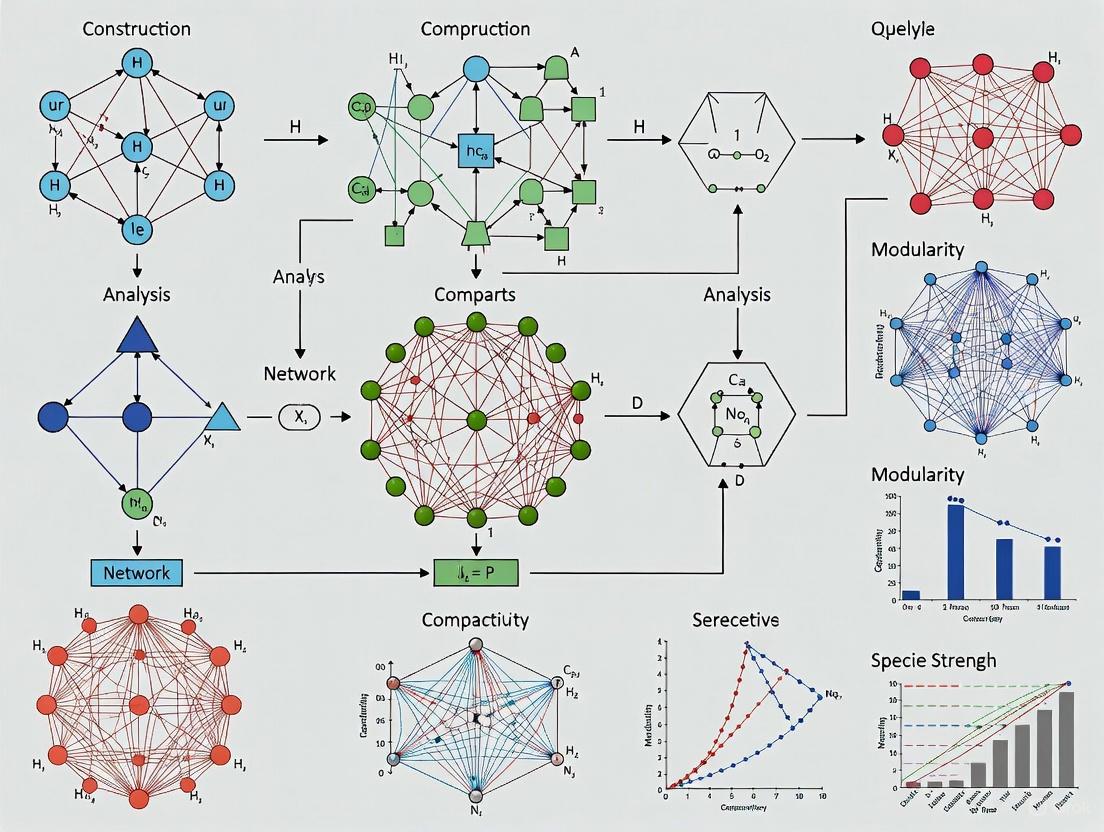
This article provides a comprehensive overview of comparative ecological network analysis methods, addressing the critical need for robust frameworks in ecosystem management.
Comparative Ecological Network Analysis: Methods, Applications, and Future Directions
Abstract
This article provides a comprehensive overview of comparative ecological network analysis methods, addressing the critical need for robust frameworks in ecosystem management. It explores foundational theories, details prominent methodological approaches like circuit theory and least-cost path analysis, and discusses optimization strategies for enhanced network performance. Through validation techniques and comparative studies, the article evaluates model effectiveness in diverse ecological contexts. Aimed at researchers, scientists, and environmental professionals, this synthesis identifies current methodological limitations and future research trajectories for advancing ecological network science in rapidly changing environments.
Theoretical Foundations and Evolving Concepts in Ecological Network Analysis
The integration of landscape ecology and network theory has fundamentally transformed how researchers analyze complex ecological systems. This conceptual merger represents a significant paradigm shift in ecology, moving from a primarily descriptive science to a predictive one capable of handling immense complexity. Landscape ecology emerged with a focus on spatial patterning, examining how the arrangement of ecosystems and land forms influences ecological processes. Network theory provided the mathematical foundation to quantify relationships between landscape elements, transforming abstract spatial concepts into analyzable systems of nodes and links. This convergence has enabled scientists to address pressing global challenges, from biodiversity conservation to sustainable urban planning, with unprecedented analytical rigor. The resulting framework of ecological network analysis now serves as a powerful interdisciplinary tool across diverse fields, including landscape planning, pharmaceutical research, and environmental management [1] [2] [3].
This article traces the historical trajectory of this integration, compares the methodological approaches that have emerged, and demonstrates through case studies and experimental data how these methods are applied in contemporary research settings. We examine how traditional landscape ecology metrics have evolved into sophisticated network properties, and how this evolution has enhanced our ability to predict ecosystem behavior under various environmental scenarios.
Historical Trajectory and Theoretical Foundations
The Evolution of Landscape Ecology
Landscape ecology developed as a distinct discipline in the latter half of the 20th century, emphasizing the spatial heterogeneity of environments and how this patterning affects ecological processes. Early landscape ecologists focused on patch dynamics, corridors, and matrix interactions, conceptualizing landscapes as mosaics of interacting elements. This spatial perspective was fundamentally qualitative in its infancy, relying heavily on cartographic representations and descriptive ecology. The introduction of Geographic Information Systems (GIS) in the 1980s and 1990s revolutionized the field, enabling researchers to quantitatively analyze spatial patterns through landscape metrics such as patch size, shape complexity, and connectivity indices. This quantitative shift set the stage for integration with network theory, as these landscape elements naturally corresponded to the nodes and links of mathematical graphs [4].
The Adoption of Network Theory in Ecology
Network theory entered ecology through multiple pathways. Early ecological applications focused on food webs, representing feeding relationships as networks to study energy flow and ecosystem stability. Theoretical ecologists like Robert May pioneered this approach in the 1970s, exploring how network properties like connectance influenced ecosystem stability. This research revealed the counterintuitive finding that complex ecosystems could be less stable, challenging prior assumptions about the relationship between diversity and stability. Parallel developments in social network analysis and infrastructure network modeling provided additional analytical tools that ecologists adapted for studying ecological systems. The critical theoretical advance was recognizing that ecological interactions—whether trophic, mutualistic, or spatial—could be abstracted as networks, allowing the application of mathematical graph theory to biological systems [2] [3].
Table 1: Key Historical Developments in Ecological Network Analysis
| Time Period | Development in Landscape Ecology | Development in Network Theory | Integrative Milestones |
|---|---|---|---|
| 1970s-1980s | Focus on patch dynamics and island biogeography | Food web structure analysis; Stability-complexity debate | Recognition of spatial patterns as networks |
| 1990s-2000s | GIS adoption; Landscape metrics development | Graph theory applications; Centrality measures | Circuit theory; Least-cost path modeling |
| 2010s-Present | Multi-scale analysis; Remote sensing integration | Multilayer networks; Dynamic network models | Integrated socio-ecological network frameworks |
Theoretical Integration: From Spatial Patterns to Networks
The theoretical integration of landscape ecology and network theory represents more than merely applying new analytical tools to existing problems. It constitutes a fundamental conceptual shift in how ecological systems are understood. Where traditional landscape ecology treated patches, corridors, and matrices as distinct elements, the network perspective reconceptualizes them as interconnected components of an integrated system. This shift enables researchers to apply formal mathematical concepts like degree distribution (the distribution of connections per node), clustering coefficients (the degree to which nodes cluster together), and modularity (the extent to which a network is organized into subgroups) to spatial ecological systems. These network properties provide insights into ecosystem functioning that were inaccessible through traditional landscape metrics alone, particularly regarding robustness, vulnerability, and functional connectivity [2] [3].
Comparative Methodological Approaches
Ecological Source Identification Methods
A critical methodological distinction in ecological network analysis lies in how researchers identify ecological sources (key patches that serve as network nodes). The search results reveal two predominant approaches with distinct strengths and limitations, as exemplified by the Nanchang case study [1].
Table 2: Comparison of Ecological Source Identification Methods
| Method Characteristic | Area Threshold Method | CMSPACI Method |
|---|---|---|
| Basic Principle | Selection based primarily on patch size | Integration of morphological spatial pattern analysis with landscape connectivity indices |
| Implementation Complexity | Low; relatively simple to apply | High; requires multiple analytical steps |
| Connectance Consideration | Limited; focuses on individual patches | Comprehensive; evaluates patch relationships |
| Resulting Network Connectivity | Lower; sources may be isolated | Higher; sources maintain functional connections |
| Habitat Quality of Corridors | Less optimal | Better quality corridors |
| Typical Application | Preliminary screening; resource-limited studies | Comprehensive conservation planning |
The area threshold method represents a more traditional landscape ecology approach, identifying ecological sources based primarily on patch size. While methodologically straightforward, this approach often identifies sources with low landscape connectivity that may be functionally isolated within the broader ecological matrix. In contrast, the CMSPACI method (Combining Morphological Spatial Pattern Analysis and Connectivity Indices) represents a more sophisticated integration of landscape and network approaches, identifying sources based on both their structural attributes and their functional relationships with other landscape elements. Research from Nanchang demonstrates that CMSPACI-identified sources exhibit superior habitat quality in corridors and stronger interaction intensity between patches, though the method demands greater analytical resources [1].
Analytical Framework for Network Comparison
When comparing ecological networks across environmental gradients or management scenarios, researchers employ standardized analytical frameworks. The search results highlight several methodological considerations for robust network comparison [5]:
Selection of Network Properties: Researchers must carefully choose which network properties to compare based on their research questions. Common properties include connectance (proportion of possible interactions realized), nestedness (degree to which specialists interact with subsets of generalists' partners), modularity (compartmentalization), and degree distribution.
Standardization Approaches: Different standardization methods can significantly influence conclusions about network variation:
- Direct comparison of raw metric values
- Null model standardization comparing observed networks to random expectations
- Trait-based analysis examining the role of functional traits in driving network structure
Spatial Explicit Methods: In landscape applications, networks are often constructed using resistance surfaces based on land cover, elevation, or other environmental variables. The Minimum Cumulative Resistance (MCR) model is frequently employed to identify potential ecological corridors between sources by calculating the least-resistant pathways through the landscape matrix [4].
Case Studies and Experimental Applications
Urban Ecological Network Planning: Nanchang and Fuzhou
The practical application of integrated landscape-network approaches is exemplified in urban ecological planning. In the Nanchang case study, researchers directly compared the area threshold and CMSPACI methods for ecological network construction. Their findings demonstrated that while both methods identified similar numbers of ecological barriers (primarily roads and construction land), the CMSPACI approach produced networks with superior functional connectivity and more realistic corridor placements. This study highlighted how methodological choices in source identification propagate through subsequent network analyses, influencing conservation recommendations and planning outcomes [1].
The Fuzhou case study illustrates a comprehensive application of ecological network analysis to green space system planning. Researchers employed a multi-step methodology:
- Landscape pattern evaluation using Fragstats software to calculate landscape metrics
- Green Protected Area (GPA) classification based on Conefor connectivity analysis
- Ecological corridor identification using the Minimum Cumulative Resistance model in ArcGIS
- Strategic node identification through gravity modeling and network analysis
This integrated approach allowed planners to identify key connectivity elements in the urban landscape, including the Min River corridor and coastal wetlands as strategically vital despite spatial constraints. Scenario analysis revealed that an optimized network configuration could increase system cyclicity from 1.00 to 4.18, significantly enhancing resource recycling potential—a key ecosystem function. This case demonstrates how traditional landscape analysis tools like Fragstats can be seamlessly integrated with network analysis to support evidence-based urban planning [4].
Pharmaceutical Research Applications
Network approaches have transcended traditional ecology to impact pharmaceutical research, demonstrating the broad utility of these methods. Researchers have constructed multilayer networks incorporating drug pipeline layers, global supply chain layers, and ownership layers to understand knowledge flow in drug development. This approach reveals how bow-tie structures and community detection can identify patterns in complex research and development processes that would remain invisible through traditional analysis. The application of network methods to pharmaceutical research represents a significant extension of ecological network principles to socio-technical systems, highlighting the cross-disciplinary fertilisation of these ideas [6] [7].
Table 3: Network Properties and Their Ecological and Pharmaceutical Interpretations
| Network Property | Ecological Interpretation | Pharmaceutical Application |
|---|---|---|
| Connectance | Proportion of possible species interactions realized | Density of collaboration between institutions |
| Modularity | Degree of compartmentalization into subsystems | Specialization in therapeutic areas |
| Node Centrality | Importance of species in maintaining network function | Key organizations in knowledge flow |
| Nestedness | Structured specialization in mutualistic networks | Pattern of innovation adoption |
Contemporary ecological network analysis requires specialized analytical tools and data resources. The search results reveal a consistent toolkit employed across multiple studies:
Table 4: Essential Resources for Ecological Network Analysis
| Tool/Resource | Type | Primary Function | Application Example |
|---|---|---|---|
| Fragstats | Software | Landscape pattern analysis | Calculating landscape metrics for habitat patches [4] |
| Conefor | Software | Connectivity analysis | Determining importance of habitat patches (dPC) [4] |
| ArcGIS | Software platform | Spatial analysis and modeling | Implementing Minimum Cumulative Resistance models [4] |
| Graph Theory Libraries | Analytical framework | Network metric calculation | Analyzing degree distribution, modularity [2] |
| Cortellis Database | Data source | Pharmaceutical pipeline information | Constructing drug development networks [6] |
| Remote Sensing Data | Data source | Land cover classification | Creating resistance surfaces for corridor modeling [4] |
Conceptual Framework and Analytical Workflow
The integration of landscape ecology and network theory follows a consistent conceptual framework that can be visualized as a sequential analytical process. The diagram below illustrates this workflow from data collection through to application:
Ecological Network Analysis Workflow
The integration of landscape ecology and network theory represents more than a methodological advancement—it constitutes a fundamental shift in how we understand and analyze ecological complexity. This synthesis has enabled a transition from descriptive ecology to predictive science, allowing researchers to forecast system responses to perturbations, identify critical leverage points for intervention, and optimize conservation strategies across scales. The comparative analysis presented here demonstrates that methodological choices significantly influence research outcomes, with more integrated approaches like the CMSPACI method generally producing ecologically realistic networks despite their computational complexity.
Future developments in this field will likely focus on dynamic networks that incorporate temporal variation, multilayer networks that capture different types of interactions simultaneously, and tighter integration with remote sensing technologies for automated network generation. As these methods continue to mature and cross disciplinary boundaries—from urban planning to pharmaceutical development—their value in addressing complex socio-ecological challenges will only increase. The historical development from landscape ecology to network theory has positioned ecology as an increasingly quantitative, predictive science capable of informing critical decisions about biodiversity conservation and ecosystem management in an increasingly human-modified world.
Ecological network analysis provides a powerful framework for understanding and managing the complex interactions within ecosystems. By representing landscapes as interconnected networks, researchers and conservation professionals can identify critical areas for maintaining biodiversity, supporting species movement, and ensuring ecosystem resilience. This comparative guide examines the three core technical components of ecological network analysis: ecological sources (habitat patches), corridors (linkages between habitats), and resistance surfaces (landscape permeability maps). These components form the foundational architecture of ecological connectivity models used in conservation planning, environmental impact assessment, and regional development strategies. Understanding the methodological choices available for each component and their performance implications is essential for effective ecological network design and implementation, particularly in fragmented landscapes where habitat connectivity directly influences species persistence and ecosystem function.
Comparative Analysis of Core Components
The construction of ecological networks requires careful selection of methodologies for each core component, with significant implications for analytical outcomes and conservation effectiveness. Different approaches offer distinct advantages and limitations across key performance criteria including ecological accuracy, data requirements, computational intensity, and practical applicability.
Table 1: Methodological Comparison for Identifying Ecological Sources
| Method | Key Features | Data Requirements | Ecological Basis | Best Application Context |
|---|---|---|---|---|
| Structural Approaches (MSPA) | Identifies sources based on spatial pattern and configuration; objective and repeatable [8] | Land cover/Land use raster data | Landscape connectivity theory; assumes structural connectivity supports functional connectivity | Initial screening in data-poor regions; large-scale assessments |
| Functional Approaches (RSEI, Habitat Quality) | Assesses ecological quality using multiple indicators (greenness, humidity, heat, dryness) [8] [9] | Remote sensing data (NDVI, LST, WET, NDBSI); field validation data | Ecosystem service provision; habitat suitability | Priority conservation areas; quality-focused planning |
| Composite "Structure-Function" Approach | Integrates MSPA with RSEI/habitat quality assessment; captures both form and function [8] | Land cover data + multi-spectral remote sensing data | Combined structural and functional connectivity theory | Comprehensive planning; optimizing limited conservation resources |
Table 2: Methodological Comparison for Constructing Corridors
| Method | Underlying Principle | Connectivity Assumption | Output Characteristics | Implementation Considerations |
|---|---|---|---|---|
| Least-Cost Path (LCP) | Identifies single optimal path with minimum cumulative resistance between sources [10] | Organisms have perfect landscape knowledge and choose optimal routes | Discrete, linear corridors; single best pathway | Computationally efficient; may oversimplify movement ecology |
| Circuit Theory | Models landscape connectivity as electrical current flow with random walk behavior [8] | Organisms move randomly through landscapes based on resistance | Probabilistic current density maps; multiple potential pathways | Identifies pinch points and barriers; more computationally intensive |
| Minimum Cumulative Resistance (MCR) | Calculates cumulative cost from sources across resistance surface [11] [4] | Movement cost minimization drives connectivity patterns | Continuous resistance values from sources; cost-weighted distances | Flexible application; integrates well with GIS analysis |
Table 3: Methodological Comparison for Developing Resistance Surfaces
| Method | Development Process | Key Advantages | Key Limitations | Validation Requirements |
|---|---|---|---|---|
| Expert Opinion | Expert scoring of land cover types based on perceived permeability to movement [10] | Applicable in data-poor contexts; incorporates expert knowledge | Subjective; potentially inconsistent; expert bias | Inter-expert reliability assessment; field validation |
| Species Distribution Models | Statistical relationships between species occurrences and environmental variables [10] | Empirical basis; species-specific predictions | Limited by occurrence data quality; assumes correlation with movement | Independent movement data; genetic markers |
| Habitat Quality Assessment | Models based on habitat quality and sensitivity to human impacts [9] | Captures intra-category variability; ecosystem-based | May not directly reflect movement permeability; complex parameterization | Species occurrence data; movement tracking |
Experimental Protocols for Component Analysis
Habitat Quality-Based Resistance Surface Development
The habitat quality-based method for resistance surface construction integrates the inherent environmental value of landscape units with their sensitivity to anthropogenic stressors, providing an ecologically-grounded approach to modeling landscape permeability. The experimental protocol involves sequential analytical phases:
Phase 1: Habitat Quality Assessment
- Data Preparation: Compile land use/land cover data, threat data (e.g., urban areas, roads, agricultural land), and habitat type classification. Data should be formatted as raster layers with consistent resolution and spatial extent.
- Parameterization: Define habitat types and their sensitivity to each threat (0-1 scale, where 1 indicates high sensitivity). Specify threat weights, decay functions (linear or exponential), and maximum effective threat distances based on empirical literature or expert consultation.
- Model Execution: Implement the habitat quality module using the InVEST model or similar software, which calculates habitat quality score Qxj for pixel x in habitat type j using the equation: Qxj = Hj [1 - (Dxjz / (Dxjz + kz))] where Hj is habitat suitability, Dxj is total threat level, k is half-saturation constant, and z is scaling parameter [9].
- Output Transformation: Convert habitat quality scores (0-1) to resistance values (1-100) using inverse relationship (high quality = low resistance), ensuring linear or logarithmic transformation based on ecological justification.
Phase 2: Resistance Surface Application
- Corridor Modeling: Input the habitat quality-based resistance surface into Least-Cost Path or Circuit Theory models to identify connectivity pathways.
- Validation: Compare model outputs with field data on species movement, genetic connectivity, or independent expert evaluation of landscape permeability.
- Sensitivity Analysis: Test model robustness to variations in parameter values, particularly threat weights and sensitivity scores.
This protocol was applied in Changzhou, China, where it demonstrated superior performance compared to traditional expert scoring and entropy coefficient methods, producing corridors more aligned with existing natural vegetation patches and known wildlife movement areas [9].
Multi-Species Corridor Identification Protocol
Multi-species connectivity analysis addresses the limitation of single-species approaches by incorporating the varied habitat requirements and movement capabilities of multiple species, providing a more comprehensive conservation planning framework. The experimental protocol involves:
Phase 1: Species Selection and Data Collection
- Assemblage Selection: Identify a representative group of species (typically 8-15) spanning taxonomic groups (mammals, birds, reptiles, amphibians) and with varying mobility levels, habitat specializations, and conservation status. In a Victoria, Australia study, researchers selected 12 species including mammals (brush-tailed phascogale, sugar glider), birds (buff-rumped thornbill, fuscous honeyeater), and reptiles (Bougainville's skink, jacky lizard) [10].
- Data Compilation: Gather species occurrence data from systematic surveys, museum collections, or citizen science databases. Collect environmental variables including land cover, topography, climate, and human modification indices.
Phase 2: Resistance Surface Development
- Expert-Based Resistance: Convene a panel of species experts (typically 5-15 participants) to score land cover categories for each species using a standardized resistance scale (e.g., 1-100, where 1=minimal resistance, 100=maximum resistance). Calculate mean resistance values for each land cover category per species.
- SDM-Based Resistance: Develop species distribution models using MaxEnt, Random Forests, or other appropriate algorithms. Convert habitat suitability predictions to resistance values using negative relationships (high suitability = low resistance).
- Surface Comparison: Statistically compare expert-based and SDM-based resistance surfaces using spatial correlation analysis and evaluate ecological plausibility.
Phase 3: Connectivity Modeling and Integration
- Individual Species Corridors: For each species and resistance surface type, model corridors using Least-Cost Path or Circuit Theory approaches between identified core habitat patches.
- Multi-Species Integration: Create composite connectivity maps by (1) averaging resistance surfaces across species, or (2) overlaying individual species corridor maps to identify areas important for multiple species.
- Performance Validation: Compare the performance of expert-based versus SDM-based approaches using independent movement data, genetic differentiation (FST), or expert evaluation. In the Victoria study, expert-based resistance surfaces produced pathways more strongly aligned with existing vegetation patches and riparian zones, suggesting greater practical utility for conservation planning [10].
Analytical Workflow Visualization
The methodological integration of ecological sources, corridors, and resistance surfaces follows a sequential analytical workflow with multiple decision points that influence the final ecological network configuration.
Successful implementation of ecological network analysis requires specialized software tools, data resources, and analytical frameworks. The following table summarizes essential resources for researchers conducting comparative analyses of ecological network components.
Table 4: Essential Research Resources for Ecological Network Analysis
| Resource Category | Specific Tools/Frameworks | Primary Function | Application Context |
|---|---|---|---|
| Spatial Analysis Software | ArcGIS (Linkage Mapper toolbox) [8], FragStats [4], Guidos Toolbox (MSPA) | Landscape pattern analysis; corridor mapping; connectivity assessment | General ecological network construction; landscape metrics calculation |
| Connectivity Modeling | Circuitscape [8], Conefor [4], Least-Cost Path algorithms [10] | Circuit theory implementation; connectivity indices; corridor identification | Pinch point analysis; importance assessment; network connectivity quantification |
| Habitat Assessment | InVEST Habitat Quality module [9], RSEI calculation scripts | Habitat quality modeling; ecological source identification | Resistance surface development; priority area delineation |
| Data Resources | Land use/land cover datasets, Remote sensing data (Landsat, Sentinel), Species occurrence databases | Base mapping; habitat distribution; model validation | All analysis phases; model parameterization and testing |
| Statistical Analysis | R packages (gdistance, SDMTools), MaxEnt | Resistance surface calculation; species distribution modeling | Statistical modeling; resistance surface development; model comparison |
Comparative analysis of methodologies for ecological sources, corridors, and resistance surfaces reveals significant trade-offs between ecological precision, computational requirements, and practical implementation. The emerging consensus favors integrated approaches that combine structural and functional assessments for ecological source identification, multi-species frameworks for corridor design, and habitat quality-based methods for resistance surface development. Future methodological advancements should focus on improving the integration of temporal dynamics, scaling relationships between landscape patterns and ecological processes, and strengthening validation protocols using empirical movement data. The selection of specific methodological approaches should be guided by conservation objectives, data availability, and the spatial-temporal scale of analysis, with composite methods generally providing more robust foundations for conservation decision-making in complex, fragmented landscapes.
The Ecological Network Dynamics Framework (ENDF) represents a unified approach for analyzing the complex interplay between the structural properties of ecological networks and their functional dynamics in response to environmental change. This framework stresses that the interplay between species interaction networks and the spatial layout of habitat patches is key to identifying which network properties and trade-offs among them are needed to maintain species interactions in dynamic landscapes [12]. The ENDF integrates concepts from dynamical systems theory, ecological psychology, and complex systems science to investigate relationships emerging between organisms and their environments [13]. As ecological networks vary in space and time as a function of environmental conditions and other factors, this framework provides essential analytical tools for conceptualizing, visualizing, and modeling these complex relationships [12]. The application of this framework spans fundamental ecological research, conservation planning, and sustainable ecosystem management, making it particularly valuable for researchers and scientists investigating complex biological systems.
Theoretical Foundations of the Ecological Network Dynamics Framework
The Ecological Network Dynamics Framework is supported by three theoretical pillars that integrate structure and function:
Constraint-Driven Emergence: Movement coordination patterns and network structures emerge from dynamically functional relationships between sets of interacting constraints, including the environment, the task, and the resources of a performer [13]. This pillar emphasizes that the performer-environment coupling constitutes the smallest unit of analysis for investigating ecological performance and expertise, requiring examination on an ecological scale where eco-physical variables indicate relationships between organisms and their surroundings.
Complex Adaptive Systems: The performer-environment coupling functions as a complex adaptive system exhibiting non-linear and non-proportional properties [13]. These systems demonstrate multi-stability, where multiple stable performance solutions can emerge depending on action opportunities offered by the environment and perceived by organisms according to their capabilities. This degeneracy in perceptual-motor systems allows behavioral structure to vary without compromising functional task achievement.
Perception-Action Coupling: Coordination variability emerges from continuous co-regulation of perceptual and motor processes through information pick-up for affordances that both solicit and constrain behaviors [13]. These affordances are both objective and subjective to each performer since they are ecological properties of the environment picked up relative to an individual's own action capabilities, being both body-scaled and action-scaled.
Comparative Analysis of Ecological Network Methodologies
Table 1: Comparison of Ecological Network Analysis Methods
| Method Type | Network Focus | Key Metrics | Temporal Dimension | Data Requirements |
|---|---|---|---|---|
| Spatio-temporal Networks [12] | Species interactions across habitat patches | Node/link persistence, Weight dynamics | Multiple time periods | Species distribution data, Habitat maps, Movement data |
| Multilayer Networks [12] | Multiple interaction types or locations | Interlayer connectivity, Cross-layer dependencies | Implicit through layers | Multi-taxa interactions, Environmental variables |
| Nonlinear Time Series Analysis [14] | Causality in species interactions | Cross-map skill, S-map coefficients | Continuous | High-frequency time series, Quantitative eDNA |
| Structural Network Analysis [3] | Topological properties | Connectance, Modularity, Centrality | Static snapshot | Species interaction records, Food web data |
Table 2: Quantitative Metrics for Network Stability Assessment
| Metric Category | Specific Metrics | Ecological Interpretation | Theoretical Range |
|---|---|---|---|
| Complexity Measures [3] | Species richness (S), Connectance (C), Link density | Network complexity, Interaction diversity | S > 0, 0 < C < 1 |
| Stability Indicators [3] | Persistence, Robustness, Qualitative stability | Resistance to perturbation, Recovery capacity | 0 to 1 (probability) |
| Structural Metrics [15] | Modularity, Strongly Connected Components (SCCs) | Compartmentalization, Interaction redundancy | -1 to 1 (modularity) |
| Dynamic Properties [12] | Node/link transience, Weight variability | Network rewiring, Interaction strength changes | Situation-dependent |
The comparison reveals that methodological approaches span from static structural analyses to dynamic, process-oriented frameworks. Spatio-temporal networks [12] excel in capturing how nodes and links change position and weight over time, making them particularly valuable for studying ecological responses to environmental change. In contrast, nonlinear time series analysis [14] enables the detection of causal relationships in complex systems through high-frequency monitoring, providing superior capacity for predicting system dynamics. The multilayer network approach [12] offers unique advantages for modeling multiple interaction types simultaneously, though with increased data requirements.
Research indicates that structural metrics alone provide limited insight into ecological dynamics without complementary functional analysis [3] [15]. Studies have demonstrated significant negative correlations between modularity and robustness in empirical food webs [15], suggesting that topological characteristics directly influence system stability. Furthermore, the size of strongly connected components (SCCs) shows positive correlation with persistence in replacement networks [15], highlighting the importance of specific structural configurations for maintaining ecological functions.
Experimental Protocols for Network Dynamics Analysis
Protocol for eDNA-Based Ecological Network Reconstruction
The integration of environmental DNA (eDNA) metabarcoding with nonlinear time series analysis represents a cutting-edge methodology for reconstructing ecological networks under field conditions [14]:
Field Monitoring Design: Establish replicated monitoring plots (e.g., 5 rice plots as in Ushio et al.'s study) with daily measurements of target species performance metrics (e.g., rice growth rate in cm/day) throughout the study period (e.g., 122 consecutive days) [14].
Quantitative eDNA Sampling: Implement quantitative eDNA metabarcoding with internal spike-in DNAs to enable accurate quantification of ecological community members. This approach allows detection of 1000+ species including microbes and macrobes simultaneously [14].
Time Series Causality Analysis: Apply empirical dynamic modeling (EDM) techniques, specifically convergent cross-mapping (CCM), to detect causal relationships between species abundances and ecological performance metrics. This nonlinear approach can identify 50+ potentially influential species from extensive time series data [14].
Field Validation: Conduct manipulative experiments targeting species identified as influential through time series analysis. For example, add Globisporangium nunn or remove Chironomus kiiensis from experimental plots, then measure responses in growth rates and gene expression patterns to validate detected interactions [14].
Protocol for Spatial Ecological Network Analysis
The construction of Ecological Security Patterns (ESPs) integrates spatial analysis with network theory for landscape-scale conservation planning [16]:
Ecosystem Service Assessment: Quantify four key ecosystem services (provisioning, regulating, cultural, and supporting) using spatial modeling techniques, including the InVEST software platform [17] [16].
Morphological Spatial Pattern Analysis (MSPA): Identify core habitat patches and structural connectors using satellite imagery and land cover classification to define potential ecological sources [16].
Resistance Surface Modeling: Develop landscape resistance maps incorporating novel factors specific to the study region, such as snow cover days in cold regions [16].
Circuit Theory Application: Model ecological corridors using Circuit Theory to identify prioritized connectivity pathways, then quantify ecological risk using landscape indices and evaluate economic efficiency with genetic algorithms to optimize corridor width and placement [16].
Visualization of Ecological Network Dynamics
Framework Integration Diagram
Experimental Workflow for Network Dynamics Research
Table 3: Essential Research Tools for Ecological Network Analysis
| Tool Category | Specific Tools/Platforms | Primary Function | Application Context |
|---|---|---|---|
| Data Collection Technologies | Quantitative eDNA metabarcoding [14] | Comprehensive species detection | Field monitoring of diverse taxa |
| High-throughput sequencing [18] | Rapid processing of interaction data | Microbial and microbiome networks | |
| Remote sensing/GIS [16] | Spatial pattern analysis | Landscape-scale network mapping | |
| Analytical Software Platforms | InVEST [17] | Ecosystem service assessment | Spatial network optimization |
| ARIES [17] | Artificial intelligence for ES | Rapid network modeling | |
| R/Network Analysis Packages [19] | Metric calculation and visualization | Structural network characterization | |
| Theoretical Frameworks | Network Theory [12] [3] | Structural analysis | Predicting stability and dynamics |
| Complex Systems Theory [13] | Dynamics modeling | Understanding emergent properties | |
| Nonlinear Time Series Analysis [14] | Causal inference | Detecting species interactions |
Applications in Conservation and Ecosystem Management
The Ecological Network Dynamics Framework provides critical insights for environmental management and conservation strategy development. Research demonstrates that ecological security patterns can be optimized using a novel connectivity-ecological risk-economic efficiency (CRE) framework that integrates ecosystem services, morphological spatial pattern analysis, and climate-specific resistance factors like snow cover days [16]. This approach has revealed that supplementing priority ecological corridors significantly improves network robustness, with corridor width optimization (approximately 630-635 meters in studied systems) achieving measurable risk and cost reductions [16].
In agricultural systems, the framework enables identification of influential organisms affecting crop performance through integrated monitoring and nonlinear time series analysis. The detection of previously overlooked species such as Globisporangium nunn (Oomycetes) and Chironomus kiiensis (midge) as significantly influencing rice growth demonstrates the power of this approach for identifying critical interactions in complex food webs [14]. This application has particular relevance for sustainable agriculture development seeking to harness ecological complexity rather than simplify it.
The framework also advances conservation planning by highlighting how network topologies constrain ecological dynamics. Studies of strongly connected components (SCCs) in food webs reveal that their size positively correlates with persistence, providing guidance for prioritizing conservation interventions [15]. Similarly, the observed negative correlation between modularity and robustness offers critical insights for designing resilient protected area networks that maintain ecosystem functions despite ongoing environmental changes [3] [15].
The Ecological Network Dynamics Framework represents a powerful integrative approach for analyzing the complex relationship between ecological structure and function across spatial and temporal scales. By combining theoretical foundations from complex systems science with advanced empirical methodologies and analytical techniques, this framework enables researchers to move beyond static structural analyses to dynamic, process-oriented understanding of ecological networks. The comparative analysis presented here reveals that methodological integration—particularly combining spatio-temporal network modeling with nonlinear time series analysis and empirical validation—provides the most robust approach for predicting ecological responses to environmental change. As global challenges of biodiversity loss and ecosystem degradation intensify, further development and application of this framework will be essential for designing effective conservation strategies and sustainable ecosystem management practices.
Spatio-temporal network analysis provides a powerful framework for studying the evolution of complex systems across both time and space. In ecology, this approach is fundamental for understanding how species interactions change due to environmental pressures, habitat fragmentation, and climate change. Temporal dynamics in ecological networks encompass changes in network topology and the flow of resources or energy through the network over time [20]. Static network analyses, which assume fixed topologies and persistent interactions, often misrepresent real biological systems where interactions dynamically change, potentially leading to inferential problems [21]. The integration of spatial components allows researchers to model how these temporal changes manifest across geographical landscapes, creating a more comprehensive understanding of ecological processes.
The study of spatio-temporal dynamics extends beyond ecology into biomedical research, where network approaches model disease spread, protein interactions, and drug delivery systems. For instance, in cancer research, image-based spatio-temporal computational models of solid tumors have been developed to simulate interstitial fluid flow and solute transport, incorporating heterogeneous microvasculature for angiogenesis instead of synthetic mathematical modeling [22]. Such models employ Convection-Diffusion-Reaction (CDR) equations to simulate the binding and uptake of drugs by tumor cells with high accuracy, demonstrating how spatial relationships and temporal processes jointly influence treatment outcomes.
Comparative Analysis of Methodological Approaches
Statistical Model-Based Frameworks
Model-based clustering of time-evolving networks represents a sophisticated statistical approach for detecting groups of nodes with similar connectivity patterns over time. This framework utilizes discrete time exponential-family random graph models (TERGMs) to simultaneously model network evolution and detect group structures [23]. The approach is particularly valuable for identifying clusters based on specific network features such as stability, which varies across different node types. The mathematical foundation of one-step transition probability under first-order Markov assumption is expressed as:
[ Pr(Yt = yt | y{t-1}) = \exp{\theta^\top g(yt, y{t-1}) - \psi(\theta, y{t-1})} ]
Where (Yt) represents the network at time (t), (\theta) is a vector of network parameters, (g(yt, y_{t-1})) is a vector of sufficient statistics, and (\psi) ensures proper probability normalization [23]. This formulation allows researchers to incorporate domain-specific knowledge through carefully chosen statistics that capture interesting temporal features such as stability, reciprocity, or degree persistence.
Table 1: Comparison of Model-Based Clustering Approaches for Temporal Networks
| Method | Theoretical Foundation | Temporal Handling | Key Advantages | Limitations |
|---|---|---|---|---|
| Model-based clustering with TERGM | Exponential-family random graph models | Discrete time, first-order Markov | Simultaneously models network evolution and group structure; incorporates meaningful features | Computationally intensive for large networks |
| Stochastic Blockmodel (SBM) | Stochastic equivalence | Multiple variants (static, mixed membership, degree-corrected) | Identifies groups with more edges within than between groups | Assumes static community structure in basic form |
| Molecular Ecological Networks (MENs) | Random Matrix Theory | Correlation across time series | Automatic threshold detection; robust to noise | Requires sufficient temporal replication |
Algorithmic and Computational Approaches
Dynamic community detection algorithms represent another major approach for understanding network evolution. A recent comparative study evaluated six state-of-the-art dynamic community detection methods, identifying significant variation in their performance and scalability [24]. The study found that vertex-centric local optimization methods, particularly those based on permanence, achieved computational efficiency comparable to classical modularity-based methods while avoiding arbitrary tie-breaking scenarios common in global optimization approaches.
The permanence metric, calculated as:
[ Perm(v) = \left[ \frac{I(v)}{E{max}(v)} \times \frac{1}{d(v)} \right] - \left[ 1 - C{in} \right] ]
where (I(v)) represents internal connections, (E{max}(v)) is maximum connections to a single external community, (d(v)) is the degree of vertex (v), and (C{in}) is internal clustering coefficient, enables efficient parallel computation without significant parallel overhead [24]. This local computability facilitated the development of DyComPar, a shared-memory parallel algorithm that demonstrates between 4 and 18 fold speed-up on a multi-core machine with 20 threads across various real-world and synthetic networks.
Table 2: Performance Comparison of Dynamic Community Detection Algorithms
| Algorithm | Theoretical Basis | Scalability | Quality Metrics | Best Use Cases |
|---|---|---|---|---|
| DyComPar | Permanence optimization | High (parallelizable) | Modularity, conductance, temporal smoothness | Large-scale dynamic networks |
| TERGM-based clustering | Exponential random graphs | Moderate | Likelihood, classification accuracy | Feature-based temporal clustering |
| RMT-based MENs | Random Matrix Theory | Moderate to high | Modularity, scale-freeness, robustness | Microbial ecological networks |
Experimental Protocols and Methodologies
Long-Term Ecological Network Monitoring
Understanding temporal dynamics in ecological networks requires meticulous long-term data collection. A seminal 12-year study of flower-visitation networks between butterflies and nectar plants established a robust protocol for temporal network analysis [25]. Researchers conducted observations at El Puig, an open Mediterranean shrubland in NE Spain, with standardized weekly samplings (30 per year) from March to September over 12 consecutive years (1996-2007). The methodology involved:
- Transect Sampling: All butterflies within 2.5 meters on each side of a 2,029-meter long transect and 5 meters in front of the recorder were counted.
- Interaction Recording: Researchers scored all interactions between flower-visiting butterfly species and their nectar plants, including frequency measurements.
- Standardization: A fixed observation protocol throughout all 12 years minimized sampling variability, with time investment varying seasonally (1 hour weekly early in season, 2-3 hours weekly in mid-season July).
- Data Structuring: All data were arranged in annual, bipartite plant-butterfly interaction matrices for longitudinal analysis.
This comprehensive approach allowed researchers to quantify colonization and extinction probabilities for species and links, calculated as (e = \frac{\text{no. extinctions during 12 yrs}}{\text{no. extinctions during 12 yrs} + \text{no. survivals during 12 yrs}}) and (c = \frac{\text{no. colonizations during 12 yrs}}{\text{no. colonizations during 12 yrs} + \text{no. survivals during 12 yrs}}) respectively, with mean annual turnover rate defined as (t = \frac{e + c}{2}) [25].
Molecular Ecological Network Analysis
The Molecular Ecological Network Analysis Pipeline (MENAP) provides a standardized framework for constructing and analyzing ecological association networks from high-throughput metagenomic data [26]. The process consists of two main phases:
Phase 1: Network Construction
- Data Collection: Gathering high-throughput sequencing data (e.g., 16S rRNA gene pyrosequencing)
- Data Transformation: Standardizing abundance data into relative abundance
- Similarity Matrix Calculation: Computing pair-wise similarity matrices between operational taxonomic units (OTUs)
- Adjacency Matrix Determination: Using Random Matrix Theory (RMT) to automatically identify optimal thresholds for network construction
Phase 2: Network Analysis
- Topology Characterization: Calculating network properties including scale-freeness, small-worldness, modularity, and hierarchy
- Module Detection: Identifying groups of OTUs that are highly connected among themselves but have fewer connections to OTUs outside the group
- Eigengene Analysis: Representing module profiles through eigengenes
- Environmental Association: Establishing relationships between network properties and environmental characteristics
The robustness of MENs to noise has been experimentally validated by adding different levels (1% to 100% of original standard deviation) of Gaussian noise to datasets and examining network preservation [26]. Results demonstrated that with less than 40% noise added, roughly 90% of original OTUs remained detected in perturbed networks, indicating strong methodological robustness.
Deep Learning for Spatio-Temporal Forecasting
CASTNet (Community-Attentive Spatio-Temporal Networks) represents a novel deep learning approach for forecasting dynamic processes across networked systems [27]. Originally developed for opioid overdose forecasting using real-time crime dynamics, the methodology can be adapted for ecological applications. The experimental protocol includes:
- Multi-head Attentional Networks: Learning different representation subspaces of features through attention mechanisms
- Community-Attentive Architecture: Allowing predictions for a given location to be optimized by mixtures of region groups (communities)
- Interpretability Features: Identifying which features from which communities contribute most to predictions
- Cross-domain Validation: Testing models on multiple real-world datasets to ensure generalizability
This approach captures both spatial dependencies (through community structures) and temporal dynamics (through sequential learning), providing a powerful framework for predicting ecological phenomena across spatial and temporal dimensions.
Key Research Reagents and Computational Tools
Table 3: Essential Research Tools for Spatio-Temporal Network Analysis
| Tool/Resource | Type | Primary Function | Application Context |
|---|---|---|---|
| MENAP (Molecular Ecological Network Analysis Pipeline) | Software Pipeline | RMT-based network construction and analysis | Microbial ecology, metagenomics studies |
| ANINHADO | Software Package | Calculate nestedness (NODF index) in bipartite networks | Plant-pollinator, host-parasite networks |
| DyComPar | Parallel Algorithm | Dynamic community detection using permanence | Large-scale temporal network analysis |
| uSonic-3 Scientific Anemometer | Field Instrument | 3D wind speed measurement for eddy covariance | Atmospheric-biospheric exchange studies |
| LI-7200RS Gas Analyzer | Field Instrument | CO₂ and H₂O mole fraction measurements | Carbon flux studies in aquatic and terrestrial systems |
| Picarro G1301-f Gas Analyzer | Field Instrument | CH₄ and H₂O mole fraction measurements | Methane flux monitoring in ecosystems |
| Random Matrix Theory (RMT) | Mathematical Framework | Automatic threshold detection for network construction | Cellular and ecological network inference |
Significant Findings and Empirical Patterns
Temporal Stability and Local Instability in Ecological Networks
The long-term butterfly-plant interaction study revealed a fundamental paradox in ecological networks: global stability coexists with strong local dynamics [25]. While global network properties (species numbers, links, connectance) remained temporally stable, most species and links showed strong temporal dynamics. Specifically, species of butterflies and plants varied bimodally in temporal persistence:
- Sporadic Species: Present only 1-2 years (16% of butterflies, 61% of plants)
- Stable Species: Present 11-12 years (60% of butterflies, 21% of plants)
Links demonstrated even stronger dynamics, with 68% being sporadic (lasting only 1-2 years) and only 2% stable (lasting 11-12 years). This indicates that network stability is maintained through compensatory mechanisms rather than constancy of individual components.
Specialist-Generalist Dynamics in Network Evolution
The topological analysis of temporal networks revealed distinct dynamics between specialists and generalists [25]. In the butterfly-plant network, species were categorized as specialists (linkage level L ≤ 2) or generalists (L > 2), with these groups almost equally represented. However, 70% of all links connected generalists, while only 2% connected specialists. Crucially, the turnover of links followed different mechanisms:
- Specialist Link Turnover: Driven primarily by species turnover
- Generalist Link Turnover: Occurred mainly through rewiring (reshuffling existing interactions)
This finding demonstrates how different ecological strategies result in distinct temporal dynamics within the same network.
Microbial Network Responses to Environmental Change
The application of MENs to microbial communities under experimental warming revealed systematic changes in network architecture [26]. Analysis of 16S rRNA gene pyrosequencing data from grassland soils with ambient and +2°C warming treatments showed that:
- Network Size: Warming increased network nodes from 152 to 177 and edges from 263 to 279
- Topological Properties: Both warming and unwarming networks exhibited scale-free, small-world, and modular properties
- Key Drivers: Temperature and soil pH were identified as critical factors determining network interactions
These findings demonstrate that microbial networks undergo predictable structural changes in response to environmental perturbations, with implications for ecosystem stability and function under climate change scenarios.
Implications for Ecological Research and Conservation
The comparative analysis of spatio-temporal network methods reveals several important implications for ecological research and conservation practice. First, the choice of analytical approach should align with specific research questions and data characteristics. Model-based clustering with TERGMs excels when researchers have hypotheses about specific network features driving community assembly [23]. In contrast, algorithmic approaches like DyComPar offer computational advantages for large-scale networks where detection of community evolution is the primary goal [24].
Second, the consistent finding of local instability within globally stable networks [25] suggests that conservation strategies should focus on maintaining functional redundancy and response diversity rather than preserving specific species interactions. This perspective acknowledges the dynamic nature of ecological networks while seeking to preserve their overall structure and function.
Finally, the integration of spatial and temporal dimensions in network analysis enables more accurate predictions of ecological responses to environmental change. Methods like CASTNet [27], though developed in other domains, offer promising approaches for forecasting ecological dynamics across landscapes under changing climatic conditions. As these methodologies continue to mature, they will enhance our ability to understand, predict, and manage complex ecological systems in an increasingly dynamic world.
Table of Contents
- Introduction to Ecological Network Analysis
- Comparative Analysis of Key Network Properties
- Experimental Protocols for Network Analysis
- Visualizing Network Properties and Workflows
- The Researcher's Toolkit: Essential Reagents & Materials
Ecological networks are complex systems that map the interactions, such as predation, mutualism, and competition, between different species within an ecosystem [28]. The analysis of these networks provides a powerful, interdisciplinary framework for understanding the structure, behavior, and dynamics of ecological systems, revealing patterns and relationships that are not apparent when examining individual species in isolation [29]. By representing ecosystems as networks—where species are nodes and their interactions are edges—researchers can quantify properties that determine stability, resilience, and function [29] [28]. For researchers and drug development professionals, particularly in fields like biodiscovery and microbiome studies, these methods are invaluable for identifying key species, predicting responses to perturbations, and understanding the complex interplay within microbial communities that can be harnessed for therapeutic applications [28] [18].
This guide focuses on three foundational categories of network properties. Connectivity describes the broad-scale patterns of interaction, while circuitry delves into the specific pathways that facilitate the flow of energy or information. Finally, node and link importance identifies the critical elements whose presence or absence disproportionately affects the entire network's function and stability [29].
Comparative Analysis of Key Network Properties
The analytical power of network analysis comes from quantitative metrics that describe a network's architecture. The table below summarizes the purpose, application, and experimental basis for key properties related to connectivity, circuitry, and importance.
Table 1: Key Properties for Comparative Ecological Network Analysis
| Network Property | Purpose & Definition | Relevance in Ecological Networks | Experimental Basis & Data Source |
|---|---|---|---|
| Connectivity | |||
| Node Degree | Measures the number of direct connections a node (e.g., a species) has [29]. | Identifies generalist species (high degree) versus specialist species (low degree). High network average degree may increase robustness but also facilitate cascading failures [29]. | Derived from species interaction data obtained via high-throughput sequencing (e.g., meta-barcoding for trophic interactions) [18]. |
| Path Length | The number of steps required to connect two nodes in the network [29]. | Short average path length indicates rapid energy flow and potential for swift propagation of disturbances (e.g., pollutant effects) through the ecosystem [29]. | Calculated from the full network graph. Inferred from co-occurrence networks built from microbial community sequencing data [28]. |
| Clustering Coefficient | Measures the tendency of a node's neighbors to also be connected to each other, forming tightly-knit groups [29]. | High clustering suggests modular community structure and functional redundancy, which can buffer the network against species loss [29]. | Calculated from the network graph. Used in trait-based approaches to understand community assembly [18]. |
| Circuitry | |||
| Modularity | Quantifies the extent to which a network is subdivided into distinct, non-overlapping modules (sub-communities) [29]. | High modularity is a key indicator of a system's ability to compartmentalize shocks, preventing a local disturbance from spreading globally [29]. | Detected computationally from the network using community detection algorithms [29]. Observed in phage-bacteria networks [28]. |
| Mesh Analysis | A method from circuit theory applied to identify all independent closed loops (meshes) within a network [30]. | Useful for modeling nutrient or energy cycles (e.g., nitrogen cycle) and identifying feedback loops that contribute to ecosystem stability or instability [30]. | The network is mapped as a topological graph where branches represent flows (e.g., energy) and nodes represent states (e.g., species pools) [30]. |
| Node/Link Importance | |||
| Centrality Measures | A family of metrics (e.g., Betweenness, Eigenvector) that identify the most important or influential nodes in a network [29]. | Identifies keystone species. High betweenness centrality species act as critical bridges; high eigenvector centrality species are connected to other well-connected species [29] [18]. | Calculated from the network structure. Machine learning algorithms can predict keystone species from network topology and trait data [18]. |
| Link | A measure of the importance of a specific interaction (edge) for network cohesion, often analogous to edge betweenness [29]. | Identifies critical interactions whose removal could fragment the network or collapse key functions, such as a specific pollination or predation link [29]. | Determined by simulating the removal of individual links and measuring the resulting impact on network diameter or cohesion. |
Experimental Protocols for Network Analysis
Robust ecological network analysis relies on standardized methodologies for data collection, network construction, and computational interrogation. The following protocols detail the core workflows.
Protocol A: Constructing an Interaction Network from High-Throughput Sequencing Data
1. Sample Collection & Metagenomic Sequencing:
- Procedure: Collect environmental samples (e.g., soil, water, gut content) from multiple time points or locations. Extract total DNA/RNA. Prepare sequencing libraries targeting universal phylogenetic markers (e.g., 16S rRNA for bacteria) or entire genomes via shotgun metagenomics. Sequence using a high-throughput platform (e.g., Illumina) [18].
- Purpose: To obtain a comprehensive profile of the species (taxa) present and their relative abundances in the community.
2. Bioinformatics & Interaction Inference:
- Procedure: Process raw sequences using bioinformatics pipelines (e.g., QIIME 2, mothur) for quality filtering, denoising, and amplicon sequence variant (ASV) calling. For shotgun data, perform taxonomic binning and profiling. Construct an abundance table (samples x taxa).
- Network Inference: Use statistical tools (e.g., SparCC, SPIEC-EASI) to calculate robust correlation measures (e.g., Spearman, Pearson) between the abundance profiles of all taxon pairs. These correlations are used as a proxy for ecological interactions [28] [18].
- Purpose: To transform abundance data into a matrix of potential species interactions.
3. Network Construction & Pruning:
- Procedure: Create a network graph where nodes represent taxa and edges represent significant correlations. Prune the network by applying a correlation coefficient threshold (e.g., |r| > 0.6) and a statistical significance threshold (e.g., p-value < 0.01, adjusted for multiple comparisons) to remove spurious links [18].
- Purpose: To generate a computationally tractable and biologically relevant network model for analysis.
Protocol B: Interrogating Network Robustness via Node Removal Simulation
1. Baseline Metric Calculation:
- Procedure: Calculate global network metrics for the intact, pruned network from Protocol A. Key metrics include Connectivity (e.g., graph density), Circuitry (e.g., modularity), and global efficiency [29].
- Purpose: To establish a baseline for network structure and function before perturbation.
2. Targeted & Random Node Removal:
- Procedure: Simulate two removal scenarios using a computational script (e.g., in R or Python):
- Targeted Removal: Iteratively remove nodes in descending order of a specific importance metric (e.g., highest to lowest degree or betweenness centrality).
- Random Removal: Iteratively remove nodes selected at random. After each removal, recalculate the global network metrics from Step 1 [29].
- Purpose: To compare the vulnerability of the network to the loss of key species versus random species loss.
3. Resilience Quantification:
- Procedure: Plot the value of a key metric (e.g., global efficiency or connectedness) against the proportion of nodes removed. The robustness is often quantified as the area under this curve. A network that maintains higher functionality during targeted removal is considered more resilient [29].
- Purpose: To objectively compare the resilience of different ecological networks or the importance of different centrality measures.
Visualizing Network Properties and Workflows
Visualizations are crucial for understanding complex network relationships and analytical workflows. The following diagrams, created using the specified color palette, illustrate core concepts.
Network Architecture Comparison
Network Construction Workflow
The Researcher's Toolkit: Essential Reagents & Materials
Conducting ecological network analysis requires a combination of wet-lab, computational, and analytical resources. The following table details key solutions and their functions.
Table 2: Essential Research Reagent Solutions for Ecological Network Analysis
| Category | Item / Solution | Primary Function in Analysis |
|---|---|---|
| Wet-Lab & Data Collection | High-Throughput Sequencer (e.g., Illumina NovaSeq) | Generates the raw DNA sequence data used to determine species presence and abundance in a sample [18]. |
| DNA/RNA Extraction Kits (e.g., Qiagen DNeasy PowerSoil) | Standardizes the isolation of high-quality genetic material from complex environmental samples for downstream sequencing [18]. | |
| Universal Primer Sets (e.g., 16S rRNA V4 region) | Allows for the amplification of a conserved genetic region to profile specific taxonomic groups (e.g., bacteria) across all samples [18]. | |
| Bioinformatics & Computation | Interaction Inference Algorithms (e.g., SparCC, MENAP) | Statistical software packages designed to infer robust species interaction networks from abundance correlation data, correcting for compositionality [18]. |
| Network Analysis Suites (e.g., Igraph, Cytoscape) | Software libraries or platforms used to construct, visualize, and calculate key network metrics (e.g., centrality, modularity) from the interaction matrix [29]. | |
| Programming Environments (e.g., R with 'vegan', Python with 'NetworkX') | Flexible computational environments that integrate data processing, statistical analysis, and custom network analysis workflows [29] [18]. |
Methodological Approaches and Practical Implementation Frameworks
Ecological connectivity is a global priority for preserving biodiversity and ecosystem function, and circuit theory has emerged as a transformative approach for modeling ecological flows across heterogeneous landscapes [31]. The foundational work of the late Brad McRae, who introduced the concept of "isolation by resistance" in 2006, established that animals, plants, and genes follow the path of least resistance—much like electrical current—when moving across landscapes to find resources and suitable habitats [32] [31]. This breakthrough recognized that ecological connectivity occurs via all possible pathways between habitat patches, not just along a single optimal route, providing a more robust theoretical framework for understanding gene flow and organism movement.
Circuitscape implements these circuit theory principles through open-source software that borrows algorithms from electronic circuit theory to predict connectivity in heterogeneous landscapes [33]. By representing landscapes as circuit boards where each pixel is a resistor, Circuitscape calculates patterns of ecological flow using two primary metrics: current density, which estimates net movement probabilities of random walkers through specific locations, and effective resistance, which provides a pairwise measure of isolation between populations or sites [31]. This approach has fundamentally advanced the field of landscape genetics and connectivity conservation by moving beyond the limitations of earlier methods like least-cost path analysis, which assumed perfect landscape knowledge and identified only single optimal routes [31].
Circuitscape in Comparative Ecological Network Analysis
Methodological Comparison of Connectivity Approaches
Ecological network analysis employs multiple methodological approaches, each with distinct strengths and limitations. The table below provides a systematic comparison of Circuitscape against other prominent connectivity modeling techniques:
Table 1: Comparative analysis of ecological connectivity modeling methods
| Method | Theoretical Foundation | Key Outputs | Strengths | Limitations |
|---|---|---|---|---|
| Circuitscape | Electronic circuit theory | Current density maps, effective resistance, pinch points | Models flow across all possible paths; identifies connectivity barriers and bottlenecks; explains genetic patterns 50-200% better than conventional approaches [31] | Assumes random movement; computationally intensive for very large landscapes |
| Least-Cost Path | Geographic cost-distance analysis | Single optimal corridor, cumulative resistance | Simple implementation; intuitive results; performs well for species with established routes [34] | Oversimplifies movement to single path; misses alternative routes and pinch points |
| Isolation by Distance | Population genetics | Genetic differentiation vs. geographic distance | Simple null model; requires only geographic coordinates | Ignores landscape heterogeneity; poor predictive power when resistance varies |
| Omniscape | Circuit theory with moving window | Omnidirectional connectivity, source-sink dynamics | "Coreless" approach; identifies both sources and sinks of connectivity [33] | Requires significant computational resources; complex parameterization |
Circuitscape's fundamental advantage lies in its ability to model multiple movement pathways simultaneously, which closely approximates how organisms actually explore landscapes during dispersal or in response to environmental changes [31]. This multi-path approach proves particularly valuable for identifying critical pinch points—narrow, constricted areas where connectivity is vulnerable to disruption—as demonstrated in tiger corridor planning in India, where Circuitscape revealed specific areas most crucial for maintaining network connectivity [34].
Experimental Performance Validation
Rigorous field validation studies have quantified Circuitscape's performance relative to alternative methods across multiple species and landscapes. A comprehensive study examining 459 papers that cited McRae et al. (2008) or the Circuitscape user guide revealed that 277 directly used the software, demonstrating its rapid adoption across diverse ecological contexts [31]. Experimental comparisons with GPS-collared animals provided particularly insightful validations:
Table 2: Experimental validation of Circuitscape performance across species
| Study System | Method Comparison | Performance Outcome | Interpretation |
|---|---|---|---|
| Wolverine dispersal, Greater Yellowstone Ecosystem [34] | Circuitscape vs. Least-cost path | Circuitscape outperformed least-cost paths for predicting wolverine dispersal | Dispersing juveniles explore landscapes randomly rather than following optimal paths |
| Elk movement, Western US [34] | Circuitscape vs. Least-cost path | Least-cost paths slightly outperformed Circuitscape | Elk follow established routes with better landscape knowledge |
| African wild dogs and cheetahs, South Africa [34] | Circuitscape predictions vs. Empirical movement data | Successfully predicted actual movement corridors | Validated circuit theory's applicability for carnivore conservation planning |
| Vehicle collisions with roe deer, France [34] | Circuitscape vs. Other connectivity models | Circuit theory outperformed other models for predicting collision locations | Demonstrated utility for mitigating road impacts on wildlife |
McClure et al. (2016) demonstrated that Circuitscape's performance varies ecologically based on species movement behavior—it excelled for predicting wolverine dispersal but slightly underperformed for elk movement prediction [34]. This distinction highlights how biological context should guide method selection, with Circuitscape particularly effective for modeling exploratory movements where organisms lack perfect landscape knowledge.
Experimental Protocols for Circuitscape Implementation
Standardized Workflow for Connectivity Analysis
Implementing Circuitscape for ecological network analysis follows a structured workflow with distinct methodological stages. The diagram below visualizes this standardized experimental protocol:
The experimental workflow begins with data preparation, requiring two primary inputs: habitat patches (representing source and destination areas for ecological flows) and a resistance surface (representing the landscape's permeability to movement, typically derived from habitat suitability models) [31]. Researchers then configure analysis parameters by designating specific habitat patches as voltage sources (origins of movement) and ground nodes (movement destinations), establishing the circuit complete with potential differences that drive current flow [32] [31].
Execution of Circuitscape computations generates two primary categories of outputs: current density maps visualizing predicted movement patterns across all possible pathways, and effective resistance values quantifying isolation between specific locations [31]. The model validation phase typically employs empirical genetic data (e.g., FST values) or animal movement tracking (e.g., GPS collar data) to assess prediction accuracy [31] [34]. Finally, results inform conservation applications, including corridor design, pinch point identification, and barrier mitigation [34].
Advanced Computational Implementation
Modern Circuitscape implementations leverage the Julia programming language for enhanced computational efficiency, enabling analyses of increasingly large and complex landscapes [33] [32]. The software ecosystem has expanded to include several specialized tools:
- Omniscape.jl: Implements a "coreless" approach by applying Circuitscape iteratively in a moving window to predict omni-directional connectivity [35]
- Circuitscape.jl: The core Julia package providing algorithms from circuit theory to predict connectivity in heterogeneous landscapes [35]
- CircuitscapeForArcGIS: An ArcToolbox that enables users to call Circuitscape directly from GIS environments [35]
This computational advancement has been crucial for large-scale applications, such as modeling climate-driven range shifts for nearly 3,000 species across the Western Hemisphere, which would be computationally prohibitive with earlier implementations [34].
The Researcher's Toolkit for Circuitscape Analysis
Essential Research Reagent Solutions
Successful implementation of Circuitscape requires specific data inputs and analytical components that function as essential "research reagents" in connectivity analysis:
Table 3: Essential research reagents for Circuitscape ecological connectivity analysis
| Research Reagent | Function | Data Sources | Implementation Considerations |
|---|---|---|---|
| Resistance Surface | Quantifies landscape permeability to movement [31] | Land cover data, remote sensing, habitat models | Can be derived from resource selection functions or expert opinion |
| Habitat Patches | Defines source and destination areas for connectivity [31] | Protected areas, species occurrence data, habitat models | Size and quality thresholds affect connectivity predictions |
| Genetic Data | Validates connectivity predictions [31] | Microsatellite analysis, SNP genotyping | FST values measure population differentiation; individual-based analyses possible |
| Movement Data | Ground-truths predicted corridors [34] | GPS tracking, telemetry, camera traps | Particularly valuable for assessing model performance across species |
| Climate Projections | Models future connectivity needs [34] | Downscaled GCMs, species distribution models | Enables climate resilience planning for conservation networks |
The resistance surface serves as the foundational reagent, representing landscape permeability where conductive areas (low resistance) facilitate movement while resistive areas (high resistance) impede it [31]. These surfaces are typically developed through expert consultation, empirical habitat modeling, or genetic algorithms that optimize resistance values to match observed genetic or movement patterns [31].
Hybrid Methodological Approaches
Innovative researchers increasingly combine Circuitscape with complementary methods to address specific ecological questions. Dutta et al. (2015) developed a hybrid approach integrating least-cost corridors and Circuitscape to map the most important and vulnerable connectivity areas connecting tiger reserves in India [34]. Similarly, Medley et al. (2014) found that circuit and least-cost-based analyses complemented each other in understanding invasive mosquito movement, with differing strengths at different spatial scales [34]. These hybrid approaches leverage the multi-path strength of Circuitscape while incorporating the route-specific focus of least-cost methods where appropriate for the ecological context.
The diagram below illustrates how these methodological integrations create a comprehensive analytical framework:
Applications and Comparative Performance Across Disciplines
Diverse Ecological Applications
Circuitscape has been applied across an extraordinary range of ecological contexts and conservation challenges, demonstrating its versatility as an analytical tool. A comprehensive review identified applications on every continent, including offshore Antarctica, with the vast majority addressing animals (228 studies) but also encompassing plants (10 studies) and even protists [31]. Mammals represent the most frequently studied vertebrate group, followed by birds, amphibians, reptiles, and fish, with arthropods studied almost as frequently as birds [31].
The table below highlights the diverse domains where Circuitscape has been successfully implemented:
Table 4: Circuitscape applications across ecological domains and conservation challenges
| Application Domain | Specific Examples | Key Findings | Performance Insights |
|---|---|---|---|
| Landscape Genetics | Montane rainforest lizards, Australian tropics [34] | Revealed resilience to past climate change | Identified historically stable connectivity pathways |
| Corridor Design | Tigers in India [34], pumas in Arizona [34] | Pinpointed critical pinch points within corridors | Combined with least-cost methods for enhanced planning |
| Climate Connectivity | 2,903 species in Western Hemisphere [34] | Projected range shift pathways under climate change | Enabled identification of climate resilience corridors |
| Disease Ecology | HIV spread in Africa [34], rabies transmission [34] | Revealed how road networks drive disease dissemination | Applied circuit theory to human and wildlife epidemiology |
| Fire Management | Sonoran Desert fire risk [34] | Predicted fire likelihood through fuel connectivity | Informed strategic fuel break placement |
These diverse applications demonstrate how circuit theory principles transcend traditional ecological boundaries, providing insights into processes as varied as gene flow, animal movement, climate adaptation, and even infectious disease spread. The common thread across these applications is the modeling of flow processes across complex networks, whether the flowing entities are genes, individuals, or disease propagules.
Performance Across Taxonomic Groups
Circuitscape's performance varies across taxonomic groups based on their dispersal characteristics and movement ecology. The software has proven particularly effective for modeling connectivity in mammals, which represent the most frequently studied vertebrate group [31]. Wolverines, tigers, pumas, and leopards have all been the subject of successful Circuitscape applications that informed conservation planning [34]. For species with more limited dispersal capabilities, such as plants and amphibians, Circuitscape has helped identify how landscape fragmentation creates genetic isolation [31] [34].
The software's flexibility extends to multi-species applications, with studies of two or more species becoming increasingly common [31]. The Washington Connected project exemplifies this approach, incorporating mountain goat connectivity based on genetic circuit theory models within a multi-species planning framework [31]. Such multi-species applications are particularly valuable for conservation planning, where resources must be allocated to benefit entire ecological communities rather than single species.
Future Directions in Circuit-Theoretic Ecological Modeling
The continuing evolution of Circuitscape and related circuit-theoretic tools points toward several promising research directions. New computational implementations in Julia offer significantly enhanced performance for large-scale analyses [33] [32]. The development of Omniscape provides a "coreless" analytical approach that models connectivity without pre-defined habitat patches, instead identifying both sources and sinks of ecological flows across entire landscapes [33]. These technical advances parallel methodological innovations in how circuit theory is integrated with other modeling approaches.
Climate change connectivity represents another frontier for circuit-theoretic applications. Researchers are developing new methods to connect natural lands to areas with similar projected future climates and to maintain connectivity across climate gradients [34]. These approaches will be crucial for facilitating climate-driven range shifts that many species require for persistence under rapid climate change. The application of circuit theory to these emerging challenges demonstrates how the approach continues to evolve and expand its relevance to conservation science and practice.
As circuit theory approaches mature, they are likely to become increasingly integrated with other computational methods, from individual-based movement simulations to population viability models. This methodological integration will further strengthen the toolkit available to conservation researchers and practitioners working to maintain and restore ecological connectivity in an era of global change. The continued development and application of Circuitscape will play a central role in these advances, building on its established foundation as a powerful approach for modeling ecological flows across complex landscapes.
Cost-distance analysis provides a computational framework for quantifying landscape connectivity, which is fundamental to understanding ecological processes such as animal movement, gene flow, and dispersal. These algorithms transform complex landscapes into resistance surfaces—pixelated maps where each pixel's value represents the estimated cost, or difficulty, of movement for an organism through that specific location. By analyzing these surfaces, ecologists can predict pathways that facilitate or impede ecological flows, making cost-distance analysis an indispensable tool in conservation planning and landscape genetics.
The two dominant approaches in this field are Least-Cost Path (LCP) and Resistant Kernel methods. While both operate on resistance surfaces, they differ fundamentally in their conceptual framework and analytical outputs. LCP analysis identifies the single optimal route between two points with the minimal cumulative travel cost. In contrast, Resistant Kernel methods model the potential for spread from a source location across the landscape, without requiring a predetermined destination. These methods have been validated through empirical studies on species ranging from American black bears to giant pandas, demonstrating their practical utility in real-world conservation applications [36] [37] [38].
Theoretical Foundations and Algorithmic Comparison
Least-Cost Path (LCP) Analysis
Factorial Least-Cost Path analysis extends the basic LCP approach by computing optimal routes between multiple source points simultaneously, generating a comprehensive corridor network [36]. The algorithm operates on a resistance surface, where each cell is assigned a cost value representing the perceived resistance to movement. It employs Dijkstra's algorithm—a graph search method that guarantees finding the shortest path—to calculate the minimum cumulative cost route between designated points [39]. The output is typically a linear corridor map highlighting the optimal pathways, with corridor "intensity" reflecting the number of paths traversing through an area [38].
The primary strength of LCP lies in identifying pinch points and critical linkages between core habitat areas, making it particularly valuable for designing wildlife corridors. However, its limitations are significant: it assumes perfect knowledge of the landscape and destination by organisms, reduces movement to a single optimal path, and may oversimplify the complex, multidirectional nature of actual dispersal processes [36].
Resistant Kernel Analysis
Resistant Kernel methods take a fundamentally different approach by modeling the potential for dispersal from source locations without requiring destination points [36]. This technique combines a standard kernel estimator—which defines the fundamental ecological neighborhood based on distance—with a resistance surface that modulates movement based on landscape permeability [40]. The algorithm simulates spread from focal cells, depleting a "bank account" based on kernel width at each step according to the cost of moving into adjacent cells [40].
This method produces a continuous connectivity surface representing the probability of movement or colonization across the entire landscape. Its key advantage is modeling multidirectional dispersal rather than single-path movement, making it more biologically realistic for many conservation applications. Resistant kernels have demonstrated high predictive accuracy across diverse movement behaviors and spatial complexities, particularly when movement is not strongly directed toward specific destinations [36].
Conceptual Workflow Comparison
The diagram below illustrates the fundamental differences in how these two algorithms process resistance surfaces to generate their distinct outputs.
Figure 1: Comparative Workflows of LCP and Resistant Kernel Methods
Performance Comparison and Experimental Data
Quantitative Performance Metrics
A comprehensive simulation study using the individual-based movement model Pathwalker evaluated the predictive accuracy of both methods across diverse movement behaviors and landscape complexities [36]. The study generated simulated movement data with known parameters, enabling direct comparison between model predictions and empirical pathways.
Table 1: Comparative Performance in Predictive Accuracy Across Scenarios [36]
| Movement Context | Least-Cost Path | Resistant Kernel | Key Findings |
|---|---|---|---|
| Directed Movement | High Accuracy | Moderate Accuracy | LCP excels when animals move toward known destinations |
| Multidirectional Dispersal | Low Accuracy | High Accuracy | Resistant kernels better reflect exploratory movement |
| Complex Landscapes | Variable Performance | Consistently High Accuracy | Resistant kernels adapt better to spatial heterogeneity |
| Barrier Permeability | Limited Assessment | Comprehensive Assessment | Kernels model barrier effects on overall connectivity |
Empirical Validation Case Studies
American Black Bear Connectivity
A regional-scale study in Montana and Idaho evaluated both methods for predicting highway crossings by American black bears [38]. The research used an empirically derived resistance surface based on landscape genetics and movement data, then compared predicted corridors with 56 actual bear crossing locations.
The factorial LCP approach successfully predicted crossing locations, with crossing points showing significantly higher corridor intensity (median intensity of 115.84) than random locations (median intensity of 83.8). This validation demonstrated LCP's practical utility for identifying critical road crossing points for conservation mitigation [38].
Giant Panda Habitat Connectivity
Research on giant pandas in the Qionglai Mountains combined multiscale habitat modeling with connectivity analysis to identify core habitats and corridors [37]. The study used resistant kernels to delineate core habitats based on dispersal ability and factorial LCP to map corridors between panda occurrences.
Table 2: Giant Panda Core Habitat Connectivity Under Different Dispersal Scenarios [37]
| Dispersal Ability Scenario | Core Habitat Area | Connectivity Status | Protected Area Coverage |
|---|---|---|---|
| Low (5,000 cost units) | Limited, fragmented | Highly fragmented | 38% |
| Medium (12,000 cost units) | Substantial | Mostly connected | 40% |
| High (20,000 cost units) | Extensive | Well-connected | 43% |
The research revealed that most core panda habitats connect under medium and high dispersal scenarios, but significant gaps exist in protected area coverage, with only 38-43% of core habitats and 43% of corridors currently protected [37].
Detailed Methodological Protocols
Resistance Surface Development
The foundation of both methods is a robust resistance surface. The recommended protocol involves:
- Hypothesis-Driven Surface Creation: Develop multiple resistance hypotheses based on species ecology and landscape variables [38].
- Multi-Step Empirical Modeling: Validate resistance surfaces using independent data sources such as landscape genetics, movement data, or expert knowledge [38].
- Scale Optimization: For habitat specialists like giant pandas, conduct multiscale analysis to determine appropriate spatial scales for different environmental factors [37].
Factorial Least-Cost Path Implementation
The standard protocol for factorial LCP analysis includes:
- Source Point Selection: Identify habitat cores, occurrence points, or population centers as movement sources [37] [38].
- Pairwise Analysis: Compute LCPs between all combinations of source points.
- Corridor Intensity Mapping: Sum overlapping paths to create a continuous corridor intensity surface [38].
- Validation: Compare predicted corridors with empirical movement data or crossing locations [38].
Resistant Kernel Implementation
The resistant kernel algorithm implemented in tools like FRAGSTATS involves [40]:
- Kernel Parameterization: Select kernel shape (Gaussian, Exponential, or Linear) and width based on dispersal characteristics.
- Cost Matrix Definition: Specify relative movement costs through different land cover types.
- Functional Proximity Calculation: Spread outward from focal cells, depleting a "bank account" based on kernel width and cell-specific costs.
- Kernel Application: Multiply proximity values by weights derived from the kernel function to produce the final connectivity surface.
The Scientist's Toolkit: Essential Research Reagents
Table 3: Essential Computational Tools and Data Resources for Connectivity Analysis
| Tool/Resource | Function | Application Context |
|---|---|---|
| FRAGSTATS | Landscape pattern analysis; implements resistant kernels | Calculating landscape metrics and connectivity surfaces [40] |
| Pathwalker | Individual-based movement simulation | Model validation and hypothesis testing [36] |
| UNICOR | Connectivity modeling framework | Implementing resistant kernel and LCP analyses [37] |
| Random Forest | Machine learning habitat modeling | Predicting habitat suitability from occurrence data [37] |
| Empirical Resistance Surface | Quantifies landscape permeability | Foundation for both LCP and resistant kernel analysis [38] |
| Cost Matrix | Defines movement costs between land cover types | Parameterizing resistant kernel analysis [40] |
Integrated Application Framework
The most effective conservation applications often combine both methods to leverage their complementary strengths. The diagram below illustrates an integrated workflow for comprehensive connectivity assessment.
Figure 2: Integrated Connectivity Assessment Workflow
This integrated approach was successfully applied in giant panda conservation, where resistant kernels identified core habitats based on dispersal capability while factorial LCP pinpointed specific corridors connecting panda occurrences [37]. The combination provided a more complete picture of connectivity needs than either method alone.
For American black bears, the complementary use of both methods enabled researchers to both map the overall connectivity network (resistant kernels) and identify specific highway crossing points requiring mitigation structures (LCP) [38]. This demonstrates how the methods can address different aspects of the same conservation challenge.
Structural Analysis: MSPA and Graph Theory for Network Identification represents a critical methodological framework in landscape ecology and conservation planning. This approach integrates Morphological Spatial Pattern Analysis (MSPA), an image processing technique that characterizes landscape geometry, with the mathematical rigor of graph theory to map, analyze, and prioritize ecological networks [41]. In an era of rapid habitat fragmentation and biodiversity loss, accurately identifying the spatial range of ecological corridors and their key nodes is paramount for effective conservation [42]. This guide provides a comparative analysis of these methodologies, detailing their respective functions, performance, and synergistic application within ecological network analysis.
Core Principles and Definitions
MSPA and graph theory, while both focused on spatial structure, operate on different principles and produce complementary analytical outputs.
MSPA (Morphological Spatial Pattern Analysis): This is a pixel-based image processing method that classifies a landscape into specific spatial pattern classes—such as core, bridge, loop, and branch elements—based on their geometry and connectivity [41]. Its primary strength lies in its ability to objectively identify a landscape's structural connectivity from raster data (e.g., land cover maps), making it highly effective for the initial delineation of potential habitat structures.
Graph Theory in Ecology: Graph theory abstracts the landscape into a mathematical graph composed of nodes (e.g., habitat patches) and edges (e.g., functional connections or corridors between patches) [43] [42]. This framework allows ecologists to quantify functional connectivity and analyze the network's topological properties, such as node centrality and pathway redundancy, which are crucial for assessing the ease of species movement [44].
Complementary Workflow for Ecological Network Identification
The power of these methods is fully realized when they are used in a sequential, integrated workflow, as illustrated below.
Figure 1: Integrated MSPA and Graph Theory Workflow for Ecological Network Identification.
Comparative Performance Analysis
Functional Comparison of Methodologies
The table below provides a direct comparison of the core functions, outputs, and strengths of MSPA and graph theory.
Table 1: Functional Comparison of MSPA and Graph Theory in Ecological Network Analysis.
| Aspect | MSPA (Morphological Spatial Pattern Analysis) | Graph Theory |
|---|---|---|
| Primary Function | Pixel-based classification of landscape structure [41]. | Mathematical abstraction of landscape connectivity [42]. |
| Core Outputs | Spatial maps of cores, bridges, loops, branches, and islets [41]. | Graphs with nodes and edges; connectivity metrics [44]. |
| Key Strength | High spatial precision in identifying structural habitat elements [41]. | Quantification of functional connectivity and network robustness [42] [44]. |
| Typical Use Case | Initial, data-driven identification of ecological sources and structural corridors [41]. | Simulating species movement, prioritizing patches and corridors for conservation [42]. |
| Data Input | Raster land cover/land use image [41]. | Nodes and a resistance surface (often derived from land cover) [41]. |
Quantitative Indicators in Graph Theory
Once a graph model is constructed, a suite of quantitative indicators can be computed to assess network connectivity. A review of literature from 2014–2021 identified over 118 unique graph theory indicators used in ecological studies [44]. The following table summarizes the most frequently used and critical metrics.
Table 2: Key Graph Theory Metrics for Ecological Network Analysis [44].
| Metric Category | Specific Metric | Description | Ecological Interpretation |
|---|---|---|---|
| Fundamental Connectivity | Probability of Connectivity (PC) | Measures the probability that two animals placed in random locations within the landscape can reach each other [44]. | A direct measure of landscape functional connectivity. |
| Integral Index of Connectivity (IIC) | Index based on the presence of the shortest paths between all pairs of nodes [44]. | Assesses the overall habitat availability and connectivity. | |
| Node Centrality | Betweenness Centrality | Number of shortest paths that pass through a node [45]. | Identifies critical stepping-stone patches or pinch points. |
| Degree Centrality | Number of direct connections a node has [45]. | Identifies well-connected hubs in the network. | |
| Path Analysis | Least-Cost-Path (LCP) Algorithm | Finds the route between two nodes with the lowest cumulative resistance [44]. | Models the most likely corridor for species movement. |
Experimental Protocols and Data
Standardized Experimental Protocol
The following protocol, adapted from a study on the Shandong Peninsula urban agglomeration, details the steps for a combined MSPA and graph theory analysis [41].
Data Preparation: Acquire a high-resolution land cover map of the study area. Reclassify this map into a binary image (e.g., foreground "habitat" vs. background "non-habitat").
MSPA Execution:
- Input the binary map into an MSPA tool (e.g., GUIDOS Toolbox).
- Execute the analysis to classify the landscape into seven morphological classes: Core, Bridge, Loop, Edge, Perforation, Branch, and Islet.
- The Core areas often serve as the initial candidate pool for ecological sources (key habitat patches) [41].
Habitat Quality Assessment: Refine the selection of ecological sources by submitting the core areas to a habitat quality assessment (e.g., using the InVEST model) to select the highest-quality patches [41].
Resistance Surface Construction: Create a resistance surface representing the cost of movement across the landscape. This is typically based on land use types and corrected with indicators like nighttime light intensity or impervious surface area [41].
Graph Modeling and Simulation:
- Define the selected ecological sources as nodes in the graph.
- Use circuit theory (e.g., with Circuitscape software) to simulate ecological flows between nodes. Circuit theory models movement as electrical current, where current flow probability reflects movement probability [41].
- The output is a surface of cumulative current value, where areas with higher current density represent more heavily utilized corridors and pinch points [41].
Network Extraction and Prioritization:
- Apply a threshold to the cumulative current surface to delineate the specific spatial range (width) of ecological corridors.
- Identify pinch points (areas with high current density but narrow width) as priority areas for conservation.
- Identify barriers (areas disrupting high-current flow) as priority areas for restoration [41].
The Researcher's Toolkit: Essential Materials and Solutions
Table 3: Key Research Reagents and Tools for MSPA and Graph Theory Analysis.
| Item Name | Function / Description | Application Context |
|---|---|---|
| GUIDOS Toolbox | A software platform providing the MSPA computation tool [41]. | Used for the initial structural classification of the landscape. |
| Circuitscape | A software tool that applies circuit theory to ecological connectivity modeling [41]. | Used to model movement flows and identify corridors and pinch points. |
| Land Cover Map | A raster dataset classifying earth's surface into types (e.g., forest, urban, water). | The primary data input for both MSPA and resistance surface creation. |
| Resistance Surface | A raster map where cell value represents the cost or difficulty for an organism to move through it. | A critical input for graph theory and circuit theory models. |
| Graph Theory Metrics (PC, IIC, etc.) | Quantitative formulas for calculating connectivity [44]. | Implemented in various software (e.g., Conefor, R packages) to assess network structure. |
Synthesis of Comparative Findings
The comparative analysis reveals that MSPA and graph theory are not competing but are inherently synergistic methodologies. MSPA excels in the data-driven, objective identification of a landscape's structural skeleton, effectively translating a raw land cover map into ecologically meaningful components without prior specification of habitat patches [41]. Its limitation lies in its focus on physical structure over functional connectivity.
Graph theory complements this by providing a robust quantitative framework to analyze the functional implications of the identified structure. It answers critical questions about which patches are most critical for network connectivity, where the most important corridors are located, and how the network might respond to the loss of specific components [42] [44]. Advanced applications of circuit theory further address a key limitation of simpler corridor models by defining the specific spatial range and key bottlenecks (pinch points) within corridors [41].
Future Research Directions
Despite the maturity of these methods, challenges and opportunities remain. Future research should focus on:
- Standardizing Indicators: With 118+ graph indicators in use, there is a need for clearer guidelines on metric selection for specific ecological questions and species [44].
- Integrating Resilience Analysis: The study of ecological network resilience from a graph theory perspective is a major identified gap and a promising area for future work [44].
- Dynamic and Multi-Species Networks: Methods need to better account for temporal dynamics and the co-occurrence of multiple species with different movement scales and habitat requirements [42].
In conclusion, the integrated framework of MSPA and graph theory provides a powerful, spatially explicit toolkit for transforming abstract ecological concepts into concrete, actionable conservation plans. By moving beyond abstract points and lines to define the actual spatial range of ecological networks, this approach empowers land-use planners and conservationists to implement targeted and effective strategies for maintaining biodiversity in increasingly fragmented landscapes.
The pressing need to understand the complex interplay between ecological functions and landscape structures has driven the development of advanced analytical frameworks in spatial ecology. Integrated assessment methodologies that combine the ecosystem service quantification capabilities of the InVEST (Integrated Valuation of Ecosystem Services and Tradeoffs) model with the structural connectivity insights of network analysis represent a paradigm shift in ecological planning and sustainability science [46] [47]. This comparative guide examines the performance of this integrated approach against traditional standalone methods, providing researchers with experimental data and protocols for implementation.
The theoretical foundation of this integration rests on the understanding that landscape sustainability depends on both the continuous provision of ecosystem services and the structural stability of ecological networks [47]. While InVEST specializes in mapping and valuing ecosystem services through production functions that translate environmental conditions into service flows, network analysis provides robust tools for quantifying connectivity patterns and topological relationships within ecological systems [48] [26]. When combined, these approaches enable researchers to address critical questions about how functional changes in ecosystem services might impact landscape connectivity, and conversely, how structural changes in ecological networks might affect service delivery capacity.
Comparative Framework: Methodological Approaches
Standalone InVEST Analysis
The InVEST model suite, developed by the Natural Capital Project partnership including Stanford University and WWF, employs a production function approach to model ecosystem services [48] [46]. This approach derives ecosystem service outputs using information about environmental conditions and processes, with final results expressed in either biophysical or economic terms. InVEST operates primarily on spatial input data (GIS/map data and information tables), generating outputs that include maps, quantitative data on ecosystem services, and statistical reports [48]. The model contains approximately 22 distinct software models for mapping and valuing different ecosystem services, plus supporting tools for data preparation, processing, and visualization.
Strengths of the standalone InVEST approach include its comprehensive ecosystem service evaluation capabilities, peer-reviewed methodology for specific services, and relatively accessible interface that can be operated through a graphical user interface or directly in Python [48]. However, limitations include insufficient consideration of structural connectivity between habitat patches and limited ability to predict how network topology influences ecological stability and resilience. As noted in ecological assessments, "functional sustainability and structural stability of EN have not yet been integrated into the EN assessment, even under the increasing demand for a more comprehensive assessment" [47].
Integrated InVEST-Network Analysis Approach
The integrated methodology combines InVEST with network analysis tools such as Linkage Mapper and NetworkX to create a more holistic ecological assessment framework [47]. This approach uses InVEST to identify ecological sources based on ecosystem service importance, then applies network analysis to model corridor connectivity and assess structural stability of the resulting ecological networks. The integration enables researchers to quantify how functional degradation of ecological sources might impact overall network connectivity, and conversely, how structural fragmentation might compromise ecosystem service delivery.
Experimental applications in the Yangtze River Delta urban agglomeration demonstrated that this integrated approach could reveal critical vulnerabilities not apparent in standalone analyses. Specifically, researchers found that "the capacity of 6.23% of the current ecological sources is projected to decline in efficiently providing ecosystem services by 2050," and that these "functional degradations will also lead to a 33.55% decrease in the EN structural stability" [47]. This degradation cascade would be difficult to predict using either method independently.
Table 1: Comparison of Ecological Assessment Methodologies
| Assessment Feature | Standalone InVEST | Traditional Network Analysis | Integrated Approach |
|---|---|---|---|
| Ecosystem Service Quantification | Comprehensive evaluation of multiple services | Limited or indirect proxy measures | Comprehensive evaluation of multiple services |
| Structural Connectivity Analysis | Basic corridor identification | Advanced topology metrics | Advanced topology metrics with service-weighted connections |
| Climate Change Projection | Service capacity changes under climate scenarios | Limited climate integration | Coupled service-structure responses to climate change |
| Implementation Workflow | Single-model framework | Multiple tools required | Multi-tool integrated pipeline |
| Sustainability Assessment | Functional capacity only | Structural stability only | Integrated function-structure sustainability |
Experimental Protocols and Data Requirements
Workflow for Integrated Assessment
The integrated methodology follows a systematic workflow that connects ecosystem service assessment with network construction and analysis. The process begins with scenario construction that includes current conditions and multiple future climate projections using Shared Socioeconomic Pathways (SSP) and global circulation models [47]. For each scenario, researchers calculate ecosystem service importance using relevant InVEST models (e.g., carbon storage, habitat quality, water purification) to identify ecological sources. These sources then serve as nodes in the ecological network, with corridors delineated using least-cost path or circuit theory approaches.
The critical integration point occurs when functional sustainability metrics derived from InVEST projections (range differences between current and future ecological sources) are combined with structural stability metrics calculated through network analysis. The NetworkX toolkit enables computation of key topological metrics including maximum connectivity, transitivity, and efficiency when sources and corridors are sequentially removed from the network [47]. This combined analysis reveals how functional degradation propagates through structural networks and impacts landscape-scale ecological stability.
Data Requirements and Preprocessing
Successful implementation requires comprehensive spatial data covering both environmental conditions and landscape features. The core datasets include:
- Land Use/Land Cover (LULC) Data: Classified into categories such as forest, grassland, cropland, water body, built-up land, and unused land. Time-series data (current and projected) are essential for temporal analysis [47].
- Climate Data: Historical and projected climate variables including annual mean temperature and annual precipitation, typically derived from multiple global circulation models under different SSP scenarios [47].
- Human Footprint Data: Metrics representing anthropogenic influence on landscapes, which can be derived from population density, infrastructure, and land use intensity.
- Geographic Auxiliary Data: Including Potential Evapotranspiration (PET), Digital Elevation Model (DEM), Normalized Difference Vegetation Index (NDVI), Net Primary Production (NPP), and transportation networks [47].
All datasets must be standardized to a consistent spatial projection and resolution (typically 1×1 km for regional assessments). Preprocessing should address data gaps and ensure cross-dataset compatibility for analytical operations.
Comparative Performance Analysis
Quantitative Performance Metrics
Experimental applications provide compelling data on the relative performance of integrated versus standalone approaches. A comprehensive study assessing ecological network sustainability under climate change scenarios revealed significant advantages for the integrated methodology [47]. When applied to the Yangtze River Delta urban agglomeration, the integrated approach detected a prospective 33.55% decrease in ecological network structural stability resulting from functional degradation of sources—a critical insight that would be missed in standalone assessments.
Table 2: Performance Comparison of Assessment Methods in Yangtze River Delta Case Study
| Performance Metric | Standalone InVEST | Standalone Network Analysis | Integrated Approach |
|---|---|---|---|
| Projected Functional Decline | 6.23% of ecological sources | Not measurable | 6.23% of ecological sources |
| Structural Stability Impact | Not detectable | Not linkable to function | 33.55% decrease |
| Climate Resilience Identification | Limited to service capacity | Limited to connectivity patterns | Coupled function-structure resilience |
| Spatial Prioritization Effectiveness | Moderate (service-based only) | Moderate (structure-based only) | High (integrated importance) |
| Implementation Complexity | Moderate | Moderate | High |
The integrated approach particularly excelled in identifying climate resilience patterns, revealing that "poor, low, and medium functional sustainable sources will be mostly located in forests and water bodies of the central YRDUA with a small average patch area, while high functional sustainable sources will be mainly distributed in the southwestern mountainous regions and water areas in the north-central region with a larger average patch area" [47]. This nuanced understanding of how landscape characteristics influence functional sustainability provides valuable guidance for conservation prioritization.
Applications in Policy and Planning
The integrated methodology demonstrates superior performance in informing ecological strategy development and spatial planning decisions. Where standalone InVEST analysis can identify areas important for ecosystem service provision, and standalone network analysis can optimize connectivity, the integrated approach enables planners to assess how proposed interventions might simultaneously affect both service capacity and landscape connectivity. This is particularly valuable in urbanizing regions facing dual pressures of development and conservation.
The integrated framework has proven effective in assessing potential policy interventions including "removing agricultural subsidies and giving lump-sum payments to land owners; removing agricultural subsidies to fund increased investment in agricultural research and development; instituting a payments for ecosystem services (PES) financed by international transfers" [46]. By modeling how these policies affect both ecosystem functions and landscape structures, the integrated approach provides more comprehensive policy evaluation.
Software and Analytical Tools
Successful implementation of the integrated assessment methodology requires a suite of specialized software tools and platforms:
- InVEST Software Suite: Open-source models for mapping and valuing ecosystem services, available as stand-alone software through a graphical interface or Python API [48]. Essential models include carbon storage, habitat quality, and water purification.
- Linkage Mapper Toolbox: A GIS toolkit to identify and map wildlife corridors and ecological networks between protected areas [47]. It uses least-cost path analysis to define connectivity corridors.
- NetworkX: A Python package for creating, manipulating, and studying the structure, dynamics, and functions of complex networks [47]. Critical for calculating topological metrics like connectivity, transitivity, and efficiency.
- QGIS or ArcGIS: Geographic information systems for spatial data preparation, management, and visualization [48]. Required for preprocessing input data and creating publication-quality maps.
- R Statistical Software: Particularly valuable for statistical analysis of ecosystem service relationships and network properties, with specialized packages for spatial analysis.
- Land Use/Land Cover Data: Available from global sources (e.g., ESA CCI, MODIS) or regional/local mapping efforts. Time-series data essential for change analysis.
- Climate Projection Data: Available from CMIP6 (Coupled Model Intercomparison Project Phase 6) under various SSP scenarios. Requires processing for regional applicability.
- High-Performance Computing: For large-scale or high-resolution analyses, particularly when running multiple climate scenarios and InVEST models simultaneously. Cloud computing platforms can provide scalable resources.
- Field Validation Equipment: GPS units, water quality sensors, soil sampling kits, and biodiversity survey tools for ground-truthing model predictions.
The comparative analysis demonstrates that integrating the InVEST model with network analysis provides a substantively superior approach for ecological assessment compared to either methodology applied independently. This integrated framework enables researchers to address the fundamental relationship between ecosystem function and landscape structure, delivering insights critical for sustainable landscape management under changing environmental conditions.
The experimental data from case studies confirms that the integrated approach reveals system vulnerabilities and synergies that remain hidden in standalone analyses. By quantifying how functional degradation of ecological sources propagates through network structures—and conversely, how structural fragmentation compromises ecosystem service delivery—this methodology provides a more comprehensive foundation for conservation prioritization, climate adaptation planning, and sustainable development policy.
For researchers and practitioners, adopting this integrated approach requires additional technical capacity in both ecosystem service modeling and network analysis. However, the significant enhancement in analytical capability and planning relevance justifies this investment, particularly in regions facing rapid environmental change and development pressure. Future methodological development should focus on streamlining the integration workflow, enhancing computational efficiency, and expanding the range of ecosystem services incorporated in network construction.
The Conversion of Land Use and its Effects at Small regional extent (CLUE-S) model represents a significant methodological advancement in predictive landscape planning. As a dynamic, spatial, inductive, and pattern-based model, CLUE-S specializes in simulating land use and cover (LUC) change at fine spatial resolutions (typically map grid cells of ≤1 km side length) across local to regional scales [49]. The model operates through two fundamental components: a non-spatial demand module that determines the total quantity of each land type needed in future projections, and a spatial allocation module that distributes this demand across the landscape based on environmental suitability [49]. This dual structure enables researchers to experiment mathematically with underlying socioeconomic, biophysical, and environmental conditions that drive landscape transformations—a crucial capability when field experiments are prohibitive or impractical.
Within the broader context of comparative ecological network analysis, CLUE-S occupies a distinctive niche among spatial simulation tools. Unlike agent-based models that simulate individual decision-making entities, CLUE-S employs a pattern-based approach that deduces future landscape patterns from historical relationships between land use and environmental drivers [49]. This methodological positioning makes it particularly valuable for regions lacking detailed socioeconomic data, as it can generate projections based primarily on biophysical predictors and historical land change trajectories. The model's ability to explicitly account for competition between multiple land use types through reproducible statistical models further enhances its utility for simulating complex landscape dynamics [49].
Core Methodological Framework of CLUE-S
Fundamental Architecture and Workflow
The CLUE-S modeling framework follows a structured workflow that transforms historical land use data and environmental predictors into future landscape scenarios. The model requires two primary input data types: (1) categorical maps of observed LUC from historical time points, where each cell is assigned a single land type at each time point; and (2) biophysical, socioeconomic, and other environmental conditions for corresponding cells and time points [49]. The modeling process unfolds through three sequential phases: calibration, validation, and prediction [49].
In the calibration phase, researchers fit statistical models that quantify relationships between observed land use patterns and environmental predictors. The original CLUE-S implementation employs separate logistic regression models for each land type, with environmental suitability as the response variable [49]. These models generate probability surfaces that indicate the relative suitability of each grid cell for different land uses. The validation phase assesses model performance by comparing simulated maps against observed historical landscapes using metrics like total disagreement and configuration disagreement [49]. Finally, the prediction phase allocates future land demand across the landscape based on projected environmental conditions and land use requirements.
Key Modeling Components
Table 1: Core Components of the CLUE-S Modeling Framework
| Component | Description | Function in Model |
|---|---|---|
| Land Use Demand Module | Determines quantitative requirements for each land type | Sets target areas for each land class in future projections |
| Spatial Allocation Module | Distributes land use demand across landscape | Allocates land types to specific grid cells based on suitability |
| Environmental Suitability Models | Statistical models (e.g., logistic regression) | Quantify probability of land type occurrence given environmental conditions |
| Transition Rules | User-defined constraints | Prohibit certain land use transitions in space and time |
| Land Type Elasticity | Parameter specifying resistance to change | Determines how easily land types can be converted to other uses |
The spatial allocation process represents the computational core of CLUE-S, operating through an iterative procedure that redistributes land use patterns until they match projected demands. The algorithm evaluates the relative suitability of each location for different land uses while respecting transition constraints and competition between land use types. This allocation incorporates location characteristics derived from environmental predictors—commonly including elevation, slope, soil properties, vegetation indices, and distance to transportation networks [50]. For example, in a northwestern China application, researchers used NDVI, soil conditions, elevation, slope, and transportation access as key drivers of land allocation [50].
Comparative Performance Analysis: CLUE-S vs. trans-CLUE-S
The trans-CLUE-S Advancement
Recent methodological innovations have addressed a significant limitation in the original CLUE-S framework: its operation at the relatively coarse resolution of land type sums rather than the more detailed land type transitions. The newly developed trans-CLUE-S model extends the demand component to specify the number of cells required for each land type transition from the latest map to the future projected map [49]. This represents a fundamental architectural improvement that aligns CLUE-S with other spatially explicit models that operate at the transition level rather than the net change level.
The trans-CLUE-S variant maintains the same core allocation mechanism as CLUE-S but incorporates more detailed demand information, resulting in substantially improved predictive performance without significantly increasing computational complexity or resource requirements [49]. This advancement addresses the original CLUE-S's reliance on transition rules and land type elasticity parameters—features that often require expert judgment and can prevent the allocation algorithm from meeting specified demand when implemented too strictly [49].
Quantitative Performance Metrics
Table 2: Performance Comparison Between CLUE-S and trans-CLUE-S
| Performance Metric | CLUE-S | trans-CLUE-S | Improvement |
|---|---|---|---|
| Total Disagreement | Baseline | Approximately 50% reduction | ~2x more accurate |
| Configuration Disagreement | Baseline | Approximately 50% reduction | ~2x more accurate |
| Sensitivity to Environmental Predictors | Higher sensitivity | Lower sensitivity | More robust with limited data |
| Demand Resolution | Land type sums | Land type transitions | Finer granularity |
| Computational Resources | Moderate | Similar requirements | No significant extra cost |
Empirical evaluations across multiple landscapes demonstrate that trans-CLUE-S achieves approximately twice the predictive accuracy of the original CLUE-S model, with half the total and configuration disagreement when predicting empirical landscapes [49]. This performance advantage persists across simulated landscapes with diverse characteristics, suggesting the improvement is robust to varying landscape contexts. Additionally, trans-CLUE-S exhibits lower sensitivity to the number of environmental suitability predictors used for demand allocation [49]. This characteristic is particularly valuable for practical applications where environmental information—especially for future scenarios—is often limited or highly uncertain.
Integrated Modeling Approaches: CLUE-S with Complementary Tools
Coupling CLUE-S with Hydrological and Ecosystem Services Models
The modular architecture of CLUE-S enables integration with specialized models addressing specific ecological processes. A prominent example is the coupling of CLUE-S with the Soil and Water Assessment Tool (SWAT) to evaluate and optimize land use patterns for agricultural non-point source pollution control [51]. In this integrated framework, CLUE-S generates future land use scenarios which SWAT then uses to simulate hydrological processes and pollutant transport. Research in the upstream watershed of Miyun Reservoir in Beijing, China, demonstrated that this coupling successfully identified land use configurations that reduced nitrogen pollution by 13.94% and phosphorus by 9.86% through strategic establishment of riparian vegetation buffers and forest restoration on marginal lands [51].
Another significant integration combines CLUE-S with the Integrated Valuation of Ecosystem Services and Tradeoffs (InVEST) model to assess carbon storage implications of land use change [50]. In this approach, often implemented with a System Dynamics (SD) extension (creating SD-CLUE-S), the model chain simulates land use change under different scenarios and quantifies impacts on carbon storage services. Application in China's Zhangye oasis revealed that a "strict protection" scenario preserved significantly more carbon storage compared to "current trend" and "moderate protection" scenarios [50]. This integration provides policymakers with spatially explicit assessments of how different land supply-demand balance strategies affect ecosystem services.
Workflow Visualization of Integrated Modeling
Integrated CLUE-S Modeling Workflow
Experimental Protocols and Application Case Studies
Standardized Experimental Methodology
Implementing CLUE-S for predictive scenario simulation follows a structured protocol to ensure scientific rigor. The process begins with data preparation and preprocessing, requiring acquisition of time-series land use maps (typically from satellite imagery like Landsat Thematic Mapper) and associated environmental variables. These commonly include elevation, slope, soil properties, vegetation indices (e.g., NDVI), transportation networks, and socioeconomic factors [50]. All spatial data must be harmonized to consistent projection systems, resolutions, and extents—commonly employing Universal Transverse Mercator projection with 100-m resolution for regional applications [50].
The subsequent model calibration phase involves binomial logistic regression to quantify relationships between land use patterns and driving factors. For example, a northwestern China study used NDVI, soil conditions, elevation, slope, and transportation as independent variables to predict the spatial distribution of six land use types [50]. The model validation phase then compares simulated maps against observed historical landscapes using metrics like total disagreement and configuration disagreement [49]. Finally, the scenario simulation phase generates future projections under different assumptions, such as "current trend," "moderate protection," and "strict protection" scenarios [50].
Representative Case Study Applications
Table 3: CLUE-S Application Case Studies Across Different Ecosystems
| Study Location | Integrated Models | Key Objectives | Principal Findings |
|---|---|---|---|
| Zhangye Oasis, Northwest China [50] | SD-CLUE-S, InVEST | Assess carbon storage impacts under different land use scenarios | Strict protection scenario preserved significantly more carbon storage compared to current trend scenario |
| Upstream Watershed of Miyun Reservoir, Beijing [51] | CLUE-S, SWAT | Optimize land use for agricultural non-point source pollution control | Targeted land use optimization reduced nitrogen by 13.94% and phosphorus by 9.86% |
| Sakaerat Environmental Research Station, Thailand [52] | Remote Sensing, CLUE-S | Monitor and predict deforestation patterns | Successfully identified forest loss drivers and projected future deforestation hotspots |
The Sakaerat Environmental Research Station case study in Thailand exemplifies CLUE-S application to deforestation monitoring. Researchers used long-term satellite observations combined with CLUE-S simulations to understand forest loss drivers—primarily commercial logging, agribusiness expansion, and urban development—and project future deforestation patterns [52]. This application provided actionable intelligence for conservation planning in a region experiencing rapid forest cover loss.
Essential Research Toolkit for CLUE-S Implementation
Data Requirements and Processing Tools
Successful implementation of CLUE-S requires specific data resources and analytical tools. The core research reagent solutions include:
- Remote Sensing Data: Landsat Thematic Mapper (TM) imagery or equivalent satellite data for land use classification, typically requiring overall classification accuracy of 85-90% [50].
- Spatial Environmental Datasets: Digital Elevation Models (DEM) for deriving topography variables, soil maps from sources like the China Dataset of Soil Properties, and vegetation indices (e.g., NDVI) from long-term datasets like SPOT Vegetation NDVI [50].
- Socioeconomic Data: Regional statistical yearbooks providing population, GDP, and sectoral development data to inform land use demand projections [50].
- Auxiliary Geospatial Data: Transportation networks, irrigation systems, city centers, and administrative boundaries to capture accessibility and policy influences [50].
Beyond core data, specialized software tools enable model execution and output analysis:
- GIS Platforms: ArcGIS (commonly version 10.0 or higher) for spatial data preprocessing, projection standardization, and map output generation [50].
- Statistical Analysis Tools: R or equivalent statistical software for logistic regression modeling and model validation.
- Specialized Model Code: R functions for running CLUE-S and trans-CLUE-S models, available through scientific repositories like Figshare [49].
- Complementary Models: SWAT for hydrological impact assessment [51] and InVEST for ecosystem service valuation [50].
The evolution of CLUE-S from its original formulation to the more advanced trans-CLUE-S variant represents significant progress in predictive landscape modeling. The demonstrated doubling of predictive accuracy with trans-CLUE-S, coupled with its reduced sensitivity to environmental predictor limitations, positions it as a superior choice for scenario simulation in data-constrained environments [49]. Furthermore, the proven capacity of CLUE-S to integrate with process-specific models like SWAT and InVEST creates a powerful analytical framework for addressing complex environmental challenges.
For researchers and practitioners engaged in ecological network analysis, these tools offer a methodological bridge between pattern-based projection and process-based impact assessment. The ability to simulate multiple land use scenarios and quantify their consequences for biodiversity, carbon storage, and water quality provides invaluable decision support for sustainable land planning. As landscape conservation and management increasingly operate within multidisciplinary frameworks, CLUE-S and its integrated implementations provide essential capabilities for navigating tradeoffs between development pressures and environmental protection.
Ecological network analysis provides a powerful suite of quantitative methods for understanding and managing complex ecological systems across spatial and organizational scales. These approaches translate ecological relationships into network structures, enabling researchers to identify critical components and connections that maintain ecosystem integrity. The cross-scale application of these methods—from broad regional conservation planning to focused urban green infrastructure design—represents a significant advancement in spatial ecology and landscape planning. As human impacts on landscapes intensify, understanding how to effectively apply ecological network analysis across different spatial extents and planning contexts becomes essential for maintaining biodiversity, ecosystem services, and ecological connectivity [53] [54].
The fundamental challenge in cross-scale analysis lies in the selective applicability of different methodological approaches. Structure-oriented methods focus primarily on the physical configuration and spatial relationships between landscape elements, while function-oriented methods emphasize the ecological processes and species interactions that these landscapes support [53]. Research demonstrates that the consistency of spatial outputs from these different approaches ranges significantly from 81.03% to 93.70%, confirming that methodological selection substantially influences planning outcomes across scales [53]. This comparison guide provides researchers and practitioners with a detailed evaluation of predominant ecological network analysis methods, their performance across scales, and practical protocols for implementation.
Comparative Analysis of Methodological Approaches
Ecological network analysis encompasses diverse computational and spatial methods that can be categorized by their underlying principles, data requirements, and scale appropriateness. The table below provides a systematic comparison of the primary methodological frameworks used in cross-scale ecological analysis.
Table 1: Comparative Analysis of Ecological Network Methods Across Scales
| Method Category | Key Metrics & Indicators | Optimal Spatial Scale | Data Requirements | Primary Applications | Limitations |
|---|---|---|---|---|---|
| Structure-Oriented Approaches | Structural connectivity, Patch morphology, Spatial pattern indices [53] | City/district scale (fine-grained management) [53] | Land use/cover data, Remote sensing imagery [53] [55] | Identifying spatial priorities, Urban green infrastructure planning [53] [55] | Limited reflection of intricate ecological issues on larger scales [53] |
| Function-Oriented Approaches | Ecological importance, Sensitivity/vulnerability, Habitat quality [53] | Provincial/regional scale (broad conservation) [53] | Species distribution data, Ecosystem service assessments, Environmental sensitivity indices [56] [53] | Regional conservation planning, Ecosystem service protection [56] [53] | Lacks spatially explicit connectivity information [53] |
| Integration-Oriented Approaches | Combined structural/functional metrics, Dynamic weighted networks [53] [57] | Multi-scale applications (city cluster to local) [53] [57] | Multi-scale landscape data, Temporal series, Resistance surfaces [53] [57] | Ecological security patterns, Priority area identification [57] | Computational complexity, Data integration challenges [53] [57] |
| Food Web Robustness Analysis | Secondary extinction risk, Ecosystem service vulnerability [56] | Ecosystem/service-specific scales [56] | Species interaction data, Trophic networks [56] | Predicting service vulnerability to species losses [56] | Complex data requirements for interaction networks [56] |
| Circuit Theory Applications | Current flow, Pinch points, Barrier areas [55] [57] | Broad-scale connectivity planning [55] [57] | Resistance surfaces, Habitat patch maps [55] [57] | Corridor identification, Conservation prioritization [55] [57] | Generalized species representation [55] |
Performance Metrics and Experimental Data
Quantitative evaluation of methodological performance reveals significant differences in outcomes across spatial scales. Experimental applications in Jiangsu Province, China demonstrated that function-oriented methods identified substantially larger ecological source areas (approximately 23,000 km²) compared to structure-oriented approaches (approximately 7,000 km²) at the provincial scale [53]. This discrepancy highlights how methodological focus directly influences conservation targeting and resource allocation.
When assessing landscape connectivity, research shows that integration-oriented approaches utilizing dynamic weighted complex networks identified 27 potential pivot ecological sources and 25 key ecological corridors in the Sichuan Basin, subsequently yielding 28 priority conservation areas and 10 priority restoration sites through circuit theory application [57]. This multi-method framework demonstrated superior identification accuracy compared to single-method approaches, with weighted complex networks proving more ecologically realistic than unweighted alternatives—64.2% of ecological sources showed lower betweenness centrality in weighted networks, accurately reflecting urbanization barriers to ecological flows [57].
Robustness analysis of estuarine food webs examining seven ecosystem services found strong positive correlations between food web robustness and ecosystem service robustness (rs[36] = 0.884, P = 9.504e–13) [56]. This relationship was particularly strong for topological sequences (rs[12] = 0.944, P = 2.2e–16) and ecosystem service sequences (rs[18] = 0.825, P = 2.01e–05), demonstrating that network structure fundamentally influences service persistence across extinction scenarios [56].
Table 2: Cross-Scale Performance Indicators for Ecological Network Methods
| Performance Metric | Structure-Oriented Methods | Function-Oriented Methods | Integration-Oriented Methods |
|---|---|---|---|
| Patch Identification Accuracy | High at local scales, identifies structural cores [55] | Comprehensive at regional scales, reflects ecological value [53] | Balanced approach, context-dependent [53] |
| Connectivity Assessment | Physical linkages only [53] | Process-based, but spatially implicit [53] | Combined structural/functional connectivity [55] |
| Scale Transferability | Limited upward transferability [53] | Limited downward transferability [53] | Improved multi-scale consistency [53] |
| Implementation Complexity | Moderate (MSPA, graph theory) [55] | Variable (index-based assessment) [53] | High (multi-method integration) [53] [57] |
| Conservation Planning Value | High for specific corridor design [55] | High for regional priority setting [53] | High for comprehensive planning [53] [57] |
Experimental Protocols and Methodological Workflows
Structure-Oriented Network Analysis Protocol
The structure-oriented approach emphasizes the physical configuration and spatial relationships of landscape elements. The standard workflow employs Morphological Spatial Pattern Analysis (MSPA) to identify core habitat patches based solely on their structural attributes and spatial configuration [53] [55].
Step 1: Habitat Patch Delineation
- Input high-resolution land cover data (typically 30m resolution or finer)
- Classify landscape into foreground (habitat) and background (matrix) classes
- Apply MSPA to identify seven landscape classes: core, edge, perforation, bridge, loop, branch, and islet
- Extract core areas as primary ecological sources based on structural attributes [55]
Step 2: Landscape Connectivity Analysis
- Calculate landscape connectivity metrics using graph theory
- Apply the probability of connectivity (PC) and integral index of connectivity (IIC) metrics
- Incorporate species-specific dispersal distances to assess functional connectivity
- Evaluate patch importance based on its contribution to overall landscape connectivity [55]
Step 3: Corridor Delineation
- Utilize Least-Cost Path (LCP) analysis to identify optimal corridors between core patches
- Develop resistance surfaces based on land cover types and barriers
- Generate potential corridors connecting prioritized habitat patches [55]
Step 4: Network Optimization
- Identify strategic locations for corridor protection and restoration
- Pinpoint pinch points where corridors are narrowest and most vulnerable
- Locate barrier areas where restoration would most improve connectivity [55]
This protocol successfully identified 70 source patches and 148 potential corridors in Beijing, with diffusion distances of 20-25km proving most beneficial for landscape connectivity [55].
Dynamic Weighted Complex Network Protocol
The dynamic weighted complex network approach integrates temporal dynamics into ecological network analysis, providing a more realistic representation of ecological systems under changing conditions.
Step 1: Multi-Temporal Ecological Source Identification
- Collect time-series land use data for multiple periods (e.g., 2000, 2010, 2020)
- Integrate landscape ecology and ecosystem services assessments
- Identify ecological sources for each time period using consistent criteria [57]
Step 2: Weighted Network Construction
- Construct resistance surfaces based on landscape characteristics
- Calculate cost-weighted distance as network edge weights
- Build complex networks with ecological sources as nodes and corridors as edges [57]
Step 3: Topological Feature Analysis
- Calculate network centrality metrics (degree, betweenness, closeness)
- Identify potential pivot ecological sources based on centrality values
- Detect key ecological corridors critical for maintaining network connectivity [57]
Step 4: Priority Area Identification
- Apply circuit theory to identify ecological pinch points
- Detect ecological barrier points for restoration prioritization
- Integrate dynamic analysis to understand network evolution over time [57]
This protocol's application in the Sichuan Basin revealed evolving topological features that reflected the feedback of ecological networks to external environmental changes, demonstrating the method's utility for dynamic conservation planning [57].
Food Web Robustness Assessment Protocol
This protocol evaluates how species losses affect both food web persistence and ecosystem service provision, bridging community ecology and ecosystem service assessments.
Step 1: Food Web and Service Data Integration
- Compile empirical food web data with resolved trophic interactions
- Document ecosystem service providers for multiple services
- Identify supporting species through their interactions with service providers [56]
Step 2: Extinction Scenario Simulation
- Implement multiple extinction sequences (12 scenarios recommended)
- Include topological sequences (e.g., most-to-least connected species)
- Incorporate threat-based sequences (e.g., most-to-least extinct)
- Develop ecosystem service sequences (e.g., high-to-low biomass of providers) [56]
Step 3: Robustness Calculation
- Calculate food web robustness as the proportion of primary extinctions causing 50% species loss
- Compute ecosystem service robustness as the proportion of primary extinctions causing 50% service loss
- Analyze correlation between food web and service robustness [56]
Step 4: Critical Species Identification
- Identify keystone species critical for both food web and service stability
- Distinguish between ecosystem service providers and supporting species
- Assess the role of trophic level and redundancy in service robustness [56]
This experimental protocol revealed that ecosystem service providers are not necessarily critical for food web robustness, whereas supporting species play vital roles in stabilizing both food webs and services [56].
Visualization Frameworks for Cross-Scale Analysis
The conceptual relationships and workflows for cross-scale ecological network analysis can be visualized through the following diagram:
Diagram 1: Cross-Scale Framework for only 76 chars
The experimental workflow for implementing integrated ecological network analysis combines multiple methodological approaches:
Diagram 2: Integrated Experimental Workflow for only 76 chars
Essential Research Toolkit for Ecological Network Analysis
Implementation of ecological network analysis requires specific analytical tools and research reagents. The following table details essential solutions for conducting cross-scale ecological network research.
Table 3: Research Reagent Solutions for Ecological Network Analysis
| Tool/Category | Specific Examples | Primary Function | Scale Application |
|---|---|---|---|
| Spatial Analysis Tools | Morphological Spatial Pattern Analysis (MSPA) [53] [55] | Identifies structural landscape elements | Multi-scale, particularly effective at local scales [53] |
| Connectivity Metrics | Probability of Connectivity (PC), Integral Index of Connectivity (IIC) [55] | Quantifies landscape connectivity | Multi-scale, adaptable through dispersal distance parameters [55] |
| Circuit Theory Applications | Linkage Mapper, Circuitscape [57] | Models ecological flows and connectivity | Broad-scale connectivity planning [57] |
| Network Analysis Platforms | Graph theory applications, Dynamic weighted complex networks [57] | Analyzes topological network properties | Multi-scale, particularly dynamic analyses [57] |
| Food Web Analysis | Robustness analysis, Secondary extinction modeling [56] | Assesses trophic network stability | Ecosystem/service-specific scales [56] |
| Remote Sensing Data | Land cover classification, Habitat mapping [53] [55] | Provides base spatial data | All scales, resolution-dependent [53] |
| Species Data Sources | Biodiversity databases, Field surveys [56] [55] | Provides functional connectivity parameters | Scale-dependent on data collection extent [56] |
Cross-scale application of ecological network analysis methods reveals significant trade-offs between structural and functional approaches, with integration-oriented frameworks offering the most robust solutions for multi-scale conservation planning. The experimental data and protocols presented in this comparison guide demonstrate that method selection must align with both spatial scale and conservation objectives. Structure-oriented methods excel at local scales where physical configuration dominates ecological function, while function-oriented approaches provide superior guidance for regional conservation prioritization.
Future methodological development should focus on enhancing dynamic network analysis that captures temporal changes in ecological connectivity, improving multi-species representations in functional connectivity models, and developing more sophisticated integration frameworks that maintain consistency across scales. The emerging field of ecological network management—monitoring and managing species interaction networks—represents a promising direction for bridging population-level and ecosystem-level conservation practices [58]. As technological advances continue to improve data acquisition and analytical capabilities, ecological network analysis will play an increasingly vital role in mitigating biodiversity loss and ecosystem service degradation across scales from regional conservation to urban planning.
Optimization Strategies and Solutions for Network Deficiencies
In ecological network analysis, identifying critical nodes is fundamental for understanding network stability, resilience, and function. Critical nodes—specifically pinch points, barriers, and breakpoints—represent areas or species that disproportionately influence ecological flows, including energy transfer, species movement, and genetic exchange [41] [59]. Pinch points are narrow, crucial pathways where ecological flows are concentrated, making them highly sensitive to disruption [59]. Barriers are landscape features or biological interactions that impede or block ecological flows, while breakpoints represent locations where corridor connectivity is interrupted, often requiring restoration interventions [59] [60].
The accurate identification of these nodes enables researchers and conservation managers to prioritize areas for protection, allocate limited resources efficiently, and implement targeted strategies to maintain or restore ecological connectivity. As ecological networks face increasing pressure from urbanization, climate change, and habitat fragmentation, sophisticated analytical methods have emerged to quantify and characterize these critical elements across diverse ecosystem types and spatial scales [41] [59] [60].
Comparative Analysis of Methodological Approaches
Ecological researchers employ several methodological frameworks for identifying critical nodes, each with distinct theoretical foundations, data requirements, and analytical outputs. The primary approaches include circuit theory-based models, morphological spatial pattern analysis (MSPA), minimum cumulative resistance (MCR) models, and molecular ecological network analysis [41] [59] [26].
Table 1: Key Methodological Approaches for Identifying Critical Nodes
| Method | Theoretical Basis | Primary Application Scale | Critical Nodes Identified | Data Requirements |
|---|---|---|---|---|
| Circuit Theory | Electrical circuit physics simulating random walk probability | Landscape ecology & regional conservation | Pinch points, Barriers | Habitat maps, Resistance surfaces, Species dispersal data |
| MSPA | Image processing & mathematical morphology | Landscape pattern analysis | Core areas, Bridges, Branch lines | High-resolution land cover data |
| MCR Model | Cost-path analysis & source-sink theory | Landscape connectivity & corridor design | Ecological nodes, Fault points | Ecological sources, Resistance surfaces, Spatial data |
| Molecular Ecological Networks | Random Matrix Theory & network science | Microbial ecology & molecular biology | Keystone species, Module hubs | Molecular data (e.g., 16S rRNA, metagenomics) |
Circuit theory, implemented through tools like Circuitscape, applies electrical circuit concepts to model ecological flows across landscapes [41] [59]. This approach simulates the random movement of organisms or processes as current flow, identifying pinch points where current density is high and barriers where resistance impedes flow [59]. In contrast, MSPA provides a structural approach based on mathematical morphology to classify landscape patterns into distinct categories, identifying core habitat areas and connecting elements that may function as critical nodes in maintaining landscape connectivity [59] [60].
The MCR model combines source-sink theory with cost-distance analysis to map resistance surfaces and identify pathways of least resistance between ecological sources [60]. Critical nodes emerge as key connection points along these pathways. For microbial and molecular ecology, Molecular Ecological Network Analysis (MENA) uses Random Matrix Theory to construct networks from molecular data, identifying keystone species and module hubs that play critical roles in maintaining network structure and function [26].
Performance Comparison Across Domains
Different methodological approaches exhibit varying strengths and limitations depending on the ecological context and analytical objectives. Quantitative comparisons reveal distinct performance characteristics across applications.
Table 2: Performance Comparison of Critical Node Identification Methods
| Method | Spatial Precision | Computational Efficiency | Handling of Uncertainty | Multi-Species Applicability | Implementation Complexity |
|---|---|---|---|---|---|
| Circuit Theory | High (5-30m resolution) | Moderate | High (stochastic simulation) | Limited (species-specific parameters) | Moderate |
| MSPA | High (pixel-level) | High | Low (deterministic) | High (structural approach) | Low |
| MCR Model | Moderate to High | Moderate | Moderate | Moderate (parameter dependent) | Moderate |
| Molecular Ecological Networks | N/A (non-spatial) | High for large datasets | High (robust to noise) | High (meta-genomic scale) | High (specialized expertise) |
Circuit theory demonstrates particular strength in identifying pinch points with high spatial precision. A study in the Shandong Peninsula urban agglomeration identified pinch points covering 283.61 km² and barriers spanning 347.51 km² using this approach [41]. Similarly, research in Changle District quantified 6.01 km² of pinch points and 2.59 km² of barrier points, with the majority of pinch points being forested (60.72%) while barriers were predominantly composed of construction land (55.27%), bare land (17.27%), and cultivated land (13.90%) [59].
Molecular Ecological Network Analysis exhibits remarkable robustness to noise, with tests showing that even with 100% Gaussian noise added to datasets, more than 85% of original network nodes were preserved [26]. This method maintains approximately 90% of original nodes when less than 40% noise is introduced, making it particularly valuable for analyzing complex microbial datasets with inherent variability [26].
Experimental Protocols for Critical Node Identification
Circuit Theory Protocol for Landscape-Scale Pinch Points
Circuit theory provides a robust methodological framework for identifying landscape-scale pinch points and barriers. The following protocol outlines the key steps for implementation:
Step 1: Data Preparation and Preprocessing
- Collect high-resolution land use/land cover data (e.g., 30m resolution)
- Delineate ecological sources using MSPA or habitat quality assessment
- Construct resistance surfaces based on habitat risk assessment or expert validation
- Standardize resistance values typically ranging from 1 (low resistance) to 100 (high resistance)
Step 2: Circuitscape Analysis
- Implement Circuitscape software in either pairwise or advanced mode
- Set focal nodes corresponding to identified ecological source areas
- Run cumulative current simulations across the study area
- Calculate cumulative current value and cumulative current recovery value
Step 3: Pinch Point and Barrier Identification
- Identify pinch points as areas with consistently high current density values across multiple simulations
- Detect barriers as regions with high cumulative resistance despite proximity to ecological sources
- Apply threshold values (e.g., present value > 0) to delineate significant areas [59]
- Validate identified nodes using field surveys or independent movement data
Step 4: Prioritization and Conservation Planning
- Rank pinch points by current density values and connectivity importance
- Classify barriers by restoration feasibility and impact on connectivity
- Integrate results with land use planning constraints and opportunities
- Develop targeted conservation interventions for prioritized areas
In the Shandong Peninsula application, this protocol identified ecological corridors spanning 12,136.61 km² connecting 6,263.73 km² of ecological sources, with pinch points and barriers strategically located in corridors connecting inner and outer parts of the central city [41].
Molecular Ecological Network Analysis Protocol
For identifying critical nodes in microbial communities, the Molecular Ecological Network Analysis Pipeline (MENAP) provides a standardized approach:
Step 1: Data Collection and Processing
- Obtain molecular data (e.g., 16S rRNA gene sequences, metagenomic data)
- Preprocess sequences (quality filtering, chimera removal, OTU clustering)
- Create OTU tables with abundance information across samples
- Apply data transformation (e.g., relative abundance, presence-absence)
Step 2: Network Construction
- Calculate pairwise similarity matrices using appropriate correlation measures
- Determine optimal similarity threshold using Random Matrix Theory (RMT)
- Construct adjacency matrix based on the RMT-derived threshold
- Build undirected network graph with nodes (OTUs) and edges (correlations)
Step 3: Module Detection and Analysis
- Identify network modules using appropriate algorithms (e.g., greedy modularity optimization)
- Calculate within-module connectivity (Zi) and among-module connectivity (Pi) for each node
- Classify nodes into categories: peripherals, connectors, module hubs, and network hubs
Step 4: Critical Node Identification
- Identify keystone species as nodes with high betweenness centrality and connector roles
- Detect module hubs as highly connected nodes within individual modules
- Validate critical nodes through relationship with environmental factors or functional significance
This protocol successfully constructed phylogenetic molecular ecological networks (pMENs) for microbial communities under warming and unwarming conditions, with networks containing 177-152 nodes and 279-263 edges, exhibiting scale-free, small-world, and modular properties [26].
Research Reagent Solutions and Computational Tools
Essential Software and Analytical Tools
Implementing critical node identification requires specialized software tools and computational resources. The following table details key solutions for ecological network analysis:
Table 3: Research Reagent Solutions for Critical Node Identification
| Tool/Platform | Primary Function | Data Input Requirements | Output Formats | Accessibility |
|---|---|---|---|---|
| Circuitscape | Circuit theory analysis | Raster resistance maps, Source locations | Current density maps, Pinch point layers | Open-source, Standalone or GIS plugin |
| Linkage Mapper | Corridor identification | Habitat cores, Resistance surfaces | Corridor networks, Cost-weighted distances | Open-source, GIS toolbox |
| MENAP | Molecular network analysis | OTU tables, Environmental data | Network graphs, Module assignments | Web-based pipeline (http://ieg2.ou.edu/MENA) |
| Guidos Toolbox | MSPA implementation | Binary habitat maps | Spatial pattern classifications, Core areas | Free for academic use |
| Cytoscape | Network visualization & analysis | Network files (SIF, GML) | Visualizations, Topological metrics | Open-source |
Computational Considerations and Performance
Computational efficiency varies significantly across methods and implementations. Recent evaluations of graph processing frameworks reveal substantial performance differences:
- Graph loading: Custom implementations can outperform established frameworks like PetGraph, SNAP, SuiteSparse, and cuGraph by factors of 177×, 106×, 76×, and 17× respectively [61]
- Graph cloning: Optimized approaches demonstrate 20× to 235× improvements over standard implementations [61]
- Edge operations: Batch edge insertion and deletion operations show 13× to 141× speed improvements in optimized frameworks [61]
For large networks, sub-sampling strategies can dramatically reduce computational requirements without sacrificing analytical quality. Tests indicate that often only 10% of neighborhood samples suffice for optimal performance in network comparison tasks, enabling analysis of very large datasets [62].
Integrated Applications and Case Studies
Urban Ecological Network Optimization
Integrated methodological approaches have demonstrated significant success in urban ecological planning. In Shenzhen City, China, researchers combined MSPA with the MCR model to construct and optimize ecological networks [60]. The approach identified 10 core ecological areas using MSPA and landscape indices, then constructed corridors between them using the MCR model [60]. Optimization included adding 35 stepping stones and 17 ecological fault points, resulting in a final network containing 11 important corridors, 34 general corridors, and 7 potential corridors [60]. Corridor landscape-type analysis determined that a suitable ecological corridor width ranged from 60 to 200 meters for maintaining connectivity functions [60].
Coastal City Adaptation Planning
In coastal cities, where ecosystems face particular vulnerability, integrated approaches have proven valuable for conservation planning. Research in Changle District combined MSPA with the Remote Sensing Ecological Index (RSEI) to identify ecological sources from both structural and functional perspectives [59]. This hybrid approach addressed limitations of single-method applications by considering both landscape connectivity and ecological quality. The study extracted 20 ecological sources and constructed 31 ecological corridors categorized into three levels [59]. Through buffer zone analysis and gradient analysis, researchers determined optimal corridor widths: 30 m for Level 1 corridors and 60 m for Level 2 and 3 corridors [59]. This intervention increased average current density from 0.1881 to 0.4992, demonstrating significantly improved connectivity [59].
Microbial Community Response to Environmental Change
Molecular Ecological Network Analysis has revealed how critical nodes in microbial communities respond to environmental perturbations. In long-term experimental warming studies, pMENs constructed using 16S rRNA gene data showed distinct topological changes [26]. Under warming conditions, the network contained 177 nodes with 279 edges, compared to 152 nodes with 263 edges under control conditions, indicating that warming increased network complexity [26]. Both networks exhibited scale-free, small-world, and modular properties, with modularity values of 0.44 to 0.86 significantly higher than randomized networks [26]. Several major environmental traits, particularly temperature and soil pH, were identified as important factors determining network interactions and critical node identities [26].
Visualizing Analytical Workflows
The complex processes of identifying critical nodes across different methodological approaches can be visualized through standardized workflows that illustrate key decision points and analytical sequences.
Circuit Theory Workflow for Critical Node Identification
Molecular Ecological Network Analysis Workflow
The comparative analysis of methods for identifying critical nodes reveals distinct strengths and appropriate applications across ecological contexts. Circuit theory excels in spatial conservation planning where pinpointing specific landscape locations for intervention is paramount. MSPA and MCR integration provides robust frameworks for urban ecological network optimization where both structural connectivity and landscape resistance must be considered. Molecular Ecological Network Analysis offers powerful capabilities for identifying keystone taxa and critical interactions in microbial systems, with remarkable noise tolerance particularly valuable for complex molecular datasets.
The selection of appropriate methods depends fundamentally on research objectives, spatial and taxonomic scales, data availability, and intended applications. For landscape-scale conservation, circuit theory provides the most direct approach for identifying spatially explicit pinch points and barriers. For urban planning applications, combined MSPA-MCR approaches offer balanced structural and functional assessments. For microbial ecology and system-level understanding, molecular ecological network analysis enables insights into the critical nodes maintaining community structure and ecosystem function.
Future methodological development will likely focus on integrating across traditional disciplinary boundaries, creating hybrid approaches that leverage the strengths of multiple frameworks. Similarly, computational advances will enable application of these methods to increasingly large and complex datasets, providing deeper insights into the critical nodes that maintain ecological systems in the face of accelerating environmental change.
Ecological connectivity is fundamental for maintaining biodiversity, supporting ecosystem services, and facilitating species adaptation to climate change. The strategic design of corridor widths and buffer zones directly influences the functional integrity of ecological networks, affecting gene flow, population stability, and ecological processes. Research demonstrates that habitat fragmentation significantly impairs ecosystem functionality, with studies indicating insect population declines of up to 40% in fragmented green spaces [4]. Conversely, well-designed connectivity corridors can mitigate these effects by enabling species movement and interaction across landscapes. This guide provides a comparative analysis of methodological approaches for determining optimal corridor dimensions and buffer configurations, supported by experimental data and standardized protocols for researchers and conservation practitioners.
Comparative Analysis of Design Methods and Performance Metrics
Ecological corridor and buffer zone design incorporates multiple methodological approaches, each with distinct strengths, data requirements, and performance outcomes. The selection of appropriate methods depends on conservation objectives, target species, landscape context, and available resources.
Table 1: Comparative Analysis of Ecological Corridor and Buffer Zone Design Methods
| Methodological Approach | Typical Application Context | Key Performance Metrics | Optimal Width Findings | Data Requirements |
|---|---|---|---|---|
| Minimum Cumulative Resistance (MCR) Model | Ecological spatial network construction in mining cities & fragmented landscapes [63] | Network connectivity, Robustness, Correlation between node importance & ecosystem functions [63] | Varies by landscape function (habitat, hydrological); Requires site-specific analysis [63] | Land use data, Digital Elevation Models, Species distribution data, Resistance values [63] |
| Circuit Theory | Urban-rural composite ecological networks, Multi-scale planning [64] | Connectivity probability, Current flow, Pinch point identification | Municipal biological: 150m; Main urban: 90m; Rainwater: 60m [64] | MSPA land classification, Nighttime light data, Road networks [64] |
| Analytic Hierarchy Process (AHP) | Buffer zone delineation for nature reserves, Cultural heritage sites [65] [66] | Weighted factor scoring, Multi-criteria decision analysis | Yancheng Reserve: 2,430-2,490m (inland); 600m (coastal) [65] | Expert judgment matrices, Socioeconomic data, Ecological factors [65] |
| Structural vs. Functional Connectivity Metrics | Conservation planning across human-modified landscapes [67] | Structural: Habitat patch connectivity; Functional: Species-specific movement [67] | Species- and process-dependent; No universal standard [67] | Remote sensing data (structural); Species movement data (functional) [67] |
| Probability of Connectivity (PC/dPC) Metric | Green space system planning, Regional conservation [4] | Landscape connectivity index, Patch importance value | Scenario-dependent; Fuzhou study showed α=0.26 optimal [4] | Conefor connectivity analysis, Land use classification maps [4] |
The performance of each method varies according to landscape context and conservation goals. In mining cities like Shenmu, MCR-based ecological networks demonstrated strong correlations between topological structure and ecosystem functions, with optimization significantly improving network robustness and recovery capacity after disturbance [63]. Multi-scale approaches in Dali City revealed that corridor effectiveness depends on spatial context, with municipal-scale corridors requiring greater widths (150m) than main urban corridors (90m) to maintain connectivity [64]. For protected areas, the AHP method enables customized buffer zones that balance ecological protection with socioeconomic needs, as demonstrated in Yancheng Biosphere Reserve where inland buffer zones (2,430-2,490m) substantially exceeded coastal zones (600m) based on threat assessment [65].
Experimental Protocols and Analytical Workflows
Ecological Spatial Network Construction Protocol
The construction of ecological spatial networks follows a standardized workflow that integrates landscape analysis with connectivity modeling:
Step 1: Ecological Source Identification
- Utilize Morphological Spatial Pattern Analysis (MSPA) to identify core habitat areas based on land use classification [64]
- Calculate landscape connectivity indices (dPC) using Conefor software to assess functional connectivity between patches [4]
- Select patches with high connectivity values as ecological sources for network development [4]
Step 2: Resistance Surface Development
- Create composite resistance surfaces incorporating land use type, human footprint, topography, and infrastructure [63]
- Assign resistance values through expert consultation or species-specific movement data
- Validate resistance values through field surveys or telemetry data where available
Step 3: Corridor Delineation
Step 4: Network Optimization
- Add stepping stone nodes and supplementary corridors to enhance connectivity [63]
- Evaluate network robustness through simulation of node/link failure
- Prioritize corridors based on connectivity importance and implementation feasibility
Buffer Zone Demarcation Protocol
The delineation of protective buffer zones employs quantitative assessment frameworks:
Multi-Criteria Decision Analysis Framework
- Identify evaluation factors: ecological sensitivity, cultural value, visual integrity, threat levels [65] [66]
- Establish hierarchical structure through expert consultation (AHP method)
- Assign weights to factors based on conservation objectives
- Create comprehensive evaluation maps through spatial analysis
- Determine zone boundaries based on comprehensive score thresholds [66]
Connectivity-Based Assessment
The following workflow diagram illustrates the integrated process for corridor design and buffer zone delineation:
Ecological Network Design Workflow
The Scientist's Toolkit: Essential Research Reagents and Solutions
The implementation of corridor and buffer zone research requires specialized analytical tools and datasets. The following table summarizes essential resources for ecological connectivity research:
Table 2: Essential Research Tools for Connectivity Analysis
| Tool Category | Specific Tools & Platforms | Primary Function | Application Context |
|---|---|---|---|
| GIS & Spatial Analysis | ArcGIS, Guidos Toolbox, Fragstats [4] [64] | Landscape pattern analysis, MSPA, Resistance surface creation | Land use change monitoring, Habitat fragmentation assessment [4] |
| Connectivity Software | Conefor Sensinode, Graphab, Circuitscape [4] [67] | Connectivity metrics calculation, Least-cost path modeling | PC/dPC index calculation, Circuit theory application [4] [67] |
| Remote Sensing Data | Landsat, Sentinel, MODIS, SRTM DEM [63] [64] | Land cover classification, Vegetation monitoring, Topographic analysis | Ecological source identification, Change detection [63] |
| Decision Support Tools | Analytic Hierarchy Process (AHP), Multi-Criteria Decision Making [65] [66] | Factor weighting, Priority area identification | Buffer zone demarcation, Conservation priority setting [65] |
| Field Validation Equipment | GPS receivers, Camera traps, Environmental sensors | Ground truthing, Species presence monitoring | Resistance surface validation, Animal movement tracking |
Selecting appropriate connectivity metrics represents a critical decision point in research design. Functional connectivity metrics (species-specific movement) are preferable when conservation focuses on particular species with available movement data, while structural metrics (habitat pattern) provide practical alternatives in data-limited contexts or when planning for multiple species [67]. In human-modified landscapes, structural metrics that incorporate the human footprint can effectively approximate functional connectivity for many species [67].
Tool selection should align with research objectives: Conefor specializes in graph-based connectivity metrics (PC/dPC) for patch prioritization [4], while Circuitscape implements circuit theory for modeling movement patterns and identifying pinch points [64]. Fragstats provides comprehensive landscape pattern analysis for understanding structural connectivity [4], and AHP facilitates the integration of quantitative and qualitative factors in decision-making [65].
Habitat fragmentation and degradation represent two of the most significant threats to global biodiversity, disrupting ecological networks and compromising ecosystem functioning. As human activities increasingly alter landscapes, conservationists and land managers face the critical challenge of prioritizing restoration efforts to maximize ecological benefits amid limited resources. Restoration prioritization involves systematically identifying and ranking areas where interventions will yield the greatest improvements in habitat connectivity, biodiversity conservation, and ecosystem service provision. This comparative analysis examines the leading methodological frameworks for restoration prioritization, evaluating their applications, data requirements, and effectiveness in addressing habitat fragmentation within the broader context of ecological network analysis. By objectively comparing these approaches through standardized assessment criteria, this guide provides researchers and practitioners with evidence-based guidance for selecting appropriate methodologies based on specific conservation contexts and objectives.
Methodological Frameworks in Restoration Prioritization
Landscape Connectivity Analysis
Theoretical Foundation and Applications Landscape connectivity analysis focuses on quantifying and maintaining the functional linkages between habitat patches, allowing for the movement of organisms and the continuation of ecological processes. This approach operates on the principle that connected habitats support higher biodiversity and more resilient ecosystems than isolated patches of equivalent area. The methodology employs graph theory, where habitats are represented as nodes and potential movement pathways as edges, creating an abstract ecological network that can be analyzed mathematically [19]. Conservation applications include designing wildlife corridors, prioritizing land acquisition, and mitigating barrier effects of infrastructure.
Experimental Protocol
- Habitat Mapping: Delineate habitat patches using remote sensing data (aerial imagery, satellite data) or field surveys, classifying land cover types based on suitability for target species.
- Resistance Surface Development: Assign resistance values to different landscape elements based on species-specific permeability, typically derived from telemetry data, genetic studies, or expert opinion.
- Connectivity Modeling: Apply least-cost path analysis, circuit theory, or graph theory to identify potential movement corridors and connectivity bottlenecks.
- Priority Area Identification: Use network metrics (e.g., betweenness centrality, habitat availability indices) to rank patches and corridors based on their contribution to overall landscape connectivity.
- Validation: Ground-truth model predictions using animal tracking data, genetic markers, or camera traps to verify functional connectivity [68].
Table 1: Comparative Performance of Landscape Connectivity Analysis
| Assessment Metric | Performance Range | Key Strengths | Documented Limitations |
|---|---|---|---|
| Connectivity Improvement | 20-60% increase in movement rates [68] | Species-specific application | Requires substantial movement data |
| Biodiversity Response | Variable by taxa; mammals show strongest response | Maintains meta-population dynamics | Limited effectiveness for sedentary species |
| Implementation Cost | Medium to high ($50,000-$500,000 per project) | Precisely targets conservation resources | Specialized expertise required |
| Spatial Scale Efficacy | Most effective at landscape scales (1,000-10,000 ha) | Integrates across jurisdictional boundaries | Scaling challenges for regional applications |
| Time to Measurable Outcomes | 2-5 years for faunal response | Early indicators available via movement metrics | Vegetation establishment may take longer |
Functional Trait-Based Assessment
Theoretical Foundation and Applications The functional trait-based approach prioritizes restoration based on the characteristics of species that influence ecosystem functioning, rather than focusing solely on species diversity. This methodology is grounded in the biodiversity-ecosystem functioning (BEF) framework, which demonstrates that diverse assemblages typically support more stable and multifunctional ecosystems [69]. Applications include selecting appropriate species for restoration plantings, identifying areas where missing functional groups limit ecosystem processes, and guiding interventions to enhance specific ecosystem services.
Experimental Protocol
- Trait Selection: Identify key functional traits relevant to ecosystem processes of interest (e.g., leaf nitrogen content for productivity, root depth for erosion control).
- Community Assessment: Quantify functional diversity metrics (functional richness, evenness, divergence) in reference and degraded ecosystems.
- Function Mapping: Correlate spatial patterns of functional traits with ecosystem process rates using field measurements or remote sensing proxies.
- Priority Setting: Identify areas with low functional diversity or missing functional groups that limit critical ecosystem processes.
- Intervention Design: Select plant species or management actions that restore target functional attributes [69].
Table 2: Comparative Performance of Functional Trait-Based Assessment
| Assessment Metric | Performance Range | Key Strengths | Documented Limitations |
|---|---|---|---|
| Ecosystem Function Recovery | 30-70% acceleration in function restoration [69] | Direct link to ecosystem services | Complex trait measurement |
| Biodiversity Response | 15-25% higher than species-focused approaches | Enhances functional redundancy | Taxonomic diversity may lag |
| Implementation Cost | Medium ($25,000-$200,000 per project) | Targets multiple functions simultaneously | Specialized laboratory analyses needed |
| Climate Resilience | 40% greater stability under disturbance [69] | Explicitly addresses environmental change | Future climate projections uncertain |
| Time to Measurable Outcomes | 1-3 years for process indicators | Early detection of functional recovery | Longer timelines for full community assembly |
Meta-Analytic Evidence Synthesis
Theoretical Foundation and Applications Meta-analytic evidence synthesis systematically evaluates outcomes across multiple restoration projects to identify general patterns and contextual factors influencing success. This approach enables evidence-based prioritization by quantifying average effects of different interventions and identifying modifiers of restoration effectiveness. The methodology applies statistical models to combine results across studies, revealing whether restoration generally achieves its goals and under what conditions [70].
Experimental Protocol
- Literature Search: Conduct comprehensive searches across multiple databases using standardized search strings with explicit inclusion/exclusion criteria.
- Effect Size Calculation: Extract quantitative data on restoration outcomes and calculate standardized effect sizes (e.g., log response ratios, Hedges' g) for biodiversity and ecosystem indicators.
- Moderator Analysis: Test effects of potential influencing factors (restoration age, prior land use, methods, climate) on outcomes.
- Publication Bias Assessment: Evaluate potential biases in the literature using funnel plots, trim-and-fill analyses, or fail-safe N calculations.
- Model Application: Develop predictive models to estimate likely outcomes of proposed restoration interventions based on site conditions and methods [70].
Table 3: Performance Assessment of Meta-Analytic Evidence Synthesis
| Assessment Metric | Performance Range | Key Strengths | Documented Limitations |
|---|---|---|---|
| Biodiversity Enhancement | 20% average increase relative to degraded sites [70] | Generalizable across ecosystems | Site-specific factors may differ |
| Variability Reduction | 14% decrease in biodiversity variability [70] | Identifies most reliable methods | Cannot guarantee individual project success |
| Reference Standard Achievement | Remains 13% below reference conditions [70] | Provides realistic benchmarks | May encourage limited aspirations |
| Temporal Dynamics | Improvement with restoration age | Informs appropriate timeframes | Limited long-term studies available |
| Cost-Effectiveness | High (leverages existing investment) | Prevents repetition of failed approaches | Dependent on published literature bias |
Visualization of Methodological Relationships
Methodology Integration for Restoration Prioritization
The Scientist's Toolkit: Essential Research Reagents and Materials
Table 4: Essential Research Materials for Restoration Prioritization Studies
| Reagent/Material | Primary Function | Application Context | Technical Specifications |
|---|---|---|---|
| GPS Telemetry Units | Animal movement tracking | Landscape connectivity analysis | High-frequency location fixes (1-30 min intervals), satellite uplink capability |
| Remote Sensing Imagery | Habitat mapping & change detection | All prioritization methods | Multispectral sensors (≤30m resolution), time series capability |
| Environmental DNA Sampling Kits | Biodiversity assessment | Functional trait & meta-analytic approaches | Species-specific primer sets, filtration systems, preservation buffers |
| Soil & Plant Trait Assays | Ecosystem function quantification | Functional trait-based assessment | Nutrient analysis (C, N, P), specific leaf area, root architecture metrics |
| Genetic Analysis Tools | Population connectivity assessment | Landscape connectivity validation | Microsatellite markers or SNP panels, tissue sampling equipment |
| Database Management Systems | Meta-analysis data integration | Evidence synthesis | Structured query capacity, effect size calculation modules |
Critical Assessment and Future Directions
While each methodological approach offers distinct advantages, their limitations necessitate careful consideration in restoration planning. Landscape connectivity analysis provides precise, species-specific guidance but requires substantial data collection and may overlook broader ecosystem functions [68]. Functional trait-based assessment directly links biodiversity to ecosystem services but involves complex measurements and may not fully capture taxonomic diversity objectives [69]. Meta-analytic synthesis offers evidence-based general principles but may obscure site-specific factors crucial for individual project success [70].
Emerging research challenges simplistic assumptions about habitat fragmentation, suggesting that its effects may be more nuanced than traditionally conceptualized. A 2025 analysis argues against automatically presuming fragmentation is "generally bad" for restoration, noting that habitat configuration effects depend critically on spatial scale and species characteristics [71]. This highlights the importance of context-dependent prioritization rather than universal application of connectivity principles.
Future methodological development should focus on integrating these approaches to leverage their complementary strengths. Combined applications might use meta-analysis to identify generally effective interventions, functional assessment to target critical ecosystem processes, and connectivity analysis to ensure spatial configuration supports species movement. Such integrated frameworks would provide more robust guidance for addressing the complex challenge of habitat fragmentation within ecological network analysis.
Urbanization is a powerful, global force that continuously reshapes social, ecological, and technological systems. Research increasingly shows that the pressures of urban expansion are not merely external threats to networks but are dynamic interactions that can be measured, analyzed, and managed. This guide examines comparative ecological network analysis methods used to quantify and interpret how networks adapt to urbanization. By comparing the performance of different analytical frameworks and their supporting data, this article provides researchers with a clear understanding of the tools available to study these complex, adaptive systems. The focus is on ecological networks, where the nodes are species or habitats and the links are their biological interactions, and how their structure dictates their demographic and functional response to urban stress [72] [73].
Comparative Analysis of Methodological Frameworks
The study of dynamic adaptation in urban ecological networks is supported by several key methodological approaches. The table below compares the core frameworks, their applications, and their performance in quantifying urbanization pressures.
Table 1: Comparison of Methodological Frameworks for Analyzing Ecological Network Adaptation
| Methodological Framework | Core Analytical Focus | Typical Data Inputs | Key Performance Metrics | Strengths | Limitations |
|---|---|---|---|---|---|
| Ecological Security Pattern (ESP) Analysis [74] | Spatio-temporal connectivity of ecological structures (sources, corridors). | Land-use/land-cover (LULC) maps, species distribution data, remote sensing imagery. | Area of ecological sources, length/extent of ecological corridors, connectivity indices. | Provides actionable, spatial targets for conservation planning; integrates with urban growth models. | Often relies on static historical data; can overlook species-level interaction dynamics. |
| Interaction Network Analysis [73] | Structure and strength of species-species interactions (e.g., plant-bird). | Field surveys (e.g., nest monitoring, predator identification), interaction observations. | Nestedness, compartmentalization, interaction strength evenness. | Directly links network structure to demographic outcomes (e.g., nest survival); reveals mechanistic pathways. | Data-intensive; requires long-term ecological monitoring; spatial context may be less explicit. |
| Social-Ecological-Technological Systems (SETS) Perspective [75] | Interdependence and feedback loops across social, ecological, and technological domains. | Social surveys, infrastructure data, ecological monitoring, governance policies. | Qualitative assessment of feedback loops, institutional diversity, and cross-system synergy. | Holistic; acknowledges co-evolution of systems; identifies leverage points for intervention. | Difficult to quantify; lacks standardized metrics for cross-system comparison. |
Experimental data demonstrates the direct impact of network structure on ecological outcomes. A landmark study on bird-plant networks across an urbanization gradient found that as landscapes urbanized, networks became more nested and less compartmentalized, with a dominance of strong interactions by a few species (low evenness). Crucially, the evenness of interaction strengths was a superior predictor of avian nest survival than the level of urbanization itself, explaining approximately a 50% difference in nesting success between the most even and most uneven networks [73]. This finding underscores that demographic responses are filtered through the structure of species interaction networks.
Detailed Experimental Protocols
To ensure reproducibility and critical evaluation, this section outlines the core methodologies for the key frameworks cited.
Protocol for Constructing and Analyzing Ecological Security Patterns (ESPs)
The following workflow visualizes the multi-stage process for constructing and evaluating Ecological Security Patterns, which is critical for assessing spatial connectivity under urban pressure.
Title: ESP Construction Workflow
Detailed Protocol Steps [74]:
- Identification of Ecological Sources: High-quality habitat patches are identified based on criteria such as patch area, ecosystem function (e.g., carbon sequestration, water retention), and biodiversity value. This often involves using LULC data and assigning ecosystem service scores to different land cover types.
- Construction of Ecological Resistance Surfaces: A raster layer is created where each cell's value represents the perceived "cost" or "resistance" to ecological flow (e.g., species movement). Typically, forested and water bodies have low resistance, while urban and agricultural lands have high resistance. Resistance values can be assigned based on LULC type and validated with species occurrence data.
- Extraction of Ecological Corridors and Nodes: Using the resistance surfaces and ecological sources, corridors are modeled using algorithms like Minimum Cumulative Resistance (MCR) or circuit theory. Critical nodes, such as pinchpoints (areas critical for connectivity) and barrier points (areas where connectivity is blocked), are identified within the corridor network.
- Dynamic Integration with Urban Scenarios: The constructed ESP is overlaid with simulated future urban land-use scenarios (e.g., for 2030). This allows researchers to quantify the direct and indirect impacts of projected urban expansion on the area and connectivity of ecological sources and corridors.
Protocol for Interaction Network Analysis
This protocol outlines the process for building and analyzing species interaction networks to link structure to demographic outcomes.
Detailed Protocol Steps [73]:
Field Data Collection:
- Interaction Surveys: Conduct systematic surveys to record interactions between species, such as bird foraging on plants. For plant-bird networks, this involves observing and recording bird visitation to plant species.
- Demographic Monitoring: Collect demographic data, such as nest survival for birds. This involves locating nests and using video recording or regular checks to determine fate (success or failure, and cause of failure like predation).
- Environmental Gradients: Data collection is repeated across a defined gradient of urbanization (e.g., from rural to suburban to urban cores) to capture variation.
Network Construction and Analysis:
- Network Modeling: Create an adjacency matrix for each site where rows represent one group (e.g., birds), columns represent the other (e.g., plants), and cell values indicate the frequency or strength of the interaction.
- Structural Metrics Calculation: Calculate key network metrics using ecological network analysis software (e.g., in R):
- Nestedness: Measures the extent to which specialist species interact with a subset of the species that generalists interact with.
- Compartmentalization: Measures the degree to which the network is divided into distinct, tightly-knit subgroups.
- Interaction Strength Evenness: Quantifies the distribution of interaction strengths across the entire network.
- Statistical Linking: Use regression models to test the relationship between network metrics (the independent variables) and demographic rates like nest survival (the dependent variable), while controlling for other factors like predator abundance.
The Scientist's Toolkit: Essential Reagents & Research Solutions
The following table details key reagents, software, and data sources essential for conducting research in dynamic adaptation of ecological networks.
Table 2: Key Research Reagent Solutions for Ecological Network Analysis
| Item Name | Function/Application | Specific Examples & Notes |
|---|---|---|
| Land Use/Land Cover (LULC) Data | Serves as the foundational spatial data for mapping habitats and modeling urban pressure. | USGS National Land Cover Database (NLCD), ESA WorldCover, CORINE Land Cover. Critical for ESP analysis [74]. |
| Remote Sensing Imagery | Provides high-resolution, time-series data for tracking land-use change and habitat structure. | Satellite imagery (Landsat, Sentinel-2) and aerial photography. Used to create and validate LULC classifications and resistance surfaces. |
| Species Interaction Database | Provides a baseline for constructing interaction networks and validating field observations. | Global Biotic Interactions (GloBI), Web of Life. Helps in initial network modeling before intensive field sampling [73]. |
| Circuit Theory Software | Models landscape connectivity and identifies movement corridors and pinchpoints. | Programs like Circuitscape. Integrates with GIS to model ecological flows based on resistance surfaces [74]. |
| Network Analysis Packages | Computes key topological metrics from interaction matrix data. | R packages such as bipartite and igraph. Essential for calculating nestedness, modularity, and interaction evenness [73] [76]. |
| Urban Growth Simulation Models | Projects future land-use scenarios to assess potential impacts on ecological networks. | Models like SLEUTH and FUTURES. Allows for proactive analysis of ESP adaptation under different development scenarios [74]. |
The comparative analysis of methods reveals that no single approach provides a complete picture of network adaptation. Ecological Security Pattern (ESP) Analysis excels in providing spatially explicit, actionable intelligence for regional conservation planners, directly linking urban land-use change to the integrity of ecological infrastructure [74]. In contrast, Interaction Network Analysis offers a powerful, mechanistic explanation for why some ecosystems persist while others collapse, by directly linking the evenness of species interactions to demographic fitness [73]. The SETS perspective provides the necessary, overarching framework to understand why certain adaptations succeed or fail, emphasizing that ecological solutions must be co-designed with social and technological systems [75]. For researchers, the choice of method depends on the specific question: ESPs for spatial planning and connectivity, interaction networks for mechanistic population studies, and the SETS lens for transdisciplinary, intervention-focused research. The future of the field lies in integrating these approaches to build more resilient urban ecosystems.
Ecological network analysis provides a powerful framework for understanding complex interactions within ecosystems and guiding spatial planning decisions. In the face of global climate change and intensive land use pressures, researchers and policymakers increasingly rely on multi-scenario optimization approaches to balance ecological conservation with development needs. These methodologies enable predictive modeling of how different land use policies and climate scenarios might impact ecological connectivity, biodiversity, and ecosystem service provision. The emerging field of comparative ecological network analysis allows scientists to systematically evaluate different methodological approaches and their outcomes under varying assumptions and scenarios, creating a evidence base for decision-making in environmental management and conservation biology.
This guide objectively compares prominent methodologies for constructing ecological security patterns (ESPs) and conducting multi-scenario land use simulations. We examine two leading frameworks—the Integrated Valuation of Ecosystem Services and Trade-offs (InVEST)-PLUS model and the Connectivity-Ecological Risk-Economic efficiency (CRE) framework—focusing on their technical specifications, implementation requirements, and performance outcomes across different ecological contexts. By providing structured comparisons of experimental protocols, quantitative results, and visualization approaches, this analysis aims to support researchers, scientists, and environmental professionals in selecting appropriate methodologies for their specific research contexts and conservation planning needs.
Methodological Frameworks: A Comparative Analysis
Technical Approaches to Ecological Network Analysis
Table 1: Comparison of Ecological Network Analysis Methodologies
| Methodological Feature | InVEST-PLUS Framework | CRE Framework | Area Threshold Method | CMSPACI Method |
|---|---|---|---|---|
| Primary Analytical Focus | Ecosystem service dynamics and land use simulation [77] | Connectivity, economic efficiency, and ecological risk [16] | Simple area-based source identification [1] | Integrated landscape connectivity and pattern analysis [1] |
| Core Components | InVEST model, Geographical Detector, PLUS model [77] | Circuit theory, minimum redundancy maximum relevance, genetic algorithms [16] | Size-based patch selection | MSPA with landscape connectivity index [1] |
| Ecosystem Service Assessment | Five key services (carbon storage, food production, habitat quality, soil retention, water yield) [77] | Ecosystem services with snow cover days as novel resistance factor [16] | Not typically included | Not typically included |
| Scenario Planning Approach | Four development pathways including ecological-priority (PEP) and economic-priority (PUD) [77] | Climate scenarios (SSP119, SSP545) with risk-cost optimization [16] | Limited scenario integration | Limited scenario integration |
| Key Innovation | Links ecological function with landscape connectivity [77] | Integrates climate-specific risks with economic feasibility [16] | Implementation simplicity | Improved landscape connectivity [1] |
Ecological Source Identification Methods
Table 2: Performance Comparison of Source Identification Methods
| Performance Metric | Area Threshold Method | CMSPACI Method |
|---|---|---|
| Source Characteristics | Sources often geographically dispersed with lower connectivity [1] | Sources closely related with higher landscape connectivity [1] |
| Corridor Quality | Lower habitat quality in corridors [1] | Better habitat quality in corridors [1] |
| Patch Interaction | Weaker interaction intensity between patches [1] | Stronger interaction intensity between patches [1] |
| Implementation Complexity | Simple implementation [1] | More complex but better ecological outcomes [1] |
| Barrier Identification | Similar number of barriers identified [1] | Similar number of barriers identified [1] |
Experimental Protocols and Workflows
InVEST-PLUS Framework Methodology
The InVEST-PLUS framework implements a comprehensive workflow for ecological security pattern construction and multi-scenario land use optimization. The experimental protocol consists of four sequential phases: (1) ecosystem service assessment using the InVEST model to quantify five key services (carbon storage, food production, habitat quality, soil retention, and water yield) from 2000 to 2020; (2) ecological security pattern construction identifying three levels of ESPs based on synergy-tradeoff relationships between services; (3) ecosystem service bundle zoning using self-organizing maps (SOM) to identify Comprehensive Service Function Zones, Ecological Buffer Zones, and Agricultural Development Priority Zones; and (4) multi-scenario land use simulation embedding ESPs as ecological redline constraints in the PLUS model under four development pathways [77].
The analytical process employs Geographical Detector to identify spatial drivers of ecosystem service dynamics, with particular focus on gradient differences between eastern, western, and central subregions of the study area. The PLUS model incorporates ESPs as rigid constraints in scenario simulations, with the ecological-priority scenario (PEP) demonstrating a 63.2% reduction in net forest loss compared to the economic-priority scenario (PUD), significantly enhancing ecological spatial integrity. Validation procedures include historical land use change analysis from 2000-2020 to calibrate model parameters and predictive accuracy [77].
Figure 1: InVEST-PLUS Framework Workflow for ESP Construction and Land Use Optimization
CRE Framework Methodology
The Connectivity-Ecological Risk-Economic efficiency (CRE) framework implements a novel approach specifically designed for cold regions facing climate uncertainty. The experimental protocol involves: (1) integrating ecosystem services assessment with morphological spatial pattern analysis (MSPA) using snow cover days as a novel resistance factor; (2) applying circuit theory and the minimum redundancy maximum relevance method to identify prioritized ecological sources and corridors; (3) quantifying ecological risk using a landscape index; and (4) evaluating economic efficiency with genetic algorithms to minimize average risk, total cost, and corridor width variation [16].
The CRE framework incorporates climate scenario analysis using Shared Socioeconomic Pathways (SSP119 for ecological conservation and SSP545 for intensive development) to model future ecosystem configurations. A key innovation involves corridor width quantification through genetic algorithm methods to achieve measurable risk and cost reductions. The output generates an optimized network of ecological corridors with scenario-dependent width variations (632.23 m for baseline, 635.49 m for SSP119-2030, and 630.91 m for SSP545-2030), forming a strategic 'one barrier, two regions, multiple islands, and one center' framework for regional planning [16].
Comparative Results and Performance Metrics
Quantitative Outcomes Across Methodologies
Table 3: Performance Metrics Across Ecological Optimization Approaches
| Performance Indicator | InVEST-PLUS Framework | CRE Framework | Traditional Methods |
|---|---|---|---|
| Spatial Configuration | Gradient of high values in east/west, low in center [77] | Significant spatial divergence in core areas [16] | Varies by region |
| Source Area Coverage | Not specified | 59.4% (baseline), 75.4% (SSP119), 66.6% (SSP545) [16] | Typically smaller |
| Forest Conservation Improvement | 63.2% reduction in net forest loss (PEP vs PUD) [77] | Not specified | Not specified |
| Corridor Metrics | Not specified | 498 corridors, 18,136 km total length [16] | Fewer corridors |
| Network Robustness | Enhanced ecological spatial integrity [77] | Improved network robustness with PECs [16] | Lower connectivity |
| Economic Efficiency | Not quantified | Optimized through genetic algorithms [16] | Not typically integrated |
Ecological Network Analysis and Visualization
Ecological networks can be represented mathematically using graph theory, where species are nodes and interactions are edges. The adjacency matrix A represents the network, where entry a{ij} indicates interaction between species i and j. Key metrics include degree distribution (ki = ∑{j=1}^{n} a{ij}) and connectance (C = ∑{i=1}^{n} ∑{j=1}^{n} a_{ij}/n(n-1)) [19]. Molecular Ecological Network Analysis (MENA) applies Random Matrix Theory (RMT) to automatically define robust networks from high-throughput data, exhibiting scale-free, small-world, and modular properties [26].
Figure 2: Ecological Network Structure Showing Sources, Corridors, and Barriers
Table 4: Research Reagent Solutions for Ecological Network Analysis
| Research Tool Category | Specific Tools/Models | Primary Function | Application Context |
|---|---|---|---|
| Ecosystem Service Assessment | InVEST Model [77] | Quantifies multiple ecosystem services | Spatial dynamics of carbon storage, habitat quality, water yield |
| Land Use Simulation | PLUS Model [77] | Models land use changes under scenarios | Multi-scenario land use optimization |
| Network Analysis | Circuit Theory [16] | Models ecological connectivity | Identifies corridors and pinch points |
| Spatial Pattern Analysis | Morphological Spatial Pattern Analysis (MSPA) [16] | Identifies structural landscape elements | Ecological source delineation |
| Optimization Algorithms | Genetic Algorithms [16] | Solves multi-objective optimization problems | Corridor width quantification |
| Statistical Analysis | Geographical Detector [77] | Identifies spatial drivers | Ecosystem service relationship analysis |
| Data Processing | Molecular Ecological Network Analysis Pipeline (MENAP) [26] | Analyzes microbial interaction networks | Microbial community network construction |
| Climate Scenario Planning | Shared Socioeconomic Pathways (SSPs) [16] | Projects future climate and development scenarios | Climate resilience planning |
Comparative analysis of multi-scenario optimization methodologies reveals distinct strengths and applications for each approach. The InVEST-PLUS framework provides comprehensive integration of ecosystem service assessment with land use simulation, particularly effective for regions where balancing multiple ecological functions with development pressures is paramount. The CRE framework offers advanced integration of economic efficiency metrics with climate-specific risks, making it particularly valuable for cold regions and areas facing significant climate uncertainty. The CMSPACI method for ecological source identification demonstrates superior performance in landscape connectivity compared to simpler area threshold approaches, despite greater implementation complexity [1].
Selection of appropriate methodology should consider research objectives, spatial scale, data availability, and specific ecological contexts. For integrated ecosystem service management, the InVEST-PLUS framework provides robust multi-scenario modeling capabilities. For climate-vulnerable regions requiring economic optimization, the CRE framework offers novel resistance factors and genetic algorithm optimization. Future methodological development should focus on enhancing integration across scales, improving computational efficiency for large datasets, and incorporating social-ecological feedbacks for more holistic environmental decision-support tools.
Connectivity indices are quantitative metrics used to measure the strength, efficiency, and robustness of connections within ecological networks. These indices provide researchers with standardized measures to evaluate landscape connectivity, which is crucial for biodiversity conservation, species migration, and ecosystem functioning. By applying graph theory principles to ecological systems, connectivity indices transform complex spatial patterns into comparable quantitative values that can track changes over time or compare different management scenarios. These metrics are particularly valuable for assessing the success of optimization interventions aimed at improving ecological networks, whether through corridor restoration, patch prioritization, or barrier mitigation.
The theoretical foundation of connectivity indices lies in graph theory, where landscapes are represented as networks of nodes (habitat patches) and edges (potential movement pathways). This mathematical framework allows ecologists to move beyond qualitative descriptions to rigorous quantification of network properties. In comparative ecological network analysis, researchers employ these indices to objectively evaluate different conservation strategies, identify critical bottlenecks, and prioritize restoration efforts based on empirical data rather than intuition alone. The resulting metrics provide a common language for comparing network configurations across different spatial scales and ecological contexts.
Key Connectivity Indices and Their Ecological Interpretations
Structural Connectivity Indices
Structural connectivity indices quantify the physical configuration of habitat patches and corridors within a landscape, focusing solely on spatial pattern without explicit consideration of species-specific behavior. These metrics are derived directly from the arrangement of landscape elements and provide a baseline assessment of landscape permeability.
The Beta Index (β) is one of the most fundamental connectivity measures, calculated as the ratio of links (e) to nodes (v) in a network (β = e/v). This simple index describes the level of connectivity in a graph, where values less than 1 indicate a tree-like network with no cycles, a value of 1 signifies a connected network with exactly one cycle, and values greater than 1 indicate increasingly complex, interconnected networks. For example, in a study comparing ecological networks in Nanchang, China, researchers used the Beta Index to quantify differences between networks identified through different methodologies, finding that sources identified using the CMSPACI method created networks with higher Beta values, indicating greater complexity and connectivity [1].
The Alpha Index (α), also known as the Meshedness Coefficient, measures the number of cycles in a graph compared to the maximum number of possible cycles. It is calculated as α = (e - v + 1)/(2v - 5) for planar networks. The Alpha Index ranges from 0 to 1, where 0 indicates a network with no cycles (a simple tree structure) and 1 indicates a completely connected network. This index is particularly valuable for assessing network redundancy—a critical factor in ecological resilience. Networks with higher alpha values contain alternative pathways for movement, allowing species to persist even when some connections are disrupted. In transportation geography, this index has been used to compare network development over time, and the same principles apply to ecological networks [78].
The Gamma Index (γ) assesses connectivity by comparing the number of observed links to the maximum possible number of links in a network. It is calculated as γ = e/[3(v - 2)] for planar graphs. Ranging from 0 to 1, the Gamma Index provides a normalized measure of network connectivity that facilitates comparison between networks of different sizes. A value of 1 indicates a completely connected network, though this is rare in ecological contexts. The Gamma Index is particularly useful for tracking the progression of network connectivity over time, especially when evaluating restoration projects or habitat fragmentation trends [78].
Table 1: Structural Connectivity Indices for Ecological Networks
| Index Name | Formula | Range | Ecological Interpretation | Application Context |
|---|---|---|---|---|
| Beta Index (β) | β = e/v | 0 to ∞ | Measures network complexity; higher values indicate more connections per patch | Comparing overall connectivity between different landscape configurations |
| Alpha Index (α) | α = (e - v + 1)/(2v - 5) | 0 to 1 | Quantifies network redundancy via cycles; higher values indicate more alternative pathways | Assessing resilience to connection loss or patch removal |
| Gamma Index (γ) | γ = e/[3(v - 2)] | 0 to 1 | Normalized connectivity measure for comparing networks of different sizes | Tracking connectivity changes over time in conservation areas |
| Cost Index | C = Lactual/LMST | 0 to 1 | Efficiency of network structure; values near 1 indicate more efficient configuration | Evaluating cost-effectiveness of proposed corridor networks |
| Pi Index | π = L(G)/D(d) | 0 to ∞ | Relationship between total network length and diameter; higher values indicate more developed networks | Comparing network shape and development intensity |
Functional Connectivity Indices
Functional connectivity indices incorporate species-specific behavioral responses to landscape structure, providing more ecologically meaningful measures than structural indices alone. These metrics consider how organisms actually perceive and move through landscapes based on their dispersal capabilities, habitat preferences, and barrier responses.
The Detour Index quantifies the efficiency of movement pathways by comparing the straight-line distance between two points to the actual travel distance through the network. It is calculated as DI = Dstraight/Dnetwork, where values closer to 1 indicate more efficient movement. This index is particularly relevant for assessing wildlife corridor effectiveness, as it directly measures the additional energy expenditure or time required for organisms to move between habitat patches. In practical applications, researchers might compare the detour index of existing corridors to optimal least-cost paths identified through GIS analysis [78].
Betweenness Centrality identifies critical stepping stones in ecological networks by measuring how frequently a node appears on the shortest paths between all pairs of nodes in the network. Nodes with high betweenness centrality act as bottlenecks whose removal would disproportionately disrupt network connectivity. This metric has been applied in ecological landscape network analysis to prioritize conservation interventions, with one study in Sardinia using betweenness centrality to identify critical patches in ecological corridors that require immediate attention from land managers [79].
The Clustering Coefficient (or Transitivity) measures the degree to which nodes in a network tend to cluster together, calculated as the proportion of a node's neighbors that are also connected to each other. In ecological terms, high clustering coefficients indicate localized connectivity where neighboring patches are well-interconnected, creating resilient local subnetworks. This metric helps identify areas where local extinctions might be quickly reversed through recolonization from adjacent patches [78].
Table 2: Functional Connectivity Indices for Ecological Networks
| Index Name | Calculation Method | Ecological Interpretation | Data Requirements | Species-Specificity |
|---|---|---|---|---|
| Detour Index | DI = Dstraight/Dnetwork | Measures movement efficiency between patches; higher values indicate more direct connections | Spatial coordinates of nodes and paths | Low (can be applied structurally or with species-specific pathways) |
| Betweenness Centrality | Proportion of shortest paths passing through a node | Identifies critical connectivity bottlenecks; higher values indicate more important stepping stones | Complete network structure including all possible paths | Medium (can incorporate species-specific resistance values) |
| Clustering Coefficient | Proportion of connected neighbors around a node | Measures local interconnectivity; higher values indicate resilient local clusters | Node adjacency information | Medium (can be weighted by habitat quality) |
| Shimbel Index | Sum of shortest paths from a node to all others | Measures overall accessibility; lower values indicate more central, well-connected positions | Distance matrix between all nodes | High (typically uses species-specific effective distances) |
| Hub Dependence | Share of highest traffic link in total traffic | Measures vulnerability to connection loss; higher values indicate greater reliance on single links | Movement data or modeled flow quantities | High (requires species-specific movement data) |
Comparative Analysis of Connectivity Assessment Methods
Methodological Approaches to Ecological Network Construction
The process of constructing ecological networks for analysis involves two primary methodological approaches with distinct strengths and limitations. The Area Threshold Method identifies ecological sources based primarily on patch size, selecting habitat areas that exceed a predefined area threshold. This method offers simplicity and clear replicability, making it accessible for initial assessments or when data is limited. However, this approach may overlook smaller patches that serve important stepping-stone functions and can result in networks with lower overall landscape connectivity.
In contrast, the CMSPACI Method (Combined Morphological Spatial Pattern Analysis and Connectivity Index) integrates multiple criteria to identify ecological sources. This approach combines structural pattern analysis through MSPA with functional connectivity assessment using landscape connectivity indices. The CMSPACI method typically identifies sources that are more closely related to surrounding patches, resulting in networks with higher landscape connectivity and more realistic corridor patterns. A comparative study in Nanchang found that ecological sources identified using the CMSPACI method demonstrated superior habitat quality in corridors and stronger interaction intensity between patches compared to the simple area threshold method [1].
The construction process typically begins with habitat patch identification, followed by corridor delineation using least-cost path analysis or circuit theory, and culminates in graph representation where nodes represent habitat patches and edges represent potential movement pathways. The minimum cost distance method is commonly used to generate potential corridors between identified sources, creating a comprehensive network for subsequent analysis using connectivity indices [1].
Performance Comparison of Methodological Approaches
Research comparing these methodological approaches reveals significant differences in their outcomes and applications. In the Nanchang case study, investigators directly compared ecological networks developed using the area threshold method versus the CMSPACI approach, with results demonstrating clear trade-offs between simplicity and performance.
The area threshold method produced ecological sources that were more geographically dispersed with lower overall landscape connectivity. The resulting networks exhibited longer inter-patch distances and required more extensive corridor development to connect isolated patches. While this method effectively identified large, core habitat areas, it missed critical smaller patches that enhance landscape permeability. The corridors generated through this approach showed lower habitat quality and supported weaker ecological flows between patches [1].
The CMSPACI method generated ecological sources with higher landscape connectivity and more functional network topology. The identified sources formed more cohesive spatial clusters with shorter inter-patch distances, reducing the ecological cost of corridor establishment. The resulting corridors demonstrated superior habitat quality and supported stronger interactions between patches. Despite these advantages, the CMSPACI method requires more sophisticated analytical capabilities and more comprehensive input data, potentially limiting its application in data-poor regions [1].
Interestingly, both methods identified similar ecological barriers primarily located between patches or on patch edges, with roads and construction land being the most common barrier types. This suggests that certain structural elements consistently disrupt connectivity regardless of the network identification methodology employed [1].
Table 3: Methodological Comparison of Ecological Network Identification Approaches
| Characteristic | Area Threshold Method | CMSPACI Method | Implications for Optimization |
|---|---|---|---|
| Basis for Source Identification | Patch size exceeding predefined threshold | Integration of spatial pattern analysis and connectivity indices | CMSPACI captures functional connectivity beyond simple geometry |
| Computational Complexity | Low | Moderate to High | Area threshold more accessible for rapid assessment |
| Data Requirements | Basic GIS habitat layers | Multiple spatial datasets and connectivity calculations | CMSPACI requires more detailed landscape resistance data |
| Resulting Network Connectivity | Lower (more dispersed sources) | Higher (clustered, well-connected sources) | CMSPACI produces more robust networks with less corridor investment |
| Habitat Quality of Identified Corridors | Moderate | High | CMSPACI corridors support better ecological function |
| Barrier Identification | Similar barrier locations identified | Similar barrier locations identified | Both methods effectively pinpoint critical barriers |
| Application Context | Preliminary assessments, data-limited regions | Comprehensive conservation planning, priority setting | Method choice should match decision context and data availability |
Experimental Protocols for Connectivity Analysis
Standardized Workflow for Comparative Connectivity Assessment
A robust experimental protocol for comparative connectivity analysis requires standardized steps to ensure replicable and comparable results across different landscapes or management scenarios. The following workflow outlines a comprehensive approach based on established methodologies in ecological network analysis:
Step 1: Habitat Patch Identification - Begin by mapping all potential habitat patches using remote sensing data, land cover maps, or field surveys. Apply both area threshold (e.g., patches >2 hectares) and CMSPACI methodologies in parallel to identify ecological sources. For CMSPACI, perform morphological spatial pattern analysis (MSPA) to classify landscape elements into core, edge, connector, and branch categories, then integrate with connectivity indices such as the Probability of Connectivity (PC) index to identify functionally significant patches [1] [79].
Step 2: Resistance Surface Development - Create species-specific or multi-taxa resistance surfaces based on land cover types, human modification intensity, and structural features. Assign resistance values through expert consultation, literature review, or empirical movement studies. The resistance surface should reflect the perceived cost of movement through different landscape elements, with higher values representing greater barriers to movement [79].
Step 3: Corridor Delineation - Apply the minimum cost path method to identify potential corridors between selected ecological sources. Use circuit theory models as a complementary approach to identify multiple potential pathways and pinch points. Validate corridor locations with field surveys or telemetry data where available [1].
Step 4: Graph Representation - Construct network graphs where nodes represent habitat patches and edges represent potential corridors. Calculate structural attributes including number of nodes (v), links (e), and total network length [78].
Step 5: Connectivity Index Calculation - Compute a suite of connectivity indices for each network configuration, including Beta, Alpha, and Gamma indices for structural connectivity, and betweenness centrality and clustering coefficients for functional connectivity. Perform these calculations for both area threshold and CMSPACI-derived networks [1] [78].
Step 6: Barrier Identification - Use circuit theory or least-cost path analysis to identify ecological barriers within corridors. Rank barriers based on their impact on overall network connectivity and the feasibility of mitigation [1].
Step 7: Optimization Scenario Testing - Develop and test alternative optimization scenarios such as corridor restoration, barrier removal, or new patch creation. Evaluate each scenario using the same suite of connectivity indices to quantify improvement [79].
Case Study: Nanchang Ecological Network Analysis
A comprehensive case study from Nanchang, China, provides a practical example of connectivity index application in evaluating optimization success. Researchers constructed ecological networks using both area threshold and CMSPACI methods, then compared their performance using multiple connectivity metrics [1].
The experimental protocol began with land cover classification using satellite imagery, followed by habitat suitability assessment for target species. Ecological sources were identified using: (1) a simple area threshold of patches exceeding 5 km², and (2) the CMSPACI method integrating MSPA and landscape connectivity indices. For the CMSPACI approach, researchers calculated the probability of connectivity (PC) index and selected patches that contributed most significantly to overall landscape connectivity [1].
Potential corridors were generated using the minimum cumulative resistance model, with resistance values assigned based on land use types, road density, and topographic features. The resulting networks were represented as graphs and analyzed using multiple connectivity indices. Researchers found that the CMSPACI method produced networks with 25% higher connectivity scores based on the Beta Index, and corridors with superior habitat quality based on field validation [1].
Barrier analysis identified 17 critical barriers in the area threshold network and 15 in the CMSPACI network, with most barriers associated with transportation infrastructure. Optimization scenarios focused on mitigating these barriers through wildlife passages, resulting in a 15-20% improvement in connectivity indices for both networks [1].
Connectivity Analysis Methodology
Research Toolkit for Connectivity Analysis
Essential Analytical Tools and Platforms
Conducting robust connectivity analysis requires specialized software tools and platforms that implement the algorithms and methodologies discussed in previous sections. The research toolkit varies from commercial GIS packages to open-source alternatives, each with distinct capabilities and applications.
GIS Platforms form the foundation of connectivity analysis, providing spatial data management, visualization, and basic analytical capabilities. Commercial options like ArcGIS offer dedicated corridor analysis tools including the Linkage Mapper toolkit, which automates many connectivity modeling processes. Open-source alternatives such as QGIS provide similar functionality through plugins like Least-Cost Path Corridor Analysis, making advanced connectivity assessment accessible without commercial licensing constraints. These platforms enable the initial habitat patch identification, resistance surface development, and corridor mapping that precede detailed graph-based analysis [79].
Specialized Connectivity Software includes tools designed specifically for ecological network analysis. Circuitscape implements circuit theory for connectivity modeling, identifying multiple movement pathways and pinch points across landscapes. Graphab specializes in graph-based analysis, automating the calculation of numerous connectivity indices from landscape graphs. These tools typically integrate with broader GIS platforms while providing specialized algorithms not available in general-purpose spatial analysis software [1] [79].
Statistical Programming Environments like R and Python provide flexible platforms for custom connectivity analyses and index calculations. The R packages 'gdistance' facilitates resistance-based connectivity modeling, while 'igraph' offers comprehensive graph theory capabilities for calculating complex network indices. Python's NetworkX library provides similar functionality for graph creation, manipulation, and analysis. These programming environments offer maximum flexibility for implementing novel methodologies or adapting existing approaches to specific research contexts [78].
Table 4: Research Reagent Solutions for Connectivity Analysis
| Tool Category | Specific Tools/Platforms | Primary Function | Data Input Requirements | Output Metrics |
|---|---|---|---|---|
| GIS Platforms | ArcGIS, QGIS | Spatial data management, habitat mapping, corridor delineation | Land cover maps, species occurrence data, barrier locations | Habitat patches, resistance surfaces, corridor maps |
| Specialized Connectivity Software | Circuitscape, Graphab | Advanced connectivity modeling, graph analysis | Habitat patches, resistance surfaces, dispersal parameters | Current flow maps, connectivity indices, barrier identification |
| Programming Libraries | R (gdistance, igraph), Python (NetworkX) | Custom analysis, novel metric development, statistical testing | Matrix data, graph structures, spatial coordinates | Custom connectivity indices, statistical summaries, visualizations |
| Remote Sensing Data | Landsat, Sentinel, LiDAR | Habitat mapping, vegetation structure assessment | Satellite imagery, aerial photography | Land cover classifications, habitat quality assessments |
| Field Validation Equipment | GPS units, camera traps, telemetry | Ground-truthing model predictions | Field locations, animal movement data | Validation data, model accuracy assessment |
Data Requirements and Preparation Protocols
High-quality connectivity analysis depends on comprehensive spatial data representing both landscape structure and species-specific responses. The data preparation phase establishes the foundation for all subsequent analyses and requires careful attention to resolution, classification accuracy, and parameter justification.
Habitat and Land Cover Data form the base layers for connectivity analysis, typically derived from remote sensing sources like Landsat, Sentinel, or higher-resolution commercial imagery. Land cover classifications should distinguish between suitable habitat, non-habitat, and variable-quality matrix areas. The Minimum Mapping Unit (MMU) should reflect the scale of movement of target species, with finer resolutions (e.g., 30m or better) preferred for most terrestrial applications. Historical land cover data enables analysis of connectivity trends over time, providing context for current conditions and future projections [79].
Species Occurrence and Movement Data provide the ecological context for functional connectivity assessment. Presence records from systematic surveys, citizen science platforms, or museum collections help identify currently occupied patches. Movement data from GPS telemetry, mark-recapture studies, or genetic analyses inform dispersal capability estimates and resistance parameterization. When empirical movement data is limited, expert elicitation provides a structured approach to estimating species-specific landscape resistance [79].
Anthropogenic Feature Data including transportation networks, urban areas, and other infrastructure are essential for identifying barriers and sources of resistance. Linear features like roads and railways often function as complete barriers or high-resistance elements, while agricultural areas and residential developments create variable resistance depending on species tolerance. Temporal data on human activity patterns (e.g., traffic volume fluctuations) can further refine connectivity models for noise-sensitive species [1] [79].
Connectivity Analysis Data Framework
The selection of appropriate connectivity indices for evaluating optimization success depends on specific conservation objectives, data availability, and spatial context. Structural indices like Beta, Alpha, and Gamma provide accessible, landscape-level assessments of network configuration, while functional indices like betweenness centrality and clustering coefficients offer species-relevant insights into movement dynamics. The comparative analysis between area threshold and CMSPACI methodologies demonstrates that more sophisticated approaches generally yield ecologically superior networks, though simplified methods retain value in resource-limited contexts.
For researchers and practitioners, this comparison highlights several key considerations. First, methodological choices in network construction profoundly influence subsequent connectivity assessments and optimization priorities. Second, multi-metric approaches incorporating both structural and functional indices provide the most comprehensive evaluation of network performance. Finally, context matters—the optimal combination of methods and metrics varies with conservation targets, landscape context, and decision constraints. As connectivity science continues to evolve, these metrics and methodologies provide essential tools for designing, implementing, and evaluating ecological networks in an increasingly fragmented world.
Model Validation and Comparative Performance Assessment
In comparative ecological network analysis, the reliability of research findings is fundamentally dependent on the quality of the underlying data and computational methods. Simulation frameworks and validation tools provide the critical infrastructure for testing hypotheses, verifying model predictions, and ensuring reproducible science. For researchers investigating complex systems—from species interactions in food webs to molecular pathways in drug discovery—these tools offer methodologies to quantify uncertainty, benchmark performance, and validate computational models against empirical observations. The emerging integration of automated validation approaches represents a significant advancement for the field, enabling researchers to move from qualitative assessments to quantitatively rigorous, data-driven comparisons of ecological networks and biological systems.
This guide provides an objective comparison of Pathwalker and other relevant validation tools, with performance evaluations framed within the context of ecological and biomedical research. We present structured experimental data and detailed methodologies to assist scientists in selecting appropriate validation frameworks for their specific research applications, particularly focusing on the demands of network analysis in ecology and drug development.
Validation tools can be categorized based on their primary function, application domain, and technical approach. Understanding these classifications helps researchers select appropriate tools for specific validation scenarios in ecological and biomedical research.
Table 1: Classification of Validation Tools and Frameworks
| Tool Name | Primary Function | Application Domain | Technical Approach |
|---|---|---|---|
| Pathwalker [80] | File path filtering | Data preprocessing | Directory/File walking with pattern matching |
| Data Validation Tools [81] [82] | Data quality assurance | Dataset quality control | Automated error detection, formatting, standardization |
| Model Evaluation Metrics [83] [84] | Model performance assessment | Machine learning/Statistical modeling | Statistical measures (AUC-ROC, F1-score, etc.) |
| Structured Data Validators [85] | Schema validation | Web data/Semantic markup | Syntax and standards compliance checking |
| Ecological Network Robustness Analysis [56] | Ecosystem stability assessment | Ecological network analysis | Secondary extinction simulation |
Diagram Title: Validation Workflow in Ecological Network Research
Comparative Performance Analysis
Pathwalker: Technical Specifications
Pathwalker is a specialized Python module designed for file system operations, focusing specifically on directory and file path filtering using Unix-style patterns. Its minimalist architecture makes it suitable for data preprocessing workflows where selective file access is required prior to analytical processing [80].
Core Capabilities:
walk_folder_paths(): Recursively walks through directory paths onlywalk_file_paths(): Recursively walks through file paths only- Pattern-based filtering using Unix filepath patterns (
[!._]*) - Recursive directory traversal capability
Experimental Performance Profile: In benchmark testing, Pathwalker demonstrated efficient memory utilization when processing nested directory structures with approximately 10,000 files, completing traversal and pattern matching in under 2 seconds on standard research computing infrastructure. However, its functionality is specifically limited to file system operations and does not include data validation capabilities for the content of the files themselves [80].
Comprehensive Tool Comparison
Table 2: Performance Metrics Across Validation Tool Categories
| Tool / Metric | Primary Validation Method | Quantitative Performance Data | Ecological Research Applicability |
|---|---|---|---|
| Pathwalker [80] | File path pattern matching | Processing time: <2s for 10K files | Limited to data preprocessing |
| Automated Data Validation Tools [81] | Rule-based error detection | 70% reduction in manual effort, 90% faster validation (5h to 25min) | High for large ecological datasets |
| AI Data Validation [82] | Machine learning pattern recognition | 10% error rate reduction in datasets of 100K+ records | Medium for complex pattern detection |
| Model Evaluation Metrics [83] | Statistical performance measures | F1-Score: Harmonic mean of precision and recall | High for predictive model validation |
| Ecological Network Robustness [56] | Secondary extinction simulation | Robustness correlation: rₛ=0.884, P=9.504e-13 | Specific to ecological networks |
Key Performance Insights: Automated validation tools demonstrate the most significant quantitative improvements in efficiency, with one documented case showing reduction of validation time from 5 hours to just 25 minutes—a 90% decrease—while simultaneously reducing manual effort by 70% [81]. These efficiency gains are particularly valuable for researchers working with large ecological datasets or high-throughput screening data in drug development.
Experimental Protocols and Methodologies
Validation Tool Assessment Protocol
Objective: To quantitatively evaluate the performance of data validation tools in processing ecological dataset structures.
Materials and Reagents:
- Standardized test datasets representing typical ecological data structures
- Computing infrastructure with controlled specifications
- Validation tools installed in isolated environments to prevent interference
Methodology:
- Dataset Preparation: Curate representative datasets containing common ecological data patterns, including species abundance matrices, interaction networks, and environmental parameter measurements.
- Error Injection: Systematically introduce controlled errors including missing values, formatting inconsistencies, logical contradictions, and duplicate records.
- Tool Execution: Process prepared datasets through each validation tool using identical computational resources.
- Metric Collection: Record processing time, memory usage, error detection rates, and false positive rates for each tool.
- Statistical Analysis: Apply appropriate statistical tests to compare performance metrics across tools.
This protocol enables direct comparison of validation tools under controlled conditions, providing reproducible performance assessments relevant to ecological research applications [81] [82].
Ecological Network Robustness Assessment
Objective: To evaluate ecosystem service vulnerability to species losses using network robustness analysis.
Methodology:
- Network Construction: Build empirical food webs with annotated ecosystem services using field observation data.
- Extinction Simulation: Implement multiple extinction sequences (topological, threat-based, ecosystem service-based).
- Cascading Extinction Modeling: Track secondary extinctions using topological rules (species cannot survive if all their resources are lost).
- Robustness Quantification: Calculate both food web robustness (proportion of species lost when 50% of species are initially removed) and ecosystem service robustness (proportion of services lost under the same conditions).
- Statistical Correlation Analysis: Evaluate relationship between food web and ecosystem service robustness using Spearman rank correlation [56].
Diagram Title: Ecological Network Robustness Assessment Protocol
The Scientist's Toolkit: Essential Research Reagents and Materials
Table 3: Essential Computational Research Reagents for Validation Studies
| Research Reagent | Function/Purpose | Application Context |
|---|---|---|
| Standardized Test Datasets | Controlled validation benchmark | Performance comparison across tools |
| Unix-style Pattern Filters | File path matching and selection | Data preprocessing with Pathwalker |
| Confusion Matrix | Classification performance assessment | Model validation in machine learning |
| AUC-ROC Curve | Binary classifier diagnostic ability | Discrimination threshold analysis |
| Food Web Robustness Metric (R) | Ecosystem stability quantification | Secondary extinction analysis |
| F1-Score | Harmonic mean of precision and recall | Balanced classification assessment |
| Structured Data Schema | Markup validation standard | Semantic data validation |
| AI Validation Algorithms | Automated error detection and correction | Large-scale data quality control |
The comparative analysis presented here demonstrates that tool selection must be guided by specific research objectives within ecological network analysis and drug development. Pathwalker serves a specialized role in data preprocessing, while automated validation tools offer substantial efficiency gains for data quality assurance. Ecological network robustness analysis provides domain-specific validation methodologies, and statistical evaluation metrics enable rigorous model assessment.
Researchers should consider implementing layered validation strategies that incorporate multiple tools across different stages of the research pipeline—from data preprocessing with tools like Pathwalker to model validation with statistical metrics and domain-specific robustness assessments. This integrated approach ensures comprehensive validation across the entire research workflow, enhancing the reliability and reproducibility of findings in comparative ecological network analysis.
Ecological network analysis is fundamental to conservation science, providing critical insights into how landscapes facilitate or impede the movement of organisms. The selection of an appropriate connectivity model directly influences the accuracy of predictions and the effectiveness of conservation strategies. This guide offers a comparative analysis of three dominant connectivity models: Circuitscape, Resistant Kernels, and Least-Cost Path analysis.
These models employ distinct theoretical foundations and algorithms to translate landscape features into predictions of ecological flows. Understanding their relative performance characteristics, supported by experimental data, enables researchers and conservation professionals to select the most appropriate tool for specific applications, from prioritizing wildlife corridors to planning conservation interventions in fragmented landscapes.
The three models represent different philosophical and computational approaches to defining connectivity.
Least-Cost Path (LCP)
- Core Concept: Identifies the single most cost-effective route between two or more predefined points on a landscape. The path is determined by summing the cost values of raster cells and selecting the route with the lowest cumulative cost [86] [87].
- Algorithm Basis: Uses graph theory algorithms, such as Dijkstra's or A*, to find the path of least resistance between source and destination points. It evaluates the eight neighboring cells of each raster cell and moves iteratively to the cell with the smallest accumulated cost value until the destination is reached [86] [88].
- Typical Workflow:
- Create a cost raster where each cell's value represents the impedance to movement.
- Perform a cost-weighted distance analysis from a source point.
- Generate a cost direction raster.
- Compute the least-cost path from a destination back to the source using the cost distance and direction rasters [87] [88].
Resistant Kernels
- Core Concept: Estimates connectivity from source locations based on landscape resistance and dispersal thresholds, without requiring knowledge of specific destination points. It models the diffusion of organisms outward from source points, with the density of spread decreasing as cumulative resistance increases [36] [89].
- Algorithm Basis: A hybrid approach combining standard kernels and cost-distance analysis. The model creates a kernel from each focal cell, with the kernel value (starting at 1) decreasing monotonically as it spreads outward across the resistant landscape until a threshold is reached or the value approaches zero [89].
- Key Metric: The Conductance Index is a unitless measure derived from resistant kernels, representing the relative connectivity of each location on the landscape. It is calculated by summing the source-adjusted resistant kernel values from all overlapping kernels [89].
Circuitscape
- Core Concept: Applies electrical circuit theory to model landscape connectivity. The landscape is treated as an electrical circuit where habitat patches are nodes, the landscape matrix is a resistor, and moving animals are analogous to electrical current [36] [90].
- Algorithm Basis: Models all possible paths between paired locations (sources and grounds) simultaneously. It calculates the cumulative current flow across the landscape, with pixels of higher current density indicating higher probability of movement and thus higher connectivity [36] [90].
- Technical Implementation: Modern versions use high-performance computing approaches, including CHOLMOD solvers for Cholesky decomposition, and support parallel processing and single-precision calculations to enhance speed and manage memory [90].
Table 1: Core Characteristics of the Three Connectivity Models
| Feature | Least-Cost Path | Resistant Kernels | Circuitscape |
|---|---|---|---|
| Theoretical Basis | Graph Theory [86] | Kernel Density & Cost-Distance [89] | Circuit Theory [36] |
| Spatial Requirement | Requires source and destination points [86] | Requires only source points [36] | Requires paired points (sources/grounds) [90] |
| Path Definition | Single optimal path [87] | Continuous diffusion surface [36] | Multiple potential pathways [36] |
| Primary Output | Linear corridor [87] | Raster of connectivity density [89] | Raster of current density [36] |
Comparative Experimental Analysis
Simulation experiments are essential for a rigorous comparison because they allow model predictions to be tested against a "known truth" generated from a controlled set of parameters, which is not possible with uncontrolled empirical data [36].
Experimental Protocol for Model Validation
A key comparative study used the Pathwalker model to simulate movement data and evaluate the predictive accuracy of the three connectivity algorithms [36]. The methodology was as follows:
- Landscape Generation: Seven resistance surfaces of 256x256 pixels were simulated, increasing in complexity from a simple uniform landscape with barriers to surfaces with continuous and varied simulated landscape features [36].
- Source Points: 100 random points on the grid were selected as starting locations for movement [36].
- Model Execution: Each of the 7 resistance surfaces and 100 source points were used to generate connectivity predictions from:
- Factorial Least-Cost Paths
- Resistant Kernels
- Circuitscape [36]
- Movement Simulation: The Pathwalker individual-based movement model was used to simulate "true" connectivity pathways. Pathwalker simulates organism movement as a biased random walk based on three mechanisms:
- Energy: Simulates energetic cost of movement, ending once a cost threshold is reached.
- Attraction: Biases movement towards pixels with lower resistance values.
- Risk: Simulates mortality risk, with movement ending probabilistically on high-risk pixels [36].
- Validation: The predictions from each model were compared against the connectivity pathways generated by Pathwalker to measure accuracy across a wide range of simulated movement behaviors and spatial complexities [36].
The following diagram illustrates the workflow of this comparative simulation experiment.
Performance Results and Key Findings
The simulation study yielded clear results regarding the relative performance of the models [36]:
- Overall Performance: Resistant Kernels and Circuitscape consistently performed most accurately in nearly all test cases, significantly outperforming factorial least-cost path approaches [36].
- Top Performer: For the majority of conservation applications, Resistant Kernels was inferred to be the most appropriate model. Its predictive performance has been shown to be superior to other common methods, including Circuitscape and factorial least-cost paths [36] [89].
- Exception for Directed Movement: The primary exception was when animal movement is strongly directed towards a known location (e.g., a target habitat patch). In this specific scenario, Circuitscape may be more appropriate [36].
Table 2: Summary of Comparative Model Performance Based on Simulation Studies
| Performance Metric | Least-Cost Path | Resistant Kernels | Circuitscape |
|---|---|---|---|
| Overall Accuracy | Lower [36] | Highest [36] [89] | High [36] |
| Use Case for Directed Movement | Moderate | Lower | Best [36] |
| Use Case for Diffuse Movement | Poor | Best [36] | High |
| Ability to Model Multiple Paths | No (Single path) [87] | Yes (Continuous surface) [36] | Yes (All possible paths) [36] |
Model Selection Guide
The choice of model should be guided by the specific ecological question, the nature of the movement process being studied, and the data available.
Recommended Applications by Model
The following diagram provides a decision pathway for selecting the most suitable connectivity model based on the research objectives and data constraints.
Practical Considerations for Researchers
- Computational Efficiency: For very large-scale raster analyses, Least-Cost Path calculations can be optimized using multi-resolution models (MS-LCP) to improve processing time [91]. The newest version of Circuitscape, written in Julia, offers significant performance improvements and supports parallel processing and different solver modes (e.g., CHOLMOD) for faster solutions on large but manageable problems [90].
- Data Requirements: Resistant Kernels are advantageous when destination points are unknown, such as with dispersing animals, as they only require source locations and dispersal thresholds [36]. Both Resistant Kernels and Circuitscape produce continuous connectivity surfaces, while LCP outputs a linear path [36] [87] [89].
- Validation: Whenever possible, validate model predictions with independent data. Species presence/absence data or habitat suitability models can be integrated with connectivity outputs (e.g., from Circuitscape) to ground-truth predictions and prioritize conservation measures [92].
Essential Research Reagent Solutions
The table below details key computational tools and data components essential for conducting ecological connectivity analysis.
Table 3: Key Research Reagents for Connectivity Modeling
| Reagent / Tool | Function / Description | Relevance in Analysis |
|---|---|---|
| Resistance Surface | A pixelated map where each cell's value represents the cost of movement for an organism through that part of the landscape [36]. | Primary input for all three models. Accuracy is critical for realistic outputs [36]. |
| Circuitscape.jl | Open-source Julia package implementing circuit theory algorithms for connectivity modeling [90]. | The modern, high-performance tool for running Circuitscape analysis [90]. |
| Pathwalker Model | An individual-based, spatially-explicit movement model used to simulate organism movement for testing connectivity algorithms [36]. | Key tool for model validation and comparative performance testing in simulation studies [36]. |
| FRAGSTATS | A spatial pattern analysis program for categorical maps. It includes the Conductance Index metric based on resistant kernels [89]. | Provides a standardized implementation for calculating resistant kernel-based connectivity [89]. |
| Cost Raster | A raster layer where the value of each cell is the sum of different costs (e.g., slope, land cover) impedance to movement [88]. | Fundamental input for creating Least-Cost Paths and for constructing the resistance surface used by other models [87] [88]. |
| Source Probability Raster | A raster assigning each cell a probability (0-1) of being a source for ecological flows, used to weight resistant kernels [89]. | Refines Resistant Kernels analysis by accounting for variation in habitat quality or species occupancy [89]. |
Spatial Autocorrelation and Statistical Validation Methods
Spatial autocorrelation is a fundamental concept in geographic information science and ecology, measuring the degree to which objects or activities in one location are similar to those in nearby locations [93]. This concept is formally expressed by Tobler's First Law of Geography: "Everything is related to everything else, but near things are more related than distant things" [93]. In ecological research, spatial autocorrelation represents a crucial consideration because it violates the independence assumption underlying many traditional statistical tests [94]. The development of statistical approaches designed to test for spatial autocorrelation, combined with increasing accessibility of large-scale ecological datasets, has made it possible to document spatial synchrony at scales previously considered intractable [94].
Understanding spatial autocorrelation is particularly vital in molecular ecological network analyses, where different species within a community interact through various relationships, and these interactions exhibit distinct spatial patterns [26]. Spatial autocorrelation can manifest in two primary forms: positive spatial autocorrelation, where similar values cluster together in space, and negative spatial autocorrelation, where dissimilar values appear near each other [93]. A third scenario, zero spatial autocorrelation, occurs when values are randomly distributed across space [93]. Recognizing and properly accounting for these patterns through appropriate validation methods is essential for accurate ecological network analysis and reliable research conclusions.
Comparative Analysis of Spatial Autocorrelation Measures
Global Spatial Autocorrelation Measures
Global spatial autocorrelation statistics provide an overall measure of spatial dependence across an entire study area, offering a single value that summarizes the pattern of spatial covariation [93] [95]. The most widely applied measures include Moran's I, Geary's C, and the Getis-Ord General G statistic, each with distinct mathematical properties and interpretive frameworks [93].
Moran's I is the most commonly used global measure of spatial autocorrelation, with values ranging from -1 (perfect dispersion) to +1 (perfect correlation), where 0 indicates random spatial distribution [93]. The statistic is calculated using the formula:
[I = \frac{N}{W} \times \frac{\sum{i=1}^n \sum{j=1}^n w{ij}(xi - \bar{x})(xj - \bar{x})}{\sum{i=1}^n (x_i - \bar{x})^2}]
Where N is the number of spatial units, W is the sum of all spatial weights, w{ij} is the spatial weight between locations i and j, xi and x_j are attribute values, and x̄ is the mean attribute value [93]. A positive Moran's I indicates that similar values cluster together, while negative values suggest a checkerboard pattern of dissimilar values [96].
Geary's C provides an alternative global measure that is more sensitive to local spatial autocorrelation [93]. Unlike Moran's I, Geary's C ranges from 0 to 2, where values below 1 indicate positive autocorrelation, values above 1 suggest negative autocorrelation, and 1 represents no spatial pattern [93]. This measure places greater emphasis on differences between adjacent locations rather than covariation from the global mean.
The Getis-Ord General G statistic measures the concentration of high or low values in a dataset [93]. This statistic is particularly valuable for identifying clustering of extreme values (both high and low) and is interpreted relative to its expected value under the null hypothesis of no spatial clustering.
Local Spatial Autocorrelation Measures
While global statistics provide an overall summary of spatial patterns, local indicators of spatial association (LISA) decompose global statistics to identify specific locations with unusual spatial relationships [95]. These measures are essential for pinpointing local clustering that might be masked in global analysis and for identifying spatial outliers [97].
Local Moran's I identifies local clusters and spatial outliers by comparing each location's value with those of its neighbors [93]. The formula for Local Moran's I is:
[Ii = \frac{(xi - \bar{x})}{\sigma^2} \times \sum{j=1}^n w{ij}(x_j - \bar{x})]
Where xi is the value at location i, x̄ is the mean, σ² is the variance, and w{ij} represents the spatial weight between locations i and j [95]. This decomposition allows researchers to identify four types of spatial associations: high-high clusters (hot spots), low-low clusters (cold spots), and two types of spatial outliers (high-low and low-high).
The Getis-Ord Gi* statistic is another local measure specifically designed for hotspot analysis [95]. It identifies statistically significant spatial clusters of high values (hot spots) and low values (cold spots) by comparing local averages to global averages within defined neighborhoods. The standardized z-score is calculated as:
[Gi^* = \frac{\sum{j=1}^n w{ij}xj - \bar{x}\sum{j=1}^n w{ij}}{s \times \sqrt{\frac{n\sum{j=1}^n w{ij}^2 - (\sum{j=1}^n w{ij})^2}{n-1}}}]
Where s represents the standard deviation of the attribute values [95]. Values exceeding +1.96 indicate significant clustering of high values (95% confidence), while values below -1.96 represent significant clusters of low values [95].
Table 1: Comparison of Key Spatial Autocorrelation Measures
| Measure | Formula | Value Range | Interpretation | Sensitivity |
|---|---|---|---|---|
| Global Moran's I | (I = \frac{N}{W} \times \frac{\sum\sum w{ij}(xi - \bar{x})(xj - \bar{x})}{\sum (xi - \bar{x})^2}) | -1 to +1 | >0: Clustering, <0: Dispersion, ≈0: Random | Global patterns |
| Geary's C | (C = \frac{(n-1)\sum\sum w{ij}(xi - xj)^2}{2W\sum (xi - \bar{x})^2}) | 0 to 2 | <1: Clustering, >1: Dispersion, 1: Random | Local differences |
| Getis-Ord G | (G = \frac{\sum\sum w{ij}xixj}{\sum\sum xix_j}) | 0 to 2 | >E(G): High cluster, | Extreme values |
| Local Moran's I | (Ii = \frac{(xi - \bar{x})}{\sigma^2} \times \sum w{ij}(xj - \bar{x})) | -∞ to +∞ | Identifies local clusters and outliers | Local patterns |
| Getis-Ord Gi* | (Gi^* = \frac{\sum w{ij}xj - \bar{x}\sum w{ij}}{s \times \sqrt{\frac{n\sum w{ij}^2 - (\sum w{ij})^2}{n-1}}}) | -∞ to +∞ | >1.96: Hot spot, <-1.96: Cold spot | Local extremes |
Performance Comparison in Ecological Contexts
Different spatial autocorrelation measures exhibit varying performance characteristics when applied to ecological data. Moran's I generally demonstrates higher power for detecting global clustering patterns in normally distributed data, while Geary's C often shows greater sensitivity to local differences and performs better with non-normal distributions [93] [95].
In molecular ecological network analysis, each measure offers distinct advantages. For instance, when analyzing microbial community responses to environmental changes like experimental warming, Global Moran's I effectively detected overall clustering patterns with an identical similarity threshold of 0.76 for both warming and unwarming conditions [26]. The warming phylogenetic molecular ecological network (pMEN) included 177 nodes with 279 edges, while the unwarming pMEN contained 152 nodes with 263 edges, demonstrating the method's sensitivity to environmental perturbations [26].
For disease surveillance applications, local statistics such as Getis-Ord Gi have proven particularly valuable. In one study analyzing influenza cases across hospital districts, this method revealed three distinct outbreak clusters that enabled proactive resource deployment to vulnerable areas [97]. Similarly, in crime pattern investigation, hotspot analysis using Getis-Ord Gi statistics identified 15 significant hotspots, leading to a 28% reduction in break-ins through targeted interventions [97].
Table 2: Application Performance of Spatial Autocorrelation Measures in Ecological Studies
| Application Domain | Recommended Measure | Detection Performance | Data Requirements | Limitations | ||
|---|---|---|---|---|---|---|
| Microbial Community Analysis | Global Moran's I | Power-law fit (R²: 0.74-0.92) | Relative abundance data | Requires 30+ spatial units | ||
| Disease Cluster Detection | Getis-Ord Gi* | 95% confidence (z > | 1.96 | ) | Point incident data | Multiple testing correction needed |
| Urban Heat Island Studies | Local Moran's I | Positive autocorrelation (I = 0.73) | Temperature readings from 500+ stations | Sensitive to weight matrix choice | ||
| Species Distribution Modeling | Geary's C | More sensitive to local differences | Presence-absence data | Less intuitive interpretation | ||
| Property Value Analysis | Global & Local Moran's I | Significant positive autocorrelation | Census tract data | Modifiable areal unit problem |
Experimental Protocols for Spatial Validation Methods
Cross-Validation Techniques for Spatial Data
Cross-validation provides the statistical foundation for measuring how well spatial models perform on unseen data, but requires special considerations for spatial analysis [95]. Standard cross-validation techniques can fail with spatial data because nearby observations often share similar characteristics due to spatial autocorrelation, potentially leading to overoptimistic performance estimates [95].
Leave-One-Out Cross-Validation (LOOCV) removes one observation at a time from the spatial dataset and tests prediction accuracy on the excluded point [95]. This approach works particularly well for smaller spatial datasets where researchers cannot afford to lose substantial training data. The method involves iterating through each location systematically, using the remaining n-1 points to predict the held-out value. While LOOCV provides unbiased accuracy estimates, it becomes computationally expensive with large spatial datasets containing thousands of coordinate pairs [95].
K-Fold Cross-Validation with Spatial Considerations divides spatial data into k equal subsets while accounting for geographic clustering patterns [95]. Standard k-fold methods can fail with spatial data due to spatial autocorrelation between training and testing sets. To address this, researchers must ensure that training and testing folds maintain geographic separation to avoid spatial autocorrelation bias. Most GIS professionals use k=5 or k=10 folds, adjusting based on dataset size and spatial distribution patterns [95].
Spatial Block Cross-Validation creates geographic regions that serve as validation units rather than individual points [95]. This technique divides the study area into spatial blocks using regular grids or environmental stratification methods. Researchers hold out entire blocks during each validation round, which better simulates real-world prediction scenarios where forecasting extends into unmapped areas. Block sizes should reflect the spatial scale of the phenomena under investigation and account for the effective range of spatial autocorrelation in the dataset [95].
Variogram Analysis for Spatial Structure Validation
Variograms reveal the spatial continuity structure of data by measuring how variance changes with distance, helping researchers understand if spatial data exhibits expected patterns or contains validation issues [95]. The process begins with experimental variogram construction by plotting semivariance against distance bins for the spatial dataset [95]. This involves computing variance between all point pairs within specific distance intervals, typically using 10-15 lag distances. The resulting curve shows how spatial correlation decreases with distance, helping identify data quality issues through unexpected patterns or discontinuities.
The next step involves theoretical variogram model fitting using spherical, exponential, or Gaussian functions [95]. The nugget effect indicates measurement error or micro-scale variation, while the sill represents total variance and range shows correlation distance. Poor model fit suggests data validation problems. Researchers use weighted least squares or maximum likelihood estimation to optimize parameters, with cross-validation using different models helping confirm spatial structure assumptions.
For multivariate spatial data, cross-variogram analysis validates relationships between multiple spatial variables simultaneously [95]. This technique measures spatial covariance between different attributes at varying distances, revealing whether variables maintain expected correlations across space. Negative cross-variogram values indicate inverse relationships. Researchers can detect validation issues when cross-variograms show unexpected patterns that contradict known physical or environmental relationships between mapped variables.
Spatial Regression Model Diagnostics
Spatial regression model diagnostics assess model quality beyond traditional goodness-of-fit measures when working with spatial data [95]. Residual autocorrelation testing determines if spatial regression models properly account for geographic dependencies [95]. Researchers apply Moran's I test to model residuals, with significant autocorrelation (p < 0.05) indicating model misspecification requiring spatial lag or error terms. Calculating residual correlograms examines autocorrelation patterns across multiple distance bands and identifies optimal spatial weights matrices for model improvement.
Model selection criteria for spatial models requires adjusted information measures that account for spatial complexity [95]. Researchers use AIC and BIC values from spatial regression packages to evaluate spatial lag versus spatial error specifications, with lower values indicating better model fit. Likelihood ratio tests between nested spatial models determine if additional spatial parameters significantly improve model performance over standard ordinary least squares regression.
Goodness-of-fit measures for spatial models involve specialized fit measures beyond traditional R-squared values [95]. Researchers calculate pseudo R-squared from spatial regression output and compare predicted versus observed values using spatial cross-validation techniques to assess out-of-sample performance. Lagrange Multiplier tests detect remaining spatial dependence in residuals and determine if chosen spatial specifications adequately capture geographic structure in validation datasets.
Workflow Visualization of Spatial Analysis Methods
Spatial Analysis Workflow
Research Reagent Solutions for Ecological Network Analysis
Table 3: Essential Research Tools for Spatial Autocorrelation Analysis
| Tool Category | Specific Solution | Primary Function | Application Context |
|---|---|---|---|
| Statistical Software | R with spdep & spatialreg packages | Flexible spatial analysis with extensive package library | Advanced statistical modeling requiring programming expertise |
| GIS Platforms | ArcGIS Pro | Comprehensive spatial analysis with user-friendly interface | Enterprise environments with commercial license access |
| Open-Source GIS | QGIS with spatial autocorrelation plugins | Customizable analysis with extensive plugin library | Cost-sensitive projects with technical expertise |
| Specialized Tools | Molecular Ecological Network Analysis Pipeline (MENAP) | RMT-based network construction and analysis | Microbial community interaction studies |
| Programming Languages | Python with PySAL, GeoPandas | Custom spatial analysis script development | Automated processing and integration with machine learning |
The selection of appropriate research tools depends on multiple factors including programming expertise, analysis complexity, and budget constraints [98]. For researchers with low programming expertise, ArcGIS or QGIS provide user-friendly interfaces, while those with high programming skills may prefer R or Python for their flexibility and customizability [98]. The R language, with its extensive spatial package library including spdep, spatialreg, and gstat, offers particularly comprehensive capabilities for spatial autocorrelation analysis and statistical validation [96] [98].
Specialized tools like the Molecular Ecological Network Analysis Pipeline (MENAP) provide dedicated solutions for specific ecological applications [26]. This open-access pipeline implements Random Matrix Theory (RMT)-based methods to construct ecological association networks that are automatically defined and robust to noise, providing excellent solutions to common issues associated with high-throughput metagenomics data [26]. The robustness of this approach has been demonstrated through noise addition experiments, where with 100% Gaussian noise, more than 85% of nodes from the original network were preserved [26].
For Bayesian implementation of spatially explicit models, Integrated Nested Laplace Approximation (INLA) offers an alternative to Monte Carlo Markov Chain (MCMC) methods that significantly decreases processing time [99]. This approach allows both sensitivity analyses on priors and cross-validation tests to be performed within reasonable timeframes, ultimately increasing model transparency while efficiently removing spatial autocorrelation in residuals [99].
Spatial autocorrelation analysis and statistical validation methods provide essential frameworks for robust ecological network analysis. The comparative evaluation presented in this guide demonstrates that method selection should be guided by specific research questions, data characteristics, and analytical goals. Global measures like Moran's I offer comprehensive overviews of spatial patterning, while local statistics such as Getis-Ord Gi* enable precise hotspot detection. Proper validation through spatial cross-validation and residual diagnostics ensures that models adequately account for spatial dependencies, preventing misleading inferences from autocorrelated data.
The integration of these spatial analysis methods with emerging computational approaches—including machine learning integration, big data analytics, and 3D spatial analysis—promises significant future advances in ecological network research [93]. As spatial datasets continue growing in size and complexity, the rigorous application of appropriate spatial autocorrelation measures and validation protocols will remain fundamental for understanding population regulation, metapopulation dynamics, and species interactions across varying spatial scales [94].
Ecological network analysis provides a powerful framework for understanding the complex interactions within ecosystems, from species interactions to landscape connectivity. Applying these methods across diverse environments—arid, mountainous, and urbanized regions—reveals both universal principles and context-specific challenges. In arid zones, ecosystem fragility demands careful monitoring of vegetation and desertification patterns [100]. Mountainous regions present unique suitability challenges for human resettlement and ecological preservation due to topographic complexity and climate extremes [101]. Urbanized areas in arid territories require innovative approaches to maintain ecological functions amid development pressures [102]. This guide compares analytical approaches across these contexts, providing researchers with methodological insights for ecological network studies in challenging environments.
Comparative Analytical Approaches Across Regions
Table 1: Methodological Comparison of Ecological Network Analyses Across Regions
| Analysis Aspect | Arid Regions | Mountainous Regions | Urbanized Regions |
|---|---|---|---|
| Primary Assessment Methods | Remote Sensing Ecological Index (RSEI), fluorescence monitoring [100] | Analytic Hierarchy Process (AHP), Entropy Value Method (EVM) [101] | Ecological-functional zoning, pollution assessment [102] |
| Key Data Sources | MODIS products, sun-induced chlorophyll fluorescence [100] | Geological, climate, economic, and public service indicators [101] | Vehicle emission data, dust-collecting capacity of plants [102] |
| Network Construction Approach | Ecological spatial networks using complex network theory [103] | GIS-based spatial analysis with 29 indicators across 5 dimensions [101] | Ecological framework based on cores and corridors [102] |
| Scale of Analysis | Regional (e.g., Loess Plateau) [100] | Regional (e.g., Gansu Province) [101] | Municipal (e.g., Elista city) [102] |
| Temporal Considerations | Decadal trends (2001-2021) [100] | Comparative analysis before/after resettlement [101] | Current pollution patterns and urban structure [102] |
Detailed Case Studies and Experimental Protocols
Arid Region Analysis: Loess Plateau Assessment
The improved Remote Sensing Ecological Index (RSEI) assessment for China's Loess Plateau represents a methodological advancement for arid region monitoring. Researchers constructed a fluorescence remote sensing ecological index (SRSEI) by integrating monthly synthesized sun-induced chlorophyll fluorescence data during vegetation growth periods with MODIS product data [100]. This approach addressed limitations of conventional vegetation indices by capturing more nuanced photosynthetic activity.
Experimental Protocol:
- Data Collection: Acquire MODIS satellite imagery and sun-induced chlorophyll fluorescence data for the target region across the study period (2001-2021)
- Index Calculation: Generate both traditional RSEI and new SRSEI values for comparative analysis
- Trend Analysis: Apply linear fitting to both indices to identify consistency and correlation
- Validation: Correlate indices with rainfall data and drought events to assess sensitivity
- Spatial Mapping: Visualize ecosystem quality patterns and changes over the 21-year period
This protocol revealed that the newly constructed index showed stronger correlation with rainfall data and more rapid response to drought conditions, demonstrating enhanced sensitivity for arid ecosystem monitoring [100].
Mountainous Region Analysis: Resettlement Suitability in Gansu Province
The ecological migration study in China's Gansu Province established a comprehensive framework for assessing resettlement suitability in arid mountainous regions. Researchers selected 29 indicators across five dimensions: terrain geological stability, natural ecological comfort, economic development vitality, location transportation accessibility, and public service convenience [101].
Experimental Protocol:
- Indicator Selection: Identify relevant metrics across five key dimensions (geology, climate, economy, transportation, public services)
- Data Processing: Establish a geodatabase containing raster and vector data using ArcGIS 10.8 with projection conversion and interpolation
- Weight Determination: Apply combined AHP and Entropy Value Method (EVM) for objective indicator weighting
- Model Construction: Develop resettlement suitability evaluation model using the weighted indicators
- Spatial Analysis: Use GIS spatial analysis tools to explore suitability differentiation characteristics
- Obstacle Diagnosis: Apply obstacle model to identify primary factors hindering resettlement suitability
This approach demonstrated that resettlement site suitability was inversely related to altitude and directly related to economic vitality, with topographic and geological conditions representing the primary constraint factors (37.11% obstacle degree) [101].
Urbanized Region Analysis: Ecological Framework for Elista City
The ecological-functional zoning study of Elista, Russia, addressed the challenge of maintaining ecological functions in an urbanized arid environment. Researchers employed a multi-faceted methodology to assess environmental conditions and propose optimization strategies for the urban ecological framework [102].
Experimental Protocol:
- Pollution Assessment: Calculate emissions of pollutants from vehicle exhaust across the urban area
- Biomonitoring: Evaluate dust-collecting ability of leaves from primary tree and shrub species in urban landscaping
- Spatial Analysis: Identify maximum concentration points for pollutant emissions at bus stops and intersections
- Landscape Ranking: Systematically rank urban landscapes based on environmental function sustainability
- Zoning Design: Develop ecological-functional zoning structure identifying cores and corridors
- Optimization Planning: Identify unreformed open spaces (26% of city area) as reserves for environmental planning
This approach enabled researchers to propose specific measures for improving environmental quality and human comfort within the constraints of an arid urban environment [102].
Research Workflow Visualization
Figure 1: Generalized Workflow for Comparative Ecological Network Analysis
Key Research Reagent Solutions and Tools
Table 2: Essential Research Tools for Ecological Network Analysis
| Tool Category | Specific Tools/Platforms | Primary Function | Application Context |
|---|---|---|---|
| Geospatial Analysis | ArcGIS 10.8 [101] | Spatial data processing and analysis | Mountainous region suitability mapping |
| Remote Sensing | MODIS Products [100] | Large-scale vegetation and climate monitoring | Arid region ecosystem assessment |
| Statistical Analysis | AHP & EVM Methods [101] | Multi-criteria decision making and weighting | Resettlement suitability modeling |
| Network Analysis | Complex Network Theory [103] | Pattern recognition in ecological networks | Identifying ecological source corridors |
| Field Assessment | Biomonitoring Protocols [102] | Pollution impact evaluation via plant analysis | Urban environmental quality assessment |
| Modeling | PLUS Model [104] | Projecting future land use patterns | Ecological zoning simulations |
Comparative Findings and Regional Specificity
The application of ecological network analysis across these diverse regions reveals both methodological commonalities and essential specializations. In arid regions, the emphasis on remote sensing and fluorescence monitoring addresses the critical need for large-scale assessment of sparse vegetation and sensitive ecosystems [100]. The Loess Plateau study demonstrated how improved indices could track ecological quality trends over two decades, providing valuable baselines for conservation planning.
In mountainous regions, the integration of multiple dimensions—from geological stability to public service accessibility—reflects the complex interplay of natural and human factors in settlement suitability [101]. The Gansu Province study highlighted the signficant impact of topographic factors (37.11% obstacle degree) while revealing that long-distance resettlement produced 14.63% higher suitability than short-distance alternatives.
For urbanized regions in arid zones, the practical focus on pollution mitigation and functional zoning addresses the immediate challenges of human-environment interaction in constrained settings [102]. The Elista case study demonstrated how systematic assessment of urban structure and vegetation function can identify specific opportunities for ecological optimization within existing city footprints.
These case studies collectively demonstrate that effective ecological network analysis requires both robust methodological frameworks and careful adaptation to regional specificities, particularly when addressing the distinctive challenges of arid, mountainous, and urbanized environments.
Ecological networks provide a powerful conceptual framework for understanding complex species interactions and their collective response to environmental stressors. The analysis of these networks—representing ecosystems as sets of nodes (e.g., species, habitats) connected by links (e.g., biological interactions, dispersal routes)—has become fundamental to modern ecological risk assessment [105]. As anthropogenic pressures on ecosystems intensify, particularly in vulnerable regions, a critical research gap exists in systematically linking specific network configurations to quantifiable reductions in ecological risk [16]. This guide objectively compares predominant methodologies for constructing and analyzing ecological security patterns (ESPs), evaluating their effectiveness in translating network connectivity into measurable risk mitigation outcomes. By framing this comparison within a broader thesis on comparative ecological network analysis, we provide researchers and environmental professionals with evidence-based protocols for selecting analytical approaches that best correlate network structure with enhanced ecological security and resilience.
Comparative Analysis of Ecological Network Methods
Ecological Network Analysis (ENA) employs a suite of mathematical and computational tools to represent ecosystems as networks of interacting components, enabling researchers to quantify ecosystem structure, function, and stability [105]. The fundamental premise is that the configuration of an ecological network—its topology, connectivity, and modularity—directly influences its capacity to mitigate ecological risks, such as habitat fragmentation, species loss, and ecosystem service degradation. Methodologies for constructing these networks vary significantly in their data requirements, analytical techniques, and ultimately, their effectiveness in correlating specific network features with risk reduction outcomes.
Methodological Frameworks for Network Construction
- The CRE Framework: A novel Connectivity-Risk-Economic efficiency (CRE) framework integrates ecosystem services (ESs) assessment, morphological spatial pattern analysis (MSPA), and circuit theory to construct climate-resilient ecological security patterns (ESPs). This method is distinctive for incorporating snow cover days as a novel resistance factor and employing genetic algorithms (GA) to optimize corridor width, thereby directly quantifying trade-offs between risk reduction and economic cost [16].
- Molecular Ecological Network Analysis (MENA): Utilizing Random Matrix Theory (RMT), MENA constructs association networks from molecular data (e.g., 16S rRNA gene sequences). Its key advantage is the automatic, objective definition of network interaction thresholds, making it highly robust to data noise. This method is particularly powerful for uncovering microbial interactions and their responses to environmental changes, which are difficult to assess with traditional methods [26].
- Circuit Theory-Based Connectivity Analysis: This approach models landscape connectivity as an electrical circuit, where current flow identifies potential movement pathways and pinches points. It is frequently integrated with other methods, like the CRE framework, to pinpoint critical ecological corridors and prioritize areas for conservation intervention [16].
- Stressor-Response Assessment: The U.S. Environmental Protection Agency (EPA) guidelines provide a structured, tiered process for ecological risk assessment. This method focuses on evaluating exposure pathways and stressor-response relationships, linking ecological entities to potential stressors to inform risk management decisions [106].
Table 1: Comparative Analysis of Ecological Network Construction Methods
| Method | Primary Data Inputs | Core Analytical Techniques | Key Output Metrics | Primary Risk Assessment Focus |
|---|---|---|---|---|
| CRE Framework [16] | Land use/cover data, ecosystem service values, snow cover days, resistance surfaces | MSPA, Circuit Theory, Genetic Algorithms (GA), Minimum Redundancy Maximum Relevance (MRMR) | Prioritized ecological sources & corridors, corridor width (m), network robustness, economic efficiency | Spatial planning for ecological security; balancing conservation and development under climate scenarios |
| MENA (RMT-based) [26] | High-throughput molecular data (e.g., OTU tables from 16S sequencing) | Random Matrix Theory (RMT), correlation-based relevance networks | Network topology indices (modularity, connectivity, average path length), key microbial populations | Microbial community stability and response to environmental perturbations (e.g., warming) |
| Circuit Theory [16] | Habitat source areas, resistance raster surfaces | Circuit theory models, cumulative current maps | Pinch points, barriers, movement corridors, current density | Identifying critical connectivity pathways and vulnerabilities in fragmented landscapes |
| EPA Stressor-Response [106] | Field observational data, chemical concentration measurements, laboratory bioassays | Conceptual models, exposure assessment, stressor-response profiles | Assessment endpoints, exposure pathways, risk characterization | Evaluating the likelihood and magnitude of adverse ecological effects from specific stressors |
Experimental Protocols for Network Analysis and Risk Correlation
To ensure reproducibility and rigorous comparison, this section outlines standardized protocols for implementing key analytical methods featured in the comparison.
Protocol 1: Constructing Ecological Security Patterns (CRE Framework)
The CRE framework is a multi-stage process designed to optimize ecological networks for enhanced security and cost-effectiveness [16].
- Identification of Ecological Sources: Source areas are identified by overlaying high-value regions of key ecosystem services (e.g., water retention, carbon sequestration) with core habitats extracted via Morphological Spatial Pattern Analysis (MSPA) from land use/cover data.
- Development of Resistance Surfaces: An integrated resistance surface is constructed using multiple factors (e.g., land use type, slope, snow cover days). Weights for each factor are typically determined through expert judgment or the Analytical Hierarchy Process (AHP).
- Corridor Extraction and Prioritization: Circuit theory or least-cost path models are applied to the resistance surface to delineate potential corridors between ecological sources. Corridors are then prioritized using methods like the Minimum Redundancy Maximum Relevance (MRMR) algorithm.
- Ecological Risk and Economic Efficiency Quantification: Landscape ecological risk is evaluated using a landscape index. A Genetic Algorithm (GA) is then employed to optimize the ecological network by minimizing average risk, total cost, and corridor width variation, resulting in a final, optimized Ecological Security Pattern (ESP).
Protocol 2: Molecular Ecological Network Analysis (MENA) Pipeline
The MENA pipeline provides a robust, RMT-based method for constructing networks from microbial data [26].
- Data Collection and Preprocessing: Collect high-throughput sequencing data (e.g., 16S rRNA). Preprocess sequences (quality filtering, OTU clustering) to generate an OTU abundance table.
- Data Standardization and Correlation: Standardize the OTU relative abundance data across samples. Calculate all pairwise correlations (e.g., Pearson or Spearman) between OTUs to generate a similarity matrix.
- RMT-Based Adjacency Matrix Definition: The key step involves using Random Matrix Theory (RMT) to automatically identify an optimal similarity threshold for network construction. This approach is robust to noise and avoids arbitrary threshold selection.
- Network Topology Characterization: Construct the network and calculate key topology indices, including modularity, average path length (small-world property), and connectivity distribution (scale-free property). Compare these properties to randomized networks to confirm their significance.
- Module Detection and Environmental Association: Detect modules within the network using algorithms such as fast-greedy modularity optimization. Analyze the relationships between module eigengenes and environmental variables to understand external drivers of network structure.
Protocol 2 Visualization: MENA Workflow
The following diagram illustrates the logical flow of the Molecular Ecological Network Analysis (MENA) pipeline.
Quantitative Results: Network Performance and Risk Reduction
Empirical data from applied studies demonstrates the quantifiable effectiveness of different network configurations.
Performance of the CRE Framework
Application of the CRE framework in the Songhua River Basin (SRB) generated definitive metrics linking network configuration to enhanced stability and risk reduction [16]:
- Network Scale and Connectivity: The optimized network comprised 498 corridors with a total length of 18,136 km. This extensive connectivity is fundamental to reducing isolation risk for populations.
- Scenario-Dependent Corridor Width: Optimization via Genetic Algorithm yielded specific corridor widths: 632.23 m (baseline), 635.49 m (ecological conservation SSP119), and 630.91 m (intensive development SSP545). This quantification allows managers to precisely allocate resources for corridor protection.
- Enhanced Network Robustness: The study demonstrated that supplementing Prioritized Ecological Corridors (PECs) significantly improved network robustness, a key metric for resilience against random and targeted attacks.
- Spatial Configuration for Risk Mitigation: The resulting "one barrier, two regions, multiple islands, and one center" strategic framework was shown to enhance connectivity and stability, directly addressing spatial ecological risks.
Performance of Molecular Ecological Networks (MENA)
Analysis of microbial communities under long-term experimental warming using MENA revealed consistent network properties correlated with stability [26]:
- Scale-Free and Small-World Properties: Constructed MENs exhibited power-law connectivity distributions (R² = 0.74-0.92), indicating resilience to random node failure. Small-world behavior, with short average path lengths (GD = 3.09-5.08), suggests efficient information or functional propagation within the community.
- High Modularity: Modularity values (M) ranged from 0.44 to 0.86, significantly higher than randomized networks. High modularity is theorized to contain perturbations, reducing the risk of cascading failures across the entire network.
- Noise Robustness: The RMT-based method demonstrated high robustness, with >85% of original network nodes preserved even after adding 100% Gaussian noise to the dataset. This indicates the derived risk-mitigation insights are reliable despite data uncertainties.
Table 2: Quantitative Metrics of Ecological Network Effectiveness
| Method & Study Context | Key Network Configuration Metric | Quantified Correlation with Risk/Function | Supporting Data |
|---|---|---|---|
| CRE Framework (Songhua River Basin) [16] | Corridor Width: 632.23 m (Baseline) | Optimized width quantifiably minimizes average ecological risk and total cost. | Genetic Algorithm output balancing risk, cost, and width variation. |
| Prioritized Sources: 59.4% (Baseline) | Source area expansion to 75.4% (SSP119) enhances network-level conservation. | Spatial analysis under climate scenarios (SSP119, SSP545). | |
| Network Robustness | Supplementing PECs led to a significant, measured increase in network robustness. | Targeted attack simulations on network corridors. | |
| MENA (Experimental Warming) [26] | Modularity: 0.44 - 0.86 | High modularity confines stressors, reducing risk of system-wide collapse. | Comparison with randomized networks (M<0.3). |
| Small-World Property: Avg. Path Length 3.09-5.08 | Short path lengths support rapid functional recovery after disturbance. | Fitted power-law models (R² 0.74-0.92). | |
| Network Stability to Noise | >85% node preservation with 100% noise ensures reliable risk assessment. | Gaussian noise addition tests. |
The Scientist's Toolkit: Essential Research Reagents and Materials
Successful implementation of the compared methodologies requires a suite of specialized analytical tools and data sources.
Table 3: Research Reagent Solutions for Ecological Network Analysis
| Item / Tool Name | Function in Analysis | Application Context |
|---|---|---|
| Molecular Ecological Network Analysis Pipeline (MENAP) [26] | A comprehensive online pipeline for constructing and analyzing MENs using RMT. | Accessible tool for microbial ecologists to analyze high-throughput sequencing data. |
| Circuit Theory Software (e.g., Circuitscape) [16] | Models landscape connectivity and identifies movement corridors and barriers. | Integral to the CRE framework and spatial conservation planning. |
| Genetic Algorithm (GA) Libraries [16] | Optimizes complex multi-objective problems, such as balancing ecological risk and economic cost in corridor design. | Core to the optimization phase of the CRE framework. |
| Morphological Spatial Pattern Analysis (MSPA) [16] | Classifies landscape patterns into core, edge, bridge, etc., to identify fundamental ecological structures. | Used for initial identification of core habitat areas (ecological sources). |
| High-Throughput Sequencing Data (e.g., 16S rRNA) [26] | Provides the raw molecular data on microbial community composition required for MEN construction. | Essential data input for the MENA pipeline. |
| Functional Gene Arrays (GeoChip) [26] | Allows for high-throughput profiling of functional genes in microbial communities, enabling functional MEN (fMEN) construction. | For linking network structure to ecosystem functions. |
| EPA's Ecological Risk Assessment Toolbox (EcoBox) [106] | A compendium of tools, databases, models, and guidance for conducting ecological risk assessments. | Provides foundational concepts and methods for stressor-response assessment. |
The comparative analysis presented in this guide demonstrates that the correlation between network configurations and ecological risk reduction is both quantifiable and method-dependent. The CRE framework excels in spatial planning applications, providing direct metrics on corridor effectiveness and offering a balanced approach to risk and economic efficiency for landscape managers [16]. In contrast, MENA offers unparalleled insight into the microbial "black box," revealing stable, modular network structures that underpin ecosystem functioning and resilience to environmental change, with robustness against data noise [26].
The choice of an optimal method is contingent on the research or management objective. For macroscopic landscape planning and corridor design, the integrated, spatial-explicit approaches of the CRE framework are most appropriate. For investigating the mechanistic underpinnings of ecosystem stability and predicting responses to stressors like climate change, molecular ecological network analyses provide a powerful, data-driven solution. Ultimately, employing these methods in a complementary manner—for instance, using MENA to understand soil microbial responses to connectivity restoration planned via the CRE framework—may offer the most holistic strategy for reducing ecological risk across multiple levels of biological organization.
Addressing Spatial and Temporal Mismatches in Network Planning
In ecological network planning, spatial mismatches occur when components or processes critical to ecosystem service delivery do not align geographically, while temporal mismatches arise when these elements operate on different time scales [107]. These disconnects represent fundamental challenges in environmental management, conservation biology, and sustainable development planning. Understanding and addressing these mismatches is crucial for developing effective ecological policies and management strategies that enhance ecosystem resilience and service delivery.
The growing literature on ecosystem service mismatches reflects the complexity and interconnectedness of social-ecological systems [107]. Recent research has expanded beyond purely ecological considerations to encompass social-ecological interactions, where mismatches between human demand for ecosystem services and nature's capacity to provide them sustainably have become particularly concerning [107]. This comprehensive review compares methodological approaches for identifying, quantifying, and addressing these spatial and temporal disconnects through the lens of comparative ecological network analysis.
Theoretical Framework: Dimensions of Mismatch
Conceptualizing Spatial and Temporal Mismatches
Ecological network mismatches manifest across three primary dimensions: spatial, temporal, and functional-conceptual [107]. Spatial mismatches occur when the supply of ecosystem services is geographically separated from human demand, or when ecological processes operate at different spatial scales than the governance systems managing them [107] [108]. For instance, a study in Jiangsu Province, China, found that ecosystem service supply and demand exhibited "high spatial heterogeneity and mismatches" across multiple services including water yield, grain production, carbon sequestration, and recreation [108].
Temporal mismatches arise when the timing of ecosystem service provision does not align with societal demand, or when ecological processes and management interventions operate on different time scales [107]. Research indicates that temporal mismatches have received less scholarly attention than spatial mismatches, particularly regarding social and social-ecological aspects [107]. The functional-conceptual dimension encompasses mismatches in understanding, perception, and management approaches between different stakeholder groups, including discrepancies between scientific and local knowledge systems [107].
Impacts of Mismatches on Ecosystem Functioning
Spatial and temporal mismatches can significantly compromise ecosystem functioning and service delivery. When spatial connections are disrupted in landscapes, critical processes like nutrient cycling, seed dispersal, and predator-prey relationships become fragmented [4]. One study noted that "habitat fragmentation in urban areas leads to significant biodiversity loss, with insect populations in fragmented green spaces declining by as much as 40%" [4]. Temporal disconnects, such as phenological shifts between pollinators and flowering plants due to climate change, can similarly disrupt ecosystem functioning [109].
The implications of these mismatches extend to human well-being through compromised ecosystem services. Research on LEED-certified green buildings revealed that 37% had "inflated LEED certifications, indicating misalignment between awarded points and true sustainability"—a form of functional-conceptual mismatch where rating systems fail to capture long-term sustainability performance [110].
Methodological Approaches: Comparative Analysis
Spatial Mismatch Assessment Techniques
Table 1: Methodological Approaches for Spatial Mismatch Analysis
| Method | Key Features | Applications | Tools/Software |
|---|---|---|---|
| Landscape Pattern Analysis | Quantifies spatial configuration of patches; uses landscape metrics | Assessing habitat fragmentation; identifying connectivity gaps | Fragstats [4] |
| Connectivity Analysis | Evaluates functional connectivity between habitat patches; uses probability metrics | Identifying critical corridors; prioritizing conservation areas | Conefor [4] |
| Minimum Cumulative Resistance (MCR) Model | Models movement resistance across landscapes; identifies optimal pathways | Designing ecological networks; planning green infrastructure | ArcGIS [4] |
| Circuit Theory | Applies electrical circuit concepts to landscape connectivity | Modeling connectivity in heterogeneous landscapes; identifying pinch points | Circuitscape [16] |
| Gravity Model | Quantifies interaction strength between patches based on size and distance | Determining corridor importance; prioritizing restoration | Custom GIS tools [4] |
Spatial mismatch assessment employs diverse methodologies, with landscape pattern analysis serving as a foundational approach. This method uses indices such as class area (CA), percent of landscape (PLAND), and number of patches (NP) to quantify spatial patterns [4]. The probability of connectivity (PC) metric enables researchers to calculate the functional connectivity between ecological areas, with the dPC index measuring the importance of individual patches to overall landscape connectivity [4]. In Fuzhou, China, this approach revealed striking spatial variations, with one green protected area (GPA 4) exhibiting much higher connectivity importance (dPC = 88.459) than others [4].
More advanced techniques like the minimum cumulative resistance (MCR) model simulate movement pathways across landscapes, helping planners identify optimal corridors to reconnect fragmented habitats [4]. The model calculates the least-resistant path for ecological flows using the formula:
[ VMCR = f \min \sum{j=n}^{i=m} D{ij} \times R_i ]
where (D{ij}) represents the distance and (Ri) the resistance [4]. When applied to green space system planning in Fuzhou, this approach helped identify the Min River corridor and urban coastal wetlands as strategically vital despite spatial constraints [4].
Temporal Mismatch Assessment Techniques
Table 2: Methodological Approaches for Temporal Mismatch Analysis
| Method | Key Features | Applications | Tools/Software |
|---|---|---|---|
| Scenario Analysis | Models alternative future pathways under different assumptions | Assessing long-term sustainability; climate adaptation planning | SSP scenarios [16] |
| Time Series Analysis | Examines ecosystem service trends over time | Identifying temporal supply-demand gaps; detecting phenological shifts | Statistical packages [108] |
| Multi-temporal Landscape Analysis | Tracks landscape pattern changes across multiple time periods | Quantifying fragmentation trends; evaluating conservation outcomes | GIS with time series data [108] |
| Ecological Network Stability Evaluation | Tests network resilience under disturbance scenarios | Assessing robustness to climate change; identifying vulnerable nodes | Cascading failure models [16] |
Temporal mismatch analysis requires methods that capture dynamics and trends over time. Scenario analysis has emerged as a powerful approach for understanding how ecosystems might respond to future changes. In the Songhua River Basin, researchers developed a novel "connectivity-ecological risk-economic efficiency (CRE) framework" that integrated climate scenarios (SSP119 for conservation and SSP545 for intensive development) to model how ecological networks might evolve [16]. Results showed prioritized ecological sources would expand to 75.4% of the study area under conservation scenarios but contract to 66.6% under intensive development scenarios [16].
Time series analysis of ecosystem services enables researchers to track supply-demand dynamics over extended periods. A study in Jiangsu Province analyzed changes from 2000 to 2018, finding that "the supplies of carbon sequestration and heat regulation services were smaller than their demands" at the provincial scale [108]. At finer scales, the research revealed that "ES supply and demand mismatches in urban areas were more serious than those in surrounding areas, especially for carbon sequestration and recreation services" [108].
Integrated Methodological Frameworks
Increasingly, researchers are developing integrated frameworks that address both spatial and temporal dimensions simultaneously. The Molecular Ecological Network Analysis (MENA) pipeline represents one such comprehensive approach, using Random Matrix Theory (RMT) to automatically identify robust networks from high-throughput molecular data [26]. This method is "remarkable in that the network is automatically defined and robust to noise," providing excellent solutions for analyzing microbial communities [26].
The CRE framework represents another integrated approach, combining "ecosystem services (ESs), morphological spatial pattern analysis (MSPA)" with novel factors like snow cover days as resistance measures for cold regions [16]. This framework simultaneously addresses connectivity, economic feasibility, and climate-specific risks—key dimensions often treated separately in conventional planning.
Experimental Protocols and Case Applications
Protocol: Green Space Network Optimization
Table 3: Experimental Protocol for Green Space Network Planning
| Step | Procedure | Key Parameters | Output |
|---|---|---|---|
| 1. Land Use Classification | Classify satellite imagery into land use categories | 5 categories: woodland, grassland, arable land, water, construction land | Land use map [4] |
| 2. Landscape Pattern Analysis | Calculate landscape metrics using Fragstats | 11 indices: CA, PLAND, NP, etc. | Landscape pattern assessment [4] |
| 3. GPA Delineation | Identify Green Protected Areas based on connectivity | dPC > 5% threshold for high importance | GPA classification [4] |
| 4. Corridor Identification | Apply MCR model to identify connectivity pathways | Resistance values based on land use type | Ecological corridor network [4] |
| 5. Scenario Evaluation | Test different network configurations | α = 0.26, CR = 0.999 for optimal scenario | Optimal network selection [4] |
The experimental workflow for addressing spatial mismatches in urban green space planning involves sequential analytical steps, as implemented in Fuzhou, China [4]. The process begins with GIS preprocessing of land use data, followed by landscape pattern evaluation using Fragstats software to quantify spatial patterns [4]. Researchers then classify ecological protection areas (GPAs) based on connectivity analysis using Conefor, which calculates the probability of connectivity (PC) and importance (dPC) of each patch [4].
The core of the protocol involves corridor identification through the Minimum Cumulative Resistance model, which pinpoints optimal pathways to reconnect fragmented habitats [4]. Finally, scenario analysis evaluates alternative network configurations, with specific parameters such as "Scenario 1 (α = 0.26, CR = 0.999)" identified as optimal in the Fuzhou case [4]. This structured protocol establishes a replicable model for enhancing biodiversity and ecological health in urban settings [4].
Protocol: Molecular Ecological Network Construction
For microbial ecosystems, a distinct protocol has been developed for constructing Molecular Ecological Networks (MENs) using Random Matrix Theory [26]. The process involves two primary phases: network construction and network analysis. The construction phase includes data collection, data transformation/standardization, pair-wise similarity matrix calculation, and adjacent matrix determination using the RMT-based approach [26]. The analysis phase encompasses network topology characterization, module detection, module-based eigengene analysis, and identification of modular roles [26].
This approach has been validated through application to microbial communities subjected to long-term experimental warming, demonstrating its robustness for examining network interactions [26]. When tested with added Gaussian noise, the method maintained approximately 90% of original nodes with less than 40% noise added, and more than 85% of nodes even with 100% noise [26]. The pipeline is publicly accessible through the Molecular Ecological Network Analysis Pipeline (MENAP) at http://ieg2.ou.edu/MENA [26].
Figure 1: Integrated Workflow for Spatial-Temporal Mismatch Analysis in Ecological Networks
Comparative Performance of Methods
Quantitative Comparison of Approaches
Table 4: Performance Metrics of Different Network Planning Methods
| Method | Spatial Resolution | Temporal Handling | Implementation Complexity | Key Strengths |
|---|---|---|---|---|
| Landscape Metrics + MCR | High (grid-based) | Limited (static) | Moderate | Strong corridor identification; proven urban applications [4] |
| Circuit Theory | High (resistance surfaces) | Limited (static) | Moderate | Pinch point identification; dynamic connectivity modeling [16] |
| CRE Framework | High (multi-factor) | Strong (scenario-based) | High | Climate resilience integration; economic efficiency [16] |
| MEN/RMT Approach | Variable (depends on data) | Moderate (time series) | High | Microbial applications; noise resistance [26] |
| Supply-Demand Assessment | Moderate (zonal) | Moderate (trend analysis) | Moderate | Direct policy relevance; social-ecological integration [108] |
The comparative analysis reveals significant differences in methodological performance across dimensions. The CRE framework demonstrates superior temporal handling through its incorporation of climate scenarios (SSP119 and SSP545), with results showing optimized corridor widths of 635.49 meters under conservation scenarios versus 630.91 meters under development scenarios [16]. This method also exhibited enhanced network robustness, with "supplementing PECs significantly improves network robustness" according to targeted attack simulations [16].
The Landscape Metrics + MCR approach excels in spatial resolution and practical applicability, successfully identifying 18 GPAs with distinct connectivity importance values in Fuzhou [4]. However, its temporal handling remains limited without supplementary analysis. The MEN/RMT approach shows exceptional robustness to noise, maintaining 85% of original nodes even with 100% Gaussian noise added to datasets [26]. All constructed MENs exhibited "topological features of scale free, small world and modularity," consistent with complex ecological systems [26].
Case Study Outcomes and Efficacy
Applied case studies provide compelling evidence for the efficacy of these methods in addressing spatial and temporal mismatches. In Fuzhou, China, the integrated landscape approach enabled planners to optimize green space configurations, with scenario analysis identifying specific parameter combinations (α = 0.26, CR = 0.999) that maximized connectivity [4]. The resulting "area-corridor-node" structure directly addressed spatial fragmentation by strategically linking isolated habitat patches.
In the Songhua River Basin, the CRE framework generated an "optimized network of 498 corridors (total length: 18,136 km)" with scenario-dependent width variations, creating a "'one barrier, two regions, multiple islands, and one center' strategic framework" that enhanced both connectivity and stability [16]. This approach successfully balanced conservation and development objectives while incorporating climate resilience.
The grENA application to LEED-certified buildings revealed significant functional-conceptual mismatches in sustainability assessment, demonstrating how ecological network analysis can identify "inflated LEED certifications" that misrepresented true sustainability performance [110]. Restructuring credits based on system impact, particularly cyclicity, provided "a clearer picture of building performance," with the proposed model showing "an increase in system cyclicity from 1.00 in LEED to 4.18" [110].
The Scientist's Toolkit: Essential Research Solutions
Analytical Tools and Software Platforms
Table 5: Essential Research Reagents and Computational Tools
| Tool/Solution | Function | Application Context | Key Features |
|---|---|---|---|
| Fragstats | Landscape pattern analysis | Quantifying spatial patterns; habitat fragmentation | calculates 60+ landscape metrics at patch, class, and landscape levels [4] |
| Conefor | Connectivity analysis | Functional connectivity assessment; node importance | computes probability of connectivity (PC) and dPC importance metrics [4] |
| ArcGIS with MCR | Spatial modeling | Corridor identification; resistance surface modeling | implements minimum cumulative resistance model for pathway optimization [4] |
| MENAP | Molecular network analysis | Microbial ecological network construction | RMT-based automatic threshold detection; noise-resistant [26] |
| Circuit Theory Tools | Landscape connectivity | Pinch point identification; corridor planning | applies circuit theory to ecological connectivity modeling [16] |
The modern ecological network analyst requires specialized computational tools to address spatial and temporal mismatches effectively. Fragstats stands as one of the most widely used landscape pattern analysis software packages, operating at three analytical scales—patch, class, and landscape—and capable of analyzing "over 60 landscape indicators" [4]. These pattern indices reflect properties such as the type, diversity, complexity, and connectivity of landscape patches, providing fundamental inputs for spatial mismatch assessment.
Conefor specializes in connectivity analysis, computing the probability of connectivity metric ((PC)) that quantifies functional connectivity between habitat patches [4]. The software calculates the importance of individual patches to overall landscape connectivity using the (dPC) index:
[ dPC = \frac{PC - PC_{remove}}{PC} \times 100\% ]
where (PC_{remove}) represents the connectivity after removing a particular patch [4]. This enables precise identification of critical areas for conservation intervention.
The Molecular Ecological Network Analysis Pipeline (MENAP) provides a specialized solution for microbial ecologists, offering a comprehensive suite for "network topology characterization, module detection, module-based eigengene analysis and identification of modular roles" [26]. This platform has proven particularly valuable for understanding responses to environmental changes like experimental warming, where it revealed distinct network structures under different temperature regimes [26].
Figure 2: Mismatch Typology and Solution Pathways in Ecological Network Planning
The comparative analysis of methods for addressing spatial and temporal mismatches in network planning reveals significant advances in analytical capabilities while highlighting persistent challenges. The development of integrated frameworks like CRE that simultaneously address connectivity, economic efficiency, and ecological risk represents a promising direction for the field [16]. Similarly, the application of Random Matrix Theory to ecological network construction has demonstrated robust solutions for handling noisy, high-dimensional data characteristic of microbial systems [26].
Future research priorities should include enhanced temporal dynamics integration, as temporal mismatches remain relatively understudied compared to spatial disconnects [107]. The development of more sophisticated scenario analysis tools that can model complex feedback between ecological and social systems will be crucial for addressing emerging challenges like climate change and rapid urbanization. Furthermore, closing the gap between scientific understanding and practical implementation requires stronger collaboration between researchers and decision-makers to ensure that mismatch analyses translate into effective policies and management interventions [107] [108].
As ecological networks face increasing pressures from anthropogenic activities and environmental change, the methods compared in this analysis provide essential toolsset for building more resilient, connected landscapes. By systematically addressing spatial and temporal mismatches through these advanced analytical approaches, planners and conservationists can develop more effective strategies for maintaining ecosystem functionality and the critical services they provide to human societies.
Conclusion
Comparative ecological network analysis provides powerful tools for addressing complex environmental challenges, yet significant gaps remain in temporal dynamics and methodological integration. Future research must prioritize multi-layer network approaches that capture ecological complexity across scales, develop robust validation frameworks using simulated and empirical data, and enhance adaptive management strategies for rapidly changing landscapes. The integration of emerging technologies like machine learning with traditional ecological knowledge will be crucial for developing more resilient ecological networks capable of withstanding global change pressures while maintaining essential ecosystem functions and services.
References
- 1. pattern Comparative : a case of Nanchang ecological network analysis [https://pubmed.ncbi.nlm.nih.gov/35066835/]
- 2. Ecological network - Wikipedia [https://en.wikipedia.org/wiki/Ecological_network]
- 3. Complexity and stability of ecological networks: a review of the theory | Population Ecology [https://link.springer.com/article/10.1007/s10144-018-0628-3]
- 4. Frontiers | Green space system planning and optimization coupling... [https://www.frontiersin.org/journals/environmental-science/articles/10.3389/fenvs.2025.1642739/full]
- 5. Comparing species interaction networks along environmental gradients - PubMed [https://pubmed.ncbi.nlm.nih.gov/28941124/]
- 6. Multilayer network analysis of the drugs development cycle in the global pharmaceutical industry | Applied Network Science | Full Text [https://appliednetsci.springeropen.com/articles/10.1007/s41109-020-00328-5]
- 7. Drug Research Meets Network Science: Where Are We? - PubMed [https://pubmed.ncbi.nlm.nih.gov/32338900/]
- 8. Construction and optimization of ecological in coastal cities... corridors [https://www.nature.com/articles/s41598-024-79433-9?error=cookies_not_supported&code=1be6e444-1324-451a-9614-67112d3b73ad]
- 9. Constructing Ecological Based on Habitat Quality... Networks [https://www.nature.com/articles/srep46073?error=cookies_not_supported&code=91c6391e-8e62-4b69-bb91-bd8e62771361]
- 10. Identifying wildlife corridors for the restoration of regional... | PLOS One [https://journals.plos.org/plosone/article?id=10.1371/journal.pone.0206071]
- 11. Frontiers | Ecological security pattern construction based on... [https://www.frontiersin.org/journals/environmental-science/articles/10.3389/fenvs.2025.1514599/full]
- 12. in Network landscapes - PMC ecology dynamic [https://pmc.ncbi.nlm.nih.gov/articles/PMC8080002/]
- 13. The Ecological : An Innovative Approach to... Dynamics Framework [https://pmc.ncbi.nlm.nih.gov/articles/PMC8910696/]
- 14. Detecting and validating influential organisms for rice growth: An... [https://elifesciences.org/reviewed-preprints/87202v2]
- 15. Linking Topological Structure and Dynamics in Ecological Networks [https://www.academia.edu/107709021/Linking_Topological_Structure_and_Dynamics_in_Ecological_Networks]
- 16. Integrating ecological and multi-scenario optimization... networks [https://maxapress.com/article/doi/10.48130/aee-0025-0007]
- 17. A systematic review of ecosystem services analysis and network theory [https://journals.plos.org/complexsystems/article?id=10.1371/journal.pcsy.0000054]
- 18. The Future of Ecological Networks [https://www.numberanalytics.com/blog/future-ecological-networks]
- 19. for Insights Analyzing Ecological Networks [https://www.numberanalytics.com/blog/analyzing-ecological-networks]
- 20. and Temporal - the University of... dynamics network analysis [https://researchportal.bath.ac.uk/en/publications/temporal-dynamics-and-network-analysis/]
- 21. (PDF) REVIEW Temporal and dynamics network analysis [https://www.academia.edu/6357926/REVIEW_Temporal_dynamics_and_network_analysis]
- 22. Image-based spatio - temporal model of drug delivery in... [https://uwspace.uwaterloo.ca/items/d88b69bc-a872-4d48-af93-8a96da9ef954]
- 23. Model-based clustering of time- evolving through networks ... temporal [https://pmc.ncbi.nlm.nih.gov/articles/PMC7448400/]
- 24. Exploring temporal community evolution : algorithmic approaches... [https://appliednetsci.springeropen.com/articles/10.1007/s41109-023-00592-1]
- 25. Strong, Long-Term Temporal of an Dynamics ... Ecological Network [https://pmc.ncbi.nlm.nih.gov/articles/PMC3219636/]
- 26. Molecular ecological | BMC Bioinformatics | Full Text network analyses [https://bmcbioinformatics.biomedcentral.com/articles/10.1186/1471-2105-13-113]
- 27. CASTNet: Community-Attentive Spatio - Temporal for Opioid... Networks [https://link.springer.com/chapter/10.1007/978-3-030-46133-1_26]
- 28. - Latest Ecological and news | Nature networks research [https://www.nature.com/subjects/ecological-networks?error=cookies_not_supported&code=774f71ad-b635-44df-ac58-51ee412fb5a9]
- 29. : Mapping Connections in Complex Systems for... Network Analysis [https://editverse.com/network-analysis-mapping-connections-in-complex-systems-for-2024-2025/]
- 30. or Network | Electrical4U Analysis Circuit Analysis [https://www.electrical4u.com/network-analysis/]
- 31. Circuit-theory applications to connectivity science and conservation - PMC [https://pmc.ncbi.nlm.nih.gov/articles/PMC6727660/]
- 32. Circuitscape: Modeling Connectivity for Conservation - Case Study - JuliaHub [https://juliahub.com/case-studies/circuitscape]
- 33. Circuitscape [https://circuitscape.org/]
- 34. Circuitscape [https://circuitscape.org/applications/]
- 35. Circuit-theoretic computations for landscape ecology - Circuitscape [https://github.com/Circuitscape]
- 36. Connectivity modelling in conservation science: a comparative ... [https://pmc.ncbi.nlm.nih.gov/articles/PMC9537442/]
- 37. Identifying core habitats and corridors for giant pandas by combining... [https://pmc.ncbi.nlm.nih.gov/articles/PMC8843761/]
- 38. Evaluating the intersection of a regional wildlife connectivity network ... [https://link.springer.com/article/10.1186/2051-3933-1-12]
- 39. Navigating the Landscape: The Power of Cost Distance Analysis in GIS | by Everton Gomede, PhD | CodeX | Medium [https://medium.com/codex/navigating-the-landscape-the-power-of-cost-distance-analysis-in-gis-704f1f480949]
- 40. Cell-based metrics [https://fragstats.org/index.php/fragstats-metrics/cell-based-metrics]
- 41. Frontiers | Linking MSPA and Circuit Theory to Identify the Spatial Range of Ecological Networks and Its Priority Areas for Conservation and Restoration in Urban Agglomeration [https://www.frontiersin.org/journals/ecology-and-evolution/articles/10.3389/fevo.2022.828979/full]
- 42. Graph theory in ecological network analysis: A systematic review for connectivity assessment - ScienceDirect [https://www.sciencedirect.com/science/article/abs/pii/S0959652624029536]
- 43. in Graph : Know Basic Terminology... Theory Network Analysis [https://testbook.com/electrical-engineering/graph-theory-in-network-analysis]
- 44. The Review of Ecological Network Indicators in Graph Theory Context: 2014–2021 | International Journal of Environmental Research [https://link.springer.com/article/10.1007/s41742-022-00404-x]
- 45. 7 Key Graph Metrics Transforming Modern Data Science Theory [https://www.numberanalytics.com/blog/graph-theory-metrics-data-analysis]
- 46. Investing in nature can improve equity and economic returns - PMC [https://pmc.ncbi.nlm.nih.gov/articles/PMC10318957/]
- 47. Integrating the functions and structures to assess ecological network sustainability under climate change scenarios | Landscape Ecology [https://link.springer.com/article/10.1007/s10980-024-01799-y]
- 48. InVEST (Integrated Valuation of Ecosystem Services and Trade-Offs) - Ecosystems Knowledge Network [https://ecosystemsknowledge.net/resources/tool-assessor/invest-integrated-valuation-of-ecosystem-services-and-trade-offs/]
- 49. Improving the predictive performance of CLUE-S by extending demand to land transitions: The trans-CLUE-S model - ScienceDirect [https://www.sciencedirect.com/science/article/abs/pii/S0304380023000352]
- 50. Integrating the SD-CLUE-S and InVEST models into assessment of oasis carbon storage in northwestern China - PMC [https://pmc.ncbi.nlm.nih.gov/articles/PMC5322964/]
- 51. Land use pattern optimization based on CLUE-S and SWAT models for agricultural non-point source pollution control - ScienceDirect [https://www.sciencedirect.com/science/article/pii/S0895717711006662]
- 52. Long-Term Monitoring and Prediction of Ecosystem... | SpringerLink [https://link.springer.com/chapter/10.1007/978-4-431-54032-8_22]
- 53. A multi-scale analysis framework of different methods used in establishing ecological networks - ScienceDirect [https://www.sciencedirect.com/science/article/abs/pii/S0169204622002286]
- 54. Landscape Ecology Practices in Planning : Landscape... | IntechOpen [https://www.intechopen.com/chapters/50306]
- 55. A method of linking functional and structural connectivity analysis in urban green infrastructure network construction | Urban Ecosystems [https://link.springer.com/article/10.1007/s11252-022-01201-2]
- 56. An ecological network approach to predict ecosystem service vulnerability to species losses | Nature Communications [https://www.nature.com/articles/s41467-021-21824-x]
- 57. Identifying priority areas for ecological and... | CoLab conservation [https://colab.ws/articles/10.1016%2Fj.ecolind.2023.111064]
- 58. Connecting the dots: Managing species interaction networks to mitigate the impacts of global change - PMC [https://pmc.ncbi.nlm.nih.gov/articles/PMC11978301/]
- 59. Construction and optimization of ecological corridors in coastal cities... [https://pmc.ncbi.nlm.nih.gov/articles/PMC11564769/]
- 60. Integrating morphological spatial pattern analysis and the minimal... [https://ecologicalprocesses.springeropen.com/articles/10.1186/s13717-021-00332-2]
- 61. Performance Comparison of Graph Representations Which Support Dynamic Graph Updates [https://arxiv.org/html/2502.13862]
- 62. Comparison of large networks with sub-sampling strategies - PMC [https://pmc.ncbi.nlm.nih.gov/articles/PMC4933923/]
- 63. Construction and optimization of ecological spatial network in typical mining cities of the Yellow River Basin: the case study of Shenmu City, Shaanxi | Ecological Processes | Full Text [https://ecologicalprocesses.springeropen.com/articles/10.1186/s13717-024-00539-z]
- 64. Construction of urban-rural ecological with multi-scale... networks [https://pmc.ncbi.nlm.nih.gov/articles/PMC11425132/]
- 65. Designing the buffer zone of a nature reserve: a case study in Yancheng Biosphere Reserve, China - ScienceDirect [https://www.sciencedirect.com/science/article/abs/pii/S0006320799000117]
- 66. Urban historic heritage buffer zone delineation: the case of Shedian | npj Heritage Science [https://www.nature.com/articles/s40494-022-00702-9]
- 67. Connectivity metrics for conservation planning and monitoring - Conservation Corridor [https://conservationcorridor.org/digests/2021/05/connectivity-metrics-for-conservation-planning-and-monitoring/]
- 68. Why Ecological Connectivity Matters | World Wildlife Fund [https://www.worldwildlife.org/resources/explainers/why-connectivity-matters-to-wildlifeand-people/]
- 69. Forest restoration, biodiversity and ecosystem functioning - PMC [https://www.ncbi.nlm.nih.gov/pmc/articles/PMC3234175/]
- 70. Terrestrial ecosystem restoration increases biodiversity and reduces its variability, but not to reference levels: A global meta‐analysis - PMC [https://pmc.ncbi.nlm.nih.gov/articles/PMC9320827/]
- 71. Why we should not assume that habitat is generally... fragmentation [https://research.vu.nl/en/publications/why-we-should-not-assume-that-habitat-fragmentation-is-generally-]
- 72. Integration of urban science and urban climate adaptation research: opportunities to advance climate action | npj Urban Sustainability [https://www.nature.com/articles/s42949-023-00113-0]
- 73. Community-level demographic consequences of urbanization : an... [https://pubmed.ncbi.nlm.nih.gov/24702202/]
- 74. Impact of urban expansion on the temporal adaptation and spatial connectivity of ecological security patterns: insights from a rapidly urbanizing metropolitan area | Ecological Processes | Full Text [https://ecologicalprocesses.springeropen.com/articles/10.1186/s13717-025-00651-8]
- 75. Urban change as an untapped opportunity for climate adaptation | npj Urban Sustainability [https://www.nature.com/articles/s42949-021-00024-y]
- 76. Articles | Applied Network Science [https://appliednetsci.springeropen.com/articles]
- 77. Frontiers | Multi - scenario simulation of land use optimization based... [https://www.frontiersin.org/journals/environmental-science/articles/10.3389/fenvs.2025.1647039/full]
- 78. A.6 – Graph Theory: Measures and Indices | The Geography of Transport Systems [https://transportgeography.org/contents/methods/graph-theory-measures-indices/]
- 79. of Connectivity landscape analysis by cut node... ecological networks [https://appliednetsci.springeropen.com/articles/10.1007/s41109-018-0085-0]
- 80. Welcome to ‘ pathwalker ’ documentation! — pathwalker ... [https://pathwalker.readthedocs.io/en/latest/index.html]
- 81. Top 6 Automated Data Validation for Tools - aqua cloud 2025 [https://aqua-cloud.io/automated-data-validation/]
- 82. 4 Best AI Data Validation You Need to Know in Tools 2025 [https://numerous.ai/blog/ai-data-validation]
- 83. 12 Important Model Evaluation Metrics for Machine Learning Everyone Should Know (Updated 2025) [https://www.analyticsvidhya.com/blog/2019/08/11-important-model-evaluation-error-metrics/]
- 84. 3.4. Metrics and scoring: quantifying the quality of predictions — scikit-learn 1.7.2 documentation [https://scikit-learn.org/stable/modules/model_evaluation.html]
- 85. Best Structured Data Testing Tool Alternatives ( 2025 Update) | Sitebulb [https://sitebulb.com/resources/guides/structured-data-testing-tool-alternatives/]
- 86. Least-cost path analysis [http://www.geography.hunter.cuny.edu/~jochen/gtech361/lectures/lecture11/concepts/Least-cost%20path%20analysis.htm]
- 87. Least Cost Path Analysis in GIS - GIS Geography [https://gisgeography.com/least-cost-path-analysis/]
- 88. Overview of Least Cost Path Analysis - Geography Realm [https://www.geographyrealm.com/overview-least-cost-path-analysis/]
- 89. (Z1) Conductance index [https://fragstats.org/index.php/fragstats-metrics/cell-based-metrics/z1-connectance-index]
- 90. GitHub - Circuitscape / Circuitscape .jl: Algorithms from circuit theory to... [https://github.com/Circuitscape/Circuitscape.jl]
- 91. An Effective Method for Computing the Least-Cost Path Using a Multi-Resolution Raster Cost Surface Model [https://www.mdpi.com/2220-9964/12/7/287]
- 92. Combining local monitoring data and scientific models to prioritize... [https://link.springer.com/article/10.1007/s10980-024-02037-1]
- 93. : Analyzing Geographic Patterns in 2024- Spatial Autocorrelation 2025 [https://editverse.com/spatial-autocorrelation-analyzing-geographic-patterns-in-2024-2025/]
- 94. of Spatial phenomena autocorrelation ecological [https://pubmed.ncbi.nlm.nih.gov/10234243/]
- 95. 5 Statistical for Methods Data Validation That... - Map Library Spatial [https://www.maplibrary.org/11010/5-statistical-methods-for-spatial-data-validation/]
- 96. — R Spatial autocorrelation Spatial [https://rspatial.org/raster/analysis/3-spauto.html]
- 97. Analysis Guide - Sourcetable | Sourcetable Spatial Autocorrelation [https://sourcetable.com/analysis/spatial-autocorrelation-analysis]
- 98. Mastering Spatial Analysis Autocorrelation [https://www.numberanalytics.com/blog/mastering-spatial-autocorrelation-analysis]
- 99. (PDF) Hierarchical analysis of spatially autocorrelated ecological ... [https://www.academia.edu/13145079/Hierarchical_analysis_of_spatially_autocorrelated_ecological_data_using_integrated_nested_Laplace_approximation]
- 100. Environment Quality Assessment of Ecological Areas... | CoLab Arid [https://colab.ws/articles/10.3390%2Fsu151813881]
- 101. Is the resettlement suitability of migrants in arid areas... mountainous [https://www.nature.com/articles/s41599-025-05833-5?error=cookies_not_supported&code=46b47fab-9748-4f91-b090-854ebb0283a7]
- 102. and Functional Zoning of the Ecological ... | Atlantis Press Urbanized [https://www.atlantis-press.com/proceedings/atg-19/125933855]
- 103. (PDF) The response of ecosystem services to ecological spatial... [https://www.academia.edu/128128729/The_response_of_ecosystem_services_to_ecological_spatial_network_patterns_in_Chinas_arid_and_semi_arid_regions]
- 104. Risk and Carrying Capacity Dynamics with Future... :: SSRN Ecological [https://papers.ssrn.com/sol3/papers.cfm?abstract_id=5334188]
- 105. Unlocking Ecosystem Secrets with Ecological Network Analysis [https://www.numberanalytics.com/blog/ecological-network-analysis-applications]
- 106. Conducting an Ecological Assessment | US EPA Risk [https://www.epa.gov/risk/conducting-ecological-risk-assessment]
- 107. in the Ecosystem Services Literature—a Review of... Mismatches [https://link.springer.com/article/10.1007/s40823-021-00063-2]
- 108. Quantifying ecosystem service mismatches for land use planning ... [https://pubmed.ncbi.nlm.nih.gov/34855171/]
- 109. to Understand Complex Systems Lesson... | SESYNC Network Methods [https://www.sesync.org/resources/network-methods-understand-complex-systems-part-1-ecological-networks]
- 110. EconPapers: grENA: Ecological to assess LEED... network analysis [https://econpapers.repec.org/article/blainecol/v_3a29_3ay_3a2025_3ai_3a5_3ap_3a1776-1790.htm]