Bridging the Scale: A Comprehensive Framework for Assessing Accuracy Between Remote Sensing and Ground-Based Ecological Data
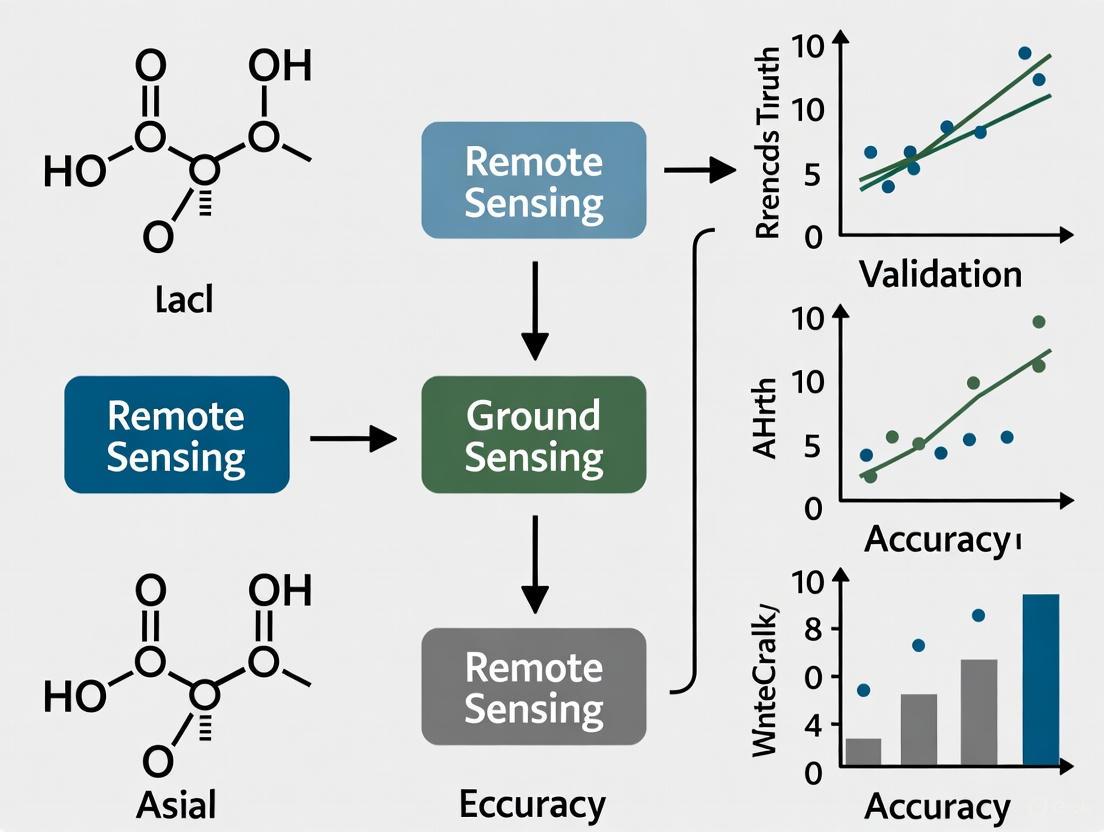
This article provides a systematic guide for researchers and scientists on the principles and practices of assessing the accuracy of remote sensing data against ground-based ecological measurements.
Bridging the Scale: A Comprehensive Framework for Assessing Accuracy Between Remote Sensing and Ground-Based Ecological Data
Abstract
This article provides a systematic guide for researchers and scientists on the principles and practices of assessing the accuracy of remote sensing data against ground-based ecological measurements. It covers the foundational relationship between satellite/airborne data and field observations, explores methodological frameworks for integration and comparison, addresses common challenges and optimization techniques, and details rigorous validation and comparative analysis procedures. By synthesizing current methodologies and emerging trends, this resource aims to enhance the reliability and application of remote sensing in ecological monitoring, environmental assessment, and climate change research.
The Core Relationship: Understanding Remote Sensing and Ground-Based Data Synergy
In ecological research, accurately assessing environmental conditions requires a multi-platform approach. No single data source provides a complete picture; instead, researchers must understand the strengths and limitations of various collection methods. This guide objectively compares four fundamental data acquisition platforms—satellite, airborne, Unoccupied Aerial Systems (UAS), and in-situ methods—within the context of assessing accuracy in ecological remote sensing. By examining their technical specifications, applications, and experimental validations, researchers can make informed decisions for integrating these technologies into robust ecological study designs.
Remote sensing platforms operate at different spatial scales and resolutions, creating a complementary hierarchy of data collection capabilities. The integration of these platforms is essential for cross-scale inference of ecological patterns and processes, linking field-based measurements with broader landscape assessments [1] [2].
Table 1: Technical Comparison of Ecological Data Collection Platforms
| Platform | Spatial Resolution | Spatial Coverage | Temporal Resolution | Primary Data Types | Key Strengths | Key Limitations |
|---|---|---|---|---|---|---|
| Satellite | 0.5–100 m | Continental to global | Days to weeks | Multispectral, hyperspectral, SAR, thermal | Broad-scale coverage, consistent long-term data, free access to some data (Landsat, Sentinel) | Fixed resolution, weather constraints (optical), lower detail for fine-scale processes |
| Airborne (Manned Aircraft) | 0.1–5 m | Regional (100–10,000 km²) | Weeks to years | High-res imagery, LiDAR, hyperspectral | High-resolution data, flexible sensor payloads, less weather-sensitive than satellites | Higher cost per area, limited temporal frequency, complex logistics |
| UAS (Drones) | 1–10 cm | Local (1–100 ha) | Hours to days | Ultra-high-res imagery, SfM point clouds, UAS-LiDAR | On-demand data, ultra-high resolution, below-canopy potential, low cost for local areas | Limited spatial extent, battery life constraints, regulatory restrictions, data processing challenges |
| In-Situ | Point measurements | Single point to plot | Minutes to seasonal | Physical samples, sensor readings, species counts | Direct measurements, high accuracy for parameters, essential for validation | Limited spatial extrapolation, labor-intensive, potentially dangerous terrain |
Table 2: Accuracy Performance and Cost Considerations
| Platform | Positional Accuracy | Spectral/Measurement Accuracy | Typical Applications | Relative Cost per Unit Area |
|---|---|---|---|---|
| Satellite | Moderate to high (with correction) | High (radiometrically calibrated) | Land cover change, climate studies, vegetation phenology | Low to moderate |
| Airborne | High (with GPS/IMU) | High (laboratory-grade sensors possible) | Forest inventory, habitat mapping, 3D modeling | High |
| UAS | Very high (cm-level with GCPs) | Moderate (consumer-grade sensors common) | Individual plant/crown metrics, micro-topography, disturbance monitoring | Low (local), high (landscape) |
| In-Situ | Very high (survey-grade GPS) | Very high (direct measurement) | Species identification, soil properties, calibration/validation | Very high (when scaled) |
Experimental Protocols for Platform Validation
Data Science Competitions for Methodological Advancement
Open data science competitions have emerged as powerful tools for objectively comparing the performance of different algorithms and platforms using standardized datasets. The National Ecological Observatory Network (NEON) Plant Identification Challenge utilized precisely this approach to advance methods for converting remote sensing data into ecological information [3].
Experimental Methodology:
- Data Standardization: NEON Airborne Observation Platform (AOP) data—including high-resolution LiDAR and hyperspectral imagery—was paired with precisely geolocated field measurements of vegetation structure.
- Task Definition: Participants addressed three core tasks: (1) crown segmentation (identifying location/size of individual trees), (2) alignment (matching field trees with remote sensing detections), and (3) species classification.
- Evaluation Metrics: Algorithms were evaluated using consistent metrics including crown overlap percentage, alignment success rate, and species classification accuracy.
- Comparative Analysis: Six teams (16 participants) submitted predictions using diverse methods including support vector machines, random forests, gradient boosting, and neural networks.
Key Findings: The competition revealed significant methodological insights. Crown segmentation proved most challenging, with the highest-performing algorithm achieving only 34% overlap between remotely sensed crowns and field data, though performance improved for larger trees. Multiple algorithms excelled at species classification, with the highest-performing correctly identifying 92% of individuals across both common and rare species [3].
UAS Validation for Urban Environmental Assessment
Research in Phoenix, Arizona demonstrated a protocol for validating UAS against traditional satellite imagery for detecting neighborhood physical disorder [4].
Experimental Methodology:
- Platform Comparison: UAS-collected imagery (using a SenseFly Ebee with 18 MP camera) was directly compared to Landsat 8 satellite imagery available through Google Earth.
- Spatial Resolution Assessment: The capability to identify specific features of physical disorder (litter, graffiti, abandoned buildings) was quantified for both platforms.
- Ground Verification: Features identified in UAS imagery were ground-truthed for positional and categorical accuracy.
Key Findings: UAS imagery provided substantially improved detection capabilities, identifying 96.3% of physical disorder features compared to only 20.4% with Landsat 8 imagery. This confirmed UAS as a cost-effective, safe method for collecting hyper-local ecological and neighborhood data [4].
InSAR Versus Traditional Ground Monitoring
A 2025 comparison evaluated the capabilities of Interferometric Synthetic Aperture Radar (InSAR) against traditional ground monitoring methods for detecting ground deformation in agricultural and forestry contexts [5].
Experimental Methodology:
- Deformation Detection: Measured the minimum detectable ground movement using InSAR satellite technology versus traditional methods including manual surveying, soil sensors, and ground-penetrating radar.
- Spatial and Temporal Coverage: Compared the area coverage (km² per pass) and monitoring frequency between platforms.
- Cost Efficiency: Analyzed cost per square kilometer for each method.
Key Findings: InSAR demonstrated capability to detect ground deformation as small as 1 millimeter, while traditional methods often missed changes under 10 millimeters. InSAR covered thousands of square kilometers per pass at $2–10/km², compared to traditional methods covering 10–100 km² at $50–500/km² [5].
Integrated Workflow for Ecological Data Collection
The synergy between different remote sensing platforms and in-situ data creates a robust framework for ecological assessment. The following diagram illustrates how these components integrate within a typical research workflow.
Figure 1: Integrated workflow showing how multiple data platforms contribute to ecological insights, with in-situ data serving essential calibration and validation functions.
The Scientist's Toolkit: Essential Research Solutions
Successful ecological monitoring requires appropriate selection of technologies and methods tailored to specific research questions. This table details key solutions used across the featured experiments and their functional applications.
Table 3: Essential Research Solutions for Multi-Platform Ecology Studies
| Tool/Solution | Platform Category | Primary Function | Ecological Application Example |
|---|---|---|---|
| NEON AOP | Airborne | Provides standardized LiDAR and hyperspectral data across ecosystems | Continental-scale assessment of vegetation structure and composition [3] |
| InSAR Analytics | Satellite | Detects millimeter-scale ground deformation | Monitoring subsidence from groundwater extraction in agricultural areas [5] |
| UAS with SfM-MVS | UAS | Generates ultra-high-resolution 3D models from overlapping imagery | Individual tree crown delineation and micro-topography mapping [1] [6] |
| RSEI (Remote Sensing Ecological Index) | Satellite/UAS | Integrates greenness, dryness, humidity, and heat for quality assessment | Urban ecological quality monitoring using Sentinel-2 and Landsat data [7] |
| GEO-Detector | Software | Statistically explores spatial heterogeneity and driving factors | Analyzing influence of urban factors on ecological quality [7] |
| Multi-Sensor Probes | In-Situ | Measures physical and chemical parameters in real-time | Water quality monitoring (temperature, pH, dissolved oxygen) [8] |
| Support Vector Machines | Algorithm | Classifies species from spectral features | Tree species identification from hyperspectral data [3] |
The accurate assessment of ecological systems requires thoughtful integration of multiple data platforms, each contributing unique strengths to address different aspects of ecological complexity. Satellite systems provide the broad-scale context for continental and global processes, while airborne platforms offer higher-resolution regional assessments. UAS deliver unprecedented detail at the individual organism level, and in-situ measurements provide the essential ground truth for validating all remote observations. The future of ecological monitoring lies not in selecting a single superior platform, but in strategically combining these complementary technologies, using standardized experimental protocols and validation frameworks to ensure data quality and cross-study comparability. As technological advancements continue to improve the resolution, accessibility, and analytical power of these platforms, their integrated application will become increasingly essential for addressing complex ecological challenges across scales.
The Critical Role of Accuracy Assessment in Ecological Monitoring
Accurate ecological monitoring is fundamental to understanding environmental change, evaluating conservation policies, and ensuring sustainable resource management. The emergence of diverse methodologies, particularly remote sensing and ground-based techniques, has created a critical need to systematically assess and compare their accuracy. This guide examines the performance of these approaches, providing a structured comparison of their capabilities, limitations, and optimal applications for researchers and scientists.
The Fundamental Need for Accuracy Assessment
All ecological data, whether from satellites or field surveys, contain inherent uncertainties. Accuracy assessment is the process of quantifying these uncertainties, transforming raw data into reliable evidence for scientific and policy decisions. In remote sensing, a classification map's quality is fundamentally defined by its User's Accuracy (UA) and Producer's Accuracy (PA), which measure commission and omission errors, respectively [9].
The core challenge is that simple methods like pixel-counting for area estimation are often biased due to these errors [9]. Without rigorous validation, monitoring programs risk generating misleading conclusions. For instance, the apparent area of a land-cover class can be significantly over- or under-estimated if the map's accuracy is not accounted for. Therefore, robust assessment frameworks, such as stratified random sampling where classification maps serve as stratification, are recommended to control bias and generate reliable area estimates [9].
Remote Sensing vs. Ground-Based Methods: A Performance Comparison
The choice between remote sensing and ground-based methods involves trade-offs between spatial coverage, resolution, cost, and accuracy. The table below summarizes the core characteristics of each approach.
Table 1: Core Characteristics of Ecological Monitoring Methods
| Feature | Remote Sensing | Ground-Based Methods |
|---|---|---|
| Spatial Coverage | Extensive regional to global scales [10] | Localized, point-specific measurements |
| Temporal Resolution | Regular revisits (e.g., days to weeks) [10] | Variable, often seasonal or sporadic |
| Data Type | Spectral, spatial, and structural proxies [11] | Direct species identification and physical measurements |
| Primary Strengths | Synoptic views, historical archive analysis, access to remote areas [10] | High taxonomic precision, validation of proxy data, detailed local context |
| Key Limitations | Spectral confusion, signal attenuation, requires ground validation [9] [11] | Labor-intensive, limited spatial extrapolation, potentially high cost |
Integrating these methods often yields the highest accuracy. A study on mapping protected forest habitats combined Sentinel-2 satellite data with ground-based phytosociological surveys using a deep learning algorithm. This integration achieved a remarkable field validation accuracy of 98.33%, demonstrating the power of a combined approach [12].
Experimental Evidence: Quantifying Accuracy in Practice
Case Study 1: Multi-Source Land Use Classification
A 2024 study introduced a new strategy to improve Land Use/Cover Change (LUCC) classification accuracy by fusing UAV LiDAR and hyperspectral imagery [11].
- Experimental Protocol: Researchers extracted 157 features from LiDAR (e.g., intensity, height) and hyperspectral data (e.g., spectral, texture). They developed a new feature extraction algorithm (CFW) and a dimensionality reduction method (SS-PCA) to identify the optimal feature subset, which was then classified using a Random Forest classifier [11].
- Results and Accuracy: The fusion of LiDAR and hyperspectral data significantly outperformed either data source alone, mitigating issues like 'salt and pepper noise' [11].
Table 2: Classification Accuracies from Multi-Source Data Fusion [11]
| Data Source | Overall Accuracy (%) | Key Contributing Features |
|---|---|---|
| LiDAR Only | 78.10% | Height and intensity information |
| Hyperspectral Only | 89.87% | Spectral indices and texture |
| LiDAR + Hyperspectral | 97.17% | Combined structural and spectral features |
Case Study 2: Evaluating Ecological Restoration Programs
Assessing the effectiveness of large-scale Ecological Restoration Programs (ERPs) requires robust methods to isolate their impact from other natural and human factors.
- Experimental Protocol: A 2025 study treated China's National Key Ecological Function Areas (NKEFAs) as a quasi-natural experiment [13]. Using a time-varying Difference-in-Differences (DID) model on panel data from 329 cities (2001-2021), the study compared ecological conditions in NKEFAs with control areas to establish a causal link between the policy and ecological outcomes [13].
- Results and Accuracy: This counterfactual approach demonstrated that the ERP significantly increased Net Primary Productivity (NPP), a key indicator of vegetation recovery. The rigorous methodology provided a more credible assessment of the program's true ecological effectiveness, controlling for confounding variables that often plague simpler before-after or cross-sectional comparisons [13].
The Scientist's Toolkit: Essential Reagents & Research Solutions
Successful ecological monitoring relies on a suite of tools and data solutions.
Table 3: Key Research Reagents and Solutions for Ecological Monitoring
| Tool/Solution | Function | Application Example |
|---|---|---|
| Landsat & Sentinel-2 Data | Provides multi-decadal, medium-resolution optical imagery for change detection. | Tracking deforestation, agricultural expansion, and urbanization [10] [14]. |
| Analysis Ready Data (ARD) | Pre-processed satellite data (radiometric, atmospheric correction) that is ready for analysis. | Reduces data processing costs and facilitates large-scale, time-series analysis [15]. |
| UAV LiDAR & Hyperspectral Sensors | Captures high-resolution, 3D structural and detailed spectral information from unmanned aerial vehicles. | Fine-scale land use classification and invasive species mapping (e.g., Spartina alterniflora) [15] [11]. |
| Google Earth Engine (GEE) | A cloud-computing platform for planetary-scale geospatial analysis. | Processing long-term satellite data archives to calculate ecological indices like RSEI [10]. |
| Stratified Random Sampling | A statistical sampling design that uses a classification map for stratification. | Provides unbiased area estimates and optimizes field validation efforts [9]. |
| Cellular Automata-Markov (CA-Markov) Model | Integrates cellular automata with Markov chains to simulate future land-use changes. | Predicting future ecological quality based on historical trends [10]. |
Workflow for Integrated Ecological Monitoring
The diagram below illustrates a robust, integrated workflow for ecological monitoring that embeds accuracy assessment at every stage.
Integrated Ecological Monitoring Workflow
Key Insights for Researchers
- Map Accuracy Directly Influences Efficiency: In stratified estimation, higher map accuracy (PA and UA) reduces the sample size needed to achieve a target precision or yields better precision for a fixed sample size [9]. The impact of PA and UA on estimation efficiency is nonlinear and varies with the target area proportion [9].
- Spatial Validation is Critical: A common pitfall in ecological modeling is using non-spatial validation, which can lead to over-optimistic assessments of model predictive power. Spatially independent validation is essential for a true accuracy estimate [16].
- Embrace Analysis Ready Data (ARD): Leveraging ARD can dramatically reduce the time and expertise required for data pre-processing, making remote sensing more accessible and reproducible for a wider range of researchers [15].
From Theory to Practice: Methodologies for Data Integration and Accuracy Assessment
Designing Robust Validation Data Collection Strategies
Validation through independent means is the cornerstone of producing reliable remote sensing data products and ground-based ecological measurements [17]. This process assesses the quality of data products derived from system outputs, serving as the essential bridge between raw observations and scientifically defensible conclusions [17]. In the context of ecological monitoring and climate research, robust validation strategies determine whether data possesses sufficient accuracy for operational application, informing critical decisions in conservation policy, resource management, and climate change mitigation [18] [19]. Without rigorous validation, even the most technologically advanced sensing systems can produce misleading results, potentially compromising environmental management decisions and scientific findings.
The fundamental challenge in validation stems from the inherent complexity of comparing datasets collected at different scales, through different methodologies, and with varying inherent uncertainties [20]. Ground-based measurements provide direct observations but are limited in spatial coverage, while remote sensing offers synoptic coverage but involves indirect retrievals of ecological parameters [20] [17]. This article provides a comprehensive comparison of validation approaches for remote sensing and ground-based ecological data, offering experimental protocols, analytical frameworks, and practical guidance for researchers designing validation campaigns in environmental and ecological studies.
Comparative Framework: Remote Sensing vs. Ground-Based Validation
Fundamental Characteristics and Trade-offs
Remote sensing and ground-based monitoring methods offer complementary strengths for ecological validation, with distinct operational characteristics and methodological approaches. Table 1 summarizes the key comparative aspects of these approaches, highlighting their respective advantages and limitations in validation contexts.
Table 1: Comparative Characteristics of Remote Sensing and Ground-Based Validation Approaches
| Evaluation Criteria | Remote Sensing Validation | Ground-Based Validation |
|---|---|---|
| Spatial Coverage | Thousands of km² per pass; >90% global agricultural land coverage [5] | Limited to 10-100 km² per operation; ~30-40% global agricultural land coverage [5] |
| Spatial Resolution | 10-100 meters (typical 2025 range) [5] | Centimeter to meter level (highly localized) [5] |
| Temporal Frequency | Daily/weekly revisits; continuous monitoring capability [5] | Point-in-time measurements; biweekly to monthly intervals [5] |
| Data Accuracy Range | 85%-95% for large-scale deformation tracking [5] | 98%+ for localized parameter measurement [5] |
| Measurement Type | Proxy measurements through spectral response; indirect retrieval algorithms [20] [17] | Direct measurement of specific parameters; physical sampling [5] |
| Key Limitations | Atmospheric interference, spatial scale mismatches, indirect retrievals [18] [17] | Limited spatial representation, labor-intensive, inaccessible terrain challenges [5] [20] |
| Cost Efficiency | $2-10/km² (subscription/platform-based) [5] | $50-500/km² (manual labor and equipment) [5] |
Accuracy Assessment Methodologies
Accuracy assessment for remote sensing products typically employs statistical comparisons between classified imagery and reference data, with the error matrix (confusion matrix) serving as the foundational analytical tool [21] [22]. This pixel-by-pixel comparison quantifies agreement between remote sensing classifications and reference data assumed to represent reality [21]. Standard practice includes calculation of overall accuracy, producer's accuracy (measure of omission error), user's accuracy (measure of commission error), and Kappa coefficient (which assesses agreement beyond chance) [21].
Despite established methodologies, significant challenges remain in implementation. A comprehensive review of accuracy assessment practices found that only 56% of studies explicitly included an error matrix, and a mere 14% reported overall accuracy with confidence intervals [22]. Furthermore, only 32% of papers included accuracy assessments considered reproducible—incorporating probability-based sampling, complete error matrices, and sufficient characterization of reference datasets [22]. These deficiencies highlight the need for more rigorous and standardized validation reporting across the discipline.
Experimental Protocols for Validation Data Collection
Remote Sensing Accuracy Assessment Protocol
The following workflow outlines a standardized approach for validating remote sensing classification products, adaptable to various ecological and land cover mapping applications:
Reference Data Selection: Secure high-resolution aerial imagery or field-collected data that closely matches the acquisition date of the remote sensing product being validated [21]. Temporal alignment is critical to minimize discrepancies due to actual landscape changes.
Sampling Design: Implement a probability-based sampling scheme to collect reference data, typically using stratified random sampling based on map classes [22] [19]. The sample size should be determined considering spatial autocorrelation and heterogeneity, with methods available to calculate optimal sampling numbers [19].
Spatial Registration: Precisely align the remote sensing image and reference data to the same coordinate system and spatial resolution [21]. The Create Accuracy Assessment Points tool in GIS platforms can automate extraction of class values at sample locations [21].
Reference Data Collection: For each sample point, identify the "ground truth" informational class through expert interpretation of high-resolution imagery or field visits [21]. Document classification rules and decision protocols to maintain consistency.
Error Matrix Construction: Tabulate classified data against reference data in a contingency table, with rows typically representing reference data and columns representing the map classification [21] [22].
Accuracy Metrics Calculation: Compute overall accuracy, producer's accuracy, user's accuracy, and Kappa coefficient from the error matrix [21]. Report confidence intervals where possible to quantify uncertainty [22].
Thematic Accuracy Assessment: Analyze patterns of confusion between classes to identify systematic classification errors and inform algorithm improvements [21].
The figure below illustrates this workflow as a sequential process:
Ground-Based Validation Protocol for Satellite Products
Validating coarse-resolution satellite products with ground-based measurements requires specialized approaches to address scale mismatches:
Site Selection: Establish intensive study areas within homogeneous landscapes or strategically locate sites to characterize heterogeneity [17]. The number and distribution of sites should capture the environmental gradient of interest.
In Situ Sensor Deployment: Deploy calibrated sensors (e.g., soil moisture probes, water level loggers, temperature loggers) following standardized protocols [20]. Ensure continuous temporal monitoring to match satellite overpass times.
Field Campaigns: Conduct coordinated field measurements during satellite overpasses, collecting data on relevant biophysical parameters (e.g., vegetation structure, soil properties, water quality) [20] [17].
Upscaling Methodology: Develop spatial aggregation techniques to translate point-based ground measurements to the spatial scale of satellite pixels [17]. This may involve distributed sensor networks, transect sampling, or geostatistical interpolation.
Uncertainty Quantification: Characterize uncertainty components including measurement error, spatial representativeness error, and temporal alignment error [17].
Comparison Analysis: Implement statistical analyses comparing ground-based estimates at pixel scale with satellite retrievals, accounting for uncertainty in both datasets [17].
The integration of these approaches is particularly valuable for ecological studies, where ground measurements provide specific habitat changes and effects on populations, while satellite-based observations offer broader landscape context [20].
Integrated Validation Framework
Strategic Integration of Approaches
An Integrated Framework combining Experimental and Big Data approaches offers substantial opportunities for leveraging the strengths of both validation methodologies [23]. This framework recognizes that Big Data (including remote sensing) can document and monitor patterns across spatial scales, while experimental approaches (including targeted ground-based monitoring) can deliver direct assessments of perturbations relevant for conservation interventions [23].
Successful integration requires collaboration throughout the scientific process: hypothesis generation, design and implementation, analysis, and interpretation [23]. Practical implementation includes embedding ground-based experiments within the broader spatial context provided by remote sensing, and using remote sensing to identify locations where intensive ground-based studies would be most informative [23]. This approach is particularly valuable for problems requiring understanding across spatial and temporal scales, forecasting, and delimiting the spatial scale at which stressors operate [23].
Addressing Scale Discontinuities
A fundamental challenge in validation arises from scale mismatches between ground-based measurements (points) and remote sensing observations (pixels) [20] [17]. Table 2 summarizes common scale-related challenges and potential solutions in validation studies.
Table 2: Scale-Related Challenges and Solutions in Validation Data Collection
| Challenge | Impact on Validation | Potential Solutions |
|---|---|---|
| Spatial Mismatch | Point measurements may not represent heterogeneous pixel areas [17] | Distributed sensor networks, transect sampling, strategic site selection in homogeneous areas [17] |
| Temporal Mismatch | Instantaneous ground measurements may not match integrated satellite observations [18] | Continuous ground monitoring, temporal interpolation, matching acquisition times [20] |
| Definitional Inconsistency | Different conceptual definitions of the same parameter across methods [20] | Harmonized operational definitions, cross-walking frameworks between measurement approaches |
| Support Scale Difference | Spatial resolution determines what ecological structures can be detected [20] | Multi-scale sampling designs, geostatistical approaches, acknowledgment of inherent limitations |
Research comparing wetland-rich landscapes found that responses of 4 km² landscape blocks generally paralleled changes measured on the ground, but ground-based measurements were more dynamic, with changes critical for biota not always apparent in satellite proxies [20]. This highlights the importance of complementary multi-scale approaches rather than assuming perfect correspondence between methods.
Essential Research Toolkit for Validation Studies
Field Data Collection Equipment
Table 3: Essential Equipment for Ground-Based Validation Data Collection
| Equipment Category | Specific Examples | Primary Applications in Validation |
|---|---|---|
| Positioning Systems | Differential GPS, RTK-GPS | Precise geolocation of sample sites for spatial alignment with remote sensing data [20] |
| Environmental Sensors | Soil moisture probes, water level loggers, air temperature loggers [20] | Continuous monitoring of parameters comparable to satellite-derived products [20] [17] |
| Acoustic Recorders | Automated acoustic recording units [20] | Monitoring biodiversity indicators (e.g., amphibian calls) as ecological validation metrics [20] |
| Spectroradiometers | Field spectroradiometers | Measuring spectral signatures for direct comparison with remote sensing reflectance values [17] |
| Vegetation Sampling Tools | Densiometers, leaf area index meters, canopy analyzers | Measuring vegetation structure parameters to validate land cover and biophysical products [17] |
Analytical Tools and Software
Table 4: Analytical Tools for Validation Data Analysis
| Tool Category | Specific Examples | Validation Applications |
|---|---|---|
| Geographic Information Systems | ArcGIS Pro, QGIS | Spatial alignment, sampling design, error matrix creation [21] |
| Statistical Software | R, Python with spatial libraries | Accuracy assessment, uncertainty quantification, spatial statistics [22] [19] |
| Cloud Computing Platforms | Google Earth Engine | Processing multi-temporal remote sensing data for validation comparisons [10] |
| Specialized Validation Tools | CREATE ACCURACY ASSESSMENT POINTS (ArcGIS) [21] | Generating random points for accuracy assessment with automated class value extraction [21] |
Robust validation strategies for both remote sensing and ground-based ecological monitoring require careful attention to sampling design, scale considerations, and uncertainty quantification. While remote sensing offers unprecedented spatial coverage and temporal frequency, ground-based methods provide essential direct measurements and localized accuracy. The most effective validation frameworks strategically integrate both approaches throughout the scientific process [23].
Future advances in validation methodology will likely focus on improving scale-aware validation techniques, developing more sophisticated uncertainty quantification frameworks, and creating more inclusive approaches that incorporate traditional ecological knowledge and citizen science [18]. Additionally, as remote sensing technologies continue evolving with higher spatial, temporal, and spectral resolutions, validation approaches must similarly advance to address new challenges and opportunities [22] [17].
Transparent reporting of validation methodologies remains essential for building trust in environmental data products. Researchers should clearly document sampling designs, reference data characteristics, accuracy metrics with confidence intervals, and limitations to enable proper interpretation and reproducibility [22]. By adopting rigorous, integrated validation strategies, the scientific community can enhance the reliability of ecological assessments and strengthen the evidence base for environmental decision-making.
Stratified Random and Other Sampling Techniques for Unbiased Assessment
In ecological research, particularly in studies that integrate remote sensing with ground-based data, the sampling strategy is a fundamental determinant of the validity and reliability of the findings. Remote sensing provides extensive spatial coverage, but its accuracy must be verified through ground observations, making unbiased sampling essential for robust model calibration and validation. The choice of sampling technique directly impacts the precision of area estimation, the accuracy of biomass calculations, and the overall credibility of ecological quality assessments. Stratified random sampling has emerged as a particularly powerful method in this context, as it systematically addresses the challenges of spatial heterogeneity and class rarity that often complicate ecological studies. This guide provides a comparative analysis of stratified random sampling against other common techniques, examining their performance, experimental protocols, and suitability for various research scenarios in ecological assessment.
Comparative Analysis of Sampling Techniques
Table 1: Comparison of Key Sampling Techniques for Ecological Assessment
| Sampling Technique | Core Principle | Strengths | Limitations | Ideal Application Context |
|---|---|---|---|---|
| Stratified Random Sampling | Divides population into non-overlapping strata (e.g., based on vegetation density, land cover); random samples taken from each stratum [24]. | Improves representativeness of heterogeneous areas; increases statistical efficiency; ensures rare classes are adequately sampled [24] [25]. | Requires prior knowledge for stratification; stratum definition can introduce bias if incorrect. | Estimating area of rare land cover classes (e.g., forest loss); validating maps in complex, heterogeneous environments [25]. |
| Simple Random Sampling (SRS) | Every possible sample of a given size has an equal probability of being selected. | Unbiased; simple design and analysis. | Statistically inefficient for rare classes or heterogeneous areas; can miss important spatial variations [26]. | Homogeneous study areas where no prior spatial information is available. |
| Systematic Sampling (SYS) | Sample units are selected at a fixed interval (e.g., every kth unit) across the study area. | Ensures even spatial coverage; easy to implement. | Vulnerable to bias if the spatial pattern aligns with the sampling interval. | Large-scale surveys where periodic patterns are not a concern. |
| Spatially Balanced Sampling (e.g., GRTS, BAS) | Uses complex algorithms to select samples that are spatially balanced over the study area. | Excellent spatial coverage; good for capturing gradients. | Complex implementation; computationally intensive. | Regional-scale environmental monitoring where even coverage is critical [26]. |
| Optimized/Complexity-Based Sampling | Uses prior remote sensing data (e.g., NDVI) to guide sampling towards areas of high complexity or heterogeneity [27] [26]. | Maximizes information gain per sample; improves model generalizability. | Highly dependent on the quality and relevance of the prior data. | Validating medium- to high-resolution remote sensing products; working with limited sampling budgets [26] [28]. |
Table 2: Quantitative Performance Comparison from Experimental Studies
| Study & Context | Sampling Technique | Key Performance Metric | Result | Sample Size for Target Precision |
|---|---|---|---|---|
| Vegetation Indices Validation [26] | INTEG-STRAT (Stratified based on NDVI) | Correlation with prior knowledge (R²) | Achieved 80% correlation | 70 points |
| Simple Random Sampling (SRS) | Correlation with prior knowledge (R²) | Achieved 80% correlation | Required more than 70 points | |
| Spatial Systematic Sampling (SYS) | Correlation with prior knowledge (R²) | Achieved 80% correlation | Required more than 70 points | |
| Mangrove Carbon Estimation [24] | Stratified Random Sampling | Correlation with field Cag (r) | 0.847 | 30 plots for model development |
| Area Estimation of a Rare Class (≤10%) [25] | Stratified Sampling (Optimal allocation) | Relative Efficiency (Precision) | Can be 2-5x more efficient than simple random sampling for the same sample size. | Varies with User's/Producer's accuracy targets |
Detailed Experimental Protocols and Methodologies
Protocol: Stratified Random Sampling for Mangrove Carbon Stock Assessment
This protocol is based on a study in West Bali, Indonesia, which successfully used stratified random sampling to estimate above-ground carbon (Cag) in mangrove forests using Sentinel-2 imagery [24].
- Define Strata: The mangrove forest area is divided into distinct strata. The West Bali study used characteristics like vegetation density, tidal influence, and soil composition to define these strata [24].
- Proportional Allocation: The total number of sampling plots is allocated to each stratum in proportion to its area to enhance statistical robustness and minimize error [24].
- Plot Placement: Within each stratum, square transect plots (e.g., 10 m × 10 m) are randomly positioned. The GPS coordinates of each plot are recorded for spatial accuracy [24].
- Field Data Collection: Within each plot, measure the circumference of all individual mangrove trees at breast height (CBH, 1.3 m above ground). Convert CBH to Diameter at Breast Height (DBH) using the formula: DBH = CBH / π [24].
- Carbon Calculation: Use species-specific or generic allometric equations to convert DBH measurements into estimates of above-ground biomass (Bag), and then to above-ground carbon (Cag) [24].
- Model Development and Validation: Use a portion of the collected data (e.g., 30 plots) to develop a regression model linking field-measured Cag with remote sensing vegetation indices (e.g., Simple Ratio index). Use the remaining independent data (e.g., 15 plots) to validate the model's reliability [24].
Protocol: INTEG-STRAT Strategy for Validating Vegetation Indices
This protocol outlines the INTEG-STRAT strategy, an integrative stratified sampling approach designed for validating medium- and high-resolution vegetation index (VI) products over heterogeneous surfaces [26].
- Acquire Prior Knowledge: Obtain a high-resolution VI map (e.g., a Sentinel-2 NDVI image) of the study area a few days before the field campaign. This serves as the stratification basis [26].
- Stratification: The prior NDVI image is classified into several strata representing different vegetation density levels.
- Sampling Optimization: The core of INTEG-STRAT is determining the optimal combination of a spatial sampling method (e.g., SRS, SYS) and the stratification scheme. The objective rule is to minimize the Root Mean Square Error (RMSE) of a 10-fold cross-validation between estimated values and the corresponding values on the prior knowledge image [26].
- Field Data Collection: Navigate to the pre-determined sampling points and collect in-situ measurements of the target biophysical variable (e.g., LAI, chlorophyll content) that corresponds to the VI being validated.
- Efficiency Evaluation: The strategy's effectiveness is evaluated using metrics like relative precision, correlation coefficient, and RMSE, and is compared against non-optimized methods [26].
Workflow Diagram: Stratified Random Sampling for Remote Sensing Validation
The following diagram illustrates the logical workflow for implementing a stratified random sampling approach in a remote sensing validation study.
The Scientist's Toolkit: Essential Research Reagent Solutions
Table 3: Key Tools and Materials for Sampling-Based Ecological Research
| Tool/Material | Function in Research | Example Use Case |
|---|---|---|
| Sentinel-2 Satellite Imagery | Provides high-resolution (10-20m) multispectral data with frequent revisit times. Used to derive vegetation indices and create stratification maps [24]. | Calculating the Simple Ratio (SR) index to model mangrove carbon stocks [24]. |
| Landsat 8/9 Satellite Imagery | Offers a long-term, consistent archive of medium-resolution (30m) data. Essential for change detection and long-term trend analysis [10]. | Used in calculating the Remote Sensing Ecological Index (RSEI) for monitoring ecological quality over decades [10]. |
| GPS Receiver | Provides precise geographic coordinates for locating sampling plots in the field, ensuring spatial alignment with satellite pixels [24]. | Recording the location of 10m x 10m transect plots in a mangrove forest [24]. |
| Dendrometer or Tape Measure | Used to measure tree circumference or diameter at breast height (DBH), a critical input for allometric biomass equations [24]. | Measuring CBH of mangrove trees within a sample plot to calculate DBH [24]. |
| Allometric Equations | Species-specific mathematical models that estimate biomass (and thus carbon) from tree measurements like DBH [24]. | Converting field-measured DBH into estimates of above-ground carbon (Cag) [24]. |
| Google Earth Engine (GEE) | A cloud-computing platform for geospatial analysis. Allows rapid processing of large satellite imagery archives [10]. | Processing multi-temporal Landsat imagery to compute RSEI over large areas [10]. |
| Normalized Difference Vegetation Index (NDVI) | A spectral index derived from satellite imagery that quantifies vegetation greenness and health. Serves as excellent prior knowledge for stratification [26]. | Used in the INTEG-STRAT strategy to define strata for optimal sample placement [26]. |
Constructing and Interpreting the Confusion Matrix (Error Matrix)
Within the rigorous framework of scientific research, particularly in fields utilizing classification models—from drug development to ecological monitoring—the performance of a predictive algorithm cannot be captured by a single metric. The confusion matrix, also known as an error matrix, is a foundational tool that provides a detailed breakdown of a classification model's performance against a known set of results [29] [30]. In the context of assessing the accuracy of remote sensing data versus ground-based ecological observations, the confusion matrix moves beyond simplistic accuracy rates. It offers a nuanced diagnostic that reveals not just how often a model is right, but, more critically, where it goes wrong and what types of errors it makes [31]. This granular insight is indispensable for validating remote sensing products, such as land cover classifications or ecological quality maps, against field-surveyed "ground truth," enabling researchers to quantify uncertainty and refine their models for more reliable environmental and biomedical applications [10] [30] [32].
Core Components of a Confusion Matrix
A confusion matrix is a specific table layout that allows for visualization of an algorithm's performance [29]. Its structure is built upon four fundamental outcomes derived from comparing predicted classes to actual classes.
The Four Fundamental Outcomes
For a binary classification problem, the matrix is a 2x2 table that categorizes every prediction into one of the following quadrants [31] [33]:
- True Positive (TP): The model correctly predicts the positive class. (e.g., A pixel is correctly classified as "forest" by a remote sensing algorithm, and it is forest according to ground survey [30]).
- True Negative (TN): The model correctly predicts the negative class. (e.g., A pixel is correctly classified as "water," and it is water [30]).
- False Positive (FP): The model incorrectly predicts the positive class when the actual is negative. Also known as a Type I error. (e.g., A pixel of "bare soil" is misclassified as "forest" [30] [33]).
- False Negative (FN): The model fails to predict the positive class when the actual is positive. Also known as a Type II error. (e.g., A "forest" pixel is misclassified as "grassland" [30] [33]).
Matrix Structure and Multi-class Extension
The standard binary matrix can be extended to an N x N table for multi-class problems, where N is the number of classes [31]. In this structure:
- Rows typically represent the actual classes from validation data (ground truth).
- Columns represent the predicted classes from the model.
- The diagonal cells (from top-left to bottom-right) show the counts of correct classifications for each class.
- The off-diagonal cells visualize misclassifications, revealing which classes are most frequently confused with one another [30] [31].
Table 1: Example Confusion Matrix for a Land Cover Classification Task
| Actual vs. Predicted | Forest | Water | Grassland | Bare Soil | Total |
|---|---|---|---|---|---|
| Forest | 56 | 0 | 4 | 2 | 62 |
| Water | 1 | 67 | 1 | 0 | 69 |
| Grassland | 5 | 0 | 34 | 7 | 46 |
| Bare Soil | 2 | 0 | 9 | 42 | 53 |
| Total | 64 | 67 | 48 | 51 | 230 |
Key Performance Metrics Derived from the Confusion Matrix
The counts within the confusion matrix are used to calculate critical performance metrics that each provide a different perspective on model quality [29] [34].
Metric Definitions and Formulas
The most common metrics derived from the confusion matrix are:
- Accuracy: The overall correctness of the model.
Accuracy = (TP + TN) / (TP + TN + FP + FN)[35] [34]. - Precision: The model's ability to avoid false positives. When it predicts positive, how often is it correct?
Precision = TP / (TP + FP)[35] [34]. - Recall (Sensitivity or True Positive Rate): The model's ability to identify all actual positive instances.
Recall = TP / (TP + FN)[35] [34]. - F1-Score: The harmonic mean of Precision and Recall, providing a single balanced metric.
F1-Score = 2 * (Precision * Recall) / (Precision + Recall)[29] [35]. - Specificity (True Negative Rate): The model's ability to identify actual negative instances.
Specificity = TN / (TN + FP).
Interpreting Metrics for Model Evaluation
The utility of each metric depends heavily on the research context and the cost associated with different types of errors [34].
- Accuracy is a good initial measure but can be highly misleading with imbalanced datasets. A model that always predicts the majority class will have high accuracy but poor practical utility [35] [31].
- Precision is critical when the cost of a false positive is high. In a medical screening test, high precision means that when a test comes back positive, we can be very confident the patient has the condition, minimizing unnecessary stress and follow-up procedures [31] [34].
- Recall is critical when the cost of a false negative is high. In disease diagnosis or spam filtering, high recall ensures that most actual cases are caught, minimizing missed detections [31] [34].
- F1-Score is the preferred metric when seeking a balance between Precision and Recall, especially when class distribution is uneven [29] [31].
Table 2: Performance Metrics Calculated from the Example Confusion Matrix
| Metric | Formula (from matrix) | Calculation | Result |
|---|---|---|---|
| Overall Accuracy | (TP+TN)/Total | (56+67+34+42)/230 | 86.5% |
| Precision (Forest) | TP / (Col Total Forest) | 56 / 64 | 87.5% |
| Recall (Forest) | TP / (Row Total Forest) | 56 / 62 | 90.3% |
| F1-Score (Forest) | 2(PrecRec)/(Prec+Rec) | 2(0.8750.903)/(0.875+0.903) | 88.9% |
| User's Accuracy (Forest) | TP / (Row Total Forest) | 56 / 62 | 90.3% |
| Producer's Accuracy (Forest) | TP / (Col Total Forest) | 56 / 64 | 87.5% |
In remote sensing, the metrics User's Accuracy and Producer's Accuracy are commonly used. User's Accuracy, equivalent to Precision, answers the question: "If I use this map and see a pixel labeled as 'Forest,' how likely is it to actually be forest?" Producer's Accuracy, equivalent to Recall, answers: "If an area is truly forest, how likely was it to be correctly mapped as such?" [30].
Experimental Protocol for Accuracy Assessment
A robust accuracy assessment, culminating in a reliable confusion matrix, requires a meticulous methodology for collecting and comparing data.
Workflow for Remote Sensing Validation
The following workflow outlines the standard protocol for validating a remote sensing-based classification, such as a land cover map, using ground-based reference data [30].
Detailed Methodologies for Key Steps
- Generating the Validation Dataset: A stratified random sampling approach is recommended to ensure all classes are adequately represented. This involves randomly selecting a sufficient number of sample points within the spatial extent of each mapped class [30]. The number of samples per class should be determined based on the relative area of each class or a pre-defined minimum (e.g., 50-100 samples per class) to ensure statistical significance [30].
- Collecting Ground Reference Data: This "ground truth" can be acquired through:
- Field Surveys: Georeferenced field observations using GPS and photography, documenting the dominant land cover within the area corresponding to the remote sensing pixel (e.g., a 30m x 30m area for Landsat) [30].
- Visual Interpretation of High-Resolution Imagery: Using platforms like Google Earth to visually identify land cover at sample points when field campaigns are not feasible. The interpreter must be able to distinguish all classes confidently [30].
- Pre-existing Ground-based Ecological Data: Utilizing systematically collected field data, such as national forest inventories or ecological surveys conducted by environmental agencies [32].
- Constructing the Confusion Matrix: The predicted class from the remote sensing map for each sample point is compared to the reference class from the ground data. The counts of agreements and disagreements for all class pairs are then tabulated into the N x N confusion matrix [30].
For researchers conducting accuracy assessments in ecological remote sensing, the following tools and data sources are essential.
Table 3: Essential Research Toolkit for Accuracy Assessment
| Tool / Resource | Function & Explanation |
|---|---|
| Ground Reference Data | The "ground truth" against which the classification is compared. It can be derived from field surveys or high-resolution imagery and must be consistent with the classification scheme [30]. |
| Stratified Random Sampling Protocol | A methodological framework for selecting validation points that ensures statistical robustness and representation across all classes, preventing biased accuracy estimates [30]. |
| Remote Sensing Software (e.g., GEE, QGIS, ENVI) | Platforms used to perform the initial land cover classification and extract the predicted class labels for each validation point [10]. |
| Statistical Computing Environment (e.g., R, Python with scikit-learn) | Programming environments with specialized libraries that automate the construction of confusion matrices and calculation of all derivative performance metrics [29] [31]. |
| High-Resolution Satellite Imagery (e.g., Google Earth) | A critical resource for generating validation data through visual interpretation when extensive field work is not possible, ensuring spatial correspondence with the classified map [30]. |
Comparative Analysis: Remote Sensing vs. Ground-Based Assessment
The confusion matrix provides a quantitative framework for directly comparing the performance of different classification approaches, such as traditional field-based methods versus modern remote sensing techniques enhanced with deep learning.
Table 4: Comparative Performance of Classification Models in Ecological Studies
| Study Focus / Model Type | Reported Performance Metrics | Key Findings & Interpretation |
|---|---|---|
| Ecological Quality Prediction (U-Net vs. Random Forest) [32] | U-Net (Deep Learning): Consistently higher overall accuracy than RF across all tested schemes and maps.Random Forest (Pixel-based): Lower overall accuracy compared to U-Net. | Deep learning models (U-Net), which extract complex spatial-contextual features from imagery, outperform traditional pixel-based machine learning (Random Forest) in predicting ecological conservation values. This highlights the importance of spatial patterns in ecological assessment. |
| Land Cover Classification (Example Matrix) [30] | Overall Accuracy: 86.5%User's Accuracy (Water): 97%Producer's Accuracy (Grassland): 71% | The matrix reveals that while the model is excellent at identifying water, it struggles more with grasslands, which are often misclassified as bare soil or forest. This pinpoints specific areas for model improvement. |
| Tuberculosis Detection (ResNet50) [31] | Accuracy: 91%Precision: 80%Recall: 90.9% | The high recall is critical in a medical context, ensuring most TB cases are detected. The lower precision indicates a trade-off, with some false alarms that may lead to unnecessary further testing. |
The confusion matrix is an indispensable diagnostic tool that moves beyond simplistic accuracy metrics to provide a complete picture of a classification model's performance. By systematically breaking down predictions into true positives, false positives, false negatives, and true negatives, it empowers researchers in ecology, drug development, and beyond to identify specific error patterns, understand critical trade-offs between precision and recall, and make informed decisions about model selection and refinement [29] [31] [34]. In the critical task of validating remote sensing data products against ground-based observations, the confusion matrix provides the transparent, quantitative evidence base needed to assign confidence to scientific findings and support sound environmental policy and management decisions [30] [32].
In the field of ecological research, the maps and classifications generated from remote sensing data are models—simplifications of reality that inevitably contain some degree of error [30]. Accuracy assessment quantifies this error, determining whether a map is suitable for its intended purpose, be it monitoring deforestation, assessing habitat health, or tracking urbanization [22]. For researchers and drug development professionals relying on geospatial data for environmental context, understanding map accuracy is not merely an academic exercise; it is fundamental to ensuring the validity of their analyses and conclusions.
The cornerstone of this process is the comparison of the map's estimates against trusted reference data, often called "ground truth" or "validation data" [30]. This practice is encapsulated within a confusion matrix (also known as an error matrix or contingency table), which provides a complete picture of classification performance [30] [22]. From this matrix, three key metrics are derived: User's Accuracy, Producer's Accuracy, and Overall Accuracy. These metrics provide a critical, quantitative benchmark for comparing different remote sensing products, classification algorithms, or ecological models, guiding scientists toward the most reliable data products for their work [9].
Core Accuracy Metrics and Their Calculation
The confusion matrix is the foundational tool from which all key accuracy metrics are calculated. It is a square table that cross-tabulates the class labels derived from a remote sensing classification against the reference labels obtained from validation data [30]. The following diagram illustrates the workflow for creating a confusion matrix and deriving the core accuracy metrics.
Deconstructing the Confusion Matrix
Consider a simplified ecological classification map that categorizes land cover into three classes: Forest, Water, and Grassland. A confusion matrix summarizing its performance against 230 validation points might look like this:
Table 1: Example Confusion Matrix for a Land Cover Classification
| Classification | Forest | Water | Grassland | Bare Soil | Total |
|---|---|---|---|---|---|
| Forest | 56 | 0 | 4 | 2 | 62 |
| Water | 1 | 67 | 1 | 0 | 69 |
| Grassland | 5 | 0 | 34 | 7 | 46 |
| Bare Soil | 2 | 0 | 9 | 42 | 53 |
| Total | 64 | 67 | 48 | 51 | 230 |
In this matrix [30]:
- Rows represent the class labels from the map classification.
- Columns represent the class labels from the reference (validation) data.
- The diagonal cells (from top-left to bottom-right) show the number of correctly classified pixels for each class.
- Off-diagonal cells show misclassifications. For instance, 4 pixels that were truly "Grassland" were misclassified as "Forest."
Calculating the Key Metrics
From the confusion matrix, the three core accuracy metrics are calculated as follows:
Table 2: Formulas and Interpretation of Core Accuracy Metrics
| Metric | Formula | Interpretation | Question it Answers |
|---|---|---|---|
| Overall Accuracy | (Sum of Diagonal Cells / Total Samples) × 100% |
The overall probability that a pixel on the map has been correctly classified. | "What proportion of the entire map is correct?" |
| User's Accuracy (UA) | (Diagonal Cell / Row Total) × 100% |
The probability that a pixel labeled as Class X on the map is actually Class X on the ground. | "If I use this map and find a pixel of Class X, how likely is it to be correct?" |
| Producer's Accuracy (PA) | (Diagonal Cell / Column Total) × 100% |
The probability that a pixel of Class X on the ground is correctly shown as Class X on the map. | "If a field site is truly Class X, how likely is the map to have captured it correctly?" |
Applying the Formulas to the Example Matrix:
- Overall Accuracy = (56 + 67 + 34 + 42) / 230 = 199 / 230 = 86.5%
- User's Accuracy for Grassland = (34 / 46) × 100% = 73.9%
- Producer's Accuracy for Grassland = (34 / 48) × 100% = 70.8%
These metrics reveal a nuanced story. While the overall accuracy of 86.5% might seem high, the User's and Producer's accuracies for Grassland are significantly lower. This indicates specific confusion between Grassland and other classes, which could be critical for an ecologist studying grassland habitats [30].
Experimental Protocols for Accuracy Assessment
A robust accuracy assessment requires a carefully designed validation protocol. The goal is to collect reference data that provides an unbiased estimate of the map's error.
Validation Data Collection Workflow
The following diagram outlines the key stages in designing and executing a robust accuracy assessment.
Detailed Methodologies
1. Defining Validation Data and Sampling Design: The reference dataset must be independent of the data used to train the classification algorithm [30]. To avoid bias, a probability-based sampling design is essential. The most recommended approach is stratified random sampling, where the map itself is used to define strata (the classes), and a random sample of pixels is selected within each stratum [9] [22]. This ensures that even rare classes are sufficiently represented in the validation set. Sample size is critical; a common rule of thumb is to collect a minimum of 50-100 samples per class, though this can vary with project scope and complexity [30].
2. Data Collection and Practical Considerations: Reference data can be collected through:
- Field observation: The gold standard, involving GPS and photography to document land cover at specific coordinates. The spatial unit observed must be consistent with the map's spatial resolution (e.g., documenting the dominant land cover in a 30x30 meter area for a Landsat pixel) [30].
- High-resolution imagery: Visual interpretation of imagery from sources like Google Earth or drones is a cost-effective alternative when field access is limited [30]. Key considerations include ensuring that class definitions are consistent between the map and reference data, and that the timing of reference collection aligns with the date of the remote sensing imagery to account for seasonal or land cover changes [30].
Comparative Analysis of Accuracy Assessment Practices
Understanding the theoretical metrics is only the first step. It is equally important to contextualize them within the actual reporting practices of the scientific community.
Current Reporting Trends and Reproducibility
A comprehensive review of 282 peer-reviewed papers on land and benthic cover mapping published between 1998 and 2017 revealed significant gaps in reporting standards [22]. The results highlight a critical need for more rigorous and transparent accuracy reporting.
Table 3: Reporting Trends in Remote Sensing Accuracy Assessment (n=282 papers)
| Reporting Element | Frequency | Implication |
|---|---|---|
| Included an Error Matrix | 56% | Without the full matrix, User's and Producer's accuracy cannot be calculated, limiting the utility of the assessment. |
| Reported Overall Accuracy with Confidence Intervals | 14% | The vast majority of studies fail to communicate the precision of their accuracy estimate. |
| Used Kappa Coefficient | 50.4% (post-2012) | Continued use of a metric that is increasingly criticized as redundant and based on incorrect assumptions [22]. |
| Used Probability-Based Sampling | 54% | Nearly half of all studies may have used potentially biased sampling methods for validation. |
| Assessment Deemed Fully Reproducible | 32% | Only about one-third of studies provided a complete and transparent methodology (error matrix, probability sampling, and dataset characterization) [22]. |
Impact of Map Accuracy on Area Estimation
Accuracy metrics are not just quality indicators; they have direct practical consequences. When a classification map is used to estimate the area of a land cover class (e.g., total forest cover), the simple method of counting pixels is biased due to omission and commission errors [9]. A more statistically sound approach is to use the map for stratification and then estimate areas from the reference data collected via a probability sample.
In this context, map accuracy impacts efficiency. A more accurate map will lead to more precise area estimates, meaning a smaller sample size is required to achieve a target variance, or conversely, a fixed sample size will yield an estimate with improved precision [9]. The impact of User's and Producer's accuracy on this efficiency is non-linear and depends on the target class. For rare classes, Producer's Accuracy has a greater impact on efficiency, while User's Accuracy becomes more influential as the target class proportion increases [9].
This section details the key "research reagents" and tools required for conducting a rigorous accuracy assessment in remote sensing ecology.
Table 4: Essential Resources for Accuracy Assessment
| Tool / Resource | Function in Accuracy Assessment | Examples & Notes |
|---|---|---|
| Reference Data | Serves as the "ground truth" benchmark against which the map is compared. | Field GPS data, high-resolution aerial photos, commercial satellite imagery (e.g., Planet), Google Earth. |
| Sampling Design Protocol | Provides a statistical framework for selecting validation points to ensure an unbiased estimate. | Stratified random sampling is the recommended standard [9] [30]. |
| Error Matrix Software | Automates the calculation of accuracy metrics from paired classification and reference data. | Functions in R (caret package), Python (scikit-learn), GIS software (ArcGIS, QGIS). |
| Spatial Analysis Platform | The computational environment for overlaying reference points on the classified map and extracting values. | Google Earth Engine [10], QGIS, ArcGIS Pro, ERDAS IMAGINE. |
| High-Resolution Imagery | Acts as a source for reference data collection when field work is not feasible. | Aerial photography, satellite data from WorldView, Pleiades, or SkySat [30]. |
| Visualization Tools | Creates clear charts and graphs to communicate accuracy results effectively. | Charting libraries (Matplotlib, ggplot2), dedicated tools like ChartExpo [36]. |
Calculating User's, Producer's, and Overall Accuracy is a fundamental practice for validating remote sensing products used in ecological research. These metrics, derived from the confusion matrix, provide a nuanced understanding of a classification's strengths and weaknesses that a single overall accuracy value cannot. However, the value of these metrics is entirely dependent on the rigor of the underlying validation protocol, which must be based on an independent, probability-sampled reference dataset.
The remote sensing community has established clear best practices, yet widespread adoption remains a challenge, with many published studies lacking fully reproducible accuracy assessments [22]. For the research scientist, insisting on this level of transparency is crucial. When evaluating a remote sensing product for use in drug development research or ecological modeling, the presence of a complete error matrix and a clear description of the sampling methodology is the best indicator of a reliable and trustworthy data source. By applying these rigorous assessment standards, researchers can make informed decisions, minimize uncertainty in their analyses, and build their work upon a foundation of quantitatively validated spatial data.
In the evolving landscape of ecological research, the assessment of environmental quality increasingly hinges on the sophisticated integration of disparate data sources. The fundamental challenge facing researchers and scientists lies in reconciling the expansive coverage of remote sensing technologies with the granular accuracy of ground-based monitoring methods. Remote sensing offers unprecedented spatial and temporal coverage, with satellite constellations now capable of monitoring over 90% of global agricultural land, while traditional ground monitoring provides validated, high-precision measurements crucial for calibration and validation [5]. This integration is not merely technical but conceptual, requiring frameworks that can accommodate data from fundamentally different observational perspectives.
The imperative for multi-source data integration stems from the complex, multi-factorial nature of ecological systems. Single-source data, whether from satellite platforms or field sensors, inevitably presents an incomplete picture, potentially leading to flawed conclusions in critical areas such as climate impact assessment, biodiversity monitoring, and environmental quality evaluation. Advances in machine learning frameworks have dramatically transformed this landscape, enabling researchers to build models that can learn from and make predictions based on heterogeneous datasets that vary in scale, format, and underlying measurement principles [37] [38]. This capability is particularly valuable in ecological research, where understanding the relationship between remote sensing observations and ground-based measurements forms the foundation of accurate environmental assessment.
Comparative Analysis of Monitoring Approaches: Remote Sensing vs. Ground-Based Methods
The choice between remote sensing and ground-based monitoring methods represents a fundamental trade-off between spatial coverage and measurement precision. Understanding this balance is crucial for designing effective ecological research strategies and interpreting results accurately.
Technical Capabilities and Performance Metrics
Table 1: Performance comparison between InSAR remote sensing and traditional ground monitoring methods for ecological applications.
| Evaluation Criteria | InSAR (Remote Sensing) | Traditional Ground Monitoring |
|---|---|---|
| Monitoring Technique | Interferometric Synthetic Aperture Radar, Satellite/Aerial Remote Sensing | Manual Surveying, Sensors, LiDAR, GPR, Visual Inspection |
| Technology Used | Radar Phase Analysis, AI Algorithms | Physical Instruments/Sensors, Optical & Laser Scanning |
| Spatial Resolution | ~10-100 m (2025 Typical) | Centimeter-level (Localized); Limited Area |
| Temporal Frequency | Daily/Weekly (Estimated), Continuous for Many Areas | Biweekly to Monthly (Estimated); Point in Time |
| Data Accuracy | 85%-95% (Large Scale Deformation Tracking) | 98%+ (Localized Parameters) |
| Area Coverage | Thousands of km² Per Pass; >90% Global Ag Land | 10–100 km² Max (Per Operation); 30–40% Global Ag Land |
| Cost Efficiency | $2–$10/km² (Subscription/Platform-Based) | $50–$500/km² (Manual, Labor, Equipment) |
| Implementation Time | 1–2 weeks (Digital Deployment) | 4–12 weeks (Fieldwork Planning & Labor) |
| Key Strength | Broad, preventive, proactive management | Detailed on-site actions; underlying diagnosis |
As evidenced in Table 1, InSAR technology demonstrates particular strength in detecting subtle ground movements with millimeter-level precision across vast geographical areas, making it invaluable for monitoring phenomena such as land subsidence from groundwater extraction or pre-landslide warning signs in forested areas [5]. This capability is enhanced by its weather-agnostic operation, as radar penetrates cloud cover to ensure consistent data collection regardless of atmospheric conditions. The technology's capacity to monitor "inaccessible or dangerous terrain" further extends its utility in ecological research where field access is challenging or hazardous [5].
Conversely, traditional ground monitoring excels in providing highly accurate, localized measurements essential for validating remote sensing data and understanding mechanistic processes. Techniques such as soil sampling, ground-penetrating radar (GPR), and in-situ sensors deliver precise measurements of parameters including soil moisture, temperature, nutrient levels, and compaction that remote sensing can only infer indirectly [5]. These methods form the critical "ground truth" against which remote sensing classifications are validated, serving as an accuracy standard in assessment procedures [30] [21]. The limitations of ground-based approaches primarily relate to their constrained spatial coverage and labor-intensive implementation, which often restricts sampling to a small fraction of large or difficult-to-access areas.
Accuracy Assessment Frameworks
The integration of remote sensing and ground-based data necessitates rigorous accuracy assessment protocols. The standard methodology involves creating a confusion matrix (also called an error matrix or contingency table) that compares classified remote sensing data against validation data collected from field observations [30] [21]. This comparison enables the calculation of three key accuracy metrics:
- User Accuracy: Answers the question "If I have your map, and I go to a pixel that your map shows as class 'x', how likely am I to actually find class 'x' there?" [30]
- Producer Accuracy: Addresses "If an area is actually class 'x', how likely is it to also have been mapped as such?" [30]
- Overall Accuracy: Represents the proportion of the map that is correctly classified [30].
Critical to a valid assessment is the creation of appropriate validation data that covers all land cover classes in the map, is distributed randomly or evenly throughout the study area, and contains sufficient data points per class to be statistically representative [30]. This process requires careful attention to matching class definitions between the classification and validation data, while considering the spatial resolution of the remote sensing imagery to ensure comparable ground observations.
Machine Learning Frameworks for Multi-Source Data Integration
The complexity of integrating multi-source ecological data has driven the development of specialized machine learning frameworks designed to handle disparate data types, scales, and structures. These frameworks provide the computational foundation for building predictive models that leverage both remote sensing and ground-based data sources.
Comparative Framework Analysis
Table 2: Comparison of selected machine learning frameworks suitable for multi-source ecological data integration.
| Framework | Ease of Use | Coding Required | Team Size | Key Strength | Ecological Application Example |
|---|---|---|---|---|---|
| TensorFlow | Intermediate | High | Medium/Large | End-to-end platform with deployment support | Large-scale land cover classification and change detection [39] [40] |
| PyTorch | Intermediate | High | Medium/Large | Dynamic computation graph for research flexibility | Experimental neural network designs for habitat mapping [39] [40] |
| Scikit-learn | Easy | Moderate | Small/Medium | Classical ML algorithms for structured data | Predictive modeling with integrated environmental variables [39] [40] |
| Amazon SageMaker | Intermediate | Moderate | Large | Fully managed service for building, training, deployment | Cloud-based processing of satellite imagery streams [39] [40] |
| H2O | Intermediate | Moderate | Medium/Large | Distributed computing for big data | Risk and fraud trend analysis in environmental compliance [39] |
| LangChain/LangGraph | Advanced | High | Medium/Large | Experimental flexibility for complex workflows | Multi-model comparison for ecological forecasting [41] |
| AutoGen | Advanced | High | Medium/Large | Collaborative multi-agent systems | Complex experimental designs with specialized model components [41] |
Specialized Frameworks for Ecological Applications
Beyond general-purpose machine learning frameworks, several specialized approaches have demonstrated particular utility for ecological data integration:
The CA-Markov (Cellular Automata-Markov) model integrates remote sensing data with historical trends to predict ecological changes. This combined approach utilizes the spatial simulation capabilities of Cellular Automata with the temporal projection strength of Markov chains, enabling researchers to forecast ecological quality based on multi-temporal remote sensing data [10]. In one application, this framework achieved a training accuracy of 95.24% with field validation reaching 98.33% for mapping oak-dominated forest habitats [12].
Stacking fusion models represent another advanced approach, combining multiple machine learning algorithms (e.g., RandomForest, LightGBM, and CatBoost) to enhance prediction accuracy. Research on predicting greenhouse tomato crop water requirements demonstrated that a stacking model outperformed individual algorithms and other fusion approaches, achieving the lowest prediction errors across multiple metrics [38]. This approach comprehensively considered "various factors, including environmental, soil, and crop growth conditions" that influence crop water requirements [38].
Experimental Protocols for Framework Evaluation
Robust experimental design is essential for evaluating the performance of integrated data frameworks in ecological research. The following protocols provide methodological guidance for assessing framework effectiveness.
Multi-Source Data Integration Protocol
The integration of parking occupancy, pedestrian, weather, and traffic data for on-street parking prediction offers a transferable protocol for ecological applications. This approach involved:
- Data Collection: Gathering four distinct datasets (parking occupancy, pedestrian volume, traffic flow, and weather conditions) from public sources in the City of Melbourne [37].
- Relationship Analysis: Investigating the correlation between primary data (parking occupancy) and external factors (pedestrian volume, traffic flow, weather conditions) to determine their predictive relevance [37].
- Model Comparison: Implementing multiple machine learning algorithms (Multilayer Perceptron (MLP), Random Forest (RF), Decision Trees (DT), K-Nearest Neighbors (KNN), Gradient Boosting (GA), Adaptive Boosting (AB), and linear SVC) to identify the best-performing approach [37].
- Real-time Deployment: Implementing the best-performing model for real-time prediction with evaluation of ingest rates (0.1 events per second) and throughput (0.3 events per second) to assess operational feasibility [37].
In this study, Random Forest outperformed other techniques with an average accuracy of 81%, demonstrating that "less complex algorithms like RF, DT, and KNN outperform complex algorithms like MLP in terms of prediction accuracy" for this integrated data task [37].
Feature Selection and Minimization Protocol
Effective integration of multi-source data requires strategic feature selection to balance predictive power with model complexity:
- Canopy Coverage Extraction: Using the ExG (Excess Green) algorithm and maximum inter-class variance method to develop an algorithm for extracting canopy coverage from image segmentation [38].
- Correlation Analysis: Applying Spearman correlation analysis to select optimal combinations of canopy coverage and environmental data [38].
- Feature Importance Ranking: Employing random forest feature importance ranking to identify the most predictive feature variables [38].
- Model Fusion Construction: Building average fusion, weighted fusion, and stacking fusion models based on multiple machine learning algorithms [38].
This approach successfully identified that "the feature combination of Tmax, Ts, and CC" demonstrated the lowest prediction errors, with reductions in MSE, MAE, and RMSE of over 4%, 14%, and 3% respectively compared to other parameter combinations [38].
Temporal-Spatial Ecological Assessment Protocol
The evaluation of ecological quality using the Remote Sensing Environmental Index (RSEI) and CA-Markov model provides a comprehensive protocol for temporal-spatial analysis:
- Data Acquisition: Processing multi-temporal remote sensing data (Landsat 5 and Landsat 8 imagery from 1990-2020) via the Google Earth Engine (GEE) cloud platform [10].
- Index Calculation: Computing RSEI values by integrating four key ecological factors (greenness, humidity, dryness, and heat) using principal component analysis (PCA) [10].
- Spatial Autocorrelation Analysis: Introducing spatial autocorrelation analysis to identify spatiotemporal distribution patterns of priority ecological conservation zones [10].
- Predictive Modeling: Employing a CA-Markov model to predict ecological environmental quality based on historical data [10].
This integrated approach enabled researchers to reveal "significant changes over the 30 years, highlighting the dynamic nature of ecological conditions" and predict future trends to inform conservation strategies [10].
Visualization of Multi-Source Data Integration Workflows
The integration of multi-source data for ecological applications follows a systematic workflow that can be visualized through the following diagram:
Diagram 1: Workflow for integrating multi-source data in ecological assessment applications.
The Scientist's Toolkit: Essential Research Reagents and Materials
Successful integration of multi-source data in ecological research requires both computational tools and physical instrumentation for data collection and validation.
Table 3: Essential research reagents and solutions for multi-source ecological data integration.
| Tool/Technology | Function | Application Context |
|---|---|---|
| Satellite Imagery (Landsat, Sentinel-2) | Provides multispectral data for large-scale ecological monitoring | Land cover classification, change detection, vegetation health assessment [12] [10] |
| InSAR Systems | Detects ground deformation with millimeter precision | Monitoring subsidence, landslides, and structural changes in terrain [5] |
| Ground Sensors | Measures soil moisture, temperature, nutrient levels | Validation of remote sensing data, collection of localized parameters [5] [38] |
| GPS & Field Survey Equipment | Provides georeferenced ground truth data | Accuracy assessment of remote sensing classifications [30] [21] |
| Random Forest Algorithm | Handles heterogeneous data types and provides feature importance rankings | Predictive modeling with multiple data sources; feature selection [37] [38] |
| Confusion Matrix | Standard method for classification accuracy assessment | Quantifying user, producer, and overall accuracy of remote sensing products [30] [21] |
| Google Earth Engine | Cloud-based platform for processing satellite imagery | Large-scale analysis of multi-temporal remote sensing data [10] |
| CA-Markov Model | Combines spatial simulation with temporal projection | Predicting ecological changes based on historical patterns [10] |
The integration of multi-source data through advanced machine learning frameworks represents a paradigm shift in ecological research and environmental assessment. By leveraging the complementary strengths of remote sensing and ground-based monitoring approaches, researchers can achieve both spatial comprehensiveness and measurement precision in their analyses. The comparative assessment presented in this guide demonstrates that there is no single superior approach; rather, the power emerges from strategic integration of these complementary data streams.
Future advancements in this field will likely focus on enhancing automated data fusion techniques, developing more sophisticated temporal-spatial models, and creating standardized validation protocols that can accommodate increasingly diverse data sources. As machine learning frameworks continue to evolve, particularly with the emergence of AI agent systems capable of managing complex, multi-step analytical workflows [41], the capacity for integrated ecological assessment will expand accordingly. This progression promises more accurate predictive models, more responsive environmental monitoring systems, and ultimately, more effective conservation strategies grounded in comprehensive data-driven understanding.
Navigating Challenges and Optimizing Accuracy Assessment Workflows
The accurate assessment of ecological quality is a cornerstone of effective environmental management, restoration, and policy-making. In this pursuit, researchers must navigate a complex landscape of methodological choices, primarily between remote sensing technologies and ground-based monitoring approaches. Each methodology offers distinct advantages and suffers from characteristic limitations that directly impact data accuracy, applicability, and cost-effectiveness. The integration of artificial intelligence (AI) and machine learning (ML) with remote sensing has further transformed this landscape, introducing new capabilities and complexities [42]. This comparison guide objectively examines the performance of these approaches through the critical lenses of scale mismatch, data availability, and cost constraints—three pervasive pitfalls that significantly influence research outcomes and practical applications. By synthesizing current experimental data and methodologies, this analysis provides researchers, scientists, and environmental professionals with evidence-based insights for selecting and integrating monitoring approaches that optimize accuracy within project constraints.
Quantitative Comparison of Monitoring Approaches
The performance characteristics of remote sensing and ground-based monitoring methods diverge significantly across key operational parameters. The table below summarizes experimental data and typical performance metrics derived from current research and implementation studies.
Table 1: Performance Comparison of Ecological Monitoring Methods
| Evaluation Criteria | Satellite Remote Sensing (e.g., InSAR) | AI-Powered Remote Sensing | Traditional Ground Monitoring |
|---|---|---|---|
| Spatial Coverage | Thousands of km² per pass; >90% global agricultural land [5] | Continental scale for urban mapping [42] | 10–100 km² max per operation; ~30-40% global coverage [5] |
| Spatial Resolution | 10-100 meters (typical) [5] | 30 meters (Landsat-based) [43] | Centimeter-level (highly localized) [5] |
| Temporal Frequency | Daily/Weekly (continuous for many areas) [5] | Annual land cover data [43] | Biweekly to Monthly (point-in-time) [5] |
| Deformation Detection Sensitivity | ~1 millimeter [5] | N/A | Often misses changes under 10 millimeters [5] |
| Vegetation Classification Accuracy | N/A | 92%+ (automated classification) [44] | 72% (manual, prone to human error) [44] |
| Biodiversity Survey Capacity | N/A | Up to 10,000 species/hectare (exhaustive) [44] | Up to 400 species/hectare (sampled) [44] |
| Implementation Time | 1-2 weeks (digital deployment) [5] | Varies by model | 4-12 weeks (fieldwork planning & labor) [5] |
| Cost Efficiency | $2–$10/km² (subscription-based) [5] | Varies by model | $50–$500/km² (manual, labor, equipment) [5] |
Critical Analysis of Common Pitfalls
Scale Mismatch: Spatial and Temporal Discontinuities
Scale mismatch presents a fundamental challenge in ecological monitoring, arising from discrepancies in spatial coverage, spatial resolution, and temporal frequency between different data collection methods.
Spatial Coverage and Resolution Trade-offs: Remote sensing technologies, particularly satellite-based systems, provide extensive spatial coverage, enabling continental-scale mapping with accuracies exceeding 90% in urban classification tasks [42]. However, this broad coverage comes at the cost of spatial resolution, typically ranging from 10-100 meters for platforms like Landsat and Sentinel [5]. This resolution limitation creates a significant gap where macro-level trends are detectable but critical micro-level phenomena may be omitted. In contrast, ground-based monitoring offers centimeter-level resolution within limited areas, capturing fine-grained details but potentially missing landscape-level patterns [5]. This resolution disparity directly impacts area estimation accuracy, as classification errors propagate in pixel-counting estimators [9].
Temporal Frequency Limitations: The revisitation frequency of satellite platforms enables daily to weekly monitoring capabilities, providing near-continuous assessment for dynamic processes like land deformation or crop growth [5]. Ground-based surveys, constrained by labor resources and logistical complexities, typically occur at biweekly to monthly intervals, creating significant temporal gaps that may miss critical transient events or rapid ecological changes [5]. This temporal mismatch is particularly problematic for phenological studies, disaster response, and monitoring rapidly evolving environmental conditions.
Data Availability: Acquisition Constraints and Biases
Data availability challenges stem from physical accessibility barriers, collection costs, and inherent methodological limitations that create spatial and temporal biases in ecological datasets.
Accessibility and Coverage Gaps: Satellite remote sensing achieves approximately 60% greater global coverage than traditional ground monitoring, particularly in inaccessible regions such as mountainous areas, dense forests, and conflict zones [5]. This comprehensive coverage eliminates the spatial sampling bias inherent in ground-based methods, which tend to cluster data collection in accessible areas, potentially underrepresenting difficult-to-reach ecosystems [45]. AI-powered methods further enhance data acquisition capabilities, automatically classifying up to 10,000 plant species per hectare compared to approximately 400 species with traditional surveys [44].
Data Imbalance and Spatial Autocorrelation: Machine learning applications in remote sensing face significant challenges with imbalanced data, where minority class occurrences (e.g., rare habitats) are frequently misclassified because classification rules for predicting them are often ignored by models trained on unbalanced datasets [45]. Spatial autocorrelation (SAC) presents another critical constraint, wherein nearby locations tend to have similar characteristics, potentially leading to deceptively high predictive power in models that fails to generalize to new geographic areas [45]. Appropriate spatial validation methods are essential to reveal poor relationships between target characteristics and selected predictors that conventional validation might miss [45].
Cost Constraints: Economic Realities of Ecological Monitoring
The financial implications of monitoring methodologies directly influence project feasibility, sampling intensity, and long-term sustainability.
Implementation and Operational Costs: Remote sensing offers substantial economic advantages for large-scale applications, with costs ranging from $2-10/km² for subscription-based services compared to $50-500/km² for ground-based methods requiring extensive labor and equipment [5]. The differential becomes particularly pronounced in extensive or inaccessible study areas, where ground surveillance costs increase exponentially with terrain difficulty and transportation requirements. AI-powered automation further enhances cost efficiency, reducing manual intervention requirements by up to 80% compared to traditional surveys [44].
Cost-Quality Trade-offs in Area Estimation: The relationship between map accuracy and area estimation efficiency creates important economic considerations. More accurate classification maps require smaller sample sizes to reach target variance thresholds for area estimation, directly reducing field validation costs [9]. This relationship is nonlinear and influenced by target class prevalence—when estimating areas for rare classes (true proportion <<0.5), producer's accuracy (PA) has greater impact on efficiency than user's accuracy (UA), while UA becomes more influential for more common classes [9]. These dynamics enable researchers to optimize resource allocation by focusing accuracy improvements on the most influential components for their specific estimation goals.
Experimental Protocols and Methodologies
Remote Sensing Ecological Index (RSEI) Protocol
The Remote Sensing Ecological Index has emerged as a comprehensive methodology for ecosystem quality assessment, integrating multiple ecological dimensions into a single standardized metric.
Data Acquisition and Preprocessing: The RSEI protocol utilizes multispectral satellite imagery, typically from Landsat (5, 8, 9) or Sentinel-2 platforms, accessed through cloud processing platforms like Google Earth Engine [10] [43]. The required data includes scenes from multiple seasons to account for phenological variation, preferably with less than 10% cloud cover. Preprocessing steps include radiometric calibration, atmospheric correction using algorithms like FLAASH or 6S, and topographic correction for areas with significant relief.
Index Calculation and Integration: The RSEI synthesizes four fundamental ecological components through Principal Component Analysis (PCA) to minimize subjective weight assignment: (1) Greenness calculated using NDVI or EVI vegetation indices; (2) Humidity derived from transformed tasseled cap wetness indices; (3) Heat represented by land surface temperature (LST) products; and (4) Dryness quantified through normalized difference bare soil indices [10] [43]. The first principal component (PC1) typically captures the majority of variance and serves as the comprehensive RSEI value after normalization to 0-1 range, with higher values indicating superior ecological quality [10].
Validation Procedures: Ground validation employs stratified random sampling based on preliminary RSEI classifications, with field measurements of vegetation structure, soil properties, and microclimate parameters corresponding to satellite acquisition dates. Methodological consistency requires strict temporal alignment between remote sensing data and ground observations to minimize phenological discrepancies [10] [43].
Integrated Ground and Remote Sensing Protocol
The integration of terrestrial measurements and remote observations leverages the strengths of both approaches while mitigating their individual limitations.
Field Data Collection Standards: Ground-based protocols vary by ecosystem type but typically include: (1) Vegetation surveys using quadrat or transect methods to measure species composition, cover, and height; (2) Soil sampling for laboratory analysis of nutrient content, organic matter, and moisture; (3) Microclimate monitoring with deployed sensors measuring temperature, humidity, and soil moisture at regular intervals; and (4) Structural measurements of habitat complexity using hemispherical photography or laser rangefinders [12].
Data Integration Framework: The fusion of ground and remote sensing data follows a structured workflow: (1) Spatial alignment of ground plot coordinates with satellite pixels; (2) Temporal synchronization of field campaigns with satellite overpass dates; (3) Feature engineering creating derived metrics from raw remote sensing data; (4) Model training using machine learning algorithms like Random Forests or Convolutional Neural Networks trained on paired ground-truth and remote sensing data; and (5) Spatial prediction generating continuous surface maps from remote sensing inputs [12] [42]. This framework achieved training accuracies of 95.24% and field validation accuracy of 98.33% in mapping oak-dominated forest habitats [12].
Diagram 1: Integrated Ecological Assessment Workflow. This workflow illustrates the sequential process of combining remote sensing and ground-based data for comprehensive ecological quality assessment.
Accuracy Assessment and Uncertainty Quantification
Robust accuracy assessment is essential for evaluating methodological performance and quantifying uncertainty in ecological predictions.
Error Matrix Analysis: Standardized accuracy assessment employs error matrices comparing classified remote sensing data with reference ground truth at sample locations. Key metrics include Overall Accuracy (proportion of correctly classified sites), Producer's Accuracy (measure of omission error), User's Accuracy (measure of commission error), and Kappa Coefficient (agreement beyond chance) [9]. For the RSEI continuous values, correlation analysis and root mean square error (RMSE) calculations quantify agreement with ground measurements [10].
Spatial Validation Techniques: To address spatial autocorrelation bias, spatial cross-validation techniques partition data by spatial blocks rather than random subsets, providing more realistic estimates of model performance when predicting to new geographic areas [45]. Spatial autocorrelation analysis, using statistics like Moran's I, identifies clusters of over- or under-prediction that might indicate unmodeled ecological processes [10].
Uncertainty Propagation: Comprehensive uncertainty analysis quantifies how errors in input data (e.g., sensor noise, geolocation inaccuracies) propagate through processing chains to final ecological indicators. Monte Carlo simulations and bootstrapping methods establish confidence intervals for area estimates and trend detection [45] [9].
The Scientist's Toolkit: Essential Research Reagents and Solutions
Table 2: Essential Tools for Integrated Ecological Monitoring
| Tool Category | Specific Solutions | Primary Function | Key Considerations |
|---|---|---|---|
| Satellite Platforms | Landsat 8/9, Sentinel-2 | Multispectral imagery for vegetation, moisture, and land cover analysis | 30m resolution (Landsat), 10-60m resolution (Sentinel-2), 5-16 day revisit [10] |
| Radar Systems | Sentinel-1 InSAR | Surface deformation measurement (subsidence, landslides) | 1mm detection sensitivity, cloud-penetrating capability [5] |
| AI/ML Platforms | TensorFlow, Random Forest | Automated classification, predictive modeling, feature extraction | Addresses spatial autocorrelation, data imbalance [45] [42] |
| Cloud Processing | Google Earth Engine (GEE) | Large-scale raster processing, time-series analysis | Enables continental-scale analysis, eliminates local computing limits [10] [43] |
| Ground Sensors | IoT soil moisture, weather stations | Continuous microclimate monitoring, validation data | Provides real-time calibration for remote sensing models [44] |
| Spectral Indices | NDVI, EVI, RSEI | Vegetation health, ecosystem quality quantification | RSEI integrates greenness, humidity, heat, dryness [10] [43] |
| Spatial Analysis | GIS, MSPA, FRAGSTATS | Landscape pattern metrics, connectivity analysis | Quantifies fragmentation, spatial configuration effects [43] |
The selection between remote sensing and ground-based monitoring approaches involves navigating significant trade-offs across scale, data availability, and cost dimensions. Remote sensing technologies provide unprecedented spatial coverage and temporal frequency at progressively lower costs, while ground-based methods deliver granular accuracy for localized parameters. The integration of both approaches through standardized protocols like RSEI and machine learning frameworks offers the most promising path forward, leveraging the complementary strengths of each methodology. Future advancements in AI explainability, sensor miniaturization, and multi-platform data fusion will further enhance accuracy while addressing current limitations. Researchers must carefully align their methodological choices with specific project objectives, acknowledging that optimal ecological assessment typically requires hybrid approaches rather than exclusive reliance on any single methodology.
Addressing Uncertainties in Health Indicators from Remotely Sensed Data
In the realm of ecological monitoring, remote sensing technology has revolutionized our ability to assess ecosystem health across vast spatial scales and temporal ranges. However, the derived health indicators are inherently accompanied by uncertainties that, if unquantified, can compromise their utility for scientific research, policy-making, and sustainable management. Ecosystem health assessment fundamentally relies on measuring three key attributes: vigor, organization, and resilience [46]. Remote sensing provides the only practical means for spatially explicit and temporally dynamic assessment of these attributes, yet the transition from raw sensor data to reliable health indicators involves multiple potential error sources that must be systematically addressed [46] [47].
The challenge of uncertainty quantification extends beyond technical considerations to impact real-world decision processes. In clinical and drug development contexts—environments familiar to the target audience of this guide—the systematic management of uncertainty through verification, validation, and uncertainty quantification (VVUQ) frameworks is increasingly recognized as essential for model credibility and adoption [48]. Similarly, in ecological applications, the absence of comprehensive uncertainty assessment can lead to misclassification in exposure estimates, erroneous trend analyses, and ultimately, flawed scientific conclusions and management strategies [49]. This guide provides a structured comparison of approaches for quantifying and mitigating uncertainties in remote sensing-derived ecological health indicators, with particular emphasis on methodological frameworks that bridge the gap between remote sensing specialists and domain scientists in ecology and public health.
Methodological Frameworks for Uncertainty Assessment
Uncertainties in remotely sensed health indicators originate from multiple sources throughout the data lifecycle. These can be systematically categorized into data-related (aleatoric), model-related (epistemic), and integration-related uncertainties [48]. Data-related uncertainties include intrinsic variability of ecological parameters (e.g., diurnal or seasonal fluctuations in vegetation activity), measurement errors from sensor limitations, and incomplete knowledge due to sparse ground validation data [49] [48]. Model-related uncertainties encompass structural errors in algorithmic approaches, parameterization choices, and numerical approximations in computational implementations [48]. Integration-related uncertainties emerge when combining multiple data sources with differing resolutions and characteristics, or when translating physical measurements into ecological indicators [50] [48].
A proposed framework for developing a comprehensive remote sensing-based ecosystem health assessment system emphasizes collaborative workflows between remote sensing experts and ecologists to ensure that selected health indicators are both ecologically meaningful and technically feasible to measure [46]. This cooperation is essential for identifying effective indicators that can be reliably estimated from available remote sensing data while accurately representing ecosystem attributes like vigor (measured through productivity metrics such as Net Primary Productivity), organization, and resilience [46].
Experimental Protocols for Accuracy Assessment
Robust accuracy assessment requires structured methodologies that quantify discrepancies between remote sensing-derived products and ground reference data. A multi-granular spatial sampling method has been developed specifically for assessing the accuracy of remote sensing data products, addressing challenges of spatial correlation and heterogeneity [51]. This approach systematically evaluates classification and quantification errors across different spatial scales.
For quantitative parameter retrieval, such as forest height estimation, experimental protocols typically involve: (1) collection and preprocessing of multi-source remote sensing data; (2) extraction of feature variables (spectral, structural, and topographic); (3) model development using machine learning approaches; and (4) accuracy assessment using ground truth data through metrics including correlation coefficient (r), root mean square error (RMSE), and mean absolute error (MAE) [50]. In coastal ecosystem monitoring, similar protocols incorporate water quality indicators, vegetation metrics, and human disturbance indices validated against in-situ measurements [47].
The critical importance of proper validation is highlighted by studies comparing satellite-based agricultural classification against ground truth, which revealed significant overestimation of crop acreage (82.8–148.9%) when using single satellite-derived datasets, with substantial improvement (92.8–93.8% agreement) achieved through combined use of complementary data sources [49].
Comparative Analysis of Remote Sensing Approaches for Health Indicator Assessment
Performance Comparison of Forest Height Retrieval Methods
Forest height serves as a key structural indicator for ecosystem health, with direct implications for carbon stock assessment and sustainable forest management. Recent research has systematically evaluated multi-source remote sensing fusion approaches for forest height retrieval in complex terrain, with the following performance outcomes:
Table 1: Accuracy assessment of forest height retrieval using multi-source remote sensing and machine learning models [50]
| Data Combination | Model | Correlation Coefficient (r) | RMSE (m) | MAE (m) |
|---|---|---|---|---|
| Sentinel-1 + Sentinel-2 + ICESat-2 + SRTM | LightGBM | 0.72 | 5.52 | 4.08 |
| Sentinel-1 + Sentinel-2 + ICESat-2 + SRTM | XGBoost | 0.716 | 5.55 | 4.10 |
| Sentinel-1 + Sentinel-2 + ICESat-2 + SRTM | Random Forest | 0.706 | 5.63 | 4.16 |
| Sentinel-1 + ICESat-2 + SRTM | LightGBM | 0.68 | 5.89 | 4.35 |
| Sentinel-2 + ICESat-2 + SRTM | LightGBM | 0.67 | 5.92 | 4.41 |
The results demonstrate that the multi-source comprehensive fusion technique yields superior performance, with the LightGBM model achieving the highest accuracy (RMSE = 5.52 m). Including either Sentinel-1 (SAR) or Sentinel-2 (multispectral) data enhances model performance compared to using either alone, highlighting the complementary strengths of different sensor technologies [50]. The incorporation of ICESat-2 lidar data significantly improves height estimation accuracy, though studies have also explored viable inversion pathways in regions with limited lidar coverage [50].
Accuracy Comparison of Land Cover Classification Products
Land cover classification represents a fundamental health indicator for ecosystem organization, with multiple products exhibiting varying performance characteristics:
Table 2: Accuracy and applicability assessment of vegetation types in land cover products [52]
| Land Cover Product | Temporal Stability | Spatial Consistency | Key Strengths | Key Limitations |
|---|---|---|---|---|
| CLCD | High stability in forests and grasslands | Moderate spatial consistency | Suitable for monitoring long-term changes | Local spatial accuracy variations in north, southeast, and southwest China |
| GLC_FCS30D | High stability in shrubland types | Better overall spatial consistency | Fine local feature recognition; advantages in shrubland classification | - |
| GlobeLand30 | Vegetation type stability >0.85 | Moderate spatial consistency | - | Limited by short time series data |
The assessment reveals that different products have distinct advantages depending on application requirements. The CLCD product demonstrates high temporal stability ideal for change detection studies, while GLC_FCS30D excels in spatial consistency and shrubland classification [52]. All products exhibit varying levels of confusion between forests, shrublands, and grasslands, highlighting inherent challenges in vegetation type discrimination from remote sensing data [52].
Agricultural Land Classification Accuracy for Exposure Assessment
In epidemiological studies, accurate classification of agricultural land is crucial for assessing potential pesticide exposure. A comparative study evaluated different remote sensing approaches against ground truth data:
Table 3: Accuracy assessment of agricultural land classification methods [49]
| Classification Method | Agreement with Ground Truth | Acreage Estimation Error | Key Findings |
|---|---|---|---|
| CropScape alone | 53.1–77.6% | Overestimation by 82.8–148.9% | Poor to moderate agreement |
| NLCD alone | 53.1–77.6% | Overestimation by 82.8–148.9% | Poor to moderate agreement |
| Landsat NDVI thresholds | 53.1–77.6% | Overestimation by 82.8–148.9% | Poor to moderate agreement |
| CropScape + Landsat imagery | 92.8–93.8% | Significant improvement | Complementary strengths |
| NLCD + Landsat imagery | 92.8–93.8% | Significant improvement | Complementary strengths |
The study revealed that single-source satellite-derived estimates consistently overestimated agricultural acreage and showed only poor to moderate agreement with ground truth classification. However, combining a land use dataset (CropScape or NLCD) with Landsat imagery (utilizing NDVI thresholds) substantially improved agreement to over 92% [49]. This demonstrates the critical importance of multi-source approaches for reducing exposure misclassification in health studies.
Visualization of Methodological Approaches
Workflow for Multi-Source Forest Height Retrieval
The following diagram illustrates the integrated approach for forest height retrieval using multi-source remote sensing data, as implemented in recent studies [50]:
Multi-Source Forest Height Retrieval Workflow
The diagram below categorizes major uncertainty sources in remote sensing-derived health indicators, adapting the clinical uncertainty quantification framework for ecological applications [48]:
Uncertainty Sources in Health Indicator Estimation
Table 4: Key research reagents and computational tools for uncertainty assessment
| Tool/Resource | Type | Primary Function | Application Context |
|---|---|---|---|
| ICESat-2 LiDAR | Satellite sensor | Vertical structure measurement | Forest height retrieval, canopy structure [50] |
| Sentinel-1 SAR | Satellite sensor | Backscatter measurement | All-weather structural monitoring, forest mapping [46] [50] |
| Sentinel-2 MSI | Satellite sensor | Multispectral imaging | Vegetation health, species discrimination [50] [47] |
| Landsat series | Satellite sensor | Multispectral imaging | Long-term change detection, vegetation monitoring [49] [53] |
| LightGBM | Machine learning model | High-dimensional data modeling | Forest parameter retrieval, feature importance [50] |
| Random Forest | Machine learning model | Ensemble classification | Land cover mapping, feature selection [50] [52] |
| Multi-granular Spatial Sampling | Methodological framework | Accuracy assessment | Spatial uncertainty quantification [51] |
| CropScape/NLCD | Land cover products | Agricultural land classification | Exposure assessment, land use change [49] |
| MODIS GPP/NPP | Data products | Productivity metrics | Ecosystem vigor assessment [46] |
| U-STFM Model | Fusion algorithm | Spatial downscaling | Chlorophyll mapping, data integration [47] |
The systematic assessment of uncertainties in remotely sensed health indicators is not merely a technical exercise but a fundamental requirement for producing scientifically credible and actionable evidence. As demonstrated across multiple application domains, approaches that leverage multi-source data fusion and robust machine learning models consistently outperform single-source alternatives in accuracy and reliability [50] [49]. The comparative analyses presented in this guide provide a framework for researchers to select appropriate methodologies based on their specific accuracy requirements and application contexts.
Future advancements in uncertainty quantification for ecological remote sensing will likely focus on several key areas: the development of standardized uncertainty metrics across ecosystem health indicators; improved integration of multi-scale data through advanced fusion techniques; and the adoption of formal uncertainty quantification frameworks from other disciplines, such as the VVUQ (verification, validation, and uncertainty quantification) approach used in clinical and engineering applications [48]. Additionally, as sensor technologies continue to evolve with upcoming missions and platforms, and as computational methods such as deep learning become more sophisticated, the community must maintain focus on rigorous validation against ground truth data to ensure these technological advances translate to genuine improvements in measurement accuracy and ecological insight [46] [47].
For researchers in ecology, public health, and drug development, the careful consideration of uncertainties in remotely sensed health indicators is essential for drawing valid conclusions about environmental determinants of health, assessing ecosystem interventions, and making informed decisions based on the best available scientific evidence.
Optimizing Spatial Indexing and Database Management for Geospatial Data
The exponential growth of spatiotemporal data from the Internet of Things (IoT), sensor technologies, and remote sensing has established geospatial information as a critical resource across diverse industries, including environmental monitoring, intelligent transportation, and socio-economic analysis [54]. Spatiotemporal data, characterized by its dynamic properties, high dimensionality, and substantial volume, presents significant challenges for efficient storage, querying, and analysis [54]. Within this context, optimizing spatial indexing and database management emerges as a fundamental prerequisite for handling large-scale geospatial datasets effectively. For researchers conducting accuracy assessments comparing remote sensing with ground-based ecological data, robust data management infrastructure directly influences the reliability and scalability of their findings [10] [30].
This guide provides a comprehensive comparison of spatial indexing techniques and database management systems, focusing on their performance characteristics and implementation protocols. By synthesizing current experimental data and methodologies, we aim to equip researchers, scientists, and development professionals with the technical knowledge necessary to select and optimize geospatial data infrastructures for their specific research contexts, particularly those involving ecological quality evaluation and validation [10].
Spatial Indexing Structures: A Comparative Analysis
Spatial indexing forms the computational backbone of efficient geospatial data management. These specialized data structures organize spatial data to enable rapid querying and retrieval by reducing the search space required for spatial operations [55] [56]. Without proper spatial indexing, databases must perform full table scans for every query—a computationally expensive process that becomes prohibitively slow with large datasets [55] [57].
Fundamental Spatial Index Types
The selection of an appropriate spatial index depends on multiple factors, including data characteristics, query types, and performance requirements [55]. The table below compares the four primary spatial index structures used in geospatial applications:
Table 1: Comparison of Spatial Index Types
| Index Type | Data Structure | Best For | Supported Data Types | Main Advantages |
|---|---|---|---|---|
| R-tree | Hierarchical (Tree-based) | Datasets with varying object sizes, shapes, and dimensions | Points, Lines, Polygons | Adaptable to overlapping regions; handles various data types effectively [55] [57] |
| Quadtree | Hierarchical (Tree-based) | 2D datasets with varying density; adaptable to Octree for 3D | Points, Polygons | Efficient space partitioning; optimal for sparse datasets [55] |
| Geohash | Grid-based (string) | Approximate nearest-neighbor queries; simple grid indexing | Points | Easy implementation; compact representation [55] |
| KD-tree | Binary tree | Point data in multi-dimensional spaces | Points | High efficiency for point data; handles high-dimensional data [55] [57] |
Selection Criteria for Spatial Indexes
Choosing the optimal spatial index requires careful consideration of several factors [55]:
- Data Characteristics: Evaluate data dimensions (2D, 3D, or higher), distribution (even, sparse, or clustered), data types (points, lines, or polygons), and variability in object sizes and shapes. R-trees generally perform better with data containing varying object dimensions, while KD-trees excel with point data [55].
- Query Types: Different indexes optimize performance for specific query patterns. R-trees and Quadtrees efficiently handle range queries, while KD-trees and Geohashes better suit nearest-neighbor searches. R-trees also perform well for spatial joins requiring intersection detection [55] [57].
- Performance Requirements: Balance query performance against storage efficiency and update frequency. Some indexes deliver faster query times at the cost of additional storage overhead or slower update capabilities [55].
Geospatial Database Management Systems: Performance Comparison
Geospatial databases incorporate specialized indexing and querying capabilities to handle spatial data types and operations. Recent experimental studies have evaluated the performance of various database systems under different workloads and deployment scenarios.
Relational vs. NoSQL Approaches
The evolution of geospatial databases has expanded from traditional relational models to include NoSQL alternatives, each with distinct advantages for specific use cases:
- PostgreSQL/PostGIS: This relational database combination remains a robust solution for geospatial data, offering comprehensive spatial capabilities and SQL compliance [58] [59]. Recent benchmark studies demonstrate that PostGIS delivers strong performance for complex spatial queries and maintains data integrity for transactional workloads [59].
- NoSQL Databases: Systems like MongoDB, Couchbase, and Apache Accumulo provide flexible schemas and horizontal scalability for handling large volumes of geospatial data [58] [60]. The GeoYCSB benchmark framework has been developed specifically to evaluate the performance and scalability of these geospatial NoSQL databases [60].
Experimental Performance Data
A 2025 experimental study compared PostgreSQL/PostGIS performance in clustered versus non-clustered environments using Kubernetes for container orchestration [59]. The results demonstrate how deployment strategies significantly impact query performance:
Table 2: Performance Comparison of Clustered vs. Non-Clustered PostGIS Environments
| Environment | Hardware Setup | Average Execution Time | Performance Improvement | Key Findings |
|---|---|---|---|---|
| Non-Clustered | Standard server configuration | Baseline measurement | Reference | Competent performance for moderate workloads [59] |
| Kubernetes Cluster | Multiple hardware reference setups | Significant reduction | Outperformed non-clustered counterparts | Showed marked improvements for resource-intensive geoqueries across all hardware setups [59] |
| Edge Computing | Distributed architecture | Minimal latency | Optimal for real-time processing | Multi-access Edge Computing technology minimized network delays, improving Quality of Service [59] |
The research concluded that Kubernetes-clustered PostGIS deployments substantially improve average execution times for resource-intensive geospatial queries across all hardware configurations [59]. This performance advantage is particularly relevant for research involving large remote sensing datasets where processing efficiency directly impacts analytical throughput.
Experimental Protocols for Geospatial System Evaluation
Rigorous experimental methodologies are essential for accurately assessing the performance of spatial indexing strategies and database systems. The following protocols provide frameworks for conducting such evaluations.
Benchmarking Spatial Database Performance
The GeoYCSB framework offers a standardized approach for evaluating geospatial NoSQL databases [60]. This benchmark methodology includes:
- Workload Specification: Defining representative data sizes, query types, and operation distributions that mirror real-world geospatial applications. This includes specifying ratios of read, write, and spatial operations [60].
- Performance Metrics: Measuring query latency, throughput, scalability, and resource utilization under varying load conditions [60].
- Cluster Performance Assessment: For distributed databases, the benchmark evaluates performance across cluster configurations, measuring aspects like data partitioning effectiveness and load distribution [59].
Accuracy Assessment Protocol for Ecological Applications
For research validating remote sensing data against ground-based ecological measurements, a rigorous accuracy assessment protocol is essential [30]:
- Validation Data Collection: Establish a representative set of ground-truth observations through either field surveys or high-resolution imagery interpretation. A stratified random selection approach ensures coverage across all classes and spatial distributions [30].
- Confusion Matrix Construction: Tabulate classification results against validation data to calculate accuracy metrics [30].
- Accuracy Metric Calculation: Compute user's accuracy (probability that a classified pixel matches ground truth), producer's accuracy (probability that a ground feature is correctly classified), and overall accuracy (proportion of correctly classified pixels) [30].
Accuracy Assessment Workflow for Ecological Data
The Researcher's Toolkit: Essential Solutions for Geospatial Data Management
Implementing optimized spatial data management requires specific tools and technologies. The following table details essential solutions for researchers working with geospatial data, particularly in ecological monitoring contexts:
Table 3: Essential Research Reagent Solutions for Geospatial Data Management
| Solution Category | Specific Tools/Technologies | Primary Function | Application Context |
|---|---|---|---|
| Spatial Databases | PostgreSQL/PostGIS, MongoDB | Store, query, and manage spatial data with specialized indexing | Core data infrastructure for research datasets [58] [59] |
| Spatial Indexing Libraries | R-tree, Quadtree implementations in Python | Accelerate spatial queries and operations | Custom analytical applications and data processing pipelines [56] |
| Cloud Platforms | Google Earth Engine, AWS Geospatial | Process multi-temporal remote sensing data at scale | Large-scale ecological monitoring and change detection [10] |
| Containerization | Kubernetes, Docker | Deploy and scale geospatial services in clustered environments | High-performance computing requirements for large datasets [59] |
| Validation Tools | Ground-truth data collection protocols | Assess accuracy of remote sensing classifications | Ecological quality assessment and model validation [10] [30] |
Integrated Workflow for Ecological Quality Assessment
The integration of spatial data management with ecological assessment is exemplified by studies such as the evaluation of ecological quality in Johor, Malaysia, using the Remote Sensing Ecological Index (RSEI) and CA-Markov model [10]. This research demonstrates a complete workflow from data acquisition through analysis and prediction:
Integrated Ecological Assessment Workflow
This integrated approach leverages optimized spatial data management to handle large temporal datasets (1990-2020) from Landsat satellites, applies spatial indexing for efficient analysis, and implements predictive modeling to forecast ecological trends—demonstrating the critical role of optimized spatial data infrastructure in contemporary ecological research [10].
Optimizing spatial indexing and database management is not merely a technical consideration but a fundamental requirement for robust ecological research involving remote sensing and ground-based data validation. As demonstrated by the experimental results and methodologies presented, the selection of appropriate spatial indexes and database architectures directly impacts query performance, analytical capability, and ultimately, the scientific insights derived from geospatial data.
For researchers assessing the accuracy of remote sensing against ground-based ecological data, implementing the optimized approaches outlined in this guide can significantly enhance their research infrastructure. The comparative performance data provides evidence-based guidance for selecting spatial indexes and database systems that align with specific research requirements, while the experimental protocols offer reproducible methodologies for system evaluation and validation. As geospatial technologies continue to evolve, particularly in cloud-native and edge-computing environments, maintaining current knowledge of optimization techniques remains essential for advancing ecological research and environmental monitoring capabilities.
Techniques for Multi-Source and Multi-Temporal Data Fusion
In ecological research, accurately capturing the dynamics of environmental systems is a fundamental challenge. Multi-source and multi-temporal data fusion has emerged as a pivotal methodology to address this, enabling the integration of heterogeneous data streams from satellite sensors, aerial platforms, and ground-based instruments. Framed within the broader thesis of assessing the accuracy of remote sensing versus ground-based ecological data, this guide objectively compares the performance of contemporary fusion techniques. By synthesizing information from disparate sources—such as optical, radar, and LiDAR sensors—these techniques aim to create unified, information-rich datasets that overcome the limitations of any single source, thereby providing a more reliable foundation for scientific analysis and decision-making in fields like forestry, agriculture, and climate science [61].
The core challenge lies in the inherent trade-offs of different sensing technologies; no single sensor can provide high spatial, temporal, and spectral resolution simultaneously. Data fusion techniques are designed to leverage the complementary strengths of various sensors. For instance, while satellite-based remote sensing offers extensive spatial coverage, ground-based data provides critical, high-fidelity validation points. The fusion of these datasets is not merely a combination but a sophisticated process that, when executed correctly, significantly enhances the accuracy and trustworthiness of the resulting ecological assessments [62] [63].
This guide provides a structured comparison of leading data fusion techniques, detailing their operational principles, experimental protocols, and performance metrics. It is structured to help researchers and scientists select the most appropriate fusion methodology for their specific ecological research questions, with a constant view toward rigorous accuracy assessment.
Comparative Analysis of Data Fusion Techniques
The table below summarizes the core characteristics, strengths, and limitations of several prominent data fusion techniques, providing a high-level overview for researchers.
Table 1: Comparison of Multi-Source and Multi-Temporal Data Fusion Techniques
| Fusion Technique | Core Principle | Typical Data Sources | Key Advantages | Documented Limitations |
|---|---|---|---|---|
| ESTARFM [64] | Weighted function-based spatiotemporal fusion using a hybrid pixel decomposition mechanism. | Landsat (30m), MODIS (250m-1km) | High accuracy for heterogeneous landscapes; effective for monitoring dynamic water bodies (R² up to 0.93 for NDWI). | Limited to specific sensor pairs; performance can degrade with very high temporal frequency change. |
| Threshold Fusion with Terrain Correction [65] | Decision-level fusion integrating spectral indices and radar polarization characteristics with topographic correction. | Landsat NDVI, ALOS PALSAR-2 (Radar) | Reduces omission errors from clouds/shadows; high forest classification accuracy (over 97%). | Rule-based system may lack flexibility for complex or novel landscapes. |
| SS-PCA & CFW Feature Fusion [11] | Dimensionality reduction (Segmented & Stratified PCA) combined with a Filter-Wrapper (CFW) feature selection algorithm. | UAV LiDAR, UAV Hyperspectral (HSI) | Effectively handles high-dimensionality data (157 features); achieves high classification accuracy (OA = 97.17%). | Computationally intensive; requires significant expertise to implement and tune. |
| Deep Learning Fusion (SenFus-CHCNet) [66] | Custom U-Net architecture with multi-source fusion modules for pixel-wise classification under sparse supervision. | Sentinel-1 (SAR), Sentinel-2 (Multispectral), GEDI (LiDAR) | Captures complex non-linear relationships; improves canopy height classification (10% F1-score gain). | Requires large amounts of data; "black box" nature can reduce interpretability. |
| Kalman Filtering & Factor Graph Optimization [67] | Sequential Bayesian estimation (KF) or graph-based optimization (FGO) for dynamic state estimation. | GNSS, INS, UWB, Visual Sensors | Excellent for real-time, dynamic navigation; handles non-linear and non-Gaussian noise. | Primarily suited for navigation/tracking; less applicable for static land cover analysis. |
To complement the qualitative overview, the following table presents quantitative performance data from various application case studies, offering a concrete basis for comparison.
Table 2: Quantitative Performance Metrics of Fusion Techniques in Various Applications
| Application Context | Fusion Technique | Key Performance Metrics | Compared To Single-Source | Reference/Study Area |
|---|---|---|---|---|
| Lake Dynamics Monitoring [64] | ESTARFM | R² > 0.8 for all 6 fused bands; NDWI R² = 0.93, RMSE = 0.022. | Significantly outperforms single-source Landsat or MODIS for temporal resolution. | Chagan Lake, China |
| Mountainous Forest Mapping [65] | Threshold Fusion (Landsat + PALSAR-2) | Overall Accuracy: 97.62% (2015), 96.97% (2022). | Higher than Landsat-only (93%) or PALSAR-2-only (85%). | Helan Mountains, China |
| Land Use/Cover Classification [11] | SS-PCA & CFW (LiDAR + HSI) | Overall Accuracy: 97.17%. | Higher than LiDAR-only (78.10%) or HSI-only (89.87%). | Shizuishan City, China |
| Forest Canopy Height Estimation [66] | SenFus-CHCNet (Sentinel-1, -2, GEDI) | Relaxed Accuracy (RA±1): ~4.5% improvement; F1-score: ~10% gain. | Outperforms conventional convolutional and transformer-based models. | Northern Vietnam |
| Crop Health Monitoring [63] | Satellite-UAV-GBP Fusion | Improved accuracy in crop classification, pest/disease detection, and yield prediction. | Overcomes resolution and coverage limits of individual platforms. | Review of Agricultural Studies |
Detailed Experimental Protocols
Understanding the experimental methodology behind these performance metrics is crucial for assessing their validity and applicability. This section details the protocols for two distinct and impactful fusion experiments.
This experiment evaluated the Enhanced Spatiotemporal Adaptive Reflection Fusion Model (ESTARFM) for generating high-frequency, high-resolution imagery to monitor lake dynamics, a key ecological indicator.
- Objective: To validate the applicability of ESTARFM in an inland lake environment and conduct a detailed analysis of its fusion accuracy for each spectral band.
- Data Acquisition and Pre-processing:
- Input Data: Landsat 8 OLI (30m spatial resolution) and MODIS (500m spatial resolution) data were acquired for the Chagan Lake study area.
- Geometric and Radiometric Correction: All images underwent rigorous pre-processing, including radiometric calibration and atmospheric correction, to ensure data consistency. Images were then co-registered to a common geographic grid.
- Fusion and Validation Workflow:
- Model Execution: The ESTARFM algorithm was applied to fuse the MODIS and Landsat data. ESTARFM calculates change information from high-temporal-resolution MODIS and allocates it to high-spatial-resolution Landsat data using a weighting function based on spectral similarity and spatial distance.
- Validation against Reference Data: The fused images were compared to a cloud-free Landsat image from a similar date, which served as the ground truth.
- Accuracy Assessment:
- Per-band analysis: The correlation coefficient (R²) and Root Mean Square Error (RMSE) were calculated for each of the six fused bands (visible, near-infrared, infrared, far-infrared).
- Index-based analysis: The Normalized Difference Vegetation Index (NDVI) and Normalized Difference Water Index (NDWI) were derived from the fused data and compared to the same indices from the reference Landsat image using R² and RMSE.
- Land-cover specific analysis: 50,000 sample points were selected across different land-use types to evaluate the model's performance in varied terrains.
The workflow for this protocol is systematized in the diagram below.
Diagram 1: ESTARFM fusion and validation workflow for lake monitoring.
This experiment introduced a novel feature extraction and dimensionality reduction strategy to tackle the challenge of fusing high-dimensional UAV-based LiDAR and hyperspectral data.
- Objective: To achieve fine-grained land use/cover classification by developing and testing the Segmented and Stratified Principal Component Analysis (SS-PCA) method and the CFW feature selection algorithm.
- Data Acquisition:
- Input Data: UAV-borne LiDAR data and UAV-borne Hyperspectral imagery were collected over Shizuishan City, China.
- Feature Extraction: A total of 157 features were extracted, including LiDAR-derived features (intensity, height, nDSM) and HSI-derived features (spectral bands, texture, spectral indices).
- Fusion and Classification Workflow:
- Dimensionality Reduction: The SS-PCA method was applied to the hyperspectral data. Unlike standard PCA, SS-PCA groups highly correlated spectral bands before applying PCA to each group, which helps preserve essential spectral information and reduce noise.
- Feature Selection: The CFW (Correlation-Filter-Wrapper) algorithm was used to select the optimal feature subset from the pool of 157 features. This hybrid method uses correlation analysis and a filter for initial screening, followed by a wrapper (like Random Forest) to evaluate feature subsets based on classifier performance.
- Classification and Validation: The optimal feature subset was fed into a Random Forest classifier to produce the final land use/cover map. The classification accuracy was assessed using an independent validation set, with metrics including Overall Accuracy (OA) and comparison against classifications derived from LiDAR-only and HSI-only features.
The logical flow of this sophisticated fusion and classification system is shown below.
Diagram 2: Multi-source fusion for land use classification with SS-PCA and CFW.
The Scientist's Toolkit: Essential Research Reagents & Materials
Successful execution of multi-source data fusion experiments relies on a suite of essential data, software, and hardware components. The table below details these key "research reagents" and their functions.
Table 3: Essential Research Reagents and Materials for Data Fusion Experiments
| Category | Item | Primary Function in Fusion Research | Exemplars / Specifications |
|---|---|---|---|
| Satellite Data | Multispectral Imagery | Provides rich spectral information for land cover classification, vegetation health assessment (e.g., NDVI). | Landsat 8/9 OLI, Sentinel-2 MSI [64] [65] [66] |
| Synthetic Aperture Radar (SAR) | Provides all-weather, day-night capability; sensitive to surface structure and moisture. | Sentinel-1, ALOS PALSAR-2 [65] [66] | |
| LiDAR Data | Provides precise vertical structural information (e.g., canopy height, building elevation). | GEDI, UAV-borne LiDAR, Airborne LiDAR [11] [66] | |
| Aerial & Proximal Data | UAV (Drone) Platforms | Enables collection of very high-resolution (cm-level) optical, hyperspectral, or LiDAR data on-demand. | UAVs equipped with RGB, multispectral, or LiDAR sensors [63] [11] |
| Hyperspectral Sensors | Captures contiguous spectral bands for detailed material discrimination. | UAV or airborne hyperspectral imagers [11] | |
| Ground Reference Data | Ground-Based Control Points | Used for geometric correction and validation of spatial accuracy. | GPS/GNSS survey points [11] [61] |
| Field Surveys | Provides ground truth data for training and validating classification algorithms (e.g., species ID, canopy height). | Forest inventory plots, crop type surveys [65] [66] | |
| Computational Tools | Fusion Algorithms | The core mathematical or AI models that integrate multiple datasets. | ESTARFM, SS-PCA, Random Forest, U-Net [62] [64] [11] |
| Processing Platforms | Cloud and local computing environments for handling large-volume remote sensing data. | Google Earth Engine (GEE), Python (e.g., scikit-learn, TensorFlow) [65] [66] |
Leveraging Cloud Platforms like Google Earth Engine for Efficiency
In the field of ecological research, the assessment of data accuracy traditionally relies on ground-based methods, which, while precise, are often limited in spatial and temporal scope. The emergence of cloud-based geospatial platforms like Google Earth Engine (GEE) has revolutionized this paradigm by enabling planetary-scale analysis of satellite imagery and geospatial datasets [68]. For researchers and scientists conducting accuracy assessments between remote sensing and ground-based ecological data, these platforms offer unprecedented computational power and data access. This guide objectively compares the performance of GEE with other analytical approaches, providing experimental data to illustrate key differences in efficiency, accuracy, and applicability for ecological research.
The core advantage of cloud platforms in this context lies in their ability to process petabyte-scale datasets while integrating diverse data sources—from satellite imagery to climate data—within a unified analytical framework [69] [68]. This capability directly enhances efficiency in accuracy assessment studies by allowing researchers to test hypotheses across larger geographical areas and longer time periods than previously possible with traditional ground-based methods or desktop computing solutions.
Platform Comparison: Capabilities and Performance Metrics
Comparative Analysis of Geospatial Platforms and Approaches
Table 1: Comparison of geospatial analysis platforms and approaches for ecological research
| Platform/Approach | Data Catalog Size | Computational Infrastructure | Primary Analysis Capabilities | Typical Accuracy Assessment Applications |
|---|---|---|---|---|
| Google Earth Engine | Multi-petabyte, continuously updated [68] | Google's cloud, planetary-scale [68] | ML/DL models, spectral indices, time-series analysis [70] [69] | LULC classification, vegetation monitoring, change detection [70] [71] |
| Traditional Desktop GIS | Limited by local storage | Local computer resources | Spatial analysis, basic remote sensing | Small-scale accuracy validation, field data correlation |
| Python/R with Cloud Data | Depends on data source access | Local or rented cloud resources | Custom algorithm development, statistical analysis | Methodological comparisons, algorithm validation |
| Emerging AI Platforms (Google Earth AI) | Integrated with GEE catalog [69] | Advanced AI models with reasoning agents [69] | Foundation models, cross-modal reasoning, predictive analysis [69] | Risk assessment, predictive modeling, complex system analysis [69] |
Quantitative Performance Comparison in Land Classification
Table 2: Performance comparison of algorithms for land use/land cover classification across different implementation approaches
| Algorithm | Platform/Implementation | Overall Accuracy (%) | Kappa Coefficient | Computational Efficiency Notes | Study Context |
|---|---|---|---|---|---|
| Random Forest (RF) | Google Earth Engine | 91.3 [72] | 0.90 [72] | Efficient processing of medium-resolution imagery [70] | Sukkur, Pakistan (Landsat-8) [72] |
| Random Forest (RF) | Google Earth Engine | Not specified | ~0.89 (inferred) [70] | Effective for Sentinel-2 data with spectral indices [70] | Mardan, Pakistan (Sentinel-2) [70] |
| Support Vector Machine (SVM) | Google Earth Engine | Not specified | ~0.85 (inferred) [70] | Comparable performance to RF in GEE environment [70] | Mardan, Pakistan (Sentinel-2) [70] |
| Convolutional Neural Network (CNN) | Python-based approach | 97.3 [72] | Not specified | High accuracy but potentially greater computational demands [72] | Sukkur, Pakistan (Landsat-8) [72] |
| Recurrent Neural Network (RNN) | Python-based approach | 96.2 [72] | Not specified | Strong temporal pattern recognition [72] | Sukkur, Pakistan (Landsat-8) [72] |
Experimental Protocols and Methodologies
Representative Experimental Protocol: LULC Classification in GEE
The following methodology, adapted from recent studies [70] [72] [71], illustrates a standardized approach for assessing classification accuracy between remote sensing and ground-based data using GEE:
1. Study Area Definition and Ground Truth Data Collection
- Define geographical coordinates of the study area [70] [72]
- Conduct field surveys to collect ground reference points for each land cover class
- Establish training and validation datasets with balanced representation across classes
2. Satellite Imagery Acquisition and Preprocessing
- Access satellite imagery (e.g., Sentinel-2, Landsat-8) through GEE's public data catalog [70] [73]
- Apply cloud masking and atmospheric correction algorithms
- Compute spectral indices (NDVI, MNDWI, NDBI) for enhanced feature detection [70] [72]
3. Model Training and Classification
- Select multiple machine learning algorithms (CART, SVM, RF) within GEE [70]
- Split data into training (70%) and validation (30%) sets
- Train classifiers using spectral bands and derived indices as input features
- Execute classification algorithms on GEE's computational infrastructure
4. Accuracy Assessment and Validation
- Generate confusion matrices comparing classified results with ground reference data
- Calculate performance metrics: Overall Accuracy, Kappa Coefficient, User's Accuracy, Producer's Accuracy [70] [72]
- Conduct error analysis to identify systematic classification issues
- Compare results across algorithms to determine optimal approach for specific ecological contexts
Experimental Protocol: Time-Series Analysis of Vegetation Dynamics
This protocol, derived from recent research [71] [74], focuses on assessing accuracy of vegetation monitoring over time:
1. Multi-Temporal Data Compilation
- Access historical imagery through GEE's data archive (e.g., Landsat legacy collection)
- Select consistent time intervals (e.g., annual composites for 20-year period)
- Apply cross-sensor calibration when combining data from different satellite systems
2. Vegetation Parameter Extraction
- Calculate vegetation indices (NDVI) for each time period [71]
- Generate land surface temperature (LST) maps using thermal bands [71]
- Implement phenology metrics to capture seasonal patterns
3. Change Detection and Trend Analysis
- Apply statistical trend analysis (e.g., Mann-Kendall test) to identify significant changes
- Calculate change magnitudes using Theil-Sen slopes
- Correlate vegetation trends with climate variables and ground observations
4. Ground-Truth Correlation
- Compare remote sensing-derived trends with field measurements
- Conduct regression analysis to quantify relationship between satellite and ground data
- Calculate confidence intervals for trend estimates
The Scientist's Toolkit: Essential Research Reagents and Solutions
Table 3: Essential research tools and datasets for accuracy assessment in ecological remote sensing
| Tool/Dataset | Type | Primary Function in Accuracy Assessment | Access Platform | Key Characteristics |
|---|---|---|---|---|
| Sentinel-2 Imagery | Satellite data | High-resolution (10-60m) land monitoring with 13 spectral bands [70] | GEE, Copernicus Hub | Global coverage, 5-day revisit frequency, free access [70] |
| Landsat Series | Satellite data | Long-term (30+ years) environmental monitoring at 30m resolution [71] | GEE, USGS | Historical baseline establishment, change detection [71] |
| Dynamic World | Land cover product | Near-real-time 10m resolution LULC with class probabilities [73] | GEE | Frequent updates (2-5 days), high spatial resolution [73] |
| ESA WorldCover | Land cover product | Global 10m land cover map with 11 classes [73] | GEE | Consistent classification schema, global coverage [73] |
| NDVI | Spectral index | Vegetation health and density assessment [70] [71] | GEE, custom calculation | Strong correlation with ground biomass measurements [71] |
| Random Forest Algorithm | Machine learning model | Land cover classification and feature importance analysis [70] [72] | GEE, Python, R | High accuracy, robustness to noise, feature importance output [70] |
| Google Earth AI Foundation Models | AI models | Advanced reasoning, object detection, and change analysis [69] | Google Earth AI | Cross-modal reasoning, natural language queries [69] |
Performance Analysis and Discussion
Efficiency Advantages of Cloud Platforms
The experimental data reveals several distinct efficiency advantages when using cloud platforms like Google Earth Engine for accuracy assessment in ecological research:
Computational Efficiency and Scalability GEE demonstrates significant efficiency improvements by eliminating data download and local processing requirements. Researchers can access and analyze petabytes of satellite imagery without local storage constraints [68]. This capability was evidenced in a study of land use changes in Vehari District, where researchers analyzed 20 years of Landsat imagery entirely within GEE, detecting a 7.34% decrease in vegetation cover and correlating it with temperature increases [71]. The platform's scalability enables reproducible analyses across diverse geographical contexts, from regional studies [70] [71] to global-scale assessments [69].
Algorithm Performance and Integration The comparative data shows that machine learning algorithms implemented within GEE achieve competitive accuracy for classification tasks. Random Forest algorithms in GEE achieved 91.3% overall accuracy for land classification in Sukkur, Pakistan [72], demonstrating robust performance comparable to more computationally intensive deep learning approaches implemented elsewhere. The integration of multiple algorithms within a unified platform facilitates rapid comparison and selection of optimal methodologies for specific research contexts [70].
Accuracy Assessment Considerations
Validation with Ground-Based Data A critical component of remote sensing accuracy assessment is validation against ground-based measurements. Recent research illustrates this through multi-faceted approaches:
- Correlation of NDVI with field measurements of vegetation health and density [71]
- Validation of land cover classifications with ground-truthed reference points [70] [72]
- Integration of field surveys to understand perceived environmental changes [71]
Limitations and Complementary Approaches While GEE provides exceptional efficiency for large-scale analyses, the experimental data suggests that complementary approaches may enhance certain aspects of accuracy assessment:
- Deep learning models (CNN, RNN) implemented in Python environments achieved higher accuracy (97.3% and 96.2% respectively) for specific classification tasks [72], though with potentially greater computational requirements
- Specialized analyses, such as forest biomass estimation, may benefit from integrating multi-source data, including ICESat-2 LiDAR measurements, which have shown improved accuracy (R²=0.82) when combined with satellite imagery [74]
- Next-generation AI platforms like Google Earth AI offer advanced reasoning capabilities that can address more complex, multi-step analytical questions by orchestrating multiple foundation models [69]
Cloud platforms, particularly Google Earth Engine, demonstrate significant efficiency advantages for accuracy assessment in ecological remote sensing research. The experimental data shows that GEE enables rapid, large-scale analyses with accuracy metrics comparable to traditional methods while eliminating computational barriers. As these platforms evolve with integrated AI capabilities [69], they promise even greater efficiency in bridging remote sensing and ground-based ecological data. For researchers validating ecological models, GEE and emerging cloud platforms provide indispensable tools that balance computational efficiency with analytical rigor, particularly when complemented by targeted ground validation and specialized algorithms for specific research contexts.
Reusing and Adapting Existing Validation Data Sets
The imperative to reuse and adapt existing validation data sets is driven by the substantial investment required for their creation and a growing emphasis on reproducible science. In remote sensing, validation data—often derived from ground-based observations, high-resolution imagery, or expert photointerpretation—serves as the crucial benchmark for assessing the accuracy of classified maps and derived products [30]. The conventional assumption that such reference data represents "ground truth" is increasingly recognized as untenable; even high-quality ground datasets can contain significant errors, introducing bias into accuracy assessments and subsequent decision-making [75]. Framing this within the broader context of accuracy assessment for remote sensing versus ground-based ecological data reveals a critical challenge: the efficient and statistically sound reuse of existing validation samples for evaluating new maps or products, particularly when the original sampling strategy was tailored to a specific, often different, classification.
This guide objectively compares two overarching methodological frameworks for this task. The first involves the direct reuse of a static validation dataset, while the second employs a more flexible approach that adapts the original data and its associated sampling design for new applications. The comparison focuses on the practical implementation, statistical robustness, and overall effectiveness of these approaches in producing reliable accuracy estimates for ecological remote sensing products.
Methodological Comparison: Direct Reuse vs. Adaptive Reapplication
Core Principles and Experimental Protocols
Direct Reuse of Static Datasets: This approach applies an existing validation dataset, with its fixed set of sample locations and class labels, directly to assess a new remote sensing-based classification map. The experimental protocol is straightforward: the class labels from the new map are extracted at the precise coordinates of the pre-existing validation points, and a confusion matrix is generated through cross-tabulation [30]. This method presupposes that the original validation data is of sufficiently high quality and that its class definitions are perfectly aligned with those of the new map. However, this assumption is frequently violated, as ground data quality can vary, with inter-expert disagreement in labeling sometimes exceeding 20-30% for certain classes [75].
Adaptive Reapplication of a Sampling Design: This more nuanced methodology, exemplified by Francini et al. (2023), focuses on reusing the structure of the original validation data collection effort rather than the static data itself [76]. The core experimental protocol involves using a legacy stratification map (e.g., an older forest disturbance map) to guide the collection of validation data for a new target map (e.g., a recent afforestation map). The key innovation lies in the analysis phase, where the original stratification is combined with the new map's strata to reweight the sample counts and compute statistically rigorous accuracy estimates and confidence intervals for the new product. This process effectively adjusts for the differing sampling intensities inherent in the original design, preventing bias when applied to a new classification [76].
Quantitative Performance Comparison
The table below summarizes a quantitative comparison of the two approaches, based on a case study monitoring afforestation in Italy using Landsat imagery and Google Earth Engine [76].
Table 1: Quantitative Comparison of Reuse Methodologies for Afforestation Monitoring
| Performance Metric | Direct Reuse of Static Data | Adaptive Reapplication of Sampling Design |
|---|---|---|
| Reported Overall Accuracy | Not directly applicable without design adjustment | 87% ± 1.3% (Direct map)89% ± 1.6% (Indirect map) |
| Reported Afforestation Class Accuracy | Not directly applicable without design adjustment | 26% ± 3.4% to 53% ± 5.9% (varies by method and buffer) |
| Handling of Sampling Design Bias | Poor; risks significant bias if original and new map strata differ. | Excellent; explicitly accounts for and corrects for variable sampling intensities. |
| Precision of Estimates (CI Width) | Unreliable or uncalculable without the original design. | High; provides precise confidence intervals for all accuracy metrics. |
| Statistical Rigor | Low, unless the new map's strata are identical to the original. | High; employs a stratified estimator to minimize bias from pixel counting [76]. |
| Required Effort for Reuse | Low (technical implementation)High (justifying validity) | Moderate (technical implementation)Low (justifying validity) |
| Best-Suited Scenario | Preliminary, internal assessments where the new and original map classes and extents are nearly identical. | Production of publishable, statistically defensible accuracy assessments for new maps or products. |
The data shows that the adaptive method not only provides accuracy figures but also quantifies their uncertainty with confidence intervals, a critical feature for scientific interpretation. Furthermore, it successfully revealed large differences in user's accuracy for the afforestation class depending on the mapping approach and location relative to forest boundaries, a nuance that would likely be obscured or biased by a direct reuse method [76].
The Researcher's Toolkit: Essential Reagents and Materials
Successful implementation of these methodologies, particularly the adaptive approach, relies on a set of core "research reagents."
Table 2: Essential Research Reagents for Validation Data Reuse
| Research Reagent | Function & Description |
|---|---|
| Legacy Stratification Map | The original classification map used to design the initial stratified sampling. It defines the strata (e.g., forest, non-forest, disturbance classes) for the existing validation data [76]. |
| Original Validation Dataset | The collection of georeferenced sample points with their reference class labels (e.g., from field observation or photointerpretation). This is the core data asset to be reused or reapplied [76] [30]. |
| Target Classification Map | The new remote sensing product (e.g., a land cover or change map) whose accuracy is to be assessed using the legacy validation data. |
| Stratified Estimator | The statistical formula used to compute accuracy metrics and their variances. It corrects for the sampling design, preventing bias from pixel counting and allowing for the calculation of confidence intervals [76] [9]. |
| High-Resolution Basemaps | Imagery from sources like Google Earth or aerial photography. Used for visual interpretation to create or verify reference labels in the original validation dataset [30]. |
| Cloud Computing Platform (e.g., GEE) | A processing environment like Google Earth Engine that facilitates the handling of large remote sensing datasets, extraction of map values at sample points, and complex spatial analysis [76]. |
Workflow for Adaptive Reapplication of Validation Data
The following diagram illustrates the logical workflow and decision pathway for the adaptive reappraisal methodology, which has been demonstrated to yield high-precision accuracy estimates [76].
The choice between reusing and adaptively reapplying validation data has profound implications for the credibility of ecological remote sensing research. The direct reuse of a static dataset, while technically simple and low-cost, carries a high risk of statistical bias and is not recommended for rigorous scientific reporting unless the conditions of the original classification are perfectly replicated.
In contrast, the adaptive methodology that repurposes the original sampling design within a formal statistical framework is a robust, defensible, and efficient approach. It maximizes the return on investment from costly ground data collection campaigns [76] and directly addresses the core challenge in accuracy assessment: that all reference data are imperfect and must be used with a clear understanding of the sampling design that produced them [75]. For researchers committed to producing reliable comparisons between remote sensing and ground-based ecological data, mastering the adaptive reappraisal of existing validation sets is an essential skill.
Ensuring Rigor: Validation Protocols and Comparative Analysis of Techniques
Change detection, the process of identifying changes in the Earth's surface over time, is a fundamental application of remote sensing technology. The proliferation of multi-source, multi-temporal remote sensing data has created both opportunities and challenges for accurately monitoring dynamic environments, from urban expansion to forest ecosystems [77]. Within this domain, methodological approaches are often categorized as either direct or indirect change detection.
Direct change detection involves the simultaneous analysis of multi-temporal datasets to immediately identify areas of change. In contrast, indirect change detection entails comparing independently produced classifications or analyses from different time periods to infer changes [77]. The choice between these methodologies significantly impacts the accuracy, efficiency, and applicability of change detection results. This guide provides a comparative analysis of these core approaches, framing them within the broader context of assessing the accuracy of remote sensing data against ground-based ecological research.
Defining the Methods: Core Principles and Workflows
Direct Change Detection
Direct change detection methods are characterized by their simultaneous processing of multi-temporal data. The core principle involves extracting changing features directly from the combined dataset before any classification occurs. This approach focuses on identifying discrepancies between images, treating the change information as the primary product [77].
A typical direct change detection workflow, as illustrated in the diagram below, begins with the co-registration of multi-temporal images. This is a critical step to ensure pixel alignment. Subsequent steps involve the extraction of changing features—such as spectral, textural, or temporal metrics—followed by an analysis to produce a final change map.
Indirect Change Detection
Indirect change detection operates on a post-classification comparison principle. The core idea is to perform independent analyses—such as land use/cover classifications—on datasets from different time periods and then compare the results to identify changes [77]. This method prioritizes the state of the landscape at each individual time point.
The workflow for indirect detection, shown below, involves separate and often identical processing chains for each temporal dataset. The final stage is a comparative analysis of these independently generated results to produce a change map.
Comparative Analysis: Performance and Accuracy
The performance of direct and indirect methods varies significantly depending on the data sources, application domain, and specific techniques employed. The table below summarizes key quantitative comparisons from various studies.
Table 1: Quantitative Accuracy Comparison of Direct and Indirect Methods in Different Applications
| Application Domain | Data Sources | Direct Method Accuracy | Indirect Method Accuracy | Key Findings | Source |
|---|---|---|---|---|---|
| Forest Aboveground Biomass Estimation | Ground survey, NFCI, Active & Passive RS | N/A | R² increase of 0.67, RMSE reduction of 43.57% (with data fusion) | Indirect methods benefit greatly from multi-source data fusion. | [78] |
| Land Use/Cover Classification | UAV LiDAR & UAV HSI | N/A | Overall Accuracy: 97.17% (with feature optimization) | Integration of LiDAR and HSI data mitigates issues like 'salt and pepper noise'. | [11] |
| Forest Stand Attribute Retrieval | Various Air- & Satellite-borne RS | Profiling systems equivalent to conventional field inventory | Aerial photographs: Std. Error ~13% (stem volume) | Ranging measurements were extremely powerful for direct height and volume estimation. | [79] |
| Concrete Defect Detection | Ultrasonic Pulse Velocity (UPV) | High accuracy in defect location | 60-99% accuracy in defect depth | Both methods detected defect location with 100% accuracy during early age concrete. | [80] |
Analysis of Comparative Performance
The data reveals that the choice between direct and indirect methods is highly context-dependent. Indirect methods demonstrate superior performance in complex classification tasks, such as detailed land use mapping, especially when leveraging multi-source data fusion and feature optimization [11]. For instance, one study achieved a 97.17% overall accuracy by integrating LiDAR and hyperspectral data with an advanced feature selection algorithm [11]. Similarly, for forest biomass estimation, an indirect framework combining heterogeneous data sources led to a 0.67 increase in R² and a 43.57% reduction in RMSE [78].
Direct methods excel in applications where measuring specific physical properties is the goal. In forest inventories, direct profiling measurements were found to be "extremely powerful for height and volume estimation," matching the accuracy of conventional field inventories [79]. In non-destructive testing of concrete, direct UPV methods achieved 100% accuracy in locating defects, though indirect methods provided more variable results (60-99% accuracy) in determining defect depth [80].
Experimental Protocols and Methodologies
Protocol for Indirect Land Use/Cover Classification
A modern, high-accuracy indirect change detection protocol, as used in a study achieving 97.17% accuracy, involves a multi-stage process with UAV LiDAR and Hyperspectral Imagery (HSI) data [11].
- Data Acquisition and Pre-processing: Simultaneously collect LiDAR point cloud and HSI data using UAV platforms. Perform geometric and radiometric corrections on the HSI data, and generate a Normalized Digital Surface Model (nDSM) from the LiDAR data.
- Feature Extraction: From the fused dataset, extract a comprehensive set of 157 features. These include:
- LiDAR-derived features: Intensity, height, and nDSM metrics.
- HSI-derived features: Spectral bands, texture features (e.g., from Gray-Level Co-occurrence Matrix), and narrow-band vegetation indices (e.g., NDVI).
- Feature Optimization: Input the full feature set into a feature selection algorithm (e.g., CFW - a hybrid filtering, and wrapper method) to identify the optimal feature subset that maximizes classification performance while reducing dimensionality.
- Independent Classification and Change Analysis:
- Classify the features for each time period (T1 and T2) using a robust classifier like Random Forest.
- Perform a post-classification comparison of the two independent maps to identify and quantify changes.
Protocol for Direct Forest Biomass Estimation
A framework for direct estimation, which can be adapted for change detection, involves integrating multi-source data to directly model an ecological variable like Aboveground Biomass (AGB) [78].
- Multi-Source Data Collection: Gather heterogeneous data sources, including:
- Ground Truth: Field survey data from a National Forest Continuous Inventory (NFCI).
- Remote Sensing Data: Both active (e.g., LiDAR, SAR) and passive (e.g., multispectral) satellite or aerial data.
- Data Co-registration and Variable Selection: Precisely align all datasets to a common coordinate system. Perform stepwise variable selection from the pool of remote sensing-derived metrics (e.g., SAR backscatter, spectral indices, LiDAR canopy height) to identify the most predictive variables for AGB.
- Machine Learning Model Construction: Construct a machine learning model (e.g., Random Forest, Support Vector Machine) using the selected remote sensing variables to directly predict AGB. The ground data serves as the training and validation target.
- Hyperparameter Optimization and Mapping: Tune the model's hyperparameters to enhance estimation accuracy. The final model is applied to the remote sensing data to generate a spatial distribution map of AGB directly, without an intermediate classification step.
The Scientist's Toolkit: Essential Research Solutions
Successful implementation of direct and indirect change detection methods relies on a suite of technologies and analytical tools. The table below details key components of a modern remote sensing research toolkit.
Table 2: Essential Research Reagent Solutions for Change Detection
| Tool Category | Specific Examples | Function in Change Detection |
|---|---|---|
| Platforms & Sensors | Satellite Sensors (Landsat, Sentinel), UAVs (Drones), Airborne LiDAR, Airborne HSI | Captures multi-temporal, multi-resolution spatial data. UAVs offer high-resolution, flexible data acquisition. |
| Data Types | Multispectral Imagery, Hyperspectral Imagery (HSI), LiDAR Point Clouds, Synthetic Aperture Radar (SAR) | Provides spectral, structural, and intensity information. Data fusion (e.g., LiDAR+HSI) significantly boosts accuracy. |
| Feature Optimization Algorithms | SS-PCA (Segmented & Stratified PCA), CFW Algorithm, Recursive Feature Elimination (RFE) | Reduces data dimensionality, minimizes redundancy, and selects optimal feature subsets to improve model performance. |
| Machine Learning Classifiers/Models | Random Forest (RF), Support Vector Machine (SVM), Deep Learning Networks (e.g., CNNs) | Classifies land cover (indirect) or directly models biophysical parameters. Handles complex, non-linear relationships in data. |
| Validation & Accuracy Assessment | Ground Truth Data (Field Surveys), KO (Knock-Out) Validation, k-fold Cross-Validation | Quantifies accuracy, validates model specificity, and ensures the reliability of change detection results. |
The comparative analysis reveals that neither direct nor indirect change detection is universally superior. The optimal choice is dictated by the project's specific objectives, data availability, and the required output.
Indirect change detection (post-classification comparison) is generally more suited for complex, multi-class land use and land cover change analyses, especially when leveraging multi-source data fusion. Its strength lies in providing detailed "from-to" change information, though it can compound errors from the individual classifications [11] [77].
Direct change detection is often more appropriate for estimating specific continuous variables (e.g., biomass, defect depth) or for identifying general change areas without detailed classification. It avoids the error propagation of multiple classifications and can be more efficient, but may provide less thematic detail about the nature of the change [79] [80].
The prevailing trend in ecological remote sensing is toward integrated approaches that combine elements of both methods. The fusion of multi-source data—such as LiDAR for structure and HSI for spectral detail—with advanced machine learning models and robust feature optimization is proving to be the most effective path forward for enhancing the accuracy, reliability, and applicability of change detection in scientific research and policy development [78] [11] [77].
Benchmarking Different Classification Algorithms (e.g., Random Forest, SVM)
Accurate classification is a cornerstone of modern ecological research, enabling everything from land use planning to species conservation. The shift from traditional ground-based surveys to remote sensing has created a critical need to evaluate the performance of various classification algorithms that process this spatial data. This guide objectively benchmarks the performance of several prominent machine learning algorithms—including Random Forest (RF), Support Vector Machine (SVM), Artificial Neural Networks (ANN), and others—in the context of remote sensing for ecological applications. By synthesizing experimental data and detailing methodological protocols, this article provides researchers, scientists, and environmental professionals with a evidence-based framework for selecting the most appropriate classification tool for their specific research needs.
The performance of classification algorithms can vary significantly depending on the specific application, data type, and environmental context. The table below synthesizes key quantitative findings from recent studies to provide a comparative overview.
Table 1: Comparative Performance of Classification Algorithms Across Different Ecological Applications
| Application Context | Algorithms Benchmarked | Key Performance Metrics | Top Performing Algorithm(s) | Citation |
|---|---|---|---|---|
| Urban LULC Classification, Dhaka | MaxL, RF, SVM, ANN | Overall Accuracy: 0.93, 0.94, 0.91, 0.95; Kappa: 0.89, 0.91, 0.86, 0.93 | ANN (Overall Accuracy: 0.95, Kappa: 0.93) | [81] |
| Forest Height Retrieval, Shangri-La | RF, XGBoost, LightGBM | RF: r=0.706, RMSE=5.63m, MAE=4.16m; XGBoost: r=0.716, RMSE=5.55m, MAE=4.10m; LightGBM: r=0.72, RMSE=5.52m, MAE=4.08m | LightGBM (best r, RMSE, and MAE) | [50] |
| CLC Land Cover Mapping, EU | RF, SVM | --- | SVM with radial kernel, closely followed by RF | [82] |
| Land Use Change Monitoring, Samian Watershed | RF, SVM | Overall Accuracy & Kappa > 99% for both | RF (slightly outperformed SVM) | [83] |
| Habitat Suitability for Birds, Ethiopia | MaxEnt, RF, SVM, XGBoost | AUC: MaxEnt=0.92, SVM=0.97, RF=0.98, XGBoost=0.99 | XGBoost (AUC: 0.99) | [84] |
Detailed Experimental Protocols
Understanding the methodology behind performance benchmarks is crucial for interpreting results and designing your own experiments. This section details the protocols from two key studies.
Protocol: Urban Land Use and Land Cover (LULC) Classification
This protocol is based on a study comparing ANN, RF, SVM, and a traditional Maximum Likelihood (MaxL) method for classifying LULC in Dhaka, Bangladesh [81].
- Objective: To compare the accuracy of machine learning algorithms (RF, SVM), a deep learning algorithm (ANN), and a traditional method (MaxL) in urban LULC classification.
- Data Acquisition and Preprocessing:
- Acquired satellite imagery for Dhaka city.
- Performed necessary preprocessing steps including atmospheric correction, geometric registration, and radiometric calibration.
- Feature Extraction and Dataset Preparation:
- Extracted spectral and spatial features from the preprocessed imagery.
- Divided the data into training and testing sets for model development and validation.
- Model Implementation and Training:
- Implemented the CRAN-R based ANN, RF, and SVM models, alongside the ArcMap-based MaxL model.
- Trained each model on the training dataset.
- Accuracy Assessment and Model Evaluation:
- Applied the trained models to the test data.
- Calculated a suite of statistical indices to assess model accuracy, including sensitivity, specificity, precision, recall, F1 score, overall accuracy, and Kappa coefficient.
- Specifically evaluated user's and producer's accuracy for different LULC classes (built-up, bare land, vegetation, etc.) to identify class-specific model performance.
Protocol: Random Forest Regression for Ecological Forecasting
This protocol outlines a method for implementing Random Forest regression with ecological time-series data, focusing on forecasting fishery catch while accounting for data sparsity and temporal autocorrelation [85].
- Objective: To develop a robust workflow for using Random Forest regression to make ecological forecasts (e.g., fishery catch) from messy, sparse biological and environmental data.
- Data Structuring:
- Compiled a dataset containing the target variable (e.g., squid catch) and feature variables (e.g., environmental indices, prey indices, previous catch data).
- Structured the training and testing data into sequential time blocks instead of random subsets to prevent temporal leakage and account for autocorrelation.
- Cross-Validation Implementation:
- Applied a time-block cross-validation method within the training data. The analysis set is used to fit the model, and the assessment set is used to evaluate the fit on unseen data from a subsequent time period.
- Model Tuning with Training Data:
- Conducted hyperparameter tuning (e.g., number of trees, tree depth) over a wide range of values, which is critical for datasets with sparse or missing observations.
- The model was fitted using the tuned hyperparameters and the full training set.
- Assessing Epistemic Uncertainty:
- Quantified the variance in predictions arising from model structure uncertainty by running the model multiple times and observing the range of predictions, especially when sparse features were included/excluded.
- Model Application and Selection:
- The final fitted model was applied to the held-out testing data, which was also structured to reflect short-term forecasting needs.
- Model selection was based on performance on the testing data and the level of epistemic uncertainty.
The following workflow diagram illustrates the key steps in this Random Forest regression protocol.
The Researcher's Toolkit
Selecting the right data and tools is fundamental to a successful classification project. The table below outlines essential "research reagent solutions" commonly used in remote sensing classification for ecology.
Table 2: Essential Research Reagents and Tools for Remote Sensing Classification
| Tool / Reagent | Type | Primary Function in Classification | Example Use Case |
|---|---|---|---|
| Sentinel-2 Imagery | Multispectral Satellite Data | Provides rich spectral information for identifying vegetation types, land cover, and calculating indices (e.g., NDVI). | Land cover mapping [82], feature input for forest height models [50]. |
| Landsat 8/9 Imagery | Multispectral Satellite Data | Long-term, medium-resolution imagery for land use/cover change monitoring and time-series analysis. | Land use change monitoring [83], historical land cover analysis. |
| Sentinel-1 SAR | Radar Satellite Data | Provides all-weather, day/night observations sensitive to vegetation structure and surface texture. | Forest height retrieval [50], complementing optical data. |
| ICESat-2 LiDAR | Spaceborne LiDAR Data | Provides direct, precise measurements of vegetation canopy height and vertical structure. | Ground truth for forest height models [50]. |
| SRTM DEM | Topographic Data | Provides elevation and terrain metrics (slope, aspect) to explain topographic influence on distributions. | Explaining topographic effects in forest height and vegetation models [50] [86]. |
| WorldClim Bioclimatic Vars | Climatic Data | Provides high-resolution global climate surfaces used for modeling species-environment relationships. | Habitat suitability modeling for bird species [84]. |
| Google Earth Engine | Cloud Computing Platform | Provides a vast data catalog and computational power for processing large-scale remote sensing data. | Large-area land use classification and change detection [83]. |
Critical Factors Influencing Algorithm Performance
Beyond raw accuracy scores, several contextual factors critically influence algorithm performance.
Ecological Redundancy and Environmental Relationships: Classifiers like RF and SVM produce more reliable results in regions where the vegetation-environment relationship is strong and structured (low redundancy). In highly redundant systems where floristically distinct communities exist in similar environments, classifier performance drops significantly. Performance can be improved by pre-treating the dataset (e.g., PCA, feature selection) or reducing the spatial scale of predictions [86].
Data Fusion and Multi-Source Inputs: Integrating multi-source remote sensing data (e.g., Sentinel-1 SAR, Sentinel-2 MSI, ICESat-2 LiDAR, SRTM DEM) leverages the complementary strengths of different sensors. This fusion provides a more robust feature basis for modeling complex ecological parameters like forest height, generally leading to higher accuracy than using any single data source alone [50] [87].
Handling of Sparse and Temporally Autocorrelated Data: Ecological data often feature sparse observations, missing data blocks, and temporal autocorrelation. For time-series forecasting, standard random validation can lead to overfitting. Structuring training and testing data into sequential time blocks is essential. Furthermore, expanded hyperparameter tuning becomes critical to achieve good model fit with limited data [85].
The benchmarking data and protocols presented in this guide demonstrate that there is no single "best" classification algorithm for all ecological remote sensing applications. The optimal choice is highly context-dependent. ANN and LightGBM have shown top-tier performance in specific LULC and forest parameter retrieval tasks, respectively [81] [50]. However, robust and interpretable algorithms like RF and SVM remain exceptionally strong and widely reliable choices, often yielding highly accurate results [82] [83]. The key to success lies not only in algorithm selection but also in a rigorous methodology that accounts for ecological context, uses high-quality multi-source data, and implements appropriate validation techniques tailored to the data's structure.
Accurately assessing forest aboveground biomass (AGB) is fundamental to understanding the global carbon cycle and essential for climate change mitigation programs [88]. As nations strive toward carbon neutrality, the ability to precisely monitor forest carbon stocks using remote sensing (RS) technologies has become a critical research focus [89] [90]. This guide objectively compares the performance of various close-range remote sensing methodologies for AGB estimation, evaluating their accuracy across different scales and forest conditions based on recent meta-analyses and experimental studies.
Accuracy Comparison of AGB Estimation Methods
A comprehensive meta-analysis of 187 global investigations and 233 datasets quantitatively evaluated the accuracy (R²) of different close-range remote sensing technologies [89] [90]. The findings reveal significant performance variations across sensor types and observational scales.
Table 1: Overall Accuracy of AGB Estimation by Sensor Technology
| Sensor Technology | Overall R² | Key Strengths | Primary Limitations |
|---|---|---|---|
| Ground LiDAR | Highest Accuracy | Sub-centimeter precision for structural parameters; most effective at single-tree and plot scales [89]. | Accuracy diminishes at broader scales due to cumulative errors [89]. |
| UAV-based LiDAR | High Accuracy | Reliable for large-scale AGB assessments; effective for tree height and canopy structure [89]. | Limited canopy penetration; reduced efficacy in single-tree segmentation [89]. |
| Radar (SAR) | Moderate to High | Weather independence; canopy penetration; extends saturation threshold (~150 Mg/ha) [91]. | Signal saturation at very high biomass levels [91]. |
| Optical (Multispectral/Hyperspectral) | Moderate | High temporal resolution; rich spectral information for vegetation indices [92] [93]. | Spectral saturation in dense canopies (typically at 15–70 Mg/ha) [91]. |
| RGB Sensors | Lower Accuracy | Cost-effective; readily available [89]. | Limited to visible spectrum; lower structural discrimination [89]. |
Accuracy by Spatial Scale and Forest Type
The accuracy of AGB estimation is profoundly influenced by spatial scale and forest characteristics. Research indicates that as the scale broadens from individual trees to stands, both estimation accuracy and effective sample size diminish [89]. Furthermore, different forest types exhibit substantial variation in estimation accuracy, necessitating explicit, forest-type-specific modeling [89] [94].
Table 2: Accuracy Variation by Biomass Range and Forest Type
| Factor | Accuracy Trend | Representative R²/RMSE | Notes |
|---|---|---|---|
| Biomass Range | Optimal in mid-ranges | R² performs best in 50–150 Mg/ha range [95]. | Underestimation increases significantly in higher biomass ranges (≥50 Mg/ha) [95]. |
| Forest Type (Xinjiang) | Machine Learning Performance | R² > 0.65 for RF model [94]. | Random Forest model combined with forest-type-specific data significantly improved accuracy [94]. |
| Plantation Forests (N. China) | Species-Specific Modeling | R² = 0.82 (XGBoost with Sentinel-2) [93]. | High accuracy achievable in homogeneous Larix plantations using optimized ML [93]. |
Detailed Experimental Protocols
Multimodal Remote Sensing Integration (Temperate Mixed Forest)
A 2025 study on mixed temperate forests in Connecticut, USA, established a robust protocol for integrating multi-source RS data with machine learning [92].
- Data Acquisition: The study utilized 42 FIA plot locations (168 subplots) and derived 67 explanatory variables from three RS sources: Airborne LiDAR, Sentinel-2 imagery, and National Agriculture Imagery Program (NAIP) aerial imagery [92].
- Variable Extraction: LiDAR provided structural metrics (canopy height, vertical profiles), while optical imagery supplied spectral vegetation indices and texture metrics [92].
- Modeling Framework: The Random Forest (RF) algorithm was employed. The process included variable selection using importance analysis, hyperparameter tuning, and model evaluation based on R² and RMSE [92].
- Results: The optimal model incorporated 28 explanatory variables, achieving an RMSE of 27.19 Mg/ha and an R² of 0.41. The integration of LiDAR with image metrics was identified as crucial for enhancing prediction accuracy [92].
LiDAR and Optical Data Fusion for Saturation Mitigation
A study in Guangdong Province, China, addressed the chronic issue of spectral saturation in high-biomass regions [91].
- Core Innovation: Spatial extrapolation of forest structural parameters (e.g., tree height) from airborne LiDAR and subsequent fusion with Sentinel-1 (SAR) and Sentinel-2 (optical) data [91].
- Workflow:
- LiDAR Processing: Derivation of forest structural parameters from discrete airborne LiDAR sampling.
- Spatial Extrapolation: Using LiDAR-derived relationships to predict structural parameters across the entire study area.
- Multi-sensor Fusion: Integrating extrapolated structural parameters with spectral features from Sentinel-2 and backscatter data from Sentinel-1.
- Results: This approach significantly reduced saturation effects, improving the prediction model's R² from 0.724 to 0.811 and increasing the maximum detectable AGB beyond 180 Mg/ha [91].
Meta-Analysis Methodology for Global Accuracy Assessment
The overarching meta-analysis established a rigorous protocol for cross-study comparison [89] [90].
- Literature Screening: Systematic search across scientific databases (Web of Science, Google Scholar, etc.) from 2010 to 2025, applying strict inclusion criteria: field-based studies, reported R² values, focus on forest AGB, and use of close-range RS platforms [89].
- Data Extraction and Calculation: Standardized extraction of sample sizes, standard errors, and R² values. A single-group rate meta-analysis was employed, treating R² as the effect size to quantitatively synthesize estimation accuracy across studies [89].
- Moderator Analysis: Investigated the influence of scale, forest type, methodology, and allometric equation variables on the reported accuracy [89].
The diagram below illustrates the multi-scale validation framework for assessing AGB product accuracy.
Research Reagent Solutions: Essential Tools for AGB Estimation
The following table details key data sources, algorithms, and tools essential for modern AGB estimation research.
Table 3: Essential Research Reagents for AGB Estimation
| Category | Specific Tool/Source | Function in AGB Estimation |
|---|---|---|
| Satellite Data | Sentinel-2 Multispectral Imagery | Provides high-resolution (10-20m) spectral data for calculating vegetation indices (NDVI, SAVI, EVI) and texture metrics [93] [91]. |
| Active Sensors | Airborne/Spaceborne LiDAR (e.g., GEDI) | Directly measures 3D forest structure (canopy height, vertical profile); provides reference AGB estimates [96] [91]. |
| Radar Data | Sentinel-1 SAR; ALOS PALSAR | Penetrates clouds and canopy; sensitive to woody biomass, complementing optical data [88] [91]. |
| Inventory Data | Forest Inventory and Analysis (FIA) Plots; National Forest Inventory (NFI) | Provides ground-truth data for model training and validation; essential for allometric equations [92] [95]. |
| Machine Learning Algorithms | Random Forest (RF); XGBoost; SVM | Handles non-linear relationships between RS variables and AGB; robust with multi-collinear data [92] [93] [94]. |
| Processing Platforms | Google Earth Engine (GEE) | Cloud-based platform for efficient processing of large-scale RS data and analysis [96]. |
Machine Learning Workflow for AGB Estimation
The integration of machine learning with multi-source remote sensing data represents the state-of-the-art methodology for AGB estimation. The following diagram outlines a standardized workflow.
This comparison guide demonstrates that no single sensor achieves optimal AGB estimation independently. Ground LiDAR currently offers the highest accuracy, particularly at fine scales, while UAV-based platforms provide an effective balance for larger areas [89]. The critical challenges of spectral saturation in optical data and signal saturation in SAR can be effectively mitigated through multi-sensor data fusion, particularly by integrating LiDAR-derived structural parameters [91].
The advancement of AGB estimation accuracy hinges on several future priorities: cross-platform data standardization, refinement of deep learning models, and the establishment of non-destructive validation systems [89]. Furthermore, selecting representative sample plots through spatial representativeness analysis is essential for reducing evaluation uncertainties and improving the reliability of product assessments [95]. These integrated approaches are paving the way for the high-precision forest carbon monitoring required to achieve global carbon management goals.
The term RSEI represents two distinct but complementary frameworks used in environmental science. The U.S. Environmental Protection Agency's Risk-Screening Environmental Indicators (RSEI) model is a screening-level tool that analyzes toxic chemical release data to calculate potential human health impacts [97] [98]. Conversely, the academic research community's Remote Sensing Ecological Index (RSEI) is a comprehensive metric that integrates satellite-derived indicators to monitor regional ecological quality [99] [100]. This case study examines both frameworks within the broader context of assessing the accuracy of remote sensing versus ground-based ecological data research.
Table: Core Characteristics of RSEI Frameworks
| Feature | EPA's RSEI (Risk-Screening) | Academic RSEI (Remote Sensing) |
|---|---|---|
| Primary Purpose | Screening human health impacts from industrial chemical releases [97] | Assessing spatiotemporal changes in overall ecosystem quality [99] |
| Data Foundation | Toxics Release Inventory (TRI), toxicity weights, facility locations, census data [101] | Satellite imagery (Landsat, Sentinel-2, MODIS) calculating greenness, humidity, heat, dryness [99] [102] |
| Key Outputs | RSEI Score, RSEI Hazard, Toxicity-Weighted Concentrations [97] | Unitless index (0-1) derived from principal component analysis (PCA) [99] |
| Spatial Application | Facility-level to national assessments [98] | Pixel-level to regional ecosystem assessments [99] [102] |
| Validation Approach | Comparison with ground-based compliance and monitoring data [97] | Correlation with ecological indices (EI), ground surveys, error matrices [103] [100] |
Experimental Protocols and Methodologies
EPA Risk-Screening Environmental Indicators (RSEI) Model
The EPA's RSEI model follows a structured workflow to transform raw chemical release data into comparative risk-screening scores [97] [101].
The model incorporates several critical data processing stages:
- Toxicity Weighting: The model assigns chemical-specific toxicity weights based on the potential for human health effects, combining both carcinogenic and noncarcinogenic endpoints into a single value for comparative analysis [97].
- Environmental Fate and Transport: For air releases, RSEI uses a Gaussian plume model. For water releases, it employs a steady-state, uniform flow model to estimate chemical concentrations in downstream water bodies [97].
- Population Exposure: The model combines modeled concentrations with high-resolution U.S. census data to estimate the number of people potentially exposed and their average estimated dose [97].
- Score Calculation: The final RSEI Score is calculated as follows: RSEI Score = Toxicity Weight × Estimated Dose × Exposed Population [97]. These unitless scores are designed for relative comparison rather than absolute risk estimation.
Remote Sensing Ecological Index (RSEI) Methodology
The academic RSEI framework employs satellite data to compute a comprehensive ecological index through a multi-stage analytical process [99] [102].
The computational workflow involves these key analytical stages:
- Indicator Extraction: The four fundamental ecological indicators are derived from satellite imagery. Greenness is represented by the Normalized Difference Vegetation Index (NDVI), humidity from the tasseled cap wetness component (WET), heat from Land Surface Temperature (LST), and dryness from the Normalized Difference Build-up and Soil Index (NDBSI), which combines the Soil Index (SI) and Index-based Built-up Index (IBI) [99] [100].
- Data Normalization: All indicators are normalized to a 0-1 scale to eliminate dimensional differences before integration: NIᵢ = (Iᵢ - Iᵢ_min) / (Iᵢ_max - Iᵢ_min), where NIᵢ is the normalized value and Iᵢ is the original value of each indicator [104].
- Principal Component Analysis (PCA): The normalized indicators are synthesized through PCA, which objectively determines the weight of each indicator based on its contribution to ecological variance. The first principal component (PC1) is typically used to construct the RSEI as it captures the highest proportion of variance from the original four indicators [99] [102].
Accuracy Assessment: Remote Sensing vs. Ground-Based Data
The validation of remote sensing-derived products like RSEI against ground-based measurements remains a fundamental challenge in ecological research. Current approaches combine statistical rigor with practical methodological adaptations.
Validation Methodologies for Remote Sensing RSEI
- Correlation with Official Ecological Indices: Studies validate RSEI performance by calculating correlation coefficients with government-published Ecological Index (EI) values. For example, one study in Chongqing found an improved DRSEI version showed a correlation coefficient of 0.973 with the official EI, outperforming the traditional RSEI's correlation of 0.949 [100].
- Ground Truthing with Field Surveys: The integration of ground survey data with remote sensing classifications provides a robust validation approach. One study in Great Britain combined the Land Cover Map (remote sensing) with Countryside Survey (ground data) within a Bayesian model, treating the true habitat proportion as an unobserved variable estimated through both biased remote sensing and unbiased ground observations [103].
- Error Matrix Analysis: For land cover classifications underlying RSEI, error matrices (confusion matrices) quantify classification accuracy through metrics like overall accuracy, user's accuracy, producer's accuracy, and Kappa coefficient [105] [22].
Methodological Challenges and Limitations
A systematic review of 282 remote sensing studies revealed significant gaps in accuracy assessment practices. Only 56% of papers included an error matrix, and just 14% reported overall accuracy with confidence intervals. Merely 32% of studies provided reproducible accuracy assessments that included probability-based sampling, a complete error matrix, and adequate characterization of reference datasets [22].
Table: Accuracy Assessment Practices in Remote Sensing (Analysis of 282 Studies) [22]
| Assessment Component | Implementation Rate | Significance |
|---|---|---|
| Error Matrix Inclusion | 56% | Fundamental for classification accuracy assessment |
| Confidence Interval Reporting | 14% | Crucial for understanding precision of accuracy estimates |
| Kappa Statistic Usage | 50.4% | Common but debated metric for classification agreement |
| Probability Sampling Design | 54% | Essential for statistically rigorous validation |
| Fully Reproducible Assessment | 32% | Combines proper sampling, error matrix, and dataset characterization |
Advanced Applications and Model Improvements
Regional Adaptations of RSEI
Researchers have developed region-specific modifications to enhance the traditional RSEI's applicability across diverse ecosystems:
- Karst Regions (KRSEI): The KRSEI model replaces NDVI with the Normalized Difference Mountain Vegetation Index (NDMVI) to reduce topographic effects and incorporates a Rocky Desertification Index (SIRF). This adaptation demonstrated higher information entropy and image contrast when applied to Guizhou Province, China, effectively reflecting ecological heterogeneity in fragile karst landscapes [102].
- Urban Areas (DRSEI): In highly urbanized environments, the DRSEI replaces the land surface temperature component with a Difference Index (DI) representing PM2.5 concentrations, better capturing air pollution's impact on urban ecological quality. This modification proved more suitable for urbanized areas while traditional RSEI performed better in suburban regions [100].
- Time Series Analysis (RSEIs): To address temporal instability in long-term ecological monitoring, researchers developed a standardized RSEI (RSEIs) that replaces min-max normalization with Z-score standardization. This improvement maintains consistent value ranges across different time periods, enabling more reliable tracking of ecological changes [104].
Quantitative Findings from Case Studies
- Qianping Reservoir (China): Application of RSEI from 2000-2020 revealed that ecological quality showed fluctuating improvement, with lower quality in central reservoir zones contrasting with higher quality in surrounding mountainous areas. The conversion of cultivated land to forestland and grassland drove significant ecological improvements, counterbalancing negative impacts from reservoir construction [99].
- Guizhou Province (China): KRSEI analysis from 2002-2022 showed ecological quality remained moderately stable (KRSEI ≈ 0.6), with 58.25% of the area exhibiting an improving trend. Vegetation cover, precipitation, and population density were identified as dominant drivers, with most factor interactions showing synergistic effects [102].
Table: Key Research Reagents and Solutions for RSEI Implementation
| Tool/Resource | Function/Role | Application Context |
|---|---|---|
| Landsat Series Imagery | Provides historical and current medium-resolution satellite data | Fundamental data source for calculating greenness, humidity, heat, and dryness indicators [99] |
| Sentinel-2 Imagery | Delivers high-resolution (10-60m) multispectral imagery | Enhanced spatial detail for ecological indicator extraction [99] |
| MODIS Products | Offers high-temporal-resolution data with global coverage | Long-term ecological monitoring and trend analysis [102] |
| Toxics Release Inventory | Comprehensive dataset of chemical releases and transfers | Primary data source for EPA's RSEI model [101] [98] |
| Principal Component Analysis | Multivariate technique for indicator integration | Objective weighting of ecological indicators in remote sensing RSEI [99] |
| Geographic Detector Model | Identifies driving factors and their interactions | Spatial analysis of ecological quality determinants [102] |
| Theil-Sen-Mann-Kendall Trend Analysis | Robust non-parametric trend detection | Statistical analysis of ecological changes over time [102] |
| Google Earth Engine Platform | Cloud-based computational platform for geospatial analysis | Large-scale RSEI processing and analysis [104] |
This evaluation demonstrates that both RSEI frameworks provide valuable but distinct approaches to environmental assessment. The EPA's RSEI offers a sophisticated methodology for screening human health impacts from industrial chemical releases, enabling comparative analysis across facilities and geographic regions. The academic RSEI delivers a comprehensive tool for monitoring spatiotemporal changes in overall ecosystem quality using satellite data.
The integration of remote sensing data with ground-based validation remains methodologically challenging but essential for accurate ecological assessment. While remote sensing provides extensive spatial coverage and temporal consistency, ground-based data offers higher accuracy in sampled locations. The most robust approaches combine both data sources within statistically rigorous frameworks that account for the biases and uncertainties inherent in each method [103] [22].
Future directions in RSEI development will likely focus on enhanced temporal stability for long-term monitoring [104], continued regional customization for specific ecosystems [100] [102], and improved integration of emerging data sources like high-resolution satellite imagery and advanced air quality metrics. These advancements will further strengthen the role of RSEI frameworks in supporting evidence-based environmental management and policy development.
Spatial Autocorrelation Analysis for Validating Spatial Patterns
Spatial autocorrelation (SAC) refers to the fundamental geographic principle that nearby things are more similar than distant things. In environmental data validation, it presents both a challenge and an opportunity: a challenge because it violates the statistical assumption of independence in traditional validation approaches, and an opportunity because its patterns reveal underlying ecological processes. The analysis of SAC provides a powerful framework for validating spatial patterns derived from remote sensing data against ground-based ecological measurements, serving as a critical bridge between these complementary data sources. This comparative guide examines how SAC analysis objectively quantifies the performance and limitations of both remote sensing and ground-based methods across different ecological contexts, enabling researchers to select appropriate validation approaches for their specific applications.
Comparative Analysis of Methodological Approaches
Fundamental Principles and Statistical Foundations
Spatial autocorrelation analysis operates on the principle that ecological data points located closer together in space often exhibit more similar values than would be expected by random chance. This spatial dependency arises from underlying environmental gradients, contagious ecological processes like dispersal, and environmental filtering. In validation contexts, SAC measures whether remote sensing products accurately reproduce the spatial structures observed in ground-based measurements, providing a crucial statistical framework for assessing pattern fidelity beyond simple point-to-point accuracy metrics.
The most prevalent SAC metrics include Global Moran's I, which provides a single value representing the overall spatial pattern across a study area, and Local Indicators of Spatial Association (LISA), which identify specific locations of significant spatial clustering or outliers. These indices quantify both the intensity and scale of spatial patterns, allowing researchers to determine whether remote sensing products preserve the authentic spatial structure of ecological variables or introduce artificial spatial patterns through processing artifacts or sensor limitations.
Experimental Protocols for SAC Analysis
The experimental workflow for employing spatial autocorrelation in validation follows a structured protocol that ensures rigorous comparison between remote sensing and ground-based data. The following diagram illustrates this standardized workflow:
Experimental Workflow for SAC-Based Validation
Table 1: Field Sampling Design Protocols for SAC Analysis
| Sampling Strategy | Implementation | SAC Considerations | Best Use Cases |
|---|---|---|---|
| Grid Sampling | Systematic placement of sample points in regular grid pattern | Enables direct computation of SAC at multiple spatial lags | Homogeneous landscapes with regular environmental gradients |
| Stratified Random | Random sampling within predefined environmental strata | Controls for known environmental drivers before SAC analysis | Heterogeneous regions with distinct ecological zones |
| Transect Sampling | Linear arrangement of sample points along environmental gradients | Captures directional SAC patterns and anisotropy | Riparian zones, elevation gradients, coastal interfaces |
| Nested Sampling | Hierarchical arrangement with multiple spatial densities | Quantifies SAC across multiple scales simultaneously | Multiscale analysis of ecological phenomena |
A critical methodological consideration is determining the appropriate sampling distance to minimize unwanted spatial autocorrelation while maintaining representative coverage. Research in grassland ecosystems demonstrated that vegetation samples exhibited significant SAC up to 25 meters, informing the minimum distance required between sampling points to ensure statistical independence [106]. This finding has profound implications for ground-based validation study designs, as insufficient spacing between sample points can artificially inflate apparent accuracy metrics.
Quantitative Performance Comparison
The performance of remote sensing versus ground-based methods varies significantly across ecological variables and spatial scales. The following tables summarize key quantitative comparisons based on experimental data from recent studies.
Table 2: Accuracy Metrics for Aboveground Biomass Estimation Across Methods
| Data Source | Spatial Scale | R² Value | RMSE | SAC Influence | Reference |
|---|---|---|---|---|---|
| Ground LiDAR | Single-tree | 0.72-0.89 | 12-18% | Minimal at fine scales | [89] |
| UAV Platforms | Plot | 0.65-0.82 | 15-22% | Moderate, increases with scale | [89] |
| Satellite (Active) | Stand | 0.58-0.75 | 20-30% | Significant, requires modeling | [78] |
| Satellite (Passive) | Regional | 0.45-0.65 | 25-35% | Dominant pattern influence | [78] |
| Field Allometry | Single-tree | 0.95-0.98 | 5-10% | Reference standard | [89] |
Table 3: Evapotranspiration Estimation Accuracy Across Platforms
| Data Source | Temporal Scale | MAE (mm/month) | Bias (%) | r² | SAC Impact |
|---|---|---|---|---|---|
| OpenET Ensemble | Monthly | 15.8 | -5.8% | 0.90 | Corrected via multi-model |
| Ground Eddy Covariance | Monthly | Reference | Reference | Reference | Direct measurement |
| SSEBop Model | Monthly | 18.3 | -12.4% | 0.84 | Significant seasonal SAC |
| PT-JPL Model | Monthly | 17.2 | -4.2% | 0.87 | Moderate SAC patterns |
| ALEXI/DisALEXI | Monthly | 19.1 | -14.7% | 0.83 | Strong regional SAC |
The integration of multi-source data consistently demonstrates enhanced performance. A study integrating ground survey data, National Forest Continuous Inventory data, and both active and passive remote sensing data achieved a 0.67 increase in R² correlation coefficient and 43.57% reduction in RMSE for aboveground biomass estimation through optimal data combination [78]. This demonstrates how SAC-aware validation can guide synergistic data integration.
Specialized Applications and Case Studies
Protected Area Effectiveness Assessment
Spatial autocorrelation analysis has proven particularly valuable in assessing conservation outcomes, where it addresses the fundamental challenge of non-random PA placement. Research on Colombian protected areas demonstrated that failing to account for SAC inflated type I and II errors and distorted effect sizes in deforestation reduction assessments [107]. By implementing SAC-conscious statistical matching that compared protected sites with carefully matched control sites, researchers determined that PAs reduced deforestation by 40% on average, with effectiveness varying significantly among regions from highest in Caribe to lowest in Orinoco and Pacific [107].
Vegetation Community Characterization
In high Andean wetland plant communities, spatial autocorrelation decomposition revealed contrasting responses of different diversity metrics to ecological drivers [108]. Richness and dominance parameters displayed strong positive SAC driven by environmental filtering and wetland connectivity, while evenness metrics exhibited negative SAC patterns associated with species interactions. This application demonstrates how SAC analysis differentiates the spatial signatures of various community assembly processes, providing insights that would remain hidden with traditional validation approaches.
Large-Area Ecological Monitoring
The integration of SAC analysis with the Remote Sensing Ecological Index (RSEI) has enabled comprehensive assessment of ecological quality across spatial scales. By combining greenness, humidity, dryness, and heat metrics through principal component analysis, RSEI provides a composite ecological indicator that can be tracked temporally and spatially [10]. Spatial autocorrelation analysis identifies significant clusters of ecological degradation and improvement, guiding targeted conservation interventions. This approach proved particularly valuable in Johor, Malaysia, where rapid urbanization and industrial growth created complex spatial patterns of environmental impact [10].
The Researcher's Toolkit: Essential Methods and Solutions
Table 4: Research Reagent Solutions for SAC Analysis
| Tool Category | Specific Solutions | Function in SAC Analysis | Implementation Considerations |
|---|---|---|---|
| Statistical Software | R: spdep, spatialEco, ncf; Python: PySAL, scikit-learn | Compute SAC metrics and spatial models | Open-source with extensive community support |
| Geospatial Platforms | Google Earth Engine, QGIS, ArcGIS Pro | Data integration and visualization | GEE enables large-scale processing |
| Remote Sensing Data | Landsat, Sentinel-2, MODIS, LiDAR | Provide continuous spatial coverage | Resolution and revisit time tradeoffs |
| Ground Validation Data | Eddy covariance towers, forest inventory plots, spectral radiometers | Provide reference measurements | Costly to maintain, limited spatial coverage |
| SAC Metrics | Global/Local Moran's I, Geary's C, Mantel correlograms | Quantify spatial patterns | Each captures different aspects of SAC |
Technical Implementation Framework
Addressing Data Imbalance and SAC
Environmental datasets frequently exhibit severe imbalance, with rare phenomena or habitat types underrepresented relative to common classes. This imbalance interacts problematically with spatial autocorrelation, as clustered rare events can create misleading spatial patterns. Potential solutions include spatially explicit sampling designs that ensure adequate representation across environmental gradients, ensemble modeling approaches that combine multiple algorithms to handle complex spatial distributions, and synthetic data generation techniques that create realistic spatial patterns for rare classes without introducing artifactual SAC [45].
Uncertainty Quantification in Spatial Validation
A critical advancement in SAC-aware validation is the explicit quantification of uncertainty propagation through the analysis pipeline. This includes recognizing that both remote sensing and ground-based data contain measurement errors that exhibit spatial structure, and that these errors propagate through subsequent analyses. Modern approaches employ spatial cross-validation techniques that maintain spatial structure during model training and testing, error propagation models that track uncertainty through processing steps, and confidence surface generation that visualizes spatial variation in prediction reliability [45].
Spatial autocorrelation analysis provides an indispensable framework for validating spatial patterns derived from remote sensing against ground-based ecological data. Rather than treating SAC as a statistical nuisance to be eliminated, embracing its analytical potential enables deeper understanding of ecological processes and more robust validation of spatial products. The continuing evolution of remote sensing technologies, particularly the proliferation of hyperspectral, LiDAR, and UAV platforms, will generate increasingly detailed spatial data, making SAC-aware validation ever more critical. Future developments will likely focus on integrating temporal dynamics into spatial validation frameworks, leveraging deep learning approaches to model complex nonlinear spatial relationships, and establishing standardized protocols for SAC-informed accuracy assessment across environmental monitoring applications.
Accurately predicting future environmental conditions is a cornerstone of effective ecological management and sustainable planning. The Cellular Automata-Markov (CA-Markov) model has emerged as a powerful hybrid approach that combines the temporal forecasting strength of Markov chains with the spatial simulation capabilities of cellular automata. This integration enables researchers to project future landscape scenarios based on historical transition patterns, making it particularly valuable for assessing the accuracy of remote sensing data against ground-based ecological observations. As environmental decision-making increasingly relies on remote sensing products, understanding the predictive performance and validation frameworks for CA-Markov models becomes essential for researchers, scientists, and development professionals working at the intersection of ecology and data science.
The model's significance lies in its ability to translate historical land use and land cover (LULC) transitions into probability matrices that inform future changes while accounting for spatial contextual rules through cellular automata. This dual capability allows it to simulate complex spatiotemporal dynamics across diverse ecological contexts, from rapidly urbanizing landscapes to agricultural and forest ecosystems. Within the broader thesis of assessing remote sensing versus ground-based ecological data, CA-Markov models serve as a critical validation bridge, enabling researchers to quantify prediction accuracy and identify systematic biases in data sources.
Model Performance Comparison Across Ecological Applications
CA-Markov models have been applied across diverse ecological contexts with varying performance metrics. The table below summarizes validation results from recent peer-reviewed studies, providing a comparative perspective on model accuracy.
Table 1: CA-Markov Model Performance Across Ecological Applications
| Application Context | Spatial Scale/Resolution | Validation Accuracy Metrics | Reference Data Sources | Key Limitations Identified |
|---|---|---|---|---|
| Land Use/Land Cover Prediction (Arkansas, USA) | Regional/30m | Overall Accuracy: 91.9%; Kappa Coefficient: >0.85 [109] | NLCD (2001-2021) [109] | Stationarity assumption; limited driver incorporation [109] |
| Urban Functional Area Prediction (Nanjing, China) | Local/100m grid | Stable prediction accuracy over multiple years; lower accuracy for mixed functional areas [110] [111] | Multi-year POI data (2015-2023) [110] | Heavy reliance on base year distribution; struggles with complex mixed-use areas [110] |
| Crop Yield Prediction (Southern Iran) | Regional/Unknown | High accuracy regression models for pomegranate and palm yields [112] | Remote sensing drought indices (SPI, SPEI, PCI, VCI, NDVI, TCI) [112] | Dependency on accurate drought indicator prediction [112] |
| Ecological Quality Forecasting (Johor, Malaysia) | Regional/30m | Integrated RSEI-CA-Markov framework for spatial-temporal prediction [10] | Landsat 5 & 8 imagery (1990-2023) [10] | Requires validation of synthesized RSEI against ground measurements [10] |
The performance data reveals several critical patterns. First, CA-Markov models achieve highest accuracy (91.9%) when applied to conventional LULC classification systems with well-defined transition rules, as demonstrated in the Arkansas study [109]. Second, predictive performance diminishes when modeling complex urban functional mixtures, highlighting a significant limitation in applications requiring fine-grained socioeconomic distinctions [110]. Third, the model's utility extends beyond simple land cover prediction to derived ecological indicators like crop yield and ecological quality, though with compounded uncertainty from multiple modeling stages [112] [10].
Experimental Protocols and Methodological Framework
The implementation of CA-Markov models follows a systematic workflow encompassing data preparation, model calibration, validation, and projection. The standardized protocol ensures reproducible results while allowing context-specific adaptations.
Core Workflow and Experimental Design
The following diagram illustrates the generalized CA-Markov modeling workflow for ecological forecasting applications:
Diagram 1: CA-Markov Model Experimental Workflow
Detailed Methodological Components
Data Preparation and Preprocessing
The initial phase involves acquiring and harmonizing multi-temporal spatial datasets. In the Arkansas LULC study, researchers obtained 2001-2021 data from the National Land Cover Database (NLCD), aggregating original 11 classes into 5 broader categories (Vegetation, Built-up, Cropland, Water, Bare land) to enhance model stability and interpretability [109]. Similarly, the Nanjing urban functions study utilized Point of Interest (POI) data from 2015-2023, reclassified into six functional categories (business, traffic, industrial, public services, green space, residential) using the "Urban Land Classification and Planning Construction Land Standards" [110].
Critical preprocessing steps include:
- Spatial resampling to consistent resolution (e.g., 10-30m depending on application)
- Geometric correction to achieve sub-pixel co-registration (<0.5 pixel error)
- Temporal harmonization to control for phenological effects by constraining acquisition periods [50]
- Data integration to align disparate sources (e.g., combining ICESat-2 LiDAR with Sentinel imagery) [50]
Transition Probability Matrix Development
The Markov chain component analyzes quantitative transitions between states over time. For LULC applications, this involves calculating a transition probability matrix (Pij) representing the likelihood that a pixel of class i will transition to class j over a specified time interval:
Pij = Aij / ΣAik
Where Aij represents the area transitioning from class i to class j between two historical time points [109] [113]. The Arkansas study utilized 5-year intervals (2001-2006, 2006-2011, etc.) from NLCD data to compute these probabilities, assuming stationarity in transition patterns [109].
Spatial Suitability and Constraint Definition
The cellular automata component incorporates spatial context through:
- Neighborhood rules (typically 5×5 contiguity filters)
- Suitability maps based on topographic, proximity, or environmental constraints
- Transition constraints that limit certain conversions (e.g., water to urban)
In the southern Iran crop yield study, Principal Component Analysis (PCA) identified the most influential drought indicators (NDVI, PCI, VCI for palms; SPEI, TCI for pomegranates) which were incorporated as suitability constraints [112].
Model Validation Protocols
Validation follows a hindcasting approach where the model is initialized with earlier data to "predict" a known later state. The Arkansas study demonstrated robust validation by training on 2001-2016 data to predict 2021 patterns, then comparing predictions with actual 2021 NLCD data [109]. Standard validation metrics include:
- Overall accuracy: Proportion of correctly predicted pixels
- Kappa coefficient: Agreement beyond chance (values >0.8 indicate strong agreement)
- Precision, Recall, F1-score: Class-specific performance metrics
- Figure of Merit: Measures of spatial pattern congruence
The Johor ecological quality study enhanced validation through spatial autocorrelation analysis of residuals to identify systematic over/under-prediction patterns [10].
Essential Research Reagent Solutions
Successful implementation of CA-Markov modeling requires specialized data inputs and analytical tools that function as essential "research reagents" in experimental workflows.
Table 2: Essential Research Reagents for CA-Markov Modeling
| Reagent Category | Specific Examples | Function in Workflow | Technical Specifications |
|---|---|---|---|
| Multi-temporal Satellite Imagery | Landsat 5/8/9, Sentinel-1/2, MODIS | Provides historical LULC base data for transition analysis | 10-30m resolution; 5+ year intervals; cloud-free composites [109] [10] |
| Land Cover Products | NLCD, GlobeLand30, CLCD, GLC_FCS30D | Pre-classified LULC data for model initialization | 30m resolution; standardized legends; temporal consistency [52] |
| Ancillary Spatial Data | SRTM DEM, OpenStreetMap, ICESat-2 | Provides topographic, infrastructure, and vertical structure inputs | 10-30m resolution; precise co-registration [50] |
| Ground Truth Data | Countryside Survey, Field plots, Airborne LiDAR | Model validation and accuracy assessment | Statistically representative sampling; high-positional accuracy [103] |
| Socioeconomic Data | POI data, Census data, Smart card data | Urban functional area definition and transition rules | Fine spatial granularity; temporal consistency [110] |
| Cloud Computing Platforms | Google Earth Engine, NASA Earthdata | Big data processing and algorithm deployment | High-performance computing; multi-petabyte catalog [10] [113] |
| Machine Learning Libraries | Random Forest, XGBoost, LightGBM | Feature extraction and suitability modeling | Handling high-dimensional remote sensing features [50] |
The integration of these "reagents" enables a comprehensive modeling approach. For instance, the Shangri-La forest height study combined Sentinel-1 SAR, Sentinel-2 multispectral, ICESat-2 lidar, and SRTM DEM within machine learning models (LightGBM, XGBoost, Random Forest) to achieve correlation coefficients of 0.72 and RMSE of 5.52m [50]. This multi-source fusion approach demonstrates how complementary data sources can enhance predictive performance.
Remote Sensing vs. Ground-Based Data Integration Frameworks
The validation of CA-Markov predictions necessitates robust frameworks for comparing remote sensing outputs with ground-based ecological data. Two prominent approaches have emerged:
Statistical Integration Model
A Bayesian model-based approach integrates field survey and remote sensing data by treating the true habitat proportion (Zi) as a latent variable estimated from both data sources [103]. This framework:
- Treats ground survey as unbiased but sparse
- Treats remote sensing as spatially comprehensive but potentially biased
- Uses Markov Chain Monte Carlo (MCMC) methods to estimate true habitat extent while quantifying uncertainty
This approach demonstrated superior performance when ground survey error is low, as validated through repeat surveys in Great Britain that parameterized ground survey variance [103].
Multi-scale Accuracy Assessment
Chinese land cover product evaluations revealed that different products exhibit varying strengths in temporal stability and spatial consistency [52]:
- CLCD showed high stability in forests and grasslands for long-term change monitoring
- GLC_FCS30D excelled in shrubland stability and local feature recognition
- GlobeLand30 achieved vegetation type stability >0.85 but was limited by short time series
This suggests that CA-Markov model performance is intrinsically linked to the selected input data products, with optimal choices depending on specific application contexts and geographic regions.
The comparative analysis of CA-Markov applications reveals several critical insights for researchers assessing remote sensing versus ground-based ecological data:
First, validation performance is highly context-dependent, with traditional LULC applications achieving superior accuracy (≥90%) compared to complex functional or ecological quality predictions. This underscores the importance of aligning model selection with application complexity.
Second, the integration of multi-source data significantly enhances predictive performance, as demonstrated by forest height studies combining optical, radar, and LiDAR inputs [50]. Future methodological advances should focus on standardized protocols for heterogeneous data fusion.
Third, ground-based data remains indispensable for model validation and bias correction, despite the proliferation of remote sensing products. The Bayesian integration framework offers a statistically rigorous approach for leveraging the respective strengths of both data types [103].
For researchers and development professionals, these findings suggest that CA-Markov models provide valuable tools for scenario testing, particularly when implemented with careful attention to validation protocols, uncertainty quantification, and appropriate data integration strategies. As remote sensing technologies advance, the continued refinement of these modeling frameworks will further enhance our capacity to anticipate ecological changes and support evidence-based decision-making for sustainable development.
Conclusion
The accurate integration of remote sensing with ground-based data is not merely a technical exercise but a cornerstone of reliable ecological science. The key takeaways underscore that a successful accuracy assessment rests on a robust methodological foundation, including appropriate sampling design, a clear understanding of error matrices, and the thoughtful application of validation metrics. While challenges related to scale, cost, and data heterogeneity persist, emerging technologies like machine learning, cloud computing, and multi-platform data fusion are powerfully addressing these limitations. Looking forward, the future of ecological monitoring lies in enhanced predictive capabilities through models like CA-Markov, the development of more sophisticated, multi-indicator health assessments, and the creation of standardized, reusable validation datasets. These advances will profoundly impact environmental management and policy, enabling more precise tracking of biodiversity, carbon stocks, and ecosystem responses to global change, thereby providing the critical evidence base needed for effective conservation and sustainable development.
References
- 1. Applications of unoccupied aerial systems (UAS) in ... [https://link.springer.com/article/10.1007/s10980-024-02040-6]
- 2. Satellite remote sensing, biodiversity research and ... [https://pmc.ncbi.nlm.nih.gov/articles/PMC3983925/]
- 3. A data science challenge for converting airborne remote ... [https://pmc.ncbi.nlm.nih.gov/articles/PMC6397763/]
- 4. Using unmanned aerial systems (UAS) for remotely ... [https://www.sciencedirect.com/science/article/abs/pii/S0169204617302025]
- 5. InSAR vs Traditional Ground Monitoring: 2025 Comparison [https://farmonaut.com/remote-sensing/insar-vs-traditional-ground-monitoring-2025-comparison]
- 6. Analysis of Unmanned Aerial System (UAS) Sensor Data ... [https://www.mdpi.com/2673-7086/2/2/21]
- 7. Study on Factors Affecting Remote Sensing Ecological ... [https://www.mdpi.com/2072-4292/15/8/2156]
- 8. In the Field: The Importance of In-situ Data Collection. [https://www.naturebasedinsights.com/article/fieldwork-ecology/]
- 9. The impact of map accuracy on area estimation with ... [https://www.sciencedirect.com/science/article/pii/S0034425725002093]
- 10. Evaluation and Prediction of Ecological Quality Based on ... [https://www.mdpi.com/2071-1050/17/8/3640]
- 11. A new strategy based on multi-source remote sensing data ... [https://www.nature.com/articles/s41598-024-75329-w]
- 12. Integration of ground-based and remote sensing data with ... [https://www.sciencedirect.com/science/article/pii/S1439179125000064]
- 13. Evidence from a quasi-natural experiment in China [https://www.sciencedirect.com/science/article/abs/pii/S0925857424003318]
- 14. Review The progress and potential directions in the remote ... [https://www.sciencedirect.com/science/article/pii/S0034425725004237]
- 15. Issue 5, year 2025 - National Remote Sensing Bulletin [https://www.ygxb.ac.cn/en/issue/2025/5/]
- 16. Methods for ecological and evolutionary data analysis [https://www.nature.com/collections/ejeccajfhd]
- 17. Advances in quantitative remote sensing product validation [https://www.sciencedirect.com/science/article/abs/pii/S001282521830151X]
- 18. Why Is Data Validation Crucial in Remote Sensing ... [https://climate.sustainability-directory.com/question/why-is-data-validation-crucial-in-remote-sensing-applications/]
- 19. Accuracy assessment model for classification result of ... [https://www.spiedigitallibrary.org/journals/journal-of-applied-remote-sensing/volume-11/issue-4/046023/Accuracy-assessment-model-for-classification-result-of-remote-sensing-image/10.1117/1.JRS.11.046023.full]
- 20. Challenges in Complementing Data from Ground-Based ... [https://pmc.ncbi.nlm.nih.gov/articles/PMC5876606/]
- 21. Chapter 25: Accuracy Assessment – Remote Sensing with ... [https://pressbooks.lib.vt.edu/remotesensing/chapter/chapter-25-accuracy-assessment/]
- 22. Trends in Remote Sensing Accuracy Assessment ... [https://www.mdpi.com/2072-4292/11/19/2305]
- 23. Uniting Experiments and Big Data to advance ecology ... [https://www.sciencedirect.com/science/article/abs/pii/S0169534723001337]
- 24. Vegetation Index Comparison for Estimating Above-Ground Carbon (Cag) in Mangrove Forests Using Sentinel-2 Imagery: Case Study from West Bali, Indonesia [https://www.mdpi.com/2673-964X/5/3/33]
- 25. Choosing a sample size allocation to strata based on trade-offs in precision when estimating accuracy and area of a rare class from a stratified sample - ScienceDirect [https://www.sciencedirect.com/science/article/abs/pii/S0034425723004327]
- 26. Remote Sensing-Guided Spatial Sampling Strategy over ... [https://www.mdpi.com/2072-4292/13/14/2674]
- 27. New study introduces complexity-based sampling ... [https://www.eurekalert.org/news-releases/1074979]
- 28. Mapping on a Budget: Optimizing Spatial Data Collection ... [https://arxiv.org/html/2509.03749v1]
- 29. Confusion Matrix: Best Practices and Latest Trends [https://botpenguin.com/glossary/confusion-matrix]
- 30. Accuracy assessment – Remote Sensing [https://ecampusontario.pressbooks.pub/remotesensing/chapter/chapter-7-accuracy-assessment/]
- 31. Demystifying the Confusion Matrix: A Short Guide [https://www.lightly.ai/blog/confusion-matrix]
- 32. Synthesizing conservation visions: Remote sensing ... [https://www.sciencedirect.com/science/article/abs/pii/S0378112725002750]
- 33. Understanding the Confusion Matrix in Machine Learning [https://medium.com/@jaberi.mohamedhabib/understanding-the-confusion-matrix-in-machine-learning-a-simple-guide-148207098a04]
- 34. Classification: Accuracy, recall, precision, and related metrics [https://developers.google.com/machine-learning/crash-course/classification/accuracy-precision-recall]
- 35. Confusion Matrix, Accuracy, Precision, Recall, F1 Score [https://medium.com/analytics-vidhya/confusion-matrix-accuracy-precision-recall-f1-score-ade299cf63cd]
- 36. Top 10 Types of Comparison Charts [https://chartexpo.com/blog/types-of-comparison-charts]
- 37. Multisource Data Integration and Comparative Analysis of ... [https://www.mdpi.com/2071-1050/14/12/7317]
- 38. Maximizing multi-source data integration and minimizing ... [https://www.nature.com/articles/s41598-025-12324-9]
- 39. Top 10 Machine Learning Frameworks to Use In 2025 [https://www.igmguru.com/blog/machine-learning-frameworks]
- 40. Top 10 Machine Learning Frameworks in 2025 [https://www.geeksforgeeks.org/blogs/machine-learning-frameworks/]
- 41. 7 AI Agent Frameworks for Machine Learning Workflows in ... [https://machinelearningmastery.com/7-ai-agent-frameworks-for-machine-learning-workflows-in-2025/]
- 42. A Comprehensive Review of Remote Sensing and Artificial ... [https://www.mdpi.com/1424-8220/25/19/5965]
- 43. The impact of green infrastructure on ecosystem quality ... [https://www.nature.com/articles/s41598-025-17261-1]
- 44. AI-Powered Ecological Surveys & Biodiversity Monitoring ... [https://farmonaut.com/remote-sensing/ai-powered-ecological-surveys-biodiversity-monitoring-2025]
- 45. Challenges in data-driven geospatial modeling for ... [https://www.nature.com/articles/s41467-024-55240-8]
- 46. Remote Sensing of Ecosystem Health: Opportunities, Challenges, and Future Perspectives - PMC [https://pmc.ncbi.nlm.nih.gov/articles/PMC4279526/]
- 47. Remote-Sensing Indicators and Methods for Coastal-Ecosystem Health Assessment: A Review of Progress, Challenges, and Future Directions [https://www.mdpi.com/2073-4441/17/13/1971]
- 48. Decoding uncertainty for clinical decision-making - PMC [https://pmc.ncbi.nlm.nih.gov/articles/PMC11904615/]
- 49. Evaluating the Accuracy of Satellite-Based Methods to ... [https://pmc.ncbi.nlm.nih.gov/articles/PMC9950293/]
- 50. Accuracy Assessment of Remote Sensing Forest Height ... [https://www.mdpi.com/2071-1050/17/22/10067]
- 51. Assessing the accuracy of remote sensing data products [https://www.sciencedirect.com/science/article/pii/S0167739X24002097]
- 52. Accuracy and applicability assessment of vegetation types ... [https://www.sciencedirect.com/science/article/pii/S1470160X25004364]
- 53. Remote Sensing | Special Issue : Remote Sensing Applications to Human Health [https://www.mdpi.com/journal/remotesensing/special_issues/human_health]
- 54. Geospatial grid management: A comprehensive framework ... [https://www.sciencedirect.com/science/article/pii/S1569843225005072]
- 55. An Introduction To Spatial Indexing - November 22, 2025 [https://mapscaping.com/an-introduction-to-spatial-indexing/]
- 56. Python Spatial Indexing: Accelerating Geographic Queries [https://medium.com/@stacyfuende/python-spatial-indexing-accelerating-geographic-queries-f9bde82b8fe3]
- 57. Effective Search Algorithms in Spatial Databases Explained [https://www.ai-futureschool.com/en/computing/effective-search-algorithms-in-spatial-databases-explained.php]
- 58. Unleashing the Power of Geospatial Data: Performance ... [https://medium.com/@limeira.felipe94/unleashing-the-power-of-geospatial-data-performance-optimization-techniques-c8db58f97246]
- 59. On the Performance of Geospatial Services Deployment [https://link.springer.com/article/10.1007/s10723-025-09806-5]
- 60. GeoYCSB: A Benchmark Framework for the Performance ... [https://www.sciencedirect.com/science/article/pii/S2214579623000011]
- 61. A Survey of Multimodal Data Fusion in Earth Observation ... [https://www.preprints.org/manuscript/202510.0743/v1]
- 62. Advances in multi-source data fusion for precipitation ... [https://www.sciencedirect.com/science/article/abs/pii/S0012825225002144]
- 63. Impact of remote sensing data fusion on agriculture ... [https://www.sciencedirect.com/science/article/abs/pii/S116103012400399X]
- 64. An Accuracy Assessment of the ESTARFM Data-Fusion ... [https://www.mdpi.com/2073-4441/17/14/2057]
- 65. Multi-Source Remote Sensing-Based High-Accuracy ... [https://www.mdpi.com/1999-4907/16/5/866]
- 66. SenFus-CHCNet: a multi-resolution fusion framework for ... [https://www.frontiersin.org/journals/remote-sensing/articles/10.3389/frsen.2025.1666123/full]
- 67. Advances in Multi-Source Navigation Data Fusion ... [https://www.mdpi.com/2227-7390/13/9/1485]
- 68. Google Earth Engine [https://earthengine.google.com/]
- 69. Google Earth AI: Unlocking geospatial insights with ... [https://research.google/blog/google-earth-ai-unlocking-geospatial-insights-with-foundation-models-and-cross-modal-reasoning/]
- 70. Comparison of Three Machine Learning Algorithms Using ... [https://www.sciencedirect.com/science/article/abs/pii/S1550742423001227]
- 71. Using google earth engine to detect the land use changes ... [https://geoscienceletters.springeropen.com/articles/10.1186/s40562-025-00424-3]
- 72. Comparison of machine and deep learning algorithms ... [https://www.frontiersin.org/journals/environmental-science/articles/10.3389/fenvs.2024.1378443/full]
- 73. Datasets tagged landcover in Earth Engine [https://developers.google.com/earth-engine/datasets/tags/landcover]
- 74. 东北地理所在森林地上生物量遥感估算中取得进展 [https://agri.ucas.ac.cn/index.php/en/xueshukeyan/keyandongtai/2132-2025-07-27-15-15-18]
- 75. Ground Truth in Classification Accuracy Assessment: Myth ... [https://www.mdpi.com/2673-7418/4/1/5]
- 76. Reusing Remote Sensing-Based Validation Data [https://www.mdpi.com/2072-4292/15/6/1638]
- 77. A Survey of Change Detection Methods Based on Remote ... [https://www.mdpi.com/2072-4292/12/15/2460]
- 78. Harmonizing remote sensing and ground data for forest ... [https://www.sciencedirect.com/science/article/pii/S1574954125000111]
- 79. Accuracy comparison of various remote sensing data ... [https://www.sciencedirect.com/science/article/abs/pii/S0378112799002789]
- 80. A comparison between direct and indirect method of ultrasonic pulse... [https://www.ndt.net/article/v08n05/sutan/sutan.htm]
- 81. Comparison of accuracy and reliability of random forest ... [https://www.sciencedirect.com/science/article/pii/S2667010023001233]
- 82. Comparison of Support Vector Machines and Random ... [https://www.mdpi.com/2072-4292/13/4/777]
- 83. Performance Comparison of Random Forest and Support ... [https://www.srds.ir/article_229311.html?lang=en]
- 84. Machine learning predictions of climate change effects on ... [https://www.nature.com/articles/s41598-025-20952-4]
- 85. Random forest regression models in ecology [https://www.sciencedirect.com/science/article/abs/pii/S016578362400225X]
- 86. Impact of ecological redundancy on the performance ... [https://pmc.ncbi.nlm.nih.gov/articles/PMC6053567/]
- 87. A Mixture of Expert Network Based Remote Sensing Land ... [https://www.mdpi.com/2072-4292/17/14/2494]
- 88. (PDF) Application of Remote for Sensing - Above ... Ground Biomass [https://www.academia.edu/127769541/Application_of_Remote_Sensing_for_Above_Ground_Biomass_Estimation]
- 89. Assessing the accuracy of forest above-ground biomass and ... [https://pmc.ncbi.nlm.nih.gov/articles/PMC12441908/]
- 90. Assessing the accuracy of forest above - ground and carbon... biomass [https://maxapress.com/article/doi/10.48130/forres-0025-0017]
- 91. Estimation of Forest Aboveground Biomass Using Sentinel ... [https://www.mdpi.com/2072-4292/17/14/2358]
- 92. using multimodal Aboveground ... biomass estimation remote sensing [https://www.nature.com/articles/s41598-025-15585-6?error=cookies_not_supported&code=ce998076-069f-465b-a047-ed057932dc90]
- 93. Frontiers | Remote and integration of machine learning... sensing [https://www.frontiersin.org/journals/environmental-science/articles/10.3389/fenvs.2025.1577298/full]
- 94. of Remote of different... sensing estimation aboveground biomass [https://pubmed.ncbi.nlm.nih.gov/39979476/]
- 95. Evaluating Forest Aboveground Biomass Products by ... [https://www.mdpi.com/2072-4292/17/16/2898]
- 96. A 30 m aboveground biomass dataset for multiple ... [https://www.nature.com/articles/s41597-025-06053-x]
- 97. Understanding RSEI Results [https://www.epa.gov/rsei/understanding-rsei-results]
- 98. Risk-Screening Environmental Indicators (RSEI) - Catalog [https://catalog.data.gov/dataset/risk-screening-environmental-indicators-rsei]
- 99. A Remote Sensing Ecological Index (RSEI) Approach [https://www.mdpi.com/1999-4907/16/5/831]
- 100. Urban ecosystem quality assessment based on the improved ... [https://pmc.ncbi.nlm.nih.gov/articles/PMC12047219/]
- 101. RSEI Data and Modeling [https://www.epa.gov/rsei/rsei-data-and-modeling]
- 102. Karst remote sensing ecological index KRSEI for ... [https://www.nature.com/articles/s41598-025-20425-8]
- 103. Integration of ground survey and remote sensing derived ... [https://pmc.ncbi.nlm.nih.gov/articles/PMC6662320/]
- 104. Instability of remote sensing based ecological index (RSEI ... [https://www.sciencedirect.com/science/article/abs/pii/S0048969721076737]
- 105. A review of assessing the accuracy of classifications ... [https://www.sciencedirect.com/science/article/pii/003442579190048B]
- 106. Evaluating remote sensing data as a tool to minimize ... [https://www.erdkunde.uni-bonn.de/article/view/3056]
- 107. Effects of spatial autocorrelation and sampling design on ... [https://pmc.ncbi.nlm.nih.gov/articles/PMC7885028/]
- 108. Spatial autocorrelation signatures of ecological ... [https://www.nature.com/articles/s41598-022-18132-9]
- 109. An Integrated CA–Markov Modeling Framework for ... [https://www.mdpi.com/2673-7418/5/4/62]
- 110. Exploring the predictive ability of the CA–Markov model for ... [https://www.nature.com/articles/s41598-024-69414-3]
- 111. Exploring the predictive ability of the CA - Markov for urban... model [https://pubmed.ncbi.nlm.nih.gov/39117677/]
- 112. CA-Markov model application to predict crop yield using ... [https://www.sciencedirect.com/science/article/pii/S1470160X2200423X]
- 113. land use and land cover changes for sustainable land... Predicting [https://www.nature.com/articles/s41598-025-87796-w?error=cookies_not_supported&code=5d53a755-c574-43f8-8674-a9961dd2f16a]