Bridging Knowledge Systems: A Practical Framework for Integrating Indigenous and Local Knowledge (ILK) into Scientific Ecosystem Service Assessment
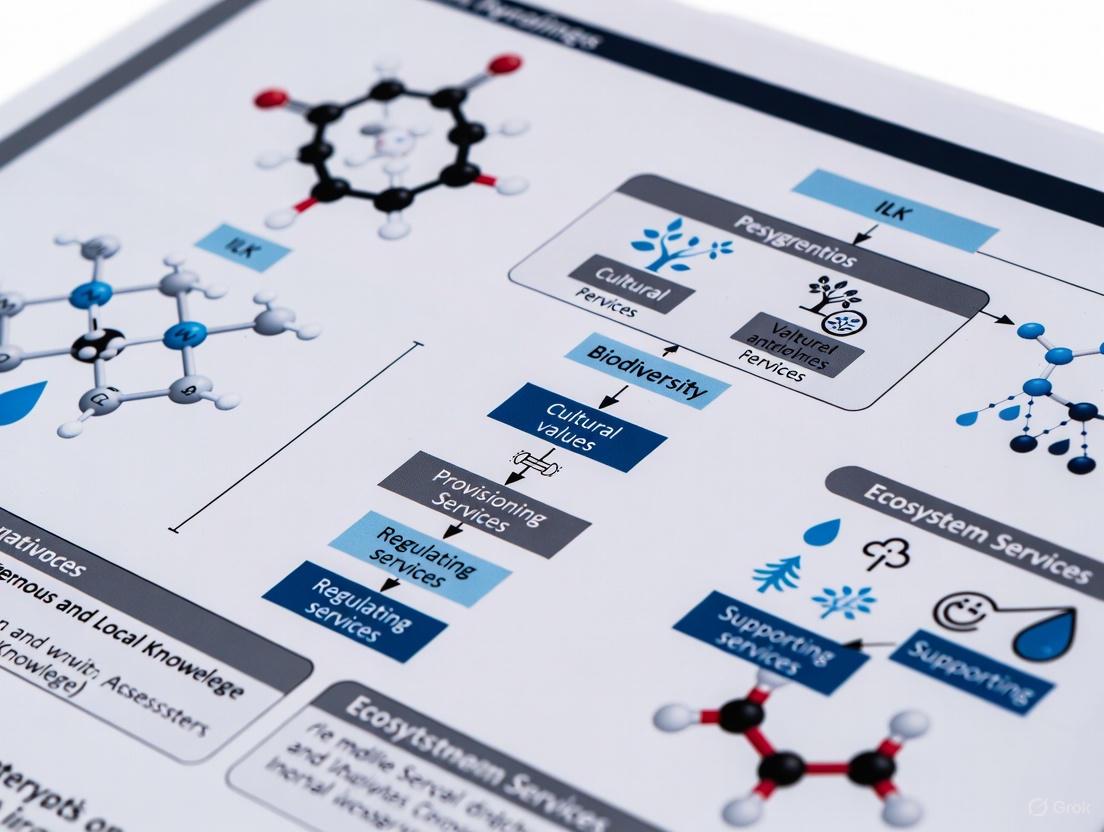
This article provides a comprehensive guide for researchers and environmental professionals on the integration of Indigenous and Local Knowledge (ILK) with scientific ecosystem service assessments.
Bridging Knowledge Systems: A Practical Framework for Integrating Indigenous and Local Knowledge (ILK) into Scientific Ecosystem Service Assessment
Abstract
This article provides a comprehensive guide for researchers and environmental professionals on the integration of Indigenous and Local Knowledge (ILK) with scientific ecosystem service assessments. It explores the foundational rationale for this integration, drawing on global frameworks like the Intergovernmental Science-Policy Platform on Biodiversity and Ecosystem Services (IPBES). The content details practical methodological approaches, critically examines common structural and ethical challenges, and presents compelling case study evidence of successful integration. Aimed at enhancing the accuracy, legitimacy, and effectiveness of environmental assessments, this resource offers actionable insights for developing more inclusive and sustainable ecosystem management strategies.
Why Integrate Knowledge Systems? The Ethical and Practical Imperative of ILK
Application Notes: Integrating ILK into Scientific Ecosystem Assessments
The meaningful inclusion of Indigenous and local knowledge (ILK) in ecosystem service assessments requires a fundamental shift from treating it as static "traditional" knowledge to recognizing it as dynamic, place-based, and continuously evolving. These application notes provide a framework for researchers and scientists engaged in this integrative process, drawing critical lessons from global assessments like the IPBES Values Assessment [1].
Core Conceptual Shift: ILK represents distinct knowledge systems that are deeply embedded in specific territories and cultural contexts. A primary challenge in integration is the tendency of Western scientific frameworks to over-generalize place-based knowledge and force ILK to fit within pre-existing Western scientific categories and definitions [1]. Successful integration requires respecting the integrity of ILK as a knowledge system in its own right.
Key Challenges and Strategic Solutions: The following table summarizes major operational challenges and proposes protocols to address them, based on the experiences of Indigenous scholars and ILK experts [1].
Table 1: Key Challenges & Protocols for ILK Integration in Research
| Challenge | Application Note & Protocol | Rationale & Expected Outcome |
|---|---|---|
| Structural Limitations [1] | Protocol: Proactively recruit ILK holders and scholars from the Global South through networks beyond government focal points. Advocate for and utilize translation services. | Rationale: Reliance on academic meritocracy and English proficiency systematically excludes key knowledge holders. Outcome: More equitable and representative participation. |
| The "Minority Tax" [1] | Protocol: Formalize compensation for ILK experts' extra labor. Integrate ILK awareness training for all team members. Establish clear, protected roles for ILK contributors. | Rationale: Indigenous and minority scholars bear disproportionate burdens in justifying positionality and educating teams. Outcome: Reduced burnout and more sustainable, ethical collaborations. |
| Conflating IPLC & Over-Generalization [1] | Protocol: Differentiate between Indigenous Peoples and Local Communities where worldviews differ. Use precise, context-specific descriptions of knowledge sources instead of broad labels. | Rationale: Conflating distinct groups bypasses specific Indigenous rights and obscures unique knowledge systems. Outcome: Higher accuracy and ethical integrity in reporting. |
| Epistemic Tensions [1] | Protocol: Create dedicated spaces for negotiating conceptual differences (e.g., "valuation"). Adopt a co-production model from the scoping phase, rather than a late-stage incorporation model. | Rationale: Western scientific concepts like "plural valuation" can be unfamiliar and awkward in ILK contexts. Outcome: Genuinely hybrid methodologies that reflect multiple knowledge systems. |
Operational Workflow: The process of integrating ILK into a scientific assessment is non-linear and requires iterative negotiation. The diagram below outlines the key stages and their relationships.
Experimental Protocols & Methodologies
This section provides a detailed, actionable protocol for a specific integrative method used in ecosystem assessments: the Ordered Weighted Averaging (OWA)-GIS method combined with Human Footprint analysis. This approach allows for the flexible integration of multiple ecosystem services while accounting for the critical impact of human activity, aligning with the need to balance ecological and human dimensions [2].
Protocol: Delineating Priority Conservation Areas (PCAs) with OWA-GIS and HFI
1. Objective: To spatially identify priority areas for ecological conservation by integrating the supply of multiple ecosystem services, their interrelationships (trade-offs/synergies), and the pressure from human activities [2].
2. Materials and Data Requirements: The following table lists the essential research "reagents" and data inputs required to execute this protocol.
Table 2: Research Reagent Solutions for PCA Delineation
| Research Reagent / Data Input | Function in the Protocol | Example Source & Specifications |
|---|---|---|
| Land Use/Land Cover (LULC) Raster Data | Serves as the foundational spatial layer for modeling ecosystem services and calculating the Human Footprint Index. | Resource and Environmental Science Data Center (RESDC); 30m spatial resolution for years 2000, 2010, 2020 [2]. |
| Digital Elevation Model (DEM) | Provides topographical data essential for modeling soil retention and water yield ecosystem services. | Geospatial Data Cloud Platform; 30m spatial resolution [2]. |
| Climate Datasets (Precipitation, Evapotranspiration) | Key inputs for the water yield ecosystem service model. | National Tibetan Plateau Data Center; 1km resolution monthly datasets [2]. |
| Spatial Population Data | A core component for calculating the Human Footprint Index, representing demographic pressure. | Landscan dataset from Oak Ridge National Laboratory [2]. |
| Nighttime Light Data | Serves as a proxy for human settlement and economic activity intensity in the Human Footprint Index. | "NPP-VIIRS-like" dataset from National Earth System Science Data Center; 500m resolution [2]. |
| Road Network Data | A key variable for the Human Footprint Index, indicating accessibility and infrastructure pressure. | Global Roads Open Access Data Set (gROADS) or OpenStreetMap (OSM) [2]. |
| InVEST (Integrated Valuation of Ecosystem Services and Tradeoffs) Model | The primary software suite used to quantify and map the selected ecosystem services (HQ, WY, CS, SR). | Natural Capital Project (standalone software) [2]. |
| GIS Software (e.g., ArcGIS, QGIS) | The primary platform for spatial data management, analysis, raster calculation, and map production. | Commercial or open-source. |
3. Detailed Methodological Steps:
Step 1: Ecosystem Service (ES) Quantification
- Using the InVEST model and other geospatial analyses, calculate and map the selected ecosystem services for your study area and time periods. The IPBES-supportive research assessed Habitat Quality (HQ), Water Yield (WY), Carbon Sequestration (CS), and Soil Retention (SR) [2].
- Output: Raster maps (e.g., GeoTIFF files) for each ES, normalized to a common scale (e.g., 0-1) for comparability.
Step 2: Analysis of ES Trade-offs and Synergies
- Perform a spatial correlation analysis (e.g., using Pearson's correlation or local indicators of spatial association) on the normalized ES maps.
- Output: A correlation matrix identifying pairs of ES that have synergistic (positive correlation) or trade-off (negative correlation) relationships [2].
Step 3: Human Footprint Index (HFI) Calculation
- Construct the HFI by integrating spatial datasets representing major human pressure factors. A standard methodology includes:
- Factors: Population density, built-up areas (from LULC), nighttime light intensity, and distance to roads.
- Standardization: Normalize each factor to a 0-10 scale.
- Integration: Combine the standardized factors using a weighted linear model to produce a final HFI raster, where higher values indicate greater human pressure [2].
- Construct the HFI by integrating spatial datasets representing major human pressure factors. A standard methodology includes:
Step 4: Scenario Generation with Ordered Weighted Averaging (OWA)
- The OWA method is used to create multiple conservation scenarios by applying different weighting schemes to the ecosystem services. This allows researchers to model outcomes from risk-averse (prioritizing areas high in all ES) to risk-taking (prioritizing areas high in a few ES) strategies [2].
- Formula:
PCA_score = ∑(w_i * z_i), wherew_iis the ordered weight for the i-th ES, andz_iis the reordered ES value from highest to lowest for each pixel. - Output: Multiple PCA scenario maps.
Step 5: Identification of Final Priority Conservation Areas
- Select the optimal PCA scenario map based on conservation goals (e.g., highest average protection efficiency).
- Overlay this PCA map with the HFI map. The final, precise conservation zones are those identified as high-priority from the OWA analysis and simultaneously experiencing low to moderate human pressure (low HFI) [2].
- Output: A final, delineated PCA map ready for management intervention.
The logical flow and data integration of this multi-step protocol are visualized below.
The Scientist's Toolkit for ILK Integration
Beyond technical models, successful integration requires specific "reagents" for ethical and effective engagement. The following toolkit is essential for researchers.
Table 3: Essential Toolkit for Ethical ILK Research
| Toolkit Component | Category | Function & Brief Explanation |
|---|---|---|
| Free, Prior, and Informed Consent (FPIC) Protocols | Ethical & Legal | A specific legal and ethical framework ensuring Indigenous communities have the right to give or withhold consent to any research project affecting them or their territories, based on a full understanding of the project. |
| Co-Development Agreements | Ethical & Legal | Formal agreements (e.g., Memoranda of Understanding) established at the project outset that clarify roles, responsibilities, data sovereignty, intellectual property rights, and benefits sharing for all partners. |
| Cultural Mentors / Liaisons | Operational | Trusted individuals who bridge cultural and linguistic gaps between the research team and the IPLC. They facilitate communication, ensure cultural protocols are respected, and help build trust. |
| Digital Audio Recorders & Transcription Services | Data Collection | To accurately record oral histories, interviews, and dialogues with ILK holders. Transcription creates a verifiable record that is essential for qualitative analysis and ensures the knowledge is represented in the holder's own words. |
| Participatory Mapping Software (e.g., QGIS with participatory plugins) | Data Collection & Analysis | Allows ILK holders to directly map and visualize their knowledge of land use, significant species, sacred sites, and ecological changes, generating spatially explicit data that can be integrated with scientific GIS layers. |
| Qualitative Data Analysis Software (e.g., NVivo) | Data Analysis | Supports the systematic coding and analysis of complex qualitative data gathered from interviews, focus groups, and oral histories, allowing for the identification of themes and patterns in ILK. |
| ILK-Science Integration Platforms (e.g., dedicated workshops, online portals) | Collaboration | Structured physical or virtual spaces designed for the explicit purpose of dialogue, negotiation, and knowledge exchange between ILK holders and scientists, moving beyond simple consultation to active co-production. |
The Intergovernmental Science-Policy Platform on Biodiversity and Ecosystem Services (IPBES) has established itself as a pivotal intergovernmental body bridging scientific knowledge and policy development for biodiversity conservation. A cornerstone of its operational principle is the formal recognition and integration of Indigenous and local knowledge (ILK) systems. Established in 2012 and now comprising 147 member governments, IPBES functions through a rolling work programme that produces comprehensive assessments to inform global decision-making [3]. The platform's commitment to "recognize and respect the contribution of Indigenous and local knowledge to the conservation and sustainable use of biodiversity and ecosystems" is embedded in its foundational principles [1].
The IPBES conceptual framework actively acknowledges different knowledge systems, and in 7, the platform concretized this commitment by adopting the IPBES ILK Approach [1]. This framework provides a structured mechanism for engaging Indigenous peoples and local communities (IPLCs) and their knowledge across all IPBES functions, including the scoping, production, and review of assessments. This institutionalization of ILK represents a transformative shift in global environmental governance, moving beyond token inclusion toward meaningful engagement with diverse knowledge systems for addressing the planetary biodiversity crisis.
IPBES Assessment Processes and ILK Integration Mechanisms
Operationalizing ILK in IPBES Assessments
The integration of ILK within IPBES assessments occurs through structured processes and defined roles. The platform recognizes three distinct types of experts: ILK holders, ILK experts, and experts on ILK [1]. This differentiation ensures that knowledge is not merely extracted but co-produced through respectful engagement. The assessment process involves several key stages where ILK integration is prioritized, from initial scoping to final review and approval of reports by the member state plenary.
Recent landmark assessments, including the Transformative Change Assessment approved in December 2024, demonstrate this integration in practice. This assessment defines transformative change as "fundamental system-wide shifts in views – ways of thinking, knowing and seeing; structures – ways of organizing, regulating and governing; and practices – ways of doing, behaving and relating" [4]. This conceptualization inherently values ILK systems as essential components of the necessary transformation toward sustainability.
Table 1: Key IPBES Assessments Incorporating ILK
| Assessment Name | Approval Date | Key ILK-Relevant Content |
|---|---|---|
| Transformative Change Assessment | December 2024 | Identifies respectful human-nature relationships from ILK systems as a guiding principle for transformative change [4]. |
| Values Assessment | 2022 | Examined IPLC valuation approaches and practices through dedicated ILK author teams [1]. |
| Global Assessment | 2019 | Found transformative change necessary, with ILK being crucial to achieving global goals [4]. |
| Nexus Assessment | December 2024 | Addresses interlinkages among biodiversity, water, food, and health, domains where ILK offers critical insights [3]. |
| Spatial Planning Assessment | Expected 2027 | Will address biodiversity-inclusive spatial planning, incorporating ILK on ecological connectivity [5]. |
Quantitative Evidence of ILK Impact in Conservation
Research demonstrates that initiatives incorporating ILK show measurably better outcomes for both biodiversity and human well-being. Analysis of hundreds of case studies worldwide reveals that initiatives addressing a greater number of indirect drivers of biodiversity loss, and those where diverse actors work together, lead to more positive outcomes for societies, economies and nature [4]. The economic case is equally compelling; acting immediately to halt biodiversity loss could generate $10 trillion in business opportunity value and support 395 million jobs globally by 2030 [4], with ILK-based approaches playing a significant role in realizing these opportunities.
Table 2: Documented Outcomes of ILK Integration in Environmental Management
| Outcome Category | Documented Evidence | Geographic Context |
|---|---|---|
| Biodiversity Conservation | Positive outcomes for diverse economic and environmental indicators within a decade or less [4]. | Global |
| Forest Management | Community Forestry Programme integrated decentralized policy with local knowledge to restore degraded forests [4]. | Nepal |
| Agricultural Systems | Increasing biodiversity and reducing external inputs enhances pollinator abundance and diversity, improving productivity [4]. | Multiple regions |
| Marine Resource Governance | Ecosystem-based spatial management supports sustainable fisheries and tourism [4]. | Galapagos Marine Reserve |
| Knowledge Co-production | Equitable collaboration maintains biocultural diversity, fills scientific gaps, and advances social justice [6]. | Southern Africa |
Experimental Protocols for ILK Integration
Methodological Framework for Knowledge Co-production
The integration of ILK in research and assessment contexts requires deliberate methodological approaches that address power dynamics and create equitable spaces for knowledge exchange. Based on documented experiences from IPBES assessments and related research, the following protocol provides a framework for meaningful ILK integration.
Protocol Title: Participatory Framework for ILK and Scientific Knowledge Co-production in Biodiversity Assessment
Objective: To establish equitable and ethical processes for integrating Indigenous and local knowledge with scientific knowledge in biodiversity assessment and natural resource management contexts.
Materials and Reagents:
- Stakeholder Mapping Tools: For identifying relevant knowledge holders and institutions
- Ethical Review Protocols: Including Free, Prior and Informed Consent (FPIC) frameworks
- Documentation Equipment: Audio/visual recording devices (with permissions)
- Data Management Systems: For organizing qualitative and quantitative data
- Communication Tools: Translation/interpretation services as needed
Procedure:
Preparatory Phase (Weeks 1-4)
- Conduct stakeholder mapping to identify ILK holders, ILK experts, and relevant institutions
- Establish ethical review procedures and obtain Free, Prior and Informed Consent
- Develop collaborative research questions and design with IPLC representatives
- Create multilingual communication materials appropriate for diverse knowledge holders
Knowledge Elicitation Phase (Weeks 5-12)
- Implement diverse engagement methods (Table 3) suitable for different contexts and knowledge types
- Facilitate participatory mapping exercises for spatial knowledge documentation
- Conduct seasonal calendars and historical timeline development with knowledge holders
- Document narratives, practices, and observations through appropriate recording methods
Knowledge Integration and Validation (Weeks 13-20)
- Convene collaborative workshops for preliminary analysis and interpretation
- Establish transparent processes for addressing divergent knowledge claims
- Develop integrated knowledge products with co-authorship and acknowledgement protocols
- Implement iterative review cycles with all knowledge contributors
Application and Feedback (Weeks 21-26)
- Apply integrated knowledge to specific conservation or management challenges
- Establish mechanisms for ongoing relationship maintenance and knowledge exchange
- Ensure benefit-sharing and appropriate recognition of all knowledge contributions
Troubleshooting:
- Power Imbalances: Actively facilitate participation of marginalized voices through dedicated support
- Linguistic Barriers: Employ professional interpreters familiar with technical and cultural concepts
- Epistemological Differences: Create spaces for discussing worldviews without forcing consensus
- Time Constraints: Allocate sufficient time for relationship-building and trust establishment
IPBES Values Assessment Implementation Experience
The IPBES Values Assessment (VA) provided significant learning experiences regarding ILK integration in global assessments. Chapter 3 of the VA established a dedicated "ILK Team" comprising Indigenous scholars and ILK experts from the Global South [1]. This team faced the challenge of applying Western scientific valuation concepts and terminology such as "specific and broad values," "plural valuation," and "value dimensions" to IPLC contexts where these frameworks were unfamiliar and often awkward [1]. The process revealed that forming dedicated ILK teams within assessment chapters, while creating some isolation, proved more productive than attempting complete integration from the outset.
The Scientist's Toolkit: Research Reagent Solutions for ILK Integration
Successful integration of ILK in biodiversity research requires both methodological approaches and specific "reagent" solutions that facilitate equitable collaboration across knowledge systems. The following table details essential components for designing and implementing ILK integration in research and assessment contexts.
Table 3: Essential Research Reagents for ILK Integration in Biodiversity Studies
| Research Reagent | Function & Application | Implementation Considerations |
|---|---|---|
| ILK Dialogues | Structured conversations between knowledge holders and scientists to identify shared concerns and knowledge complementarities [1]. | Requires skilled facilitation, clear protocols for respecting ceremonial aspects, and appropriate venues. |
| Participatory Mapping | Visual representation of spatial knowledge documenting culturally significant sites, resource areas, and ecological observations. | Must address confidentiality concerns and establish data sovereignty agreements with communities. |
| Seasonal Calendars | Temporal representation of ecological phenomena, resource availability, and management practices across annual cycles. | Captures interannual variability and climate change impacts from long-term observational databases. |
| Structured Interview Protocols | Systematic documentation of knowledge practices using culturally appropriate questioning techniques and validation processes. | Requires relationship-building before implementation and co-development of questions with community representatives. |
| Co-analysis Workshops | Collaborative sessions for interpreting integrated datasets and developing shared understanding of findings. | Needs careful design to ensure all voices are heard and power differentials are mitigated in discussion. |
| Ethical Review Frameworks | Protocols for ensuring Free, Prior and Informed Consent, data sovereignty, and equitable benefit sharing. | Must be tailored to specific cultural and legal contexts, with ongoing review throughout project lifecycle. |
Analytical Framework for ILK Integration Challenges and Solutions
The integration of ILK within scientific assessments faces significant structural and epistemological challenges that require systematic addressing. Research with Southern African case studies demonstrates that despite increasing interest in knowledge integration for conservation, documentation of integration processes remains fragmented and somewhat scarce [6]. The analysis of these challenges reveals several critical barriers and potential solutions.
Addressing Structural Barriers to Equitable Participation
The structural limitations of global assessment processes present significant barriers to meaningful ILK inclusion. In IPBES processes, interested experts must typically go through their government's focal point or an approved organization, and authors are primarily selected based on academic merit, which disadvantages ILK holders who may not have formal academic credentials or proficiency in dominant languages like English [1]. Consequently, perspectives from the Global South remain substantially underrepresented in assessments despite comprising most of the world's biocultural diversity.
The "minority tax" represents another significant challenge, referring to the additional burden faced by Indigenous scholars and ILK experts in assessment contexts. This includes extra responsibilities such as justifying their positionality, educating non-Indigenous colleagues about ILK systems, and serving as cultural translators, all of which divert energy from primary assessment responsibilities [1]. Without formal recognition and compensation for this labor, the burden falls disproportionately on underrepresented experts, potentially leading to burnout and attrition from assessment processes.
Navigating Epistemological and Governance Challenges
The conflation of Indigenous peoples with local communities in assessment contexts risks bypassing distinct Indigenous rights, including the right to self-determination and rights to cultural heritage and intellectual property as outlined in the United Nations Declaration on the Rights of Indigenous Peoples (UNDRIP) [1]. This conceptual merging fails to acknowledge the unique historical, political, and legal relationships that Indigenous peoples have with their territories and knowledge systems.
Power imbalances perpetuate dominant forms of knowledge over others, potentially obstructing knowledge integration and causing the loss of knowledge from marginal and less powerful knowledge holders [6]. Colonial conservation narratives continue to prevail in certain national policies, ignoring the knowledge and practices of IPLCs who inhabit, rely on, and often sustain their ancestral lands [6]. Addressing these challenges requires transforming governance systems to be inclusive, accountable, and adaptive, integrating biodiversity into sector policies and engaging a greater diversity of actors in decision-making processes [4].
The IPBES framework represents a significant advancement in global recognition of ILK's role in biodiversity assessment and conservation. However, meaningful integration requires moving beyond technical approaches to address the underlying political dimensions and power relations that have historically marginalized Indigenous and local knowledge systems. The strategies emerging from successful integration efforts emphasize the importance of conserving places of biocultural diversity, transforming economic and governance systems, and shifting societal views and values to recognize human-nature interconnectedness [4].
Future assessments must continue to develop and refine methodologies for equitable knowledge co-production, addressing both the structural barriers to participation and the epistemological challenges of weaving together diverse knowledge systems. As the IPBES Transformative Change Assessment emphasizes, "there is a role for every person and organization to create transformative change at multiple levels, but coalitions of actors and actor groups are more effective in pursuing transformative change than change pursued individually" [4]. Through continued commitment to equitable collaboration across knowledge systems, the global community can develop more effective, inclusive, and sustainable approaches to addressing the biodiversity crisis.
Integrin-linked kinase (ILK) has emerged as a critical protein that enriches scientific data by providing essential context, historical perspective, and biological nuance to our understanding of cell-extracellular matrix (ECM) interactions [7] [8]. Since its discovery in 1996 as an interaction partner for the β1 integrin cytoplasmic domain, ILK has been identified as a multifunctional molecular actor in cell adhesion, migration, proliferation, and survival [8] [9]. Originally classified as a serine/threonine-protein kinase, subsequent research has revealed significant nuance in its molecular function, with recent evidence indicating it operates primarily as a pseudokinase with robust scaffolding capabilities [8] [9]. This evolution in understanding exemplifies how scientific knowledge matures through continued investigation, with ILK providing a compelling case study in the integration of structural, functional, and translational data.
The biological significance of ILK extends across multiple physiological systems, with research demonstrating essential roles in cardiovascular function, bone formation, kidney homeostasis, and embryonic development [8] [10] [11]. Its dysfunction underlies various pathological states, particularly in cancer progression, cardiomyopathy, and fibrotic diseases [8] [10] [12]. This application note examines how ILK provides contextual framework for interpreting cellular signaling data, details key experimental approaches for studying its function, and explores its therapeutic targeting, thereby offering researchers a comprehensive resource for integrating ILK into their scientific workflow.
Molecular Characterization and Historical Context
Structural Evolution and Domain Organization
ILK comprises three structurally distinct regions that define its functional capabilities: four ANK repeats at the NH2 terminus, a pleckstrin homology (PH)-like motif, and a COOH-terminal domain that exhibits significant homology to protein kinase catalytic domains [7]. The N-terminal ankyrin repeats mediate interaction with particularly interesting cys-his-rich protein (PINCH), while the C-terminal domain binds integrin β subunits, parvins, and paxillin [7] [9]. This structural configuration enables ILK to serve as a central platform for assembling multi-protein complexes at sites of integrin adhesion.
Significant controversy has surrounded the catalytic activity of ILK since its initial characterization. While early studies proposed it functioned as a bona fide kinase, structural and functional evidence has subsequently demonstrated that crucial motifs required for catalytic activity are absent or incomplete [8] [9]. The current scientific consensus recognizes ILK primarily as a pseudokinase with adaptor function, highlighting how scientific understanding evolves through continued structural and biochemical investigation [9].
The ILK-PINCH-Parvin (IPP) Complex: A Signaling Hub
ILK serves as the core scaffold for the ILK-PINCH-Parvin (IPP) complex, which orchestrates bidirectional signaling between the extracellular matrix and intracellular compartments [8]. This complex physically links integrin receptors to the actin cytoskeleton and connects mechanical forces with biochemical signaling pathways [7] [8]. The precise composition and regulation of this complex provides contextual nuance for interpreting cellular responses to extracellular matrix composition, stiffness, and geometry.
Table 1: Core Components of the ILK-PINCH-Parvin (IPP) Complex
| Component | Key Features | Binding Partners | Biological Functions |
|---|---|---|---|
| ILK | Scaffold protein with Ankyrin repeats, PH-like domain, and pseudokinase domain | Integrin β subunits, PINCH, Parvins, Paxillin | Mechanotransduction, cytoskeletal organization, survival signaling |
| PINCH | Adapter protein with five LIM domains | ILK (via LIM1 domain), Nck2 | Complex stability, localization to focal adhesions |
| Parvins (α, β) | Actin-binding proteins with CH domains | ILK (via kinase domain), Actin filaments | Actin cytoskeleton remodeling, cell spreading, migration |
The following diagram illustrates the core ILK-PINCH-Parvin complex and its key interactions:
Regulatory Nuance: Isoforms and Post-Translational Modifications
The ILK gene, located on chromosome 11p15.5-p15.4, encodes three major isoforms through alternative splicing, though most research has focused on the canonical ILK1 (51 kDa) isoform [8]. ILK2 (44 kDa) lacks a portion of the PH domain and ankyrin repeats, while ILK3 (36 kDa) has a shorter N-terminus [8]. These structural differences suggest potential functional specialization, though characterization remains limited, representing a significant knowledge gap in the field.
ILK activity is regulated at multiple levels, including transcriptional regulation, protein stability, and post-translational modifications such as phosphorylation and ubiquitylation [8]. Growth factors, including those acting through receptor tyrosine kinases, and the PI3K pathway have been implicated in ILK regulation, creating nuance in its activation beyond simple integrin-ECM interactions.
Research Applications and Experimental Data
ILK in Mitochondrial Dysfunction: Kidney Disease Model
Recent research has elucidated ILK's role in organ-specific pathologies, providing quantitative data on its functional contributions. In a folic acid (FA)-induced kidney disease model, ILK expression was significantly upregulated, leading to decreased GSK3β activity, increased tubular fibrosis, and mitochondrial dysfunction [13]. This signaling axis involving ILK, GSK3β, and C/EBPβ regulated CPT1A transcription as a limiting factor in impaired mitochondrial activity [13].
Table 2: Quantitative Parameters in FA-Induced Kidney Disease Model [13]
| Parameter | WT CT | WT FA | cKD-ILK CT | cKD-ILK FA | Measurement Method |
|---|---|---|---|---|---|
| Blood Creatinine | Baseline | Significantly increased | Similar to WT CT | Partially prevented increase | Colorimetric assay |
| BUN | Baseline | Significantly increased | Similar to WT CT | Partially prevented increase | Colorimetric assay |
| ILK Renal Expression | Baseline | Increased | ~50% of WT | ~50% of WT | Immunoblotting |
| GSK3β Ser9 Phosphorylation | Baseline | Increased | Similar to WT CT | Prevention of increase | Immunoblotting |
| Fibronectin (FN) Expression | Baseline | Increased | Similar to WT CT | Prevention of increase | Immunoblotting/RT-qPCR |
| Collagen 1 (COL1A1) Expression | Baseline | Increased | Similar to WT CT | Prevention of increase | Immunoblotting/RT-qPCR |
The experimental workflow for investigating ILK in kidney mitochondrial dysfunction is summarized below:
ILK in Bone Formation and Cardiovascular Function
Beyond renal pathology, ILK serves critical functions in bone remodeling and cardiovascular health. In bone formation, ILK acts as a key molecule affecting the functions of bone marrow stromal cells (BMSCs) and osteoblasts, while also playing a role in "angiogenic-osteogenic coupling" [11]. This positions ILK as a potential therapeutic target for osteoporosis [11].
In the cardiovascular system, ILK is a key cardiac scaffolding protein involved in heart development, transduction of mechanical stress, and induction of cardiomyocyte survival pathways [10]. Specific interactions with parvin isoforms have distinct functional consequences: ILK:β-parvin interaction activates SERCA-2a, enhancing calcium reuptake and providing cardioprotection, while ILK:α-parvin interactions decrease contractility and promote fibrosis [10]. This nuanced understanding has led to therapeutic strategies targeting these specific protein-protein interactions.
Detailed Experimental Protocols
Protocol 1: Assessing ILK Function in Kidney Disease Models
Objective: Evaluate ILK's role in mitochondrial dysfunction and fibrosis using a folic acid-induced kidney injury model [13].
Materials and Methods:
- Animal Model: Wild-type (WT) and conditional Knock-Down ILK (cKD-ILK) mice
- Renal Injury Induction: Single intraperitoneal dose of folic acid (250 mg/kg) dissolved in 0.15 M sodium bicarbonate; control groups receive vehicle alone
- Study Timeline: Sacrifice animals 15 days post-injection for chronic damage progression analysis
- Renal Function Assessment: Measure blood creatinine and BUN (blood urea nitrogen) using colorimetric assays
- Histopathological Analysis:
- Kidney fixation in 4% paraformaldehyde, paraffin embedding, sectioning at 4μm
- Hematoxylin and eosin staining for tubular damage assessment (dilatation, atrophy, casts)
- Sirius red staining for collagen deposition quantification
- Molecular Analysis:
- Protein extraction from kidney tissue using RIPA buffer with protease/phosphatase inhibitors
- Immunoblotting for ILK, fibronectin, collagen 1, GSK3β, p-GSK3β (Ser9), OXPHOS enzymes
- RNA extraction and RT-qPCR for gene expression analysis
- Mitochondrial Function Assessment:
- Mitochondrial membrane potential measurement using JC-1 or TMRM fluorescent dyes
- Oxygen consumption rate analysis in isolated mitochondria or tubular cells
Protocol 2: Virtual Screening for ILK Inhibitors
Objective: Identify FDA-approved drugs with ILK inhibitory activity through computational screening [12].
Materials and Methods:
- Protein Structure Preparation:
- Obtain ILK crystal structure (3KMU) from PDB database
- Extract ILK protein (Chain A) using PyMOL molecular visualization system
- Prepare protein structure by removing water molecules, adding hydrogen atoms, assigning partial charges
- Binding Pocket Prediction:
- Use DoGSiteScorer online tool for potential binding pocket identification
- Validate selected pockets with fpocket and CASTp tools
- Compound Library Preparation:
- Download FDA-approved drug list (1,615 compounds) from ZINC15 database
- Convert compounds to PDB format using MGLTools
- Prepare ligands for docking by energy minimization and conformer generation
- Molecular Docking:
- Perform docking simulations using AutoDock Vina docking program
- Set grid box dimensions to encompass identified binding pocket
- Use default Vina parameters with exhaustiveness setting of 8
- Rank compounds by binding affinity (kcal/mol)
- Hit Selection and Validation:
- Select top 10 compounds based on minimum binding energy
- Apply binding energy threshold of -10 kcal/mol for further consideration
- Validate direct binding using surface plasmon resonance (SPR)
- Evaluate cellular efficacy using CCK-8 and LDH assays in ESCC cell lines
Protocol 3: Disrupting ILK:Parvin Interactions for Cardiac Therapeutic Development
Objective: Develop and characterize small molecule inhibitors of ILK:α-parvin interaction for heart failure treatment [10].
Materials and Methods:
- High-Throughput Screening Assay Development:
- Establish HTRF (Homogeneous Time-Resolved Fluorescence) assay for ILK:α-parvin interaction
- Validate assay quality using Z-factor calculations (>0.5 indicates excellent assay)
- Screen compound libraries (50,000+ compounds) at 10μM concentration
- Hit Identification and Validation:
- Primary hits: >50% inhibition at screening concentration
- Confirm dose-response relationships (IC50 determination)
- Counter-screening against ILK:β-parvin interaction to ensure selectivity
- Orthogonal Binding Assays:
- Surface plasmon resonance to measure binding kinetics (KD values)
- Isothermal titration calorimetry for thermodynamic characterization
- Competitive fluorescence polarization assays
- Cellular Efficacy Assessment:
- Cardiac fibroblast migration assays (Boyden chamber)
- SERCA-2a activity measurement in cardiomyocytes
- Fibrosis marker expression (α-SMA, collagen) via immunoblotting
- Medicinal Chemistry Optimization:
- Structure-activity relationship (SAR) studies around hit compounds
- ADME/Tox profiling (CYP inhibition, hepatotoxicity, plasma stability)
- Physicochemical property optimization (Lipinski's Rule of Five)
The Scientist's Toolkit: Essential Research Reagents
Table 3: Key Research Reagents for ILK Investigation
| Reagent/Category | Specific Examples | Function/Application | Experimental Context |
|---|---|---|---|
| Cell Lines | HK2 (human kidney tubular), HEK293, ESCC lines (KYSE150, TE-1) | In vitro modeling of ILK function in specific tissues | Kidney disease, cancer studies [12] [13] |
| Animal Models | cKD-ILK mice, Tissue-specific ILK knockout mice | In vivo functional validation, pathophysiology studies | Kidney disease, cardiovascular research [13] |
| Antibodies | Anti-ILK, anti-p-GSK3β (Ser9), anti-fibronectin, anti-collagen 1 | Protein detection, localization, quantification | Immunoblotting, immunofluorescence [13] |
| Small Molecule Inhibitors | Nilotinib, Teniposide, ILK-IN-3 | Pharmacological inhibition of ILK function | Mechanism studies, therapeutic validation [12] |
| Molecular Biology Tools | siRNA targeting ILK/GSK3β/C/EBPβ, cDNA constructs | Genetic manipulation of ILK pathway components | Mechanistic studies, pathway analysis [13] |
| Assay Kits | CCK-8, LDH, mitochondrial membrane potential kits | Functional assessment of cellular responses | Cytotoxicity, mitochondrial function [12] [13] |
ILK continues to provide rich context, historical perspective, and biological nuance to our understanding of integrin-mediated signaling and cellular mechanotransduction. From its initial characterization as a kinase to its current recognition as a scaffolding protein with pseudokinase attributes, the investigation of ILK exemplifies how scientific understanding evolves through iterative hypothesis testing and technological advancement [7] [8] [9].
The therapeutic targeting of ILK and its interactions represents a promising frontier for drug development, particularly in fibrosis, cancer, and cardiovascular disease [10] [12] [13]. The nuanced understanding of distinct functional outcomes mediated by interactions with different parvin isoforms highlights the importance of context in developing targeted therapeutics [10]. As research continues to elucidate the subtleties of ILK regulation, isoform-specific functions, and tissue-specific roles, this multifunctional protein will undoubtedly continue to enrich our understanding of the complex interplay between cells and their microenvironment.
Future research directions should address the significant knowledge gaps regarding ILK isoforms, precise regulation of its scaffolding functions, and tissue-specific interactomes. Such investigations will further enhance the contextual framework that ILK provides for interpreting cellular signaling data, ultimately enriching our fundamental understanding of cell biology while identifying novel therapeutic opportunities for diverse human diseases.
The establishment of the Intergovernmental Science-Policy Platform on Biodiversity and Ecosystem Services (IPBES) in 2012 marked a pivotal moment in global environmental governance, creating an urgent need for a conceptual framework that could bridge diverse knowledge systems and address the complex interconnections between nature and human societies. This framework materialized through the development of "Nature's Contributions to People" (NCP), which emerged as an evolution beyond the established Ecosystem Services (ES) concept [14] [15]. The IPBES conceptual framework represents a simplified model of interactions between nature and people most relevant to sustainability goals, facilitating interoperability among disciplines, stakeholders, and knowledge systems [15]. This shift from ES to NCP was not merely terminological but represented a fundamental reconceptualization of how humanity relates to and benefits from nature, with profound implications for research, policy, and practice.
The NCP framework was defined as "all contributions, beneficial or harmful, that individuals, communities, societies, nations, or humanity as a whole derive from nature" [14]. This definition deliberately expanded beyond the predominantly positive connotation of "benefits" associated with earlier frameworks, explicitly acknowledging that nature's influences on human societies encompass both positive contributions and negative impacts [14]. The conceptual transition from "Nature's Benefits to People" to "Nature's Contributions to People" addressed concerns that the word "benefits" was unsuitable due to its predominantly positive connotation and potentially diverse interpretations [14]. This refined conceptualization encompasses three broad, partially overlapping categories: regulating, material, and non-material NCP, creating a more inclusive framework for understanding human-nature relationships [14] [16].
Core Conceptual Differences: NCP vs. Ecosystem Services
Philosophical Foundations and Value Systems
The transition from Ecosystem Services to Nature's Contributions to People represents a paradigm shift in how we conceptualize and value human-nature relationships. While the ES framework primarily emphasized instrumental values of nature—focusing on tangible goods and benefits that ecosystems provide to humans—the NCP approach incorporates a more diverse valuation discourse that includes relational values [14]. These relational values emphasize the mutual benefits and co-production between humans and nature, encompassing elements like sense of place, cultural identity, and personal well-being that connect individuals and communities to nature [14]. This shift acknowledges that the human-nature relationships are inherently nonlinear and multifaceted, requiring a more nuanced approach to valuation that recognizes the central and constant role that culture plays in defining the values of nature [14].
The NCP framework advances existing approaches to human-nature interactions by moving beyond generalized perspectives, particularly the ES framework, through including a context-specific perspective that recognizes local or cultural perceptions and their applicability in assessments and planning to achieve well-being and sustainable use [14]. At the same time, the NCP approach maintains the concept of ES in terms of the ecological, economic, and socio-cultural values of nature initially provided by the Millennium Ecosystem Assessment, alongside the incorporation of intrinsic values into sustainability science [14]. This philosophical expansion enables the framework to accommodate a broader range of worldviews, including those of indigenous and local communities whose relationships with nature may not be adequately captured by purely instrumental valuation.
Structural and Categorical Differences
The structural organization of NCP differs significantly from previous ES classifications while maintaining some continuity with established categories. The NCP framework organizes nature's contributions into three primary categories:
- Regulating NCP: Refer to the functional and structural aspects of ecosystems and biodiversity that contribute to societies' well-being by modifying environmental conditions and regulating the provision of material and non-material NCP [14].
- Material NCP: Elements collected from ecosystems and biodiversity that directly contribute to people's physical existence through supplies, such as food, energy, or raw biotic materials [14].
- Non-material NCP: Nature's effects on the subjective and psychological aspects of people's well-being, including recreational and aesthetic experiences, learning and inspiration, and supporting identities, which may be regarded as people's satisfaction knowing that a particular species exists or a sense of place attachment to an area or landscape [14].
This categorization system explicitly acknowledges the importance of non-material contributions that were often marginalized in earlier ES assessments, while also recognizing the interconnectedness between categories. The framework further specifies 18 distinct NCP classes within these broad categories, enabling more precise assessments and communications about specific contributions [14].
Table 1: Comparative Analysis of Ecosystem Services (ES) and Nature's Contributions to People (NCP) Frameworks
| Aspect | Ecosystem Services (ES) | Nature's Contributions to People (NCP) |
|---|---|---|
| Primary Focus | Benefits humans receive from ecosystems | All contributions from nature, both beneficial and harmful |
| Value Emphasis | Instrumental values | Instrumental, relational, and intrinsic values |
| Knowledge Systems | Primarily scientific knowledge | Multiple evidence bases including indigenous and local knowledge |
| Scope of Assessment | Often generalized and standardized | Context-specific and culturally sensitive |
| Categorization | Provisioning, regulating, cultural, supporting | Material, non-material, regulating (with 18 specific classes) |
| Policy Integration | Economic valuation and payment schemes | Broader policy integration including cultural values |
Methodological Protocols for NCP Assessment
Integrating Indigenous and Local Knowledge (ILK) with Scientific Research
The integration of Indigenous and Local Knowledge (ILK) with scientific knowledge systems represents a cornerstone of the NCP approach and requires carefully designed methodological protocols. The IPBES conceptual framework was innovatively designed with transparent and participatory construction processes that explicitly consider diverse scientific disciplines, stakeholders, and knowledge systems, including indigenous and local knowledge [15]. This inclusive approach aims to facilitate co-construction of integrative knowledge that is shared by an increasing number of initiatives worldwide, making the framework useful beyond IPBES for the wider research and knowledge-policy communities working on the links between nature and people [15].
Protocols for effective ILK integration should include:
Ethical Engagement Frameworks: Establish clear ethical guidelines for engagement with indigenous and local communities, including prior informed consent, respect for intellectual property rights, and equitable benefit-sharing arrangements [17]. These frameworks must ensure that when large pharmaceutical companies obtain medicinal plants or purchase lands that support their native habitat to develop new drugs, these resources do not become unavailable or unaffordable to local people who have historically depended on them [17].
Knowledge Co-Production Methodologies: Develop participatory processes that enable genuine collaboration between knowledge holders. This includes participatory mapping exercises, community workshops, and joint field activities that recognize ILK holders as equal partners in knowledge production [18]. These methodologies should be designed to collect existing knowledge on species of interest and create accessible databases for dissemination [17].
Cross-Cultural Translation Tools: Create conceptual and methodological tools that facilitate communication across different knowledge systems and cultural norms. This includes addressing language barriers and different conceptual understandings of nature and its contributions [17]. Research indicates that promoting open interdisciplinary dialogue and information sharing among academics, physicians, patients, policy-makers, commercial bodies, and local and indigenous community stakeholders is essential, with special focus on understanding different cultural norms and language needed to describe traditional medicine [17].
Validation and Quality Assurance Protocols: Establish methods for validating integrated knowledge that respect the integrity of different knowledge systems while ensuring scientific rigor. This may include triangulation approaches that cross-verify information across multiple knowledge sources and communities [18].
Quantitative and Spatial Assessment Methods
The assessment of NCP supply, demand, and flows requires robust quantitative and spatial methodologies that can capture the dynamic nature of human-nature interactions across scales. Recent advances in NCP assessment have developed sophisticated approaches for analyzing spatiotemporal patterns and mismatches between supply and demand [16]. The following experimental protocols provide guidance for implementing these assessments:
Protocol for Spatiotemporal NCP Supply-Demand Analysis:
NCP Selection and Scoping: Conduct qualitative content analysis of relevant policy and planning documents to identify priority NCP for assessment [16]. This analysis begins with selecting relevant planning documents, identifying excerpts containing goals, directives, or expected trends, and using predefined keywords associated with landscape, environmental and spatial planning to guide subsequent content analysis [16].
Data Collection and Harmonization: Gather spatial and temporal data on both biophysical supply indicators and socio-economic demand indicators. Critical data sources include land use statistics (e.g., Swiss Land Use Statistics data), environmental monitoring data, census information, and economic datasets [16]. Ensure temporal alignment of datasets across consistent time windows (e.g., 1980s, 1990s, 2000s, and current) [16].
Supply-Demand Budget and Ratio Calculation: Compute both absolute budget values (supply - demand) and relative ratio values (supply/demand) at appropriate spatial units (e.g., municipal scale) [16]. For NCPs related to consumption (e.g., food, water regulation, climate regulation), calculate per capita values before determining budget and ratio indexes to enable fair comparison across municipalities with different population sizes [16].
Trend Analysis and Clustering: Apply statistical trend analysis to identify temporal patterns in NCP budgets and ratios across the assessment period. Use hierarchical clustering techniques to identify municipalities or regions sharing similar spatiotemporal NCP patterns, enabling the identification of emerging imbalances, shifting dependencies, and shared pathways [16].
Policy Integration and Scenario Development: Translate assessment results into policy-relevant formats, including spatial prioritization maps and scenario analyses that explore potential future trajectories under different policy options [18]. Develop polycentric governance strategies that address the complexity and dynamic nature of human-nature interactions across multiple scales [16].
Table 2: Essential Methodological Approaches for NCP Assessment
| Method Category | Specific Methods | Primary Applications | Key References |
|---|---|---|---|
| Spatial Analysis | GIS mapping, hotspot analysis, spatial correlation analysis | Identifying spatial mismatches between NCP supply and demand | [19] [16] |
| Economic Valuation | Value equivalent factor method, contingent valuation | Estimating economic values of non-market NCP | [19] |
| Temporal Analysis | Trend analysis, time series modeling, scenario development | Assessing historical trends and future projections of NCP | [16] [18] |
| Participatory Methods | Community workshops, participatory mapping, deliberative valuation | Integrating ILK and community perspectives | [18] |
| Statistical Modeling | Cluster analysis, regression models, geographical detection | Identifying NCP bundles and driving factors | [19] [16] |
Application in Drug Discovery and Biomedical Research
Biodiversity as a Source of Medicinal Compounds
The NCP framework provides a vital conceptual foundation for understanding and preserving biodiversity's crucial role in drug discovery and biomedical research. Nature has served as a source of medicine for tens of thousands of years, and despite advances in pharmaceutical science, nature remains an essential source of useful compounds and inspiration [17]. The immense molecular diversity found in nature has been honed by three billion years of evolutionary trial and error, making biodiversity perhaps the single most important building block for achieving the Sustainable Development Goals related to health and well-being [17]. The preservation of biodiversity provides a vital link to critically expand the molecular diversity necessary for successful drug discovery efforts in the future, with drug discovery from wild species always being, and continuing to be, critical for most if not all aspects of health care, disease prevention, and wellness [17].
The quantitative significance of biodiversity in pharmaceutical science is substantial. It is estimated that approximately 7% (26,000) of known vascular plant species have been used for medicinal purposes, and globally, more than 30% of new drugs derive from natural molecules sourced from plants and microbes identified by science and/or through indigenous knowledge [20]. Notably, more than 70% of cancer therapeutics derive from existing natural compounds [20]. However, this vital resource is under severe threat, as modern extinction rates are about 100 to 1000 times greater than historical background rates, with known species going extinct at a rate 1000 times higher than the discovery of new species [17]. This ongoing loss of biodiversity represents not only an ecological crisis but also a medical emergency, as some estimates suggest our planet is losing at least one important drug every two years [17].
Ethical Protocols for Bioprospecting and Benefit-Sharing
The application of the NCP framework in drug discovery necessitates robust ethical protocols to ensure equitable and sustainable practices. Future efforts to explore biodiversity for drug discovery must carefully consider the interests of indigenous people, respect for their knowledge, and those living in developing, low-income countries [17]. In developing countries, plants are frequently a primary source of health care, and when large pharmaceutical companies obtain medicinal plants or purchase lands that support their native habitat to develop new drugs, these resources can become unavailable or unaffordable to local people who will have no means to buy the products developed from these sources [17].
Essential protocols for ethical bioprospecting include:
Prior Informed Consent and Mutually Agreed Terms: Establish transparent processes for obtaining consent from indigenous and local communities before accessing biological resources or associated traditional knowledge. These processes should include clear agreements on benefit-sharing, intellectual property rights, and continued access to resources for local use [17].
Fair and Equitable Benefit-Sharing Mechanisms: Develop concrete mechanisms to ensure that benefits from commercialized products derived from biological resources are shared fairly with source countries and communities. This may include monetary compensation, technology transfer, capacity building, or joint ventures [17].
In Situ and Ex Situ Conservation Strategies: Implement comprehensive conservation approaches that protect biodiversity in its natural habitats while also maintaining preserved samples and genetic resources in controlled environments [17]. These strategies should include investigating and standardizing natural products with focus on therapeutic potential, chemistry, ecology, availability and potential to cultivate, traditional use, conservation, and sustainable trade [17].
Sustainable Sourcing and Production Practices: Establish best practices for sustainable natural product collection, production, storage, and preparation, with special attention to safeguarding traditional family preparations and assurance that value is returned to local communities [17]. Standardize high capacity biomolecular and cell-based assays for testing these natural products to minimize waste and maximize efficiency [17].
Visualization and Analytical Tools
Conceptual Diagram of NCP Assessment Framework
NCP Assessment Framework
Experimental Workflow for NCP Assessment
NCP Experimental Workflow
The Scientist's Toolkit: Essential Research Reagents and Materials
Table 3: Essential Research Tools and Resources for NCP Studies
| Tool/Resource Category | Specific Examples | Primary Function | Application Context |
|---|---|---|---|
| Spatial Data Platforms | GIS software, remote sensing data, land use datasets | Spatial analysis of NCP supply and demand patterns | Mapping NCP distribution and identifying spatial mismatches [19] [16] |
| Social Science Methods | Survey instruments, interview protocols, participatory mapping tools | Capturing perceptions, values, and knowledge about NCP | Integrating ILK and community perspectives [18] |
| Ecological Assessment Tools | Species inventory methods, ecosystem function measurements, habitat quality indicators | Quantifying biophysical foundations of NCP | Assessing capacity of ecosystems to provide contributions [14] [21] |
| Economic Valuation Methods | Stated preference surveys, revealed preference approaches, value transfer databases | Estimating economic values of non-market NCP | Informing payment for ecosystem service schemes [19] |
| Modelling Software | System dynamics models, Bayesian belief networks, agent-based models | Simulating future scenarios and policy impacts | Exploring potential trajectories under different decisions [18] |
| Cultural Heritage Documentation | Traditional knowledge recording protocols, ethnobotanical survey methods, linguistic analysis tools | Documenting and preserving ILK related to NCP | Understanding cultural dimensions of human-nature relationships [17] [20] |
The conceptual shift from Ecosystem Services to Nature's Contributions to People represents a significant evolution in how science and policy conceptualize the relationship between nature and human societies. This paradigm shift extends beyond terminology to encompass fundamental changes in how we value, assess, and manage nature's contributions to human well-being. The NCP framework's emphasis on multiple knowledge systems, context-specific valuations, and diverse value types (including relational values) enables more inclusive and comprehensive assessments that can better inform sustainability policy and practice [14] [15] [22].
For researchers and practitioners working at the interface of biodiversity conservation, human well-being, and drug discovery, implementing this paradigm shift requires both conceptual understanding and practical methodological competence. The protocols and tools outlined in this document provide a foundation for conducting NCP assessments that are scientifically rigorous, socially inclusive, and policy-relevant. As biodiversity continues to decline at unprecedented rates, with profound implications for both ecosystem functioning and human health [17] [20], the need for comprehensive assessment frameworks that can capture the full range of nature's contributions to people has never been more urgent. By embracing the NCP framework and its associated methodologies, the research community can play a vital role in developing the knowledge base needed to inform decisions that simultaneously support nature conservation, human well-being, and the sustainable discovery of nature-derived medicines.
The United Nations Declaration on the Rights of Indigenous Peoples (UNDRIP), adopted in 2007, establishes a crucial ethical foundation for integrating Indigenous and local knowledge (ILK) into scientific ecosystem assessments [23]. This international instrument provides the "minimum standards for the survival, dignity and well-being of the indigenous peoples of the world" and protects both collective and individual rights [23]. For researchers and scientists working in ecosystem service assessment, UNDRIP's principles are particularly transformative, shifting engagement with Indigenous communities from extractive practices to equitable partnerships based on reciprocal respect and recognized rights [23] [1].
UNDRIP's relevance to knowledge integration stems from its specific articles that safeguard Indigenous rights to maintain, control, protect, and develop cultural heritage, traditional knowledge, and traditional cultural expressions [23] [1]. Article 31 explicitly affirms Indigenous peoples' right to "maintain, control, protect and develop their intellectual property over such cultural heritage, traditional knowledge, and traditional cultural expressions" [23]. This legal and ethical framework fundamentally challenges conventional research approaches that have historically extracted Indigenous knowledge without proper recognition, compensation, or community control [1].
The declaration's emphasis on self-determination (Article 3) and "free, prior and informed consent" (FPIC) establishes new protocols for engagement between researchers and Indigenous knowledge holders [23]. These principles are increasingly recognized as essential components of ethical research design in fields ranging from genomics to ecosystem assessment [24]. This application note provides practical guidance for implementing these UNDRIP principles within scientific research contexts, particularly for professionals engaged in biodiversity conservation and ecosystem service assessment.
Core UNDRIP Provisions for Knowledge Integration
Legal and Ethical Foundations
Table: Key UNDRIP Articles Relevant to Knowledge Integration
| Article | Provision | Research Implications | |
|---|---|---|---|
| Article 3 | Right to self-determination | Indigenous peoples control their political status and pursue economic, social, and cultural development | Research must respect Indigenous governance structures and decision-making processes |
| Article 31 | Rights to intellectual property over traditional knowledge | Protection and control of cultural heritage, traditional knowledge, and traditional cultural expressions | Communities maintain ownership and control over how their knowledge is used in research |
| Article 11 | Right to practice and revitalize cultural traditions and customs | Protection of cultural manifestations, including traditional knowledge | Research protocols must respect cultural protocols and practices |
| Articles 19 & 28 | Free, prior and informed consent (FPIC) | Consent required before adopting measures or projects affecting Indigenous peoples | Researchers must obtain proper consent at all stages of the research process |
For researchers in ecosystem assessment, these articles collectively establish that Indigenous knowledge systems cannot be treated merely as data sources to be extracted but rather as intellectual property belonging to specific communities with inherent rights to control its use [23] [1]. This represents a paradigm shift from historical research practices that often treated Indigenous knowledge as freely available information without attribution or benefit sharing.
The right to self-determination recognized in Article 3 is particularly significant, as it affirms Indigenous peoples' authority "to freely determine their political status and freely pursue their economic, social and cultural development" [23]. In practical research terms, this means that Indigenous communities have the right to establish their own research priorities and protocols, rather than simply responding to external research agendas [1]. This principle fundamentally reorients the power dynamics in researcher-community relationships, requiring scientists to approach knowledge integration as collaborative partners rather than as extractive investigators.
Implementation Challenges and Considerations
Despite UNDRIP's adoption by most UN member states, implementation in research contexts faces significant challenges. Initial opposition from Canada, the USA, New Zealand, and Australia (though all have since reversed their positions) reflected concerns about how these rights would be interpreted in practice [23]. Some governments expressed concern that UNDRIP "would undermine their own political autonomy," particularly regarding land disputes and natural resource extraction [23].
In research practice, tensions can emerge when Western scientific institutions seek to validate Indigenous knowledge using scientific methods, which fails to recognize that "ILK has its own logic and validation systems" [25]. The Multiple Evidence Base (MEB) approach addresses this by proposing "that evaluation of knowledge occurs primarily within rather than across knowledge systems" [26]. This preserves the integrity of both knowledge systems while enabling collaboration.
Operationalizing UNDRIP in Research Design
Ethical Frameworks and Protocols
Implementing UNDRIP principles in ecosystem assessment research requires concrete ethical frameworks that translate legal rights into practical research protocols. The OCAP principles (Ownership, Control, Access, and Possession) provide one such framework, establishing how Indigenous data should be collected, protected, used, and shared [27]. These principles operationalize UNDRIP's broader rights by giving specific guidance for data governance in research contexts.
Complementary approaches include developing ethical guidelines specifically for working with Indigenous knowledge, such as those exemplified by the Indigenous Knowledge Institute at the University of Melbourne, which outlines principles for conducting research with Indigenous Peoples focusing on sharing, confidentiality, and knowledge practices [28]. These frameworks address power imbalances by ensuring that Indigenous communities retain decision-making authority throughout the research process.
Practical Implementation Protocols
Table: UNDRIP Implementation Protocol for Ecosystem Assessment Research
| Research Phase | UNDRIP-Aligned Protocol | Tools & Methods |
|---|---|---|
| Research Conceptualization | Engage Indigenous communities as partners in defining research questions and priorities | ILK Dialogue Workshops; Community consultation frameworks; Joint priority-setting exercises |
| Study Design | Obtain free, prior and informed consent; Establish data governance agreements | FPIC checklists; OCAP protocols; Mutual learning frameworks |
| Data Collection | Co-develop methodologies that respect both scientific and Indigenous knowledge systems | Participatory mapping; Seasonal calendars; Collaborative monitoring; Cross-cultural validation |
| Data Analysis & Interpretation | Create spaces for joint interpretation and validation of findings | Multiple Evidence Base approach; Knowledge co-production workshops; Intercultural dialogue |
| Knowledge Mobilization | Ensure Indigenous communities control how knowledge is shared and used | Community review processes; Indigenous-led communication products; Benefit-sharing agreements |
Practical implementation of UNDRIP requires structured processes for engagement at every research stage. The BES-Net ILK Support Unit led by UNESCO has developed specific methodologies for this purpose, including "ILK dialogue workshops, scoping workshops, framing workshops, and review workshops" that create formal spaces for collaboration between assessment authors and Indigenous knowledge holders [26]. These structured engagements ensure Indigenous participation throughout the assessment process rather than as an afterthought.
The Multiple Evidence Base (MEB) approach provides a methodological framework for maintaining the integrity of different knowledge systems while enabling collaboration. This approach "proposes parallel inter-linked approaches whereby Indigenous, local and scientific knowledge systems are viewed to generate different manifestations of knowledge, which can generate new insights and innovations through complementarities" [26]. Rather than blending knowledge systems in ways that might dilute their distinct epistemologies, the MEB approach maintains their separate integrity while creating spaces for mutual learning and collaboration.
The Scientist's Toolkit: Research Reagents for Ethical Knowledge Integration
Table: Essential Protocols for UNDRIP-Aligned Research
| Tool | Function | Application Context |
|---|---|---|
| FPIC Protocols | Ensure free, prior and informed consent at all research stages | Required before initiating any research involving Indigenous knowledge or territories |
| OCAP Framework | Establish data governance principles for Indigenous knowledge | Guides how Indigenous knowledge is collected, stored, accessed, and used |
| ILK Dialogue Workshops | Create structured spaces for knowledge exchange | Facilitates collaboration between scientists and Indigenous knowledge holders |
| Co-development Templates | Jointly design research questions and methodologies | Ensures research addresses community priorities alongside scientific objectives |
| Benefit-Sharing Agreements | Formalize equitable distribution of research benefits | Ensures communities receive appropriate recognition and benefits from research |
These "research reagents" represent essential protocols and frameworks that operationalize UNDRIP principles in practical research contexts. Unlike conventional laboratory reagents, these are primarily ethical and governance tools that structure the relationship between researchers and Indigenous communities. Their proper application requires significant investment in relationship-building and cultural competence rather than simply technical proficiency.
The ILK Dialogue Workshops used in National Ecosystem Assessments provide one model for structured engagement, having successfully facilitated participation of "over 200 knowledge holders" in countries like Malawi and Thailand [26]. These workshops create formal mechanisms for Indigenous voices to shape assessment processes and outcomes, implementing UNDRIP's participation rights in concrete terms.
Similarly, co-development templates help translate the principle of self-determination into research practice by ensuring Indigenous communities help define research questions from the outset. This contrasts with conventional approaches where communities might only be engaged for data collection after research designs are fully established. As Indigenous scholars have noted, this shift from consultation to co-creation is essential for ethical knowledge integration [1].
Experimental Protocol: Implementing the Multiple Evidence Base Approach
Procedural Framework
Protocol Specifications
The Multiple Evidence Base (MEB) approach provides a concrete methodology for implementing UNDRIP-aligned knowledge integration in ecosystem assessment research. This protocol involves distinct phases that maintain the integrity of different knowledge systems while creating spaces for productive collaboration:
Phase 1: Preparation and Protocol Development
- Identify appropriate Indigenous governance structures for research approval
- Develop FPIC processes specific to the cultural context and research scope
- Establish data governance agreements based on OCAP principles
- Allocate sufficient time for relationship-building before research initiation
Phase 2: Co-development of Research Framework
- Facilitate joint research question formulation through dialogue workshops
- Develop parallel methodologies that respect different knowledge validation systems
- Establish community research ethics review processes
- Create collaborative work plans with clear roles and responsibilities
Phase 3: Parallel Knowledge Generation and Dialogue
- Implement research activities through separate but complementary processes
- Conduct regular cross-system dialogue sessions for mutual learning
- Employ intercultural validation processes without hierarchical privileging
- Document methods and findings in ways accessible to all partners
Phase 4: Collaborative Synthesis and Application
- Facilitate joint interpretation sessions to identify complementary insights
- Co-develop policy recommendations and knowledge products
- Implement community review and approval processes for all outputs
- Establish benefit-sharing mechanisms for knowledge applications
This experimental protocol emphasizes that "evaluation of knowledge occurs primarily within rather than across knowledge systems" [26], respecting the different validation processes that Indigenous and scientific knowledge systems employ. The approach "creates an enriched assessment through triangulation, joint assessment of knowledge, and knowledge co-production" without requiring either system to conform to the other's standards of validation [26].
Challenges and Implementation Barriers
Structural and Systemic Barriers
Despite established protocols, significant challenges persist in implementing UNDRIP principles in knowledge integration. These barriers operate at multiple levels, from individual researcher biases to institutional structures and funding mechanisms:
Table: Implementation Challenges and Mitigation Strategies
| Challenge Category | Specific Barriers | Mitigation Approaches |
|---|---|---|
| Structural Barriers | Embedded systemic biases in academic institutions; Limited recognition of ILK in funding mechanisms; Restrictive publication processes | Develop Indigenous-led research protocols; Create flexible funding criteria; Support Indigenous publication avenues |
| Knowledge System Tensions | Differing validation approaches; Contrasting human-nature relationships; Varied interpretations of evidence | Apply Multiple Evidence Base approach; Respect different epistemological foundations; Create dialogue spaces |
| Power Imbalances | Historical extraction practices; Resource inequities; Underrepresentation in decision-making | Implement co-governance models; Ensure equitable resource sharing; Support Indigenous leadership |
Indigenous scholars participating in global assessments have documented the "minority tax" burden, referring to "the additional burden faced by individuals from underrepresented groups in workplace settings, especially academia" [1]. This includes "extra responsibilities such as serving on diversity committees, mentoring other minority employees and students, and providing perspectives on racial or cultural issues" that divert energy from primary research activities [1]. Addressing this requires institutional recognition and support for these additional labor demands.
Structural barriers also include definitional challenges in identifying appropriate Indigenous partners, particularly when UNDRIP's specific protections for Indigenous peoples are conflated with broader "local community" categories [1]. This conflation "risks bypassing distinct Indigenous rights, such as the right to self-determination and to their cultural heritage and intellectual property" [1]. Researchers must develop nuanced understandings of these distinctions to properly implement UNDRIP's provisions.
Ethical and Cultural Considerations
Ethical challenges in UNDRIP implementation include protecting sacred or sensitive knowledge, appropriately compensating Indigenous knowledge contributions, and maintaining cultural context in knowledge translation [27]. Western research traditions of open data sharing may conflict with Indigenous protocols regarding culturally sensitive knowledge, requiring customized approaches to knowledge governance.
The historical legacy of scientific research as "a tool of colonization and cultural genocide" creates justifiable skepticism in many Indigenous communities [29]. As Indigenous scholar Rosalind LaPier notes, "For many of us, Science isn't considered objective at all. It was used against our ancestors, and in many cases, it still is today" [29]. Overcoming this legacy requires acknowledging this history and building trust through long-term, reciprocal relationships rather than short-term research projects.
UNDRIP provides an essential ethical foundation for transforming how researchers engage with Indigenous knowledge systems in ecosystem assessment and other scientific domains. Its principles of self-determination, FPIC, and intellectual property rights shift the paradigm from extraction to equitable partnership when integrating Indigenous and local knowledge. The practical protocols and frameworks outlined in this application note provide concrete pathways for implementing these principles in research practice.
Successful implementation requires recognizing that UNDRIP compliance is not merely an ethical obligation but an opportunity to produce more robust and comprehensive knowledge through the integration of diverse knowledge systems. As UNESCO's work with National Ecosystem Assessments has demonstrated, this approach "provides an important platform for the scientific community and Indigenous and local knowledge holders to exchange, cross-fertilize and co-generate knowledge through a multiple evidence base approach" [26].
For researchers and institutions, the journey toward fully UNDRIP-aligned practice involves ongoing commitment to addressing power imbalances, building cultural competence, and transforming institutional structures that perpetuate colonial research paradigms. This transformation is not merely technical but profoundly ethical, requiring "a fundamental shift in how we view knowledge creation and environmental stewardship" [27]. Through this shift, the scientific community can move toward truly equitable collaboration that respects both the rights of Indigenous peoples and the integrity of diverse knowledge systems.
From Principle to Practice: Methods for Weaving ILK into Scientific Assessment
Ecosystem Services Valuation (ESV) is a critical tool for promoting sustainable land use and biodiversity conservation, providing a framework to understand nature's contributions to human well-being [30]. Within this field, two distinct methodological paradigms exist: participatory and non-participatory valuation. Participatory approaches actively engage stakeholders—including Indigenous peoples and local communities—in the assessment process, incorporating their knowledge, values, and perceptions [30] [31]. In contrast, non-participatory methods rely primarily on expert-driven, technical assessments that may prioritize biophysical or economic metrics without direct community engagement [30]. The Intergovernmental Science-Policy Platform on Biodiversity and Ecosystem Services (IPBES) has advanced this discourse through its inclusive concept of Nature's Contributions to People (NCP), which explicitly advocates for pluralistic valuation approaches that integrate Indigenous and local knowledge (ILK) with scientific knowledge systems [32] [31]. This integration is particularly relevant for drug discovery professionals who increasingly recognize that biodiversity preservation and ethical knowledge exchange are fundamental to sustainable biomedical research [17].
Theoretical Foundations and Key Concepts
Philosophical Underpinnings
The theoretical divide between participatory and non-participatory approaches reflects deeper epistemological differences about what constitutes valid knowledge. Non-participatory valuation typically aligns with positivist traditions, emphasizing objective, measurable data often quantified through economic or biophysical metrics [30]. Participatory valuation, conversely, embraces constructivist paradigms that acknowledge multiple, context-dependent realities and values [33]. The IPBES framework operationalizes this pluralistic approach through its emphasis on instrumental, intrinsic, and relational values [30].
A critical advancement in participatory methodology is the 'ethic of equivocation'—an approach that neither subordinates ILK to scientific validation nor treats them as identical systems, but instead focuses on creating shared meanings across knowledge systems [33]. This ethic recognizes that Indigenous concepts of sustainability may differ markedly from dominant scientific discourses while acknowledging the value of both [31]. Such philosophical considerations are not merely academic; they directly influence how ecosystem services are perceived, measured, and managed in ways that affect both conservation outcomes and the equitable sharing of benefits derived from biodiscovery [17].
Defining Indigenous and Local Knowledge (ILK) in Relation to Science
Indigenous and local knowledge (ILK) systems represent dynamic, adaptive bodies of knowledge that are continuously refined through interaction with changing environments [33]. Contrary to historical characterizations that portrayed ILK as static or anecdotal, contemporary understanding recognizes these knowledge systems as sophisticated, empirically-based, and subject to validation through cultural institutions [33]. ILK encompasses not only factual knowledge about species and ecological processes but also associated practices, beliefs, and worldviews that shape human-environment relationships [31].
When engaging with ILK, it is crucial to move beyond treating it merely as a data source for scientific validation. Instead, productive collaborations recognize ILK as complementary to scientific knowledge, with each system having distinctive strengths [33]. This relationship is particularly important in drug discovery contexts, where ILK can provide crucial leads about species with therapeutic potential while scientific methods offer standardized validation [17]. Effective collaboration requires acknowledging power dynamics and implementing governance models that ensure equitable benefit-sharing with knowledge holders [17].
Comparative Analysis: Methodological Approaches
The selection of valuation methods significantly influences which ecosystem services are prioritized and how their values are represented. The table below summarizes the primary characteristics of participatory versus non-participatory approaches based on recent research findings.
Table 1: Key Characteristics of Participatory and Non-Participatory Valuation Approaches
| Characteristic | Participatory Approaches | Non-Participatory Approaches |
|---|---|---|
| Primary Focus | Socio-cultural values, local perceptions, and contextual benefits [30] [32] | Biophysical processes and economic valuation [30] |
| Methods Commonly Employed | Participatory mapping, community workshops, interviews, citizen science [30] [32] | Remote sensing, spatial analysis, economic valuation techniques [30] |
| Ecosystem Services Emphasis | Balanced attention to regulating, provisioning, and cultural services (48% of studies value all three) [30] | Strong focus on regulating services (51% of studies) [30] |
| Scale of Application | Typically local to regional scales [30] | Local to global scales [30] |
| Treatment of Drivers of Change | Considered in 30.8% of studies [30] | Considered in 69.2% of studies [30] |
| Spatial Explicitness | Only 17% include spatial distance between service provision and use [30] | Frequently spatially explicit (66% use spatial analysis with remote sensing) [30] |
Quantitative Prevalence and Distribution
Recent systematic analyses of forest ESV studies in Sub-Saharan Africa (2000-2023) reveal a nearly balanced application of both approaches, with participatory methods used in 51% of studies and non-participatory in 49% [30]. This balance reflects a growing recognition of the value of participatory methods rather than historical dominance. Geographical distribution of studies, however, shows significant clustering, with over half focusing on forests in just five countries: Ethiopia, Kenya, Tanzania, Madagascar, and Ghana [30]. This distribution indicates substantial knowledge gaps in other regions of Sub-Saharan Africa, potentially limiting the generalizability of findings.
Economic valuation appears in approximately 45% of ESV studies, with a nearly even split between participatory (51.4%) and non-participatory (48.6%) methods [30]. However, the philosophical orientation toward economic valuation differs markedly—participatory studies predominantly employ socio-cultural non-economic methods, while non-participatory ones focus on biophysical non-economic valuations [30]. This distinction highlights how methodological choices shape the types of values that are recognized and amplified in environmental decision-making.
Application Notes and Experimental Protocols
Protocol 1: Integrated Social-Ecological Valuation for Peri-Urban Areas
Application Context: This protocol is designed for assessing ecosystem services in peri-urban landscapes where human-ecosystem interactions are particularly intricate [32]. The approach integrates biophysical and social valuation to identify trade-offs and support conservation prioritization.
Table 2: Research Reagent Solutions for Social-Ecological Valuation
| Research Tool | Function/Application | Key Characteristics |
|---|---|---|
| Public Participation GIS (PPGIS) | Spatially explicit social valuation of ecosystem services [32] | Captures local perceptions and preferences for ES distribution |
| Biophysical Modeling Software | Quantifies ecosystem service supply capacity [32] | Based on ecological data and remote sensing inputs |
| Spatial Multicriteria Decision Analysis | Identifies priority conservation areas [32] | Integrates biophysical and social data layers |
| Structured Social Surveys | Elicits perceptions of ES values [32] | Standardized instruments for cross-site comparison |
Methodological Workflow:
- Biophysical Assessment Phase: Utilize remote sensing data and ecological modeling to quantify the supply of key ecosystem services (e.g., carbon storage, water purification, habitat quality) [32].
- Social Valuation Phase: Implement participatory mapping (PPGIS) with diverse stakeholders to identify areas valued for various ecosystem services, including cultural and provisioning services [32].
- Trade-off Analysis: Conduct spatial analysis to identify both synergies and trade-offs between biophysically-defined ES supply and socially-perceived ES values [32].
- Conservation Prioritization: Apply multicriteria decision-making algorithms to identify areas of high conservation priority based on combined ecological and social values [32].
Protocol 2: Participatory Value Evaluation (PVE) for Policy Assessment
Application Context: Participatory Value Evaluation (PVE) is a emerging method for evaluating public policies and investment projects, particularly suitable when assessing projects with diverse social impacts and competing public preferences [34].
Methodological Workflow:
- Portfolio Design: Present participants with a set of potential projects or policies, each with clearly defined impacts and costs [34].
- Budget Constraint Implementation: Provide participants with a simulated public budget constraint within which they must select their preferred portfolio of projects [34].
- Preference Elicitation: Record participants' choices and trade-offs between different project types under the budget constraint [34].
- Preference Aggregation: Analyze the collective preferences across participants to rank projects according to their social desirability [34].
- Comparative Analysis: Contrast PVE results with traditional Cost-Benefit Analysis (CBA) findings to identify systematic differences in policy recommendations [34].
Table 3: Comparison of PVE and CBA Outcomes in Transport Investment
| Project Type | Performance in PVE | Performance in CBA |
|---|---|---|
| Safety-Focused Projects | Higher ranking [34] | Lower ranking |
| Car-Centric Projects | Lower ranking [34] | Higher ranking |
| Cyclist/Pedestrian Improvements | Higher ranking [34] | Lower ranking |
Protocol 3: Ethical Engagement with Indigenous and Local Knowledge
Application Context: This protocol provides guidelines for ethical and effective engagement with ILK in ecosystem assessment and drug discovery contexts, ensuring respect for knowledge holders while generating robust scientific insights [31] [33] [17].
Methodological Workflow:
- Preliminary Ethical Framework: Establish governance models that protect ILK rights and ensure equitable benefit-sharing before initiating research [17].
- Knowledge Dialogue Workshops: Facilitate structured dialogues between ILK holders and scientists, recognizing different knowledge systems without forcing integration [31] [33].
- Co-Design of Research: Collaboratively define research questions, methods, and outcomes with ILK holders [31].
- Knowledge Documentation: Record ILK using multiple media and formats approved by knowledge holders [31].
- Validation and Interpretation: Jointly interpret findings through cross-cultural validation processes [33].
- Implementation and Benefit Sharing: Ensure fair distribution of benefits arising from commercial applications of co-generated knowledge [17].
Implementation Challenges and Best Practices
Limitations of Participatory Approaches
While participatory methods offer significant benefits, they also present distinct challenges that researchers must navigate. Participatory approaches are typically limited to smaller spatial scales, which can constrain their applicability to regional or global assessments [30]. There is also a risk of power imbalances where dominant stakeholders may marginalize less powerful community members unless careful safeguards are implemented [30]. Additionally, the resources required for meaningful participation—including time, funding, and specialized facilitation skills—can be substantial [35]. In evaluation contexts specifically, participatory methods may create an illusion of power-sharing while fundamental decision-making authority remains with commissioning organizations [35].
Limitations of Non-Participatory Approaches
Non-participatory methods face their own set of limitations, particularly regarding social acceptability and contextual relevance. By excluding local perspectives, these approaches may produce technically sound results that nevertheless lack community buy-in and fail to address locally important values [32]. Non-participatory valuation frequently overlooks cultural ecosystem services and relational values, which are often most significant to communities [30]. Furthermore, these methods may reinforce existing power structures by centralizing expertise with external specialists rather than building local capacity [35].
Strategies for Integrated Approaches
The most effective ecosystem service assessments often combine elements of both participatory and non-participatory approaches to leverage their respective strengths while mitigating limitations [30] [32]. Integration strategies include:
- Sequential mixed-methods: Conduct broad-scale biophysical assessments followed by targeted participatory methods to contextualize findings [30].
- Spatial nesting: Implement participatory mapping at local scales within broader regional analyses conducted through remote sensing [32].
- Knowledge co-production: Establish long-term partnerships between researchers and communities to jointly produce knowledge across multiple projects [33].
- Decision-support tools: Develop visualization and scenario tools that allow both technical experts and community members to explore trade-offs [36].
For drug discovery professionals, integrated approaches are particularly valuable for identifying medically promising species while maintaining ethical relationships with knowledge holders and supporting biodiversity conservation [17]. This aligns with the growing recognition that preserving biodiversity is fundamental to achieving Sustainable Development Goals related to health, inequality reduction, and responsible consumption [17].
Application Note: Strategic Framework for Integration
Integrating Indigenous and Local Knowledge (ILK) with scientific ecosystem assessments requires a deliberate and respectful framework. The Multiple Evidence Base (MEB) approach serves as a robust paradigm for this integration, operating on the principle that different knowledge systems, including ILK and science, are valid in their own right and can provide complementary evidence for a more comprehensive understanding of ecosystems [37] [38]. This approach emphasizes equity, transparency, and respect for the distinct practices and institutions that underpin each knowledge system.
A core strategic insight is that integration should be a two-way process. While much focus is placed on how ILK can contribute to scientific assessments, it is equally critical to consider how scientific, policy, and practice institutions can support IPLC and help vitalize their knowledge systems, which are also under threat from global drivers of change [37]. Successful integration addresses not only cognitive and methodological barriers but also the structural power imbalances that often privilege scientific knowledge over ILK in environmental governance [37] [1].
Engaging with ILK necessitates moving beyond a simple data-gathering exercise. ILK is a knowledge system with its own social contexts, practices, and institutions for creating, validating, and transmitting knowledge [37]. Effective integration focuses on weaving knowledge systems rather than merely extracting data, which requires long-term commitments to building ethical and reciprocal relationships with IPLC [37] [38].
Protocol: Implementing Participatory Mapping
Experimental Protocol: Participatory Mapping for Ecosystem Asset Assessment
- Objective: To collaboratively identify and assess locally valued ecosystem assets and their associated services by integrating community spatial knowledge with scientific mapping approaches.
- Theoretical Basis: This protocol adapts methodologies from the Gimpo, South Korea case study [39] and best practices in participatory mapping [40] [41]. It is designed to make visible the association between land and local communities, capturing intangible values and perceptions that are often missing from conventional maps.
Materials:
- Base maps of the study area (topographic, satellite imagery)
- Data collection tools (See Table 3)
- Informed consent forms
- Workshop facilitation materials (e.g., projectors, sticky notes, colored pens)
Procedure:
- Preparation and Stakeholder Identification (1-2 weeks):
- Define clear objectives and the geographical scope of the mapping exercise.
- Identify and engage key stakeholders from the community, including elders, youth, and diverse user groups, ensuring representation across gender, age, and social status [42].
- Community Training and Orientation (1-2 sessions):
- Conduct workshops to explain the project's goals, the participatory mapping process, and the use of any digital tools (if applicable).
- Establish ground rules that respect cultural sensitivities and create a safe space for sharing [42].
- Data Collection - Mapping Workshop (1-3 sessions):
- Facilitate mapping sessions where participants are guided to:
- Identify and mark locations of significant ecosystem assets (e.g., cultural sites, parks, forests, water bodies) [39].
- Use drawing, stickers, or digital markers on base maps.
- For each identified asset, participants describe the ecosystem services it provides (e.g., recreation, scenic quality, social relations) using a standardized scoring system or qualitative descriptions [39].
- Document accompanying narratives and explanations for each marked location.
- Facilitate mapping sessions where participants are guided to:
- Data Processing and Analysis (1-2 weeks):
- Digitize the collected spatial and qualitative data. For digital PPGIS tools like Maptionnaire, this step is automated [40].
- Conduct spatial analysis to identify clusters of valued assets and overlay the community-generated data with biophysical datasets.
- Community Verification and Feedback (1 session):
- Present the compiled maps and findings back to the community for verification, ensuring the accuracy and representation of their knowledge.
- Incorporate feedback and resolve any spatial disputes through community consensus building [42].
- Integration and Reporting:
- Synthesize the verified participatory data with scientific ecosystem service models.
- Produce final maps and reports to inform environmental decision-making.
- Preparation and Stakeholder Identification (1-2 weeks):
Visualization: Participatory Mapping Workflow
Research Reagent Solutions: Participatory Mapping Tools
Table 1: Key tools and platforms for participatory mapping.
| Tool Category | Example Platforms | Primary Function | Key Advantage |
|---|---|---|---|
| Web-based PPGIS | Maptionnaire [40] | Online map-based surveys for data collection | Automatic digitization of data; broad, asynchronous reach; GIS-backed data export. |
| Mobile Field Apps | OSMTracker, KoBoCollect [43] | GPS-enabled field data collection | Allows offline mapping in remote areas; customizable forms for specific needs. |
| Collaborative Platforms | OpenStreetMap, Ushahidi [42] | Real-time collaborative mapping | Enables simultaneous editing and community moderation; open-source. |
| Analog Mapping Kits | Paper maps, colored pens, sticky notes [41] | In-person, facilitated workshops | Low-tech and accessible; fosters group discussion and connectedness. |
Protocol: Designing Citizen Science Synergies
Experimental Protocol: Citizen Science for Complementary Monitoring
- Objective: To establish a citizen science program that generates useful ecological data while respecting, supporting, and creating synergies with existing ILK systems.
- Theoretical Basis: This protocol is informed by the critical distinction that while Citizen Science (CS) often feeds local observations into scientific knowledge systems, ILK is a knowledge system in its own right [37] [38]. The design focuses on creating a collaborative space that avoids subsuming ILK into science.
Materials:
- Data recording protocols and mobile apps (e.g., iNaturalist, eBird)
- Training materials in local languages
- Communication platforms for knowledge sharing
Procedure:
- Co-Design of Research Questions (1-2 weeks):
- Jointly identify monitoring priorities and research questions with IPLC, ensuring they address both scientific interests and local concerns [37].
- Collaboratively define indicators to be monitored, integrating scientific parameters with locally relevant signs and observations.
- Methodology Development (1-2 weeks):
- Co-develop data collection methods that are scientifically rigorous and culturally appropriate.
- Create hybrid data sheets or app interfaces that accommodate both quantitative measures and qualitative observations.
- Training and Capacity Building (Ongoing):
- Provide training on standardized scientific monitoring techniques for community members.
- Facilitate sessions where ILK holders can share their knowledge and observation practices with scientists.
- Collaborative Data Collection (Long-term):
- Implement the monitoring program with mixed teams of scientists and local community members.
- Record data using the co-designed methods, ensuring both empirical measurements and contextual narratives are captured.
- Data Interpretation and Sense-Making (1-2 sessions/season):
- Hold regular workshops for joint analysis of findings. This is a crucial step for weaving different knowledge systems.
- Use participatory modeling and mapping to integrate disparate data sources and knowledge [18].
- Knowledge Translation and Application:
- Co-produce reports, management recommendations, or policy briefs.
- Ensure that the results are available and accessible to the community in usable formats.
- Co-Design of Research Questions (1-2 weeks):
Visualization: Knowledge System Integration
Protocol: Facilitating ILK Dialogues
Experimental Protocol: Structuring Equitable ILK Dialogues
- Objective: To create a structured forum for the meaningful exchange of knowledge between IPLC, ILK experts, and scientific researchers, ensuring ILK is included on its own terms.
- Theoretical Basis: This protocol addresses the structural and procedural challenges identified in global assessments like IPBES, such as the "minority tax" on Indigenous scholars, conflation of diverse IPLC knowledges, and barriers to meaningful participation [1]. It aims to create a more equitable and effective dialogue process.
Materials:
- A neutral, accessible, and culturally appropriate venue
- skilled, independent facilitators
- Translation and interpretation services
Procedure:
- Pre-Dialogue Scoping and Relationship Building (2-4 weeks):
- Identify and respectfully engage with ILK holders, ILK experts, and community leaders.
- Collaboratively determine the dialogue's agenda, format, and governance rules. Ensure IPLC have a decisive role in this scoping phase [1].
- Logistics and Compensation:
- Cover all travel, accommodation, and incidental costs for IPLC participants.
- Provide fair compensation for time and knowledge shared, recognizing the expertise of ILK holders [1].
- Dialogue Facilitation (1-3 days):
- Begin with cultural protocols and ceremonies, as appropriate.
- Use facilitators to ensure equitable speaking time and prevent dominance by scientific voices.
- Employ discussion methods that respect oral traditions and diverse communication styles (e.g., talking circles, storytelling).
- Knowledge Documentation and Validation:
- Document discussions with prior and informed consent.
- Present summaries of the dialogue to ILK participants for validation before any wider dissemination.
- Explicitly agree on protocols for knowledge ownership, confidentiality, and future use.
- Post-Dialogue Action and Follow-up:
- Establish clear mechanisms for how the dialogue outcomes will influence the research or assessment.
- Maintain communication channels and report back on progress to the community.
- Pre-Dialogue Scoping and Relationship Building (2-4 weeks):
Table 2: Essential resources for meaningful ILK engagement.
| Resource Type | Description | Purpose / Function |
|---|---|---|
| Cultural Liaisons | Trusted intermediaries from the community or with deep community ties. | To bridge communication gaps, provide cultural context, and build trust between researchers and the community [42]. |
| Ethical Review Protocols | Guidelines for Free, Prior, and Informed Consent (FPIC) and knowledge sovereignty. | To ensure the engagement respects community rights, governs data ownership, and prevents misappropriation of ILK [1]. |
| Independent Facilitators | Professionals skilled in intercultural and multi-stakeholder facilitation. | To manage group dynamics, ensure equitable participation, and mitigate power imbalances during dialogues [1]. |
| Translation Services | Professional translation for both language and concepts. | To ensure accurate communication and that concepts are understood within their respective cultural contexts [42]. |
Data Synthesis and Reporting
Table 3: Representative data outputs from integrated assessment methods.
| Method | Application Context | Quantitative Outputs | Data Source |
|---|---|---|---|
| Participatory Mapping (PPGIS) | Urban planning & ecosystem service assessment [40] [43] | - 25,000 points of interest mapped- 43 transportation routes digitized- 8,500 road errors corrected | Maptionnaire surveys; OpenStreetMap collaborations [43] |
| Rapid Assessment (RAWES) | Ecosystem service evaluation at specific sites (ecosystem assets) [39] | - 79 ecosystem assets identified by 38 stakeholders- Cultural services scored highest (e.g., scenic quality, recreation) | Rapid Assessment of Wetland Ecosystem Services (RAWES) method applied in Gimpo, South Korea [39] |
| Stakeholder Categorization | Analysis of land management preferences [39] | - Stakeholders grouped into 4 distinct perspectives: - Development-oriented (25%) - Strong conservation-oriented (31%) - Moderate conservation-oriented (25%) - Asset-oriented (19%) | Spatial Q-methodology applied alongside participatory mapping [39] |
Integrated Analysis Workflow
Ecosystem service assessments have historically relied on scientific data, often overlooking the rich, context-specific knowledge held by Indigenous and Local peoples (IPBES, 2016) [18]. The integration of Indigenous and Local Knowledge (ILK) with scientific modeling frameworks like InVEST (Integrated Valuation of Ecosystem Services and Tradeoffs) and SAORES represents a transformative approach to environmental decision-making. This integration enriches spatial analyses with ground-truthed observations and culturally relevant perspectives that may not be captured through remote sensing or standardized scientific monitoring alone. The Intergovernmental Platform on Biodiversity and Ecosystem Services (IPBES) has identified the engagement with ILK as essential for capturing the social-ecological dynamics of biodiversity and ecosystem services, particularly because these services are strongly shaped by local geography and local social-ecological dynamics (Reyers et al., 2013) [18]. This protocol provides detailed methodologies for researchers seeking to ethically and effectively incorporate ILK into ecosystem service modeling frameworks, with specific application notes for the InVEST software suite.
Table: Core Benefits of ILK Integration in Ecosystem Modeling
| Benefit Category | Specific Advantages | Relevance to Modeling Frameworks |
|---|---|---|
| Data Enrichment | Provides ground-truthed observations of ecosystem changes | Enhances validation of model outputs such as habitat quality or sediment retention [18] |
| Contextual Understanding | Offers historical baselines and disturbance records | Improves scenario development and parameterization in models like InVEST [18] |
| Management Insights | Reveals locally-tested resource management strategies | Informs alternative management scenarios in trade-off analysis [18] |
| Social-Cultural Dimension | Identifies culturally significant ecosystem services | Ensures models value services relevant to local communities [44] |
Theoretical Foundation and Conceptual Framework
The conceptual foundation for integrating ILK with modeling frameworks like InVEST rests on recognizing that biodiversity and ecosystem services are strongly shaped by both local geography and local social-ecological dynamics, which in turn are shaped by and reshape global drivers (Reyers et al., 2013) [18]. A purely top-down modeling approach is likely to miss critical heterogeneity and have difficulty engaging diverse stakeholders, especially indigenous and local knowledge-holders. The IPBES has consequently advocated for a bottom-up, cross-scale scenario strategy that builds upon existing global scenarios while investing in developing new scenarios at the local scale (IPBES, 2016) [18]. This approach acknowledges that the impacts of global change vary across the world and are shaped by local culture, preferences, and wealth allocation.
The integrated framework operates on the principle that ILK can enhance multiple aspects of the ecosystem service modeling workflow: (1) during problem scoping to identify relevant services and management questions, (2) during model parameterization to incorporate local ecological relationships, (3) during scenario development to include locally-plausible future trajectories, and (4) during interpretation of results to ground-truth outputs and identify management implications. This approach aligns with InVEST's fundamental architecture, which uses production functions that define how changes in an ecosystem's structure and function affect the flows and values of ecosystem services across a landscape (Natural Capital Project, 2022) [45]. These production functions can be refined and contextualized through the incorporation of ILK, moving beyond generalized ecological relationships to include place-specific dynamics documented through long-term residence and observation.
Figure 1: Conceptual framework showing integration points between ILK and modeling.
Protocol for ILK Integration in InVEST Modeling
Pre-Engagement and Ethical Preparation
Phase 1: Institutional Preparation and Ethical Groundwork Before initiating community engagement, research teams must address fundamental ethical and institutional requirements. This begins with developing a formal ethical research protocol that explicitly addresses intellectual property rights, data sovereignty, and co-authorship policies for ILK contributors. The protocol should define how knowledge will be attributed, how benefits will be shared, and how sensitive or culturally restricted knowledge will be protected. Researchers should allocate sufficient time and resources for this phase, recognizing that meaningful collaboration requires budget for community compensation, translation services, and iterative engagement rather than extractive data collection.
Establish collaborative governance structures for the project, potentially including a community advisory board with authority over research questions, methodology, and dissemination of results. These structures ensure that ILK integration follows a co-production model rather than an extractive one. The Natural Capital Project's emphasis on "informing decisions about natural resource management" (Natural Capital Project, 2022) aligns with this approach, as ILK can significantly enhance the practical relevance of InVEST outputs for local decision-making [45] [46].
Community Engagement and Knowledge Documentation
Phase 2: Participatory Knowledge Elicitation and Documentation Effective engagement employs multiple complementary methods to document ILK in contextually appropriate ways. Begin with participatory mapping exercises where community members annotate physical maps or digital interfaces with their knowledge of ecological processes, significant sites, and historical changes. These spatial exercises generate critical data that can directly inform InVEST's spatially explicit models, which use maps as both information sources and outputs (Natural Capital Project, 2022) [45]. For example, community-identified locations of culturally important species can enhance habitat quality models, while local knowledge of seasonal water flow patterns can improve parameterization of seasonal water yield models.
Conduct focused narrative interviews with knowledge holders to understand historical ecosystem changes, observed thresholds or tipping points, and traditional management practices. These qualitative insights provide crucial context for interpreting model results and developing plausible future scenarios. The IPBES experience suggests that creating science-policy dialogues with indigenous communities and local peoples through established networks like the International Indigenous Forum on Biodiversity and Ecosystem Services provides effective mechanisms for this engagement (IPBES, 2016) [18]. Document traditional management systems and their outcomes, as these represent long-term, place-based experiments in ecosystem stewardship that can inform scenario development.
Table: ILK Documentation Methods for Ecosystem Service Modeling
| Method | Application to Modeling | Data Output Format | Compatibility with InVEST |
|---|---|---|---|
| Participatory Mapping | Identifies culturally significant areas, historical changes, ecological observations | Georeferenced polygons, points, lines; annotated maps | Direct input to spatial models; informs model boundaries and parameters [45] |
| Seasonal Calendars | Documents temporal patterns in ecosystem services | Temporal data series; phenological charts | Enhances seasonal models like Seasonal Water Yield [47] |
| Traditional Resource Management Inventories | Reveals locally adapted management strategies | Descriptive narratives; management practice classifications | Informs alternative management scenarios in trade-off analysis [18] |
| Oral History Interviews | Provides long-term ecological baselines and change observations | Transcribed narratives; coded thematic analysis | Ground-truths model projections; informs historical validation [18] |
Knowledge Translation and Model Parameterization
Phase 3: Integrating ILK into InVEST Models The translation of ILK into model parameters requires careful methodological attention to maintain the integrity of both knowledge systems. For spatially explicit parameters, use participatory mapping outputs to refine InVEST input layers. For example, in the Habitat Quality model, community-identified areas of ecological significance can weight the sensitivity to threats, while local knowledge of species movements can inform the model's half-saturation parameter. For biophysical relationships, document traditional ecological indicators of ecosystem condition and translate these into quantifiable parameters. If local knowledge holders identify specific vegetation assemblages as indicators of watershed health, correlate these observations with hydrological data to refine the parameterization of InVEST's Nutrient Delivery Ratio model.
When working with temporal aspects, incorporate traditional seasonal calendars into models with temporal dimensions, such as the Seasonal Water Yield model. Local knowledge of seasonal precipitation patterns, snowmelt timing, or seasonal water extraction practices can significantly enhance the temporal accuracy of water availability projections. For scenario development, co-create future scenarios with local stakeholders that reflect their aspirations, concerns, and locally plausible development pathways, rather than relying solely on global scenario frameworks. This approach aligns with IPBES's recommendation for "bottom-up, diverse, multi-scale scenarios within a consistent global scenario context" (IPBES, 2016) [18].
Figure 2: Workflow for translating ILK into model parameters.
Validation and Iterative Refinement
Phase 4: Participatory Model Validation and Refinement Present preliminary model results to community participants in accessible formats, using data visualization techniques appropriate to local cultural conventions and literacy levels. The InVEST Workbench's improved visualization capabilities (Natural Capital Project, 2022) can facilitate this process, though additional adaptation may be necessary to ensure cultural appropriateness [45]. Facilitate critical discussion of result plausibility, focusing on whether model outputs align with local ecological understanding and whether important community-identified relationships are adequately represented.
Use participatory validation workshops to identify discrepancies between model outputs and local knowledge, then systematically investigate the sources of these differences. This process may reveal opportunities for model refinement, such as adjusting parameters, incorporating additional variables, or redefining spatial boundaries. This iterative refinement process continues until models achieve both scientific credibility and local validation. Document the entire process to build a transparent record of how ILK informed the final models, which is essential for both ethical accountability and scientific reproducibility.
Application Notes for Specific InVEST Models
Habitat Quality Model
The Habitat Quality model in InVEST particularly benefits from ILK integration through refined threat identification and sensitivity parameters. Traditional knowledge often includes sophisticated understanding of ecological threats that may not be captured in standard scientific monitoring, such as subtle indicators of ecosystem degradation or culturally specific resource pressures. Through participatory mapping, communities can identify spatially explicit threats and their intensities based on long-term observation, directly informing the model's threat layers. Additionally, local knowledge holders can provide insights into habitat sensitivity to these threats based on observed ecological responses, refining the model's sensitivity parameters.
Cultural values associated with habitat patches can be incorporated through the model's accessibility layer, recognizing that some areas may have enhanced conservation status due to cultural significance rather than purely ecological criteria. For example, sacred groves or traditional hunting grounds may represent priorities for conservation that align with both cultural values and ecological importance. The table below outlines specific integration points for ILK in the Habitat Quality model.
Table: ILK Integration Points for InVEST Habitat Quality Model
| Model Component | Standard Scientific Approach | ILK Enhancement Opportunity | Data Integration Method |
|---|---|---|---|
| Habitat Types | Land use/cover classification from remote sensing | Refined classification of ecological and cultural habitats | Participatory mapping; community validation of classified imagery |
| Threats | Literature-derived threats (e.g., urbanization, agriculture) | Local observation of threats including subtle degradation indicators | Community threat ranking; participatory threat mapping |
| Threat Sensitivity | Expert-derived sensitivity scores | Observed species and habitat responses to local threats | Community workshops; paired comparisons of threat impact |
| Accessibility | Distance to roads/settlements | Cultural restrictions, traditional access patterns | Documentation of customary laws; mapping of sacred/protected areas |
Seasonal Water Yield Model
The Seasonal Water Yield model can be significantly enhanced through incorporation of traditional hydrological knowledge. Indigenous and local communities often maintain sophisticated understanding of seasonal precipitation patterns, snowmelt dynamics, infiltration characteristics, and groundwater recharge areas that may not be fully captured in scientific monitoring data. Traditional water management systems, such as ancient irrigation networks or water harvesting structures, represent centuries of experimentation with hydrological processes and can inform model parameterization.
Community observations of historical changes in water availability and stream flow timing provide valuable validation data for model projections. These observations can help calibrate model parameters related to climate elasticity, soil saturation, and runoff processes. Additionally, traditional indicators of water quality (e.g., aquatic species as bioindicators) can complement scientific water quality monitoring, creating a more robust foundation for model validation.
Scenario Development and Tradeoff Analysis
InVEST's scenario analysis functionality provides perhaps the most powerful opportunity for ILK integration. Rather than relying solely on standardized global scenarios (such as the Shared Socioeconomic Pathways), researchers can co-develop culturally plausible scenarios with local communities that reflect their aspirations, concerns, and potential development pathways. These scenarios can explore the implications of reviving traditional management practices, implementing indigenous conservation ethics, or responding to locally identified climate vulnerabilities.
When conducting tradeoff analyses, ensure that the ecosystem services being evaluated include those prioritized by local communities, which may include culturally specific services not typically included in standardized assessments. The valuation of these services should incorporate local value systems, which may emphasize relational values (connections to place) and intrinsic values rather than purely instrumental economic valuation. This approach aligns with InVEST's capacity to return results in either biophysical or economic terms (Natural Capital Project, 2022), allowing for multiple valuation frameworks to be represented [45].
Research Reagent Solutions: Technical Toolkit
Table: Essential Research Materials for ILK-Modeling Integration
| Tool Category | Specific Tools & Platforms | Function in ILK Integration | Technical Requirements |
|---|---|---|---|
| Participatory Mapping Tools | QGIS with participatory plugins; Mapeo; ArcGIS Collector | Enable community annotation of spatial data; collaborative map creation | Tablet computers; GPS units; printing capabilities for physical maps [45] [46] |
| Qualitative Data Analysis | NVivo; Dedoose; Transana | Systematic coding and analysis of interview transcripts and field notes | Training in qualitative methods; transcription services [18] |
| Spatial Data Processing | InVEST Workbench 3.17.2; QGIS; RouteDEM; DelineateIT | Process spatial data for InVEST models; delineate watersheds; calculate flow accumulation | GIS skills; InVEST installation; spatial data preparation capabilities [45] [48] |
| Collaboration Platforms | Community forums; shared cloud storage; interactive dashboards | Facilitate ongoing collaboration; share results through accessible visualizations | Internet access; culturally appropriate visualization design [48] |
| Ethical Review Protocols | Prior Informed Consent templates; IP agreements; benefit-sharing frameworks | Ensure ethical engagement; protect intellectual property; define co-authorship | Legal expertise; institutional review board engagement [18] |
Integrating ILK with modeling frameworks like InVEST requires more than technical adjustments—it demands a fundamental shift toward collaborative, ethical research practice. The protocols outlined here provide a pathway for creating more robust, culturally relevant, and practically useful ecosystem service assessments. Implementation should follow an iterative, reflective process that prioritizes relationship-building and mutual learning over data extraction. By embracing the "bottom-up, cross-scale scenario strategy" advocated by IPBES (2016), researchers can create modeling workflows that honor multiple knowledge systems while generating scientifically rigorous results [18]. This integration represents not merely a methodological improvement, but a transformative approach to understanding and managing complex social-ecological systems.
The integration of Indigenous and Local Knowledge (ILK) with scientific knowledge is increasingly recognized as critical for robust ecosystem assessment and conservation planning. The IUCN Red List of Ecosystems (RLE) provides a global standard for assessing risks to ecosystems, evaluating symptoms of degradation to determine an ecosystem's risk of collapse [49]. This protocol establishes detailed methodologies for systematically incorporating ILK into RLE assessments, enhancing their scientific robustness, cultural relevance, and practical utility for ecosystem management and policy development. By bridging knowledge systems, assessors can address data gaps and create more comprehensive understanding of ecosystem dynamics and trends.
Conceptual Framework and Foundations
The IUCN Red List of Ecosystems Framework
The IUCN RLE constitutes a risk assessment framework that evaluates ecosystems against five criteria focusing on distributional symptoms (A: declining distribution, B: restricted distribution) and functional symptoms (C: environmental degradation, D: biotic disruption) of collapse, with an additional criterion (E) for quantitative ecosystem models [49]. The assessment outcome places ecosystems in one of eight categories, from Collapsed (CO) to Least Concern (LC) [49]. This framework offers a standardized structure into which ILK can be integrated to inform multiple assessment criteria.
Defining ILK in Ecosystem Assessment Contexts
Within RLE assessments, ILK represents the cumulative body of knowledge, practices, and beliefs held by indigenous and local communities regarding ecosystem dynamics, developed through long-term interaction with their environments [50]. This knowledge encompasses observations of species population trends, ecosystem processes, and perceived drivers of environmental change, providing valuable insights that may complement or fill gaps in conventional scientific monitoring data.
Table: Comparative Features of ILK and Scientific Knowledge in Ecosystem Assessments
| Feature | Indigenous and Local Knowledge (ILK) | Scientific Knowledge (SK) |
|---|---|---|
| Primary sources | Long-term direct observation, cultural transmission, lived experience | Systematic data collection, peer-reviewed literature, remote sensing |
| Temporal scope | Long-term, multi-generational perspectives | Often limited to available monitoring records |
| Spatial resolution | Fine-scale, place-based understanding | Variable, from local to global scales |
| Strength in RLE criteria | Criteria A (declining distribution), C/D (functional degradation) | All criteria, particularly quantitative thresholds |
| Documentation format | Oral histories, practical demonstrations, cultural practices | Publications, databases, models |
Protocols for ILK Integration in RLE Assessments
ILK Documentation and Validation Protocol
This protocol provides a standardized methodology for gathering, documenting, and validating ILK for RLE assessments, with particular relevance to Criteria A (declining distribution) and C/D (functional disruptions).
Phase 1: Preparatory Scoping
- Step 1.1: Identify knowledge holders and ILK sources through community consultations, recognizing that specific sub-groups (e.g., shepherds in Mediterranean systems) may hold specialized ecological knowledge [50].
- Step 1.2: Establish research agreements addressing intellectual property, data sharing, and ethical considerations, ensuring free, prior, and informed consent.
- Step 1.3: Develop culturally appropriate interview protocols and questions focused on observable ecosystem changes relevant to RLE criteria.
Phase 2: Knowledge Elicitation and Documentation
- Step 2.1: Conduct semi-structured interviews and focus groups using local terminologies and reference points (seasons, historical events) for temporal assessment.
- Step 2.2: Facilitate participatory mapping exercises to document spatial aspects of ecosystem change, including distribution declines (Criterion A) and location-specific degradation (Criterion C).
- Step 2.3: Document observations of biotic interactions and disruptions (Criterion D), such as changes in scavenger populations or plant-pollinator relationships [50].
Phase 3: Data Analysis and Integration
- Step 3.1: Systematically code and categorize ILK data according to RLE criteria and corresponding quantitative thresholds.
- Step 3.2: Triangulate ILK with scientific data where available, identifying consistencies and contradictions, as demonstrated in the Spanish shepherds study which showed high consistency between ILK and SK on scavenger ecosystem services [50].
- Step 3.3: Assess knowledge reliability based on practitioner experience and consistency across knowledge holders.
Phase 4: Validation and Peer Review
- Step 4.1: Conduct community validation sessions to verify interpretation of ILK data.
- Step 4.2: Submit integrated assessments to both scientific and community review processes, adapting the RLA (Red List Authority) review model to include ILK specialists [51].
Quantitative Validation Protocol for ILK
This protocol outlines procedures for empirically testing ILK observations against scientific measurements, based on the approach used with Spanish shepherds [50].
Table: ILK Validation Design for Scavenging Ecosystem Service
| Research Component | ILK Data Collection | Scientific Validation Method | Integration Analysis |
|---|---|---|---|
| Species presence/role | Shepherd surveys on scavenger species identification and ecological roles | Camera trapping at carcass sites; species identification from imagery | Consistency comparison between reported and observed scavenger assemblages |
| Service provision level | Interviews on perceived efficiency of carcass removal by scavengers | Timed monitoring of carcass consumption rates; biomass removal calculation | Correlation analysis between ILK perceptions and quantitative service metrics |
| Population trends | Local observations of species abundance changes over time | Long-term monitoring data or scientific literature review | Trend consistency evaluation across knowledge systems |
| Contextual factors | Documentation of farming practices affecting scavenger presence | Analysis of land use and livestock management variables | Identification of drivers influencing both ILK and scientific observations |
Experimental Application:
- Simultaneously conduct ILK surveys (n=73 interviews as in Spanish study) and scientific monitoring (e.g., camera trapping at 45 carcass sites) [50].
- Compare shepherds' species observations with camera trap records, calculating percentage agreement.
- Analyze variation in ILK accuracy by shepherd age and experience to identify potential knowledge erosion patterns.
- Assess consistency in population trend assessments between knowledge systems using correlation statistics.
Data Synthesis and Decision-Support Tools
ILK Integration Workflow
The following diagram illustrates the complete workflow for integrating ILK into RLE assessments, from planning to final evaluation:
Table: Essential Resources for ILK-RLE Integrated Assessments
| Tool Category | Specific Resource/Technology | Application in ILK-RLE Integration |
|---|---|---|
| Field Data Collection | Camera traps (for wildlife monitoring) | Validation of ILK species observations [50] |
| Geospatial Tools | Participatory mapping platforms (Google Earth, physical maps) | Documenting spatial ecosystem changes from ILK perspectives |
| Data Analysis | Qualitative data analysis software (NVivo, Atlas.ti) | Systematic coding of ILK to RLE criteria |
| Reference Materials | IUCN RLE Categories and Criteria Guidelines [49] | Ensuring standardized assessment protocols |
| Ecological Models | InVEST model suite [2] | Quantifying ecosystem services cross-validated with ILK |
| Decision Support | Ordered Weighted Averaging (OWA) with GIS [2] | Prioritizing conservation areas integrating multiple knowledge sources |
Application to Global Biodiversity Framework
The integration of ILK into RLE assessments directly supports implementation of the Kunming-Montreal Global Biodiversity Framework (GBF), particularly through its adoption as a headline indicator for ecosystem conservation [52]. This integrated approach provides essential data for:
- Tracking progress toward protection targets for threatened ecosystems
- Informing design of Other Effective Area-Based Conservation Measures (OECMs) through ILK of ecosystem dynamics
- Supporting identification of Priority Conservation Areas through synthesis of scientific and local knowledge [2]
- Enhancing ecosystem service assessments by incorporating local observations of service provision and degradation [53]
Operationalizing ILK within structured assessment frameworks like the IUCN RLE represents a transformative approach to ecosystem conservation that respects the value of multiple knowledge systems while maintaining scientific rigor. The protocols outlined here provide practical methodologies for researchers and conservation practitioners to create more comprehensive ecosystem risk assessments that reflect both scientific evidence and place-based wisdom.
Application Notes
The ILK_Move Initiative is a structured framework designed to facilitate the reciprocal exchange of knowledge between researchers and holders of Indigenous and Local Knowledge (ILK). Its primary purpose is to ethically and effectively integrate ILK with scientific ecosystem service assessments, thereby enriching environmental research and policy development. The initiative is guided by five core objectives that ensure a comprehensive and respectful approach to knowledge integration [54]:
- Examine the State of ILK: Systematically document existing ILK related to biodiversity and ecosystem services, while identifying critical gaps in current documentation efforts.
- Evaluate Policy Integration: Assess the extent to which ILK is incorporated into national biodiversity strategies, action plans, and policies.
- Build Capacity: Enhance the capabilities of policymakers and stakeholders to understand, value, and utilize ILK systems and related instruments.
- Organize Multi-Stakeholder Dialogues: Create formal spaces for knowledge exchange between Indigenous Peoples, local communities, policymakers, and researchers.
- Promote Cross-Regional Exchange: Facilitate the sharing of experiences and best practices across different geographical and cultural contexts.
Operational Framework and Implementation
The ILK_Move Initiative operates through a multi-stakeholder partnership model that brings together government agencies, academic institutions, implementing partners, and international organizations. This collaborative structure ensures that diverse perspectives are represented and that knowledge exchange occurs at multiple levels—from local communities to national policymakers [54]. The initiative's implementation follows a phased approach, beginning with pilot countries (Malawi, Namibia, and Trinidad and Tobago) that serve as regional models for peer-to-peer knowledge exchange methodologies [54].
The initiative aligns strategically with global frameworks such as the Kunming-Montreal Global Biodiversity Framework (KMGBF), particularly supporting Targets 9, 21, and 22 which emphasize the inclusion of diverse knowledge systems and equitable participation in biodiversity governance [54]. This alignment ensures that local knowledge exchanges contribute to broader global biodiversity objectives while maintaining cultural integrity and community self-determination.
Experimental Protocols
Protocol for Multi-Stakeholder Knowledge Dialogue
Purpose: To create a structured environment for equitable knowledge exchange between ILK holders and scientific researchers.
Methodology:
- Pre-Dialogue Preparation: Conduct community consultations to establish dialogue protocols respecting local customs and knowledge sovereignty. Secure Free, Prior and Informed Consent (FPIC) from participating communities.
- Participant Selection: Ensure balanced representation from Indigenous Peoples (IPs), Local Communities (LCs), scientific researchers, and policy makers. Maintain gender balance and intergenerational participation.
- Dialogue Facilitation: Employ trained facilitators proficient in local languages and cross-cultural communication. Utilize participatory mapping, seasonal calendars, and storytelling methods alongside scientific presentations.
- Knowledge Documentation: Record proceedings using multiple media (audio, video, written) with explicit consent. Implement bi-cultural transcription in both local languages and scientific terminology.
- Output Development: Co-produce knowledge products that integrate ILK and scientific perspectives, ensuring all contributors are acknowledged and copyrights respected.
Duration: Typically 3-5 days, with follow-up sessions scheduled at 6-month intervals.
Protocol for ILK Documentation and Gap Analysis
Purpose: To systematically document ILK related to biodiversity and identify critical knowledge gaps.
Methodology:
- Literature Review: Compile existing documentation of ILK from published and gray literature, including community records, historical accounts, and previous studies.
- Field Documentation: Conduct structured interviews, focus group discussions, and participatory observations using culturally appropriate methods.
- Spatial Mapping: Collaborate with communities to create bi-cultural maps identifying significant ecological, cultural, and spiritual sites using GIS technology.
- Temporal Analysis: Document seasonal knowledge calendars, phenological indicators, and historical environmental baselines through community workshops.
- Gap Analysis: Compare documented ILK with scientific biodiversity assessments to identify complementary knowledge areas and significant discrepancies requiring further investigation.
Validation: Establish community review processes to ensure accurate representation of knowledge before finalization.
Protocol for Cross-Regional Peer Exchange
Purpose: To facilitate knowledge sharing between ILK holders from different geographical and cultural contexts.
Methodology:
- Exchange Design: Develop exchange programs lasting 5-10 days, focusing on specific themes of mutual interest (e.g., climate adaptation strategies, sustainable harvesting techniques).
- Community Hosting: Structure exchanges around community-led activities, including field visits, practical demonstrations, and cultural events.
- Peer Matching: Pair participants with similar ecological knowledge domains but different geographical contexts to maximize relevant learning opportunities.
- Translation Support: Ensure professional interpretation services for technical terminology and cultural concepts.
- Action Planning: Conclude exchanges with collaborative development of implementation plans for adopting or adapting knowledge between contexts.
Follow-up: Establish communication channels for ongoing peer support and monitoring of implementation progress.
Data Presentation
Table 1: ILK Integration Assessment Framework for Biodiversity Strategies
| Assessment Dimension | Evaluation Indicators | Data Collection Methods | Measurement Scale |
|---|---|---|---|
| ILK Recognition | Explicit reference to ILK in policy documents; Budget allocation for ILK integration | Document review; Budget analysis | 0-5 scoring (0=absent, 5=comprehensive) |
| Participation Mechanisms | Representation of IPs/LCs in decision-making; Use of FPIC protocols | Stakeholder analysis; Process observation | Percentage representation; Yes/No with qualifications |
| Knowledge Documentation | Systematic ILK recording; Community-controlled databases | Inventory assessment; Community interviews | 0-4 scale (0=ad hoc, 4=institutionalized) |
| Cross-Scale Integration | Local to national knowledge linkages; Inter-generational knowledge transfer | Network analysis; Household surveys | Connectivity metrics; Transfer indices |
Table 2: Pilot Country Implementation Contexts and Focus Areas
| Country | Biodiversity Context | ILK Holder Communities | Government Partner | Implementing Partner | Primary Focus Areas |
|---|---|---|---|---|---|
| Malawi | Thriving biodiversity intertwined with cultures, identities, and livelihoods | Various Indigenous Peoples and local communities | Environmental Affairs Department | Lilongwe University of Agriculture and Natural Resources | Co-production of knowledge in National Ecosystem Assessment |
| Namibia | Diverse ecosystems (desert, savanna, marine coastlines); Indigenous Peoples constitute 8% of population | Indigenous communities (8% of population) | Ministry of Environment, Forestry and Tourism | Namibia Nature Foundation | BES-Net BES Solution Fund implementation |
| Trinidad and Tobago | Tropical forests and coral reefs; Afro-descendant communities with deep ecosystem connections | Indigenous Peoples and Afro-descendant communities | Ministry of Planning, Economic Affairs and Development | Caribbean Natural Resources Institute | BES-Net BES Solution Fund implementation |
Signaling Pathways and Workflow Diagrams
ILK_Move Initiative Implementation Workflow
Knowledge Integration Pathway: ILK and Scientific Synthesis
Research Reagent Solutions
Table 3: Essential Methodological Tools for ILK-Scientific Integration
| Tool Category | Specific Tool/Instrument | Primary Function | Application Context |
|---|---|---|---|
| Documentation Tools | Bi-cultural mapping software | Spatial representation of ILK and scientific knowledge | Participatory GIS sessions; Land use planning |
| Seasonal calendar templates | Temporal documentation of ecological knowledge | Climate adaptation planning; Resource management | |
| Digital storytelling platforms | Multimedia recording of oral histories and knowledge | Intergenerational knowledge transfer; Education | |
| Analytical Frameworks | ILK-scientific correlation matrix | Identify complementarities between knowledge systems | Research design; Knowledge gap analysis |
| Biodiversity indicators checklist | Standardized assessment across knowledge systems | Monitoring and evaluation; Policy reporting | |
| Ecosystem services valuation toolkit | Economic and cultural valuation of ILK-identified services | Policy justification; Conservation prioritization | |
| Dialogue Facilitation | Cross-cultural communication protocols | Ensure respectful and effective knowledge exchange | Multi-stakeholder dialogues; Community consultations |
| FPIC implementation guidelines | Ethical engagement with Indigenous communities | Research ethics; Project implementation | |
| Conflict resolution frameworks | Address tensions between knowledge systems | Dispute management; Collaborative planning |
Navigating the Challenges: Structural Barriers and Pathways to Equitable Collaboration
Application Notes
Table 1: Key Quantitative Data on Global Multilingual Recruitment
| Metric | 2010-2015 Change | Post-2020 Surge | Performance Impact | Wage Premium |
|---|---|---|---|---|
| Bilingual Job Opportunities | More than doubled [55] | — | — | — |
| Remote Multilingual Roles | — | 30% surge [55] | — | — |
| Diverse Team Performance | — | — | Up to 35% greater performance [56] | — |
| Bilingual Individual Earnings | — | — | — | 5%-20% more per hour [55] |
Table 2: High-Demand Languages and Technology Skills for 2025
| Rank | Programming Language | Prevalence | Rank | Spoken Language | Primary Industry Demand |
|---|---|---|---|---|---|
| 1 | C++ | 10.82% [55] | 1 | Spanish [56] | Construction, Industrial, Logistics, Healthcare [56] |
| 2 | Java | 9.72% [55] | 2 | Mandarin [56] [55] | Customer Service, Tech, Tourism [55] |
| 3 | C | 9.10% [55] | 3 | French [55] | Tourism, Hospitality, International Business [55] |
Core Challenges in Global Expert Recruitment
Integrating Indigenous and Local Knowledge (ILK) with scientific ecosystem service assessments encounters significant structural limitations, primarily in expert recruitment and language barriers. These challenges can compromise the integrity and applicability of research findings in global drug development and environmental studies.
- Linguistic and Cultural Barriers: Effective communication is foundational to accurate data collection and knowledge exchange. Language differences can lead to misunderstandings of complex concepts, mistranslation of technical terms in protocols, and a limited understanding of culturally specific contexts, which is crucial for ILK integration [56]. These barriers directly impact the reliability of collected data.
- Logistical and Compliance Hurdles: Sourcing experts with specific linguistic and scientific qualifications from a global talent pool is challenging [57]. Furthermore, navigating diverse international regulations concerning data privacy, intellectual property, and collaborative research adds significant complexity and cost to the assessment process [57].
- Technological and Methodological Gaps: A reliance on traditional, monolingual recruitment and assessment tools often fails to identify the best global talent [56]. Moreover, a lack of standardized, cross-culturally validated protocols for skills and knowledge evaluation can introduce bias and reduce the comparability of data across different study sites [55].
Experimental Protocols
Protocol for Recruiting and Vetting Multilingual Research Experts
This protocol provides a structured methodology for recruiting and vetting multilingual experts to ensure both technical competence and effective cross-cultural communication within research teams.
Administrative Information
| Item | Description |
|---|---|
| Trial Registration | Not applicable for this personnel protocol. |
| Protocol Version | 1.0 |
| Funding | Various research grants for personnel and technology. |
| Roles | The study sponsor and funders had no role in the design of this specific operational protocol. |
Background and Rationale {6a}
Global research initiatives, particularly those integrating ILK, require team members who are not only subject matter experts but also capable of navigating linguistic and cultural nuances. Traditional recruitment often overlooks language proficiency as a core competency, leading to teams that are ill-equipped for fieldwork, data interpretation from local contexts, and collaborative analysis with international partners [56]. This protocol establishes a standardized, fair process to build more effective and inclusive research teams.
Objectives {7}
The primary objective is to establish a replicable process for identifying, assessing, and onboarding multilingual research experts. Specific goals include:
- Reducing miscommunication in data collection and ILK documentation by ≥40%.
- Achieving a 90% success rate in new hire retention after 12 months.
- Ensuring all vetted experts possess certified language skills at a B2 level or higher.
Trial Design {8}
This protocol outlines a single-group, observational study of the recruitment process itself. The framework is exploratory, aimed at defining best practices and establishing baseline metrics for future comparative studies.
Methods: Participants, Interventions, and Outcomes
Study Setting {9}: The recruitment process will be conducted virtually, leveraging global job platforms and professional networks to access a worldwide pool of candidates.
Eligibility Criteria {10}:
- Inclusion: Advanced degree in a relevant scientific field; professional fluency in at least two languages (one of which must be English); minimum of 3 years of relevant research experience.
- Exclusion: Inability to provide certified language credentials; unwillingness to undergo structured cultural competency training.
Intervention Description {11a}: The multi-stage recruitment and vetting process is detailed in Figure 1. The process begins with a needs assessment and proceeds through structured screening, culturally competent interviews, and culminates in structured onboarding and support.
Outcomes {12}:
- Primary Outcome: Number of successfully onboarded experts who pass a 6-month performance review evaluating both technical and communication skills.
- Secondary Outcomes: Candidate drop-off rate at each recruitment stage; post-hire satisfaction scores from both the hire and their direct supervisor.
Participant Timeline {13}: The entire process from job posting to final offer is targeted for 6-8 weeks.
Sample Size {14}: The initial pilot will aim to recruit 20-30 experts to validate the protocol.
Recruitment {15}: Strategies include partnerships with international universities, use of specialized multilingual job boards, and engagement with professional associations focused on diaspora networks.
Data Collection and Management
Plans for Assessment {18a}: Data will be collected via the recruitment platform's analytics, structured interview scorecards, and post-hire survey tools.
Data Management {19}: All candidate data will be stored on a secure, encrypted server compliant with GDPR and other relevant data protection regulations. Access will be limited to the recruitment team.
Protocol for Cross-Cultural Language Proficiency Assessment
This protocol details a standardized method for assessing the language proficiency and cross-cultural communication skills of research experts, ensuring they are equipped for complex, ILK-integrated fieldwork.
Background and Rationale {6a}
Merely being conversational in a language is insufficient for scientific research. Accurate translation of technical terms, understanding of local idioms, and cultural nuance are critical for obtaining valid ILK and ensuring protocol adherence in clinical or ecological studies [55]. Unstandardized assessments risk introducing error and bias.
Objectives {7}
To objectively evaluate a candidate's ability to:
- Accurately translate and explain scientific terminology.
- Comprehend and document nuanced local knowledge and narratives.
- Conduct research interactions with cultural sensitivity.
Outcomes {12}
- Primary Outcome: A composite proficiency score (0-100) derived from technical translation, simulated interaction, and cultural knowledge scores.
- Secondary Outcome: Inter-rater reliability score among assessors evaluating the same candidate simulations.
The assessment methodology is a multi-stage process, as visualized in Figure 2, combining automated testing with expert human evaluation to ensure a comprehensive and fair assessment.
The Scientist's Toolkit: Research Reagent Solutions
Table 3: Essential Tools for Global Recruitment and Assessment
| Item / Solution | Function / Explanation |
|---|---|
| AI-Powered Recruitment Platforms | Tools that use Natural Language Processing (NLP) to screen resumes contextually across multiple languages, identifying candidates with niche skill sets from global databases [55]. |
| Language Proficiency Tests (STAMP 4S, ACTFL) | Standardized assessments that provide validated metrics on reading, writing, listening, and speaking skills in over 120 languages, moving beyond self-reported fluency [55]. |
| Employer of Record (EOR) Services | Third-party organizations that act as the legal employer in a foreign country, handling local compliance, payroll, and tax obligations, thereby de-risking international hiring [57]. |
| Cultural Intelligence (CQ) Training Modules | Structured training programs for hiring managers and researchers to develop the ability to relate and work effectively across cultures, reducing unconscious bias in evaluation [57]. |
| Digital Onboarding & Collaboration Suites | Cloud-based platforms that facilitate remote onboarding, document translation, and asynchronous collaboration for distributed, multilingual research teams [56]. |
The "minority tax" refers to the additional, often uncompensated burdens placed on underrepresented minorities in professional settings. In academic and research environments, this manifests as extra responsibilities in diversity efforts, mentorship, and community engagement, which are crucial for institutions but frequently undervalued in formal reward systems such as promotion and tenure [58]. For Indigenous Scholars and Indigenous and Local Knowledge (ILK) Experts, this tax is levied within the specific context of global environmental assessments and scientific collaborations, where their unique knowledge and perspectives are sought for inclusion [1].
The imperative to integrate ILK with scientific ecosystem service assessments, as seen in frameworks like the Intergovernmental Science-Policy Platform on Biodiversity and Ecosystem Services (IPBES), creates a demand for ILK experts. However, the structure of these initiatives often places a disproportionate burden on these individuals, creating a paradox where the pursuit of inclusivity inadvertently reinforces inequity [1]. This application note details the components of this tax and provides protocols to mitigate its effects, ensuring the meaningful and equitable integration of ILK.
Quantitative Evidence: Documenting the Disparity
The minority tax is not merely anecdotal; it is evidenced by quantitative data on workload, representation, and career advancement. The following tables summarize key findings that illustrate the scope and impact of this disparity.
Table 1: Promotion and Retention Disparities for Underrepresented Minorities in Academia
| Metric | White Faculty | Hispanic Faculty | Black Faculty | Source |
|---|---|---|---|---|
| Promotion Rate (Assistant to Associate Professor) | 30.2% | 23.5% | 18.8% | [59] |
| Promotion Rate (Associate to Full Professor) | 31.5% | 25.0% | 16.7% | [59] |
| Feeling of Values Alignment | Higher | Lower | Lower | [58] |
| Reported Experience of Racial/Ethnic Discrimination | Lower | 22% of URMM faculty | 22% of URMM faculty | [59] |
Table 2: Components of the Minority Tax Burden on ILK Experts
| Burden Component | Description | Impact on ILK Experts |
|---|---|---|
| Diversity Efforts Disparity | Uncompensated work on diversity committees and community efforts [58]. | Time diverted from research and publication, the primary metrics for promotion. |
| Mentorship Disparity | High demand to mentor minority students and early-career researchers [58] [59]. | Emotional labor and time commitment without formal recognition or "protected time." |
| Representation Burden | Serving as the sole representative for an entire knowledge system or culture [1]. | Pressure to be an "expert" in all things Indigenous, leading to isolation and stereotyping. |
| Linguistic and Conceptual Labor | Translating ILK concepts to fit Western scientific frameworks and negotiating their inclusion [1]. | Intellectual and emotional labor to justify positionality and ensure accurate representation. |
Experimental Protocols for Equitable ILK Integration
To address the minority tax, institutions and assessment bodies must adopt structured, equitable protocols. The following methodologies provide a roadmap for fair collaboration.
Protocol for Recognizing and Valuing Diversity Work
Objective: To formally acknowledge and reward the diversity-related service performed by ILK experts, ensuring it contributes to career advancement.
Workflow:
- Service Portfolio Documentation: ILK experts maintain a log of diversity-related activities (e.g., committee membership, mentoring URMM students, community outreach).
- Institutional Recognition: The institution formally codes this service in workload documents and performance management systems.
- Promotion & Tenure Valuation: Service is assigned a quantitative value (e.g., equivalent to a percentage of research output) in promotion guidelines.
- Compensation: Work is compensated through direct payment, course buy-outs, or guaranteed research time.
Protocol for Co-Production of Knowledge in Assessments
Objective: To move from the extraction of ILK to its co-production with Western science, ensuring ILK experts are equal partners in shaping research questions, methodologies, and outputs.
Workflow:
- Scoping & Question Formulation: ILK experts are included as full authors from the initial scoping phase, not consulted later for "integration".
- Methodology Development: Teams collaboratively design methods that respect ILK protocols without forcing them into Western scientific frameworks.
- Knowledge Synthesis: ILK is treated as a distinct knowledge system. Analysis involves dialogue and negotiation between knowledge systems, not subsumption of one into the other.
- Review & Approval: ILK authors have final say over how their knowledge and its nuances are represented in the final assessment report.
Protocol for Mitigating Isolation and Providing Mentorship
Objective: To counter the isolation felt by ILK experts and provide robust support systems.
Workflow:
- Form ILK Support Teams: Create formal cohorts of ILK experts within large assessments to share strategies and provide mutual support [1].
- Provide External Mentorship: Fund access to a network of senior ILK scholars outside the immediate institution or assessment for unbiased career guidance.
- Train Non-URMM Mentors: Implement mandatory training for non-URMM faculty on how to effectively mentor and sponsor ILK scholars [58].
- Facilitate Networking: Create and fund opportunities for ILK experts to build collaborative networks that extend beyond diversity-focused topics.
Visualization of the Minority Tax and Mitigation Pathways
The following diagrams, generated with Graphviz, illustrate the structural challenges and proposed solutions.
Diagram 1: The self-reinforcing cycle of the minority tax, where well-intentioned inclusion efforts place unsustainable burdens on a few individuals, ultimately leading to their burnout and perpetuating the problem of underrepresentation.
Diagram 2: A systemic solution model, where institutional commitment drives concrete actions that redistribute burdens and provide support, leading to equitable workloads and the long-term sustainability of ILK integration.
The Scientist's Toolkit: Reagents for Equitable Research
Moving beyond traditional lab reagents, this toolkit outlines essential components for researchers and institutions committed to equitable ILK collaboration.
Table 3: Essential Reagents for Equitable ILK Integration
| Tool/Reagent | Function & Explanation |
|---|---|
| ILK Advisory Council | A standing body of ILK holders and experts to guide all project phases, ensuring community-level oversight and preventing tokenism. |
| Cultural Broker | An individual or team skilled in translating between scientific and Indigenous knowledge paradigms, mitigating conceptual labor burdens on ILK experts. |
| Equitable IP Agreement | Pre-negotiated intellectual property agreements that protect ILK and ensure communities benefit from research outcomes, addressing historical exploitation. |
| Structured Negotiation Space | Dedicated, professionally moderated meetings to discuss values, worldviews, and methodological conflicts openly, as experienced in IPBES assessments [1]. |
| Inclusive Communication Platform | Supports multiple languages and communication styles to overcome the Anglophone bias in science and allow for full participation [60]. |
Addressing the minority tax is not an act of charity but a critical step toward rigorous and comprehensive ecosystem service research. The additional burdens documented here—from uncompensated mentorship to the intellectual labor of translating knowledge systems—constitute a significant tax on the time and energy of Indigenous scholars and ILK experts [58] [1]. This tax impedes their career progression and ultimately impoverishes the scientific enterprise by limiting the full and sustained contribution of diverse knowledge systems.
The protocols and tools provided herein are a starting point for institutional reform. Key application notes include:
- For Institutions & Assessment Bodies: Implement the proposed protocols for recognizing service and enabling co-production. This requires dedicated funding, revised promotion criteria, and leadership accountability.
- For Non-URMM Researchers: Actively engage in diversity work and mentorship to balance the burden. Undergo training to become effective allies and mentors to ILK colleagues.
- For Funding Agencies: Mandate the inclusion of equitable collaboration plans and budgets for compensating ILK experts in grant proposals.
By adopting these measures, the research community can shift from extracting ILK to fostering a truly collaborative environment where Indigenous scholars and ILK experts can thrive without bearing an unfair tax for their participation.
The integration of Indigenous and Local Knowledge (ILK) with scientific ecosystem service assessment represents a frontier in environmental research. A foundational, yet often overlooked, step in this process is the precise distinction between Indigenous Peoples and Local Communities. Conflating these distinct groups undermines ethical research practices, jeopardizes data integrity, and can perpetuate historical inequities. This Application Note provides researchers and scientists with explicit protocols to avoid this conflation, ensuring that collaborations are equitable, rights-based, and scientifically robust. Adherence to these guidelines is critical for operationalizing the CARE Principles for Indigenous Data Governance, which emphasize Collective benefit, Authority to control, Responsibility, and Ethics [61].
Defining the Distinctions: A Conceptual and Practical Framework
Indigenous Peoples and Local Communities possess unique identities, governance structures, and relationships with their territories. The following table summarizes the core differentiating factors essential for researchers to recognize.
Table 1: Key Conceptual Distinctions Between Indigenous Peoples and Local Communities
| Feature | Indigenous Peoples | Local Communities |
|---|---|---|
| Core Identity | Historical and cultural continuity with pre-colonial societies; distinct identity as original inhabitants [62]. | Groups with strong place-based cultural, social, and economic ties to traditional territories, which may not predate colonization [62]. |
| Governance & Self-Determination | Inherent rights to sovereignty and self-determination; unique political status affirmed by the UN Declaration on the Rights of Indigenous Peoples (UNDRIP) [63] [61]. | Community-based governance structures; may not assert a distinct political status separate from the national identity. |
| Relationship to Land | Profound spiritual and cultural connection to ancestral territories; land is integral to identity and existence [64]. | Strong livelihood and cultural dependency on local environments and resources [62]. |
| Legal & International Standing | Specific collective rights recognized under international law (e.g., UNDRIP, ILO Convention 169) [63]. | Rights are often derived from general human rights law or national frameworks related to land and resource use. |
Quantitative Data and Recent Legal Precedents
Recent global developments underscore the practical importance of this distinction, with specific rights and legal precedents applying uniquely to Indigenous Peoples. The following table compiles key quantitative data and case summaries from 2024-2025.
Table 2: Recent Legal Precedents and Actions (2024-2025) Highlighting Distinct Rights and Outcomes
| Date | Group/Nation | Action/Outcome | Relevance to Distinction |
|---|---|---|---|
| Jan 2025 | Māori (New Zealand) | Granting of legal personhood to Taranaki Maunga, a sacred mountain [63]. | Demonstrates the application of Indigenous cosmology and specific rights of nature legal frameworks tied to Indigenous identity. |
| Mar 2025 | Gumatj Clan, Yolngu Peoples (Australia) | High Court upheld native title right to compensation for mining on their land [63]. | Highlights specific legal doctrine of Native Title, a right unique to Aboriginal and Torres Strait Islander peoples. |
| Jun 2025 | Nepal Supreme Court | Ordered government to align national laws with ILO C169 and UNDRIP [63]. | Affirms the distinct legal obligations states have toward Indigenous Peoples under international law. |
| Jun 2025 | PKKP Aboriginal Corporation (Australia) | Signed landmark co-management deal with Rio Tinto, returning legal authority over mining decisions [63]. | Exemplifies the movement toward Indigenous-led governance and management based on recognized sovereignty. |
| Jan 2025 | Sami Parliament (Finland) | Historic reform of Sami Parliament Act, strengthening self-governance and voter eligibility based on linguistic heritage [63]. | Illustrates state recognition of a specific Indigenous group's right to self-define membership and govern cultural affairs. |
| Ongoing | Global Indigenous Peoples | Advocacy for and implementation of Indigenous Data Sovereignty (IDSov) and the CARE Principles [61]. | Represents a distinct movement for control over data and knowledge, requiring specific research protocols. |
Experimental Protocols for Ethical Research Engagement
Protocol 1: Pre-Engagement Situational Analysis
Objective: To determine the appropriate ethical and legal framework for research engagement by distinguishing between Indigenous Peoples and Local Communities.
Workflow:
- Desktop Review: Conduct a preliminary review of academic literature, legal documents, and NGO reports on the demographic and historical context of the proposed research area.
- Identity Assessment: Determine if the community self-identifies as Indigenous Peoples, with historical continuity to pre-colonial societies, or as a Local Community with strong place-based ties [62].
- Legal Framework Mapping: Identify the relevant international, national, and sub-national laws that apply. This includes determining if the state recognizes UNDRIP or ILO C169, or has specific legislation concerning Indigenous land rights or data sovereignty [63] [61].
- Stakeholder Identification: Map formal governance structures (e.g., Tribal Councils, traditional leadership) and relevant community organizations.
Protocol 2: Implementing Free, Prior, and Informed Consent (FPIC) and Data Governance
Objective: To establish a rights-based partnership and formalize agreements for knowledge sharing, data ownership, and research benefits, respecting the distinct status of the community.
Workflow:
- Initial Engagement: Present the research proposal to the identified governance body. For Indigenous Peoples, this is a legally mandated step grounded in UNDRIP [61].
- Negotiation & FPIC Agreement: Engage in a negotiation process leading to a formal FPIC agreement. This must be documented and specify the rights of the community to pause or withdraw consent at any time.
- Data Governance Agreement: Co-develop a Data Management Plan that incorporates Indigenous Data Sovereignty principles. This must explicitly address:
- Ownership: Who owns the data, including raw data, synthesized findings, and associated genetic resources? [61] [65]
- Control & Access: How will data be stored, accessed, and used? Implement the CARE Principles, ensuring the community's Authority to control [61].
- Future Use: Define protocols for secondary use of data, including requirements for renewed consent.
- Benefit-Sharing Agreement: Co-design a tangible and equitable benefit-sharing plan that is mutually agreed upon, which may include monetary compensation, capacity building, or shared intellectual property rights.
The Scientist's Toolkit: Research Reagent Solutions
This table details essential non-laboratory "reagents" – the conceptual frameworks and agreements required for ethical and effective research collaboration.
Table 3: Essential Research Reagents for Ethical ILK Integration
| Research Reagent | Function & Application | Considerations for Indigenous Peoples | Considerations for Local Communities |
|---|---|---|---|
| FPIC Framework | Legal and ethical protocol to obtain consent without coercion. Grounded in UNDRIP for Indigenous Peoples [61]. | A non-negotiable right. Consent must be obtained from legitimate representative institutions (e.g., Tribal Councils). | A best-practice standard for ethical engagement, often based on respect for customary decision-making processes. |
| Data Sovereignty Principles (CARE/OCAP) | Governance frameworks ensuring collective benefit and authority over data [61]. | Apply the global CARE Principles. In Canada, OCAP (Ownership, Control, Access, Possession) is a standard. | Data governance should be co-developed, respecting community privacy and benefit expectations, even if formal IDSov frameworks are not claimed. |
| Collaborative Research Agreement | A formal contract outlining roles, responsibilities, IP, and benefit-sharing. | Must explicitly recognize inherent sovereignty and collective rights. Should reference relevant international law (UNDRIP). | Should be based on principles of equity and partnership, respecting local governance structures and customary law. |
| Traditional Knowledge Labels | Digital labels that attribute source community and specify conditions of use for knowledge and data. | Critical for protecting Indigenous Cultural Intellectual Property and maintaining cultural context [61]. | Useful for ensuring proper attribution and preventing misappropriation of local knowledge. |
Knowledge Integration Pathway for Ecosystem Service Assessment
This diagram outlines a protocol for integrating distinct knowledge systems into scientific ecosystem service assessment without conflation, ensuring ethical and methodological rigor.
Workflow Description:
- Co-Definition: Researchers and community partners jointly define the research questions and the ecosystem services to be assessed, agreeing on metrics that honor both ILK and scientific frameworks (e.g., integrating cultural significance with provisioning services) [66] [67].
- Parallel Assessment: ILK holders and scientists conduct assessments in their respective domains, using agreed-upon methods. This respects the autonomy and protocols of each knowledge system.
- Co-Interpretation: Both parties engage in structured dialogue to interpret the combined data. This stage is crucial for identifying synergies, explaining discrepancies, and generating novel insights.
- Co-Production: Research outputs (reports, maps, policy briefs) are created collaboratively to ensure findings are accurately represented and accessible to all partners.
- Application: The integrated knowledge is applied to conservation planning, policy development, or ecosystem management, ensuring that outcomes reflect the shared understanding and priorities of the partners.
The meaningful integration of Indigenous and local knowledge (ILK) with scientific research is critical for comprehensive ecosystem service assessments. Achieving this integration requires actively addressing power imbalances and establishing equitable partnerships. This protocol provides structured guidance for ensuring fair compensation and appropriate co-authorship for ILK holders, thereby fostering more ethical and effective collaborative research.
Theoretical Framework: Understanding ILK-Science Relationships
Effective collaboration begins with understanding the epistemological relationships between knowledge systems. Indigenous and local knowledge constitutes dynamic, adaptive systems deeply embedded in cultural practices and worldviews, not merely data for scientific extraction [33]. The "ethic of equivocation" provides a valuable framework, recognizing that ILK and science can create shared meaning without one system validating or subsuming the other [33].
Engaging ILK introduces specific ethical considerations that must guide compensation and recognition practices:
- Dynamic Nature: ILK systems are continuously evolving and incorporate modern technologies [33]
- Validation Systems: ILK possesses its own logic and validation processes separate from scientific verification [25]
- Power Histories: Historical exploitation requires deliberate efforts to rebalance research relationships [1]
- Representation Challenges: Structural barriers often limit meaningful participation of ILK holders in assessments [1]
Equitable Compensation Models and Protocols
Compensation Framework Principles
Fair compensation acknowledges both out-of-pocket expenses and the value of knowledge contribution. The framework should distinguish between three payment categories: (1) reimbursement for expenses, (2) compensation for time and effort, and (3) incentive payments for study completion [68]. Compensation must be designed to ensure participants are not financially disadvantaged by their contribution to research [68].
Equity-Centered Participatory Compensation Model (EPCM)
The EPCM offers a structured 4-step methodology for determining appropriate compensation [69]:
Step 1: Prepare to Engage with Your Participant Pool
- Collect equity-centered demographic information including racial/ethnic identity, ability preferences, socioeconomic status, professional background, and area of expertise
- Example question: "What is your current professional position?" and "Is your background in research or academia?" [69]
Step 2: Initiate Equal Participation & Compensation
- Invite all recruited participants for initial participation (interview, focus group, survey)
- Compensate all participants equally for initial contribution ($50 per hour recommended for 2023) [69]
Step 3: Selectively Solicit Equitable Participation & Compensation
- Strategically request additional contributions from participants with underrepresented perspectives
- Compensate $15 for small additional contributions (asynchronous email exchange)
- Compensate $25 for substantial additional contributions (30-minute follow-up conversation)
- Limit to no more than three additional interactions per participant for budget management [69]
Step 4: Allow for Bidirectional Agency
- Enable participants to initiate additional contributions with compensation
- Maintain the same compensation structure ($15 for written information, $25 for conversations) [69]
Budgeting for Equitable Compensation
Research budgets must proactively incorporate partnership costs from the initial planning stages [70]. Key budgetary considerations include:
Table: Comprehensive Budgeting for Equitable Research Partnerships
| Budget Category | Specific Considerations | Equity Rationale |
|---|---|---|
| Partner Staff Time | Estimate time commitments with partner input; include training time | Avoids burdening partners with uncompensated labor [70] |
| Participant Incentives | $50 for 1-hour interview; $5-10 for 5-minute survey | Values participant time equally across socioeconomic status [70] |
| Advisory Groups | Member stipends, transportation, meals, caregiver expenses, meeting space | Enables participation despite financial constraints [70] |
| Accessibility & Language | Certified translation/interpretation; physical accessibility accommodations | Ensures inclusion of diverse linguistic and ability backgrounds [70] |
| Ancillary Expenses | Transportation, parking, childcare, caregiver expenses | Removes practical barriers to participation [68] [70] |
Implementation Protocol for Compensation
Payment Structure Design:
- Utilize reloadable, auditable prepaid debit cards for convenient reimbursement [68]
- Establish clear policies for expense reimbursement with predefined limits
- Provide payment in timely manner to prevent financial hardship for participants [68]
Compensation Determination:
- Calculate compensation using methodologies such as minimum wage or small multiples thereof [68]
- Offer equivalent rates to all participants regardless of individual earning capacity [68]
- Structure payments through deliverables-based contracts for partner flexibility [70]
Documentation and Communication:
- Detail all compensation policies in participant-facing materials using accessible language
- Explain eligible expenses, reimbursement processes, and exception procedures [68]
- Disclose tax implications according to country-specific regulations [68]
Co-Authorship and Recognition Protocols
Addressing Structural Barriers to Meaningful Inclusion
Global assessments often face structural limitations that inhibit ILK holder participation, including recruitment through governmental focal points and academic merit-based selection criteria that disadvantage non-English proficient experts [1]. The "minority tax" represents the additional burden carried by Indigenous scholars and ILK experts who must simultaneously justify their positionality, educate colleagues, and navigate culturally unfamiliar systems [1].
Table: Co-Authorship Criteria and Implementation Framework
| Authorship Criterion | Application to ILK Context | Implementation Mechanism |
|---|---|---|
| Substantial Contributions | Recognize non-traditional knowledge contributions; document ILK sharing sessions | Formalize contribution documentation beyond publication metrics |
| Drafting & Revision | Provide translation support; accept diverse communication formats | Budget for professional translation services; incorporate oral and visual contributions |
| Final Approval | Ensure culturally appropriate approval processes; address power dynamics | Establish collective review procedures; verify understanding across knowledge systems |
| Accountability | Recognize collective rather than only individual knowledge | Develop mechanisms for community acknowledgment alongside individual credit |
Co-Authorship Decision Protocol
The following workflow outlines a systematic approach to determining appropriate co-authorship recognition:
Implementing Equitable Co-Authorship
Early Stage Collaboration:
- Establish authorship expectations during initial research planning phases
- Discuss and document contribution types and recognition preferences with ILK holders
- Develop written agreements specifying roles, responsibilities, and attribution methods
Contribution Documentation:
- Implement alternative documentation methods for non-written contributions
- Record oral contributions, traditional practices, and ecological observations
- Translate significant ILK contributions into formats recognizable within academic systems
Manuscript Development:
- Provide professional translation services for non-English speaking contributors
- Incorporate diverse communication styles and knowledge representation methods
- Ensure all authors understand and approve final manuscript content
Experimental Protocols for ILK Integration
ILK Dialogue Workshop Protocol
The ILK Dialogue Workshop methodology creates structured spaces for knowledge exchange between ILK holders and scientists [33].
Table: ILK Dialogue Workshop Implementation Framework
| Phase | Key Activities | Timeline | Outputs |
|---|---|---|---|
| Pre-Workshop Preparation | Identify ILK holders; establish ethical framework; develop culturally appropriate invitations | 4-6 weeks | Participant list; ethical protocol; workshop materials |
| Workshop Facilitation | Ceremonial opening; relationship building; knowledge sharing; documentation | 1-3 days | Recorded discussions; shared understandings; relationship networks |
| Post-Workshop Integration | Verify interpretation; integrate findings; provide feedback to participants | 2-4 weeks | Verified records; assessment contributions; feedback reports |
Materials Required:
- Documentation Equipment: Audio recorders, cameras, notebooks for multi-format documentation
- Cultural Protocol Materials: Items for ceremonial openings, traditional gifts for participants
- Translation Resources: Professional interpreters for relevant languages
- Ethical Framework Documents: Informed consent forms, data ownership agreements
Procedural Steps:
- Pre-Workshop Ethical Framework: Establish data ownership, confidentiality parameters, and benefit-sharing agreements
- Cultural Protocol Implementation: Begin with appropriate traditional ceremonies and relationship-building activities
- Knowledge Documentation: Employ multiple recording methods with participant consent
- Interpretation Verification: Return documented knowledge to participants for verification
- Feedback Implementation: Incorporate participant feedback into research process
Multiple Evidence Base (MEB) Approach Protocol
The MEB approach connects different knowledge systems while maintaining their integrity and validation processes [25].
Experimental Workflow:
Implementation Guidelines:
- Maintain separation of validation processes according to respective knowledge system standards
- Facilitate dialogue without forcing integration or consensus
- Document areas of convergence, complementarity, and contradiction between knowledge systems
- Respect different knowledge representation formats and communication styles
Research Reagent Solutions for Equitable Partnerships
Table: Essential Resources for Ethical ILK-Research Partnerships
| Resource Category | Specific Tools & Solutions | Application & Function |
|---|---|---|
| Ethical Framework Documents | Prior Informed Consent templates; Data Ownership Agreements; Benefit-Sharing Protocols | Establish legal and ethical parameters for knowledge sharing and protection [25] |
| Compensation Management Systems | Reloadable debit card platforms; Digital payment systems; Expense tracking software | Facilitate timely compensation while reducing administrative burdens [68] |
| Intercultural Translation Resources | Professional interpretation services; Visual communication tools; Glossary development | Enable accurate communication across knowledge systems and languages [70] |
| Contribution Documentation Tools | Digital recording equipment; Traditional knowledge databases; Contribution tracking systems | Document ILK contributions in culturally appropriate and academically recognizable formats [1] |
| Capacity Building Materials | Research ethics training; Intercultural communication guides; Partnership building resources | Develop shared understanding and skills for equitable collaboration [25] [1] |
Integrating ILK with scientific assessment requires systematic attention to power dynamics through equitable compensation and appropriate recognition protocols. The frameworks and methodologies presented here provide actionable pathways for establishing research partnerships that respect the value of diverse knowledge systems while producing more comprehensive understanding of ecosystem services.
Application Notes
Conceptual Framework for Equitable ILK Integration
The integration of Indigenous and Local Knowledge (ILK) into scientific ecosystem assessments requires a fundamental shift from extraction to equitable partnership. The Multiple Evidence Base (MEB) approach provides a robust framework, positioning ILK and scientific knowledge as parallel and equally valid systems that can generate complementary evidence for policy[cite:6]. This approach emphasizes that the evaluation and validation of knowledge should occur within its own system; ILK should not be subjected to scientific validation processes as it possesses its own internal logic and validation mechanisms[cite:6]. This challenges conventional Western scientific frameworks that often attempt to force ILK into predefined scientific categories, thereby distorting its essential nature and context. UNESCO's work in Malawi, Namibia, and Trinidad and Tobago demonstrates practical application of this framework, highlighting how ILK documentation gaps can be identified and addressed while respecting the integrity of knowledge systems[cite:3].
Methodological Foundations for ILK Documentation
Effective ILK integration requires specialized methodological approaches that respect its qualitative, intergenerational, and place-based nature. The ILK Methods Guide and Practical Guidelines on Working with Indigenous Peoples and Local Communities provide essential frameworks for ethical engagement[cite:6]. These methodologies emphasize the importance of participatory research and ILK dialogue workshops that facilitate direct knowledge sharing on its own terms rather than through imposed scientific filters. For instance, in the Pacific Islands, indigenous navigators possess complex ancestral voyaging knowledge that interprets the ocean, sky, and land as ancestors, and marine species as relatives – a worldview that requires specialized documentation approaches that capture these relational understandings[cite:6]. Colombia's national ecosystem assessment successfully demonstrated this approach by revealing how forested areas closely align with territories where indigenous and local communities maintain their own governance and management systems[cite:6].
Policy Integration and Co-Implementation Pathways
The ultimate measure of successful ILK integration lies in its meaningful incorporation into biodiversity policies and conservation actions. The Kunming-Montreal Global Biodiversity Framework (KMGBF), particularly Targets 9, 21, and 22, provides an international policy foundation for this work[cite:3]. National Biodiversity Strategies and Action Plans (NBSAPs) represent key vehicles for institutionalizing ILK-informed approaches. The experience from pilot countries demonstrates that policies failing to properly consider local conditions, cultures, and customary governance may lead to unforeseen negative impacts on both people and nature[cite:6]. The active participation of indigenous peoples and local communities in national ecosystem assessments builds ownership of both the assessment process and its findings, creating a stronger foundation for co-management and co-implementation of biodiversity-related policies and projects[cite:6].
Table 1: Comparative Analysis of Knowledge System Integration Methods
| Method/Approach | Application Context | Key Advantages | Implementation Considerations |
|---|---|---|---|
| Multiple Evidence Base (MEB) | Connecting different knowledge systems | Legitimizes ILK as valid knowledge; generates new insights through complementarity | Requires respecting internal validation systems of each knowledge type |
| ILK Dialogue Workshops | Multi-stakeholder engagement | Facilitates direct knowledge sharing; builds mutual understanding | Needs careful facilitation to ensure equitable participation |
| Participatory Mapping | Documenting spatial knowledge | Captures place-based understanding; visualizes relationships to territory | May require adaptation to protect sensitive cultural information |
| Seasonal Calendars | Documenting temporal knowledge | Reveals interannual patterns and climate relationships | Requires long-term engagement to capture full cycles |
| Community Monitoring | Tracking ecosystem changes | Leverages local observations; builds on existing practices | Needs alignment with community priorities and benefits |
Experimental Protocols
Protocol 1: ILK Dialogue Workshop for National Ecosystem Assessments
Purpose: To facilitate equitable knowledge sharing between indigenous peoples, local communities, scientists, and policymakers within national ecosystem assessment processes.
Materials and Reagents:
- Facilitation Guide: Culturally appropriate workshop protocol
- Documentation Tools: Audio recorders, cameras (with prior consent), notebooks
- Analysis Framework: Qualitative coding system, thematic analysis template
- Ethical Compliance Materials: Prior informed consent forms, community research agreements, data sovereignty protocols
Procedure:
- Pre-Workshop Preparation (4-6 weeks)
- Identify and engage ILK holders through appropriate community governance structures
- Co-develop workshop agenda, objectives, and methods with community representatives
- Establish mutually agreed terms for knowledge sharing, use, and protection
- Secure appropriate venue, logistics, and compensation for ILK holders' time and expertise
Workshop Facilitation (2-3 days)
- Begin with cultural protocols and reciprocal relationship-building activities
- Utilize participatory methods such as storytelling, seasonal calendars, and resource mapping
- Ensure simultaneous translation where language barriers exist
- Document knowledge through multiple means (notes, recordings, visual materials) with explicit permissions
Post-Workshop Analysis and Validation (4-6 weeks)
- Transcribe and translate workshop materials where necessary
- Conduct thematic analysis using both indigenous and scientific categories
- Return preliminary findings to ILK holders for verification and correction
- Co-develop summary materials for both community and scientific audiences
Troubleshooting:
- Power Imbalances: Utilize skilled facilitators to ensure equitable participation
- Knowledge Sensitivity: Establish clear agreements about confidential or sacred knowledge
- Translation Challenges: Use interpreters trained in both technical terminology and cultural concepts
Protocol 2: Documentation of ILK for Biodiversity Monitoring
Purpose: To systematically document ILK related to biodiversity and ecosystem services while maintaining its integrity and context.
Materials and Reagents:
- Ethical Framework: Prior informed consent protocols, cultural authority approvals
- Recording Equipment: Weather-proof audio recorders, cameras with GPS capability
- Data Management System: Secure database with appropriate access controls
- Field Documentation Kit: Field notebooks, sketching materials, sample collection containers
Procedure:
- Community Entry and Protocol Establishment (2-4 weeks)
- Engage with appropriate cultural authorities to seek permission for documentation
- Co-develop research questions, methods, and outcomes that serve community interests
- Establish clear agreements about intellectual property, data sovereignty, and benefits sharing
- Identify knowledge holders with specific expertise relevant to assessment goals
Knowledge Documentation (Ongoing)
- Employ semi-structured interviews focusing on open-ended questions about species, ecosystems, and changes over time
- Conduct participatory field visits to document ecological knowledge in context
- Utilize participatory mapping to capture spatial aspects of ILK
- Document temporal knowledge through seasonal calendars and historical timelines
Knowledge Organization and Synthesis (4-8 weeks)
- Organize documented knowledge using both indigenous and scientific categorization systems
- Identify complementarities and differences between knowledge systems without privileging either
- Validate synthesized knowledge with ILK holders to ensure accurate representation
- Prepare documentation in formats accessible to both community and scientific audiences
Troubleshooting:
- Intergenerational Knowledge Gaps: Engage both elders and youth in documentation
- Sensitive Knowledge: Establish clear protocols for handling restricted information
- Long-term Engagement: Plan for ongoing relationship maintenance beyond single projects
Table 2: ILK Documentation and Assessment Timeline
| Phase | Key Activities | Typical Duration | Critical Outputs |
|---|---|---|---|
| Preparation | Community engagement; Ethical protocols; Research co-design | 1-2 months | Community research agreements; Co-developed methodology |
| Documentation | ILK dialogue workshops; Field documentation; Knowledge mapping | 2-6 months | Workshop records; Interview transcripts; Spatial maps |
| Validation | Community verification; Knowledge synthesis; Preliminary reporting | 1-2 months | Verified knowledge records; Synthesis documents |
| Integration | Cross-cultural knowledge analysis; Policy recommendation development | 2-3 months | Assessment reports; Policy briefs; Implementation plans |
| Follow-up | Benefit sharing; Capacity building; Long-term relationship maintenance | Ongoing | Community benefits; Ongoing monitoring; Relationship protocols |
Visualization of Knowledge Integration Pathways
Knowledge Integration Framework
Research Reagent Solutions
Table 3: Essential Resources for Ethical ILK Research
| Resource Category | Specific Tools & Methods | Primary Function | Implementation Considerations |
|---|---|---|---|
| Ethical Frameworks | Free, Prior and Informed Consent (FPIC); UNDRIP; Community Research Agreements | Ensure rights protection and equitable partnership | Requires legal expertise and cultural adaptation |
| Documentation Tools | ILK Methods Guide; Participatory Rural Appraisal; Digital recording equipment | Capture knowledge in culturally appropriate ways | Must align with community preferences and protocols |
| Analysis Frameworks | Multiple Evidence Base Approach; Thematic analysis; Cross-cultural validation | Synthesize diverse knowledge forms while maintaining integrity | Needs facilitators skilled in multiple knowledge systems |
| Capacity Building Resources | ILK Technical Support; Cross-cultural training; BES-Net capacity workshops | Build mutual understanding and research competence | Requires long-term commitment and adequate funding |
| Policy Integration Tools | NBSAP guidance; Biodiversity targets; Policy brief templates | Translate integrated knowledge into action | Dependent on political will and institutional readiness |
Evidence and Efficacy: Case Studies Validating the Synergy of ILK and Science
Application Note
This document provides a detailed protocol for integrating Indigenous and Local Knowledge (ILK) with scientific data to assess scavenging services in terrestrial ecosystems. The framework is designed for researchers and conservation practitioners aiming to develop inclusive and effective ecosystem management strategies.
Scavenging plays a vital role in maintaining ecosystem health by stabilizing food webs, reducing disease transmission, and facilitating nutrient transfer between environments [71]. Despite its ecological importance, research in scavenging ecology is significantly underutilized in developing and implementing wildlife conservation and management strategies [71]. Simultaneously, global assessments highlight an urgent need to incorporate diverse knowledge systems, including Indigenous worldviews and knowledge of nature, to tackle pressing issues like biodiversity loss [1]. This protocol addresses both gaps by providing a structured method for the meaningful inclusion of ILK, specifically shepherds' knowledge, with scientific data on scavenging services. This co-production of knowledge enriches understanding and enhances the legitimacy and effectiveness of resulting conservation actions.
Key Findings from Preliminary Research
Initial studies integrating ILK with scientific data reveal a high consistency in the understanding of scavenger roles and ecosystem services. The table below summarizes quantitative findings from a related study on avian scavenger perceptions, which can serve as a model for data structure and presentation.
Table 1: Visitor Perceptions of Avian Scavengers at Supplementary Feeding Sites (SFS)
| Visitor Cluster Type | Primary Association with Scavengers | Percentage of Visitors | Primary NCP Category Perceived |
|---|---|---|---|
| Specialist Avian Scavenger-Watchers | Non-material NCP (Supporting Identities) | 85% | Cultural |
| Generalist Nature-Lovers | Regulating and Maintenance NCP | <1% | Regulating & Maintenance |
Source: Adapted from [72]. NCP: Nature's Contributions to People.
This data demonstrates that structured observations, whether from shepherds or recreational visitors, can yield quantifiable insights into the perceived benefits of scavengers, predominantly aligning with cultural and identity-based values [72].
Experimental Protocols
This section outlines the methodological workflow for co-producing knowledge on scavenging services, from initial engagement to final data integration.
Protocol for Engaging ILK Holders and Co-Production of Knowledge
The successful integration of ILK requires careful attention to ethical engagement and methodological design to avoid historical distortions and misrepresentations [1].
- Step 1: Establish Ethical Engagement Frameworks. Prior to research, obtain free, prior, and informed consent from involved communities. Clearly define and agree upon protocols for intellectual property, data sovereignty, and the communication of results. Differentiate between Indigenous Peoples and Local Communities where rights and knowledge systems may differ [1].
- Step 2: Identify and Recruit Knowledge Holders. Move beyond academic merit-based recruitment. Proactively identify shepherds and other ILK holders through community leaders and local organizations. Compensate their time and expertise fairly to acknowledge the "minority tax" often borne by underrepresented groups in such processes [1].
- Step 3: Co-Design Research Questions and Methods. Conduct collaborative workshops where researchers and ILK holders jointly define the research objectives and methodological approaches. This ensures the research is relevant to the community and that methods are appropriate for the local cultural context [1].
- Step 4: Document ILK through Semi-Structured Interviews and Participatory Mapping. Use semi-structured interviews to gather qualitative data on scavenger species, behavior, and their perceived ecological roles. Employ participatory mapping exercises to document spatial knowledge of scavenger presence and activity across the landscape.
Protocol for Scientific Data Collection on Scavenging Services
Scientific data collection should run in parallel with ILK documentation to allow for robust comparison.
- Step 1: Conduct Carcass Placement Experiments. Establish monitoring sites for carcasses of naturally deceased livestock. Use motion-activated cameras to collect quantitative data on:
- Scavenger Visitation Rate: Frequency of visits by different scavenger species.
- Time to First Detection: The time elapsed between carcass placement and the first scavenger arrival.
- Carcass Persistence Time: The total time for a carcass to be fully consumed or removed.
- Scavenger Diversity: The species richness and composition of the scavenging community [71].
- Step 2: Perform Pathogen and Environmental Sampling. Collect swabs from carcasses and the immediate environment to screen for pathogens and assess the role of scavengers in disease control [71].
- Step 3: Data Analysis. Analyze camera trap and biological data to quantify the ecological services provided by scavengers, such as carcass removal rates and implications for disease dynamics.
Protocol for Data Integration and Consistency Analysis
The final stage involves a systematic comparison of the two knowledge streams.
- Step 1: Transcribe and Code Qualitative ILK Data. Transcribe interview data and code it for key themes, such as mentions of specific scavenger behaviors, ecosystem benefits, and population changes.
- Step 2: Create a Consistency Matrix. Develop a matrix to compare coded ILK themes with quantified scientific metrics. This allows for a direct, point-by-point assessment of alignment or divergence.
- Step 3: Hold a Participatory Validation Workshop. Present the integrated findings and the consistency matrix to the participating ILK holders. This step is critical for validating interpretations, discussing discrepancies, and jointly developing conclusions and management recommendations.
The following diagram visualizes this integrated research workflow.
The Scientist's Toolkit
This section details key resources and methodological tools for implementing the described protocols.
Table 2: Essential Research Reagents and Solutions for Scavenging Ecology Studies
| Tool / Material | Function / Application | Key Considerations |
|---|---|---|
| Motion-Activated Camera Traps | Non-invasively monitors scavenger presence, behavior, and species diversity at carcass sites or bait stations. | Essential for quantifying visitation rates and time-to-detection metrics [71]. |
| Bait Stations / Carcasses | Used to attract target scavenger species for population control studies, pharmaceutical delivery, or ecological observation. | Bait type and placement should be informed by ILK and pilot studies to target specific species and avoid non-target uptake [71]. |
| Personal Protective Equipment (PPE) | Protects researchers from biological and chemical hazards during field work involving carcasses and landfill sites. | Includes gloves, coveralls, and respirators. Studies show scavengers often lack adequate PPE, highlighting its importance [73]. |
| Color Contrast Analyzer (CCA) | Digital tool to ensure all research materials, diagrams, and presentations meet accessibility standards (e.g., WCAG). | Measures contrast ratio between foreground and background colors to ensure readability for users with low vision or color blindness [74]. |
| Semi-Structured Interview Guides | Facilitates the systematic documentation of ILK while allowing for flexibility to explore unique insights. | Must be co-developed with community representatives to ensure cultural appropriateness and relevance [1]. |
Application Notes
Context and Rationale within the Broader Thesis
Integrating Indigenous and Local Knowledge (ILK) with scientific ecosystem service (ES) assessment represents a paradigm shift in environmental research, particularly in Sub-Saharan Africa (SSA) where diverse knowledge systems coexist. This systematic review operates within the broader thesis that participatory valuation methodologies are not merely supplementary but essential for generating contextually relevant, equitable, and sustainable conservation strategies. The thesis posits that the co-production of knowledge through meaningful community engagement leads to more effective and ethically sound environmental governance.
Current research in SSA reveals a significant transition toward pluralistic valuation approaches. A comprehensive review of forest Ecosystem Services Valuation (ESV) from 2000 to 2023 demonstrated an almost balanced usage of participatory (51%) and non-participatory (49%) approaches, indicating a growing recognition of participatory methods' value in the research community [30]. Furthermore, the Intergovernmental Science-Policy Platform on Biodiversity and Ecosystem Services (IPBES) has operationalized the 'Nature's Contributions to People' concept through a pluralistic valuation approach, explicitly incorporating diverse worldviews and knowledge systems [30].
Key Quantitative Evidence on Participatory Valuation
Table 1: Distribution of Ecosystem Services Valuation Studies in Sub-Saharan Africa (2000-2023)
| Aspect Analyzed | Participatory Approaches | Non-Participatory Approaches | Total Studies |
|---|---|---|---|
| Overall methodological distribution | 51% | 49% | 154 papers |
| Primary geographic focus | Ethiopia, Kenya, Tanzania, Madagascar, Ghana (>50% of studies) | Similar geographic concentration | - |
| ES categories valued | All three categories (regulating, provisioning, cultural) in 48% of cases | Focus primarily on regulating services (51%) | - |
| Economic valuation applications | 51.4% of economic studies | 48.6% of economic studies | 45% of total studies |
| Consideration of drivers of change | 30.8% of studies considering drivers | 69.2% of studies considering drivers | 42% of total studies |
| Spatial distance analysis | 17% included spatial distance between forest and users | - | - |
| Primary methodological preferences | Statistical modeling (47%) | Spatial analysis with remote sensing (66%) | - |
Table 2: Outcomes and Applications of Integrated Valuation Approaches
| Outcome Category | Documented Results | Thesis Relevance |
|---|---|---|
| Knowledge Integration | ILK provides multi-generational environmental data beyond scientific records; enables identification of place-based ES not in predefined lists [25] [75] | Supports epistemic plurality and challenges knowledge hierarchies |
| Policy Compatibility | Forested areas in Colombia coincide with territories where indigenous and local communities have developed governance systems [25] | Validates community-based governance and informs rights-based conservation |
| Methodological Innovation | Socio-cultural methods value all ES categories (regulating, provisioning, cultural) versus non-participatory focus on regulating services [30] | Expands valuation scope beyond economically quantifiable services |
| Equity Considerations | Participatory approaches incorporate local perspectives but risk representing dominant stakeholders [30] | Highlights need for intentional inclusion of marginalized groups |
Methodological Advantages and Limitations
The application of participatory valuation within SSA contexts demonstrates several distinct advantages. Participatory methods predominantly employ socio-cultural non-economic valuation, enabling the assessment of relational values and cultural ecosystem services often overlooked by conventional economic approaches [30]. Furthermore, these approaches facilitate the identification of place-based ecosystem services through iterative processes that allow local communities to define what constitutes a "service" based on their lived experiences and cultural frameworks [75].
However, significant methodological limitations persist. Only 17% of participatory studies incorporated the spatial distance between the forest providing the ecosystem service and its users, limiting understanding of service flows and connectivity [30]. Additionally, participatory approaches are typically limited to smaller spatial scales, while non-participatory methods enable large-scale valuation but often exclude local viewpoints [30]. There remains a risk that participatory processes may represent the values of dominant stakeholders with power and opportunity to participate, potentially marginalizing vulnerable community members [30].
Experimental Protocols
Systematic Review Methodology Protocol
This protocol outlines a rigorous methodology for synthesizing evidence on participatory valuation outcomes in SSA, adapted from established systematic review frameworks with specific enhancements for ILK integration.
Search Strategy and Selection Criteria
Timeframe: January 2000 - July 2023 (comprehensive 23-year scope) [30] [76] Databases: MEDLINE, EMBASE, Global Health Library, Cochrane Library, PsychINFO, CINAHL, WHO Afro Library, WHO Global Index Medicus [76] Search Terms: Combination of key text words and medical subject headings including:
- ("Community Engagement" OR "Community Involvement" OR "Participatory Valuation" OR "Stakeholder Participation")
- AND ("Ecosystem Services" OR "Environmental Valuation" OR "Natural Resource Management")
- AND ("Sub-Saharan Africa" OR specific SSA country names)
- AND ("Indigenous and Local Knowledge" OR "Traditional Ecological Knowledge")
Inclusion Criteria:
- Original research published between 2000-2023
- Research on ecosystem services valuation conducted in SSA
- Studies containing elements of community engagement or participatory valuation
- Details on ethical issues in engaging communities
- Information on gender considerations in participatory processes
- English or French language publications [76]
Exclusion Criteria:
- Commentaries, personal views, letters to editors
- Reviews without primary data
- Studies without clear methodological description of participatory components
- Research conducted outside SSA contexts [76]
Data Extraction and Quality Assessment
Data Extraction Fields:
- Study characteristics (author, year, location, ecosystem type)
- Participatory methodology description
- Community involvement stage (planning, execution, evaluation, dissemination)
- ILK integration mechanism
- Gender considerations and inclusion strategies
- Ethical protocols and approval processes
- Valuation methods employed (economic, socio-cultural, biophysical)
- Reported outcomes and impacts
- Barriers and facilitators to effective participation
Quality Assessment: Joanna Briggs Institute Critical Appraisal Checklist for Qualitative Research (10-item instrument) [76]
Analysis Method: Three-staged process for thematic and narrative synthesis described by Thomas and Harden [76]
Field Implementation Protocol for Participatory Valuation
This protocol provides a structured approach for conducting participatory valuation that authentically integrates ILK, based on successful methodologies implemented in SSA and similar contexts.
Community Engagement Framework
Pre-Engagement Phase (Stage 0):
- Objective: Establish trust and mutual understanding before research initiation
- Activities:
- Initial meetings with community leaders and potential knowledge holders
- Collaborative development of research questions and methodology
- Clear communication of research objectives and potential benefits
- Agreement on community commitment and participation terms
- Identification of key informants across different social strata [75]
- Output: Memorandum of Understanding outlining roles, responsibilities, and data sharing agreements
Ethical Considerations:
- Obtain informed consent that respects oral tradition where literacy may be limited
- Ensure confidentiality and anonymity according to community preferences
- Establish protocols for equitable benefit sharing
- Implement procedures for ongoing ethical review throughout research process [76]
Data Collection Methods (Stage 1)
Semi-Structured Interviews (A.1.1):
- Format: Conversational interviews conducted in local languages with trained interpreters
- Setting: Households and peri-domestic areas to contextualize responses
- Key Topics:
- Way of life and relationship with socio-ecosystem
- Productive activities and resource extraction patterns
- Water supply and management practices
- Socio-environmental problems and concerns
- Healthcare and education access
- Perception of socio-ecosystem changes over time
- Community meeting participation and governance structures [75]
- Methodological Notes: Employ evenly suspended attention, free association, and deferred categorization to minimize researcher bias [75]
Participatory Mapping (A.1.2):
- Objective: Visualize territory and resource use from community perspective
- Materials: Large-scale base maps, local materials for 3D modeling where appropriate
- Process:
- Collective mapping exercises with diverse community members
- Identification of significant ecological, cultural, and economic sites
- Documentation of seasonal variations in resource use
- Delineation of community-defined boundaries and territories [75]
- Output: Georeferenced maps integrating local spatial knowledge with conventional cartography
Focus Group Discussions:
- Composition: Stratified by gender, age, and livelihood to capture diverse perspectives
- Facilitation: Using participatory rural appraisal techniques
- Topics: Collective validation of preliminary findings, identification of contested areas, prioritization of ecosystem services
Data Validation and Integration (Stages 2-3)
Community Validation Workshops:
- Purpose: Systematize and validate collected data through community feedback
- Methods:
- Presentation of preliminary findings in accessible formats
- Structured discussions to verify interpretations
- Identification of discrepancies and contested knowledge
- Collective refinement of categories and classifications [75]
Integration with Scientific Data:
- Approach: Multiple Evidence Base methodology emphasizing complementarity rather than integration
- Process:
- Parallel analysis of ILK and scientific data within their respective validation systems
- Identification of convergent and divergent evidence
- Recognition of different knowledge systems without hierarchical positioning [25]
- Output: Integrated assessment highlighting complementary strengths of different knowledge systems
Implementation Science Framework for Health System Integration
This protocol adapts implementation science methodologies from healthcare to enhance the uptake of participatory valuation findings in policy and practice, addressing the frequent gap between research outcomes and real-world application.
Determinant Assessment and Implementation Strategy Selection
Framework Application:
- Utilize implementation science determinant frameworks (e.g., Consolidated Framework for Implementation Research) to identify contextual barriers and enablers
- Apply theoretical frameworks to identify determinants of behaviors influencing implementation outcomes
- Develop program theory describing how participatory valuation is expected to lead to effects and under what conditions [77]
Stakeholder Analysis:
- Map key actors across multiple levels (community, local government, national policymakers)
- Assess incentives, power dynamics, and capacity constraints
- Identify knowledge brokers and potential champions for ILK integration
Evaluation and Adaptation Protocol
Implementation Outcomes Measurement:
- Assess core implementation outcomes: acceptability, appropriateness, feasibility, fidelity, penetration, sustainability
- Utilize validated measures: Acceptability of Intervention Measure (AIM), Intervention Appropriateness Measure (IAM), Feasibility of Intervention Measure (FIM) [77]
- Employ mixed-methods approaches to evaluate both quantitative metrics and qualitative experiences
Iterative Adaptation Process:
- Establish continuous feedback mechanisms between researchers, communities, and policymakers
- Conduct regular reflection sessions to identify implementation barriers
- Modify strategies based on emerging evidence and changing contexts [77]
Table 3: Key Methodological Resources for Participatory Valuation in SSA
| Resource Category | Specific Tools & Methods | Application & Function | Source Examples |
|---|---|---|---|
| Community Engagement Frameworks | NIH Director's Council of Public Representatives' Framework (5 core principles) | Guides establishment of strong community-academic partnerships, capacity building, equitable power sharing | [76] |
| ILK Integration Guidelines | UNESCO LINKS Practical Guidelines; IPBES ILK Approach | Provides protocols for equitable engagement of indigenous peoples and local communities; promotes Multiple Evidence Base approach | [25] |
| Participatory Valuation Methods | Socio-cultural non-economic valuation; Participatory mapping; Semi-structured interviews | Identifies place-based ecosystem services through community-defined categories; captures relational values | [30] [75] |
| Implementation Science Tools | Determinant frameworks (CFIR); Implementation outcome measures (AIM, IAM, FIM) | Identifies contextual barriers/enablers; measures acceptability, appropriateness, feasibility of interventions | [77] |
| Ethical Engagement Protocols | Informed consent for low-literacy contexts; Benefit-sharing agreements; Continuous ethical review | Ensures ethical engagement respecting oral traditions; establishes equitable research partnerships | [76] [75] |
| Data Integration Approaches | Multiple Evidence Base (MEB); Iterative validation workshops; Transdisciplinary analysis | Facilitates complementarity between knowledge systems without hierarchical integration; validates findings through community feedback | [25] [75] |
| Quality Assessment Instruments | Joanna Briggs Institute Critical Appraisal Checklist (10-item); Thematic synthesis frameworks | Ensures methodological rigor in qualitative research; enables systematic evidence synthesis | [76] |
Specialized Methodological Adaptations for SSA Contexts
Gender-Sensitive Implementation:
- Stratified sampling and single-gender focus groups to capture gender-specific valuation differences
- Gender analysis frameworks to assess differential impacts of ecosystem changes on men and women
- Female facilitator recruitment for discussions involving women's specific knowledge and experiences [76]
Cultural and Linguistic Appropriateness:
- Back-translation protocols for research instruments
- Cultural brokers and local interpreters trained in research ethics
- Culturally appropriate communication materials (visual, oral, written) [76]
Capacity Building Components:
- Research skills transfer to community members
- Documentation techniques for ILK preservation
- Mutual learning approaches recognizing researcher and community expertise [25]
Indigenous and Local Knowledge (ILK) represents a critical, yet frequently underutilized, source of information in biodiversity and ecosystem service assessments, particularly in data-deficient regions. This application note outlines the strategic integration of ILK into scientific research frameworks to enhance data quality, improve cost-effectiveness, and strengthen the contextual relevance of findings. By providing structured protocols and analytical tools, we demonstrate how ILK can be systematically mobilized to fill critical data gaps, inform conservation policy, and support sustainable drug development initiatives that rely on natural resources. The methodologies detailed herein are designed to ensure ethical engagement and mutual respect between scientific researchers and ILK holders, promoting a Multiple Evidence Base approach where different knowledge systems are equitably combined to address complex socio-ecological challenges.
Indigenous and Local Knowledge (ILK) encompasses the understandings, skills, and philosophies developed by societies with long histories of interaction with their natural surroundings. For researchers working in information-deficient regions, ILK provides a vital source of spatially explicit, temporally deep information on species distribution, ecological dynamics, and environmental change. The Multiple Evidence Base (MEB) approach validates that ILK operates within its own rigorous systems of verification and should not be subjected to scientific validation processes, but rather recognized as complementary evidence that enriches scientific understanding [25]. UNESCO's LINKS programme emphasizes that ILK often provides the only source of information in regions where formal scientific data is scarce or nonexistent, making it indispensable for comprehensive ecosystem assessments [54] [25].
The cost-effectiveness of ILK integration stems from several factors: it leverages existing knowledge systems rather than requiring expensive new data collection, provides historical baselines that would otherwise be unattainable, and increases local engagement which reduces implementation costs. Furthermore, ILK can offer critical insights into ecological trends that extend beyond the temporal scope of conventional scientific monitoring, providing valuable longitudinal perspectives on environmental change [78] [25].
Quantitative Benefits of ILK Integration
Table 1: Documented Benefits of ILK Integration in Scientific Research
| Benefit Category | Specific Advantage | Documented Example |
|---|---|---|
| Data Coverage | Provides information in data-deficient regions | ILK served as primary data source for species assessments in remote Amazonian communities [78] |
| Temporal Depth | Offers historical baseline data beyond scientific records | ILK holders provided multi-generational knowledge on species population trends [78] |
| Cost Efficiency | Reduces data collection expenses significantly | Sourcing existing ILK more cost-effective than traditional scientific methods [78] |
| Policy Relevance | Increases local acceptance of conservation measures | Enhanced engagement with biodiversity policies in Colombia's ecosystem assessment [25] |
| Ecological Literacy | Provides nuanced understanding of ecosystem interconnections | Pacific Island navigational knowledge informed marine biodiversity understanding [25] |
Table 2: ILK Applications Across Assessment Types
| Assessment Type | ILK Contribution | Outcome |
|---|---|---|
| IUCN Red List Assessments | Data on distribution, abundance, seasonal patterns, threats | Improved accuracy of species threat classifications [78] |
| National Ecosystem Assessments | Documentation of community-based governance systems | Colombia identified ILK territories as conservation priorities [25] |
| Climate Change Initiatives | Traditional adaptation strategies and indicators | Informed vulnerability assessments and adaptation planning [78] |
| Protected Area Management | Historical ecological knowledge and seasonal patterns | Improved management effectiveness and community support [78] |
Experimental Protocols for ILK Integration
Protocol 1: ILK Dialogue Workshop Framework
Purpose: To establish equitable spaces for knowledge exchange between ILK holders and scientific researchers.
Materials:
- Venue: Culturally appropriate location accessible to community members
- Facilitation Team: Including cultural mediators and language interpreters
- Documentation Equipment: Audio recorders, cameras (with prior consent)
- Ethical Review Documentation: Proof of institutional ethics approval
- Compensation Mechanism: For ILK holders' time and expertise
Procedure:
- Pre-Workshop Preparation (4-6 weeks):
- Identify and map relevant ILK holders through community leadership
- Co-develop workshop objectives with community representatives
- Establish mutually agreed terms of reference and data governance protocols
- Prepare materials in appropriate languages and accessible formats
Workshop Implementation (2-3 days):
- Begin with cultural protocols and reciprocal gift exchange
- Utilize participatory mapping exercises for spatial knowledge documentation
- Conduct semi-structured interviews focusing on specific assessment questions
- Employ seasonal calendars for temporal data collection
- Facilitate focus groups on specific thematic areas (e.g., species behavior, ecosystem changes)
Post-Workshop Validation (2-3 weeks):
- Return preliminary findings to participants for verification
- Incorporate feedback into final documentation
- Establish clear agreements on knowledge ownership and future use
Validation: The BES-Net initiative has successfully applied this protocol in national ecosystem assessments across Africa and the Caribbean, demonstrating its effectiveness in generating reliable data while maintaining ethical standards [54] [25].
Protocol 2: ILK Documentation for Species Assessments
Purpose: To systematically record ILK for specific threatened species in data-deficient contexts.
Materials:
- Species-Specific Protocols: Tailored data collection frameworks
- Visual Aids: Photographs, specimens, or illustrations for species identification
- Structured Interview Guides: With open-ended and specific questions
- Geographic Reference Materials: Maps for spatial documentation
- Ethical Consent Forms: Explaining assessment purpose and data use
Procedure:
- Species Identification:
- Use local nomenclature and confirm with scientific identification
- Document phenotypic variations recognized in ILK systems
- Record seasonal appearance patterns and morphological changes
Population Assessment:
- Document relative abundance trends over temporal scales
- Record distribution patterns and habitat preferences
- Identify key threats and population drivers from ILK perspective
Ecological Interactions:
- Map predator-prey relationships and feeding behaviors
- Document reproductive cycles and breeding behaviors
- Record interspecies relationships and dependencies
Threat Documentation:
- Identify perceived threats and their relative impacts
- Document historical changes in threat intensity
- Record traditional conservation practices and their efficacy
Application: This protocol informed the assessment of the Travancore tortoise in India, where ILK provided crucial data unavailable through scientific means [78].
Signaling Pathways: ILK Integration Workflow
The following diagram illustrates the structured pathway for effective ILK integration into scientific assessments, emphasizing ethical engagement and mutual validation:
The Scientist's Toolkit: Research Reagent Solutions
Table 3: Essential Methodological Tools for ILK Research
| Tool Category | Specific Method/Instrument | Function & Application |
|---|---|---|
| Ethical Framework | Prior Informed Consent Protocols | Ensures ethical engagement and rights protection for ILK holders [25] |
| Documentation Tools | Participatory Mapping | Records spatial knowledge and landscape relationships [78] |
| Temporal Analysis | Seasonal Calendars | Documents cyclical patterns and phenological knowledge [78] |
| Knowledge Validation | Member Checking Protocols | Verifies accuracy through community feedback loops [25] |
| Data Integration | Multiple Evidence Base Approach | Combines ILK with scientific data without hierarchy [25] |
| Compensation Mechanism | Non-monetary Benefit Sharing | Ensures fair exchange for knowledge contribution [78] |
Case Study Applications
National Ecosystem Assessments in Pilot Countries
The UNESCO-led National ILK Outlook project demonstrates the practical application of these protocols in Malawi, Namibia, and Trinidad and Tobago. In each country, the integration of ILK has enabled more comprehensive biodiversity assessments while building local ownership of conservation initiatives. The project specifically aligns with Targets 9, 21, and 22 of the Kunming-Montreal Global Biodiversity Framework, highlighting the policy relevance of ILK integration [54].
In Colombia's national ecosystem assessment, researchers discovered that forested areas largely coincide with territories where indigenous peoples and local communities have developed their own governance and management systems. This finding highlighted the role of community knowledge in sustainable resource use and informed more culturally appropriate conservation policies [25].
Cost-Benefit Analysis of ILK Integration
The economic advantage of ILK integration stems from several factors: significantly reduced data collection costs, increased policy effectiveness through community buy-in, and more efficient resource allocation based on localized knowledge. While exact quantitative comparisons are context-dependent, the BES-Net initiative documents that sourcing ILK can be "more cost-effective than traditional scientific methods, reducing data collection expenses significantly" [78]. This cost efficiency is particularly valuable in resource-limited settings where comprehensive scientific monitoring would be financially prohibitive.
The integration of Indigenous and Local Knowledge into scientific assessments represents both a methodological advancement and an ethical imperative for research in information-deficient regions. The protocols outlined herein provide a structured approach for researchers seeking to enhance their assessments through meaningful ILK engagement while maintaining scientific rigor and cultural respect.
Successful implementation requires ongoing commitment to equitable partnerships, recognizing that ILK holders are not merely data sources but essential collaborators in the co-production of knowledge. As demonstrated by the UNESCO BES-Net initiatives, this approach not only generates more comprehensive assessments but also builds the community support necessary for effective conservation outcomes [54] [25].
Researchers are encouraged to adapt these protocols to their specific contexts while maintaining the core principles of ethical engagement, mutual respect, and knowledge coexistence that underpin successful ILK integration.
The growing recognition of Indigenous and Local Knowledge (ILK) as a critical evidence base for conservation science has transformed approaches to species management and habitat protection. This integration represents a paradigm shift from purely scientific ecosystem service assessments toward inclusive, knowledge-driven conservation strategies. ILK encompasses cumulative bodies of knowledge, practice, and belief that evolve through adaptive processes and are handed down through generations, providing deep temporal and spatial understanding of ecological relationships that often exceeds the scope of conventional scientific monitoring. When systematically documented and ethically integrated with Western scientific approaches, ILK enhances the effectiveness, cultural relevance, and social sustainability of conservation initiatives.
This protocol outlines methodologies for the rigorous documentation, validation, and application of ILK in conservation planning, with specific tools for bridging knowledge systems while respecting intellectual property rights and maintaining cultural integrity. The frameworks presented here enable conservation researchers and practitioners to work collaboratively with Indigenous and local communities to develop more comprehensive understanding of ecosystem dynamics, species responses to environmental change, and effective habitat protection strategies.
Conceptual Framework: ILK-Science Integration Model
The effective integration of ILK with scientific conservation research requires a structured conceptual framework that acknowledges the distinct epistemologies while creating spaces for productive dialogue and mutual learning. The following diagram illustrates the key components and their relationships in this integration process:
Figure 1: ILK Integration Framework for Conservation
This framework illustrates how ILK and scientific assessment converge through systematic documentation processes, undergo collaborative validation, and are jointly applied to achieve enhanced conservation outcomes. The feedback loops (dashed lines) demonstrate how resulting management strategies and protection policies subsequently enrich both knowledge systems through continuous learning.
Methodological Protocols for ILK Documentation and Integration
Protocol 1: Ethical Engagement and Free, Prior, and Informed Consent
Objective: To establish respectful, equitable partnerships with Indigenous and local communities that recognize their rights, knowledge systems, and governance structures.
Materials and Equipment:
- Cultural sensitivity training materials
- FPIC documentation templates
- Collaborative research agreement frameworks
- Translation and interpretation resources
Procedure:
Pre-engagement Preparation (4-6 weeks):
- Conduct preliminary research on community governance structures, cultural protocols, and historical context
- Identify appropriate community representatives and knowledge holders
- Develop culturally appropriate communication materials
- Secure institutional ethics approval
Initial Community Consultation (2-3 visits):
- Present research objectives and potential benefits/risks using accessible language
- Discuss intellectual property rights and knowledge ownership
- Negotiate data management, storage, and sharing protocols
- Establish mutual expectations and timelines
FPIC Agreement Finalization:
- Document consent processes using appropriate media (written, audio, video)
- Specify roles, responsibilities, and benefits for all parties
- Establish mechanisms for ongoing consent and withdrawal procedures
- Formalize agreements through appropriate cultural and institutional channels
Partnership Maintenance:
- Implement regular communication and feedback mechanisms
- Conduct interim reviews of partnership dynamics
- Adapt methodologies based on community input
- Address conflicts through established resolution protocols
Validation Measures:
- Documentation of consent processes
- Community evaluation of partnership quality
- Independent review of agreement implementation
Protocol 2: Structured ILK Documentation for Species Monitoring
Objective: To systematically record ILK about target species while maintaining contextual richness and cultural significance.
Materials and Equipment:
- Digital audio/video recording equipment
- Spatial mapping tools (GPS, participatory GIS)
- Seasonal calendar templates
- Structured and semi-structured interview guides
Procedure:
Knowledge Holder Identification:
- Use community-nominated sampling to identify recognized knowledge holders
- Ensure representation across gender, age, and specialized knowledge groups
- Document participant demographics and expertise domains
Temporal Documentation (conduct across multiple seasons):
- Develop species-specific seasonal calendars noting appearance, behavior, and abundance patterns
- Record phenological knowledge related to breeding, migration, and flowering
- Document interannual variability observations and climate indicators
Spatial Documentation:
- Conduct participatory mapping exercises to identify critical habitats
- Document species distribution patterns and movement corridors
- Record toponymy (place names) and their ecological significance
- Integrate spatial data with georeferenced scientific surveys
Ecological Knowledge Documentation:
- Record species identification systems and taxonomic classifications
- Document behavioral observations and interspecific relationships
- Collect traditional management practices and historical abundance assessments
- Record environmental indicators and ecological change observations
Data Management:
- Store raw data in secure, accessible formats with appropriate metadata
- Maintain community-accessible copies of documented knowledge
- Implement data sovereignty protocols as per FPIC agreements
Protocol 3: Cross-Cultural Knowledge Validation
Objective: To establish rigorous processes for testing the reliability and applicability of documented ILK for conservation science.
Materials and Equipment:
- Data triangulation frameworks
- Statistical analysis software
- Spatial analysis tools
- Expert elicitation protocols
Procedure:
Internal Validation:
- Conduct cross-interview verification with multiple knowledge holders
- Assess consistency of information across demographic groups
- Identify areas of consensus and divergence in knowledge
- Document contextual factors influencing knowledge variation
External Validation:
- Compare ILK observations with scientific monitoring data
- Assess predictive power of ILK indicators against empirical measurements
- Conduct blind testing of ILK-based identification or assessment methods
- Evaluate temporal consistency through longitudinal documentation
Integrative Analysis:
- Identify complementarities and contradictions between knowledge systems
- Assess gaps in each knowledge system that the other can address
- Develop conceptual models that incorporate both knowledge types
- Create confidence assessments for integrated knowledge products
Validation Metrics:
- Inter-informant consistency scores
- Predictive accuracy measures
- Scientific correlation coefficients
- Expert reliability ratings
Quantitative Assessment Framework
The integration of ILK with scientific approaches generates multiple quantitative metrics for evaluating conservation outcomes. The following tables present standardized assessment frameworks:
Table 1: ILK Integration Effectiveness Metrics
| Assessment Domain | Metric | Measurement Method | Target Value |
|---|---|---|---|
| Knowledge Documentation | Species Observations Recorded | Database inventory | >80% of known species |
| Spatial Coverage | GIS analysis | >75% of managed area | |
| Temporal Depth | Historical timeline | >20 years retrospective | |
| Knowledge Validation | Cross-informant Consistency | Inter-interview comparison | >70% agreement |
| Scientific Correlation | Statistical testing | p<0.05 significance | |
| Predictive Accuracy | Experimental verification | >65% accuracy | |
| Integration Outcomes | Management Adaptations | Policy document review | >5 significant changes |
| Monitoring Efficiency | Cost-benefit analysis | >25% resource reduction | |
| Ecological Indicators | Population trend assessment | Stable or improving |
Table 2: ILK-Informed Species Management Assessment
| Species Group | Traditional Management Practice | Documented Efficacy | Integrated Monitoring Protocol |
|---|---|---|---|
| Marine Fish | Seasonal harvest restrictions | 45-65% spawning stock protection | ILK indicators + scientific survey |
| Migratory Birds | Habitat patch maintenance | 30-40% nesting success | Participatory monitoring + tagging |
| Medicinal Plants | Selective harvesting methods | 75-90% population stability | ILK census + plot sampling |
| Large Mammals | Corridor protection traditions | 60-80% genetic connectivity | Camera traps + ILK observation |
| Old-Growth Trees | Sacred grove conservation | 95% species retention | Remote sensing + cultural mapping |
Implementation Workflow for ILK-Informed Conservation
The practical application of integrated ILK and scientific knowledge requires a structured implementation workflow, as illustrated below:
Figure 2: ILK Implementation Workflow
This implementation workflow demonstrates the iterative process of integrating ILK into conservation practice, with decision points for knowledge validation and management effectiveness that ensure robust outcomes while maintaining ethical engagement standards.
Table 3: Research Reagent Solutions for ILK-Conservation Research
| Tool Category | Specific Tool/Resource | Function | Application Context |
|---|---|---|---|
| Ethical Engagement | FPIC Toolkit | Ensure ethical research partnerships | Initial community engagement |
| Knowledge Documentation | Digital Storytelling Platform | Capture narrative knowledge | Species behavior and ecology |
| Spatial Analysis | Participatory GIS | Integrate spatial knowledge | Habitat mapping and corridor identification |
| Temporal Analysis | Seasonal Calendar Software | Document phenological knowledge | Climate impacts and migration timing |
| Data Integration | Knowledge Co-production Framework | Bridge knowledge systems | Joint data analysis and interpretation |
| Validation | Triangulation Protocol | Assess knowledge reliability | Cross-verification of ILK and scientific data |
| Implementation | Adaptive Management Template | Apply integrated knowledge | Conservation planning and intervention |
Case Application: Avian Conservation in Temperate Forests
Background: A conservation initiative for migratory bird species facing habitat fragmentation and climate-induced phenological shifts.
ILK Integration Approach:
Documentation Phase:
- Recorded traditional knowledge of bird migration timing from local birdwatchers and hunting communities
- Mapped critical stopover sites using participatory GIS with community elders
- Documented indigenous classifications of habitat quality and seasonal resource availability
Validation Phase:
- Compared traditional migration predictions with satellite telemetry data (87% congruence)
- Tested indigenous habitat assessment methods against nest success monitoring (72% accuracy)
- Validated traditional climate indicators against meteorological records
Implementation Phase:
- Adjusted protected area management based on traditional knowledge of microhabitat importance
- Incorporated traditional burning practices to maintain habitat heterogeneity
- Modified monitoring protocols to include ILK-derived indicators
Outcomes: 34% improvement in detection of population declines, 28% cost reduction in monitoring programs, and enhanced community support for conservation regulations.
The systematic integration of ILK with scientific ecosystem service assessment represents a transformative approach to contemporary conservation challenges. The protocols and frameworks presented here provide conservation researchers and practitioners with robust methodologies for ethical engagement, rigorous documentation, collaborative validation, and effective implementation of integrated knowledge systems. By embracing both Indigenous and scientific ways of knowing, conservation initiatives can achieve enhanced ecological outcomes while strengthening the cultural dimensions of biodiversity conservation. Future directions should focus on developing standardized metrics for assessing integration quality, creating digital platforms for knowledge co-production, and establishing policy frameworks that formally recognize the value of ILK in conservation decision-making.
Integrating Indigenous and Local Knowledge (ILK) with scientific ecosystem service assessment research represents a critical frontier in addressing complex environmental challenges. This integration moves beyond simple data comparison to a meaningful convergence of distinct knowledge systems, each with its own epistemologies and validation methods [1]. The Intergovernmental Science-Policy Platform on Biodiversity and Ecosystem Services (IPBES) has recognized this imperative, explicitly committing to incorporate ILK and the viewpoints of Indigenous peoples and local communities (IPLC) into its assessments [1]. This paper explores the points of divergence and convergence between these knowledge systems through the conceptual framework of Participatory Convergence, which combines Convergence Research with Participatory Action Research (PAR) to create respectful partnerships that integrate disciplines and enhance knowledge through action and reflection [79]. Within global assessments like the IPBES Values Assessment, this approach seeks not merely to include ILK but to transform assessment processes themselves, ensuring they do not replicate historical distortions of ILK "to fit within the desired Western science frameworks, definitions, and conceptualizations" [1].
Theoretical Framework: Participatory Convergence
Participatory Convergence provides a structured framework for understanding how participatory and scientific methods can be integrated. This approach brings together two key features from Convergence Research—being (1) motivated by a specific problem and (2) achieving deep integration of different disciplines—with three key features from Participatory Action Research: (1) partnership, (2) reflexivity, and (3) actionability & significance [79]. In environmental contexts, this framework acknowledges that some grand challenges require approaches with the capacity to understand and act on social, cultural, and political systems, for which participatory approaches may be more appropriate than purely technological solutions [79].
Table: Core Components of Participatory Convergence Framework
| Component | Source | Key Characteristics | Application to ILK-Scientific Integration |
|---|---|---|---|
| Problem-Based Orientation | Convergence Research | Focused on specific, pressing societal problems; solutions-oriented | Research begins with community-identified environmental concerns rather than discipline-driven questions |
| Deep Disciplinary Integration | Convergence Research | High-level integration between diverse, distant fields (e.g., natural sciences and social sciences) | Creates space for different knowledge systems to interact without privileging one over another |
| Partnership | Participatory Action Research | Respectful collaborations with stakeholders, including those affected by the challenge | IPLC are co-researchers, not merely research subjects |
| Reflexivity | Participatory Action Research | Critical examination of power dynamics, positionality, and knowledge construction | Acknowledges and addresses the minority tax borne by Indigenous scholars [1] |
| Actionability & Significance | Participatory Action Research | Knowledge generation for action and community goals; emancipatory potential | Ensures research outcomes serve IPLC goals and priorities, not just scientific publication |
Points of Divergence: Epistemological and Methodological Challenges
The integration of ILK and scientific methods reveals significant divergences that must be acknowledged and addressed for meaningful collaboration. These divergences occur at epistemological, methodological, and structural levels.
Epistemological Divergences
Epistemological divergences stem from fundamentally different ways of knowing and validating knowledge. Western science often seeks generalizable patterns through quantification and separation of facts from values, while ILK systems are frequently place-based, contextual, and intrinsically tied to values and relationships [1]. In the IPBES Values Assessment, authors noted the "significant influence of Western science on defining valuation concepts and the desire among most authors for IPLC ways to fit neatly into pre-existing frameworks" [1]. When applied to IPLC contexts, Western scientific valuation concepts and terminology such as "specific and broad values," "plural valuation," and "value dimensions" were unfamiliar and awkward to use for contributing authors [1].
Structural and Procedural Divergences
Structural limitations within scientific institutions often inhibit meaningful participation of IPLC. Recruitment policies that require experts to go through government focal points or approved organizations, selection criteria based primarily on academic merit, and language requirements (particularly English proficiency) systematically disadvantage ILK holders [1]. Furthermore, the minority tax—the additional burden faced by individuals from underrepresented groups—manifests when Indigenous scholars and ILK experts must devote extra time and energy to justifying their positionality, negotiating alternative working models, and educating colleagues about ILK perspectives [1].
Conceptual Divergences in Terminology
Even basic definitions can become points of significant divergence. The IPBES definition of IPLC as "ethnic groups who are descended from and identify with the original inhabitants of a given region" proves problematic for Afro-descendant people who were forcibly transferred to new territories but have inhabited them for centuries [1]. Conflating Indigenous peoples with local communities risks bypassing distinct Indigenous rights, such as the right to self-determination and cultural heritage as outlined in the United Nations Declaration on the Rights of Indigenous Peoples [1].
Points of Convergence: Methodological Integration Protocols
Despite these challenges, several methodological approaches facilitate meaningful convergence between participatory and scientific methods. This section provides detailed protocols for implementing these integrated approaches.
Protocol for Participatory Convergence in Ecosystem Research
Objective: To integrate ILK and scientific methods in ecosystem service assessment through a convergent, participatory approach. Application Context: Environmental research projects addressing complex socio-ecological challenges, particularly those affecting IPLC. Duration: 12-24 months, with iterative cycles of planning, action, and reflection.
Table: Participatory Convergence Implementation Protocol
| Phase | Key Activities | Stakeholder Roles | Outputs |
|---|---|---|---|
| Co-Design (Months 1-3) | - Joint problem definition- Research question refinement- Methodology development | - ILK holders: Identify priority concerns- Scientists: Frame research questions- All: Co-develop methods | Research protocol that reflects both scientific rigor and community priorities |
| Knowledge Co-Production (Months 4-15) | - Parallel data collection using complementary methods- Regular knowledge-sharing dialogues- Joint interpretation sessions | - ILK holders: Share place-based observations- Scientists: Collect empirical data- All: Interpret integrated findings | Diverse datasets including both quantitative metrics and qualitative narratives |
| Reflexive Analysis (Months 16-18) | - Critical examination of power dynamics- Assessment of integration process- Identification of tensions and synergies | - All: Participate in reflexive workshops- External facilitators: Guide difficult conversations | Process documentation highlighting challenges and solutions in knowledge integration |
| Application & Communication (Months 19-24) | - Development of policy recommendations- Creation of culturally appropriate communication materials- Planning for ongoing collaboration | - ILK holders: Guide culturally appropriate dissemination- Scientists: Ensure scientific accuracy- All: Jointly present findings | Multiple output types tailored to different audiences (academic, community, policy) |
Quantitative Data Integration Protocol
The integration of quantitative data from scientific methods with qualitative data from participatory approaches requires careful design. The following workflow outlines the process for integrating diverse data types in ecosystem service assessments:
Implementation Guidelines:
Data Collection Design:
- Scientific data: Employ standard quantitative methods (e.g., species surveys, water quality testing, remote sensing) with appropriate summarization techniques including distribution analysis, measures of location (mean, median), and measures of variability (range, standard deviation) [80].
- ILK data: Use participatory methods such as community mapping, seasonal calendars, and oral histories to document qualitative and experiential knowledge.
Data Processing:
- Transform quantitative data into accessible visualizations (histograms, frequency tables) for community discussion [81].
- Code qualitative ILK data using both emergent categories and pre-existing theoretical frameworks.
Joint Interpretation:
- Facilitate dialogues where both knowledge systems are accorded equal respect and authority.
- Explicitly document points of convergence and divergence without forced resolution.
Protocol for Addressing Structural Barriers
Objective: To mitigate structural barriers that impede meaningful participation of IPLC in research partnerships. Application Context: Research institutions, assessment processes, and funding organizations seeking to enhance ILK integration.
Table: Structural Barrier Mitigation Strategies
| Barrier | Mitigation Strategy | Implementation Protocol | Expected Outcome |
|---|---|---|---|
| Recruitment Limitations | Alternative selection criteria | - Include non-academic qualifications in selection criteria- Provide translation support for non-English speakers- Utilize snowball sampling through existing IPLC networks | More diverse participation of legitimate knowledge holders |
| Minority Tax | Institutional recognition and support | - Compensate ILK holders equally to scientific experts- Acknowledge additional labor in promotion/tenure considerations- Provide dedicated support staff for underrepresented contributors | Reduced burnout and attrition among ILK contributors |
| Epistemological Dominance | Methodological pluralism | - Establish clear guidelines against forcing ILK into Western scientific frameworks- Create space for alternative validation methods beyond peer review- Include ILK holders in design and interpretation phases | More authentic representation of ILK in final assessments |
Successful integration of participatory and scientific methods requires specific conceptual and practical tools. The following table details key resources for researchers undertaking this work.
Table: Essential Research Resources for ILK-Scientific Integration
| Resource Category | Specific Tools/Methods | Function/Purpose | Considerations for Use |
|---|---|---|---|
| Conceptual Frameworks | Participatory Convergence [79] [82] | Provides theoretical foundation for integrating diverse knowledge systems through partnership, reflexivity, and actionability | Helps legitimate the approach within academic contexts while maintaining commitment to participatory principles |
| Relationship Building | ILK Dialogues [1], Trust-building protocols | Establish foundation of mutual respect and understanding before substantive research begins | Requires significant time investment (often 6-12 months) before data collection can commence |
| Data Collection Methods | Participatory Mapping, Seasonal Calendars, Structured Surveys, Ecological Measurements | Generate complementary datasets that reflect both quantitative patterns and qualitative meanings | Must be co-designed to ensure cultural appropriateness and scientific rigor |
| Integration Mechanisms | Data Interoperability Methods [83], Joint Interpretation Sessions, Convergent Analysis | Facilitate meaningful dialogue between different knowledge forms without reducing one to the other | Requires skilled facilitation to navigate power imbalances and epistemological differences |
| Communication Tools | Multi-format Reporting, Digital Storytelling, Policy Briefs, Community Workshops | Ensure findings are accessible and useful to all partners, not just academic audiences | Must address literacy, language, and cultural presentation preferences |
Visualization Framework for Integrated Knowledge
Effective communication of integrated findings requires visualization approaches that respect different knowledge forms while making relationships clear. The following DOT script defines a flexible visualization schema for representing convergent knowledge:
Visualization Application Notes:
Color Coding: Maintain consistent color associations throughout all visualizations (blue for scientific knowledge, yellow for ILK, green for convergence zones, red for outcomes) to support intuitive interpretation.
Contrast Compliance: Ensure all text-element combinations meet WCAG enhanced contrast requirements of at least 4.5:1 for large text and 7:1 for standard text [84] [85], using the specified color palette of
#4285F4,#EA4335,#FBBC05,#34A853,#FFFFFF,#F1F3F4,#202124, and#5F6368[86] [87].Interactive Implementation: When developing digital versions, enable toggling between different knowledge components to reduce cognitive load while maintaining connection to integrated perspective.
The convergence of participatory and scientific methods in ecosystem service assessment represents both an ethical imperative and a practical enhancement to addressing complex environmental challenges. The protocols and frameworks presented here provide concrete pathways for navigating the very real points of divergence while creating spaces for meaningful convergence. As demonstrated in experiences from the IPBES Values Assessment, this work requires ongoing reflexivity, institutional commitment, and willingness to confront historical power imbalances [1]. When successfully implemented, Participatory Convergence enables research that is not only scientifically rigorous but also socially relevant, politically engaged, and accountable to the multiple communities affected by both environmental challenges and proposed solutions [79] [83]. This approach ultimately transforms the research process itself, creating more democratic forms of knowledge that serve both scientific understanding and community goals.
Conclusion
The integration of Indigenous and Local Knowledge with scientific assessment is not merely an additive process but a transformative one that creates a more robust, equitable, and complete understanding of ecosystems. Synthesizing the key intents reveals that successful integration is founded on ethical recognition, operationalized through participatory methods, optimized by addressing structural inequities, and validated by tangible conservation outcomes. Future efforts must focus on developing standardized yet flexible protocols for collaboration, securing long-term funding for ILK initiatives, and embedding these integrated approaches into national and international environmental policy. For researchers and practitioners, the path forward is to move beyond token inclusion and toward genuine, rights-based partnerships that honor the depth and dynamism of all knowledge systems, ultimately leading to more resilient and sustainable futures for both people and the planet.
References
- 1. Making room for meaningful inclusion of Indigenous and ... [https://ecologyandsociety.org/vol30/iss1/art16/]
- 2. Integrating Ecosystem Service Assessment, Human Activity ... [https://www.mdpi.com/2071-1050/16/24/11210]
- 3. Summary report 9–16 December 2024 [https://enb.iisd.org/intergovernmental-science-policy-platform-biodiversity-ecosystem-services-ipbes11-summary]
- 4. IPBES Transformative Change Assessment [https://iefworld.org/IPBEStransformative]
- 5. IPBES to begin assessment of spatial planning and ... [https://conservationcorridor.org/ccsg/ccsg-news/2023/11/ipbes-to-begin-assessment-of-spatial-planning-and-ecological-connectivity/]
- 6. Integrating local and scientific knowledge - PubMed Central [https://pmc.ncbi.nlm.nih.gov/articles/PMC10679496/]
- 7. Integrin-linked kinase (ILK) and its interactors - PubMed Central [https://pmc.ncbi.nlm.nih.gov/articles/PMC2198863/]
- 8. Integrin-linked kinase (ILK): the known vs. the unknown and ... [https://pmc.ncbi.nlm.nih.gov/articles/PMC8799556/]
- 9. Integrin-linked kinase [https://en.wikipedia.org/wiki/Integrin-linked_kinase]
- 10. Inhibitors of ILK:a-parvin as novel therapies for heart failure ... [https://ipc.sickkids.ca/portfolio-items/tech-776/]
- 11. The biological function of integrin-linked kinase on bone ... [https://pubmed.ncbi.nlm.nih.gov/40171447/]
- 12. Computational Drug Repurposing Approach to Identify Novel ... [https://pmc.ncbi.nlm.nih.gov/articles/PMC9815933/]
- 13. Integrin-Linked Kinase (ILK) Promotes Mitochondrial ... [https://www.mdpi.com/1422-0067/26/5/1861]
- 14. A systematic review of Nature's Contributions to People [https://link.springer.com/article/10.1007/s11625-025-01694-8]
- 15. The IPBES Conceptual Framework — connecting nature ... [https://www.sciencedirect.com/science/article/pii/S187734351400116X]
- 16. Aligning spatiotemporal supply and demand of nature's ... [https://www.nature.com/articles/s41598-025-17652-4]
- 17. Biodiversity, drug discovery, and the future of global health [https://pmc.ncbi.nlm.nih.gov/articles/PMC5735771/]
- 18. Biodiversity and ecosystem services require IPBES to take ... [https://pmc.ncbi.nlm.nih.gov/articles/PMC6106191/]
- 19. Assessing ecosystem service value dynamics and ... [https://www.frontiersin.org/journals/environmental-science/articles/10.3389/fenvs.2025.1648758/full]
- 20. Biodiversity: the overlooked source of human health [https://www.sciencedirect.com/science/article/abs/pii/S1471491422003173]
- 21. Integrating ecosystem services within spatial biodiversity ... [https://www.sciencedirect.com/science/article/pii/S2212041620301285]
- 22. “Nature's contributions to people” and “Ecosystem services” [https://www.stockholmresilience.org/publications/publications/2018-04-05-welcoming-different-perspectives-in-ipbes-natures-contributions-to-people-and-ecosystem-services.html]
- 23. UN Declaration on the Rights of Indigenous Peoples [https://indigenousfoundations.arts.ubc.ca/un_declaration_on_the_rights_of_indigenous_peoples/]
- 24. The UN Declaration on the Rights of Indigenous Peoples ... [https://pubmed.ncbi.nlm.nih.gov/39707951/]
- 25. Working with indigenous and local knowledge in national ... [https://www.ecosystemassessments.net/working-with-indigenous-and-local-knowledge-in-national-ecosystem-assessments-within-the-bes-net-initiative/]
- 26. Indigenous and local knowledge in National Ecosystem ... [https://www.unesco.org/en/links/bes-net/nea]
- 27. Integrating Indigenous Knowledge and Western Science in ... [https://indigenousclimatehub.ca/2024/08/bridging-two-worlds-integrating-indigenous-knowledge-and-western-science-in-climate-policy/]
- 28. Indigenous Knowledge Systems [https://libraryguides.unh.edu/c.php?g=1326390&p=9764444]
- 29. "We Need to Blend Indigenous Knowledge and Western ... [https://hluce.org/we-need-to-blend-indigenous-knowledge-and-western-science-for-deeper-insights/]
- 30. a systematic literature review | Discover Sustainability [https://link.springer.com/article/10.1007/s43621-025-00907-5]
- 31. Working with Indigenous, local and scientific knowledge in ... [https://www.sciencedirect.com/science/article/pii/S1877343519301447]
- 32. A social–ecological approach for identifying and mapping ... [https://pmc.ncbi.nlm.nih.gov/articles/PMC11383913/]
- 33. What Are ILK in Relation to Science? Using the 'Ethic of ... [https://www.mdpi.com/2071-1050/15/3/1831]
- 34. Contrasting the recommendations of participatory value ... [https://www.sciencedirect.com/science/article/pii/S0965856420308016]
- 35. I've changed my mind on participatory methods for ... [https://renaisi.com/2025/11/13/ive-changed-my-mind-on-participatory-methods-for-evaluation-heres-why/]
- 36. Integrating Ecosystem Services into Land-Use Modeling to ... [https://www.mdpi.com/2073-445X/9/10/379]
- 37. Creating Synergies between Citizen Science and Indigenous ... [https://pmc.ncbi.nlm.nih.gov/articles/PMC8106996/]
- 38. Creating Synergies between Citizen Science and ... [https://www.stockholmresilience.org/publications/publications/2021-06-01-creating-synergies-between-citizen-science-and-indigenous-and-local-knowledge.html]
- 39. Participatory ecosystem service assessment to enhance ... [https://www.sciencedirect.com/science/article/abs/pii/S2212041621000954]
- 40. Participatory mapping: best practices, tools & examples [https://www.maptionnaire.com/blog/participatory-mapping-best-practices-tools-examples]
- 41. Participatory Mapping [https://participatory.tools/tools/participatory-mapping/]
- 42. 8 Participatory Mapping Methodologies That Transform ... [https://www.maplibrary.org/1502/participatory-mapping-methodologies/]
- 43. Data That Moves Cities: Participatory Mapping to Plan ... [https://www.hotosm.org/updates/data-that-moves-cities-participatory-mapping-to-plan-transportation-in-latin-america-and-the-caribbean/]
- 44. Integrated Valuation with the Invest Tool [https://www.investglass.com/integrated-valuation-with-the-invest-tool-a-comprehensive-guide/]
- 45. InVEST - Stanford Natural Capital Project [https://naturalcapitalproject.stanford.edu/software/invest]
- 46. InVEST (Integrated Valuation of Ecosystem Services and ... [https://ecosystemsknowledge.net/resources/tool-assessor/invest-integrated-valuation-of-ecosystem-services-and-trade-offs/]
- 47. InVEST models - Stanford Natural Capital Project [https://naturalcapitalproject.stanford.edu/software/invest/invest-models]
- 48. Software Support & Resources - Stanford Natural Capital Project [https://naturalcapitalproject.stanford.edu/software/invest/software-support-resources]
- 49. A practical guide to the application of the IUCN Red List of ... [https://pmc.ncbi.nlm.nih.gov/articles/PMC4290417/]
- 50. Shepherds' local knowledge and scientific data on the ... [https://pmc.ncbi.nlm.nih.gov/articles/PMC6297108/]
- 51. Red List Assessment Process [https://www.iucnredlist.org/assessment]
- 52. IUCN Red List of Ecosystems: from theory to practice. Step ... [https://iucncongress2025.org/programme/iucn-red-list-ecosystems-theory-practice-step-step-training]
- 53. Towards integrating the ecosystem services cascade ... [https://pmc.ncbi.nlm.nih.gov/articles/PMC7791572/]
- 54. National Outlook on Indigenous and Local Knowledge of ... [https://www.unesco.org/en/articles/national-outlook-indigenous-and-local-knowledge-biodiversity]
- 55. Emerging Trends in Multilingual Job Postings for 2025 [https://www.mokahr.io/myblog/emerging-trends-multilingual-job-postings-2025/]
- 56. The Essential Guide to Staffing Agency with Bilingual ... [https://cdrgeneralservices.com/staffing-agency-with-bilingual-recruiters/]
- 57. Global Talent Mobility: What It Means for Recruiters in 2025 [https://ixceed-solutions.com/global-talent-mobility-what-it-means-for-recruiters-in-2025/]
- 58. Addressing disparities in academic medicine: what of the minority tax? | BMC Medical Education | Full Text [https://bmcmededuc.biomedcentral.com/articles/10.1186/s12909-015-0290-9]
- 59. Minority Tax, Gratitude Tax, Emotional Tax | SAEM [https://www.saem.org/about-saem/academies/adiemnew/education/dei-curriculum/minority-tax-gratitude-tax-emotional-tax]
- 60. Article Culturally diverse expert teams have yet to bring ... [https://www.sciencedirect.com/science/article/pii/S2590332221000488]
- 61. Indigenous Peoples' Rights in Data: a contribution toward ... [https://pmc.ncbi.nlm.nih.gov/articles/PMC10192690/]
- 62. Indigenous Peoples and Local Communities [https://www.wri.org/equitable-development/indigenous-peoples-local-communities]
- 63. Top Wins for Indigenous Peoples in 2024-2025 [https://www.culturalsurvival.org/news/top-wins-indigenous-peoples-2024-2025]
- 64. The Indigenous Peoples and Local Communities' Road to ... [https://blogs.edf.org/climate411/2025/01/29/indigenous-peoples-local-communities-road-to-cop30/]
- 65. how researchers can protect Indigenous peoples' rights to ... [https://www.nature.com/articles/d41586-024-03640-7]
- 66. Ecosystem Services [http://www.climatehubs.usda.gov/ecosystem-services]
- 67. Ecosystem Services - EnviroAtlas [https://www.epa.gov/enviroatlas/ecosystem-services-enviroatlas-1]
- 68. Fair payment and just benefits to enhance diversity in ... [https://pmc.ncbi.nlm.nih.gov/articles/PMC8427546/]
- 69. The Equity-Centered Participatory Compensation Model (EPCM) [https://jprm.scholasticahq.com/article/92362-the-equity-centered-participatory-compensation-model-epcm-a-tutorial-for-this-emergent-methodology]
- 70. Budgeting for Equity in Research [https://catalyst.harvard.edu/community-engagement/budgeting-for-equity-in-research/]
- 71. Integrating terrestrial scavenging ecology into contemporary ... [https://pmc.ncbi.nlm.nih.gov/articles/PMC9289120/]
- 72. Avian scavengers' contributions to people: The cultural ... [https://www.sciencedirect.com/science/article/pii/S0048969721054966]
- 73. Awareness and health risk protection behaviours of ... [https://pmc.ncbi.nlm.nih.gov/articles/PMC8726515/]
- 74. Making Color Usage Accessible [https://www.section508.gov/create/making-color-usage-accessible/]
- 75. A methodological approach for the analysis of ecosystem ... [https://pmc.ncbi.nlm.nih.gov/articles/PMC9989104/]
- 76. Community engagement in research in sub-Saharan Africa ... [https://pmc.ncbi.nlm.nih.gov/articles/PMC9096545/]
- 77. Implementation science protocol for a participatory, theory ... [https://pmc.ncbi.nlm.nih.gov/articles/PMC8268893/]
- 78. Guidance for Integrating Indigenous and Local Knowledge ... [https://www.academia.edu/39588719/Guidance_for_Integrating_Indigenous_and_Local_Knowledge_IKL_in_IUCN_Red_List_Assessments_Cross_et_al]
- 79. Integrating Convergence and Participatory Action Research [https://link.springer.com/article/10.1007/s11024-024-09547-x]
- 80. Summarising quantitative data [https://www.healthknowledge.org.uk/e-learning/statistical-methods/practitioners/summarising-quantitative-data]
- 81. 11 Summarising quantitative data | Scientific Research and ... [https://bookdown.org/pkaldunn/SRM-Textbook/SummariseQuantData.html]
- 82. Integrating Convergence and Participatory Action Research [https://scholars.duke.edu/publication/1655461]
- 83. A convergence research approach to resolving 'wicked ... [https://www.sciencedirect.com/science/article/pii/S0143622825000335]
- 84. Text has enhanced contrast | ACT Rule | WAI [https://www.w3.org/WAI/standards-guidelines/act/rules/09o5cg/]
- 85. Text has enhanced contrast - Rules - Siteimprove [https://alfa.siteimprove.com/rules/sia-r66]
- 86. Selective Yellow – Chateau Green – White Color scheme [https://icolorpalette.com/4285f4_ea4335_fbbc05_34a853_ffffff]
- 87. Google Logo 4 Colors #4285f4, #ea4335, #fbbc05, #34a853 [https://colorswall.com/palette/170959]