Biodiversity as a Biomedical Foundation: Linking Ecosystem Function to Drug Discovery and Human Health
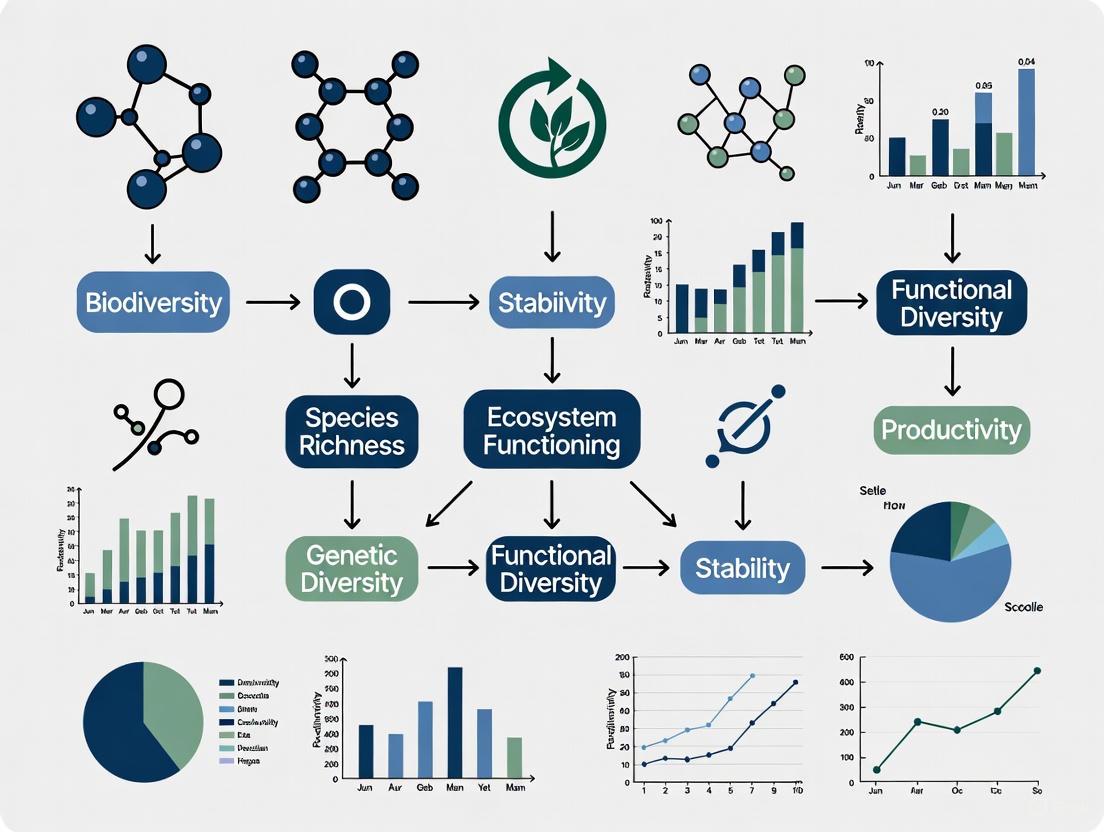
This article synthesizes current scientific understanding of the relationship between biodiversity and ecosystem functioning, with a specific focus on implications for biomedical research and drug discovery.
Biodiversity as a Biomedical Foundation: Linking Ecosystem Function to Drug Discovery and Human Health
Abstract
This article synthesizes current scientific understanding of the relationship between biodiversity and ecosystem functioning, with a specific focus on implications for biomedical research and drug discovery. It explores the fundamental mechanisms by which biological diversity underpins ecosystem stability, productivity, and services essential to human health. The content examines methodological approaches for studying these relationships, analyzes threats posed by biodiversity loss to medical resources, and evaluates strategies for ecosystem restoration and conservation. Designed for researchers, scientists, and drug development professionals, this review highlights the critical interdependence between healthy, functioning ecosystems and the advancement of medical science, proposing integrated frameworks for sustainable discovery.
The Pillars of Stability: How Biodiversity Underpins Ecosystem Functioning and Services
The relationship between biodiversity and ecosystem functioning (BEF) stands as a cornerstone of modern ecological research. This relationship extends beyond simple species counts to encompass multiple levels of biological organization, from the genetic variation within populations to the composition of landscape ecosystems. Understanding these connections is crucial for predicting ecosystem responses to anthropogenic changes and for developing effective conservation strategies. This technical guide synthesizes current knowledge on BEF relationships across genetic, species, and landscape levels, providing researchers with a comprehensive framework for studying these critical ecological interactions.
Biodiversity and Ecosystem Functioning Across Organizational Levels
Genetic Diversity and Ecosystem Functioning
At the most fundamental level, intraspecific genetic diversity represents the heritable variation within populations of a single species. Research has demonstrated that this level of diversity has substantial effects on ecosystem functions comparable in magnitude to those of species diversity [1].
A 2025 study of natural aquatic ecosystems revealed that the absolute effect size of genetic diversity on ecosystem functions mirrors that of species diversity in natural settings. The investigation across three trophic levels—primary producers, primary consumers, and secondary consumers—demonstrated that genetic diversity positively correlates with various ecosystem functions, including biomass production and organic matter degradation. This relationship persisted across all trophic levels but was apparent only when BEF relationships were assessed within trophic levels rather than across them [1].
Table 1: Key Studies on Genetic Diversity and Ecosystem Functioning
| Study System | Trophic Levels | Key Findings | Reference |
|---|---|---|---|
| Natural aquatic ecosystems | Primary producers, primary consumers, secondary consumers | Genetic diversity effects match species diversity effects in magnitude; Positive correlation with biomass production and decomposition | Fargeot et al., 2025 [1] |
| Plant populations | Primary producers | Genetic diversity affects productivity and stability | Raffard et al., 2019 [1] |
| Animal populations | Primary & secondary consumers | Genetic diversity influences resource use efficiency and trophic interactions | Blanchet et al., 2020 [1] |
Figure 1: Relationship between genetic diversity and ecosystem functioning, showing key mechanisms and outcomes.
Species Diversity and Ecosystem Functioning
The relationship between species diversity and ecosystem functioning has been extensively documented through hundreds of experiments and observational studies. A systematic review of 530 studies found that the majority of relationships between biodiversity attributes and ecosystem services were positive, though highly complex and service-dependent [2].
Functional traits such as richness and diversity display predominantly positive relationships across ecosystem services, most commonly discussed for atmospheric regulation, pest regulation, and pollination. Species-level traits benefit numerous ecosystem services, with species abundance being particularly important for pest regulation, pollination, and recreation, and species richness for timber production and freshwater fishing [2].
Table 2: Species Diversity Relationships with Key Ecosystem Services
| Ecosystem Service | Key Biodiversity Attributes | Relationship Strength | Notable Mechanisms |
|---|---|---|---|
| Atmospheric regulation | Functional trait richness | Strong positive | Complementarity in resource use |
| Pest regulation | Species abundance | Strong positive | Predator-prey dynamics |
| Pollination | Species abundance, functional diversity | Strong positive | Niche partitioning, temporal complementarity |
| Water quality regulation | Community and habitat area | Positive | Filtration, nutrient uptake |
| Timber production | Species richness | Positive | Growth facilitation, disease resistance |
| Freshwater provision | Multiple attributes | Variable/negative in some cases | Competitive interactions |
Landscape Diversity and Ecosystem Functioning
At broader spatial scales, landscape diversity—measured as the variety of ecosystem or land-cover types within a landscape—emerges as a critical factor influencing ecosystem functioning. A 2025 continental-scale study across North America demonstrated that landscape-level diversity is positively related to landscape-wide primary production across 16 of 18 ecoregions [3].
This research found that at higher landscape diversity, productivity was temporally more stable, and 20-year greening trends were accelerated. These effects occurred independent of local species diversity, suggesting emergent mechanisms at the landscape level of biological organization. Specifically, mechanisms related to interactions among land-cover types unfold at the scale of entire landscapes, similar to interactions between species within single ecosystems [3].
Scale Dependence in Biodiversity-Ecosystem Functioning Relationships
The BEF relationship is fundamentally scale-dependent, with the strength and nature of the relationship varying across spatial and temporal scales. Theoretical frameworks predict that the number of species required to maintain ecosystem functioning increases with spatial and temporal scale because species vary in the conditions where they are productive [4].
Environmental autocorrelation—the rate of decay in environmental similarity in time or space—mediates this scale dependence. Low autocorrelation defines high rates of environmental change over short durations or distances, resulting in rapid decay in environmental similarity and higher species turnover. Both spatial and temporal environmental heterogeneity lead to scale dependence in BEF, but autocorrelation has larger impacts when environmental change is temporal [4].
Figure 2: Scale dependence in biodiversity-ecosystem functioning relationships, showing how environmental heterogeneity and autocorrelation influence BEF across spatial and temporal scales.
Methodological Approaches and Experimental Protocols
Field-Based BEF Assessment Across Trophic Levels
Recent advances in BEF research involve comprehensive field studies that quantify both species and genetic diversity across multiple trophic levels. The protocol developed by Fargeot et al. (2025) provides a robust framework for such assessments [1]:
- Site Selection: Identify natural ecosystems representing gradients of environmental conditions
- Trophic Level Delineation: Define three distinct trophic levels (e.g., riparian trees as primary producers, macroinvertebrate shredders as primary consumers, and fish as secondary consumers)
- Biodiversity Quantification:
- Species diversity: Comprehensive surveys of community composition within each trophic level
- Genetic diversity: Genome-wide diversity assessment of target dominant species within each trophic level using molecular markers
- Ecosystem Function Measurement: Quantify multiple ecosystem functions including:
- Primary production (biomass accumulation)
- Decomposition rates (leaf litter breakdown)
- Trophic transfer efficiency
- Nutrient cycling rates
- Causal Modeling: Employ structural equation modeling to disentangle direct and indirect effects of environment and biodiversity on ecosystem functions
Continental-Scale Landscape Diversity Assessment
The protocol for assessing landscape diversity effects on continental scales involves [3]:
- Spatial Delineation: Divide the study region (e.g., North America) into standardized landscape units (250 × 250 m entities)
- Land-Cover Classification: Use high-resolution (30-m) land-cover maps to classify ecosystem types within each landscape unit
- Quasi-Experimental Design:
- Block the continent into 3° latitude × 6° longitude tiles within ecoregions
- Construct replicated land-cover richness gradients within each block
- Use stochastic optimization to decorrelate land-cover richness from abiotic drivers of productivity
- Productivity Monitoring: Utilize remote sensing data (MODIS Enhanced Vegetation Index) over multi-decadal periods (2000-2019)
- Statistical Analysis: Calculate net diversity effects using the relative yield method comparing observed productivity in mixed landscapes to expectations from single land-cover type landscapes
Experimental Scale Manipulation Protocols
To explicitly test scale dependence in BEF relationships, researchers have developed simulation approaches that manipulate environmental heterogeneity [4]:
- Community Simulation: Implement Lotka-Volterra competitive communities with environmentally-dependent growth rates
- Environmental Gradient Creation: Generate sequences of environmental heterogeneity with controlled autocorrelation levels (low, medium, high)
- Species Pool Establishment: Create regional species pools with species having different environmental optima
- Scale Assessment: Measure BEF relationships at multiple spatial and temporal scales within the simulated landscapes
- Sensitivity Analysis: Test robustness of results to variations in competition coefficients, dispersal rates, and environmental parameters
The Scientist's Toolkit: Essential Research Reagents and Materials
Table 3: Essential Research Materials for BEF Studies Across Organizational Levels
| Research Material | Application Context | Specific Function | Technical Considerations |
|---|---|---|---|
| Molecular Markers (SNPs, microsatellites) | Genetic diversity assessment | Genome-wide diversity estimation in target species | Requires tissue sampling; Bioinformatics expertise needed |
| Remote Sensing Data (MODIS EVI, Landsat) | Landscape-level studies | Continental-scale productivity monitoring | 250-m resolution sufficient for landscape assessments |
| Environmental DNA (eDNA) kits | Biodiversity assessment | Non-invasive species detection | Particularly useful for aquatic systems and elusive species |
| Leaf Litter Bags | Decomposition studies | Standardized measurement of decomposition rates | Mesh size determines decomposer access |
| Hemispherical Photography | Canopy structure assessment | Light interception estimation | Requires standardized lighting conditions |
| Stable Isotopes (¹⁵N, ¹³C) | Trophic interaction studies | Food web structure and nutrient flow tracing | Laboratory processing required |
| Soil Nutrient Probes | Ecosystem process monitoring | In situ measurement of nutrient availability | Calibration against laboratory methods necessary |
| Climate Data Loggers | Environmental monitoring | Microclimate characterization | Long-term deployment requires weather protection |
Research Gaps and Future Directions
Despite significant advances in BEF research, important gaps remain. Most BEF studies have focused on single trophic levels, while natural ecosystems feature complex multi-trophic interactions. Future research should prioritize multi-trophic BEF studies that examine how diversity effects propagate across food webs [1] [4].
The integration between BEF experiments and real-world ecosystems represents another critical frontier. While experimental studies have established causal mechanisms, their applicability to real-world conservation and management decisions remains limited [5] [6]. Future work should build on realistic management scenarios and involve stakeholders in research design to enhance practical relevance.
Additionally, the combined effects of genetic and species diversity loss may have non-additive consequences for ecosystem dynamics, yet our understanding of these interactive effects remains limited [1]. Studies that simultaneously manipulate both genetic and species diversity under realistic field conditions are needed to predict the consequences of biodiversity loss as a whole.
Biodiversity-ecosystem functioning relationships manifest across multiple levels of biological organization, from genetic diversity within populations to landscape diversity encompassing multiple ecosystems. At each level, biodiversity generally promotes enhanced and more stable ecosystem functioning, though these relationships are complex and scale-dependent. Understanding these multi-level relationships is crucial for predicting how ongoing biodiversity change will affect ecosystem services essential to human well-being. Future research that integrates across genetic, species, and landscape levels while embracing the complexity of real-world ecosystems will provide the evidence base needed for effective conservation and management decisions.
The quest to understand the relationship between biodiversity and ecosystem functioning (BEF) represents a central theme in ecology, driven by the urgent need to predict the consequences of accelerating species losses. Mechanistic models that elucidate the processes governing resource competition and niche complementarity provide the foundational framework for this understanding. By moving beyond descriptive correlations to capture the causal mechanisms through which species interact with their environment and each other, these models offer powerful predictive capabilities across changing environmental contexts [7]. This technical guide synthesizes core principles, recent empirical validations, and methodological protocols for mechanistic approaches to BEF research, with particular emphasis on consumer-resource dynamics and niche theory.
The mechanistic approach to BEF relationships posits that ecosystem functioning is determined by how coexisting species capture and utilize essential resources. Early theoretical work established that plant species richness could enhance ecosystem processes like biomass production and nutrient retention through two primary mechanisms: complementarity among species in their spatial resource acquisition and positive correlation between diversity and mean resource-use intensity [7]. These theoretical insights have since been refined and empirically tested, revealing the complex interplay between resource type, competitive abilities, and phenotypic plasticity in structuring diverse communities.
Theoretical Foundations of Consumer-Resource Models
Core Framework and Governing Equations
Mechanistic consumer-resource models, formularized from MacArthur's pioneering work, describe how species consume and convert shared resources, thereby competing for limited environmental assets [8]. This approach was substantially advanced by Tilman, who identified two fundamental rules for stable species coexistence [8]:
- Differential Resource Limitation: Each species must be limited by different resources; otherwise, a competitively superior species with the lowest resource requirements will exclude others.
- Consumption-Requirement Alignment: Each species must consume more of the resource that most limits its own growth.
These rules can be expressed mathematically through a series of equations that govern population dynamics and resource consumption. The core framework involves modeling the growth rate of each species as a function of resource availability, and the depletion rate of each resource as a function of consumer abundance.
For essential resources (e.g., nitrogen and phosphorus), where each resource is independently limiting, the growth response of a species ( i ) follows Liebig's law of the minimum:
[ \frac{dNi}{dt} = Ni \cdot \mui \cdot \min \left[ f1(R1), f2(R2), ..., fn(Rn) \right] - mi N_i ]
where ( Ni ) is the population density of species ( i ), ( \mui ) is its maximum growth rate, ( fj(Rj) ) is the growth response to resource ( j ), ( Rj ) is the concentration of resource ( j ), and ( mi ) is the mortality rate.
For substitutable resources (e.g., different nitrogen forms such as nitrate and ammonium), where one resource can replace another, the growth response follows a multiplicative or additive model:
[ \frac{dNi}{dt} = Ni \cdot \mui \cdot \left( \sum{j=1}^{n} fj(Rj) \right) - mi Ni ]
Resource consumption is modeled as:
[ \frac{dRj}{dt} = Sj - dj Rj - \sum{i=1}^{s} \frac{Ni \cdot c{ij} \cdot fj(Rj)}{y{ij}} ]
where ( Sj ) is the supply rate of resource ( j ), ( dj ) is its loss rate, ( c{ij} ) is the consumption rate of resource ( j ) by species ( i ), ( y{ij} ) is the yield of species ( i ) per unit of resource ( j ) consumed, and ( s ) is the number of species.
The following diagram illustrates the fundamental structure and relationships within this consumer-resource framework:
Niche Complementarity Mechanisms
Niche complementarity enhances ecosystem functioning by allowing more diverse communities to collectively exploit a broader range of resources than any single species could alone. The mechanistic model proposed by Loreau identifies two distinct pathways for this effect [7]:
- Spatial Complementarity: Species partition belowground space, reducing competition for patchily distributed resources.
- Diversity-Intensity Correlation: Positive correlation between diversity and mean resource-use intensity across species.
Complementarity can arise through both fixed niche differences and phenotypic plasticity. Research on alpine plant communities demonstrates that competitively superior species exhibit high resource use plasticity, increasing their uptake of the most available nitrogen form (ammonium) when in competition with inferior species [9]. This dominant plasticity mechanism allows species to adjust their resource use based on the competitive environment, enabling coexistence without fixed niche differentiation.
Experimental Validation and Predictive Accuracy
Empirical Testing with Phytoplankton Communities
A comprehensive experimental test of the mechanistic approach examined 12 phytoplankton species competing in 960 communities across varying species richness (2, 3, 4, or 6 species) and resource conditions (essential vs. substitutable resources) [8]. The study quantified resource requirement and consumption for each species in monoculture using Bayesian modeling, then predicted community composition in competitive scenarios.
Table 1: Predictive Accuracy of Mechanistic Model Across Community Types
| Community Type | Mean Prediction Accuracy (%) | Comparison to Null Model (%) |
|---|---|---|
| All Communities | 83.4 | +29.9 |
| Two-Species Communities | >84.0 | +30.5 |
| Six-Species Communities | ~74.0 | +20.5 |
| Novel Environmental Conditions | No Significant Difference | Robust Prediction |
The mechanistic model achieved significantly higher predictive accuracy (83.4%) compared to a null model (53.5%) that randomly shuffled species relative abundances [8]. This predictive power remained robust across resource conditions, including novel environments not assessed in monocultures, demonstrating the approach's transferability. Accuracy was maintained across species richness levels, though it decreased slightly in six-species communities, potentially due to alternative stable states and perturbation-induced transitions between states.
Compliance with Tilman's Coexistence Rules
The experimental data revealed striking differences in coexistence probability depending on resource type [8]:
Table 2: Compliance with Tilman's Coexistence Rules by Resource Type
| Coexistence Requirement | Essential Resources (NO₃⁻ & P) | Substitutable Resources (NO₃⁻ & NH₄⁺) |
|---|---|---|
| Rule 1: Different Limiting Resources | 30.3% of species pairs | 37.9% of species pairs |
| Rule 2: Consumption-Requirement Alignment | 40.0% of compliant pairs | 60.0% of compliant pairs |
| Overall Stable Coexistence | 12.1% of species pairs | 22.7% of species pairs |
These results indicate a higher probability of stable coexistence when species compete for substitutable resources, particularly due to better fulfillment of the second rule requiring alignment between consumption patterns and growth limitations [8]. Simulation studies confirmed these experimental findings, showing that while resource type did not significantly affect compliance with the first rule, it substantially influenced satisfaction of the second rule.
The experimental workflow for parameterizing and validating the consumer-resource model involves the following stages:
Methodological Protocols
Resource Requirement and Consumption Quantification
Experimental Setup for Monoculture Growth Assays
- Organisms: 12 phytoplankton species (freshwater green algae) selected for controlled, scalable experimentation with minimal cross-feeding interactions [8].
- Resource Gradients: Grow species across 12 concentrations of nitrate (NO₃⁻), ammonium (NH₄⁺), or phosphorus (P), while maintaining all other nutrients in non-limiting concentrations.
- Growth Monitoring: Track daily growth rates over four days (approximately zero to eight generations, depending on resource concentrations) using standardized metrics (optical density, cell counts).
- Environmental Control: Maintain constant light intensity, temperature, and photoperiod to isolate resource effects.
Parameter Estimation via Bayesian Modeling
- Model Structure: Fit consumer-resource model to growth data and initial resource concentrations using Bayesian inference.
- Parameter Estimation: Quantify for each species: (1) minimum resource requirements (R* values), (2) maximum growth rates (μₘₐₓ), (3) resource consumption rates (cᵢⱼ), and (4) growth yields per unit resource (yᵢⱼ).
- Monte Carlo Methods: Implement Markov Chain Monte Carlo sampling to estimate posterior distributions of parameters, incorporating uncertainty in measurements.
Community Assembly Experiments
Competition Protocol
- Community Richness Levels: Assemble communities with 2, 3, 4, or 6 species in semi-continuous cultures with regular dilution to maintain exponential growth phase.
- Resource Ratios: Implement competition under different ratios of: (1) two essential resources (NO₃⁻ and P), and (2) two substitutable resources (NO₃⁻ and NH₄⁺).
- Temporal Monitoring: Track community composition over 12 days (approximately 24 generations) to capture dynamics and equilibrium states.
Automated Composition Analysis
- Imaging Pipeline: Integrate high-content microscopy with automated image acquisition at regular intervals.
- Machine Learning Classification: Implement convolutional neural networks or vision transformers trained on morphological features to distinguish species in mixed cultures.
- Abundance Quantification: Calculate relative abundances from classification outputs, validated against manual counts.
Coexistence Rule Verification
Rule 1 Assessment (Differential Limitation)
- Method: Determine limiting resources for each species pair by comparing R* values and resource requirements.
- Calculation: Species pair meets Rule 1 if each species has a lower R* for a different resource when in competition.
Rule 2 Assessment (Consumption-Requirement Alignment)
- Method: Compare consumption rates for each resource with growth limitations.
- Calculation: For each species in a pair, verify that consumption is higher for the resource that more strongly limits its growth.
Research Toolkit: Essential Reagents and Methodologies
Table 3: Key Research Reagents and Methodological Solutions
| Reagent/Method | Function in Mechanistic BEF Research | Application Example |
|---|---|---|
| ¹⁵N Isotope Tracers | Quantify uptake patterns of different nitrogen forms (NO₃⁻, NH₄⁺, organic N) | Measuring niche complementarity due to plasticity in resource use [9] |
| Bayesian Modeling Framework | Parameterize resource requirement and consumption rates from monoculture data | Predicting community composition from monoculture parameters [8] |
| High-Content Microscopy | Automated imaging and tracking of community composition over time | Long-term monitoring of species relative abundances in mixed cultures [8] |
| Machine Learning Classification | Species identification and abundance quantification in mixed communities | Automated analysis of phytoplankton community composition [8] |
| Semi-Continuous Culture Systems | Maintain steady-state growth conditions while controlling resource supply | Experimental testing of competition under controlled resource regimes [8] |
| Consumer-Resource Model | Theoretical framework linking resource consumption to population dynamics | Predicting species coexistence and ecosystem functioning [7] [8] |
Mechanistic models based on resource competition and niche complementarity provide a powerful framework for predicting biodiversity-ecosystem functioning relationships across environmental contexts and community compositions. The empirical validation of these models demonstrates their superior predictive accuracy compared to phenomenological approaches, while revealing how resource type fundamentally influences coexistence probabilities. The methodological protocols outlined herein enable researchers to parameterize, test, and apply these models across diverse systems, offering a rigorous approach to forecasting ecosystem responses to biodiversity change. As biodiversity conservation gains prominence in global policy frameworks like the Kunming-Montreal Global Biodiversity Framework [10], these mechanistic understanding becomes increasingly vital for informing effective conservation strategies and sustainable ecosystem management.
The intricate relationship between biodiversity, ecosystem functioning, and human health represents a critical frontier in ecological and biomedical research. The concept of ecosystem services—defined as the benefits people obtain from ecosystems—provides a comprehensive framework for understanding and quantifying nature's contributions to human health and wellbeing [11] [12]. These services, categorized into four interdependent types (provisioning, regulating, cultural, and supporting), form the foundation upon which human health security is built [13] [11]. The Millennium Ecosystem Assessment (MA) established this classification system, clarifying the many kinds of benefits humans derive from ecosystems and documenting that over 60% of these essential services were deteriorating or already overused at a global scale [13].
For researchers and drug development professionals, understanding these relationships is not merely an academic exercise but a practical necessity for sustainable medical advancement. Biodiversity constitutes the "library" from which novel pharmaceutical compounds are discovered, with evolution serving as the ultimate problem-solver through three billion years of trial and error [14]. The ongoing loss of biodiversity—at rates 100 to 1000 times greater than background extinction rates—represents both a crisis and an opportunity for the scientific community to document, preserve, and utilize biological resources before they are permanently lost [14] [12]. This whitepaper examines the four categories of ecosystem services through the lens of human health, with particular emphasis on their implications for pharmaceutical research and development.
The Four Categories of Ecosystem Services
Provisioning Services: Nature's Pharmacy
Provisioning services encompass the direct material benefits humans obtain from ecosystems, including food, fresh water, fuel, fiber, and medicinal resources [11] [12]. From a health perspective, this category represents the most tangible connection between biodiversity and human wellbeing, serving as the primary source for both traditional remedies and modern pharmaceutical development.
The pharmaceutical dependence on biological resources is staggering: approximately 80% of registered medicines come from plants or have been inspired by natural products [15]. Iconic examples include aspirin derived from willow bark, cancer drugs from the Madagascar periwinkle, and countless other therapeutic agents sourced from biological compounds honed through millions of years of evolution [14] [16]. Research suggests that the marine environment alone may contain an estimated $563 billion to $5.69 trillion in potential cancer medicines awaiting discovery [15]. The irreversible loss of species represents not just an ecological tragedy but a pharmaceutical crisis—according to some estimates, our planet is losing at least one important drug every two years [14].
Table 1: Key Medicinal Compounds Derived from Biological Resources
| Source Organism | Medicinal Compound | Therapeutic Application |
|---|---|---|
| Willow bark (Salix spp.) | Salicin (Aspirin) | Pain relief, anti-inflammatory |
| Madagascar periwinkle (Catharanthus roseus) | Vincristine, Vinblastine | Cancer chemotherapy |
| Pacific yew (Taxus brevifolia) | Paclitaxel | Ovarian, breast cancer treatment |
| Penicillin mold (Penicillium spp.) | Penicillin | Antibiotic |
| Cone snail (Conus spp.) | Ziconotide | Severe chronic pain management |
The sustainable development of natural products faces significant challenges, including access and benefit-sharing considerations under frameworks like the Nagoya Protocol, which aims to ensure equitable distribution of benefits from drug discoveries [15]. For drug development professionals, this necessitates establishing ethical collaboration models with indigenous communities who hold traditional knowledge about medicinal species, while simultaneously developing standardized protocols for natural product collection, analysis, and conservation [14].
Regulating Services: Nature's Protective Systems
Regulating services consist of the benefits obtained from ecosystem processes that moderate natural phenomena, including pollination, water purification, climate regulation, disease control, and erosion prevention [11] [12]. These services operate as nature's protective infrastructure, maintaining environmental conditions conducive to human health and preventing the emergence and spread of diseases.
Soil biodiversity provides exemplary insight into regulating services with direct health implications. Soil biota contribute significantly to water purification through filtration and bioremediation processes, with current estimates valuing the contribution of soil biota to global ecosystem services at 1.5 to 13 trillion US Dollars annually [12]. The functional groups within soil ecosystems—including decomposers, elemental transformers, and microregulators—collectively perform essential services such as nutrient cycling, pathogen suppression, and climate regulation through carbon sequestration [12]. These processes have direct and indirect health benefits, from preventing waterborne diseases to supporting agricultural productivity that underpins nutritional security.
Disease regulation represents another critical aspect of regulating services. Intact ecosystems help control infectious diseases by maintaining balanced predator-prey relationships, supporting biodiversity that dilutes the effects of reservoir species, and reducing human-wildlife contact that facilitates zoonotic spillover events [12]. The COVID-19 pandemic has starkly illustrated the health consequences of ecosystem disruption, exposing how habitat degradation can increase pandemic risks while simultaneously reducing pharmaceutical options for response [15].
Table 2: Health-Relevant Regulating Services and Their Mechanisms
| Regulating Service | Ecosystem Mechanisms | Health Benefits |
|---|---|---|
| Climate regulation | Carbon sequestration, evapotranspiration | Reduced heat stress, respiratory illnesses from air pollution |
| Disease control | Predator-prey dynamics, biodiversity dilution effect | Reduced incidence of vector-borne diseases |
| Water purification | Soil filtration, microbial decomposition | Lower rates of waterborne diseases |
| Pollination | Insect, bird, bat pollination services | Enhanced food security and nutritional diversity |
| Flood & erosion control | Vegetative buffer, soil structure maintenance | Reduced mortality and injury from natural disasters |
Cultural Services: Nature's Contribution to Mental and Cultural Wellbeing
Cultural services encompass the non-material benefits people obtain from ecosystems through spiritual enrichment, cognitive development, reflection, recreation, and aesthetic experiences [11] [12]. These services contribute significantly to mental health, cultural preservation, and social wellbeing, though they are often the most challenging to quantify in health outcomes research.
The mental health benefits of interaction with natural environments are increasingly recognized in public health research, with evidence suggesting that access to biodiverse ecosystems can reduce stress, improve cognitive function, and enhance overall quality of life [11] [16]. The cultural services provided by ecosystems have guided human "cultural, intellectual, and social development by being a constant force present in our lives," with ancient civilizations documenting their relationships with nature through cave art and continuing through contemporary expressions in music, art, and architecture [11].
For healthcare professionals and researchers, understanding these connections provides opportunities for developing nature-based interventions for mental health conditions and chronic diseases. The cultural services of ecosystems also play a crucial role in supporting traditional healthcare systems that incorporate spiritual and cultural elements, particularly among indigenous communities whose medical knowledge is often inextricably linked to their ecological context [14] [16].
Supporting Services: Nature's Foundational Processes
Supporting services include ecosystem processes that maintain the conditions for life on Earth, such as soil formation, photosynthesis, nutrient cycling, and the water cycle [11] [12]. These services provide the fundamental groundwork upon which all other ecosystem services depend, making them essential for long-term health security.
The nutrient cycling services provided by soil biota offer a prime example of these foundational processes. Soil organisms, including bacteria, fungi, earthworms, and microarthropods, perform essential functions in decomposing organic matter, recycling nutrients, and creating soil structure that supports plant growth [12]. These processes directly influence human health through their impact on food production systems—approximately 94% and 99% of our intake of protein and calories, respectively, originate from cultivated systems that depend on these supporting services [12].
Research into the relationship between biodiversity and ecosystem functioning has demonstrated that increased species richness generally leads to greater productivity, enhanced nutrient retention, and greater stability in ecosystems [12] [2]. A systematic review of 530 studies found that the majority of relationships between biodiversity attributes and ecosystem services were positive, with functional traits such as richness and diversity displaying predominantly positive relationships across services, particularly for atmospheric regulation, pest regulation, and pollination [2]. This evidence base underscores the health importance of maintaining biodiverse ecosystems as functional systems rather than simply preserving individual species.
Research Methodologies and Experimental Approaches
Standardized Protocols for Biodiversity-Ecosystem Function Research
Research investigating the links between biodiversity and ecosystem services requires standardized methodological approaches to enable cross-study comparisons and meta-analyses. The following experimental protocols represent established methodologies in the field.
Biodiversity-Manipulation Experiments: These experiments typically involve manipulating species richness across experimental plots while controlling for environmental covariates. The Jena Experiment and BIODEPTH project represent large-scale examples that have generated foundational knowledge about plant diversity effects on ecosystem processes [2]. Standard protocol includes: (1) establishing a gradient of species richness through random assembly from a regional species pool; (2) measuring ecosystem processes including primary productivity, nutrient retention, and decomposition rates; (3) statistical analysis using linear mixed effects models to partition variance among biodiversity components.
Functional Trait Measurements: Assessing functional diversity rather than just taxonomic diversity provides mechanistic understanding of biodiversity-ecoservice relationships. Standard measurements include: (1) cataloging functional traits relevant to specific ecosystem processes (e.g., specific leaf area for productivity, nitrogen fixation ability for nutrient cycling); (2) quantifying functional diversity indices (Functional Richness, Evenness, Divergence); (3) linking trait diversity to ecosystem process rates through structural equation modeling.
Molecular Techniques for Soil Biodiversity Assessment: Soil biodiversity represents a critical yet understudied component of ecosystem functioning. Standard approaches include: (1) DNA metabarcoding of soil samples using universal primer sets (e.g., 16S rRNA for bacteria, ITS for fungi, 18S rRNA for microeukaryotes); (2) quantitative PCR to assess abundance of functional genes involved in nutrient cycling; (3) bioinformatics pipelines (QIIME2, MOTHUR) for processing sequencing data and assigning taxonomy.
Conceptual Framework: Biodiversity-Ecosystem Service Relationships
The relationship between biodiversity and ecosystem services can be visualized through a conceptual framework that integrates the hierarchical nature of biodiversity organization and its influence on health-relevant ecosystem services. The following DOT script generates a diagram illustrating these complex relationships:
Diagram Title: Biodiversity-Ecosystem Service-Health Nexus
This conceptual model illustrates the multifaceted relationships between different biodiversity attributes (genetic, species, functional, ecosystem) and the four categories of ecosystem services, ultimately contributing to critical human health outcomes. The framework highlights how medical advances derived from biodiversity can create positive feedback loops through conservation funding.
Essential Research Reagents and Methodologies
Table 3: Essential Research Reagents and Methodologies for Biodiversity-Ecosystem Function Studies
| Research Category | Essential Reagents/Methods | Application in Ecosystem Service Research |
|---|---|---|
| DNA Metabarcoding | Universal primers (16S, 18S, ITS), DNA extraction kits, high-throughput sequencers | Characterization of soil and aquatic microbial communities involved in nutrient cycling and decomposition |
| Functional Trait Measurements | Leaf area meters, chlorophyll meters, root scanners, stable isotope analyzers | Quantification of plant functional diversity linked to primary productivity and carbon sequestration |
| Metabolomics | LC-MS/MS systems, NMR spectroscopy, bioinformatics platforms | Identification of bioactive compounds in medicinal plants and their therapeutic potential |
| Remote Sensing | Multispectral sensors, LIDAR, drones with high-resolution cameras | Landscape-scale assessment of habitat connectivity, ecosystem integrity, and restoration success |
| Experimental Mesocosms | Controlled environment chambers, aquatic microcosms, soil lysimeters | Manipulative experiments testing biodiversity-ecosystem function relationships under controlled conditions |
Discussion: Research Gaps and Future Directions
The relationship between biodiversity, ecosystem functioning, and human health presents several critical research priorities for the scientific community. First, there is an urgent need to standardize biodiversity metrics across studies to enable meaningful comparisons and meta-analyses. The development and adoption of Essential Biodiversity Variables (EBVs) provides a promising framework for creating interoperable data collection and reporting standards [17]. Second, the mechanistic pathways linking biodiversity attributes to specific health outcomes remain inadequately characterized, particularly for regulating and cultural services. Research integrating molecular techniques, ecological monitoring, and epidemiological methods is needed to elucidate these pathways.
From a drug discovery perspective, the rapid erosion of biodiversity represents both a crisis and a narrowing window of opportunity. With modern extinction rates estimated at 100-1000 times background levels, we are potentially losing invaluable pharmaceutical resources before they can be documented and studied [14] [12]. This reality necessitates urgent development of systematic bioprospecting approaches that integrate traditional knowledge with modern screening technologies, while ensuring equitable benefit-sharing with source countries and communities through implementation of the Nagoya Protocol [14] [15].
Future research should prioritize multidisciplinary consortia that bridge ecology, pharmaceutical science, and public health. Initiatives like the Bio2Bio (Biodiversity-to-Biomedicine) consortium represent promising models for promoting knowledge exchange across disciplines and borders while developing unified frameworks for sustainable drug discovery from natural products [14]. Such collaborations are essential for addressing the complex challenges at the intersection of biodiversity conservation and human health advancement.
Ecosystem services—categorized as provisioning, regulating, cultural, and supporting—represent fundamental pillars supporting human health and wellbeing. For researchers and drug development professionals, understanding these connections is not merely an academic concern but a practical imperative. The continuing loss of biodiversity undermines the ecological foundation upon which medical advances and health security depend. Protecting this biological infrastructure requires integrated approaches that combine cutting-edge research with traditional knowledge, ethical frameworks for resource use, and policy mechanisms that recognize the health value of intact ecosystems. As we advance technologically, we must not forget that nature remains the ultimate chemist and pharmacologist, with evolutionary processes having conducted three billion years of research and development from which we have only begun to learn.
The concept of "biodiversity as biological insurance" represents a cornerstone in modern ecology, formalizing the critical role species diversity plays in stabilizing ecosystem functioning against environmental fluctuations. This hypothesis, first mathematically formalized by Yachi and Loreau (1999), posits that aggregate ecosystem properties vary less in more diverse communities because declines in some species are offset by increases or stable performance of others [18]. This insurance effect emerges from two distinct mechanisms: a buffering effect (increased temporal stability of ecosystem properties) and a performance-enhancing effect (increased mean level of ecosystem properties when best-performing species are favored under different conditions) [18].
Three decades of research have demonstrated that biodiversity can promote the functioning of ecosystems, but only recently have researchers systematically examined whether these positive effects persist under various global environmental change drivers [19]. This whitepaper synthesizes current scientific understanding of biodiversity's insurance role, with particular emphasis on implications for pharmaceutical research and development where ecosystem stability directly impacts discovery pipelines and natural product sourcing.
Theoretical Framework and Mechanisms
Conceptual Foundations
Biological insurance theory has roots in multiple disciplines. From economics, portfolio theory demonstrates that diversifying assets reduces financial risk [18]. Similarly, biodiversity provides natural insurance against environmental variability. From cybernetics, Ashby's Law of Requisite Variety postulates that regulating a system requires sufficient response diversity to counter disturbances [18]. Ecological research has expanded these concepts to demonstrate how species-rich communities maintain more stable ecosystem services through multiple mechanisms.
The theoretical framework encompasses several interconnected concepts:
- Spatial Insurance: Compensatory dynamics across spatially connected communities enhance metacommunity stability
- Delayed Selection Effect: Biodiversity maintenance enables selection of best-performing species under future conditions
- Catastrophe Avoidance: Biodiversity prevents catastrophic declines by maintaining species resistant to major disturbances
- Complementarity Effect: Niche differentiation among species enhances overall ecosystem performance
Key Mechanistic Pathways
The insurance function of biodiversity operates through two primary mechanistic pathways that stabilize ecosystem functioning:
Figure 1: Conceptual framework illustrating how biodiversity enhances ecosystem resilience through complementarity and selection effects
The complementarity effect arises from interspecific niche partitioning or facilitation, where species differ in their resource use or environmental responses, creating more efficient overall ecosystem functioning [19]. The selection effect occurs when diverse communities have a higher probability of containing species with particular traits that confer stability under specific environmental conditions [19] [18]. Under environmental stress, these mechanisms can be enhanced as species interactions may switch from competition to facilitation, and stress-tolerant species become dominant [19].
Quantitative Evidence from Experimental Studies
Meta-Analytical Findings
A comprehensive meta-analysis of 46 factorial experiments manipulating both species richness and environmental drivers provides robust quantitative evidence for biodiversity's insurance function [19]. These studies spanned multiple taxonomic groups (microbes, phytoplankton, and plants) and investigated various global change drivers (warming, drought, nutrient addition, and CO₂ enrichment).
Table 1: Biodiversity Effects on Ecosystem Functioning Across Environmental Conditions
| Environmental Condition | Taxonomic Group | Mean Biodiversity Effect Size | Response to Environmental Change | Key Mechanisms |
|---|---|---|---|---|
| Ambient (Control) | All groups | Positive | Baseline reference | Complementarity & Selection |
| Warming | Microbes | Enhanced ↑ | Strengthened effect | Increased selection of heat-tolerant taxa |
| Warming | Phytoplankton | Enhanced ↑ | Strengthened effect | Shift in species dominance |
| Warming | Plants | Variable | No consistent change | Context-dependent responses |
| Drought | Plants | Enhanced ↑ | Strengthened effect | Increased complementarity via facilitation |
| Nutrient Addition | Plants | Reduced ↓ | Weakened effect | Reduced niche differentiation |
| CO₂ Enrichment | Plants | Reduced ↓ | Weakened effect | Altered competitive hierarchies |
The analysis revealed that biodiversity increased ecosystem functioning in both ambient and manipulated environments, but often not to the same degree [19]. Crucially, biodiversity effects on ecosystem functioning were frequently larger in stressful environments induced by global change drivers, indicating that high-diversity communities were more resistant to environmental change [19]. This pattern was particularly strong for drought conditions in plant communities, where biodiversity effects strengthened significantly.
Temporal Dynamics of Insurance Effects
The insurance value of biodiversity often increases over time. Using a subset of studies, researchers found that positive biodiversity effects strengthened temporally in both ambient and manipulated environments [19]. This temporal enhancement was mainly driven by interspecific complementarity, suggesting that ecological interactions among species become more optimized and efficient over time, much like a well-diversified financial portfolio performing better across market cycles.
Experimental Methodologies for Quantifying Insurance Effects
Standardized Factorial Design Protocol
To test biodiversity insurance effects against environmental fluctuations, researchers have developed robust experimental protocols employing factorial designs:
Step 1: Experimental Unit Establishment
- Create replicated monocultures and mixtures spanning a gradient of species richness (typically 1, 2, 4, 8, 16... species)
- Ensure appropriate replication (minimum n=4 per diversity level)
- Randomize spatial arrangement to account for environmental heterogeneity
Step 2: Environmental Driver Manipulation
- Apply global change driver treatments in factorial combination with diversity treatments:
- Warming: Using overhead infrared heaters or open-top chambers to increase temperature
- Drought: Implementing rainfall exclusion shelters or regulated irrigation reduction
- Nutrient Addition: Applying standardized NPK fertilizer formulations
- CO₂ Enrichment: Utilizing FACE (Free-Air CO₂ Enrichment) systems
Step 3: Ecosystem Function Monitoring
- Measure multiple ecosystem functions simultaneously:
- Primary Productivity: Aboveground biomass harvests or NDVI measurements
- Nutrient Cycling: Soil nitrogen mineralization rates, decomposition assays
- Stability Metrics: Temporal invariance of productivity across fluctuations
Step 4: Statistical Decomposition
- Partition biodiversity effects into complementarity and selection components using the Loreau-Hector method [19]
- Quantify insurance value as reduction in temporal variability (coefficient of variation) in diverse vs. depauperate systems
Figure 2: Experimental workflow for quantifying biodiversity insurance effects
The Researcher's Toolkit: Essential Reagents and Methodologies
Table 2: Essential Research Tools for Biodiversity Insurance Experiments
| Category | Specific Tools/Methods | Application in Insurance Research | Technical Considerations |
|---|---|---|---|
| Diversity Manipulation | Seed banks, Microbial culture collections, Phytoplankton strains | Creating controlled diversity gradients | Ensure genetic diversity within species |
| Environmental Manipulation | Infrared heaters, Rainfall exclusion shelters, FACE systems, Soil nutrient amendments | Applying global change drivers | Calibrate treatment levels to realistic projections |
| Ecosystem Function Metrics | NDVI sensors, Chlorophyll fluorometers, Soil respiration chambers, Decomposition assays | Quantifying multiple ecosystem processes | Standardize protocols across treatments |
| Statistical Analysis | R packages (lme4, vegan), Loreau-Hector partitioning, Structural equation modeling | Decomposing biodiversity effects | Account for temporal autocorrelation |
| Molecular Tools | DNA barcoding, Metagenomic sequencing, Metabarcoding | Verifying species composition and tracking changes | Standardize marker genes for taxonomic groups |
Implications for Pharmaceutical Research and Development
Biodiversity and Drug Discovery
The insurance value of biodiversity has profound implications for pharmaceutical research. Over 50% of modern medicines are derived from natural sources, including antibiotics from fungi and painkillers from plant compounds [20]. Approximately 60% of the world's population utilizes traditional medicines derived primarily from plants [20]. The loss of biodiversity represents an irreversible loss of genetic information that could hold future medicinal compounds.
Biodiversity loss impacts drug discovery through several pathways:
- Reduced Molecular Diversity: Diminished genetic pool for screening novel compounds
- Undiscovered Resources: Potential medicines lost through extinction before discovery
- Traditional Knowledge Erosion: Indigenous medicinal knowledge linked to disappearing species
Ecosystem Stability and Consistent Natural Product Sourcing
For pharmaceutical companies relying on natural product sourcing, biodiversity insurance provides critical supply chain stability:
Table 3: Biodiversity Insurance Value in Pharmaceutical Contexts
| Pharmaceutical Need | Biodiversity Insurance Benefit | Economic Impact |
|---|---|---|
| Consistent bioactive compound supply | Stable ecosystem productivity maintains renewable harvest | Prevents supply disruptions worth billions annually |
| Quality control of plant-derived medicines | Genetic diversity maintains consistent phytochemical profiles | Reduces batch variability in drug manufacturing |
| Sustainable harvest of medicinal species | Diverse ecosystems buffer against climate-induced crop failures | Ensures long-term viability of natural product pipelines |
| Discovery of novel therapeutic compounds | Diverse genomes expand molecular diversity for screening | Enhances drug discovery pipeline value |
The annual value of global pharmaceutical markets dependent on genetic resources is estimated at $640 billion, with potential future discoveries threatened by biodiversity loss [20].
The theoretical framework and empirical evidence consistently demonstrate that biodiversity functions as biological insurance against environmental fluctuations. This insurance effect emerges through statistically quantifiable mechanisms—complementarity and selection effects—that enhance both the mean and stability of ecosystem functioning. For the pharmaceutical research community, preserving biodiversity represents not merely an ecological imperative but a strategic investment in maintaining resilient discovery pipelines and stable natural product supply chains.
Future research priorities should include:
- Long-Term Experimental Validations: Extending temporal scales to capture climate change effects
- Molecular Mechanisms: Linking genetic diversity to ecosystem stability and metabolite production
- Applied Scenarios: Testing insurance value in managed ecosystems relevant to medicinal plant cultivation
- Predictive Modeling: Integrating biodiversity insurance into pharmaceutical supply chain risk assessments
The conservation of biodiversity emerges not as an ecological luxury but as a fundamental risk management strategy for maintaining stable ecosystem services, including those critical to human health and pharmaceutical innovation.
The relationship between biodiversity and ecosystem functioning (BEF) represents one of ecology's most critical research domains, particularly as anthropogenic pressures threaten global biodiversity. This whitepaper examines the mechanistic foundations through which species richness maintains and stabilizes ecosystem processes. Decades of experimental research have demonstrated that biodiversity enhances ecosystem stability, productivity, and resilience to environmental fluctuations. The stability-diversity relationship emerges from multiple complementary mechanisms operating across spatial and temporal scales, generating ecosystem properties that cannot be predicted from individual species performance alone. Understanding these mechanisms provides critical insights for conservation biology, ecosystem management, and restoration ecology in an era of rapid environmental change.
Theoretical Foundations: Mechanistic Pathways from Diversity to Stability
Core Ecological Mechanisms
The stabilizing effect of species richness on ecosystem processes operates through several well-established mechanisms that buffer systems against environmental variability:
Complementarity Effects: Niche differentiation and facilitation among species allow more diverse communities to more completely utilize available resources through temporal and spatial partitioning. This includes variations in rooting depth, photosynthetic pathways, nutrient acquisition strategies, and phenological patterns that reduce intra-specific competition.
Selection/Insurance Effects: Diverse communities have greater probability of containing species with traits specifically adapted to changing environmental conditions. This "biological insurance" maintains ecosystem functioning when environmental conditions shift, as different species become dominant under different conditions.
Portfolio Effects: Analogous to financial portfolios, ecosystems with more species exhibit more stable aggregate properties because the variances of individual species populations are statistically independent or asynchronous.
Density-Dependent Compensation: Interspecific interactions and competition can stabilize population dynamics, preventing any single species from dominating the community and reducing the amplitude of population fluctuations.
Scaling Theory in BEF Relationships
The BEF relationship demonstrates significant scale dependence across spatial and temporal dimensions [21]. Theoretical expectations predict:
- A nonlinear change in the slope of the BEF relationship with increasing spatial scale
- Enhanced ecosystem stability at broader spatial extents due to statistical averaging and metacommunity dynamics
- Connectivity effects that generate nonlinear BEF relationships by affecting population synchrony across local and regional scales
- Temporal autocorrelation in environmental variability that influences species turnover and thus modifies BEF relationships across scales
Table 1: Theoretical Expectations for Scale Dependence in Biodiversity-Ecosystem Functioning Relationships
| Scale Dimension | Theoretical Expectation | Underlying Mechanism |
|---|---|---|
| Spatial Extent | Nonlinear change in BEF slope | Increasing habitat heterogeneity and species turnover |
| Temporal Scale | Increasing stability with longer timeframes | Insurance effects manifest through species responses to environmental fluctuations |
| Organizational Level | Emergent properties at ecosystem scale | Non-additive effects of species interactions and functional redundancy |
| Connectivity | Nonlinear BEF and stability relationships | Metacommunity dynamics and source-sink populations |
Quantitative Evidence: Empirical Support for Diversity-Stability Relationships
Key Findings from Mediterranean Ecosystems
Research in Mediterranean ecosystems, particularly the Greater Cape Floristic Region (GCFR) of South Africa, provides compelling quantitative evidence for drivers of high species richness and its relationship to ecosystem functioning [22]. These ecosystems represent "old climatically buffered infertile landscapes" (OCBILs) that have accumulated species over evolutionary timescales without ecosystem-resetting disturbances.
Boosted regression tree models analyzing spatial patterns of species richness revealed the relative strength of various environmental predictors [22]:
Table 2: Quantitative Relationships Between Environmental Factors and Species Richness in Mediterranean Ecosystems
| Environmental Predictor | Strength of Relationship with SR | Specific Mechanism |
|---|---|---|
| Water availability (precipitation) | Strongest predictor | Primary limitation on productivity and niche availability |
| Nutrient scarcity (especially phosphorus) | Strong negative relationship | Promotes diversification through specialized adaptations |
| Spatial heterogeneity (climatic, edaphic, biotic) | Strong positive association | Facilitates coexistence and provides speciation opportunities |
| Temporal heterogeneity (fire regimes) | Moderate relationship | Creates temporal niche partitioning and specializations |
| Density of individuals | No significant relationship | Contradicts "more individuals hypothesis" in this system |
Experimental Evidence Across Ecosystems
Synthesis of hundreds of BEF experiments has established consistent patterns across ecosystem types [21]:
- Productivity: Diverse communities typically achieve 1.5-2 times greater biomass production than monocultures
- Temporal Stability: Species-rich ecosystems show 20-30% less temporal variability in biomass production
- Resource Utilization: Complementary resource use in diverse communities increases nitrogen uptake by 25-50% in grassland systems
- Invasion Resistance: Diverse communities exhibit 15-40% reduction in invasion success by exotic species
- Drought Resilience: During stress events, diverse plant communities maintain 10-25% higher productivity than depauperate systems
Methodological Approaches: Experimental Designs for BEF Research
Standardized Field Protocols
Research on biodiversity-ecosystem functioning relationships employs rigorous experimental designs to isolate causal mechanisms:
Plot Establishment Protocol:
- Site Selection: Choose areas with minimal prior disturbance and homogeneous abiotic conditions
- Experimental Unit Delineation: Standard plot sizes typically range from 1-100 m² depending on ecosystem type
- Species Pool Definition: Select species representative of the regional pool with documented functional traits
- Randomization Scheme: Implement complete randomization or randomized block designs to account for environmental gradients
- Diversity Gradient Establishment: Create treatments spanning 1-60 species with replicated compositional mixtures
Ecosystem Process Monitoring:
- Biomass Sampling: Harvest aboveground biomass at peak season using standardized quadrat methods
- Belowground Measurement: Employ root ingrowth cores or minirhizotron systems for root productivity
- Nutrient Cycling Assessment: Use ion-exchange resins, litter bags, and soil cores for process rates
- Microclimate Monitoring: Install dataloggers for temperature, moisture, and light availability
- Population Tracking: Conduct regular censuses of species abundances and distributions
Scaling Methodologies
Addressing scale dependence in BEF research requires innovative methodological approaches [21]:
- Networked Experiments: Coordinated distributed experiments across environmental gradients
- Cross-Scale Observations: Nested sampling designs that aggregate local measurements to landscape scales
- Remote Sensing Integration: Linking plot-based measurements with aerial and satellite imagery
- Metacommunity Modeling: Integrating local competition with regional dispersal processes
Contemporary Research Frontiers: Scaling and Application
Current Research Initiatives
The Biodiversa+ Partnership's 2025-2026 joint call "Restoration of ecosystem functioning, integrity and connectivity" (#BiodivConnect) represents a major contemporary research initiative addressing critical gaps in BEF science [23] [24]. This call prioritizes three interconnected research topics with direct relevance to diversity-stability relationships:
Topic 1: Setting restoration targets and measuring success - Developing coherent restoration targets and measurements of success in terms of ecosystem functioning, integrity and connectivity, considering shifting baselines and integration of ecological, cultural and social contexts [23].
Topic 2: Scaling and transferability of nature restoration efforts - Advancing understanding of methods for meaningful scaling of successful restoration efforts across different socio-economic and environmental contexts [23] [21].
Topic 3: Long-term sustainability of restoration efforts - Addressing the need for long-term sustainability of restored ecosystems, including resilience to climate change and other pressures through predictive modeling and anticipatory strategic foresight [23].
Methodological Innovations
Current BEF research employs several cutting-edge approaches to address scale-dependence and mechanistic understanding:
- Molecular Techniques: DNA metabarcoding for comprehensive biodiversity assessment across taxonomic groups
- Remote Sensing Integration: Linking plot-based measurements with hyperspectral imagery and LiDAR data
- Trait-Based Approaches: Quantifying functional diversity rather than simple taxonomic richness
- Network Analysis: Examining interaction networks among species and their relationship to ecosystem stability
- Experimental Evolution: Testing evolutionary responses to diversity manipulations in model systems
Research Toolkit: Essential Methodologies and Reagents
Table 3: Essential Research Solutions for Biodiversity-Ecosystem Functioning Studies
| Research Tool Category | Specific Solutions | Application in BEF Research |
|---|---|---|
| Field Equipment | LI-COR Environmental Sensors | Continuous monitoring of microclimate variables (temperature, humidity, PAR) |
| Soil Moisture Probes (TDR/FDR) | Non-destructive measurement of water availability gradients | |
| Portable Spectrophotometers | Rapid assessment of water and soil nutrient concentrations | |
| Laboratory Analysis | Elemental Analyzer (C/N/S) | Quantification of biomass quality and nutrient cycling processes |
| Stable Isotope Mass Spectrometer | Tracing element pathways and resource partitioning among species | |
| DNA Extraction and Sequencing Kits | Molecular characterization of microbial and plant diversity | |
| Experimental Materials | Root Ingrowth Cores | Standardized measurement of belowground productivity |
| Ion-Exchange Resins | Assessment of soil nutrient availability and uptake rates | |
| Litter Decomposition Bags | Quantification of decomposition rates and nutrient mineralization | |
| Data Collection Tools | Digital Vegetation Mapping Software | High-resolution spatial documentation of species distributions |
| Trait Measurement Apparatus | Standardized protocols for functional trait characterization | |
| Automated Soil Respiration Systems | Continuous monitoring of ecosystem carbon fluxes |
The science underlying species richness and ecosystem stability has evolved from demonstrating correlative patterns to elucidating mechanistic pathways across scales. The weight of evidence confirms that biodiversity stabilizes ecosystem processes through complementary mechanisms that operate simultaneously across temporal and spatial dimensions. Contemporary research faces the challenge of scaling these understanding to inform global conservation and restoration initiatives in human-transformed landscapes.
Future research directions must integrate across traditional disciplinary boundaries, combining molecular tools, remote sensing, and networked experiments to test theoretical predictions about cross-scale feedbacks in metacommunities and metaecosystems. The translation of BEF research to policy and practice represents an urgent priority, particularly in guiding the implementation of international biodiversity commitments, including the Kunming-Montréal Global Biodiversity Framework and EU Nature Restoration Law [23] [24]. As anthropogenic pressures intensify, the science behind stability provides essential insights for maintaining the ecosystem processes that support human well-being.
From Ecosystem to Medicine Cabinet: Research Methods and Biomedical Applications
Network Analysis and Dynamical Modeling in Mutualistic Ecosystems
The relationship between biodiversity and ecosystem function represents a cornerstone of ecological research, sparking intense debate regarding the mechanisms through which species interactions contribute to ecosystem stability and performance [25]. While biodiversity is frequently identified as a fundamental driver of ecosystem functioning, empirical and modeling studies have reported conflicting patterns—from strong positive correlations to weak, negative, or even nonexistent relationships [25]. Resolving these contradictions requires precise analytical tools capable of deciphering the specific influence of individual species within complex ecological networks.
Mutualistic interactions—reciprocally beneficial relationships between species—provide an ideal system for investigating these dynamics, as they form the foundation of critical ecosystem processes like pollination and seed dispersal [25] [26]. This technical guide synthesizes current methodologies in network analysis and dynamical modeling to address a central question in biodiversity-ecosystem functioning research: how to identify whether species act as redundant components or keystone contributors to mutualistic ecosystem functions.
Theoretical Foundations and Key Concepts
Mutualistic Interaction Frameworks
Mutualistic interactions are classified as (+ +) relationships within ecological community analysis, distinguishing them from antagonistic interactions like predation (+ –) or competition (– –) [26]. Mutualism presents a unique modeling challenge: unlike competition or predation, which naturally limit population growth through resource constraints, mutualistic interactions inherently promote growth and require built-in self-limiting mechanisms to prevent biologically unrealistic population explosions in models [26]. This necessitates careful mathematical formulation to balance beneficial interactions with regulatory constraints.
Network Resilience and Ecosystem Function
Resilience in ecological systems is defined as "the ability to adjust activities in order to maintain basic functionality when perturbation occurs" [25]. From a dynamical systems perspective, ecosystems may experience bifurcations or phase transitions that abruptly shift the system to an undesirable state—a critical threshold known as the tipping point [25]. Two key metrics derived from network resilience analysis serve as vital indicators of ecosystem function:
- Average Abundance: The weighted mean population density across species at steady state
- Tipping Point: The critical parameter value at which the system undergoes catastrophic collapse [25]
Methodological Framework: An Interpretive Model for Species Impact Assessment
Dynamical Model Formulation
Mutualistic ecosystems comprising N species can be modeled using a system of coupled ordinary differential equations capturing population dynamics. For a species i with density xi, the dynamics follow:
Table 1: Model Parameters and Their Ecological Interpretations
| Parameter | Mathematical Symbol | Ecological Meaning |
|---|---|---|
| Self-limitation | s > 0 | Intraspecific competition limiting unbounded growth |
| Mortality rate | d | Natural death rate of species i |
| Interaction strength | γᵢⱼ | Strength of mutualistic benefit between species i and j |
| Half-saturation constant | α | Saturating factor limiting mutualistic benefit |
| Adjacency matrix | Aᵢⱼ | Binary matrix encoding interaction topology (1 if species i and j interact, 0 otherwise) |
The self-limitation parameter (s) and half-saturation constant (α) together prevent unrealistic unbounded growth, addressing the fundamental challenge in mutualism modeling [25] [26]. At steady state, the system dynamics satisfy the equilibrium condition:
Through mean-field approximation, the effective abundance (x_eff) can be derived as the positive solution to the simplified equation [25].
F-Core Classification and Collapse Sequencing
Species are classified according to the F-core structure of the mutualistic network, which predicts the sequence of species collapse as mutualistic interaction strength weakens [25]. The F-core decomposition provides:
- A hierarchical organization of species based on their structural position
- A predictive framework for identifying collapse order under environmental stress
- A classification system for determining species functional roles
Figure 1: F-Core Classification and Species Collapse Sequence
Redundancy Criterion and Species Classification
A formal criterion identifies redundant species within the network: a species is considered redundant if its removal negatively impacts average abundance without affecting the tipping point [25]. This distinguishes them from keystone species, whose removal would significantly alter the ecosystem's resilience threshold.
Table 2: Species Classification Based on Functional Role
| Species Type | Impact on Average Abundance | Impact on Tipping Point | Ecological Role |
|---|---|---|---|
| Redundant | Negative | None | Replaceable function within ecological niche |
| Keystone | Negative | Significant | Critical role in maintaining ecosystem stability |
| Generalist | Variable | Variable | Multiple interaction partners, structural importance |
| Specialist | Often negative | Often none | Limited partners, potentially redundant |
Application of this classification framework across 24 mutualistic ecosystems revealed two distinct patterns: ecosystems with significant redundancy versus those where each species appears essential [25]. In systems characterized by redundancy, specialist species (typically occupying lower F-cores) are more frequently identified as redundant.
Experimental Protocols and Analytical Workflows
Network Resilience Assessment Protocol
Objective: Quantify ecosystem resilience and species contributions to functional maintenance.
Procedure:
- Network Construction: Compile interaction data into adjacency matrix A, where Aᵢⱼ = 1 if species i and j interact mutually, 0 otherwise
- Parameter Estimation: Estimate interaction strengths (γᵢⱼ) from observational data or experimental manipulations
- Steady-State Calculation: Solve the system of equilibrium equations for species abundances (xᵢ*)
- Perturbation Analysis: Systematically remove species (set all Aᵢⱼ = 0 for removed species j) and recalculate:
- Post-removal average abundance
- Post-removal tipping point
- Redundancy Classification: Apply redundancy criterion to each species
Figure 2: Methodological Workflow for Species Classification
Density-Dependent Interaction Analysis
Recent modeling advances incorporate density-dependent effects, allowing mutualistic interactions to transition toward parasitic relationships when species densities change [27]. The analytical protocol for these systems includes:
- Phase Portrait Analysis: Characterize system dynamics across parameter space
- Bifurcation Analysis: Identify critical transitions between mutualistic and parasitic regimes
- Limit Cycle Detection: Determine conditions for oscillatory dynamics
This framework reveals that limit cycles can emerge when interactions include parasitic phases but are typically absent in strictly mutualistic regimes [27].
Research Reagent Solutions and Computational Tools
Table 3: Essential Methodological Components for Mutualistic Network Analysis
| Research Component | Specific Implementation | Function in Analysis |
|---|---|---|
| Network Structure Analysis | F-core decomposition | Identifies hierarchical organization and collapse sequences |
| Dynamical Modeling Framework | Coupled ordinary differential equations | Captures population dynamics and species interactions |
| Stability Analysis | Jacobian matrix evaluation | Determines local stability of equilibrium points |
| Resilience Quantification | Bifurcation analysis | Identifies tipping points and regime shifts |
| Parameter Estimation | Maximum likelihood methods | Fits model parameters to empirical data |
| Network Visualization | Graph layout algorithms | Enables structural interpretation and pattern recognition |
Discussion: Implications for Biodiversity-Ecosystem Functioning Research
The integration of network analysis with dynamical modeling provides a powerful interpretive framework for biodiversity-ecosystem functioning research. The F-core classification coupled with the redundancy criterion offers a quantitative method to resolve long-standing debates about whether most species are redundant or essential in ecosystems [25].
This approach reveals that specialist species—typically occupying lower F-cores—are more likely to be functionally redundant in mutualistic ecosystems [25]. This pattern has profound implications for conservation biology, suggesting that targeted protection of generalist species (higher F-cores) may be more effective for maintaining ecosystem resilience than efforts focused on specialist species.
The formal mathematical framework also addresses the challenge of modeling mutualistic interactions without generating unrealistic unbounded growth, incorporating both self-limitation terms and saturation effects that ensure biological realism [25] [26]. This enables more accurate predictions of ecosystem responses to environmental change and biodiversity loss.
Future research directions should focus on extending these models to incorporate:
- Multi-layer networks capturing different interaction types
- Spatial explicit dynamics across heterogeneous landscapes
- Evolutionary dynamics shaping interaction networks over longer timescales
- Integration with climate change projections to forecast ecosystem resilience
The methodological advances presented in this guide provide a foundation for addressing these challenges through rigorous, mathematically grounded approaches to understanding biodiversity-ecosystem functioning relationships.
Chemical prospecting, the systematic exploration of nature for novel biochemical compounds, serves as a critical bridge between biodiversity conservation and pharmaceutical innovation. This whitepaper delineates the intrinsic connection between ecosystem functioning and drug discovery, demonstrating that molecular diversity is a direct product of biological diversity. With modern extinction rates exceeding historical levels by 100 to 1000 times, we are losing potentially crucial drugs at an estimated rate of one important medicine every two years [14]. The preservation of biodiversity hotspots is therefore not merely an ecological concern but a fundamental prerequisite for future biomedical breakthroughs. This document provides researchers and drug development professionals with a technical framework for conducting ethical and sustainable bioprospecting, integrating advanced screening methodologies, and navigating the complex policy landscape to harness nature's chemical ingenuity for human health.
The Value of Biodiversity in Drug Discovery
Biodiversity as a Chemical Library
Evolution has conducted three billion years of biochemical experimentation, generating an immense library of complex small molecules and macromolecules with precise biological activities [14]. This molecular diversity is unparalleled by synthetic chemistry libraries; natural products exhibit greater structural complexity and specificity for biological targets, leading to enhanced efficacy and reduced off-target effects in drug development [28]. The statistics underscore this value: approximately one-third of all small-molecule drugs approved by the U.S. FDA between 1981 and 2014 were natural products or direct derivatives thereof [28].
Terrestrial plants, fungi, and actinobacteria have traditionally been the focus of discovery efforts, yielding landmark therapeutics. For example, the immunosuppressant ciclosporin (from Tolypocladium inflatum) revolutionized organ transplantation and autoimmune disease treatment, while artemisinin (from Artemisia annua) provided a breakthrough in malaria therapy [28]. However, emerging frontiers include marine environments, extreme habitats, and understudied taxa such as arthropods and tropical corals, which offer novel chemical scaffolds with unique mechanisms of action [14] [28].
Biodiversity Loss and Its Impact on Drug Discovery
The current biodiversity crisis directly threatens pharmaceutical innovation. Ecosystem degradation and species extinction are occurring concurrently with the irreversible loss of traditional knowledge on medicinal applications of flora and fauna [14]. This dual loss impoverishes our repository of potential lead compounds and the cultural information that often guides their discovery. The alteration of ecosystem functions through biodiversity loss further compromises the planet's ability to provide goods and services essential for long-term human health and well-being, creating a feedback loop that accelerates the loss of potential medicines [14].
Table 1: Notable Pharmaceuticals Derived from Biological Sources
| Drug Name | Biological Source | Therapeutic Category | Clinical Application |
|---|---|---|---|
| Artemisinin | Plant (Artemisia annua) | Antimalarial | Malaria treatment [28] |
| Ciclosporin | Fungus (Tolypocladium inflatum) | Immunosuppressant | Autoimmune diseases, organ transplantation [28] |
| Ziconotide | Marine snail (Conus magus) | Analgesic | Severe chronic pain [28] |
| Bleomycin | Bacterium (Streptomyces verticillus) | Anticancer | Various cancers [28] |
| Galantamine | Plant (Galanthus genus) | Acetylcholinesterase inhibitor | Alzheimer's disease [28] |
| Lefamulin | Fungi (Omphalina mutila, Clitopilus passeckerianus) | Antibiotic | Community-acquired pneumonia [28] |
Ethical and Policy Framework
Historical Context and International Agreements
The Convention on Biological Diversity (CBD), established at the 1992 Earth Summit in Rio de Janeiro, marked a paradigm shift by recognizing national sovereignty over genetic resources, moving away from the previous "common heritage of humanity" doctrine [29]. This was further refined through the Nagoya Protocol, which provides a legal framework for access and benefit-sharing (ABS), ensuring that communities providing genetic resources and associated traditional knowledge receive fair and equitable compensation for their use [28]. These international instruments aim to prevent biopiracy—the unethical appropriation of biological resources or indigenous knowledge without compensation [28].
Implementing Ethical Bioprospecting
The experience of Costa Rica's Instituto Nacional de Biodiversidad (INBio) provides an operational model for ethical bioprospecting frameworks. Key elements include [29]:
- Macro-Policy Foundations: Establishing clearly defined protected areas and national laws regulating access to biological samples.
- Biodiversity Inventories: Conducting systematic biological surveys using parataxonomists to catalog specimens and build comprehensive databases.
- Business Development: Negotiating collaborative research agreements that include research budgets, technology transfer, training opportunities, and royalty-sharing arrangements.
- Stakeholder Engagement: Ensuring partnerships include government entities, academic institutions, and local communities to create multisectoral collaborations.
These frameworks must balance the needs of various stakeholders, including indigenous communities whose traditional knowledge often guides drug discovery efforts. Ethical practices require prior informed consent, protection of intellectual property rights, and assurance that commercially developed products do not make source materials unavailable or unaffordable to local populations [14].
Current Research and Funding Landscape
International Research Initiatives
Significant funding opportunities are emerging to support biodiversity and ecosystem research, though their direct focus on chemical prospecting varies. The Biodiversa+ Partnership, a European-funded initiative, has launched the "BiodivConnect" call for 2025-2026, focusing on the "Restoration of ecosystem functioning, integrity and connectivity" [23] [24]. While primarily addressing ecosystem restoration rather than direct drug discovery, this call supports research that produces actionable knowledge for transformative change to halt and reverse biodiversity decline—a fundamental prerequisite for sustained bioprospecting efforts [24].
The BiodivConnect call encompasses three overlapping topics [23] [24]:
- Setting restoration targets and measuring success
- Scaling and transferability of nature restoration efforts
- Long-term sustainability of restoration efforts
This call, with a total budget of approximately €40 million, requires transnational consortia from at least three participating countries and emphasizes interdisciplinary and transdisciplinary approaches involving non-academic stakeholders [23] [30]. For drug development professionals, such initiatives represent opportunities to collaborate on foundational research that maintains the biological systems essential for future drug discovery.
Table 2: Key Funding Initiative Details (BiodivConnect Call 2025-2026)
| Aspect | Specification |
|---|---|
| Launch Date | 9 September 2025 [23] |
| Pre-proposal Deadline | 7 November 2025 [23] |
| Full Proposal Deadline | 14 April 2026 [23] |
| Total Budget | ~€40 million [24] |
| Minimum Consortium | Teams from ≥3 participating countries, including ≥2 EU Member States or Associated Countries [23] |
| Research Focus | Restoration of ecosystem functioning, integrity, connectivity [23] |
Technical Approaches and Methodologies
Strategic Workflows in Bioprospecting
Key Methodologies and Best Practices
Sample Collection and Identification
Proper collection procedures are fundamental to reproducible research. This includes obtaining correct permissions from source countries and landowners to avoid legal complications and patent rejection [28]. Biological material must be collected in adequate quantities, formally identified by taxonomists, and represented by a voucher specimen deposited in a repository for long-term preservation, ensuring that important discoveries are verifiable and reproducible [28].
Bioactivity Screening and Dereplication
Modern screening employs both phenotype-based and target-based approaches to identify bioactive extracts [14]. To avoid rediscovering known compounds, dereplication—the process of rapidly identifying known metabolites in a crude extract—is essential early in the discovery pipeline [28]. This utilizes techniques such as liquid chromatography coupled with mass spectrometry (LC-MS) and database searches to exclude extracts containing previously discovered active compounds.
Bioassay Considerations
Assay quality is critical for identifying genuine bioactivity. Best practices include [28]:
- Using standard protocols from organizations such as CLSI, ISO, NIH, EURL ECVAM, and OECD to improve accuracy and reproducibility.
- Including appropriate reference compounds with known activity.
- Setting limits on cell line passage number (typically 10-20 passages).
- Incorporating all necessary positive and negative controls.
- Considering solvent effects on test cells or cell lines.
Table 3: Essential Research Reagents and Tools for Bioprospecting
| Reagent/Tool Category | Specific Examples | Function/Application |
|---|---|---|
| Culture Media & Supplements | Various microbiological media, marine broth | Cultivating diverse microbial isolates from environmental samples [28] |
| Chromatography Systems | HPLC, LC-MS systems | Fractionation of crude extracts, dereplication, compound isolation [28] |
| Spectroscopy Instruments | NMR, Mass Spectrometry | Structure elucidation of purified natural products [28] |
| Bioassay Kits & Reagents | Cell-based assay kits, enzyme inhibition assays | High-throughput screening for bioactivity [14] |
| DNA Sequencing Technology | Next-generation sequencers | Genomic mining for biosynthetic gene clusters [28] |
| Bioinformatics Databases | Natural product databases, genomic databases | Dereplication, comparative genomics, identifying novel biosynthetic pathways [28] |
Technological Advances and Future Directions
Overcoming Historical Limitations
Recent technological advancements are resolving traditional bottlenecks in natural product discovery:
- Cultivation Challenges: Previously "unculturable" microorganisms can now be studied through metagenomic approaches, where environmental DNA is cloned into easily cultured hosts like Escherichia coli or Streptomyces coelicolor to express biosynthetic gene clusters from fastidious organisms [28].
- Structural Complexity: Simplified synthetic analogues of complex natural products can be developed to overcome manufacturing difficulties, as demonstrated with the anticancer drug eribulin, derived from the natural product halichondrin B [28].
- Supply Limitations: Synthetic biology approaches enable sustainable production of complex molecules through engineered microbial systems, addressing the challenge of obtaining sufficient quantities from rare or slow-growing source organisms [14].
Integrated Discovery Approaches
The future of biodiversity-based drug discovery lies in integrating multiple disciplines and technologies. Transcriptomics and synthetic biology are converging to create new platforms for discovering and producing bioactive compounds [14]. Phenotype-based screening is experiencing a resurgence, complementing target-based approaches, while new technologies in liquid chromatography and mass spectrometry are accelerating the isolation and identification processes [14] [28].
This integrated approach, supported by ethical frameworks and international collaboration, represents the most promising pathway for realizing the full potential of biodiversity as a foundation for pharmaceutical innovation.
The intricate relationship between biodiversity and ecosystem functioning (BEF) extends beyond fundamental ecological processes to underpin a critical human endeavor: drug discovery. Natural products, derived from plants, animals, and microorganisms, have been used in traditional medicine for millennia and remain a cornerstone of modern pharmacopeias. These compounds are not merely incidental outputs of nature; they are the result of complex ecological interactions and evolutionary pressures that drive the development of unique biochemical pathways. This review examines the quantitative contribution of natural products to modern medicine, framing this contribution within the context of BEF research. We posit that biodiversity is not a static repository but a dynamic, functional system whose preservation is integral to the discovery of new therapeutic agents and the stability of the pharmaceutical supply chain. The accelerating loss of biodiversity, driven by habitat conversion and climate change, thus represents a direct threat to future medical innovation and ecosystem stability [31] [32].
The Quantitative Landscape of Natural Products in Medicine
The contribution of natural products to approved drugs and clinical pipelines is substantial, a direct reflection of the chemical diversity evolved in nature. This section provides a quantitative breakdown of this contribution.
Table 1: Representative Natural Product-Derived Drugs and Their Origins
| Drug Name | Natural Source | Clinical Use | Key Activity/Mechanism |
|---|---|---|---|
| Paclitaxel | Pacific Yew Tree (Taxus brevifolia) | Cancer Chemotherapy | Stabilizes microtubules, inhibiting cell division [31]. |
| Artemisinin | Sweet Wormwood (Artemisia annua) | Antimalarial | Generates free radicals that damage malaria parasites [31]. |
| Morphine | Opium Poppy (Papaver somniferum) | Pain Management | Agonist of opioid receptors in the central nervous system [31]. |
| Colchicine | Autumn Crocus (Colchicum autumnale) | Treatment of Gout | Inhibits microtubule polymerization and neutrophil motility [31]. |
| Galantamine | Snowdrop (Galanthus spp.) | Alzheimer's Disease | Acetylcholinesterase inhibitor and allosteric nicotinic receptor modulator [31]. |
The drugs listed in Table 1 exemplify the profound impact of natural products. Beyond these, many drugs are inspired by or are semi-synthetic derivatives of natural lead compounds. For instance, the statin class of cholesterol-lowering drugs was originally derived from fungi. This reliance on nature's chemical blueprint underscores that biodiversity is a critical library of functional compounds, the loss of which would irrevocably constrain future therapeutic options.
The Biodiversity-Ecosystem Function (BEF) Link to Pharmaceutical Discovery
The BEF relationship, a central tenet of ecology, posits that biodiversity enhances ecosystem productivity and stability. This principle has direct and indirect implications for "nature's pharmacy."
Species Abundance and Richness in BEF: Recent research on marine reef fishes demonstrates that the relationship between biodiversity and ecosystem functioning (specifically, biomass production) is strongly influenced by species abundances, not just species richness. In tropical regions, the effect of species abundances on productivity surpasses that of species richness [33] [34]. This suggests that for ecosystems known to be rich in species with medicinal value, the absolute population sizes of those species may be as important as their mere presence for sustaining the functional output of biochemical production.
Ecosystem Multifunctionality and Medicinal Compounds: A study on degraded grasslands on the Tibetan Plateau revealed that grassland degradation alters the relationship between biodiversity and ecosystem multifunctionality. In degraded systems, the influence of plant diversity on multifunctionality weakens, while the role of soil microbial diversity strengthens [35]. This shift in the dominant drivers of ecosystem function highlights that human impacts can fundamentally alter the ecological mechanisms that sustain the production of natural compounds, potentially affecting the quality or quantity of medicinally active substances derived from plants in such ecosystems.
Methodologies for Discovery and Characterization
The journey from field collection to a characterized natural product involves a suite of sophisticated techniques.
Table 2: Key Experimental Protocols in Natural Product Research
| Protocol Category | Specific Methodologies | Key Function in Discovery |
|---|---|---|
| Field Collection & Identification | Ethnobotanical survey, taxonomic identification, Geographic Information Systems (GIS) | Targeted and unbiased collection of biological material; documentation of traditional use. |
| Extraction & Fractionation | Maceration, Soxhlet extraction, Liquid-Liquid partitioning, Solid-Phase Extraction (SPE) | Separation of complex crude extracts into simpler fractions for bioactivity testing. |
| Compound Isolation & Purification | Column Chromatography (CC), High-Performance Liquid Chromatography (HPLC), Counter-Current Chromatography (CCC) | Isolation of single, pure chemical entities from complex fractions. |
| Structure Elucidation | Nuclear Magnetic Resonance (NMR) Spectroscopy, Mass Spectrometry (MS), X-ray Crystallography | Determination of the precise molecular structure of the purified compound. |
| Bioactivity Assessment | In vitro cell-based assays, enzyme inhibition assays, high-throughput screening (HTS) | Evaluation of the pharmacological potential and mechanism of action of the pure compound. |
Workflow Visualization
The following diagram illustrates the standard workflow for the discovery and development of a natural product-based drug, integrating the methodologies from Table 2.
Modern Technological Frontiers: AI and High-Throughput Biology
The field of natural product discovery is being revolutionized by artificial intelligence (AI) and high-throughput technologies. AI-driven platforms are now capable of accelerating target prediction, virtual screening of compound libraries, and even the de novo design of molecules inspired by natural scaffolds [36] [37]. For example, generative AI models can propose novel molecular structures that satisfy specific target product profiles for potency and selectivity, significantly compressing the traditional design-make-test-analyze (DMTA) cycles [37]. Furthermore, cellular target engagement assays like the Cellular Thermal Shift Assay (CETSA) are critical for validating direct drug-target interactions in physiologically relevant environments, bridging the gap between biochemical potency and cellular efficacy [36]. These technologies enhance the efficiency of exploring nature's vast chemical space.
Threats to Nature's Pharmacy: Biodiversity Loss and Climate Change
The very foundation of nature's pharmacy is under severe threat from anthropogenic pressures. Climate change is directly impacting medicinal plants by altering their geographic distribution, affecting their growth cycles, and changing the synthesis and concentration of their bioactive secondary metabolites [31]. Species distribution models (e.g., MaxEnt algorithm) predict that many medicinal plants, particularly those in high-altitude and climate-sensitive regions, will face habitat loss and increased extinction risk [31]. For instance, studies in Thailand predict that eight key medicinal plant species could lose most of their suitable habitat by 2050-2080 [31].
Concurrently, land-use change for agriculture is a primary driver of biodiversity loss, with over 90% of the impacts concentrated in tropical biodiversity hotspots in Latin America, Africa, and Southeast Asia due to increased agri-food exports [38]. This results in a "double burden": the loss of species with potential medicinal value and the degradation of the ecosystem functions that support their existence. The cumulative global extinction rate from land-use change since 1995 is estimated at 1.4% of global species, far exceeding planetary boundaries [38]. This loss of genetic diversity undermines the resilience of ecosystems and the potential for future drug discovery.
The Scientist's Toolkit: Essential Reagents and Materials
Table 3: Key Research Reagent Solutions for Natural Product Research
| Reagent / Material | Function & Application |
|---|---|
| Chromatography Resins (e.g., Silica gel, C18, Sephadex) | Stationary phases for separating complex mixtures of natural compounds based on polarity, size, or other properties during purification. |
| Deuterated Solvents (e.g., CDCl₃, DMSO-d₆) | Solvents used for NMR spectroscopy that allow for the lock signal and do not interfere with the analysis of the sample's hydrogen/carbon signals. |
| Cell Culture Media & Assay Kits | Defined media for growing cell lines used in bioactivity testing, and kits (e.g., MTT, ATP-based) for quantifying cell viability/proliferation. |
| Target Engagement Assays (e.g., CETSA kits) | Reagents and protocols to confirm and quantify the binding of a drug candidate to its intended protein target within a cellular environment [36]. |
| Enzymes & Recombinant Proteins | Purified target proteins (e.g., kinases, proteases) for in vitro enzyme inhibition assays to determine a compound's mechanism of action and potency (IC₅₀). |
The evidence is unequivocal: natural products are indispensable to modern medicine, and their continued discovery is inextricably linked to the health of global biodiversity. The BEF research paradigm provides a critical framework for understanding that the loss of species and the degradation of ecosystems are not just environmental concerns but directly threaten a vital pipeline of therapeutic agents. Future efforts must integrate advanced technologies like AI with robust ecological conservation. This includes promoting sustainable sourcing, implementing in situ and ex situ conservation strategies for medicinal species, and deepening our understanding of how ecological interactions drive the production of bioactive compounds. Protecting nature's pharmacy is not merely an act of conservation; it is a strategic investment in global health, scientific innovation, and long-term economic resilience.
Integrating Indigenous Knowledge and Traditional Medicine with Scientific Validation
The integration of Indigenous and Local Knowledge (ILK) with scientific validation represents a transformative approach in biodiversity research and drug discovery. This synergy offers a powerful framework for understanding complex ecosystem functioning while developing evidence-based therapeutic applications. Within biodiversity and ecosystem research, ILK provides time-tested insights into species interactions, ecological relationships, and sustainable resource management that can guide scientific inquiry [39]. Traditional knowledge systems embody millennia of accumulated observations about medicinal plants, ecosystem dynamics, and biodiversity conservation strategies that are increasingly recognized as valuable complements to Western scientific approaches [40]. This technical guide examines methodologies, protocols, and frameworks for effectively bridging these knowledge systems to advance both conservation science and pharmaceutical development.
The historical contributions of traditional medicine to conventional medicine are substantial and well-documented. Approximately 40% of pharmaceutical products currently in use draw from nature and traditional knowledge, including landmark drugs such as aspirin, artemisinin, and childhood cancer treatments [41]. The discovery of artemisinin, for instance, resulted from Chinese scientist Tu Youyou's investigation of traditional Chinese medical literature that referenced sweet wormwood for treating intermittent fevers, ultimately earning her the Nobel Prize in Physiology or Medicine in 2015 [41]. These successful integrations demonstrate the vast potential of methodically combining indigenous knowledge with rigorous scientific validation.
Quantitative Documentation and Ethnobotanical Indices
Standardized Data Collection Protocols
Ethnobotanical research employs systematic approaches to document and quantify traditional knowledge. Standardized protocols include semi-structured interviews, participatory fieldwork, and botanical identification using voucher specimens deposited in herbariums [42]. Proper documentation requires collaborative approaches that engage knowledge holders as active participants rather than merely as sources of information [39]. Demographic data should be carefully recorded, including information about informants' age, gender, cultural background, and specialization (e.g., traditional healers versus general knowledge holders) [42].
Botanical identification must follow scientific standards using pertinent literature and authentication by comparing species deposited in recognized herbaria such as the Madras Herbarium (Botanical Survey of India, Coimbatore) [42]. Collected specimens should be processed using standard herbarium procedures, including proper drying, mounting, and documentation for future reference and verification [42]. Digital technologies now offer enhanced documentation capabilities through electronic databases and archives that can store diverse materials on traditional medicine, facilitating knowledge sharing while preserving traditional practices [43].
Quantitative Ethnobotanical Indices
Ethnobotanical data analysis employs specific quantitative indices to evaluate the importance and reliability of documented medicinal plants. These indices provide measurable parameters for prioritizing species for further pharmacological investigation. The table below summarizes key ethnobotanical indices used in quantitative analysis:
Table 1: Essential Quantitative Ethnobotanical Indices for Traditional Knowledge Documentation
| Index | Calculation Formula | Interpretation | Application |
|---|---|---|---|
| Informant Consensus Factor (ICF) | ICF = (Nur - Nt) / (Nur - 1) | Values approach 1 indicate high consensus for specific ailments; values approach 0 indicate dispersed knowledge | Identifies culturally important species for specific therapeutic areas [42] |
| Use Value (UV) | UV = ΣUR / N | Higher values indicate greater importance and diversity of uses | Assesses overall cultural significance of medicinal plants [42] |
| Fidelity Level (FL) | FL (%) = (Np / N) × 100 | High percentage indicates preferred usage for specific ailments | Determines specialist use versus general application [42] |
| Relative Frequency Citation (RFC) | RFC = FC / N | Values approach 1 indicate universal recognition; values approach 0 indicate limited knowledge | Measures cultural prominence and distribution of knowledge [42] |
These quantitative tools enable researchers to move beyond mere documentation toward analytical assessments of traditional knowledge, identifying promising candidates for further pharmacological investigation while respecting cultural context and consensus [42]. The application of these indices was demonstrated effectively in a study conducted in the Sathyamangalam wildlife sanctuary in Tamil Nadu, India, where 61 medicinal plants with new combination uses were documented for dermatological, genitourinary, and gastrointestinal ailments [42].
Validation Methodologies: From Field Observations to Laboratory Evidence
Experimental Workflows for Ethnopharmacological Validation
The validation of traditional medicines requires a multidisciplinary approach that respects the complexity of both the biological systems and the traditional knowledge being investigated. The following diagram illustrates the integrated workflow for ethnopharmacological research:
Diagram 1: Integrated Workflow for Ethnopharmacological Research
This workflow demonstrates the iterative process of knowledge validation, where traditional uses inform laboratory investigations, which in turn may refine traditional applications through better understanding of mechanisms [42] [44]. Each stage builds upon the previous, creating a cumulative evidence base that respects both traditional knowledge and scientific rigor.
In Silico Validation Protocols
Computational approaches provide powerful tools for initial screening of bioactive compounds from medicinal plants. In silico methods enable prediction of biological activity and toxicity before undertaking costly laboratory and clinical studies [42]. The PASS (Prediction of Activity Spectra for Substances) online tool calculates Probable Activity (Pa) and Inactivity (Pi) percentages, with higher Pa values (>0.900) and lower Pi values indicating higher predicted activity [42]. Additionally, tools like admetSAR predict absorption, distribution, and toxicity parameters, providing crucial preliminary safety data [42].
The protocol for in silico validation typically involves:
Compound Identification: Obtain detailed information about phytochemicals previously reported in plants with significant ethnobotanical uses, including structures, SMILES notations, and molecular formulas from databases like ACS Chemspider [42].
Biological Activity Prediction: Use PASS online screening to obtain predicted biological effects and relationships [42].
ADMET Profiling: Employ admetSAR or similar tools to predict adsorption, distribution, metabolism, excretion, and toxicity parameters [42].
Molecular Docking: Perform computational docking studies to investigate potential interactions between bioactive compounds and target proteins relevant to the traditional uses [42].
These computational methods allow researchers to prioritize compounds for further investigation, potentially accelerating the drug discovery process while reducing costs [44].
Advanced Validation Approaches
While reductionistic in vitro approaches have dominated pharmacological research, there is growing recognition that they are poorly suited for detecting synergistic properties or prodrugs common in traditional herbal preparations [45]. Advanced validation approaches now include:
Systems Biology and -Omics Technologies: These holistic approaches align well with traditional medicine concepts, enabling researchers to assess how complex herbal mixtures perturb biological systems [45] [44]. Metabonomics measures multiple metabolic factors simultaneously to understand alterations in complex biological systems upon exposure to medicinal plant extracts [45].
Network Pharmacology: This approach recognizes that traditional herbal formulations typically employ polypharmacological strategies closer to treating multifactorial diseases than the "one disease – one target – one drug" model of conventional biomedicine [45]. Network pharmacology analyzes how mixtures of moderately active metabolites in plant extracts can interfere with different proteins in the same signaling network, potentially leading to synergistic effects [45].
Reverse Pharmacology: Starting with documented traditional uses, this approach works backward through laboratory and clinical studies to validate safety and efficacy, potentially accelerating the development of clinically useful products from traditional knowledge [41] [43].
Biodiversity Research Connections and Ecosystem Perspectives
Integrating Traditional Medicine into Biodiversity Conservation
The connection between traditional medicine and biodiversity conservation is fundamental and bidirectional. Indigenous knowledge systems often encompass sophisticated understanding of ecosystem functioning, species interactions, and sustainable harvesting practices developed over generations [39]. Conservation initiatives that integrate ILK demonstrate improved outcomes by incorporating this place-based expertise while respecting the rights and contributions of indigenous communities [39].
Recent research initiatives explicitly recognize these connections. The BiodivConnect call, launched in September 2025 by Biodiversa+, focuses on "Restoration of ecosystem functioning, integrity, and connectivity" with special consideration for integrating diverse knowledge systems [23] [24]. This €40 million research program emphasizes holistic, systemic approaches to biodiversity restoration that acknowledge the importance of multiple forms of knowledge, including ILK [23] [24]. Such initiatives create frameworks for connecting traditional medicine validation with broader conservation goals.
Sustainable Harvesting and Cultivation Protocols
The validation and subsequent commercialization of traditional medicines create both opportunities and challenges for biodiversity conservation. Increased demand for validated medicinal plants can lead to overharvesting and habitat degradation if not properly managed [43]. Sustainable practices include:
Cultivation Protocols: Developing agricultural methods for medicinal plants reduces pressure on wild populations. The European Medicines Agency's "Guideline on Good Agricultural and Collection Practice for Starting Materials of Herbal Origin" provides standards for sustainable production [44].
Species Substitution Strategies: Identifying phylogenetically related species with similar chemical profiles can help reduce harvesting pressure on vulnerable species [45].
Ecological Impact Assessments: Conducting thorough evaluations of harvesting impacts on ecosystem structure and function ensures that medicinal plant collection does not compromise broader biodiversity values [39].
The following diagram illustrates the interconnections between traditional medicine validation and biodiversity conservation:
Diagram 2: Interconnection Between Traditional Medicine and Biodiversity Conservation
This systems perspective highlights how traditional medicine validation, when conducted ethically and sustainably, can create reinforcing cycles that benefit both conservation and community wellbeing [39] [40].
Research Implementation Toolkit
Essential Research Reagents and Methodologies
Implementing a rigorous research program for validating traditional medicines requires specific reagents, technologies, and methodologies. The following table details key research solutions and their applications in ethnopharmacological studies:
Table 2: Essential Research Reagents and Methodologies for Traditional Medicine Validation
| Category | Specific Tools/Reagents | Research Application | Considerations |
|---|---|---|---|
| Plant Authentication | DNA barcoding reagents, Herbarium voucher specimens, Taxonomic references | Ensures correct species identification and reproducible research | Critical for overcoming misidentification issues in traditional medicine research [44] |
| Compound Isolation | Chromatography systems (HPLC, GC-MS), Solvent extraction systems, Standard reference compounds | Isulates and characterizes active constituents from crude plant materials | Enables standardization and quality control of investigated materials [42] [44] |
| Bioactivity Screening | Cell-based assay kits, Enzyme inhibition assays, Receptor binding assay materials | Provides initial activity assessment against therapeutic targets | Should reflect traditional uses; consider polypharmacology and synergies [45] |
| In Silico Analysis | PASS online tool, admetSAR, Molecular docking software, Chemical databases | Predicts biological activity and toxicity before laboratory testing | Cost-effective preliminary screening; requires experimental validation [42] |
| Toxicology Assessment | Ames test materials, Cell viability assays, Animal model systems | Evaluates safety parameters at various biological levels | Essential for translating traditional knowledge into validated applications [44] |
Ethical Research Protocols
Ethical considerations are paramount when working with indigenous knowledge and biological resources. Research protocols must address:
Prior Informed Consent: Obtain consent from knowledge holders and communities after fully explaining research goals, potential commercial applications, and benefit-sharing arrangements [39] [43].
Intellectual Property Rights: Develop clear agreements regarding ownership of research results and potential commercial benefits, respecting the Nagoya Protocol on Access and Benefit-Sharing [43].
Cultural Sensitivity: Recognize that traditional knowledge may be culturally restricted or sacred, with specific protocols governing its sharing and application [39].
Reciprocal Knowledge Exchange: Ensure that research projects provide tangible benefits to participating communities, which may include capacity building, fair compensation, or sharing of research findings in accessible formats [40] [39].
These ethical frameworks are not merely procedural requirements but essential components of methodologically rigorous and socially responsible research [39].
Emerging Technologies and Approaches
The field of traditional medicine validation is being transformed by emerging technologies that offer new capabilities for understanding complex traditional preparations and their ecological contexts:
Artificial Intelligence and Machine Learning: AI algorithms can analyze extensive traditional medical knowledge, mapping evidence and identifying patterns that might elude conventional analysis [41]. These approaches are particularly valuable for detecting subtle synergies in multi-component traditional formulations [44].
Functional Magnetic Resonance Imaging (fMRI): This technology has enabled the study of brain activity during traditional practices like meditation and yoga, providing physiological correlates of traditional health practices [41].
High-Throughput Metabolomics: Advanced analytical techniques allow comprehensive characterization of complex herbal mixtures and their metabolic effects, bridging traditional holistic approaches with detailed molecular analysis [44].
Digital Knowledge Preservation: Electronic databases and digital archives help preserve vulnerable traditional knowledge while making it accessible for research, addressing the oral transmission challenges that threaten many traditional knowledge systems [43].
Knowledge Integration Frameworks
Future research should develop more sophisticated frameworks for integrating indigenous and scientific knowledge systems. Such frameworks must move beyond simple extraction of traditional knowledge toward genuine collaboration and knowledge co-production [39]. This requires addressing power imbalances that often privilege scientific knowledge over indigenous ways of knowing [39]. Effective integration recognizes that indigenous knowledge is not merely data to be validated but represents distinct epistemological traditions with their own internal coherence and validation methods [43].
The convergence of biodiversity research and traditional medicine validation represents a promising frontier for addressing complex health and environmental challenges. By respecting multiple ways of knowing while applying rigorous scientific methods, researchers can contribute to both evidence-based healthcare and sustainable ecosystem management. This integrated approach acknowledges that human health is ultimately dependent on ecosystem health, creating synergies between medicine validation, biodiversity conservation, and respect for cultural diversity.
High-Throughput Screening and Synthetic Biology Approaches to Natural Product Discovery
Natural products (NPs) and their derivatives constitute approximately one-third of U.S. Food and Drug Administration (FDA)-approved new molecular entities, serving as crucial sources for pharmaceuticals, agrochemicals, and other high-value chemicals [46]. These compounds evolve through millennia of ecological interactions, making biodiversity hotspots living libraries of optimized chemical scaffolds. The relationship between biodiversity and ecosystem functioning extends beyond mere species counting to encompass the functional genomic diversity encoded within biosynthetic gene clusters (BGCs) that give rise to Nature's chemical repertoire [47] [46].
Despite this wealth of potential, traditional NP discovery faces significant challenges. Only a fraction of Nature's chemical diversity has been accessed due to difficulties in culturing source organisms, isolating compounds produced in minute quantities, and activating silent or cryptic BGCs that are transcriptionally dormant under laboratory conditions [46]. This review examines how modern high-throughput screening (HTS) and synthetic biology approaches are overcoming these limitations, creating a new paradigm where biodiversity is not merely harvested but systematically interpreted, engineered, and amplified.
High-Throughput Screening Platforms for Natural Product Discovery
Advanced Screening Methodologies
Contemporary HTS platforms have evolved beyond simple bioactivity assays to incorporate multi-layered omics data and sophisticated automation:
FAST-NPS (Self-resistance-gene-guided, high-throughput automated genome mining) represents a breakthrough in automated NP discovery. This platform integrates the Antibiotic Resistant Target Seeker (ARTS) tool to prioritize BGCs containing self-resistance genes, which organisms evolutionarily develop to shield themselves from their own bioactive compounds [48]. The workflow is fully automated using the Illinois Biological Foundry for Advanced Biomanufacturing (iBioFAB), increasing throughput from approximately ten to several hundred BGCs processed in parallel with a 95% success rate in cloning 105 BGCs from 11 Streptomyces strains [48].
AI-powered digital colony picker platforms enable single-cell-resolved, contactless screening and export of microbial strains based on multi-modal phenotypes. This approach has successfully identified lactate-tolerant Zymomonas mobilis mutants, demonstrating the power of machine learning in strain improvement for NP production [49].
3D bioprinted human skin equivalents provide physiologically relevant screening environments that overcome limitations of traditional 2D cultures. This platform revealed keratinocyte-specific limitations of acyclovir against herpes simplex virus and identified antivirals effective across various cell types [49].
Environmental DNA (eDNA) Metabarcoding for Biodiversity Assessment
eDNA metabarcoding has emerged as a powerful tool for large-scale biodiversity assessments in otherwise difficult-to-access ecosystems. This approach involves extracting genetic material from environmental samples and comparing sequences to reference databases for species identification [50].
In Red Sea mangrove ecosystems, eDNA analysis using COI gene metabarcoding revealed 13 fish species exclusive to mangroves, with Moolgarda sp. (mullets) and Psettodes erumei (Indian halibut) as the most abundant species [50]. The study demonstrated significantly higher biodiversity in mangrove habitats compared to non-mangrove locations, particularly at the Wadi El-Gemal location [50]. This methodology enables standardized biodiversity assessments, detects rare or cryptic species, and facilitates early identification of non-indigenous species, providing crucial data for targeting bioprospecting efforts [50].
Table 1: Quantitative Biodiversity Assessment via eDNA Metabarcoding in Red Sea Mangroves
| Metric | Mangrove Sites | Non-Mangrove Sites | Notes |
|---|---|---|---|
| Fish Species Exclusive to Habitat | 13 species | Not detected | Includes commercially important species |
| Most Abundant Fish Species | Moolgarda sp. (mullets) and Psettodes erumei (Indian halibut) | Different community composition | Demonstrates nursery function of mangroves |
| Overall Biodiversity | Significantly higher | Lower | Wadi El-Gemal location showed highest diversity |
| Detection of Marine Alien Species | Anthopleura fuscoviridis (Cnidaria) | Callinectes sapidus (Decapoda) | Early warning for ecosystem changes |
Synthetic Biology Platforms for Natural Product Biosynthesis
Cell-Free Synthetic Biology Systems
Cell-free gene expression (CFE) has emerged as a transformative platform for NP biosynthesis and pathway prototyping. By removing cellular barriers, CFE provides a quasi-chemical bioreactor platform that can be modularly controlled to produce RNA, peptides, proteins, and small molecules [46].
CFE systems offer several advantages for NP discovery:
- Rapid prototyping: CFE experiments take minutes to hours compared to days or weeks for cell-based approaches [46]
- Precise control: Starting concentrations of substrates and proteins can be determined and controlled [46]
- Tolerance to toxicity: Production of toxic intermediates that would kill living cells [46]
- Linear scalability: From microfluidics to 100L reactions with evidence of linearity and low variability [46]
These systems have been successfully applied to characterize biosynthetic pathways and produce new metabolites, including ribosomal peptides and complex secondary metabolites [46].
Heterologous Expression and Pathway Engineering
Heterologous expression in tractable host organisms enables production of NPs from unculturable sources or silent BGCs. The CAPTURE method allows direct cloning of large BGCs from microbial genomes with high efficiency, though challenges remain in achieving functional expression of all cloned clusters [48].
Recent advances include:
- Metabolite profiling and deep learning approaches for prioritizing compounds [47]
- Co-expression analysis and gene cluster identification to unravel complex regulatory networks [47]
- Genome-wide association studies linking genotypes to chemical phenotypes [47]
Integrated Workflows: From Biodiversity Assessment to Compound Development
Comprehensive Natural Product Discovery Pipeline
The most successful NP discovery programs integrate multiple technologies into cohesive workflows. Professor Doralyn Dalisay's research at the University of San Agustin demonstrates this integrated approach, combining bioprospecting, bioassay-guided isolation, LCMS- and NMR-based dereplication, metabolomics-driven compound prioritization, genome mining, and preclinical validation [51]. This pipeline has yielded prototype products and early-stage technologies in therapeutics, functional foods, and cosmeceuticals from Philippine biodiversity [51].
Experimental Protocols
Protocol 1: FAST-NPS for Bioactive Natural Product Discovery [48]
- BGC Prioritization: Identify target BGCs using the ARTS tool to detect self-resistance genes
- DNA Capture: Clone prioritized BGCs from source organisms using automated CAPTURE method
- Heterologous Expression: Introduce cloned BGCs into suitable Streptomyces hosts via robotic transformation
- Compound Production: Culture engineered strains in appropriate media to express target compounds
- Bioactivity Screening: Test extracts against target pathogens or cellular assays
- Structure Elucidation: Purify and characterize active compounds using LC-MS and NMR
Protocol 2: eDNA Metabarcoding for Biodiversity Assessment [50]
- Sample Collection: Filter water samples through appropriate pore size filters (5μm-20μm)
- Preservation: Preserve filters in DNA/RNA Shield buffer or self-preserving units
- DNA Extraction: Isolate environmental DNA using commercial kits with modifications for inhibitor removal
- Library Preparation: Amplify target genes (e.g., COI for animals, 18S rRNA for eukaryotes)
- Sequencing: Perform high-throughput sequencing on Illumina or similar platforms
- Bioinformatics: Process sequences through quality filtering, ASV picking, and taxonomic assignment
- Data Analysis: Compare diversity metrics between sites and correlate with environmental parameters
Essential Research Reagent Solutions
Table 2: Key Research Reagent Solutions for High-Throughput Natural Product Discovery
| Reagent/Resource | Function | Application Examples |
|---|---|---|
| ARTS (Antibiotic Resistant Target Seeker) | Bioinformatics tool for BGC prioritization via self-resistance gene detection | Identifying bioactive natural product BGCs in Streptomyces [48] |
| Self-preserving eDNA filters | Stabilize genetic material during transport from remote field sites | Biodiversity monitoring in fiord ecosystems [52] |
| Cell-free transcription/translation systems | In vitro protein synthesis and pathway prototyping | Rapid characterization of natural product biosynthetic enzymes [46] |
| DNA/RNA Shield buffer | Preserve nucleic acid integrity in field samples | Enhanced detection of fish and marine vertebrate taxa in eDNA studies [52] |
| antiSMASH | Genome mining for BGC identification | Comprehensive analysis of microbial genomes for natural product potential [46] |
| iBioFAB robotic system | Automated genetic engineering and screening | High-throughput cloning and expression of BGCs [48] |
Visualization of Workflows and Signaling Pathways
High-Throughput Natural Product Discovery Workflow
Cell-Free Natural Product Biosynthesis Pathway
The integration of high-throughput screening and synthetic biology approaches is revolutionizing natural product discovery, transforming biodiversity from an abstract ecological concept into an engineerable resource for addressing global health challenges. Future directions in this field include increased AI integration for predictive biosynthetic modeling, metabolon engineering to optimize pathway efficiency, and sustainable production strategies that minimize environmental impact while maximizing output [47].
The continued development of automated platforms like FAST-NPS and sophisticated cell-free systems will further accelerate the discovery process, potentially unlocking the tens of thousands of natural products that remain untapped [48]. As these technologies mature, they will enable not just the discovery of new chemical entities, but the rational design of optimized natural product derivatives with enhanced bioactivity and improved pharmacological properties [46]. This technological convergence promises a new golden age of natural product discovery, where biodiversity is both preserved and intelligently utilized through bioinspired synthesis.
Addressing Biodiversity Loss: Threats to Medical Resources and Conservation Strategies
Biodiversity loss, driven predominantly by human activities, poses a critical threat to ecosystem functioning and stability. This whitepaper synthesizes current scientific evidence to analyze three primary anthropogenic drivers: habitat destruction, climate change, and overexploitation. Through a systematic review of large-scale meta-analyses and empirical studies, we demonstrate how these pressures directly alter species composition, reduce local diversity, and disrupt ecological processes. Furthermore, we examine the implications of these biodiversity changes for ecosystem functioning research, highlighting how biodiversity-ecosystem functioning (BEF) relationships are modulated under different environmental stress conditions. The findings underscore the urgent need for integrated conservation strategies that address these interconnected drivers to maintain ecosystem services and functions.
The relationship between biodiversity and ecosystem functioning (BEF) represents one of ecology's most critical research domains, with significant implications for understanding the consequences of anthropogenic environmental change [53]. Decades of research have demonstrated that biodiversity supports key ecosystem processes, including productivity, nutrient cycling, and stability [19]. However, human activities are driving unprecedented biodiversity declines across all major ecosystems [54] [55]. Within this context, three anthropogenic drivers emerge as particularly consequential: habitat destruction, climate change, and overexploitation.
The Global Human Impact on Biodiversity study, a comprehensive synthesis of 2,133 publications covering 97,783 sites, provides unequivocal evidence that human pressures distinctly shift community composition and decrease local diversity across terrestrial, freshwater, and marine ecosystems [54]. This analysis reveals that on average, the number of species at human-impacted sites is almost 20% lower than at unaffected sites, with particularly severe losses among reptiles, amphibians, and mammals [55]. Understanding how these drivers operate individually and synergistically is essential for developing effective conservation strategies and advancing BEF research in the Anthropocene.
Quantifying the Drivers: Key Data and Trends
Meta-analyses of global change experiments and observational studies reveal distinct patterns across the three major anthropogenic drivers. The following tables synthesize key quantitative findings from recent large-scale studies.
Table 1: Impact of Major Anthropogenic Drivers on Biodiversity Metrics
| Driver | Effect on Local Diversity | Effect on Community Composition | Key Vulnerable Taxa | Spatial Scale Dependency |
|---|---|---|---|---|
| Habitat Destruction | -20% species richness [55] | Strong shift (LRRshift = 0.564) [54] | Specialist species, large mammals [56] | Extinction threshold at 10-30% habitat cover [56] |
| Climate Change | Variable, species-specific responses [57] | Elevational range shifts, "elevator to extinction" [55] | Coral reefs (14% loss 2009-2018), high-elevation endemics [58] [57] | Global, with polar amplification |
| Overexploitation | Second major cause of biodiversity loss [59] | Biotic differentiation (LRRhomogeneity = -0.117) [54] | Apex predators, commercially valuable species [59] | Widespread, affecting targeted populations |
Table 2: Biodiversity-Ecosystem Functioning Relationships Under Global Change Drivers
| Global Change Driver | Effect on BEF Relationships | Dominant Mechanism | Taxonomic Group Studied |
|---|---|---|---|
| Warming | Strengthened BEF effects in stressful environments [19] | Increased complementarity and selection effects | Microbes, phytoplankton, plants |
| Drought | Strengthened BEF effects [19] | Increased complementarity | Plants |
| Nutrient Addition | Variable BEF effects [19] | Context-dependent shifts in competition | Plants |
| CO₂ Enrichment | Variable BEF effects [19] | Altered species interactions | Plants |
Habitat Destruction
Mechanisms and Impacts
Habitat destruction represents the primary threat to global biodiversity, occurring through three distinct processes: complete destruction, fragmentation, and degradation [60]. Conversion of natural habitats to agricultural land, urban areas, and infrastructure has altered over 70% of all ice-free land [58]. The ecological consequences extend beyond simple habitat reduction to include edge effects, reduced connectivity, and altered ecosystem processes [56].
Habitat fragmentation creates isolated patches that impede species movement and dispersal, with profound implications for metapopulation dynamics. Research on extinction thresholds reveals that many specialist species experience population collapse when habitat cover falls below 10-30% of the landscape [56]. For instance, a study of non-volant small mammals in the Atlantic forest of Brazil documented a dramatic drop in specialist species occurrence when forest cover was reduced to 10%, compared to landscapes with 30%, 50%, or continuous forest cover [56].
Experimental Evidence and Methodologies
BEF research in fragmented landscapes typically employs a combination of observational studies across natural fragmentation gradients and experimental fragmentation manipulations. Key methodological approaches include:
Landscape-scale correlational studies: Comparing species richness, community composition, and ecosystem processes across multiple landscapes with varying habitat cover and configuration [56].
Metapopulation assessment: Monitoring patch occupancy, colonization, and extinction rates in fragmented landscapes, as exemplified by long-term research on the Glanville fritillary butterfly (Melitaea cinxia) in Finland [56].
Functional trait analysis: Examining how habitat loss filters species based on functional traits, which provides mechanistic insights into compositional changes [54].
The following diagram illustrates the conceptual framework of habitat destruction impacts on biodiversity and ecosystem functioning:
Climate Change
Multi-faceted Impacts on Biodiversity
Climate change affects biodiversity through multiple pathways, including rising temperatures, altered precipitation patterns, increased frequency of extreme weather events, and ocean acidification [57]. These changes drive fundamental shifts in species distribution, phenology, and interactions. On land, higher temperatures have forced species to move to higher elevations or latitudes, with far-reaching consequences for ecosystem structure and function [58]. Marine ecosystems face particularly severe threats, with warming and acidification contributing to the loss of 14% of the world's coral reefs between 2009 and 2018 [58].
The concept of an "elevator to extinction" illustrates how climate change disproportionately threatens high-altitude and high-latitude specialists that have limited suitable habitat for upward or poleward migration [55]. Similarly, in the ocean, the redistribution of thermal niches is causing rapid reorganization of marine communities, with implications for fisheries and ecosystem services.
BEF Relationships Under Climate Stress
Experimental evidence from factorial manipulations of biodiversity and climate change drivers demonstrates that biodiversity can buffer ecosystems against climate change impacts. A meta-analysis of 46 factorial experiments found that biodiversity effects on ecosystem functioning were often larger in stressful environments induced by global change drivers, indicating that high-diversity communities were more resistant to environmental change [19]. This buffering capacity arises primarily through two mechanisms: complementarity effects (niche partitioning and facilitation) and selection effects (presence of stress-tolerant species) [19].
The following workflow outlines the experimental approach for studying climate change impacts on BEF relationships:
Overexploitation
Direct and Indirect Consequences
Overexploitation, the unsustainable harvesting of species from natural populations, represents the second major driver of biodiversity loss after habitat destruction [59]. This pressure manifests through industrialized fishing, hunting for trade or sport, wildlife trade, and excessive plant harvest. The impacts extend beyond targeted species to trigger trophic cascades that restructure entire ecosystems.
The case study of wolf (Canis lupus) eradication and reintroduction in Yellowstone National Park illustrates these cascading effects. Systematic wolf elimination led to overpopulation of elk, which overgrazed riparian vegetation, subsequently reducing habitat for beavers, birds, fish, and insects [59]. Following wolf reintroduction, streamside vegetation recovered, demonstrating how apex predators can regulate ecosystem structure and function.
Methodological Approaches for Assessing Exploitation Impacts
Research on overexploitation employs diverse methodological frameworks:
Population viability analysis: Assessing harvest impacts on population growth rates and extinction risk.
Ecological network analysis: Examining how species removal affects food web structure and stability.
Before-after-control-impact (BACI) designs: Comparing ecosystems before and after exploitation events, or with and without protection.
Molecular tools: Using genetic markers to track illegal wildlife trade and identify population origins.
These approaches collectively demonstrate that overexploitation not only reduces target species populations but also alters species interactions, community composition, and ultimately ecosystem processes.
The Scientist's Toolkit: Research Reagent Solutions
Table 3: Essential Methodologies and Reagents for Biodiversity- Ecosystem Functioning Research
| Method/Reagent | Function/Application | Example Use Case |
|---|---|---|
| Environmental DNA (eDNA) | Non-invasive species detection and community composition analysis | Monitoring rare or elusive species in habitat fragmentation studies [54] |
| Stable Isotopes (¹⁵N, ¹³C) | Tracing nutrient pathways and trophic interactions | Quantifying ecosystem process rates in exploitation studies [53] |
| Functional Trait Databases | Quantifying ecological differences among species | Linking community composition to ecosystem functioning [54] |
| Remote Sensing Data | Landscape-scale habitat assessment | Mapping habitat loss and fragmentation patterns [56] |
| Metapopulation Modeling Software | Predicting population viability | Assessing extinction thresholds in fragmented landscapes [56] |
| Climate Manipulation Facilities (e.g., OTCs, FACE) | Simulating climate change scenarios | Testing BEF relationships under future climates [19] |
Interconnections and Implications for BEF Research
The three anthropogenic drivers rarely operate in isolation; rather, they interact synergistically to amplify biodiversity loss. Habitat destruction often facilitates overexploitation by increasing access to previously remote areas, while climate change exacerbates the impacts of both habitat loss and overexploitation by reducing population resilience [58]. These interactions create feedback loops that accelerate biodiversity decline and disrupt ecosystem functioning.
BEF research provides critical insights into the functional consequences of these anthropogenic drivers. The overarching pattern emerging from empirical studies is that biodiversity stabilizes ecosystem processes under environmental change [19]. This occurs through multiple mechanisms, including insurance effects (species responses to environmental variability differ), portfolio effects (diverse communities maintain more consistent aggregate properties), and resistance/resilience effects (diverse communities buffer against and recover from perturbations more effectively).
The following conceptual model illustrates the interconnected nature of anthropogenic drivers and their relationship to BEF:
The anthropogenic drivers of habitat destruction, climate change, and overexploitation are fundamentally altering Earth's biodiversity, with profound implications for ecosystem functioning. The synthesis of empirical evidence reveals consistent patterns: these drivers decrease local diversity, shift community composition, and disrupt the ecological mechanisms that sustain ecosystem processes. BEF research provides a critical framework for understanding these changes, demonstrating that biodiversity itself enhances ecosystem stability and resilience to anthropogenic pressures.
Addressing the biodiversity crisis requires integrated strategies that simultaneously target multiple drivers. Conservation and restoration efforts must consider not only species numbers but also functional composition, landscape connectivity, and the maintenance of ecological processes. As global environmental changes intensify, protecting biodiversity represents not merely an aesthetic or ethical imperative but an essential investment in sustaining the ecosystem functions that support human societies. Future BEF research should prioritize understanding the interactive effects of multiple stressors, the mechanisms underlying ecological resilience, and the translation of ecological knowledge into effective conservation policy.
The systematic exploration of nature has long been the cornerstone of pharmaceutical innovation, with natural products providing indispensable chemical templates for drug development. This whitepaper examines the critical relationship between biodiversity and drug discovery within the broader context of biodiversity and ecosystem functioning (BEF) research, framing biodiversity as a fundamental component of the pharmaceutical research and development pipeline. Biodiversity loss represents not merely an ecological concern but a direct threat to future medical breakthroughs and global health security. Current extinction rates are estimated to be 100 to 1000 times greater than historical background rates, triggering an irreversible loss of molecular diversity just as technological advances provide unprecedented capabilities to explore nature's chemical repertoire [14]. For researchers and drug development professionals, understanding these losses requires quantifying both the known and the yet-undiscovered potential being extinguished through biodiversity erosion.
The Complex Adaptive Systems (CAS) framework offers a valuable lens for understanding these relationships. Within CAS, ecosystem functioning emerges from localized biological interactions and processes, with biodiversity acting as a buffer and homeostasis agent that contributes to the coevolution of ecosystems and the biosphere [61]. This perspective helps elucidate how the loss of species richness directly impacts the emergent properties of ecosystems that sustain the chemical diversity essential for drug discovery. The following sections provide a technical analysis of the quantitative metrics, experimental methodologies, and strategic frameworks essential for estimating and mitigating the loss of potential medicines.
Quantitative Assessment of Biodiversity Loss and Its Impact on Drug Discovery
Current State of Biodiversity Loss
The accelerating pace of species extinction presents a multidimensional crisis for pharmaceutical research. Modern extinction rates are 1,000 to 10,000 times higher than natural background rates, with wildlife populations declining by an average of 73% since 1970 [14] [62] [63]. This erosion of biological diversity occurs across all taxonomic groups, each representing unique biochemical repertoires shaped by evolutionary processes. The following table summarizes key metrics quantifying this loss:
Table 1: Quantitative Metrics of Biodiversity Loss and Pharmaceutical Impact
| Metric Category | Specific Statistic | Research Context/Implication |
|---|---|---|
| Extinction Rates | 1,000-10,000x background rate [62] | Irreversible loss of genetic and molecular diversity |
| Known species lost at 1,000x rate of new species discovery [14] | Net deficit in potential research subjects | |
| Species Threat Status | 45% of flowering plants threatened [64] | Loss of majority of documented medicinal plants |
| 56% of orchid species threatened [64] | Specific threat to species with galantamine (Alzheimer's treatment) | |
| 75% of undescribed plants likely threatened [64] | Pre-emptive loss of uncharacterized biochemical diversity | |
| Pharmaceutical Relevance | 40%+ of pharmaceutical formulations natural-derived [64] | Current dependency on natural chemical scaffolds |
| 11% of WHO essential medicines from flowering plants [62] | Direct link to critical care medicines | |
| 70% of cancer drugs natural or bioinspired [64] | Oncology pipeline dependency | |
| Projected Drug Loss | ≥1 important drug lost every 2 years [14] | Quantified pipeline impact |
Taxa-Specific Pharmaceutical Potential and Threat Status
Different taxonomic groups contribute uniquely to the pharmaceutical pipeline, each facing distinct threats. Understanding these taxon-specific profiles enables more precise risk assessment for drug discovery programs:
Table 2: Taxa-Specific Pharmaceutical Value and Conservation Status
| Taxonomic Group | Documented Pharmaceutical Contributions | Conservation Status & Specific Threats |
|---|---|---|
| Plants | Aspirin (willow bark), Artemisinin (sweet wormwood), Paclitaxel (Pacific yew), Galantamine (snowdrops) [62] [64] | 45% of flowering plants threatened; Pacific yew population declining; over-harvesting of medicinal species [62] [64] |
| Fungi | Penicillin, immunosuppressants, statins (cholesterol-lowering) [62] [64] | 95% of fungal species remain undiscovered; habitat loss precedes characterization [64] |
| Arthropods | Antimicrobial compounds from larvae; venoms with anticancer properties (e.g., Polybia paulista wasp) [62] | Millions of undescribed species; minimal ecological characterization; habitat loss [62] |
| Marine Organisms | Bright-blue blood of horseshoe crab (vaccine contamination testing); marine bacterium for brain cancer research [62] | Horseshoe crab classified as vulnerable; tri-spine horseshoe crab locally extinct in Taiwan [62] |
Experimental Methodologies for Assessing Biodiversity-Drug Discovery Relationships
Standardized Protocols for Biodiversity Collection and Chemical Screening
Robust experimental frameworks are essential for quantifying the pharmaceutical potential within ecosystems and modeling the losses incurred through biodiversity erosion. The following protocols represent standardized methodologies for systematic investigation:
Protocol 1: Biodiversity Surveys and Species Collection
- Objective: Document and collect specimens from biodiversity hotspots with emphasis on taxonomically unique and understudied species
- Methodology:
- Establish permanent monitoring plots in target ecosystems (e.g., tropical forests, marine environments)
- Conduct systematic transect surveys and specimen collection across multiple seasons
- Record GPS coordinates, habitat characteristics, and associated species
- Preserve specimens using multiple methods: cryopreservation (-80°C), silica gel desiccation, and ethanol fixation
- Deposit voucher specimens in accredited herbariums or museums for taxonomic verification
- Data Analysis: Species richness calculations, population density estimates, and threat assessment based on IUCN criteria
Protocol 2: High-Throughput Bioactivity Screening
- Objective: Identify extracts with promising bioactivity against therapeutic targets
- Methodology:
- Prepare standardized extracts using sequential solvent extraction (hexane, ethyl acetate, methanol, water)
- Screen extracts against target-based assays (enzyme inhibition, receptor binding) and phenotype-based assays (antimicrobial, anticancer cytotoxicity)
- Employ high-throughput screening platforms with automated liquid handling systems
- Include appropriate controls (positive drug controls, solvent controls) on each plate
- Apply bioassay-guided fractionation to isolate active compounds from crude extracts
- Data Analysis: Dose-response curves (IC50/EC50 calculations), selectivity indices, and compound characterization
Protocol 3: Metagenomic and Metabarcoding Approaches
- Objective: Assess pharmaceutical potential without destructive sampling
- Methodology:
- Collect environmental samples (soil, water, feces) from study sites
- Extract total DNA using commercial kits optimized for environmental samples
- Amplify biomarker genes (16S rRNA for bacteria, ITS for fungi, COI for animals)
- Sequence amplicons using next-generation sequencing platforms
- Analyze biosynthetic gene clusters (BGCs) encoding natural product pathways
- Data Analysis: Taxonomic classification, diversity indices, BGC prediction and comparative analysis
The experimental workflow integrating these methodologies can be visualized as follows:
Diagram 1: Experimental workflow for assessing pharmaceutical potential in biodiversity
The Scientist's Toolkit: Essential Research Reagents and Solutions
The following table details key research reagents and their applications in biodiversity-driven drug discovery research:
Table 3: Essential Research Reagents for Biodiversity-based Drug Discovery
| Research Reagent/Solution | Technical Function | Application Context |
|---|---|---|
| Solvent Extraction Series | Sequential extraction with increasing polarity to capture diverse chemical compounds | Plant, fungal, and marine specimen processing [62] |
| Cryopreservation Media | Long-term preservation of biological samples at ultra-low temperatures (-80°C) | Maintaining viability of microbial cultures and tissue samples [62] |
| Cell-Based Assay Systems | High-throughput screening against disease-relevant cellular phenotypes | Anticancer, antimicrobial, and neuroprotective activity screening [14] [62] |
| Enzyme-Based Screening Kits | Target-based screening for specific molecular interactions | High-throughput inhibitor discovery [14] |
| PCR and Sequencing Reagents | Amplification and characterization of genetic material from minimal samples | Metagenomic analysis and biosynthetic gene cluster identification [62] [63] |
| Chromatography Materials | Separation and purification of complex natural mixtures | Bioassay-guided fractionation and compound isolation [62] |
Mechanisms and Pathways Linking Biodiversity Loss to Drug Discovery Constraints
Conceptual Framework of Biodiversity-Ecosystem Functioning-Drug Discovery Relationships
The relationship between biodiversity loss and compromised drug discovery pipelines operates through multiple interconnected mechanisms. The conceptual framework can be visualized as follows:
Diagram 2: Pathways linking biodiversity loss to drug discovery constraints
Case Studies of Specific Drug Classes at Risk
Antimicrobial Resistance Solutions: The decline of amphibian species represents a particularly concerning loss for antimicrobial discovery. With multidrug-resistant bacterial infections projected to cause 10 million annual deaths by 2050, natural sources provide essential chemical diversity to combat resistance mechanisms. Frogs and other amphibians produce unique antimicrobial peptides in their skin secretions that have evolved to protect against diverse pathogens in microbially rich environments [62]. The extinction of the recently discovered Panamanian golden frog (Atelopus zeteki) resulted in the irreversible loss of its unique peptide repertoire before comprehensive characterization.
Cancer Therapeutics: The Pacific yew (Taxus brevifolia), original source of the chemotherapeutic drug paclitaxel, is classified as near-threatened with a continuously declining population. Though synthetic production methods now exist, the original discovery relied entirely on the natural source, with thousands of trees required to obtain sufficient quantities for initial clinical use [62] [64]. This case exemplifies how early drug discovery remains dependent on accessible natural populations, even when alternative production methods are subsequently developed.
Conservation and Research Strategies for Mitigating Pharmaceutical Loss
Integrated Framework for Sustainable Biodiscovery
Addressing the erosion of nature's pharmaceutical potential requires coordinated strategies across research, conservation, and policy domains. Evidence-based conservation must be integrated directly with drug discovery programs through the following approaches:
- Advanced Cultivation Techniques: Development of ex situ cultivation protocols for medicinal species with high extinction risk, particularly those with known bioactivity but unsustainable wild harvesting pressures [62]
- Biobanking and Genetic Repositories: Establishment of comprehensive seed banks, tissue collections, and microbial culture collections with associated metadata on traditional uses and known chemistry [62]
- Synthetic Biology Approaches: Implementation of biosynthetic pathway engineering in heterologous hosts (e.g., yeast) for sustainable production of complex natural products without continuous wild harvesting [62]
- Integrated Policy Implementation: Strengthening of international agreements including the Nagoya Protocol on Access and Benefit-sharing to ensure equitable distribution of benefits from biodiversity discoveries [15]
Technological Innovations for Enhanced Biodiscovery
Emerging technologies offer promising approaches to accelerate natural product discovery while reducing pressure on vulnerable ecosystems:
- AI-Powered Screening: Machine learning algorithms applied to chemical databases and genomic information to prioritize species with high pharmaceutical potential [63]
- CRISPR-Based Engineering: Precise genetic editing of biosynthetic pathways to enhance production of target compounds or create novel analogs [62]
- Environmental DNA (eDNA) Monitoring: Sensitive detection of rare and endangered species through environmental sampling to guide conservation efforts [63]
- Citizen Science Integration: Engagement of local communities and indigenous knowledge holders in biodiversity monitoring and documentation [63]
The relationship between biodiversity and drug discovery represents a critical dimension of biodiversity and ecosystem functioning research with direct implications for global health security. Current extinction rates threaten to eliminate potentially invaluable pharmaceutical resources before they can be documented or studied, with estimates suggesting the loss of at least one important drug every two years [14]. This irreversible erosion of nature's chemical library occurs precisely when scientific advances provide unprecedented capabilities to explore biological diversity for medical solutions. Protecting biodiversity must be recognized not merely as an ecological imperative but as a strategic investment in future health innovations. For researchers and drug development professionals, integrating conservation priorities with discovery science represents both an ethical responsibility and a practical necessity for sustaining the pipeline of life-saving medicines.
The pharmaceutical industry operates within a complex, interdependent relationship with biodiversity and ecosystem functioning. Its ability to discover new medicines and manufacture them reliably is fundamentally tied to the stability of biological systems, while its operations simultaneously exert significant pressures on those very systems. This whitepaper examines these reciprocal impacts through the lens of biodiversity-ecosystem functioning research, framing the pharmaceutical value chain as both dependent upon and impactful to ecological systems. We explore this relationship across the entire product lifecycle, from raw material sourcing to active pharmaceutical ingredient (API) pollution, providing researchers and drug development professionals with a technical assessment of mechanisms, measurement methodologies, and mitigation strategies.
The dependency is profound: over 80% of registered medicines either originate from or were inspired by natural compounds [65] [66]. Simultaneously, industry impacts contribute to ecosystem degradation, creating a feedback loop that threatens the biological resources essential for future drug discovery. It is estimated that at least one potential medicinal compound is lost every two years due to species extinction [65] [67]. This whitepaper provides a comprehensive technical analysis of these interconnected relationships, offering structured data, experimental protocols, and visualization tools to support research at the nexus of pharmaceutical science and ecology.
Biodiversity Dependencies Across the Pharmaceutical Value Chain
The pharmaceutical value chain exhibits significant dependencies on biodiversity and properly functioning ecosystems at multiple stages. These dependencies translate into operational risks when ecosystems are degraded.
Research & Development and Raw Material Sourcing
Drug discovery and development historically relies on biological compounds, with many foundational medicines tracing their origins to natural sources. For instance, the cancer therapy Taxol was discovered in the bark of the Pacific yew tree, while the hypertension drug ACE inhibitors were first derived from Brazilian pit viper venom [65]. This dependency creates vulnerability; the loss of genetic diversity directly diminishes the potential drug discovery pipeline.
Raw material sourcing, particularly for biologics and excipients, is heavily ecosystem-dependent. Excipients can account for 99% of some drug formulations by weight and often originate from agricultural products like corn starch, making them vulnerable to ecosystem disruptions [66]. Key dependencies include:
- Genetic Diversity: Essential for novel compound discovery.
- Agricultural Stability: For consistent excipient supply.
- Soil Microbiomes: Critical for sustainable cultivation of medicinal plants.
- Pollination Services: Required for many medicinal plant crops.
The case of artemisinin, the backbone of malaria treatment derived from sweet wormwood, illustrates this vulnerability. Climate-driven crop failures in Asia have already disrupted supply and increased price volatility [65].
Manufacturing and Environmental Services
Pharmaceutical manufacturing depends on ecosystem services, particularly stable freshwater supplies and water purification processes. Manufacturing is highly water-intensive, with operations vulnerable to water scarcity [65] [67]. Additionally, manufacturing sites depend on functional wetland systems for water regulation and purification, especially when located near ecologically sensitive areas.
Table 1: Pharmaceutical Industry Dependencies on Biodiversity and Ecosystems
| Value Chain Stage | Specific Dependencies | Consequence of Ecosystem Disruption |
|---|---|---|
| Drug Discovery | Genetic resources, natural compounds | Loss of potential drug candidates; reduced R&D pipeline |
| Raw Material Sourcing | Medicinal plants, agricultural commodities | Supply volatility; price increases; quality inconsistency |
| Manufacturing | Freshwater availability, water regulation services | Production disruptions; increased compliance costs |
| Logistics | Climate stability, energy from ecosystems | Supply chain interruptions; spoilage of temperature-sensitive products |
Biodiversity Impacts and API Pollution Pathways
The pharmaceutical industry impacts biodiversity through multiple mechanisms, with API pollution representing a particularly significant pathway for ecosystem disruption.
Supply Chain Impacts: Land and Water
Agricultural sourcing of raw materials drives significant environmental change through:
- Land Use Conversion: Habitat loss from monoculture expansion for excipient crops [66].
- Agricultural Management: Water consumption and pollution from fertilizers/pesticides in corn, wheat, and sugarcane cultivation for glucose production and excipients [68] [66].
- Overharvesting: Approximately 15,000 flowering medicinal plants are threatened with extinction from wild harvesting, including snowdrops [66].
Novo Nordisk's environmental impact assessment demonstrates that much of its land impact is driven by glucose production from wheat and maize, prompting initiatives to source from regenerative agriculture [68].
API Pollution: Environmental Pathways and Fate
APIs enter the environment through multiple pathways, with varying predominance across different geographical and economic contexts:
- Patient Excretion: Between 30-90% of orally administered APIs are excreted as active compounds in urine and feces, representing a dominant pathway in high-income countries with extensive sewer connectivity [69] [70] [66].
- Manufacturing Discharges: Point-source pollution from production facilities, particularly concerning in low- and middle-income countries where regulatory oversight may be limited [69] [71].
- Inappropriate Disposal: Unused medications disposed of via toilets and sinks [70].
- Veterinary Applications: Manure application and aquaculture discharges [70].
The following diagram illustrates the primary pathways through which APIs enter and move through the environment:
Figure 1: API Environmental Pathways and Fate
Ecological Impacts of API Pollution
APIs are biologically active by design and can cause significant ecological effects even at low environmental concentrations (typically ng/L to μg/L) [72]. These impacts threaten ecosystem functioning through several mechanisms:
- Endocrine Disruption: Synthetic estrogens like 17α-ethinylestradiol (from oral contraceptives) cause feminization of male fish, altered vitellogenin production, and reduced fertility at population levels [70].
- Neurobehavioral Effects: Antipsychotics and antidepressants affect neurotransmitter systems (serotonin, dopamine) in fish and invertebrates, altering behavior with potential ecological consequences [70].
- Antibiotic Resistance: Antibiotics in wastewater create selection pressure for resistant bacteria and enable horizontal gene transfer of resistance genes, contributing to the global AMR crisis [70].
- Direct Toxicity: The non-steroidal anti-inflammatory drug diclofenac caused catastrophic (>95%) vulture population declines in Asia after consumption of contaminated livestock carcasses [69].
- Microbial Community Disruption: Antibiotics and other APIs can alter soil and aquatic microbial composition and function, potentially disrupting nutrient cycling [70].
Table 2: Documented Ecological Effects of Selected Pharmaceutical Compounds
| Pharmaceutical Compound | Therapeutic Class | Documented Ecological Effects |
|---|---|---|
| 17α-ethinylestradiol | Synthetic estrogen | Feminization of male fish; population-level reproductive declines |
| Diclofenac | Non-steroidal anti-inflammatory | Renal failure in scavenging birds; population collapse |
| Carbamazepine | Antiepileptic/analgesic | Inhibition of emergence in Chironomus riparius; behavioral changes |
| Ibuprofen | Non-steroidal anti-inflammatory | Growth stimulation in cyanobacteria; inhibition in aquatic plants |
| Tetracycline | Antibiotic | Growth inhibition in cyanobacteria and aquatic plants; soil microbial community disruption |
| Fenfluramine | Anorectic | Altered ovarian development in crustaceans |
Methodologies: Monitoring, Assessment, and Experimental Approaches
Environmental Monitoring of APIs
Monitoring pharmaceutical contamination in environmental compartments requires sophisticated analytical approaches. Key methodological considerations include:
- Analytical Sensitivity: Limit of Quantitation (LoQ) must be sufficiently sensitive (often requiring methods detecting ng/L concentrations) to measure environmentally relevant API concentrations, particularly in end-of-pipe effluents where dilution is significant [71].
- Sampling Strategy: Representative sampling must account for temporal variations in API discharges related to production schedules. Sampling closer to point of generation provides higher API concentrations and less complex matrices [71].
- Quality Control: Comprehensive QA/QC protocols including method detection limits, quantitation limits, and matrix spike recovery studies are essential for data reliability [71].
Environmental monitoring in Italy identified priority pollutants in aquatic environments, including ofloxacin, furosemide, atenolol, carbamazepine, and ibuprofen [70]. A global study sampling 258 rivers across 104 countries detected numerous API classes, with concentrations highest in low-to-middle income countries with limited wastewater treatment infrastructure [72].
Predictive Approaches Using Sales Data
Where comprehensive environmental monitoring is resource-prohibitive, predictive approaches using pharmaceutical sales data offer a valuable supplement:
- Data Sources: National drug wholesale databases (e.g., Norwegian Institute of Public Health's Drug Wholesale Statistics) provide comprehensive sales data that can be converted from packages sold to API mass using product-specific strength information [73].
- Predicted Environmental Concentration (PEC): Calculated using mass balance approaches that incorporate population data, excretion rates, and wastewater treatment removal efficiencies [73].
- Limitations: Salt forms of APIs can lead to overestimation if not properly accounted for; metabolism and environmental degradation rates introduce uncertainty without compound-specific refinement [73].
Ecotoxicological Testing Frameworks
Standardized ecotoxicological testing provides critical data for ecological risk assessment:
- Test Organisms: Should include multiple trophic levels (algae, Daphnia, fish) and environmentally relevant species.
- Exposure Scenarios: Moving beyond acute toxicity to chronic, low-level exposure studies more representative of environmental conditions [70].
- Endpoints: Including sublethal endpoints (reproduction, behavior, endocrine function) with ecological relevance [69] [70].
- Mixture Effects: Assessing interactive effects of multiple APIs, as environmental contamination typically occurs as complex mixtures [70].
Table 3: Research Reagent Solutions for Pharmaceutical Environmental Assessment
| Reagent/Category | Function in Research | Application Examples |
|---|---|---|
| LC-MS/MS Systems | High-sensitivity quantification of APIs in complex matrices | Environmental monitoring of water, soil, and biota samples |
| Solid Phase Extraction (SPE) | Sample clean-up and pre-concentration | Preparing water samples for API analysis |
| Standard Reference Materials | Quality assurance and method validation | Certified reference materials for APIs in environmental matrices |
| Toxicity Testing Kits | Standardized ecotoxicological assessment | Daphnia magna acute toxicity test; Algal growth inhibition test |
| DNA Extraction Kits | Molecular analysis of microbial communities | Assessing antibiotic resistance gene abundance and transfer |
| Cell Lines | In vitro assessment of specific mechanisms | Yeast estrogen screen for endocrine disruption potential |
Mitigation Strategies and Industry Responses
Green Chemistry and Process Design
Implementing green chemistry principles in API synthesis significantly reduces environmental footprint:
- Solvent Selection: Solvents account for approximately 80% of pharmaceutical manufacturing waste [66]. Switching to greener alternatives, including water-based systems, reduces environmental impact.
- Process Innovation: The synthesis of Pregabalin using water instead of chemical solvents eliminated chemical releases and reduced total energy use by 83% [66].
- Design for Degradation: Molecular structuring to enhance environmental degradability while maintaining therapeutic efficacy.
Water Stewardship and Wastewater Treatment
Pharmaceutical manufacturing sites are implementing comprehensive water strategies:
- Basin-Level Water Targets: Context-based water targets that consider local hydrology and ecosystem needs [65].
- Circular Water Strategies: Water reuse and recycling to reduce freshwater extraction and effluent discharge [65].
- Advanced Treatment Technologies: Membrane bioreactors, ozonation, and activated carbon filtration to improve API removal from industrial wastewater [71].
Extended Producer Responsibility and Regulatory Alignment
Regulatory developments are shifting responsibility toward manufacturers:
- The EU's Urban Wastewater Treatment Directive will make pharmaceutical companies financially responsible for removal costs of medicinal residues from wastewater [65].
- Science-Based Targets for Nature (SBTN) provide frameworks for setting measurable, science-aligned nature goals [74] [65].
- Taskforce on Nature-related Financial Disclosures (TNFD) enables systematic assessment and reporting of nature-related risks [74].
The following diagram illustrates an integrated framework for managing pharmaceutical impacts on biodiversity:
Figure 2: Integrated Biodiversity Management Framework
Supply Chain Engagement and Sustainable Sourcing
Leading pharmaceutical companies are extending nature strategies to their supply chains:
- Supplier Segmentation: Categorizing suppliers by water, land-use, and biodiversity exposure [65].
- Sustainable Sourcing: Initiatives for deforestation-free supply chains and regenerative agricultural practices for key inputs [68].
- Collaborative Platforms: Through organizations like the Sustainable Markets Initiative Health Systems Task Force, companies including AstraZeneca, GSK, Sanofi, Novo Nordisk, and Roche are setting joint supplier targets covering carbon, water, and waste, potentially cutting 3.5 million tonnes of CO₂e annually across major suppliers [65].
The relationship between the pharmaceutical industry and biodiversity is characterized by profound dependency and significant impact. As this technical assessment demonstrates, the industry's license to operate depends on functional ecosystems that provide both discovery resources and essential environmental services. Simultaneously, pharmaceutical operations and products contribute to ecosystem degradation through supply chain impacts and API pollution, creating a feedback loop that threatens long-term viability.
Addressing these challenges requires systematic approaches that integrate nature considerations throughout the pharmaceutical value chain. The methodologies and data presented here provide researchers and drug development professionals with tools to quantify impacts, assess dependencies, and implement mitigation strategies. Future research priorities should include:
- Advanced Monitoring: Developing more sensitive and cost-effective methods for API detection in complex environmental matrices.
- Ecological Effect Assessment: Better understanding of population-level consequences of chronic, low-level API exposure in diverse ecosystems.
- Green Molecular Design: Incorporating environmental fate and ecotoxicity considerations early in drug discovery.
- Circular Systems: Implementing circular economy approaches from raw material sourcing to product end-of-life.
The pharmaceutical industry's fundamental purpose of human health preservation is inextricably linked to planetary health. By embracing this interconnected perspective and implementing the science-based approaches outlined in this whitepaper, the industry can transform its relationship with biodiversity from one of risk to one of resilience and regeneration.
The pharmaceutical industry faces a critical challenge: its significant environmental footprint directly impacts biodiversity and the functioning of ecosystems, which in turn underpin global health and drug discovery. Pharmaceutical production is notably resource-intensive, with solvents accounting for more than 60% of all processed materials and waste generated [75]. A comparative analysis of carbon footprint reveals the sector's emission intensity is approximately 55% higher than the automotive industry [76]. These environmental impacts—from carbon emissions to API pollution in waterways—contribute to biodiversity loss, thereby disrupting essential ecosystem services and genetic resources vital for future medical breakthroughs. This creates a feedback loop: pharmaceutical production impacts biodiversity, and the degradation of biodiversity threatens the very foundation of pharmaceutical innovation. Adopting green chemistry and sustainable sourcing is, therefore, not merely an environmental consideration but a fundamental prerequisite for the sector's long-term viability and its contribution to public health.
Green Chemistry Principles and Sustainable Sourcing in Pharma
Green chemistry, defined as the design of chemical products and processes that reduce or eliminate hazardous substances, provides a framework for addressing the pharmaceutical industry's ecological impact [75]. Its implementation, alongside sustainable sourcing of raw materials, is pivotal for minimizing the sector's footprint on biological diversity.
Core Principles and Their Application
The twelve principles of green chemistry guide the redesign of pharmaceutical synthesis. Key strategies include reducing solvent usage, shifting to aqueous conditions, developing catalytic variants, and employing alternative energy sources like microwave irradiation and ultrasound [75]. The primary goal is to develop synthetic methodologies that significantly reduce energy consumption, utilize renewable feedstocks, and prevent pollution at its source.
Sustainable Sourcing of Raw Materials
The sourcing of raw materials, including critical metals for catalysts and biological resources, has profound implications for ecosystems. Unsustainable harvesting of medicinal plants can directly deplete species and disrupt ecological complexes [77] [78]. The industry's dependence on rare earth elements, geographically concentrated and often mined in environmentally damaging ways, also poses a significant threat to terrestrial and aquatic biodiversity [79]. Shifting to earth-abundant elements like iron and nickel for catalytic processes, and ensuring the sustainable and traceable sourcing of biological materials, are crucial steps toward reducing this pressure [79].
Quantitative Assessment of Pharmaceutical Environmental Footprints
A data-driven understanding of the pharmaceutical industry's environmental impact is essential for prioritizing mitigation efforts. The following tables summarize key quantitative data on emissions and pollution.
Table 1: Pharmaceutical Industry Carbon Footprint and Comparative Analysis
| Metric | Value | Context & Comparison |
|---|---|---|
| Aggregate Global Emissions (2015) | 52 million metric tons of CO₂ equivalent | Total for the pharmaceutical industry [76] |
| Emission Intensity | 55% higher than the automotive industry | Based on a 2019 study [76] |
| Average Company Low Carbon Transition Rating | 2.8°C | Falls short of the UN Paris Agreement goal of 1.5°C [80] |
| Sector Progress | 53% of biopharma committed to UN Race to Zero (2024) | Only 4% are on track to achieve the 2030 goal [80] |
Table 2: Environmental Presence of Active Pharmaceutical Ingredients (APIs)
| Aspect | Finding | Source / Location |
|---|---|---|
| Riverine Pollution | 1 in 4 samples contained unsafe levels of at least one API for aquatic organisms | 258 rivers across 104 countries [80] |
| Primary Sources | Poor wastewater management and pharmaceutical manufacturing | Associated with the most contaminated sites [80] |
| Regulatory Gap in EU | No specific emission limits for API release from manufacturing plants | European Environmental Bureau [80] |
Green Chemistry Experimental Methodologies and Protocols
Transitioning to sustainable pharmaceutical production requires the adoption of innovative synthetic and processing methodologies. Below are detailed protocols for key green chemistry techniques.
Solvent-Free Synthesis Using Mechanochemistry
Principle: Mechanochemistry uses mechanical energy to drive chemical reactions, eliminating the need for solvents, which are a major source of waste and toxicity [79]. Protocol:
- Loading: Place reactants (solids) and any heterogeneous catalyst into a milling jar (e.g., made of stainless steel or zirconia).
- Milling: Seal the jar and place it in a high-energy ball mill. Process for a predetermined time (e.g., 30-120 minutes) at a specific frequency (e.g., 15-30 Hz).
- Monitoring: Use in-situ techniques like Raman spectroscopy or periodically stop the mill to analyze a small sample by TLC or XRD to monitor reaction progress.
- Work-up: After completion, the crude product is often obtained as a powder. Pure product can be isolated by simple washing with a minimal amount of a green solvent (e.g., ethyl acetate or water) to remove impurities, followed by filtration and drying. Application Example: Synthesis of pharmaceutical cocrystals and organometallic complexes, achieving high yields with minimal energy and no solvent waste [79].
Continuous Flow Chemistry for API Synthesis
Principle: Reactions occur in a continuously flowing stream within tubular reactors, enabling precise control, enhanced safety, and improved heat/mass transfer compared to batch processes [75]. Protocol:
- System Setup: Use syringe or piston pumps to introduce liquid reagent solutions into a mixing tee. The combined stream is then pumped through a reactor coil, often housed in a temperature-controlled bath or module.
- Reaction: Maintain a constant flow rate to achieve the desired residence time within the reactor coil. Pressure regulators can be used to suppress the formation of gas bubbles and allow for operation above the boiling point of solvents.
- Quenching & Collection: The output stream is passed through a back-pressure regulator and then into a quench solution or collection vessel. A biphasic work-up can be integrated inline.
- Analysis: The product stream can be analyzed in-line using FTIR or UV-Vis spectrophotometers for real-time monitoring. Application Example: Greener synthesis of Active Pharmaceutical Ingredients (APIs), minimizing waste, reducing energy consumption, and enhancing atom economy [75].
In-Water and On-Water Reactions
Principle: Water, as a non-toxic, non-flammable, and abundant solvent, replaces hazardous organic solvents. "On-water" reactions are particularly notable for their acceleration of reactions at the water-insoluble reactant/water interface [79]. Protocol:
- Charge: Add water and water-insoluble reactants to a round-bottom flask equipped with a stir bar.
- Agitation: Stir the mixture vigorously to create a fine suspension, maximizing the interfacial area between the organic phase and water.
- Reaction: Heat or cool the reaction mixture as needed. The reaction proceeds at the interface.
- Work-up: After completion, stop stirring. The organic product often separates as a solid or liquid layer, which can be isolated by filtration or decantation. Alternatively, extraction with a minimal amount of a benign solvent may be used. Application Example: The Diels-Alder reaction has been successfully accelerated in water, providing a greener pathway for a wide range of organic syntheses [79].
Green Extraction Using Deep Eutectic Solvents (DES)
Principle: DES are biodegradable, low-toxicity solvents composed of a hydrogen bond acceptor (e.g., choline chloride) and donor (e.g., urea, acids). They are ideal for extracting bioactive compounds or metals from biomass or waste streams, supporting a circular economy [79]. Protocol:
- DES Preparation: Mix the hydrogen bond acceptor (e.g., choline chloride) and donor (e.g., lactic acid) in a specific molar ratio (e.g., 1:2) at 60-80°C with stirring until a homogeneous, colorless liquid forms.
- Extraction: Combine the DES with the ground plant material or processed waste stream in a flask. Heat with stirring (e.g., 60°C for 60 minutes).
- Separation: Separate the DES extract from the solid residue by centrifugation or filtration.
- Isolation: Recover the target compound from the DES via anti-solvent precipitation (e.g., adding water), liquid-liquid extraction, or adsorption onto a solid resin. Application Example: Extraction of polyphenols and flavonoids from agricultural byproducts, or recovery of critical metals like gold and lithium from electronic waste [79].
The Scientist's Toolkit: Key Research Reagent Solutions
Table 3: Essential Reagents and Materials for Green Pharmaceutical Research
| Reagent/Material | Function in Green Chemistry | Example Application |
|---|---|---|
| Choline Chloride-Urea DES | Biodegradable, customizable solvent for extraction | Extraction of bioactive compounds from plant biomass [79] |
| Iron Nitride (FeN) / Tetrataenite (FeNi) | Earth-abundant alternative to rare-earth magnets | Components of permanent magnets for motors and generators, avoiding rare-earth mining [79] |
| Bio-based Surfactants (e.g., Rhamnolipids) | Biodegradable alternatives to PFAS-based surfactants | Used in manufacturing processes for textiles and cosmetics [79] |
| Heterogeneous Catalysts (e.g., Zeolites, Supported Metals) | Recyclable catalysts that simplify product separation and reduce waste | Catalyzing various reactions in API synthesis, such as oxidations and couplings [75] |
| Water | Non-toxic, non-flammable reaction medium | Replacement for organic solvents in "on-water" and aqueous reactions [79] |
| Silver Nanoparticles (Synthesized in Water) | Catalyst or antimicrobial agent synthesized via green route | Produced in water using electron strike, avoiding toxic solvents [79] |
Visualizing Workflows and Systemic Relationships
Green Chemistry Experimental Workflow
This diagram illustrates the integrated application of various green chemistry techniques in a potential pharmaceutical synthesis pathway.
Pharma-Biodiversity Interconnection
This systems thinking diagram maps the complex interrelationships between pharmaceutical production, ecosystem degradation, and their societal consequences.
The integration of green chemistry and sustainable sourcing is an indispensable strategy for aligning the pharmaceutical industry with the preservation of biodiversity and ecosystem functioning. The methodologies and data presented provide a roadmap for researchers and drug development professionals to significantly reduce the sector's environmental footprint. The future of pharmaceutical innovation hinges on embracing these principles, leveraging emerging technologies like AI for predicting greener synthetic pathways and optimizing reaction conditions to minimize waste and energy use [79]. Furthermore, educational initiatives are critical; employing active learning and systems thinking in training cultivates a new generation of scientists who inherently design for sustainability [81]. By transforming manufacturing processes and supply chains, the pharmaceutical industry can mitigate its impact on the planet's ecological fabric, secure the biological resources essential for future drug discovery, and fulfill its fundamental mission of advancing human health without compromising the health of the planet.
Policy Frameworks and Ethical Considerations for Bioprospecting and Benefit Sharing
Biodiversity–Ecosystem Functioning (BEF) research establishes that biological diversity is not merely a static resource but a fundamental driver of ecosystem processes, stability, and productivity [82]. This relationship provides the essential scientific rationale for bioprospecting—the exploration of biodiversity for commercially valuable genetic and biochemical resources. The loss of species directly threatens the discovery of novel compounds, as it eliminates the very functional traits and unique metabolic pathways that underpin ecosystem resilience and are the source of potential new medicines [82] [83]. This intrinsic link between functioning ecosystems and human innovation frames bioprospecting not just as an economic activity, but as a process entirely dependent on the conservation of biodiverse, functioning ecosystems. However, the history of bioprospecting is marred by concerns of "biopiracy," where biological resources and associated traditional knowledge have been appropriated without fair benefit-sharing, leading to the development of complex international policy frameworks aimed at ensuring equity and conservation [84] [85].
Global Policy Frameworks for Access and Benefit-Sharing
The global governance of bioprospecting is a complex matrix of international agreements, each with distinct objectives, scopes, and mechanisms. Their collective aim is to regulate access to genetic resources and associated traditional knowledge while ensuring the fair and equitable sharing of benefits arising from their utilization, thereby contributing to conservation and sustainable use.
Table 1: Key International ABS Policy Frameworks
| Framework | Primary Objectives | Geographic & Sectoral Scope | Core Access & Benefit-Sharing Tools |
|---|---|---|---|
| Convention on Biological Diversity (CBD) & Nagoya Protocol [84] [86] | Conservation of biological diversity, sustainable use of its components, fair and equitable benefit-sharing from genetic resources. | Genetic resources within national jurisdictions and associated traditional knowledge. | Prior Informed Consent (PIC) from provider country and indigenous/local communities; Mutually Agreed Terms (MAT) via contracts (e.g., Benefit-Sharing Agreements) [84]. |
| International Treaty on Plant Genetic Resources for Food and Agriculture (Plant Treaty) [84] | Conservation and sustainable use of Plant Genetic Resources for Food and Agriculture; benefit-sharing for sustainable agriculture and food security. | Specific list of plant genetic resources for food and agriculture. | Multilateral System of facilitated access; Standard Material Transfer Agreement (SMTA); benefit-sharing fund [84]. |
| BBNJ Agreement [84] [87] | Conservation and sustainable use of marine biological diversity of areas beyond national jurisdiction (ABNJ); fair and equitable benefit-sharing. | Marine genetic resources (MGRs) from Areas Beyond National Jurisdiction (ABNJ) and associated Digital Sequence Information (DSI). | Notification to a clearing-house; multilateral benefit-sharing including a global fund; requirements to deposit DSI in public databases [84] [87]. |
The foundational shift introduced by the CBD and its Nagoya Protocol is the recognition that states have sovereign rights over their genetic resources. Consequently, access requires the Prior Informed Consent (PIC) of the provider country and the establishment of Mutually Agreed Terms (MAT) to define benefit-sharing, creating a primarily bilateral and transactional model [84]. In contrast, more recent and sector-specific frameworks like the BBNJ Agreement for the high seas employ a multilateral approach, utilizing centralized clearing-houses and global funds to manage benefits, acknowledging that resources in the global commons are a common heritage of humankind [84] [87].
Core Ethical Tensions and Implementation Challenges
The Digital Sequence Information (DSI) Challenge
The most significant contemporary challenge to ABS frameworks is the "dematerialization" of genetic resources into Digital Sequence Information (DSI). Modern bioprospecting increasingly involves sequencing the genetic code of organisms in situ or from samples and uploading this data to public or private databases [84] [87]. This DSI can then be accessed, analyzed, and utilized computationally for research and development (e.g., via synthetic biology) without ever needing the physical specimen again.
This paradigm shift creates a profound governance problem: how can benefits be shared when the "resource" is an infinitely replicable digital code, and its utilization is detached from physical access? The existing bilateral PIC and MAT model of the Nagoya Protocol is poorly suited to govern these global digital data flows [84]. This has led to concerns about a new form of "digital biopiracy," where researchers and companies in technologically advanced nations can commercially utilize DSI originating from the biodiversity-rich Global South or the high seas without triggering benefit-sharing obligations [84] [87]. The BBNJ Agreement represents the first major effort to formally incorporate DSI into a multilateral benefit-sharing system, but its success hinges on resolving key issues, including technological asymmetry between nations, market valuation of DSI, and the political will for robust implementation [87].
Bridging the Gap Between Policy and Practical Equity
Despite the existence of these frameworks, there is little empirical evidence that they have delivered significant monetary and non-monetary benefits as expected [84]. Key implementation challenges include:
- Regulatory Complexity and Heterogeneity: The patchwork of national ABS laws creates a complex web of procedures that can be prohibitive for researchers and small-to-medium enterprises, stifling innovation [84].
- Disconnection from R&D Reality: The linear "single-use" regulatory model underlying the CBD/Nagoya Protocol often fails to accommodate the non-linear, collaborative, and data-driven nature of modern bio-innovation [84].
- Empowerment of Indigenous Peoples and Local Communities: While the Nagoya Protocol mandates PIC from indigenous and local communities for access to associated traditional knowledge, ensuring their meaningful participation and equitable share of benefits remains a critical challenge, as seen in initiatives like Cambodia's efforts to protect traditional knowledge related to medicinal plants like Black Ginger [88].
The Scientist's Toolkit: Methodologies and Reagents for Bioprospecting
Modern bioprospecting employs a suite of advanced interdisciplinary methodologies to discover and characterize novel bioactive compounds from diverse organisms.
Experimental Workflow for Geomicrobial Bioprospecting
The following diagram illustrates a generalized, high-level workflow for a bioprospecting expedition targeting extreme environments, integrating both laboratory and regulatory steps.
Key Research Reagent Solutions
Table 2: Essential Reagents and Materials for Bioprospecting Research
| Reagent / Material | Function in Bioprospecting Workflow |
|---|---|
| Extreme Environment Simulation Media [85] | Culture media formulated to mimic the geochemical conditions (e.g., high salinity, temperature, pressure, pH) of the source environment to facilitate the growth of fastidious extremophiles. |
| Metagenomic Library Construction Kits [85] | Reagents for extracting total DNA from environmental samples and cloning large fragments into bacterial artificial chromosomes (BACs) to access the genetic potential of unculturable microorganisms. |
| Bioactivity Screening Assays [85] | Standardized kits for high-throughput screening of extracts or compounds against specific targets (e.g., antimicrobial susceptibility, anticancer cell viability, enzyme inhibition). |
| Chromatography-Mass Spectrometry (LC-MS/MS) Systems | Hardware and consumables for the separation, purification, and structural elucidation of novel bioactive compounds from complex biological extracts. |
| Heterologous Expression Systems [85] | Microbial hosts (e.g., E. coli, Streptomyces) and associated molecular biology reagents (vectors, enzymes) for expressing biosynthetic gene clusters identified via metagenomics to produce target compounds. |
Integrating BEF Research and ABS: A Circular Bio-Economy Approach
The traditional linear model of "collect, discover, patent, and sell" is increasingly seen as misaligned with both the cyclical nature of ecosystems and the long-term goals of biodiversity conservation. A promising direction is to reconceptualize ABS through a circular bio-economy lens [84]. This approach moves away from the "single-use" transactional model and aims to create a generative value chain where benefits—both monetary (e.g., royalties, research funding) and non-monetary (e.g., technology transfer, capacity building, shared data)—are continuously reinvested into conservation efforts and local communities [84] [88]. This creates a positive feedback loop: robust BEF research demonstrates the value of intact, biodiverse ecosystems; bioprospecting, when governed by effective and equitable ABS, generates resources and incentives to conserve those very ecosystems, thereby sustaining the pipeline of discovery and maintaining critical ecosystem functions [82].
The relationship between BEF research and bioprospecting is thus symbiotic. BEF science provides the empirical foundation for why biodiverse ecosystems must be conserved, while ethical bioprospecting, guided by robust policy, can provide a tangible mechanism to fund that conservation and ensure that the benefits derived from nature's genetic library are shared fairly with its stewards around the globe.
Evidence and Efficacy: Validating Biodiversity's Role Through Restoration and Comparative Analysis
Ecosystem restoration represents a critical, real-world testing ground for theories on the relationship between biodiversity and ecosystem functioning (BEF). The case studies of Chernobyl, Gorongosa National Park, and Cabo Pulmo provide contrasting models of ecosystem recovery following severe anthropogenic disturbance. Chernobyl offers insights into passive restoration and evolutionary adaptation under chronic radiation stress [89] [90]. Gorongosa demonstrates active, human-directed restoration integrating conservation with socio-economic development [91] [92]. Cabo Pulmo illustrates community-led marine ecosystem recovery through fully protected area establishment [93] [94]. Each case provides distinct evidence for BEF research, showing how varying pathways of biodiversity recovery subsequently drive the re-establishment of critical ecosystem functions, from nutrient cycling to trophic dynamics.
Chernobyl: Passive Restoration and Adaptation in a Radioactive Landscape
Experimental Approaches to Studying Radiation Effects
The Chernobyl Exclusion Zone (CEZ) has emerged as a unique natural laboratory for studying the long-term effects of chronic radiation exposure on ecosystems. Research methodologies have evolved to assess impacts across biological levels, from molecular to ecosystem scales [90].
Genetic and Molecular Assessment Protocols:
- Chromosomal Aberration Analysis: Microscopic examination of micronuclei formation and chromosomal breaks in somatic and germ cells of resident species, particularly small mammals and birds [90].
- DNA Damage Quantification: Using comet assays and PCR-based techniques to measure mutation rates and DNA repair efficiency in organisms chronically exposed to radionuclides [90].
- Epigenetic Modification Screening: Application of bisulfite sequencing and chromatin immunoprecipitation to identify heritable changes in gene expression not involving DNA sequence alterations [90].
Population and Ecosystem Monitoring:
- Abundance Surveys: Standardized line transect counts, camera trapping, and nest monitoring for vertebrate populations [95].
- Radiological Mapping: Systematic soil and vegetation sampling coupled with gamma spectrometry to create detailed contamination maps correlated with biological response data [89] [90].
- Trophic Transfer Studies: Analysis of radionuclide transfer factors through food chains using stable isotope analysis and radiochemical methods [90].
Key Findings on Ecosystem Recovery and Adaptation
The CEZ presents a complex picture of ecosystem recovery, demonstrating both significant radiation damage and remarkable ecological resilience. Nearly four decades after the accident, research documents substantial biodiversity recovery despite persistent contamination [95].
Table: Documented Biodiversity in the Chernobyl Exclusion Zone
| Taxonomic Group | Species Richness | Notable Conservation Status | Population Trends |
|---|---|---|---|
| Vascular Plants | 1,256 species | 143 species protected; 5 on European Red List | Stable/increasing for most species [95] |
| Fungi | 46 species identified | Monitoring ongoing | Key role in radionuclide cycling [90] |
| Birds | Part of 346 vertebrate species | 102 protected species | Migratory pathways maintained; some species show abnormalities [95] [90] |
| Mammals | Part of 346 vertebrate species | 102 protected species | Large carnivores (wolves, lynx) thriving [95] |
| Przewalski's Horses | Reintroduced population | Endangered species | Population flourishing post-reintroduction [95] |
Research has identified both vulnerability and adaptation to radiation stress. Studies on barn swallows (Hirundo rustica) revealed elevated germline mutation rates, partial albinism, cataracts, and reduced reproductive success [90]. Conversely, some species demonstrate remarkable adaptive responses, including Eastern tree frogs (Hyla orientalis) exhibiting increased melanism potentially serving a radioprotective function [90]. Flora shows similar patterns, with some plant populations developing enhanced DNA repair efficiency and antioxidative defense mechanisms despite initial germination inhibition and chromosomal damage [90].
The diagram below illustrates the conceptual framework guiding Chernobyl radiation research:
Gorongosa National Park: Integrated Active Restoration
Methodologies for Integrated Ecosystem Recovery
Gorongosa National Park in Mozambique represents a paradigm of active, multifaceted restoration following dramatic wildlife declines during decades of civil conflict. The project employs an integrated methodology combining law enforcement, community engagement, scientific research, and socio-economic development [91] [92].
Wildlife Monitoring and Protection Protocols:
- Aerial Census: Systematic aerial surveys using standardized transects to estimate populations of large herbivores [92].
- Camera Trapping: Grid-based camera trapping for monitoring carnivore populations and distribution [91].
- Patrol-Based Monitoring: Ranger patrols collecting data on illegal activities, animal sightings, and snare encounters using standardized forms and digital technology [91].
- Individual Identification: Photographic identification of unique individual characteristics for species such as lions, wild dogs, and hyenas to track population dynamics [91].
Community Engagement and Capacity Building:
- Health and Education Programs: Implementation of mobile health brigades, school construction, and agricultural training to build community support [96].
- Community Natural Resource Committees: Establishment of local committees to manage natural resources and distribute benefits from conservation [91].
- Gender Empowerment Initiatives: Formation of women's savings groups and development committees to ensure equitable benefit sharing [96].
Documented Recovery Trajectory
The integrated approach has yielded dramatic ecological recovery results. Wildlife populations have increased from fewer than 10,000 large animals after the civil war to over 100,000 currently [92]. Specific conservation achievements are quantified in the table below:
Table: Gorongosa National Park Conservation Metrics (2025 Report)
| Conservation Component | Metrics | Impact/Outcome |
|---|---|---|
| Law Enforcement | 8x higher patrol density than UNDP target; 552 wire snares, 28 gin traps confiscated (Q1 2025) | Significant reduction in poaching pressure [91] |
| Wildlife Populations | 256 lions, 21 hyenas, 7 leopards, 7 jackals, 247 wild dogs (slight decline noted) | Most species stable or increasing [91] |
| Community Health | 28,000+ people reached; 2,429 adolescents accessing health services (35% above target) | Improved community wellbeing [96] |
| Education | 96% of Grade 7 students demonstrating core literacy/numeracy; 3,012 total enrollment | Exceeded 80% target [96] |
| Agricultural Support | 1,647 farmers engaged in value chains; 66 women-led enterprises supported | 14% productivity gains [96] |
The project's success stems from its recognition that ecological restoration depends on community wellbeing. As project leaders note: "Our work is guided by a simple yet powerful belief: that people and nature can thrive together" [92]. This integrated conservation model has received international recognition, including the BBVA Foundation Worldwide Award for Biodiversity Conservation in 2025 [92].
The following diagram illustrates the integrated restoration model implemented in Gorongosa:
Cabo Pulmo: Community-Led Marine Restoration
Methodology for Marine Protected Area Establishment
Cabo Pulmo's transformation from an overfished reef to a thriving marine ecosystem demonstrates the power of community-led marine protection. The methodology emerged organically from local initiative rather than external imposition [93] [94].
Marine Protected Area Design Protocol:
- Baseline Assessment: Initial documentation of reef degradation and fish population declines by local fishers and scientists [93].
- Stakeholder Consensus Building: Community meetings to secure agreement on fishing restrictions and protected area boundaries [94].
- Gravernmental Engagement: Lobbying of Mexican government to establish formal protected status, resulting in Cabo Pulmo National Park designation in 1995 [93] [94].
- Zone Management: Initial protection of 35% of park as no-take zone, gradually expanded to 100% through community advocacy [93].
Monitoring and Enforcement Framework:
- Community Surveillance: Local residents voluntarily enforcing no-take regulations through peer monitoring and reporting [93].
- Scientific Monitoring: Regular scientific assessment of fish biomass, coral health, and biodiversity indicators [93] [94].
- Tourism Management: Development of regulations for sustainable dive tourism to minimize ecological impact while generating local benefits [94].
Documented Ecological and Socioeconomic Outcomes
The implementation of full protection at Cabo Pulmo triggered a dramatic ecological recovery that has surpassed scientific expectations. Quantitative assessments reveal one of the most successful marine restorations globally [93].
Table: Cabo Pulmo Marine Recovery Metrics
| Parameter | Pre-Protection Status | Post-Protection Results | Timeframe |
|---|---|---|---|
| Fish Biomass | Severely depleted | 463% increase | 10 years [93] |
| Predator Populations | Largely absent | Full recovery of sharks, groupers, other top predators | 15 years [93] |
| Economic Benefits | Declining fishing yields | ~$8 million annual ecotourism revenue [93] | |
| Biodiversity | Diminished | 800+ marine species documented [97] | |
| Trophic Structure | Simplified | Complete trophic pyramid restoration [93] |
The recovery followed a predictable ecological sequence, with herbivorous fish recovering first, followed by mid-level carnivores, and eventually the return of apex predators [93]. This trophic cascade confirmed ecological theory about the importance of predator-prey relationships in maintaining ecosystem structure and function.
The Cabo Pulmo case exemplifies the "Marine Prosperity Areas" concept, which prioritizes "social-ecological prosperity, as opposed to passively relying on ecosystem recovery to catalyze social change and economic growth" [93]. This approach is built on nine intervention pillars: community management, community wellbeing, strategic alliances, conservation leadership, strong governance, sustainable funding, collaborative management, effective enforcement, and continuous monitoring [93] [94].
The conceptual diagram below illustrates the virtuous cycle created at Cabo Pulmo:
Comparative Analysis: Research Implications for BEF Theory
These case studies provide compelling real-world evidence for Biodiversity and Ecosystem Functioning research, demonstrating how biodiversity recovery drives the restoration of ecosystem functions across different contexts.
Table: Cross-Case Comparison of Restoration Pathways and BEF Evidence
| Dimension | Chernobyl | Gorongosa | Cabo Pulmo |
|---|---|---|---|
| Restoration Catalyst | Human abandonment (passive) | Active intervention & co-management | Community-led protection |
| Primary BEF Mechanism | Natural succession & evolutionary adaptation | Reintroduction & trophic rewilding | Fishing exclusion & trophic cascade |
| Key Ecosystem Functions Restored | Nutrient cycling, decomposition, predator-prey dynamics | Herbivory regulation, migration patterns, carnivore functions | Coral reef resilience, trophic structure, nutrient cycling |
| Time Scale of Documented Recovery | 3+ decades (ongoing) | 2 decades (ongoing) | 1-2 decades (largely achieved) |
| Genetic Adaptations Documented | Radiation tolerance, melanism, DNA repair enhancement | Not reported | Not reported |
| Social-Economic Integration | Limited (scientific focus) | High (core to model) | High (community-owned) |
The cases collectively demonstrate that functional biodiversity—particularly the presence of key species and trophic groups—is more critical than simple species richness for ecosystem recovery. Chernobyl shows nature's capacity for self-recovery when human pressure is removed, with biodiversity repopulation driving functional recovery [95] [90]. Gorongosa demonstrates that strategic reintroductions and protection can accelerate this process [91] [92]. Cabo Pulmo proves that even severely degraded systems can recover completely with full protection [93].
Research Reagents and Methodological Toolkit
The experimental approaches across these case studies employ specialized reagents, technologies, and field methodologies that constitute a valuable toolkit for restoration ecologists.
Table: Essential Research Methods and Tools for Ecosystem Restoration Studies
| Method Category | Specific Tools/Techniques | Application in Case Studies |
|---|---|---|
| Genetic Analysis | Comet assays, microsatellite markers, mitochondrial DNA sequencing, epigenetic markers | Chernobyl: mutation rates, adaptation studies [90] |
| Population Monitoring | Camera traps, aerial transects, acoustic monitors, satellite tracking | Gorongosa: wildlife counts; Chernobyl: animal distribution [91] [95] |
| Community Assessment | Household surveys, focus groups, participatory mapping | Gorongosa: community engagement metrics; Cabo Pulmo: stakeholder analysis [91] [93] |
| Ecological Sampling | Soil/water corers, plankton nets, vegetation quadrats, reef transects | Cabo Pulmo: coral and fish assessment; Chernobyl: radionuclide sampling [93] [90] |
| Molecular Ecology | DNA barcoding, metabarcoding, stable isotope analysis | All cases: diet analysis, species identification [90] |
| Remote Sensing | UAV/drone surveys, satellite imagery, GIS mapping | Gorongosa: habitat assessment; Chernobyl: contamination mapping [91] [89] |
| Economic Valuation | Cost-benefit analysis, tourism revenue assessment, contingent valuation | Cabo Pulmo: ecotourism impact; Gorongosa: agricultural benefits [93] [96] |
This methodological toolkit enables researchers to quantify both biodiversity recovery and associated ecosystem functioning across multiple dimensions, from genetic to landscape scales. The integration of ecological and social science methods in particular represents an important advancement for testing BEF theory in real-world restoration contexts.
These case studies provide compelling evidence that biodiversity recovery is not merely an outcome of ecosystem restoration but its fundamental engine. The re-establishment of diverse biological communities—with their complementary functional traits, trophic interactions, and niche specializations—directly drives the recovery of ecosystem processes and services. Chernobyl demonstrates passive recovery mechanisms and evolutionary adaptations under chronic stress [95] [90]. Gorongosa showcases how active interventions can accelerate this process through strategic reintroductions and community engagement [91] [92]. Cabo Pulmo proves that even severely degraded marine ecosystems can achieve near-complete recovery when key pressures are removed and ecological processes are allowed to reestablish [93].
For BEF research, these real-world laboratories validate theoretical predictions about the relationship between species diversity, functional diversity, and ecosystem stability. They further highlight the critical importance of socio-economic systems as either barriers or catalysts for ecological recovery. Future restoration initiatives should incorporate these evidence-based approaches, recognizing that successful outcomes depend on both ecological knowledge and engagement with human communities dependent on these ecosystems.
The global biodiversity crisis has intensified the need for effective ecological restoration strategies that can reverse ecosystem degradation and ensure the continued delivery of critical ecosystem services. Research into the relationship between biodiversity and ecosystem functioning (BEF) provides the essential theoretical foundation for evaluating restoration approaches [98]. This theoretical foundation suggests that biodiversity enhances ecosystem stability and productivity through mechanisms including niche partitioning, species complementarity, and functional redundancy [98]. Within this conceptual framework, two distinct restoration paradigms have emerged: traditional methods focused on single-species or habitat-level interventions, and innovative network-based approaches that leverage species interaction networks to guide restoration sequencing.
The fundamental premise underlying network-based restoration strategies is that ecosystems are composed of complex networks of interacting species, and their stability depends on these interdependencies [99]. Consequently, the loss of even one species can trigger ripple effects leading to secondary extinctions that compromise entire system stability [99]. Traditional restoration methods, while valuable, often fail to account for these complex interdependencies, potentially limiting their effectiveness in restoring ecosystem functioning. This technical review systematically compares these approaches, examining their theoretical foundations, methodological implementations, and empirical support to guide researchers and practitioners in selecting appropriate strategies for specific restoration contexts.
Theoretical Foundations: Biodiversity-Ecosystem Functioning Relationships
The theoretical justification for prioritizing biodiversity in restoration practices stems from decades of BEF research. Early insights from Darwin suggested that more diverse plant communities would utilize resources more completely, thereby increasing community productivity [98]. Elton and MacArthur further theorized that greater species diversity enhances community stability, leading to more consistent ecosystem functioning over time despite fluctuations in individual populations [98].
Three primary mechanisms explain how biodiversity influences ecosystem functioning:
- Niche complementarity: Diverse communities achieve more complete resource use through ecological niche differentiation [98]
- Facilitation: Certain species positively influence the performance of others through environmental modification [98]
- Functional redundancy: Multiple species performing similar functions provide insurance against species loss, maintaining ecosystem processes despite perturbations [100] [98]
Recent research has refined our understanding of these relationships. Observations in natural ecosystems suggest that the relationship between biodiversity and productivity may be more complex than initially thought, with some studies reporting negative correlations in specific contexts [101]. This complexity underscores the importance of considering species composition and environmental context when designing restoration strategies, rather than simply maximizing species richness.
Table 1: Key Mechanisms Linking Biodiversity to Ecosystem Functioning
| Mechanism | Description | Restoration Implication |
|---|---|---|
| Niche Complementarity | Diverse species assemblages exploit resources more efficiently through resource partitioning | Restoration should incorporate species with complementary functional traits |
| Functional Redundancy | Multiple species perform similar ecological roles, providing insurance against species loss | Presence of functionally similar species can buffer ecosystem functioning during restoration |
| Facilitation | Certain species enhance the survival, growth, or reproduction of other species | Strategic reintroduction of facilitator species can enhance establishment of other species |
| Density-Dependent Compensation | Reduction in one species leads to increased abundance of competitors | Restoration sequencing should account for competitive release dynamics |
Network-Based Restoration Approaches
Theoretical Framework and Core Principles
Network-based restoration represents a paradigm shift from traditional methods by explicitly considering the architecture of species interaction networks. This approach recognizes that mutualistic networks—particularly plant-pollinator systems—are vulnerable to degradation because their stability depends on strongly interdependent species and interactions [99]. The foundational principle is that sequentially restoring the most critical species and their interactions in the network promotes recovery, strengthens resilience, and increases ecosystem functioning [99].
This approach uses network topology—the pattern of interconnections between species—to predict ecosystem collapse and inform restoration strategies. By applying network-based dynamical approaches to synthetic and real-world mutualistic ecosystems, researchers have demonstrated that biodiversity recovery following collapse is maximized when extirpated species are reintroduced based on their total number of connections in the original interaction network [99]. This strategy outperforms more complex approaches that prioritize species based on higher-order network properties.
Methodological Implementation
The implementation of network-based restoration involves several key steps, beginning with the construction of interaction networks and proceeding through perturbation simulation and restoration sequencing:
- Network Construction: Create bipartite networks representing mutualistic interactions (e.g., plant-pollinator networks) where nodes represent species and links represent mutualistic relationships [99]
- Perturbation Simulation: Model ecosystem degradation through species removal under different scenarios (generalists preferred, specialists preferred, or random removal) [99]
- Centrality Calculation: Compute network centrality metrics for each species to determine restoration priority [99]
- Dynamics Simulation: Use dynamical models (1-D, 2-D, or n-dimensional) to simulate ecosystem response after each species reintroduction [99]
- Performance Evaluation: Assess restoration success through multiple criteria: species abundance, persistence, and settling time (time to reach equilibrium) [99]
The core innovation of this approach lies in using network topology to determine optimal restoration sequences. Research demonstrates that strategies based solely on species degree (number of connections) perform nearly optimally, while more complex strategies considering higher-order topological features like compartmentalization provide minimal performance improvements [99]. This finding is particularly valuable for data-poor ecosystems where detailed interaction data may be unavailable.
Quantitative Performance Metrics
Network-based restoration strategies are evaluated using three key criteria measured after each species reintroduction:
- Total Species Abundance (X): The cumulative abundance of all species in the ecosystem, reflecting overall ecosystem recovery [99]
- Persistence (P): The proportion of species that survive following restoration interventions [99]
- Settling Time (ST): The time required for species abundances to stabilize following reintroduction [99]
Research across 30 real-world plant-pollinator mutualistic systems has demonstrated that network-based approaches systematically result in meaningful gains in abundance while ensuring persistence relative to random restoration strategies [99]. The settling time (stability) metric is particularly important as it reflects the resilience of the restored ecosystem to future perturbations.
Table 2: Performance Comparison of Network-Based Restoration Strategies
| Restoration Strategy | Mean Abundance Recovery | Persistence Rate | Stabilization Time | Implementation Complexity |
|---|---|---|---|---|
| Degree-Based | 92-96% [99] | 88-94% [99] | Moderate [99] | Low |
| Betweenness Centrality | 90-95% [99] | 86-92% [99] | Moderate [99] | Medium |
| Closeness Centrality | 89-94% [99] | 85-91% [99] | Moderate [99] | Medium |
| Random (Null) Strategy | 75-82% [99] | 70-80% [99] | Fastest [99] | Lowest |
| Habitat-Focused Traditional | 78-85% | 75-83% | Variable | Medium |
| Single-Species Traditional | 65-75% | 70-80% | Slow | Low |
Traditional Restoration Methods
Conceptual Approach and Methodological Framework
Traditional restoration methods encompass a range of approaches that have formed the foundation of ecological restoration practice for decades. These methods typically focus on:
- Single-species reintroduction: Prioritizing the restoration of individual species, often keystone or flagship species, without explicit consideration of interaction networks [99]
- Habitat suitability identification: Restoring areas based on physical habitat characteristics rather than interaction networks [99]
- Spatial rescue effects: Prioritizing sites that maximize spatial rescue effects in communities interconnected by dispersal [99]
- Low-dimensional models: Using simplified models with few interacting components to guide restoration decisions [99]
These approaches emerged before the widespread recognition of the importance of network dynamics in ecosystem stability and recovery. While they have demonstrated success in specific contexts, their theoretical foundation typically does not account for the complex web of species interactions that governs ecosystem responses to perturbations.
Implementation Considerations
Traditional methods often prioritize species based on criteria such as:
- Conservation status (endangered or threatened species)
- Cultural significance (flagship species)
- Perceived ecological importance (keystone species)
- Habitat engineering capacity (ecosystem engineers)
- Practical considerations (reintroduction feasibility, cost)
In wetland restoration, for example, traditional approaches might focus on water level regulation to promote plant community recovery, with the recognition that both diversity and biomass of plant assemblages respond to hydrological conditions [100]. This approach has demonstrated that positive biodiversity-ecosystem functioning relationships can persist in periodically disturbed habitats, where ecosystem resilience and functioning are promoted by functional redundancy [100].
Comparative Analysis: Experimental Evidence and Case Studies
Performance Evaluation Across Ecosystems
Rigorous comparative analyses have revealed distinct performance patterns between network-based and traditional restoration approaches. In a systematic analysis of 30 real-world plant-pollinator mutualistic systems and 27 synthetic networks with varying attributes, network-based strategies consistently outperformed traditional approaches across multiple metrics [99].
For the Syndicate, Dominica ecosystem case study (comprising 74 species: 31 plants and 43 pollinators), researchers demonstrated that after 20% of plant species were removed, the 720 possible restoration pathways showed clearly superior performance for network-based approaches [99]. Specifically, reintroduction sequences based on species degree, closeness, and betweenness centrality offered near-optimal mean abundance recovery for each perturbation scenario [99].
Context-Dependent Effectiveness
The effectiveness of different restoration strategies varies depending on ecosystem context and degradation characteristics:
- Perturbation type: Network-based strategies show particular advantage when restoration follows specialized perturbation (targeting specialists) rather than random species loss [99]
- Ecosystem connectivity: Highly connected ecosystems respond more favorably to network-based approaches [99]
- Functional composition: The presence of functionally redundant species can enhance the effectiveness of traditional approaches [100]
- Native vs. non-native species: Recent evidence suggests that increases in native, dominant species increase productivity, while increases in rare and non-native species may decrease productivity [101]
This context-dependence underscores the importance of diagnostic ecosystem assessment before selecting restoration strategies. Network-based approaches show greatest advantage in highly interconnected systems where interaction networks are well-documented and species losses have triggered secondary extinctions.
Limitations and Constraints
Both approaches face significant limitations:
Network-based limitations:
- Requires detailed interaction data that may be unavailable for many ecosystems [99]
- Computational complexity increases with network size [99]
- May overlook environmental constraints on species establishment
- Less tested in non-mutualistic ecosystems
Traditional limitations:
- Fails to account for interaction networks and secondary effects [99]
- May prioritize charismatic species over ecologically critical ones
- Limited ability to predict ecosystem-wide outcomes
- Potential for inefficient resource allocation
Practical Implementation: Research Toolkit and Methodological Protocols
Essential Research Reagents and Computational Tools
Table 3: Essential Research Toolkit for Implementing Network-Based Restoration
| Tool Category | Specific Tools/Measures | Function | Implementation Considerations |
|---|---|---|---|
| Network Construction | Interaction surveys, Pollen DNA meta-barcoding, Camera traps | Document species interactions for network building | Labor-intensive; requires taxonomic expertise |
| Topological Metrics | Degree centrality, Betweenness centrality, Closeness centrality | Quantify species importance in networks | Degree centrality provides near-optimal performance with lower complexity [99] |
| Dynamical Models | 1-D reduced model, 2-D bipartite model, n-dimensional coupled model | Simulate ecosystem response to restoration | n-dimensional models most accurate but computationally demanding [99] |
| Performance Metrics | Species abundance (X), Persistence (P), Settling time (ST) | Evaluate restoration success | Multi-metric assessment provides comprehensive evaluation [99] |
| Perturbation Scenarios | Generalist-preferred, Specialist-preferred, Random removal | Simulate different degradation pathways | Strategy performance varies by perturbation type [99] |
Detailed Experimental Protocol for Network-Based Restoration
For researchers implementing network-based restoration strategies, the following protocol provides a methodological framework:
Phase 1: Network Characterization
- Conduct comprehensive species interaction surveys using standardized methodologies
- Construct bipartite interaction networks with nodes representing species and links representing mutualistic interactions
- Calculate network properties: size, asymmetry, connectance, and nestedness
- Compute centrality metrics for all species: degree, betweenness, and closeness centrality
Phase 2: Perturbation Simulation
- Select perturbation scenario based on historical degradation patterns or conservation priorities
- Remove species sequentially according to selected scenario (generalist-preferred, specialist-preferred, or random)
- Model secondary extinctions using dynamical models (1-D, 2-D, or n-dimensional)
- Document the resulting degraded ecosystem state
Phase 3: Restoration Implementation
- Initialize restoration with species having highest degree centrality in original network
- Reintroduce species sequentially according to selected centrality metric
- After each reintroduction, simulate system response using dynamical models
- Monitor three key metrics: abundance, persistence, and settling time
- Continue sequential reintroduction until all extirpated species are restored
Phase 4: Performance Evaluation
- Compare final ecosystem state to original state across multiple metrics
- Compare performance against traditional approaches and null models
- Conduct sensitivity analysis to evaluate strategy robustness
- Refine approach based on performance outcomes
The integration of biodiversity-ecosystem functioning research with ecological restoration has yielded significant advances in restoration ecology. Evidence from mutualistic networks demonstrates that network-based approaches consistently outperform traditional methods by explicitly accounting for species interactions and their influence on ecosystem stability and recovery [99]. The surprising finding that simple degree-based restoration performs nearly as well as more complex network metrics makes this approach accessible for managing data-poor ecosystems [99].
Future research should focus on:
- Extending network approaches to non-mutualistic ecosystems (e.g., food webs, competitive networks)
- Developing rapid assessment protocols for constructing interaction networks in data-poor contexts
- Integrating environmental covariates into network restoration models
- Exploring interactive effects between network topology and environmental conditions
- Developing decision frameworks for selecting appropriate restoration strategies based on ecosystem diagnosis
As ecological restoration becomes increasingly critical for maintaining ecosystem services in the face of global change, evidence-based approaches that leverage BEF theory and network ecology will prove essential for designing efficient, effective restoration strategies. The integration of causal inference methods from other fields [101] with ecological network analysis represents a promising direction for strengthening the evidence base supporting restoration decisions.
The relationship between biodiversity and ecosystem functioning (BEF) provides a critical scientific foundation for ecological restoration. Within this conceptual framework, two dominant approaches have emerged for reversing ecosystem degradation: natural regeneration (the process of ecosystem recovery driven primarily by natural processes with minimal human intervention) and active restoration (the process of assisting ecosystem recovery through direct human intervention). Global initiatives, such as the Kunming-Montreal Global Biodiversity Framework's Target 2, which aims to have 30% of all degraded ecosystems under effective restoration by 2030, have created an urgent need to understand the efficacy, mechanisms, and outcomes of these different approaches [102].
This technical guide synthesizes current scientific research to compare these parallel strategies, with a specific focus on their consequences for recovering ecosystem functions and services. We examine the underlying ecological mechanisms, quantify outcomes through structured data comparison, and provide methodological protocols for researchers and practitioners operating within the BEF paradigm. The decision between allowing nature to lead the recovery process and actively steering it has profound implications for ecological integrity, functional diversity, and the financial viability of global restoration goals.
Theoretical Foundations and Ecological Mechanisms
The efficacy of natural regeneration and active restoration is governed by distinct ecological mechanisms that directly influence the recovery of ecosystem function.
Mechanisms in Natural Regeneration
Natural regeneration leverages inherent ecosystem resilience and is primarily driven by two reproductive pathways: sexual reproduction (seed-based regeneration) and asexual reproduction (coppicing) [103]. Seed-based regeneration facilitates the "colonization effect," enabling species distribution expansion and the establishment of new populations in unoccupied areas. Coppicing regeneration, in contrast, drives the "persistence effect," allowing plants to rapidly reoccupy space and resources following disturbances through shoots or sprouts from stumps or roots [103]. Ecosystems dominated by coppicing species often exhibit enhanced stability and superior autogenic regulation capacity post-disturbance.
The success of natural regeneration is highly dependent on environmental filters and landscape context. Key biophysical predictors include proximity to existing forest edges and local forest density, which serve as seed sources and moderate microclimates [104]. Soil organic carbon content is a positive predictor, likely because it reflects higher soil fertility and is often correlated with forest proximity [104]. Furthermore, the process is influenced by a complex interplay of abiotic factors including light availability, temperature regimes, water availability, wind patterns (for seed dispersal), soil properties, and topography [103].
Mechanisms in Active Restoration
Active restoration intervenes in ecosystems where natural recovery mechanisms are insufficient. Its theoretical foundation is rooted in overcoming dispersal limitation, environmental stress, and competition to accelerate succession. A key mechanism through which it operates is the deliberate manipulation of functional diversity (FD)—the value and range of functional traits of organisms present in an ecosystem [105].
The relationship between tree FD and forest ecosystem functions operates through several pathways: species complementarity (resource partitioning and facilitative interactions among species) and selection effects (the disproportionate impact of species with particular traits on ecosystem processes) [105]. Furthermore, active restoration can influence ecosystem functions via changes in other trophic levels by providing more diverse food sources, habitat structures, and litter inputs, which in turn affect soil biota and multitrophic diversity [105].
In complex, degraded systems, active restoration must address interacting community and ecosystem effects. For instance, in mangrove ecosystems invaded by multiple plant species, restoration success was only achieved by removing invasive trees and their litter, which had created a feedback loop facilitating the dominance of a single invasive species [106]. This demonstrates how active restoration can disrupt stable, undesirable states that natural regeneration cannot overcome.
Quantitative Comparison of Outcomes
A systematic comparison of outcomes reveals distinct patterns and trade-offs between natural regeneration and active restoration strategies. The table below synthesizes key quantitative findings from recent research.
Table 1: Comparative Outcomes of Natural Regeneration and Active Restoration
| Metric | Natural Regeneration | Active Restoration | Sources |
|---|---|---|---|
| Carbon Sequestration Potential | 23.4 Gt C over 30 years across 215 Mha in tropics | Varies widely with species selection and management | [104] |
| Biodiversity Outcomes | Often results in more diverse, self-organizing communities | Can be less diverse; depends on species mix and nursery stock | [104] [107] |
| Cost Implications | $12–3,880 per hectare | $105–25,830 per hectare (tropics/subtropics) | [104] |
| Spatial Scale Potential | ~215 million hectares in tropical forest biomes alone | Limited by funding, seedling supply, and labor | [104] |
| Time to Recovery | Slower initial establishment | Faster initial structural development | [107] [103] |
| Dependence on Landscape Context | High (requires proximity to seed sources) | Lower (can overcome dispersal limitation) | [104] |
The global potential for natural regeneration is substantial. Research indicates that approximately 215 million hectares—an area larger than Mexico—in tropical forested regions have biophysical conditions suitable for natural forest regeneration, representing an above-ground carbon sequestration potential of 23.4 Gt C over 30 years [104]. This potential is unevenly distributed, with five countries (Brazil, Indonesia, China, Mexico, and Colombia) accounting for 52% of the total opportunity [104].
Functional diversity, a key metric for BEF research, responds differently to each approach. Natural regeneration often fosters higher functional diversity through spontaneous community assembly, while active restoration allows for the targeted inclusion of specific functional traits. A critical finding is that "tree functional diversity influences forest productivity through species complementarity and dominance effects," and its impact is moderated by environmental context [105].
Methodological Protocols for Research and Monitoring
Rigorous experimental design and monitoring are essential for quantifying ecosystem function recovery. Below, we outline protocols for assessing both approaches.
Protocol 1: Assessing Natural Regeneration Potential
Objective: To model and predict the spatial distribution of natural regeneration potential at a landscape scale.
Workflow:
- Remote Sensing Analysis: Utilize historical satellite imagery (e.g., Landsat, Sentinel) to identify patches of historical natural regrowth. A pantropical analysis defined these as areas ≥0.45 ha with vegetation >5 m in height that persisted over a defined period (e.g., 2000-2016) [104].
- Predictor Variable Collection: Compile geospatial data for biophysical and socioeconomic variables known to influence regrowth. Essential variables include:
- Distance to nearest existing forest cover
- Local forest density within a 1-km radius
- Soil metrics (e.g., organic carbon, pH, texture)
- Bioclimatic variables (temperature, precipitation)
- Slope and topography
- Net primary productivity
- Population density and road density [104]
- Machine Learning Modeling: Use machine learning algorithms (e.g., Random Forest) to model the relationship between the observed regrowth (dependent variable) and the suite of predictor variables. This model can then predict the continuous potential for natural regeneration (0-1) across the landscape [104].
- Field Validation: Establish permanent plots within areas of high and low predicted potential to ground-truth model accuracy, measuring recruitment, survival, and growth of native species.
The following diagram illustrates the logical workflow for this protocol:
Protocol 2: Evaluating Active Restoration Interventions
Objective: To test the causal impact of specific active restoration interventions on biodiversity and ecosystem function.
Workflow (based on mangrove restoration study [106]):
- Pre-Restoration Assessment: Document the structure of the degraded ecosystem, including invasive species composition, litter biomass, and soil properties.
- Causal Hypothesis Formulation: Develop a testable hypothesis based on ecological theory. For example: "Removing invasive trees and their litter will break a positive feedback loop and increase native seedling cover and richness."
- Experimental Design: Implement a manipulative field experiment with treatments such as:
- Treatment A: Removal of invasive trees only
- Treatment B: Removal of invasive trees + removal of litter
- Control: No intervention
- Microcosm Validation: Complement field experiments with controlled microcosm studies to isolate mechanisms (e.g., testing the effect of different litter types on seed germination).
- Monitoring: Track response variables over time, including:
- Community Metrics: Seedling cover, species richness, survivorship.
- Ecosystem Functions: Nutrient cycling rates, soil organic matter, carbon storage.
The Researcher's Toolkit: Essential Reagents and Materials
Table 2: Key Research Reagents and Materials for Field and Laboratory Studies
| Item | Function/Application | Context of Use |
|---|---|---|
| Soil Core Sampler | Collects undisturbed soil samples for analysis of physical structure, chemistry, and microbial communities. | Assessing soil recovery in both natural regeneration and active restoration sites. |
| Dendrometers | Measures tree growth (diameter, circumference) over time with high precision. | Monitoring growth rates in permanent plots to calculate carbon sequestration. |
| Leaf Area Index (LAI) Sensor | Quantifies canopy leaf area per unit ground area, a key indicator of photosynthetic capacity. | Evaluating forest structure development and light interception. |
| Litterfall Traps | Collects senesced plant material to measure nutrient cycling and primary productivity. | Studying ecosystem processes and carbon inputs in restoration chronosequences. |
| GPS/GIS Equipment | Precisely georeferences study plots and environmental data for spatial analysis. | Mapping restoration interventions, natural regrowth patches, and landscape variables. |
| Environmental DNA (eDNA) Kits | Allows for non-invasive biodiversity monitoring by detecting genetic material in soil or water. | Assessing recovery of soil biota, microbial diversity, and presence of cryptic species. |
A Mechanistic Framework for Ecosystem Recovery
Integrating findings from BEF research and complex network analysis provides a sophisticated framework for understanding ecosystem recovery. A study on the Loess Plateau conceptualized the ecosystem as a dynamic social-ecological network, where components like soil, vegetation, hydrology, and social factors are nodes, and their interdependencies are edges [108]. This approach captures the non-linear, feedback-rich relationships that drive ecosystem functions (EFs) like carbon sequestration (CO), water conservation (WC), and soil retention (SR) [108].
The study found that different restoration patterns create distinct network structures with varying outcomes:
- Natural ecosystem improvement patterns were more effective at enhancing carbon storage and water conservation.
- Agricultural-to-natural restoration patterns were more effective for soil retention [108].
This network-based framework reveals that restoration strategies alter the connections between ecosystem components, which in turn controls the enhancement of specific functions. The following diagram visualizes this conceptual network model of ecosystem recovery:
Synthesis and Strategic Guidance for Practitioners
The choice between natural regeneration and active restoration is not a binary one but rather a strategic decision that must be informed by landscape context, degradation level, and desired ecosystem functions.
Natural regeneration is a highly cost-effective strategy for large-scale restoration, particularly in landscapes with high connectivity, proximity to seed sources, and low ongoing anthropogenic pressure [104]. Its primary strength lies in its ability to foster complex, self-sustaining ecosystems with high functional diversity. However, its success is contingent on specific biophysical and socioeconomic conditions and may be slow or fail in severely degraded sites or those dominated by invasive species.
Active restoration is necessary to overcome ecological thresholds that natural processes cannot, such as pervasive invasive species, compacted soils, or a complete lack of propagules [106]. It allows for the targeted enhancement of specific functions by selecting species with particular functional traits and can accelerate the early stages of recovery [105]. Its main constraints are high cost and the risk of creating simplified ecosystems if not designed with BEF principles in mind.
A promising integrated approach involves "layering solutions" [109], where a broad range of science-based interventions are deployed. This may include leveraging natural regeneration across suitable portions of a landscape while strategically using active restoration in critical, heavily degraded areas to restore connectivity and function. This layered strategy maximizes the benefits of both approaches, aligning ecological and economic efficiency to achieve global restoration and climate goals.
The economic valuation of ecosystem restoration represents a critical interface between ecological science and public policy. Framed within the broader context of biodiversity and ecosystem functioning (BEF) research, this field has evolved from establishing that biodiversity affects ecosystem processes to quantifying how these relationships translate into economic value that can guide conservation investments [4]. The fundamental premise—that biodiversity loss impairs ecosystem functions and services—now drives international policy, including the EU Nature Restoration Law and Kunming-Montréal Global Biodiversity Framework [23] [110].
Economic valuation provides decision-makers with comparable metrics to evaluate restoration projects against alternative investments. However, this undertaking faces significant complexity because ecosystem services span multiple categories—from provisioning services like food and water to regulating services like erosion control and flood mitigation—each requiring different valuation methodologies [111] [112]. This technical guide synthesizes current methodologies, data sources, and analytical frameworks for conducting cost-benefit analyses of ecosystem service returns from restoration activities.
Theoretical Foundations: BEF Relationships in Economic Context
Scaling Biodiversity-Functioning Relationships
The relationship between biodiversity and ecosystem functioning (BEF) is fundamentally scale-dependent, a critical consideration for economic valuation. Research demonstrates that the number of species required to maintain ecosystem functioning increases with spatial and temporal scale due to environmental heterogeneity across landscapes and through time [4]. This occurs because different species contribute to ecosystem processes under different environmental conditions, leading to functional complementarity across spatial and temporal gradients.
The autocorrelation of environmental conditions significantly influences this scale dependence. In environments with low autocorrelation (where conditions change rapidly across space or time), the BEF relationship strengthens considerably at larger scales because more species are needed to maintain functioning across varying conditions [4]. This theoretical understanding directly informs economic valuation by helping determine the optimal spatial and temporal scales for measuring ecosystem service returns from restoration projects.
From Ecological Function to Economic Value
Translating BEF relationships into economic value requires understanding how biodiversity loss affects the ecosystem services that contribute to human well-being. The Bovilla watershed study in Albania demonstrated this connection practically, showing that soil erosion from different land uses directly reduces multiple ecosystem services, including carbon sequestration, nutrient retention, and water quality regulation [111]. The economic manifestation included not only lost agricultural productivity but also increased water treatment costs for drinking water supplied to Tirana.
The diversity-stability hypothesis extends to economic valuation, as more diverse restored ecosystems tend to provide more stable flows of ecosystem services over time, reducing economic risk [4]. This stability has economic value that should be incorporated into cost-benefit analyses through risk-adjusted discount rates or valuation of insurance value.
Methodological Framework for Economic Valuation
Ecosystem Service Classification and Measurement
A standardized classification system is essential for comprehensive valuation. The following table adapts the Common International Classification of Ecosystem Services (CICES) framework to restoration contexts:
Table 1: Ecosystem Service Categories and Indicators for Restoration Projects
| Service Category | Specific Services | Biophysical Indicators | Economic Valuation Methods |
|---|---|---|---|
| Provisioning | Food production | Crop yield, wild biomass | Market prices, replacement cost |
| Fresh water | Water quantity & quality | Water treatment cost savings, market price | |
| Raw materials | Timber, fiber production | Market prices, substitute costs | |
| Regulating | Erosion regulation | Soil loss (t/ha/year) | Replacement cost, productivity loss [111] |
| Flood regulation | Peak flow reduction, infiltration | Avoided damage costs, insurance savings | |
| Climate regulation | Carbon sequestration | Social cost of carbon, carbon markets | |
| Water purification | Nutrient retention, sediment load | Water treatment cost savings | |
| Cultural | Recreation | Visitor days, tourism revenue | Travel cost, contingent valuation |
| Aesthetic value | Property values, willingness to pay | Hedonic pricing, contingent valuation | |
| Habitat/Supporting | Biodiversity support | Species richness, habitat quality | Habitat equivalency analysis, stated preference |
Quantitative Approaches to Ecosystem Service Valuation
Effective valuation requires moving from conceptual frameworks to quantitative methods. Process-based models like the Soil and Water Assessment Tool (SWAT) enable researchers to simulate how land use changes affect ecosystem functions that underpin service provision [112]. These models generate inputs for economic valuation by quantifying changes in water yield, sediment load, nutrient cycling, and other biophysical processes.
Mathematical indices can integrate multiple model outputs into standardized metrics for economic analysis. For example, the Fresh Water Provisioning Index (FWPI) combines water quantity and quality metrics into a single comparable value [112]:
[ \text{FWPI}t = \frac{(Qt) \cdot \left(\frac{MFt/MF{\text{EF}}}{(MFt/MF{\text{EF}}) + (q{\text{net}}/nt)}\right) \cdot WQI{\text{avg},t}}{1 + (et/n_t)} ]
Where (Qt) is water quantity, (MFt) is water yield, (WQI{\text{avg},t}) is water quality index, and (et/n_t) represents evaporation normalized by precipitation.
Similarly, erosion regulation services can be quantified through sediment retention indices that compare scenarios with and without restoration interventions [111] [112]. These quantitative approaches allow for more robust economic valuation than simple benefit transfer from existing studies.
Global Ecosystem Services Valuation Database
The Ecosystem Services Valuation Database (ESVD) provides a critical resource for benefit transfer approaches, containing over 9,400 value estimates from more than 1,300 studies worldwide [113]. This substantial expansion of data since earlier versions allows for more robust meta-analyses and value transfers, though significant geographic and service-specific gaps remain.
The ESVD standardizes values to common units (Int$/ha/year at 2020 price levels) to enable comparison across studies. However, the database shows uneven representation across biomes and services, with particularly strong coverage for recreational values, wild fisheries, climate regulation, and air filtration, but sparse data for disease regulation, baseflow maintenance, and rainfall pattern regulation [113].
Case Study: Economic Valuation of Erosion Control Services
Research in the Bovilla watershed demonstrates practical application of valuation methods. The study quantified soil loss across different land uses and applied replacement cost analysis to value erosion control services [111]:
Table 2: Economic Values of Ecosystem Services in Bovilla Watershed, Albania
| Land Use Type | Soil Loss (t/ha/year) | Productivity Value (€/ha) | Key Ecosystem Services Affected |
|---|---|---|---|
| Bare Land | 120.32 | - | Habitat quality, water purification |
| Agricultural Land | Variable (8.16-120.32) | 0-35,320.50 | Food production, carbon sequestration, erosion regulation |
| Wooded Areas | 8.16 | - | Carbon storage, erosion control, water regulation |
The study revealed important trade-offs in restoration planning: while reforestation significantly reduces erosion, converting high-productivity agricultural land entails substantial opportunity costs [111]. This highlights the importance of spatially explicit valuation that accounts for variation in both ecosystem service provision and economic returns across landscapes.
Experimental Protocols and Methodologies
Field Assessment Protocols for Baseline Conditions
Establishing pre-restoration baselines is essential for quantifying ecosystem service returns. Standardized protocols should include:
- Vegetation Sampling: Measure species richness, canopy cover, above-ground biomass, and vegetation structure using quadrat or transect methods.
- Soil Analysis: Collect soil cores to determine organic carbon content, bulk density, nutrient status, and erodibility indices.
- Hydrological Monitoring: Install equipment to measure water yield, peak flows, and water quality parameters (sediment, nutrients, pathogens).
- Biodiversity Surveys: Conduct species inventories for key taxonomic groups (plants, birds, pollinators, soil fauna) using standardized methods.
Long-term monitoring maintains data collection through implementation and into the maintenance phase, enabling measurement of ecosystem service recovery trajectories.
Modeling Approaches for Ecosystem Service Quantification
Process-based models provide critical tools for extrapolating field measurements and predicting outcomes under different restoration scenarios:
Soil and Water Assessment Tool (SWAT)
- Application: Models hydrology, sediment transport, and nutrient cycling in response to land management changes [112]
- Input Requirements: Digital elevation models, soil maps, land use/cover data, climate data
- Outputs: Water yield, sediment load, nutrient exports, crop yields
- Protocol: Calibrate and validate using pre-restoration monitoring data, then simulate restoration scenarios
Integrated Valuation of Ecosystem Services and Tradeoffs (InVEST)
- Application: Spatially explicit models for multiple ecosystem services
- Strengths: User-friendly interface, direct integration with economic valuation
- Limitations: Simplified process representation compared to SWAT [112]
The SUPERB project demonstrates advanced modeling approaches for forest restoration, combining process-based models with stakeholder engagement to predict ecosystem service returns under different climate and management scenarios [114].
Economic Valuation Protocols
Replacement Cost Method
- Application: Values ecosystem services based on cost of replacing them with human-made systems [111]
- Protocol: Identify technical alternatives for providing equivalent services; calculate installation and maintenance costs; adjust for differences in service quality
- Case Example: Valuing erosion control based on cost of constructing sedimentation basins to achieve equivalent water quality [111]
Benefit Transfer Method
- Protocol: Identify primary valuation studies for similar ecosystems and services; adjust for differences in socio-economic and biophysical context; apply value function or unit value transfer [113]
Contingent Valuation
- Protocol: Design survey describing restoration scenario; elicit willingness-to-pay using payment card, dichotomous choice, or open-ended formats; analyze data using appropriate econometric models
Visualization of Methodological Frameworks
Ecosystem Service Valuation Workflow
Biodiversity-Ecosystem Functioning-Economic Value Cascade
The Scientist's Toolkit: Research Reagent Solutions
Table 3: Essential Tools and Resources for Ecosystem Service Valuation Research
| Tool/Resource | Type | Primary Function | Application Context |
|---|---|---|---|
| SWAT (Soil & Water Assessment Tool) | Process-based model | Simulates hydrology, sediment, and nutrient cycling | Watershed-scale restoration planning [112] |
| InVEST (Integrated Valuation) | GIS-based model suite | Maps and values multiple ecosystem services | Spatial prioritization of restoration investments |
| ESVD (Ecosystem Services Valuation Database) | Database | Provides standardized economic values for benefit transfer | Rapid economic assessment when primary valuation not feasible [113] |
| RUSLE (Revised Universal Soil Loss Equation) | Empirical model | Predicts soil erosion rates | Valuation of erosion control services [111] |
| Lotka-Volterra Competition Models | Theoretical framework | Simulates species interactions and biomass dynamics | Testing BEF relationships under different scenarios [4] |
Current Research Initiatives and Funding Landscape
Significant European initiatives are advancing the field of ecosystem service valuation. The SUPERB project (Systemic solutions for upscaling of urgent ecosystem restoration), funded through Horizon 2020, exemplifies the integration of scientific and practical knowledge to enable large-scale restoration [114]. With €20 million funding and 36 partners across 16 countries, SUPERB tests restoration approaches across 12 demonstration areas while developing the Forest Knowledge Gateway as a resource for practitioners.
The newly launched BiodivConnect 2025-2026 Joint Call, with approximately €40 million in funding, specifically targets research on "Restoration of ecosystem functioning, integrity, and connectivity" [23] [110]. This call emphasizes three critical topics highly relevant to economic valuation:
- Setting restoration targets and measuring success
- Scaling and transferability of restoration efforts
- Long-term sustainability of restoration outcomes [23]
These initiatives reflect a growing recognition that advancing restoration practice requires not only ecological knowledge but also robust economic frameworks for valuing returns on investment.
The economic valuation of ecosystem service returns from restoration represents an essential tool for translating biodiversity-ecosystem functioning research into practical decision-support. By integrating process-based modeling of ecosystem functions with rigorous economic valuation methods, researchers can provide policymakers with comparable metrics for evaluating restoration investments against alternative uses of limited resources.
The field continues to evolve rapidly, with current research addressing critical gaps in understanding scale dependence of BEF relationships, long-term sustainability of restoration outcomes, and transferability of valuation estimates across contexts. As global commitments to restoration expand under initiatives like the EU Nature Restoration Law and Kunming-Montréal Global Biodiversity Framework, robust economic valuation frameworks will play an increasingly vital role in ensuring efficient allocation of resources and demonstrating the multiple benefits of restoration investments.
Future research priorities should address the uneven representation of ecosystems and services in valuation databases, develop more dynamic models that incorporate climate change impacts, and better integrate socio-cultural values alongside economic metrics. By advancing these methodological frontiers, the scientific community can provide the evidence base needed to scale up restoration to match the ambition of global biodiversity targets.
Understanding the relationship between biodiversity and ecosystem functioning (BEF) is a central goal in ecological research, with profound implications for conservation and restoration science [82]. The BEF paradigm posits that biological diversity—encompassing genetic, species, and functional traits—directly influences an ecosystem's capacity to perform fundamental processes such as primary production, nutrient cycling, and biomass accumulation [82]. Measuring functional recovery, therefore, moves beyond simply cataloging returning species to assessing the re-establishment of these critical ecological processes. This shift in focus is essential for evaluating the true success of restoration interventions in both terrestrial and aquatic ecosystems.
For nearly five decades, BEF research has investigated the ecological consequences of biodiversity loss, providing a theoretical foundation for predicting recovery trajectories [82]. A major historical debate in BEF research centers on whether ecosystem functions are driven more by niche complementarity (where diverse species partition resources leading to more efficient ecosystem resource use) or by selection effects (where diverse communities have a higher chance of containing particularly productive species) [82]. Contemporary restoration ecology now integrates these concepts, using trait-based approaches to determine whether restored communities can re-establish the complex interactions that underpin ecosystem resilience and service delivery.
Core Principles and Conceptual Frameworks
Foundational BEF Theories Informing Recovery Metrics
The conceptual basis for measuring functional recovery stems from several key ecological theories rooted in BEF research. The competitive exclusion hypothesis, originating from early BEF work in the 1970s, suggested that under optimal conditions, increased productivity could paradoxically reduce diversity as dominant species outcompete others [82]. Conversely, the niche complementarity hypothesis proposes that greater species richness enhances ecosystem function through more efficient resource partitioning and facilitative interactions [82]. Modern restoration ecology recognizes that both processes operate simultaneously, with their relative importance shifting throughout successional stages.
Restoration efforts must also consider the mass ratio effect, which posits that ecosystem properties are influenced predominantly by the functional traits of the most abundant species [82]. This principle is particularly relevant when selecting pioneer species for restoration, as their traits will disproportionately shape early ecosystem development. Understanding these underlying mechanisms enables researchers to move beyond correlative observations toward predictive frameworks for functional recovery.
A Trait-Based Approach to Functional Assessment
Trait-based ecology provides a powerful framework for linking biodiversity to ecosystem functioning by focusing on morphological, physiological, and phenological characteristics that influence both species performance and ecosystem properties [115]. Functional traits offer mechanistic insights into how organisms respond to environmental pressures and affect ecological processes. This approach enables meaningful comparisons across disparate ecosystems by focusing on shared functional attributes rather than taxonomic composition alone.
Functional diversity metrics—which quantify the value, range, and distribution of functional traits within communities—provide superior predictive power for ecosystem functioning compared to traditional species diversity metrics alone [115]. The restoration of a foundation species, such as a canopy-forming tree or macroalga, represents merely the first step; the subsequent recovery of associated functional diversity across multiple trophic levels truly indicates comprehensive ecosystem recovery [115].
Quantifying Functional Recovery in Terrestrial Ecosystems
Key Metrics and Methodologies
Terrestrial ecosystem recovery is typically assessed through a combination of structural, compositional, and functional metrics. Long-term studies in reclaimed mining sites, forests, and grasslands have established several robust indicators of functional recovery.
Table 1: Key Functional Recovery Metrics for Terrestrial Ecosystems
| Metric Category | Specific Indicators | Measurement Methods | Interpretation |
|---|---|---|---|
| Vegetation Structure | Canopy cover, basal area, plant density | Systematic quadrat sampling, dendrometry | Provides physical habitat structure |
| Biomass & Productivity | Above-ground biomass, primary productivity | Allometric equations, harvest plots, litter traps | Indicates carbon sequestration potential |
| Nutrient Cycling | Soil organic matter, nitrogen mineralization rates | Soil cores, laboratory incubation, elemental analysis | Reflects biogeochemical functioning |
| Species Interactions | Pollination networks, seed dispersal | Direct observation, camera traps, network analysis | Measures re-established ecological relationships |
| Population Dynamics | Survival rates, growth patterns, recruitment | Long-term demographic monitoring, mark-recapture | Reveals community stability and resilience |
Experimental Evidence from Terrestrial Systems
A decade-long BEF experiment in the Pingshuo open-pit mine reclamation area demonstrates the importance of species compatibility and functional complementarity in restoration outcomes [116]. This study examined population dynamics of four pioneer species—locust, oil pine, sea buckthorn, and Caragana microphylla—across different planting configurations over ten years. Researchers established a 2.8-hectare experimental plot containing 45 individual plots (25m × 25m each) with 15 different species combinations replicated three times [116]. Each plot contained 144 plants arranged in a 12×12 grid with 2m spacing between individuals [116].
The findings revealed critical trade-offs between facilitation and competition, with specific species pairs exhibiting mutually beneficial interactions. For instance, oil pine and locust demonstrated near-complete survival when planted together, while combinations involving sea buckthorn and Caragana microphylla suffered competitive suppression [116]. Monoculture outcomes varied significantly—locust thrived independently, whereas oil pine showed enhanced survival in mixed communities [116]. Morphological traits displayed configuration-dependent plasticity, with locust-sea buckthorn combinations optimizing cross-species growth, suggesting this pairing as a strategic model for multi-species restoration in degraded landscapes [116].
Quantifying Functional Recovery in Aquatic Ecosystems
Key Metrics and Methodologies
Aquatic ecosystem recovery assessment employs specialized metrics tailored to the unique functional processes of marine and freshwater environments. These metrics often focus on biochemical, physiological, and community-level indicators.
Table 2: Key Functional Recovery Metrics for Aquatic Ecosystems
| Metric Category | Specific Indicators | Measurement Methods | Interpretation |
|---|---|---|---|
| Biochemical Markers | Oxidative stress enzymes (CAT, SOD, GPx), lipid peroxidation | Tissue sampling, spectrophotometry, ELISA | Measures sublethal stress responses |
| Community Structure | Species richness, abundance, trophic composition | Visual census, DNA barcoding, stable isotope analysis | Reflects food web complexity |
| Ecosystem Processes | Primary production, nutrient uptake, decomposition rates | Chlorophyll measurements, nutrient flux assays, litter bags | Indicates biogeochemical functioning |
| Habitat Complexity | Substrate heterogeneity, vertical structure, refuge availability | 3D modeling, structure from motion, complexity indices | Measures physical habitat restoration |
| Trophic Interactions | Predation rates, herbivory, mutualistic networks | Tethering experiments, gut content analysis, network analysis | Reveals re-established ecological relationships |
Experimental Evidence from Aquatic Systems
Research in aquatic ecosystems has demonstrated the utility of trait-based approaches for evaluating functional recovery beyond simple taxonomic metrics. A ten-year study of restored macroalgal forests in the Mediterranean revealed that active restoration can successfully re-establish both species diversity and functional diversity [115]. The restoration involved the translocation of fertile twigs of the canopy-forming macroalga Gongolaria barbata to a site where it had been locally extinct, using a structured methodology where twigs were attached to artificial structures on the seabed in a randomized block design [115].
A decade post-restoration, researchers conducted comprehensive surveys comparing the restored site to non-restored, expansion, and reference sites. They quantified species composition and functional traits—including growth form, structural complexity, life span, and reproductive strategy—for all macroscopic species [115]. The results demonstrated that the restored locality exhibited similar species diversity to reference macroalgal forests, while showing 4-fold higher functional richness than the non-restored site, even surpassing one reference location [115]. The restored community contained a greater number of trait categories, particularly those related to higher structural complexity and longer life spans, indicating significant recovery of ecosystem functions and processes [115].
In aquatic environments facing pharmaceutical pollution, oxidative stress biomarkers provide sensitive indicators of functional impairment at subcellular levels. Studies measuring enzymes such as catalase (CAT), superoxide dismutase (SOD), glutathione peroxidase (GPx), glutathione-S-transferase (GST), and glutathione reductase (GRed) in fish tissues can detect physiological disruptions before population-level impacts become apparent [117]. These biomarkers serve as early-warning systems for ecosystem stress, reflecting disturbances to homeostatic functions even when traditional diversity metrics appear stable.
Methodological Guide: Experimental Protocols for Functional Assessment
Terrestrial Ecosystem Monitoring Protocol
The CTFS (Center for Tropical Forest Science) methodology provides a standardized approach for long-term monitoring of forest recovery [116]. The established protocol includes:
- Plot Establishment: Delineate permanent plots of standardized dimensions (e.g., 25m × 25m) with clear corner markers [116].
- Mapping and Tagging: Create a coordinate system within each plot and tag every individual plant with a unique identifier [116].
- Baseline Data Collection: Record species identity, diameter at breast height (DBH) for trees, basal diameter for shrubs, height, and crown dimensions [116].
- Periodic Census: Conduct follow-up surveys at regular intervals (e.g., annually or decennially) to track survival, growth, and recruitment [116].
- Data Analysis: Calculate demographic rates, spatial patterns, and functional trait distributions to assess recovery trajectories.
This methodology enables direct comparison across restoration sites and temporal analysis of community assembly processes.
Aquatic Ecosystem Monitoring Protocol
For marine macroalgal forest restoration, the successful protocol includes:
- Site Selection: Choose restoration sites based on historical presence of target species and improved environmental conditions [115].
- Donor Material Collection: Harvest fertile twigs from healthy donor populations during reproductive season [115].
- Restoration Unit Preparation: Attach donor material to artificial substrates using biodegradable ties [115].
- Experimental Deployment: Arrange restoration units in randomized block designs at restoration sites [115].
- Long-term Monitoring: Annually assess density, size structure, fertility, and recruitment of target species, plus associated community diversity and functional composition [115].
This protocol has demonstrated success in establishing self-sustaining populations that persist and expand over decade-long timeframes [115].
The Scientist's Toolkit: Essential Research Reagents and Materials
Table 3: Essential Research Materials for Functional Recovery Assessment
| Item Category | Specific Examples | Primary Function | Application Context |
|---|---|---|---|
| Field Equipment | Dendrometers, soil corers, waterproof tags, GPS units | Precise physical measurements and permanent plot establishment | Both terrestrial and aquatic ecosystem monitoring |
| Chemical Assays | Lipid peroxidation (MDA) kits, ELISA kits for stress proteins, nutrient analysis reagents | Quantification of biochemical stress markers and nutrient cycling rates | Particularly crucial for aquatic pollution and soil function studies |
| Molecular Tools | DNA extraction kits, primers for barcoding genes, RNA preservation reagents | Species identification, trophic interaction analysis, gene expression studies | Dietary analysis, cryptic diversity assessment, stress response |
| Taxonomic Resources | Field guides, digital reference collections, taxonomic keys | Accurate species identification | Essential for calculating biodiversity metrics |
| Data Collection Systems | Structured databases, mobile data entry devices, 3D modeling software | Standardized data management and analysis | Long-term monitoring and cross-site comparisons |
Conceptual Framework: Integrating Biodiversity and Ecosystem Function Recovery
The relationship between biodiversity and ecosystem function recovery follows predictable patterns that can be visualized conceptually. The diagram below illustrates the key mechanisms through which biodiversity influences functional recovery in restored ecosystems:
Biodiversity-Function Recovery Pathways
This framework illustrates how biodiversity recovery drives functional recovery through multiple mechanistic pathways, with both positive (green) and negative (red) influences that must be balanced in restoration design.
Advanced Approaches: Network-Based Restoration Strategies
Emerging approaches in restoration ecology use network theory to optimize recovery efforts in mutualistic ecosystems. Research on plant-pollinator networks demonstrates that restoration strategies prioritizing species based on their number of connections (degree centrality) in the original interaction network can maximize biodiversity recovery [99]. Surprisingly, more complex network metrics (e.g., betweenness centrality, closeness centrality) do not provide meaningful improvements to restoration outcomes [99].
This network-based approach suggests a nearly universal restoration strategy: sequentially reintroducing species based on their connectedness in the historical interaction network. Computational analyses of 30 real-world plant-pollinator systems revealed that degree-based reintroduction strategies yield optimal gains in species abundance and persistence across different perturbation scenarios [99]. This method is particularly valuable for data-poor ecosystems where detailed interaction strengths may be unknown but basic network topology can be reconstructed.
Measuring functional recovery requires integrating traditional taxonomic approaches with trait-based functional assessments across multiple trophic levels. The synthesis of evidence from both terrestrial and aquatic ecosystems demonstrates that successful restoration must re-establish not only foundation species but also the diverse functional traits that underpin ecosystem processes. The growing application of BEF theory to restoration practice provides a robust conceptual framework for predicting recovery trajectories and optimizing intervention strategies.
Future directions in functional recovery assessment will likely incorporate molecular tools for more sensitive stress detection [117] [118], advanced network analyses for predicting interaction recovery [99], and cross-ecosystem comparisons to identify universal recovery principles [119]. As restoration science matures, the focus on functional metrics will continue to bridge the gap between biodiversity conservation and ecosystem service delivery, ensuring that restored ecosystems not only resemble their natural counterparts but function like them as well.
Conclusion
The interdependence between biodiversity, ecosystem functioning, and human health represents both a critical vulnerability and tremendous opportunity for biomedical research. The evidence confirms that biodiversity loss directly threatens the stability of ecosystems that provide essential services and untapped medical resources, with current extinction rates estimated to cost at least one important drug discovery every two years. However, emerging methodologies—from network-based restoration strategies to sustainable bioprospecting frameworks—offer promising pathways for reversing this trend. Future progress requires interdisciplinary collaboration among ecologists, pharmaceutical researchers, and policymakers to develop integrated approaches that simultaneously conserve biodiversity, advance medical discovery, and respect indigenous knowledge. Prioritizing biodiversity protection is not merely an environmental concern but a strategic imperative for sustaining the foundation of medical innovation and global health security.
References
- 1. Genetic diversity affects ecosystem functions across trophic ... [https://pmc.ncbi.nlm.nih.gov/articles/PMC11925449/]
- 2. Linkages between biodiversity attributes and ecosystem ... [https://www.sciencedirect.com/science/article/pii/S2212041614000576]
- 3. Landscape diversity promotes landscape functioning in ... [https://www.nature.com/articles/s43247-025-02000-1]
- 4. Scaling up biodiversity–ecosystem functioning relationships [https://pmc.ncbi.nlm.nih.gov/articles/PMC7944106/]
- 5. Do biodiversity-ecosystem functioning experiments inform ... [https://www.sciencedirect.com/science/article/pii/S0006320720301865]
- 6. Bridging the gap: Linking biodiversity-ecosystem functioning ... [http://natureecoevocommunity.nature.com/posts/bridging-the-gap-linking-biodiversity-ecosystem-functioning-experiments-to-real-world-ecosystems]
- 7. and Biodiversity : a ecosystem functioning mechanistic model [https://pubmed.ncbi.nlm.nih.gov/9576935/]
- 8. Mechanistic prediction of community composition across ... [https://www.nature.com/articles/s41467-025-64935-5]
- 9. Niche complementarity due to plasticity in resource use [https://pubmed.ncbi.nlm.nih.gov/21141186/]
- 10. Halfway to 2030: What the Biodiversity Finance Dashboard ... [https://www.nature.org/en-us/about-us/where-we-work/europe/stories-in-europe/biodiversity-finance-dashboard-2025/]
- 11. Ecosystem Services [https://www.nwf.org/Educational-Resources/Wildlife-Guide/Understanding-Conservation/Ecosystem-Services]
- 12. Biodiversity and Ecosystem Services: Is It the Same Below ... [https://www.nature.com/scitable/knowledge/library/biodiversity-and-ecosystem-services-is-it-the-96677163/]
- 13. Biodiversity and ecosystem services: a multilayered ... [https://www.sciencedirect.com/science/article/pii/S0169534711002424]
- 14. Biodiversity, drug discovery, and the future of global health [https://pmc.ncbi.nlm.nih.gov/articles/PMC5735771/]
- 15. Pharmaceuticals and Biodiversity: To protect ourselves we ... [https://www.cbd.int/article/pharmaceuticals-biodiversity-planet]
- 16. How Biodiversity Supports Sustainable Development in ... [https://www.hosachiguru.com/blog/how-biodiversity-supports-sustainable-development-key-insights-for-2025/]
- 17. Updated monitoring priorities for 2025–2028 [https://www.biodiversa.eu/2025/04/24/updated-biodiversity-monitoring-priorities-for-2025-2028/]
- 18. Biodiversity as insurance: from concept to measurement ... [https://pmc.ncbi.nlm.nih.gov/articles/PMC8519139/]
- 19. Biodiversity promotes ecosystem functioning despite ... [https://pmc.ncbi.nlm.nih.gov/articles/PMC9300022/]
- 20. Biodiversity [https://www.who.int/news-room/fact-sheets/detail/biodiversity]
- 21. Scaling‐up biodiversity‐ecosystem functioning research - PMC [https://pmc.ncbi.nlm.nih.gov/articles/PMC7497049/]
- 22. Quantitative evaluation of the drivers of species richness in a ... [https://pmc.ncbi.nlm.nih.gov/articles/PMC11082525/]
- 23. Open Call [https://www.biodiversa.eu/2025/09/09/2025-2026-joint-call/]
- 24. Biodiversa+ launches a new research call on ecosystem ... [https://research-and-innovation.ec.europa.eu/news/all-research-and-innovation-news/biodiversa-launches-new-research-call-ecosystem-restoration-2025-09-09_en]
- 25. The Identification of Patterns in the Relation Between ... [https://www.mdpi.com/1099-4300/27/3/231]
- 26. Mathematical Modeling of Multispecies Mutualism [https://www.sciencedirect.com/science/article/abs/pii/S0169716118300610]
- 27. Dynamics of Two Species with Density-Dependent ... [https://arxiv.org/abs/2509.06062]
- 28. Bioprospecting [https://en.wikipedia.org/wiki/Bioprospecting]
- 29. Sittenfield and Artuso: Framework for biodiversity prospecting [https://cales.arizona.edu/oals/ALN/aln37/sittenfeld.html]
- 30. Biodiversity Partnership Joint Call 2025 is open [https://tacr.gov.cz/en/biodiversity-partnership-joint-call-2025-is-open/]
- 31. 综述:气候变化对药用植物和天然产物的影响:一项范围综述 [https://www.ebiotrade.com/newsf/2025-11/20251124175053450.htm]
- 32. Putting nature and biodiversity loss on the business agenda [https://www.deloitte.com/us/en/insights/topics/environmental-social-governance/value-of-protecting-biodiversity-for-a-nature-positive-future.html]
- 33. Species abundances surpass richness effects in the ... [https://www.nature.com/articles/s41467-025-63210-x]
- 34. Species abundances surpass richness effects in the ... [https://pmc.ncbi.nlm.nih.gov/articles/PMC12371026/]
- 35. 研究发现草地退化改变生物多样性与生态系统多功能性关系 [https://www.cas.cn/syky/202511/t20251121_5089505.shtml]
- 36. Top 5 Drug Discovery Trends 2025 Driving Breakthroughs [https://www.pelagobio.com/cetsa-drug-discovery-resources/blog/drug-discovery-trends-2025/]
- 37. Leading AI-Driven Drug Discovery Platforms [https://www.sciencedirect.com/science/article/abs/pii/S0031699725075118]
- 38. Biodiversity impacts of recent land-use change driven by ... [https://www.nature.com/articles/s41893-024-01433-4]
- 39. Integrating local and scientific knowledge - PubMed Central [https://pmc.ncbi.nlm.nih.gov/articles/PMC10679496/]
- 40. Two Ways of Knowing: How Merging Science & Indigenous ... [https://www.resilience.org/stories/2025-11-24/two-ways-of-knowing-how-merging-science-indigenous-wisdom-fuels-new-discoveries/]
- 41. Traditional medicine has a long history of contributing to ... [https://www.who.int/news-room/feature-stories/detail/traditional-medicine-has-a-long-history-of-contributing-to-conventional-medicine-and-continues-to-hold-promise]
- 42. In silico validation of the indigenous knowledge ... [https://pmc.ncbi.nlm.nih.gov/articles/PMC6435952/]
- 43. The role of indigenous knowledge in advancing ... [https://pmc.ncbi.nlm.nih.gov/articles/PMC11633201/]
- 44. Review Herbal medicine in the modern age: The era of ... [https://www.sciencedirect.com/science/article/abs/pii/S2095496425001323]
- 45. Traditional medicines and globalization: current and future ... [https://pmc.ncbi.nlm.nih.gov/articles/PMC3722488/]
- 46. Cell-free synthetic biology for natural product biosynthesis ... [https://pmc.ncbi.nlm.nih.gov/articles/PMC11920963/]
- 47. Systems and synthetic biology for plant natural product ... [https://www.sciencedirect.com/science/article/pii/S2211124725004863]
- 48. New automated method increases the efficiency of ... [https://www.eurekalert.org/news-releases/1076723]
- 49. High-throughput screening [https://www.nature.com/subjects/high-throughput-screening/ncomms]
- 50. Environmental DNA-based metabarcoding reveals a high ... [https://www.frontiersin.org/journals/marine-science/articles/10.3389/fmars.2025.1686361/full]
- 51. Natural Product Discovery from Philippine Biodiversity [https://scelse.sg/event/natural-product-discovery-from-philippine-biodiversity-advancing-therapeutic-leads-and-biotechnological-applications/]
- 52. Biodiversity monitoring in remote marine environments [https://www.sciencedirect.com/science/article/pii/S0141113625000984]
- 53. Biodiversity–ecosystem functioning research: Brief history ... [https://www.sciencedirect.com/science/article/pii/S0006320723003117]
- 54. The global human impact on biodiversity [https://www.nature.com/articles/s41586-025-08752-2]
- 55. Biodiversity loss in all species and every ecosystem linked ... [https://www.theguardian.com/environment/2025/mar/26/human-link-biodiversity-loss-species-ecosystems-climate-pollution-eawag-study-nature-aoe]
- 56. Habitat Loss, the Dynamics of Biodiversity, and a ... [https://pmc.ncbi.nlm.nih.gov/articles/PMC3357798/]
- 57. How does climate change affect biodiversity? [https://royalsociety.org/news-resources/projects/biodiversity/climate-change-and-biodiversity/]
- 58. Biodiversity - our strongest natural defense against climate ... [https://www.un.org/en/climatechange/science/climate-issues/biodiversity]
- 59. What Is Overexploitation and How Does It Affect Biodiversity? [https://defenders.org/blog/2023/08/what-overexploitation-and-how-does-it-affect-biodiversity]
- 60. Habitat Loss [https://www.nwf.org/Educational-Resources/Wildlife-Guide/Threats-to-Wildlife/Habitat-Loss]
- 61. Revisiting Biodiversity and Ecosystem Functioning through ... [https://www.mdpi.com/1424-2818/15/8/895]
- 62. How biodiversity loss is jeopardising the drugs of the future [https://www.theguardian.com/environment/2021/oct/09/how-biodiversity-loss-is-jeopardising-the-drugs-of-the-future]
- 63. WWF-led research highlights 'invisible' wildlife benefits ... [https://wwf.panda.org/wwf_news/?13195966/wildlife-contributions-to-people-2025]
- 64. How biodiversity loss impacts medicine and human health [https://www.weforum.org/stories/2023/11/biodiversity-nature-loss-health-medicine/]
- 65. Embedding nature risks across the pharma value chain [https://quantis.com/insights/beyond-carbon-embedding-nature-risks-across-the-pharma-value-chain/]
- 66. Nature’s medicine: The link between the pharmaceutical industry and biodiversity [https://naturepositive.com/news/natures-medicine-the-link-between-the-pharmaceutical-industry-and-biodiversity/]
- 67. Navigating sustainability challenges in the pharmaceutical industry in 2025 - Quantis [https://quantis.com/insights/navigating-sustainability-challenges-in-the-pharmaceutical-industry/]
- 68. Novo Nordisk: Nature & Biodiversity in Pharmaceuticals [https://sustainabilitymag.com/news/novo-nordisk-nature-biodiversity-in-pharmaceuticals]
- 69. Potential ecological footprints of active pharmaceutical ingredients: an examination of risk factors in low-, middle- and high-income countries - PMC [https://www.ncbi.nlm.nih.gov/pmc/articles/PMC4213596/]
- 70. Environmental Pollution from Pharmaceuticals - PMC [https://pmc.ncbi.nlm.nih.gov/articles/PMC12471260/]
- 71. Monitoring pharmaceuticals in the environment [https://www.europeanpharmaceuticalreview.com/article/226352/monitoring-pharmaceuticals-in-the-environment/]
- 72. Pharmaceuticals contamination in the environment [https://www.sciencedirect.com/science/article/abs/pii/S138266892300193X]
- 73. Pharmaceutical pollution: Prediction of environmental ... [https://pmc.ncbi.nlm.nih.gov/articles/PMC10445819/]
- 74. Why Every Company Needs a Biodiversity Strategy in 2025 [https://thepalladiumgroup.com/news/Why-Every-Company-Needs-a-Biodiversity-Strategy-in-2025]
- 75. Recent advances in green chemistry approaches for ... [https://www.sciencedirect.com/science/article/abs/pii/S2950357424000295]
- 76. Pharmaceuticals and the environment [https://www.sciencedirect.com/science/article/abs/pii/S0378378220307027]
- 77. Biodiversity loss | Causes, Effects, & Facts [https://www.britannica.com/science/biodiversity-loss]
- 78. 5 Concerning Effects of Biodiversity Loss [https://earth.org/effects-of-biodiversity-loss/]
- 79. Green chemistry: Six key trends to watch [https://www.cas.org/resources/cas-insights/green-chemistry-trends]
- 80. Pressure Mounts On Pharma To Act On Environmental ... [https://www.amrindustryalliance.org/mediaroom/pressure-mounts-on-pharma-to-act-on-environmental-targets/]
- 81. incorporating sustainable and green chemistry practices into ... [https://pubs.rsc.org/en/content/articlehtml/2025/su/d5su00554j]
- 82. Biodiversity–ecosystem functioning research: Brief history ... [https://www.sciencedirect.com/science/article/abs/pii/S0006320723003117]
- 83. Research needs on the biodiversity–ecosystem functioning ... [https://www.nature.com/articles/s44185-024-00046-6]
- 84. A circular bio-economy approach to regulating genetic ... [https://pmc.ncbi.nlm.nih.gov/articles/PMC12536872/]
- 85. A review of geomicrobial bioprospecting strategies for ... [https://link.springer.com/article/10.1007/s44288-025-00338-9]
- 86. The Nagoya Protocol on Access and Benefit-sharing [https://www.cbd.int/access-benefit-sharing]
- 87. Ethical Frameworks for Deep-Sea Bioprospecting Governance ... [https://prism.sustainability-directory.com/scenario/ethical-frameworks-for-deep-sea-bioprospecting-governance-and-benefit-sharing/]
- 88. Developing a Comprehensive Framework for Practical ... [https://panorama.solutions/en/solution/developing-comprehensive-framework-practical-implementation-nagoya-protocol]
- 89. Chernobyl nuclear catastrophe: lessons for sustainability ... [https://www.frontiersin.org/journals/public-health/articles/10.3389/fpubh.2025.1552122/full]
- 90. Chernobyl as a natural laboratory: Genetic instability ... [https://www.sciencedirect.com/science/article/abs/pii/S1383571825000579]
- 91. 1st Quarter 2025 Report: Strengthening protection and ... [https://gorongosa.org/quarterly-report-strengthening-protection-and-partnerships-in-gorongosa-national-park/]
- 92. Gorongosa Restoration Project receives the BBVA ... [https://gorongosa.org/gorongosa-restoration-project-awarded-the-bbva-foundation-worldwide-award-for-biodiversity-conservation/]
- 93. How a small Mexican town made its overfished coral reef ... [https://www.weforum.org/stories/2025/06/community-ocean-conservation/]
- 94. A Small Mexican Town Rallied to Revive its Overfished ... [https://www.theplanetarypress.com/2025/07/a-small-mexican-town-rallied-to-revive-its-overfished-coral-reef-heres-how/]
- 95. The Chornobyl Radiation and Ecological Biosphere Reserve [https://wilderness-society.org/the-chornobyl-radiation-and-ecological-biosphere-reserve-natures-resilient-rebirth-amidst-a-toxic-past/]
- 96. First Quarter 2025 Report: Peace in Action: ... [https://gorongosa.org/peace-in-action-gorongosa-project-transforms-communities-one-year-at-a-time/]
- 97. Cabo Pulmo: From Barren Reef to Marine Haven [https://www.wildlifenomads.com/blog/cabo-pulmo-conservation-marine-success-story/]
- 98. Biodiversity, ecosystem functioning, and classical biological ... [https://pmc.ncbi.nlm.nih.gov/articles/PMC4839050/]
- 99. Network-based restoration strategies maximize ecosystem ... [https://www.nature.com/articles/s42003-023-05622-3]
- 100. Biodiversity-ecosystem functioning relationship under ... [https://www.sciencedirect.com/science/article/pii/S2772735125000599]
- 101. Clarifying the effect of biodiversity on productivity in natural ... [https://www.nature.com/articles/s41467-023-37194-5]
- 102. Ecosystem Restoration - Target 2 of the Kunming-Montreal ... [https://www.cbd.int/restoration]
- 103. Progress in research on the effects of environmental factors ... [https://www.frontiersin.org/journals/forests-and-global-change/articles/10.3389/ffgc.2025.1525461/full]
- 104. Global potential for natural regeneration in deforested ... [https://www.nature.com/articles/s41586-024-08106-4]
- 105. Ecosystem consequences of functional diversity in forests ... [https://pubmed.ncbi.nlm.nih.gov/40415542/]
- 106. Community-ecosystem interactions control plant ... [https://pubmed.ncbi.nlm.nih.gov/40936294/]
- 107. Ecological Restoration: 7 Powerful Success Stories in 2025 [https://bostonlandscapeco.com/ecological-restoration/]
- 108. Mechanisms of ecosystem function enhancement under ... [https://www.sciencedirect.com/science/article/abs/pii/S0264837725002984]
- 109. Review Articles in 2025 | Nature Reviews Biodiversity [https://www.nature.com/nrbd/articles?type=review-article&year=2025]
- 110. Biodiversa+ launches a new research call on ecosystem ... [https://www.eureporter.co/environment/2025/09/12/biodiversa-launches-a-new-research-call-on-ecosystem-restoration/]
- 111. A Cost–Benefit Analysis for the Economic Evaluation of ... [https://www.mdpi.com/2073-445X/13/9/1512]
- 112. A quantitative approach to evaluating ecosystem services [https://www.sciencedirect.com/science/article/abs/pii/S0304380013000902]
- 113. Economic values for ecosystem services: A global ... [https://www.sciencedirect.com/science/article/pii/S2212041624000123]
- 114. SUPERB: Upscaling Forest Restoration - SUPERB [https://forest-restoration.eu/]
- 115. evidence of species and functional diversity recovery in a ... [https://www.frontiersin.org/journals/marine-science/articles/10.3389/fmars.2023.1176655/full]
- 116. Population dynamics of an experimental plot of biodiversity ... [https://www.frontiersin.org/journals/ecology-and-evolution/articles/10.3389/fevo.2025.1581588/full]
- 117. Oxidative Stress Biomarkers in Fish Exposed to Environmental ... [https://pmc.ncbi.nlm.nih.gov/articles/PMC12109024/]
- 118. Molecular Mechanisms and Biomarker-Based Early- ... [https://www.mdpi.com/2410-3888/10/7/339]
- 119. Variable inundation across Earth's terrestrial ecosystems - BG [https://bg.copernicus.org/articles/22/995/2025/]